

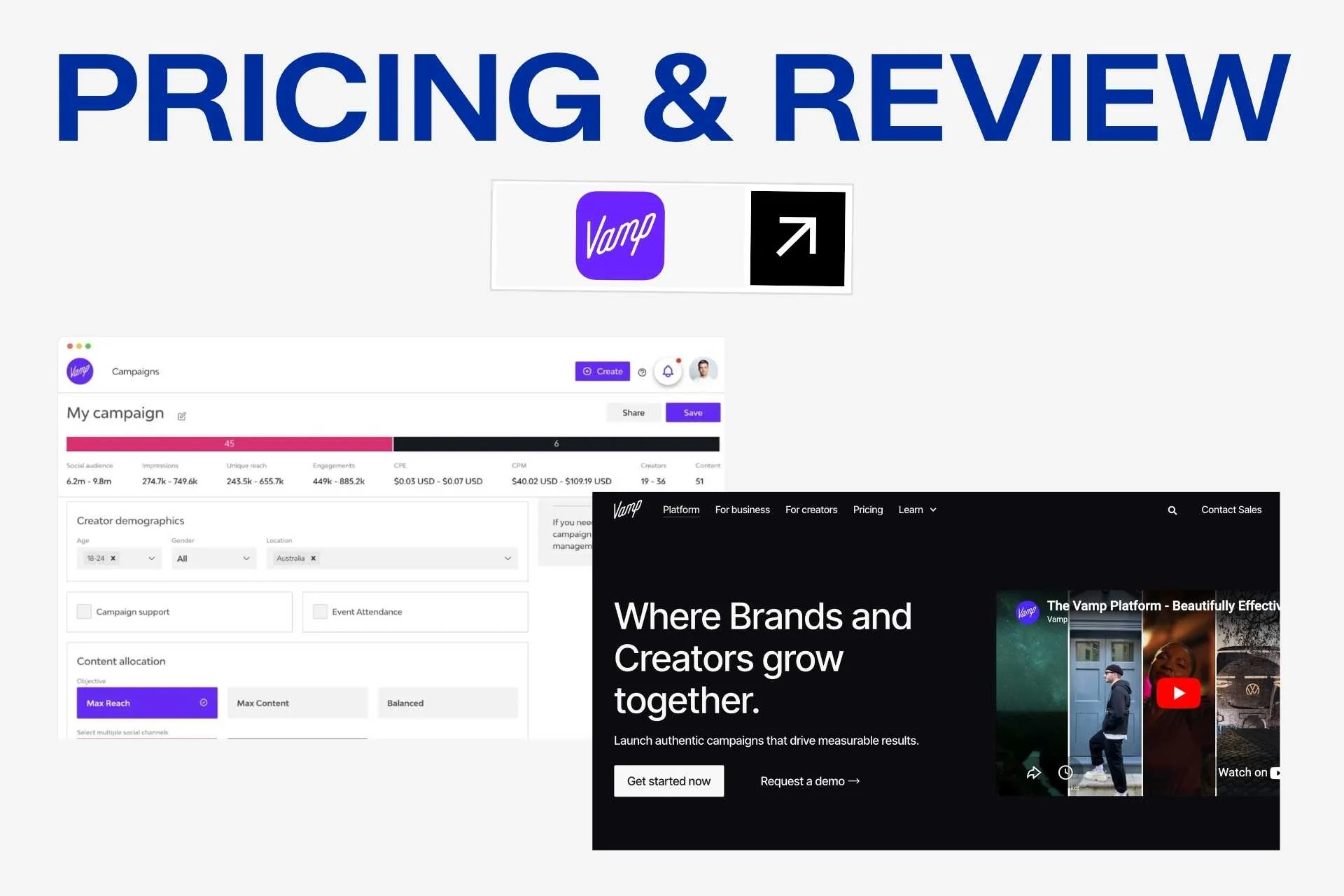
Vamp Pricing and Review: Features, Pros, Cons & Costs
Vamp is a creator marketing platform built for global brands that would rather hand off execution than run campaigns themselves. It has contracted more than 13,000 creators across 65-plus markets and leans on over a decade of proprietary creator data to run programs from strategy through paid amplification.
For a D2C brand, the real question is whether that managed, agency-style model justifies giving up pricing transparency and self-serve control. Vamp does not publish a single price on its site. Every plan routes through a sales conversation, and campaign costs sit on top of a variable platform fee.
This review lays out what Vamp actually costs, what each tier includes, where the fees hide, and who the platform genuinely fits. It also covers the more transparent, lower-cost options worth pricing against it before you sign anything.
Vamp Overview
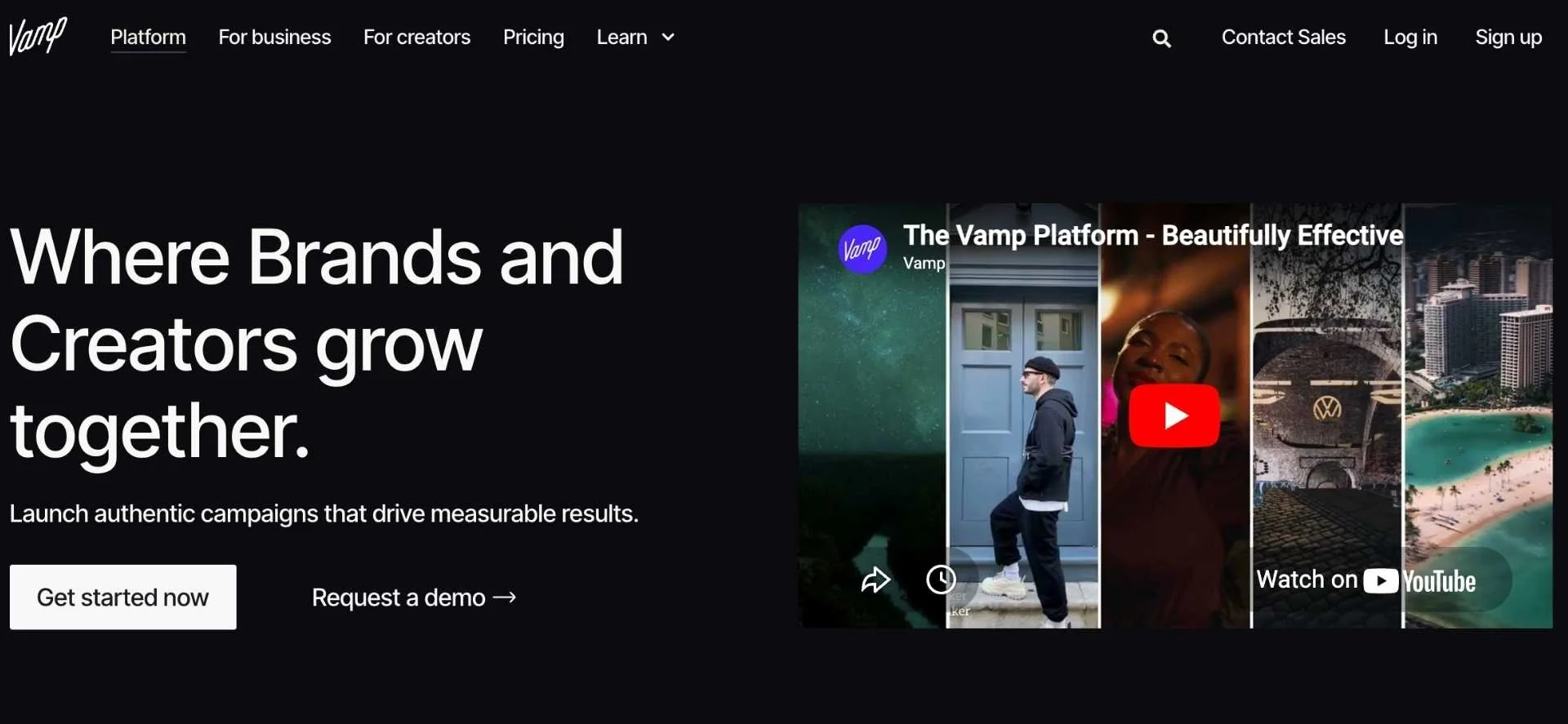
Vamp sits somewhere between software and a managed service. You bring a brief, Vamp’s team and platform source the creators, you approve talent and content, and Vamp handles payments, licensing, and reporting behind the scenes. That is a different model from a self-serve tool where your team drives every step and runs its own influencer CRM tools in-house.
The platform organizes its offering around six pillars: strategy and audience insight, creator programs, content and UGC production, paid amplification, channel integration across social and commerce, and operational support including creator payments. The pitch is systems over one-off campaigns, and the global footprint backs it up with coverage in 65-plus markets and a network of more than 13,000 contracted creators.
Where Vamp is strong is content quality and international reach. Where it gets complicated is cost and commitment, which we get into below.
Who Should Use Vamp
Vamp fits a specific kind of brand. It makes the most sense for:
- Global or multi-market brands that need creators across regions and languages without standing up local teams
- Companies that want a managed service and would rather approve work than run it, especially those without an in-house influencer team
- Brands that prioritize polished, licensed content and UGC they can reuse in paid media
- Marketing teams with budgets that clear a $1,000 per-campaign minimum comfortably and can commit for 12 months at the Pro tier and up
- Enterprises that want paid amplification of creator content handled in one place, with a dedicated strategist
- Brands whose bigger gap is creator supply rather than software, though a creator marketplace with AI creator matching can solve that at a fraction of the cost
Key Features
Vamp’s feature set is split across its plan tiers, so not everything below is available at the entry level. Here is what the platform actually does.
Creator Discovery
Search and shortlist creators from Vamp’s contracted network across 65-plus markets, filtered by audience, format, and reach. Discovery is curated toward Vamp’s vetted talent rather than an open scrape of every public account, which trades breadth for quality control.
Campaign Calculator
A planning tool that estimates reach and output for a given budget before you commit. It is genuinely useful for setting expectations internally, since it ties spend to projected deliverables rather than leaving you to guess.
Briefs and Approvals
Build campaign briefs, share them with selected creators, and approve talent and content through a structured workflow. This is the core of the managed model and keeps final sign-off in your hands even though Vamp runs the process.
Content and UGC Production
Vamp leans hard on platform-native content and UGC. Creators produce assets you can use organically, and higher tiers add formal rights so you can run that content in paid channels without a separate negotiation.
Content Licensing
Available from the Pro tier, licensing lets you extend usage rights on creator content for paid and owned media. For brands that repurpose influencer content into ads, this is one of Vamp’s more valuable inclusions.
Creator Re-engagement
Also a Pro feature, re-engagement helps you bring back creators who have performed well, turning one-off collaborations into repeat partnerships without starting discovery from scratch every time.
Reporting and Analytics
Standard reporting comes with every campaign, and advanced reporting unlocks at Pro. It covers reach, engagement, and content performance, though it stops short of the deep ROI and affiliate-sales campaign reporting that self-serve platforms built for D2C tend to offer.
Paid Amplification
Reserved for Enterprise, this turns creator content into paid social campaigns managed by Vamp, so organic collaborations double as performance media across markets.
Operational Support and Payments
Vamp handles creator contracts and payments globally, which removes the messy back office of paying dozens of creators across currencies and tax regimes. This is a real advantage for international programs.
Vamp Pricing
Here is the honest version: Vamp publishes no prices. The site lists three tiers, all quote-based, with a per-campaign minimum on the entry plan and 12-month contracts above it. Creator fees and a variable platform fee sit on top of whatever you agree.
Pay as You Go
- Per-campaign pricing with no subscription or long-term commitment
- Minimum campaign budget of $1,000
- Includes the Campaign Calculator, Creator Discovery, Briefs and approvals, and standard reporting
- Subject to a variable platform fee on top of creator costs
Vamp Pro
- Custom pricing, quote only
- 12-month minimum contract term
- Everything in Pay as You Go plus creator re-engagement, content licensing, advanced reporting, and priority support
- Unlocks Brand Insiders, which lets you bring your own creators at pre-negotiated fixed fees
Enterprise
- Custom pricing, quote only
- 12-month minimum contract term
- Everything in Pro plus paid amplification, a dedicated strategist, custom integrations and SSO, and multi-market support
The Platform Fee and Creator Costs
The subscription or campaign fee is only one layer. Every campaign carries a variable platform fee that Vamp describes as covering operational costs, and creator fees are separate again, priced by audience size, engagement, reach, and content format. There is no free trial. For a brand comparing Vamp to a flat monthly SaaS price, the all-in cost can land well above the headline once the platform fee and talent fees are stacked on.
Vamp Reviews
Vamp’s public review footprint is thin. On G2 it holds 5.0/5.0 (G2, low review volume, 2 reviews), which reads well but is too small a sample to lean on. It does not maintain a meaningful presence on Capterra or TrustRadius, where pricing and reviews are not currently listed. The takeaway is not that Vamp is poorly reviewed, but that there is not enough independent volume to treat any score as representative. Ask for references in your vertical before committing to a 12-month term.
Integrations
Vamp does not publish an integrations directory, and its integration surface is narrow by design because so much runs through Vamp’s own managed layer rather than your stack. What is verifiable:
- Social platforms: Instagram, TikTok, and YouTube are the core channels creators publish to
- Paid social: creator content flows into Meta and TikTok ad environments for the Enterprise paid amplification service
- SSO: single sign-on is available at Enterprise for team access control
- Content licensing: rights management is handled inside Vamp rather than through a third-party tool
- Custom integrations: available on Enterprise by arrangement, not self-serve
Pros of Vamp
Genuinely global execution
Coverage across 65-plus markets, with local creator sourcing and payments handled for you, is hard to replicate in-house. For brands launching in several regions at once, this is Vamp’s strongest card and the clearest reason to pay for the managed model.
Content quality and built-in licensing
Vamp’s output skews polished, and licensing is baked into the higher tiers, so the content you commission can move straight into paid media without a separate rights negotiation. That saves time and legal friction for brands that repurpose creator content into ads.
Low operational overhead
The managed model takes contracts, payments, and coordination off your plate. If you lack an in-house influencer team, Vamp effectively rents you one, which is the entire point of the platform and something pure software cannot match.
Cons of Vamp
Opaque, quote-gated pricing with a variable platform fee
You cannot budget from the website. Every tier is a sales conversation, and the variable platform fee plus separate creator costs mean the all-in number is hard to pin down before you are already in talks. In a category where competitors publish flat monthly pricing, this is the biggest source of friction.
12-month contract lock-in
Pro and Enterprise both require a 12-month minimum term. That is a long commitment for a channel many brands are still testing, and it removes the flexibility that per-campaign or month-to-month tools offer.
High entry cost and no free trial
The $1,000 per-campaign minimum, before platform and creator fees, prices out smaller D2C brands entirely, and there is no free trial or free tier to test the platform first. You commit real money before you see any results.
Limited self-serve control and thin eCommerce integration
Because Vamp runs the managed layer, your team has less direct control than with self-serve software, and there is no public Shopify or WooCommerce integration to tie campaigns to sales. Combined with a small public review sample, that makes Vamp a harder platform to evaluate before you buy.
Quote Text:
“Vamp is built for brands that want creator marketing handled for them across borders, not for teams that want to run it themselves on a fixed, predictable budget.”


Is Vamp Worth It?
Vamp is worth it for a narrow profile: a global brand with real budget, no in-house influencer team, and a preference for handing off execution in exchange for polished, licensed content across many markets. For that buyer, the managed model and international coverage are genuinely useful.
For most D2C brands, the math is harder. The opaque pricing, variable platform fee, 12-month lock-in, and $1,000 minimum add up to a high-commitment, low-transparency deal in a market where you can get flat pricing and self-serve control elsewhere.
If you want to keep more control and know your costs upfront, these alternatives are worth pricing first:
- Influencer Hero: An all-in-one influencer marketing platform with flat, public pricing at $649, $1,049, and $2,490 per month and no revenue share or per-campaign platform fee. It covers discovery across eight platforms, fake-follower detection, lookalike search, brand-follower identification, a Chrome extension, automated outreach, and a full influencer CRM, with native Shopify, WooCommerce, and custom eCommerce support that Vamp lacks.
- Afluencer: A creator marketplace starting at $49 per month where creators apply to your campaign listings. The right pick when your bottleneck is creator supply rather than campaign infrastructure.
- Aspire: A strong option for UGC-heavy brands, with a creator marketplace and deep Shopify integration for ecommerce-driven programs.
- Upfluence: A large searchable creator database with ecommerce integrations, suited to brands that want to run discovery and affiliate campaigns themselves.
- CreatorIQ: An enterprise-grade suite for large teams managing many creators, closer to Vamp’s scale but self-serve.
Final Thoughts
Vamp does one thing well: it takes global creator marketing off your hands and delivers licensed, high-quality content without you touching the operational work. The trade is steep, with quote-gated pricing, a variable platform fee, and a year-long commitment that most D2C brands testing the channel will not want to make. Price it honestly against your goals, get the all-in number in writing, and weigh the more transparent Vamp alternatives before you sign.

.png)


.jpg)