


10 Best Influencer Discovery Tools to Find Creators
For D2C brands, creators have become one of the most powerful acquisition channels—helping brands build trust, generate user-generated content, and drive sales across platforms like Instagram, TikTok, and YouTube. As competition grows, the ability to discover the right creators—those with authentic audiences, strong engagement rates, and brand alignment—has become a critical step in running successful campaigns. For founders and marketing teams at D2C brands, manual discovery on social platforms is time-consuming and often unreliable. Influencer discovery tools solve this problem by providing large creator databases, advanced search filters, and audience analytics to help brands identify high-quality partners faster and at scale.
In this article, we’ll explore some of the best influencer discovery tools available today, including Traackr, Aspire, Influencer Hero, Later, Upfluence, Grin, Afluencer, HypeAuditor, CreatorIQ, and Heepsy—platforms designed to help D2C brands efficiently find and vet creators.
Best Influencer Discovery Tools
| TOOL | REVIEWS | BEST FOR | TRIAL INFO | PRICING | ||
|---|---|---|---|---|---|---|
1 |

|
⭐ | Enterprise influencer analytics | Book Demo | Pricing | Website |
2 |

|
⭐ | Influencer partnerships | Book Demo | Pricing | Website |
3 |

|
⭐ | Influencer CRM & automation | Book Demo | Pricing | Website |
4 |

|
⭐ | Social media & influencer campaigns | Book Demo | Pricing | Website |
5 |
|
⭐ | Influencer discovery | Book Demo | Pricing | Website |
6 |

|
⭐ | DTC creator management | Book Demo | Pricing | Website |
7 |

|
⭐ | Influencer marketplace campaigns | Book Demo | Pricing | Website |
8 |

|
⭐ | Influencer analytics | Book Demo | Pricing | Website |
9 |

|
⭐ | Enterprise influencer marketing | Book Demo | Pricing | Website |
10 |

|
⭐ | Influencer discovery | Book Demo | Pricing | Website |
1. Traackr
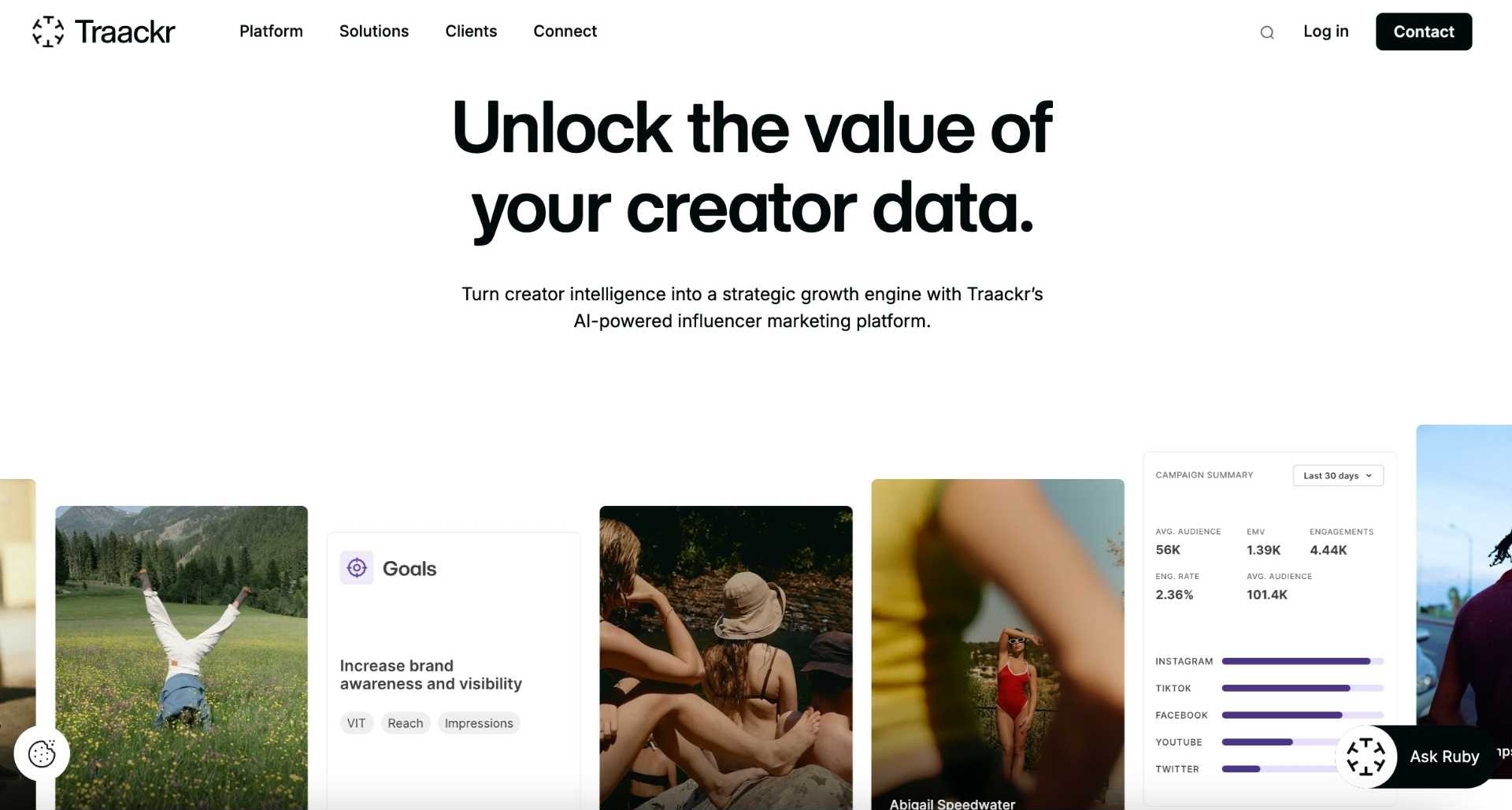
Traackr is an enterprise influencer marketing platform built around discovery, vetting, benchmarking, and ROI measurement. It gives brands access to a database of more than 6 million creators and helps teams filter creators by audience demographics, engagement, past brand partnerships, and market-level performance signals.
Key features:
- Influencer discovery: Find creators using filters for audience location, engagement, demographics, brand affinity, and previous collaborations.
- Brand Vitality Score: Uses a proprietary benchmark to show how your brand’s creator presence compares with competitors.
- Performance benchmarking: Tracks metrics like CPE, CPV, CPC, ROI, and cost efficiency so teams can compare creators and campaigns more accurately.
- Creator CRM: Centralizes outreach, relationship history, notes, and campaign status across teams.
- Product seeding workflows: Connects with Shopify so creators can select products and brands can track fulfillment inside the workflow.
- Global payments: Supports creator payouts in local currencies from within the platform.
Pros:
- Excellent for brands that care about budget allocation, benchmarking, and executive-level reporting.
- Strong fit for global teams that need market-by-market discovery and governance.
- User feedback consistently highlights the depth of insights and centralized workflow.
Cons:
- Pricing is steep for smaller D2C brands and short-term programs.
- Some users report lag, delayed content syncing, and a learning curve for advanced workflows.
- Discovery can be less effective for very niche or emerging creators in smaller markets.
Integrations:
- Shopify: Run product seeding campaigns and track creator-selected orders and fulfillment.
- Social platform APIs: Pull first-party campaign performance data from major social platforms in a compliant way.
- Email: Send bulk or 1:1 creator outreach and keep conversations visible across the team.
- Payments: Collect payment details and issue creator payouts globally from inside Traackr.
- SSO / data lake connections: Support enterprise security and deeper internal reporting workflows.
Pricing:
High. Starts at $32,500/year for the Standard plan, with custom modules on top and custom-built packages.
Reviews:
4.3/5.0 (G2).
2. Aspire

Aspire is an end-to-end creator platform that combines influencer discovery, inbound applications, outreach, gifting, content approvals, and revenue tracking. Its discovery workflow is especially strong for brands that want both outbound search and an inbound creator marketplace, with first-party data partnerships across Meta, TikTok, and Pinterest.
Key features:
- Influencer discovery: Search creators by keyword, channel, engagement, and audience demographics, with lookalike recommendations built in.
- Inbound creator marketplace: Lets brands post opportunities and receive creator applications directly.
- Application pages: Build branded sign-up pages to collect creator details, concepts, and fit before approving collaborations.
- Workflow automation: Automates follow-ups, briefs, contracts, and stage-based campaign actions.
- Shopify gifting and sales tracking: Handles product seeding, promo codes, conversions, and creator-level sales attribution.
- Content library and approvals: Stores live content and usage rights, while supporting draft review before publishing.
Pros:
- Strong choice for D2C brands that want discovery, gifting, and conversion tracking in one workflow.
- First-party data partnerships can improve confidence in audience and performance data.
- The platform is especially strong for teams that rely on structured workflows and inbound creator recruitment.
Cons:
- Pricing is on the expensive side for leaner teams.
- Direct in-platform payment handling is less prominent than on some alternatives.
Integrations:
- Shopify: Run gifting campaigns, generate promo codes, and identify influential customers.
- Gmail: Send creator outreach from your brand email and share inbox visibility internally.
- Microsoft Outlook: Manage creator communication from Outlook while keeping campaign communications centralized.
- PayPal: Pay creators directly through the platform.
- WooCommerce: Consolidate creator gifting and campaign operations for WooCommerce stores.
Pricing:
Aspire does not offer a free trial, and pricing is typically customized around seats, workflow needs, and program scale. Plans usually start at $2,000/month, with annual agreements.
Reviews:
4.0 /5.0 (Capterra)
3. Influencer Hero

Influencer Hero is an all-in-one creator management platform designed for D2C and eCommerce brands that want to manage influencer discovery, outreach, product gifting, affiliate tracking, UGC collection, and payouts in one place. The platform supports influencer discovery across eight major social platforms and is built to help brands scale their creator programs—from managing smaller influencer lists to running large-scale outreach and CRM-driven campaign workflows.
Key features:
- Influencer discovery: Search and filter creators by location, audience demographics, interests, engagement rate, and follower quality. The platform also includes fake follower detection and lookalike creator suggestions to help brands identify relevant influencers faster.
- Chrome extension: The Influencer Hero Chrome extension allows teams to view creator insights and import influencer profiles directly while browsing platforms like Instagram, TikTok, or YouTube.
- AI-powered outreach: Brands can build personalized email sequences and automate follow-ups using AI-powered templates. Outreach workflows can also be tied to campaign stages to streamline communication with creators.
- Campaign CRM: Influencer Hero includes a structured influencer CRM with boards, tags, and bulk actions that help teams manage negotiations, contracts, deliverables, and approvals across campaigns.
- Affiliate tracking and payouts: Brands can generate custom affiliate links and discount codes, track creator-driven sales, monitor commissions, and automate payouts through the platform.
- UGC collection and content library: The platform automatically gathers influencer-generated content and stores it in a centralized library so teams can organize, reuse, and report on campaign content.
- Campaign reporting and ROI analytics: Real-time dashboards track campaign performance, including clicks, affiliate revenue, content performance, and ROI by influencer. Reports can be exported and shared with stakeholders.
- Application pages for influencer recruitment: Brands can create branded campaign landing pages where creators can apply to collaborate, making it easier to attract inbound influencer interest
Pros:
- Strong balance of discovery, automation, and eCommerce attribution for D2C teams.
- Supports both Shopify and WooCommerce, which is still relatively uncommon in this category.
- Review feedback frequently praises workflow automation and ease of managing large creator pipelines.
Cons:
- The platform is feature-rich, so teams may need onboarding time to use it fully.
Integrations:
- Shopify: Sync products, generate discount codes and affiliate links, and track creator revenue in real time.
- WooCommerce: Track influencer-driven orders and commissions for WooCommerce stores.
- Klaviyo: Sync influencer-referred customers into flows and measure downstream retention value.
- GetResponse: Identify influencers in your contacts and export profiles into email workflows.
- Thinkific: Attribute course or membership revenue back to creators and campaigns.
Pricing:
Low-to-mid. Influencer Hero offers flexible pricing based on outreach volume:
- Standard Plan: $649/month for up to 1,000 outreach emails per month
- Pro Plan: $1,049/month for up to 5,000 outreach emails per month
- Business Plan: $2,490/month for up to 10,000 outreach emails per month
- Custom / Agency Plan: Custom pricing for larger teams and agencies
All plans allow brands to manage unlimited creators within the CRM, making it easier to scale influencer programs as campaigns grow.
Reviews:
5.0/5.0 (Capterra)
4. Later
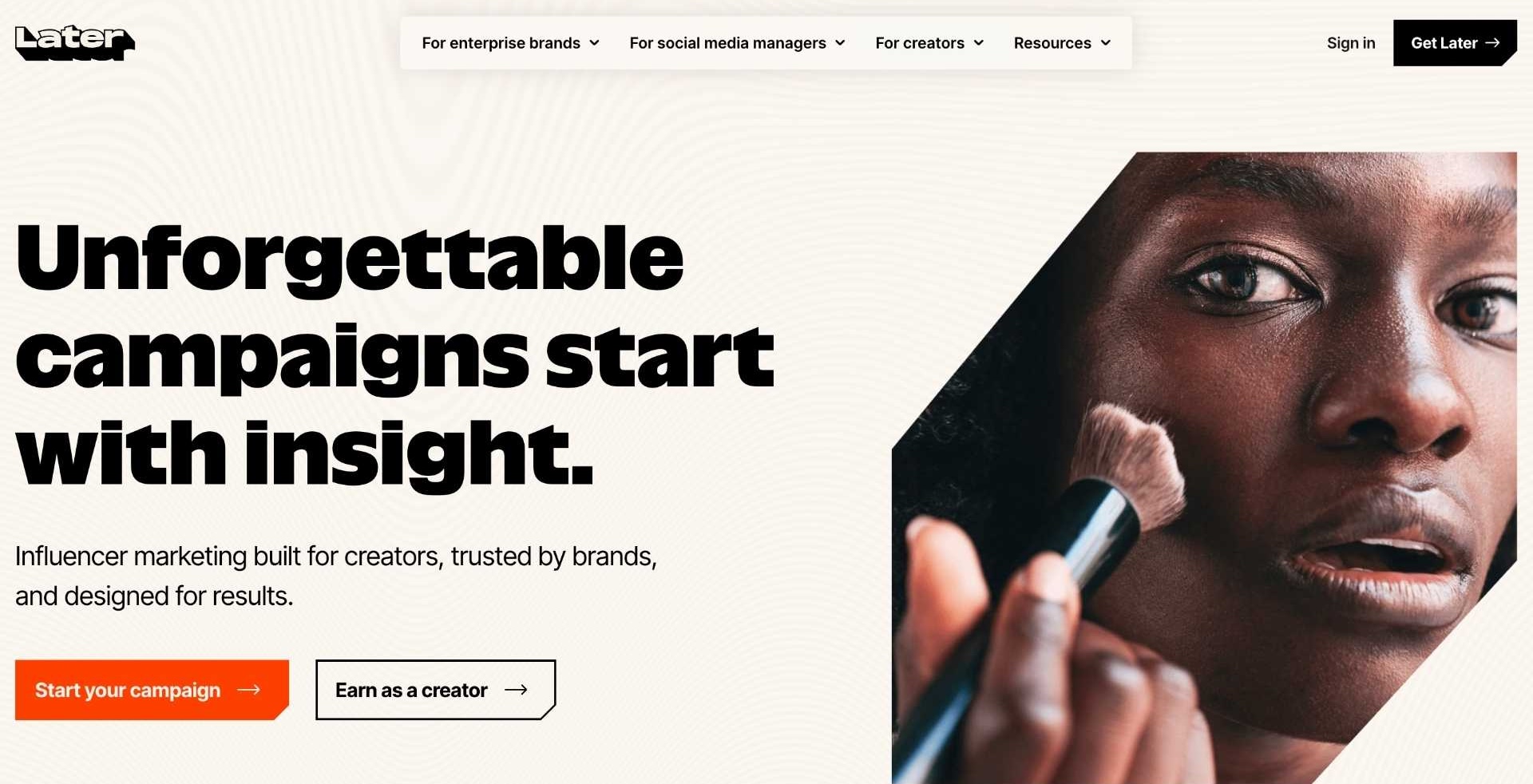
Later Influence is an enterprise-focused influencer marketing platform that helps brands discover creators, run campaigns, manage incentives, and measure performance. For discovery, it combines a shared global creator database called the Influencer Index with a private opt-in database called My Members, and supports keyword, AI-assisted, and similar-creator search.
Key features:
- Influencer discovery: Search creators by hashtags, keywords, locations, handles, and creator attributes across the Influencer Index or your own member database.
- AI search: Expands single-term searches with AI to surface broader, related creator matches.
- Similar creator search: Finds creators comparable to an existing handle to speed up shortlist building.
- Brand safety tools: Includes audience authenticity analysis, content warnings, and broader suitability checks before partnerships go live.
- Flexible campaign workflows: Lets teams manage approvals, communication, content collection, and payouts from one workspace.
- ROI and EMV reporting: Supports performance measurement and budget analysis for influencer programs.
Pros:
- Particularly strong for larger brands that want structured discovery, compliance controls, and workflow flexibility.
- Discovery is versatile, with keyword, similar, and AI-assisted sourcing options.
- User feedback often highlights strong support and ease of campaign management.
Cons:
- Pricing is custom and aimed more at enterprise budgets than smaller D2C teams.
- No free trial is currently available. Some users mention occasional product glitches and friction in enterprise workflows.
Integrations:
- Shopify: Automate creator gifting, generate unique codes, and track redemption and fulfillment.
- Stripe: Send creator cash payments directly through Later and track status in real time.
- Tango Card: Deliver digital gift cards automatically and include the costs in campaign reporting.
- Meta Ads: Connect paid media assets to measure boosted Instagram content performance.
- Later Social: Connect creator accounts and workflows for content binding, approvals, and performance syncing.
Pricing:
Later Influence uses custom pricing, offers paid plans only, and does not provide a free trial. It is best classified as a high-tier platform, especially for brands that need enterprise workflows and managed-service options. Starts at $28,500/year.
Reviews:
4.4 / 5.0 (Capterra)
5. Upfluence
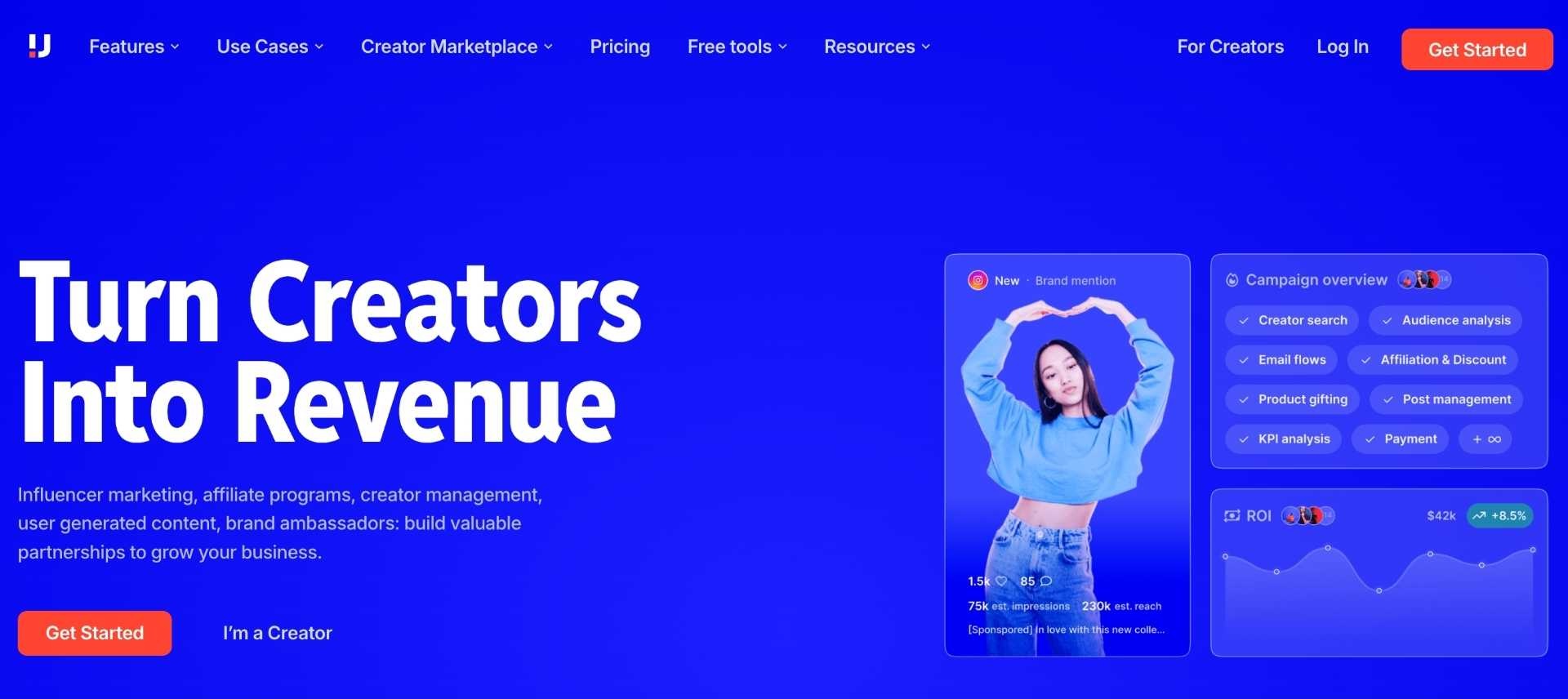
Upfluence is an end-to-end influencer platform that combines creator discovery, outreach, CRM, affiliate management, and sales tracking. It is especially appealing to eCommerce brands because it pairs a 12M+ creator database with native store integrations that can identify influential customers, automate gifting, and attribute revenue back to creator campaigns.
Key features:
- Influencer discovery: Search a database of 12M+ creators using filters like niche, location, engagement rate, audience demographics, and interests.
- Customer-to-creator matching: Match your store or CRM contacts against creator profiles to find influential customers already in your ecosystem.
- Bulk outreach: Run creator outreach and follow-up workflows from the platform with synced email tools.
- Affiliate and code tracking: Generate discount codes, links, and performance reports tied to conversions and revenue.
- Social listening: Use public social data to spot posts, trends, and creator activity relevant to your brand or niche.
- Creator payouts: Support bulk payments for influencer campaigns.
Pros:
- Very strong fit for Shopify and Amazon sellers that care about attribution and affiliate revenue.
- Discovery and customer-matching workflows are especially useful for brands trying to activate existing fans.
Cons:
- Pricing is custom and typically requires annual commitment, which can be restrictive for smaller brands.
- Some users report campaign setup rigidity, UI friction, and limitations in email automation.
- Data quality around creator location and campaign editing flexibility comes up as a recurring complaint.
Integrations:
- Shopify: Identify influential customers, automate gifting, and attribute sales to creators.
- Amazon: Track influencer-driven sales, affiliate links, and campaign performance on Amazon.
- Klaviyo: Match your contact database against creator profiles and activate influencer segments.
- Gmail: Reach out to creators directly from your mailbox with syncing inside Upfluence.
- Outlook: Manage creator outreach from Outlook while keeping communication synced in-platform.
Pricing:
Mid-to-high. On average plans start around $2,000/month ($24,000 yearly) with no free trial and a relatively inflexible annual commitment.
Reviews:
4.3 / 5.0 (Capterra)


6. Grin
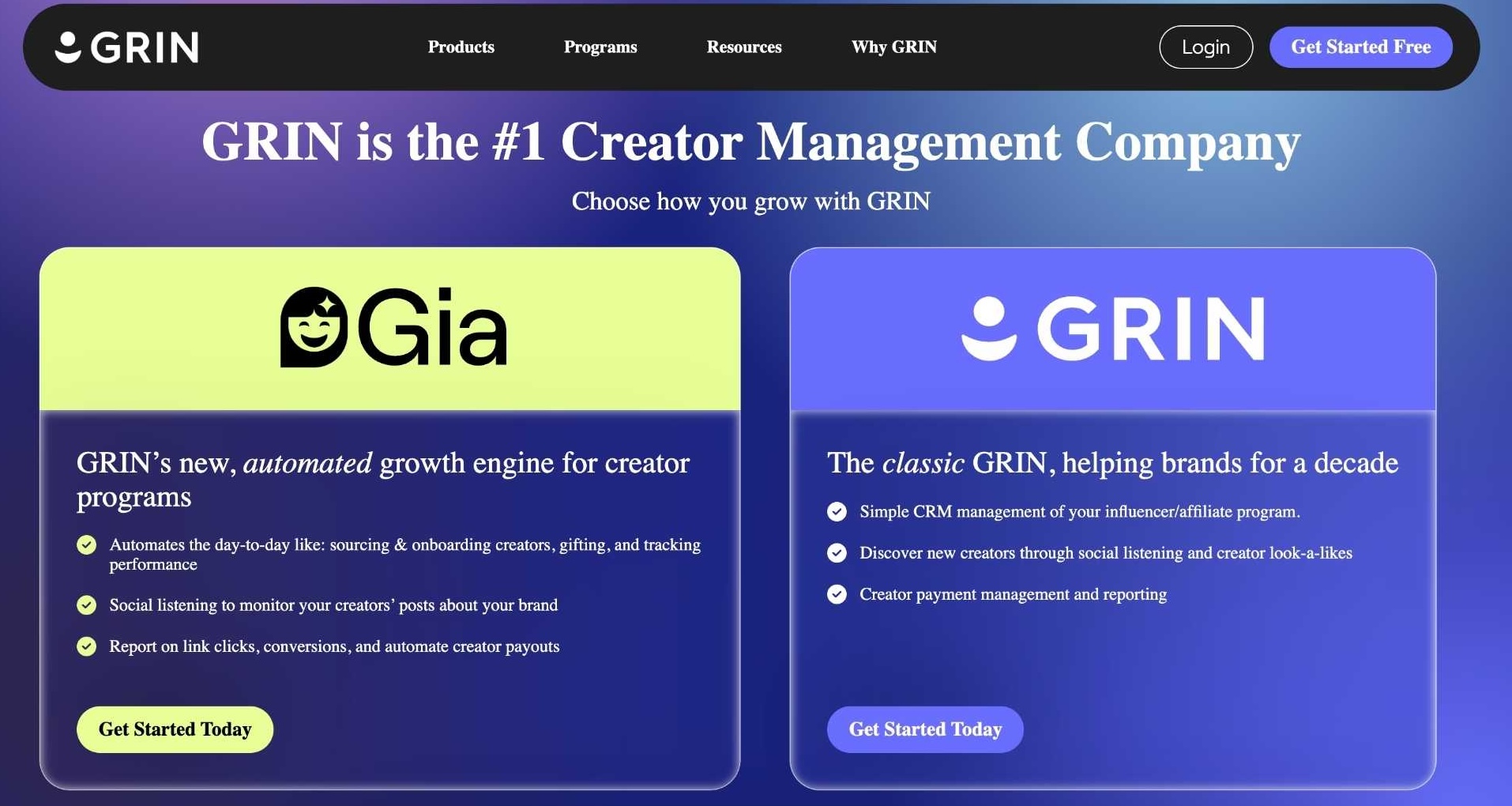
Grin is an end-to-end influencer marketing platform built primarily for D2C and eCommerce brands. It helps teams discover creators, manage outreach, automate gifting, track affiliate sales, and store creator content, with a strong focus on Shopify-led workflows and creator relationship management.
Key features:
- Influencer discovery: Search for creators by niche, audience data, engagement rate, platform, and brand fit to build more relevant creator lists.
- AI discovery tools: Grin uses AI-powered keyword and lookalike search, plus its Gia assistant, to surface relevant creators faster.
- Creator CRM: Manage creator relationships with tags, notes, statuses, tasks, and custom workflows inside one centralized system.
- Gifting and seeding workflows: Automate product selection, shipping, discount codes, and fulfillment tracking directly from your eCommerce stack.
- Affiliate and payments: Track affiliate links, commissions, conversions, and payouts without relying on separate tools.
- UGC library: Store creator content, including Instagram Stories, in a searchable content library for repurposing across channels.
Pros:
- One of the strongest options for D2C brands that want discovery, gifting, affiliate tracking, and CRM in one platform.
- Its eCommerce integrations make it especially valuable for brands that need to connect creator activity to revenue.
- User feedback often highlights strong workflow automation, solid customer support, and good campaign organization.
Cons:
- Pricing is high for smaller teams, and long-term commitments can be a blocker for emerging brands.
- Some users mention that discovery depth could be better compared with more analytics-first tools.
- There are recurring mentions of friction around affiliate setup, payment tracking, and general usability in more complex workflows.
Integrations:
- Shopify: Sync products, automate gifting, generate discount codes, and track creator-driven revenue.
- WooCommerce: Manage product seeding and track conversions for WooCommerce-based stores.
- Magento: Connect catalog and order workflows to creator campaigns for broader eCommerce support.
- PayPal: Process creator payments directly through the platform without moving finance workflows elsewhere.
- Klaviyo: Sync creator and customer data into email flows and retention workflows.
Pricing:
High. GRIN pricing is custom-built, starting around $2,500/month and going up significantly based on features and scale, typically with a 12-month commitment. There is no clear public free trial, so buyers should expect a sales-led process and enterprise-style pricing.
Reviews:
4.5/5.0 (G2).
7. Afluencer

Afluencer is an influencer marketplace designed primarily for brands looking to work with nano and micro influencers. Brands create collaboration opportunities ("Collabs"), define targeting criteria, and receive applications from creators, while influencers can browse opportunities and apply directly through the platform. The platform focuses on simplifying discovery, communication, and campaign management for smaller-scale influencer partnerships.
Key Features:
- Influencer Marketplace: Brands can post collaboration opportunities and receive applications from interested creators.
- Micro and Nano Influencer Discovery: Search creators by niche, audience size, interests, demographics, and social platform.
- Campaign Posting (Collabs): Create public campaigns with custom requirements and partnership details.
- Application Management: Review influencer applications and evaluate engagement metrics before approving creators.
- Built-In Messaging: Communicate directly with influencers inside the platform after a match is established.
- Creator Profiles: Access social metrics, interests, audience information, and content examples.
- Instagram, TikTok, and YouTube Support: Find creators across major social media channels.
- UGC Collaboration Support: Source creators for user-generated content in addition to sponsored posts.
- Free Entry Plan: Brands can create an account and start posting collaborations without an upfront commitment.
- Customer Support and Onboarding: Includes email, chat support, and strategy sessions for premium users.
Pros:
- Particularly strong for nano and micro influencer campaigns, making it easier for brands to build authentic partnerships without large budgets.
- The platform is easy to set up and navigate, with a simple campaign creation process and straightforward influencer applications.
- Its affordable pricing makes it accessible to startups, small businesses, and Shopify brands that may not have enterprise-level budgets.
Cons:
- Brands occasionally encounter inactive creator profiles, which can slow down campaign execution and response times.
- The free plan includes feature limitations that may restrict brands looking to scale their influencer programs.
- User experiences can vary, with some brands questioning creator quality and noting that campaign results depend heavily on niche fit and the attractiveness of the offer.
Integrations:
- Shopify: Connect your store to streamline product gifting and support influencer campaigns for ecommerce brands.
- Instagram: Discover Instagram creators and evaluate engagement metrics for sponsored posts and UGC campaigns.
- TikTok: Source short-form content creators and collaborate on TikTok campaigns.
- YouTube: Partner with creators for video reviews, tutorials, and sponsored content.
- Facebook: Extend creator relationships and audience reach across Facebook channels. User reviews mention support for Facebook integrations.
Pricing:
- Free Plan – Available for brands wanting to test the platform before upgrading.
- VIP Plan – Starts at $49/month and provides additional campaign capabilities and creator access.
- Concierge Plan – Starts at $99/month and includes more hands-on support and advanced functionality.
- Billing Structure – Monthly subscriptions are available, allowing brands to scale without long-term contracts.
- Free Trial – Yes, through the free plan.
- Price Benchmark – Low-cost compared with most influencer marketing platforms, especially enterprise tools, which typically cost several hundred to several thousand dollars per month.
Reviews:
4.6/5.0 (G2)
8. HypeAuditor

HypeAuditor is an influencer discovery and analytics platform designed to help brands find, vet, and manage creators with a strong emphasis on authenticity and fraud detection. It supports creator search across major social platforms and is especially useful for brands that want deeper audience quality analysis before starting outreach.
Key features:
- Influencer discovery: Search creators using filters like location, audience size, demographics, engagement rate, language, category, quality score, and brand safety indicators.
- AI-powered category search: Goes beyond keywords by analyzing bios, captions, images, and videos to surface more relevant creators.
- Audience quality analysis: Review follower authenticity, audience demographics, brand affinity, and quality scores before shortlisting creators.
- Lookalike search: Find creators similar to high-performing profiles already in your program.
- Social listening: Monitor brand mentions, hashtags, and competitor activity to discover creators already talking about your niche.
- Outreach and campaign tools: Build lists, send outreach, manage approvals, and track campaign performance from inside the platform.
Pros:
- One of the strongest tools for fraud detection, audience authenticity analysis, and creator vetting.
- Good fit for brands that care more about data quality and creator analysis than commerce-heavy gifting workflows.
- Reviews frequently mention that it saves time in finding creators and improves campaign effectiveness.
Cons:
- It can feel more complex for newer users than simpler SMB-focused tools.)
- Pricing is less approachable for smaller brands once you move beyond basic access.
- Some teams may find it stronger in vetting and analytics than in broader end-to-end eCommerce execution.
Integrations:
- Shopify: Connect influencer activity to product and commerce workflows for better attribution.
- WooCommerce: Tie creator campaigns to WooCommerce-based sales and performance tracking.
- Magento: Extend influencer campaign data into Magento-based commerce operations.
- Gmail: Manage creator outreach using your existing email workflows.
- Zapier: Connect HypeAuditor to thousands of other tools for automation and reporting.
Pricing:
HypeAuditor sits in the mid-to-high tier of the market. Plans usually start at $10,000/year.
Reviews:
4.8/5.0 (Capterra).
9. CreatorIQ

CreatorIQ is an enterprise influencer marketing platform that covers creator discovery, campaign activation, reporting, payments, and governance. It is designed for large brands that need reliable first-party data connections, advanced approval workflows, and customizable reporting across global creator programs.
Key features:
- Influencer discovery: Search public creators using granular filters for platform, follower count, engagement, audience demographics, content topics, past brand mentions, and semantic keywords.
- AI and semantic search: Find creators with more nuanced queries like audience type, niche, or content style rather than relying only on exact keywords.
- Private creator CRM: Store creator notes, tags, contact details, past campaign history, and approval status in a private database.
- One-sheet approvals: Share campaign-ready creator lists with internal stakeholders through approval sheets and live links.
- Custom dashboards and reporting: Build executive-ready live reports with creator-level and campaign-level performance data.
- Built-in payments and tax handling: Pay creators inside the platform with tax and compliance support for finance teams.
Pros:
- Excellent option for large brands that need reliable data, strong governance, and shareable reporting for multiple stakeholders.
- Deep platform partnerships support more accurate and compliant creator data.
- Strong fit for teams that need discovery plus approvals, reporting, and payment handling in one enterprise workflow.
Cons:
- Discovery is not always viewed as its strongest area compared with more discovery-first tools.
- Affiliate conversion tracking is more limited and may require manual workflows.
- Pricing is high and annual-only, which puts it out of reach for many smaller D2C brands.
Integrations:
- Shopify: Track gifting logistics, creator product details, and commerce workflows tied to campaigns.
- Meta: Pull real-time campaign and content performance data from Meta integrations.
- TikTok: Access live reporting and campaign performance data through platform integrations.
- YouTube: Measure creator and content performance with API-based reporting.
- IRS/tax compliance systems: Process creator payments with tax documentation and auditable finance workflows.
Pricing:
CreatorIQ is clearly a high-tier to enterprise-tier platform. Ranges from $35,000/year for the Basic plan to $200,000/year for Enterprise, with annual contracts only and an additional fee for its Creator Connect add-on.
Reviews:
4.4 / 5.0 (Capterra)
10. Heepsy

Heepsy is an influencer discovery and campaign management platform aimed at brands and agencies that want an easier, more affordable way to find and vet creators. It combines a large creator database with audience analytics, authenticity scoring, outreach tools, and lighter campaign workflows that are especially useful for SMBs and growing eCommerce brands.
Key features:
- Influencer discovery: Search creators by keyword, follower count, audience demographics, engagement rate, location, and authenticity indicators.
- Detailed creator profiles: Review likes, comments, reach, audience gender split, age ranges, recent brand collaborations, and lookalike profiles.
- Fake follower detection: Use authenticity filters and audience quality data to avoid low-quality creator partnerships.
- CRM pipeline view: Move creators through campaign stages in a Kanban-style workflow from outreach to payment.
- Bulk outreach: Send email sequences and follow-ups at scale to speed up creator recruitment.
- Campaign reports: Track both engagement and, on higher plans, sales and affiliate performance through eCommerce integrations.
Pros:
- Easier to use and more affordable than many enterprise influencer platforms.
- Strong choice for brands that prioritize creator discovery, niche filtering, and audience analytics over heavyweight enterprise workflows.
- Review feedback often highlights the clean interface and fast onboarding experience.
Cons:
- Some users say it is less suitable for very small creators, especially on lower-tier plans.
- Advanced filters and payment-related features can feel limited unless you move to higher plans.
- Customer support and campaign measurement depth come up as weak points in some feedback.
Integrations:
- Shopify: Track influencer-driven sales, discount codes, and affiliate performance for Shopify stores.
- WooCommerce: Connect creator campaigns to WooCommerce orders and revenue attribution.
- TikTok Shop: Link creator activity to social commerce workflows and performance tracking.
- Email outreach tools: Export creator contact details and run outreach workflows externally when needed.
- CSV exports: Export creator and campaign data for reporting and external campaign management.
Pricing:
Heepsy is generally a low-to-mid-tier platform compared with the rest of the influencer marketing software market. Public comparisons show pricing starting around $89/month, with more advanced plans unlocking deeper filters, reporting, and commerce features; it is one of the more accessible options for smaller brands.
Reviews:
4.5 / 5.0 (G2)
Final Thoughts on 10 Best Influencer Discovery Tools to Find Creators
Choosing the right influencer discovery tool can significantly impact the success of your creator marketing strategy. Platforms like Traackr, Aspire, Influencer Hero, Later, Upfluence, Grin, Afluencer, HypeAuditor, CreatorIQ, and Heepsy help brands streamline the process of finding, vetting, and managing creators using large databases, advanced filters, and performance analytics. For D2C brands, the best tool ultimately depends on factors such as campaign scale, budget, integrations with eCommerce platforms, and the level of automation needed. By investing in the right discovery platform, brands can identify high-fit creators faster, build stronger partnerships, and drive more measurable results from influencer marketing campaigns.

.png)


.jpg)