

10 Best Influencer Marketing CRM Tools For D2C Brands
Influencer marketing has evolved from one-off collaborations into a scalable growth channel for D2C brands—but managing dozens or even hundreds of creator relationships quickly becomes complex. From tracking conversations and negotiating deliverables to managing payments and measuring performance, doing this manually often leads to missed opportunities and inefficiencies. That’s where influencer CRM and relationship management tools come in, helping brands centralize creator data, streamline communication, and build long-term partnerships that drive consistent ROI. Instead of juggling spreadsheets and inboxes, these platforms enable teams to operate influencer marketing like a true revenue channel, not just a campaign experiment.
In this article, we’ll explore the best influencer CRM and relationship management tools including GRIN, Aspire, Influencer Hero, Traackr, Later, Upfluence, Captiv8, Influencity, CreatorIQ, and Modash.
Best Influencer CRM Tools
| TOOL | REVIEWS | BEST FOR | TRIAL INFO | PRICING | ||
|---|---|---|---|---|---|---|
1 |

|
⭐ | DTC creator management | Book Demo | Pricing | Website |
2 |

|
⭐ | Influencer partnerships | Book Demo | Pricing | Website |
3 |

|
⭐ | Influencer CRM & automation | Book Demo | Pricing | Website |
4 |

|
⭐ | Enterprise influencer analytics | Book Demo | Pricing | Website |
5 |

|
⭐ | Social media & influencer campaigns | Book Demo | Pricing | Website |
6 |

|
⭐ | Influencer discovery | Book Demo | Pricing | Website |
7 |
|
⭐ | Enterprise influencer campaigns | Book Demo | Pricing | Website |
8 |

|
⭐ | Campaign management | Book Demo | Pricing | Website |
9 |

|
⭐ | Enterprise influencer marketing | Book Demo | Pricing | Website |
10 |

|
⭐ | Influencer discovery | Book Demo | Pricing | Website |
1. GRIN
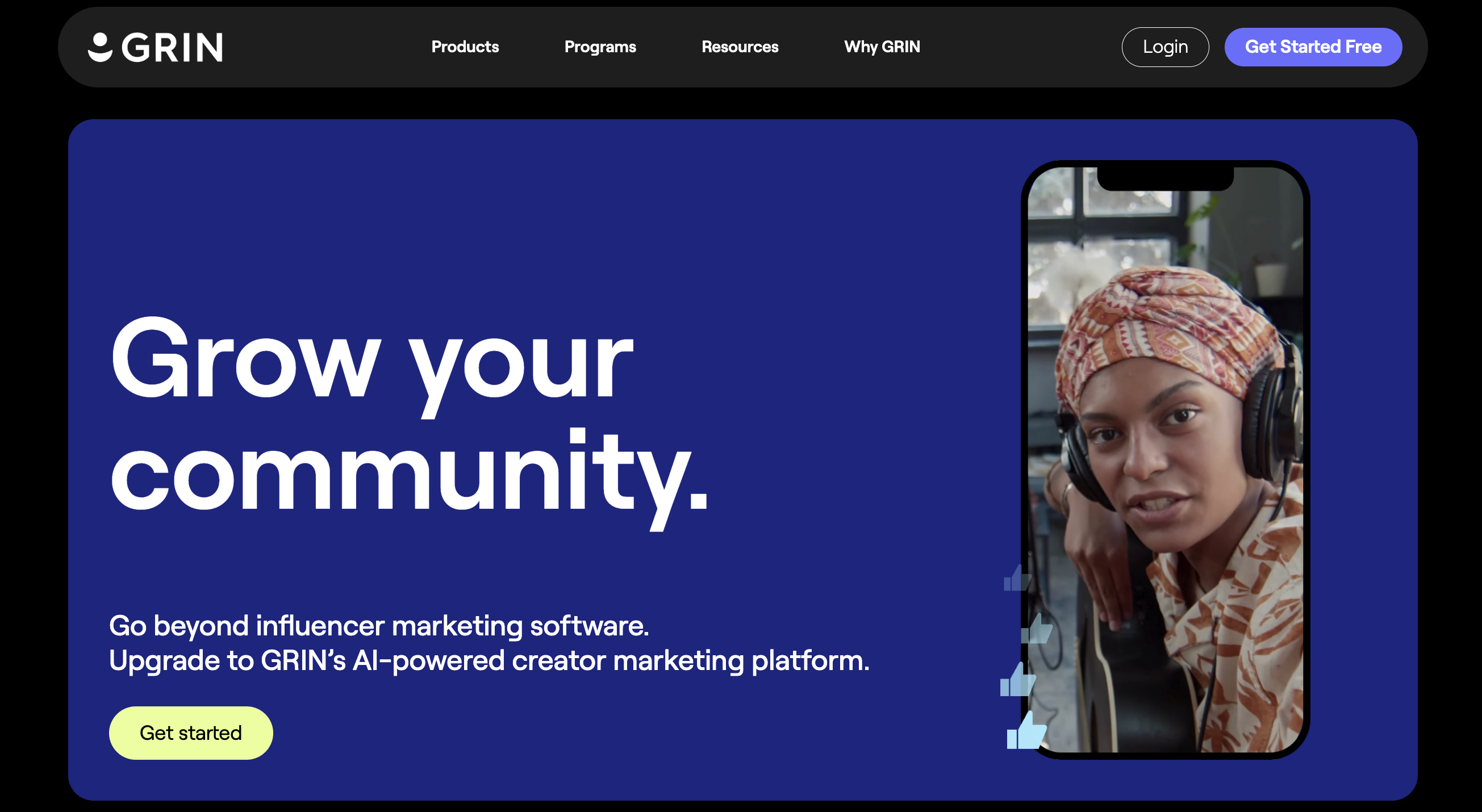
GRIN is a creator management platform built for ecommerce brands that want to manage influencer relationships in one system instead of across spreadsheets, inboxes, and separate affiliate tools. It combines creator discovery, outreach, CRM, contracts, gifting, payments, and performance tracking so teams can build longer-term partnerships and manage them at scale.
Key features:
- Influencer CRM: Centralizes creator profiles, notes, milestones, and conversation history so your team can manage every relationship in one place.
- Email outreach + follow-ups: Lets you automate personalized outreach sequences and track opens, clicks, and replies without leaving the platform.
- Creator discovery: Helps brands find creators by niche, engagement, audience data, and lookalike criteria.
- Briefs and approvals: Gives brands customizable briefs and a built-in approval workflow for deliverables and content edits.
- Affiliate tracking: Tracks creator-driven conversions and gives creators live visibility into performance.
- Gifting and product seeding: Syncs with ecommerce platforms so brands can fulfill creator product requests and monitor order status from one dashboard.
- Contracts and payments: Supports contract workflows and automated creator payouts to reduce finance and admin work.
- UGC library: Stores creator content, including Stories, so teams can reuse assets more easily across channels.
Pros:
- Strong fit for D2C and ecommerce brands because gifting, affiliate attribution, and creator relationship management are tightly connected.
- Review trends consistently highlight time savings versus manual workflows.
- Deep workflow coverage makes it easier to scale from one-off collabs to an always-on creator program.
- Customer service scores are strong on major review sites.
Cons:
- Pricing can be difficult for smaller brands to justify, especially if they are still testing influencer marketing.
- Some buyers report discovery quality issues, duplicates, and occasional bugs or slowdowns.
- Reporting is useful, but some users want more flexibility and deeper creator stats in-platform.
Integrations:
- Shopify: Syncs inventory, fulfillment, product seeding, and sales attribution into GRIN.
- WooCommerce: Connects store data for product gifting and revenue tracking inside creator campaigns.
- Klaviyo: Helps teams use creator and customer data together for more relevant lifecycle and creator communications.
- Slack: Reduces inbox sprawl by bringing creator communication and team coordination closer together.
- DocuSign: Simplifies contract creation, sending, and signing directly inside the workflow.
Pricing:
GRIN is mid-high to high priced versus the broader influencer platform market. Annual pricing starts at $25,000/year
Reviews:
4.5/5.0 (G2)
2. Aspire
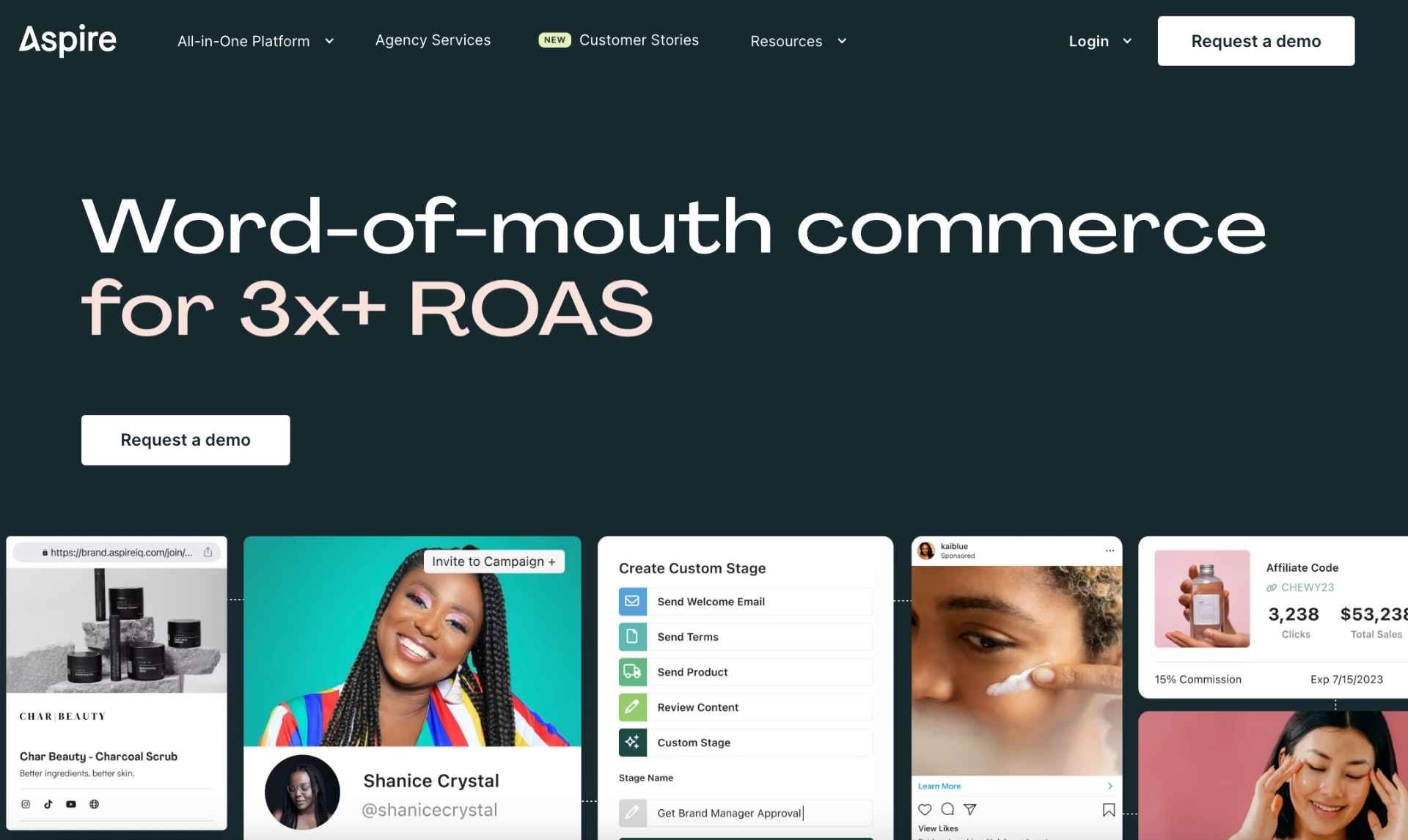
Aspire is an end-to-end influencer marketing platform designed to help brands discover creators, organize them inside a CRM, automate campaign workflows, and track revenue from partnerships. For relationship management specifically, it gives teams one place to manage outreach, briefs, approvals, gifting, and affiliate performance instead of switching between email, ecommerce, and reporting tools.
Key features:
- Influencer CRM: Organizes creators into groups, workflows, and campaign stages so teams can manage relationship status clearly.
- Creator discovery: Supports keyword, channel, engagement, demographic, and lookalike search, plus customer-to-creator matching via Shopify.
- Creator marketplace: Gives brands access to a large inbound creator marketplace where creators can apply directly to campaigns.
- Bulk outreach: Supports personalized email outreach, templates, and follow-up automations to reduce manual chasing.
- Contracts and briefs: Lets teams send campaign briefs, contracts, and content requirements within one workflow.
- Product gifting: Connects directly to Shopify so creators can select products and brands can track fulfillment status.
- Affiliate and sales tracking: Tracks codes, links, clicks, conversions, and commissions by creator.
- Content library and reporting: Stores campaign assets and exports creator, campaign, and sales performance reports.
Pros:
- Strong choice for ecommerce brands that want discovery, relationship management, gifting, and commerce tracking in one system.
- First-party social data partnerships are a meaningful advantage for brands that care about data quality.
- Automation and bulk workflows help lean teams manage more creators without adding headcount.
- Support and onboarding are frequently called out as a positive.
Cons:
- Pricing is on the expensive side for smaller D2C teams.
- Some users report platform complexity, technical issues, and inconsistent creator quality.
- Direct payment processing is not the headline strength compared with some alternatives.
Integrations:
- Shopify: Pulls in customer and order data, powers product gifting, and helps track direct sales from creators.
- Gmail: Syncs creator communications into Aspire so relationship history stays centralized.
- Outlook: Lets teams manage influencer communications from existing email infrastructure while keeping records in-platform.
- PayPal: Supports campaign-related payment workflows inside the broader creator program setup.
- WooCommerce: Extends product and ecommerce workflow support beyond Shopify for brands on WooCommerce.
Pricing:
Aspire is generally high priced within the influencer platform category. Pricing is quote-based rather than fully public; pricing was around $2,000 - 2,300/month for a multi-user setup, and Aspire currently offers a free self-guided demo rather than a standard self-serve free trial.
Reviews:
4.0 /5.0 (Capterra)
3. Influencer Hero

Influencer Hero is an all-in-one influencer marketing platform with a strong focus on CRM, structured outreach, and campaign operations. It helps brands discover creators, move them through relationship stages, automate follow-ups, track performance, and manage gifting, affiliate links, and payouts from one dashboard.
Key features:
- Influencer CRM: Uses relationship boards, tags, and bulk actions to manage outreach, deliverables, and campaign progress at scale.
- Discovery engine: Offers filters for location, demographics, interests, engagement, audience quality, and lookalike creators.
- AI-powered outreach: Supports personalized templates, drip sequences, and automated follow-ups tied to campaign stage.
- Chrome extension: Lets teams review creator stats and import influencers while browsing social platforms.
- Reporting and ROI tracking: Measures clicks, affiliate sales, and creator-level performance from the CRM.
- Gifting and seeding: Tracks shipping and product delivery for ecommerce-led creator campaigns.
- UGC collection: Auto-collects creator content and helps teams identify top-performing assets for reuse.
- Affiliate and payments: Manages links, codes, commissions, and payouts without exporting everything to a separate affiliate stack.
Pros:
- Influencer Hero offers robust CRM and outreach automation capabilities without requiring enterprise-level pricing, making it a practical option for growing teams.
- Compared to many competitors with quote-based models, its tiered monthly plans are clearer and easier to evaluate upfront.
- User feedback highlights a clean interface, intuitive workflows, and responsive onboarding, helping teams get up and running relatively quickly.
- The platform is particularly strong for brands focused on ROI, high-volume outreach, and revenue attribution through gifting and affiliate campaigns.
Cons:
- While the interface is user-friendly, the breadth of features means it can take time for teams to fully utilize all capabilities.
- The lack of a free trial can make it harder for teams to evaluate the platform before committing.
Integrations:
- Klaviyo: Syncs customer and subscriber data so brands can identify influencers already in their audience and export creator profiles back into Klaviyo.
- WooCommerce: Creates trackable affiliate links and discount codes and syncs clicks and sales back into the CRM.
- Mailchimp: Helps brands discover creators in their email lists and push influencer data into Mailchimp audiences.
- Slack: Supports team coordination around creator workflows and campaign execution.
- Zapier: Connects Influencer Hero to thousands of tools for no-code workflow automation.
Pricing:
Influencer Hero is usually low-mid to mid priced relative to the broader influencer platform market. Current help-center pricing lists $649/month for Standard, $1,049/month for Pro, and $2,490/month for Business based on outreach volume/month, with monthly, quarterly, and annual commitments.
Reviews:
5.0/5.0 (Capterra)
4. Traackr
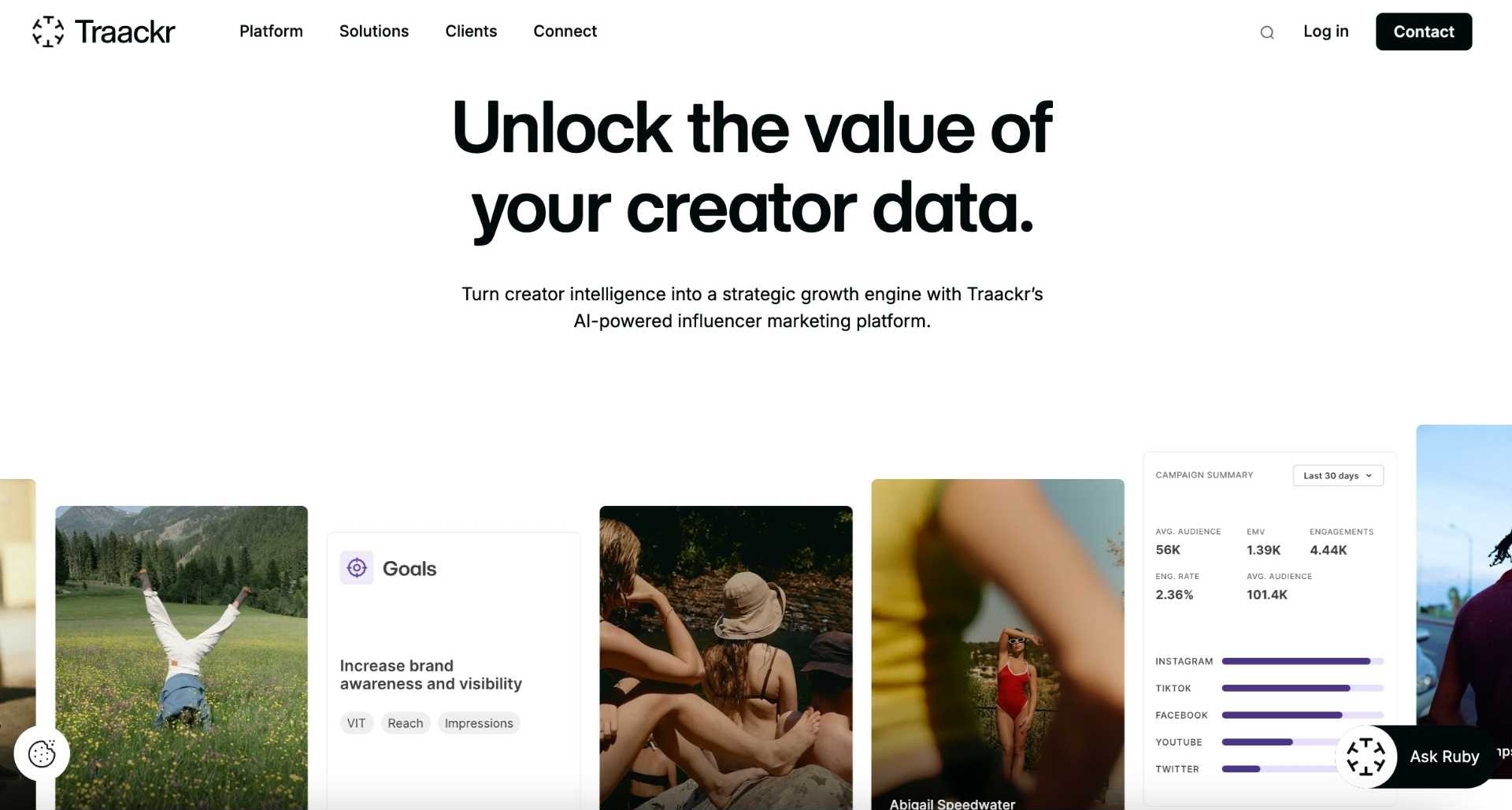
Traackr is an enterprise-oriented creator marketing platform that combines influencer discovery, relationship management, campaign execution, and benchmarking. Its relationship management angle is less about lightweight outreach and more about helping larger teams organize creator partnerships, compare performance, and optimize budget allocation across regions, brands, and campaigns.
Key features:
- Influencer CRM: Stores creator history, notes, tags, and campaign status so teams can manage relationships over time.
- Discovery and vetting: Searches a database of 6M+ influencers with filters for audience, performance history, and prior brand collaborations.
- Brand Vitality Score: Benchmarks brand visibility, influence, and trust versus competitors for more strategic creator planning.
- Budget optimization: Helps teams decide what to spend on each creator based on historic results and benchmarks.
- Cost-efficiency dashboards: Tracks CPC, CPE, CPV, and related efficiency metrics so teams can optimize creator spend.
- Live campaign tracking: Surfaces content performance and ROI in real time rather than only after campaign wrap-up.
- Affiliate and payout tools: Supports link generation, commission tracking, and creator payments.
- Application pages: Lets brands create custom-branded pages for inbound creator applications.
Pros:
- Excellent fit for brands that care about measurement, benchmarking, and budget optimization as much as pure discovery.
- Well suited to global teams running creator programs across multiple markets.
- Review trends point to strong onboarding and strategic support.
- Stronger than many tools on executive-level reporting and performance benchmarking.
Cons:
- Pricing is firmly enterprise-level and can be hard to justify for smaller D2C brands.
- Some users report lag, delayed tracking, and export friction.
- There is a learning curve if your team only needs lightweight CRM and outreach.
- Audience and demographic accuracy can be a sticking point in some use cases and markets.
Integrations:
- Shopify: Automates product seeding and fulfillment while tying gifting decisions back to creator performance.
- Email: Supports personalized creator outreach and conversation tracking for team-wide visibility.
- Ecommerce: Tracks clicks, conversions, and revenue from creator links and codes across ecommerce setups.
- Payments: Automates creator payment collection and payouts in local currencies.
- SSO / Data Lake: Supports enterprise login workflows and lets larger organizations combine creator data with the rest of their internal analytics stack.
Pricing:
Traackr is high priced compared with most influencer marketing platforms. Official pricing is quote-based, but Capterra shows a starting price from roughly $32,500/year, with annual contracts and no publicly available free trial.
Reviews:
4.3 / 5.0 (G2)
5. Later
Later’s influencer marketing platform is built around campaign intelligence, creator discovery, workflow automation, and ROI measurement. For relationship management, it helps brands discover best-fit creators, organize campaign communication and approvals, guide incentive decisions, and track paid, organic, and sales performance in one place.
Key features:
- Influencer CRM and campaign workflow: Supports end-to-end campaign management with unlimited users, campaigns, and creator partnerships on platform plans.
- Creator discovery: Uses brand signals to surface best-fit creators and flag potential risks early.
- Incentive advisor: Helps teams understand what creators are actually paid across channels so they can structure offers more confidently.
- Performance reporting: Brings paid, organic, and sales reporting together so teams can see what is working across the full funnel.
- Predictive intelligence: Later EdgeAI uses historical campaign data to help forecast performance before launch.
- Shopify gifting: Lets creators choose products, automates shipment-related tasks, and measures sent-product performance.
- Social listening: Included in platform-level benefits for brands that want a broader view of brand health and sentiment.
- Ratings and reviews sourcing: Helps brands gather authentic ratings and reviews at scale alongside creator programs.
Pros:
- Strong option for brands that want influencer marketing and broader social strategy to sit closer together.
- Review trends suggest it is especially effective for teams managing a high volume of concurrent campaigns.
- Shopify gifting workflow is particularly compelling for ecommerce brands running seeding or ambassador programs.
- Combines platform access with optional service layers for brands that need more support.
Cons:
- Pricing is not public, which makes side-by-side evaluation harder.
- Some users report technical bugs, slow loading, and reporting inconsistencies.
- Certain workflow details, like search saving and inbox handling, still create friction for some teams.
- It is better suited to brands with a structured creator program than to very small teams doing occasional campaigns. This is an inference based on its enterprise-style packaging and feature set.
Integrations:
- Shopify: Automates product gifting, creator product selection, code creation, and campaign-level measurement.
- Bazaarvoice: Connects creator programs to ratings-and-reviews workflows.
- Yotpo: Helps brands pair influencer content and relationships with review collection and social proof programs.
- PowerReviews: Extends Later into review generation and product feedback workflows.
- Adobe: Supports content and creative workflow integrations for larger marketing teams.
Pricing:
Later influencer platform is generally high priced and positioned for brands running a more serious creator program. The company offers Platform, Platform + Services, and Services plans, but pricing is request-only rather than public, so buyers need a demo or sales process to get exact costs. Starts from $28,500/year.
Reviews:
4.4 / 5.0 (Capterra)


6. Upfluence
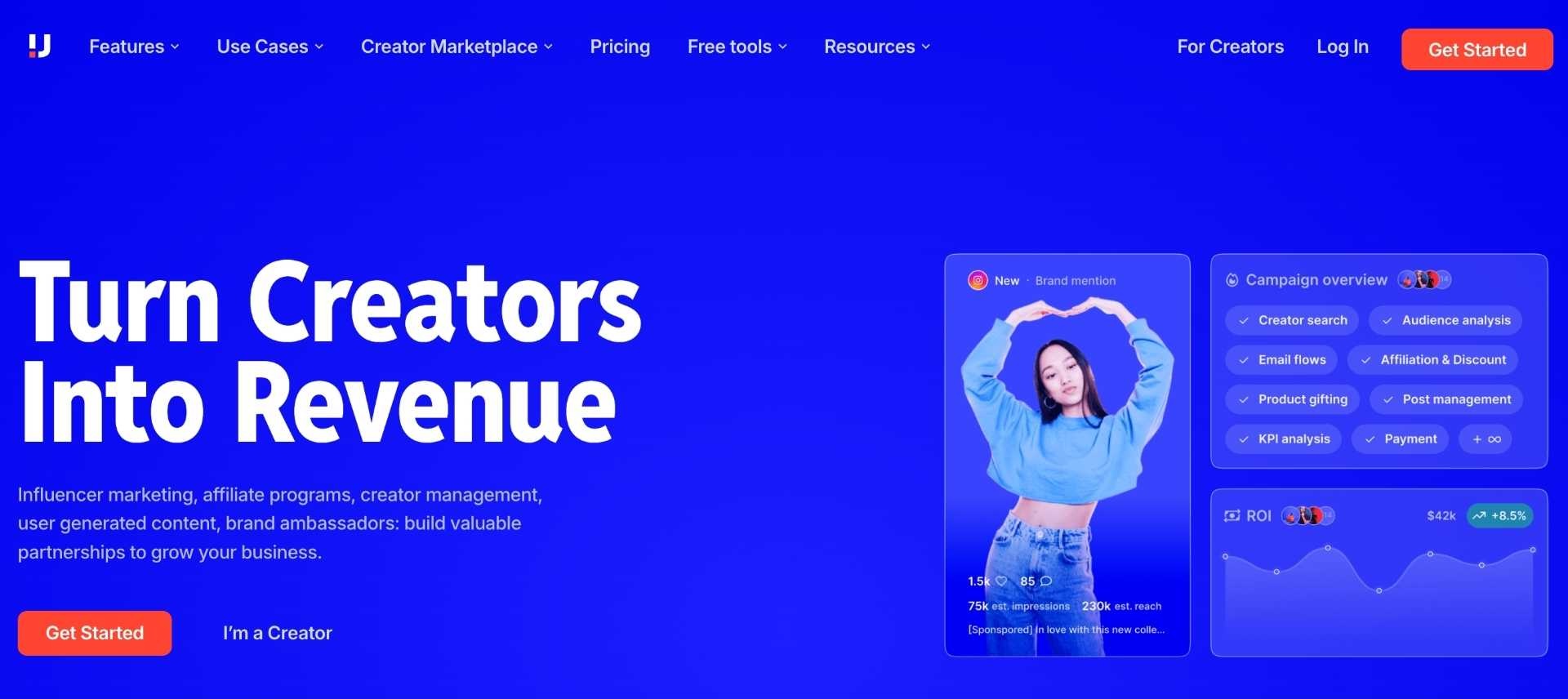
Upfluence is an end-to-end influencer marketing platform built to help ecommerce brands discover creators, manage influencer relationships, run outreach, and track revenue in one place. From a relationship-management perspective, it acts as a centralized influencer CRM where teams can organize contacts, sync conversations, manage campaigns, and tie creator activity back to gifting, affiliate performance, and sales.
Key features:
- Influencer CRM: Stores creator profiles, outreach history, and campaign activity so your team can manage influencer relationships from a single system.
- Creator discovery: Searches a 12M+ influencer database with filters for niche, location, follower size, engagement, and audience data.
- AI-powered campaign assistance: Jaice AI helps brands build campaigns faster by supporting workflow automation, creator matching, and execution.
- Bulk outreach and follow-ups: Supports email outreach and follow-up flows so teams can scale communication without losing visibility into conversations.
- Affiliate and sales tracking: Connects creator activity to coupon codes, links, clicks, conversions, and revenue.
- Product seeding and gifting: Lets brands trigger orders, ship products, and track seeding progress through ecommerce integrations.
- Creator payments: Supports bulk creator payouts through payment integrations and in-platform workflows.
- Social listening: Includes social listening to help brands spot relevant content and creator opportunities.
Pros:
- Strong fit for D2C and ecommerce brands because it combines CRM, outreach, gifting, affiliate tracking, and payments in one platform.
- Integrations are a real strength, especially for Shopify, Amazon, WooCommerce, and email-based workflows.
- User feedback commonly highlights the breadth of features and the ability to run creator programs without stitching together multiple tools.
Cons:
- Pricing is usually too high for smaller brands, especially with a 12-month minimum contract.
- User feedback points to a learning curve, some clunky workflows, and campaign-editing limitations.
- Some reviewers have flagged creator-location inaccuracies and inconsistent support experiences.
Integrations:
- Shopify: Syncs gifting, customer data, coupon codes, and sales attribution into Upfluence.
- Amazon Attribution: Helps brands track affiliate links and performance tied to Amazon sales.
- WooCommerce: Connects store operations to seeding, coupon creation, and sales tracking.
- Gmail: Lets teams contact creators from their own inbox while keeping communication synced in-platform.
- Klaviyo: Identifies influencers in your mailing lists and enriches their profiles for more targeted flows.
Pricing:
Upfluence is generally mid-high to high priced versus the wider influencer platform market. Pricing is custom and the company pushes buyers into a sales process, with a 12-month minimum contract; starts from $2,000/month on an annual term
Reviews:
4.3 / 5.0 (Capterra)
7. Captiv8
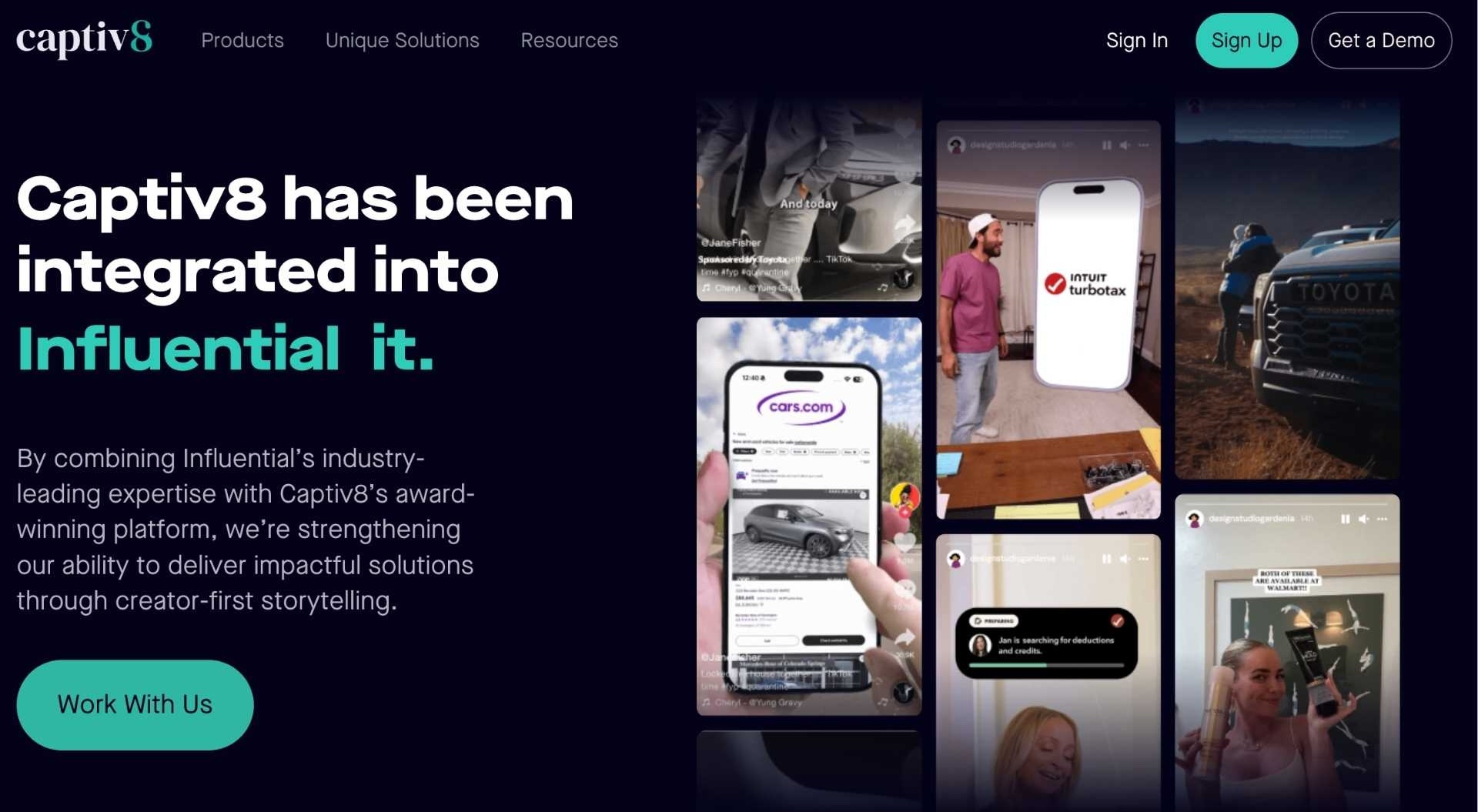
Captiv8 is an enterprise creator marketing platform that helps brands discover creators, manage campaigns, communicate with influencers, and measure performance from one system. For relationship management, it gives teams a CRM-style workflow for approving creators, collaborating internally, chatting with talent, and tracking campaign history across multiple programs.
Key features:
- Influencer CRM / campaign workspace: Lets teams approve, discard, import, and manage creators collaboratively across campaigns.
- Creator discovery: Searches 15M+ creators, posts, and audiences with highly granular filters.
- Brand safety and sentiment analysis: Includes safety scoring and sentiment tools to flag potential risk areas before activation.
- Global post search: Finds creators or posts mentioning brands across captions, hashtags, visuals, and sponsored content.
- Direct creator communication: Supports in-platform chat and outreach-related collaboration.
- Custom reporting: Tracks sales, engagement, impressions, EMV, ROAS, top posts, and more, with customizable KPI views.
- Storefronts and affiliate commerce: Offers creator and brand storefronts, though this is tied to a more expensive add-on.
- Public report sharing: Makes it easy to share report links with stakeholders who do not have a license.
Pros:
- Strong enterprise option for teams that care about competitive intelligence, collaboration, and highly customizable reporting.
- Broad measurement capabilities stand out, especially for ROAS, EMV, and custom KPI reporting.
- Discovery is unusually deep, especially if brand safety and audience filters matter to your team.
Cons:
- Pricing is clearly enterprise-grade and likely overkill for most small or mid-sized D2C brands.
- File-based research and broader user commentary repeatedly point to support and payment issues.
- The integration stack looks narrower than some ecommerce-focused competitors.
Integrations:
- Shopify: Connects creator commerce and ecommerce workflows to social listening, affiliate marketing, and payments.
- Refersion: Supports affiliate tracking and revenue measurement alongside creator campaigns.
- Looker: Pulls Captiv8 campaign data into BI dashboards for deeper internal reporting.
- Tableau: Gives data teams another route for advanced performance visualization and custom dashboards.
- Google Analytics: Connects campaign data to broader site and conversion analysis.
Pricing:
Captiv8 is high priced in this category. Capterra lists pricing as contact vendor with no free trial, start from $25,000 for annual contract, a $3,000 onboarding fee, and an extra $20,000 to $30,000 per month for storefront and affiliate commerce features.
Reviews:
4.7 / 5.0 (G2)
8. Influencity

Influencity is an all-in-one influencer marketing platform organized around Discover, IRM, Campaigns, and Reports, making it especially useful for brands that want a structured relationship-management workflow. Its IRM module functions as a dedicated influencer CRM where teams can save creators, unlock data, segment lists, centralize communications, and manage campaigns from first outreach through reporting.
Key features:
- Influencer CRM (IRM): Lets brands build a private influencer database with saved profiles, emails, notes, pricing, and communication history.
- Creator discovery: Searches 200M+ profiles with filters for interests, audience demographics, and platform-specific signals.
- Campaign manager: Gives teams a Kanban-style workflow to manage tasks, deliverables, budgets, and approvals.
- Outreach and email sequences: Supports templates, bulk emails, and follow-up sequences from within the platform.
- Campaign reporting: Tracks public post data, stories, reels, impressions, and top-performing posts, with exportable reports.
- Casting calls / recruitment: Lets brands publish inbound creator opportunities alongside proactive discovery.
- Seeding and payments: Supports ecommerce seeding and bulk influencer payments.
- Monitoring and social listening: Adds mention tracking and monitoring tools for broader campaign visibility.
Pros:
- Good balance of breadth and affordability compared with more enterprise-heavy tools.
- Flexible pricing is a major plus: free trial, self-serve plans, upgrade paths, and no mandatory account permanence.
- Strong fit for brands that want a proper CRM layer, not just discovery and analytics.
Cons:
- The platform is software-only, so brands still need to handle negotiation and influencer hiring themselves.
- User feedback suggests reporting and scalability can feel lighter for larger, more complex programs.
- Email integration has some limitations, including issues with certain cloud-based providers and two-factor authentication.
Integrations:
- Shopify: Powers influencer seeding, discount-code workflows, and ecommerce-linked campaign management.
- Microsoft Outlook / Office email accounts: Lets teams connect supported inboxes and centralize creator communication inside IRM.
- Instagram: Feeds into discovery, analysis, and campaign tracking.
- TikTok: Supports discovery, analysis, and campaign execution workflows.
- YouTube: Extends creator analysis and campaign management across long-form video creators.
Pricing:
Influencity is generally low-mid to mid priced among influencer marketing platforms. Its pricing page confirms a 7-day free trial on all plans, three plan tiers, no mandatory account permanence, and self-serve cancellation; starting price of $318/month.
Reviews:
4.3 / 5.0 (G2)
9. CreatorIQ

CreatorIQ is an enterprise creator marketing platform built for brands that need deep governance, measurement, and team-wide workflows across large creator programs. Its creator network acts as a private CRM where teams can manage long-term relationship data, tag creators, store campaign history, centralize communication, and tie those relationships into briefs, approvals, payments, and analytics.
Key features:
- Influencer CRM / creator network: Stores creator data, custom tags, contact info, questionnaires, and past campaign history in a private database.
- AI-powered creator discovery: Uses semantic search, detailed filters, and public social data to find best-fit creators.
- One-sheet approvals: Lets stakeholders review creators and approve or reject them through shareable links.
- Campaign execution: Supports briefs, deliverables, content approvals, and creator dashboards that streamline collaboration.
- Creator payments and compliance: Manages payouts in-platform with tax documentation and global compliance support.
- Custom reporting: Offers live dashboards, executive-ready reports, and no-login share links.
- BenchmarkIQ and SafeIQ: Adds competitive benchmarking and AI-powered brand safety for enterprise teams.
- Creator Connect: Provides branded creator signup pages as an add-on.
Pros:
- One of the strongest options for enterprise-scale governance, reporting, and workflow standardization.
- Direct platform partnerships and API-driven data are a meaningful advantage for measurement accuracy.
- Support and strategic services are a recurring strength in both product positioning and user feedback.
Cons:
- Pricing is firmly enterprise-level and annual contracts make it a poor fit for brands testing influencer CRM on a smaller budget.
- User feedback points to friction around reporting flexibility, search relevance, and occasional technical issues.
- Affiliate conversion reporting is still more manual than some ecommerce-first alternatives.
Integrations:
- Shopify: Connects gifting workflows, shipping visibility, and creator product data to campaign execution.
- Sprinklr: Brings creator data into unified social measurement across owned, earned, paid, and creator channels.
- DocuSign: Supports creator contracting inside broader enterprise workflows.
- Google Analytics: Connects creator activity with broader marketing and site-performance reporting.
- Looker / Tableau: Extends CreatorIQ data into enterprise BI workflows through ExchangeIQ and related integrations.
Pricing:
CreatorIQ is high priced relative to the category. There are different plans:
- Basic Plan: Starts at $35,000/year. Includes 1,000 contact creators per month
- Standard Plan: Starts at $50,000/year. Includes 2,500 contact creators per month
- Professional Plan: Starts at $90,000/year. Includes 5,000 contact creators per month
- Enterprise Plan: Starts at $200,000/year. Includes 7,500 contact creators per month
Reviews:
4.4 / 5.0 (Capterra)
10. Modash
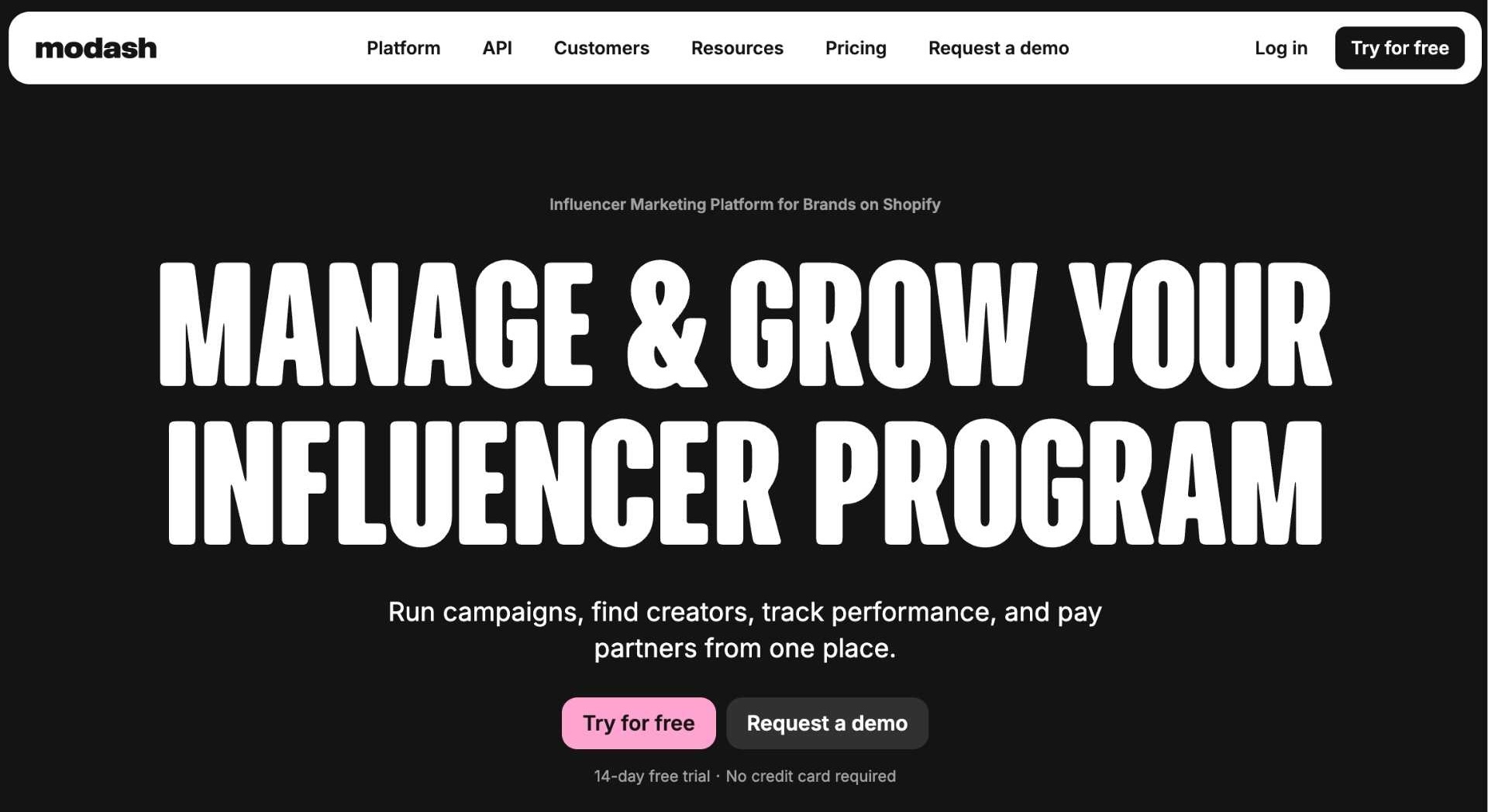
Modash is a creator discovery, outreach, CRM, tracking, and affiliate platform that focuses on doing a smaller set of workflows exceptionally well. For relationship management, it gives brands a practical influencer CRM for saving creators to lists, syncing outreach through Gmail or Outlook, tracking relationship stages, and connecting creator activity to gifting, affiliate revenue, and payments.
Key features:
- Influencer CRM: Manages creator lists, relationship stages, and campaign status as your program grows.
- Creator discovery: Searches 350M+ public profiles with strong filters for niche, audience, and content signals.
- Inbox integration: Connects Gmail or Outlook so communication stays tied to the right creator and campaign context.
- AI discovery tools: Lets brands describe a creator style or upload an image to find visually similar creators.
- Content and campaign tracking: Automatically captures posts and campaign metrics so teams do not miss creator content.
- Shopify gifting and affiliate workflows: Handles discount codes, gifting, affiliate links, and revenue tracking in one workflow.
- Payments: Supports creator payouts and commission-based workflows, depending on plan.
- Find Your Fans: Helps brands identify creators who already follow their brand, which is useful for relationship-first outreach.
Pros:
- Excellent value proposition for brands that want serious CRM, discovery, and tracking without enterprise-style opacity or contract rigidity.
- Clear pricing and a free trial make it easier for D2C teams to evaluate before committing.
- Verified user feedback is especially strong around ease of use, discovery quality, and workflow consolidation. (Capterra)
Cons:
- Integration breadth is intentionally narrow, with Shopify carrying most of the commerce load.
- It still lacks certain enterprise extras, including built-in content licensing tools.
- Some users note that inbox and bulk-email functionality has been more limited than the rest of the product.
Integrations:
- Shopify: Connects gifting, discount codes, affiliate links, sales tracking, and creator performance to your store.
- Gmail: Syncs email outreach and relationship history into Modash’s creator workflow.
- Outlook: Gives teams the same inbox-sync workflow if they operate in Microsoft’s email ecosystem.
- Instagram: Supports creator discovery and campaign tracking across Instagram content.
- TikTok / YouTube: Extends discovery and campaign tracking across both platforms for multi-channel creator programs.
Pricing:
Modash is generally low-mid to mid priced compared with the broader influencer platform market. Its pricing is unusually transparent: Essentials starts at $199/month, Performance scales up for larger creator volumes, Enterprise starts at $14,700/year, there is a free trial, and brands can choose monthly or yearly plans with the ability to upgrade, downgrade, or cancel.
Reviews:
4.9 / 5.0 (Capterra)
Final Thoughts
Choosing the right influencer CRM and relationship management tool ultimately comes down to your brand’s scale, workflow complexity, and how deeply you want to integrate influencer marketing into your revenue engine. While platforms like GRIN, Aspire, and Upfluence excel at ecommerce integrations and end-to-end workflows, others like CreatorIQ and Traackr cater more to enterprise teams needing advanced analytics and governance. At the same time, tools like Influencer Hero, Modash, and Influencity offer a more flexible and cost-effective approach for growing D2C brands.
The key takeaway is that influencer marketing is no longer just about discovery—it’s about building, managing, and scaling long-term creator relationships, and the right CRM tool can be the difference between fragmented campaigns and a high-performing, repeatable growth channel.

.png)


.jpg)