

10 Best Vamp Alternatives • Key Criteria • Vamp Overview • Best Vamp Alternatives • Influencer Hero • Upfluence • Aspire • CreatorIQ • Later • IZEA • Traackr • Influencity • Heepsy • Lefty • Final Thoughts • FAQs
10 Best Vamp Alternatives for Influencer Marketing
Managing influencer marketing at scale has become a core growth lever for D2C brands, but doing it manually across spreadsheets, DMs, and disconnected tools quickly breaks down. Influencer marketing software helps centralize creator discovery, outreach, campaign workflows, and performance tracking—making it easier to scale partnerships and tie creator activity back to real business outcomes. Vamp has emerged as a popular option thanks to its structured workflows, campaign forecasting, and paid amplification capabilities, but common feedback points to challenges around pricing transparency, creator discovery depth, and inconsistent campaign performance. As a result, many teams start exploring Vamp alternatives that offer stronger eCommerce integrations, better analytics, or more flexible pricing models.
In this guide, we’ll break down the 10 best Vamp alternatives—Influencer Hero, Upfluence, Aspire, CreatorIQ, Later, IZEA, Traackr, Influencity, Heepsy, and Lefty—to help you find the right influencer marketing software for your brand.
Key Criteria for Evaluating Influencer Marketing Platforms
Core Features
Evaluation of essential influencer marketing capabilities, including influencer discovery, outreach, CRM, campaign management, reporting, and content workflows.
Pricing & Flexibility
Comparison of pricing models, subscription plans, and contract terms to match different budgets and growth stages.
Customer Reviews & Satisfaction
Analysis of user feedback from trusted review platforms, focusing on usability, reliability, customer support, and overall performance.
Pros & Cons
Review of each platform’s strengths and limitations to highlight where it performs well and where it may fall short based on different use cases.
Integrations
Review of the most important integrations (e.g., Shopify and other tech tools), highlighting what each integration enables in one sentence.
Vamp Overview
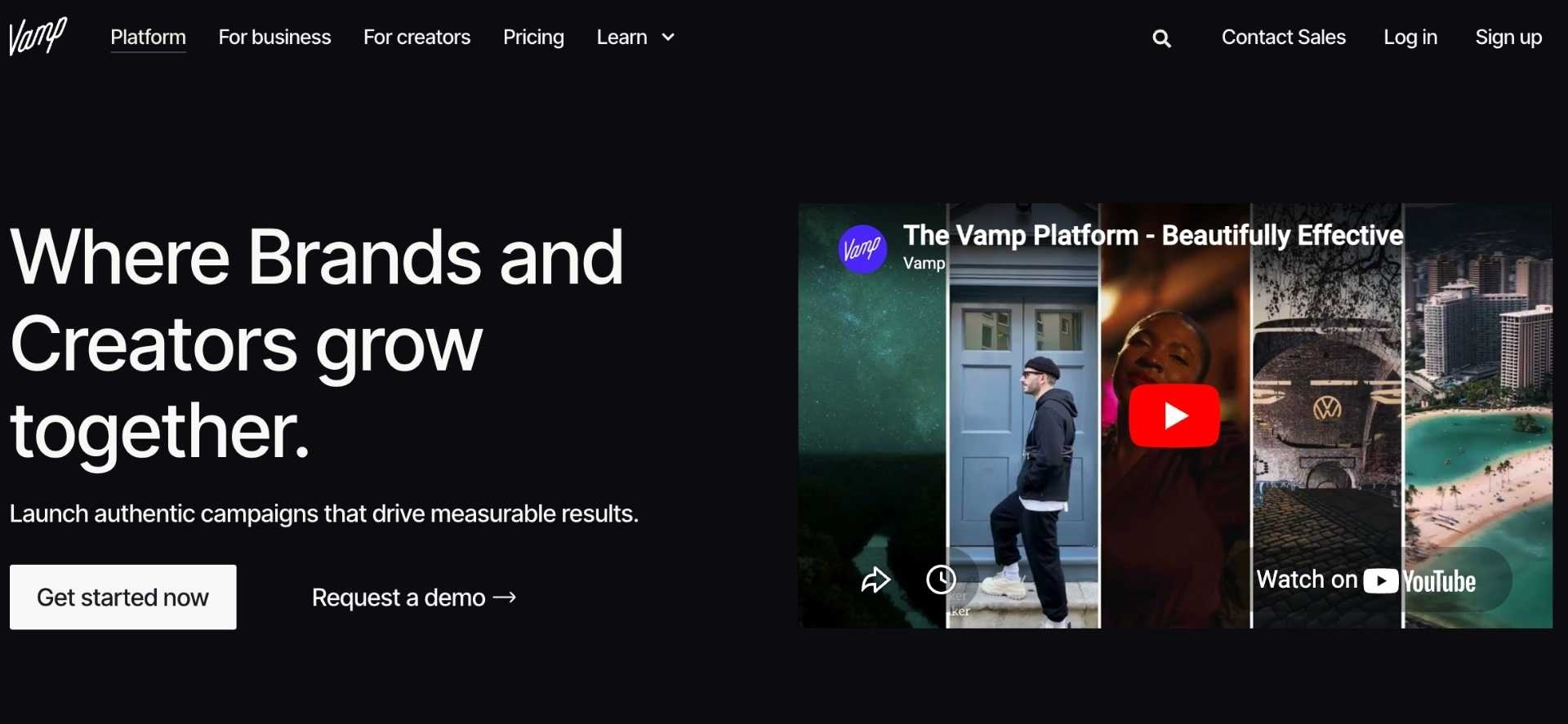
Vamp is an end-to-end influencer marketing platform designed to help brands plan, execute, and scale creator campaigns from a single dashboard. Built with a strong focus on content quality and paid amplification, Vamp goes beyond basic influencer discovery by combining creator sourcing, campaign workflows, performance tracking, and media boosting into one unified system.
The platform is particularly known for its campaign forecasting tools, structured collaboration workflows, and deep integrations with platforms like Meta and TikTok, making it a solid choice for brands that want both organic influencer reach and measurable paid performance.
Key Features
• Campaign Forecasting (Campaign Calculator) Vamp’s Campaign Calculator allows brands to estimate reach, engagement, and media value before launching a campaign—helping teams plan budgets and set realistic expectations upfront.
• AI-Powered Creator Matching (CAST) The platform uses machine learning to match brands with creators based on audience fit, content style, and campaign goals—going beyond simple keyword or follower-based discovery.
• Structured Campaign Workflows Vamp standardizes campaign execution with built-in briefs, timelines, and deliverable tracking—reducing reliance on spreadsheets and manual coordination.
• Content Approval & Collaboration Tools Teams can review drafts, leave feedback, and approve content within the platform. Each piece of content includes a dedicated discussion thread for internal stakeholders.
• Dynamic Creator Pricing Vamp provides upfront, editable pricing based on factors like engagement, audience demographics, and content format—reducing negotiation friction and speeding up campaign setup.
• Real-Time Reporting & First-Party Data Access live campaign performance metrics, including reach, engagement, and audience insights pulled directly from platform integrations.
• Paid Amplification & Boosting Brands can boost high-performing creator content through Meta and TikTok directly from Vamp, bridging the gap between influencer marketing and paid media.
• Content Licensing & UGC Reuse Easily license and repurpose creator content for ads, social media, and other marketing channels.
• Creator Re-Engagement Reconnect with high-performing creators from past campaigns to build long-term partnerships and ambassador programs.
Pricing
Vamp uses a flexible pricing model rather than fixed subscription tiers:
• Pay-As-You-Go
◦ No long-term commitment
◦ Campaign budgets start at ~$1,000
◦ Brands fund campaigns via a digital wallet
• Annual Agreement (Custom Pricing)
◦ 12-month contract
◦ Includes onboarding, strategic support, and account management
◦ Access to insights, planning sessions, and priority support
• Vamp Pro (Managed Service Add-On)
◦ Charged as a percentage per campaign
◦ Includes hands-on campaign management, strategy, and optimization
Reviews
4.4 / 5.0 (G2)
Integrations
• Meta (Instagram & Facebook): Enables real-time audience insights and allows brands to boost influencer content directly through Ads Manager.
• TikTok: Supports campaign tracking and paid amplification with access to TikTok creator data.
• TikTok Creator Marketplace: Helps streamline creator discovery and performance tracking within TikTok’s ecosystem.
• YouTube: Provides access to creator data and performance insights for YouTube campaigns.
• Facebook Ads Manager: Connect ad accounts to run paid amplification campaigns using influencer-generated content.
Pros
• Built-in campaign forecasting Most platforms focus on execution, but Vamp stands out by helping brands predict outcomes before spending—making it easier to justify budgets internally.
• Strong paid media integration The ability to boost influencer content directly through Meta and TikTok makes Vamp especially valuable for performance-driven teams.
• Improved collaboration workflows Features like post-level chat and structured approvals reduce friction between marketing, legal, and creative teams.
Common Drawbacks of Vamp
Less pricing transparency
The combination of dynamic creator pricing, wallet-based budgets, and platform fees can make total costs harder to estimate compared to fixed SaaS tools.
Limited depth in creator discovery vs large databases
Compared to platforms with hundreds of millions of profiles, Vamp’s discovery can feel more curated but less expansive.
Content usage rights can require extra management
Brands looking to heavily reuse UGC across channels may need to carefully manage licensing terms.
Campaign performance can vary significantly
Results depend heavily on creator selection and execution, which can lead to inconsistent outcomes for some teams.
Learning curve for self-serve campaigns
While powerful, teams new to influencer marketing may need time to fully leverage Vamp’s workflows and paid amplification features.
Best Vamp Alternatives
| TOOL | REVIEWS | BEST FOR | TRIAL INFO | PRICING | ||
|---|---|---|---|---|---|---|
1 |

|
⭐ | Influencer CRM & automation | Book Demo | Pricing | Website |
2 |

|
⭐ | Influencer discovery | Book Demo | Pricing | Website |
3 |

|
⭐ | Influencer partnerships | Book Demo | Pricing | Website |
4 |

|
⭐ | Enterprise influencer marketing | Book Demo | Pricing | Website |
5 |

|
⭐ | Social media & influencer campaigns | Book Demo | Pricing | Website |
6 |
|
⭐ | Influencer marketplace | Book Demo | Pricing | Website |
7 |

|
⭐ | Enterprise influencer analytics | Book Demo | Pricing | Website |
8 |

|
⭐ | Campaign management | Book Demo | Pricing | Website |
9 |

|
⭐ | Influencer discovery | Book Demo | Pricing | Website |
10 |

|
⭐ | Influencer analytics & discovery | Book Demo | Pricing | Website |

Influencer Hero
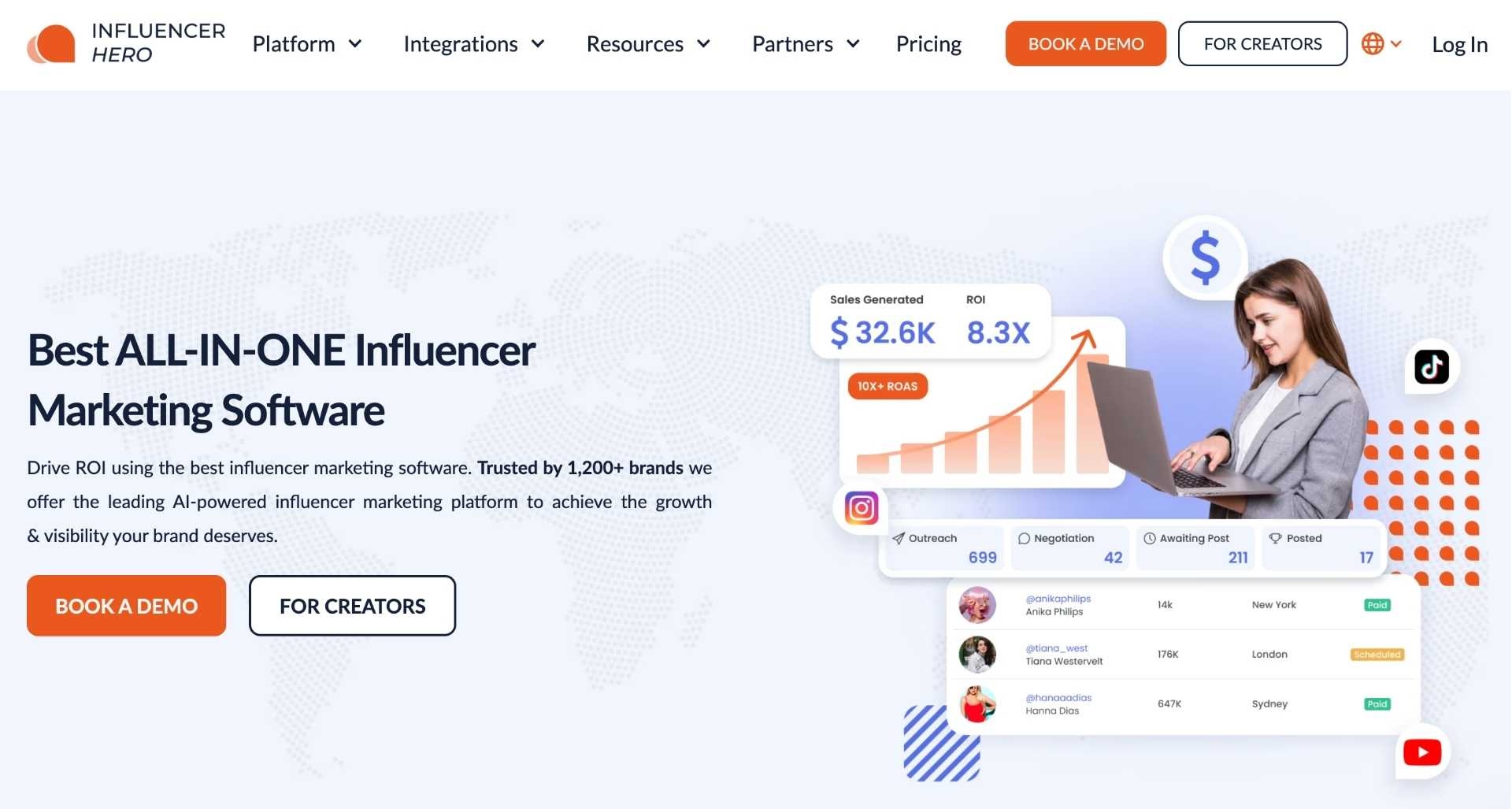
Influencer Hero is an all-in-one influencer marketing platform built for DTC and eCommerce brands that want discovery, outreach, CRM, gifting, affiliate tracking, and ROI reporting in one workflow. Its positioning is more operational than marketplace-led: it is designed to help lean teams run high-volume creator programs with automation, storefront integrations, and measurable revenue attribution.
Key Features
• Influencer discovery with workflow-first filtering: Search creators by audience, niche, engagement, and other fit signals, then move them directly into campaign pipelines instead of exporting lists into separate tools.
• Bulk outreach and email automation: Influencer Hero supports one-to-one and bulk outreach, AI-assisted personalization, and multi-step follow-up sequences to help teams scale outreach without making it feel fully manual.
• Campaign-centric CRM: Its CRM is built around deal flow, deliverables, statuses, and performance tracking, which is especially useful for brands managing many creators at once.
• Product seeding and gifting management: Shopify, WooCommerce, and other commerce connections help brands send products, track fulfillment, and connect seeding activity to campaign execution.
• Affiliate and revenue attribution: Brands can generate creator-specific links and discount codes, track conversions, and monitor creator-level revenue inside the platform.
• UGC collection and content library: The platform automatically captures creator posts into a centralized library so teams can download and repurpose top-performing assets.
• Application pages and storefronts: Brands can launch branded application pages and creator storefronts to increase inbound deal flow and support affiliate-led commerce.
• API and automation options: Business-tier users can access custom API integrations and broader workflow automation for more advanced operational setups.
Pricing
Influencer Hero offers flexible pricing based on outreach volume and you can have unlimited creators in your CRM:
• Standard — $649/month (up to 1,000 outreach messages per month)
• Pro — $1,049/month (up to 5,000 outreach messages per month)
• Business — $2,490/month (up to 10,000 outreach messages per month)
• Custom / Agency — Tailored pricing
Custom pricing is available for agencies and larger teams
Reviews
4.9/5.0 (Capterra)
Pros
• Campaign-centric CRM automation: Influencer Hero’s strongest differentiator is how tightly its CRM, bulk actions, and automated follow-ups are connected, which makes it especially strong for brands managing many creator relationships simultaneously.
• Broader eCommerce flexibility than many DTC tools: It supports Shopify, WooCommerce, Amazon, Webflow, and other commerce environments, which is useful for brands that do not want to be locked into a single storefront stack.
• Fast UGC-to-revenue workflow: Product gifting, post capture, creator links, and sales attribution live in the same system, which reduces the amount of tool-stitching needed to prove ROI.
Cons
• Higher pricing for smaller teams: May be less accessible for early-stage brands or those with limited budgets
• Steep learning curve: Feature depth means onboarding and setup can take time
Integrations
• Shopify — syncs product data, creates gifting orders, and ties creator activity to clicks, orders, and revenue.
• WooCommerce — supports gifting, order tracking, and conversion attribution for WooCommerce stores.
• Amazon — helps marketplace brands track creator-led affiliate performance beyond a standard DTC storefront.
• Zapier — connects Influencer Hero to spreadsheets, CRMs, and custom workflows without requiring a fully custom build.
• WhatsApp — integrates to send and receive messages directly within the CRM, sync conversations in real time (including group chats), and manage influencer communication without leaving the platform.
Vamp vs Influencer Hero
Vamp is stronger when a brand wants a polished creator campaign workflow with paid amplification built into the experience, especially across Meta and TikTok. Influencer Hero is more commerce- and CRM-centric: it puts more emphasis on automated outreach, affiliate tracking, gifting operations, storefront integrations, and ROI attribution tied directly to eCommerce workflows.
In practice, Vamp fits brands that care more about managed creator execution, content approvals, and boosting; Influencer Hero fits brands that want more operational control, more outbound scale, and tighter revenue tracking. Influencer Hero is also more transparent and accessible on price, while Vamp remains more campaign-budget-driven and custom.
Upfluence

Upfluence is an influencer and affiliate marketing platform built primarily for eCommerce brands. Its core value proposition is that it connects influencer discovery and campaign management with customer, order, and storefront data, making it especially appealing to brands that want to identify creators inside their existing customer base and tie creator partnerships to measurable sales.
Key Features
• Large creator discovery database: Upfluence offers creator search across major social platforms with filters for location, audience, niche, engagement, and more.
• Customer-to-creator identification: One of its standout capabilities is surfacing influential customers from connected commerce data so brands can recruit buyers who already know the product.
• Bulk outreach and email sequencing: The platform supports bulk emails, templates, follow-ups, and AI-assisted messaging through Jaice AI.
• Influencer CRM and campaign management: Brands can manage conversations, creator lists, outreach history, campaign stages, and performance data in one place.
• Affiliate, gifting, and discount-code workflows: Upfluence connects gifting, affiliate links, commissions, and referral tracking directly to eCommerce activity.
• Sales and ROI reporting: Campaign dashboards can track impressions, engagement, clicks, conversions, and sales attributed through store integrations.
• Creator payouts: Upfluence Pay adds bulk payments and multi-currency payout management for brands that want payments in-platform.
• Social listening layer: The platform also includes social listening and stream monitoring to help teams spot relevant posts and market signals.
Pricing
• Pricing model: Upfluence uses custom pricing rather than a public fixed plan table.
• All plans are custom made. There’s a minimum full year of service you have to commit to with monthly payments. On average plans start around $2,000/month ($24,000 yearly)
Reviews
4.3/5.0 (Capterra)
Pros
• Excellent eCommerce data integration: Upfluence’s ability to identify influential customers and connect creator activity to Shopify and Amazon data is still one of its clearest differentiators.
• Jaice AI for campaign setup and outreach: Its AI layer now plays a bigger role in email assistance and campaign creation, helping teams reduce manual outreach work.
• Strong store-to-sales attribution: Upfluence is especially good when the goal is not just finding creators, but linking creators to orders, affiliate activity, and revenue.
Cons
• Annual pricing can be heavy for smaller brands: It is not the most flexible option if a team wants low commitment or a lightweight entry point.
• Workflow usability can feel clunky: Some users mention a learning curve, rigid campaign editing, and UI friction during setup.
• Support quality appears uneven across accounts: While many users praise onboarding, others report slow or inconsistent issue resolution.
Integrations
• Shopify — identifies influential customers, supports gifting, and attributes sales to creators and campaigns.
• Amazon — tracks creator-led sales and affiliate performance for brands selling on Amazon.
• WooCommerce — extends Upfluence’s eCommerce reporting and product-based workflows to WooCommerce stores.
• Klaviyo — connects influencer activity with lifecycle marketing and customer communication flows.
• Gmail / Outlook — syncs outreach and communication into the platform for centralized creator management.
Vamp vs Upfluence
Vamp is more creator-campaign-focused, with stronger emphasis on forecasting, approvals, and paid amplification. Upfluence is more eCommerce-native: it is better suited to brands that want to identify creators from existing customers, automate affiliate workflows, and track revenue through Shopify or Amazon.
The biggest difference is orientation. Vamp is a better fit when brand storytelling and boosted creator content are the priority; Upfluence is the stronger option when the goal is to turn influencer marketing into a measurable commerce channel. Upfluence is also more complex and contract-heavy, while Vamp feels more campaign-led and creative-first.
Aspire

Aspire is an influencer marketing platform built for eCommerce brands that want to combine creator discovery, inbound applications, gifting, affiliate tracking, and content approvals in one place. It is particularly well known for its large creator marketplace, first-party platform partnerships, and support for ambassador-style programs rather than purely outbound prospecting.
Key Features
• Inbound creator marketplace: Aspire’s marketplace lets brands post campaigns and receive inbound creator applications, which can materially reduce manual sourcing time.
• Discovery with first-party platform data: Aspire emphasizes direct partnerships with Meta, TikTok, and Pinterest, which gives brands access to first-party creator and campaign data instead of relying only on scraped estimates.
• Shopify-powered gifting and seeding: Products can be pulled directly into campaigns, creators can select items, and teams can track fulfillment without jumping between systems.
• Affiliate links and promo code tracking: Aspire ties creator content to clicks, conversions, and sales through codes and affiliate-style performance tracking.
• Content approval and UGC workflows: The platform includes draft reviews, approval steps, and content management tools for brands that reuse creator assets in paid and owned channels.
• Campaign automation: Brands can automate follow-ups, creator movement through workflows, and repetitive campaign tasks to reduce operational drag.
• Analytics and reporting: Aspire provides campaign, creator, and commerce reporting to help teams connect creator work to actual outcomes.
• Strong service layer: In addition to software, Aspire puts real emphasis on implementation and customer support, which is one reason it remains popular with scaling brands.
Pricing
Aspire does not publish full public package pricing on its website. Public and recent market sources indicate:
• Custom pricing
• Often reported at about $2,000+/month
• Recent quoting indicated around $2,300/month for a mid-tier setup
• Typically sold with a 12-month commitment rather than month-to-month self-serve plans
Reviews
4.0/5.0 (Capterra)
Pros
• Best-in-class inbound creator marketplace: Aspire’s marketplace is one of its biggest advantages for brands that want creators applying in rather than relying entirely on outbound sourcing.
• Direct Meta, TikTok, and Pinterest partnerships: Its first-party data access is a meaningful differentiator for brands that care about cleaner reporting and platform-level reliability.
• Strong support plus commerce-friendly workflows: Shopify gifting, campaign setup help, and responsive implementation support make Aspire especially attractive for brands scaling programs for the first time.
Cons
• Pricing can climb as programs scale: Aspire is not usually the cheapest option once creator counts and program complexity increases.
• Outbound CRM automation is not its main edge: It is powerful, but brands wanting the most aggressive outbound-heavy workflow automation may prefer more CRM-first platforms.
• Some users want more value from newer features: Review feedback suggests pricing increases sometimes outpace the perceived rollout of new user-facing capabilities.
Integrations
• Shopify — syncs products, enriches customer profiles, powers gifting, and connects store activity back to campaigns.
• Meta / Facebook Ads Manager — helps brands request advertiser rights and amplify creator content through paid media.
• TikTok — supports creator discovery and campaign measurement with first-party platform access.
• Pinterest — Aspire’s vetted Pinterest partnership supports campaign execution and performance visibility on Pinterest.
• Gmail — used for creator communication workflows so teams can centralize outreach and responses.
Vamp vs Aspire
Vamp and Aspire both support end-to-end creator campaigns, but they lean in different directions. Vamp is stronger on campaign forecasting, structured approvals, and paid amplification; Aspire is stronger on inbound sourcing, marketplace-style creator applications, and Shopify-native gifting workflows.
Aspire generally suits brands that want to scale ambassador and creator-community programs with first-party data access and strong onboarding help. Vamp is the better fit when the team prioritizes campaign planning, creator collaboration, and boosted media performance over marketplace-led recruitment.
CreatorIQ

CreatorIQ is an enterprise creator marketing platform built for global brands running large, complex programs across teams, markets, and channels. It is less about lightweight campaign execution and more about centralized oversight, compliance, payments, reporting, and data infrastructure for creator-led growth at scale.
Key Features
• Enterprise-grade creator discovery and intelligence: CreatorIQ uses its Creator Graph and first-party integrations to help brands discover and evaluate creators at scale with stronger data governance.
• Unified campaign management: Teams can manage activations, briefs, approvals, measurement, and creator operations inside one enterprise workflow.
• Advanced reporting and benchmarking: Real-time dashboards track reach, engagement, conversions, and ROI, while deeper enterprise reporting supports executive visibility and cross-market analysis.
• Global creator payments and compliance: CreatorIQ Pay helps automate payments, tax handling, controls, and audit-ready operations for multinational creator programs.
• API and system connectivity: ExchangeIQ and other integration capabilities let brands connect creator marketing data with internal systems, BI environments, and broader martech stacks.
• First-party platform integrations: CreatorIQ highlights direct integrations with major platforms like TikTok and Meta for verified performance and audience data.
• D2C and commerce support: Although enterprise-led, CreatorIQ also positions itself for commerce-focused brands that need UGC, conversion support, and scalable creator operations.
• Governance and cross-team collaboration: Role controls, structured workflows, and internal-system connectivity make it a strong fit for legal, finance, PR, and brand teams working together.
Pricing
There are different plans:
• Basic Plan: Starts at $35,000/year. Includes 1,000 contact creators per month
• Standard Plan: Starts at $50,000/year. Includes 2,500 contact creators per month
• Professional Plan: Starts at $90,000/year. Includes 5,000 contact creators per month
• Enterprise Plan: Starts at $200,000/year. Includes 7,500 contact creators per month
Reviews
4.4/5.0 (Capterra)
Pros
• Best suited to enterprise governance: CreatorIQ is built for brands that need compliance, controls, approvals, and reporting discipline across markets and departments.
• Strong payment and infrastructure layer: CreatorIQ Pay and ExchangeIQ make it more than a campaign tool; it functions like operating infrastructure for creator programs.
• AI-native platform direction: CreatorIQ now positions itself explicitly as an AI-native operating system for creator-led growth, which is a meaningful signal of where the product is heading.
Cons
• Too enterprise-heavy for many mid-market brands: The price point and implementation depth can be excessive for smaller DTC teams.
• Steeper learning curve: The platform is powerful, but it is not the lightest or fastest tool for teams that just want quick campaign execution.
• Less transparent pricing: Brands typically need to go through sales rather than evaluate a clear public pricing model.
Integrations
• TikTok — gives brands access to first-party TikTok creator marketplace performance and audience metrics.
• Meta — supports verified audience and performance insights through first-party platform integrations.
• ExchangeIQ / custom API — connects CreatorIQ data to CRMs, BI tools, and internal systems for enterprise reporting.
• Commerce systems — CreatorIQ supports D2C and eCommerce use cases where creator performance needs to be tied to revenue outcomes.
• Internal finance / payment workflows — CreatorIQ Pay streamlines creator compensation, tax handling, and finance handoff at global scale.
Vamp vs CreatorIQ
Vamp is much easier to position for brands that want straightforward influencer campaign execution, content approvals, and paid amplification without enterprise overhead. CreatorIQ is built for a very different buyer: large organizations that need global visibility, tighter governance, system integrations, and finance/compliance workflows.
If Vamp is campaign software for running creator programs efficiently, CreatorIQ is closer to enterprise infrastructure for governing creator programs across a business. That makes CreatorIQ stronger for multinational complexity, while Vamp is usually the more agile choice for DTC teams focused on execution speed and campaign usability.
Later
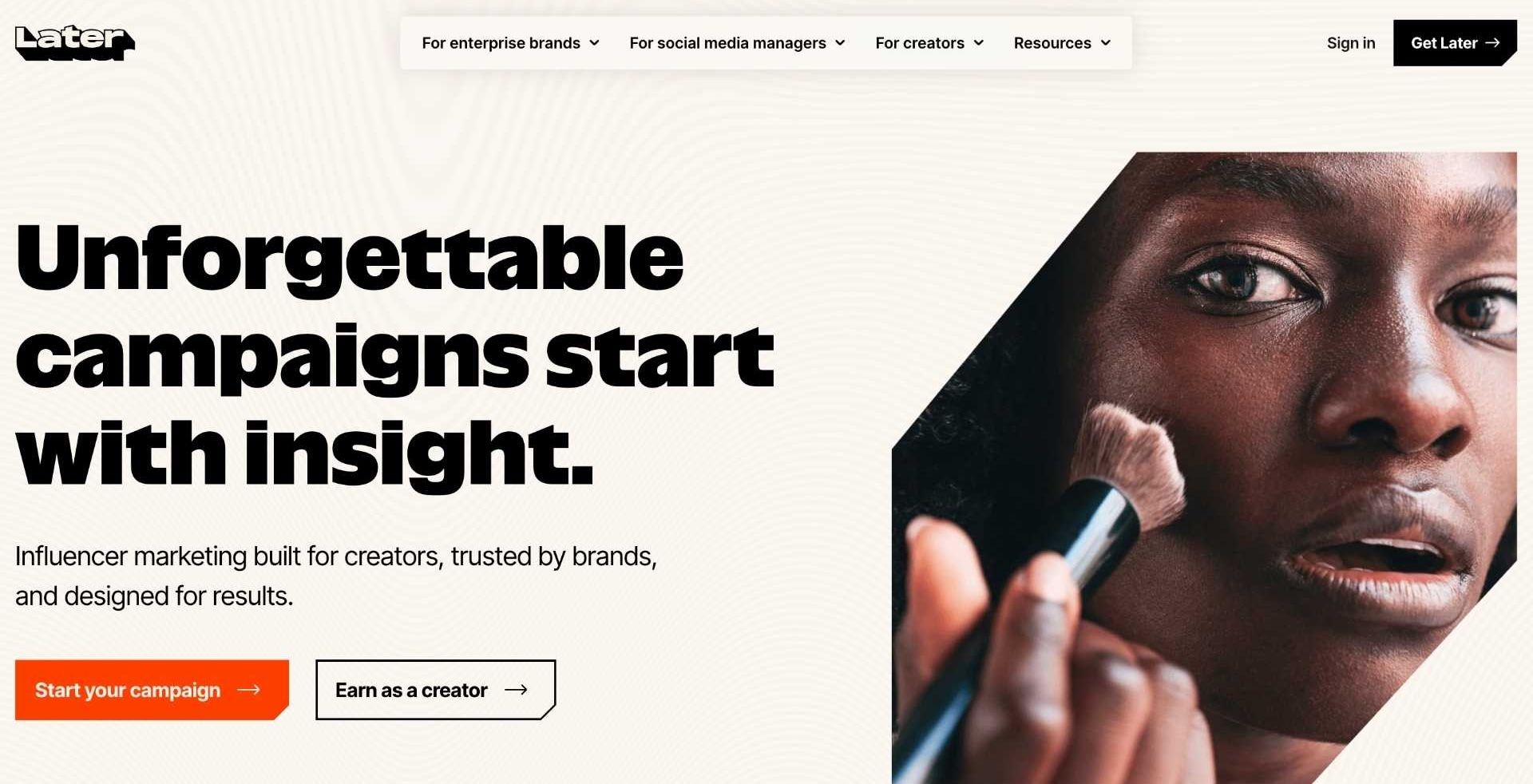
Later Influence is Later’s influencer marketing platform, positioned around AI-powered campaign intelligence, expert services, and close alignment with broader social media management. Following the company’s expansion and rebrand, Later now presents influencer marketing and social management as a connected system, which makes it appealing to brands that want creator campaigns and social publishing to work together.
Key Features
• End-to-end influencer campaign management: Later Influence covers discovery, creator management, campaign execution, content handling, and ROI tracking in one platform.
• Later EdgeAI intelligence layer: Later recently introduced EdgeAI, its predictive intelligence engine built on years of campaign, social, and commerce data to improve creator selection and campaign performance decisions.
• Managed-service and self-serve options: Brands can run campaigns themselves or use Later’s services team for planning, execution, and optimization.
• Brand safety tooling: Later offers on-demand brand safety checks and more detailed suitability reporting to help brands vet creators more carefully.
• Creator network access: Later positions its creator network as a source of vetted creators for brands looking for more trusted partnerships.
• Shopify integration for gifting and performance tracking: Shopify-connected workflows support product gifting, creator selection, and campaign result tracking.
• Social plus influencer alignment: Because Later also operates a major social media management suite, it is one of the few vendors that can tightly connect creator campaigns with scheduling, listening, and analytics workflows.
• Performance measurement built around campaign intelligence: Later emphasizes measurable campaign results rather than just creator discovery, which is central to its current product messaging.
Pricing
Later’s influencer marketing platform (Later Influence) uses custom pricing, and brands need to request a demo for exact costs.
Based on our research, there are different plans:
• Essentials Plan: Starts at $28,500/year. Best for brands starting in influencer marketing.
• Pro Plan: Starts at $42,000/year. Best for data and automation to make your campaigns run faster and achieve better ROI.
• Premier Plan: Starts at $60,000/year. Everything you need for a scaled influencer program.
• All plans come with an additional one-time onboarding fee of $5,000 for all new customers.
Reviews
4.4 / 5.0 (Capterra)
Pros
• EdgeAI is a notable newer differentiator: Later is leaning hard into predictive intelligence, using a large first-party dataset to improve campaign decisions and forecasting.
• Social + influencer under one brand: Few competitors can combine social scheduling, social analytics, listening, and influencer campaign management as natively as Later can.
• Flexible delivery model: Later supports both self-serve software and expert-led programs, which is useful for teams that want software now but service support later.
Cons
• Pricing is not transparent: Brands need to speak with sales to understand exact costs.
• Enterprise orientation is stronger than SMB orientation in Influence: The influencer product is not positioned like a low-cost plug-and-play tool.
• Some teams may not need the broader social stack: If a brand only wants pure influencer CRM functionality, Later’s wider social-media positioning may be more platform than necessary.
Integrations
• Shopify — connects storefront data to gifting, creator selection, and campaign result tracking.
• Instagram / Meta ecosystem — Later’s wider platform heritage and influencer workflows help brands coordinate creator content with core social publishing and reporting.
• TikTok — supports creator-led campaign execution and performance analysis within Later’s influencer ecosystem.
• Social listening and analytics stack — Later’s adjacent social products let brands track mentions, trends, and performance beyond influencer campaigns alone.
• Mavely / creator commerce ecosystem — Later’s creator-side ecosystem supports monetization and commerce-oriented creator workflows.
Vamp vs Later
Vamp and Later both try to go beyond basic influencer discovery, but they do it differently. Vamp focuses more narrowly on creator campaign planning, approvals, pricing, and paid amplification. Later positions influencer marketing inside a broader intelligence-and-social ecosystem, with EdgeAI, managed services, and stronger overlap with social publishing and listening.
For brands that want a dedicated influencer platform with clearer campaign-specific workflows, Vamp may feel more direct. For brands that want influencer marketing connected to the rest of their social program, or want a hybrid of software and services, Later is the more expansive option.

IZEA
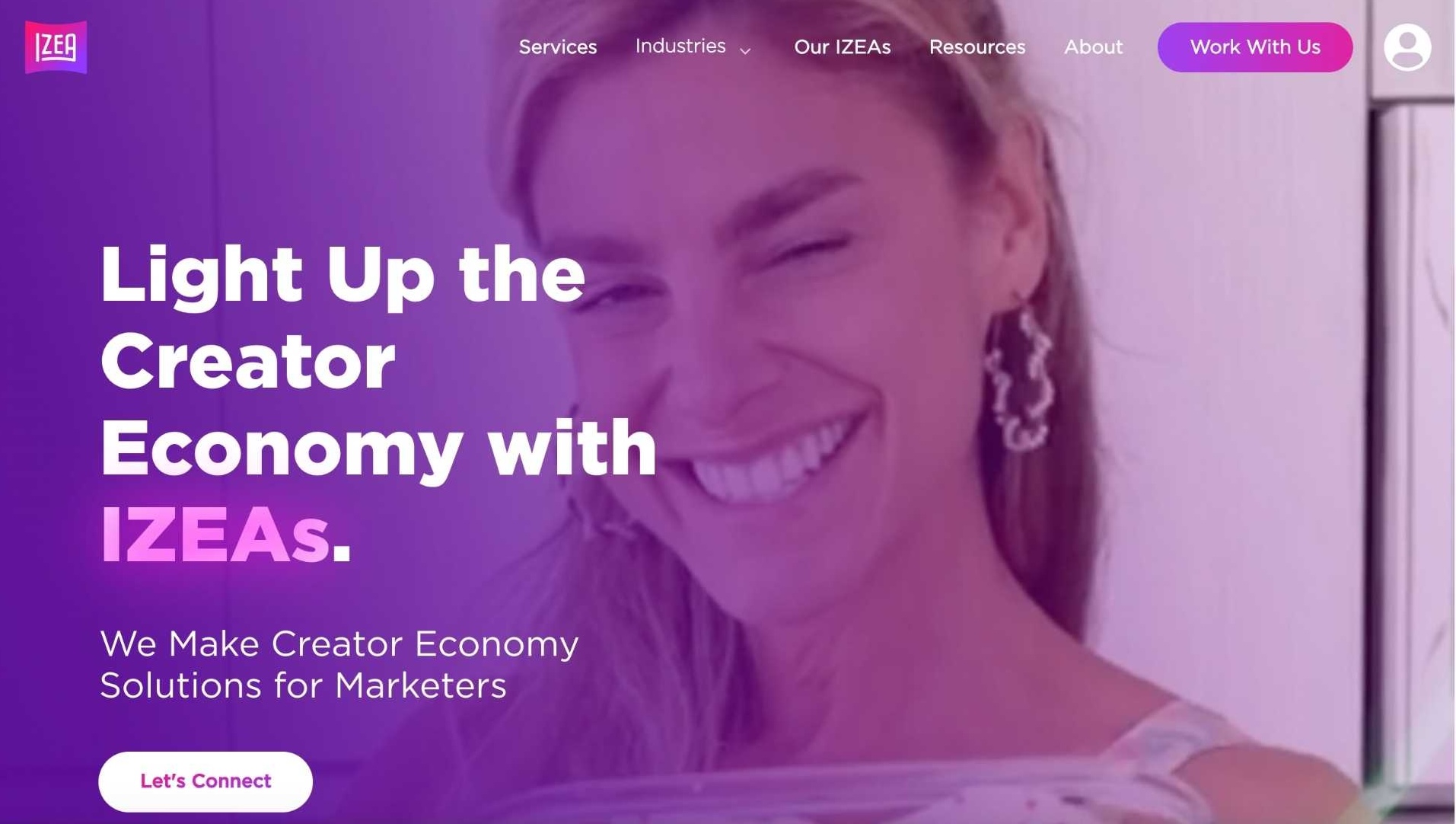
IZEA is one of the longest-standing influencer marketing platforms, offering a combination of influencer discovery, campaign management, and a built-in creator marketplace. It supports both self-service workflows and managed campaigns, with a strong emphasis on content monetization, influencer collaboration, and brand-creator transactions through its ecosystem.
Key Features
• IZEA Marketplace (Creator network): Brands can browse and hire creators directly from IZEA’s marketplace, where influencers list services, pricing, and content offerings.
• Discovery & search engine: Advanced filters help brands find creators based on audience demographics, engagement, niche, and historical performance.
• Campaign management suite: Manage briefs, approvals, deliverables, timelines, and communication in one centralized dashboard.
• Content collaboration tools: Brands can request drafts, provide feedback, and approve content before it goes live.
• Creator payments & contracting: Built-in payment system allows brands to handle payouts, contracts, and compliance within the platform.
• Content licensing & amplification: Brands can license influencer content for reuse and integrate it into broader marketing campaigns.
• Social listening & trend insights: Helps brands monitor conversations, track mentions, and identify emerging creators or trends.
• Managed services option: IZEA also offers full-service campaign execution for brands that want hands-off support.
• teams centralize creator communication more cleanly inside the platform.
Pricing
• Starter Plan: starts at $130/month.
• Power Plan: starts at $500/month.
• Free trial: 10 days.
• Managed Services: custom proposal-based pricing for fully managed campaigns.
Reviews
3.9/ 5.0 (G2)
Pros
• Integrated creator marketplace with transparent pricing: Unlike many platforms, IZEA allows brands to browse creator services with upfront pricing, reducing negotiation friction.
• Strong payments and contracting infrastructure: IZEA’s built-in financial workflows make it easier to handle influencer payouts and compliance at scale.
• Flexible execution model (self-serve + managed): Brands can choose between running campaigns themselves or outsourcing execution to IZEA’s team.
Cons
• UI and workflow complexity: Some teams find the interface less intuitive compared to newer platforms.
• Pricing transparency is limited: Costs are not publicly listed, making it harder to benchmark against competitors.
• Marketplace quality can vary: Since creators set their own offerings, campaign quality depends heavily on selection.
Integrations
• Instagram / Meta — pull creator data and manage campaigns tied to Instagram performance.
• TikTok — supports creator discovery and campaign tracking for TikTok collaborations.
• YouTube — enables creator partnerships and performance tracking for long-form content campaigns.
• X (Twitter) — supports influencer campaigns and monitoring for brand mentions.
• Content licensing workflows — integrate influencer content into broader marketing and advertising channels.
Vamp vs IZEA
Vamp focuses more on structured campaign workflows, forecasting, and paid amplification, while IZEA leans heavily into its creator marketplace and transaction-based model. IZEA is better suited for brands that want direct access to creators with upfront pricing, whereas Vamp is stronger for teams that prioritize campaign planning, collaboration, and performance optimization.
Traackr
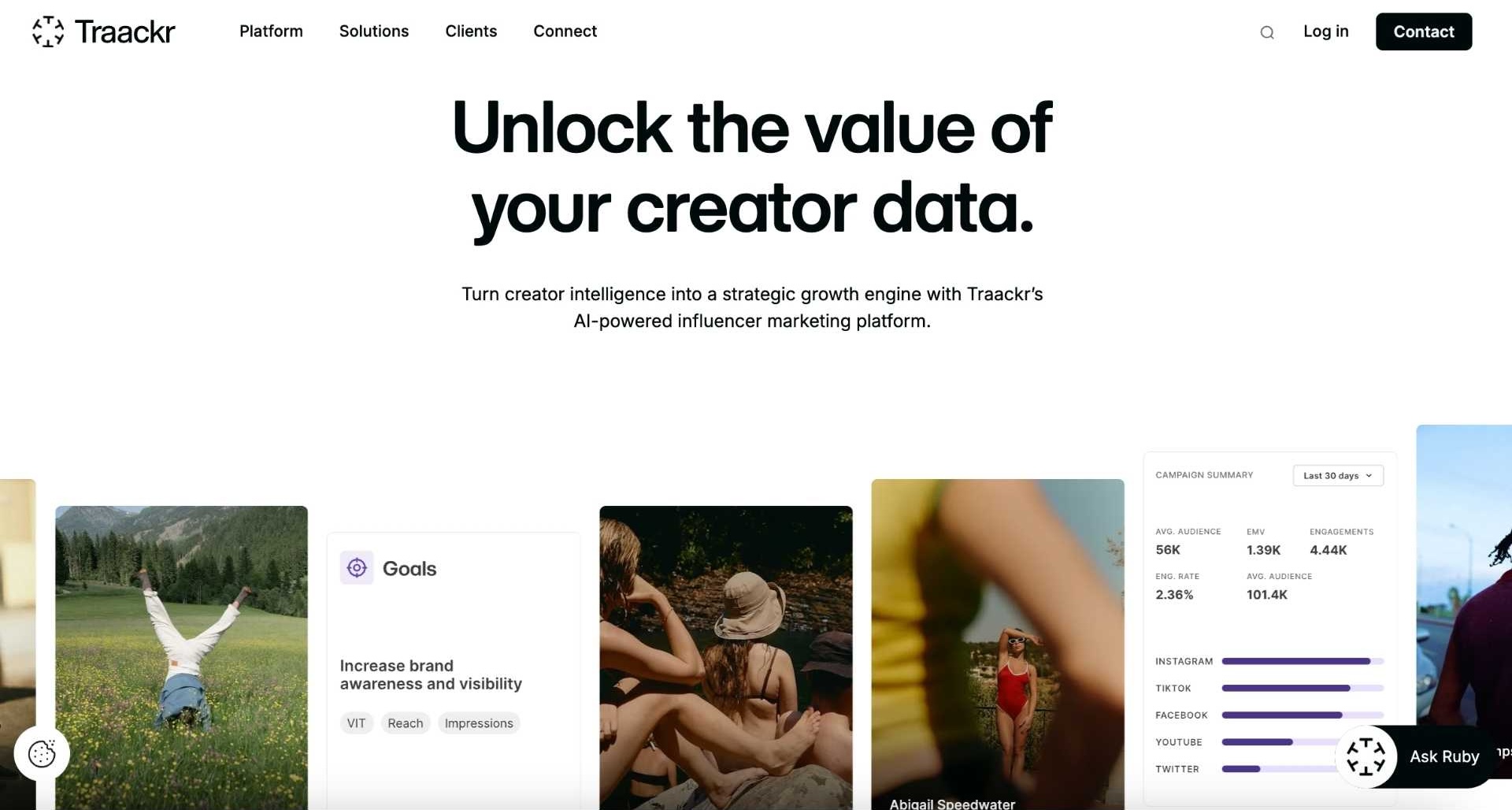
Traackr is an enterprise influencer marketing platform focused on data-driven decision-making, influencer relationship management, and long-term program optimization. It is particularly popular with global brands that need deep analytics, benchmarking, and governance across markets.
Key Features
• Influencer discovery with advanced filters: Search creators based on audience demographics, engagement, brand affinity, and content relevance.
• Influencer relationship management (IRM): CRM-style system to manage long-term relationships, track history, and categorize creators.
• Campaign tracking and performance measurement: Track reach, engagement, and ROI across campaigns with detailed reporting dashboards.
• Competitive benchmarking: Compare influencer performance and campaign results against competitors and industry benchmarks.
• Audience quality and brand safety analysis: Evaluate authenticity, detect fake followers, and ensure brand-safe partnerships.
• Global campaign management: Designed for multi-market campaigns with regional insights and reporting.
• Custom reporting dashboards: Build tailored reports for stakeholders and executive teams.
• Spend and ROI optimization tools: Helps allocate budget more effectively across creators and campaigns.
Pricing
• Official pricing: custom / request a quote.
• Public benchmark: pricing starts around $32,500/year for a standard plan, with additional modules available on request.
• Contract type: generally annual enterprise contracts.
Reviews
4.3 / 5.0 (G2)
Pros
• Best-in-class benchmarking and analytics: Traackr stands out for its ability to compare campaign performance against competitors and industry benchmarks.
• Strong relationship management (IRM): Focus on long-term influencer partnerships rather than one-off campaigns.
• Global scalability: Built for large brands running campaigns across multiple regions and teams.
Cons
• High cost and enterprise focus: Not ideal for smaller brands or teams with limited budgets.
• Steeper learning curve: Advanced analytics and features require onboarding and training.
• Limited focus on execution workflows: Less emphasis on day-to-day campaign execution compared to newer platforms.
Integrations
• Instagram / Meta — provides audience insights and campaign performance data.
• TikTok — supports discovery and campaign analytics for TikTok creators.
• YouTube — enables tracking of video performance and creator partnerships.
• Google Analytics — connects influencer campaigns to website traffic and conversions.
• CRM/BI tools — integrates with internal systems for reporting and analysis.
Vamp vs Traackr
Vamp is more execution-focused, helping teams run campaigns efficiently with built-in workflows and paid amplification. Traackr is more analytics-driven, designed for brands that prioritize benchmarking, reporting, and long-term influencer relationship management at scale.
Influencity
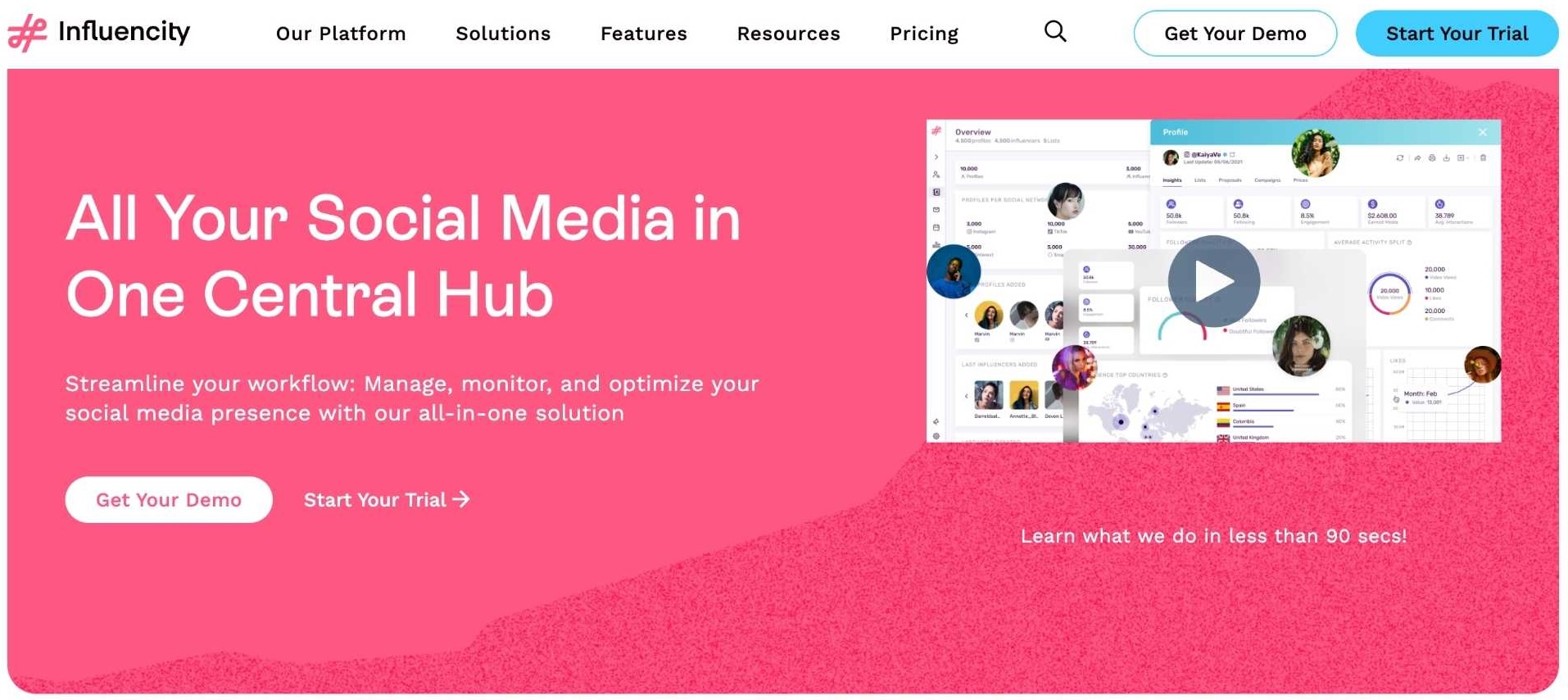
Influencity is a data-driven influencer marketing platform focused on discovery, campaign management, and analytics. It offers a large global database and flexible pricing, making it accessible to both small businesses and enterprise teams.
Key Features
• Large influencer database: Access millions of creators across Instagram, TikTok, and YouTube with detailed audience insights.
• Advanced search filters: Filter by demographics, engagement rate, audience quality, and niche.
• Campaign management tools: Manage outreach, track deliverables, and monitor campaign progress.
• Audience analytics: Deep insights into audience demographics, authenticity, and interests.
• Influencer relationship management: Organize creators into lists and track interactions over time.
• Performance tracking and reporting: Monitor engagement, reach, and ROI metrics.
• Fraud detection tools: Identify fake followers and suspicious engagement patterns.
• API and data exports: Export influencer data for external analysis or integration.
Pricing
Influencity offers three main pricing tiers, along with add-ons:
• Professional Plan: $318/month or $3,816/year
• Business Plan: $798/month or $9,576/year
• Enterprise Plan: Custom pricing
• Auto-Tracker Add-On: $660/year (for 50 influencers)
Reviews
4.3 / 5.0 (G2)
Pros
• Strong analytics and audience insights: Influencity provides detailed breakdowns of audience demographics and authenticity.
• Flexible pricing structure: More accessible than many enterprise-only platforms.
• Good balance between discovery and campaign management: Offers both without being overly complex.
Cons
• UI can feel data-heavy: Some users find dashboards overwhelming.
• Limited automation compared to CRM-heavy tools: Outreach and workflow automation are less advanced.
• Fewer built-in commerce integrations: Not as eCommerce-focused as some competitors.
Integrations
• Instagram — pulls influencer data and tracks performance metrics.
• TikTok — enables discovery and campaign analysis for TikTok creators.
• YouTube — supports creator analytics and campaign tracking.
• Google Analytics — connects influencer campaigns to website traffic data.
• API integrations — allows exporting data into custom workflows or BI tools.
Vamp vs Influencity
Vamp is more workflow-driven and focused on campaign execution and paid amplification, while Influencity is more data-focused, offering deeper analytics and flexible pricing. Influencity is a better fit for teams prioritizing research and insights, whereas Vamp is better for teams focused on campaign delivery.
Heepsy

Heepsy is an influencer marketing platform designed for discovery, outreach, and campaign tracking, with a strong focus on simplicity and affordability. It is particularly popular among small to mid-sized brands looking for accessible influencer search tools.
Key Features
• Large influencer database (~50M creators): Global coverage with strong filtering capabilities.
• Advanced search filters: Filter by niche, location, audience demographics, and engagement rate.
• Fake follower detection: Helps identify authentic influencers and avoid fraud.
• Campaign management and CRM: Track outreach, negotiations, and campaign stages using a visual pipeline.
• Bulk outreach and email templates: Send outreach campaigns and follow-ups directly from the platform.
• Shopify integration (Advanced plan): Track sales, conversions, and affiliate performance.
• Media gallery: Store and analyze campaign content and performance metrics.
• Lookalike search: Find similar influencers to expand campaigns efficiently.
Pricing
• Free — limited free access is available.
• Starter — recent official Heepsy blog references place Starter at $89/month.
• Plus — recent official Heepsy blog references place Plus at $249/month.
• Advanced — recent official Heepsy blog references place Advanced at $369/month.
• Heepsy also says users can choose monthly or annual billing, with annual subscriptions discounted versus monthly rates.
Reviews
4.5 / 5.0 (G2)
Pros
• Strong value for money: One of the more affordable platforms with solid discovery features.
• Excellent influencer search filters: Easy to find niche creators with precise targeting.
• Simple and intuitive UI: Easy for beginners to get started quickly.
Cons
• Limited advanced analytics on lower plans: Sales tracking requires higher-tier plans.
• No AI-driven outreach automation: Outreach tools are more manual compared to competitors.
• Affiliate tracking locked behind higher tiers: Full ROI tracking is not available on entry plans.
Integrations
• Shopify — enables affiliate tracking, discount codes, and conversion monitoring.
• Email tools — supports outreach via email templates and sequences.
• Instagram — core platform for influencer discovery and analytics.
• TikTok — supports influencer discovery and performance tracking.
• Data export tools — export influencer data for external campaign management.
Vamp vs Heepsy
Vamp is a more advanced, workflow-driven platform with paid amplification and structured campaign management. Heepsy is simpler and more affordable, focusing primarily on influencer discovery and outreach. Heepsy suits smaller teams, while Vamp is better for brands running more complex campaigns.
Lefty
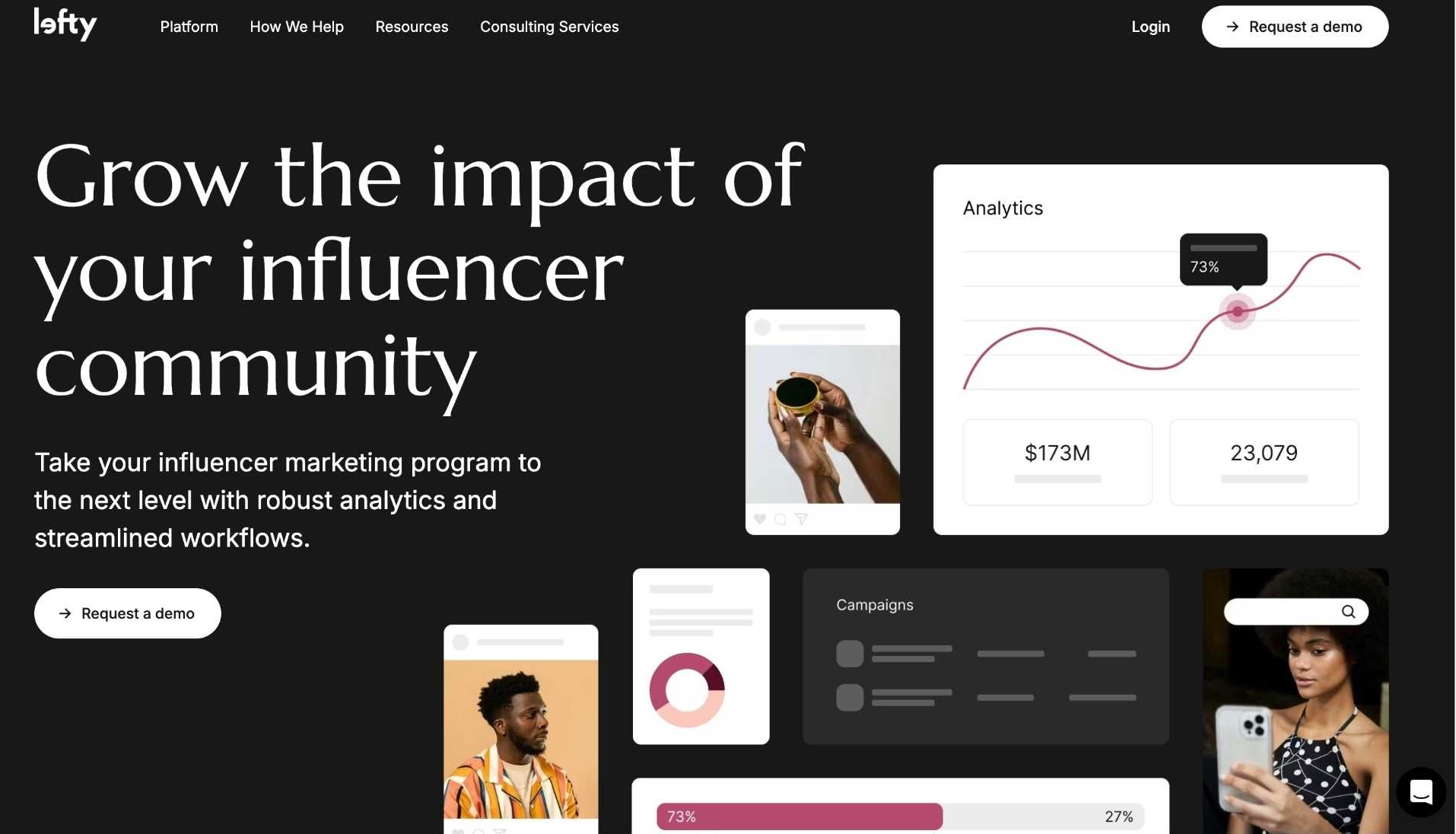
Lefty is an influencer marketing platform focused on discovery, analytics, and campaign reporting, with a strong emphasis on data accuracy and brand safety. It is often used by agencies and mid-to-large brands looking for detailed insights into influencer performance.
Key Features
• Influencer discovery and search: Filter creators by audience demographics, engagement, and niche.
• Audience analytics and authenticity checks: Provides detailed audience insights and fraud detection.
• Campaign tracking and reporting: Monitor campaign performance with detailed dashboards.
• Brand safety tools: Evaluate influencer content to ensure alignment with brand values.
• Competitive analysis: Benchmark campaigns and influencers against competitors.
• Content tracking: Monitor influencer posts and engagement across platforms.
• Custom reporting tools: Generate reports tailored to campaign goals.
• API and data exports: Export data for further analysis and integration.
Pricing
• Starting Price: ~€590 per month.
• Pro Plan: ~€990/month, including 2 users, 5 campaigns, and unlimited reports.
• Premium Plan: ~€1,690/month, which adds a dedicated manager.
• Premium+ Plan: ~€3,490/month for 10 users and 25 campaigns.
Reviews
4.7/5.0 (G2)
Pros
• Strong analytics and reporting: Lefty excels in providing detailed performance insights and campaign tracking.
• Good brand safety and fraud detection tools: Helps brands avoid risky partnerships.
• Clean and intuitive reporting dashboards: Makes it easy to present results to stakeholders.
Cons
• Limited workflow automation: Less focus on outreach and campaign execution tools.
• Enterprise-oriented pricing: Not ideal for smaller teams.
• Fewer eCommerce integrations: Less emphasis on direct sales tracking.
Integrations
• Instagram / Meta — provides influencer analytics and campaign tracking.
• TikTok — supports discovery and performance monitoring.
• YouTube — tracks video campaigns and creator performance.
• Google Analytics — connects influencer campaigns to website traffic and conversions.
• API integrations — enables exporting data to BI and reporting tools.
Vamp vs Lefty
Vamp is more focused on campaign execution, workflows, and paid amplification, while Lefty leans more toward analytics, reporting, and brand safety. Lefty is better for data-driven analysis, whereas Vamp is stronger for running and scaling campaigns efficiently.
Final Thoughts on Vamp Alternatives
Vamp stands out for its structured campaign workflows, forecasting tools, and paid amplification capabilities, but the alternatives covered offer a wide range of strengths depending on a brand’s priorities. Platforms like Influencer Hero, Upfluence, and Aspire lean more toward eCommerce integration and revenue attribution, while tools like CreatorIQ and Traackr focus on enterprise-scale analytics and governance. Others such as Heepsy and Influencity provide more accessible, discovery-driven solutions, and platforms like Later and IZEA blend influencer marketing with broader creator ecosystems or services. Ultimately, the best alternative depends on whether a brand prioritizes campaign execution, creator discovery, data depth, or direct ROI tracking.

.png)


.jpg)