

Linqia Pricing and Review: Features, Pros, Cons & Costs
Linqia is one of the bigger names in US influencer marketing, and it works differently from most tools on a D2C shortlist: it is a full-service agency first, with a proprietary AI platform bolted on. Brands hand Linqia the strategy, creator negotiations, contracting and paid amplification, and its Resonate platform handles discovery, approvals and analytics behind the scenes. For a large brand that wants the work done for it, that managed model is the pitch.
The pricing matches the model: enterprise and private. Linqia does not publish rates, works on quote-based programs with high minimums and implementation fees, and has no free trial. This is a six-figure-program vendor, not a self-serve subscription.
This review covers what Linqia does, how its managed, enterprise pricing works, where its performance focus and measurement transparency are genuinely strong, and the reach and access limits to weigh. It closes with five alternatives worth comparing.
Linqia Overview
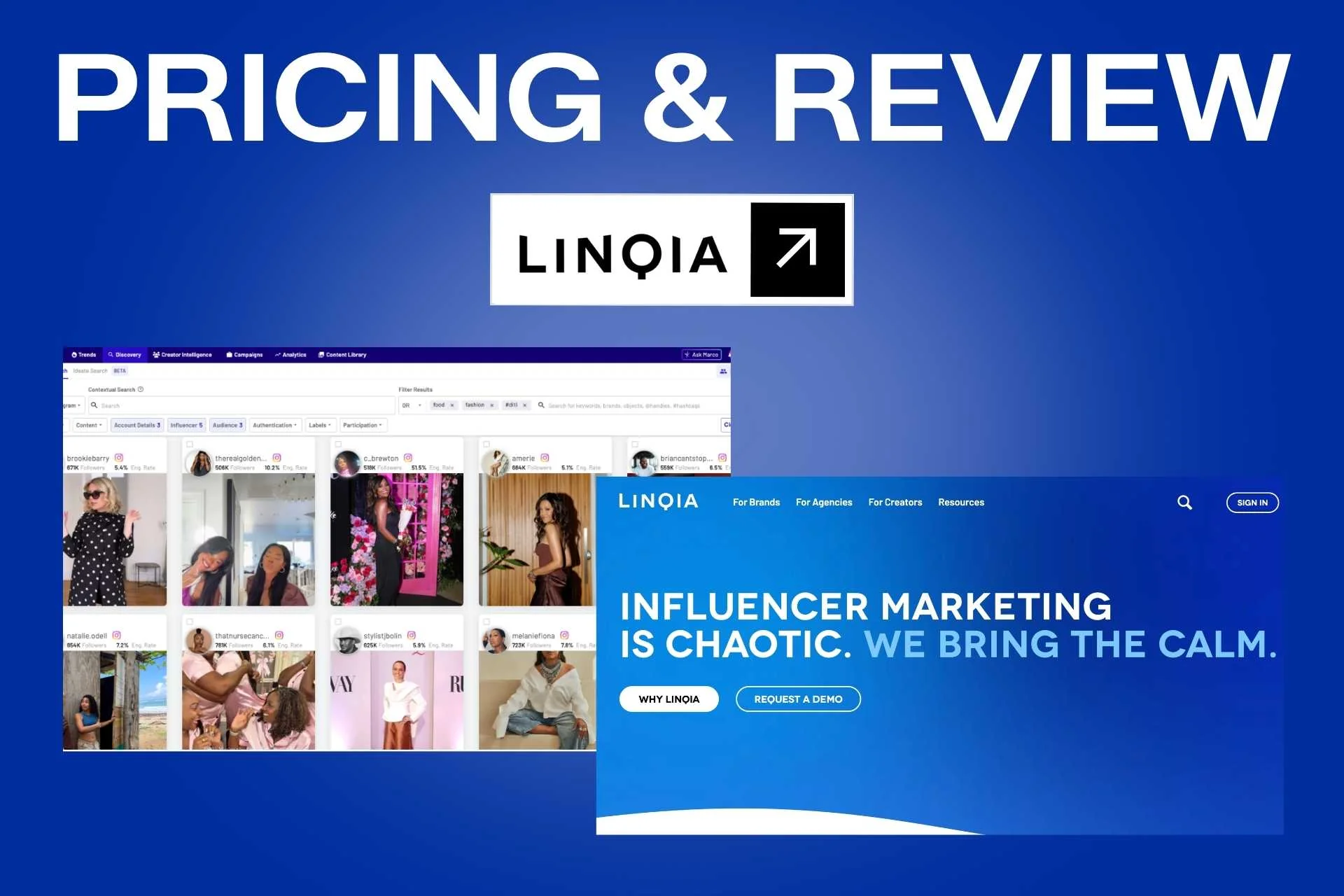
Linqia describes itself as the leading independent influencer marketing agency in the US, pairing full-service management with proprietary technology. Its team handles annual planning, ongoing strategy, creator negotiation, contracting and paid amplification, while its Resonate platform, with a Marco AI assistant, supports creator discovery, content-approval workflows and performance analytics.
The emphasis is on performance and proof. Linqia leans on real-time reporting with more than 15 third-party measurement integrations and social listening, and it makes a point of not, in its words, grading its own homework, using external partners to validate results. It works across Instagram, TikTok, Facebook, YouTube and Pinterest.
It is a managed enterprise service, not a lightweight self-serve tool. Brands that want to run everything themselves through a self-serve interface will find dedicated influencer CRM tools a different model. Linqia is built for large brands that want a team plus technology.
Who Should Use Linqia
Linqia fits enterprise brands that want a managed, performance-focused program. It suits:
- Large consumer and retail brands that want influencer marketing run for them, not just software.
- Teams that prioritize performance measurement and third-party-validated results.
- Brands running paid amplification alongside organic influencer content.
- US and Canada-focused programs, where Linqia’s creator network sits.
- Marketers who want strategy and negotiation handled by an agency team.
- Companies with enterprise budgets and no need for self-serve control.
Key Features
Linqia’s feature set pairs a full-service team with the Resonate platform and a heavy focus on measurement.
Full-Service Management
Linqia’s team handles annual planning, ongoing strategy, creator negotiation and contracting, so brands offload the operational work of running an influencer program.
Resonate Platform
Its proprietary Resonate platform provides creator discovery, content-approval workflows and performance analytics, the technology layer behind the managed service.
Marco AI
A Marco AI assistant helps streamline campaign management inside Resonate, speeding up planning and workflow for the team and the brand.
Creator Discovery and Filtering
Discovery tools find and filter creators for a campaign, though the network is limited to North America and leans toward established creators.
Paid Amplification
Linqia runs organic influencer content and paid amplification together, turning strong creator posts into paid media for extra reach.
Performance Measurement
Real-time reporting connects to more than 15 third-party measurement integrations for validated results. For a deeper measurement benchmark, compare it against dedicated campaign reporting and analytics tools.
Social Listening and Competitive Monitoring
Social listening tracks brand and competitor activity, adding market context to campaign planning and reporting.
Content Management and Repurposing
The platform manages creator content and supports repurposing it across channels, so assets work beyond the original post.
Linqia Pricing
Linqia does not publish pricing. It runs on enterprise, quote-based programs, so the points below describe how engagements typically work.
Enterprise, Quote-Based Programs
- No public rates; pricing is scoped per program and reflects the managed-service model.
- High minimums put it out of reach for small brands, and there is no free trial.
- Expect an enterprise-level commitment rather than a monthly subscription.
Managed Service Plus Platform
- The cost bundles agency work, strategy, negotiation, contracting and amplification, with access to the Resonate platform.
- You are paying for a team and technology together, not software alone.
- The balance of service versus platform depends on how the program is scoped.
The Real Cost: Minimums and Implementation
- Expect five-figure-plus program minimums and implementation or onboarding costs on top.
- Add the creator and media spend for the campaign itself, which sits above the program fee.
- Budget the full program, not just a platform fee, and get a complete breakdown in the sales conversation.
Linqia Reviews
Linqia is well rated by the enterprise clients who use it.
- 4.8/5.0 (G2, 24 reviews)
Reviewers praise the dedicated team, the analytics and the performance focus, while noting a learning curve for first-time users and pricing that only works for larger budgets. The G2 score is strong, though the review base is modest and skews enterprise.
Integrations
Linqia’s strength is measurement, and its integrations reflect that, connecting to third-party measurement rather than a broad self-serve app directory.
- Instagram, TikTok, Facebook, YouTube and Pinterest: the platforms its campaigns and discovery cover.
- 15+ third-party measurement integrations: external partners validate performance rather than relying on in-house numbers.
- Social listening and competitive monitoring: track brand and competitor activity.
- Paid-media platforms: amplification runs creator content as paid ads.
Pros of Linqia
Measurement Transparency
Linqia’s use of 15-plus third-party measurement partners, and its refusal to grade its own homework, is a genuine credibility edge for brands that need defensible performance numbers.
Full-Service Team
A dedicated team handles strategy, negotiation, contracting and amplification, so brands that do not want to run influencer marketing in-house get it done by specialists.
Strong Analytics and AI
The Resonate platform and Marco AI back the service with real discovery and analytics, and reviewers rate the analytics highly.
Cons of Linqia
Enterprise-Only Pricing
There are no public rates, minimums are high, and implementation costs apply, so Linqia is out of reach for small and most mid-market brands. Budgeting requires a sales conversation.
US and Canada Creators Only
The creator network is limited to North America, so brands running global or non-US campaigns will find it too narrow.
Limited Self-Serve Control
The managed model means brands hand off execution, which suits some but frustrates teams that want hands-on, self-serve control.
Learning Curve and Strict Creator Requirements
Reviewers note the platform can confuse first-time users, and creator requirements are strict, typically 10K-plus followers, which narrows the pool for niche or nano-creator strategies.


Is Linqia Worth It?
Linqia is worth it for a large US or Canadian brand that wants influencer marketing run by a specialist team, with performance measured by independent partners rather than the vendor. For that brand, the managed service, analytics and measurement transparency justify the enterprise price. It is a weaker fit for small and mid-market brands, teams that want self-serve control or transparent pricing, or anyone running global campaigns beyond North America. If any of that gives you pause, compare these five alternatives:
- Influencer Hero is an end-to-end influencer marketing platform that combines creator discovery, outreach automation, CRM, gifting, campaign tracking, UGC management, and affiliate marketing to help ecommerce brands scale creator partnerships.
- Afluencer is a marketplace where creators apply to your campaign listings, useful when creator supply, not managed execution, is the bottleneck.
- CreatorIQ is an enterprise platform for creator management and rigorous measurement across large, global programs.
- Traackr is an enterprise platform built for influencer measurement and relationship management at global scale.
- NeoReach is a data-heavy platform for enterprise brands and agencies running large managed campaigns.
Final Thoughts
Linqia is a serious, enterprise-grade option that combines a full-service team with a real measurement platform, and its insistence on third-party validation sets it apart in a category full of self-reported wins. For a large North American brand that wants the work handled and the results proven, it delivers. The reservations are about access and reach rather than quality, since pricing is enterprise-only, creators are US and Canada only, and control is limited by the managed model. Decide based on whether a managed, performance-first program fits your scale, and if you need self-serve control or global reach, the Linqia alternatives above cover the same ground differently.

.png)


.jpg)