

10 Best Linqia Alternatives for Influencer Marketing
D2C brands rely on influencer marketing software to scale creator discovery, streamline outreach, manage campaigns, and track performance across channels without relying on manual workflows. Linqia is a well-known enterprise platform in this space, offering managed services, strong paid amplification, and full-funnel reporting—but it comes with trade-offs like limited pricing transparency, less flexibility for self-serve teams, and a higher cost structure that may not suit growing brands. As a result, many teams start exploring Linqia alternatives that offer more control, clearer pricing, or stronger eCommerce integrations. Whether you're evaluating influencer marketing software for the first time or looking to switch platforms, understanding these differences is key to making the right choice.
In this article, we’ll compare the 10 best Linqia alternatives—Aspire, Influencer Hero, CreatorIQ, Upfluence, Skeepers, Klear, Traackr, IMAI (InfluencerMarketing.AI), Heepsy, and Social Cat—to help you find the right fit for your brand.
Key Criteria for Evaluating Influencer Marketing Platforms
Core Features
Evaluation of essential influencer marketing capabilities, including influencer discovery, outreach, CRM, campaign management, reporting, and content workflows.
Pricing & Flexibility
Comparison of pricing models, subscription plans, and contract terms to match different budgets and growth stages.
Customer Reviews & Satisfaction
Analysis of user feedback from trusted review platforms, focusing on usability, reliability, customer support, and overall performance.
Pros & Cons
Review of each platform’s strengths and limitations to highlight where it performs well and where it may fall short based on different use cases.
Integrations
Review of the most important integrations (e.g., Shopify and other tech tools), highlighting what each integration enables in one sentence.
Linqia Overview

Linqia is a full-service, tech-enabled influencer marketing platform and agency built for enterprise brands. Its proprietary platform, Resonate, combines AI-powered creator discovery, campaign workflows, content review, paid amplification, and performance measurement to help brands run full-funnel influencer programs. Linqia positions itself as an enterprise partner rather than a self-serve creator database, with 650+ brand partnerships and an emphasis on guaranteed ROI.
Key Features
• AI-powered creator discovery: Resonate uses 1.5B data points, predictive algorithms, Google Vision AI, audience data, and contextual search to identify creators based on campaign goals, content style, audience fit, and past performance.
• End-to-end campaign workflows: Teams can review creator lists, briefs, creative outlines, content, comments, and approvals inside Resonate, making Linqia useful for campaigns with multiple brand, agency, and creator stakeholders.
• Real-time analytics: Linqia tracks organic and paid campaign performance in one dashboard, from campaign-level summaries down to individual content pieces.
• Creator Intelligence scoring: A newer feature that scores creators using weighted brand-specific KPIs such as engagement, VTR, CTR, ROAS, collaboration quality, and content quality.
• Marco AI assistant: Linqia’s AI copilot helps summarize briefs, generate one-page versions, find creators with natural-language prompts, and surface similar creators from top-performing campaigns.
• Resonate Studio: Built-in video editing lets teams trim creator videos, change aspect ratios, add branded elements, manage subtitles, and export assets for reuse across marketing channels.
• Paid media and retail media activation: Linqia can amplify creator content across paid social, programmatic, CTV, DOOH, and retail media networks.
Pricing
Linqia does not publish standard plan tiers. Pricing is custom and quote-based; public pricing pages state that brands must contact Linqia for current pricing.
Third-party software listings show a listed starting price of $25,000, but the vendor does not currently publish confirmed plans, monthly tiers, or a free trial.
Reviews
4.8/5.0 (G2)
Integrations
• TikTok Creator Marketplace: Helps brands identify relevant TikTok creators, access first-party creator data, and track TikTok campaign performance.
• Google Vision AI: Powers visual and contextual creator matching by analyzing image objects, labels, brand mentions, and content attributes.
• Pinterest Business/Agency Program: Supports Pinterest influencer campaign planning and optimization through Linqia’s platform expertise.
• Retail Media Networks: Enables creator-led content to run inside retail ad ecosystems with sales lift and attribution measurement.
• Paid Social / Programmatic / CTV / DOOH Channels: Allows top-performing creator assets to be repurposed and amplified beyond organic influencer posts.
Pros
• Strong enterprise campaign support: Linqia combines software with managed services, making it a strong fit for larger brands that want strategy, creator selection, execution, paid amplification, and reporting handled together.
• Advanced AI and performance scoring: Creator Intelligence, Marco AI, Google Vision AI, and predictive discovery make Linqia more data-driven than basic influencer databases.
• Creator content reuse beyond social: Resonate Studio and paid/retail media capabilities help brands turn influencer posts into assets for ads, CTV, DOOH, in-store screens, and other channels.
Common Drawbacks of Linqia
Limited pricing transparency
Linqia does not publish clear plans, making it harder for smaller teams to compare costs before booking a demo.
Not ideal for self-serve teams
Because Linqia is positioned as a full-service enterprise partner, brands that want a DIY creator search tool may find it less flexible.
Platform usability can take time
Some users find Resonate less intuitive at first, especially around onboarding, content submission, team review, and approval permissions.
Collaboration permissions may feel restrictive
Internal review workflows can require work outside the platform when multiple stakeholders need to provide feedback.
Best Linqia Alternatives
| TOOL | REVIEWS | BEST FOR | TRIAL INFO | PRICING | ||
|---|---|---|---|---|---|---|
1 |

|
⭐ | Influencer partnerships | Book Demo | Pricing | Website |
2 |

|
⭐ | Influencer CRM & automation | Book Demo | Pricing | Website |
3 |

|
⭐ | Enterprise influencer marketing | Book Demo | Pricing | Website |
4 |

|
⭐ | Influencer discovery | Book Demo | Pricing | Website |
5 |

|
⭐ | Influencer gifting & UGC campaigns with micro-influencers | Book Demo | Pricing | Website |
6 |
|
⭐ | Influencer analytics | Book Demo | Pricing | Website |
7 |

|
⭐ | Enterprise influencer analytics | Book Demo | Pricing | Website |
8 |

|
⭐ | AI influencer discovery & analytics | Book Demo | Pricing | Website |
9 |

|
⭐ | Influencer discovery | Book Demo | Pricing | Website |
10 |

|
⭐ | Micro-Influencer Campaigns | Book Demo | Pricing | Website |
Aspire
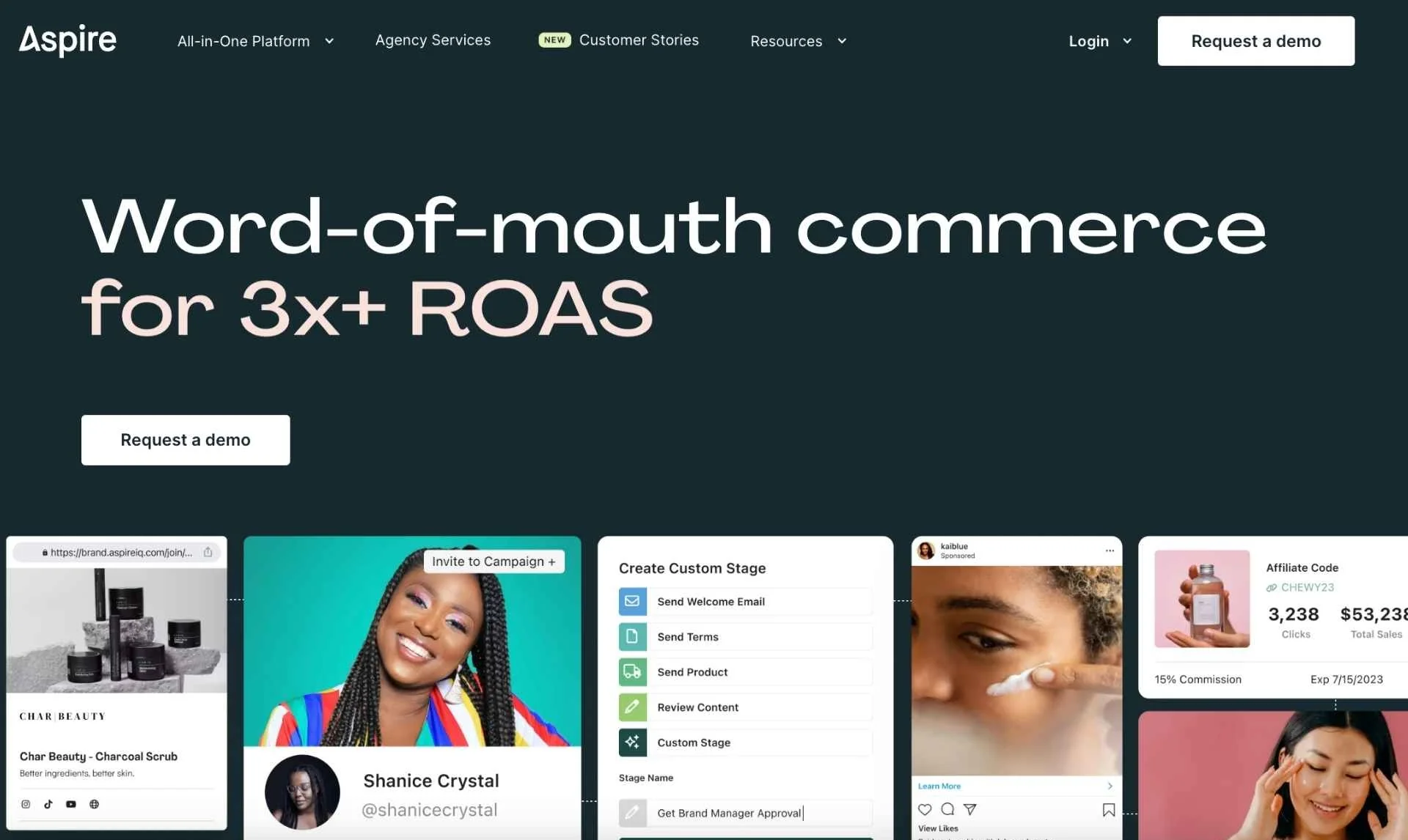
Aspire is an influencer marketing and word-of-mouth commerce platform built for brands that want to manage creator discovery, inbound applications, product seeding, content approvals, affiliate tracking, and reporting in one place. It is especially strong for eCommerce and DTC teams using creator content, gifting, and ambassador programs as part of their growth strategy.
Key Features
• Influencer Discovery: Search creators by channel, keyword, engagement, audience demographics, location, and lookalike recommendations.
• Inbound Creator Marketplace: Brands can post projects and let creators apply directly, reducing the amount of manual outbound recruitment.
• Custom Application Pages: Create branded landing pages to collect creator applications, product preferences, creative ideas, and campaign details.
• Workflow & CRM: Manage creators through stages like invite, contract, brief, product selection, content approval, posting, and reporting.
• Product Gifting: Shopify-powered gifting lets creators choose products from your catalog while brands control limits, bundles, and approvals.
• Sales Tracking: Track discount codes, affiliate links, creator storefronts, clicks, conversions, commissions, and revenue.
• Content Library: Store creator posts, UGC, usage rights, and campaign assets for future repurposing.
• Reporting: Export campaign, creator, sales, and social performance data for internal analysis.
Pricing
Aspire does not publish full public package pricing on its website. Public and recent market sources indicate:
• Custom pricing
• Often reported at about $2,000+/month
• Recent quoting indicated around $2,300/month for a mid-tier setup
• Typically sold with a 12-month commitment rather than month-to-month self-serve plans
Reviews
4.0/5.0 (Capterra)
Pros
• Large inbound creator marketplace: Aspire stands out because creators can apply directly to campaigns, which is useful for brands that want warmer, more qualified creator interest.
• Strong Shopify gifting workflow: Product selection, order fulfillment, and creator tracking can happen without constantly switching between Shopify and campaign spreadsheets.
• First-party social data positioning: Aspire emphasizes platform data relationships with Meta, TikTok, and Pinterest, which can help brands trust audience and performance data more than scraped-only tools.
Cons
• Higher cost for smaller teams: Aspire can be expensive if you only need basic creator discovery or occasional product seeding.
• Feature complexity: Because it covers discovery, CRM, gifting, approvals, and reporting, setup can feel heavy for newer teams.
• Occasional technical friction: Users report slow performance, integration issues, and navigation challenges in more complex workflows.
Integrations
• Shopify: Manage product gifting, creator product selection, fulfillment tracking, discount codes, and sales attribution.
• Gmail: Sync creator conversations and send personalized or bulk emails from inside Aspire.
• Meta: Access creator and campaign data across Instagram and Facebook workflows.
• TikTok: Support TikTok creator discovery, campaign workflows, and performance tracking.
• Pinterest: Use Pinterest data and creator campaign support for visual commerce and lifestyle campaigns.
Linqia vs Aspire
Linqia is more of an enterprise managed-service and performance media partner, while Aspire is more hands-on software for brands that want to run creator programs internally. Linqia is stronger for paid amplification, retail media, and enterprise campaign execution; Aspire is stronger for Shopify gifting, inbound creator applications, and community-style creator workflows.
For DTC brands, Aspire may be more practical if the goal is to build repeatable influencer, ambassador, affiliate, and UGC programs. Linqia is a better fit when the brand wants a partner to manage strategy, creator selection, paid distribution, and measurement at a larger enterprise scale.
Influencer Hero
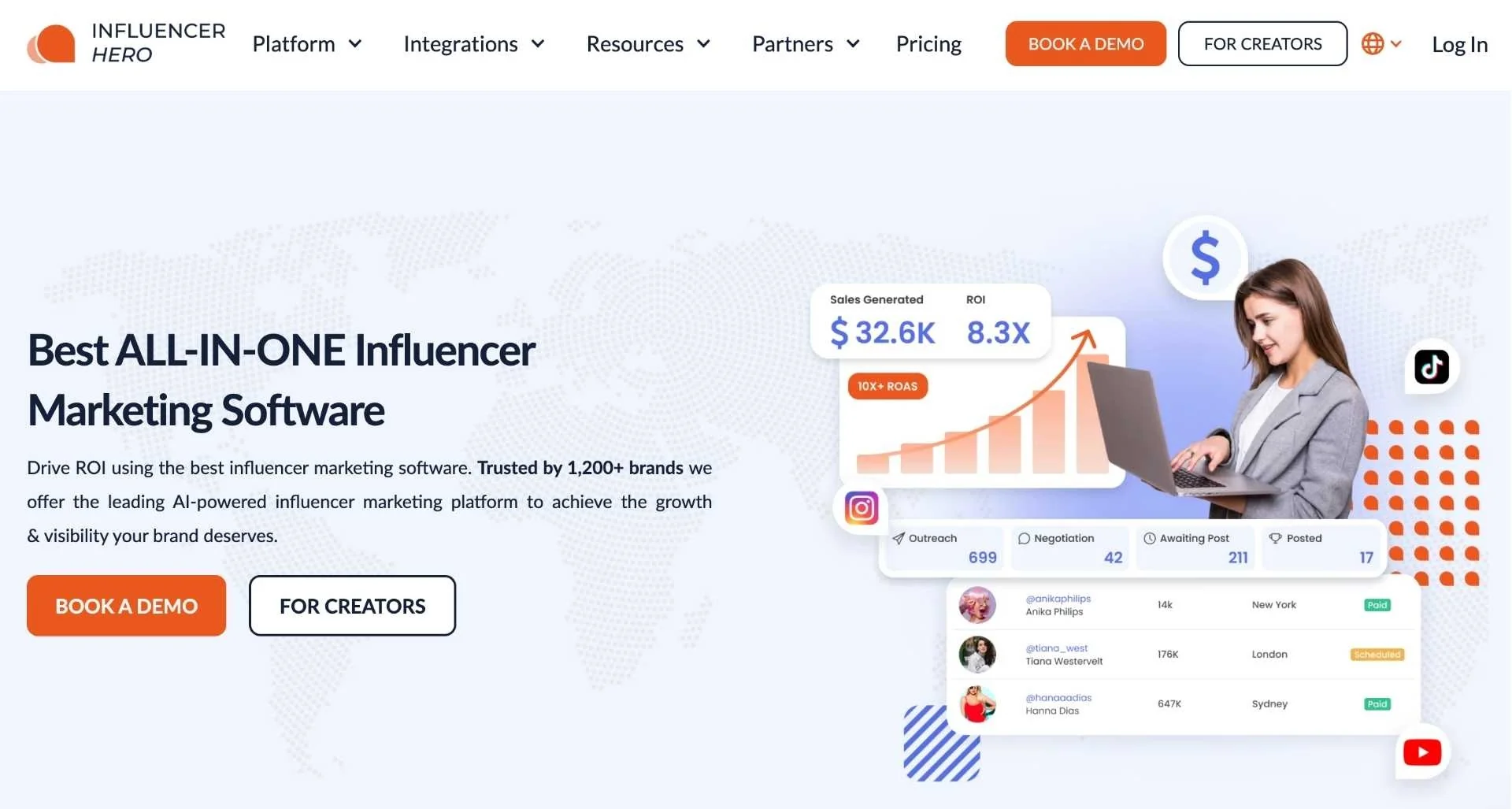
Influencer Hero is an all-in-one influencer marketing platform built for DTC and eCommerce brands that want discovery, outreach, CRM, gifting, UGC collection, affiliate tracking, and payouts in one workflow. Its biggest strength is campaign automation, especially for brands managing high-volume creator outreach and performance-based programs.
Key Features
• Influencer Discovery: Search creators by platform, niche, location, audience demographics, engagement, audience quality, and lookalikes.
• Chrome Extension: View creator stats while browsing social platforms and add creators directly into campaigns.
• AI-Powered Outreach: Use AI-assisted templates, personalization, and automated follow-up flows.
• CRM & Campaign Boards: Track creators by stage, status, deliverables, communication history, and performance.
• Gifting & Seeding: Connect eCommerce stores to manage product seeding and fulfillment.
• Affiliate Tracking: Generate links and codes, track sales, calculate commissions, and manage creator payouts.
• UGC Library: Automatically collect creator content and organize assets for repurposing.
• Application Pages & Storefronts: Build branded creator application forms and shoppable creator storefronts.
Pricing
Influencer Hero offers flexible pricing based on outreach volume and you can have unlimited creators in your CRM:
• Standard — $649/month (up to 1,000 outreaches per month)
• Pro — $1,049/month (up to 5,000 outreaches per month)
• Business — $2,490/month (up to 10,000 outreaches per month)
• Custom / Agency — Tailored pricing
Custom pricing is available for agencies and larger teams
Reviews
4.9/5.0 (Capterra)
Pros
• Campaign-centric CRM automation: Influencer Hero is designed around workflows, bulk actions, automated emails, and structured campaign boards.
• Strong eCommerce flexibility: It supports Shopify, WooCommerce, and custom eCommerce setups, making it more flexible than tools limited to Shopify only.
• Built-in creator discovery from existing audiences: Brands can identify influencers from customers, followers, newsletter subscribers, or existing contacts.
Cons
• No free trial: Makes it harder for teams to evaluate the platform before committing
• Higher pricing for smaller teams: May be less accessible for early-stage brands or those with limited budgets
Integrations
• Shopify: Manage gifting, affiliate links, discount codes, product seeding, and creator-driven revenue tracking.
• WooCommerce: Connect product gifting and affiliate workflows for WooCommerce-based stores.
• Klaviyo: Identify influencers inside email lists and sync creator segments for lifecycle campaigns.
• Omnisend: Find influencers among subscribers and segment creator-driven audiences.
• GoAffPro: Manage affiliate programs, track commissions, and handle payouts tied to influencer performance.
Linqia vs Influencer Hero
Linqia is better for enterprise brands that want managed execution, paid amplification, and large-scale campaign strategy. Influencer Hero is better for DTC teams that want transparent pricing, hands-on control, and automation across outreach, CRM, gifting, affiliates, UGC, and payouts.
Influencer Hero is also more accessible for growing brands because it publishes pricing and supports monthly software-style plans. Linqia is more suitable when the brand wants an agency-platform hybrid with performance media, creative production, and enterprise-level services.
CreatorIQ
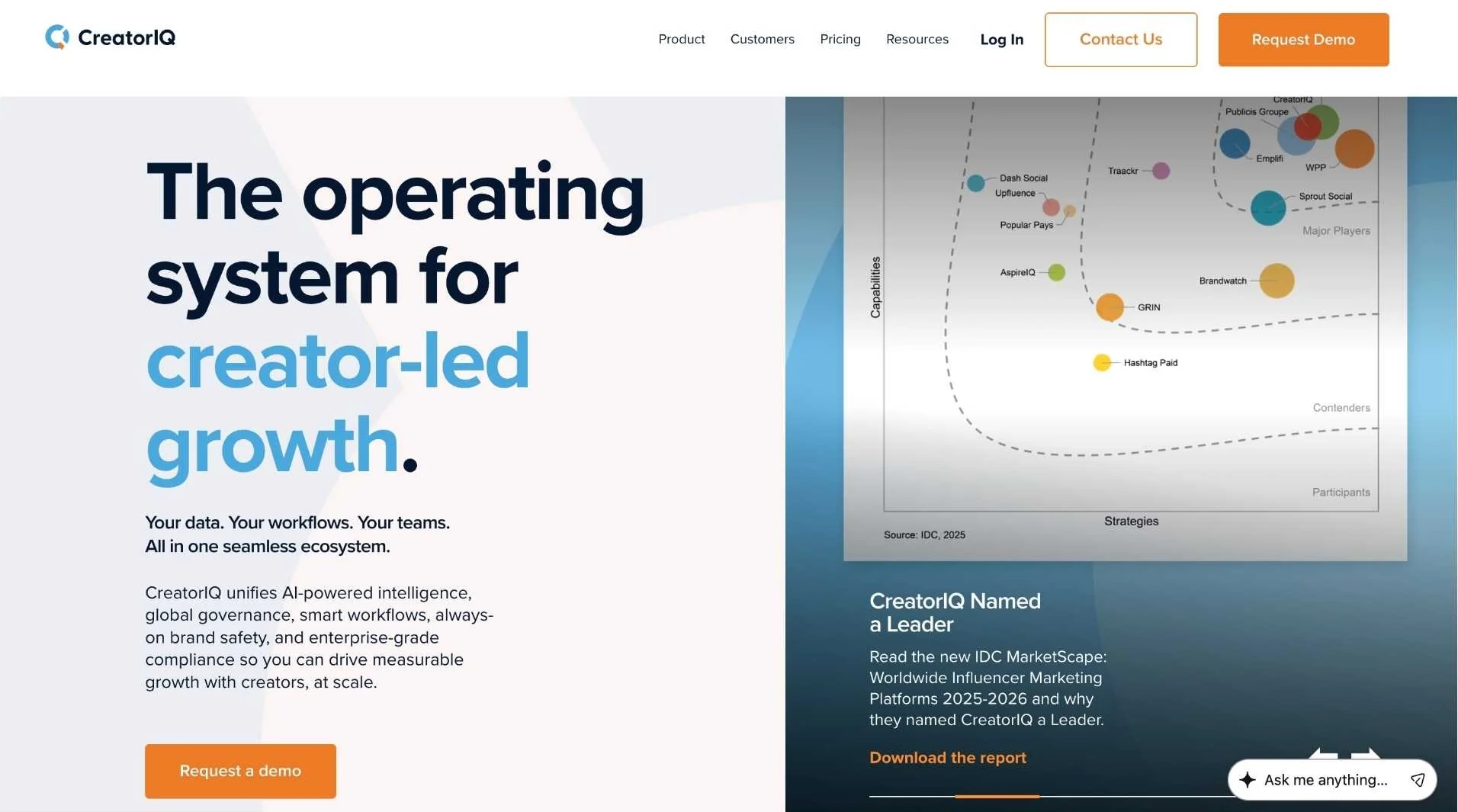
CreatorIQ is an enterprise influencer marketing platform built for global brands and agencies managing complex creator programs at scale. It covers creator discovery, CRM, campaign management, approvals, payments, reporting, content collection, and compliance, with strong social platform API relationships and enterprise reporting capabilities.
Key Features
• Creator Discovery: Search public creators across Instagram, TikTok, YouTube, Facebook, Pinterest, Twitch, and X using audience, content, growth, engagement, and brand affinity filters.
• AI & Semantic Search: Use keyword and semantic search to find creators based on topics, content themes, and niche intent.
• Private Creator CRM: Store creator profiles, notes, tags, past campaigns, communication history, questionnaires, and approval status.
• Campaign Management: Build briefs, assign deliverables, manage content approvals, duplicate campaigns, and track progress.
• One-Sheet Approvals: Share creator approval sheets with stakeholders through live links without requiring logins.
• Payments & Compliance: Manage creator payments, tax documentation, and creator payout workflows.
• UGC Library: Collect campaign assets, request usage rights, and download creator content.
• Custom Reporting: Build live dashboards with campaign, creator, platform, engagement, EMV, reach, and performance metrics.
Pricing
There are different plans:
• Basic Plan: Starts at $35,000/year. Includes 1,000 contact creators per month
• Standard Plan: Starts at $50,000/year. Includes 2,500 contact creators per month
• Professional Plan: Starts at $90,000/year. Includes 5,000 contact creators per month
• Enterprise Plan: Starts at $200,000/year. Includes 7,500 contact creators per month
Reviews
4.4/5.0 (Capterra)
Pros
• Enterprise-grade social API access: CreatorIQ is built around direct platform integrations, which helps support reliable data, compliance, and reporting.
• Custom live reporting: Teams can build stakeholder-ready dashboards and share reports through live links.
• Strong approval workflows: One-sheet approvals, campaign briefs, content review, and creator CRM features are well suited for large teams and agencies.
Cons
• High annual cost: CreatorIQ is not ideal for small brands or teams looking for flexible monthly pricing.
• Complex setup: The platform can feel heavy for teams that only need basic discovery or outreach.
• Affiliate tracking can be less automated: Some conversion and affiliate workflows may require more manual setup than commerce-first influencer tools.
Integrations
• Meta: Pull campaign and creator performance data from Instagram and Facebook through official integrations.
• TikTok: Track TikTok creator performance and campaign data through platform-connected workflows.
• YouTube: Access creator, video, and campaign performance data for YouTube activations.
• Shopify: Support product gifting, creator shipping details, and commerce-related campaign workflows.
• Google Analytics: Connect campaign measurement with web traffic and conversion analysis.
Linqia vs CreatorIQ
Linqia and CreatorIQ both serve enterprise influencer marketing teams, but they differ in service model. Linqia combines platform technology with managed campaign execution and paid media amplification, while CreatorIQ is more focused on enterprise software, data infrastructure, workflow management, and reporting.
CreatorIQ is usually the better fit for brands that already have an internal influencer team or agency partner and need a powerful operating system for global campaigns. Linqia is stronger when a brand wants strategy, execution, creator selection, content production, paid amplification, and performance support handled more directly by the vendor.
Upfluence

Upfluence is an all-in-one influencer and affiliate marketing platform designed for eCommerce brands that want to connect creator campaigns directly to sales. It is especially known for its Shopify and Amazon integrations, creator discovery database, outreach workflows, affiliate tracking, and ability to identify influential existing customers.
Key Features
• Influencer Discovery: Search a database of 12M+ creators using filters like location, niche, audience demographics, follower size, and engagement.
• AI Campaign Assistant: Jace AI helps streamline outreach, campaign messaging, and creator recruitment.
• CRM & Campaign Management: Manage creators, conversations, campaign stages, affiliate codes, compensation, and tracking in one system.
• Social Listening: Monitor brand mentions, competitor activity, trending posts, and creator conversations.
• Shopify Integration: Identify customers who are influencers, manage gifting, generate codes, and track sales.
• Amazon Integration: Track influencer-driven Amazon sales, affiliate links, and campaign performance.
• Payments: Manage creator payouts and compensation workflows.
• Performance Tracking: Track reach, impressions, clicks, engagement, conversions, and sales.
Pricing
• Pricing model: Upfluence uses custom pricing rather than a public fixed plan table.
• All plans are custom made. There’s a minimum full year of service you have to commit to with monthly payments. On average plans start around $2,000/month ($24,000 yearly)
Reviews
4.3/5.0 (Capterra)
Pros
• Native Amazon integration: Upfluence is one of the strongest options for brands that sell through both Amazon and DTC channels.
• Customer-to-creator discovery: Shopify-connected brands can identify customers who already have social influence, making outreach more authentic.
• No commission on creator sales: Upfluence does not take a percentage of influencer-driven sales, which can be valuable for high-volume affiliate programs.
Cons
• Annual commitment: The platform is not ideal for brands that want month-to-month flexibility.
• Learning curve: The platform is feature-rich, so setup and campaign workflows can feel complex for new teams.
• Campaign editing limitations: Some campaign elements can become difficult to change once setup is underway.
Integrations
• Shopify: Identify influential customers, manage gifting, generate discount codes, and track creator-driven sales.
• Amazon: Attribute Amazon marketplace sales and affiliate performance to specific creators.
• WooCommerce: Connect store data for eCommerce influencer and affiliate workflows.
• Klaviyo: Use customer and influencer data to support segmented email marketing and retention campaigns.
• Gmail/Outlook: Manage creator outreach and communication directly through connected inboxes.
Linqia vs Upfluence
Linqia is more focused on managed enterprise campaigns, paid amplification, and full-funnel media execution, while Upfluence is more eCommerce and affiliate focused. Upfluence is a better fit for brands that want to connect influencer activity directly to Shopify, WooCommerce, or Amazon revenue.
Linqia may be stronger for brands prioritizing creative production, enterprise service, and paid media distribution across channels. Upfluence is stronger for teams that want to build creator-affiliate programs, track sales, and convert existing customers into influencers.
Skeepers

Skeepers is an influencer marketing and UGC platform focused on helping brands generate authentic content through nano and micro-influencers. Its influencer marketing solution connects brands with a creator community for product gifting, social posts, reviews, content licensing, and campaign analytics across TikTok, Instagram, and YouTube.
Key Features
• Creator Community: Access a community of nano and micro-influencers who create social posts, product reviews, and UGC.
• AI-Powered Matching: Match creators to campaigns based on brand fit, audience, and product relevance.
• Gifting Campaigns: Send products to creators in exchange for authentic reviews and social content.
• Content Licensing: Collect royalty-free creator content for reuse across brand channels.
• Gifted Reviews: Generate content that can support product pages, social proof, and conversion.
• Real-Time Analytics: Track campaign performance, engagement, content output, and creator results.
• Shoppable Content: Activate UGC and influencer content on eCommerce pages to support product discovery and conversion.
• Shopify Workflow: Automatically create influencer orders inside Shopify and sync shipping data back into the platform.
Pricing
• Skeepers does not publicly list a detailed pricing table for Influencer Marketing on its main site.
• Capterra lists a starting price of €1,250/month and says no free trial is available.
Reviews
4.3/5.0 (Capterra)
Pros
• Strong micro and nano influencer focus: Skeepers is especially useful for brands that want authentic product reviews and UGC rather than celebrity-style campaigns.
• Royalty-free creator content: Brands can reuse creator content across social and commerce channels, helping extend campaign value.
• Shopify-connected gifting: Influencer orders can be created directly in Shopify, with fulfillment and tracking synced into the campaign workflow.
Cons
• Less suited for large paid creator programs: Skeepers is stronger for gifting, reviews, and UGC than for complex paid influencer contracting.
• Creator quality can vary: Brands may need to spend time filtering applicants and reviewing creator fit.
• Limited pricing transparency: Full pricing and plan details require a sales conversation.
Integrations
• Shopify: Create influencer gifting orders, sync fulfillment data, and track shipping in the Skeepers workflow.
• TikTok: Run creator campaigns and collect short-form product content for TikTok.
• Instagram: Manage influencer posts, reviews, and UGC campaigns across Instagram.
• YouTube: Support creator video campaigns and product review content.
• Skeepers Shoppable Content: Repurpose influencer and UGC assets into shoppable website experiences.
Linqia vs Skeepers
Linqia is built for enterprise influencer campaigns, managed services, paid amplification, and full-funnel performance measurement. Skeepers is more focused on scalable gifting, nano/micro creator reviews, UGC generation, and content reuse.
For brands that want a high-touch enterprise partner, Linqia is the stronger option. For DTC brands that want to generate authentic product reviews, social proof, and reusable content from smaller creators, Skeepers can be a more practical and content-focused alternative.


Klear

Klear, now part of Meltwater, is an enterprise influencer marketing platform for brands and agencies that need influencer discovery, vetting, campaign management, payments, and reporting in one system. It is especially strong for teams that want influencer marketing connected to broader social listening, PR, and media intelligence workflows.
Key Features
• Influencer Discovery: Access 30M+ creator profiles and search by topic, keyword, audience demographics, engagement, follower range, brand collaborations, and more.
• Visual Search: Find creators based on image content, such as creators using certain products or visual themes.
• True Reach: Proprietary AI estimates realistic reach rather than relying only on follower count.
• AI Profile Summaries: Influencer profiles include tone, content focus, values, estimated cost per post, brand affinity, and audience data.
• Campaign Management: Manage deliverables, influencer communication, gifting, coupon codes, link tracking, and reporting from one dashboard.
• Klear Connect: Centralized creator collaboration portal for communication, campaign briefs, and workflow management.
• Reporting & Measurement: Track reach, engagement, EMV, sales, audience sentiment, affiliate clicks, CPC, and conversion rate.
Pricing
Klear does not publish self-serve pricing on Meltwater’s public site. Pricing is handled through custom quotes with no free trial.
Based on research, the pricing start from $2,300/month
Reviews
4.3 / 5.0 (G2)
Pros
• True Reach technology: Helps brands avoid overvaluing creators based only on inflated follower counts.
• Meltwater ecosystem: Useful for teams that want influencer marketing connected to media monitoring, social listening, and PR reporting.
• Visual AI discovery: Strong for brands that care about content aesthetics, product placement, or image-based creator matching.
Cons
• High cost: Klear is priced for mid-market and enterprise teams, not small brands.
• Annual commitment: Limited flexibility for brands wanting short-term or campaign-by-campaign access.
• Reporting limits and lag: Some teams may find exports, competitor reporting, or interface speed limiting during heavy usage.
Integrations
• Shopify: Track gifting, coupon codes, sales attribution, and product-related influencer performance.
• WooCommerce: Connect eCommerce campaign activity with creator-driven sales and tracking.
• Meltwater: Combine influencer marketing data with social listening, PR, and media intelligence.
• Tipalti: Automate creator payments and payout workflows.
• Google Analytics: Connect influencer traffic and campaign performance with website analytics.
Linqia vs Klear
Linqia is more of a managed influencer marketing and paid amplification partner, while Klear is more of an enterprise software platform connected to Meltwater’s broader intelligence stack. Klear is stronger for teams that want discovery, analytics, social listening, and campaign workflows in-house.
Linqia is usually better when brands want campaign execution and media activation handled for them. Klear is better when internal teams want more control over influencer discovery, measurement, and cross-channel intelligence.
Traackr
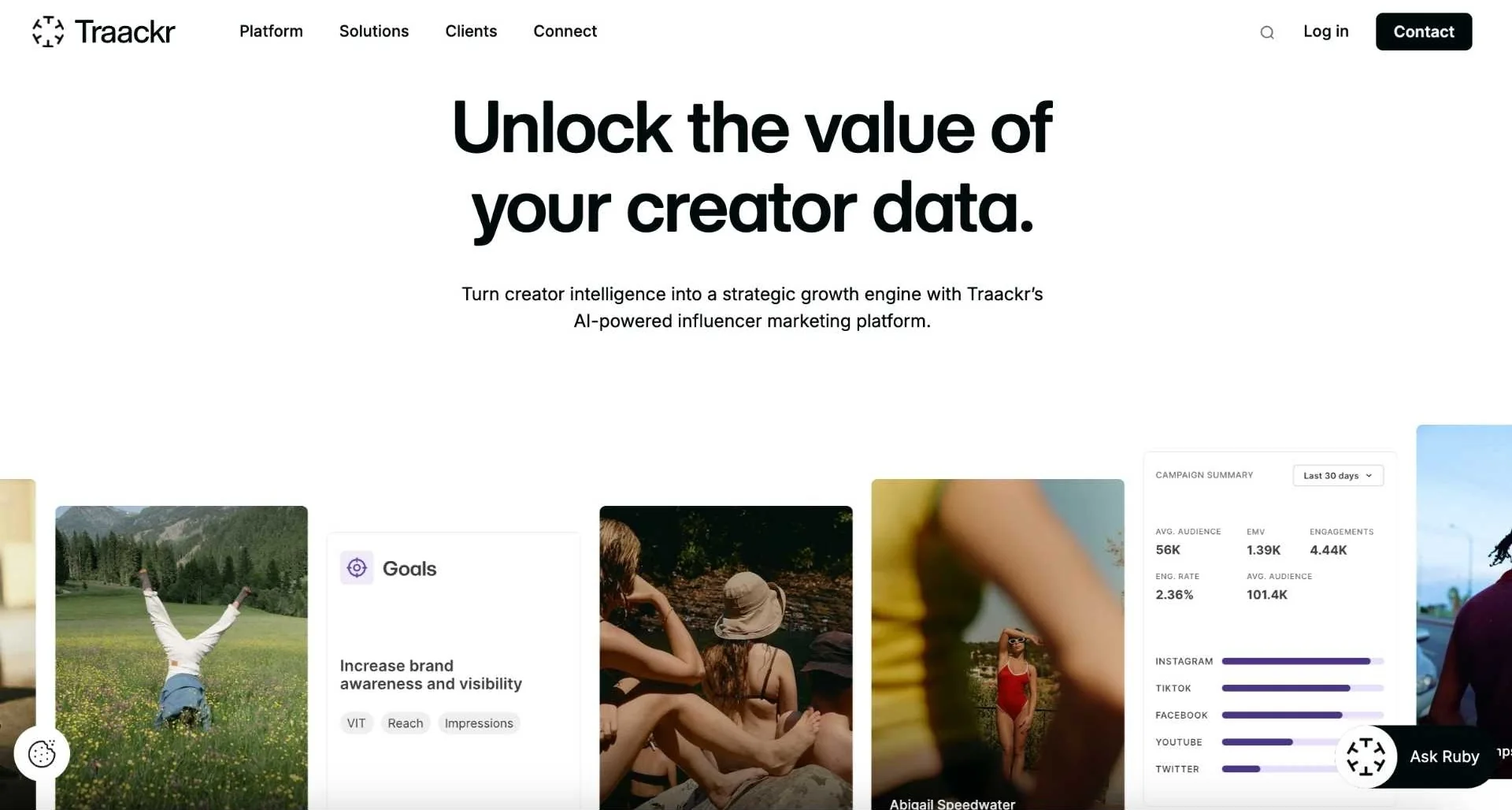
Traackr is an enterprise influencer marketing platform focused on creator discovery, relationship management, performance benchmarking, and ROI measurement. It is often used by global brands that need structured influencer governance, budget optimization, competitive benchmarking, and detailed reporting across markets.
Key Features
• Influencer Discovery: Search 6M+ influencers using audience demographics, engagement, past brand collaborations, performance history, and other advanced filters.
• Influencer CRM: Manage creator notes, tags, relationships, outreach history, campaign status, and internal collaboration.
• Campaign Management: Plan, activate, manage, and measure creator campaigns in one workflow.
• Budget Optimization: Estimate creator investment based on performance, content type, benchmarks, and expected ROI.
• Cost-Per Metrics: Track CPC, CPE, CPV, cost per story view, and other efficiency metrics.
• Brand Vitality Score: Proprietary benchmark for measuring brand visibility, influence, and trust.
• Competitive Benchmarking: Compare campaign and brand performance against competitors, categories, and markets.
Pricing
• Official pricing: custom / request a quote.
• Public benchmark: pricing starts around $32,500/year for a standard plan, with additional modules available on request.
• Contract type: generally annual enterprise contracts.
Reviews
4.3 / 5.0 (G2)
Pros
• Advanced ROI benchmarking: Strong cost-per metrics help teams evaluate creator efficiency beyond vanity metrics.
• Brand Vitality Score: Useful for measuring influencer impact on brand strength against competitors.
• Enterprise budget planning: Helps teams decide how much to invest in creators based on expected performance and historical data.
Cons
• Expensive for smaller teams: Pricing is enterprise-focused and often requires annual commitment.
• Platform complexity: Teams may need onboarding to use reporting, benchmarking, and workflow features fully.
• Occasional data delays: Performance syncing, story tracking, and reporting can sometimes lag.
Integrations
• Shopify: Connect creator activity with eCommerce conversions and campaign ROI.
• TikTok: Track creator activity and campaign performance across TikTok campaigns.
• Instagram: Monitor creator content, engagement, reach, and performance.
• YouTube: Track creator video performance and campaign impact.
• PayPal: Support creator payments and payout workflows.
Linqia vs Traackr
Linqia is better suited for brands that want a partner to execute influencer campaigns, manage creators, and amplify content through paid media. Traackr is better for brands with internal influencer teams that need data, benchmarking, budget planning, and reporting infrastructure.
Traackr is more analytics- and governance-driven, while Linqia is more service- and activation-driven. For enterprise teams measuring global influencer performance, Traackr may offer deeper benchmarking; for managed execution and paid distribution, Linqia is stronger.
IMAI / InfluencerMarketing.AI
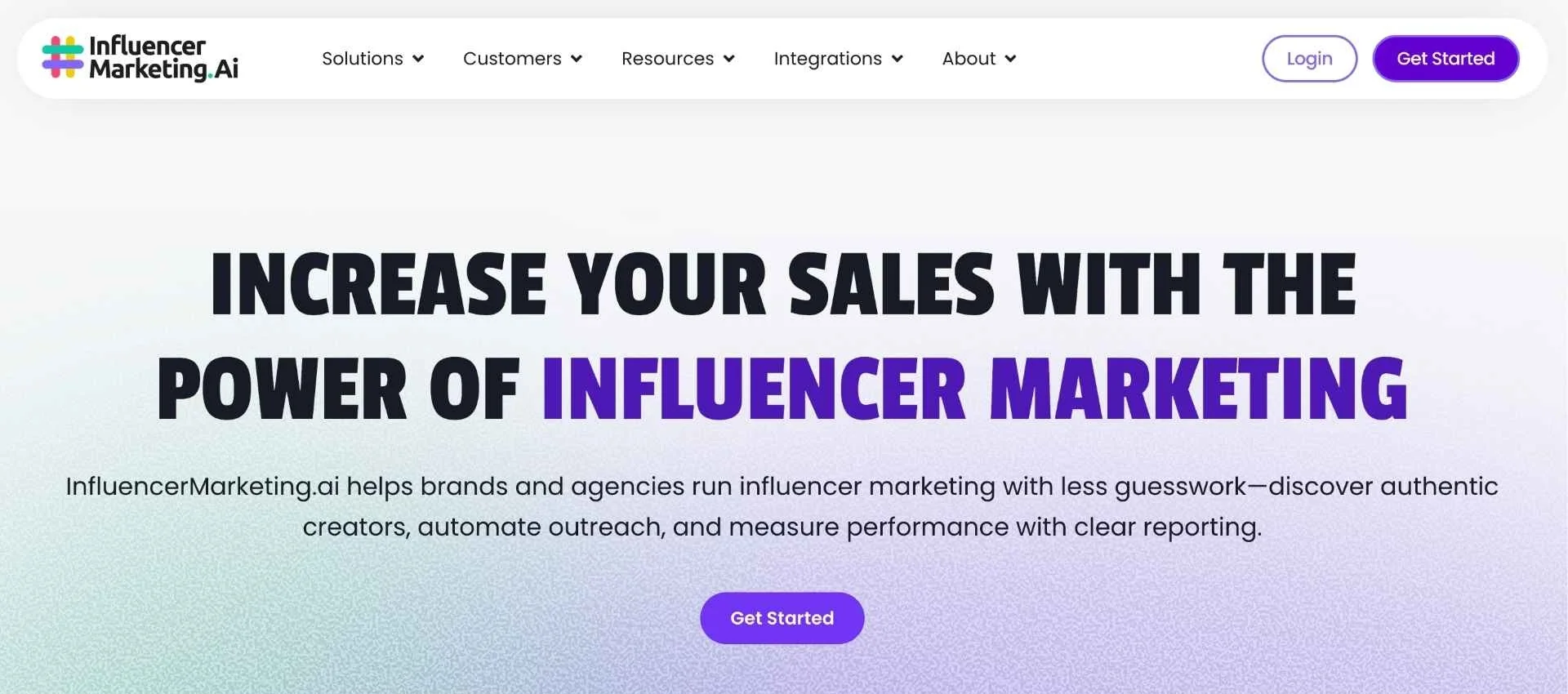
IMAI, also known as InfluencerMarketing.AI, is an AI-powered influencer marketing platform for brands, agencies, online stores, and enterprise teams. It supports influencer discovery, campaign tracking, outreach, CRM, eCommerce attribution, UGC workflows, social listening, and API access across a large global creator database.
Key Features
• Large Creator Database: Access 400M+ creators and use profile reports, CRM records, and market filters to find relevant partners.
• AI-Powered Discovery: Search and evaluate creators using AI-driven filtering, predictive insights, audience modeling, and brand-fit signals.
• Campaign Reporting: Track campaign performance, creator activity, engagement, sales, and revenue attribution.
• eCommerce Attribution: Connect creator activity to revenue, ROAS, AOV, repeat purchases, and conversion paths.
• UGC Video Ads: Manage briefs, submissions, reviews, and performance creative workflows.
• CRM & Outreach: Manage creator records, outreach, negotiations, and campaign workflow from one dashboard.
• API Access: Offers API capabilities for teams that want to build influencer data into custom workflows.
Pricing
IMAI currently shows four plan tiers on its official pricing page, with both annual and monthly billing options.
• Starter: $499/month when billed annually ($5,988/year) or $599/month billed monthly
• Growth: $999/month when billed annually ($11,988/year) or $1,199/month billed monthly
• Teams: $2,999/month when billed annually ($35,988/year) or $3,599/month billed monthly
• Enterprise: Custom pricing
Reviews
4.5 / 5.0 (G2)
Pros
• Transparent pricing: Unlike many enterprise influencer platforms, IMAI publicly lists monthly and annual pricing.
• 400M+ creator database: Strong fit for teams that want large-scale global discovery across many markets.
• Performance-focused attribution: Strong eCommerce reporting for teams that need influencer activity tied to revenue and ROAS.
Cons
• Advanced features require setup: The depth of AI, reporting, and attribution can require onboarding.
• Plan limits matter: CRM records, profile reports, markets, brands, and workspaces vary by plan.
• Can get expensive at scale: Teams needing API, higher limits, managed campaigns, or enterprise customization may move into custom pricing.
Integrations
• Amazon: Track creator-driven commerce activity and campaign performance for Amazon-focused programs.
• Shopify: Connect influencer campaigns to store revenue, orders, and attribution.
• WooCommerce: Sync eCommerce sales and campaign data for WordPress-based stores.
• Klaviyo: Connect influencer and customer data with email and lifecycle marketing.
• Zapier: Automate workflows between IMAI and other marketing or CRM tools.
Linqia vs IMAI
Linqia is more service-led, with managed campaign execution, creator strategy, and paid amplification. IMAI is more software-led, with transparent pricing, a large database, AI discovery, CRM, and eCommerce attribution.
IMAI is a better fit for teams that want to run campaigns themselves and scale discovery or performance tracking. Linqia is better when the brand wants enterprise support, strategic execution, and content amplification handled by an external partner.
Heepsy

Heepsy is an influencer marketing platform focused on creator discovery, outreach, campaign management, and eCommerce tracking. It is best suited for small and mid-sized brands that want an affordable way to find influencers, vet audience quality, manage outreach, and run basic campaign workflows without enterprise-level complexity.
Key Features
• Influencer Discovery: Search roughly 50M influencers globally across Instagram, TikTok, YouTube, and Twitch.
• Advanced Filters: Filter by keyword, niche, follower count, engagement rate, audience location, age, gender, and authenticity.
• Fake Follower Detection: Estimate audience authenticity and prioritize creators with stronger audience quality.
• Detailed Creator Profiles: View engagement rate, average likes, comments, reach, audience demographics, and past brand collaborations.
• Lookalike Search: Find creators similar to profiles that already match your brand.
• Bulk Outreach: Send up to 3,000 emails/month with templates and automated follow-ups on higher plans.
• Campaign CRM: Use boards and lists to track stages such as emailed, approved, shipped, posted, sales, and paid.
• Sales Tracking: Advanced plans support Shopify and WooCommerce integrations for links, codes, sales, units sold, clicks, and conversions.
Pricing
• Free — limited free access is available.
• Starter — recent official Heepsy blog references place Starter at $89/month.
• Plus — recent official Heepsy blog references place Plus at $249/month.
• Advanced — recent official Heepsy blog references place Advanced at $369/month.
• Heepsy also says users can choose monthly or annual billing, with annual subscriptions discounted versus monthly rates.
Reviews
4.5 / 5.0 (G2)
Pros
• Strong discovery for the price: Useful filters and audience quality checks without enterprise pricing.
• Flexible contracts: Brands can upgrade, downgrade, or cancel without being locked into a long annual agreement.
• Advanced eCommerce tracking: Higher plans support Shopify and WooCommerce sales tracking, affiliate campaigns, and promotional codes.
Cons
• Best features are on Advanced: Sales tracking, affiliate integrations, and deeper reporting require the higher-tier plan.
• No AI outreach generation: Email templates exist, but AI-generated outreach and response handling are limited.
• Audience authenticity is estimated: Fake follower detection is helpful but not perfectly precise.
Integrations
• Shopify: Generate links and codes, track sales, conversions, clicks, and influencer-driven revenue.
• WooCommerce: Connect affiliate and sales tracking for WooCommerce-based stores.
• Instagram: Discover creators, track posts, and monitor campaign content.
• TikTok: Search TikTok creators and manage campaign tracking.
• YouTube: Discover and analyze YouTube creators for video-based campaigns.
Linqia vs Heepsy
Linqia is built for enterprise campaigns with managed services and paid amplification, while Heepsy is a more affordable self-serve platform for discovery, outreach, and basic campaign tracking. Heepsy is better for smaller teams that want flexibility and lower cost.
Linqia is stronger for high-touch strategy, creative execution, and full-funnel media activation. Heepsy is stronger for brands that mainly need creator search, outreach, and manageable eCommerce tracking.
Social Cat
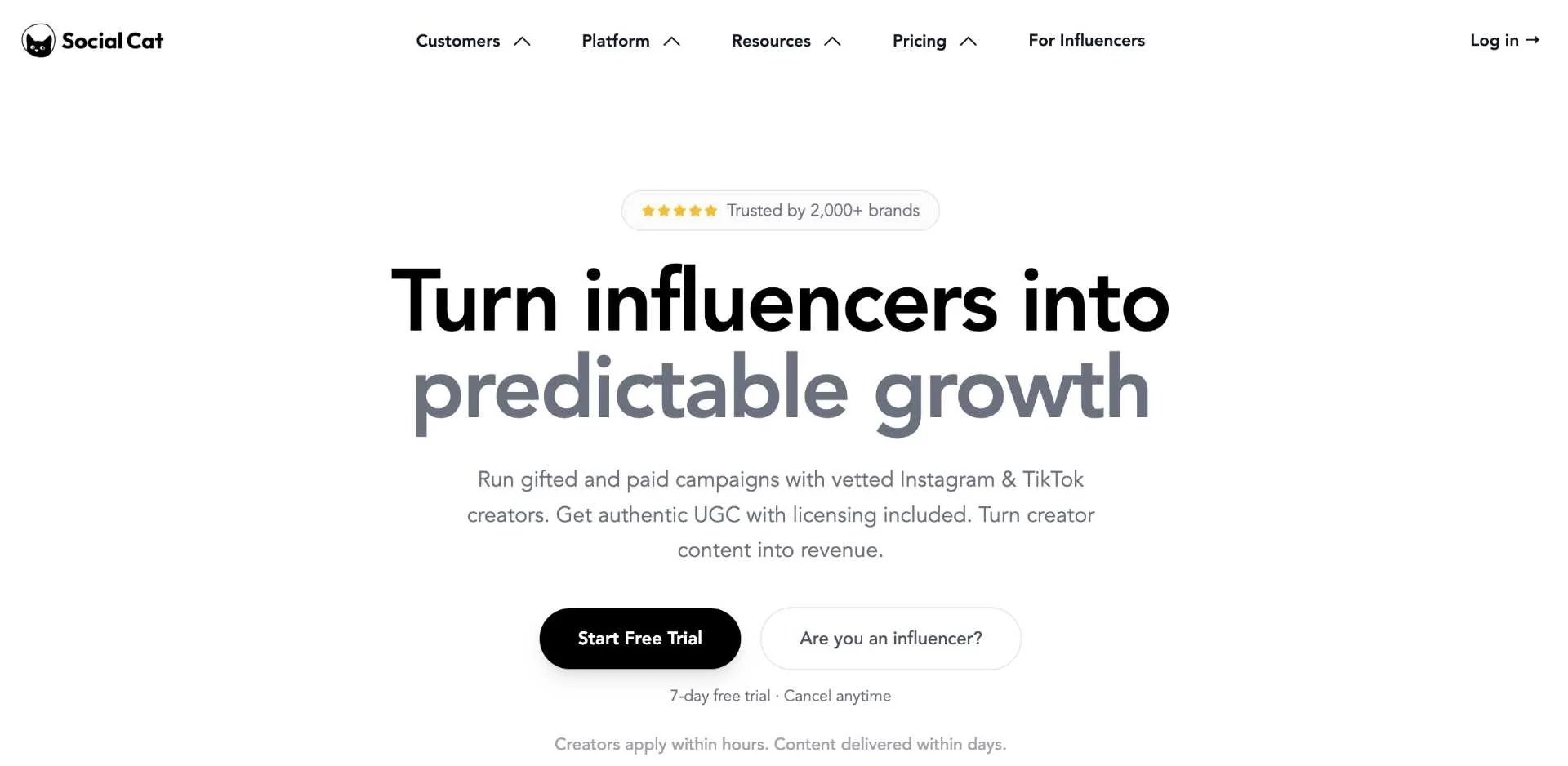
Social Cat is an influencer marketing platform designed for small businesses and growing brands that want to run gifted, paid, or affiliate collaborations with vetted micro-influencers. It focuses on simplicity, campaign applications, in-app messaging, content usage rights, and affordable pricing rather than enterprise-level analytics or automation.
Key Features
• Campaign Builder: Create gifted, paid, or affiliate campaigns that creators can discover and apply to.
• Influencer Applications: Review incoming creator applications with profile details, collaboration history, and performance data.
• Influencer Search: Use the prospecting tool to filter creators by location, gender, engagement rate, audience size, and category.
• Direct Invitations: Invite specific creators to join your campaign instead of relying only on inbound applications.
• In-App Messaging: Coordinate briefs, deliverables, negotiations, and campaign details inside the platform.
• Product Seeding Workflow: Send products after collaboration approval and track campaign progress.
• Content Uploads: Creators upload campaign content into the platform after posting.
• Content Usage Rights: All plans include unlimited content usage rights, making UGC repurposing easier.
Pricing
Social Cat offers flexible monthly pricing with no long-term contracts, making it accessible for smaller brands and teams.
• Essentials Plan – $99/month
• Performance Plan – $199/month
• Pro Plan – $299/month
Reviews
4.3 / 5.0 (Trustpilot)
Pros
• Affordable micro-influencer access: Strong fit for brands that want influencer marketing without large retainers or enterprise software.
• Content rights included: Brands can reuse creator content without negotiating usage rights separately on every campaign.
• Simple creator application model: Campaigns can attract creators directly, making it easier for small teams to manage inbound interest.
Cons
• Limited analytics: No deep ROI, EMV, or advanced conversion reporting.
• Not built for enterprise CRM: Relationship management is useful but basic compared to larger platforms.
• Limited platform depth: Best suited for Instagram and TikTok micro-influencer campaigns.
Integrations
• Shopify: Supports gifted and paid campaigns for Shopify brands that want creator-led product promotion.
• Instagram: Manage Instagram creator collaborations and collect content from campaigns.
• TikTok: Run TikTok-focused gifted or paid collaborations with vetted creators.
• Email: Receive support and campaign communication outside the platform when needed.
• Content Library: Store and reuse creator-uploaded campaign assets for social and marketing channels.
Linqia vs Social Cat
Linqia is an enterprise influencer marketing partner for larger brands that need managed execution, paid amplification, and advanced performance measurement. Social Cat is a lightweight, affordable option for small brands focused on micro-influencer gifting and UGC.
Social Cat is better for brands just starting influencer marketing. Linqia is better for established brands that need scale, strategy, campaign execution, and performance media support.
Final Thoughts on Linqia Alternatives
Linqia stands out as an enterprise-focused, managed influencer marketing solution with strong capabilities in paid amplification and full-funnel performance, but many alternatives offer more flexibility depending on a brand’s needs. Platforms like Aspire, Upfluence, and Influencer Hero cater well to DTC and eCommerce teams looking for hands-on control, gifting workflows, and affiliate tracking, while tools like CreatorIQ, Klear, and Traackr provide robust enterprise software for large-scale campaign management and analytics. Meanwhile, options such as Heepsy, Social Cat, and Skeepers are better suited for smaller teams prioritizing affordability and micro-influencer or UGC-driven strategies. Ultimately, the right alternative depends on whether a brand prioritizes managed services, self-serve control, pricing flexibility, or performance-driven commerce features.

.png)


.jpg)