

10 Best Endorsely Alternatives for Influencer Marketing
Endorsely is free until affiliates generate $1,000 a month in revenue, which makes it an easy way for a SaaS company to launch its first partner program. D2C brands researching Endorsely alternatives usually reach a similar conclusion after a closer look, because the product is built around Stripe subscriptions and software affiliates rather than store orders and social media creators.
That focus shows up across the feature set. Endorsely handles affiliate links, discount codes, recurring commission and PayPal payouts well. It does not offer influencer discovery on Instagram, TikTok or YouTube, product seeding, UGC collection or a Shopify integration for tracking store sales.
The influencer marketing software in this guide is built for brands that grow through creators, and each platform is reviewed on features, pricing, reviews and integrations before being compared directly with Endorsely.
The 10 Endorsely alternatives covered here, in order, are GRIN, Influencer Hero, CreatorIQ, Traackr, Afluencer, Modash, IZEA, IMAI, SARAL and Glewee.
Key Criteria for Evaluating Influencer Marketing Platforms
Core Features
Evaluation of essential influencer marketing capabilities, including influencer discovery, outreach, CRM, campaign management, reporting, and content workflows.
Pricing & Flexibility
Comparison of pricing models, subscription plans, and contract terms to match different budgets and growth stages.
Customer Reviews & Satisfaction
Analysis of user feedback from trusted review platforms, focusing on usability, reliability, customer support, and overall performance.
Pros & Cons
Review of each platform’s strengths and limitations to highlight where it performs well and where it may fall short based on different use cases.
Integrations
Review of the most important integrations (e.g., Shopify and other tech tools), highlighting what each integration enables in one sentence.
Endorsely Overview
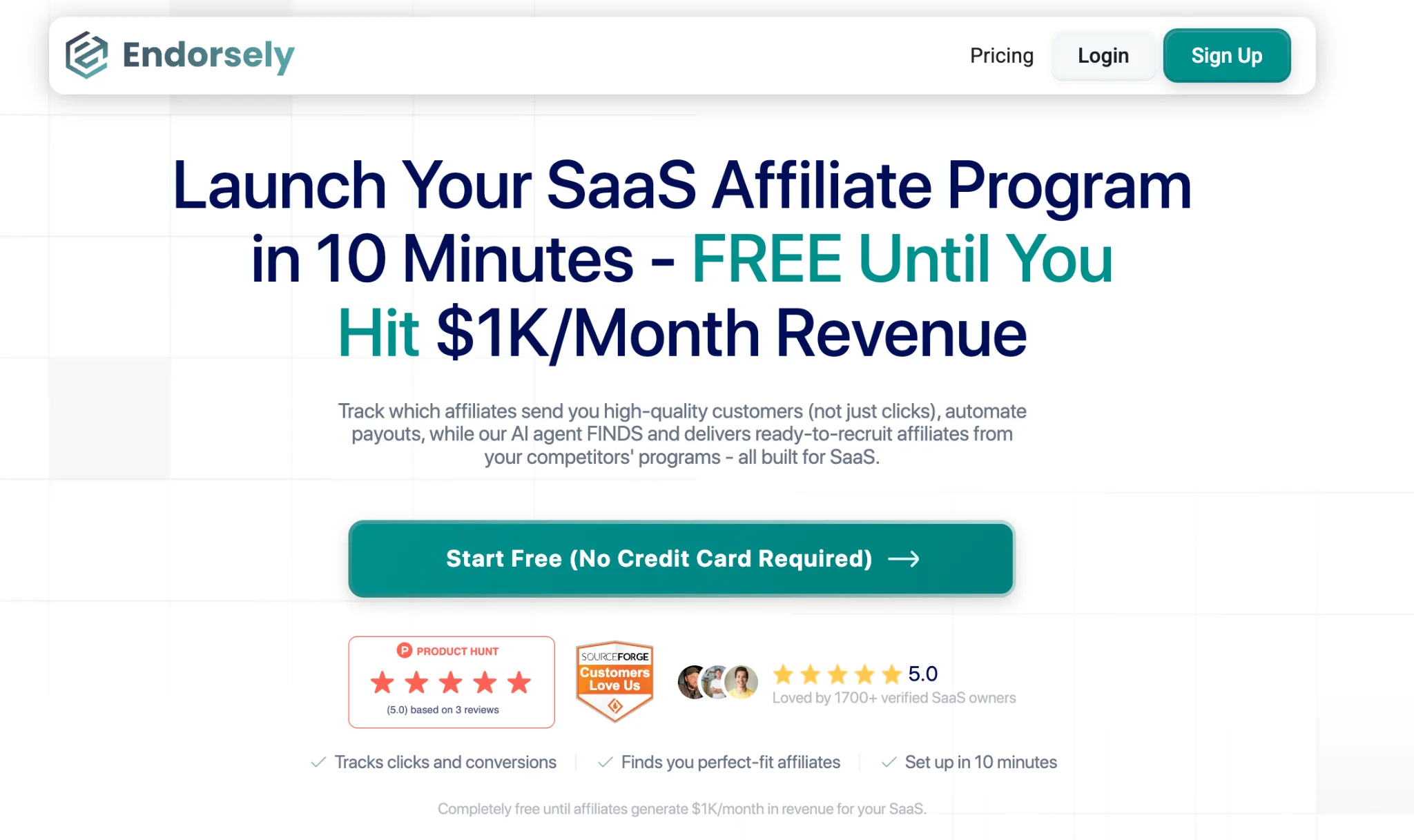
Endorsely is affiliate program software for SaaS companies, designed so that founders can launch and manage a partner program without technical setup. It connects to Stripe through a one-click app, tracks clicks, signups and conversions, and calculates one-time or recurring commission that follows renewals, upgrades and refunds automatically.
Its newer features focus on recruitment, including an AI affiliate finder that identifies people already promoting competing products and drafts outreach emails to them. Because revenue tracking runs through Stripe, eCommerce brands tend to compare it with influencer marketing platforms for Shopify brands that connect directly to store orders.
Key Features
- AI affiliate finder: The finder surfaces affiliates who already promote competing products, locates their contact details and drafts outreach, which shortens the hardest part of starting a program.
- Stripe revenue tracking: A one-click Stripe app attributes conversions and subscription revenue to each affiliate, so commission is calculated without manual exports.
- Recurring commission rules: Commission can be one-time or recurring and adjusts for renewals, upgrades, refunds and cancellations, which prevents paying out on churned customers.
- Links and discount codes: Affiliates can share tracked links, deeplinks or custom promo codes, giving them more than one way to drive attributed sales.
- Fraud protection: The platform flags paid-ad conversions, possible brand bidding and self-referrals, which helps keep commission payments accurate.
Pricing
Endorsely publishes four plans, and each one is limited by the monthly affiliate revenue it tracks rather than by seats or affiliates:
- Starter: free up to $1,000 a month in affiliate revenue, with 15 affiliate-finder credits and bulk PayPal payouts
- Pro: $39 a month up to $5,000 in affiliate revenue, with 100 finder credits a month, a custom domain and unlimited team members
- Scale: $99 a month up to $20,000 in affiliate revenue, with 250 finder credits a month and priority support
- Enterprise: custom pricing, with unlimited affiliate finding, managed onboarding and strategy coaching
There are no setup fees, commission fees or long-term contracts, so the main cost question is when a program will cross each revenue cap. A program producing $5,100 a month pays $99, close to 2% of tracked revenue, while a program at $20,000 a month pays the same $99, or 0.5%.
Reviews
No verifiable rating. Endorsely has no published reviews on Capterra and no rated G2 listing, so the only usage figure available is the company’s own claim of more than 1,700 SaaS owners.
Integrations
- Stripe: The core connection, used to track subscription revenue and attribute each conversion to an affiliate.
- PayPal: Bulk affiliate payouts run through PayPal on every plan, including the free one.
- Manual API: Businesses with several payment processors or a custom billing setup can send conversions through an API endpoint.
- Signup tracking script: A short script records free trial signups as leads, even when they do not appear in Stripe yet.
- Custom domain: From the Pro plan, the affiliate portal can run on the brand’s own domain with its logo and colors.
Endorsely does not publish a Shopify, WooCommerce, email marketing or CRM integration, which is the main gap for D2C brands that sell physical products.
Pros
- Free until it works: Nothing is charged until affiliates produce $1,000 a month, so a new program can prove itself before it costs anything.
- No revenue share: The flat monthly fee stays at $99 up to $20,000 in tracked revenue, which keeps the effective rate low as a program grows.
- Recruitment built in: The AI finder helps brands source new partners instead of assuming they already have a list of affiliates.
Common Drawbacks of Endorsely
Revenue caps decide the price
Crossing $1,000, $5,000 or $20,000 a month in affiliate revenue forces an upgrade, so the effective rate is highest right after each threshold.
Built around Stripe subscriptions
Revenue tracking assumes Stripe billing, so brands selling through a Shopify or WooCommerce store need to confirm how one-off orders would be attributed before signing up.
No influencer or content workflow
The affiliate finder looks for software affiliates and publishers rather than social media creators, and there is no gifting, product seeding or UGC collection.
No independent reviews
Without a review base on the major software sites, it is harder to judge tracking accuracy and support quality before trusting the platform with commission payments.
Best Endorsely Alternatives
| TOOL | REVIEWS | BEST FOR | TRIAL INFO | PRICING | ||
|---|---|---|---|---|---|---|
1 |

|
⭐ | DTC creator management | Book Demo | Pricing | Website |
2 |

|
⭐ | Influencer CRM & automation | Book Demo | Pricing | Website |
3 |

|
⭐ | Enterprise influencer marketing | Book Demo | Pricing | Website |
4 |

|
⭐ | Enterprise influencer analytics | Book Demo | Pricing | Website |
5 |

|
⭐ | Influencer marketplace campaigns | Book Demo | Pricing | Website |
6 |

|
⭐ | Influencer discovery | Book Demo | Pricing | Website |
7 |
|
⭐ | Influencer marketplace | Book Demo | Pricing | Website |
8 |
|
⭐ | AI influencer discovery & analytics | Book Demo | Pricing | Website |
9 |

|
⭐ | Influencer outreach | Book Demo | Pricing | Website |
10 |
|
⭐ | Small brands running influencer and UGC campaigns | Book Demo | Pricing | Website |
GRIN

GRIN is a creator management platform for eCommerce brands that recently moved to self-serve monthly plans, with an AI agent called Gia at the center of the product. Brands use it to find creators, manage relationships, send gifts, run affiliate programs and pay creators from a single wallet, and it has long been a common choice for Shopify-based consumer brands.
Key Features
- Gia AI agent: Gia drafts campaign plans and outreach, sorts creator applications and flags items that need attention, which reduces daily admin for small influencer teams.
- Creator discovery and marketplace: Brands can search for creators and reach an opted-in marketplace, with market-rate benchmarks that help when negotiating fees.
- Gifting programs: Gifting-only campaigns need no wallet deposit, which makes product seeding easy to start without committing budget upfront.
- Affiliate links and codes: Every plan includes affiliate links, discount codes and commission tracking, so brands can reward creators for the sales they drive.
- Wallet payments: Creator fees sit in escrow until payout and deals lock at acceptance, which protects both the brand and the creator on paid partnerships.
Pricing
GRIN now publishes self-serve plans that combine a monthly fee with a management fee on every wallet deposit used to pay creators:
- Free: $0 a month, with a 20% fee on wallet deposits, 2 live campaigns and 10 gifts in total
- Starter: $200 a month, with a 10% fee, unlimited campaigns and 100 gifts a month, plus a 30-day free trial
- Growth: $500 a month, with a 7% fee, multiple brands and 300 gifts a month
- Scale: $1,500 a month, with a 5% fee and 1,000 gifts a month
- Enterprise: custom pricing on an annual agreement
On the Starter plan, a brand depositing $5,000 a month for creator fees pays $500 in management fees on top of the $200 subscription, so the fee matters more than the plan price once creator budgets grow.
Reviews
4.5/5.0 (G2, 483 reviews) and 4.7/5.0 (Capterra, 147 reviews)
Pros
- Low-cost way in: A free plan and a 30-day Starter trial let brands test the workflow before paying a monthly fee.
- One creator workflow: Discovery, gifting, affiliate tracking and payments sit in the same product, so teams avoid stitching tools together.
- AI help for small teams: Gia handles routine planning and sorting, which suits brands without a dedicated influencer manager.
Cons
- Fee on creator spend: The 5% to 20% management fee on deposits makes the platform more expensive as creator budgets increase.
- Wallet minimum for paid work: Paid partnership and affiliate campaigns need at least $250 in the wallet before they can go live.
Integrations
- Shopify: Gifting orders, discount codes and affiliate sales connect to the store, so creator revenue is visible in one place.
- Klaviyo: Creator and customer data can feed email flows, which helps brands follow up with new affiliates.
- Gmail and Outlook: Outreach is sent from the team’s own inbox, and replies are logged against each creator.
- DocuSign: Creator agreements are signed digitally before content goes live.
- Slack: Campaign updates and creator activity are pushed to the team’s channels.
Endorsely vs GRIN
Endorsely and GRIN both handle affiliate links, discount codes and commission, but GRIN stands out with creator discovery, gifting and content tracking built for social media influencers. Brands can find creators, ship products and pay partners from one wallet, which covers the parts of a creator program that affiliate software leaves out.
Endorsely, on the other hand, focuses more on software affiliates and subscription revenue tracked through Stripe, with a free tier and no fee on commission. GRIN charges a percentage on creator payments, while Endorsely charges by tracked revenue band. For eCommerce brands that want to start seeding products to creators at a low monthly cost, GRIN might suit you better.
Influencer Hero
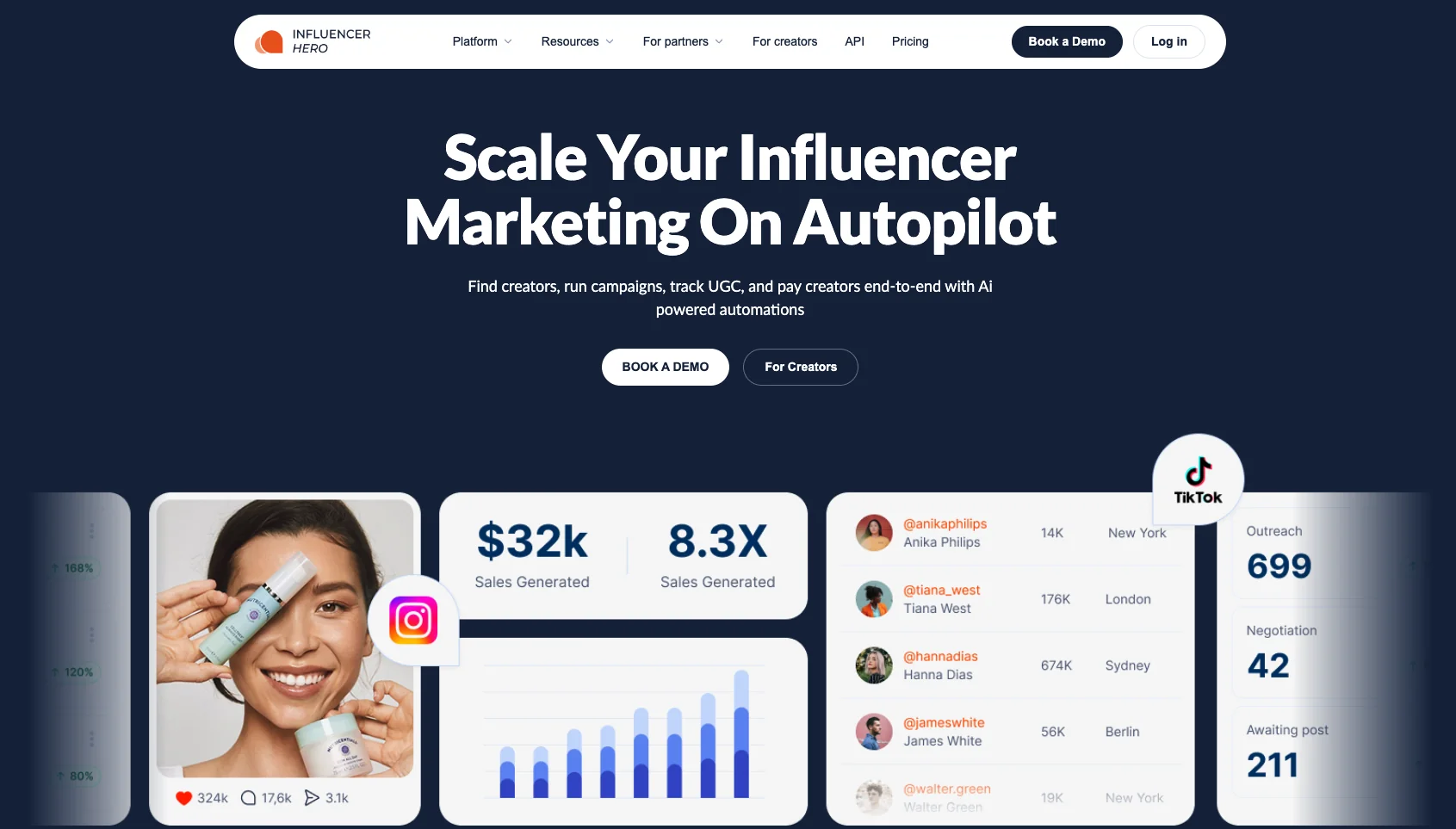
Influencer Hero is an all-in-one influencer marketing platform for D2C and eCommerce brands that want discovery, outreach, gifting, UGC, affiliate programs and creator payouts in one system. Its influencer CRM and automation tools are designed for programs with hundreds or thousands of creators, so teams can scale seeding and affiliate campaigns without adding headcount.
Key Features
- Influencer discovery: A global database of 450M+ creators across Instagram, TikTok and YouTube, with 20+ search filters for location, audience demographics, interests and engagement rate.
- Fake-follower screening: Built-in fraud detection checks audience authenticity before outreach, so budget only goes to creators with real followers.
- Brand-follower identification: Brands can find creators who already follow or engage with them, which tends to raise reply rates and make partnerships feel more natural.
- Outreach automation: Personalized email sequences, AI follow-up suggestions and messaging over email, Instagram DM and WhatsApp keep every creator conversation in one inbox.
- Gifting and product seeding: Shopify and WooCommerce integrations create gift orders automatically and track shipping, with script-based support for other store platforms.
- Affiliate management: Custom links, discount codes and commission tiers connect creator content to sales, with affiliate payouts handled in bulk or on a schedule.
- UGC library: Creator posts are collected automatically and can be searched with AI by keyword, product visibility or visual quality for reuse in ads.
Pricing
Influencer Hero publishes its pricing, and plans are scaled by monthly reachout volume:
- Standard: $649/month, up to 1,000 reachouts per month
- Pro: $1,049/month, up to 5,000 reachouts per month
- Business: $2,490/month, up to 10,000 reachouts per month
- Custom & Agency: custom pricing for larger teams and agencies
Quarterly billing takes 20% off the monthly rate and yearly billing takes 30% off, and every plan includes the core feature set.
Reviews
5.0/5.0 (Capterra)
Pros
- Multi-platform eCommerce support: Influencer Hero connects natively to Shopify and WooCommerce, and it supports Magento and custom-built stores through an embedded script. Brands can track gifting, discount codes and affiliate orders from whichever store platform they use. This makes it one of the few influencer marketing platforms that is not limited to a single commerce setup.
- Automated, personalized outreach: AI-enhanced email flows let brands contact thousands of creators with messages that still read as personal, including tailored opening lines. The AI Response Drafter and AI follow-up suggestions speed up every reply while keeping the brand’s tone and product details consistent. Higher reply rates mean more creators move from first contact to an active partnership.
- Influencer brand followers: The platform shows which creators already follow or engage with the brand on social media. These creators know the products and often respond faster, which makes outreach warmer and partnerships more authentic. It is a practical starting point for brands launching their first affiliate or ambassador program.
- AI-powered coupon code leakage prevention: Influencer Hero monitors coupon aggregator sites, browser extensions and deal forums for creator codes that have leaked. When a code appears where it should not, it is rotated automatically and the creator receives a notification. Commission is then paid only on sales the creator actually drove, which protects margins.
Cons
- No free trial: There is no self-serve trial, so brands see the platform through a guided demo before they buy.
- Expensive for smaller brands: The Standard plan starts at $649 a month, which is a sizable budget for a brand testing influencer marketing for the first time.
- Steep learning curve: With this many workflows and automations, new teams need some onboarding time before they use the platform fully.
Integrations
- Shopify: Gift orders, discount codes and affiliate sales sync with the store in real time.
- WooCommerce: WooCommerce brands get the same automatic gifting and commission tracking as Shopify stores.
- Klaviyo: Creator data flows into email marketing, so brands can nurture affiliates and ambassadors with automated messages.
- DocuSign: Creator contracts are sent and signed from the CRM, which keeps agreements attached to each deal.
- Zapier: Brands can connect more than 8,000 other apps where no native integration exists.
Endorsely vs Influencer Hero
Endorsely does affiliate tracking for subscription businesses well, with Stripe attribution, recurring commission rules and an AI finder for software affiliates. It does not cover creator discovery, outreach, gifting or content, though, so a D2C brand working with Instagram, TikTok or YouTube creators would still need other tools for most of its program. Influencer Hero combines a 450M+ creator database and fake-follower screening with automated outreach, Shopify and WooCommerce gifting, affiliate codes with commission tiers and bulk payouts at 0.1% to 0.4%. It runs the entire creator program, while Endorsely covers only the affiliate tracking stage.
The pricing models are built for different jobs. Endorsely is free up to $1,000 a month in affiliate revenue and then costs $39 or $99 a month up to $20,000, which is affordable for tracking alone. Influencer Hero costs $649, $1,049 or $2,490 a month based on outreach volume, with 20% off quarterly and 30% off yearly billing, and the price stays the same no matter how much revenue creators drive. Once a brand adds separate discovery, outreach and gifting tools to an affiliate tracker, one Influencer Hero plan is the better value. That makes Influencer Hero the stronger choice for D2C brands building a creator-led affiliate program.
CreatorIQ
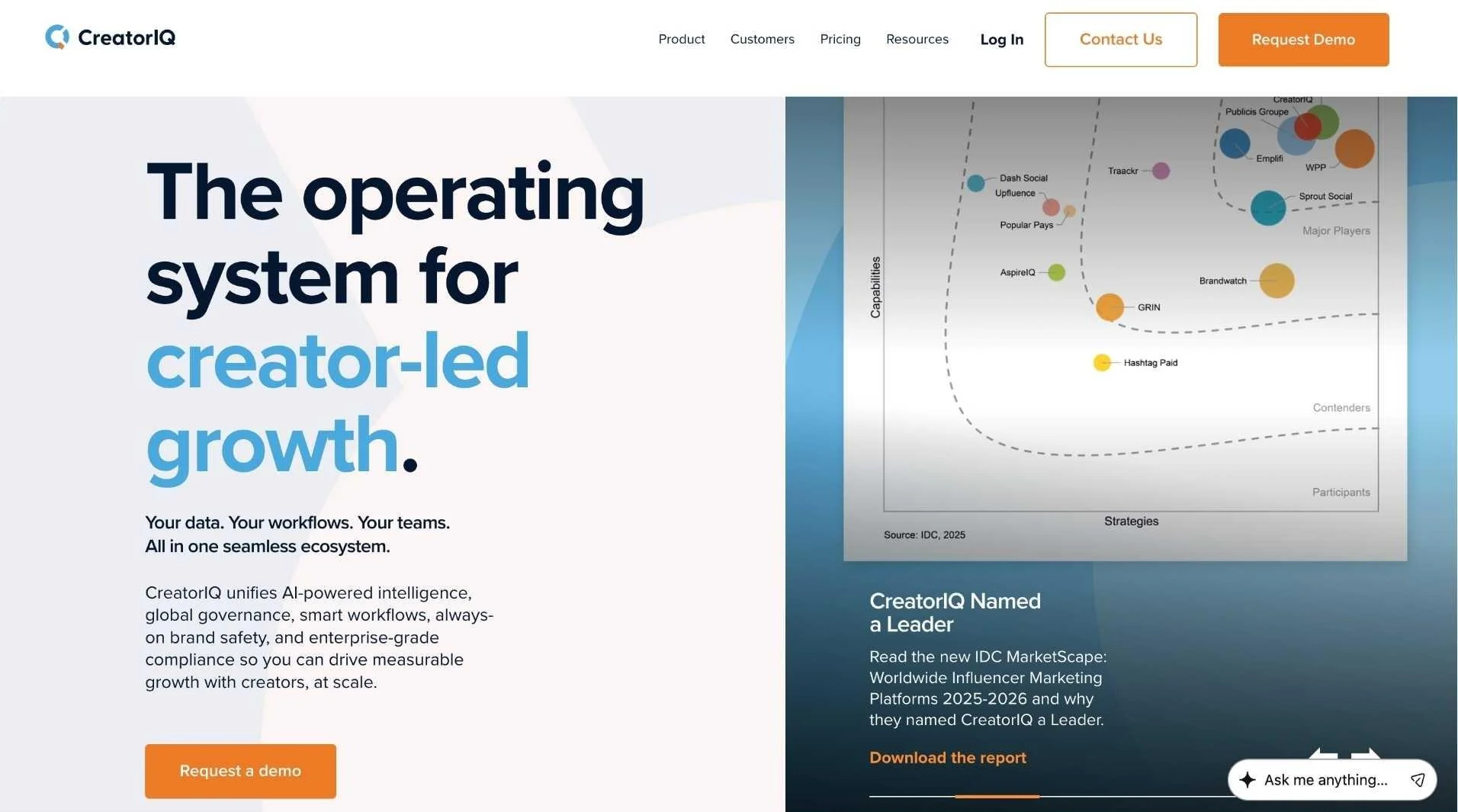
CreatorIQ is an enterprise creator marketing platform used by global consumer brands and agencies that manage large creator rosters across many markets. Its reputation rests on data depth, governance and brand safety, and industry analysts such as Forrester have named it a leader in the category.
Key Features
- Creator Graph discovery: AI-driven search draws on audience, category and partnership data, helping large teams shortlist creators with a proven brand fit.
- CreatorIQ Convert: Affiliate links and codes are issued at scale, so brands can connect creator content to sales across big rosters.
- SafeIQ brand safety: AI reviews creator content history for risk, which supports approval workflows in regulated or high-profile categories.
- Leadership reporting: Dashboards roll up spend, reach and conversions by market or business unit, making results easier to present internally.
- Paid amplification: Top creator posts can be pushed into paid social programs, extending the reach of content that already performs.
Pricing
CreatorIQ does not publish pricing, and quotes are arranged through its sales team. Third-party purchasing data places most annual contracts between about $30,000 and $59,500, and there is no free trial or free plan.
Reviews
4.6/5.0 (G2, 583 reviews) and 4.5/5.0 (Capterra, 17 reviews)
Pros
- Built for governance: Permissions, approvals and safety checks suit organizations with many stakeholders.
- Affiliate data at scale: Commission data from major affiliate networks can be reported alongside content results.
- Proven with large brands: Global companies run multi-market programs on it, which lowers risk for enterprise buyers.
Cons
- Enterprise budget required: Annual contracts are priced well above what most growing D2C brands spend on software.
- Busy interface: New users often need training before they feel comfortable with the depth of options.
Integrations
- Shopify: Creators can choose gifted products from the store, with costs recorded against each campaign.
- Impact: Affiliate results tracked in Impact appear next to creator content metrics.
- Rakuten Advertising: Commission data from Rakuten programs feeds into creator reporting.
- Meta: Instagram content and audience data connect through Meta for measurement and paid boosting.
- TikTok: TikTok creator content can be tracked and amplified as ads from the platform.
Endorsely vs CreatorIQ
Both platforms can track affiliate sales, but CreatorIQ stands out with enterprise discovery, brand safety checks and reporting designed for programs that span dozens of markets and hundreds of creators. Its affiliate tools sit inside a much larger creator management suite.
Endorsely, on the other hand, focuses more on simple affiliate programs for software companies, with transparent plans from $0 to $99 a month. The two sit at opposite ends of the market in both price and complexity. For global consumer brands that need approval workflows and governance across regions, CreatorIQ is the closer fit.
Traackr
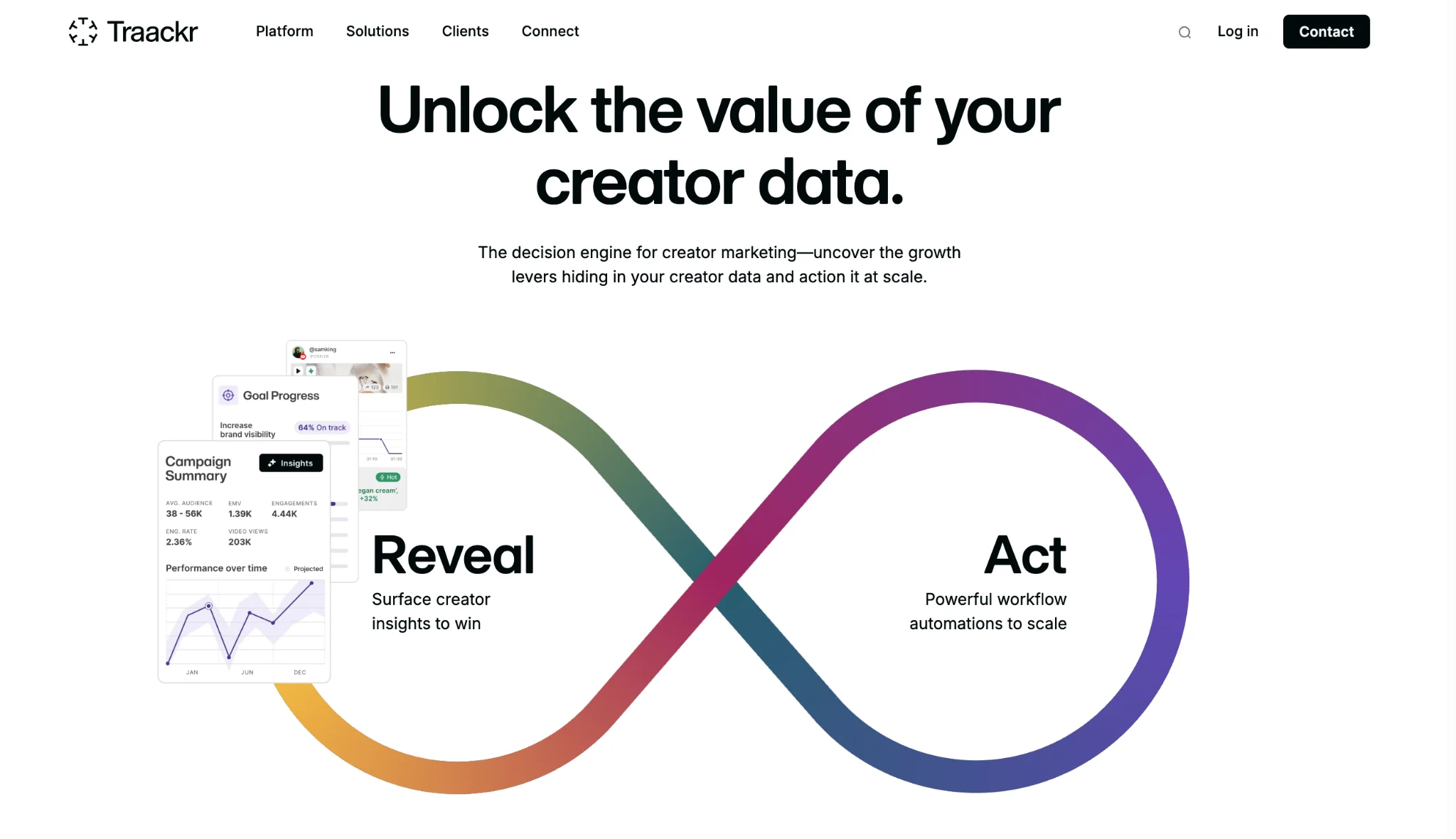
Traackr is an influencer marketing platform for global brands that treat creator spend as a measured, managed budget. Beauty and personal care companies make up a large share of its customers, and the product is known for benchmarking creator performance against competitors and across regions.
Key Features
- Creator discovery and vetting: Brands search and vet creators by market, with audience data that helps confirm each partner reaches the right customers.
- Brand Vitality Score: A standard score measures creator-driven brand performance, so regional teams can compare results on the same basis.
- Competitive benchmarking: Brands can see how their creator activity compares with named competitors in the same category.
- Spend and ROI tracking: Budgets, cost per engagement and campaign pacing are tracked in one place, which supports tighter control of creator spend.
- Abigail AI: An AI creator marketing assistant helps teams plan, activate and measure campaigns with suggested next steps.
Pricing
Traackr shares pricing only after a call with its platform specialists. Reported entry contracts sit around $25,000 a year, with higher tiers above $55,000, and annual prepayment is the usual arrangement.
Reviews
4.3/5.0 (G2, 377 reviews)
Pros
- Consistent measurement: Standard scoring makes programs in different countries easy to compare side by side.
- Budget visibility: Spend tracking helps finance and marketing agree on what creators actually cost.
- Competitor insight: Benchmarks show where a brand is gaining or losing share of creator attention.
Cons
- Price on request: Brands cannot estimate the cost without going through a sales process first.
- Lighter commerce tracking: Links between creator activity and store revenue are less developed than in eCommerce-first tools.
- Mixed usability feedback: Some reviewers mention a dated interface and gaps in creator data.
Integrations
- Shopify: Store orders can be connected to creator activity for revenue reporting.
- Gmail: Creator emails sent from Gmail are saved to the relevant creator record.
- Outlook: Teams on Microsoft email keep conversations synced with the platform in the same way.
- Slack: Approvals and campaign alerts reach the team without logging in.
- Tableau: Creator and spend data can be exported into existing business intelligence dashboards.
Endorsely vs Traackr
Endorsely and Traackr both help brands understand what their partners deliver, but Traackr stands out with competitive benchmarking, standard performance scores and spend tracking across markets. It is designed for teams that report creator results to senior leadership.
Endorsely, on the other hand, focuses on tracking affiliate conversions and paying commission for subscription products. Traackr measures creator impact on the brand, while Endorsely measures affiliate revenue in Stripe. For multi-market beauty brands that need to compare creator spend and results across regions, Traackr makes more sense.
Afluencer
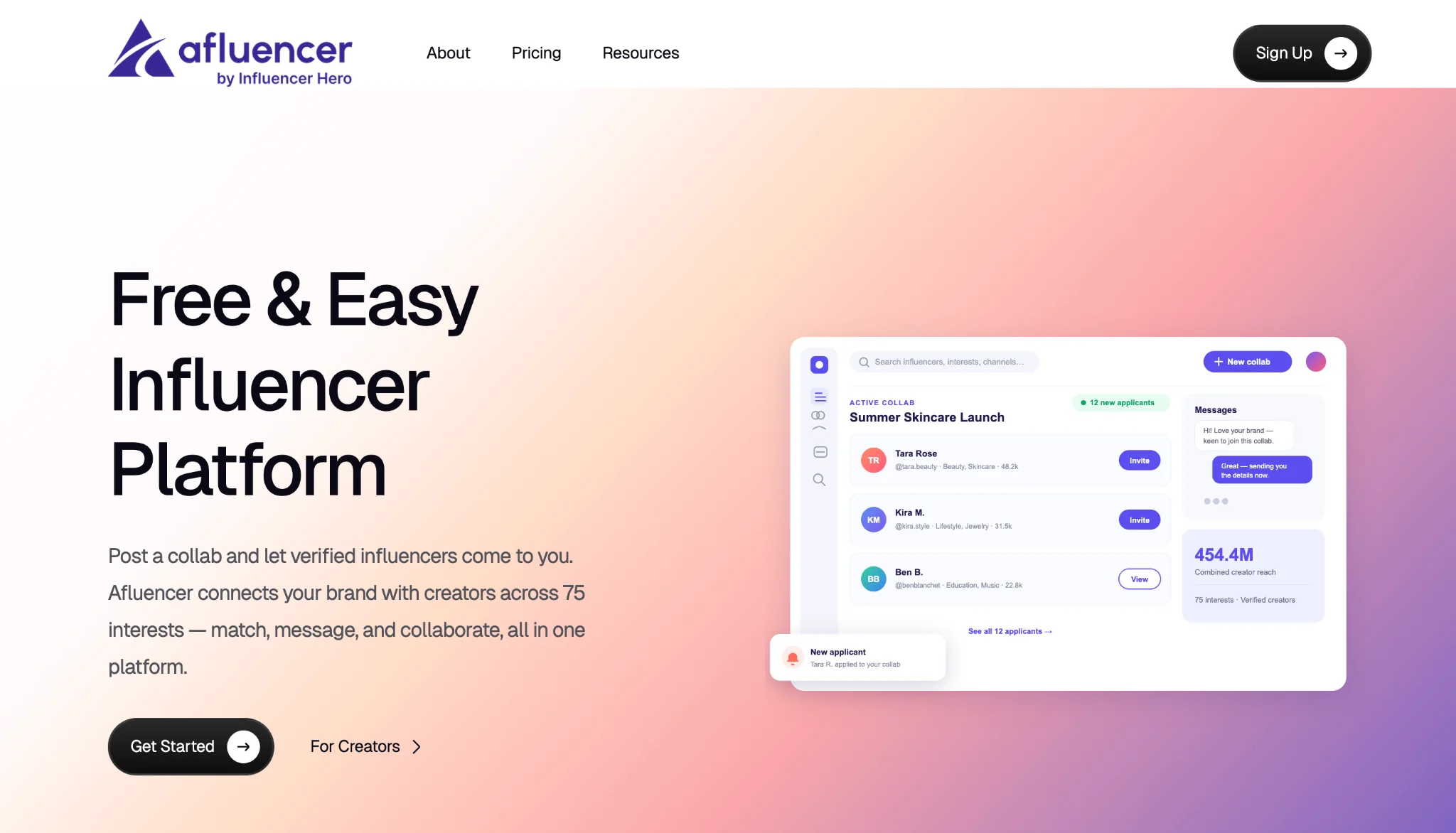
Afluencer is a creator marketplace for small businesses where brands post collaboration listings and verified creators apply to take part. Its low starting price and simple setup make it a common first influencer tool for Shopify stores, and AI matching helps brands review applicants quickly.
Key Features
- Collaboration listings: Brands describe the product, deliverables and requirements in one post, and interested creators apply directly.
- Verified creator profiles: Creators sign up and confirm their social accounts, so brands deal with real people who want to collaborate.
- CreatorGPT matching: AI ranks applicants by how well they fit the brand, which saves time when a listing attracts many applications.
- Premium search filters: Brands can filter the creator directory by niche, platform and audience to send targeted invitations.
- Room to grow: Higher plans add larger outreach volumes, product send-outs and creator payments as a program expands.
Pricing
Afluencer publishes monthly plans with no annual contract:
- Marketplace: $49/month, with 60 creator invitations a month and premium filters
- Standard: $649/month, with 1,000 reachouts, product send-outs and influencer payments each month
- Pro: $1,049/month, with 5,000 reachouts, three or more seats and an account manager
Reviews
4.6/5.0 (G2, 738 reviews) and 4.1/5.0 (Shopify App Store, 37 reviews). Many of the G2 reviews come from creators.
Pros
- Affordable entry point: The $49 Marketplace plan lets small brands start working with creators on a modest budget.
- Inbound interest: Creators apply to listings themselves, so brands spend less time on cold outreach.
- No long commitment: Monthly billing makes it easy to adjust or pause as needs change.
Cons
- Uneven applicant quality: Some applications come from creators outside the brand’s niche or target audience.
- Strongest in the US: Creator supply is thinner for brands focused on other regions.
- Simpler reporting: Analytics cover the basics rather than detailed attribution.
Integrations
- Shopify: Store products can be pulled into collaboration offers without re-entering details.
- Amazon: Creators can send their audiences to Amazon product listings.
- Klaviyo: Creator contacts sync to email lists for follow-up campaigns.
- Slack: The team is notified when creators apply or reply.
- DocuSign: Collaboration terms are agreed and signed digitally.
Endorsely vs Afluencer
Both Endorsely and Afluencer help brands bring in new partners without a long search, but Afluencer stands out with a marketplace of verified social media creators who apply to product collaborations. Brands that are new to creator marketing can find affordable influencer marketing options without committing to an annual contract.
Endorsely, on the other hand, focuses on recruiting software affiliates and tracking their subscription sales through Stripe. Afluencer is about finding creators for gifting and content, while Endorsely is about paying commission on recurring revenue. For small Shopify brands that want creators to apply to them on a $49 monthly budget, Afluencer is the one to look at.


Modash
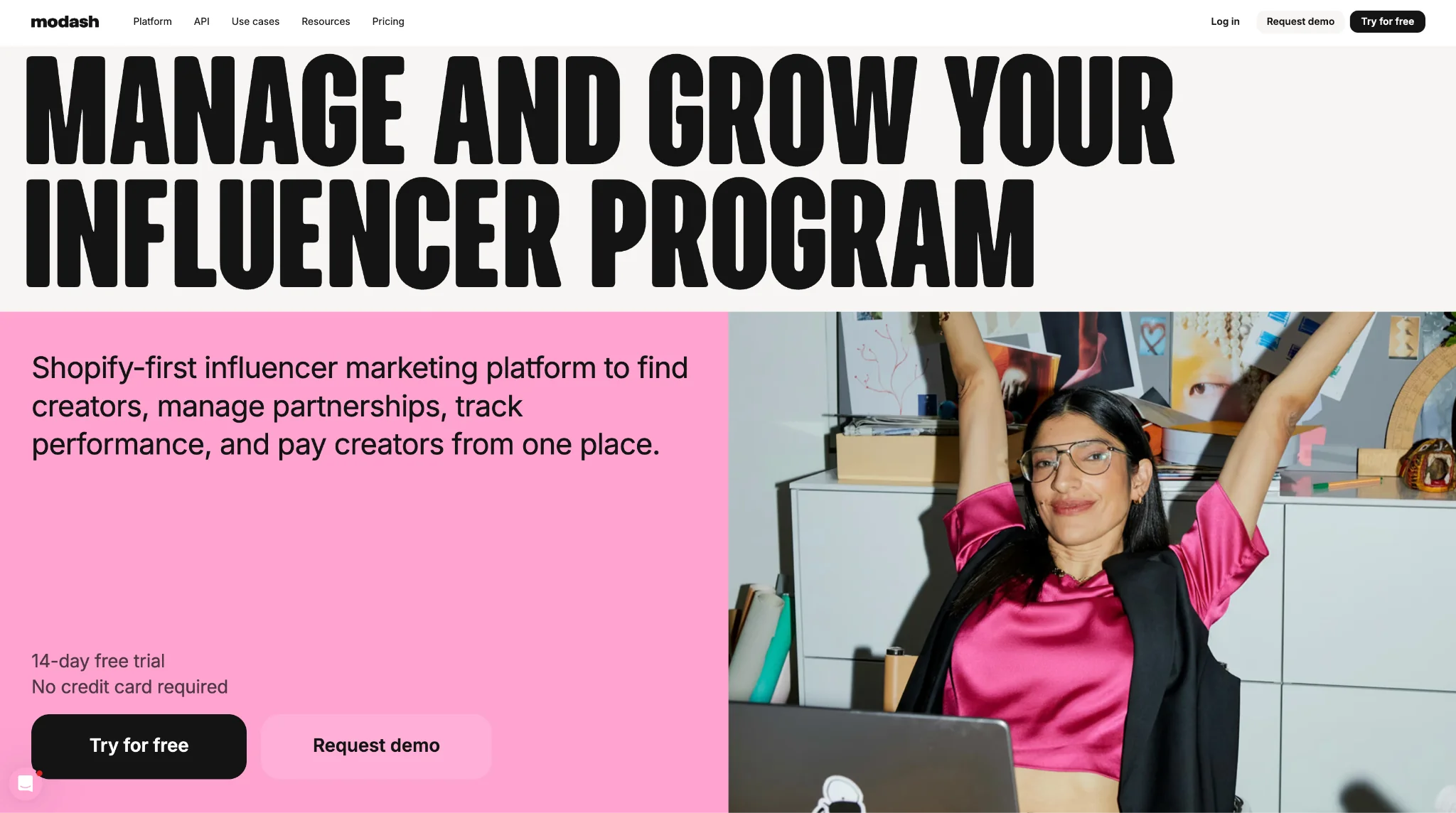
Modash is a discovery-first influencer marketing platform with a searchable index of more than 380 million creator profiles across Instagram, TikTok and YouTube. Around that search engine it adds content tracking, a creator CRM, an email inbox and creator payments, and it publishes every self-serve price with a free trial attached.
Key Features
- Large creator index: Any creator with more than 1,000 followers can be found, which gives brands a wide pool for niche searches.
- Audience quality checks: Fake-follower rates and audience demographics are shown before outreach, helping brands avoid inflated accounts.
- Influential fans: Brands can discover creators among their own followers and customers, which often leads to warmer partnerships.
- Automatic content tracking: Posts and stories from tracked creators are collected during campaigns, so teams do not need screenshots.
- Creator payments: Brands can pay creators inside the platform, with no fee on the first $10,000 a year on the Performance plan.
Pricing
Modash lists its plans publicly, and both self-serve tiers come with a 14-day free trial that requires no credit card:
- Essentials: $199/month, with 300 profile opens and 100 tracked creators
- Performance: $499/month, with 800 profile opens and 250 tracked creators
- Enterprise: custom, starting from $14,700 a year
Creator payments carry a 5% fee once a brand passes the fee-free allowance, and brands comparing influencer search and discovery tools should check how quickly profile limits are used up.
Reviews
4.9/5.0 (G2, 19 reviews, low review volume)
Pros
- Real free trial: Fourteen days with no card lets teams test search quality before paying.
- Strong search filters: Audience and content filters help brands build accurate shortlists quickly.
- Clear entry price: Published plans from $199 a month make budgeting simple.
Cons
- Usage caps: Profile opens, email unlocks and tracked creators are limited on each plan.
- Payment fee at volume: The 5% charge above the allowance adds up for brands paying many creators.
Integrations
- Shopify: Store data powers creator sales tracking and gifting workflows.
- Gmail: Outreach is sent from the brand’s own Gmail account inside Modash.
- Outlook: Teams using Microsoft email can run the same inbox workflow.
- Zapier: Creator data can trigger actions in other apps without custom development.
- API: Higher tiers can pull creator data into internal tools and dashboards.
Endorsely vs Modash
Endorsely and Modash both offer a low-cost way to recruit partners, but Modash stands out with a large creator database, audience quality checks and automatic tracking of creator content. Brands can search for social media influencers by niche and audience rather than waiting for affiliates to appear.
Endorsely, on the other hand, focuses on commission tracking and payouts for subscription revenue, which Modash covers only partly through its payments feature. Modash charges from $199 a month with a trial, while Endorsely starts free. For brands that mainly need to find and vet the right creators before reaching out, Modash is worth the call.
IZEA
IZEA is one of the longest-running companies in influencer marketing, offering both managed campaigns and a self-serve software product called IZEA Flex. The software covers creator search, content monitoring, contracts and payments, and it is used by brands and agencies that want to run campaigns in-house.
Key Features
- Creator search: The Discover tool lets brands search creator profiles and build lists for outreach.
- Casting calls: Brands can post opportunities that creators pitch for, which brings in interested partners quickly.
- ContentMine: Creator posts are collected and organized, making it easier to review and reuse campaign content.
- Contracts and payments: On the Power plan, agreements and creator payments run inside the platform, which reduces paperwork.
- Tracking links: Unique links show how much traffic each creator sends to the brand’s site.
Pricing
IZEA Flex lists a free plan and two paid tiers, with a discount for annual billing and a 10-day free trial:
- Free: $0, with AI credits, content monitoring and a few casting call pitches, but no creator search
- Starter: $165/month, or $130/month billed annually, with creator search and content tools
- Power: $600/month, or $500/month billed annually, adding creator payments, integrations and up to three users
- Managed services: custom proposals for campaigns run by the IZEA team
Reviews
3.9/5.0 (G2, 32 reviews)
Pros
- Flexible buying options: Brands can use the software alone or hand campaigns to IZEA’s managed team.
- Affordable entry plan: Creator search is available from $130 a month on annual billing.
- Long track record: IZEA has worked with brands on creator campaigns for many years.
Cons
- Lower review scores: Some users report slow or buggy messaging and low creator response rates.
- Payments only on Power: Brands need the $500-plus tier to pay creators inside the platform.
Integrations
- Shopify: Store data connects to campaigns for sales reporting.
- Google Analytics: Website traffic from creator links appears in campaign results.
- Gmail: A verified Gmail integration lets teams message creators from their own inbox.
- PayPal: Creator payments on the Power plan are sent through PayPal.
- Social accounts: Creator Instagram, TikTok and YouTube accounts connect for content and performance data.
Endorsely vs IZEA
IZEA and Endorsely both offer a free starting point, but IZEA stands out with creator search, casting calls, content monitoring and the option of a fully managed campaign team. It covers sponsored content work that affiliate software does not attempt.
Endorsely, on the other hand, focuses on recruiting affiliates and paying recurring commission on software subscriptions. IZEA charges by plan with a payment fee per transfer, while Endorsely charges by tracked revenue. For brands that want the choice between running creator campaigns themselves and outsourcing them later, IZEA makes more sense.
IMAI
IMAI, short for InfluencerMarketing.AI, is a self-serve influencer platform with a database of more than 400 million creator profiles. It combines discovery, audience analysis, campaign tracking, an inbox and creator payouts in a single workspace, and it is popular with small businesses and agencies.
Key Features
- Creator database: Brands search more than 400 million profiles with filters for audience, location and engagement.
- Audience analysis: Detailed reports break down a creator’s followers, so teams can check fit before reaching out.
- Campaign tracking: Posts and performance are tracked automatically for each active campaign.
- Unified inbox: Creator conversations sit in one place, which helps small teams stay organized.
- Creator payouts: From the Growth plan, payouts and API access are included without extra limits on lists.
Pricing
IMAI publishes five tiers, with 20% off for annual billing and a free trial that needs no credit card:
- Personal: $129/month, with one seat and 20 creator unlocks a month
- Starter: $299/month, with two seats and 75 unlocks a month
- Growth: $499/month, with four seats, 200 unlocks, five active campaigns and payouts
- Scale: $1,200/month, with seven seats, 500 unlocks and 12 active campaigns
- Enterprise: custom pricing with SSO, data residency and a dedicated success manager
Reviews
4.1/5.0 (Capterra, 16 reviews, low review volume)
Pros
- Large database: Over 400 million profiles give brands plenty of options in most niches.
- Clear plan ladder: Five published tiers let brands start small and upgrade as they grow.
- All-in-one workspace: Search, tracking, inbox and payouts are available in one tool.
Cons
- Unlock limits: Lower plans include a small number of creator unlocks each month.
- Billing complaints: Some reviewers say they were charged during or after the trial.
Integrations
- Shopify: Store data connects to campaigns for sales attribution.
- WooCommerce: WooCommerce stores can track creator-driven orders in the same way.
- API: Growth and higher plans can move creator data into other systems.
IMAI does not publish a wider integration directory, so brands that rely on a specific email or CRM tool should confirm compatibility before buying.
Endorsely vs IMAI
IMAI and Endorsely both publish affordable plans, but IMAI stands out with a large creator database, audience reports and campaign tracking for social media influencers. Brands can search, contact and pay creators without leaving the platform.
Endorsely, on the other hand, focuses on affiliate tracking and recurring commission for software products. IMAI starts at $129 a month, while Endorsely is free until it tracks $1,000 a month. For small brands and agencies that want an affordable creator search tool with payouts included, IMAI is a sensible option.
SARAL
SARAL is an influencer marketing platform for eCommerce brands that brings discovery, outreach and ambassador programs into one workflow. Every plan includes hands-on onboarding, a dedicated success manager and a shared Slack channel, which appeals to DTC founders building their first in-house program.
Key Features
- Discovery and outreach: Brands find creators and send personalized email sequences from the same screen.
- Chrome extension: Creators can be added to a campaign while browsing their social profiles.
- Affiliate tracking: Orders are attributed to creators without depending on third-party cookies.
- Creator inbox: Conversations, tasks and follow-ups are kept against each creator record.
- Guided onboarding: Expert-led calls and monthly milestone planning help teams build a repeatable program.
Pricing
SARAL publishes annual and quarterly prices, with plans set by active partnerships rather than seats:
- Starter: $12,000 a year or $3,600 a quarter, with 100 active partnerships and one seat
- Business: $15,000 a year or $4,500 a quarter, with 500 active partnerships and three seats
- Professional: $25,000 a year or $7,500 a quarter, with 1,000 active partnerships and ten seats
A free trial is available before brands commit.
Reviews
No verifiable rating. SARAL does not have enough reviews on the major software review sites to report a fair score.
Pros
- Support on every plan: A success manager and onboarding are included from the Starter tier.
- Affiliate tracking included: Commission and attribution sit inside the platform.
- Partnership-based pricing: Costs follow how many creators a brand actively works with.
Cons
- High entry cost: $12,000 a year is a large commitment for a small brand.
- Little public feedback: Few independent reviews are available to check the platform’s claims.
Integrations
- Shopify: Affiliate attribution, discount codes and gifting orders run through the store.
- Gmail: Creator emails are sent and synced from Gmail.
- Outlook: Outlook users get the same synced inbox.
- Klaviyo: Creator contacts can be added to email flows.
- Zapier: Other tools connect where no native option exists.
Endorsely vs SARAL
Both platforms track affiliate sales and pay commission, but SARAL stands out with creator discovery, outreach sequences and hands-on onboarding for eCommerce brands. It is designed for programs built around social media creators and Shopify orders.
Endorsely, on the other hand, focuses on software affiliates and Stripe revenue, with plans that start free and stay under $100 a month. SARAL is a much larger investment that includes guidance from a success manager. For Shopify brands that want a coached ambassador program with affiliate tracking built in, SARAL might suit you better.
Glewee
Glewee is an influencer marketplace built around a network of more than 50,000 pre-vetted creators in the United States. Brands post campaigns, creators opt in, and briefs, chat, contracts, content and payments are all handled in the app with no platform fee on creator payments.
Key Features
- Pre-vetted creators: Every creator in the network is checked before joining, which saves brands vetting time.
- Unlimited campaigns: Paid plans allow as many campaigns as a brand wants to run.
- In-app chat and contracts: Negotiation, agreements and deliverables stay in one thread.
- No platform fee: Brands pay creators the agreed fee with nothing added on top.
- Organic usage rights: Content from campaigns can be reused on the brand’s organic channels.
Pricing
Glewee publishes two self-serve plans on month-to-month terms, with 25% off for annual billing:
- Build: $150/month billed annually, with three seats and 10 gifting collaborations a month
- Scale: $375/month billed annually, with unlimited seats and gifting
- Full-Service: custom pricing for campaigns managed by the Glewee team
Reviews
4.8/5.0 (G2, low review volume)
Pros
- Zero platform fee: Creator budgets go entirely to creators.
- Flexible terms: Self-serve plans can be cancelled any month.
- Ready-to-work network: Vetted creators are already willing to collaborate.
Cons
- US-only network: Brands focused on Europe or Asia will find few creators.
- Basic analytics: Reporting focuses on delivery rather than deep audience data.
Integrations
- Shopify: Gifting orders and creator sales connect to the store.
- Stripe: Brand payments and creator payouts are processed securely.
- Instagram: Post performance is pulled into campaign reports.
- TikTok: TikTok deliverables are tracked the same way.
- Meta Business Suite: Creator content can be passed through for paid promotion.
Endorsely vs Glewee
Glewee and Endorsely both keep costs predictable, but Glewee stands out with a vetted network of US creators, gifting collaborations and in-app contracts. Brands can run social media campaigns end to end without searching the open creator market.
Endorsely, on the other hand, focuses on affiliate programs for subscription software, with revenue-based plans and Stripe tracking. Glewee suits product brands that want content and gifting, while Endorsely suits software companies that want affiliate sales. For US product brands that want gifting campaigns with no fee on creator payments, Glewee is the closer fit.
Final Thoughts on Endorsely Alternatives
Endorsely is a practical choice for SaaS companies that bill through Stripe and want to start an affiliate program without paying anything until it produces revenue. Its strengths are recurring commission rules, an AI affiliate finder and flat fees that stay low as tracked revenue grows. For D2C brands, the first thing to check is whether store orders from Shopify or WooCommerce can be tracked at all, and whether your partners are software affiliates or social media creators. If the answer points to creators and physical products, Endorsely alternatives with influencer discovery, gifting and store integrations will fit the program better.