

10 Best Influencer Gifting Platforms for Product Seeding
Influencer gifting—also known as product seeding—has become one of the most cost-effective strategies for D2C brands to generate authentic content, social proof, and word-of-mouth growth. The global influencer marketing industry is projected to reach $24 billion in 2025, as brands increasingly shift budgets toward creator-led campaigns that drive trust and engagement (Statista, 2024). For D2C merchants, gifting campaigns allow brands to place products directly into the hands of relevant creators, often generating user-generated content (UGC), organic reach, and long-term brand advocates without the high costs of traditional advertising. However, managing influencer discovery, outreach, product fulfillment, and performance tracking manually can quickly become complex at scale. This is why many brands rely on dedicated influencer gifting platforms that streamline product seeding workflows, manage creator relationships, and track campaign ROI in one centralized system.
In this article, we’ll explore #gifted, Upfluence, Aspire, Influencer Hero, Statusphere, Lefty, Grin, Influencity, Later, and Modash.
Best Influencer Gifting Platforms
| TOOL | REVIEWS | BEST FOR | TRIAL INFO | PRICING | ||
|---|---|---|---|---|---|---|
1 |

|
⭐ | Influencer gifting campaigns | Book Demo | Pricing | Website |
2 |

|
⭐ | Influencer CRM & automation | Book Demo | Pricing | Website |
3 |

|
⭐ | Influencer partnerships | Book Demo | Pricing | Website |
4 |

|
⭐ | Influencer discovery | Book Demo | Pricing | Website |
5 |

|
⭐ | Creator campaigns | Book Demo | Pricing | Website |
6 |

|
⭐ | Influencer analytics & discovery | Book Demo | Pricing | Website |
7 |

|
⭐ | DTC creator management | Book Demo | Pricing | Website |
8 |

|
⭐ | Campaign management | Book Demo | Pricing | Website |
9 |

|
⭐ | Social media & influencer campaigns | Book Demo | Pricing | Website |
10 |

|
⭐ | Influencer discovery | Book Demo | Pricing | Website |
1. #gifted

#gifted is a product-seeding-first platform built for brands that want to run structured gifting campaigns, collect licensable UGC, and manage creator collaborations without juggling spreadsheets, DMs, and manual fulfillment. Brands create a campaign, get matched with creators, manage applications and gifting in-platform, and capture content and performance from the same workflow.
Key features:
- Product gifting: Send products directly from your Shopify catalog and manage gifting, inventory, and fulfillment in one place.
- Campaign management: Plan, launch, message, fulfill, and track creator gifting campaigns from one dashboard.
- Creator matching: The platform supports smarter matching and granular targeting by age, gender, and location on higher tiers.
- Content capture: Auto-captures Instagram, YouTube, and TikTok content generated through campaigns.
- Content licensing: Lets brands license creator content for ads and amplification for a flat fee.
- Performance measurement: Tracks post-level reach, engagement, and likes so teams can see what gifting sends actually produced.
- Content gallery and Shopify showcase: Completed content can be stored in a gallery and surfaced on a Shopify store.
Pros:
- Very strong fit for D2C brands that care more about gifting velocity and UGC output than heavyweight enterprise workflow.
- More accessible pricing than most influencer platforms in this category, with no lock-in contracts and a free trial.
- Especially useful for brands that want creator content they can later reuse across paid and owned channels.
Cons:
- Native integration depth appears narrower than all-in-one enterprise tools; Shopify is the main integration prominently documented publicly.
- Independent creator feedback suggests occasional frustration around eligibility changes, account removals, and unclear creator-rights expectations, which could create friction on the supply side of campaigns.
- Better suited to gifting and UGC workflows than to highly complex affiliate, payout, or multi-team enterprise programs. This is an inference based on its positioning and public feature set.
Integrations:
- Shopify: Pull products from your store catalog, manage gift fulfillment, and showcase completed creator content on your storefront.
- Instagram: Auto-captures campaign content posted on Instagram for reporting and reuse.
- TikTok: Auto-captures TikTok content produced through #gifted campaigns.
- YouTube: Auto-captures YouTube campaign content inside the platform.
- Apple iOS creator app: Gives creators a mobile app to apply for and manage collaborations, which helps brands receive applications faster.
Pricing:
#gifted is low-cost relative to most influencer marketing platforms. Public pricing starts at A$293/month billed yearly for Pro and A$374/month billed yearly for Pro+, with no contract lock-ins and a 7-day free trial.
Reviews:
4.6/5.0 (App Store)
2. Influencer Hero

Influencer Hero is an all-in-one influencer CRM and campaign platform built for growing eCommerce brands that want discovery, outreach, gifting, UGC collection, affiliate tracking, and payouts in one place. It is especially strong for brands that need structured campaign boards, automation, and product seeding tied to Shopify or WooCommerce workflows.
Key features:
- Product gifting: Supports product send-outs with Shopify and WooCommerce integrations and tracks shipping and delivery in-platform.
- Influencer discovery and vetting: The platform includes advanced search filters, fake follower detection, and lookalike creator recommendations. A Chrome extension also allows teams to review influencer metrics and import creators directly while browsing social platforms.
- Bulk influencer outreach: Brands can send one-to-one or bulk outreach emails using AI-personalized templates and automated multi-step drip sequences to manage large-scale influencer outreach campaigns.
- Campaign-focused influencer CRM: Relationship boards and workflow automation help teams track campaign stages, influencer communication, deliverables, and approvals while managing high-volume influencer programs.
- Reporting and ROI tracking: The platform tracks clicks, affiliate sales, influencer content performance, and overall campaign ROI, with exportable reports for internal teams or stakeholders.
- UGC collection and management: Influencer Hero automatically gathers influencer posts and stores them in the platform, allowing teams to organize and tag high-performing content for reuse in ads, social media, or ecommerce channels.
- Affiliate tracking and payouts: Brands can create custom affiliate links and discount codes, track commissions and conversions, and manage influencer payouts directly from the platform.
- Application pages and influencer storefronts: Branded application pages allow creators to apply to campaigns, while influencer storefront features help brands scale affiliate recruitment and creator-driven product promotion.
Pros:
- Particularly good for structured product seeding at scale because CRM, outreach, send-outs, content, and payouts sit in one workflow.
- Flexible pricing and shorter commitment options make it more accessible than many annual-contract competitors.
- Good fit for D2C teams that operate across Shopify and WooCommerce rather than Shopify alone.
Cons:
- The wide range of features may create a learning curve for teams new to influencer marketing platforms.
Integrations:
- Shopify: Automates affiliates, product send-outs, and gifting-related eCommerce workflows.
- WooCommerce: Supports product seeding and affiliate workflows for WooCommerce stores.
- Gmail: Powers drip campaigns and automated email outreach.
- Outlook: Logs outreach and replies into campaign and influencer records.
- Slack: Sends real-time notifications about influencer replies, posts, sales, shipments, and payouts to internal teams.
- DocuSign: Automates influencer contracts and agreement signing directly within campaign workflows.
- Stripe: Supports automated commission payments and financial workflows for influencer partnerships.
- Brevo: Connects influencer data with email marketing workflows for newsletters, CRM segmentation, and campaign communication.
Pricing:
- Low-to-mid. Influencer Hero offers flexible pricing plans starting at $649/month for the Standard plan, which supports up to 1,000 reach outs / month. $1,049/month for the Pro plan, which supports up to 5,000 reach outs / month, and Business plan up to $2,490/month for the Business plan, which includes up to 10,000 reach outs. Custom pricing is available for agencies and larger teams, and you can have unlimited creators in your CRM with Influencer Hero.
Reviews:
5.0/5.0 (Capterra)
3. Aspire

Aspire is an end-to-end influencer platform that combines outbound discovery with a large inbound creator marketplace, then layers in contracts, gifting, content approvals, tracking, and reporting. For product seeding, brands can let creators shop curated products from Shopify, approve carts, fulfill orders, and then measure content and sales performance from the same workflow.
Key features:
- Product gifting: Shopify-powered gifting lets creators build carts within brand-set rules, which the brand can approve and fulfill.
- Inbound creator marketplace: Public materials highlight roughly 1M+ actively applying creators, which reduces manual sourcing for seeding campaigns.
- Influencer discovery: Search creators by channel, keyword, engagement, and demographics, with lookalike recommendations.
- Application pages: Brands can create custom landing pages to collect creator details, concepts, and sign-ups.
- Workflow automation: Supports bulk actions, automated follow-ups, welcome emails, briefs, and contracts.
- Sales tracking: Tracks clicks, conversions, sales, commissions, creator stores, and promo-code performance.
- Content library and rights: Stores creator content and usage rights for later reuse.
- First-party platform data: Aspire positions its Meta, TikTok, and Pinterest data relationships as a differentiator versus scraped datasets.
Pros:
- Strong choice for brands that want both inbound creator applications and structured gifting/affiliate workflows.
- Particularly useful for D2C teams that want seeding, codes, affiliate tracking, and content approvals in one place.
- Support and implementation are repeatedly positioned as a standout.
- The Shopify integration is well suited to brands with larger catalogs or more operationally complex product sends.
Cons:
- On the expensive side for early-stage brands.
- Direct payment handling was not a major strength outside connected payment/affiliate workflows.
- Best on major creator channels; less evidence of strength on smaller or less commerce-oriented platforms.
Integrations:
- Shopify: Run product seeding, create promo codes, and identify influential customers.
- Gmail: Send creator communication from your brand inbox and manage it in a shared team workflow.
- Klaviyo: Sync influencer contacts into Klaviyo and build nurture sequences around creator relationships.
- PayPal: Pay creators directly through Aspire.
- Impact / CJ / ShareASale x Awin: Connect affiliate links, centralize conversion data, and track clicks, conversions, and payout across performance partnerships.
Pricing:
Aspire is high-priced versus the broader influencer software market. Pricing is custom, for mid-tier starts around $2,300/month for multiple team members and up to 500 creators in CRM
Reviews:
4.0 /5.0 (Capterra)
4. Upfluence
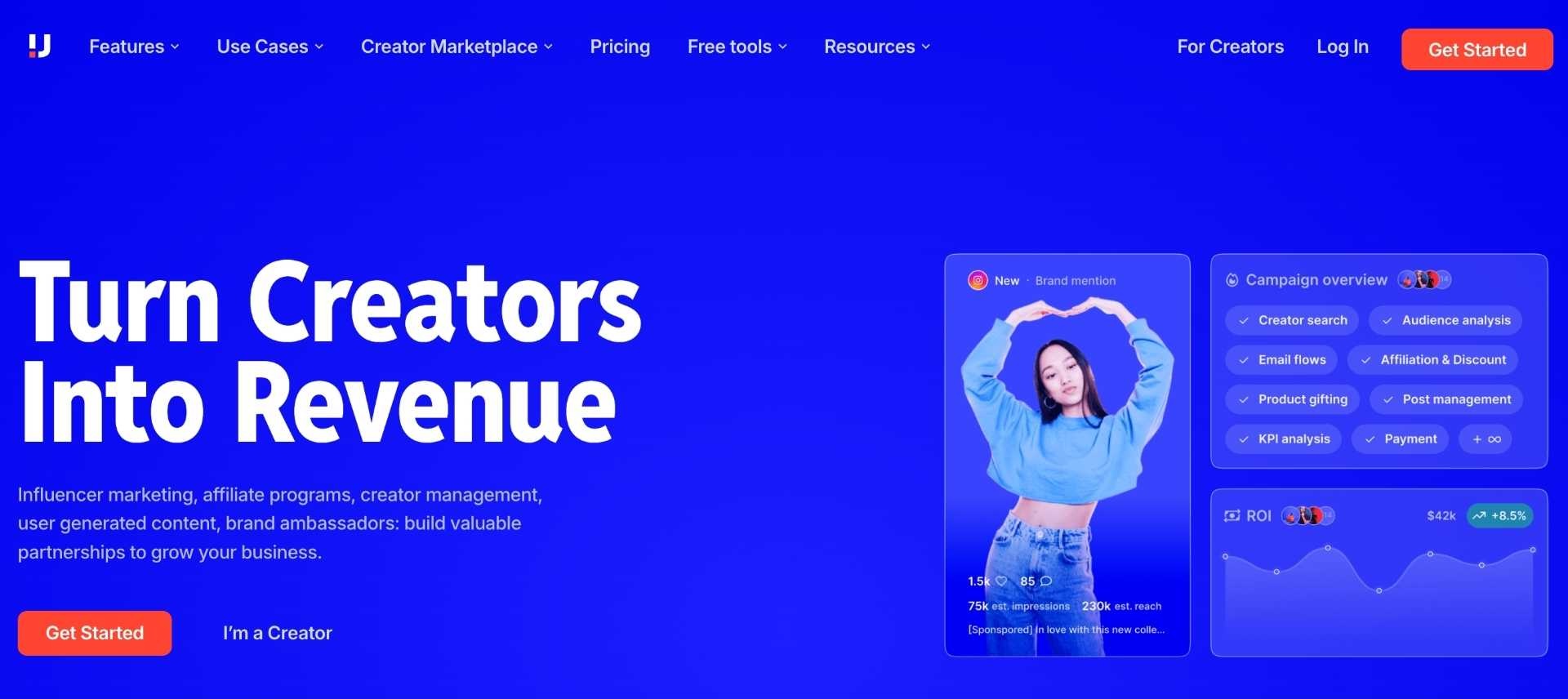
Upfluence is an end-to-end influencer marketing platform for eCommerce brands that combines creator discovery, outreach, CRM, gifting, affiliate tracking, and payments. For product seeding, it is particularly strong for Shopify and Amazon sellers because brands can identify influential customers, send products, generate codes, and track attributed sales from one system.
Key features:
- Product gifting: Native eCommerce integrations let brands trigger orders, ship products, and track progress from within the campaign workflow.
- Influencer discovery: Access to a 12M+ influencer database with filters for location, niche, follower size, and engagement rate.
- Bulk outreach and sequences: Supports bulk email and automated drip follow-ups for creator outreach.
- CRM and campaign management: Keeps creator communication, tracking, affiliate links, and campaign workflow in-platform.
- Affiliate management: Lets brands set affiliate codes, track links, and manage custom compensation models.
- Sales attribution: Tracks sales, clicks, conversions, reach, impressions, and engagement at campaign and creator level.
- Creator payouts: Supports bulk payments through the platform.
- Social listening: Includes social listening for market research and creator/content discovery.
Pros:
- One of the better fits for brands that want gifting tied directly to revenue attribution, especially on Shopify and Amazon.
- Strong integration stack for eCommerce, email, CRM, and payments.
- Useful if you want to turn existing customers into creators and advocates instead of building a program from scratch.
Cons:
- Pricing is on the expensive side for smaller D2C teams, and annual commitment is a meaningful downside.
- User feedback repeatedly points to a learning curve, clunky list/campaign setup, and some campaign-editing limitations after launch.
- Some users report inconsistent location data and support responsiveness.
- Better for brands that need a broad influencer operating system than for those that just want simple gifting at low cost. This is an inference from its pricing and feature depth.
Integrations:
- Shopify: Identify influential customers, send free products, create codes, and track sales from Shopify.
- Amazon Attribution: Automate Amazon attribution and connect influencer activity to marketplace sales.
- Klaviyo: Enrich influencer profiles inside email lists and run creator-specific CRM flows.
- Gmail / Outlook: Run outreach from your own mailbox while syncing conversations into Upfluence.
- Stripe / Upfluence Pay: Handle creator payments and transaction tracking inside the platform.
Pricing:
Mid-to-high. On average plans start around $2,000/month ($24,000 yearly) with no free trial and a relatively inflexible annual commitment.
Reviews:
4.3 / 5.0 (Capterra)
5. Statusphere
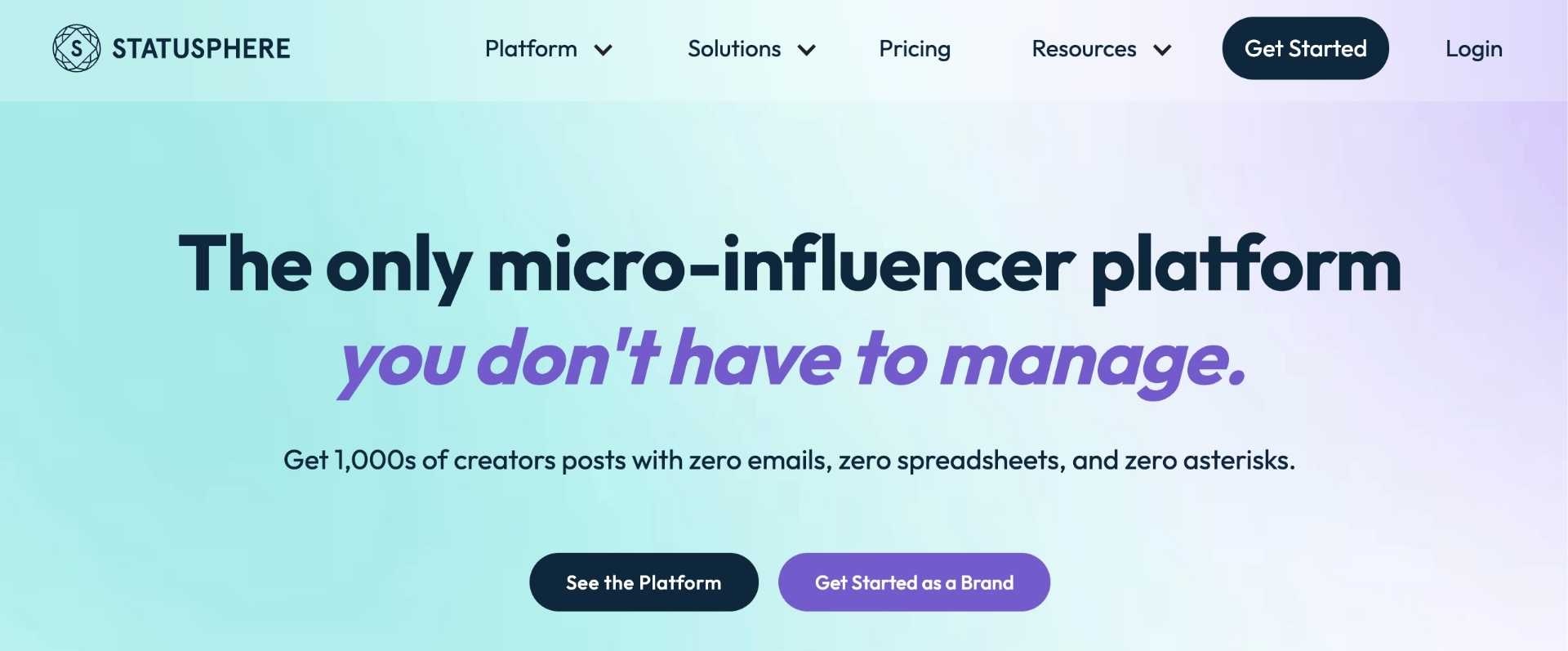
Statusphere is a managed, AI-powered micro-influencer platform built for brands that want to scale creator seeding and UGC without handling the manual sourcing, vetting, logistics, compliance, and reporting themselves. Rather than functioning like a self-serve database, it leans into a done-for-you model that guarantees large volumes of creator posts and rights-ready content.
Key features:
- Product gifting: Statusphere automates sourcing, vetting, fulfillment, compliance, and rights management for seeding at scale.
- Done-for-you campaign engine: StevieOps is positioned as an AI-powered campaign manager that handles the heavy lifting behind creator programs.
- Guaranteed creator content: The platform emphasizes getting brands 1,000s of creator posts, not just access to a database.
- UGC rights management: Public materials emphasize rights-ready content for storefronts, PDPs, paid media, and reuse.
- Ad-code workflow: Supports one-click ad codes for TikTok Spark Ads and Instagram Partnership Ads.
- TikTok Shop support: Statusphere highlights its role as a TikTok Shop partner for activating creators quickly.
Pros:
- Excellent fit for lean D2C teams that want output, speed, and scale without building an internal influencer ops machine.
- Very compelling if your goal is a steady stream of micro-influencer UGC for PDPs, paid social, and search visibility.
- User feedback consistently highlights time savings and ease of execution.
Cons:
- Less ideal if your team wants granular manual control over individual creator selection and outreach. This is an inference from its managed-service positioning.
- Pricing is custom and not publicly transparent.
- Some verified reviews mention creator quality can be hit or miss depending on campaign fit.
- Value for money scores are lower than ease-of-use scores on review sites, which suggests buyers should pressure-test ROI before committing.
Integrations:
- TikTok Shop: Activates approved creators to drive discovery and sales on TikTok Shop.
- TikTok Spark Ads: Lets brands secure ad codes quickly for creator content amplification.
- Instagram Partnership Ads: Supports ad-code workflows for turning creator posts into paid social assets.
- Storefront / PDP content usage: Rights-ready UGC is positioned for use across ecommerce storefronts and product detail pages.
- Reporting + fulfillment workflow: Public materials emphasize integrated fulfillment, compliance, tracking, and reporting rather than a large open integration marketplace.
Pricing:
Statusphere is high-priced / enterprise-leaning relative to most influencer gifting tools. Pricing is custom, contact-vendor, and no free trial is publicly listed; the company also describes a guaranteed-post model rather than simple seat-based pricing.
Reviews:
4.7 / 5.0 (G2)


6. Lefty
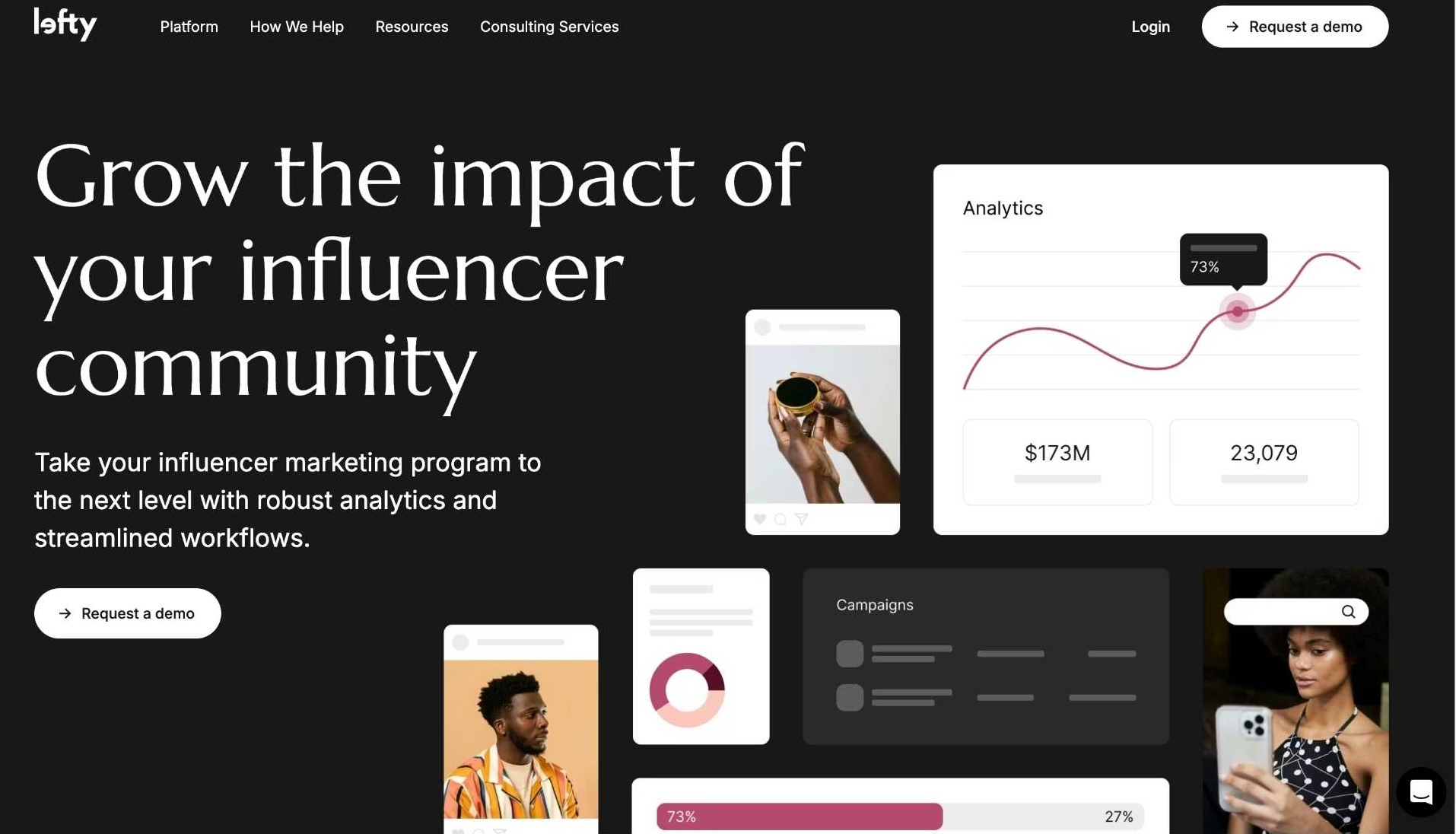
Lefty is an influencer marketing platform built for brands that want to discover creators, manage campaigns, automate product gifting, and measure ROI from one place. It is especially relevant for fashion, beauty, and lifestyle brands that run high-volume seeding and affiliate programs and need stronger eCommerce workflows than spreadsheets can provide.
Key features:
- Product gifting: Lefty lets brands gift or lend products to creators in a few clicks and now supports one-click gifting through connected commerce systems.
- Influencer discovery: Brands can search for relevant creators, shortlist them, and build campaign-ready lists inside the platform.
- Campaign management: Teams can manage influencer relationships, campaign execution, and reporting from one centralized workflow.
- Affiliate tools: Lefty supports affiliate-style workflows alongside seeding so brands can connect creator activity to sales.
- Automated reporting: The platform tracks sponsored posts, stories, and campaign impact automatically.
- eCommerce catalog sync: Brands can upload catalogs, product variations, prices, and inventory from connected stores for smoother seeding.
Pros:
- Strong fit for brands that want product seeding, affiliate activation, and campaign reporting inside one workflow.
- Particularly useful for teams that need gifting tied directly to real store inventory instead of manual product spreadsheets.
Cons:
- Public pricing transparency is limited beyond directory listings and demo-led sales, which can slow down evaluation.
- The platform appears stronger for gifting, campaign management, and reporting than for highly transparent self-serve pricing or entry-level adoption.
Integrations:
- Shopify: Import products, define available quantities, create Shopify orders, and send gifts directly to creators.
- Salesforce Commerce Cloud: Connect your store catalog and ship influencer gifts directly from your commerce system.
- Magento: Sync products and inventory so gifting campaigns can run directly from your store backend.
- Instagram: Use influencer data and campaign tracking around Instagram creators and sponsored content.
- TikTok: Manage creator programs across TikTok as part of Lefty’s broader influencer workflow.
Pricing:
Lefty is mid-priced relative to most influencer marketing platforms. Capterra lists pricing from €590 per month with a free trial available, but most buying appears to happen through a demo-led sales process rather than transparent self-serve checkout.
Reviews:
4.7 / 5.0 (G2)
7. GRIN
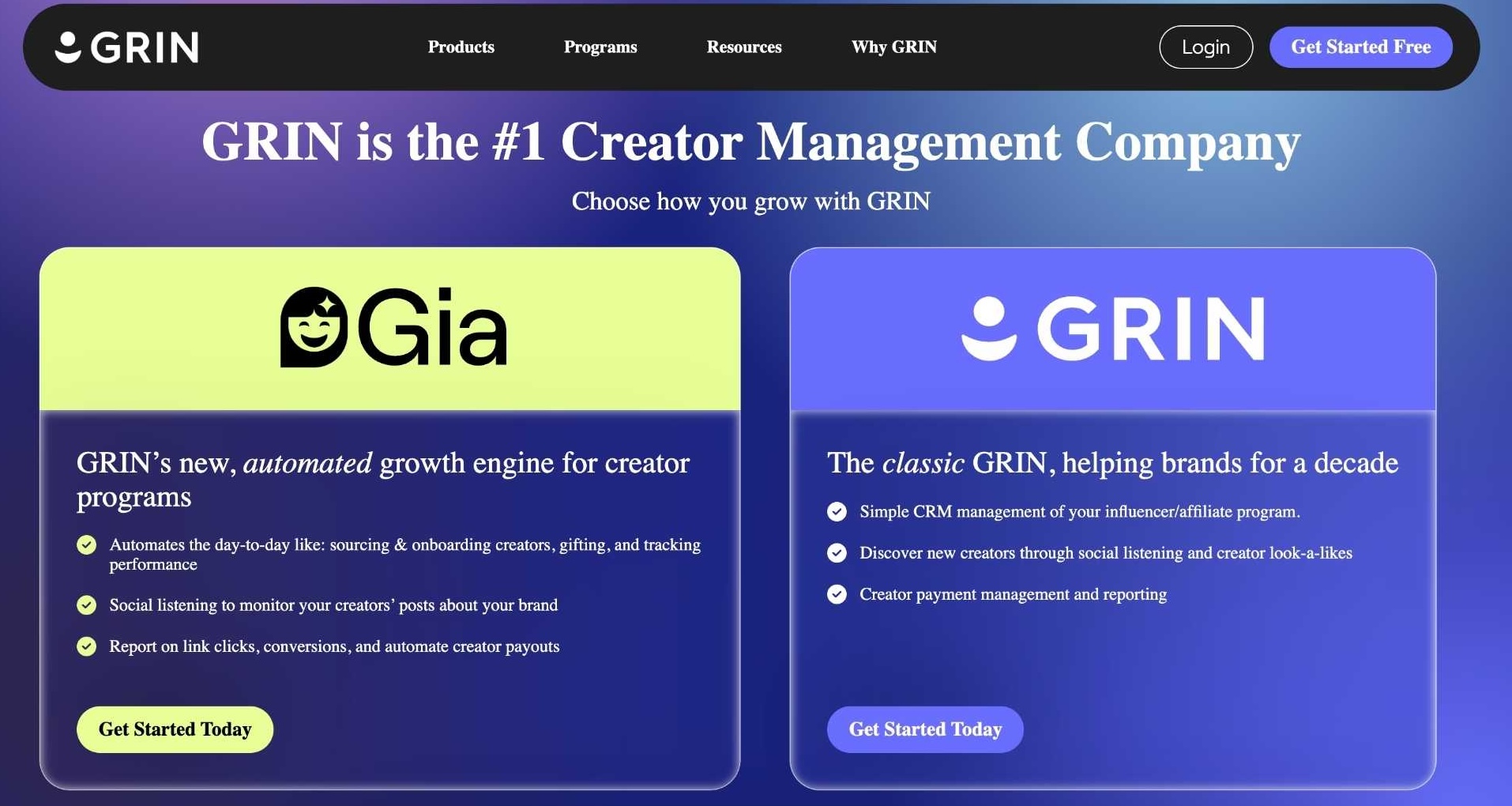
GRIN is a creator management platform built for eCommerce brands that want to run influencer gifting, outreach, affiliate programs, content collection, and payments from one system. It works especially well for brands that already have a creator program in motion and need stronger CRM, Shopify-based seeding, and operational scale.
Key features:
- Product gifting: GRIN connects product seeding to eCommerce workflows so creators can select products through a Shopify storefront and orders are automatically tagged and tracked.
- Influencer CRM: GRIN centralizes creator relationships, outreach, and campaign data in one platform.
- AI discovery: Brands can use keyword and lookalike search to find creators, with GRIN’s AI assistant supporting workflow prioritization.
- Affiliate management: The platform supports affiliate links, commissions, dashboards, and conversion tracking.
- UGC library: GRIN stores creator content, including Stories, in a searchable content library for reuse.
- Payments: Brands can pay influencers directly in-platform via PayPal-connected workflows.
- Landing pages: GRIN offers branded landing pages to recruit creators and grow inbound applications.
Pros:
- One of the stronger options for D2C brands that want gifting, affiliate, CRM, and content management tied closely to eCommerce.
- Verified reviewers consistently praise GRIN for reducing manual work and making influencer programs easier to scale.
- Strong review scores suggest it performs well once teams are operational and using its workflow depth fully.
Cons:
- GRIN is not cheap for smaller brands, and annual commitments have historically been a sticking point for some buyers.
- Some verified reviews mention a learning curve, clunky navigation, and confusion around payments or affiliate setup.
- Independent feedback suggests discovery is not always as strong as best-in-class search-focused alternatives, particularly for brands that need aggressive net-new sourcing.
Integrations:
- Shopify: Run product seeding, tag orders, manage creator storefronts, and track conversions through your store.
- PayPal: Send influencer payments directly inside the platform.
- Klaviyo: Use custom email templates and connect creator communications to your email stack.
- Gmail: Manage creator communications, templates, sequences, opens, and replies from GRIN.
- Outlook: Centralize influencer email communication alongside your broader campaign workflow.
Pricing:
High. GRIN pricing is custom-built, but internal research places most plans starting around $2,500/month and going up significantly based on features and scale, typically with a 12-month commitment. There is no clear public free trial, so buyers should expect a sales-led process and enterprise-style pricing.
Reviews:
4.5/5.0 (G2).
8. Influencity

Influencity is an end-to-end influencer marketing platform that covers discovery, outreach, CRM, campaign management, gifting workflows, and reporting. It is a strong option for brands that want broad discovery access, structured campaign boards, and Shopify-based product seeding without paying top-tier enterprise pricing.
Key features:
- Product gifting: Influencity integrates with Shopify to manage gifting campaigns, assign codes, and connect product sends to creator-level sales data.
- Influencer discovery: It uses public data rather than opt-in-only profiles, which broadens discovery and helps brands find creators more quickly.
- CRM and segmentation: Brands can tag creators, build lists, and segment contacts by campaign, country, or theme.
- Campaign board: The platform uses a Kanban-style workflow for deadlines, tasks, and approvals.
- Automated outreach: Influencity supports email templates, follow-up sequences, and open/click/reply tracking.
- Reporting: Campaign reports can be exported in PDF, Excel, and CSV formats.
- Application pages: Brands can launch branded creator application pages for inbound recruiting.
Pros:
- Strong value for brands that want discovery, CRM, outreach, gifting, and reporting in one platform without paying enterprise-level prices.
- Public-data sourcing makes it attractive for teams that need wider discovery coverage.
- Independent user commentary suggests the platform works best for mid-market programs and is less suited to highly compliance-heavy enterprise operations.
Cons:
- No true in-platform negotiation messaging, since replies go back to your own inbox.
- Shopify is the main commerce integration, which can be limiting for brands on WooCommerce or Magento.
- The auto-tracker is a paid add-on, so some reporting automation costs extra.
- Some buyers may outgrow it if they need deeper compliance tooling, whitelisting, or enterprise-grade governance.
Integrations:
- Shopify: Run gifting campaigns, assign discount codes, and track influencer sales attribution.
- Instagram: Discover creators and track campaign content on Instagram.
- TikTok: Manage creator discovery and campaign analytics for TikTok activations.
- YouTube: Include YouTube creators in multi-platform campaigns and reporting.
- X / Twitter: Use the platform for analytics support on X, even though outreach is not positioned as a core workflow there.
Pricing:
Influencity is mid-priced compared with most influencer marketing platforms.
- Professional Plan: $318/month or $3,816/year
- Business Plan: $798/month or $9,576/year
- Enterprise Plan: Custom pricing
- Auto-Tracker Add-On: $660/year (for 50 influencers)
Reviews:
4.3 / 5.0 (G2)
9. Later
Later Influence is an influencer marketing platform designed to help brands discover creators, manage campaigns, track ROI, and scale social proof across the customer journey. For product seeding, its Shopify integration makes gifting more operationally efficient by generating creator-specific codes, tracking redemptions, and reducing manual address collection.
Key features:
- Product gifting: Later connects directly to Shopify so brands can send products, generate creator-specific codes, and track order and fulfillment status.
- Creator discovery: Brands can find creators, assess brand fit and risk, and launch campaigns from one workflow.
- Campaign management: Later organizes creator relationships, workflows, and reporting inside a self-serve influencer manager.
- ROI tracking: The platform emphasizes campaign-level sales and ROI measurement.
- Content syndication: Later lets brands repurpose influencer content across channels to extend campaign value.
- Rate guidance and risk checks: Later positions fair-rate setting and brand-fit/risk assessment as built-in parts of campaign planning.
Pros:
- Strong fit for brands that want influencer marketing connected to a broader social media management stack.
- Shopify gifting is especially practical for D2C brands that want code-based seeding without messy manual workflows.
- Its combination of influencer marketing, content reuse, and social infrastructure makes it attractive for larger brands that treat creator content as an always-on growth asset.
Cons:
- Pricing is not publicly transparent, which makes early comparison harder.
- No free trial is listed for Later Influence.
- Some user feedback notes that creator pool diversity and filtering can vary depending on market and campaign needs.
Integrations:
- Shopify: Create and send creator-specific product codes, track redemptions, and monitor fulfillment status.
- Instagram: Later campaigns support creator activations and content workflows across Instagram.
- TikTok: Use Later to run influencer campaigns and social listening around TikTok content and mentions.
- YouTube: Include YouTube in multi-platform creator campaigns and reporting.
- Mavely: Later’s creator-commerce ecosystem connects creators to shoppable links and commissions, which can complement influencer campaigns.
Pricing:
Later Influence is high-priced / enterprise-leaning relative to most influencer gifting platforms.
There are different plans:
- Essentials Plan: Starts at $28,500/year. Best for brands starting in influencer marketing.
- Pro Plan: Starts at $42,000/year. Best for data and automation to make your campaigns run faster and achieve better ROI.
- Premier Plan: Starts at $60,000/year. Everything you need for a scaled influencer program.
All plans come with an additional one-time onboarding fee of $5,000 for all new customers.
Reviews:
- 4.4 / 5.0 (Capterra)
10. Modash
Modash is an end-to-end influencer platform that helps brands discover creators, run outreach, automate gifting, track affiliate performance, and manage payouts. It is particularly attractive for Shopify-first D2C brands that want deep creator search, flexible monthly entry pricing, and a stronger product-seeding workflow than lightweight discovery tools.
Key features:
- Product gifting: Modash lets brands send creators unique gifting links tied to Shopify so they can choose products without manual back-and-forth.
- Discovery engine: Its search stack supports detailed filters, lookalikes, audience analysis, and AI-based vibe or image search.
- Outreach and CRM: Brands can send 1:1 or bulk outreach, sync inboxes, and track relationship stages in the CRM.
- Affiliate automation: The platform supports commission tiers, discount codes, affiliate revenue tracking, and creator earnings dashboards.
- Fraud and audience quality checks: Modash includes fake-follower detection and engagement benchmarking.
- Payments: Monthly payouts can be automated once creators add their banking details.
- Content tracking: Campaign content is automatically collected and performance is tracked in real time.
Pros:
- One of the strongest discovery-led platforms for brands that need to find micro and nano creators across multiple markets.
- Better pricing flexibility than many enterprise competitors, with monthly options and no mandatory long-term contract.
- Shopify integration is a major strength for gifting, code creation, affiliate tracking, and payout automation.
Cons:
- Shopify is its only major eCommerce integration, which may be a deal-breaker for non-Shopify brands.
- No built-in content licensing or whitelisting tools, so usage rights still need to be handled in contracts.
- For some teams, analytics depth may feel lighter than more enterprise-oriented platforms focused on benchmarking and compliance.
Integrations:
- Shopify: Automates gifting links, code creation, order tagging, affiliate tracking, and payout workflows.
- Gmail: Track creator outreach and conversations inside Modash.
- Outlook: Sync email communication to creator records and campaign stages.
- Instagram: Discover and track influencers on Instagram with audience and content analysis.
- TikTok: Find creators, monitor content, and run gifting and affiliate campaigns on TikTok.
Pricing:
Modash is low-to-mid priced compared with most influencer marketing platforms. Starts from $199/month billed yearly or $299/month billed monthly for Essentials and $499/month billed yearly for Performance
Reviews:
- 4.9/5.0 (Capterra)
Final Thoughts on 10 Best Influencer Gifting Platforms for Product Seeding
Influencer gifting has become one of the most effective ways for D2C brands to generate authentic content, build social proof, and turn creators into long-term advocates. Platforms like #gifted, Influencer Hero, Aspire, Upfluence, Statusphere, Lefty, GRIN, Influencity, Later, and Modash help brands scale these campaigns by simplifying influencer discovery, product fulfillment, outreach, and performance tracking in one place. While some tools focus on lightweight product seeding and UGC generation, others offer full end-to-end influencer marketing workflows tied to eCommerce and affiliate revenue. Ultimately, the best influencer gifting platform depends on your brand’s scale, budget, and whether you prioritize high-volume product seeding, deep creator discovery, or fully automated campaign management.

.png)


.jpg)