

Takumi Pricing and Review: Features, Pros, Cons & Costs
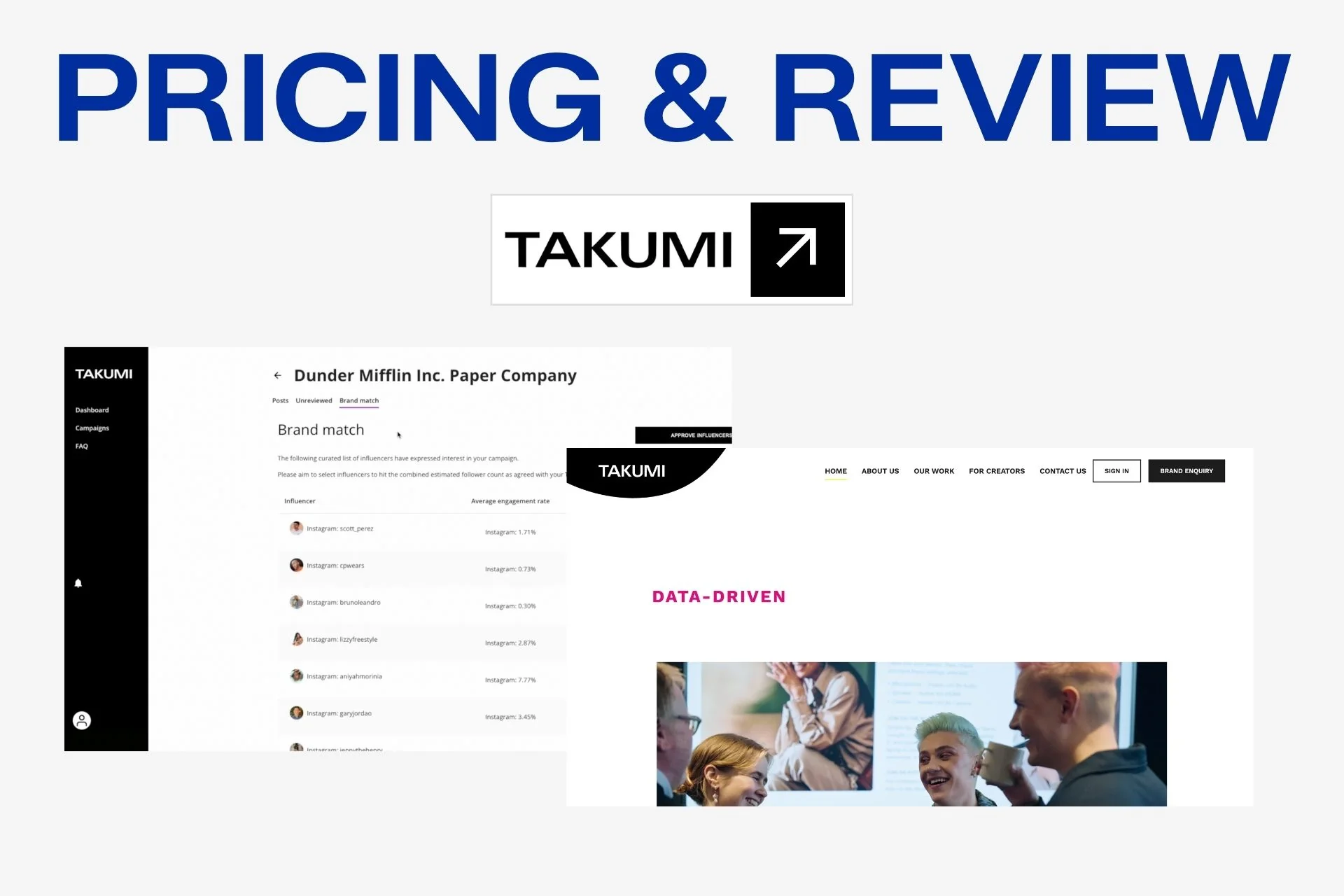
Takumi is a data-driven influencer marketing platform that runs as a managed service, not a self-serve tool. Brands set the goal and the budget, and Takumi’s team handles the campaign end to end, from finding and vetting creators to negotiating, publishing and reporting, powered by its own technology. Its client roster leans enterprise, with names like Nike, Samsung, Unilever and Amazon.
On pricing, Takumi does not publish rates. It works on a fee-per-service model, where each campaign is priced to the brand’s budget and scope rather than a monthly subscription. That means there is no rate card to compare and no self-serve plan, so every engagement starts with a quote.
This review covers what Takumi actually does, how its fee-per-service pricing works and where the real cost sits, where the managed model is a genuine strength, and the honest limitations a brand should weigh.
Takumi Overview
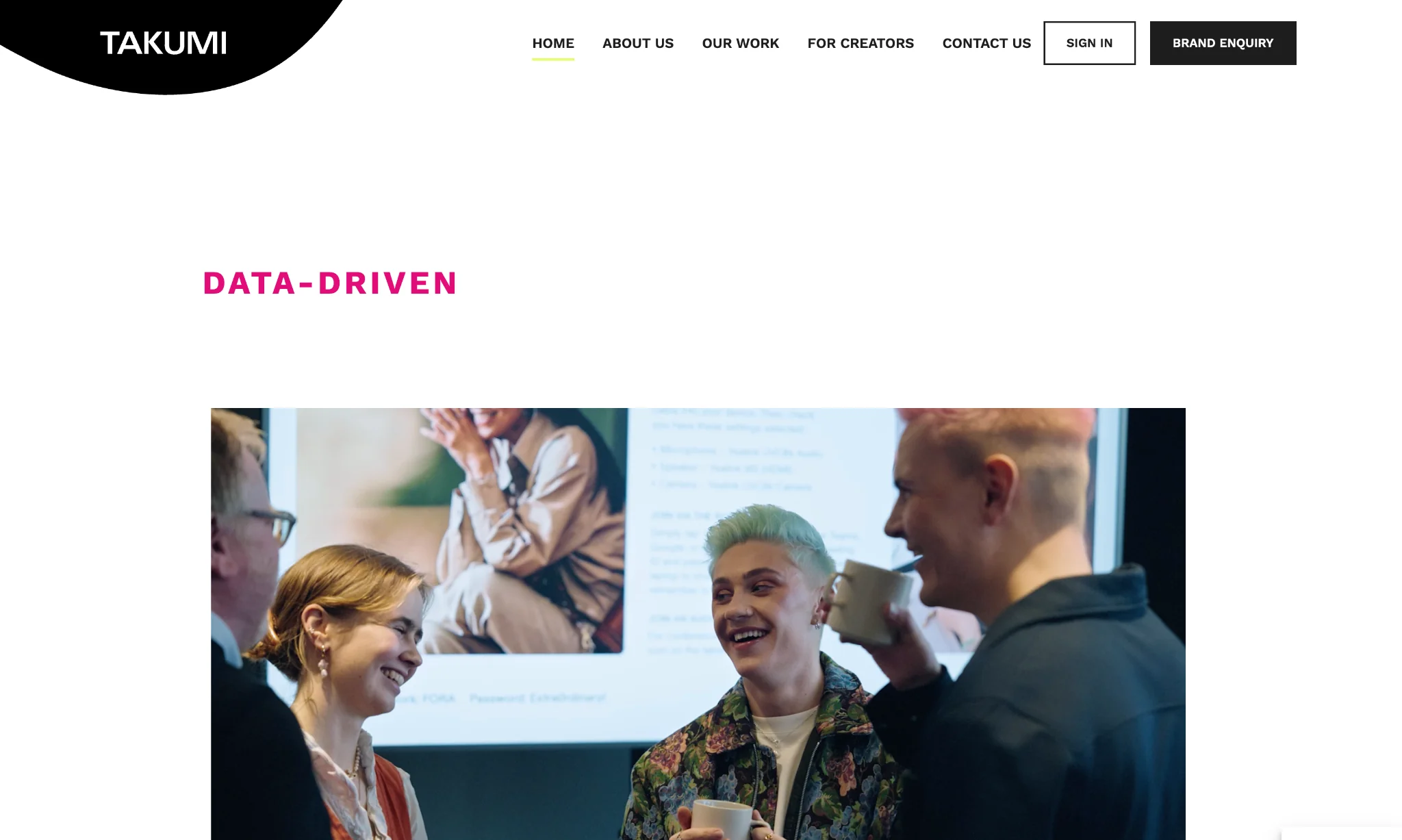
Takumi sits between a traditional agency and a software platform. Brands define campaign parameters upfront, then Takumi’s team and technology take over: matching creators to the brief, vetting them for quality, managing content and scheduling, overseeing payments, and reporting on performance. It is a done-for-you model rather than a dashboard you run yourself.
The platform started with a strong Instagram focus and now spans TikTok, Instagram, Facebook, YouTube, Twitter, Snapchat and Twitch. Human vetting of creators for quality and professionalism is a core selling point, and brands keep ownership of the content produced, which can feed a wider content library.
It is built for brands that want to hand off execution rather than manage it. Teams that would rather run creator relationships themselves will find dedicated influencer CRM tools a better fit; Takumi is for those who want the work taken off their plate.
Who Should Use Takumi
Takumi fits brands that want managed execution. It suits:
- Brands that want a hands-off, managed service, rather than running campaigns in-house.
- Enterprise and global brands, given Takumi’s track record with large advertisers.
- Teams without in-house influencer expertise, who need Takumi’s staff to run strategy and execution.
- Brands that value human-vetted creators, over self-serve access to an open database.
- Multi-platform campaigns, spanning Instagram, TikTok, YouTube and more.
- Brands that want to own campaign content, for reuse beyond the initial posts.
Key Features
Takumi’s feature set is built around managed campaign delivery and human-vetted quality.
Managed Campaign Service
Takumi’s team runs the full campaign lifecycle, from strategy and creator selection to publishing and reporting, so the brand sets direction rather than doing the legwork.
Influencer Vetting and Quality
Creators are vetted by humans for quality, aesthetics and professionalism, which is Takumi’s core pitch: curated, brand-safe creators rather than an unfiltered marketplace.
Algorithmic Matching
Takumi’s technology matches creators to campaign criteria, pairing the human vetting with data-driven selection to fit the brief.
Multi-Platform Reach
Campaigns run across Instagram, TikTok, Facebook, YouTube, Twitter, Snapchat and Twitch, covering the major social channels from one partner.
Creator Mobile App
Creators access campaigns and briefs through a mobile app, which streamlines participation and keeps delivery organized.
Brand Content Ownership
Brands retain ownership of the content creators produce, so campaign assets can be reused in other marketing rather than expiring with the post.
Campaign Dashboard and Reporting
A monitoring dashboard tracks performance with real-time reporting and attribution. For a deeper benchmark, compare it against dedicated campaign reporting and analytics.
Media Buying and Amplification
Beyond organic posts, Takumi offers media buying and amplification to extend campaign reach, which pushes it toward performance rather than awareness alone.
Takumi Pricing
Takumi does not publish pricing. It runs on a fee-per-service model priced to each campaign, so the points below describe how the cost actually works.
Fee-Per-Service Model
- There is no monthly subscription or public rate card; you pay for Takumi’s management of each campaign.
- Each campaign is priced to need and budget rather than a fixed plan.
- Every engagement starts with a quote, so there is nothing to compare upfront.
Budget-Based Campaigns
- Brands set the budget and Takumi builds the campaign around it, which suits flexible spend but hides a benchmark rate.
- Creator costs, management fees and any amplification spend fold into the campaign price.
- Ask for a breakdown of creator spend versus Takumi’s management fee before committing.
The Real Cost: Managed Service Premium
- A managed service carries a premium over self-serve software, since you are paying for people, not just a tool.
- Because pricing is quote-only, get a full written breakdown and compare it against running a campaign on flat-priced software.
- Budget per campaign, and press for how fees scale as you run more.
Takumi Reviews
Takumi’s reviews are decent but thin on independent volume, so read them as directional.
- 4.0/5.0 (Influencer Marketing Hub editorial review), strong on ease of use, with lower marks on features and reporting depth.
- Limited verified buyer-review volume on the major software review sites, so there is no large independent sample to lean on.
Reviewers praise the human vetting, hands-on support and creator mobile app, but flag two real gaps: no content review before a creator goes live, and limited audience insights in reports. Weigh those against the managed convenience, and ask for references from brands your size.
Integrations
Takumi’s connections center on campaign delivery and media rather than a broad software directory.
- Social platforms: Instagram, TikTok, Facebook, YouTube, Twitter, Snapchat and Twitch for publishing and tracking.
- Payments: creator payment processing handled within the managed service.
- Media buying: paid amplification to extend organic campaigns.
- Reporting dashboard: performance and attribution data inside the platform.
Takumi is a managed service rather than an open, integration-heavy stack, so it does not publish a broad third-party directory.
Pros of Takumi
Fully Managed Execution
Takumi runs the campaign for you, which is genuinely valuable for brands without in-house influencer expertise or the time to manage creators directly.
Human-Vetted Creators and Content Ownership
Creators are vetted by people for quality and professionalism, and brands keep ownership of the content, so you get curated partners and reusable assets rather than one-off posts.
Enterprise Track Record and Reach
A client list of major global brands and multi-platform coverage make Takumi a credible partner for large, cross-channel campaigns.
Cons of Takumi
Opaque, Quote-Only Pricing
The biggest hesitation. There is no public rate card and no self-serve plan, cost is quoted per campaign against your budget, and the management fee sits inside the campaign price, so budgeting and benchmarking are hard until you talk to sales.
Managed Model Means Less Control
Because Takumi runs the campaign, brands that want hands-on, self-serve control over discovery, outreach and day-to-day management will find the model limiting.
No Pre-Publish Content Review
Reviewers specifically flag that there is no content review before a creator goes live, which is a real risk for brands that need tight approval control over messaging.
Limited Audience Insights
Reporting draws criticism for limited audience insights, so brands that need deep audience-quality and demographic data may find the analytics shallow.


Is Takumi Worth It?
Takumi is worth it for a brand that wants influencer campaigns run for it by a vetted, experienced team across multiple platforms, and that values convenience and content ownership over self-serve control. For that brand, the managed model and human vetting are a real fit. The reservations are the opaque, quote-only pricing, the loss of hands-on control, the lack of pre-publish content review and the limited audience insights, so brands that want to run and measure campaigns themselves should think carefully. If those give you pause, compare these five alternatives:
- Influencer Hero is an all-in-one platform with discovery across eight social platforms, fake-follower detection, lookalike search and brand-follower identification, plus automated outreach, a full influencer CRM, gifting and affiliate management across Shopify, WooCommerce and custom builds, all self-serve on flat, publicly listed pricing.
- Afluencer is a marketplace where creators apply to your campaign listings, useful when creator supply, not managed execution, is the bottleneck.
- Upfluence pairs a large global creator database with ecommerce integrations, so brands can discover creators and tie campaigns to real sales data.
- CreatorIQ is an enterprise creator marketing platform strong on large-scale program management, measurement and integrations.
- Traackr is an influencer relationship and analytics platform built for structured, data-driven programs at scale.
Final Thoughts
Takumi is a credible managed influencer partner, and for brands that want execution handled by a vetted team across platforms, its hands-off model and content ownership are a genuine draw. The hesitation is cost transparency and control, since pricing is quote-only, the model is managed rather than self-serve, there is no pre-publish content review, and audience insights are thin. Decide based on whether you want to hand campaigns off or run them yourself.
If control, transparency or in-house measurement matter, the Takumi alternatives above deliver comparable reach with clearer pricing and more control.

.png)


.jpg)