

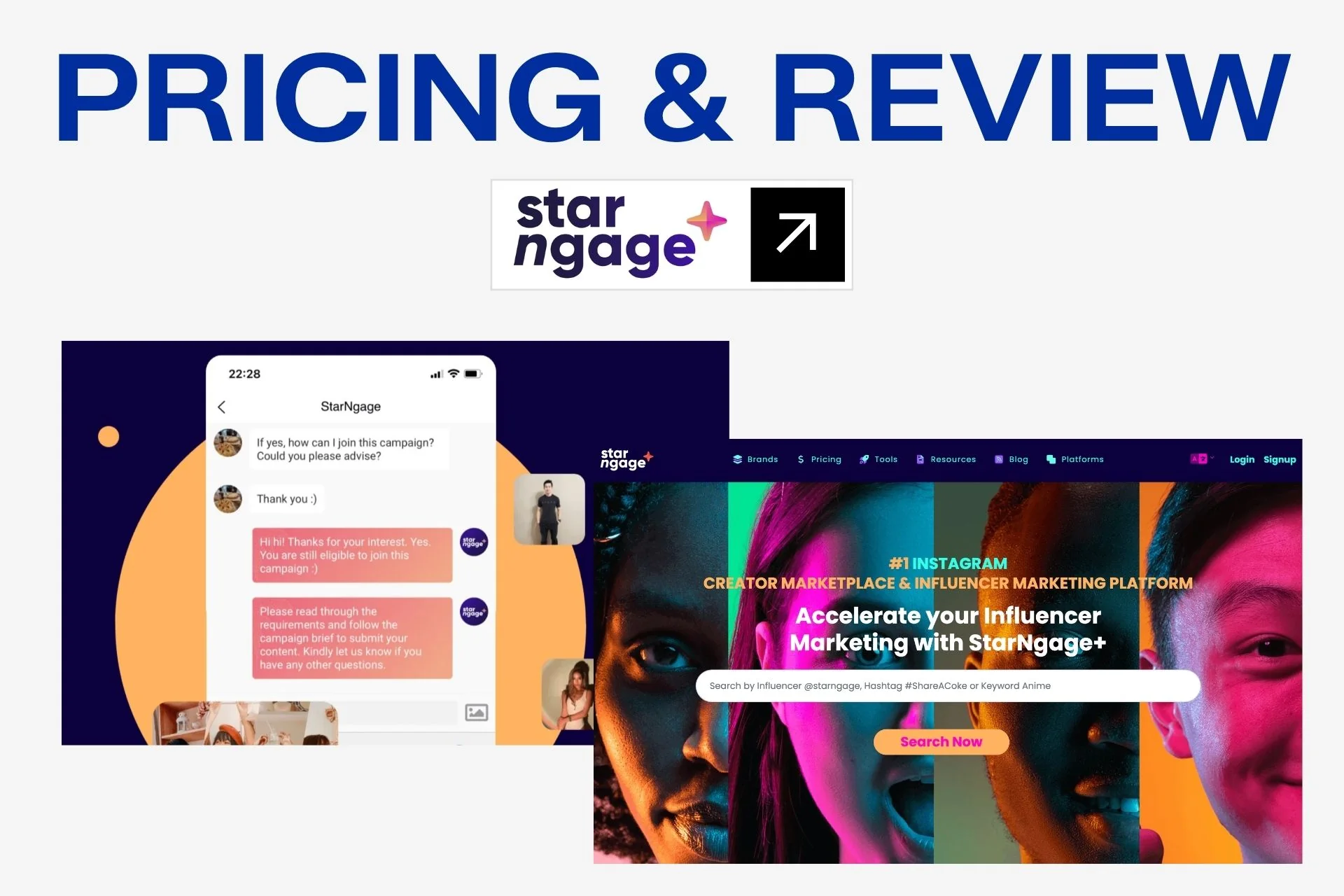
StarNgage Plus Pricing and Review: Features, Pros, Cons & Costs
StarNgage Plus doesn’t sell you software so much as rent you a marketplace, then take a cut of every deal that closes inside it. Signing up is free; the money changes hands as a percentage of what you pay creators — 10% if you run campaigns yourself, 30% if StarNgage manages them for you. That fee model is the whole story of what StarNgage costs, and it behaves very differently from a flat monthly seat.
Behind the fee sits real scale: a database of more than five million creators across Instagram, TikTok, YouTube, Facebook and Threads, spanning 180 countries with a notably strong footprint in Asia. For a brand that needs global creator supply, that reach is the draw.
Here is how the pricing actually works, where the cost lands as your spend grows, and whether a commission-based marketplace is the right shape for a D2C brand versus a subscription tool.
StarNgage Plus Overview
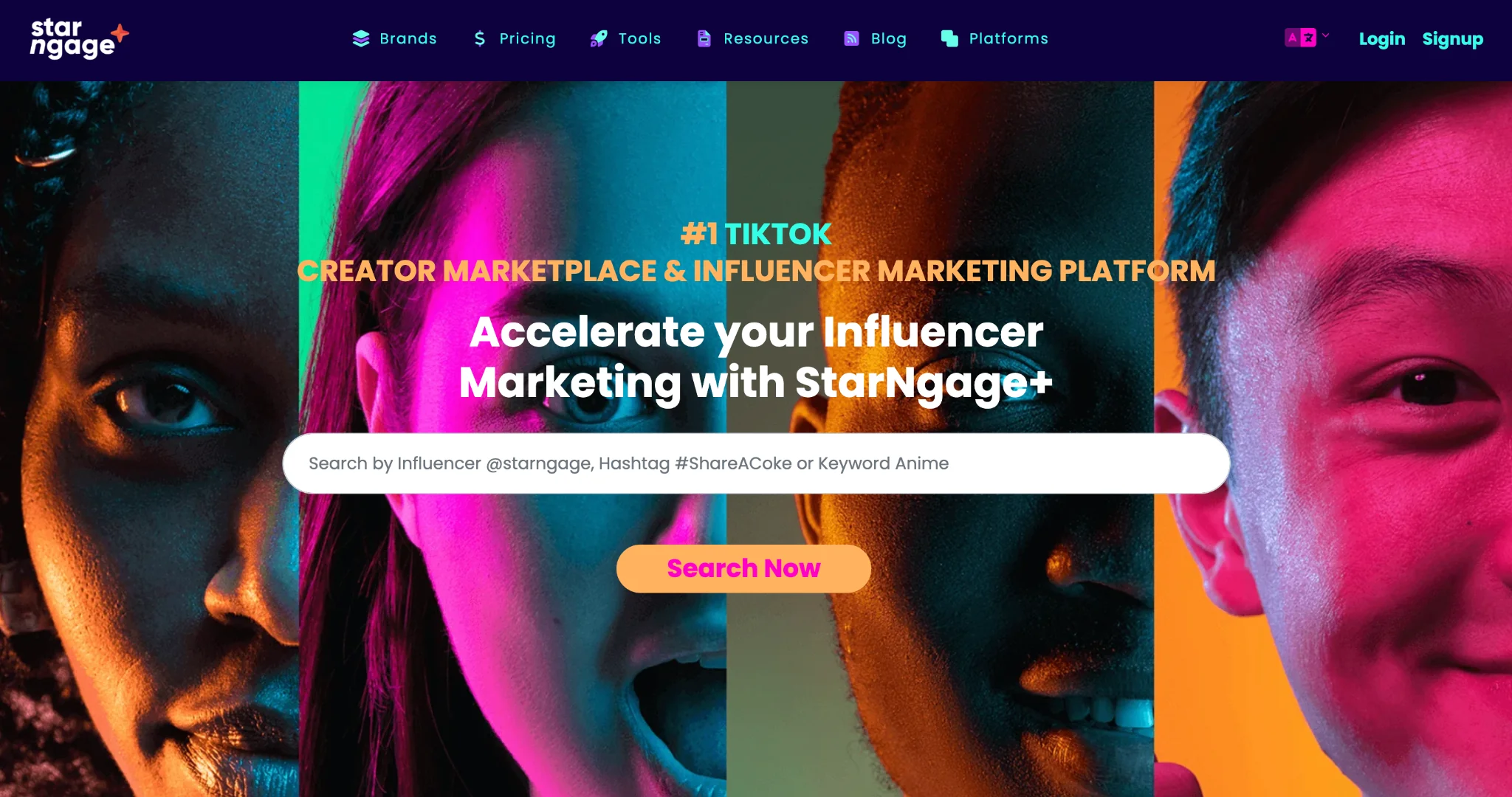
StarNgage is a Singapore-based influencer marketing platform that operates as a marketplace, a discovery-and-analytics tool, and an optional managed agency all under one roof. StarNgage Plus is the brand- and agency-facing side of that ecosystem, where campaigns are created, creators are found and results are tracked.
The numbers behind it are large: five million-plus influencers growing by roughly 200,000 a month, around 30,000 brands, and campaigns run across 180 countries. Coverage spans Instagram, TikTok, YouTube, Facebook and Threads, and the platform layers ranking databases, audience insights and fake-follower detection on top of the marketplace so brands can vet before they spend. Because it started life as a public influencer-stats and ranking site, StarNgage’s discovery data runs deep.
What it is at heart, though, is a two-sided marketplace: brands post, creators apply or get matched, and StarNgage takes a fee on the transaction. That makes it strong on creator supply and lighter on the workflow depth — pipeline management, outreach automation and the kind of creator relationship tools — that a subscription-first platform builds its whole product around.
Who Should Use StarNgage Plus
StarNgage Plus suits brands whose first need is finding creators at scale, especially outside the usual Western markets. It fits well for:
- Brands targeting Asian markets where StarNgage’s creator density and local knowledge outrun most Western-built tools.
- Teams that want zero upfront commitment and prefer paying a fee per campaign to a fixed monthly subscription.
- Brands that need creator supply, not infrastructure, and want a marketplace where creators apply or get matched rather than a database they work alone.
- Companies wanting an optional managed service that will run strategy, matching and reporting for them at a higher fee.
- Data-first marketers who value StarNgage’s ranking databases and audience insights for vetting before they commit budget.
- Global brands running campaigns across many countries who need one platform that reaches 180 of them.
Key Features
StarNgage Plus blends marketplace mechanics with discovery data. These eight features carry the platform.
Global Creator Marketplace
The core is a two-sided marketplace of five million-plus creators where brands post campaigns and creators join, publish and get paid through a simple three-step flow. It’s built for supply: you’re tapping an applicant pool, not just searching a static list.
Discovery & Ranking Databases
Rooted in StarNgage’s origins as an influencer-stats site, discovery includes public ranking databases, engagement metrics and searchable filters. For finding creators in a specific country or niche, the depth of ranking data is a genuine strength.
Audience Insights & Demographics
Each creator profile carries audience demographics and engagement data, so brands can check whether a following actually matches the target market before reaching out. Vetting on data rather than follower count is the point.
Fake-Follower Detection
Built-in screening flags inflated or low-quality audiences, which matters more on an open marketplace of millions than on a curated shortlist. It’s the safeguard against paying for reach that isn’t real.
Campaign Management
Brands move through a create-approve-pay flow while creators join-publish-receive, keeping the collaboration lifecycle inside the platform rather than across email and spreadsheets.
Live Chat Engagement
Direct communication between brands and creators happens through an in-platform live chat, so conversations stay attached to the campaign. It’s conversational rather than a sequenced outreach engine.
Rate Cards & Benchmarks
StarNgage publishes rate-card benchmarks and industry reports, giving brands a reference point for what a collaboration should cost — useful leverage when negotiating fees on the marketplace.
Hashtag & Performance Analytics
Hashtag analytics and campaign performance tracking round out the reporting side, letting brands measure reach, engagement and ROI on the content they paid for.
StarNgage Plus Pricing
StarNgage’s pricing is commission-based, not subscription-first, and that is the single most important thing to understand before you commit. It is free for brands and agencies to sign up and use the marketplace; StarNgage earns its money as a fee on successful campaigns.
Self-Service — 10% Fee
- Free to sign up and browse the marketplace.
- StarNgage adds a 10% service fee on top of the creator payment. On a $200 collaboration, the brand pays $220, with $20 going to StarNgage.
- Your cost scales directly with what you spend on creators — there’s no cap, so a bigger program means a bigger fee.
VIP Managed Service — 30% Fee
- StarNgage runs strategy, creator matching, relationship management and reporting for you.
- The service fee rises to 30% of campaign spend in exchange for the hands-off model.
- Effectively an agency retainer priced as a percentage — convenient, but the markup is steep on larger budgets.
StarNgage Plus Subscription Tiers
- Alongside the marketplace, StarNgage Plus offers tiered subscription plans (Lite, Essential and Advanced) for its discovery-and-analytics tooling.
- The vendor does not surface a clear, consistent USD price table for these tiers — figures vary by region and aren’t transparently published — so confirm current rates directly on StarNgage’s pricing page before budgeting.
StarNgage Plus Reviews
StarNgage has a limited footprint on the major software review sites — there’s no substantial body of G2 or Capterra reviews to anchor a rating on, which is a gap for a platform of this claimed scale. The category ratings that do circulate come from small samples (single digits to low double digits per category), so they’re best read as directional signals rather than settled proof.
Where feedback exists, the pattern is consistent: brands praise the sheer size of the creator network, the global reach and the depth of analytics, while the recurring criticisms are creator-quality variability across such an open marketplace and a learning curve for new users. That mix is typical of a large, supply-heavy marketplace — enormous choice, uneven quality, and the work of filtering left to you.
Integrations
StarNgage keeps most of the workflow inside its own platform rather than pushing out to a wide connector ecosystem, so the integration surface is best treated as narrow:
- In-platform payments: Creator payment is handled within StarNgage as part of the campaign flow, not through a bolted-on processor.
- Live chat: Brand-creator communication runs natively rather than syncing to an external inbox.
- Social data (Instagram, TikTok, YouTube, Facebook, Threads): The platform pulls ranking and engagement data from the networks it covers.
- Reporting exports: Campaign and hashtag analytics can be pulled for reporting, though there’s no published directory of native CRM or BI connectors.
Because engagement is built around live chat rather than sequenced email, brands that rely on automated outreach should confirm the workflow fits before committing.
Pros of StarNgage Plus
Massive, Global Creator Supply
Five million-plus creators across five networks and 180 countries is StarNgage’s defining strength, with unusually strong depth in Asian markets. For a brand whose bottleneck is finding creators — especially outside the US and Europe — the supply is hard to beat.
No Upfront Subscription
Free signup and pay-per-campaign fees mean a brand can start without committing to a monthly plan. For teams testing influencer marketing or running occasional campaigns, only paying when a campaign actually happens is genuinely attractive.
Deep Discovery Data
Built on years as a public influencer-ranking site, StarNgage brings ranking databases, audience demographics and fake-follower detection that let brands vet creators on data rather than guesswork before spending.
Cons of StarNgage Plus
Fees Scale With Every Dollar You Spend
The 10% self-service fee has no ceiling, so cost rises in lockstep with your creator budget — a $50,000 campaign carries a $5,000 fee. The 30% managed rate is steeper still. Unlike a flat subscription, a successful, growing program keeps getting more expensive to run.
Opaque Subscription Pricing
The StarNgage Plus tiers aren’t published in a clear USD table, and figures shift by region. A brand that wants to know its number before onboarding can’t easily get it, which makes budgeting and comparison harder than it should be.
Creator Quality Varies
An open marketplace of millions inevitably mixes excellent creators with weak ones. Reviewers flag inconsistent quality, which means the vetting burden — even with the built-in tools — still falls on the brand.
Light on Workflow Automation
Engagement leans on live chat rather than sequenced outreach, and the platform is thinner on pipeline management and CRM depth than subscription-first tools. Teams running high-volume, systematized programs may outgrow it.


Is StarNgage Plus Worth It?
StarNgage Plus makes the most sense when your problem is creator supply — particularly across Asia and other global markets — and you’d rather pay per campaign than commit to a subscription. The reach and discovery data are real assets. The reservations are the commission model that scales without a cap, subscription pricing you can’t easily pin down, and workflow depth that lags subscription-first platforms. For a high-volume, systematized D2C program, those add up.
If you want more predictable costs or deeper campaign infrastructure, these are the alternatives worth weighing:
- Influencer Hero — an all-in-one influencer marketing platform for D2C brands with discovery across eight social networks, AI-assisted outreach, a built-in CRM, gifting, affiliate management and ROI reporting. Its plans are published flat — Standard $649/month, Pro $1,049/month and Business $2,490/month — so cost doesn’t climb with your creator spend, and fake-follower detection, lookalike search and a Chrome extension come standard.
- Afluencer — a marketplace where creators apply to your campaign listings from $49/month, with AI creator matching to speed shortlisting. A natural fit when supply is the bottleneck but you want a flat monthly cost instead of a per-campaign cut.
- HypeAuditor — a discovery-and-analytics platform known for deep audience-quality data and fraud detection across major networks.
- CreatorIQ — an enterprise-grade platform built for large, complex programs needing governance and integrations.
- Social Cat — a budget-friendly tool that connects smaller D2C brands with micro-influencers for gifting and paid collaborations.
Final Thoughts
StarNgage Plus is a supply engine first and a software product second — if global creator reach and a no-subscription entry are what you’re after, few platforms match its scale. The trade-off is a fee that grows with every campaign and pricing you can’t fully see up front, so run the math on your expected spend and weigh the strongest StarNgage alternatives before you decide whether a percentage of every deal beats a flat monthly plan.

.png)


.jpg)