


Social Nature Pricing and Review: Features, Pros, Cons & Costs
The real question with any sampling platform is what you are buying. Product trial, reviews, or evidence that your product sells off a shelf?
Social Nature sells all three in one campaign, which is what makes it useful and what makes it hard to price. There is no plan, no monthly fee and no published figure anywhere on the site.
This review covers how the model works, what a brand gets back, and the numbers to pull out of a quote before you agree to anything.
Social Nature Overview
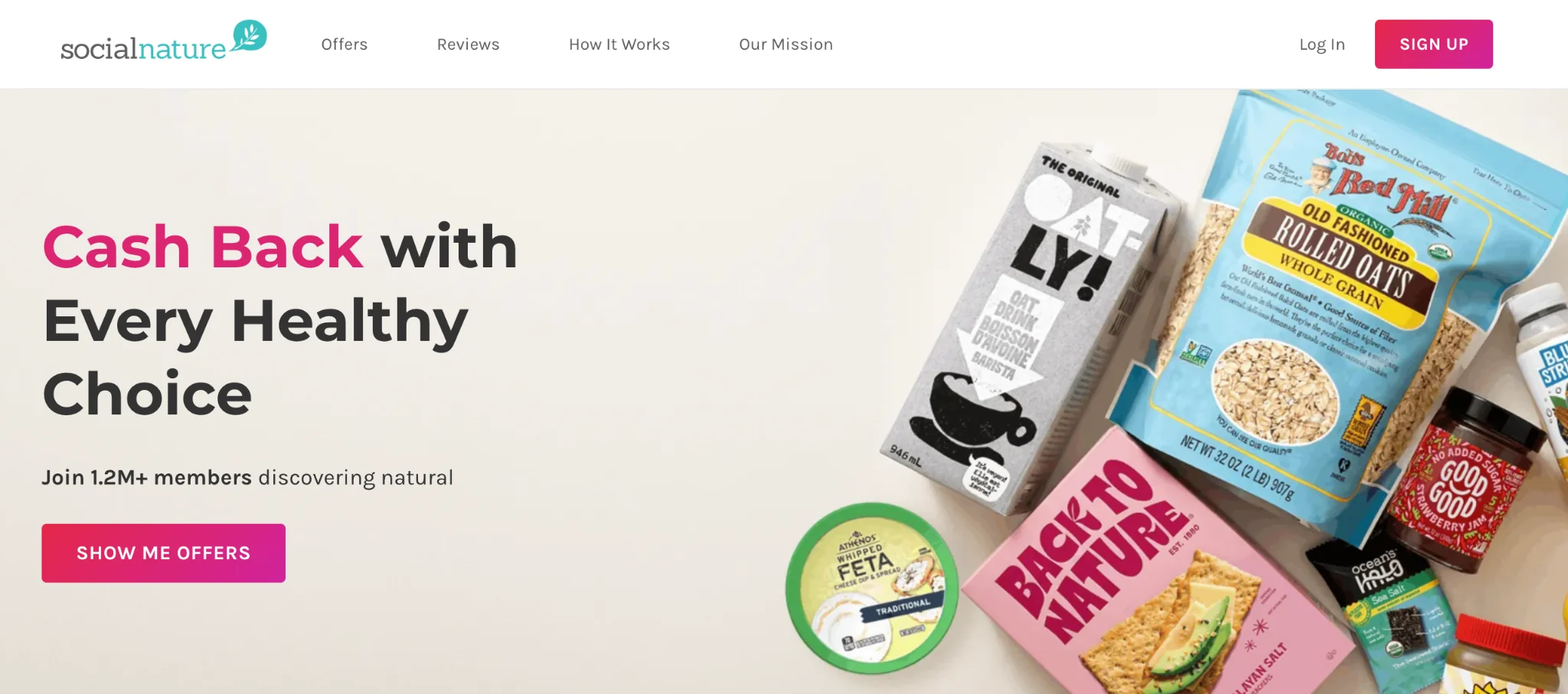
Social Nature is a digital sampling and shopper marketing platform for CPG brands. It runs a community of more than 1.26 million shoppers who are looking for natural, better-for-you and sustainable products, and it puts your product in front of the ones who live near a store that stocks it.
The mechanism is a cash-back offer rather than a free sample in the post. A shopper claims the offer, buys your product at the retailer, uploads proof of purchase, and gets up to 100% of the price back within 48 hours. Then they write a review. More than 600 brands use it, with retail coverage across Walmart, Target, Kroger, Whole Foods and around 500 other retailers.
It is a retail sell-through tool, not a creator program. There is no creator search, no outreach, no affiliate tracking and no payouts, so it solves a different problem from the influencer gifting platforms that ship product to creators for content.
Who Should Use Social Nature
The fit is narrow and very specific to how you sell:
- CPG brands with retail distribution: The whole model depends on your product sitting on a shelf somewhere a shopper can reach.
- Brands launching into a new retailer: Nothing proves a listing was worth giving you like redemptions tracked store by store.
- Natural and better-for-you products: The community was built around this shopper, and that focus is the main reason to pick it over a general sampling service.
- Brands with empty review sections: A product page with four reviews converts badly, and this fills it quickly.
- Teams fighting for shelf velocity: Slow sell-through loses listings, and geo-targeted offers push purchases into specific stores.
- Brands that need shopper data: Emails, feedback and purchase intent come back with the campaign, not just a units number.
Key Features
A Community Built Around One Shopper
More than 1.26 million members who opted in because they want natural and sustainable products. That focus is the product. A general sampling audience will try anything, which makes the feedback less useful and the reviews less convincing.
Geo-Targeted Offers
Offers are shown only to shoppers living near the stores you choose. You can push trial into the specific locations where a buyer is watching your numbers, which is a very different tool from a national campaign that spreads thin.
Cash Back on Proof of Purchase
Shoppers buy at full price, upload the receipt, and get up to 100% back within 48 hours. Because the purchase happens at the till, it registers as a real sale in the retailer’s data. That is the opposite of influencer gifting, where product ships free and no sale is recorded anywhere.
Review Generation
Every sampler is asked for a review, and the platform has produced more than 3.75 million of them. Reviews can be syndicated to your own site and to retailer product pages. One published Target campaign moved 1,391 units and returned 845 reviews.
Real-Time Insights Dashboard
Redemptions show up live, broken down by retailer, region and individual store. For a brand used to waiting on scan data, seeing which stores are converting within 24 hours is a genuine change in how fast you can react.
Store-Level Merchandising Signals
If offers are being claimed in one region and not redeemed, that usually means the product is not on the shelf. Filtering redemptions by store turns a sampling campaign into a distribution audit, which is a useful side effect most sampling tools cannot offer.
Shopper Feedback and Purchase Intent
Surveys go out alongside the review request, covering what shoppers thought, whether they would buy again and how your product compares with what they usually pick. This is the closest thing to research that comes bundled with a media buy.
Email Capture and Retargeting
Campaigns collect consumer emails and opt-ins, and brands can retarget those shoppers with further offers during the year. The list is the asset that outlives the campaign, so check what you are allowed to do with it.
Social Nature Pricing
There is no published pricing. Not on the site, not on the product pages, and not on the software directories either, where the vendor has left the pricing field empty. Every path ends at a demo request or a call with a CPG strategist.
What the Vendor Publishes
Nothing at all. No plan names, no starting figure, no minimum campaign size. That is common for campaign-based sampling, where cost depends on sample volume and targeting, but it does mean you cannot compare this with anything before speaking to sales.
How Campaigns Like This Are Normally Priced
Sampling is sold as a media buy, not a subscription. The cost usually moves with the number of samples, how tightly you target them, and what you want back in reviews and data. Ask for the price per redemption and the price per review, because those two numbers are the only ones that compare cleanly with another vendor.
The Costs That Sit Outside the Invoice
Two things are easy to miss. First, confirm who funds the cash back, since up to 100% of the retail price is going back to shoppers and that money comes from somewhere. Second, the units sold at full price through the till carry your normal cost of goods and retailer margin, so your true cost per trial is the campaign fee plus the rebate plus the margin you gave up.
Working Out What It Is Worth
Use the published case study as a model. A Target campaign returned 1,391 units and 845 reviews, so a quote of $20,000 for that shape of campaign would be roughly $24 per review and $14 per unit moved. Run your own quote through the same division before the call ends.
Then compare it against the cheaper option. If reviews and content are what you actually want, running seeding yourself using a product gifting guide and a platform that handles outreach costs a fraction of a managed sampling campaign. What you lose is the retail sell-through proof, which for a shelf-distributed brand may be the entire point.
Social Nature Reviews
No verifiable rating. Social Nature holds a product listing on G2 but carries no published reviews or vendor pricing there, and it does not appear with meaningful volume on the other major software review sites.
That is notable because direct competitors in the same category do have review bases to read, some running into the hundreds. What you get instead is case studies the vendor selected, plus a client list of more than 600 brands. Ask for two references in your category and in your retailer, since performance in a Whole Foods campaign tells you little about a Walmart one.
Integrations
There is no integration directory. What connects is retail and content, not software:
- Retailer network: Offers are targeted at around 500 retailers including Walmart, Target, Kroger and Whole Foods.
- Review syndication: Collected reviews can be pushed to retailer product pages and your own site.
- Insights dashboard: Redemption and feedback data is reported by retailer, region and store.
- Shopper email capture: Opt-in consumer emails come back with the campaign for retargeting.
- Paid media retargeting: Campaign audiences can be reached again with follow-up offers.
No Shopify, WooCommerce, CRM, email platform or affiliate integrations are published anywhere. Assume the data arrives as a dashboard and an export.
Pros of Social Nature
It Creates Real Transactions
A rebate on proof of purchase means the sale rings through the till and lands in the retailer’s numbers. Free samples in the post do not. When your goal is to keep a listing or earn a second one, a sale that shows up in the retailer’s own data is worth far more than an impression.
Reviews Arrive Where They Convert
Hundreds of reviews from a single campaign, written by people who bought the product rather than received it free, and placed on the pages where shoppers decide. For a brand launching a new SKU with an empty review section, that gap closes in weeks instead of quarters.
Data a Buyer Will Actually Read
Store-level redemptions, regional breakdowns and purchase-intent feedback add up to a slide a category buyer takes seriously. Most influencer tools produce numbers that mean nothing in a retail review meeting. This one produces the opposite.
Cons of Social Nature
You Cannot Budget Without a Call
This is the cost trap, and it is a big one for a channel sold as a media buy. With no published figure and no minimum, two brands can pay very different amounts for the same campaign shape. Get the cost per redemption and cost per review in writing, ask whether the rebate is included, and treat the first quote as a starting position.
It Sells Retail, Not Your Store
Every mechanic here points a shopper at a physical retailer. If you sell mainly through your own site, you are paying to send buyers somewhere you make less margin, or somewhere you do not sell at all. A pure D2C brand gets the reviews and almost none of the rest.
No Creator Layer at All
There is no creator search, no audience-quality screening, no outreach, no contracts, no affiliate codes and no payouts. Samplers write reviews, they do not become advocates you can work with again. Building that side means a second platform and something like branded application pages to recruit people properly.
Nothing Independent to Check
There is no review base of any size on the software review sites, so you are evaluating this on vendor case studies and a demo. For a campaign that may run into five figures, that is thin. Insist on references who ran your category at your retailer.


Is Social Nature Worth It?
For a natural CPG brand with shelf space, it does a job almost nothing else does. Paid trial that shows up as real sales, hundreds of reviews on retailer pages, and store-level data you can take into a buyer meeting are three outcomes from one campaign. The community focus is a genuine advantage over generic sampling.
The hesitations are price visibility and scope. You cannot benchmark a quote you have nothing to compare against, there is no independent feedback to weigh, and everything the platform does stops at the review. If your revenue comes through your own store, most of the value on offer here is aimed somewhere else.
Brands weighing sampling against creator-led trial usually shortlist these:
- Influencer Hero: Runs seeding and the whole program around it, with creator search and fake-follower screening, automated outreach, gifting through your store, a UGC library and affiliate codes tied to real orders.
- Afluencer: Lets you post a gifting collaboration and pick from creators who apply, with audience stats on every applicant and AI matching to sort them. See its own gifting platform comparison for how that model differs.
- Statusphere: A managed micro-influencer seeding service that matches creators to your product and guarantees a set number of posts per campaign.
- Stack Influence: Focuses on micro-influencer campaigns that drive purchases through Amazon, paying creators in product rather than cash.
- SoPost: Handles digital sampling logistics at scale, with targeting and fulfilment built for beauty and personal care launches.
Final Thoughts
One number decides this: your cost per incremental unit sold. Take the quote, divide it by the units the campaign is forecast to move, add the rebate and the retailer margin, and see whether the answer still looks sensible next to your other trial spend. Do the same division for reviews, because for many brands those are the real deliverable. If the maths works and your product sits on shelves, this is a strong buy, and if it does not, the Social Nature alternatives built around creators will give you content and tracked revenue for less.

.png)


.jpg)










