

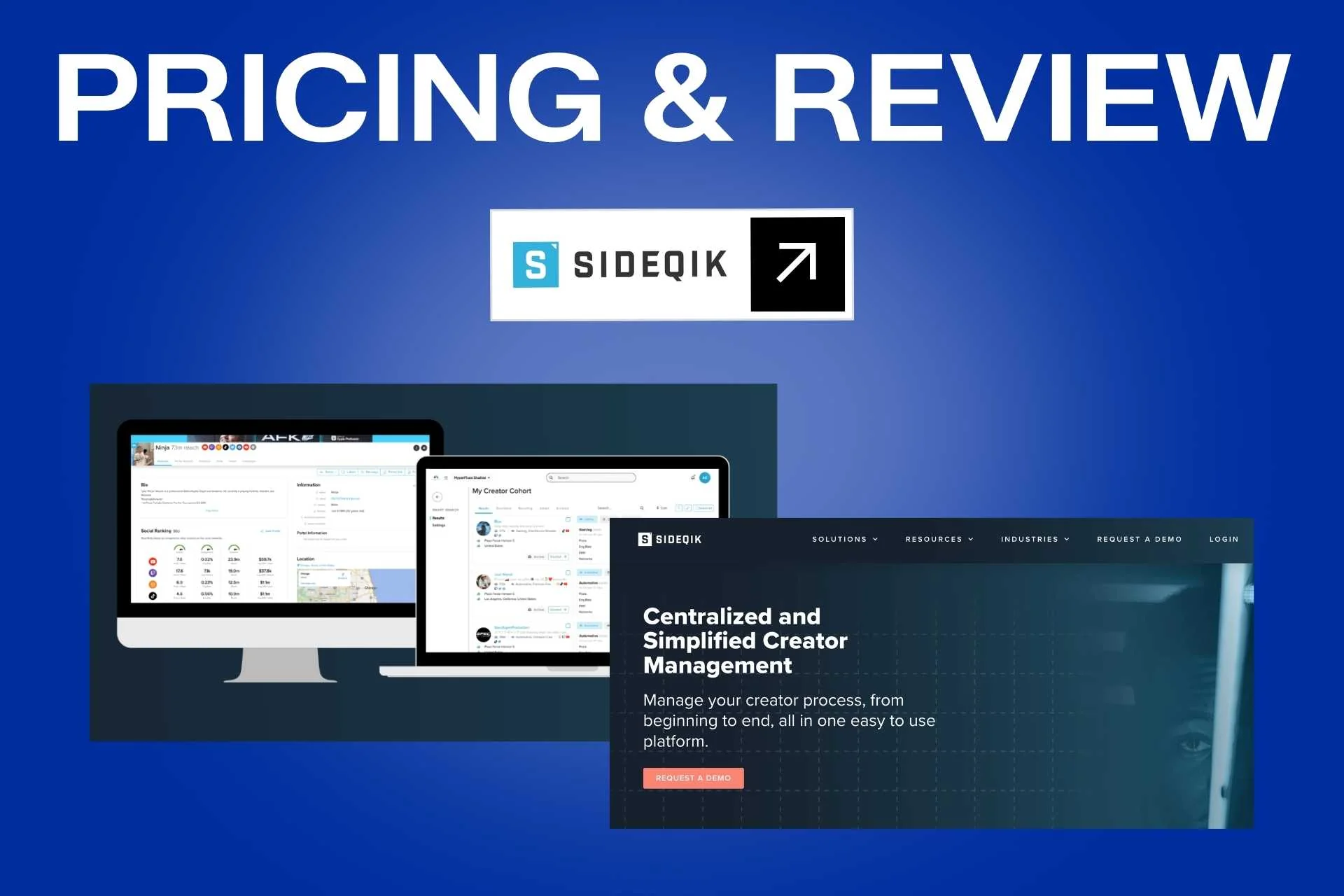
Sideqik Pricing and Review: Features, Pros, Cons & Costs
Sideqik is an enterprise influencer marketing platform with one feature that stands out from the crowd: it looks inside your own audience. Rather than starting from a cold database, Sideqik analyzes a brand’s existing followers to surface the creators already engaging with it, then uses AI and automation to scale from there. For a large D2C brand, that brand-follower angle is the reason to look.
The pricing is enterprise-style and quote-based. Sideqik does not publish dollar figures; instead it tiers plans by how many influencers you manage, from a Basic plan to Enterprise, with user seats capped per tier. Everything runs through a sales conversation, and there is no free trial.
This review covers what Sideqik does, how its tiered, quote-based pricing works, where the brand-follower discovery and automation are genuinely strong, and the interface and data gaps to weigh. It closes with five alternatives worth comparing.
Sideqik Overview
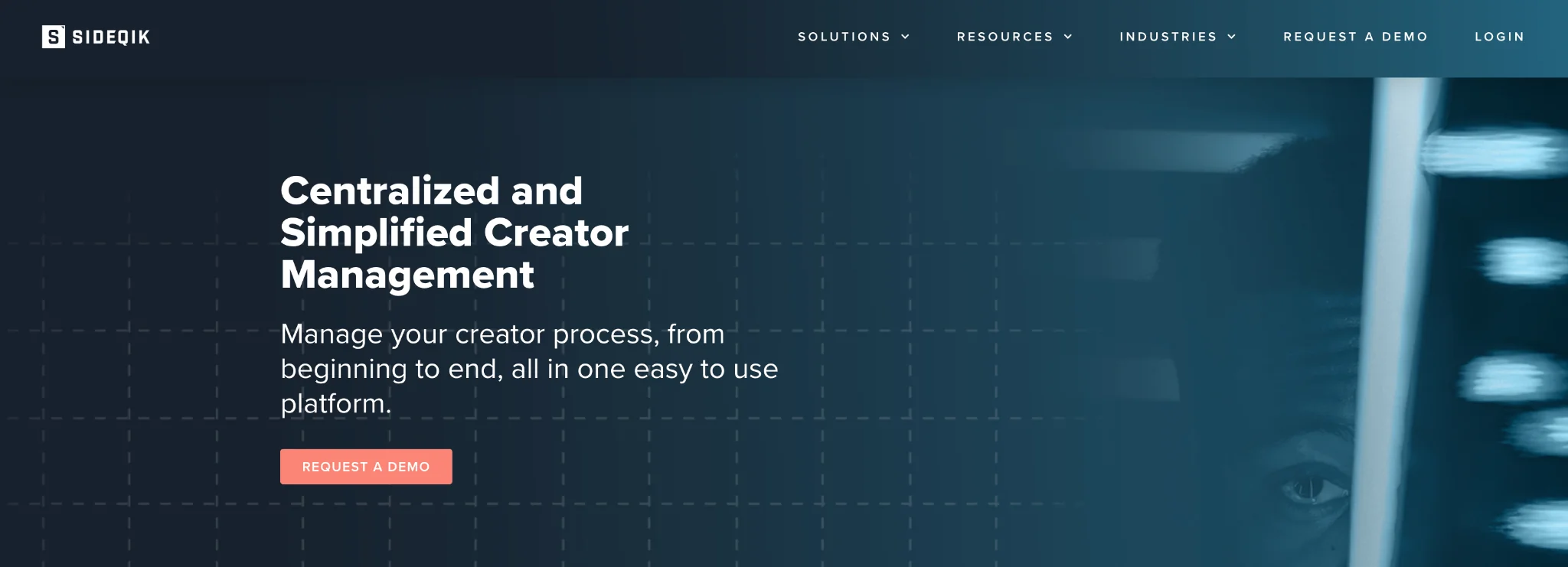
Sideqik is an AI-driven influencer marketing platform that helps mid-market and enterprise brands discover creators, manage relationships and measure impact from one place. Its signature move is analyzing brand followers to identify influencers by engagement and topic relevance, so discovery starts with people who already know the brand.
Around that, Sideqik layers rules-based automation for approving and activating creators, more than a dozen campaign blueprint templates, detailed influencer scoring and segmentation, and earned-media-value reporting. It is built to run large programs, hundreds of creators at once, rather than one-off campaigns.
It is an enterprise platform, not a lightweight tool. Sideqik includes relationship management, but teams comparing it against a simpler self-serve relationship layer should weigh dedicated influencer CRM tools. It fits brands in gaming, esports, sporting goods, lifestyle and entertainment especially well.
Who Should Use Sideqik
Sideqik fits mid-market and enterprise brands running influencer marketing at scale. It suits:
- Large D2C and consumer brands managing hundreds of creators at once.
- Teams that want to find influencers among their own followers and customers.
- Brands in gaming, esports, sporting goods, lifestyle and entertainment.
- Marketers who want rules-based automation to approve and activate creators.
- Teams that rely on earned-media-value reporting and attribution.
- Companies comfortable with quote-based, sales-led pricing rather than self-serve tiers.
Key Features
Sideqik’s feature set is built for running large programs, starting with discovery inside your own audience.
Brand-Follower Discovery
Sideqik analyzes a brand’s existing followers to identify influencers by engagement and topic relevance, so discovery begins with creators who already know the brand rather than cold search results.
AI-Powered Discovery and Scoring
Beyond your own audience, AI helps discover new creators and scores them for fit, with segmentation to organize large rosters.
Rules-Based Automation
Automated rules approve and activate creators based on criteria you set, which is what lets large teams manage hundreds of influencers without manual bottlenecks.
Campaign Blueprint Templates
More than a dozen campaign blueprints give teams a starting structure for different marketing goals, speeding up setup for repeatable programs.
Relationship Management and Segmentation
Detailed scoring and segmentation keep large creator rosters organized by stage, priority and campaign, which matters when you manage creators at volume.
Earned Media Value Reporting
Consolidated earned-media-value and performance reporting sit in one dashboard.
Multi-Channel Attribution and Retargeting
Integrations with Google, Facebook and Twitter support retargeting and multi-channel attribution, tying creator activity to broader performance.
Enterprise Support
Onboarding, live online training, documentation and around-the-clock support options back the platform, reflecting its enterprise focus.
Sideqik Pricing
Sideqik does not publish dollar figures. It tiers plans by the number of influencers you manage and the user seats included, and every plan is quoted through sales. Here is how the tiers are structured.
Tiered by Managed Influencers
- Plans scale by how many creators you actively manage, at 25, 100 and 250, and by user seats, at 1, 3 and 5.
- The tier you need depends on program size and team size, not features alone.
- Larger programs are quoted as custom Enterprise deals.
Quote-Based, No Free Trial
- There are no public prices and no free trial; access starts with a sales conversation.
- The tiered structure looks like self-serve SaaS but still routes through a salesperson.
- Expect enterprise-level pricing given the platform’s focus on large brands.
The Real Cost: Caps Push You Upward
- Both managed-influencer counts and user seats are capped per tier, so growing programs and bigger teams are pushed toward higher, custom-priced plans.
- Budget for the tier your program will reach, not the one it starts at.
- Confirm exactly what counts as a managed influencer, since that metric drives the price.
Sideqik Reviews
Sideqik has a modest but real review base.
- 4.2/5.0 (G2, 13 reviews)
- 4.7/5.0 (editorial reviews)
Reviewers praise the clean discovery and campaign management and responsive support, while flagging a cluttered admin interface, occasional earned-media-value data errors, and database gaps in niche categories. The G2 score, on real volume, is the reliable read.
Integrations
Sideqik connects to the ad and analytics stack it uses for attribution rather than a broad app marketplace.
- Google, Facebook and Twitter: connections for retargeting and multi-channel attribution.
- Earned media value and analytics: consolidated reporting on creator performance.
- Campaign blueprints: templated workflows for different marketing goals.
- Brand-follower analysis: discovery drawn from your own audience data.
Sideqik focuses on its own enterprise workflow and attribution rather than a broad integration directory, so brands that need extensive CRM syncs and automated outreach sequences should compare it against tools with stronger outreach automation.
Pros of Sideqik
Brand-Follower Discovery
Finding influencers among your own followers is Sideqik’s standout, surfacing creators who already engage with the brand and tend to convert better than cold picks.
Automation at Scale
Rules-based approval and activation plus campaign blueprints let large teams run hundreds of creators without drowning in manual steps, which is where the platform earns its enterprise price.
Solid Support and Reporting
Reviewers consistently praise responsive support and consolidated earned-media-value reporting, and the platform is built to manage big programs from one dashboard.
Cons of Sideqik
Quote-Only Pricing With Caps
There are no public prices and no free trial, and plans cap both managed influencers and user seats, so growing brands are pushed toward custom pricing. Budgeting means a sales call.
A Cluttered Interface
Reviewers repeatedly describe the admin portal as cumbersome and cluttered, with UX that needs work. For a tool used daily, that friction adds up.
Earned-Media-Value Accuracy
Some reviewers report earned-media-value calculations and auto-tagging misfiring, so teams that lean on those numbers should validate them against their own data.
Database Gaps in Niches
The creator database can miss specialized or niche influencers, so brands in narrow categories should test coverage before committing.


Is Sideqik Worth It?
Sideqik is worth it for a mid-market or enterprise brand running influencer marketing at scale that wants to mine its own audience for creators and automate approval and activation. For that brand, especially in gaming, sports or entertainment, the brand-follower discovery and blueprint automation earn the enterprise price. It is a weaker fit for smaller brands, teams that need transparent pricing or a free trial, or anyone who wants a polished, self-serve interface. If any of that gives you pause, compare these five alternatives:
- Influencer Hero is an all-in-one influencer marketing platform built for ecommerce brands, offering creator discovery, automated outreach, influencer CRM, gifting, affiliate management, and integrations with Shopify, WooCommerce, and custom ecommerce platforms.
- Afluencer is a marketplace where creators apply to your campaign listings, useful when creator supply, not automation, is the bottleneck.
- Upfluence is a discovery-heavy platform that can also identify influencers among your own customers, with deep ecommerce integrations.
- Tagger by Sprout Social is an enterprise influencer platform with social-listening-backed discovery and strong reporting.
- Klear is an analytics-heavy influencer platform for brands and agencies that need rigorous measurement and earned-media reporting.
Final Thoughts
Sideqik is a capable enterprise platform with a genuinely differentiated idea: start influencer discovery inside your own audience, then automate the program from there. For a large brand in the right category, that approach plus blueprint automation is a real advantage. The reservations are about polish and access rather than capability, since pricing is quote-only with caps, the interface can feel cluttered, and some data runs inaccurate. Decide based on whether brand-follower discovery and scale matter most, and if the interface or the pricing model do not fit, the Sideqik alternatives above cover similar ground with different trade-offs.
.png)


.jpg)