


Perfluence Pricing and Review: Features, Pros, Cons & Costs
If your customers are in the US or Western Europe, the single most important fact about Perfluence is where its creators are not. The network was built in Russia and the CIS, and although the company has since pushed into Latin America, Eastern Europe and parts of Asia, the depth that makes it interesting sits in markets most D2C brands reading this do not sell into.
That aside, the model is worth understanding. Perfluence is a performance-influence marketing service rather than software you log into and operate. Brands agree a payment model, Perfluence recruits and briefs the creators, and you are billed on results rather than on posts or seats.
What follows is what each payment model actually means for a brand budget, what Perfluence does and does not publish about cost, and the questions worth asking before a program like this gets signed.
Perfluence Overview
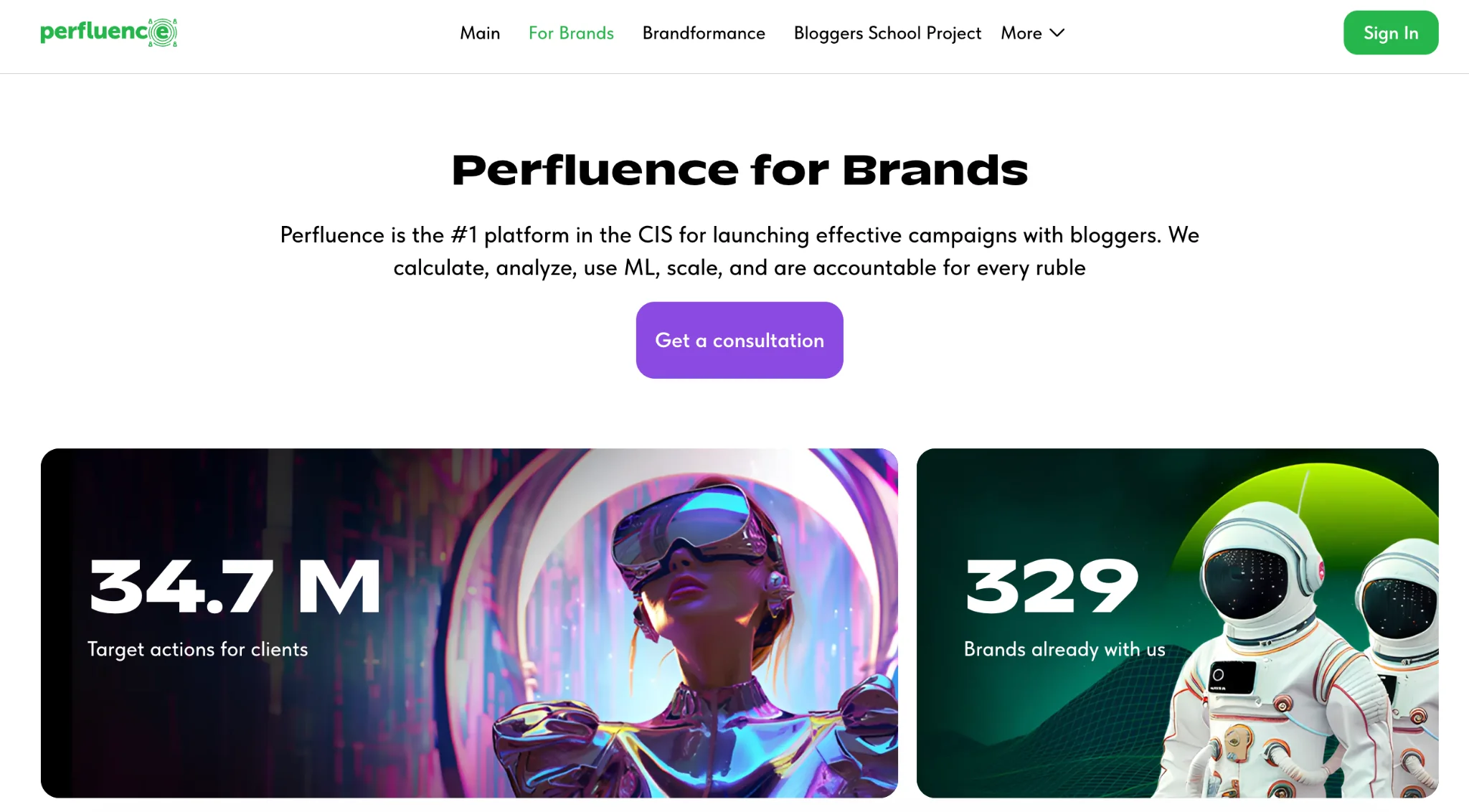
Perfluence runs performance campaigns with micro-influencers at volume. The company reports working with more than 170,000 creators and over 150 brands, including AliExpress, iHerb, L’Oréal, Farfetch, Domino’s and KFC, alongside a heavy roster of Russian banks, grocery chains and marketplaces.
The deliberate strategy is small creators. Perfluence targets accounts under 10,000 followers, and creators can join the network from around 1,500 to 2,000 followers. The bet is that a very large number of small, high-trust audiences converts better per dollar than a handful of large ones, and the reported output supports the volume claim: over 860,000 posts published and more than 2.6 million tracked CPA results in a single month.
Coverage spans TikTok, Instagram, YouTube, Telegram, VK, Yandex Zen and Twitch. That Telegram and VK weighting tells you plenty about the core market, and it is genuine capability that Western platforms simply do not have.
Who Should Use Perfluence
The profile of a good fit here is specific:
- Brands selling into Russia, the CIS or LatAm: This is where the creator supply is deepest and the local team knowledge is real.
- Companies that want outcomes, not software: If nobody internally has time to run outreach and briefs, a managed service removes the headcount question entirely.
- Businesses with a clean conversion event: CPA only works when a signup, order or install can be tracked unambiguously. Fuzzy funnels break the model.
- Retail and offline-heavy businesses: QR codes, barcodes and promo tokens give offline attribution that most influencer platforms cannot offer at all.
- Marketplaces, apps and subscription services: High-frequency, low-consideration purchases suit micro-influencer volume better than considered, high-ticket products.
- Brands wanting to test a market before committing: Paying per acquisition caps downside while you learn whether creators move product in a new region.
It is a poor fit for brands whose programs run on gifting and content rather than commission. If the goal is product in creators’ hands and UGC out the other side, dedicated product seeding platforms will serve you better than a CPA network.
Key Features
Four Performance Payment Models
Perfluence offers CPA, CPC, CPP and RevShare, and will structure a campaign around whichever suits the product. That flexibility is the core of the offer: most influencer platforms sell you software and leave creator payment terms to you, while here the payment structure is the product.
Micro-Influencer Network at Volume
Access to a network of more than 170,000 creators concentrated in the sub-10,000 follower band. Recruitment, negotiation and briefing are handled by Perfluence, so a brand never has to build an outreach process.
Smart Segmentation
Statistical analysis identifies which creator segments perform for a given brand, then campaigns are weighted toward those segments. In practice this is the mechanism that stops a CPA campaign from bleeding budget across creators who will never convert.
Machine Learning Lookalikes
Once a set of creators is producing results, the system finds similar profiles and expands the campaign into them. This is the standard way performance networks scale, and it works better with a large micro-influencer pool than with a small roster of big names.
Brand Safety Screening
Creators are screened for political content and general brand environment before a campaign runs. Given the volume involved and the markets served, automated screening is not a nice-to-have here.
Promo Codes, QR Codes and Offline Attribution
Every publication carries a unique token, and campaigns can use barcodes or QR codes to attribute in-store purchases back to a creator. That offline capability is genuinely rare. Brands wanting the same code-level control inside their own platform typically build it through affiliate tracking and payouts instead.
Creative Production
Perfluence produces campaign creative, with a stated turnaround of up to three business days. For teams without design resource this removes a bottleneck, though it also means the creative direction sits with the vendor.
Regulatory Labelling Compliance
Publications are automatically marked with the advertising labels required in the platform’s core markets. Compliance handling at this volume is a real operational saving in jurisdictions that enforce it.
Platform Toolset
Alongside the managed service sit a Dashboard for project management, PFM-Booster for account growth, PFM-Cashback for offline retail tracking and PFM Auditor for influencer analysis. These support the service rather than being sold as standalone software.
Perfluence Pricing
Perfluence publishes no rate card. There is no price page, no plan list, no minimum spend and no setup fee disclosed anywhere on the site. Every engagement is quoted, and the four models below describe how you are charged rather than what you pay.
CPA (Cost Per Action)
The flagship model. What it means in practice:
- You pay a fixed agreed amount for each new client or order attributed to the campaign
- Nothing is owed for posts that generate no conversions
- Requires a tracked conversion event, through promo code, link, postback or mobile tracker
- The rate is negotiated per brand and per market, and is not published
CPC (Cost Per Click)
Positioned by Perfluence for small and medium businesses. What it means:
- You pay per click delivered to your site rather than per sale
- Lower cost per unit than CPA, but conversion risk moves back to you
- Useful when the funnel is longer than a single session or the conversion event is hard to track
CPP (Cost Per Publication)
The conventional model, offered alongside the performance ones:
- Fixed fee per post, agreed before publication
- Guaranteed output, no guaranteed outcome
- Suits awareness campaigns and product launches where reach is the objective
RevShare
A percentage of the revenue the campaign generates:
- Perfluence takes a share of tracked revenue rather than a flat fee
- Costs scale directly with results, in both directions
- Margin discipline matters, since a revenue share on a thin-margin product can cost more than the profit on the sale
The Margin You Cannot See
Here is the part that decides whether this is good value. In any CPA network, the amount you pay per acquisition covers two things: the creator’s payout and the network’s margin. Perfluence does not disclose the split, so a brand paying, for example, $12 per new customer has no visibility on whether the creator received $9 or $4.
That is not unusual for a performance network, and it is not inherently a problem. It becomes one when you try to compare the deal against running the same program yourself, because a self-managed program on a platform with a publicly listed rate card gives you the creator cost and the software cost as separate, visible lines. Ask for the split before signing. The answer, or the refusal, tells you what you need to know.
Perfluence Reviews
There is no verified brand-side rating to report. Perfluence has no G2 listing and no Capterra listing for its brand platform, so no independent scores from marketers exist to cite.
The one substantial rated product is the creator-side app: 4.4/5.0 (Google Play, 1,660 ratings) with over 100,000 downloads. That is a meaningful volume and it says something useful, namely that creators are paid and keep coming back, which is what keeps a CPA network supplied. It says nothing about what the experience is like as a brand.
Integrations
Because this is a managed service, integrations are about getting results into your systems rather than connecting apps. What is verifiable:
- API integration: Campaign statistics are shared automatically into your own reporting rather than compiled by hand.
- Mobile tracker access: Perfluence works inside your mobile attribution tool as an agency partner, so app installs and in-app events attribute correctly.
- Promo code tokens: Unique codes per publication tie individual conversions back to the creator who drove them.
- QR and barcode tracking: Offline retail attribution through scannable codes, which very few influencer platforms support.
- Excel and CRM reporting: Campaign data exported into spreadsheets or pushed into your CRM for reconciliation.
What is not there is a self-serve integration directory. There is no published list of native connections to Shopify, Klaviyo, Slack or Zapier, so anything beyond the above is a conversation with an account team rather than a toggle you switch on.
Pros of Perfluence
You Pay for Outcomes, Not Access
Under CPA or RevShare, a campaign that does not convert does not generate an invoice. That inverts the usual influencer risk profile, where a brand pays for posts upfront and hopes. For a finance team that has been burned by flat-fee creator deals, this is an easy business case to make.
Offline Attribution Most Platforms Skip Entirely
QR codes and barcodes that tie an in-store purchase to a specific creator solve a problem the software category has largely ignored. If a meaningful share of your revenue happens in physical retail, this capability is difficult to replicate elsewhere.
Genuine Depth in Micro-Influencers
A network of 170,000-plus creators weighted toward accounts under 10,000 followers, producing 860,000 posts and 2.6 million tracked results in a month, is operating at a scale that is hard to assemble in-house. Recruiting and briefing that many small creators is exactly the work most brands cannot staff.
Cons of Perfluence
No Published Pricing at All
Nothing is disclosed: no CPA rates, no minimum spend, no contract length, no setup fee. Every number arrives through a sales conversation, which means you cannot benchmark the offer before you are in it, cannot budget without a call, and cannot see what share of your acquisition cost reaches the creator. For a channel sold on transparency of results, the commercial terms are unusually opaque.
The Network Is Concentrated Where You Probably Do Not Sell
Russia and the CIS are the core, and it shows in the client list and the platform mix, with VK, Telegram and Yandex Zen sitting alongside TikTok and Instagram. LatAm and Asian expansion is real but younger. A US or Western European D2C brand should expect noticeably thinner creator supply than the headline network size suggests.
You End the Contract With Nothing
A managed service leaves no asset behind. The creator relationships belong to the network, the campaign data lives in their dashboard, and the operating knowledge sits with their team. Stop paying and the program stops, with nothing to restart from. A brand that builds the same program on its own influencer CRM keeps the roster, the history and the workflows regardless of vendor.
No Independent Brand-Side Validation
The absence of any G2 or Capterra presence for the brand product means there is no third-party evidence on reporting accuracy, attribution disputes, account management quality or how renewals are handled. The creator app rating is encouraging but answers a different question.


Is Perfluence Worth It?
For the right brand in the right market, the model holds up. Paying per acquisition instead of per post is a defensible way to buy influencer marketing, the micro-influencer volume is real, and the offline tracking is a capability worth paying for if physical retail matters to you.
The reservations are geography, transparency and ownership. If your customers sit outside Russia, the CIS and the newer LatAm markets, you are buying into thinner supply than the numbers imply. If they sit inside those markets, the open question is what share of your CPA reaches the creator, and you cannot answer it from the outside. And whichever applies, you finish the engagement with no roster, no data and no process of your own.
Brands that would rather own the program than rent it usually look at these:
- Influencer Hero: Runs influencer discovery, outreach, CRM, gifting, affiliate codes and payouts in one platform across Instagram, TikTok and YouTube, with fake-follower screening and detection of creators who already follow your brand. Pricing is public at $649/month for Standard, $1,049/month for Pro and $2,490/month for Business, and it supports Shopify, WooCommerce and custom eCommerce builds through a script.
- Afluencer: Flips the direction of travel, with creators applying to your campaign listings rather than being recruited on your behalf, which suits brands looking for micro-influencer collaborations without a managed contract. Plans start at $49/month.
- Aspire: Pairs an inbound creator marketplace with campaign workflows and content rights management for brands running gifting and affiliate side by side.
- Upfluence: Identifies existing customers and site visitors who are also creators, then activates them through native eCommerce and email integrations.
- Social Cat: Focuses on matching small brands with micro-influencers for product-for-content collaborations with minimal setup.
Final Thoughts
Three things are worth confirming before anything gets signed here. Ask what share of the quoted acquisition cost actually reaches the creator. Ask how many active creators the network has in the specific countries you sell into, not globally. And ask what you retain if the contract ends, because the honest answer is usually very little. Get satisfying answers to all three and the performance model is a sound way to buy this channel; get evasion on any of them and it is worth weighing Perfluence alternatives that put the same program in your own hands.

.png)


.jpg)










