

Obviously Pricing and Review: Features, Pros, Cons & Costs
Obviously makes an unusual promise for a full-service agency: the first-party creator and campaign data it generates belongs to the brand, not the agency. That one line tells you what Obviously is, an agency wrapped around proprietary technology, and hints at how it prices, which is quote-only and built for enterprise budgets.
Obviously is a full-service influencer marketing agency, now part of VML, that pairs strategists and campaign managers with its own tooling: a Studio Dashboard for reporting and a Share of Influence tool for competitive analysis. It has run more than 150,000 creator collaborations for brands like Ulta, Google, Amazon, and Lyft.
This review breaks down what Obviously does, how its quote-only pricing works and why you cannot budget for it from public information, who it fits, and the trade-offs against running influencer marketing on transparent software.
Obviously Overview
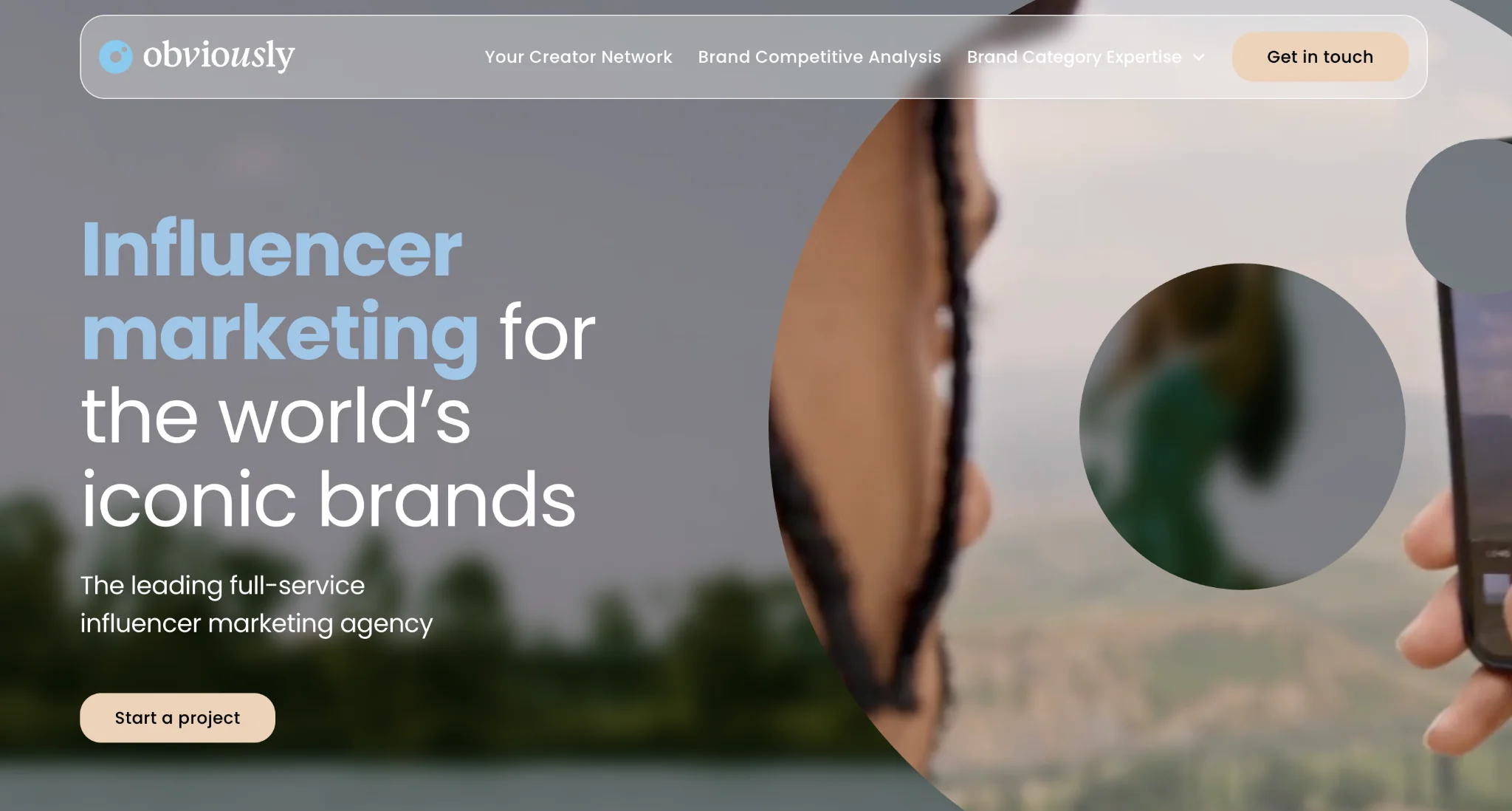
Obviously sits at the agency end of influencer marketing, but with more technology behind it than most. Brands hand over campaigns, from creator identification and content production through seeding, paid amplification, and reporting, and Obviously executes, leaning on proprietary tools and a creator database of 400K+ profiles.
The model centers on always-on ambassador programs rather than one-off posts, with the agency crediting long-term creator relationships for stronger engagement. Its Studio Dashboard delivers real-time reporting and brand-safety checks, while Share of Influence benchmarks a brand against its competitors. The data-ownership stance, first-party data belongs to the brand, is the differentiator it markets hardest. For brands weighing done-for-you agencies against the creator management platforms they would run themselves, Obviously is firmly in the former camp.
As with any agency, the deliverable is managed outcomes, not a self-serve seat. That suits enterprise teams that want scale and expertise, and prices out smaller brands that would rather run things themselves.
Who Should Use Obviously
Obviously is built for brands with real budgets that want influencer marketing run for them at scale. It suits:
- Enterprise brands running always-on ambassador programs, not one-off campaigns.
- Marketing teams that want proprietary reporting and competitive benchmarking built in.
- Brands seeding products to large creator cohorts, since Obviously handles 20 to 2,000 creators.
- Companies that want first-party ownership of their creator and campaign data.
- Retail and commerce brands needing UGC for Amazon and retail storefronts.
- Teams with enterprise budgets comfortable with custom, quote-only pricing.
Key Features
Obviously’s capabilities span an agency’s services and its own software, with ambassador programs and proprietary data at the center.
Creator Identification and Network Building
Obviously builds custom creator networks from a 400K+ database, matching influencers to a brand’s audience rather than handing over a generic list.
Content Production at Scale
The agency produces on-brand creator content at volume, including quick-turn work, giving brands a steady supply of assets across channels.
Always-On Ambassador Programs
Rather than one-off posts, Obviously builds long-term ambassador relationships, which it credits with a meaningful lift in engagement over one-time campaigns.
Product Seeding and Custom Boxes
Seeding runs from 20 to 2,000 creators, with custom product boxes and in-house fulfillment handled end to end.
Paid Amplification
Top-performing creator content can be amplified through paid social, extending organic reach into a performance channel.
Studio Dashboard Reporting
The Studio Dashboard delivers real-time reporting and brand-safety checks, the kind of campaign analytics that turn a program into numbers leadership can read.
Share of Influence Competitive Analysis
Share of Influence benchmarks a brand against competitors, showing where rivals are winning creator attention and where there is room to move.
First-Party Data Ownership
Unusually for an agency, the first-party data generated during campaigns belongs to the brand, so the creator relationships and analytics outlast the engagement.
Obviously Pricing
Obviously does not publish pricing. It is quote-only, demo-led, and built for enterprise budgets, so you cannot cost it from public information alone.
Quote-Only, No Public Tiers
There are no published plans, ranges, or seat prices. Every engagement is scoped and quoted, and there is no self-serve option to sidestep the sales conversation.
What Determines Cost
Cost scales with the features, data, and support you need, the way agency-rooted platforms price. Seeding volume (20 to 2,000 creators), content output, paid amplification, and the level of strategic support all move the number. There is no entry tier and no evidence of a free plan.
What You’re Paying For
You are paying for a team plus proprietary tooling: strategists, campaign managers, and the Studio Dashboard, along with the sourcing and outreach they run for you. Much of that outreach is work an in-house automated outreach tool would handle directly, so the premium reflects the managed service and the technology layered on top.
Obviously Reviews
Obviously rates 4.8/5.0 on FeaturedCustomers across more than 1,200 ratings, and it earned Top Performer status in the Fall 2025 Influencer Marketing Platforms category. Client testimonials consistently praise the strategic advice, execution quality, and creator selection. As with most agencies, the caveat is that this feedback skews toward enterprise clients who fit the model, so read it as strong within that segment rather than universal.
- 4.8/5.0 (FeaturedCustomers, 1,228 ratings)
Integrations
Obviously is an agency with its own software, not a platform you plug into your stack, so integration means the surfaces its team and tools work across:
- Social platforms: Instagram, TikTok, and YouTube, with reach across all major networks.
- Commerce: UGC produced for Amazon and retail storefronts.
- Paid media: creator content amplified through paid social.
- Reporting: the Studio Dashboard consolidates campaign data and brand-safety checks.
- Data handover: first-party data passed to the brand, reflecting its ownership stance.
There is no public integrations marketplace or open API, because Obviously delivers a managed service backed by proprietary tools rather than software you connect to.
Pros of Obviously
Enterprise-Grade Execution at Scale
With 150,000+ collaborations and blue-chip clients, Obviously runs large, coordinated programs that would overwhelm a small in-house team, and it does the operational heavy lifting.
Proprietary Tech Most Agencies Lack
The Studio Dashboard and Share of Influence give Obviously reporting and competitive intelligence that pure-service agencies cannot match, closing part of the gap with software.
You Own the Data
First-party data belonging to the brand is rare in agency relationships, and it means the creator insights and analytics survive after the engagement ends.
Cons of Obviously
Enterprise-Only, Quote-Only Pricing
There is no public pricing, no entry tier, and no free plan. Obviously is built for enterprise budgets, and you cannot estimate the cost without a sales call. For a smaller brand, that opacity alone is a reason to look elsewhere.
No Self-Serve Control
Everything runs through the agency, so brands that want to make day-to-day campaign decisions themselves give up that control the moment they sign.
Not Built for Small or Budget-Conscious Brands
The model assumes real budgets and always-on programs. A brand testing influencer marketing with a modest spend is not the customer Obviously is built to serve.
Limited Transparency Before You Commit
With no public pricing and a demo-led sales process, brands have little to evaluate upfront and must invest time in conversations before they can even compare cost.


Is Obviously Worth It?
Obviously is worth it for enterprise brands that want scaled, always-on influencer programs run by a capable team, with proprietary reporting and, unusually, ownership of their own data. For everyone else, the quote-only pricing and hands-off model are the sticking points: smaller brands and teams that want direct control will pay for more agency than they need. The technology and execution are genuine; the barrier is budget and transparency.
Brands that want more control, clearer pricing, or a lighter footprint should compare these five:
- Influencer Hero: an all-in-one influencer marketing platform that runs discovery, outreach, and reporting in-house across eight social networks, with fake-follower detection and a creator CRM, on transparent public pricing rather than an enterprise quote.
- Afluencer: a marketplace where creators apply to your campaigns, with AI matching creators to campaigns, a fit when creator supply is the gap rather than a full agency.
- NeoReach: enterprise influencer search and campaign management with deep analytics, for brands that want data-heavy programs run in-house.
- Skeepers: a UGC and influencer platform strong on product seeding and authentic customer content at scale.
- HypeAuditor: influencer discovery and audience-quality analytics, built for teams that want to vet creators rigorously before spending.
Final Thoughts
Obviously does something most agencies do not: it pairs real execution with proprietary tooling and lets the brand keep the data. For an enterprise team that wants scale without building an in-house function, that combination is compelling. The friction is the one every quote-only agency carries, you cannot see the cost until you are in a sales conversation, and you hand over day-to-day control.
Before committing, weigh the Obviously alternatives that publish their pricing and hand you the controls, and decide whether owning the process, not just the data, matters more to your team.

.png)


.jpg)