

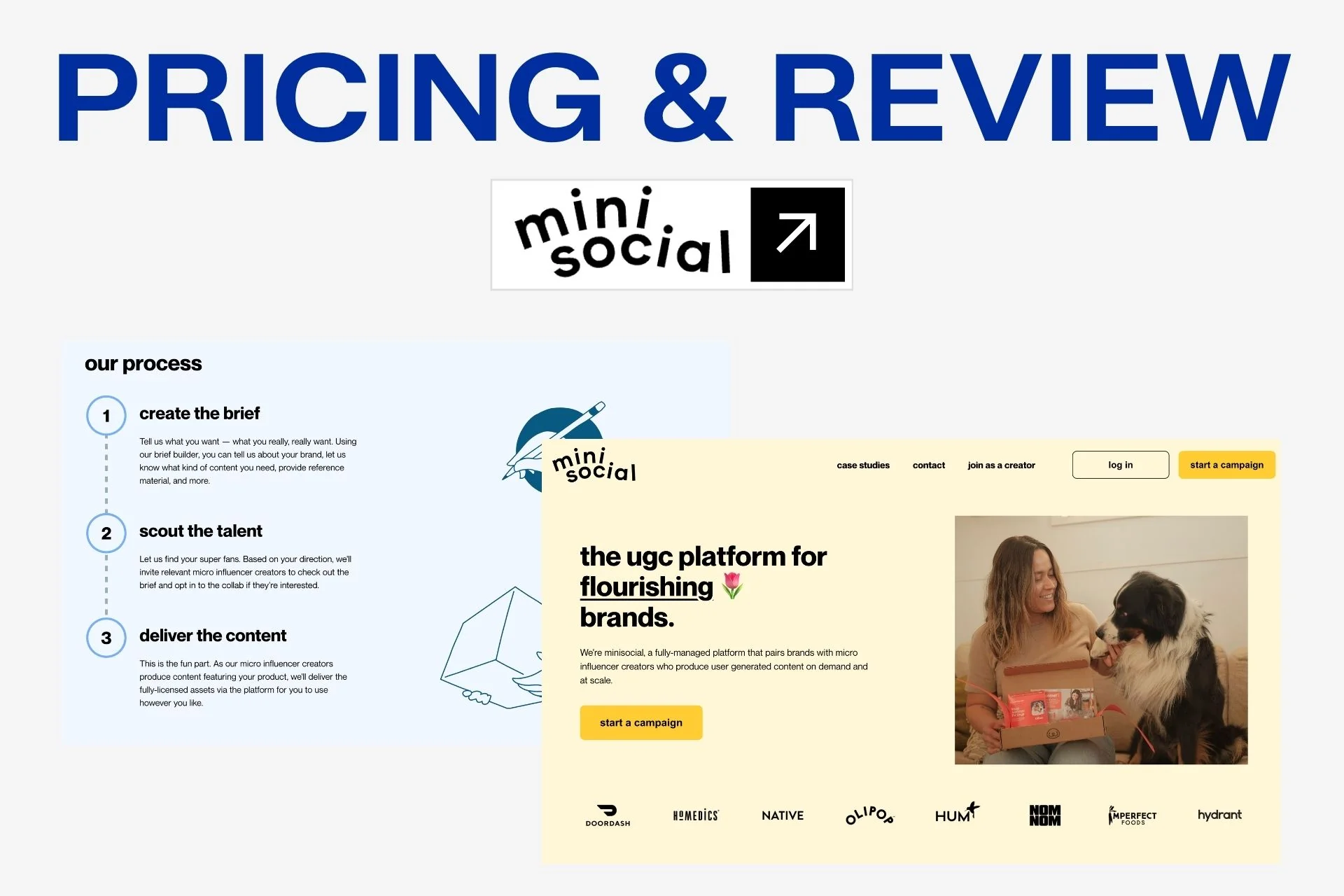
Minisocial Pricing and Review: Features, Pros, Cons & Costs
Minisocial is a fully managed platform that pairs brands with micro-influencer creators to produce user-generated content on demand. What sets it apart from a pure UGC shop is that the same creators also post to their own audiences, so a brand gets licensed content it owns and a dose of organic reach from the same campaign. It is built for DTC brands that want authentic content and social proof without running the program themselves.
On pricing, Minisocial is refreshingly clear for a managed service. Campaigns are project-based with no long-term contracts, starting at a $3,000 minimum that covers 10 creators and includes all creator compensation, then scaling with the number of creators you activate. So the cost is a flat, per-campaign figure rather than a subscription or an opaque quote.
This review covers what Minisocial actually does, how its project pricing works and where the real cost sits, where the managed UGC-plus-distribution model is a genuine strength, and the honest limitations a brand should weigh.
Minisocial Overview
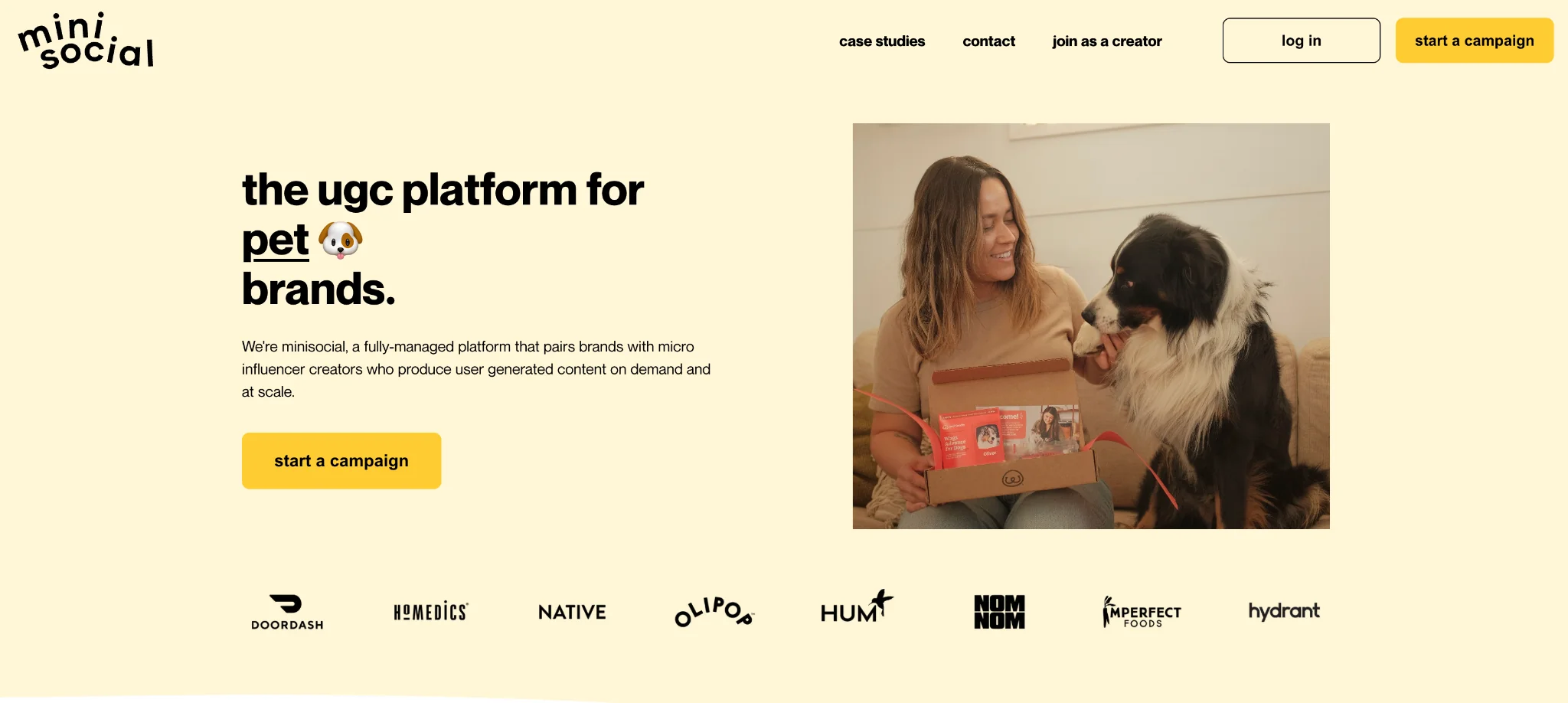
Minisocial runs a simple, managed loop. A brand submits a creative brief, Minisocial identifies relevant micro-influencer creators, those creators produce content and post it to their own Instagram and TikTok audiences, and the finished assets are delivered back to the brand through the platform. The brand ends up with both organic reach and a library of content it can reuse.
The licensing is the headline. The mini license grants full, unlimited usage rights across organic social, paid ads, websites and print, with no expiration and no model-release headaches. That turns each campaign into owned content rather than a rental with a usage clock.
It is a done-for-you service, not a self-serve tool. Brands that want to run and own creator relationships themselves will find a dedicated influencer CRM a different kind of tool; Minisocial is for brands that want UGC and reach handled for them at a fixed price.
Who Should Use Minisocial
Minisocial fits DTC brands that want managed UGC with reach. It suits:
- DTC and ecommerce brands, wanting authentic content and social proof to lift ad performance.
- Teams that want a hands-off service, rather than sourcing and briefing creators themselves.
- Brands that need owned content, with full, perpetual licensing to run anywhere.
- Marketers wanting UGC plus organic reach, since creators also post to their own audiences.
- Instagram and TikTok programs, the platform’s two channels.
- Brands with a real per-campaign budget, given the $3,000 minimum.
Key Features
Minisocial’s feature set is built around managed micro-influencer UGC with owned licensing and organic reach.
Managed Micro-Influencer UGC
Minisocial handles the whole campaign, pairing brands with vetted micro-influencer creators to produce content at scale, so brands set the brief rather than doing the sourcing.
Full Perpetual Licensing
The mini license grants unlimited usage rights across organic, paid, web and print, with no expiration and no model-release concerns, so campaign content becomes an owned asset.
Creative Brief Process
Brands submit a creative brief and Minisocial matches creators to it, keeping the process simple and consistent across campaigns.
Micro-Influencer Creator Network
The focus on micro-influencers and everyday creators, rather than macro names, is deliberate: many small, credible voices tend to feel more authentic and convert better for DTC.
Organic Social Distribution
Creators share content to their own Instagram and TikTok audiences, so brands get organic reach alongside the licensed assets, not just content to run themselves.
Content Delivery via Platform
Finished assets are delivered through the Minisocial platform, keeping content, rights and campaign details organized in one place.
Analytics and Transparency
Minisocial provides campaign analytics and transparency on performance.
DTC and Ecommerce Focus
The platform is tuned for DTC and ecommerce use cases, aimed at boosting social proof, ad creative and community rather than broad brand awareness.
Minisocial Pricing
Minisocial uses clear, project-based pricing with no long-term contracts, so the points below describe how the cost works.
Project-Based, $3,000 Minimum
- Campaigns start at a $3,000 minimum, which covers 10 creators.
- There are no long-term contracts; you pay per campaign.
- Pricing scales up as you activate more creators.
What Is Included
- All creator compensation is included in the campaign price, so there is no separate creator spend to manage.
- Full perpetual licensing of the content is included, not an add-on.
- Both the created assets and the creators’ organic posts are part of the deal.
The Real Cost: Per-Creator Math
- At the $3,000 minimum for 10 creators, that is about $300 per creator for both a licensed content asset and an organic post to their audience.
- Judge the program on the blended cost of content plus reach across the whole batch, not the price of any single post.
- The flat, all-in figure makes budgeting simple, but the $3,000 floor sets a real minimum commitment.
Minisocial Reviews
Minisocial’s independent review picture is thin, so lean on its brand usage more than a star rating.
- Little to no verified review volume on the major software review sites, with no reliable aggregate score to cite.
- The strongest public signal is adoption by well over a hundred DTC brands, plus case studies on content and ad performance.
Broad brand adoption is a real signal, but it is not a substitute for independent buyer reviews, which are sparse for Minisocial. Treat the case studies as a starting point and ask for references from DTC brands that ran comparable campaigns before committing the $3,000 minimum.
Integrations
Minisocial’s connections center on content delivery and distribution rather than a broad software directory.
- Instagram and TikTok: creator sourcing and organic distribution.
- Content licensing: full perpetual usage rights managed within the platform.
- Asset delivery: finished content delivered through the Minisocial platform.
- Analytics: campaign performance and transparency reporting.
Pros of Minisocial
UGC Plus Organic Reach
Unlike a pure UGC shop, Minisocial delivers both owned content and organic posts to creators’ audiences, so a single campaign produces assets and reach at once.
Full Perpetual Licensing
Unlimited, non-expiring usage rights across organic, paid, web and print, with no model-release worries, mean the content is genuinely owned rather than rented for a window.
Managed and Transparently Priced
A fully managed service with clear, all-in project pricing, about $300 per creator including compensation, is unusually transparent for a done-for-you offering.
Cons of Minisocial
High Per-Campaign Minimum
The biggest hesitation. The $3,000 minimum is a real floor, so small brands or those wanting to test with a handful of creators may find the entry commitment steep compared with pay-per-asset tools.
Instagram and TikTok Only
Minisocial focuses on Instagram and TikTok, so brands wanting YouTube, Pinterest or broader multi-channel creator content will need another tool alongside it.
Managed, Not Self-Serve
Because Minisocial runs the campaign, brands that want hands-on control over discovery, creator selection and ongoing relationships will find the managed model limiting.
Thin Independent Reviews
There is little verified buyer feedback on the major review sites, so a brand cannot easily vet Minisocial through independent scores and has to rely on references and case studies.


Is Minisocial Worth It?
Minisocial is worth it for a DTC brand that wants authentic micro-influencer content and a dose of organic reach handled for it, with full ownership of the assets and clear per-campaign pricing. For that brand, the UGC-plus-distribution model and perpetual licensing are a genuine draw. The reservations are the $3,000 minimum, the Instagram-and-TikTok-only coverage, the managed rather than self-serve model, and the thin independent reviews, so brands wanting broader channels or hands-on control should look wider. If those give you pause, compare these five alternatives:
- Influencer Hero is an all-in-one influencer marketing platform with discovery across eight social platforms, fake-follower detection, lookalike search and brand-follower identification, plus automated outreach, a full influencer CRM, gifting, affiliate management and UGC collection with AI UGC search, so brands get content and full influencer execution in one place.
- Afluencer is a marketplace where creators apply to your campaign listings, useful when creator supply, not managed content, is the bottleneck.
- Insense pairs UGC production with creator ads, letting brands source content and run it as paid social.
- Trend.io is a UGC marketplace connecting brands with vetted creators for owned photo and video content.
- Social Cat connects small and mid-size brands with micro-influencers for gifting and paid collaborations.
Final Thoughts
Minisocial is a focused solution for DTC brands that want managed micro-influencer campaigns combining UGC, organic reach, and full content ownership. Its transparent project-based pricing and built-in licensing make it an attractive option, while the main considerations are the $3,000 minimum spend, support for only Instagram and TikTok, its fully managed approach, and the limited number of independent reviews. If your priority is a hands-off way to generate authentic creator content and organic exposure at a fixed cost, Minisocial is well worth considering.
.png)


.jpg)