


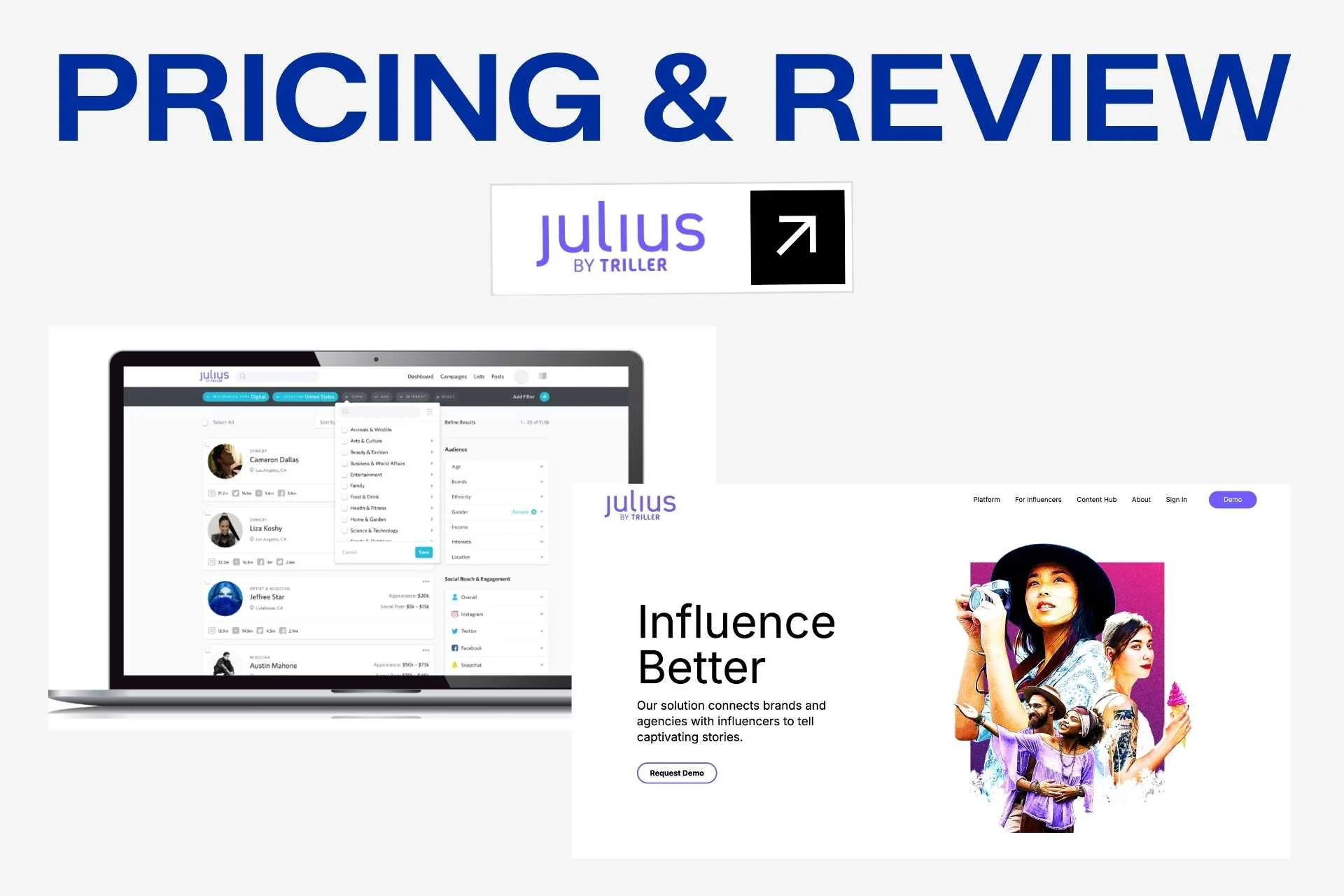
Julius Pricing and Review: Features, Pros, Cons & Costs
Julius is an enterprise influencer marketing platform built around a large, manually vetted creator database and a deep set of search filters. It is aimed at big brands and agencies that run structured campaigns and need vetting, compliance and reporting baked in rather than bolted on.
The catch is how you buy it. Julius does not publish pricing, gates every plan behind a demo, and sits at an enterprise price point that reviewers and directories put at a starting figure of around $24,000 per year. This review breaks down what Julius actually costs, what it does well, where it falls short, and which Julius alternatives make more sense for a growing D2C brand.
Julius Overview

Julius is a cloud-based influencer marketing platform that helps brands and agencies discover creators, manage campaigns, and report on results. Its core asset is a database of more than one million influencers, each manually reviewed by a human before being listed, which is the pitch it leans on hardest against algorithm-only databases.
The platform is built for discovery depth. It offers over 50 customizable search filters spanning influencer attributes and audience demographics, a side-by-side comparison tool for up to five creators, and social listening to understand a creator’s past brand relationships and posting history before you engage them. Coverage spans the major networks, including Instagram, TikTok, YouTube, Facebook, X (Twitter), Pinterest and Twitch.
Once creators are shortlisted, Julius handles activation, messaging, deliverable tracking, FTC compliance review with automatic post detection, and a contract repository. Reporting rolls up to campaign and post level with exports to CSV, PDF and PowerPoint. It is a full-stack enterprise tool, priced and sold like one.
Who Should Use Julius
Julius fits large, well-resourced teams that run influencer marketing as a structured, compliance-heavy program rather than a lean growth channel.
- Enterprise brands with a dedicated influencer team and an annual software budget in the five figures.
- Agencies managing multiple clients that need segmented workflows, white-label options and shared reporting.
- Regulated categories such as finance, health and alcohol, where FTC compliance review and brand-safety vetting are non-negotiable.
- Teams that prioritise vetting and want a human-reviewed database rather than raw scraped profiles.
- Global marketers running campaigns across several markets and social platforms at once.
- Data-heavy programs that live in spreadsheets and decks and need robust CSV, PDF and PowerPoint exports.
Key Features
Human-Vetted Influencer Database
Julius lists over one million creators, each manually reviewed before going live. For brands burned by fake-follower-heavy databases, the human vetting layer is the headline reason to consider it, since it reduces the amount of screening the team has to do after a search.
50+ Search Filters
Discovery runs on more than 50 customizable filters covering creator attributes, audience demographics, interests and location. The depth is the point: teams can narrow to a specific audience profile rather than sorting a long list by hand.
Influencer Comparison Tool
Up to five creator profiles can be compared side by side on metrics and audience data. That makes the final shortlist decision a direct comparison rather than a series of separate profile reviews.
Brand Safety and Social Listening
Julius surfaces a creator’s historical posts and past brand relationships through social listening, so teams can screen for alignment and risk before reaching out. This is where the platform earns its enterprise positioning, particularly for regulated categories.
Campaign Activation and Messaging
Brands can activate and manage creators inside a single workspace, organise them into curated lists, and run influencer outreach and communication without leaving the platform. Custom tags, notes and activity tracking keep larger teams aligned.
FTC Compliance Review
Automatic post detection flags creator content so teams can review deliverables and check FTC compliance. For regulated brands, having compliance checks inside the workflow rather than as a manual afterthought is a genuine time saver.
Contract Repository
Agreements are stored centrally so contracts, terms and deliverables live alongside the campaign rather than scattered across inboxes. It is a small feature that matters at scale, when a team is running dozens of creators at once.
Reporting and Exports
Reporting covers campaign-level and post-level performance with benchmarks to guide future campaigns, plus bulk exports to CSV, PDF and PowerPoint. The export flexibility is built for teams that report up to stakeholders in slides and spreadsheets.
Julius Pricing
Julius does not publish pricing. Every plan is quote-based and gated behind a demo, and cost scales with the number of users and the modules a brand needs. The one consistent figure across software directories is the entry point, so plan for an enterprise commitment rather than a monthly subscription you can start and stop.
Custom Annual Subscription
- Quote-based, demo required before any pricing is shared
- Reported starting price of around $24,000 per year (GetApp and Software Advice)
- Billed annually, with cost scaling by number of users and modules
- Free trial reportedly available on request
- No public monthly tier and no self-serve signup
What Julius Actually Costs
- The headline is the annual minimum: budget from roughly $24,000 per year before add-ons and extra seats.
- There is no revenue share or per-collaboration fee, so the subscription is the cost, which is easier to model than percentage-based tools once you know your number.
- Because pricing is quote-based, the real figure depends on your negotiation and seat count, so get the full quote in writing before comparing it against alternatives.
Julius Reviews
- 4.5/5.0 (GetApp, 107 reviews)
Integrations
Julius keeps a relatively narrow integration surface focused on measurement partners and the social platforms themselves rather than a broad martech stack.
- Instagram – API connection for creator discovery, profile data and post-level performance tracking.
- YouTube – Discovery and reporting on video creators and channel metrics.
- X (Twitter) – Social data for discovery and brand-safety listening.
- CreatorIQ – Listed integration connecting Julius data into a wider enterprise measurement stack.
- Tribe Dynamics – Earned-media value and creator measurement data for teams already using it.
Julius does not publish a broad integration directory, so if you need creator activity flowing into your own eCommerce, email or affiliate systems, expect that to be limited. Brands that want creator data inside their own stack often pair discovery with dedicated influencer CRM tools.
Pros of Julius
Human-Vetted, High-Quality Database
Every creator is manually reviewed before listing, which cuts down the fake-follower screening most databases push onto the user. For teams that value data quality over raw database size, this is the strongest reason to buy Julius.
Deep Discovery and Vetting
Over 50 filters, a five-way comparison tool, and social listening for brand safety make Julius one of the more thorough discovery and vetting environments available. Regulated brands in particular get real value from compliance and safety checks living inside the workflow.
Enterprise-Grade Reporting and Compliance
Campaign and post-level reporting, benchmarks, FTC compliance detection and multi-format exports are built for teams that answer to stakeholders. It is a platform designed to stand up to enterprise reporting demands rather than a lightweight dashboard.
Cons of Julius
Enterprise Pricing With a High Floor
A reported starting point near $24,000 per year puts Julius out of reach for most small and mid-size D2C brands. The cost is the first thing to weigh, because the platform is priced for enterprise budgets and the entry figure is the floor, not the ceiling.
Quote-Only, Demo-Gated Pricing
There is no public pricing and no self-serve signup, so evaluating Julius means booking a sales call before you can even compare it on cost. That friction slows down buyers who just want to size the tool against alternatives quickly.
Overbuilt for Smaller Programs
The vetting, compliance and reporting depth that justifies the price is more than a lean team needs. Smaller brands often end up paying enterprise rates for capacity and features they will not use.
Thin Integration and eCommerce Surface
Julius focuses on discovery and measurement rather than connecting to your store, email or affiliate tools. There is no broad integration directory, so creator activity does not automatically flow into eCommerce or affiliate tracking, which matters for D2C brands tying influencers to revenue.
\Quote Text: The vetting and reporting depth is real, but so is the price floor. For most D2C brands the question is not whether Julius is good, it is whether you will use enough of a $24,000-a-year platform to justify it over a tool that costs a fraction of that.


Is Julius Worth It?
For enterprise brands and agencies, Julius is a credible choice. A human-vetted database of over a million creators, 50-plus discovery filters, brand-safety social listening and FTC compliance review make it well suited to large, regulated, high-volume programs. A 4.5/5.0 rating across 107 GetApp reviews backs up that the platform delivers for the teams it is built for.
The problem is fit and cost for everyone else. A reported floor near $24,000 per year, quote-only pricing behind a demo, and a feature set that is overbuilt for smaller programs make Julius hard to justify for most D2C brands. Add a thin integration surface that does not tie creator activity back to store revenue, and the value equation only works at real scale.
If Julius is more platform, and more cost, than your program needs, these alternatives are worth reviewing:
- Influencer Hero – Best for D2C brands that want enterprise-grade discovery, fake-follower detection, lookalike search, automated outreach, an influencer CRM, affiliate tracking and campaign reporting without an enterprise price tag. Pricing is publicly listed at $649/month for Standard, $1,049/month for Pro and $2,490/month for Business, with no demo required to see it and no revenue share.
- Afluencer – A good fit for smaller brands that want creator supply rather than a heavy discovery suite. It runs as a marketplace where creators apply to campaign listings, using AI influencer matching, starting at $49/month.
- CreatorIQ – Another enterprise option, strong on advanced measurement, brand safety and governance across multiple markets, for teams that would otherwise shortlist Julius.
- Upfluence – Strong for eCommerce brands that want to identify existing customers as creators and tie influencer activity directly to store revenue, which is exactly where Julius is thin.
- Klear – Worth reviewing for brands that want solid discovery and audience analytics at a more accessible mid-market position than Julius.
Final Thoughts
Julius is a genuinely capable enterprise platform: a human-vetted database, deep discovery filters, brand-safety vetting and compliance-ready reporting that suit large brands and agencies running structured programs. The barrier is not quality, it is access and economics, since the quote-only model and a reported floor near $24,000 per year price out the growing D2C brands that make up most of the market. If that describes you, weigh the best Julius alternatives before committing, because you can get most of the discovery and reporting you need at a fraction of the cost.

.png)


.jpg)