

Influencity Pricing and Review: Features, Pros, Cons & Costs
DTC brands need the right software to manage creator partnerships, track performance, and scale campaigns efficiently. Influencity is an influencer marketing software platform that helps brands with creator discovery, outreach, campaign management, analytics, and reporting.
In this guide, we’ll break down Influencity pricing, features, pros, cons, and reviews to help you decide whether it fits your team.
Influencity Overview
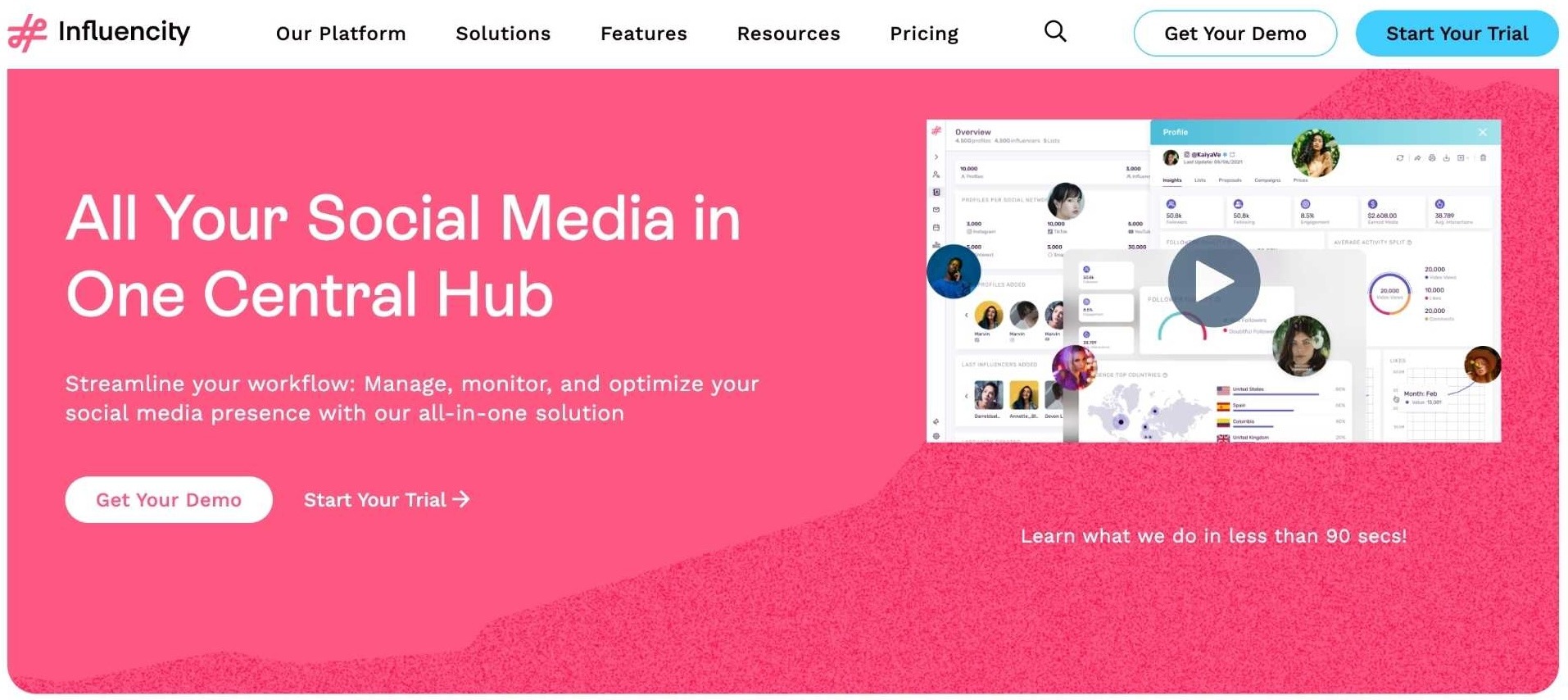
Influencity is an AI-powered influencer marketing platform for managing influencer discovery, CRM, outreach, campaign tracking, reporting, payments, social listening, and social media management in one place. Its platform includes 60+ features and a creator database of 170M+ profiles, with filters for audience, engagement, niche, and social platform fit.
Who Should Use Influencity?
Influencity is best for D2C brands, ecommerce teams, agencies, and growing marketing teams that want to run influencer campaigns without relying on spreadsheets. It works especially well for brands that need to discover creators across Instagram, TikTok, YouTube, and X/Twitter analytics, organize them into segmented lists, send outreach, manage campaign workflows, and export performance reports.
Key Features
Influencer Discovery
Search across a large public influencer database using filters such as platform, follower range, engagement, audience demographics, location, keywords, hashtags, and niche. Influencity also supports lookalike discovery and profile analysis, making it useful for brands trying to find creators similar to their best-performing partners.
Influencer Profile Analysis
Influencity provides creator-level insights such as engagement rate, follower quality, audience demographics, audience reachability, brand affinity, notable followers, recent content, and sponsored content history. This helps brands screen creators before spending budget or product inventory on collaborations.
Influencer CRM / IRM
Brands can unlock creator profiles, organize influencers into segmentable lists, and group creators by campaign, country, market, product line, or audience type. This is useful for teams running multiple campaigns at the same time or managing long-term creator relationships.
Outreach Tools
Influencity lets teams create outreach templates, send emails from the platform, and track email performance such as opens, clicks, bounces, unsubscribes, and top-performing links. Replies can go back to the brand’s inbox, which keeps creator communication tied to the team’s existing email workflow.
Campaign Management
The campaign board works similarly to a Kanban or Trello-style workflow, where teams can add creators, deliverables, deadlines, tasks, budget data, and approval statuses. This helps teams move from creator selection to deliverable tracking in a more structured way.
Campaign Reporting
Campaign reports can be built manually by adding post URLs, or automatically through Influencity’s tracker add-on. Reports include campaign KPIs, interaction summaries, costs, top creators, top posts, and exportable performance data.
Automatic Tracking Add-On
The tracker can automatically collect posts, reels, videos, and stories that match predefined campaign rules such as hashtags, mentions, keywords, and date ranges. This saves time for teams that do not want to manually collect screenshots or URLs after every campaign.
Shopify Gifting & Affiliate Tracking
Influencity integrates with Shopify so ecommerce brands can manage gifting workflows, assign discount codes, monitor code status, and track usage and sales performance.
Influencer Payments
Influencity supports influencer payments from the platform, with payment pools and creator payout management available in supported regions.
Social Listening & Social Media Tools
Influencity also includes broader social tools, including brand monitoring, competitor analysis, campaign monitoring, market research, social inbox, analytics, content planning, link-in-bio, and social ads features.
Influencity Pricing
- Professional Plan: $318/month or $3,816/year
- Business Plan: $798/month or $9,576/year
- Enterprise Plan: Custom pricing
- Auto-Tracker Add-On: $660/year (for 50 influencers)
Reviews
4.5/5.0 (G2)
Integrations
- Shopify: Connect your ecommerce store to manage product gifting, discount codes, creator benefits, and sales attribution.
- Office 365 / Outlook: Connect your inbox to send and manage creator outreach from Influencity.
- IMAP Email Providers: Connect compatible email accounts for influencer communication workflows.
- Social Platform Data — Instagram, TikTok, YouTube: Analyze creator profiles and track campaign content across major influencer channels.
- X/Twitter Analytics: Use X/Twitter profile analysis where available, mainly for analytics rather than full outreach workflows.
Pros of Influencity
Strong public-data discovery
Influencity does not rely only on opted-in creators, which gives brands broader discovery coverage and makes it easier to find niche creators in specific countries, categories, and audience segments.
Detailed CRM and segmentation
The IRM is one of its strongest areas, allowing teams to build creator lists by region, campaign, product, or market and keep influencer data organized in one place.
Flexible reporting with manual and automated options
Teams can either add post URLs manually or pay for automatic tracking, which makes Influencity useful for both smaller campaigns and more structured recurring programs.
Cons of Influencity
Negotiation still happens outside the platform
Influencity can help with outreach, but creator negotiation, deliverable discussion, and follow-up communication may still require email or external workflows.
Automatic tracking costs extra
Teams that want hands-off story, reel, hashtag, and mention tracking need the paid tracker add-on, which increases the real campaign cost.
Limited ecommerce integrations
Shopify is the main ecommerce integration, so brands using WooCommerce, BigCommerce, Magento, or custom storefronts may need workarounds.
Not a marketplace or managed service
Influencity provides software, not creator hiring or campaign management services, so brands still need internal resources to shortlist creators, negotiate, brief, and manage relationships. Its pricing page explicitly states it is not a marketplace or agency.


Is Influencity Worth It?
Yes—Influencity is a strong option for brands that want an affordable, end-to-end influencer marketing platform without paying enterprise-level prices. Its biggest strengths are its large creator database, robust influencer CRM, detailed audience analytics, and campaign management capabilities. Unlike platforms that rely primarily on opt-in creators, Influencity uses public social media data, giving brands access to a much broader pool of influencers for discovery and analysis.
That said, Influencity is not without limitations. Some advanced capabilities, such as automated campaign tracking, require additional fees, and the platform's ecommerce integrations are relatively limited compared to some competitors. Teams looking for built-in content licensing, creator whitelisting, advanced affiliate management, or broader ecommerce integrations may find the platform less comprehensive than higher-end alternatives.
Overall, Influencity delivers a strong balance of functionality, usability, and value, making it one of the better mid-market influencer marketing platforms available today. However, depending on your priorities, there are several alternatives that may be a better fit.
Alternatives to Influencity
- Influencer Hero – Best for ecommerce brands that need advanced CRM automation, AI-powered influencer outreach, affiliate management, gifting workflows, UGC collection, and support for multiple ecommerce platforms beyond Shopify.
- GRIN – Best for established DTC and ecommerce brands that require deep ecommerce integrations, creator payments, affiliate tracking, and UGC management at scale.
- Afluencer – Best for DTC brands looking for an affordable creator marketplace to recruit influencers and launch collaborations quickly.
- HypeAuditor – Best for teams that prioritize influencer vetting, audience quality analysis, fraud detection, and brand safety capabilities.
- Traackr – Best for enterprise brands focused on influencer ROI measurement, benchmarking, budget optimization, and performance analytics.
Final Thoughts
Influencity is a well-rounded influencer marketing platform that combines creator discovery, outreach, campaign management, analytics, and CRM tools into a single solution. Its large influencer database, detailed audience insights, and strong campaign management capabilities make it a compelling option for brands looking to scale their influencer marketing efforts without investing in a costly enterprise platform. However, businesses that require more advanced ecommerce integrations, content licensing features, affiliate management tools, or deeper automation may find better alternatives elsewhere. If Influencity doesn't fully align with your needs, we've also compiled a guide to the best Influencity Alternatives to help you find the right influencer marketing platform for your business.

.png)


.jpg)