

10 Best Influencity Alternatives for Influencer Marketing
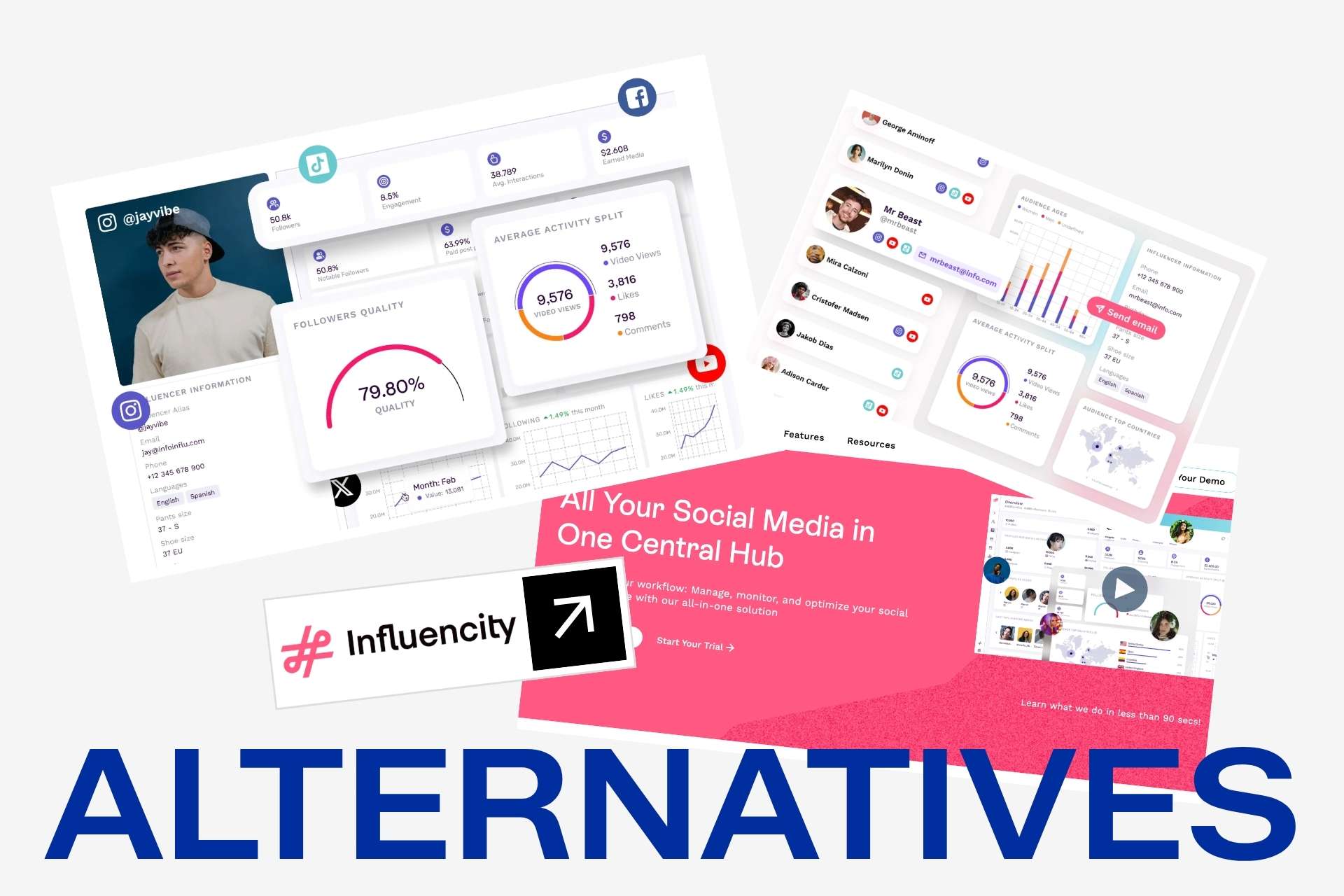
Managing influencer marketing at scale has become a core growth lever for D2C brands, making influencer marketing software essential for handling creator discovery, outreach, campaign workflows, and performance tracking in one place. Influencity is one of the more well-known platforms in this space, offering strong public-profile discovery and a solid all-in-one workflow, but it also comes with limitations around integrations, occasional performance issues, and a heavier reliance on email-based communication. As a result, many teams start exploring Influencity alternatives to find better eCommerce integrations, more advanced analytics, or tools better suited to UGC and paid social strategies. Whether you're actively looking to switch or evaluating influencer marketing software for the first time, understanding how these platforms compare is key to making the right decision.
In this article, we’ll break down the 10 best Influencity alternatives—including GRIN, Upfluence, CreatorIQ, Influencer Hero, NeoReach, Lefty, Insense, Kolsquare, Skeepers, and Creator.co—to help you find the best fit for your brand.
Key Criteria for Evaluating Influencer Marketing Platforms
Core Features
Evaluation of essential influencer marketing capabilities, including influencer discovery, outreach, CRM, campaign management, reporting, and content workflows.
Pricing & Flexibility
Comparison of pricing models, subscription plans, and contract terms to match different budgets and growth stages.
Customer Reviews & Satisfaction
Analysis of user feedback from trusted review platforms, focusing on usability, reliability, customer support, and overall performance.
Pros & Cons
Review of each platform’s strengths and limitations to highlight where it performs well and where it may fall short based on different use cases.
Integrations
Review of the most important integrations (e.g., Shopify and other tech tools), highlighting what each integration enables in one sentence.
Influencity Overview

Influencity is an end-to-end influencer marketing platform designed for brands, agencies, and eCommerce teams to manage the entire influencer lifecycle—from discovery and outreach to campaign execution, tracking, and reporting. The platform stands out for its ability to leverage public social data, enabling access to a vast pool of creators without requiring opt-ins, while also integrating with tools like Shopify to support product seeding and affiliate-driven campaigns.
Key Features
- Influencer Discovery & Database
Access a massive global database of influencer profiles sourced from public data. Advanced filters allow you to search by audience demographics, engagement rate, niche, location, and more, making it easy to find relevant creators at scale. - Influencer CRM (IRM)
Organize influencers into lists, tag profiles, and track relationship history. This allows teams to build long-term partnerships and manage creator pipelines efficiently across campaigns. - Outreach & Email Automation
Send personalized outreach emails at scale, manage conversations, and track replies directly within the platform. Email integrations ensure replies are synced with your existing inbox. - Campaign Management
Manage campaigns using a visual workflow (similar to a Kanban board), where you can track deliverables, deadlines, approvals, and budgets in one place. - Content Tracking & Reporting
Track influencer content performance (posts, stories, reels) and measure metrics like engagement, reach, and impressions. Export reports in multiple formats for internal analysis. - Product Seeding & Affiliate Tracking
Native Shopify integration allows brands to send products, assign discount codes, and track influencer-driven sales and conversions directly within campaigns. - Payments & Campaign Operations
Manage influencer payments and campaign logistics within the same platform, reducing the need for external tools. - Social Hub & Analytics
Includes additional tools for social media management, analytics, and monitoring, helping teams align influencer campaigns with broader social strategies.
Pricing
Influencity offers three main pricing tiers, along with add-ons:
- Professional Plan: $318/month or $3,816/year
- Business Plan: $798/month or $9,576/year
- Enterprise Plan: Custom pricing
- Auto-Tracker Add-On: $660/year (for 50 influencers)
Reviews
4.3 / 5.0 (G2)
Integrations
- Shopify – Manage product gifting, discount codes, and track influencer-driven sales directly within campaigns.
- Gmail – Sync outreach emails and manage conversations without leaving your inbox.
- Outlook (Microsoft 365) – Centralize communication with influencers using your existing email system.
- Instagram – Connect accounts to analyze content performance and manage social activity.
- Facebook Pages – Track and manage social content alongside influencer campaigns.
Pros
- Massive discovery through public data
Unlike opt-in marketplaces, Influencity indexes public profiles, giving brands access to a significantly larger pool of creators. - Strong CRM + campaign workflow combination
The platform blends influencer CRM with campaign management, allowing teams to move from discovery to execution without switching tools. - Built-in Shopify integration for D2C brands
Product seeding, affiliate tracking, and sales attribution are directly embedded, making it especially valuable for eCommerce-focused campaigns.
Common Drawbacks of Influencity
Limited in-platform communication
While outreach is supported, negotiation and follow-ups rely heavily on email rather than a fully native messaging system.
Performance and usability issues at times
Some users report slow loading times, bugs, and occasional friction when navigating large datasets or reports.
Search and filtering inconsistencies
Advanced filters can sometimes return less precise results, requiring additional manual validation when shortlisting creators.
Limited integrations beyond Shopify
Compared to competitors, Influencity offers fewer native integrations with other eCommerce platforms or marketing tools, which can limit flexibility for some teams.
Best Influencity Alternatives
| TOOL | REVIEWS | BEST FOR | TRIAL INFO | PRICING | ||
|---|---|---|---|---|---|---|
1 |

|
⭐ | DTC creator management | Book Demo | Pricing | Website |
2 |
|
⭐ | Influencer discovery | Book Demo | Pricing | Website |
3 |

|
⭐ | Enterprise influencer marketing | Book Demo | Pricing | Website |
4 |

|
⭐ | Influencer CRM & automation | Book Demo | Pricing | Website |
5 |
|
⭐ | Influencer campaigns & data analytics | Book Demo | Pricing | Website |
6 |

|
⭐ | Influencer analytics & discovery | Book Demo | Pricing | Website |
7 |

|
⭐ | UGC creators & paid social ads | Book Demo | Pricing | Website |
8 |

|
⭐ | Data-driven influencer discovery & campaign analytics | Book Demo | Pricing | Website |
9 |

|
⭐ | Influencer gifting & UGC campaigns with micro-influencers | Book Demo | Pricing | Website |
10 |

|
⭐ | Influencer campaigns & creator marketplace | Book Demo | Pricing | Website |
1. GRIN
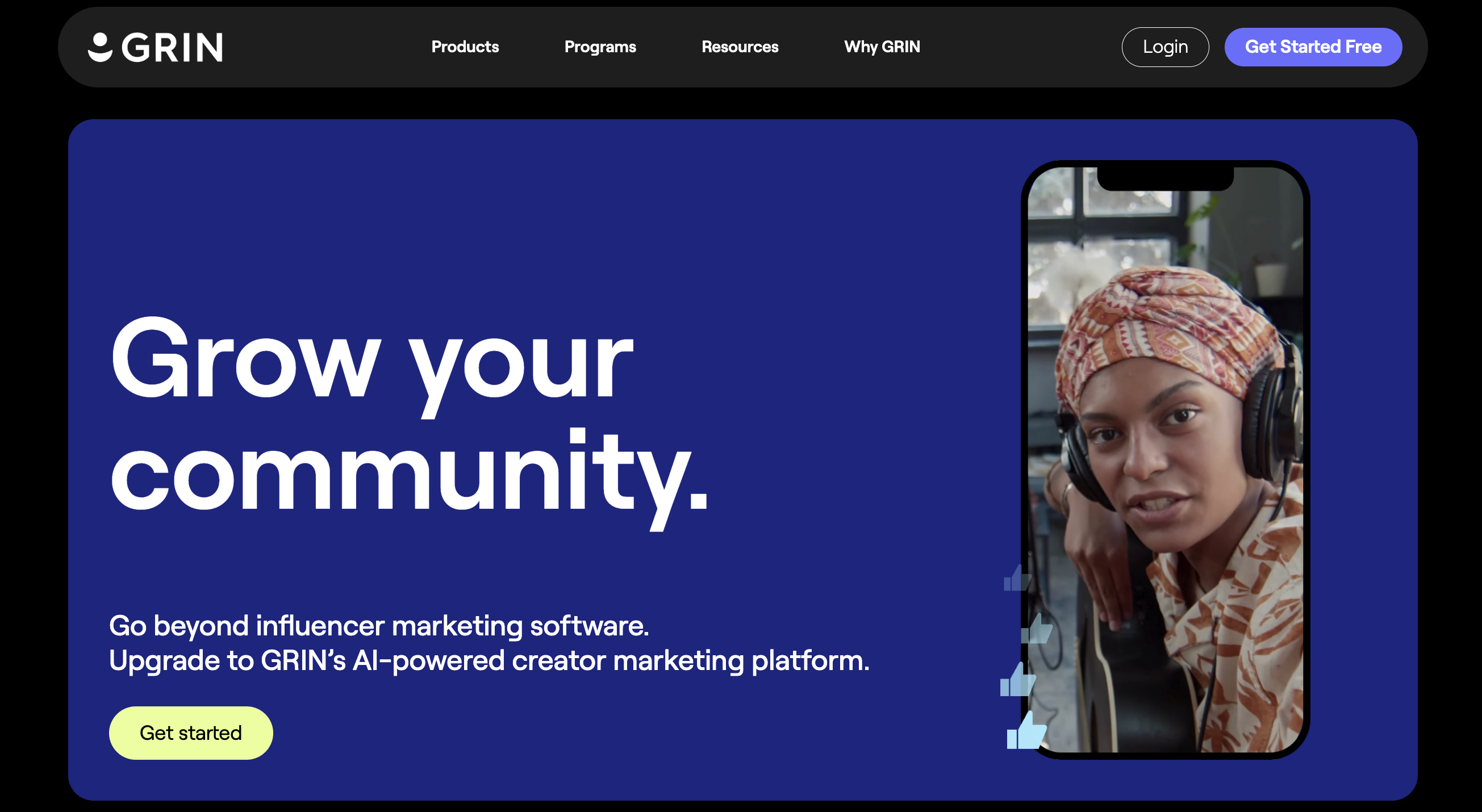
GRIN is an influencer marketing platform built primarily for ecommerce and DTC brands that want to manage creator discovery, outreach, gifting, affiliate tracking, payments, and content collection in one system. It is especially focused on turning creator relationships into repeatable revenue workflows rather than just running one-off campaigns.
Key Features
- Creator discovery and CRM: GRIN’s free trial and core platform include creator search, CRM, campaign management, and social listening, giving brands a central workspace for sourcing and organizing creators.
- Integrated email outreach: The platform includes integrated email so teams can manage creator communication without switching between multiple systems.
- Product gifting workflows: GRIN includes gifting management, making it easier to seed products and keep fulfillment tied to campaign execution.
- Affiliate management and attribution: Higher tiers add advanced affiliate attribution and deep links, which is useful for brands measuring creator-driven sales instead of just engagement.
- Content library and approvals: GRIN’s mid and upper tiers include a central content library and content approval workflows, helping brands manage UGC and repurpose assets across channels.
- Creator payments and tax workflows: Essentials includes automated creator payments and 1099 processing, which is a major operational benefit for US-based brands running larger programs.
- Advanced reporting and API access: Growth and Complete unlock report building, advanced reporting, and API access for brands that need deeper measurement and system connectivity.
Pricing
- Free trial: GRIN publicly advertises a 30-day free trial.
- Annual pricing starts at $25,000/year (approx. $2,050/month), with no discounts for upfront payment. Contracts require a full-year commitment with monthly billing.
Reviews
4.5/5.0 (G2)
Pros
- Commerce-native creator operations: GRIN is unusually strong for brands that need gifting, affiliate links, discount codes, payments, and content management in one workflow rather than spread across separate apps.
- More transparent pricing than many enterprise competitors: Its current public pricing page is much clearer than the custom-quote model used by many established influencer platforms.
- Operational depth for scaling programs: Features like automated creator payments, 1099 processing, advanced affiliate attribution, and API access make it especially useful once programs move beyond simple discovery and outreach.
Cons
- Still expensive as teams scale: GRIN now has lower entry pricing, but the more robust commerce and reporting workflows sit in higher tiers.
- Can feel more operationally heavy than lightweight tools: Its strength is workflow depth, but that can also make setup and ongoing management feel more involved for smaller teams.
- Discovery is no longer its only selling point: GRIN is strongest when brands want full lifecycle management; teams that mainly want large-scale public-profile search may prefer broader discovery-first tools.
Integrations
- Shopify – Connects store data so brands can manage gifting, discount codes, and creator-driven commerce workflows inside GRIN.
- PayPal – Enables creator payouts directly through GRIN, reducing manual payment admin.
- Klaviyo – Helps brands use creator data and email templates in a more connected lifecycle marketing workflow.
- DocuSign – Simplifies creator contract collection and approval inside the campaign process.
- Slack – Sends creator activity and workflow updates into Slack for faster internal coordination.
Influencity vs GRIN
Influencity and GRIN both cover discovery, outreach, CRM, and reporting, but they are built around different priorities. Influencity is broader in public-profile discovery and is generally better for teams that want wide creator search coverage without relying on opt-in ecosystems. GRIN is more commerce-native, with stronger built-in workflows for gifting, affiliate attribution, payments, tax handling, and UGC operations.
The practical difference is that Influencity fits brands that want flexible discovery plus solid end-to-end campaign management, while GRIN is the stronger option for DTC brands whose influencer programs need to plug directly into revenue, fulfillment, and creator payments. GRIN is also more transparent on public pricing today, while Influencity still keeps more of its higher-tier packaging less visible publicly.
2. Upfluence
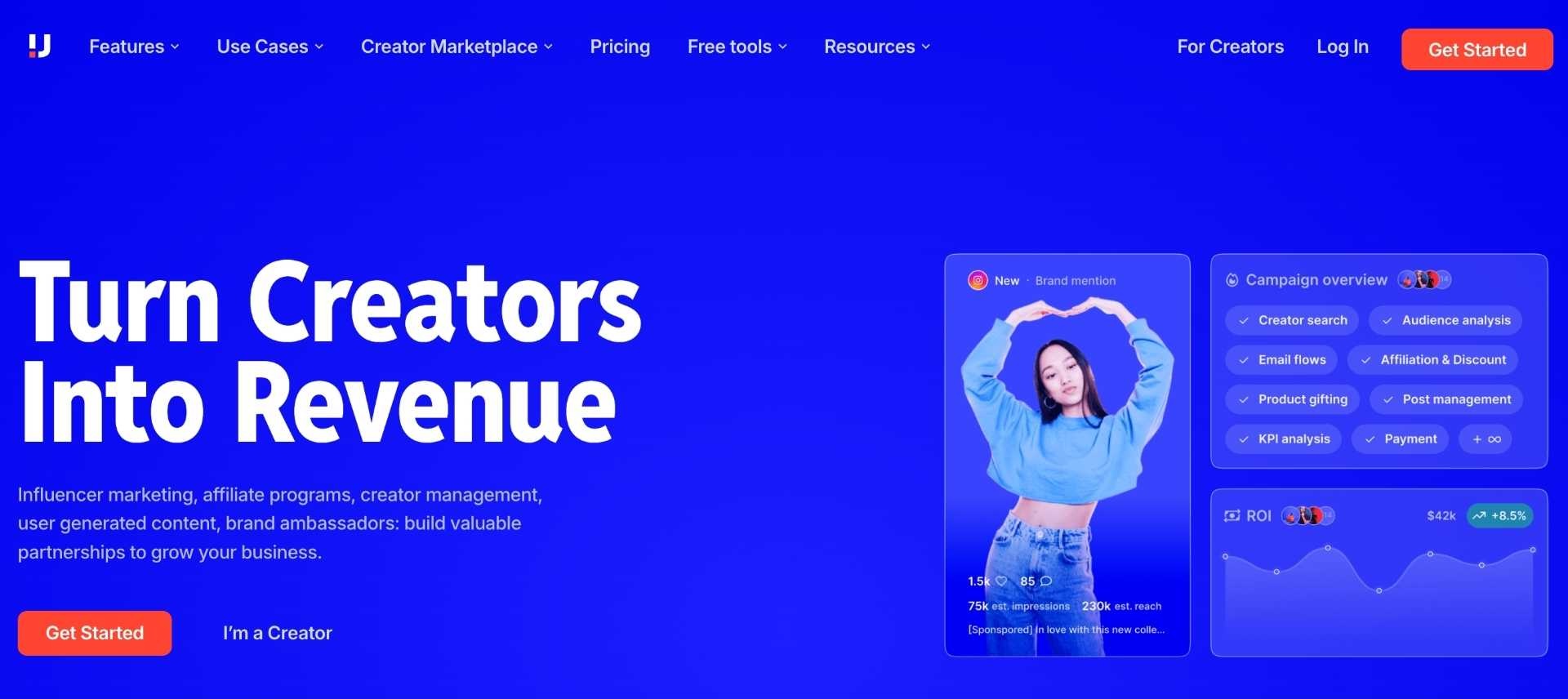
Upfluence is an influencer and affiliate marketing platform built for ecommerce brands that want to connect creator discovery and campaign management directly to store data. Its positioning is especially strong for brands that want to identify influencers from their own customers, run gifting and affiliate workflows, and measure sales impact across channels like Shopify and Amazon.
Key Features
- Creator discovery and relationship management: Upfluence includes creator discovery, lookalikes, relationship management, and mass outreach in its base Search & Contact layer.
- AI mailing support: The platform includes an AI mailing assistant to help teams scale outreach faster.
- Customer-to-creator matching: One of Upfluence’s standout differentiators is its ability to integrate customer data and surface influential customers already buying from the brand.
- Campaign automation: Campaign Manager adds Jaice AI campaign creation, affiliation management, one-click product shipment, creator marketplace access, drip email sequences, and analytics.
- Payments infrastructure: Upfluence offers a payments layer powered by Stripe, including affiliate commission management and creator payment workflows.
- Multi-channel database coverage: Upfluence states that its influencer database covers YouTube, Instagram, TikTok, Twitch, X/Twitter, Pinterest, and blogs.
- Broad eCommerce stack integrations: The integrations page highlights direct connections to Shopify, Amazon Attribution, Adobe Commerce, BigCommerce, WooCommerce, Klaviyo, Stripe, Hootsuite, and Zapier.
Pricing
- Pricing model: Upfluence uses custom pricing rather than a public fixed plan table.
- All plans are custom made. There’s a minimum full year of service you have to commit to with monthly payments. On average plans start around $2,000/month ($24,000 yearly)
Reviews
4.3/5.0 (Capterra)
Pros
- Excellent eCommerce orientation: Upfluence is one of the strongest options for brands that want influencer marketing connected directly to Shopify, Amazon Attribution, and customer data.
- Customer-base influencer identification: The ability to discover influential customers and activate them into creator or affiliate programs is still one of its clearest differentiators.
- Modular product design with AI added into workflows: The current packaging around Search & Contact, Campaign Manager, Payments, plus Jaice AI, makes it more flexible than all-in-one bundles that force every feature on every buyer.
Cons
- Annual commitment required: The 12-month minimum makes it less flexible for smaller brands testing influencer software.
- Pricing is less transparent than fully public plans: Even though the modules are visible, exact bundled costs still require a sales conversation in many cases.
- Can feel more complex for newer teams: Because it combines creator search, CRM, eCommerce, affiliate management, and payments, it is powerful but not especially lightweight.
Integrations
- Shopify – Lets brands find influencers among customers, ship products, and track creator-driven sales.
- Amazon Attribution – Supports affiliate-style Amazon performance tracking and attribution.
- Klaviyo – Enriches email data with creator insights and helps activate influential subscribers.
- Stripe – Powers creator payments and affiliate commission workflows through Upfluence Pay.
Influencity vs Upfluence
Influencity is a stronger fit for teams prioritizing broad public-data discovery and a straightforward end-to-end influencer workflow, while Upfluence is more explicitly built around eCommerce and affiliate revenue. Both cover discovery, outreach, CRM, and reporting, but Upfluence leans harder into commerce operations like customer matching, Amazon Attribution, and Stripe-powered payouts.
For DTC brands that want to turn customers into creators and tie campaigns tightly to store revenue, Upfluence has the edge. For teams that care more about flexible public-profile search and a less commerce-specialized system, Influencity is usually the simpler match. Another difference is commercial structure: Upfluence currently requires a 12-month minimum, while Influencity’s public-facing setup is more self-serve friendly.
3. CreatorIQ

CreatorIQ is an enterprise creator marketing platform built for large global brands that need structured governance, brand safety, compliance, and advanced reporting at scale. The company positions itself as an operating system for creator-led growth, combining AI-powered intelligence, enterprise workflows, and integration depth for complex organizations.
Key Features
- Enterprise-grade creator intelligence: CreatorIQ emphasizes AI-powered intelligence and unified workflows to help brands scale creator programs across teams and markets.
- Brand safety and governance: Its newer SafeIQ product adds AI-powered, multimodal brand safety infrastructure designed to help brands move from reactive to proactive protection.
- Enterprise integrations and data exchange: ExchangeIQ connects CreatorIQ data to internal systems, BI tools, CRMs, and custom APIs so creator data can live inside broader enterprise workflows.
- Global compliance focus: CreatorIQ’s positioning repeatedly highlights global governance, enterprise-grade compliance, and structured workflows, making it attractive for regulated or multinational brands.
- Multi-source reporting: Its integrations ecosystem includes analytics, commerce, contract, and affiliate partners, supporting more connected campaign measurement.
- Scale for large teams: CreatorIQ says it is trusted by 1,300+ brands and agencies, reinforcing its large-enterprise focus.
Pricing
There are different plans:
- Basic Plan: Starts at $35,000/year. Includes 1,000 contact creators per month
- Standard Plan: Starts at $50,000/year. Includes 2,500 contact creators per month
- Professional Plan: Starts at $90,000/year. Includes 5,000 contact creators per month
- Enterprise Plan: Starts at $200,000/year. Includes 7,500 contact creators per month
Reviews
4.4/5.0 (Capterra)
Pros
- Stronger enterprise governance than most competitors: SafeIQ, compliance-heavy positioning, and global governance tooling make CreatorIQ especially compelling for large brands with risk and approval requirements.
- Deep integration ecosystem: ExchangeIQ and its partner ecosystem make it easier to move creator data into existing reporting and internal systems.
- Built for multi-team global programs: CreatorIQ’s value is highest when many internal stakeholders, markets, and reporting layers need to work from the same creator data foundation.
Cons
- High-cost enterprise positioning: CreatorIQ is rarely cost-effective for smaller DTC brands or lean influencer teams.
- Steeper learning curve: Its structure and reporting power can also make it heavier to onboard and use day-to-day than mid-market tools.
- Less self-serve pricing transparency: Most buyers will need to go through sales rather than compare fixed plans publicly.
Integrations
- Shopify – Connects commerce data into creator reporting and attribution workflows.
- Google Analytics – Helps combine creator performance with broader site and campaign analytics.
- DocuSign – Supports contract and approval workflows inside enterprise creator operations.
- Tableau – Enables reporting teams to move creator data into business intelligence dashboards.
- Sprinklr – Extends creator marketing data into broader social and enterprise marketing ecosystems.
Influencity vs CreatorIQ
Influencity and CreatorIQ both support discovery, campaign management, and reporting, but they serve very different buyers. Influencity is better suited to brands that want a practical end-to-end influencer platform with simpler operational workflows, while CreatorIQ is built for enterprise governance, advanced integrations, and cross-market compliance.
In practice, CreatorIQ is the stronger option for global organizations with complex approvals, reporting environments, and brand safety needs. Influencity is the more accessible option for brands that want all-in-one functionality without stepping into heavy enterprise pricing and implementation. CreatorIQ also has a more explicit enterprise integration story, while Influencity’s value is more about broad discovery plus day-to-day campaign execution.
4. Influencer Hero

Influencer Hero is an all-in-one influencer marketing platform aimed at DTC brands, eCommerce teams, and agencies that want discovery, outreach, CRM, gifting, affiliate tracking, UGC management, and ROI reporting in one place. Its public positioning leans heavily on AI-powered automation and flexible pricing for brands that want to scale creator programs without buying enterprise software first.
Key Features
- Influencer discovery and outreach automation: Influencer Hero combines creator search with bulk outreach, drip campaigns, and CRM workflows in one system.
- Campaign-centric CRM: The platform is built around structured campaign boards, automated follow-ups, and relationship tracking to keep high-volume programs organized.
- Affiliate and revenue tracking: Its Shopify-connected workflows allow brands to create tracking links, discount codes, attribution rules, and commission reporting around creator performance.
- Product seeding and gifting: Influencer Hero connects store inventory to gifting and tracks which products were sent, to whom, and how those campaigns performed.
- UGC and content library: The platform promotes UGC tracking and centralized content management for repurposing creator assets.
- Broad integrations: Its integrations hub shows a wide range of live integrations across commerce, email, customer support, automation, contracts, and creator storefront tooling.
Pricing
Influencer Hero offers flexible pricing based on outreach volume and you can have unlimited creators in your CRM:
- Standard — $649/month (up to 1,000 outreach messages per month)
- Pro — $1,049/month (up to 5,000 outreach messages per month)
- Business — $2,490/month (up to 10,000 outreach messages per month)
- Custom / Agency — Tailored pricing
Custom pricing is available for agencies and larger teams
Reviews
4.9/5.0 (Capterra)
Pros
- Flexible commercial structure: Monthly, quarterly, and yearly commitments are unusually flexible for a platform with this much workflow depth.
- Stronger creator-brand fit through data: Features like brand follower identification and AI-powered UGC search help teams find creators who already engage with the brand or produce relevant content, improving authenticity and campaign performance.
- Heavy focus on automation: Influencer Hero’s pitch around AI-powered CRM, drip campaigns, and campaign automation makes it especially appealing for lean teams that want scale without more headcount.
Cons
- No free trial available: The platform does not publicly offer a free trial, which can make initial evaluation more difficult.
- High pricing: Pricing may be high for small businesses or early-stage brands
Integrations
- Shopify – Syncs product catalog, powers gifting, generates affiliate links and discount codes, and attributes revenue by creator.
- WooCommerce – Tracks clicks, sales, and creator performance from WooCommerce stores inside Influencer Hero.
- Klaviyo – Connects creator data with email workflows to support lifecycle marketing and recruitment.
- Gorgias – Surfaces influencer data inside support workflows so teams can identify and prioritize creators in customer service.
- Zapier – Automates custom workflows and connects Influencer Hero with a broader app ecosystem.
Influencity vs Influencer Hero
Influencity is a solid all-in-one influencer platform, but Influencer Hero is more explicitly optimized for DTC brands that want outreach, gifting, affiliate tracking, storefront-style creator commerce, and ROI workflows in one place. Influencity’s strength is its broader public-data discovery and straightforward campaign stack; Influencer Hero’s strength is tighter automation and more flexible pricing for brands that want to scale faster.
Another clear difference is contract flexibility. Influencer Hero offers monthly, quarterly, and yearly options, while Influencity’s public plans are simpler but less obviously built around commerce-heavy automation. For brands focused on affiliate sales, gifting, and creator-led revenue attribution, Influencer Hero is the more specialized alternative. For brands that care more about general influencer management and broader discovery, Influencity remains a strong fit.
5. NeoReach
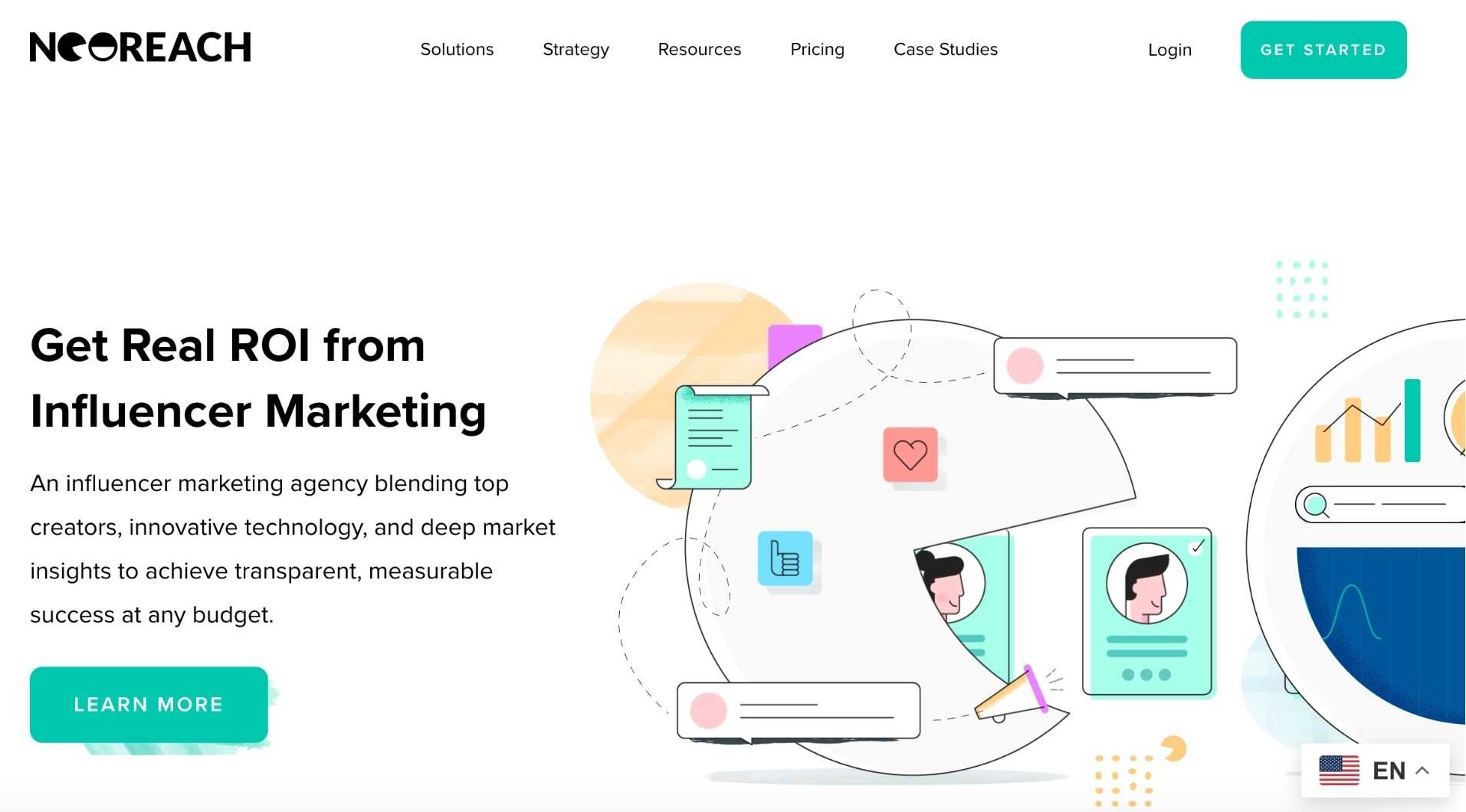
NeoReach is an influencer marketing platform and managed-services company aimed at brands and agencies running campaigns at scale. Its positioning combines enterprise software, API access, fraud detection, creator payments, and optional managed campaign execution, making it one of the more enterprise-oriented alternatives in this category.
Key Features
- Search and analysis at scale: NeoReach says its software lets brands search, manage, and track influencer campaigns, using over 40 filters including demographics, language, income, brand affinity, and performance data.
- Workflow automation: The platform supports campaign planning, influencer coordination, contracts, deadlines, post review, and payment history within one shared system.
- Campaign reporting and ROI tracking: NeoReach highlights campaign-level and influencer-level ROI, CPM, CPE, impressions, engagement, and exportable CSV reporting.
- Fraud detection: The platform includes fraud detection for fake likes, follows, and engagement, which is important for brands vetting larger creator pools.
- API access and data portability: NeoReach offers API access and says brands can integrate 400+ custom data points into internal tools and dashboards.
- Managed services option: In addition to software, NeoReach offers full-service influencer campaigns including strategy, creative briefs, sourcing, negotiation, licensing, payments, logistics, paid social, and experiential activations.
Pricing
- NeoReach’s official pricing page is custom pricing only.
- Because NeoReach does not publish plan prices, buyers should expect enterprise-style quoting rather than self-serve monthly checkout.
Reviews
4.5/5.0 (G2)
Pros
- Strong enterprise flexibility: NeoReach combines software, API, fraud detection, creator payments, and managed services, which is useful for larger brands that want both tooling and service support.
- Good for custom internal data setups: Its API and 400+ custom data points make it more appealing than lighter tools for brands with internal dashboards and data teams.
- Broader campaign services than many software-only tools: Product logistics, paid social amplification, and experiential activations make NeoReach more than just a discovery platform.
Cons
- Little public pricing transparency: It is difficult to benchmark NeoReach quickly against more transparent alternatives.
- Enterprise-first positioning: Its structure and feature set are better suited to large brands and agencies than smaller DTC teams.
- Usability concerns show up in reviews: Public reviews mention clunky navigation, slow loading, and search friction, especially for smaller buyers.
Integrations
- NeoReach API – Lets brands push influencer and campaign data into internal dashboards and custom workflows.
- Creator Payments – Supports payment operations as a native platform capability for campaign execution.
- Paid Social / Influencer Ads – Extends campaign content into paid amplification workflows across major social platforms.
- Fraud Detection – Connects influencer vetting directly into campaign planning by flagging fraudulent engagement and followers.
- Product Shipping & Logistics – Adds operational shipping support for seeding campaigns and creator product delivery.
Influencity vs NeoReach
Influencity and NeoReach both support discovery, campaign management, and reporting, but NeoReach is much more enterprise- and service-oriented. Influencity is better for brands that want a practical all-in-one platform they can operate themselves, while NeoReach is stronger for larger organizations that want API access, fraud detection, managed services, and custom workflows.
The biggest differences are commercial model and operating style. Influencity is more approachable for mid-market teams, especially those focused on public-profile discovery and standard campaign execution. NeoReach is the better fit when a brand needs enterprise support, campaign services, or deep internal data connectivity, but it is less transparent and likely heavier to buy and implement.


6. Lefty
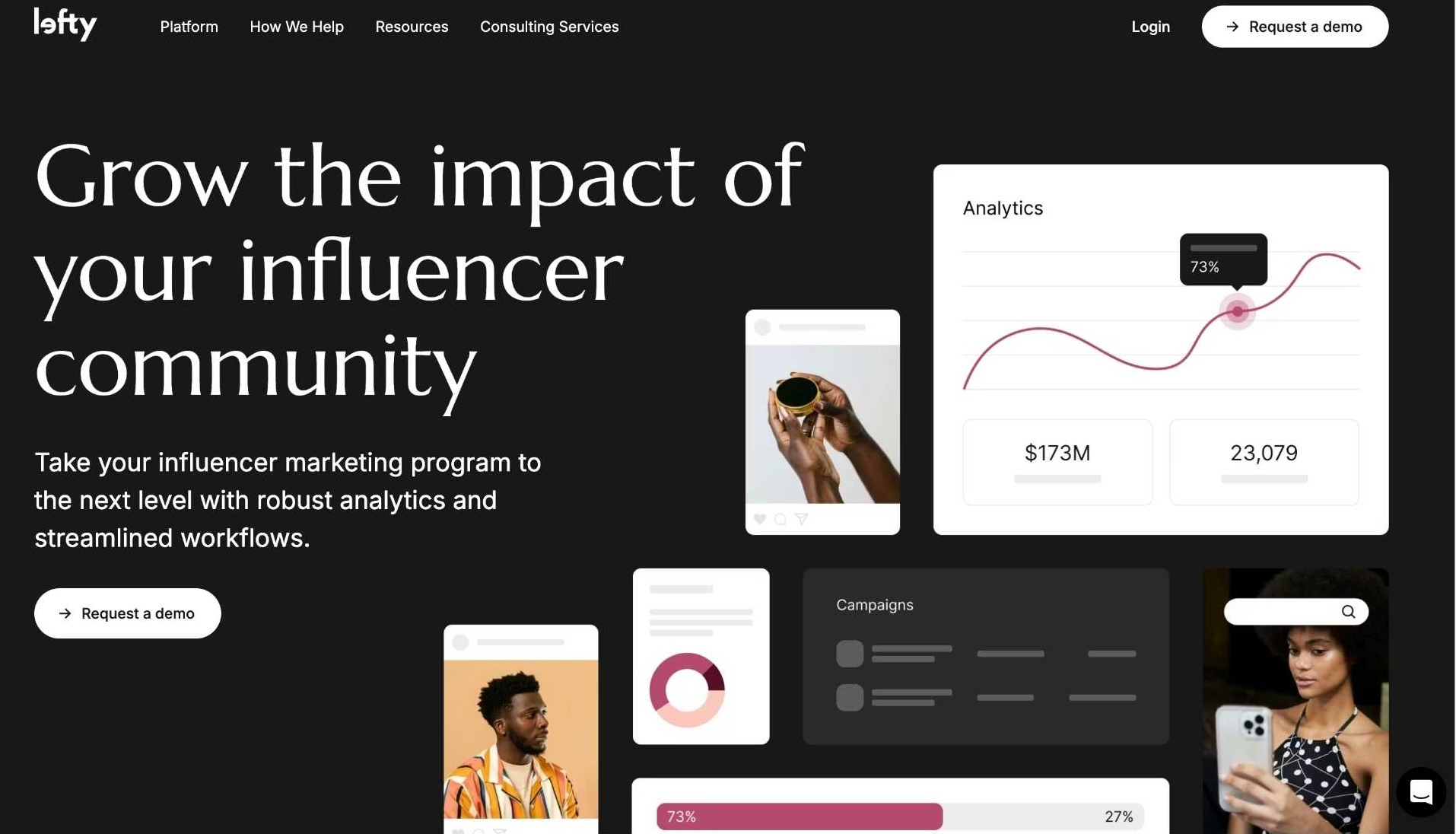
Lefty is an end-to-end influencer marketing platform built for brands and agencies, with especially strong traction among lifestyle, fashion, beauty, and luxury teams that want discovery, campaign tracking, CRM, and commerce-linked reporting in one system. Its current positioning leans heavily on analytics, streamlined workflows, and sales-oriented influencer operations rather than just creator search alone.
Key Features
- Large creator database and discovery tools – Lefty says brands can search a database of 30M+ profiles across social platforms, then narrow results using qualification and performance criteria.
- Influencer CRM and data centralization – The platform includes a centralized CRM that stores relationship history, campaign performance, and collaboration notes in one place for team use.
- Campaign management and automated reporting – Lefty positions campaign tracking and reporting as a core strength, including automated monitoring of published content and campaign performance.
- Competitive benchmarking and industry analytics – The platform also highlights benchmarking and industry-insights tools, which are especially useful for fashion and lifestyle teams that want to compare brand visibility and EMV trends.
- Email outreach – Lefty launched a direct emailing feature in October 2025 to make creator communication and outreach more efficient inside the platform.
- eCommerce-linked gifting and affiliate tracking – Lefty’s eCommerce solution supports gifting, lending, promo codes, affiliate links, inventory tracking, delivery tracking, and revenue reporting tied to influencer posts.
Pricing
- Starting Price: ~€590 per month.
- Pro Plan: ~€990/month, including 2 users, 5 campaigns, and unlimited reports.
- Premium Plan: ~€1,690/month, which adds a dedicated manager.
- Premium+ Plan: ~€3,490/month for 10 users and 25 campaigns.
Reviews
4.7/5.0 (G2)
Pros
- Strong fit for lifestyle and luxury brands – Lefty’s positioning, benchmark reporting, and EMV-style analytics are especially aligned with fashion, beauty, and premium lifestyle marketing teams.
- Direct email outreach is a meaningful recent upgrade – The 2025 rollout of native emailing gives Lefty a more complete workflow from discovery to activation.
- Commerce workflows are more advanced than many discovery-led tools – Native support for gifting, lending, affiliate links, promo codes, and revenue reporting makes it stronger for brands that care about sales impact, not just reach.
Cons
- Pricing is not very transparent – Buyers still need to go through sales for a full commercial picture, which makes quick comparison harder.
- Best suited to lifestyle-heavy categories – The platform’s strongest public proof points are in fashion, beauty, and luxury, so brands outside those verticals may find other tools more broadly positioned.
- Some users still flag cost and profile limitations – Public reviews mention pricing concerns and occasional profile limitations.
Integrations
- Shopify – Syncs store operations for gifting, product requests, affiliate links, and revenue tracking tied to creator campaigns.
- Magento – Lets brands connect catalog and inventory workflows to influencer gifting and fulfillment.
- Salesforce Commerce – Supports commerce-linked gifting, tracking, and product operations from enterprise store setups.
- Email integration – Lefty’s direct emailing workflow helps teams manage creator outreach from inside the platform.
- Affiliate and promo-code tracking – Lets brands generate affiliate links and promo codes, then measure resulting sales and creator-level performance.
Influencity vs Lefty
Influencity and Lefty both cover discovery, CRM, campaign tracking, and reporting, but Lefty feels more specialized for fashion, beauty, luxury, and other lifestyle categories where benchmarking, EMV, and visibility analysis matter heavily. Influencity is usually the more general-purpose choice for brands that want broad public-profile discovery and a flexible all-in-one workflow across multiple campaign types.
Another difference is commerce depth. Lefty places more emphasis on eCommerce workflows like lending, gifting, affiliate links, and revenue tracking, while Influencity is broader and more mid-market accessible. If your team wants a more category-specific platform with stronger luxury/lifestyle reporting, Lefty stands out. If you want a more versatile all-rounder for general influencer operations, Influencity is often the easier fit.
7. Insense
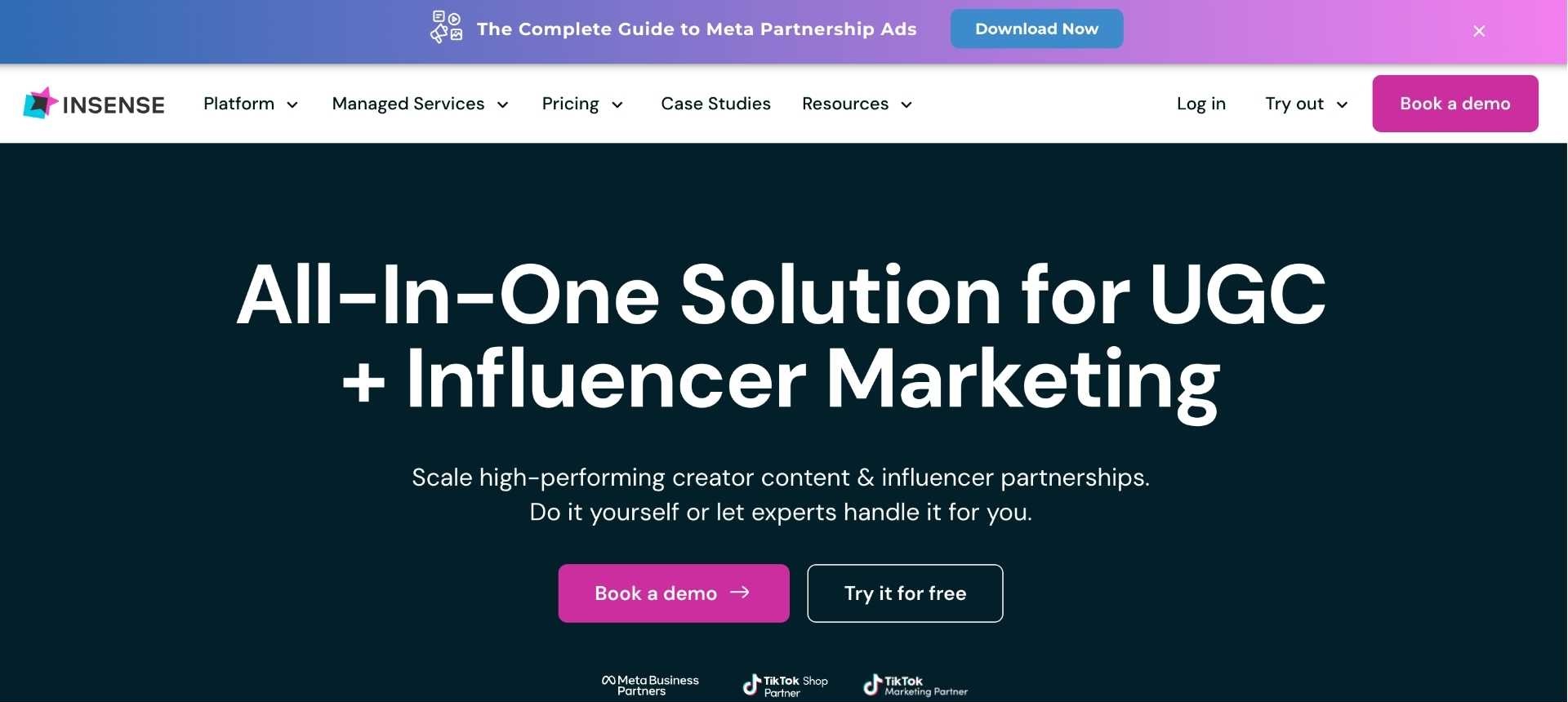
Insense is a creator marketing platform focused on UGC production, influencer collaborations, product seeding, and creator-led paid social campaigns. It is especially well suited to DTC brands, mobile apps, and agencies that want to produce ad-ready content quickly while also managing influencer posts, whitelisted ads, and creator outreach in the same workflow.
Key Features
- UGC and influencer campaign management – Insense combines UGC video production and influencer-post campaigns in one platform, so brands can source creators for both content creation and organic reach.
- Vetted creator marketplace – G2’s product page describes a creator network of 75,500+ creators across 35+ countries, which supports faster sourcing for brands that do not want to build lists manually.
- AI-powered outreach – Insense offers an outreach tool with AI personalization to build creator lists, run outreach at scale, and track replies in one dashboard.
- Product seeding campaigns – The knowledge base shows dedicated workflows for product seeding campaigns, helping brands send products and manage creator partnerships tied to gifting.
- Meta Partnership Ads and TikTok Spark Ads – Insense supports whitelisted ad formats, letting brands run paid social through creator handles rather than only posting organically.
- TikTok Shop campaigns – Insense’s help center includes TikTok Shop campaign resources, signaling stronger social commerce functionality than many traditional influencer discovery tools.
Pricing
- Brand plan: from $500/month, billed quarterly at $1,500, with up to 1 campaign and up to 10 creators to hire; creator payments are not included and creator cost carries a 20% marketplace fee.
- Agency plan: from $800/month, billed quarterly at $2,400; includes unlimited campaigns, unlimited creators to hire, and dedicated support, with a 10% marketplace fee.
- Managed service pricing: Insense also advertises dedicated platform management from $2,500/month for teams that want more hands-on support.
- Billing model: Official pricing pages state these subscriptions automatically renew every 3 months.
Reviews
4.5/5.0 (G2)
Pros
- Excellent for paid social creator ads – Insense is one of the clearer options for brands that want UGC production tied directly to Meta Partnership Ads, TikTok Spark Ads, and performance creative.
- Quarterly self-serve entry point is relatively accessible – Compared with many annual-contract platforms, Insense’s quarterly plans are easier for smaller DTC teams to test.
- Strong outreach and seeding workflows – AI personalization, product seeding, and managed-service options make it a strong operator-friendly platform for lean teams.
Cons
- Pricing fees stack beyond subscription cost – Creator payments are separate, and marketplace fees vary by plan, so the real campaign cost is higher than the headline subscription alone.
- Heavier focus on UGC and paid social than full influencer CRM depth – Brands wanting enterprise-grade creator relationship management may find it narrower than broader influencer suites.
- Reviews note support and timing friction at times – Public review summaries flag customer support and time delays among recurring negatives.
Integrations
- Meta Partnership Ads – Lets brands run creator-approved ads from creator handles for stronger paid social performance.
- TikTok Spark Ads – Connects creator content to paid amplification on TikTok without rebuilding assets from scratch.
- TikTok Shop – Supports TikTok Shop campaign workflows for creator-led social commerce.
- Creator email outreach – Centralizes creator prospecting, outreach, reply tracking, and collaboration follow-up.
- Product seeding workflows – Helps brands send products and manage seeding campaigns in the same platform used for creator sourcing.
Influencity vs Insense
Influencity is the more traditional all-in-one influencer marketing platform, with stronger emphasis on broad discovery, CRM, campaign tracking, and general program management. Insense is more specialized around UGC production, creator ads, seeding, and fast-turn paid social content.
That makes Insense the better alternative for brands that care most about whitelisted ads, creator-generated ad creative, and campaign execution speed. Influencity is the better fit for teams that want wider influencer discovery and a more classic influencer-management stack. If paid social and UGC are central to your workflow, Insense has the sharper edge. If you need broader influencer infrastructure, Influencity remains more balanced.
8. Kolsquare

Kolsquare is a European influencer marketing platform built for brands and agencies that want AI-powered discovery, campaign management, ROI measurement, and increasingly, first-party verified Instagram performance data. Its current positioning emphasizes responsible, data-driven influencer marketing and a simple UX for scaling creator programs across Europe and beyond.
Key Features
- AI-powered influencer discovery – Kolsquare gives brands access to 5M+ qualified creators across Instagram, TikTok, YouTube, Facebook, X, and Snapchat, with semantic search, AI prompts, image recognition, speech-to-text, and 100+ filters.
- Official Meta data and Instagram Connection – As an official Meta Business Partner, Kolsquare can collect verified Instagram data directly, improving accuracy for campaign activation and reporting.
- Campaign management and IRM – The platform includes campaign workflows, integrated influencer relationship management, custom IRM fields, content validation, and casting validation tools.
- Listening and competitor benchmarking – Kolsquare’s Listening product helps teams benchmark competitors across up to 11 brands, track share of voice, EMV, engagement, reach, and creator strategy over time.
- Influencer payments and API access – The Enterprise tier adds a payment module for compliant payouts plus API access for connecting Kolsquare to the rest of the marketing stack.
- Sentiment analysis – Kolsquare recently launched sentiment analysis to help marketers understand audience reaction and move campaign evaluation beyond surface-level engagement.
Pricing
- Official pricing model: Kolsquare currently advertises Discovery, Listening, and Enterprise plans, but does not publish fixed public dollar pricing; plans are tailor-made and demo-led.
- Third-party starting price: Capterra lists a starting price of €500 usage-based per month and says a free trial is available.
Reviews
4.5/5.0 (G2)
Pros
- Official Meta data is a real differentiator – Kolsquare’s Instagram Connection and Meta Business Partner status give it a stronger verified-data story than many platforms relying mostly on modeled metrics.
- Listening and benchmarking are unusually strong – The separate Listening layer is useful for brands that want competitive intelligence, not just campaign execution.
- Recent sentiment-analysis launch adds more qualitative insight – This helps teams evaluate how campaigns are received, not just how many people interacted.
Cons
- Public pricing is still custom-first – Even though the product structure is clearer, most buyers still need to speak with sales for exact pricing.
- Can be more sophisticated than smaller teams need – Discovery, listening, verified Instagram data, and enterprise modules make it strong, but also less lightweight than simpler tools.
- Some users still flag cost sensitivity – Capterra review excerpts mention the platform can feel expensive if used infrequently.
Integrations
- Instagram Connection – Pulls verified first-party Instagram performance and audience data into campaign tracking.
- Meta official data – Supports more accurate creator evaluation and activation through its Meta partnership.
- Shopify plugin – Connects commerce workflows to creator campaigns inside the Enterprise package.
- API access – Lets brands sync Kolsquare data with their internal tools and reporting stack.
- Messaging integration – Supports creator communication and tracking from within the platform’s enterprise workflow.
Influencity vs Kolsquare
Influencity is broader and generally easier to understand as a classic all-in-one influencer platform, while Kolsquare leans more into verified Instagram data, competitor intelligence, and European-market sophistication. Both cover discovery, campaign management, and reporting, but Kolsquare’s Listening and Instagram Connection features make it more analytics-heavy.
If your team values verified first-party Instagram metrics and competitive benchmarking, Kolsquare is the stronger alternative. If you want a more generalist platform for discovery, outreach, CRM, and campaign execution without leaning as hard into market-intelligence workflows, Influencity is usually the simpler option. Kolsquare feels more insight-driven; Influencity feels more balanced for everyday influencer operations.
9. Skeepers
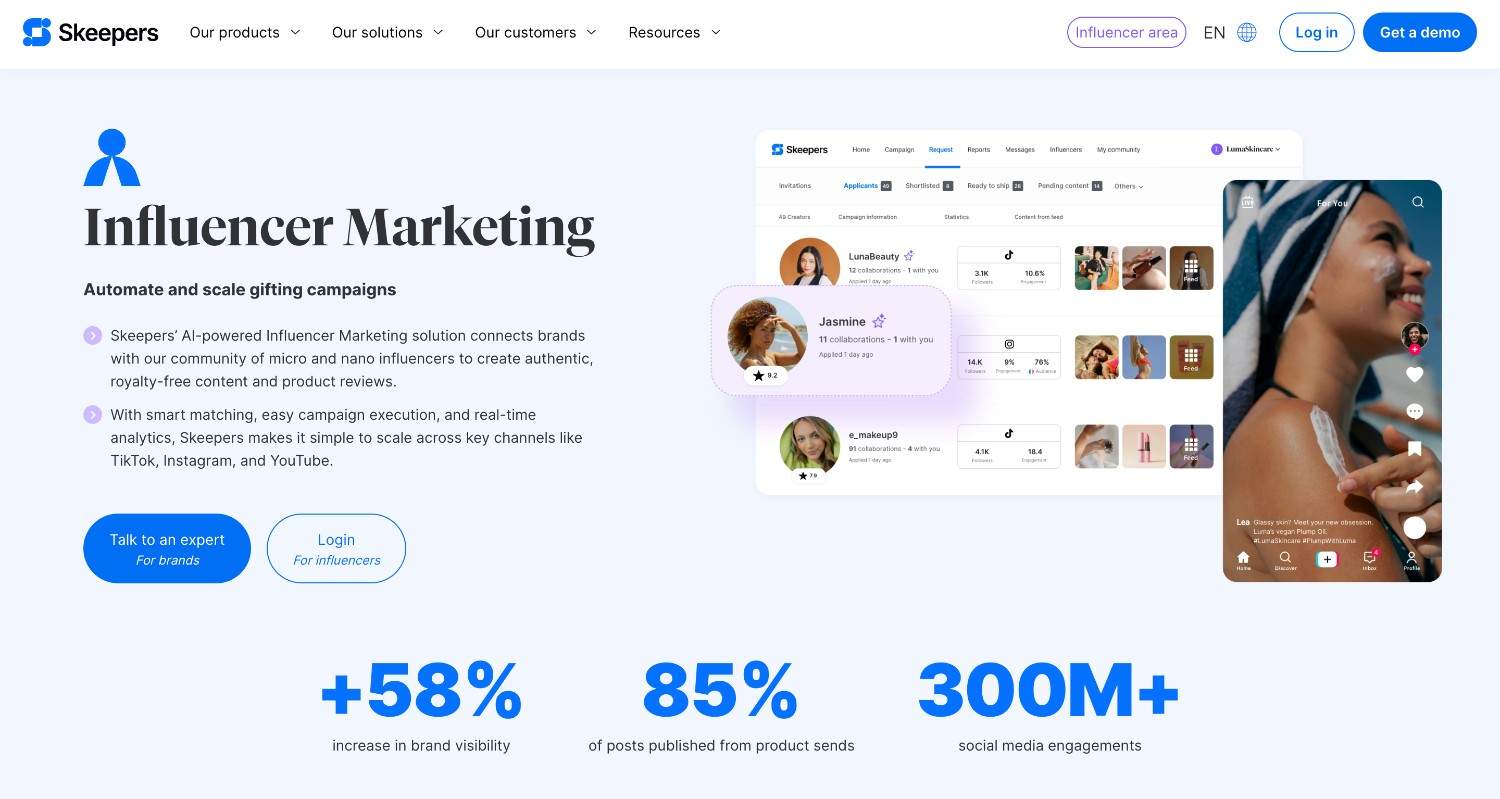
Skeepers is an influencer and UGC platform built around micro- and nano-influencer campaigns, automated gifting, licensed content collection, and social proof. Its current influencer marketing positioning centers on helping brands generate authentic, reusable content at scale through a vetted creator community rather than focusing primarily on celebrity-style influencer discovery.
Key Features
- Micro- and nano-influencer community – Skeepers promotes access to a creator community ranging from 100,000+ to 400,000+ creators across its public pages, with emphasis on micro and nano profiles.
- Automated gifting campaigns – The platform is built to automate gifting and turn seeded products into social posts, reviews, and reusable content assets.
- Licensed content and royalty-free reuse – Skeepers emphasizes the ability to generate licensed content that can be reused across marketing channels.
- AI-powered matching – The platform uses smart matching to connect brands with relevant creators based on campaign fit.
- Campaign tracking and analytics – Public pages highlight real-time analytics, creator opt-ins, licensing, and campaign tracking across feeds and stories.
- Broader UGC ecosystem – Skeepers is part of a larger UGC suite that includes reviews, videos, communities, and live/shoppable content, which can be useful for brands trying to consolidate social proof and creator content.
Pricing
- Official pricing: Skeepers does not publicly publish a full official plan grid for Influencer Marketing and instead routes buyers to request a demo.
- Third-party starting price: Capterra lists a starting price of €1,250 per month and says no free trial is available.
Reviews
4.3/5.0 (Capterra)
Pros
- Very strong for gifting-led UGC programs – Skeepers is one of the better alternatives for brands that care most about product seeding, authentic content, and licensed reuse.
- Micro/nano creator focus is well defined – That makes it attractive for brands that want community-style influence and higher content volume rather than celebrity-led reach.
- Part of a broader social-proof suite – Reviews, community, video, and live/shoppable content tools give Skeepers more UGC breadth than many pure influencer platforms.
Cons
- Less suited for broad open-web influencer discovery – Its value is strongest when you want vetted micro/nano creators and gifting workflows, not massive unrestricted creator search.
- Public reviews still mention bugs and profile relevance issues – Review excerpts mention slowdowns, repeated profiles, and uneven creator quality.
- Pricing is less transparent than self-serve tools – Buyers still need to talk to sales for the full commercial picture.
Integrations
- Instagram – Supports influencer campaigns and content performance across Instagram feeds and stories.
- TikTok – Helps brands run creator campaigns on TikTok as part of the core influencer workflow.
- YouTube – Included in Skeepers’ public channel coverage for influencer marketing.
- Shopify – Skeepers’ product ecosystem includes a Shopify app for syncing products into back-office workflows and shoppable content experiences.
- Shoppable content / live commerce stack – Lets brands connect influencer content with shopping experiences inside the wider Skeepers ecosystem.
Influencity vs Skeepers
Influencity is the stronger general-purpose influencer marketing platform, especially for broad creator discovery, CRM, and classic campaign execution. Skeepers is more specialized around micro/nano-influencer gifting, UGC generation, and licensed content reuse.
That means Skeepers is often the better fit for beauty, lifestyle, and consumer brands that want a lot of reusable content and product-seeding efficiency. Influencity is the better option for teams that want wider creator search, broader influencer management, and more traditional end-to-end platform control. Skeepers is more UGC-first; Influencity is more influencer-ops-first.
10. Creator.co
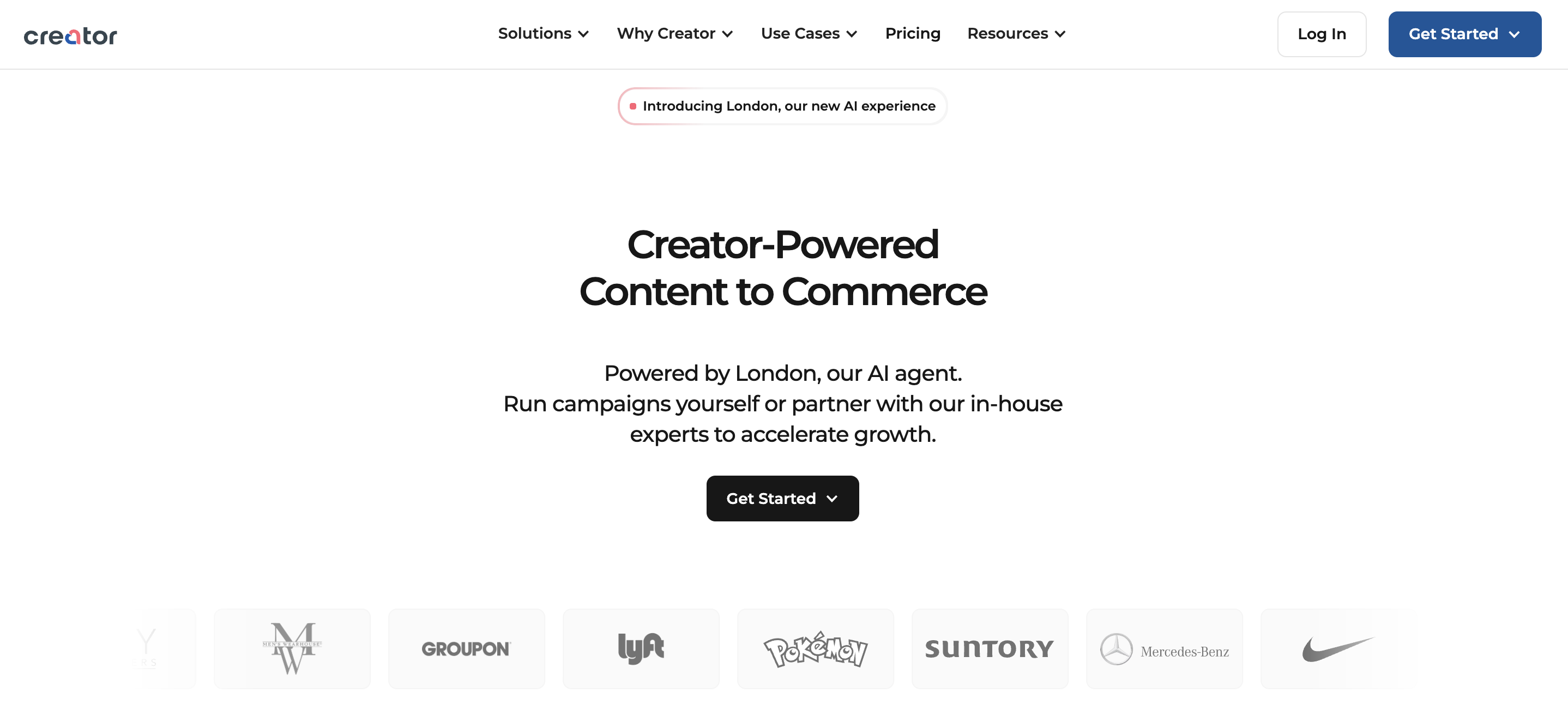
Creator.co is an influencer and affiliate marketing platform that combines creator discovery, campaign management, payments, and managed services for brands that want either a self-serve workflow or more hands-on support. The company’s latest positioning highlights AI-powered matching, a 400M influencer database, and a rebuilt workflow designed to help brands discover, launch, and scale creator campaigns faster.
Key Features
- AI-powered creator matching and recruitment – Creator.co’s homepage highlights “London,” its AI-powered match-and-recruit workflow, which helps brands define an ideal creator profile and streamline sourcing.
- Large creator database – Creator.co publicly claims access to 400M influencers, while some third-party listings still describe a 250M database, signaling an expanded current positioning.
- Campaign management – The platform supports briefs, outreach, approvals, content workflows, budgeting, and payouts in one dashboard.
- Self-serve and managed service options – Creator.co is designed for brands that want to run campaigns in-house or hand execution to the platform’s managed-services team.
- Affiliate and sales tracking – Its FAQ states integrations with Shopify, Google Analytics, Gmail, Outlook, and major affiliate networks to support seeding, payments, tracking, and sales attribution.
- Enterprise workflows – Creator.co also highlights enterprise approvals, integrations, reporting, and more custom workflows for larger teams.
Pricing
- Self-Serve: $299/month, with a 3-month minimum commitment.
- Managed: $2,199/month, with a 3-month minimum commitment.
- Enterprise: Custom pricing, with an annual commitment.
- The pricing page also notes that after the initial term, monthly subscriptions move to month-to-month billing, while annual plans renew yearly at a discounted rate.
- Creator.co offers a free trial for Self-Serve.
Reviews
4.6 / 5.0 (G2)
Pros
- Flexible delivery model – Creator.co works well for teams that want the choice between self-serve software and managed execution, which is not common at this price tier.
- AI-powered matching is now more central to the product – The new homepage positioning around AI matching and faster campaign launch shows a more modern workflow than older marketplace-style tools.
- Strong integration story for commerce and attribution – Shopify, Google Analytics, email, and affiliate-network integrations make it more performance-oriented than many creator marketplaces.
Cons
- Discovery still appears more opt-in/community-led than true open-web platforms – Some reviews mention creator recruiting can be harder if creators are not already engaged with the platform.
- Review footprint is improving but still lighter than major incumbents – It is gaining strong recent feedback, but still carries less long-run category weight than older platforms.
- Search filters can still feel broad for niche use cases – Recent user comments mention room for improvement in local and niche creator filtering.
Integrations
- Shopify – Automates product orders and tracks campaign-driven sales from creator partnerships.
- Google Analytics – Attributes influencer-driven traffic and conversions to campaign activity.
- Gmail – Supports email-based recruiting and creator communication within the broader campaign workflow.
- Outlook – Lets teams manage creator communication and outreach through existing email infrastructure.
- Major affiliate networks – Connects creator activity to affiliate tracking, payments, and revenue attribution.
Influencity vs Creator.co
Influencity is stronger as a classic influencer marketing platform built around broad discovery, CRM, outreach, and campaign reporting. Creator.co is more flexible in delivery model, with both self-serve and managed-service options, plus a stronger blend of affiliate marketing and creator marketplace support.
In practice, Creator.co is a better fit for brands that want more support, a lower-commitment entry point than enterprise software, and tighter affiliate integration. Influencity is the better fit for teams that prioritize public-profile discovery and a more straightforward influencer-ops stack. Creator.co feels more hybrid and service-friendly; Influencity feels more purely platform-led
Final Thoughts
Choosing the right Influencity alternative ultimately depends on your priorities—whether that’s broader creator discovery, stronger eCommerce and affiliate integrations, enterprise-grade analytics, or UGC and paid social workflows. Platforms like GRIN, Upfluence, and Influencer Hero stand out for commerce-driven campaigns, while CreatorIQ and NeoReach cater more to enterprise needs with deeper integrations and governance. Others like Insense, Skeepers, and Creator.co focus on content creation, UGC, and flexible campaign execution. Overall, while Influencity remains a well-rounded option, these alternatives offer more specialized capabilities depending on your team size, budget, and campaign goals.

.png)


.jpg)