

Entribe Pricing and Review: Features, Pros, Cons & Costs
Collecting user-generated content was solved years ago. Any brand can screenshot a customer post, and plenty do. The expensive problem is the one that surfaces six months later, when the best-performing asset in a paid campaign turns out to have no documented permission behind it, and legal asks who signed what. Entribe is built around that second problem rather than the first.
It is a UGC and creator community platform used by Google, Riot Games, Hershey’s, Circle K and GE Profile, covering content collection, rights clearance, a creator CRM, AI tagging and analytics. It also stretches into places most creator tools do not, including employee-generated content and university communities.
Pricing is where the evaluation gets harder. Nothing is published, there is no free trial, and the review base runs to eight entries. Below is what the platform does, what the people using it say about it, and the specific questions to force into a demo before a quote is written.
Entribe Overview
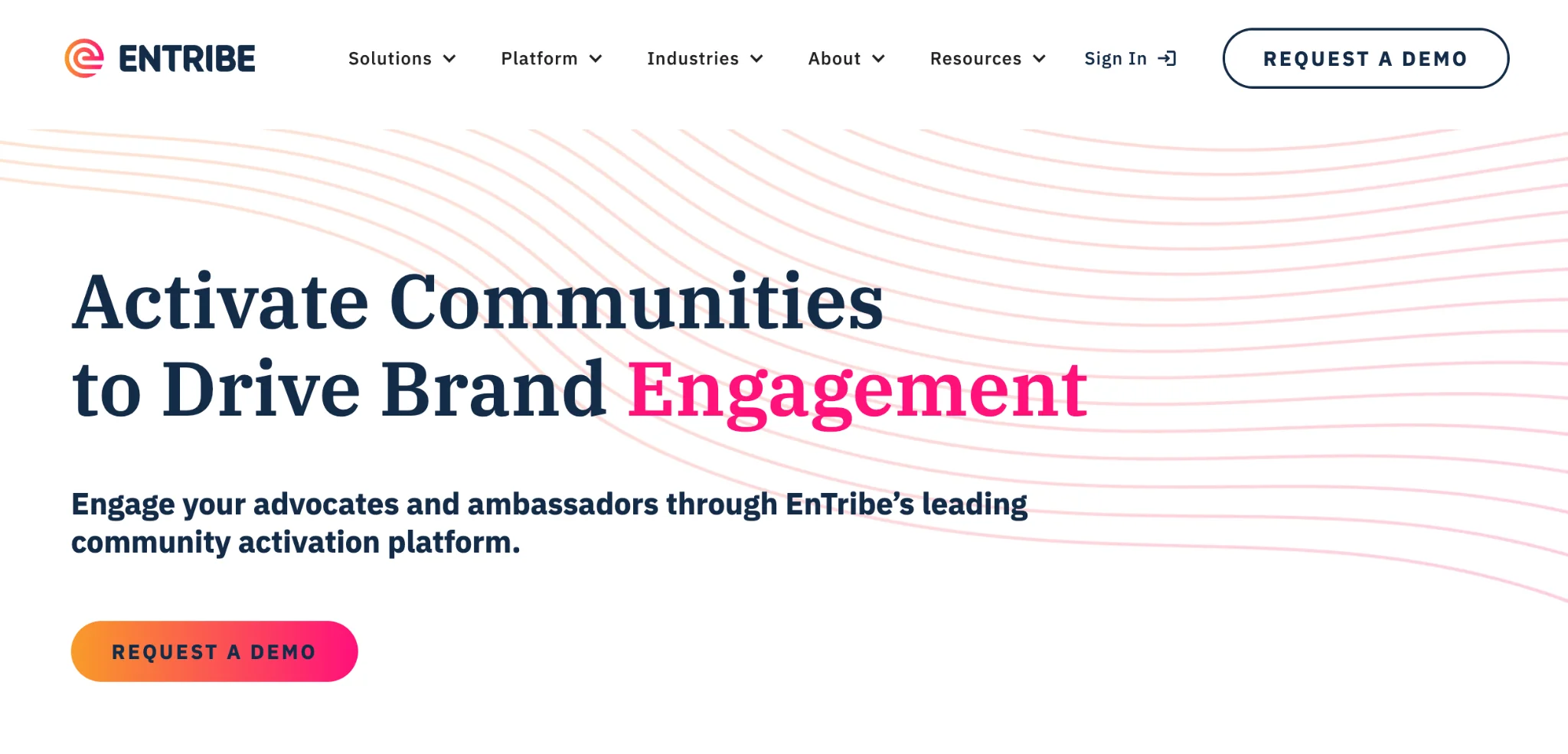
The product sits in a narrower category than general influencer software, and understanding which one matters before comparing prices. This is not a discovery database, an outreach engine or an affiliate platform. It is infrastructure for turning content your community already produces into assets your brand can legally publish, at a volume where doing it by hand stops working.
Three things follow from that framing. Rights clearance is a first-class workflow rather than a checkbox, so permission is captured, stored and auditable rather than living in a creator’s DM history. The creator CRM exists to manage relationships with people already engaging with you rather than strangers you need to find. And AI tagging, smart albums and content search exist because a working UGC program produces thousands of assets nobody can locate again without them, which is the same problem an UGC content library solves inside a broader platform.
Who Should Use Entribe
The fit test is whether you already have content coming in, because this platform organises supply rather than creating it.
- Brands with an active customer community. If people already post about your product unprompted, the job is capture and clearance, and that is exactly what this is built for.
- Teams running UGC in paid media. Documented rights are what separate a content library from a legal exposure, and this is the strongest argument for buying a platform rather than using a shared drive.
- Ambassador and loyalty programs. Community management, creator profiles and campaign tooling suit an ongoing program better than a series of one-off activations.
- Companies with employee advocacy programs. Employee-generated content is an explicit use case here, which very few creator platforms support at all.
- Agencies managing content for several clients. Campaign separation and content organisation across accounts is a named use case, and the AI tagging matters more the more assets you hold.
- Not brands that need creators found and paid. There is no discovery database, no affiliate tracking and no payout engine, so a program starting from zero creators needs a different tool first.
Key Features
Rights Clearance and Legal Workflows
The clear-rights-then-publish flow is the reason to be here. Permission is requested, captured and stored against each asset, so a piece of content carries its own provenance rather than depending on someone remembering a conversation. For any brand putting customer content into paid social or out-of-home, this is the difference between a library and a liability, and it is the capability that most justifies the platform’s existence.
UGC Collection at Volume
Brand-safe, rights-cleared photos and videos are gathered from the community rather than screenshotted individually. The emphasis throughout is on automation and scale, which is the correct emphasis: a UGC program that works generates more content than a person can process, and the failure mode is always the backlog rather than the supply.
Creator CRM
Creator profiles and communications live in one system instead of a spreadsheet and an inbox. It is relationship management for people already connected to your brand, which is a different job from prospecting, and it is worth comparing against dedicated creator relationship management tools if outreach to new creators also matters to you.
AI Tagging, Smart Albums and Content Search
Auto-tagging classifies incoming assets, smart albums group them, and search makes them findable months later. This sounds like housekeeping and is not. The practical value of a content library is entirely a function of whether the right asset can be found on the day a campaign needs it, and manual tagging is the first thing a busy team abandons.
Community Discovery and Growth
Tools for finding, growing and engaging community members, aimed at converting existing customers into contributors. The logic is sound for a brand with an established base, since a customer who already bought is a warmer starting point than a creator who has never heard of you. It does depend on that base existing.
Campaign Creation and Content Verification
Campaigns can be built to solicit specific content, with verification steps before assets enter the library. Reviewers describe campaign setup as straightforward and name it among the easier parts of the platform, which matters for a tool that a marketing team rather than an operations specialist will run day to day.
Analytics and Impact Measurement
Dashboards cover community performance and content impact. What is documented publicly is thinner here than on the collection and rights side, and no revenue attribution or per-creator ROI reporting is described. Treat measurement as a demo question rather than an assumed capability.
Ambassador Programs and Live Events
Support extends to ambassador program management and content capture around live events, which is a genuinely useful pairing for brands doing activations, launches or sponsorships. Event content has the worst rights hygiene of any category, so having clearance built into the capture flow is more valuable here than anywhere else.
Entribe Pricing
There is no published pricing. No tiers, no starting figure, no rate card, and no free trial to test the product before a conversation. Every evaluation begins with a demo request and ends with a quote written for you specifically.
That combination is worth naming plainly, because it is more restrictive than most of this category. Plenty of platforms hide their prices; fewer also withhold a trial. Without either, a buyer cannot estimate cost or verify fit independently, and the first real information arrives after a sales team knows your company size, your budget and how badly you need the problem solved.
No plan-at-a-glance table appears here for the same reason. There is nothing published to tabulate, and inventing structure around an absent rate card would misrepresent what is actually known.
What Is Actually Known About Cost
- Custom pricing only. The published position is contact the vendor. No per-user rate, no monthly minimum and no tier structure appears anywhere public.
- No free trial. Confirmed on the vendor listing. You cannot load your own content and test the clearance flow before committing, which is the single most useful thing a trial would let you check.
- Onboarding is a real phase. Reviewers describe a structured process from first meeting through implementation and rollout, with guidance on feature use and campaign promotion. That is positive, and implementation-heavy platforms usually carry setup costs, so ask whether onboarding is included or billed.
- The enterprise client list sets an expectation. Google, Riot Games and Hershey’s are not small-brand references. Ask early whether there is a tier built for a brand your size, before a quote is anchored to that customer profile.
- Bring your own numbers. Decide what UGC clearance and library management are worth to you annually, and open with that figure rather than waiting to hear theirs.
Entribe Reviews
The score is high and the sample is small, so read it as encouraging rather than conclusive.
- 4.6/5.0 (Capterra, low review volume at 8 reviews)
Eight reviews is not enough to be confident about a platform, and the distribution is worth noting: five five-star and three four-star entries, with nothing below. Reviewers consistently name ease of navigation, the ability to collect and use UGC in one place, a permission verification process that works, and a support team described as fast and always available.
The criticisms are consistent enough to take seriously despite the sample size. Loading and filtering speed comes up repeatedly, with the vendor pointing to a V2 release as the fix, which means the current experience is acknowledged as slow. Social media account integration is named as limited by more than one reviewer. Smaller frustrations include original photo filenames not being visible during review, and occasional glitches. One reviewer wanted customer success to be more proactive than reactive, which is a fair thing to probe given how much of the platform’s value depends on implementation.
Integrations
This is the weakest documented area of the product, and reviewers independently flag it, which makes it the thing to press hardest on in a demo.
- Social platforms. No named list is published, and reviewers describe social account integration as limited, which is a pointed criticism for a platform whose input is social content.
- eCommerce platforms. None published. No Shopify, WooCommerce or BigCommerce connection appears anywhere public.
- Affiliate and payment tools. None named. There is no commission tracking or creator payout capability described in the product.
- Marketing and workflow tools. Reviewers specifically requested more seamless connections with modern marketing tools, indicating the current surface does not cover them.
- API and automation. No public API or Zapier connector is documented, so moving assets and data into other systems is not a published capability.
For a brand whose UGC program lives entirely inside this platform, that is workable. For one that wants cleared assets flowing automatically into an ad account, a PIM or a product page, it is the constraint that decides the purchase.
Pros of Entribe
Rights Clearance Treated as Infrastructure
Permission capture is built into the collection flow rather than bolted on, so every asset arrives with its provenance attached. Most brands discover they need this at the exact moment it is most expensive to fix, which is when a high-performing creative has to be pulled from a live campaign. Buying it before that happens is the strongest argument the platform makes.
An Enterprise Client List That Means Something
Google, Riot Games, Hershey’s, Circle K and GE Profile are references that survive scrutiny, and organisations of that size do not adopt a content platform without legal review of exactly the workflows this product is built around. For a category full of unproven tools, that is meaningful third-party validation.
Support and Onboarding Are Consistently Praised
Across a small review base, the most repeated positive is a support team that responds quickly and an implementation process that reviewers describe as genuinely guided. For a platform with no free trial, where your first real evaluation happens after signing, the quality of that handover carries more weight than it normally would.
Cons of Entribe
No Published Price and No Free Trial
Both gates are closed at once. You cannot estimate the cost from public information and you cannot test the product before committing, so the entire evaluation happens inside a sales process. That is a harder starting position than most competitors set, and it means the first number you hear is calibrated to what the vendor has learned about your budget. Ask for a rate card and a sandbox, in that order, and treat reluctance on both as information.
Integrations Are Thin and Users Say So
No named eCommerce platform, no published API, no automation connector, and limited social account integration reported directly by reviewers. For a product whose value depends on content flowing in from social and out to ad accounts and product pages, the connective tissue is the part that determines whether it saves time or becomes another place to log in.
Performance Complaints Are the Most Repeated Criticism
Loading and filtering speed appears across multiple reviews of a platform whose core promise is finding the right asset quickly. The vendor attributes the fix to a V2 release, which confirms the problem rather than resolving it. Ask which version you would be buying, when the release lands, and whether the demo environment reflects current production performance or the version that is coming.
No Commerce Layer at All
There is no discovery database, no discount code generation, no affiliate codes and creator payouts, and no revenue attribution. The platform tells you what content you hold and that you may legally use it. It cannot tell you which creator drove revenue, and it cannot pay anyone. Any D2C brand running creators as a performance channel is buying a second platform alongside this one.


Is Entribe Worth It?
For a brand with an active community and a real rights problem, this is a credible platform and the references back it. Clearance built into collection, a creator CRM for people already engaged with you, AI tagging that keeps a growing library usable, ambassador and event support, and 4.6 out of 5 on Capterra with support and onboarding drawing the most praise. If UGC is already arriving faster than your team can process and legally clear it, the case is easy to make internally.
The reservations are structural rather than about quality. No published price and no free trial means the whole evaluation runs through a sales process. Integrations are thin and reviewers say so. Performance complaints point at a fix that has not shipped. And there is no discovery, no affiliate tracking and no payouts, so this handles one stage of a creator program rather than the program. Brands wanting more of it in one subscription should price these:
- Influencer Hero. Discovery across eight social platforms with Instagram, YouTube and TikTok emphasised, plus fake follower screening, creator discovery filters, CRM boards, UGC collection, affiliate codes and payouts. Publicly listed from $649 a month.
- Afluencer. A creator marketplace from $49 a month where influencers apply to your campaign listings. The right answer when the gap is creator supply rather than content organisation.
- Billo. Commissioned UGC video from vetted creators with usage rights included, built for brands that need ad creative on a schedule rather than community content.
- Cohley. Content generation paired with performance testing, aimed at teams that want to know which creative works before scaling spend behind it.
- Bazaarvoice. Reviews and UGC syndication across retail partners, useful when customer content needs to appear on retailer product pages as well as your own.
Final Thoughts
What you are really buying here is defensibility, and that is a legitimate thing to spend money on. The question is what it costs, and nothing about the public information helps you answer it. Go into the demo with three things settled: the annual figure UGC clearance is worth to your brand, a written list of every system the content needs to reach, and a direct question about whether the performance issues reviewers describe are fixed in the version you would be buying. Ask for a sandbox even though no trial is advertised, since a vendor confident in the product will usually find one. If the answers land well, this solves a problem most brands underrate until it costs them a campaign, and if they do not, the Entribe alternatives that bundle rights management with discovery and attribution are the next comparison to run.

.png)


.jpg)