

10 Best Zuberance Alternatives for Influencer Marketing
Zuberance alternatives come up when a brand wants to reach new audiences through creators, not only through its existing customers. Zuberance is an advocate marketing platform that turns happy customers into a community that writes reviews, shares content and refers friends, with software and managed service options that are both priced on request.
That approach works well for social proof, but it only reaches people who already know the brand. There is no external creator database, no outreach to new influencers and no published price, and the rewards advocates earn are paid by the brand on top of the platform fee.
The platforms in this guide cover creator discovery, outreach, gifting, UGC and affiliate tracking in different ways, and each one is reviewed on features, pricing, reviews and integrations to help D2C brands compare them.
The 10 Zuberance alternatives in this guide, in order, are Influencer Hero, Upfluence, Afluencer, CreatorIQ, Skeepers, Klear, Later, Creator.co, Insense and Lefty.
Key Criteria for Evaluating Influencer Marketing Platforms
Core Features
Evaluation of essential influencer marketing capabilities, including influencer discovery, outreach, CRM, campaign management, reporting, and content workflows.
Pricing & Flexibility
Comparison of pricing models, subscription plans, and contract terms to match different budgets and growth stages.
Customer Reviews & Satisfaction
Analysis of user feedback from trusted review platforms, focusing on usability, reliability, customer support, and overall performance.
Pros & Cons
Review of each platform’s strengths and limitations to highlight where it performs well and where it may fall short based on different use cases.
Integrations
Review of the most important integrations (e.g., Shopify and other tech tools), highlighting what each integration enables in one sentence.
Zuberance Overview
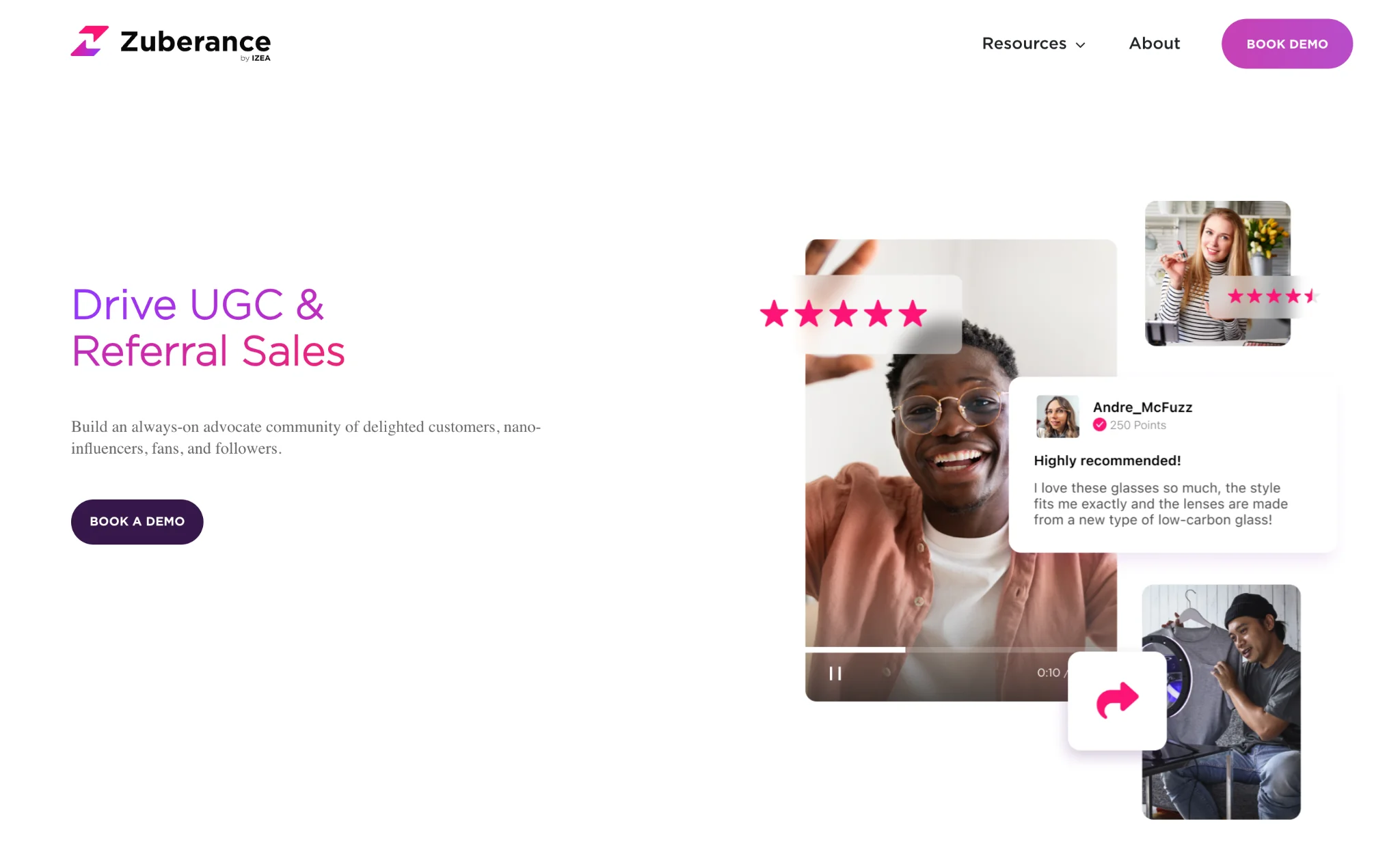
Zuberance is an advocate marketing platform that helps brands build an always-on community of customers, fans and nano-influencers who create reviews, testimonials, social content and referrals. Customers are invited through email, social channels, account portals and SMS, then complete tasks inside a branded advocate portal and earn points they can redeem for rewards.
The company offers the software on its own or as a software and services package, where its team designs, builds and runs the program for the brand. Because the output is customer content rather than creator reach, Zuberance is usually compared with review and referral tools as well as the wider group of influencer CRM tools that manage creator relationships.
Key Features
- Advocate recruitment: Customers are invited across email, social media, account portals, in-product prompts and SMS, which helps brands enrol more advocates than a single channel would.
- Branded advocate portal: Advocates complete tasks such as reviews, testimonials and shares inside a portal designed around the brand, which keeps the experience consistent.
- Reviews and referrals: Review generation and referral tracking run in the same program, so brands manage one community instead of two separate schemes.
- Rewards catalogue: Points are redeemed for gift cards, prepaid cards, donations or custom brand rewards, which keeps advocates motivated over time.
- Content widgets: Advocate content can be published to social channels and embedded on the brand’s own website to support conversion.
Pricing
Zuberance does not publish pricing. There is no pricing page or starting figure, and software directories list it as contact vendor with no free trial or free version.
- Software only: quoted on request, for brands that want to run the advocacy program themselves
- Software + Services: quoted on request, with the Zuberance team designing and managing the program
- Advocate rewards: paid by the brand on top of the platform fee, based on how many actions advocates complete
Brands should model the rewards budget before signing, since 2,000 reviews at a $10 reward already adds $20,000 a year to the total cost.
Reviews
4.4/5.0 (G2, 21 reviews, low review volume)
Integrations
- Shopify: Reviewers cite the Shopify connection as the practical way to identify and enrol eCommerce customers as advocates.
- Email: Email is the main channel for inviting customers and reminding advocates to complete new tasks.
- SMS: Text messages give brands another route to customers who do not respond to email invitations.
- Social networks: Advocates share content to Facebook, Instagram, TikTok, X and YouTube, which extends word of mouth beyond the brand’s site.
- Website widgets: Reviews and advocate stories can be embedded on product pages to support conversion.
Zuberance does not publish a CRM integration directory, and reviewers mention missing CRM connections as a limitation.
Pros
- Trusted voices: Advocates are real customers, so their reviews and recommendations carry strong credibility with new buyers.
- One program for reviews and referrals: Combining both activities under one reward system reduces admin and gives a single view of who contributes.
- Fully managed option: The services package suits marketing teams that do not have time to run an advocacy program themselves.
Common Drawbacks of Zuberance
No published pricing
Brands need a sales call to learn the software fee, the managed service fee and how much the rewards budget should be.
No new creator reach
The program only works with existing customers and fans, so there is no creator database, audience analysis or outreach to new influencers.
Slow to build momentum
Reviewers note that growing an advocate base large enough to produce steady content and referrals takes time.
Complex interface
Some users describe too many menus and a steep learning curve, which adds work for small teams.
Best Zuberance Alternatives
| TOOL | REVIEWS | BEST FOR | TRIAL INFO | PRICING | ||
|---|---|---|---|---|---|---|
1 |

|
⭐ | Influencer CRM & automation | Book Demo | Pricing | Website |
2 |
|
⭐ | Influencer discovery | Book Demo | Pricing | Website |
3 |

|
⭐ | Influencer marketplace campaigns | Book Demo | Pricing | Website |
4 |

|
⭐ | Enterprise influencer marketing | Book Demo | Pricing | Website |
5 |

|
⭐ | Influencer gifting & UGC campaigns with micro-influencers | Book Demo | Pricing | Website |
6 |
|
⭐ | Influencer analytics | Book Demo | Pricing | Website |
7 |

|
⭐ | Social media & influencer campaigns | Book Demo | Pricing | Website |
8 |

|
⭐ | Influencer campaigns & creator marketplace | Book Demo | Pricing | Website |
9 |

|
⭐ | UGC creators & paid social ads | Book Demo | Pricing | Website |
10 |
|
⭐ | Influencer analytics & discovery | Book Demo | Pricing | Website |
Influencer Hero
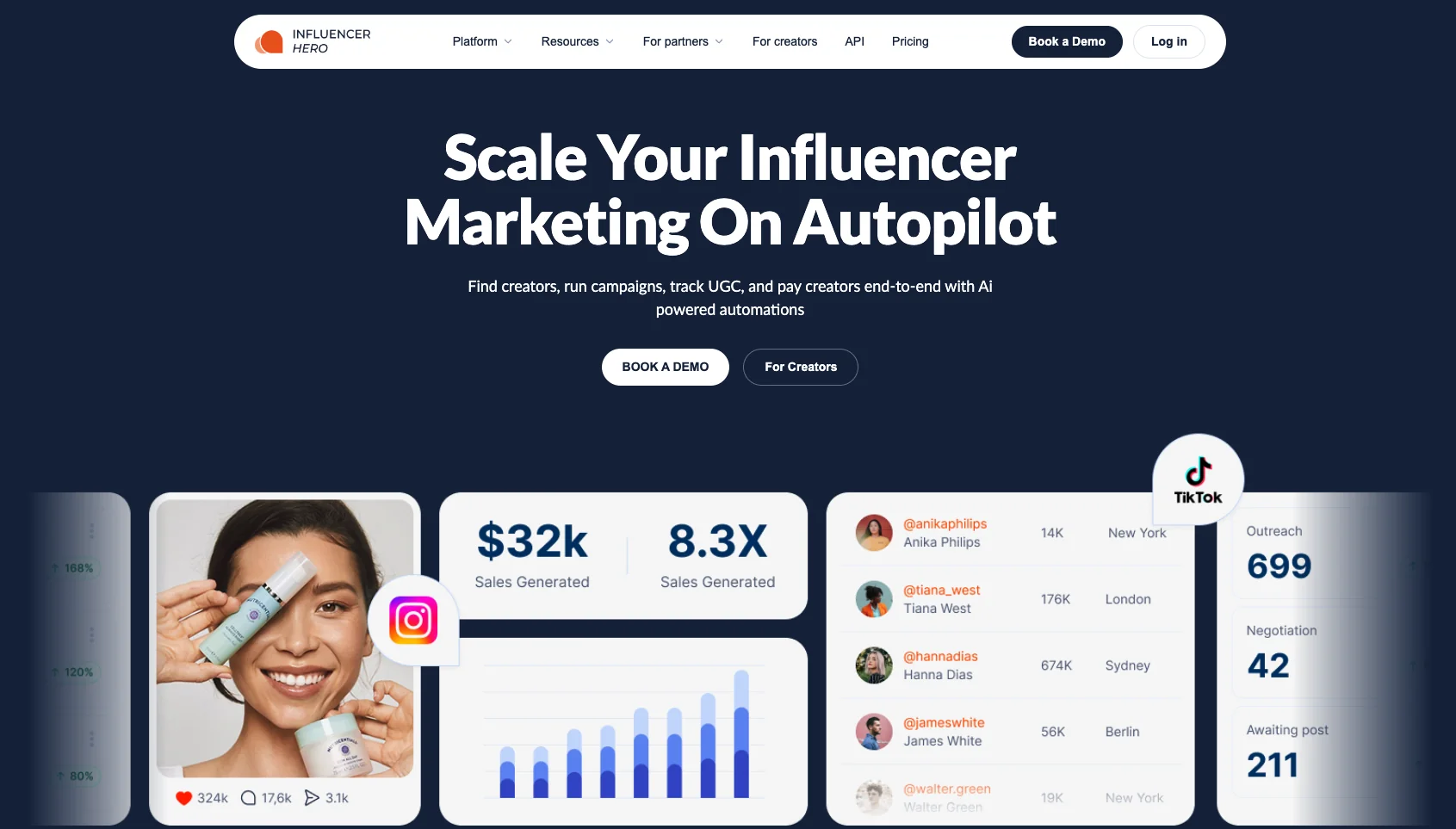
Influencer Hero is an influencer marketing platform for growing D2C and eCommerce brands that covers creator discovery, outreach, CRM, product seeding, UGC, affiliate tracking and creator payouts. Brands use it to run large gifting and affiliate programs from one workspace, with automations that reduce the manual work of managing hundreds of creators.
Key Features
- 450M+ creator database: Brands search a global database of creators across Instagram, TikTok and YouTube, with authenticity checks built into every profile.
- Customer and follower matching: Influencer Hero finds creators among your Instagram followers, Shopify customers and Klaviyo subscribers, so brands can start with people who already like the product.
- Fake-follower detection: Suspicious audiences are flagged before outreach, which protects the budget from creators with inflated reach.
- Application pages: Creators sign up for a program through a page styled around the brand, choose their products and can be accepted automatically if pre-vetted.
- Gifting and seeding: Products ship automatically through Shopify or WooCommerce, with delivery tracked for every creator.
- UGC library: Creator posts are collected automatically into a searchable UGC content library, ranked by visual quality and ready for reuse.
- Affiliate codes and links: Custom discount codes and links connect every creator to the sales they generate.
- Creator payouts: Bulk and scheduled payouts run at fees of 0.1% to 0.4% via bank debit, with invoices requested automatically.
Pricing
Influencer Hero publishes its pricing on its website, and plans are set by monthly reachout volume:
- Standard: $649 a month, with up to 1,000 reachouts a month
- Pro: $1,049 a month, with up to 5,000 reachouts a month
- Business: $2,490 a month, with up to 10,000 reachouts a month
- Custom & Agency: custom pricing
Brands save 20% with quarterly billing and 30% with yearly billing, and every plan includes the core features.
Reviews
5.0/5.0 (Capterra)
Pros
- Influencer brand followers: Influencer Hero spots the creators among your own followers and engaged fans, so the first outreach goes to people who know and like the products. These creators are more likely to reply and to recommend the brand in a way that feels natural. For brands used to working with customer advocates, it is an easy way to turn existing fans into content creators.
- AI-powered UGC search: Brands can search collected creator content by keywords, visuals, captions or campaign context instead of scrolling through folders. That makes it quick to find the best videos for paid ads, product pages or email. It also shows which creators consistently produce high-performing content, which helps teams decide who to work with again.
- Centralized content review: Creators upload their drafts in Influencer Hero, where the team can sign them off or send them back with a note explaining what to change. Every pending submission across all campaigns appears in one overview. Approvals no longer get lost in email threads or DMs, which keeps campaigns on schedule.
- Bulk tools for scalable operations: Outreach, follow-ups, product seeding and deal updates can all be handled in bulk, including actions taken directly from the All Influencers tab. Teams can send products or messages to hundreds of creators in a few clicks. This makes large seeding programs manageable for small marketing teams.
Cons
- No free trial: The platform is shown through a demo, so brands cannot explore it on their own before buying.
- Expensive for smaller brands: At $649 a month, the entry plan is a significant cost for brands with a limited influencer budget.
- Steep learning curve: The range of automations and workflows means new users need some time before they feel fully comfortable.
Integrations
- Shopify: Creators can be matched against Shopify customers, and gifting orders and affiliate sales sync back to the store.
- Klaviyo: Subscriber lists are checked for influencers, and creator data flows back into Klaviyo for email flows.
- WooCommerce: Brands on WooCommerce get the same gifting and affiliate tracking without moving store platforms.
- Dropbox Sign: Creator agreements are sent for e-signature and stored with each deal.
- Slack: Brand-risk alerts and campaign updates are posted to Slack so the team can react quickly.
Zuberance vs Influencer Hero
Zuberance is effective at turning loyal customers into a steady source of reviews, testimonials and referrals, and its managed service suits teams without time to run a program. Its reach stops at people who already know the brand, though, and it does not help brands find new creators, send products at scale or track affiliate sales in their store. Influencer Hero covers both sides: it identifies creators among your followers, Shopify customers and Klaviyo subscribers, and it also searches a 450M+ creator database with fraud detection, then handles outreach, gifting, content approvals, affiliate codes and payouts at 0.1% to 0.4%. Brands get customer advocacy and full creator marketing in the same platform.
Pricing is also easier to plan. Zuberance quotes the software and the managed service separately, and the rewards advocates redeem are an extra cost on top. Influencer Hero publishes its plans at $649, $1,049 and $2,490 a month based on reachout volume, with 20% off quarterly and 30% off yearly billing, and it takes no percentage of creator spend. For D2C brands that want to grow beyond their current customer base while still using fans as creators, Influencer Hero is the more complete and more predictable choice.
Upfluence
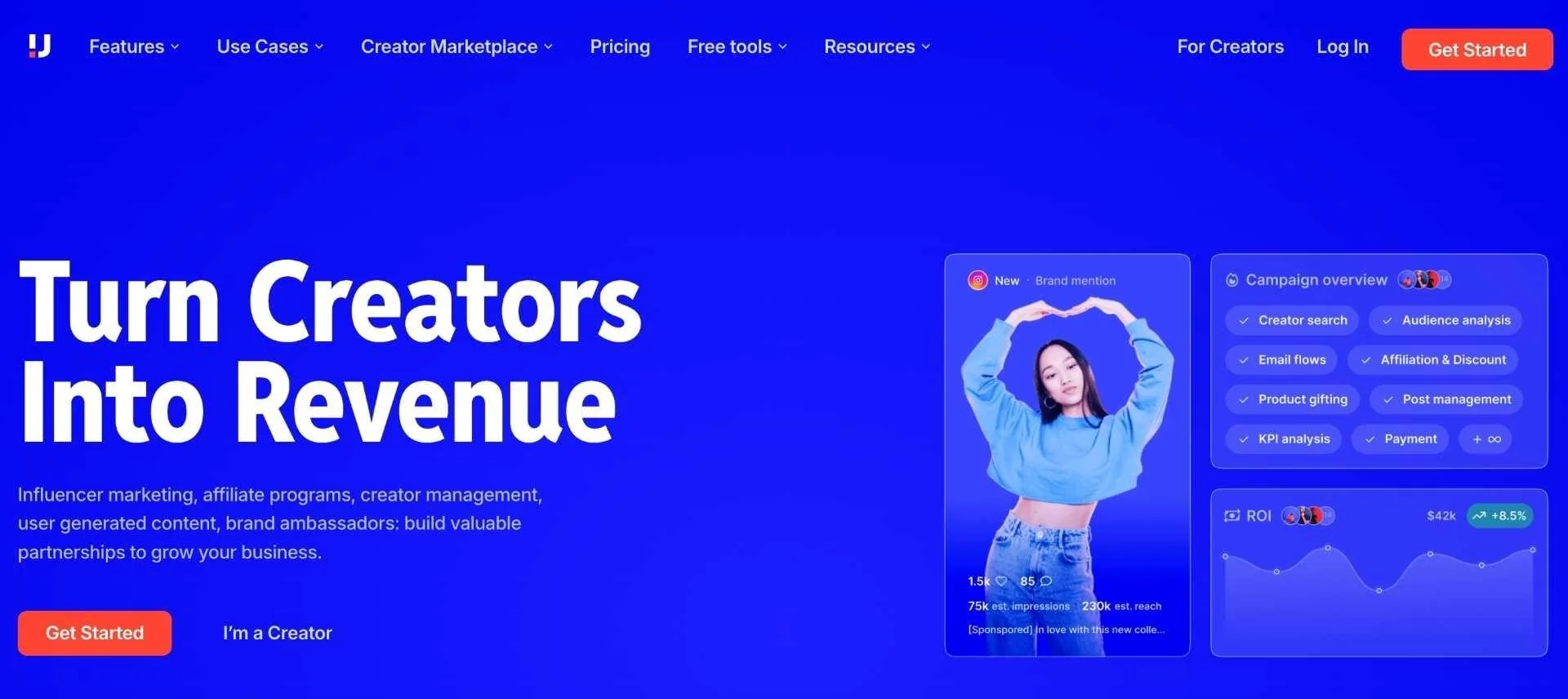
Upfluence serves eCommerce brands, Amazon sellers and agencies that run influencer and affiliate programs together. It is best known for identifying creators among a brand’s customers and email subscribers, and for tying creator activity to store revenue through native integrations.
Key Features
- Customer influencer search: Upfluence scans store and email data to find customers who are also creators, which gives brands a warm starting list.
- Upfluence Marketplace: Creators apply to campaigns in one click, adding inbound interest to outbound search.
- Affiliate management: Brands issue affiliate links and discount codes and track commissions per creator.
- Upfluence Pay: Payouts run in multiple currencies with KYC checks and automated tax forms.
- Jaice AI: An AI co-pilot supports creator selection, campaign setup and outreach.
Pricing
Upfluence does not list prices publicly. Quotes depend on team size and program volume, contracts run for a minimum of 12 months, and the company charges a fixed platform fee rather than a percentage of creator sales. Third-party data places a typical contract at around $15,000 a year.
Reviews
4.6/5.0 (G2, 140 reviews) and 4.4/5.0 (Capterra, 44 reviews)
Pros
- Customer-first recruiting: Brands can activate buyers who already use the product, which suits customer-led programs.
- Revenue attribution: Store integrations link creator posts and codes to orders.
- Account management: Every tier includes a dedicated account manager.
Cons
- Long commitment: A 12-month minimum contract is a bigger step than monthly plans.
- Heavier workflows: Some users find the interface complex to learn.
- Pricing on request: Brands cannot budget before speaking with sales.
Integrations
- Shopify: Store customers are matched against creator data and sales are attributed per code.
- Klaviyo: Email subscribers are scanned for influencers and enriched with social data.
- Amazon Attribution: Creator traffic to Amazon listings is tracked for marketplace sellers.
- Adobe Commerce: Brands on Adobe Commerce trigger orders and track creator-driven sales.
- Refersion: Existing affiliate programs connect so creators can be activated quickly.
Zuberance vs Upfluence
Zuberance and Upfluence both help brands turn customers into advocates, but Upfluence stands out by combining customer matching with a full influencer workflow, including outreach, gifting, affiliate codes and creator payments. Brands can start with their own buyers and then expand to new creators in the same system.
Zuberance, on the other hand, focuses on reviews, testimonials and referrals from a structured advocate community, with a points-based reward system. Upfluence rewards creators through commissions and fees instead. For brands selling on Shopify and Amazon that want their customer advocates to drive trackable affiliate sales, Upfluence is the closer fit.
Afluencer
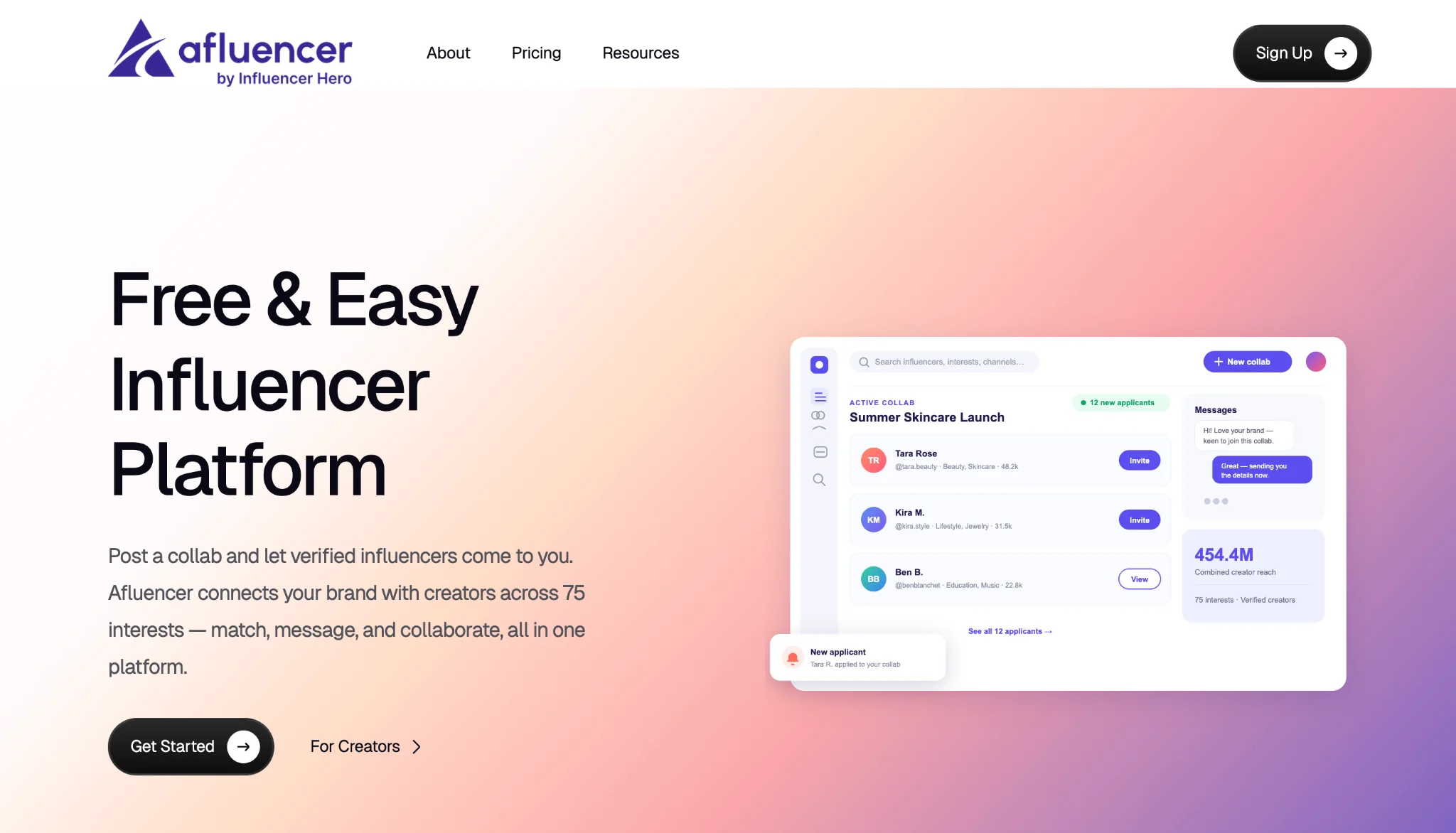
Afluencer is an influencer marketplace built for small businesses, where brands post collaborations and verified creators apply. It is known for its low starting price and a community of micro-influencers who are actively looking for brand partnerships.
Key Features
- Collaboration listings: A brand describes its offer once, and interested creators apply without cold outreach.
- CreatorGPT: AI ranks applicants by fit, so teams can focus on the strongest matches first.
- Verified creators: Every creator registers and verifies their account before applying.
- Invitation credits: Brands can invite creators from the directory using monthly credits.
- Upgrade path: Brands that outgrow the marketplace can move to plans with bulk reachouts, product shipping and creator payments.
Pricing
Afluencer’s brand plans are billed monthly:
- Marketplace: $49 monthly, including premium filters and 60 creator invitations each month
- Standard: $649 monthly, adding 1,000 reachouts plus product shipping and creator payments
- Pro: $1,049 monthly, adding 5,000 reachouts, three or more seats and a dedicated account manager
Reviews
4.6/5.0 (G2, 738 reviews) and 4.1/5.0 (Shopify App Store, 37 reviews). Many G2 reviewers are creators.
Pros
- Budget friendly: The $49 entry plan makes creator collaborations accessible for small brands.
- Willing partners: Applicants have chosen the collaboration, which usually means better communication.
- Quick setup: Brands can post a collab and start reviewing applicants on the same day.
Cons
- Applicant fit varies: Some applicants may not match the brand’s niche.
- US-heavy supply: Creator availability is stronger in the US than in some other markets.
- Lighter analytics: Audience insights are simpler than what enterprise suites provide.
Integrations
- Shopify: The Shopify app links the store so brands can run collaborations around their products.
- Klaviyo: Creator contacts can be added to Klaviyo for follow-up emails.
- Slack: New applications trigger Slack notifications for the team.
- DocuSign: Collaboration terms are signed electronically before work begins.
- Amazon: Amazon sellers can send creator traffic to their listings.
Zuberance vs Afluencer
Both Zuberance and Afluencer rely on people who choose to take part, but Afluencer stands out by opening the door to new creators rather than existing customers. Brands post a collab, creators apply, and CreatorGPT sorts the list, which is covered in its roundup of AI influencer marketing tools.
Zuberance, on the other hand, focuses on building a long-term advocate community around reviews and referrals, with pricing agreed through sales. Afluencer publishes a $49 entry plan and needs no implementation project. Small brands that want to meet new micro-creators on a predictable monthly budget should look at Afluencer first.
CreatorIQ
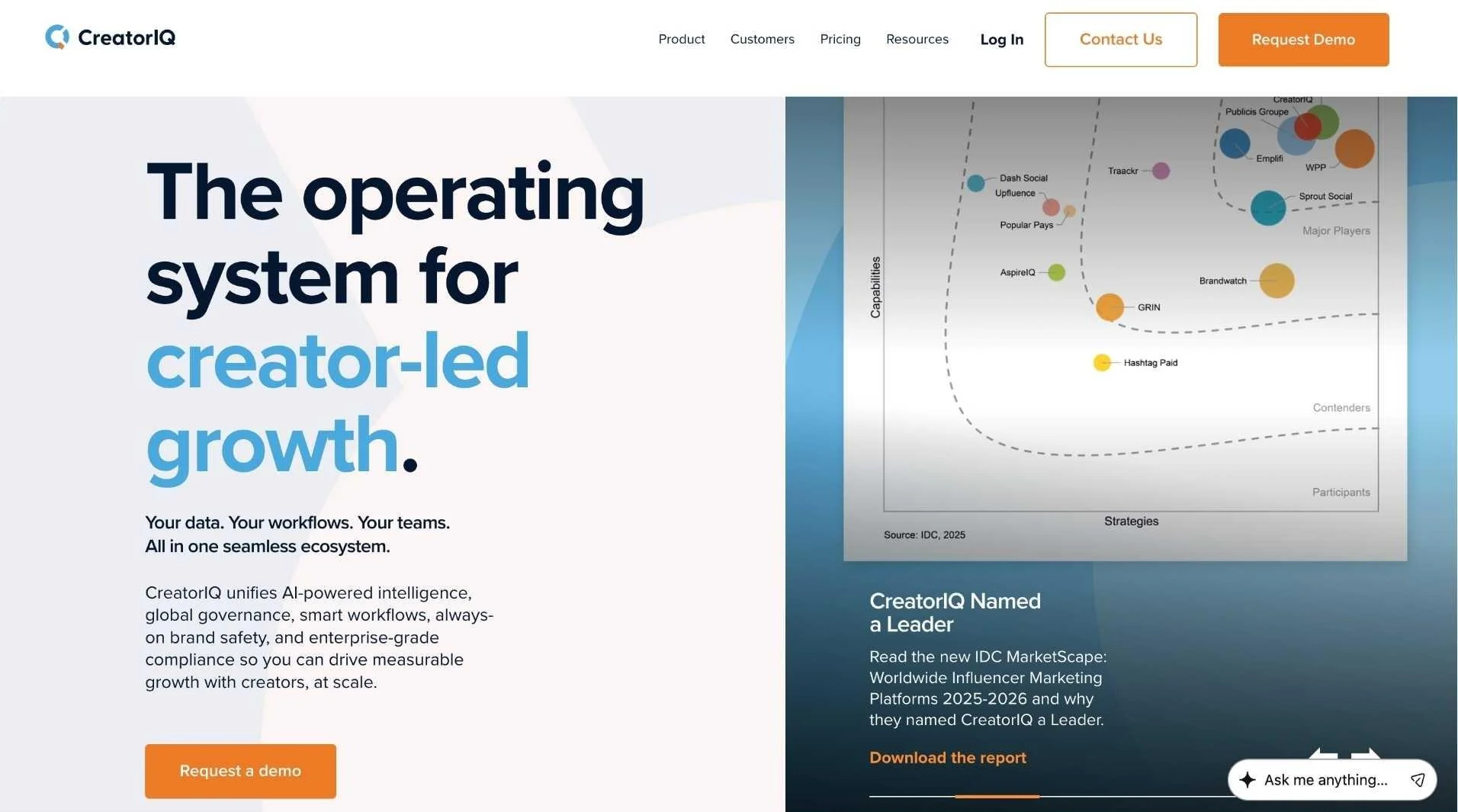
Large consumer goods companies and global agencies use CreatorIQ to run creator marketing at enterprise scale. The platform’s reputation rests on its creator data layer, compliance controls and AI brand safety monitoring, which help big organizations coordinate programs across many teams and regions.
Key Features
- The Creator Graph: Discovery runs on CreatorIQ’s own creator data layer, which helps teams search by audience and past partnerships.
- Governance tools: Permissions and approval workflows keep large programs consistent across markets.
- SafeIQ: AI checks creator content for brand safety risks before and during campaigns.
- CreatorIQ Convert: Promo codes and tracking links are issued at scale with commission tracking.
- BenchmarkIQ: Brands compare their creator performance with competitors in the same category.
Pricing
CreatorIQ does not publish pricing, and quotes come through a sales call. Purchasing data shows a typical annual contract between $30,000 and $59,500, and there is no free trial.
Reviews
4.6/5.0 (G2, 583 reviews) and 4.5/5.0 (Capterra, 17 reviews)
Pros
- Enterprise reporting: Detailed analytics suit leadership teams that need program-wide results.
- Strong compliance: Brand safety and governance features support regulated categories.
- Broad ecosystem: Affiliate network and BI integrations bring creator data into existing reports.
Cons
- High annual cost: Contracts usually start around $30,000 a year.
- Crowded interface: Some reviewers find navigation busy.
- Search gaps: Some reviewers find that discovery filters do not cover every niche requirement.
Integrations
- Shopify: Gifting runs through the store, with product costs logged per campaign.
- CJ: Affiliate sales from CJ appear in creator performance reports.
- Partnerize: Brands using Partnerize connect commission data to creator results.
- Google Analytics: Site traffic from creator content is included in reporting.
- DocuSign: Creator contracts are signed and stored in one place.
Zuberance vs CreatorIQ
Both platforms are sold through sales teams, but CreatorIQ stands out with enterprise-grade creator discovery, benchmarking and brand safety that cover large influencer programs across regions. It is built for companies that want governance and detailed reporting across hundreds of creators.
Zuberance, on the other hand, focuses on customer advocates and the reviews and referrals they produce. The two tools serve different goals, one scaling creator partnerships and the other scaling customer endorsements. For global brands that need strict compliance across a large creator program, CreatorIQ is the one to look at.
Skeepers
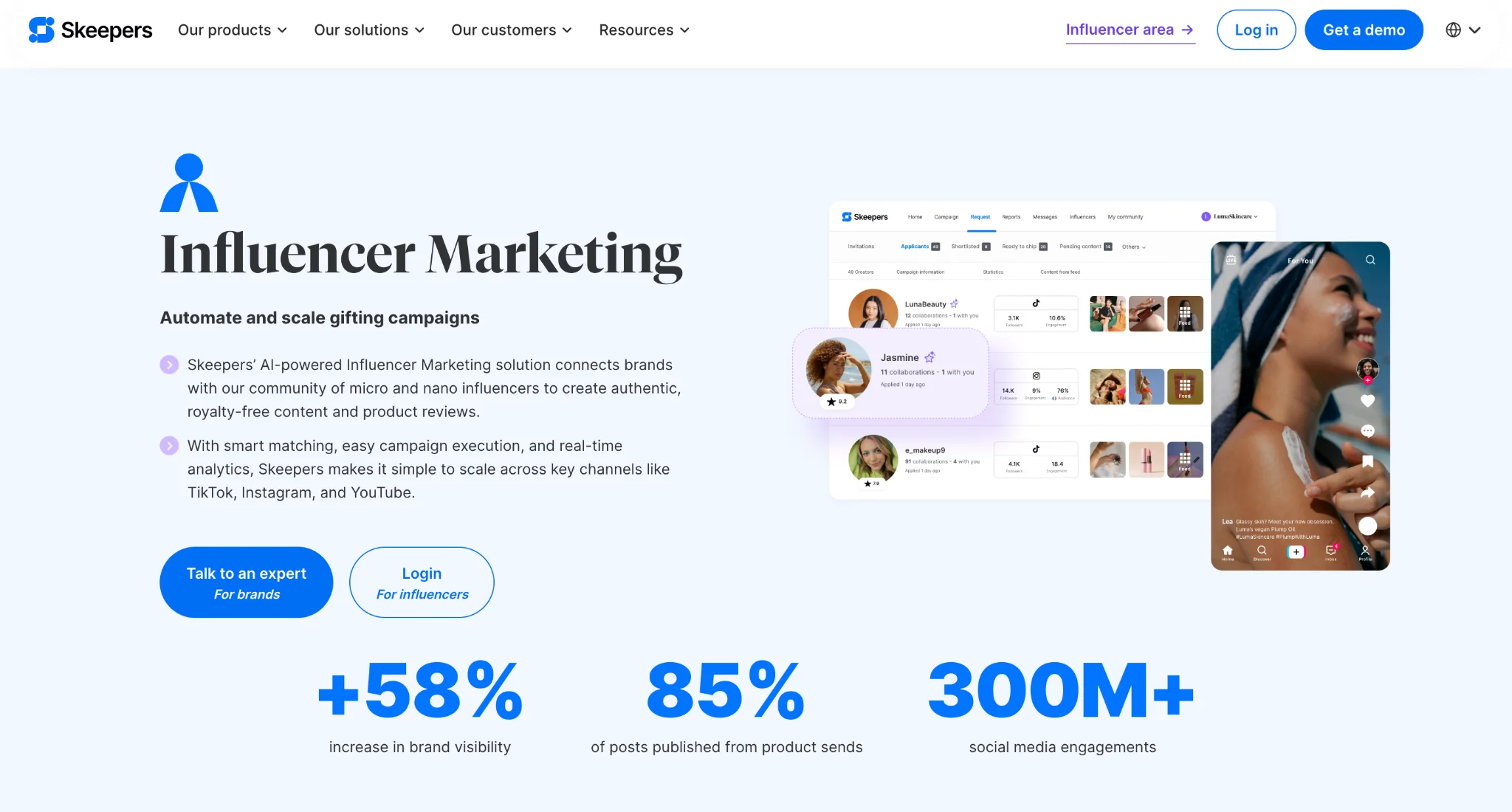
Skeepers is a French customer experience company that sells review collection, live shopping, user content tools and an influencer product. Its influencer offer connects brands with pre-vetted micro and nano creators for product gifting campaigns, with a strong presence in beauty and fashion.
Key Features
- 400,000+ vetted creators: Creators meet thresholds for followers, engagement and local audience before they can join campaigns.
- Gifted reviews: Seeded creators test the product and share their opinion publicly, giving brands social proof they can reuse.
- My Community: An ambassador feature helps brands keep engaged creators and customers involved over time.
- Content rights: Everything creators produce in a campaign stays available to the brand royalty-free.
- Paid social codes: Brands request Spark Ads and Partnership Ads codes to boost creator posts.
Pricing
Skeepers does not list prices on its site. Software directories show the influencer module starting at about €1,250 a month, priced separately from the ratings and reviews products.
Reviews
4.4/5.0 (G2, 92 reviews) and 4.3/5.0 (Capterra, 35 reviews)
Pros
- Reviews and influencers together: Brands can combine product reviews and creator seeding with one vendor.
- Fast campaign launch: Pre-vetted creators make gifting campaigns quick to start.
- Reusable content: Brands own the rights to campaign posts, so they can run them as ads without new negotiations.
Cons
- Mixed creator quality: Some campaigns include low-engagement or off-brand profiles.
- Basic messaging: Communication tools lack automation.
Integrations
- Shopify: Product catalogs sync so creators only receive items that are in stock.
- Meta: Creator posts can run as Partnership Ads on Instagram and Facebook.
- TikTok Spark Ads: Brands boost creator videos on TikTok with the creator’s approval.
- TikTok Shop: Creator content links directly to products sold in TikTok Shop.
- YouTube: Brands can include YouTube creators in gifting and review campaigns.
Zuberance vs Skeepers
Zuberance and Skeepers both help brands collect reviews and authentic content, but Skeepers stands out by sending products to vetted micro-creators who publish reviews and content on their own channels. That gives brands both new reach and social proof from people outside their customer base.
Zuberance, on the other hand, focuses on existing customers and rewards them with points for reviews, referrals and shares. It builds loyalty, while Skeepers builds awareness through product seeding. If your category is beauty or fashion and you want a pre-screened community producing reviews and creator content, Skeepers deserves a demo.


Klear
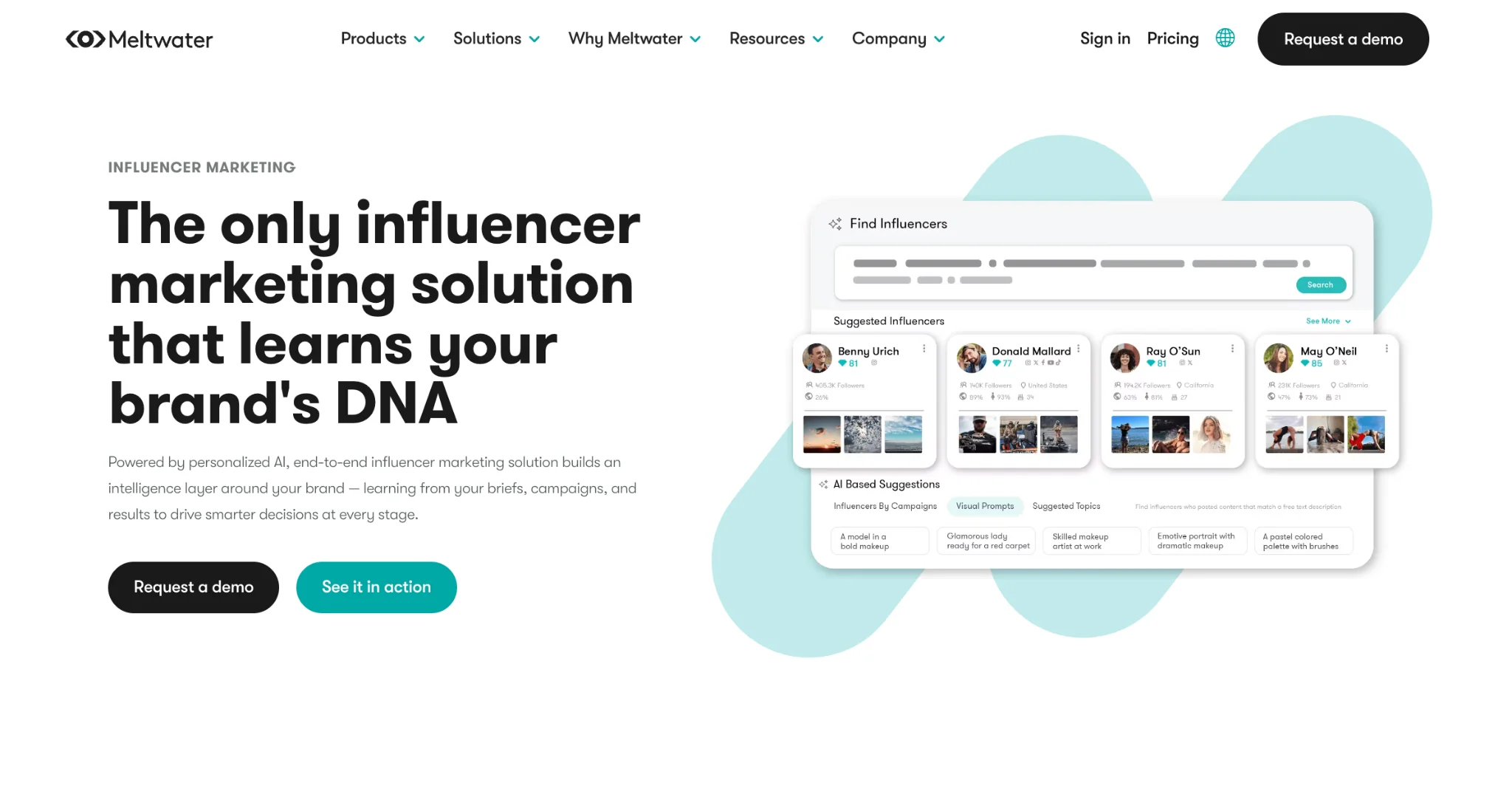
Klear is Meltwater’s influencer marketing product and sits inside the Meltwater media intelligence suite. Its typical buyer already uses Meltwater for press and social monitoring and wants creator work in the same account, and its best-known metric is True Reach.
Key Features
- Global creator search: A 30M+ creator database covers more than 190 countries, which helps brands find local partners.
- True Reach: Klear calculates the number of genuine people each creator actually reaches, which makes creators easier to compare.
- Fraud detection: Bot and fake-follower checks flag suspicious audiences early.
- Contracts and invoices: Agreements and invoices are managed in the platform.
- Sales tracking: Discount codes and a tracking pixel link creator activity to online orders.
Pricing
Klear pricing is not published. Access to the influencer module comes with Meltwater’s Enterprise or Agency tier, and those tiers are bought on yearly contracts together with the rest of the suite.
Reviews
4.3/5.0 (Capterra, 13 reviews, low review volume)
Pros
- Reliable vetting: True Reach and fraud detection help brands judge creators accurately.
- Full workflow: Brands can go from creator research to signed contract, payment and results without switching tools.
- Suite benefits: Creator data sits next to media monitoring for Meltwater users.
Cons
- Bundled cost: The influencer module requires a larger Meltwater plan.
- Search bugs: Some users report inaccurate data in search results.
- Few store integrations: eCommerce tracking relies on Shopify, WooCommerce or a pixel.
Integrations
- Shopify: Creator codes are matched with Shopify orders to measure revenue.
- WooCommerce: Orders placed with creator codes on WooCommerce stores are credited to the right creator.
- Tracking pixel: Stores on other platforms install a Klear pixel so online sales can still be linked to campaigns.
- Gigapay: Creators are paid through Gigapay, including international payouts.
- Tipalti: Tipalti handles creator invoices and tax details.
Zuberance vs Klear
Both platforms can be bought as part of a larger marketing relationship, but Klear stands out with creator search, fraud detection, contracts, payments and sales tracking designed for influencer partnerships. It helps brands reach new creators with verified audiences.
Zuberance, on the other hand, focuses on customers who already know the brand and turns them into advocates through a rewards program. Klear measures creator reach, while Zuberance measures advocate activity. For communications teams already using Meltwater that want influencer and media data in one account, Klear is the natural choice.
Later

Later started as a social media scheduling tool, and its influencer product, Later Influence, is sold to enterprise brands as software, as a managed service or as a combination. Through its acquisition of Mavely, it also offers a creator affiliate network linked to large retailers.
Key Features
- Later EdgeAI: Predictions based on data from 20M+ creators help brands estimate campaign results before they launch.
- Incentive Advisor: Rate guidance shows fair creator fees for each campaign.
- Managed services: Later’s team can plan and run programs for brands without in-house capacity.
- Social listening: Monitoring of social conversations helps teams spot creators who already talk about their category.
- Mavely affiliate links: Creators earn commission through a network of major retailers.
Pricing
Later Influence has three packages, called Platform, Platform + Services and Services, and each one is quoted individually. No trial is offered, and brands comparing enterprise options often review Later alternatives as part of the process.
Reviews
4.5/5.0 (G2, 469 reviews) and 4.6/5.0 (Capterra, 135 reviews)
Pros
- Flexible service model: Brands can choose software, services or a mix.
- Good support: Reviewers often praise the account teams.
- Retail affiliate network: Mavely connects creators to retail partners.
Cons
- No public price: Budgets depend on a sales conversation.
- Tracking glitches: Some users mention gaps in reporting data.
- Hard to find niche creators: Very specific searches can return few results.
Integrations
- Shopify: Creators choose gifted products and receive single-use codes.
- Instagram API: Stories and posts are pulled into reporting automatically.
- TikTok One: TikTok video metrics feed campaign dashboards.
- Meta Partnership Ads: Creator posts can be boosted as ads.
- Mavely: Affiliate links and commissions run through the Later Creator network.
Zuberance vs Later
Both Zuberance and Later offer a managed service alongside their software, but Later stands out with creator discovery, predictive analytics and an affiliate network aimed at reaching new audiences through influencers. Its services team can run full creator programs for large brands.
Zuberance, on the other hand, focuses on managed advocacy programs that grow reviews and referrals from existing customers. The two services solve different problems, one building reach and one building trust among current buyers. Enterprise brands that want an outside team running influencer campaigns end to end may prefer Later.
Creator.co

Creator.co, based in Vancouver, sells influencer and affiliate software to small and mid-sized D2C brands, either self-serve or with its own team running campaigns. Its AI agent London suggests creators, while a marketplace of signed-up creators brings in applications.
Key Features
- London AI agent: London recommends creators for each campaign, which saves time on research.
- Creator marketplace: A pool of over 270,000 signed-up creators can respond to campaigns, which adds inbound interest.
- AI outreach: AI writes and schedules personalized emails, so brands can reach many creators without drafting each one.
- Affiliate tracking: Links, codes and ROAS dashboards show which creators drive sales.
- Usage rights: Content rights are included while the brand is subscribed.
Pricing
Creator.co publishes its plans:
- Self Serve: $299 monthly on a three-month minimum term, or $199 monthly when paid yearly
- Managed: $2,199 monthly on a six-month minimum term, or $1,499 monthly when paid yearly
- Enterprise: custom pricing with an annual commitment
Self Serve includes 100 contact credits and a 14-day free trial, and additional credits cost $99 per 100.
Reviews
4.6/5.0 (G2, 124 reviews)
Pros
- Clear pricing: Published plans make it easy to budget.
- Helpful AI tools: London and AI outreach speed up campaign setup.
- Managed upgrade: Brands can add a managed team when they need it.
Cons
- North America focus: Creator supply is thinner in other regions.
- Busy dashboard: Managing many campaigns at once can feel cluttered.
Integrations
- Shopify: Gifting runs through draft orders in the brand’s Shopify store.
- Shopify affiliate: Commission rates and trackable links are set for Shopify products.
- Impact: Affiliate results from Impact sync into Creator.co daily.
- CJ: CJ programs connect to creator campaigns for commission reporting.
- Rakuten: Brands on Rakuten link existing affiliate tracking.
Zuberance vs Creator.co
Both platforms offer software with an optional managed team, but Creator.co stands out with creator discovery, a marketplace of registered creators and affiliate tracking tied to sales. Brands can bring in new creators and reward them with commission rather than points.
Zuberance, on the other hand, focuses on advocates who are already customers and on producing reviews and referrals. Creator.co also publishes its prices, which makes it easier to compare. Small North American D2C brands looking for an affordable start in creator and affiliate campaigns can begin with Creator.co.
Insense
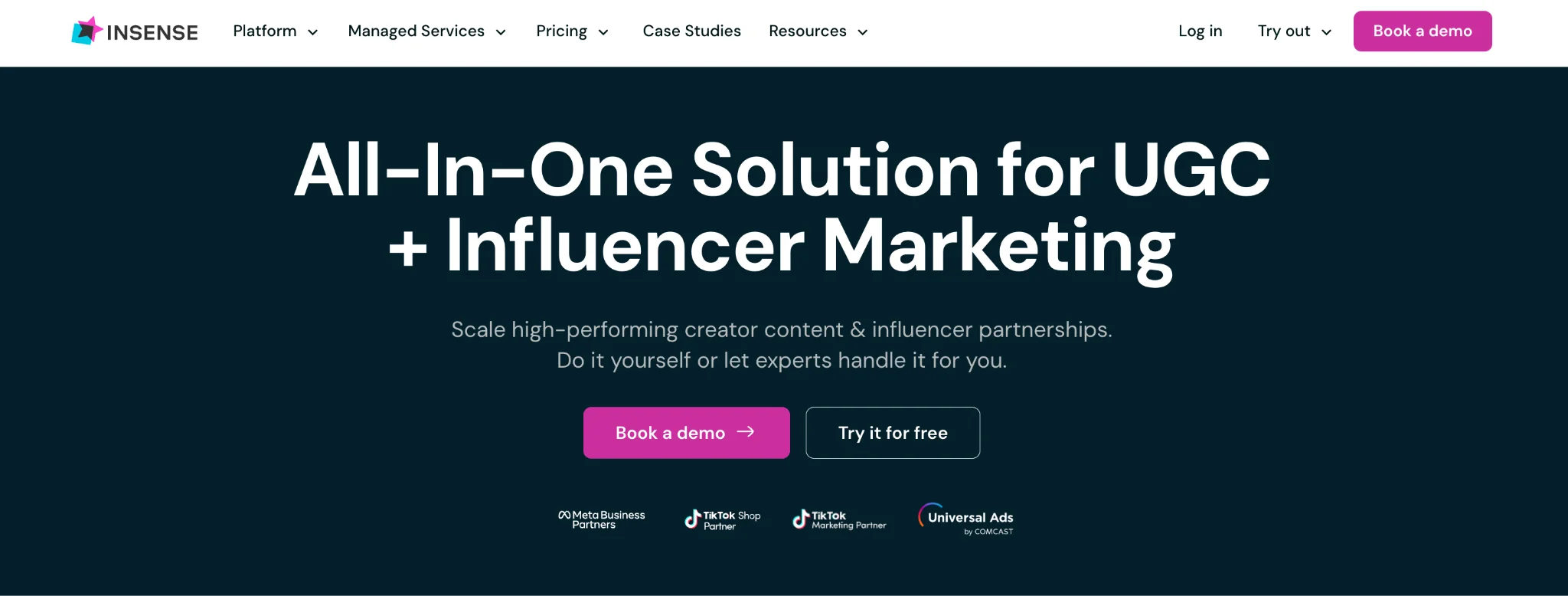
More than 3,500 D2C brands, app companies and agencies use Insense to source UGC and creator ads. The marketplace is recognized for quick delivery of licensed videos and for native whitelisting on Meta and TikTok.
Key Features
- 100,000+ vetted creators: The creator pool spans more than 35 countries, which lets brands commission content for several markets at once.
- Licensed UGC: Brands receive edited and raw footage with lifetime usage rights.
- Partnership Ads: Creator content can run as Meta ads from the creator’s handle.
- Product seeding: Shopify-connected seeding sends products to many creators at once.
- Creator outreach: An outreach tool reaches 7M+ influencers beyond the marketplace.
Pricing
Insense publishes three plans, each with a marketplace fee on creator payments:
- Trial: $650 for one month, 10 creators and a 20% marketplace fee
- Brand: $500 monthly on quarterly terms, or $400 monthly on a yearly plan, plus a 10% fee
- Agency: $800 monthly on quarterly terms, or $640 monthly on a yearly plan, plus a 7% fee
Creator fees are added on top, from about $100 per UGC video.
Reviews
4.5/5.0 (G2, 374 reviews). Many reviews come from creators.
Pros
- Ready-to-run ads: Content arrives licensed and edited for paid social.
- Visible creator rates: Brands see prices before booking.
- Fast turnaround: Videos are delivered within about two weeks.
Cons
- Stacked fees: Subscription, marketplace fee and creator fees add up.
- Trial auto-renews: The trial moves to a paid plan unless cancelled.
- Support delays: Some users report slow responses.
Integrations
- Shopify: Seeding orders go out from the Shopify store to a whole group of creators at once.
- Meta Partnership Ads: Creator posts run as ads from the creator’s account.
- TikTok Spark Ads: Creator videos can be promoted on TikTok.
- TikTok Shop: Brands can enrol creators to sell their TikTok Shop products on commission.
- Stripe: Stripe handles the payments that go out to creators.
Zuberance vs Insense
Zuberance and Insense both help brands collect authentic content, but Insense stands out by producing licensed UGC from paid creators, ready for Meta and TikTok ads within about two weeks. Brands control the brief and get content built for performance marketing.
Zuberance, on the other hand, focuses on content and reviews from customers who take part in exchange for rewards. That content is highly trusted but less predictable in volume and format. Performance teams that need a dependable supply of ad creative will find Insense the better match.
Lefty
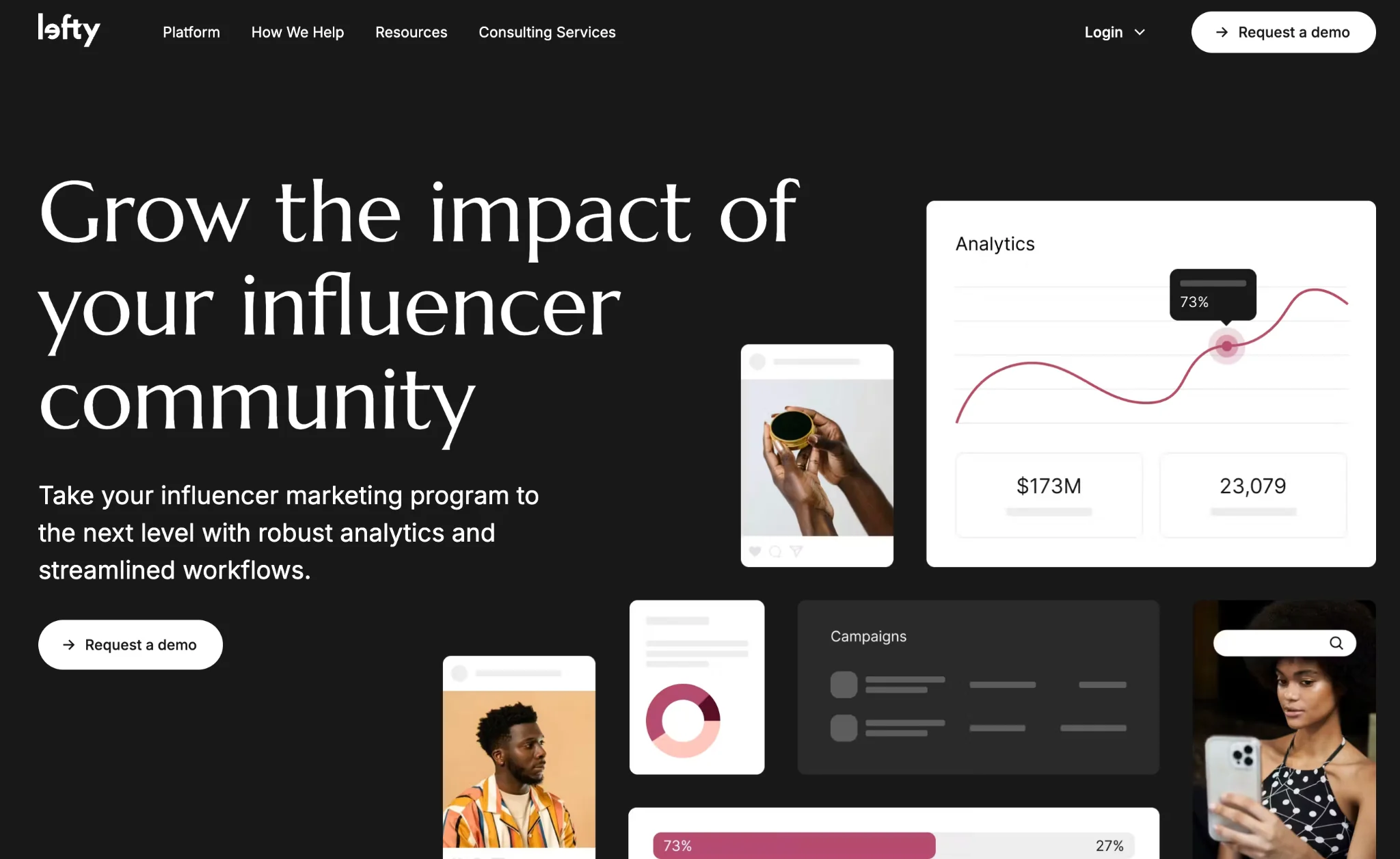
Founded in Paris, Lefty works mostly with luxury, fashion and beauty houses. Brand teams choose it for its competitor benchmarking, share-of-voice reporting and easy-to-learn interface.
Key Features
- Brand-affinity search: Brands filter 30M+ profiles by audience and affinity to find creators with a matching following.
- Influencer CRM: Relationship history, notes and collaborations are kept in one place.
- Gifting and lending: Branded pages let creators request products or loans.
- Share of voice: Brands see what portion of the creator conversation in their category they own compared with rivals.
- Promo codes and affiliation: Commissions and codes link creator content to sales.
Pricing
Lefty’s pricing is not on its website. Capterra lists entry pricing near €590 monthly for each feature, and trials are arranged through sales.
Reviews
4.7/5.0 (G2, 92 reviews)
Pros
- Intuitive design: Users find the platform easy to navigate.
- Competitive insights: Benchmarking helps brands track their category position.
- Rich creator data: Profiles include detailed audience information.
Cons
- High price: Some users pay for more features than they use.
- Tracking caps: Limits on tracked profiles add manual work.
Integrations
- Shopify: Creator product requests draw on live Shopify stock.
- Magento: Brands on Magento run gifting and lending through the same process.
- Salesforce Commerce Cloud: Large retailers link their commerce stack for gifting.
- Stripe: Creators are paid inside the platform with a clear record.
- Instagram: Creator posts are captured automatically for reporting.
Zuberance vs Lefty
Both platforms focus on brand reputation, but Lefty stands out with creator discovery, gifting, affiliation and share-of-voice analytics built for premium brands that work with selected influencers. It helps marketing teams show how their creator activity compares with competitors.
Zuberance, on the other hand, focuses on customer advocacy, reviews and referrals rather than curated creator partnerships. Both are quote-based, but they answer different questions about brand perception. Luxury and fashion houses that judge creator marketing by their standing against competitors will get the most out of Lefty.
Final Thoughts on Zuberance Alternatives
Zuberance is a good fit for brands with a large, loyal customer base that mainly want more reviews, testimonials and referrals from people who already buy from them. Because pricing is quoted and rewards are paid on top, the total cost is hard to judge until a brand has both figures in writing. It also works only with existing fans, so reaching new audiences through creators requires a different kind of platform. Brands that expect their customer base to grow faster than their advocate community should compare Zuberance alternatives that combine creator discovery with UGC and affiliate tracking.