

10 Best Socialix Alternatives for Influencer Marketing
Socialix alternatives make sense for brands that need software to run influencer campaigns rather than a service that grows social channels. Socialix is an India-based digital marketing agency and creator community that helps YouTube and Instagram creators expand their audiences, and it also offers social media management, ads, SEO and content production.
That makes it useful for creators and for businesses that want an agency to handle their own social accounts. Brands that want to search for creators, contact them, send products, track sales and pay commissions will not find those tools there, because Socialix sells services without a platform to log into.
The platforms below were chosen for D2C and eCommerce teams that want to manage creator partnerships themselves, and each one is compared on features, pricing, reviews and integrations.
The ten Socialix alternatives reviewed are Influencer Hero, Aspire, Afluencer, NeoReach, Later, Influencity, SARAL, HypeAuditor, Creator.co and Lefty.
Key Criteria for Evaluating Influencer Marketing Platforms
Core Features
Evaluation of essential influencer marketing capabilities, including influencer discovery, outreach, CRM, campaign management, reporting, and content workflows.
Pricing & Flexibility
Comparison of pricing models, subscription plans, and contract terms to match different budgets and growth stages.
Customer Reviews & Satisfaction
Analysis of user feedback from trusted review platforms, focusing on usability, reliability, customer support, and overall performance.
Pros & Cons
Review of each platform’s strengths and limitations to highlight where it performs well and where it may fall short based on different use cases.
Integrations
Review of the most important integrations (e.g., Shopify and other tech tools), highlighting what each integration enables in one sentence.
Socialix Overview
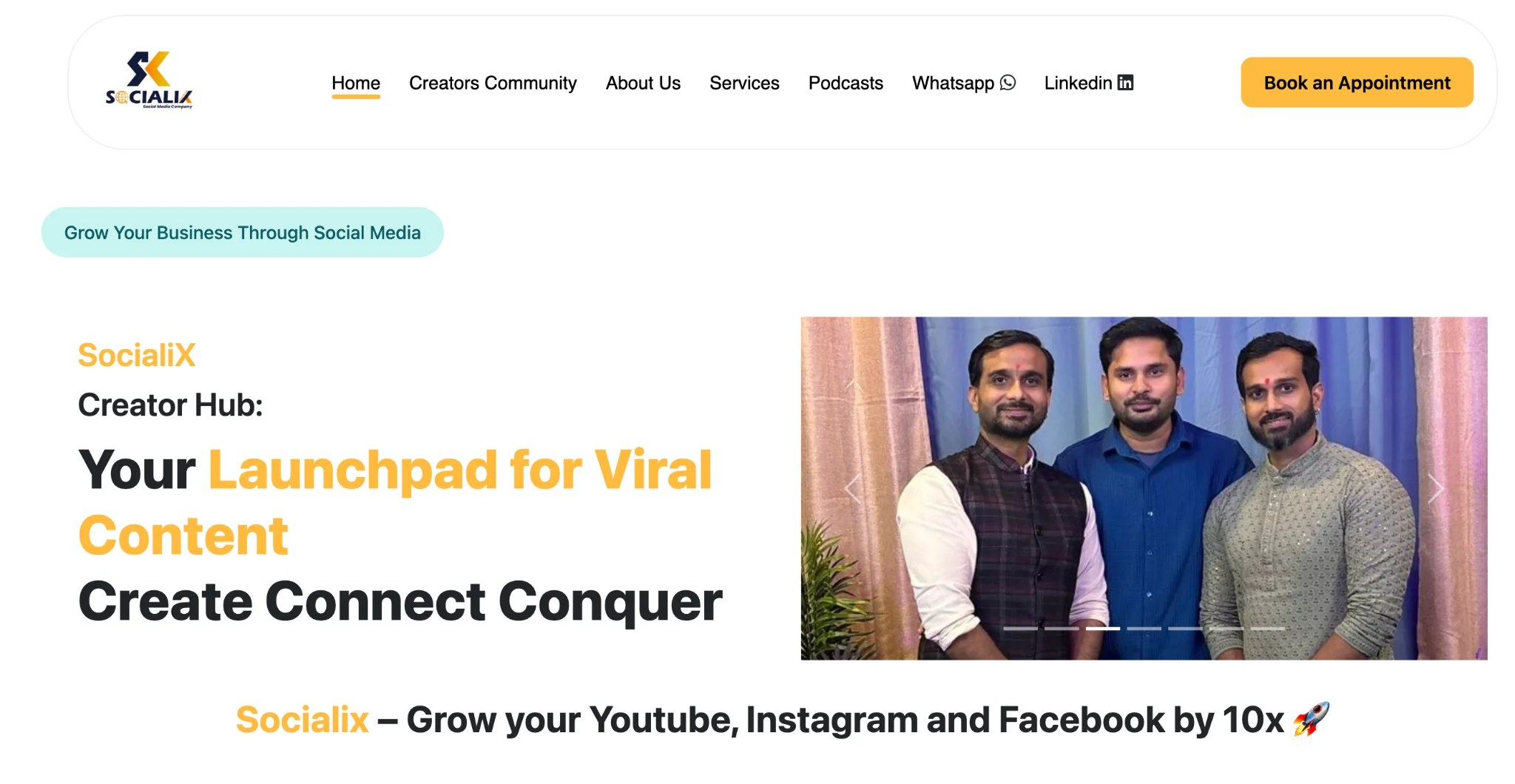
Socialix is led by founder and CEO Satish Bhargav and describes its mission as helping creators and businesses grow through social media. Its Creator Hub brings Indian YouTube and Instagram creators into a membership community, while its agency side offers social media management, performance ads on Google and Meta, content writing and design, SEO and website development.
The company also produces podcasts such as Creator Talks and Inside SocialiX. What it does not offer is a brand-facing toolset for running creator programs, so teams that want an influencer CRM with outreach and tracking need a separate platform.
Key Features
- Creator Hub: A community for creators who want to grow their YouTube, Instagram and Facebook audiences.
- Social media management: The team plans, publishes and reports on content for client accounts.
- Performance ads: Google Ads and Meta campaigns, including retargeting, are run on the client’s behalf.
- Content production: Writing, editing and design services support social and web content.
- SEO and web development: Search optimization and website builds round out the agency offer.
Pricing
Socialix does not publish prices, packages or a free trial. Businesses get in touch through a contact form or WhatsApp, and the scope and cost are agreed directly with the team.
Reviews
No verifiable rating. Socialix (socialix.in) has no reviews on G2, Capterra or Trustpilot. The Socialix listings on G2 and Capterra belong to an unrelated New York influencer software company that is no longer active.
Integrations
Socialix does not list any software integrations, since it works as a service provider. Campaign work runs on the client’s own Google Ads, Meta and social media accounts.
Pros
- Creator growth expertise: The founder has grown large YouTube and Instagram audiences.
- Broad agency services: Social, ads, SEO and web work can come from one provider.
- Indian market knowledge: The team knows Indian creators and audiences well.
Common Drawbacks of Socialix
No software platform
There is no creator search, CRM, outreach tool or reporting dashboard for brands to use.
Built for creator growth
The focus is on growing creators’ own channels, not on brand gifting, affiliate or UGC programs.
No public pricing
Costs are only shared after contact, which makes comparison with other options difficult.
Limited outside proof
There are no independent reviews, no named brand clients and no published office address.
Best Socialix Alternatives
| TOOL | REVIEWS | BEST FOR | TRIAL INFO | PRICING | ||
|---|---|---|---|---|---|---|
1 |

|
⭐ | Influencer CRM & automation | Book Demo | Pricing | Website |
2 |

|
⭐ | Influencer partnerships | Book Demo | Pricing | Website |
3 |

|
⭐ | Influencer marketplace campaigns | Book Demo | Pricing | Website |
4 |
|
⭐ | Influencer campaigns & data analytics | Book Demo | Pricing | Website |
5 |

|
⭐ | Social media & influencer campaigns | Book Demo | Pricing | Website |
6 |

|
⭐ | Campaign management | Book Demo | Pricing | Website |
7 |

|
⭐ | Influencer outreach | Book Demo | Pricing | Website |
8 |

|
⭐ | Influencer analytics | Book Demo | Pricing | Website |
9 |

|
⭐ | Influencer campaigns & creator marketplace | Book Demo | Pricing | Website |
10 |
|
⭐ | Influencer analytics & discovery | Book Demo | Pricing | Website |
Influencer Hero
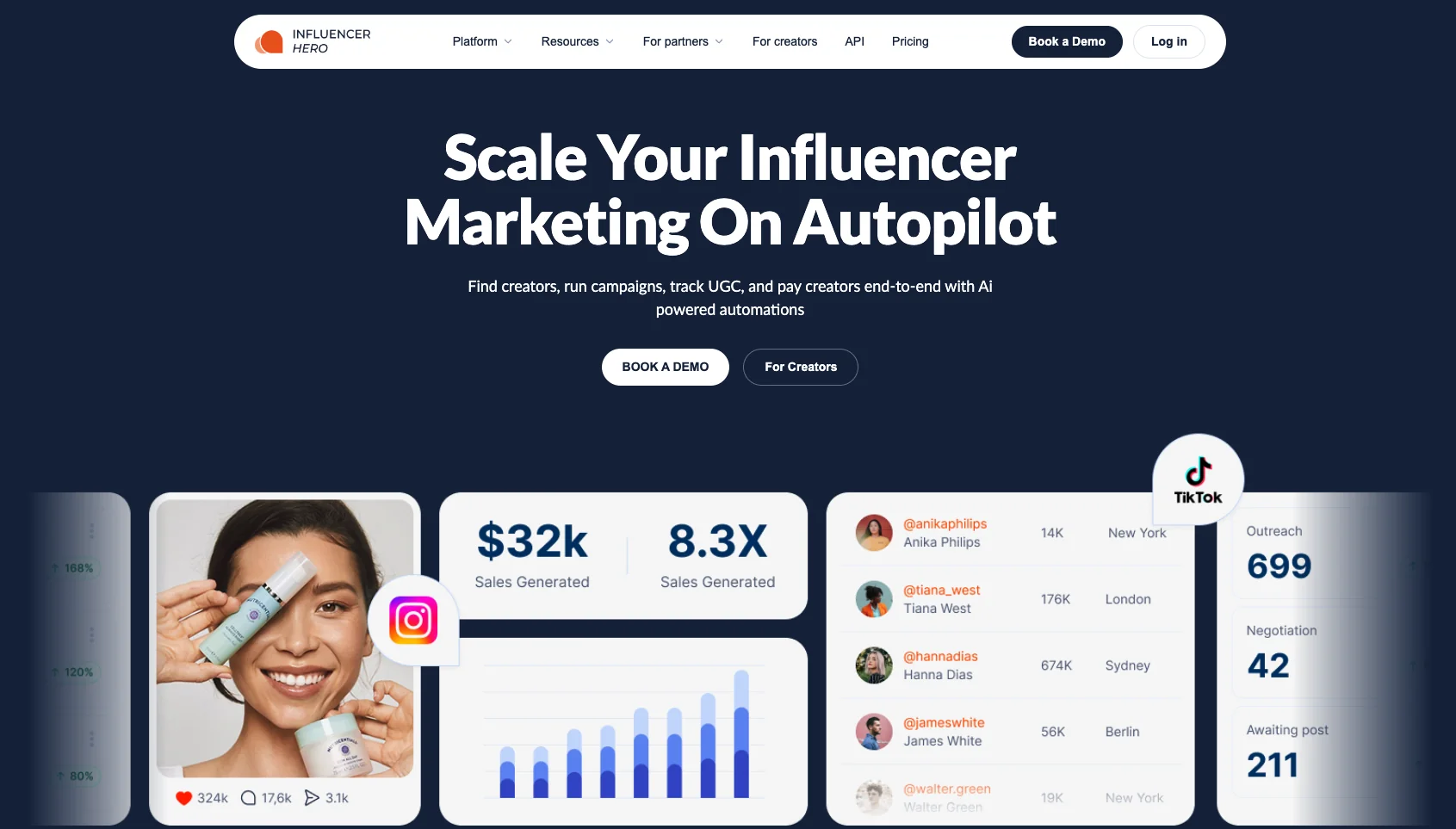
Influencer Hero is built for eCommerce and D2C teams that want to run influencer marketing in-house without stitching tools together. Creator search, outreach, CRM boards, product seeding, UGC collection, affiliate tracking and payouts all live in one account, and its search index of over 450 million Instagram, TikTok and YouTube profiles comes with 20-plus filters and fake-follower screening.
Key Features
- Influencer search: Over 450 million creators can be filtered by audience location, age, engagement and niche, with fake-follower detection.
- Lookalike discovery: Brands find creators similar to their best performers in a few clicks.
- Outreach at scale: Personalized influencer outreach runs as automated email sequences with AI follow-ups.
- Pipeline boards: Creators move through custom stages, and each stage can trigger an automatic action.
- Seeding orders: Gifted products are ordered in Shopify or WooCommerce as soon as a creator is approved.
- Content capture: Instagram Stories, Reels, TikToks and YouTube videos are saved automatically.
- Commission engine: Tiered commissions, codes and links are tracked, and creators are paid in bulk.
Pricing
Influencer Hero offers three listed plans and a custom package, scaled by monthly reachouts:
- Standard: $649/month with 1,000 reachouts
- Pro: $1,049/month with 5,000 reachouts
- Business: $2,490/month with 10,000 reachouts
- Custom & Agency: tailored pricing
A quarterly plan cuts the cost by 20%, and an annual plan cuts it by 30%.
Reviews
5.0/5.0 (Capterra)
Pros
- Automated, personalized outreach: Outreach campaigns reach thousands of creators while each email still opens with an AI-written line that fits the recipient. The AI Response Drafter can translate replies, change their tone or rewrite them without losing product details. Response rates rise without hiring extra people to manage inboxes.
- Bulk tools for scalable operations: Teams can filter the full creator list and apply emails, follow-ups, gifting orders or deal changes to an entire segment in one action. Updates that would take hours creator by creator are finished in minutes. Large programs stay tidy as the roster grows.
- Advanced CRM automations and integrations: Moving a creator to a new stage can send an email, create an order, generate a code or notify the team automatically. Connections with Shopify, Zapier and other tools keep data flowing without copying it by hand. The CRM becomes the control center for the whole program.
- AI-powered brand safety: Creator emails are scanned by AI for complaints, negative tone and other warning signs. Flagged conversations are sent to Slack or email immediately and sorted by urgency. The brand can respond quickly before a small issue becomes a public one.
Cons
- No free trial: Brands see the platform in a demo, since no trial account is offered.
- Expensive for smaller brands: Paying $649 every month is a real commitment for a very small team.
- Steep learning curve: Getting comfortable with every feature takes some onboarding.
Integrations
- Shopify: Seeding orders, codes and creator sales flow into Shopify automatically.
- WooCommerce: WooCommerce stores are connected for gifting and affiliate tracking.
- Zapier: Creator events can update thousands of other apps.
- Slack: The team is notified about replies, risks and campaign changes.
- Dropbox Sign: Contracts are signed electronically before content is created.
Socialix vs Influencer Hero
Socialix brings genuine experience in growing creator channels, and its team can manage social accounts, ads and SEO for a business that wants to outsource that work. It does not give brands software to run influencer partnerships, so there is no creator search, outreach, gifting workflow, affiliate tracking or creator payment system. Influencer Hero provides all of that in one platform, starting with fake-follower checks on 450 million searchable creators and automated email sequences, then CRM automations, Shopify and WooCommerce seeding, content capture, protected discount codes and bulk creator payments with 0.1% to 0.4% bank fees. Socialix is a service for growing social channels, while Influencer Hero is the system a brand uses to run its creator program end to end.
Socialix agrees prices individually after a WhatsApp or form enquiry, with no packages listed. Influencer Hero’s plans are public: $649 a month for Standard, $1,049 for Pro and $2,490 for Business, with a 20% discount for quarterly billing and 30% for annual billing, and it does not take a cut of creator fees or sales. On annual billing, Standard works out to about $454 a month for the full platform. For D2C brands that want to own their creator relationships and measure the sales they bring, Influencer Hero is the better choice.
Aspire
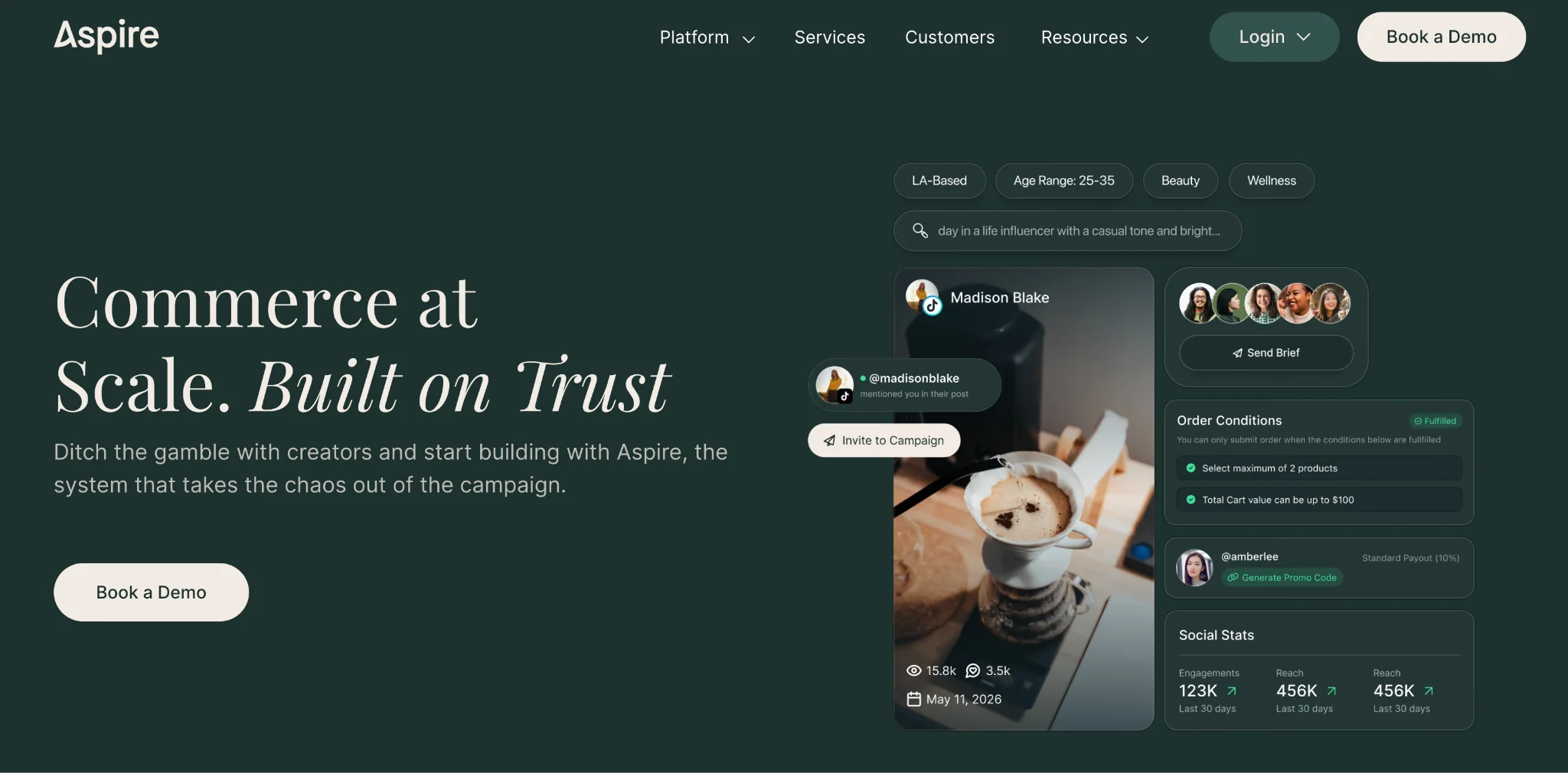
Shopify and eCommerce brands use Aspire as a single home for influencer, UGC, affiliate and referral programs. During 2025 it launched chat-style AI discovery and tools for partnership ads, and a refreshed creator portal followed in early 2026.
Key Features
- AI Creator Discovery: Natural-language search uses Meta and TikTok data to suggest creators.
- Product seeding: Gifting campaigns, like those in this roundup of gifting platforms, are managed from Shopify product data.
- CreatorStores: Creators curate storefronts hosted on the brand’s Shopify domain.
- CreatorAds Suite: Partnership ads using creator content are launched from Aspire.
- Commission tiers: Creators move to higher commission levels as their sales grow.
Pricing
Aspire shares pricing only through its sales team, with no trial account. According to Vendr, buyers pay a median of about $15,588 per year, with contracts usually between $11,139 and $36,599.
Reviews
4.6/5.0 (G2, 146 reviews) and 3.5/5.0 (Capterra, 6 reviews)
Pros
- Commerce integration: Codes, storefronts and orders sit on Shopify.
- Ads built in: Creator content goes straight into Meta ads.
- Customer referrals: Referral programs run next to creator programs.
Cons
- Price for smaller teams: Reviewers say value is harder to see at low volume.
- Contract terms: Annual agreements are the norm.
Integrations
- Shopify: Store products and orders power gifting and storefronts.
- Klaviyo: Creator lists can be targeted by email.
- Gmail: Creator outreach is sent from Gmail.
- PayPal: Commissions can be paid out to creators via PayPal.
- ShareASale x Awin: Existing affiliate programs can connect for reporting.
Socialix vs Aspire
Socialix and Aspire both help businesses benefit from creators, but Aspire stands out as software that brands use to recruit creators, seed products, pay commissions and run partnership ads.
Socialix, on the other hand, focuses more on growing creators’ own channels and managing social accounts as an agency. Both quote prices directly. For Shopify brands building creator storefronts and paid social around influencer content, Aspire is a good fit.
Afluencer
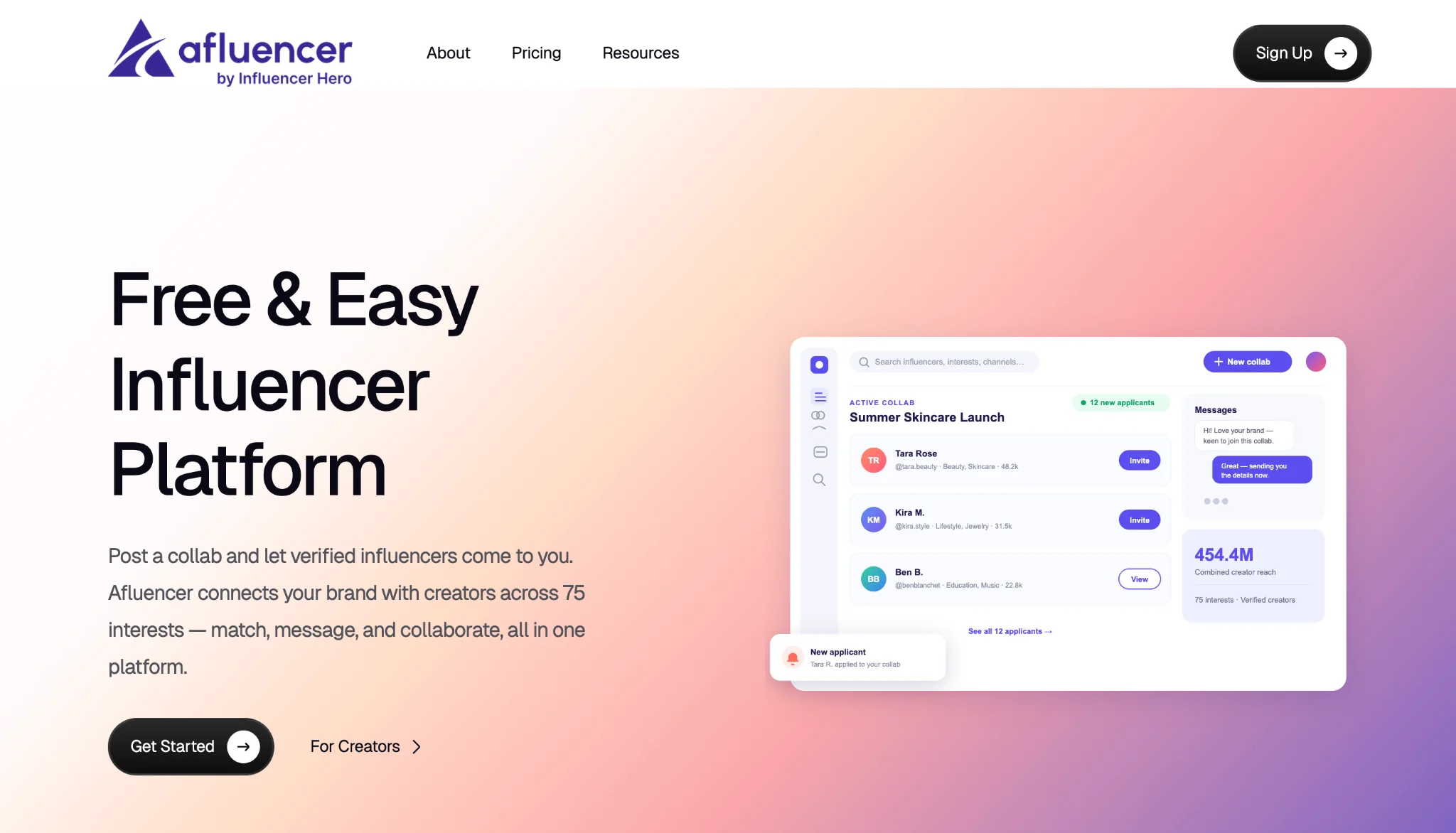
Afluencer runs a marketplace where small brands publish collaboration opportunities and verified creators apply. CreatorGPT assesses applicants for fit, and the entry plan is $49 a month.
Key Features
- Opportunity posts: Brands set out the product, content needed and compensation offered.
- CreatorGPT matching: The AI matching assistant ranks applicants by relevance.
- Invitations: Brands can reach out to creators directly with premium filters.
- Verified creators: Every account is checked before it can apply.
- Scalable plans: Higher tiers add outreach volume, shipping and payments.
Pricing
Afluencer charges monthly, with three plans:
- Marketplace: $49 monthly with listings, premium filters and 60 invites
- Standard: $649 monthly with 1,000 reachouts, shipments and creator payments
- Pro: $1,049 monthly with 5,000 reachouts, added seats and account management
Reviews
4.6/5.0 (G2, 738 reviews) and 4.1/5.0 (Shopify App Store, 37 reviews). Some G2 reviewers are creators using the marketplace.
Pros
- Budget-friendly: A $49 plan lowers the barrier to entry.
- Opt-in creators: Creators apply because they want the collaboration.
- Quick launch: An opportunity can be live within minutes.
Cons
- Varying fit: Some applicants fall outside the ideal audience.
- Mostly US creators: Other regions have fewer active applicants.
Integrations
- Shopify: Products can be added to opportunities from Shopify.
- Amazon: Collaborations can link to Amazon products.
- Klaviyo: Creators can be synced into Klaviyo for email.
- Slack: The team hears about new applicants in Slack.
- DocuSign: Agreements are signed digitally.
Socialix vs Afluencer
Socialix and Afluencer both work closely with creators, but Afluencer stands out by giving brands a self-serve way to meet creators who want to promote their products, starting at $49 a month.
Socialix, on the other hand, focuses more on helping creators grow and on agency services for businesses. Afluencer publishes its plans, while Socialix quotes privately. For small brands that want their first creator collaborations without hiring an agency, Afluencer is a practical starting point.
NeoReach
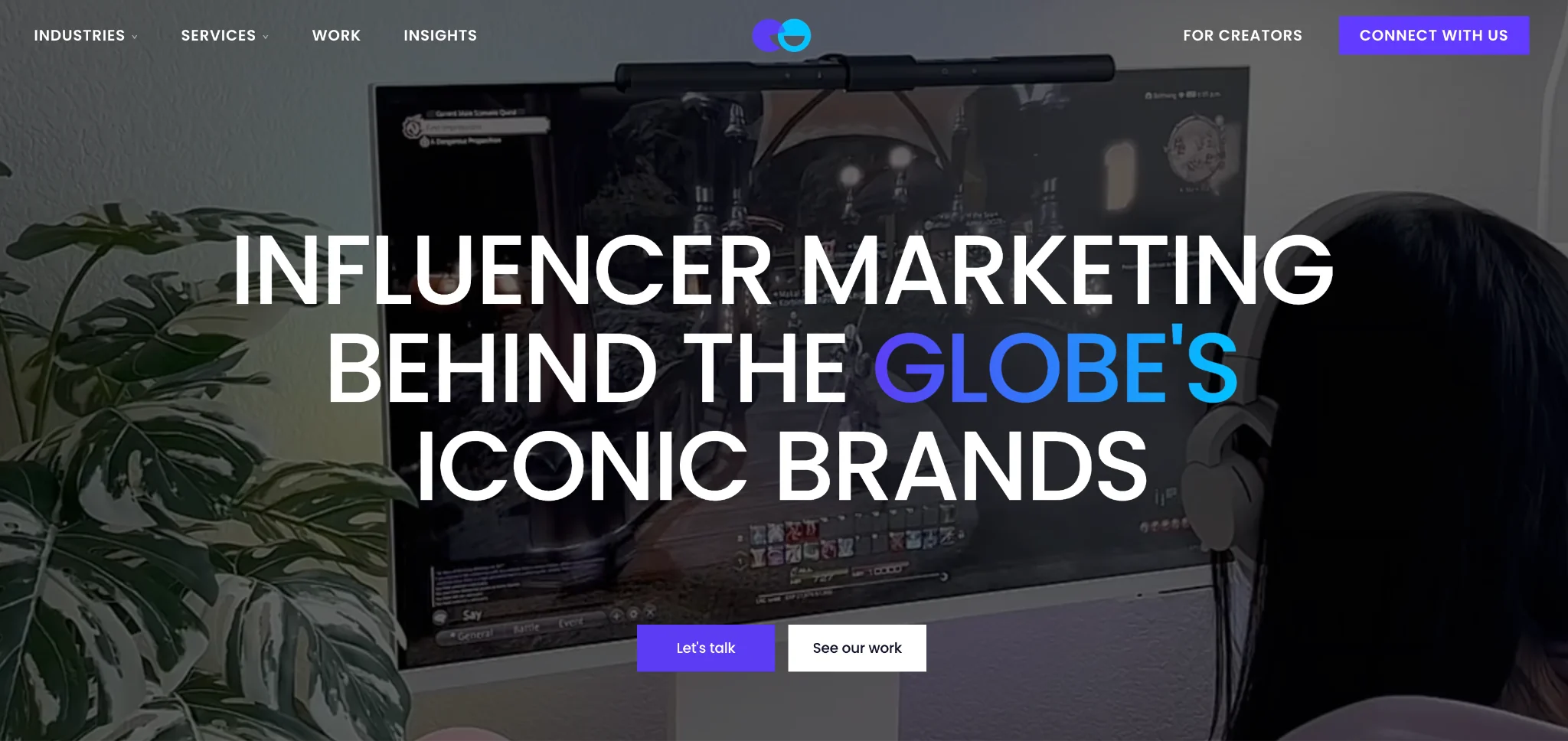
NeoReach is a full-service influencer marketing agency run by senior strategists, with clients such as NVIDIA, Netflix and Walmart. It handles campaign strategy, creator selection, UGC, product seeding and paid amplification, and it has added talent representation through Influencers.com.
Key Features
- Campaign management: NeoReach designs and runs campaigns from brief to report.
- Creator data: Its platform covers over 250 million creators with 400+ data points each.
- Paid amplification: Creator posts are boosted through paid social channels.
- UGC and content: Creators produce content for ads and owned channels.
- Seeding at scale: Products are distributed to large groups of creators.
Pricing
NeoReach builds a custom proposal for every campaign and does not sell software plans or trials. Full-service campaigns begin at $25,000, according to its pricing page.
Reviews
4.5/5.0 (G2, 11 reviews, low review volume)
Pros
- Senior strategists: Experienced leads run each account.
- Proven at scale: Large consumer and tech brands are clients.
- One partner: Strategy, creators and media are handled together.
Cons
- Budget threshold: Minimum campaign sizes exclude most small brands.
- Platform feedback: Software users mention slow pages and filter bugs.
Integrations
- YouTube: YouTube creators are part of campaign planning.
- TikTok: TikTok results are tracked across campaigns.
- LinkedIn: B2B campaigns can include LinkedIn creators.
- Creator Intelligence API: Enterprise clients can query NeoReach creator data.
Store, email and CRM connections are not part of the NeoReach offer, because its own staff carry out the work.
Socialix vs NeoReach
Socialix and NeoReach are both service providers, but NeoReach stands out as a dedicated influencer agency that selects creators, runs brand campaigns and amplifies results with paid media for large companies.
Socialix concentrates on creator growth and broad digital marketing for smaller clients. NeoReach campaigns start from $25,000. For enterprise brands that want an experienced agency to run influencer marketing for them, NeoReach is the more specialized option.
Later

Later moved from social scheduling into creator marketing when it joined forces with Mavrck in 2022, a product now called Later Influence. Buying the affiliate app Mavely in 2025 added creator commerce, and today Later sells influencer marketing as software or as a done-for-you program.
Key Features
- Creator recommendations: AI suggests creators that suit the brand and campaign goals.
- Affiliate links: Mavely-powered links let creators earn on brand and retailer sales.
- Conversion tracking: Each creator gets credit for the clicks and orders they drive.
- Gifting codes: Creators pick products from the Shopify store with a code, a simple form of influencer gifting.
- Social scheduling: Later’s scheduler plans and publishes brand posts alongside creator work.
Pricing
Later does not publish pricing for its influencer product. Brands request a demo, and the proposal depends on whether they want software access, a managed program or both.
Reviews
4.5/5.0 (G2, 469 reviews) and 4.6/5.0 (Capterra, 135 reviews)
Pros
- Well-known brand: Later has a long track record in social media.
- Retail reach: Affiliate links work beyond the brand’s store.
- Managed option: Later’s team can run programs.
Cons
- Data consistency: Some reviewers report mismatched metrics.
- Search limitations: Niche audience filters can fall short.
Integrations
- Shopify: Gift codes and orders are connected to Shopify.
- Bazaarvoice: Creator content can support product page reviews.
- Yotpo Reviews: Reviews from creators sync with Yotpo.
- PowerReviews: Ratings and content can flow to PowerReviews.
- Reporting API: Program data can feed internal dashboards.
Socialix vs Later
Socialix and Later both offer social media management, but Later stands out by adding a full influencer product with creator matching, gifting codes and Mavely affiliate links.
Socialix, on the other hand, focuses more on agency services and growing creators’ audiences. Both share prices only after a conversation. For brands that want social scheduling and influencer marketing from one well-known company, Later is a convenient choice.


Influencity
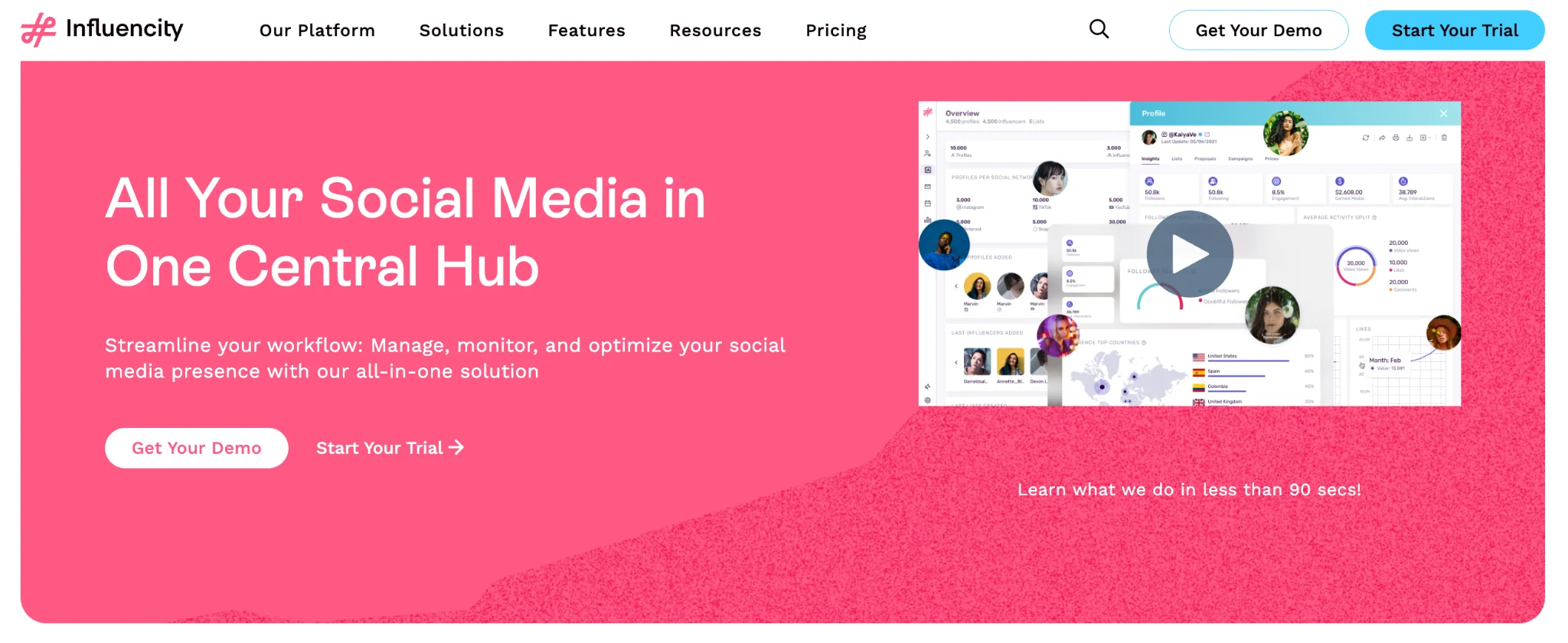
Brands and agencies use Influencity to handle discovery, relationship management, campaigns, seeding and payments in more than 180 countries. Social publishing and social listening are included, and agencies can run separate client workspaces.
Key Features
- Discovery: A database of over 200 million creators includes audience and engagement data.
- Relationship management: Creator profiles keep notes, history and status together.
- Campaign Manager: Deliverables and deadlines are tracked per campaign.
- Payments: Creators are paid in multiple currencies worldwide.
- Social listening: Monitoring tracks brand and competitor mentions.
Pricing
Influencity lists its prices openly, and a 7-day trial applies to every plan:
- Basic: $168/month or $1,613/year, with 30 profile analyses a month
- Professional: $348/month or $3,340/year, with 150 profile analyses a month
- Business: $698/month or $6,700/year, with 500 profile analyses a month
- Enterprise: custom
Reviews
4.5/5.0 (G2, 288 reviews) and 4.2/5.0 (Capterra, 5 reviews)
Pros
- Public pricing: Brands can compare plans before talking to sales.
- Agency-ready: Client workspaces keep accounts separate.
- International payouts: Creators in many countries can be paid.
Cons
- Onboarding time: Filters and settings take practice.
- Plan limits: Analyses per month are capped.
Integrations
- Shopify: Gifted orders and promo codes connect to the Shopify store.
- Chrome extension: Creator metrics appear on social profiles.
- Email: Outreach is sent from the brand’s own mailbox.
- Social networks: Profiles from Instagram, TikTok, YouTube and Twitch can be analyzed.
- API: Creator data can be used in other software.
Socialix vs Influencity
Socialix and Influencity both support social media work, but Influencity stands out by giving brands and agencies software for creator discovery, relationship management, seeding and payments.
Socialix, on the other hand, focuses more on doing the work as an agency. Influencity starts at $168 a month with a free trial. For agencies that want their own influencer software at a moderate price, Influencity is a strong option.
SARAL
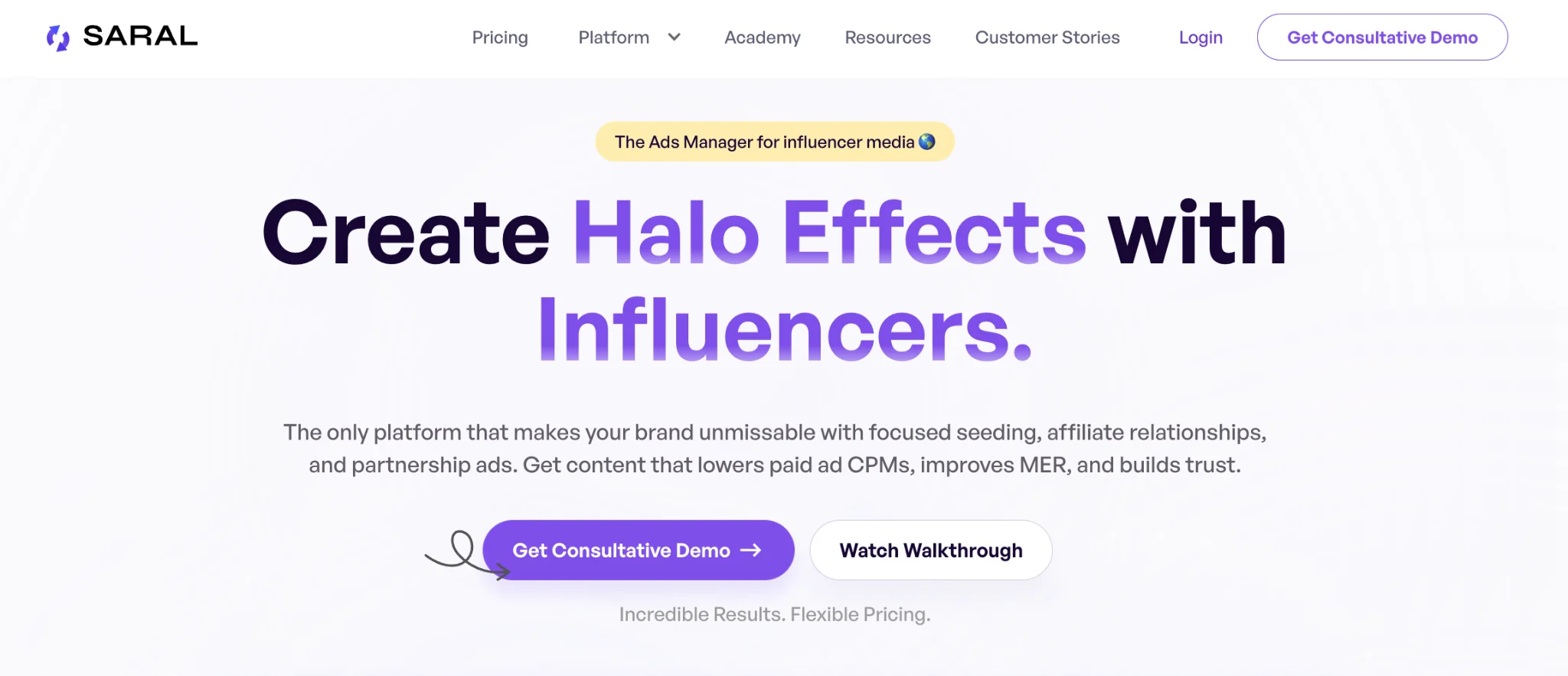
Built for DTC brands, SARAL concentrates on two growth levers: gifting products to creators and turning the best of them into ambassadors. An AI assistant called SIA speeds up searching, emailing and replying, and the customer list features Grüns, Spacegoods and Obvi.
Key Features
- Creator discovery: Brands build creator lists in bulk.
- Email outreach: Personalized sequences reach creators automatically.
- SARAL Inbox: Every creator conversation sits in one place.
- Ambassador tracking: Long-term partners are managed with status and notes.
- SIA: AI drafts messages and highlights priorities.
Pricing
SARAL is billed annually or quarterly:
- Starter: for 100 active partnerships, $12,000 per year or $3,600 per quarter
- Business: for 500 active partnerships, $15,000 per year or $4,500 per quarter
- Professional: for 1,000 active partnerships, $25,000 per year or $7,500 per quarter
Managed support is an optional extra, and trials are arranged after a call.
Reviews
4.8/5.0 (G2, 60 reviews)
Pros
- Seeding-first design: Gifting programs are the core workflow.
- AI support: SIA reduces time spent on replies.
- High satisfaction: G2 users rate it strongly.
Cons
- Extra affiliate tool: Commissions are tracked through GoAffPro.
- Thinner reports: Analytics are less detailed than larger suites.
Integrations
- Shopify: Gifting orders are placed in Shopify.
- WooCommerce: WooCommerce stores are supported.
- GoAffPro: Affiliate tracking runs through GoAffPro.
- Slack: Updates are shared with the team in Slack.
- Sendlane: Creator contacts can be used in Sendlane campaigns.
Socialix vs SARAL
Socialix and SARAL both value long-term creator relationships, but SARAL stands out with software for DTC brands to seed products, manage ambassadors and run outreach with AI help.
Socialix, on the other hand, focuses more on growing creators’ channels and providing agency services. SARAL starts at $12,000 a year. SARAL is a focused choice when gifting and ambassadors are the main way a DTC brand builds awareness.
HypeAuditor
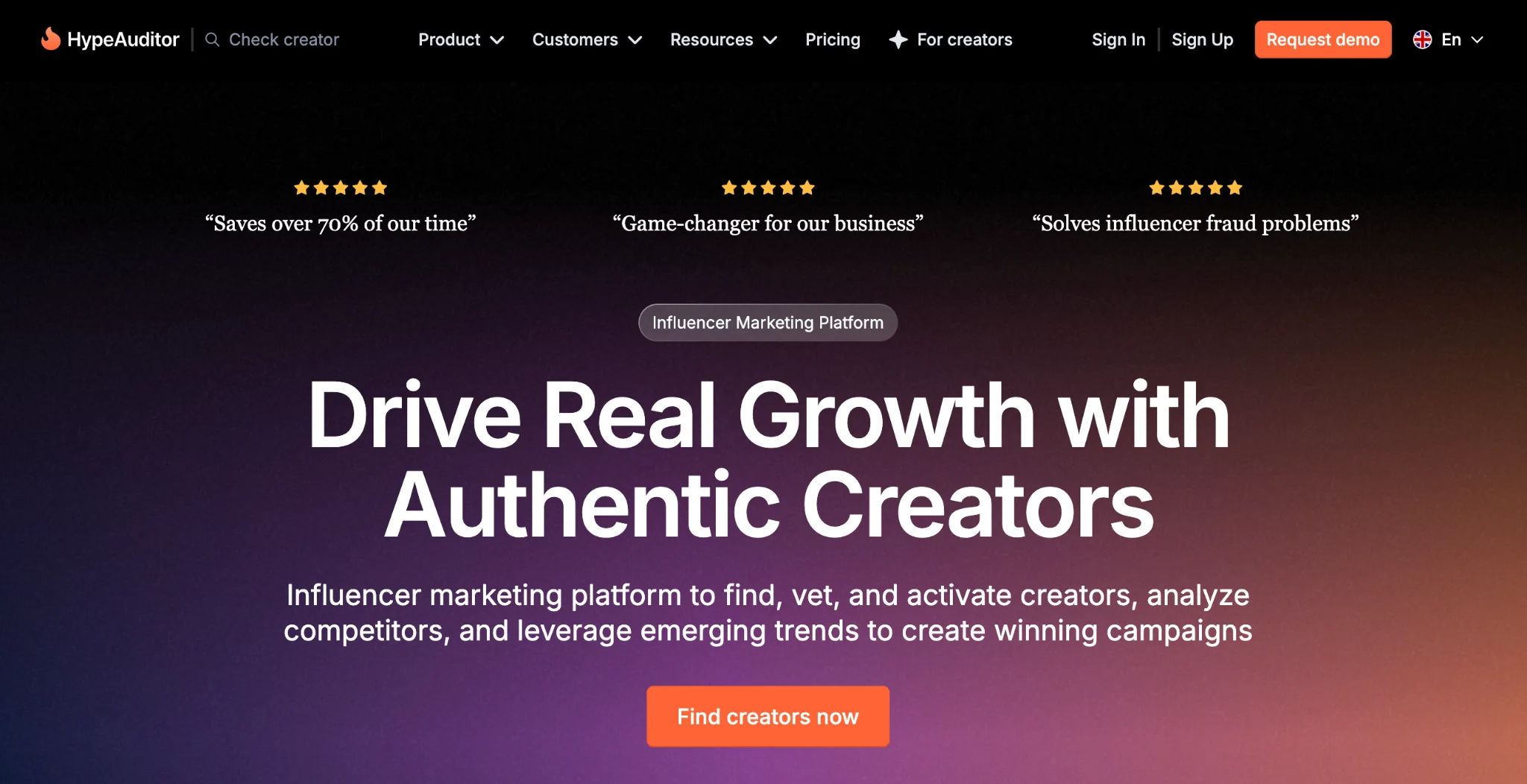
Brands mostly know HypeAuditor for checking whether a creator’s audience is real, using data on more than 227 million accounts. The product has since grown to include campaigns, store sales tracking and creator payments, plus an AI helper named HypeAgent that answers questions in everyday language.
Key Features
- Creator discovery: Over 35 filters help narrow down creators.
- Fraud analysis: Reports flag fake followers and suspicious engagement.
- Media Plans: Reach and cost are estimated before a campaign starts.
- Market Analysis: Brands see which creators competitors work with.
- HypeAgent: An AI assistant answers questions about creator data.
Pricing
HypeAuditor’s pricing page asks brands to request a quote, while its blog lists Basic from $299 a month on annual billing. PRO and Enterprise are custom, and a free account covers media plans and campaign management.
Reviews
4.6/5.0 (G2, 273 reviews) and 4.8/5.0 (Capterra, 35 reviews)
Pros
- Data accuracy focus: Audience checks help avoid fake reach.
- Competitive insight: Rival activity is easy to track.
- Free account: Some features can be used without paying.
Cons
- Limited CRM: Relationship tools are basic.
- Small-creator data: Coverage of smaller accounts can be thin.
Integrations
- Shopify: Shopify sales are matched to creators.
- WooCommerce: WooCommerce revenue can be attributed.
- Magento: Magento stores support sales tracking.
- Zapier: Data can move to other apps automatically.
- Chrome extension: Creator stats appear while browsing.
Socialix vs HypeAuditor
Socialix and HypeAuditor both deal with social media growth, but HypeAuditor stands out by measuring it, with fraud detection and audience analysis that show whether a creator’s following is genuine.
Socialix, on the other hand, focuses more on helping creators build their following in the first place. On a yearly contract, the Basic plan costs $299 a month. HypeAuditor is a smart addition when audience quality must be confirmed before any creator is paid.
Creator.co

Creator.co mixes influencer campaigns with affiliate programs, and brands can either use the software themselves or let its team do the work. Over 270,000 creators have signed up to its network, a wider search index holds 400 million-plus profiles, and an AI agent called London matches and contacts them.
Key Features
- London: AI matches creators to briefs and contacts them.
- Creator applications: Registered creators apply to brand campaigns.
- Campaign tools: Briefs, approvals and payments are managed in one place.
- Affiliate programs: Creators can earn commission on sales.
- Managed service: Creator.co’s team can run campaigns for brands.
Pricing
Three plans are listed on the Creator.co site, and the Self Serve tier can be trialed for 14 days:
- Self Serve: $199/month on annual billing or $299/month with a 3-month minimum
- Managed: $1,499/month on annual billing or $2,199/month with a 6-month minimum
- Enterprise: custom with an annual contract
Reviews
4.6/5.0 (G2, 124 reviews)
Pros
- Free trial: No credit card is needed for the trial.
- Service flexibility: Brands can switch between self-serve and managed.
- Affiliate support: Commission programs are built in.
Cons
- Regional focus: Most creators are based in North America.
- Minimum terms: Monthly plans carry commitments.
Integrations
- Shopify: The official app connects products and orders.
- Google Analytics: Traffic from creators is measured in GA.
- Gmail: Outreach can use Gmail.
- Outlook: Outlook inboxes are supported.
- Rakuten Advertising: Affiliate programs can connect with Rakuten.
Socialix vs Creator.co
Socialix and Creator.co both offer hands-on help, but Creator.co stands out by pairing a managed service with self-serve software for creator recruitment, campaigns and affiliate programs.
Socialix centers its work on growing creator channels and general marketing services. The cheapest Creator.co tier costs $199 a month when paid yearly. Teams that want software with the option of a team to run it, Creator.co is a flexible pick.
Lefty
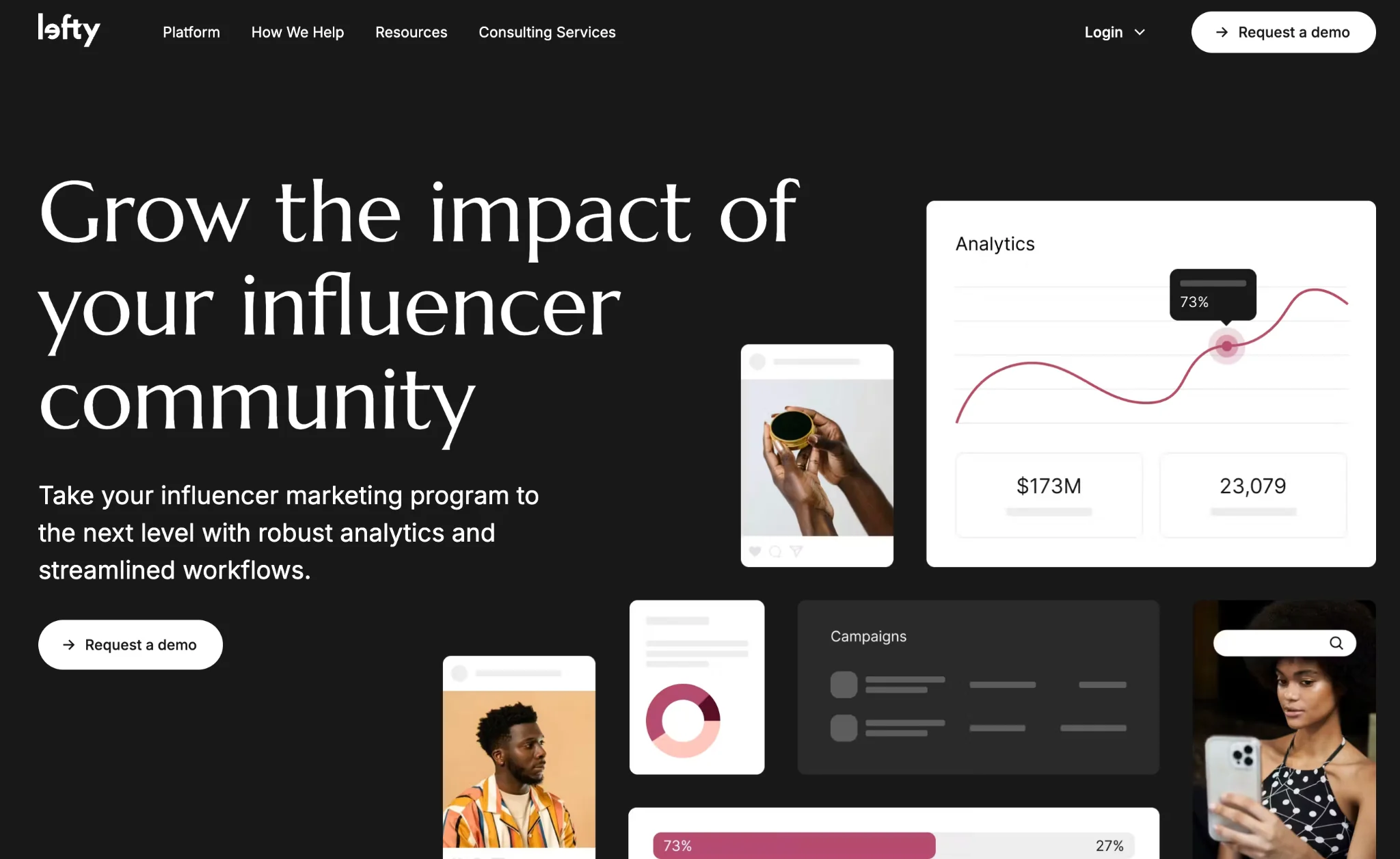
Lefty is an influencer platform from Paris built for premium fashion, beauty, luxury and lifestyle brands such as Celine, Louis Vuitton and Ralph Lauren. It focuses on creator casting, campaign reporting and competitive benchmarking based on earned media value.
Key Features
- Influencer search: Vetted creators can be found by audience and style.
- CRM: Contacts and collaboration history are kept per creator.
- Casting: Shortlists support campaigns and events.
- Seeding and affiliation: Gifting and affiliate programs are tracked.
- Benchmarking: Performance is compared with competitors.
Pricing
Brands receive a Lefty quote once they have seen a demo. On Capterra the starting figure is €590 monthly per feature, and outside estimates for bigger packages run from €990 to €3,490 monthly.
Reviews
4.7/5.0 (G2, 97 reviews)
Pros
- Luxury focus: Designed for premium brands.
- Benchmark data: Competitor insights are strong.
- Market reports: Regular studies support planning.
Cons
- High cost: Pricing suits larger budgets.
- Estimated reach: Some metrics are modeled.
Integrations
- Shopify: The app syncs gifting orders and codes.
- Salesforce Commerce Cloud: Order data can be connected to creator campaigns.
No complete list of Lefty integrations is public, so it is worth asking about email and CRM tools on the sales call.
Socialix vs Lefty
Socialix and Lefty both help brands make the most of social media, but Lefty stands out with software for casting creators and benchmarking results against competitors in fashion, beauty and luxury.
Socialix, on the other hand, focuses more on agency services for creators and businesses. Lefty starts from €590 a month per feature. For premium brands that want detailed competitor data alongside campaign management, Lefty is a strong match.
Final Thoughts on Socialix Alternatives
Socialix can help creators grow their channels and take social media, ads and SEO work off a business’s plate. It does not provide software for brands to find creators, run outreach, ship products or track sales, and it shares no pricing or independent reviews. Brands that want to run and measure their own creator programs should look at Socialix alternatives built for that purpose.