


10 Best Influencerdb Alternatives for Influencer Marketing
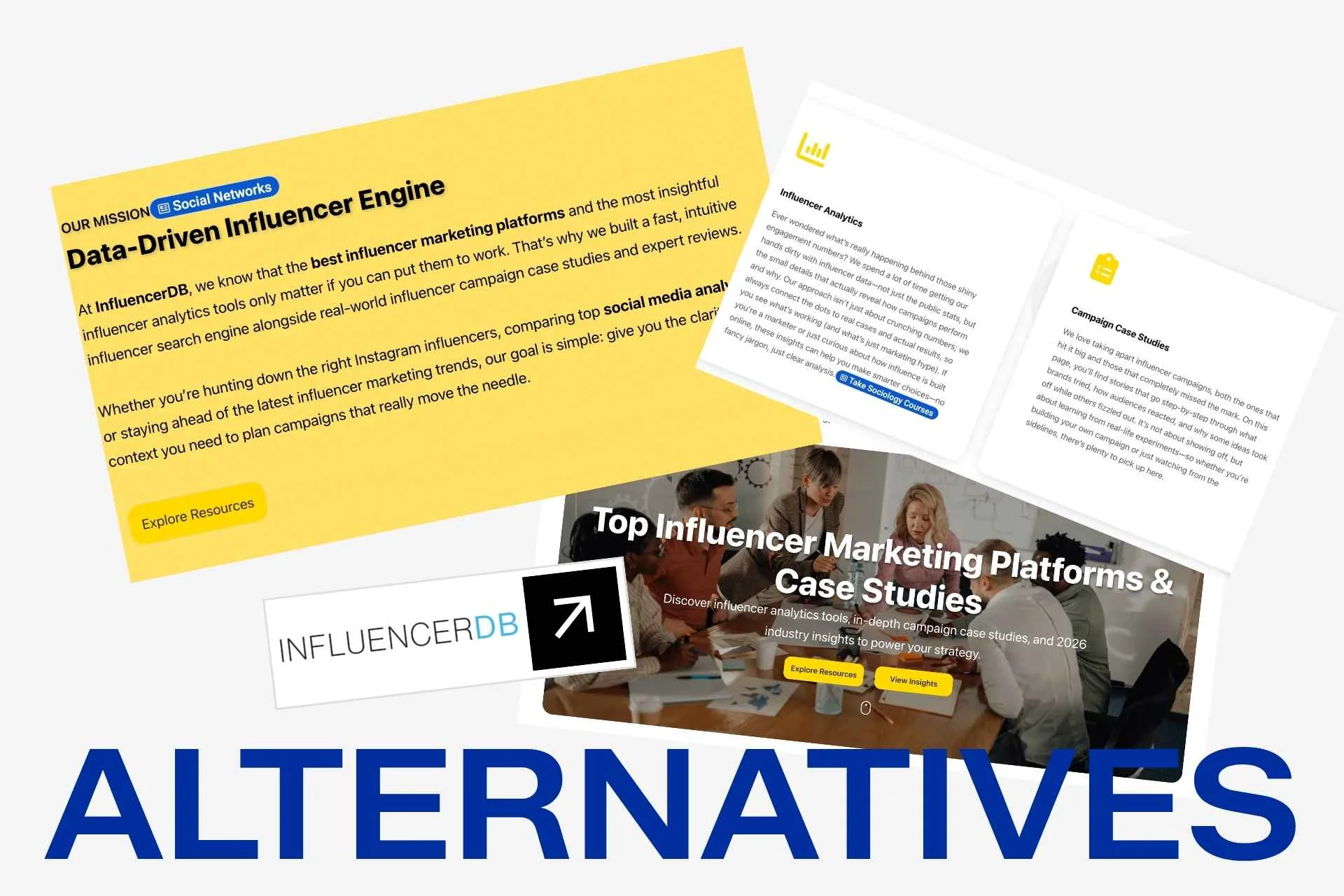
Influencerdb today is mostly a publication. The site runs research articles, platform comparisons and campaign case studies, with a free Instagram search engine attached, run by a small editorial team rather than a product organisation.
That is worth knowing before you shortlist it, because the ratings you will find online do not describe it. A five-star review dating from 2017 and a €179 a month figure on a directory both refer to the earlier InfluencerDB SaaS business, not the site you land on now. Its own pricing page returns a 404.
Take it for what it currently is and the picture is clear: useful reading, a free way to look up an Instagram profile, one network covered, and nothing at all after the shortlist. No outreach, no gifting, no affiliate tracking, no payouts.
Ten alternatives follow in this order: Aspire, IZEA, Influencer Hero, Afluencer, Modash, NeoReach, Social Cat, Influencity, Traackr and HypeAuditor.
Key Criteria for Evaluating Influencer Marketing Platforms
Core Features
Evaluation of essential influencer marketing capabilities, including influencer discovery, outreach, CRM, campaign management, reporting, and content workflows.
Pricing & Flexibility
Comparison of pricing models, subscription plans, and contract terms to match different budgets and growth stages.
Customer Reviews & Satisfaction
Analysis of user feedback from trusted review platforms, focusing on usability, reliability, customer support, and overall performance.
Pros & Cons
Review of each platform’s strengths and limitations to highlight where it performs well and where it may fall short based on different use cases.
Integrations
Review of the most important integrations (e.g., Shopify and other tech tools), highlighting what each integration enables in one sentence.
Influencerdb Overview

Influencerdb combines an editorial operation with a search tool. The writing side publishes platform reviews, pricing breakdowns, benchmark pieces and campaign case studies, positioned as independent research rather than vendor marketing. The tool side is an Instagram search engine where you filter creators by keyword, hashtag, niche, engagement rate, audience size and location, then compare shortlisted profiles side by side.
The analytics go a reasonable distance for a free tool, covering follower growth trends, engagement breakdowns and audience demographics. What stops is everything that turns a shortlist into a campaign. There is no outreach sequencing, no influencer CRM tools layer, no gifting, no codes and no payouts, so the output is a list of handles you take somewhere else.
Key Features
- Instagram search engine: Creators filtered by keyword, hashtag, niche, engagement rate, audience size and location.
- Side-by-side comparison: Shortlisted profiles lined up on the same metrics.
- Growth and engagement trends: Follower movement and engagement breakdowns per profile.
- Audience demographics: Follower composition reported alongside the headline numbers.
- Editorial research: Platform reviews, case studies and benchmark articles published free.
Pricing
Nothing published. The site’s own pricing path returns a 404, and its About page describes a mix of free content and paid analytics without naming a figure. Third-party listings quote around €179 a month, but that number belongs to the earlier InfluencerDB SaaS product rather than the current site.
Reviews
No verifiable rating for the current product. There is no G2 or Capterra listing. A 5/5 editorial score circulating online comes from a 2017 review, and a 67% score on one directory sits beside pricing that no longer applies, so neither reflects what is on offer today.
Integrations
- Instagram: The single network the search engine and analytics cover.
- Exports: Shortlists taken out manually for use in another tool.
- Newsletter: Research and benchmark updates delivered by email.
- Creator contact: No outreach layer, so first contact happens in your own inbox.
- eCommerce platforms: None published, so nothing connects creators to store orders.
Pros
- Free to search: Profile lookups and comparisons cost nothing to try.
- Genuinely useful writing: The research and benchmark articles stand on their own.
- No commitment: Nothing to sign, cancel or negotiate before using it.
Common Drawbacks of Influencerdb
Instagram and nothing else
TikTok and YouTube are absent. For a brand where short-form video is the main channel, an Instagram-only index rules out most of the roster before filtering starts.
The ratings describe a different product
Scores and prices circulating online date from the original InfluencerDB SaaS. There is no current G2 or Capterra record, so there is nothing recent to judge the tool by.
No price and no rate card
The pricing page 404s. Paid features are referenced without figures, which makes budgeting impossible without asking directly.
The workflow ends at the shortlist
No outreach, no CRM, no gifting, no affiliate codes, no payouts and no store connection. Everything after choosing a creator happens in another system.
Best Influencerdb Alternatives
| TOOL | REVIEWS | BEST FOR | TRIAL INFO | PRICING | ||
|---|---|---|---|---|---|---|
1 |

|
⭐ | Influencer partnerships | Book Demo | Pricing | Website |
2 |
|
⭐ | Influencer marketplace | Book Demo | Pricing | Website |
3 |

|
⭐ | Influencer CRM & automation | Book Demo | Pricing | Website |
4 |

|
⭐ | Influencer marketplace campaigns | Book Demo | Pricing | Website |
5 |

|
⭐ | Influencer discovery | Book Demo | Pricing | Website |
6 |

|
⭐ | Influencer campaigns & data analytics | Book Demo | Pricing | Website |
7 |

|
⭐ | Micro-Influencer Campaigns | Book Demo | Pricing | Website |
8 |

|
⭐ | Campaign management | Book Demo | Pricing | Website |
9 |

|
⭐ | Enterprise influencer analytics | Book Demo | Pricing | Website |
10 |

|
⭐ | Influencer analytics | Book Demo | Pricing | Website |
Aspire
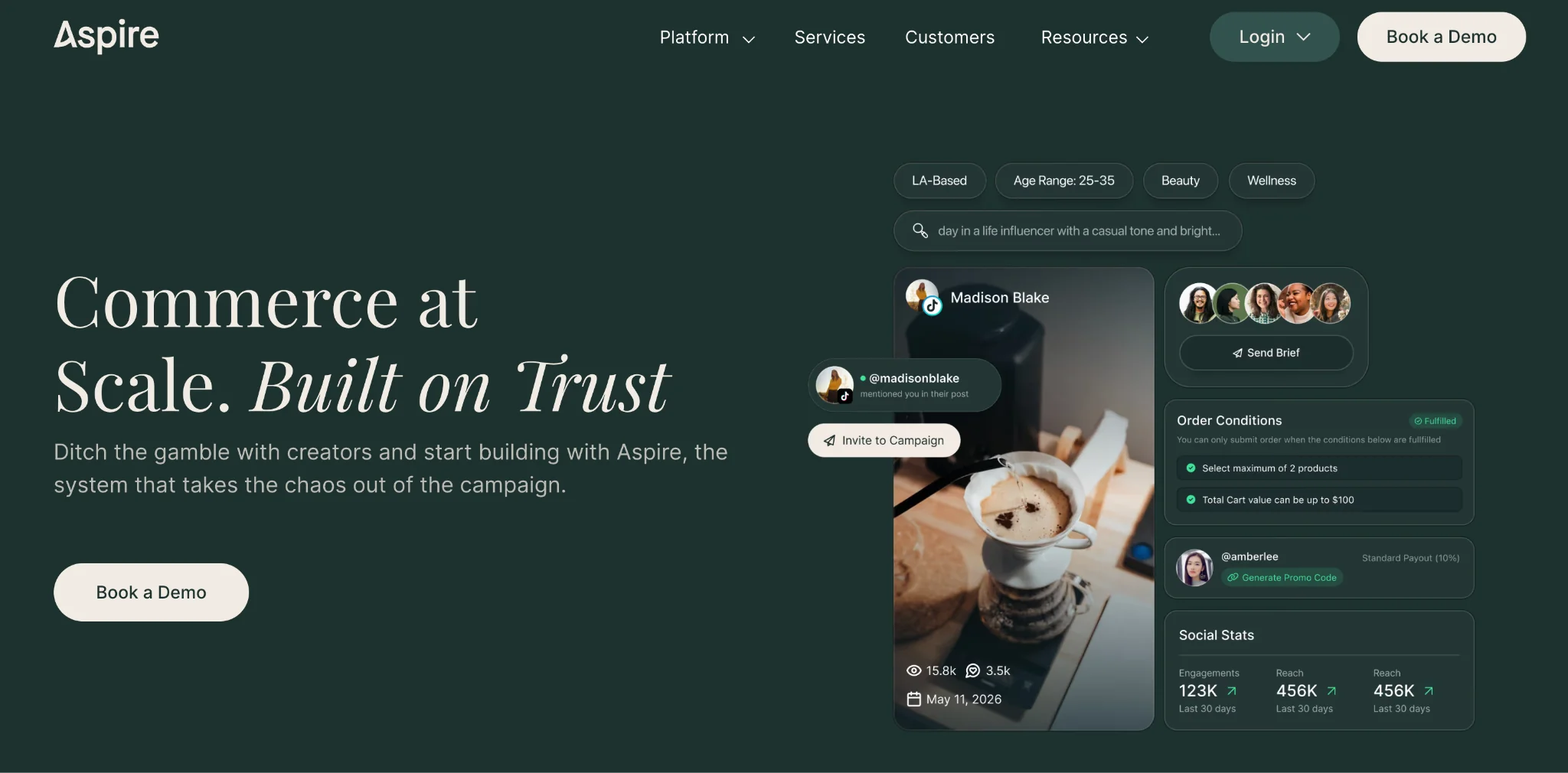
Aspire runs the full brand-side program for companies operating at scale. Lookalike discovery feeds seeding at volume, briefs and approvals move content through review, affiliate attribution ties it to orders, and a rights-managed library holds the finished assets.
Key Features
- Lookalike discovery: One creator who performed becomes a shortlist of similar profiles.
- Seeding workflows: Product send-outs run at volume with tracking attached.
- Briefs and approvals: Content requested, reviewed and signed off in the platform.
- Affiliate attribution: Codes and links tying creator activity to real orders.
- Rights-managed library: Approved assets held with usage terms for paid reuse.
Pricing
Not published. Third-party sources report an annual commitment starting around $2,000 a month, with other estimates near $2,499, and they disagree enough that only a quote settles it. There is no free trial.
Reviews
4.6/5.0 (G2, 146 reviews).
Pros
- 146 current reviews: Recent independent evidence rather than a score from 2017.
- Three networks and then some: Discovery across the platforms Instagram-only tools miss.
- Everything after the shortlist: Seeding, approvals, codes and attribution included.
Cons
- No trial and no rate card: A closed evaluation at a reported $2,000-plus a month.
- Annual commitment: A year signed up front, against a free search box.
- Heavier than most need: Built for programs already running at scale.
Integrations
- Shopify: Seeding orders raised and creator revenue attributed.
- WooCommerce: Equivalent coverage for WordPress stores.
- Klaviyo: Creator contacts into email programs.
- Slack: Campaign alerts into team channels.
- Zapier: Wider stack connections where no native option exists.
Influencerdb vs Aspire
One is free and stops at a list of Instagram handles. The other costs a reported $2,000-plus a month and carries a creator from shortlist through seeding, briefing, approval, a discount code and an order in your store. The gap is not really about search quality, since both surface creators competently; it is about whether anything happens afterwards.
Neither publishes a price, which is the one thing they share. Aspire at least has 146 recent G2 reviews to read before the sales call, where Influencerdb has none for the product as it exists now.
IZEA
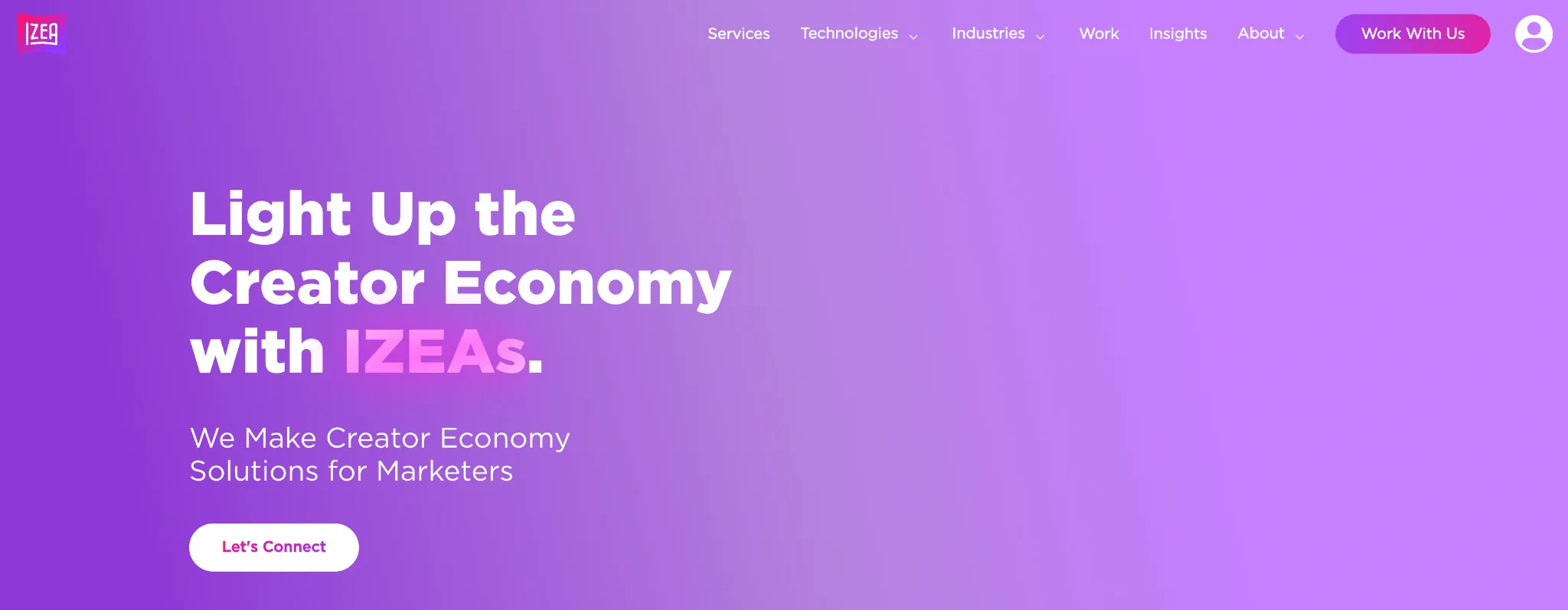
IZEA sells a self-serve Creator Marketplace where brands post casting calls and creators pitch, the IZEA Flex platform for managing campaigns end to end, and a fully managed service. The marketplace is the only tier with a published price.
Key Features
- Casting calls: Briefs posted to the marketplace for creators to pitch against.
- Creator listings: Pre-priced offers creators publish that brands can buy outright.
- AI credits: 60,000 a month on the Marketer Pro plan for matching and content tooling.
- Campaign management in Flex: Search, onboarding, workflow and payments in one platform.
- Managed services: IZEA’s own team running strategy, execution and measurement.
Pricing
Marketer Pro on the Creator Marketplace is $129 a month, or $99 a month on annual billing at $1,188 a year, with a free tier below it and a 10% seller service fee on transactions. IZEA Flex and managed services are quoted separately, with one directory listing Flex from around $149 per user a month.
Reviews
3.9/5.0 (G2, 32 reviews) for IZEA Flex, with no reviews on its Capterra listing. Support and platform breadth draw praise; slowness, bugs and low creator response rates draw the criticism.
Pros
- Creators come to you: Casting calls remove the manual outreach step entirely.
- A published marketplace price: $99 to $129 a month, stated openly.
- Payments included: Creators paid in-platform rather than by bank transfer.
Cons
- 3.9 is the weakest score here: Bugs and creator response rates recur in reviews.
- 10% transaction fee: Charged on marketplace deals on top of the subscription.
- Flex is quote-only: The tier that manages campaigns has no public price.
Integrations
- Instagram, TikTok and YouTube: Creator accounts connected for performance data.
- Payments: Creator payouts handled in-platform on a 30-day cycle.
- Analytics: Social and campaign performance reporting inside Flex.
- API access: Campaign and creator data available on higher tiers.
- eCommerce platforms: No named Shopify app, so store attribution is not native.
Influencerdb vs IZEA
Influencerdb makes you go and find people. IZEA makes them come to you, through casting calls and pre-priced listings, then handles the contract and the payment. For a small team without time to send cold emails, that inversion is worth more than a better search filter.
IZEA also covers TikTok and YouTube, which an Instagram-only index cannot. Its 3.9 score is nothing to celebrate, but 32 current reviews still beats a rating that describes a product retired years ago.
Influencer Hero
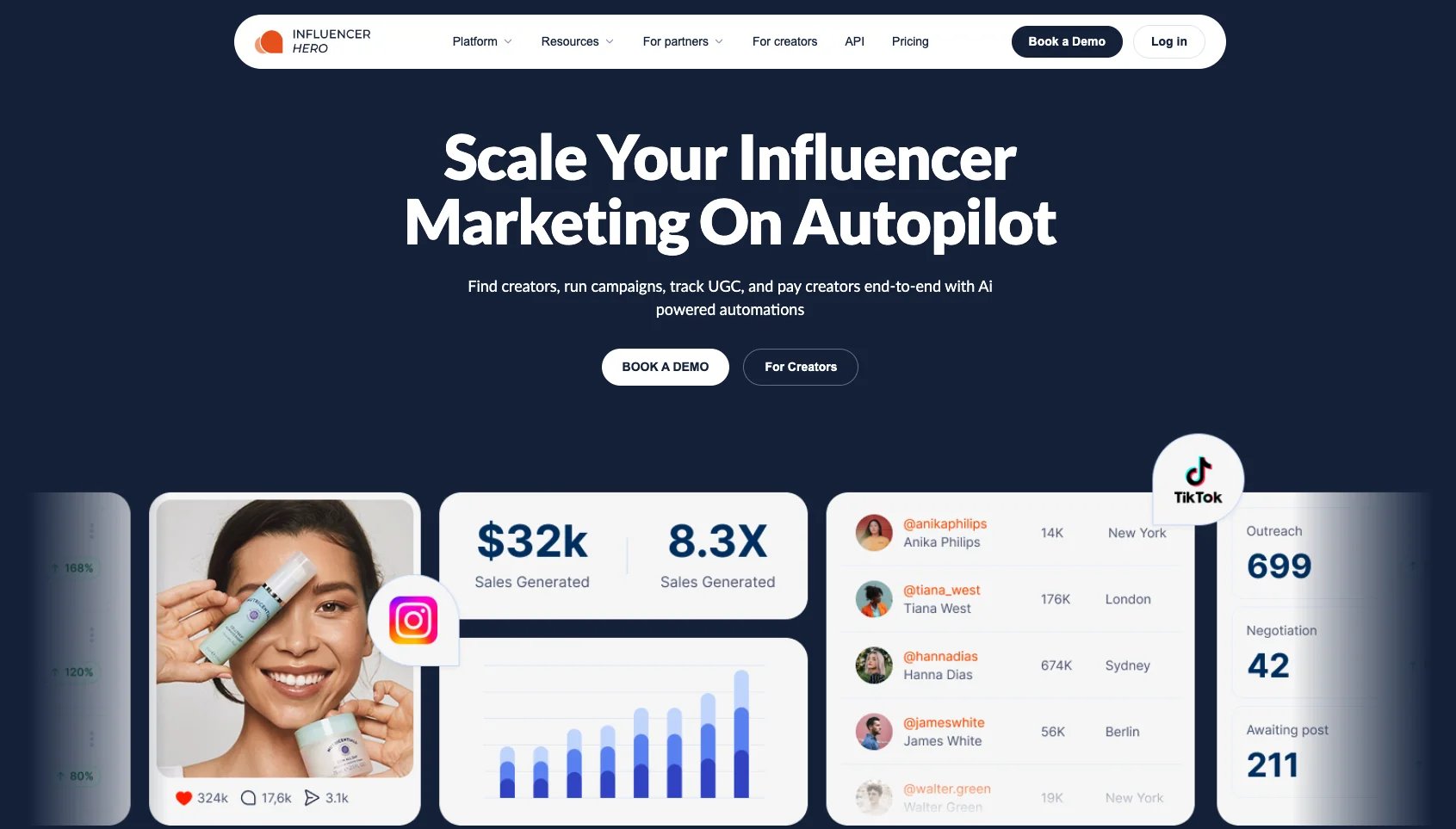
Influencer Hero is an all-in-one influencer marketing platform for D2C and eCommerce brands, covering 8 social platforms with Instagram, TikTok and YouTube leading. Search is the first step rather than the whole product: the same system sends the outreach, ships the product, collects the content, issues the codes and pays the creator.
Key Features
- Creator database: Over 20 filters and AI search across eight networks.
- Fake-follower screening: Audience authenticity checked on any creator before budget commits.
- Brand-follower detection: Creators who already follow and buy from you, surfaced automatically.
- Multichannel outreach: Email, Instagram DM and WhatsApp sequences with replies in one inbox.
- Campaign boards: Stage-triggered automations and custom fields for per-creator logic.
- Gifting through your store: Product orders raised in Shopify or WooCommerce and tracked to delivery.
- Affiliate codes and payouts: Commission calculated in-platform and paid at 0.1% to 0.4% with invoices attached.
- Revenue reporting: Sales by creator and product cost against return, compiled automatically.
Pricing
- Standard: $649 a month, up to 1,000 reachouts a month
- Pro: $1,049 a month, up to 5,000 reachouts a month
- Business: $2,490 a month, up to 10,000 reachouts a month
- Custom & Agency: custom pricing
Quarterly billing saves 20% and yearly saves 30%, with every figure published.
Reviews
5.0/5.0 (Capterra)
Pros
- Eight networks, not one: Instagram, TikTok and YouTube plus five more.
- A price you can read today: Three current tiers rather than a dead pricing page.
- The whole program: Outreach, gifting, codes and payouts after the shortlist.
Cons
- No free trial
- Expensive for smaller brands
- Steep learning curve
Integrations
- Shopify: Gifting orders raised and creator sales attributed automatically.
- WooCommerce: The same for WordPress, with scripts covering Magento and custom builds.
- Klaviyo: Creator and customer segments pushed into lifecycle email.
- DocuSign: Creator agreements signed and filed on the deal record.
- Zapier: Over 8,000 further apps for anything not handled natively.
Influencerdb vs Influencer Hero
Both start with a search box, and that is the only place they meet. Influencerdb filters Instagram profiles and hands you a comparison table. Influencer Hero searches eight networks with over 20 filters, screens each creator for fake followers, then sends outreach over email, Instagram DM and WhatsApp, moves the reply through a campaign board, raises a gifting order inside Shopify or WooCommerce, captures the resulting post, issues an affiliate code and pays commission at 0.1% to 0.4% with the revenue attributed back.
On cost the comparison is honest in both directions. Influencerdb is free to search and Influencer Hero starts at $649 a month, dropping to roughly $454 on annual billing. The free tool is the better deal right up to the point you need to contact anybody, at which stage the work moves into spreadsheets and a personal inbox and stops being free in any meaningful sense.
Afluencer
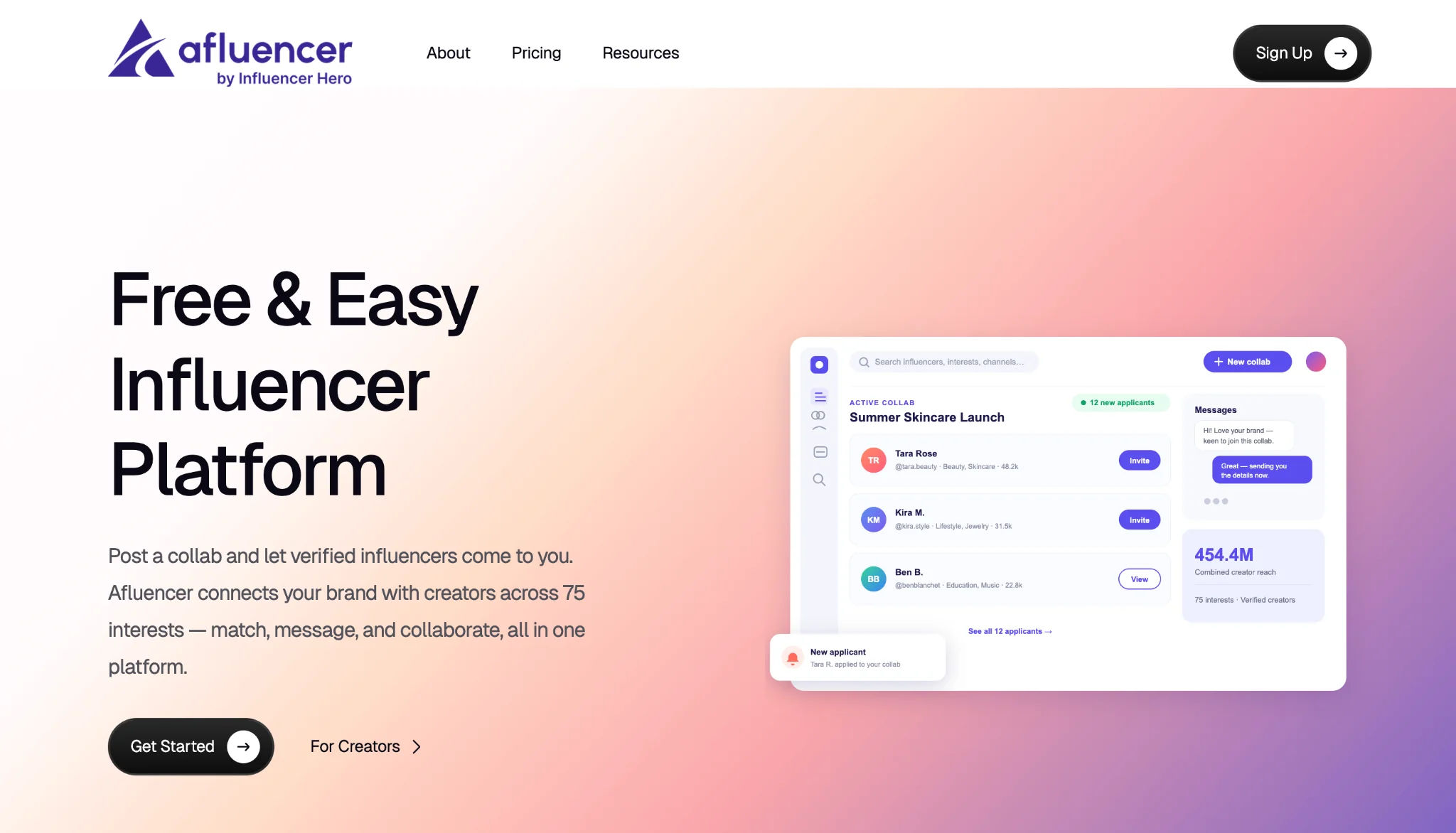
Afluencer replaces searching with applying. You publish a collaboration, verified creators apply, and AI ranks the queue against your brief before you review it. At $49 a month it is the cheapest published brand plan on this page.
Key Features
- Inbound applications: Creators respond to your listing rather than being searched for.
- Verified members: Accounts registered and checked before anyone can apply.
- CreatorGPT ranking: AI sorts the applicant queue against your brief before review.
- Invite credits: Outbound approaches for the months when applications run thin.
- Store-linked codes: Discount codes and creator fees handled through the storefront connection.
Pricing
- VIP: $49 a month
- Concierge: $99 a month
No minimum term, with creator-side plans billed separately.
Reviews
4.6/5.0 (G2, 738 reviews) and 4.7/5.0 (Shopify App Store, 34 reviews). The G2 pool leans creator-side, so read it beside the Shopify score.
Pros
- 738 reviews: The deepest current evidence base on this page.
- $49 published: A real figure you can budget against immediately.
- Good for finding micro-influencers: Small creators apply rather than needing to be dug out.
Cons
- Inbound quality varies: A weak listing brings weak applicants.
- Shallower analytics: Less profile depth than a dedicated research tool.
- North America weighted: Creator supply thins outside its main markets.
Integrations
- Shopify: Codes, referrals and creator orders tracked from the store.
- BigCommerce: The same connection for BigCommerce merchants.
- Klaviyo: Creator contacts pushed into your email lists.
- DocuSign: Collaboration terms signed inside the flow.
- Slack: Application alerts sent to the team as they arrive.
Influencerdb vs Afluencer
These two answer the same question from opposite sides. Influencerdb gives you a search box and expects you to find people. Afluencer gives you a listing and expects them to find you, then hands over their details and a way to pay them.
For a small brand the second is usually faster and barely costs more than free. Forty-nine dollars a month, published, cancellable, with 738 reviews behind it, against a free tool with no current rating and no way to contact anyone once you have picked them.
Modash
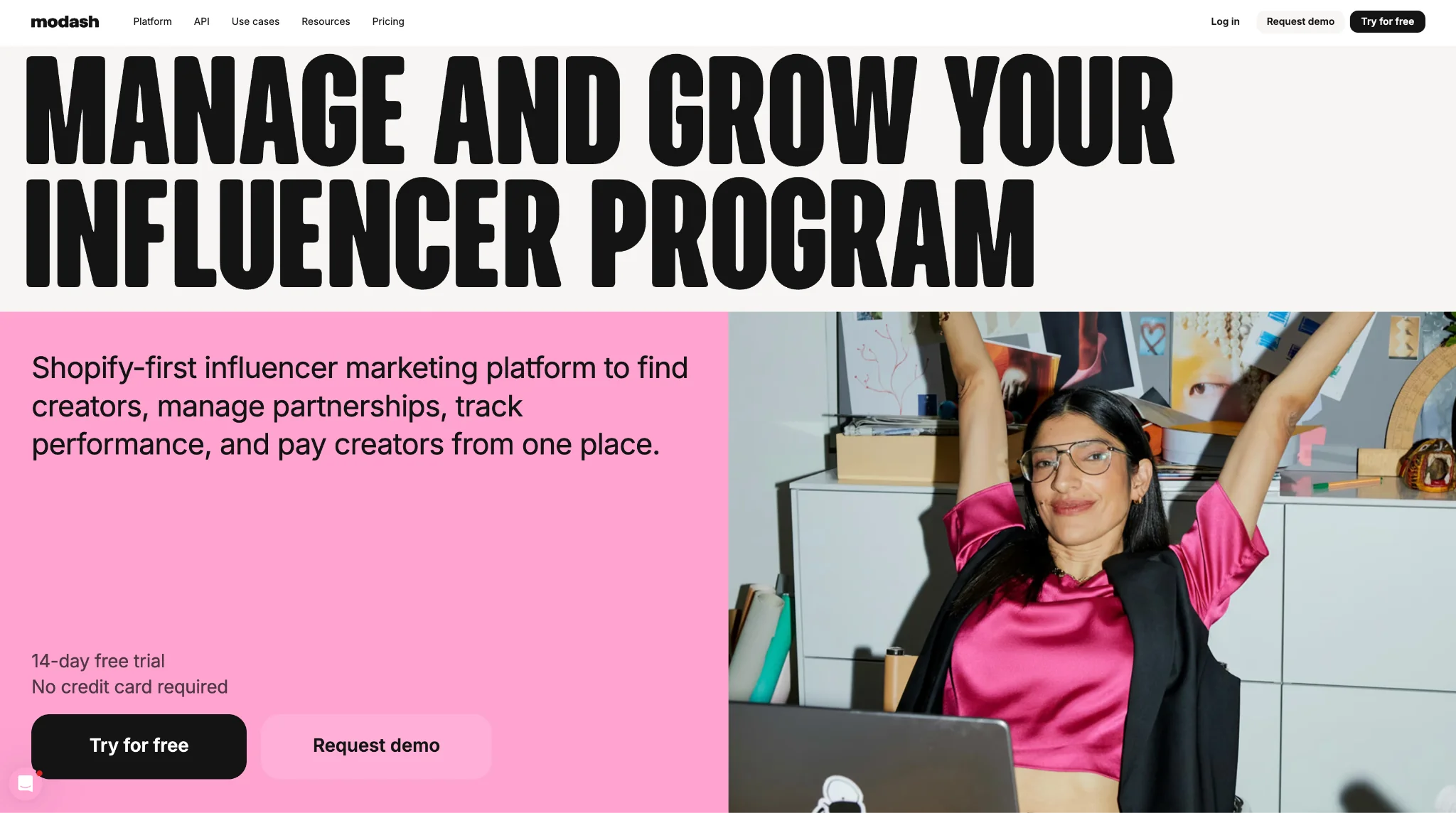
Modash is a discovery and campaign platform that states every limit up front. Profile views, email unlocks and tracked creators are published per tier, with payments and affiliate management added higher up.
Key Features
- Creator discovery: Search across Instagram, TikTok and YouTube with audience filters.
- Influential fans: Your own followers and customers scanned for creators worth activating.
- Creator tracking: Posts and stories monitored automatically once a creator is added.
- Payments included: 0% payment fee up to $10,000 a year on Performance and $100,000 on Enterprise.
- Affiliate management: Links and commission handled from Performance upward.
Pricing
- Essentials: $199 a month, or $2,388 a year, with 300 profile views, 150 email unlocks and 100 tracked creators
- Performance: $499 a month, or $5,988 a year, with 800 views, 400 unlocks and 250 tracked creators
- Enterprise: from $14,700 a year with custom limits
A 14-day free trial runs without a credit card, and annual billing saves 25% on Essentials.
Reviews
4.9/5.0 (G2, low review volume at 19 reviews). Ease of use, discovery quality and support draw praise; slow loading, thin contracting features and missing exports draw the criticism.
Pros
- Limits stated openly: You know how many profiles a plan opens before you pay.
- Three networks: TikTok and YouTube alongside Instagram.
- A trial with no card: Fourteen days of real use before committing.
Cons
- Nineteen reviews: A small evidence base, though a current one.
- $199 to start: Against a search tool that costs nothing.
- Affiliate features gated: Tracking and payments begin at $499 a month.
Integrations
- Shopify: Store connection for affiliate tracking on paid tiers.
- Instagram, TikTok and YouTube: Creator data and post tracking pulled directly.
- Gmail: Outreach sent and tracked from your own mailbox.
- Payments: Creator payouts processed inside the platform.
- API access: Creator and campaign data available programmatically.
Influencerdb vs Modash
This is the upgrade path a serious researcher takes. Modash does what Influencerdb does, across three networks instead of one, then keeps going: tracking posts automatically once a creator is added, scanning your own followers for people worth approaching, and paying creators from the same screen.
The trade is transparency for money. Influencerdb is free but will not tell you what a paid tier costs. Modash charges $199 a month and tells you exactly what it includes, down to 300 profile views and 150 email unlocks, which is a rarity in this category.


NeoReach
NeoReach is a managed service rather than software you run yourself. Its team handles strategy, creator sourcing, contracting, creative approvals, production and licensing, and the company reports managing more than $350 million in campaigns since 2013.
Key Features
- Full-service campaigns: Strategy, creator operations, management and measurement delivered externally.
- Creator sourcing and contracting: Negotiation and paperwork handled on your behalf.
- Content production: Creative approvals and production managed inside the engagement.
- Licensing negotiation: Usage rights agreed as part of the deal.
- Campaign measurement: Performance reporting across creators, platforms and markets.
Pricing
Quote-based, with published minimums. Full-service campaigns start at $50,000 and UGC content programs from $10,000, structured per campaign, per project or on a monthly retainer. A strategy consultation precedes any proposal.
Reviews
4.5/5.0 (G2, very low review volume at 11 reviews). Discovery filters, analytics and ease of use draw praise; cost, a thin micro-influencer pool and weak search filters draw the criticism.
Pros
- Nothing for you to do: The research, outreach and campaign run externally.
- Minimums published: $50,000 and $10,000 stated openly, unlike most agencies.
- Rights negotiated: Licensing handled rather than assumed.
Cons
- $50,000 to start: An enormous step up from a free search tool.
- Eleven reviews: Very little independent evidence.
- Not self-serve: Nothing you can trial or use on your own.
Integrations
- Instagram, TikTok and YouTube: Creator and campaign data pulled through platform APIs.
- Developer API: Influencer data piped into your own systems.
- Reporting tools: Campaign data fed into BI dashboards.
- Managed service layer: NeoReach staff acting as the operational integration.
- eCommerce platforms: No published Shopify app, so store attribution is handled in reporting.
Influencerdb vs NeoReach
Nobody weighs a free search box against a $50,000 minimum, and the contrast still tells you something. Influencerdb assumes you will do all the work and gives you a head start on the reading. NeoReach assumes you will do none of it and charges accordingly.
The useful question is where your constraint sits. If it is knowledge, Influencerdb’s articles genuinely help. If it is hours, no amount of free research substitutes for someone running the campaign.
Social Cat
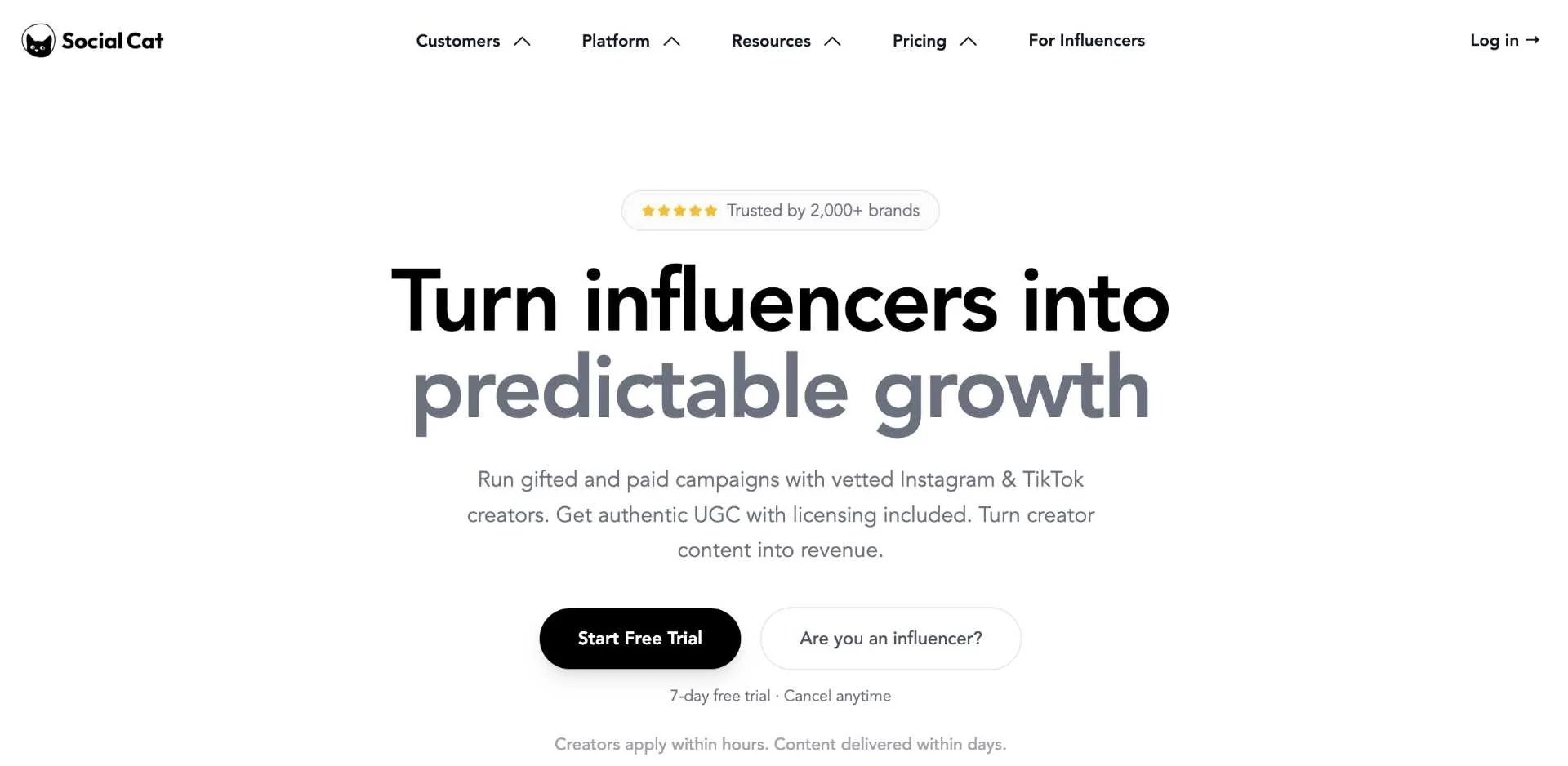
Social Cat is a micro-influencer marketplace built around gifting. Vetted creators apply to your campaigns, you ship product or pay a fee, and full content usage rights come included on every plan.
Key Features
- Vetted micro-influencers: Creators manually screened before they can apply.
- Gifted, paid and affiliate collabs: Product seeding, flat fees or commission deals in one place.
- Usage rights included: Full content licensing on every plan, not just the top one.
- Content library: Creator assets stored and organised centrally.
- Contracts and messaging: Terms agreed and conversations held inside the platform.
Pricing
- Essentials: $99 a month, 5 collaborations, 1 campaign, 1 seat, 1,000 invitations
- Performance: $199 a month, 15 collaborations, 3 campaigns, 5 seats, 2,500 invitations
- Pro: $299 a month, 30 collaborations, unlimited campaigns, 10 seats, 5,000 invitations
Yearly billing gives two months free, and every plan starts with a 7-day free trial.
Reviews
4.0/5.0 (Trustpilot). Scores split by user type, with creators rating it well above brands. The recurring brand complaint is creators accepting gifted product and never posting, with limited recourse.
Pros
- Ends in a collaboration: A creator actually posts rather than appearing on a list.
- Rights included: Content licensed on every tier without a separate negotiation.
- Cheap and short: $99 a month with a 7-day trial and no contract.
Cons
- Hard collaboration caps: Thirty a month at the top tier.
- No eCommerce integration: No Shopify or WooCommerce connection for revenue attribution.
- Delivery risk: Brands report gifted product going out with no post coming back.
Integrations
- Meta: Instagram and Facebook post metrics pulled in.
- TikTok: Collaboration performance tracked on short-form.
- Content library: Creator assets centralised for reuse.
- Messaging: Creator conversations held inside the platform.
- eCommerce platforms: None published, so orders never meet creator activity automatically.
Influencerdb vs Social Cat
Influencerdb tells you who exists. Social Cat gets one of them to open a parcel and post about it, with the usage rights already agreed. For a brand that has read enough and wants a collaboration this month, the second is simply further along the same road.
Neither is a complete system. Social Cat has no store connection, so it cannot tell you what a collaboration sold, and Influencerdb has no way to start one. The difference is that $99 buys five real posts, where free buys a spreadsheet.
Influencity
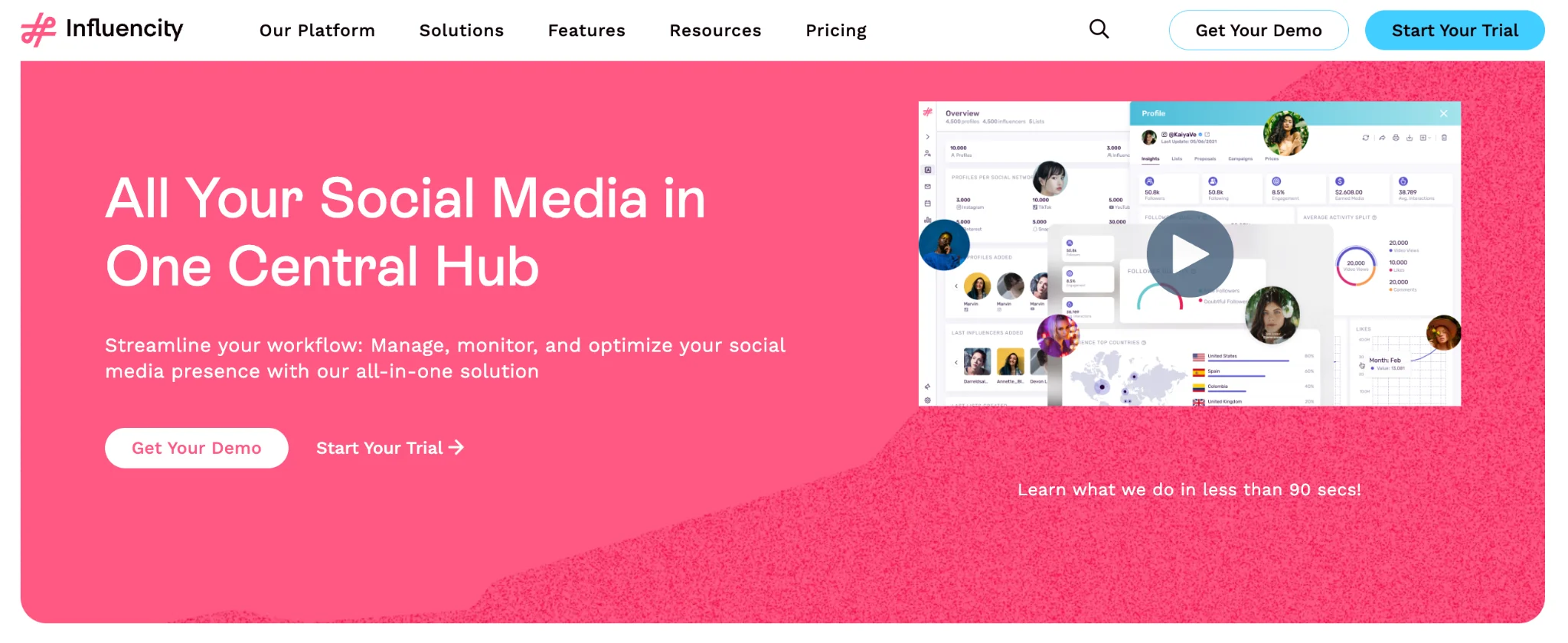
Influencity is a discovery and audience analytics platform sold in published month-to-month tiers. Plans scale on profile analyses, search results and stored creators, with campaign management added from the middle tier up.
Key Features
- Profile analyses: Detailed audience reports metered by plan, from 30 a month upward.
- Audience analytics: Demographics, authenticity and interest data on any creator.
- Creator storage: Shortlists held in the platform, up to 2,000 profiles on Business.
- Campaign management: Concurrent campaigns tracked from Professional upward.
- Modular Enterprise: Features selected individually with a dedicated success manager.
Pricing
- Basic: $168 a month, or $134 annually at $1,613 a year, with 30 profile analyses and 1 user
- Professional: $348 a month, or $278 annually at $3,348 a year, with unlimited analyses
- Business: $698 a month, or $558 annually at $6,700 a year, with 25,000 search results and 50 campaigns
- Enterprise: custom limits and pricing
All plans are month-to-month with a 7-day free trial.
Reviews
4.6/5.0 (G2, 263 reviews).
Pros
- 263 current reviews: Recent, substantial and about this product.
- Four published tiers: Prices and limits stated, with no annual lock-in.
- Deeper analysis: Authenticity and demographic data beyond follower counts.
Cons
- Thirty analyses on Basic: An active screening month exhausts the entry tier quickly.
- Discovery-led: Campaign tooling is lighter than a full program platform.
- $168 against free: A real cost for work you can partly do without paying.
Integrations
- Instagram, TikTok and YouTube: Creator data and audience analysis across the main networks.
- Shopify: Store connection available on higher tiers.
- Exports: Creator lists and reports out for client or internal use.
- API access: Creator data pulled into your own systems.
- Team seats: Multi-user access from Professional upward.
Influencerdb vs Influencity
These are the closest match on the page, because both are research tools before anything else. Influencity covers three networks against one, reports authenticity and demographics at more depth, stores up to 2,000 shortlisted profiles and publishes four prices with the limits attached.
What Influencerdb keeps is the price, which is nothing. If your screening volume is genuinely low and you only work on Instagram, free is hard to argue with. Above thirty or forty profiles a month, or the moment TikTok matters, $168 buys a tool that keeps up.
Traackr
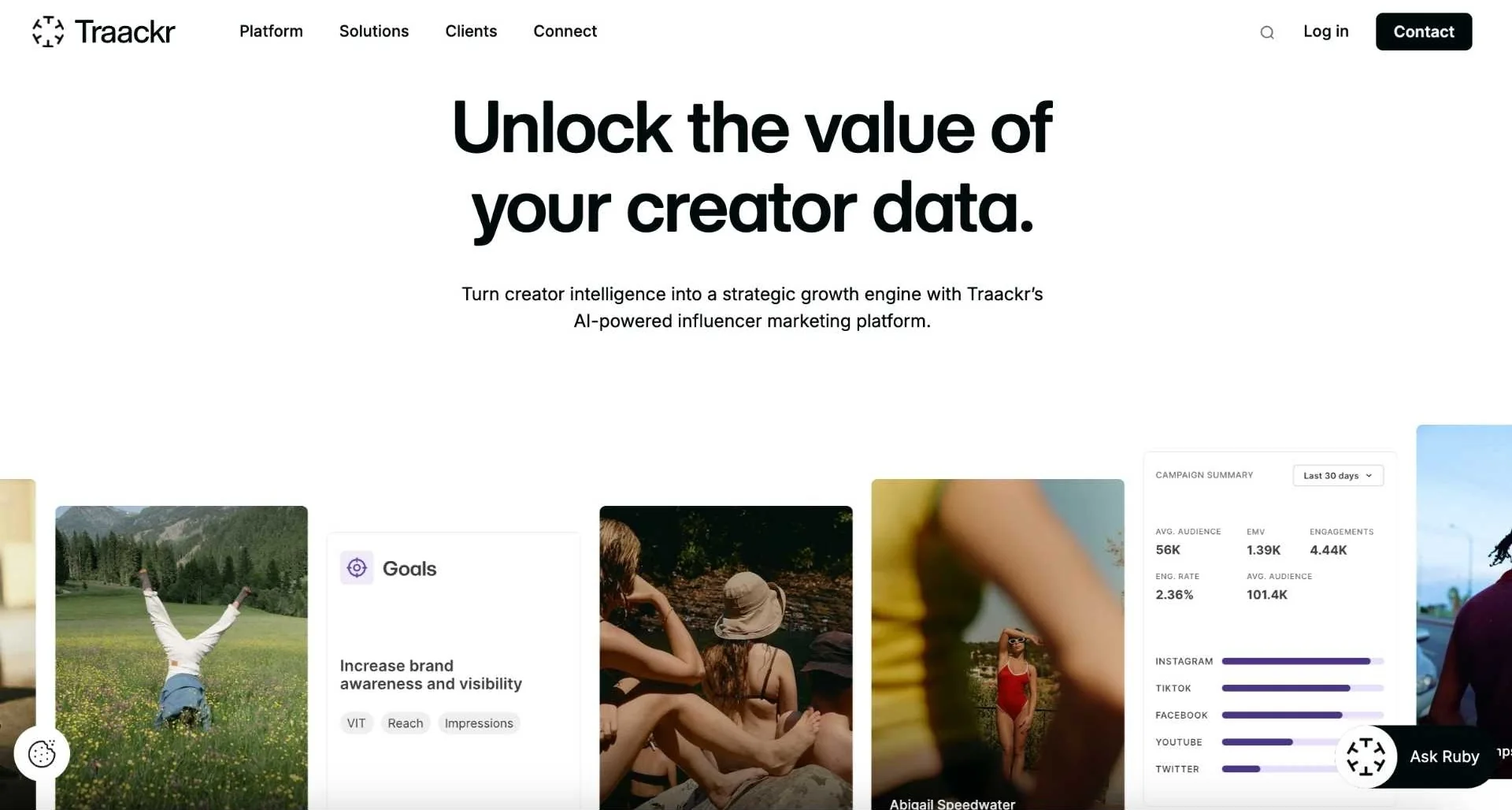
Traackr is enterprise measurement infrastructure. It standardises creator and campaign metrics so global teams can benchmark against competitors, control spend across markets and compare programs on one scale.
Key Features
- Standardised measurement: Consistent metrics across creators, campaigns and markets.
- Competitive benchmarking: Your program compared against rivals and category norms.
- Spend tracking: Influencer investment and efficiency monitored centrally.
- Relationship management: Every creator touchpoint recorded across teams.
- Discovery and vetting: Creator search backed by standardised performance data.
Pricing
Reported at around $25,000 a year for Growth with a three-user minimum, roughly $32,500 for Standard with five users, and $55,000 and up for Plus with API access and ten or more users. All plans are annual, with no monthly option and no standard free trial.
Reviews
4.3/5.0 (G2, 382 reviews). Audience data depth, benchmarking and support draw praise; slow loading, export glitches, thin data on smaller creators and cost draw the criticism.
Pros
- 382 reviews: The deepest current record on this page.
- Benchmarking is unique: Competitor comparison nothing else here offers.
- Multi-market by design: One standard across regions and teams.
Cons
- $25,000 a year minimum: Enterprise-only territory.
- Annual only: No monthly billing and no standard trial.
- Measurement-led: Built to analyse a program you already run.
Integrations
- Shopify: Store data connected for sales attribution.
- Instagram, TikTok and YouTube: Standardised performance data across networks.
- API access: Campaign data into enterprise reporting on the Plus tier.
- Data partners: Third-party datasets enriching benchmarks.
- Exports: Reporting out into BI and stakeholder decks.
Influencerdb vs Traackr
Both are, at heart, about data rather than doing. Influencerdb publishes benchmark articles and lets you look up a profile. Traackr turns benchmarking into a system, comparing your creator spend and performance against competitors across markets on standardised metrics.
The distance between free reading and $25,000 a year is the distance between knowing the category and running a program inside it. Most brands reading this article are closer to the first, which is a reason to spend the budget on execution rather than on measurement.
HypeAuditor
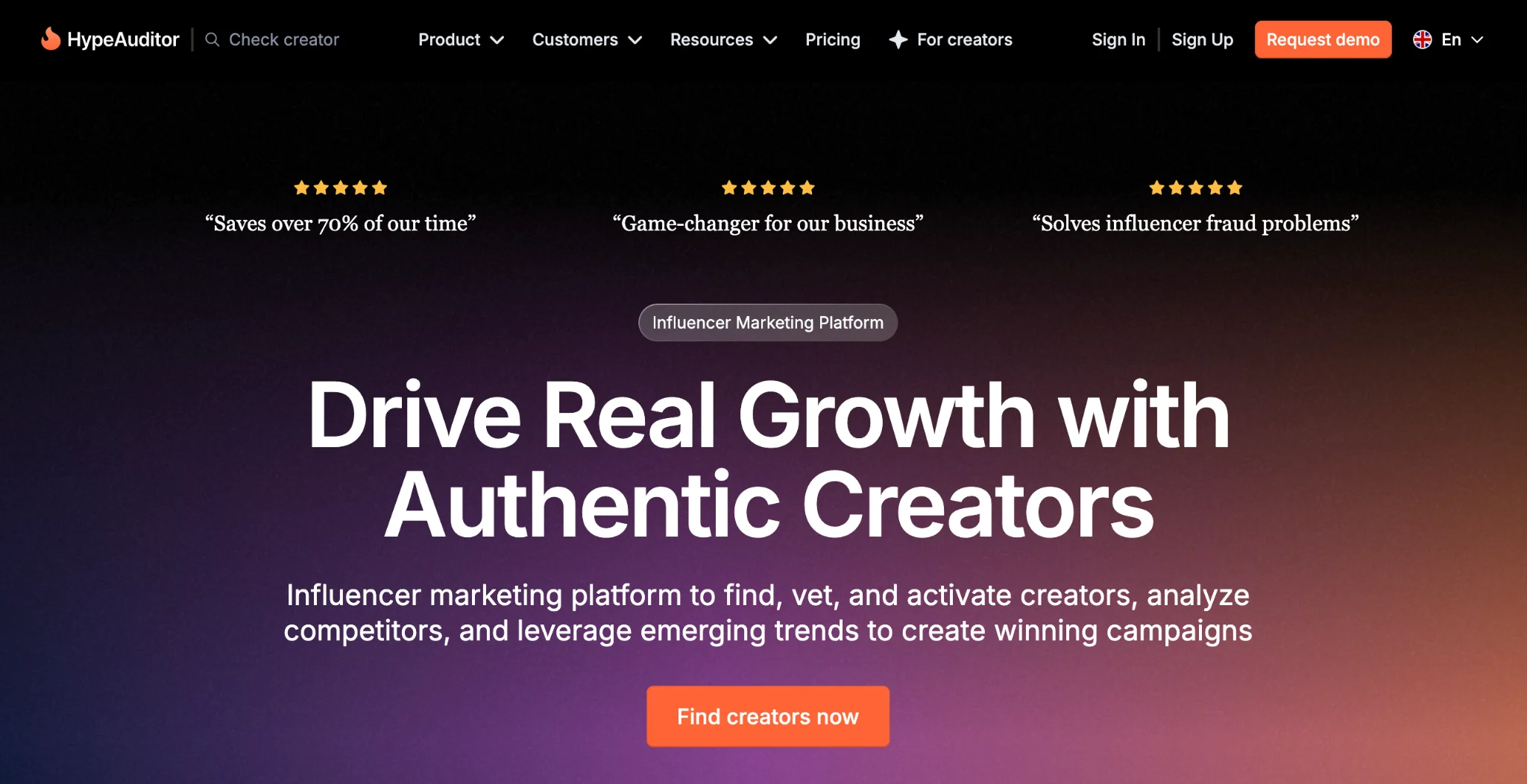
HypeAuditor made its name on fraud detection. It scores audience quality, flags fake followers and inflated engagement, and has added media planning, campaign management and market analytics around that core.
Key Features
- Audience quality scoring: Fraud detection and authenticity ratings on any creator profile.
- Creator discovery: Search across the major networks with audience filters.
- Media planning: Campaign plans built and costed before budget commits.
- Campaign reporting: Live tracking of creator deliverables and performance.
- Market analytics: Category and competitor benchmarking data.
Pricing
Nothing published on the vendor’s own pricing page, which routes to a demo or a free tier. A Capterra listing reports a starting figure of around $399 per user a month with a free trial and a free version available, so treat that as indicative rather than a rate card.
Reviews
4.6/5.0 (G2, 264 reviews) and 4.8/5.0 (Capterra, 35 reviews). Audience insight, ease of use and support draw praise; shallow reporting, data accuracy on smaller creators and cost draw the criticism.
Pros
- Fraud detection is the strength: Authenticity scoring an engagement-rate filter cannot match.
- Nearly 300 current reviews: Across two review sites, both recent.
- A free tier exists: Media plans and demo features available before paying.
Cons
- No published rate card: The only figure comes from a directory listing.
- Around $399 a month indicated: Expensive for screening alone.
- Reporting is criticised: Reviewers call the dashboard shallow for campaign analysis.
Integrations
- Instagram, TikTok and YouTube: Creator data and audience analysis across networks.
- Twitch: Coverage most competitors on this page do not offer.
- Exports: Creator reports out for client and stakeholder review.
- API access: Audience and creator data into internal systems.
- eCommerce platforms: No named store connection, so revenue attribution happens elsewhere.
Influencerdb vs HypeAuditor
Both put a profile under a microscope, at very different magnifications. Influencerdb reports growth trends, engagement breakdowns and demographics. HypeAuditor scores how much of that following is likely to be real, which is a harder question and the one that actually protects a budget.
Neither publishes a rate card, which is a fair criticism of both. HypeAuditor at least has a free tier you can use today and nearly 300 recent reviews describing the current product, while the numbers attached to Influencerdb online describe something else.
Final Thoughts on Influencerdb Alternatives
Influencerdb is worth bookmarking. The research articles are useful, the free Instagram lookup answers a quick question well, and there is no signup or sales call standing in the way.
Treat it as reading rather than tooling, though. One network, no current review record, no published price and nothing after the shortlist means a real program still needs a platform behind it. Decide what you need next, whether that is influencer outreach, gifting or attribution, and buy for that step rather than for the search you already have for free.

.png)


.jpg)










