

10 Best Audiense Alternatives for Influencer Marketing
Audiense shows brands who their audience is, which creators that audience follows and which ads actually led to an order. Teams usually start comparing Audiense alternatives once that research is done and they need software that can contact those creators, ship products, track affiliate sales and pay people.
The platform has grown into a group of products after Buxton brought Elevar and the original Audiense business together under one name. Its audience research covers billions of social accounts and its server-side tracking is well rated by Shopify merchants, but neither product includes influencer outreach, a creator CRM, gifting or payouts.
The influencer marketing software below fills that gap in different ways, and each one is assessed on its features, pricing, reviews and integrations, followed by a direct comparison with Audiense.
This guide covers GRIN, Influencer Hero, CreatorIQ, Traackr, Afluencer, Modash, IZEA, IMAI, SARAL and Glewee, in that order.
Key Criteria for Evaluating Influencer Marketing Platforms
Core Features
Evaluation of essential influencer marketing capabilities, including influencer discovery, outreach, CRM, campaign management, reporting, and content workflows.
Pricing & Flexibility
Comparison of pricing models, subscription plans, and contract terms to match different budgets and growth stages.
Customer Reviews & Satisfaction
Analysis of user feedback from trusted review platforms, focusing on usability, reliability, customer support, and overall performance.
Pros & Cons
Review of each platform’s strengths and limitations to highlight where it performs well and where it may fall short based on different use cases.
Integrations
Review of the most important integrations (e.g., Shopify and other tech tools), highlighting what each integration enables in one sentence.
Audiense Overview
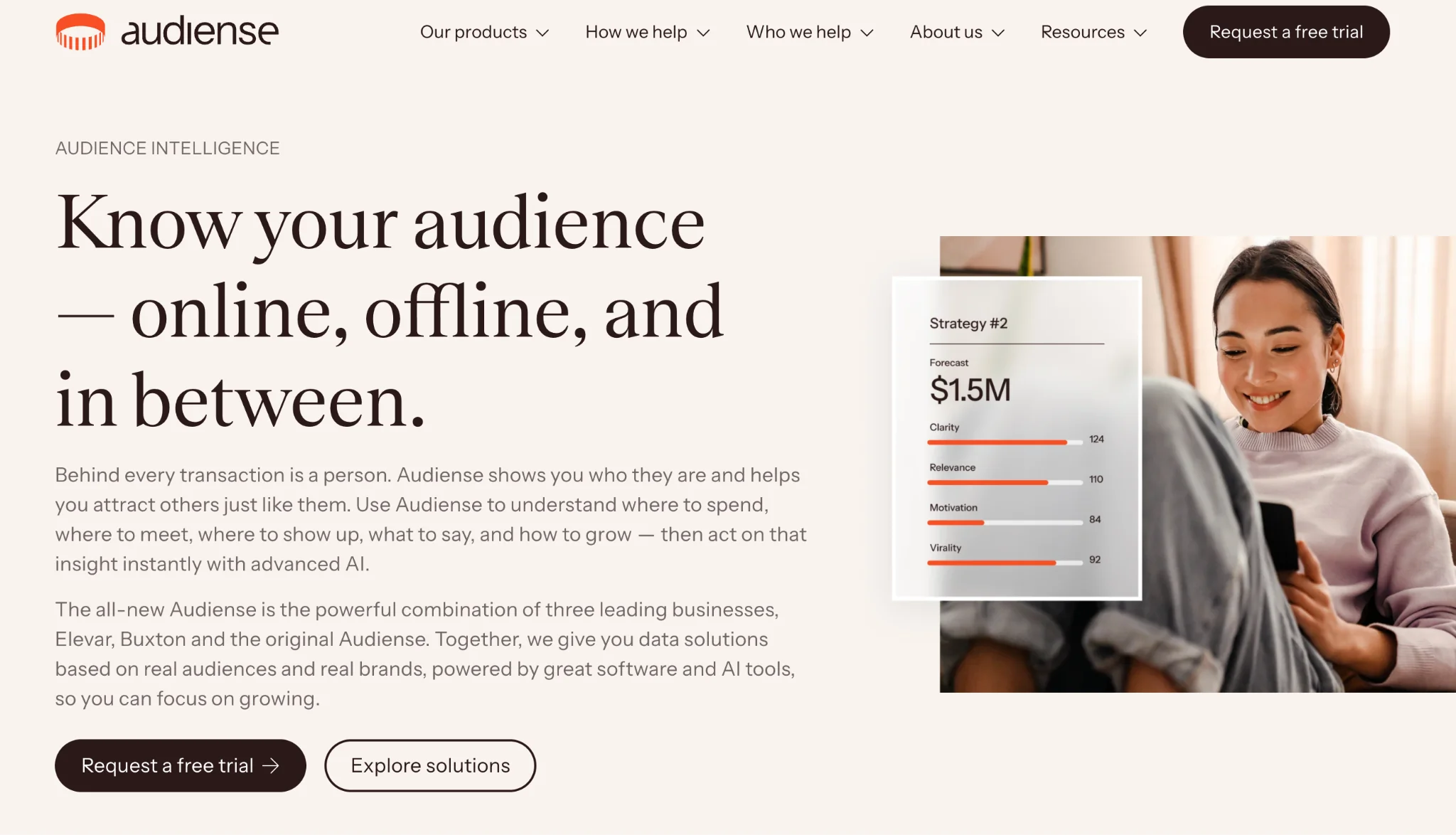
Audiense is an audience intelligence company that now combines three businesses: the original Audiense research platform, Elevar’s server-side conversion tracking and Buxton’s location intelligence. Its product line includes Audiense Discover for audience research, Audiense Online for tracking, Audiense In-Person for store planning, Audiense Action for AI campaign planning and Audiense Data Services for API access.
For D2C brands, the two products that matter most are Discover and Online. Discover profiles audiences across 5.5 billion social accounts and shows the media and influencers they engage with, which gives teams a strong brief, while AI creator search is what turns that brief into a list of creators who can actually be contacted.
Key Features
- Audience research: Discover segments audiences by interests, demographics and affinities across Instagram, TikTok, YouTube, X, Facebook, LinkedIn and Google, helping brands understand who they are selling to.
- Ready-made segments: A library of 145 consumer segments lets teams compare their own customers against benchmark groups without building audiences from scratch.
- Server-side tracking: Audiense Online sends orders to ad platforms from the server, which recovers conversions that browser pixels lose to ad blockers and privacy settings.
- Fifty-plus destinations: Conversion data can be sent to Meta, Google Ads, TikTok, GA4, Klaviyo and many other tools, so ad platforms optimize on more complete data.
- Own-data uploads: Brands can upload CRM lists and web traffic to profile their real customers alongside social data.
Pricing
Audiense publishes prices for its tracking product, Audiense Online, with plans set by monthly order volume:
- Base: $0 a month for 100 orders, with $0.75 per extra order
- Core: $225 a month for 2,000 orders, with $0.50 per extra order
- Advanced: $650 a month for 10,000 orders, with $0.15 per extra order
- Premium: $1,250 a month for 30,000 orders, with $0.10 per extra order
- Elite: from $3,000 a month for 75,000 orders, with $0.04 per extra order
Email and SMS destinations such as Klaviyo require the Advanced plan or higher, and add-ons include extra destinations at $125 a month and expert installation from $1,000. Audiense Discover, the audience research product, has no published price and is sold through a free trial request and a sales quote.
Reviews
4.5/5.0 (G2, 248 reviews) and 4.8/5.0 (Shopify App Store, 170 reviews for the tracking app)
Integrations
- Shopify: The tracking app is a certified Shopify app that installs without developer work.
- Meta Conversions API: Server-side purchase events are sent to Meta to improve ad optimization.
- Google Ads and GA4: Recovered conversions flow into Google for bidding and reporting.
- Klaviyo: Email and SMS destinations receive enriched customer events on higher plans.
- Impact and CJ: Affiliate networks receive accurate order data for commission tracking.
None of these integrations covers influencer outreach, creator contracts, gifting or creator payments.
Pros
- Deep audience insight: Few tools can show which accounts and topics a brand’s buyers follow at this scale.
- Better ad data: Server-side tracking gives ad platforms more complete conversion data to work with.
- Free starting plan: The Base tracking plan lets small stores try the product at no cost.
Common Drawbacks of Audiense
Research pricing is quote only
The audience research product has no public price, so brands cannot budget for the part of Audiense most related to influencer planning without a sales call.
Key destinations need higher plans
Email and SMS tools are not available on Core, and extra destinations or non-Shopify stores require Advanced or Premium.
No influencer workflow
There is no outreach, creator CRM, gifting, content approval or payout tool, so research findings still need another platform to become campaigns.
Several products to learn
Five product lines from three merged companies can make it unclear which plan a brand actually needs, and some reviewers find the dashboard hard to navigate.
Best Audiense Alternatives
| TOOL | REVIEWS | BEST FOR | TRIAL INFO | PRICING | ||
|---|---|---|---|---|---|---|
1 |

|
⭐ | DTC creator management | Book Demo | Pricing | Website |
2 |

|
⭐ | Influencer CRM & automation | Book Demo | Pricing | Website |
3 |

|
⭐ | Enterprise influencer marketing | Book Demo | Pricing | Website |
4 |

|
⭐ | Enterprise influencer analytics | Book Demo | Pricing | Website |
5 |

|
⭐ | Influencer marketplace campaigns | Book Demo | Pricing | Website |
6 |

|
⭐ | Influencer discovery | Book Demo | Pricing | Website |
7 |
|
⭐ | Influencer marketplace | Book Demo | Pricing | Website |
8 |
|
⭐ | AI influencer discovery & analytics | Book Demo | Pricing | Website |
9 |

|
⭐ | Influencer outreach | Book Demo | Pricing | Website |
10 |
|
⭐ | Small brands running influencer and UGC campaigns | Book Demo | Pricing | Website |
GRIN

GRIN was one of the first creator management platforms built for eCommerce, and it now offers monthly self-serve plans alongside its enterprise contracts. Consumer brands use it to recruit creators, send gifts, issue affiliate codes and pay partners from a wallet, with an AI agent called Gia preparing plans and outreach for the team to approve.
Key Features
- Creator marketplace: Brands can reach creators who have opted in to work with brands, which shortens the time from brief to first collaboration.
- Gia campaign planning: Gia drafts campaign plans and next steps for review, which helps lean teams keep several programs moving at once.
- Affiliate commissions: Links, codes and commission rules are included on every plan, so creator sales can be rewarded from day one.
- Escrow wallet: Funds are held until content is delivered, which gives both sides confidence on paid partnerships.
- Post tracking: Creator content is captured with impressions and engagement, so results do not depend on screenshots.
Pricing
GRIN’s self-serve plans pair a monthly fee with a percentage on every wallet deposit:
- Free: no monthly fee, 20% on deposits, two live campaigns and ten gifts
- Starter: $200 monthly, 10% on deposits and 100 gifts each month, with a 30-day trial
- Growth: $500 monthly, 7% on deposits, multiple brands and 300 gifts each month
- Scale: $1,500 monthly, 5% on deposits and 1,000 gifts each month
- Enterprise: annual agreement priced by the sales team
The free plan is not always the cheapest option. A brand paying creators $3,000 a month would pay $600 in fees on Free, compared with $500 in total on Starter.
Reviews
4.5/5.0 (G2, 483 reviews) and 4.7/5.0 (Capterra, 147 reviews)
Pros
- Monthly flexibility: Self-serve plans run month to month instead of locking brands into a year.
- Gifting without deposits: Product seeding campaigns can launch without funding the wallet first.
- Established product: Years of use by consumer brands give buyers a long track record to assess.
Cons
- Fees scale with spend: The percentage on deposits means larger creator budgets pay more to the platform.
- Minimum for paid campaigns: A $250 wallet balance is needed before paid or affiliate work goes live.
Integrations
- Shopify: Orders, codes and gifted products are tied back to each creator.
- Klaviyo: Klaviyo flows can include creator contacts for nurturing and program updates.
- Box and Dropbox: Creative files and briefs can be stored where the team already works.
- Slack: The team gets alerts when creators reply or content goes live.
- GRIN API: Custom connections can be built to a brand’s own systems.
Audiense vs GRIN
Audiense and GRIN both help brands understand which creators matter to their audience, but GRIN stands out by turning that list into action with a marketplace, gifting, affiliate codes and creator payments. Teams can go from finding a creator to paying them inside one product.
Audiense, on the other hand, focuses more on audience research and conversion tracking, and it stops before any creator is contacted. GRIN charges a fee on creator spend, while Audiense charges by order volume or by research quote. For brands that already know their target audience and want to start seeding products on a monthly plan, GRIN is a practical choice.
Influencer Hero
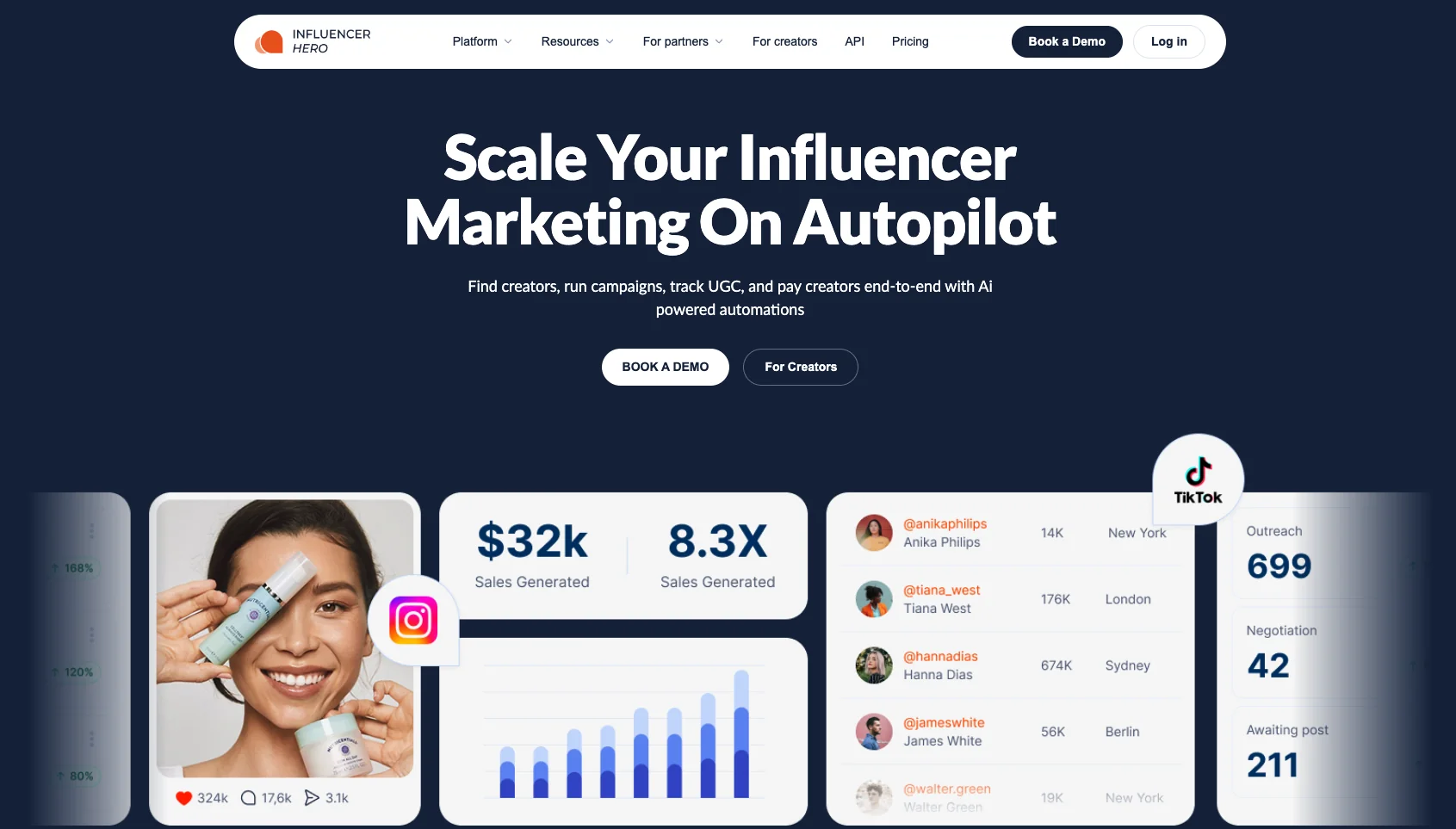
Influencer Hero helps D2C and eCommerce brands run their full influencer program in one system, from finding creators to paying them. Its automations, bulk tools and AI features are built for teams managing hundreds of creators across seeding, affiliate and UGC campaigns without growing headcount at the same rate.
Key Features
- Global creator database: Brands search an influencer database of 450M+ profiles on Instagram, TikTok and YouTube, filtered by audience location, demographics, interests and engagement.
- Fraud detection: Fake followers and inflated engagement are flagged before outreach, so budgets reach real audiences.
- Brand-follower discovery: The platform shows creators who already follow the brand, which often leads to warmer conversations.
- Multichannel outreach: Email, Instagram DM and WhatsApp conversations run from one inbox, with AI-drafted replies and follow-ups.
- Automated product seeding: Shopify and WooCommerce orders are created for approved creators, and shipping status updates automatically.
- Affiliate codes and tiers: Each creator gets tracked links, discount codes and commission tiers tied to real store revenue.
- Creator storefronts: Creators can feature the brand’s products on their own storefront and earn commission on sales.
Pricing
Influencer Hero’s pricing is public, with tiers set by monthly outreach volume:
- Standard: $649 per month, including up to 1,000 reachouts
- Pro: $1,049 per month, including up to 5,000 reachouts
- Business: $2,490 per month, including up to 10,000 reachouts
- Custom & Agency: priced around the team’s needs
Quarterly plans are 20% cheaper and yearly plans are 30% cheaper, which puts Standard at $5,452 for a full year.
Reviews
5.0/5.0 (Capterra)
Pros
- AI-powered UGC search: Influencer Hero collects creator content automatically and lets teams search it by keyword, caption, visual quality or how clearly the product appears. Brands can quickly find the best-performing posts for paid ads, product pages and organic social. This turns a growing content library into a reusable asset instead of a folder nobody opens.
- AI workflow optimization: Automations and AI suggestions handle repetitive steps from discovery to outreach, including predictive scoring that highlights which creators are most likely to perform. Teams spend less time on manual sorting and more time on the partnerships that matter. As programs grow, this keeps the workload manageable without adding staff.
- Bulk tools for scalable operations: Outreach, follow-ups, product seeding, campaign updates and deal changes can all be applied to large groups of creators at once. Teams can select a segment from the All Influencers view and trigger an email, task or integration action in one step. High-volume programs stay organized without hours of repetitive clicking.
- AI-powered brand safety: AI reads creator emails and replies to detect negative sentiment, complaints or other risk signals. Alerts reach the team in Slack or by email in real time, with the most urgent conversations listed first. This protects the brand even when hundreds of creators are active at the same time.
Cons
- No free trial: The platform is shown through a demo, so brands cannot explore it on their own before signing up.
- Expensive for smaller brands: Starting at $649 a month, it is a significant line item for brands with small marketing budgets.
- Steep learning curve: Getting the most from the automations takes some setup time and onboarding with the support team.
Integrations
- Shopify: Gifting, codes and affiliate orders are tracked against the Shopify store automatically.
- WooCommerce: WooCommerce brands get native order creation and commission tracking.
- Klaviyo: Creator and ambassador data can be used in email and SMS flows.
- Thanks.io: Handwritten-style direct mail can be sent to creators as part of a campaign.
- Zendesk: Support tickets connect to creator records, which helps when gifting orders need attention.
Audiense vs Influencer Hero
Audiense is excellent at explaining an audience, showing which interests, media and influencers a brand’s buyers engage with, and its server-side tracking helps ad platforms see more conversions. It does not contact creators, manage relationships, ship products or pay anyone, though, so the research still has to be handed to another tool before it produces a single post. Influencer Hero picks up exactly there, with a 450M+ creator database, brand-follower discovery and fraud screening, automated outreach, a campaign CRM, gifting through Shopify and WooCommerce, affiliate codes and bulk payouts with fees of 0.1% to 0.4%. Brands get the full path from research to revenue in one platform instead of a separate research report.
The pricing reflects the same difference. Audiense Online costs between $0 and $3,000 or more a month for tracking, while the Discover research product is quote only, so the cost of the influencer-related part is unknown until a sales call. Influencer Hero lists its Standard, Pro and Business plans at $649, $1,049 and $2,490 a month, scaled by outreach volume, and quarterly or yearly billing lowers those prices by 20% or 30%. A brand that adds an influencer marketing platform after buying research ends up paying for two tools, which makes Influencer Hero the better investment for D2C brands that want audience insight to turn into creator-driven sales.
CreatorIQ
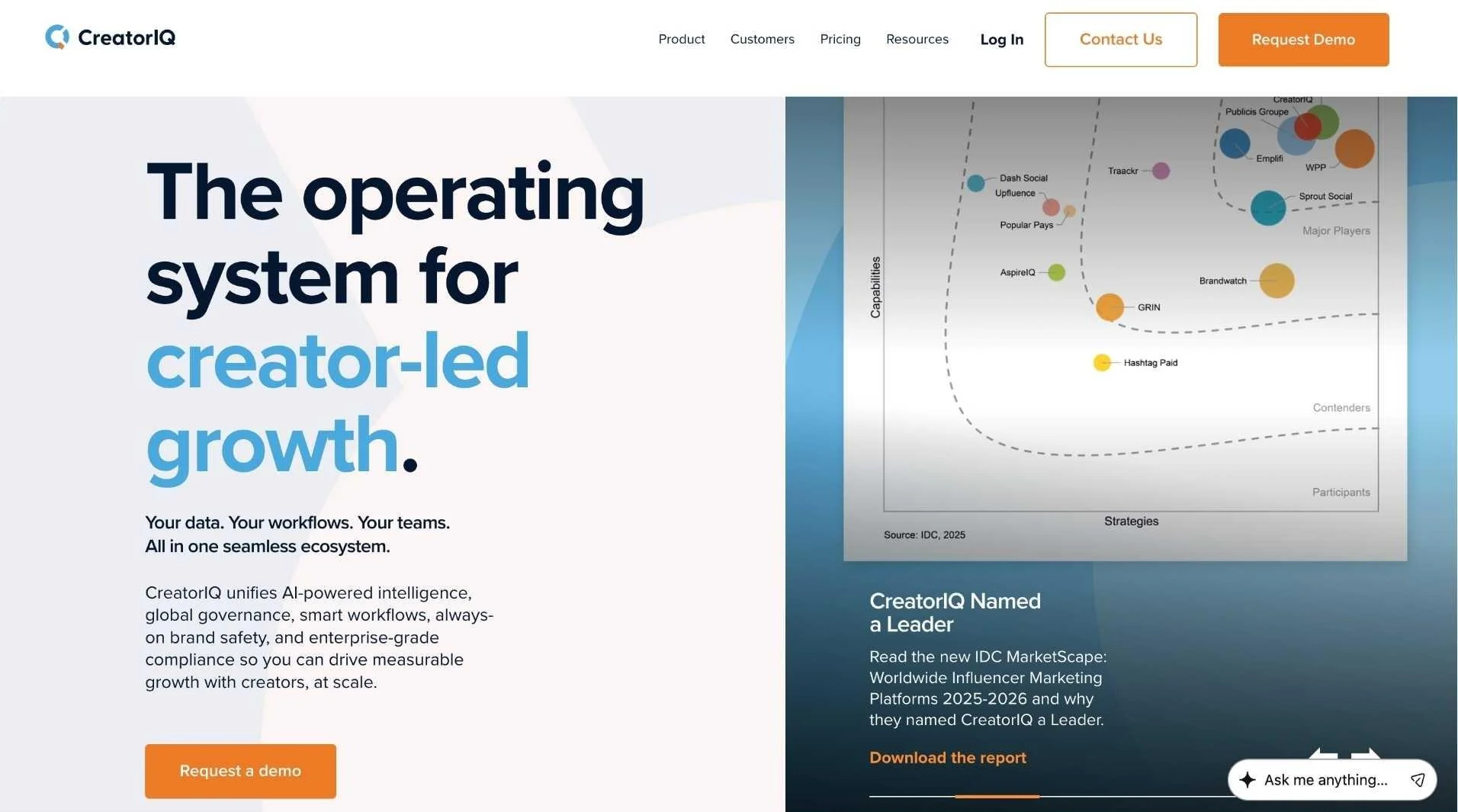
CreatorIQ is used by global brands and agencies to manage creator programs that span many countries, product lines and teams. The platform combines detailed creator data with governance, payments and affiliate tools, and it is often chosen by companies that need strict approval and brand safety processes.
Key Features
- Creator Graph search: Discovery draws on partnership and audience history, which helps large teams find creators with a proven category fit.
- SafeIQ: Content and history checks reduce brand risk before a creator is approved.
- BenchmarkIQ: Performance is compared with competitors, giving leadership context for every result.
- CreatorIQ Pay: Payments run inside the platform, which simplifies payouts for large rosters.
- Multi-team workspaces: Different brands and markets can work in separate spaces while sharing data and standards.
Pricing
CreatorIQ sells through custom quotes, with no free plan or trial. Independent purchasing data suggests most annual contracts sit between about $30,000 and $59,500.
Reviews
4.6/5.0 (G2, 583 reviews) and 4.5/5.0 (Capterra, 17 reviews)
Pros
- Scales across markets: Workspaces and permissions suit organizations with many regional teams.
- Strong safety tools: Risk checks support brands in sensitive categories.
- Rich benchmarks: Competitive data puts creator results in context.
Cons
- Large annual commitment: Pricing is set for enterprise budgets rather than growing D2C brands.
- Takes time to adopt: The depth of the platform means a longer onboarding period.
Integrations
- Shopify: Gifted products and costs are recorded for each campaign.
- Meta: Instagram and Facebook data feed reporting and paid amplification.
- TikTok: TikTok content and Spark Ads connect to campaigns.
- Impact: Affiliate results appear beside creator content metrics.
- Google Analytics: Website sessions from creator links are included in reports.
Audiense vs CreatorIQ
Audiense and CreatorIQ both serve teams that rely on audience data, but CreatorIQ stands out by combining that data with creator approvals, payments, affiliate tracking and brand safety checks. Enterprise teams can plan and run campaigns in the same system they use for research.
Audiense, on the other hand, focuses more on understanding audiences and improving ad tracking, without any creator management. Both are significant investments for research-heavy organizations. For global brands that need governance and creator payments across many regions, CreatorIQ is the stronger match.
Traackr
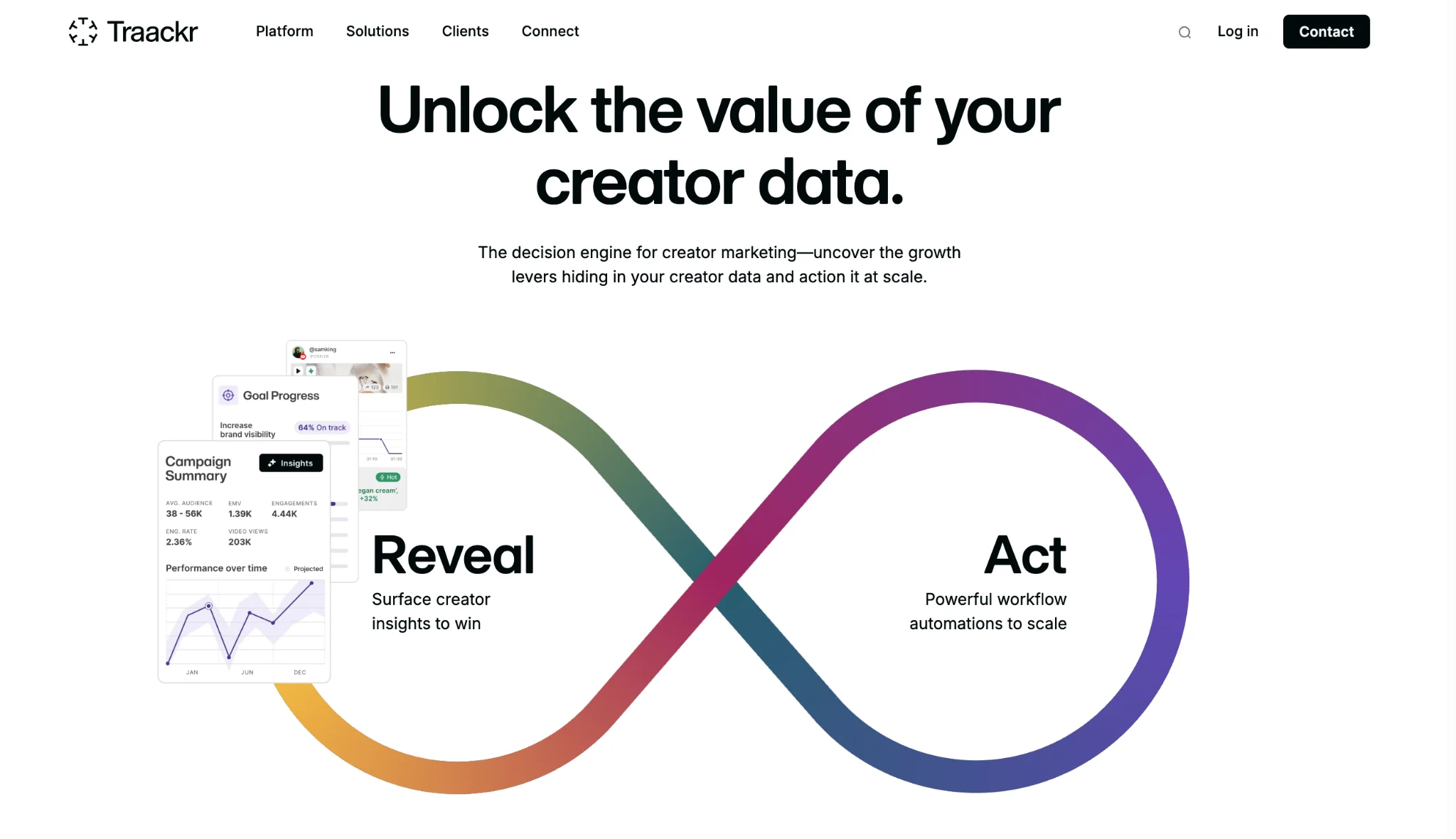
Traackr helps large consumer brands manage influencer marketing as a measurable investment across markets. It is especially common in beauty and personal care, where teams use it to vet creators, compare spend across regions and track their share of creator conversation against competitors.
Key Features
- Creator vetting: Audience data and brand safety signals help teams approve the right creators in each market.
- Plan, Activate and Measure: The platform is organized around three stages, which keeps planning, execution and results in one place.
- Competitive tracking: Brands see which creators competitors work with and how their own share of voice compares.
- Budget management: Spend and cost per engagement are tracked by campaign, team and region.
- Abigail AI: An AI assistant suggests next steps based on campaign data.
Pricing
Traackr does not list prices online and asks brands to speak with a specialist. Reported contracts begin around $25,000 a year, and broader packages exceed $55,000.
Reviews
4.3/5.0 (G2, 377 reviews)
Pros
- Made for global teams: Regional programs can be measured with the same standards.
- Spend accountability: Budget tracking shows where creator money goes.
- Competitor visibility: Share-of-voice data highlights gaps in a brand’s creator strategy.
Cons
- No public pricing: Every evaluation starts with a sales conversation.
- Weaker revenue link: Store sales attribution is less detailed than in commerce-first tools.
Integrations
- Shopify: Creator activity can be connected to store revenue.
- Outlook: Creator emails are logged to the right profile automatically.
- Slack: Approvals and alerts reach the team quickly.
- Tableau: Creator and spend data can be added to company dashboards.
- Google Drive: Briefs and assets stay attached to each campaign.
Audiense vs Traackr
Both platforms appeal to insight-driven marketing teams, but Traackr stands out by linking creator research to campaign execution, spend tracking and competitive benchmarking. Brands can see not only who influences their audience but also how much they invest in those creators and what they get back.
Audiense, on the other hand, focuses more on broad audience profiles and server-side conversion tracking. Traackr is narrower in research scope but much deeper in influencer management. For multi-market beauty and personal care brands that report creator ROI to leadership, Traackr should be on the shortlist.
Afluencer
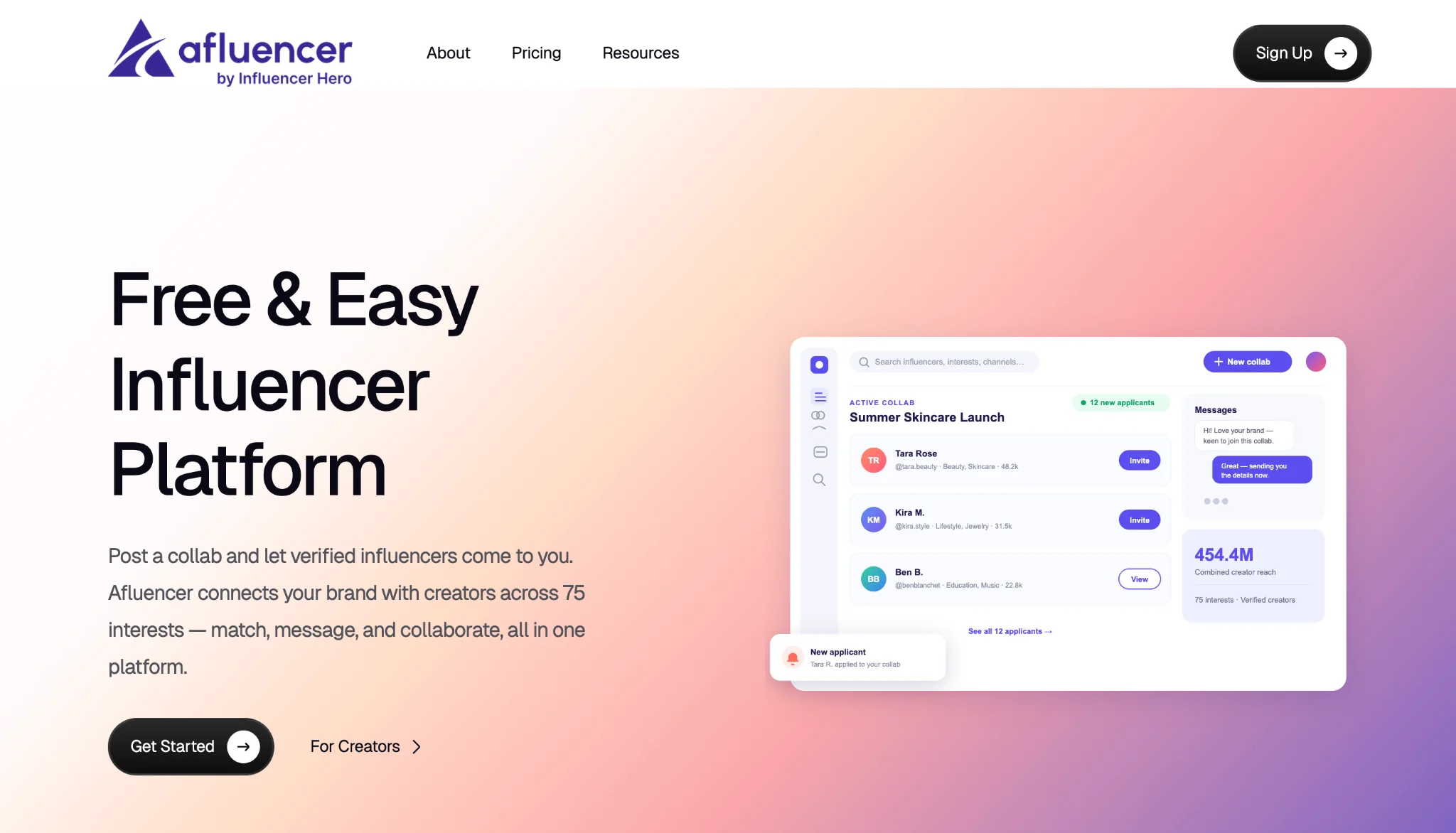
Afluencer is an influencer marketplace for small brands, where companies post collaborations and verified creators apply. Entry pricing is low, and CreatorGPT, its AI matching assistant, scores applicants so brands can respond to the best fits first.
Key Features
- Collab listings: One listing explains the product, deliverables and requirements, and creators apply to it directly.
- CreatorGPT matching: AI ranks applicants against the brand using AI influencer matching, which reduces the time spent reviewing profiles.
- Creator directory: Premium filters by niche, platform and audience help brands send targeted invitations.
- Verified creators: Creators confirm their social accounts, which adds confidence for first-time collaborations.
- Growth plans: Higher tiers add product send-outs, creator payments and more outreach volume.
Pricing
Afluencer bills its three plans month to month:
- Marketplace: $49 per month, with 60 invitations and premium filters
- Standard: $649 per month, with 1,000 reachouts, product send-outs and payments
- Pro: $1,049 per month, with 5,000 reachouts, multiple seats and an account manager
Reviews
4.6/5.0 (G2, 738 reviews) and 4.1/5.0 (Shopify App Store, 37 reviews). A large portion of the G2 reviews are from creators.
Pros
- Budget-friendly: The $49 plan is one of the lowest entry points for influencer software.
- Inbound applications: Creators approach the brand, which saves outreach time.
- Simple to start: Small teams can launch a listing quickly.
Cons
- Mixed applicant quality: Some applicants do not match the brand’s audience.
- US-heavy creator pool: Brands targeting other regions see fewer applicants.
Integrations
- Shopify: Products from the store can be added to listings quickly.
- Amazon: Creators can direct traffic to Amazon product pages.
- Klaviyo: Creator contacts can be synced for email campaigns.
- Slack: New applications trigger notifications.
- DocuSign: Collaboration terms are signed before content is created.
Audiense vs Afluencer
Audiense and Afluencer both help smaller teams understand which creators fit their brand, but Afluencer stands out by bringing those creators to the brand through applications and AI matching. Brands can move from a product listing to real collaborations within days.
Audiense, on the other hand, focuses more on research reports and tracking, which suit teams planning strategy rather than booking creators. Afluencer starts at $49 a month, while Audiense research is quote only. For small brands that want creators to come to them without a research budget, Afluencer is easy to recommend.


Modash
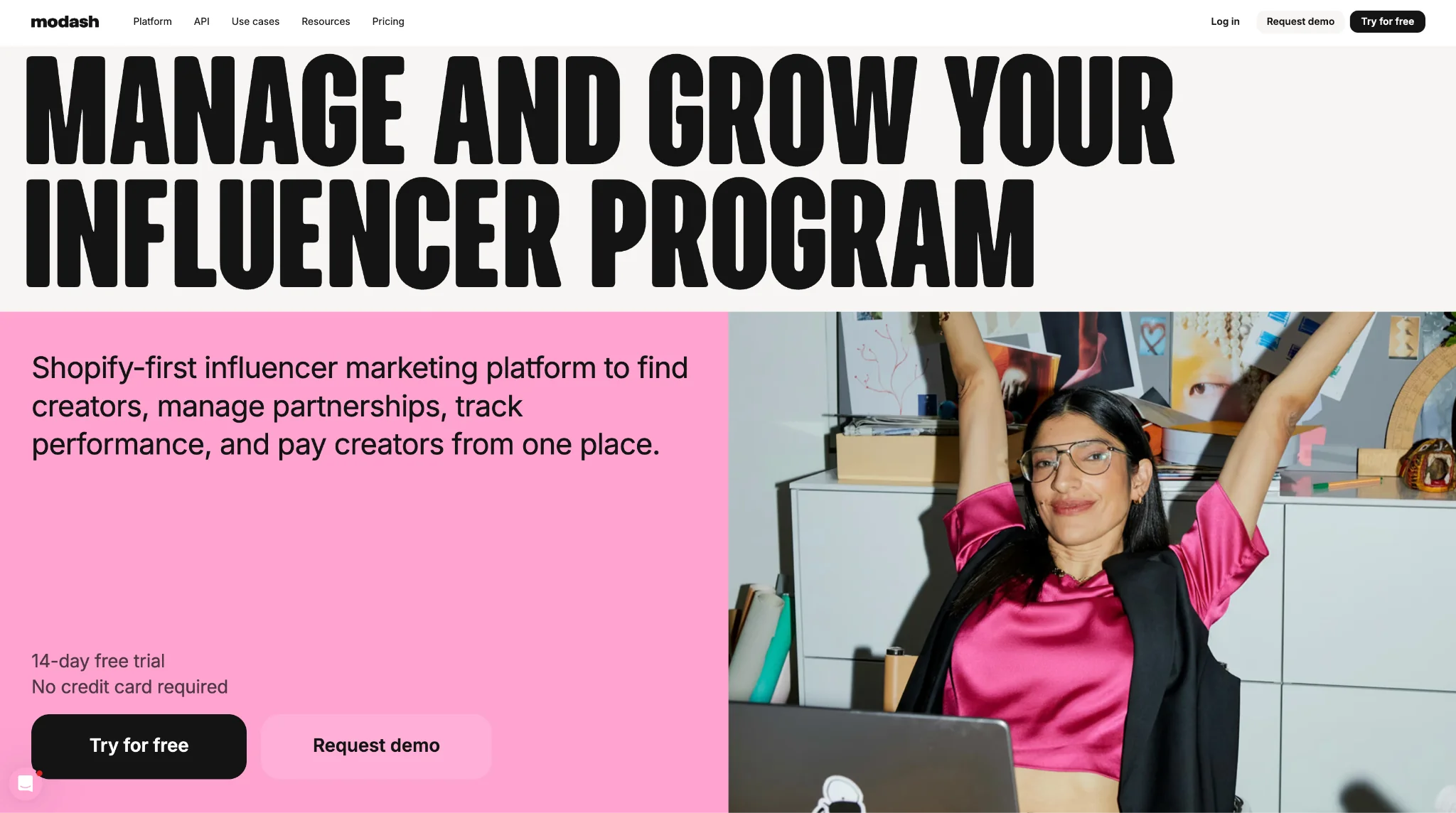
Modash gives brands a searchable view of every Instagram, TikTok and YouTube creator with more than 1,000 followers. Alongside discovery, it offers outreach from the brand’s own inbox, automatic content tracking, Shopify gifting and creator payments, with published self-serve plans and a free trial.
Key Features
- Open creator search: Brands are not limited to a marketplace, since nearly every creator with over 1,000 followers is searchable.
- Audience demographics: Location, age and interest data help confirm a creator reaches the right buyers.
- Customers who create: Modash can surface creators among a brand’s own customers and followers.
- Inbox outreach: Emails go out from the brand’s mailbox, which keeps conversations personal.
- Payments in platform: Creators can be paid without a separate payout tool.
Pricing
Modash lists two self-serve plans and an enterprise option, with a 14-day trial and no card needed:
- Essentials: $199 monthly, with 300 profile opens and room to track 100 creators
- Performance: $499 monthly, with 800 profile opens and room to track 250 creators
- Enterprise: custom terms starting at $14,700 a year
Creator payments are free up to $10,000 a year on Performance and cost 5% above that amount.
Reviews
4.9/5.0 (G2, 19 reviews, low review volume)
Pros
- No-card trial: Teams can test search quality before paying anything.
- Broad coverage: Search is not restricted to opted-in creators.
- Transparent plans: Published prices make it easy to compare costs.
Cons
- Monthly limits: Profile opens and tracked creators cap how far each plan stretches.
- Fee above allowance: Larger payout volumes attract a 5% charge.
Integrations
- Shopify: Store data supports gifting and sales tracking.
- Gmail: Outreach runs from Gmail with replies kept in Modash.
- Outlook: Microsoft email works the same way.
- Zapier: Creator events can trigger actions in other tools.
- API: Enterprise customers can pull creator data into internal systems.
Audiense vs Modash
Both Audiense and Modash help brands understand audiences, but Modash stands out by connecting audience data directly to named creators who can be contacted, tracked and paid. A team can check a creator’s demographics and send an email from the same screen.
Audiense, on the other hand, focuses more on profiling a brand’s whole market and on conversion tracking for ads. Modash publishes plans from $199 a month, while Audiense research requires a quote. For lean teams that want audience data at the level of individual creators, Modash is likely the better choice.
IZEA
IZEA is a long-established influencer marketing company that offers managed campaigns as well as IZEA Flex, a self-serve platform for brands and agencies. Flex includes creator search, social monitoring, content collection, contracts and payments, starting with a free tier.
Key Features
- Social monitoring: ShareMonitor tracks conversations and mentions, which helps teams understand what audiences say about a category.
- Creator discovery: The Discover tool helps brands find and save creators for future campaigns.
- Casting calls: Creators can pitch for brand opportunities, adding inbound interest to outreach.
- Content library: ContentMine organizes creator posts for review and reuse.
- Payments and contracts: The Power plan handles agreements and payouts inside the platform.
Pricing
IZEA Flex offers a free plan, two paid tiers and managed services, plus a 10-day trial:
- Free: $0, without creator search
- Starter: $165 monthly, or $130 monthly on an annual plan
- Power: $600 monthly, or $500 monthly on an annual plan, with payments and up to three users
- Managed services: proposals scoped per campaign
Reviews
3.9/5.0 (G2, 32 reviews)
Pros
- Listening and creators together: Monitoring and discovery sit in the same tool.
- Option to outsource: Managed services are available when internal capacity is limited.
- Low entry plan: Paid search starts at $130 a month on annual billing.
Cons
- Usability complaints: Some reviewers report slow features and a learning curve.
- Payment fee: PayPal payouts carry a $2 fee per payment.
Integrations
- Shopify: Sales data connects to creator campaigns.
- Google Analytics: GA shows the visits each creator link sends to the site.
- Gmail: Creator outreach runs from the team’s Gmail inbox.
- PayPal: Creators receive payments through PayPal.
- Social accounts: Connected creator profiles supply performance data.
Audiense vs IZEA
Audiense and IZEA both include tools for understanding social conversation, but IZEA stands out by pairing that listening with creator search, contracts and payments. Teams can spot a trend and brief creators about it in the same platform.
Audiense, on the other hand, focuses more on detailed audience segmentation and conversion tracking. IZEA’s paid plans start at $130 a month when paid yearly, whereas Audiense research is priced by quote. For brands that want social listening and creator payments in one affordable tool, IZEA fits best.
IMAI
IMAI, or InfluencerMarketing.AI, combines a database of over 400 million creator profiles with audience analysis, campaign tracking, an inbox and payouts. Its five published plans make it popular with small businesses and agencies that want a self-serve influencer tool.
Key Features
- Audience reports: In-depth analyses show who follows a creator, which supports research-led selection.
- Large profile database: Over 400 million creators can be searched by location, niche and engagement.
- Campaign tracking: Content and results are collected automatically during campaigns.
- Payouts: Creator payments are included from the Growth plan upward.
- Agency workspaces: Enterprise accounts can run several workspaces with SSO and data residency options.
Pricing
IMAI publishes five tiers with 20% off annual billing and a no-card free trial:
- Personal: $129 monthly with 20 creator unlocks
- Starter: $299 monthly with 75 unlocks and two seats
- Growth: $499 monthly with 200 unlocks, four seats and payouts
- Scale: $1,200 monthly with 500 unlocks and seven seats
- Enterprise: custom pricing
Reviews
4.1/5.0 (Capterra, 16 reviews, low review volume)
Pros
- Research-friendly: Audience analyses suit teams that select creators carefully.
- Published tiers: Five plans make costs easy to compare.
- Broad database: Most niches return plenty of results.
Cons
- Few unlocks on entry plans: Lower tiers limit how many creators can be fully viewed.
- Trial billing complaints: Some reviewers mention unexpected charges.
Integrations
- Shopify: Creator-driven Shopify orders are linked to campaigns.
- WooCommerce: WooCommerce sales are tracked in the same way.
- API: Data can be shared with other systems on Growth plans and above.
IMAI does not publish a broader list of email or CRM integrations, so brands should confirm the tools they rely on are supported.
Audiense vs IMAI
IMAI and Audiense both put audience analysis at the center, but IMAI stands out by applying it to individual creators and adding campaign tracking and payouts. Brands can research a creator’s followers and then run the collaboration in the same tool.
Audiense, on the other hand, focuses more on segmenting entire markets and improving ad attribution. IMAI starts at $129 a month with published pricing. For small agencies that want creator-level audience reports at a predictable monthly cost, IMAI deserves a look.
SARAL
Built for eCommerce brands, SARAL brings discovery, outreach and ambassador management into one workflow, guided by a dedicated success manager. Its plans are priced by active partnerships, and every customer gets onboarding and a shared Slack channel.
Key Features
- Creator discovery: Brands find creators in bulk and save them to campaigns.
- Outreach sequences: Personalized email flows contact creators at scale.
- Ambassador management: Long-term partners are tracked with tasks, notes and follow-ups.
- Affiliate attribution: Sales are credited to creators without third-party cookies.
- Success manager: Monthly milestone planning keeps programs on track.
Pricing
SARAL publishes annual and quarterly plans, with a free trial available:
- Starter: $12,000 annually or $3,600 quarterly, for 100 active partnerships
- Business: $15,000 annually or $4,500 quarterly, for 500 active partnerships
- Professional: $25,000 annually or $7,500 quarterly, for 1,000 active partnerships
Reviews
No verifiable rating. Review volume for SARAL on the major software sites is too thin to report a fair score.
Pros
- Hands-on support: Onboarding and a success manager come with every plan.
- Built for ambassadors: The workflow suits ongoing partnerships.
- No per-creator charges: Managing more creators does not raise the price within a tier.
Cons
- High starting price: The entry plan costs $12,000 a year.
- Few independent reviews: There is little outside feedback to check.
Integrations
- Shopify: Codes, gifting and affiliate sales connect to the store.
- Gmail: Outreach is sent from Gmail.
- Klaviyo: Creators can be added to email flows.
- Slack: Teams get notifications about replies and posts.
- Zapier: Other tools connect without code.
Audiense vs SARAL
Both platforms support research-led creator programs, but SARAL stands out with outreach, ambassador management and affiliate tracking for eCommerce brands. It turns a list of relevant creators into a structured, long-term program, as covered in this guide to influencer CRM tools.
Audiense, on the other hand, focuses more on understanding the audience and measuring ad conversions. SARAL includes coaching from a success manager, while Audiense is a self-directed research tool. For eCommerce brands that want guided support to build an ambassador program, SARAL lines up well.
Glewee
Glewee is a US creator marketplace whose network of more than 50,000 pre-vetted creators chooses which brand campaigns to join. Brands manage briefs, chat, contracts, content and payments in one app, and Glewee does not take a platform fee from creator payments.
Key Features
- Vetted network: Creators are screened before they join, saving brands time on checks.
- Opt-in campaigns: Creators choose campaigns that suit them, which tends to improve fit.
- Product gifting: Each plan includes a set number of product-for-content collaborations.
- Usage rights: Brands can reuse campaign content on organic channels and build a UGC content library over time.
- Managed campaigns: A full-service option lets Glewee run campaigns for the brand.
Pricing
Glewee offers self-serve plans on monthly terms, with 25% off for paying annually:
- Build: $150 per month on annual billing, for three seats and 10 gifting deals a month
- Scale: $375 per month on annual billing, for unlimited seats and unlimited gifting deals
- Full-Service: custom pricing
Reviews
4.8/5.0 (G2, low review volume)
Pros
- No platform fee: Creator payments are not marked up.
- Month-to-month: Plans can be cancelled without a long contract.
- Quick launches: Opt-in creators make campaigns fast to fill.
Cons
- US-only: International campaigns have little creator supply.
- Basic insights: Reporting covers delivery more than audience depth.
Integrations
- Shopify: Gifting orders and sales link to the store.
- Stripe: Payments are processed securely.
- Instagram: Post results appear in campaign reports.
- TikTok: TikTok performance is tracked the same way.
- Meta Business Suite: Approved content can be prepared for ads.
Audiense vs Glewee
Audiense and Glewee serve different stages of the same goal, but Glewee stands out by giving brands immediate access to vetted US creators with contracts, gifting and payments included. Campaigns can launch without first commissioning research.
Audiense, on the other hand, focuses more on understanding audiences in depth and tracking ad conversions. Glewee costs from $150 a month on annual billing, with no fee on creator payments. For US product brands that want ready-to-work creators and reusable content quickly, Glewee will feel at home.
Final Thoughts on Audiense Alternatives
Audiense is one of the strongest tools for understanding an audience, and its server-side tracking is a solid choice for Shopify brands that spend heavily on paid ads. The trade-off is that it explains who to target without helping a team reach, manage or pay the creators that audience follows. Its research product is also quote only, while the tracking plans are priced by orders, so the total cost depends on which parts a brand needs. Teams that want audience insight to lead directly into outreach, gifting and affiliate sales will get more from Audiense alternatives built for influencer workflows.