


10 Best AtisfyReach Alternatives for Influencer Marketing
Most influencer platforms hand you a search box. AtisfyReach takes the brief instead: you describe the campaign and the product, and its Atisfyreact algorithm converts that into targeting criteria, picks the creators and splits the budget across them. For a lean team that automation is the whole pitch, because the hours normally spent shortlisting, vetting and negotiating largely disappear. The trade is control and evidence, since nothing about brand-side pricing is published, the workflow stops at social delivery rather than store revenue, and the independent review base runs to nine entries.
The 10 AtisfyReach alternatives compared below are Influencer Hero, CreatorIQ, Upfluence, Afluencer, Aspire, NeoReach, Klear, Traackr, Social Cat and Heepsy, covering everything from $49 marketplaces to enterprise contracts.
Key Criteria for Evaluating Influencer Marketing Platforms
Core Features
Evaluation of essential influencer marketing capabilities, including influencer discovery, outreach, CRM, campaign management, reporting, and content workflows.
Pricing & Flexibility
Comparison of pricing models, subscription plans, and contract terms to match different budgets and growth stages.
Customer Reviews & Satisfaction
Analysis of user feedback from trusted review platforms, focusing on usability, reliability, customer support, and overall performance.
Pros & Cons
Review of each platform’s strengths and limitations to highlight where it performs well and where it may fall short based on different use cases.
Integrations
Review of the most important integrations (e.g., Shopify and other tech tools), highlighting what each integration enables in one sentence.
AtisfyReach Overview
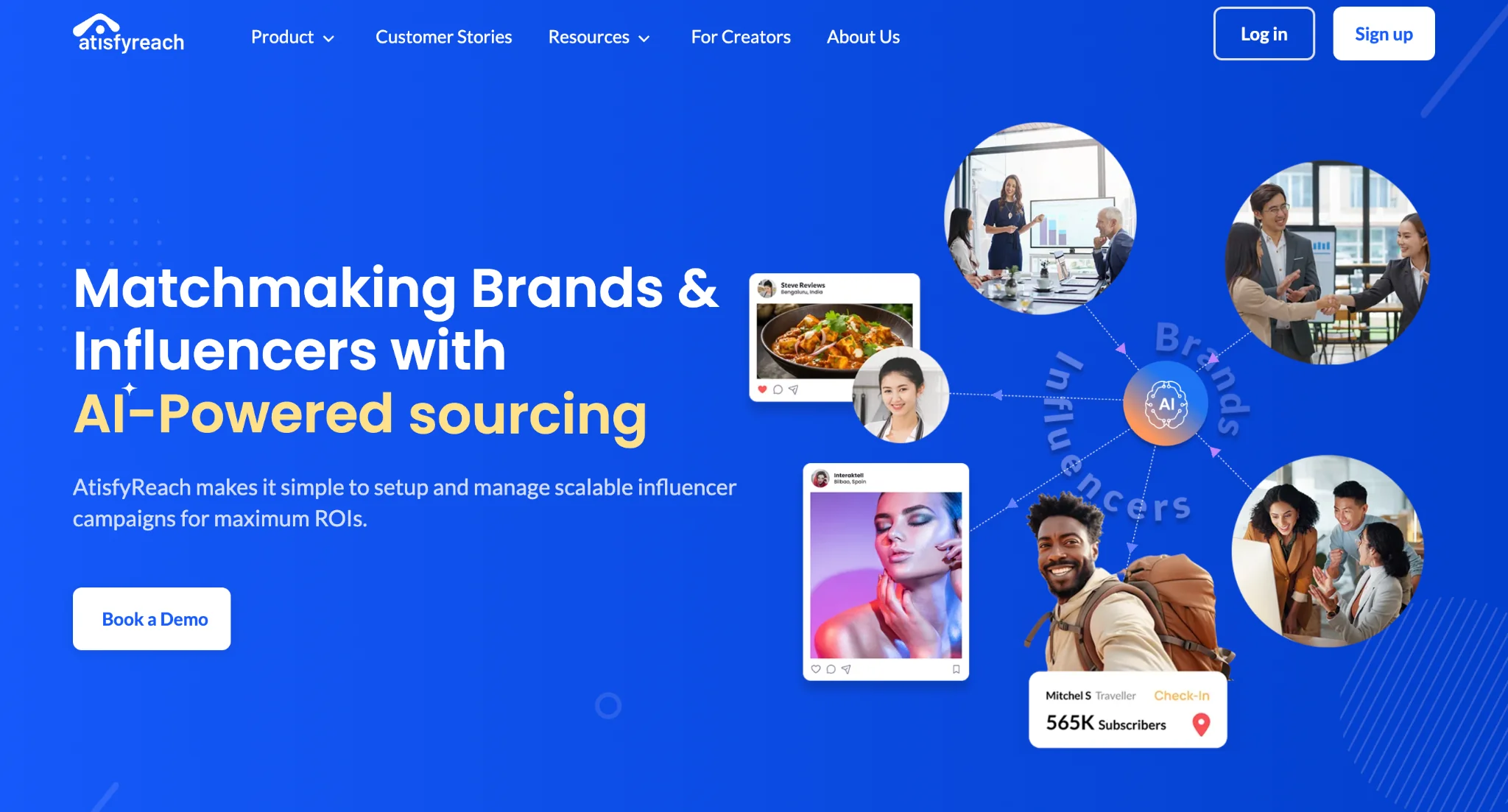
AtisfyReach is the brand-side product from atisfy, a Singapore-headquartered company founded in May 2020 with offices in Australia, India and Indonesia and a team of more than 60. Creators sit on the other side of the same system through Atisfyre, an app on iOS and Android where they are matched to live brand campaigns. The company reports operating in 29 countries with an influencer network spanning 74 countries across six continents, running campaigns on Instagram, Facebook, YouTube, TikTok and Twitch in more than 20 campaign formats. What separates it from the other AI influencer marketing tools in this comparison is how much of the decision-making it takes on: creator selection and budget allocation are handled by the algorithm rather than by a marketer working through a shortlist.
Key Features
- Atisfyreact matching: A proprietary algorithm that reads your campaign inputs and product details, builds the targeting criteria and selects creators whose audiences fit them.
- Budget optimisation: Spend is allocated automatically across channels and individual creators rather than negotiated deal by deal.
- Brand safeguarding: Screens creators for alignment with brand identity before they are activated on a campaign.
- Impact Score: A proprietary metric summarising the total brand impact of a campaign, used in place of raw reach and engagement.
- Atisfyre creator app: An iOS and Android app that puts brand campaigns in front of creators and handles their side of the workflow.
Pricing
- Brand plans: Not published. There are no tiers, figures or contract terms on the site, and quotes come through the help centre or contact form.
- Free version for brands: None. A free trial is offered without card details, but there is no permanent free tier.
- Creator side: Free. Influencers join Atisfyre and apply to campaigns at no cost.
Because nothing is published, there is no way to compare AtisfyReach against a shortlist on cost without booking a conversation first, and no public guidance on whether pricing is a subscription, a campaign fee or a percentage of spend.
Reviews
4.0/5.0 (Trustpilot, 9 reviews, low review volume). The reviews come from brands rather than creators, which is unusual and useful, but nine is too few to draw conclusions from, and there is no verifiable G2 or Capterra listing to cross-check against.
Integrations
- Instagram: Creator sourcing, campaign delivery and performance measurement.
- TikTok: Short-form creator activations and tracking.
- YouTube: Channel-level creator discovery and campaign reporting.
- Facebook: Additional campaign delivery and reach measurement.
- Twitch: Live-streaming creator coverage, which few platforms in this category support.
AtisfyReach publishes no integration directory, and no Shopify, WooCommerce, CRM, email platform or affiliate network connection is documented, so campaign results stay inside the platform rather than landing in your store data.
Pros
- The shortlisting work disappears: Handing over a brief and receiving a matched creator set removes the slowest part of running a campaign.
- Genuinely wide geographic reach: A network across 74 countries with campaigns running in 29, which is broader than most platforms at any price.
- Twitch coverage: Live streaming is supported alongside the usual four networks, which matters for gaming, tech and entertainment brands.
Common Drawbacks of AtisfyReach
No published pricing of any kind
Not a starting figure, not a model, not a contract length, so every evaluation begins with a sales conversation and ends with a quote you cannot benchmark.
The algorithm picks your creators
Automated selection is the product, which means less say over exactly who represents the brand and less visibility into why each creator was chosen.
No store connection
With no documented eCommerce or affiliate integrations, campaigns report reach, engagement and an Impact Score rather than attributed revenue.
Almost no independent evidence
Nine Trustpilot reviews and no resolving G2 or Capterra listing leaves very little third-party signal on delivery, support or data quality.
Best AtisfyReach Alternatives
| TOOL | REVIEWS | BEST FOR | TRIAL INFO | PRICING | ||
|---|---|---|---|---|---|---|
1 |

|
⭐ | Influencer CRM & automation | Book Demo | Pricing | Website |
2 |

|
⭐ | Enterprise influencer marketing | Book Demo | Pricing | Website |
3 |

|
⭐ | Influencer discovery | Book Demo | Pricing | Website |
4 |

|
⭐ | Influencer marketplace campaigns | Book Demo | Pricing | Website |
5 |

|
⭐ | Influencer partnerships | Book Demo | Pricing | Website |
6 |

|
⭐ | Influencer campaigns & data analytics | Book Demo | Pricing | Website |
7 |
|
⭐ | Influencer analytics | Book Demo | Pricing | Website |
8 |

|
⭐ | Enterprise influencer analytics | Book Demo | Pricing | Website |
9 |

|
⭐ | Micro-Influencer Campaigns | Book Demo | Pricing | Website |
10 |

|
⭐ | Influencer discovery | Book Demo | Pricing | Website |
Influencer Hero
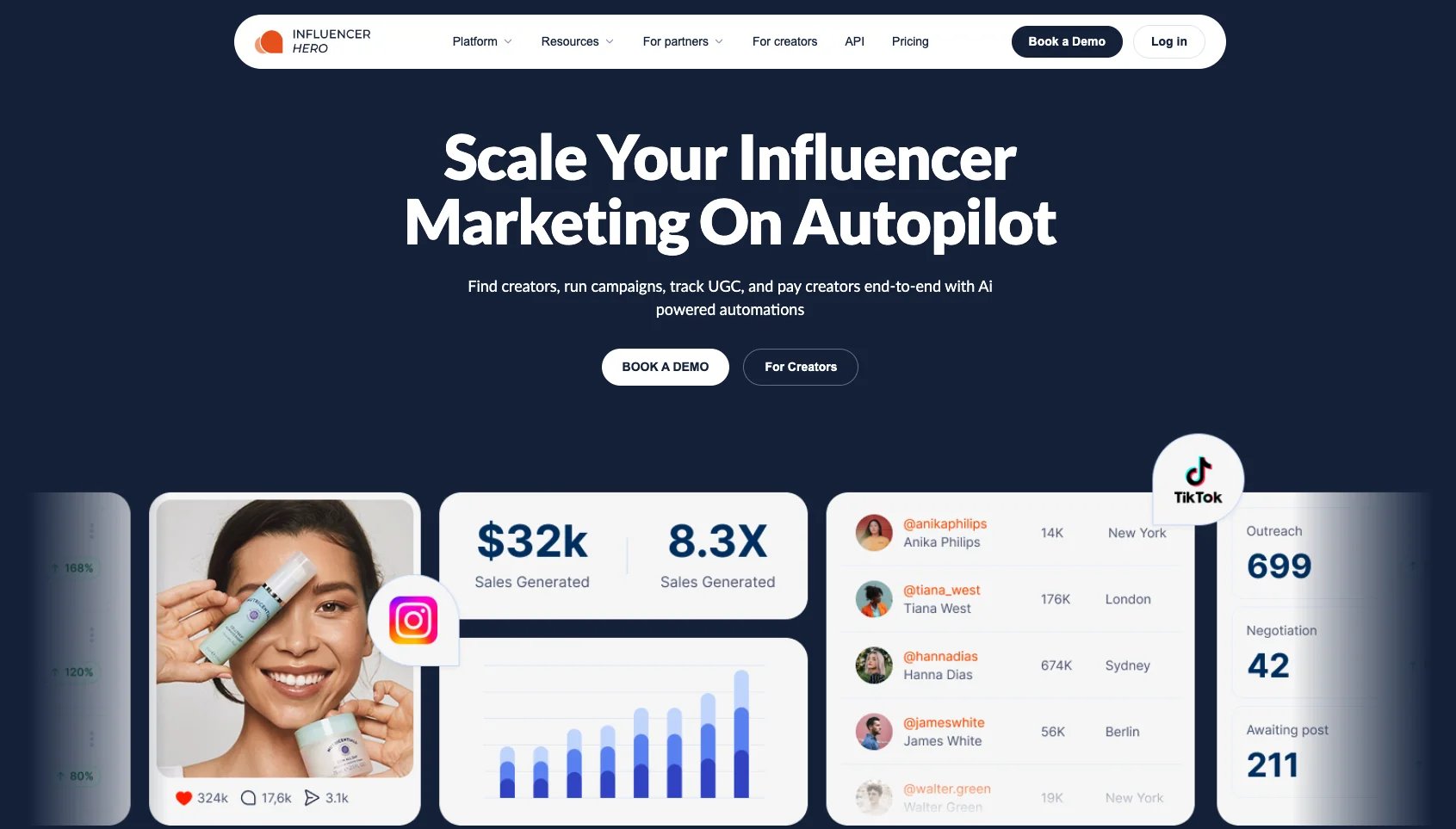
Influencer Hero is built for D2C and eCommerce brands that want to run creator programs themselves rather than hand them over, bringing discovery, outreach, CRM, gifting, affiliate tracking and influencer payouts into one subscription across Instagram, TikTok and YouTube. Automation is used heavily, but it sits under the marketer rather than in front of them. Its two best-known traits are CRM automation at seeding volume and pricing published openly on the site.
Key Features
- AI-powered creator search: Describe the creator you want in plain language, or filter across 20-plus structured criteria covering location, demographics, engagement and follower quality. See how AI-powered creator search narrows a database to a usable shortlist.
- Audience authenticity screening: Fake-follower detection and fraud checks run before budget is committed to anyone.
- Lookalike discovery: Turns one creator who performed into a list of others with comparable audiences and content.
- Campaign CRM with automations: Boards tracking stages and deliverables, with custom fields and rules that fire on column changes.
- Product seeding and gifting: Gift fulfilment triggered through Shopify and WooCommerce, with shipping and delivery confirmation tracked per creator.
- Application pages and storefronts: Branded pages for inbound creator applications, plus creator storefronts that drive affiliate sales.
- AI brand-risk alerts: Creator replies are scanned for negative sentiment and complaints, with Slack and email notifications before an issue grows.
- Multi-platform eCommerce support: Shopify and WooCommerce natively, plus custom stores through an embedded script.
Pricing
- Standard: $649/month, up to 1,000 reachouts per month
- Pro: $1,049/month, up to 5,000 reachouts per month
- Business: $2,490/month, up to 10,000 reachouts per month
- Custom & Agency: Custom pricing
Quarterly billing saves 20% and yearly billing saves 30%.
Reviews
5.0/5.0 (Capterra)
Pros
- Every creator is your call: Search, screening and approval stay with your team, so nobody activates on your brand without a person signing off.
- Results arrive as revenue: Store connections, discount codes and payouts sit in the same product, so a campaign reports sales rather than an index score.
- Published tiers and limits: Three prices with reachout allowances attached, which makes it the easiest platform here to compare against a budget.
Cons
- Demo before access: There is no free trial, so you cannot test the database on your own niche before committing.
- Entry price suits regular activity: At $649 a month it only makes sense once creator work is continuous rather than occasional.
- It rewards setup time: Boards, automations and templates need configuring before the platform starts saving anyone hours.
Integrations
- Shopify: Gift fulfilment, discount codes and per-creator revenue attribution, automated end to end.
- WooCommerce: The same seeding and affiliate workflow for WordPress storefronts.
- DocuSign: Creator contracts sent, signed and stored without leaving the campaign.
- Gorgias: Connects creator conversations to the support desk your team already works in.
- Zapier: Reaches 8,000-plus further apps for anything not covered natively.
AtisfyReach vs Influencer Hero
This is a straight choice between delegation and ownership. AtisfyReach takes the brief and returns a matched creator set; Influencer Hero gives you the search, the screening and the approval, and expects you to use them.
The practical differences follow from that. Influencer Hero publishes $649, $1,049 and $2,490 a month with reachout limits attached, so it can be costed in an afternoon, while AtisfyReach publishes nothing at all. Influencer Hero also connects to Shopify, WooCommerce and custom stores, which turns campaign output into attributed revenue instead of an Impact Score, and it screens creators for fake followers before you spend. What AtisfyReach offers in return is genuine breadth, with a network across 74 countries and Twitch coverage that Influencer Hero does not have. A brand with nobody to run the program may prefer the automation; a brand that needs to prove ROI to a finance team will struggle without store data.
CreatorIQ
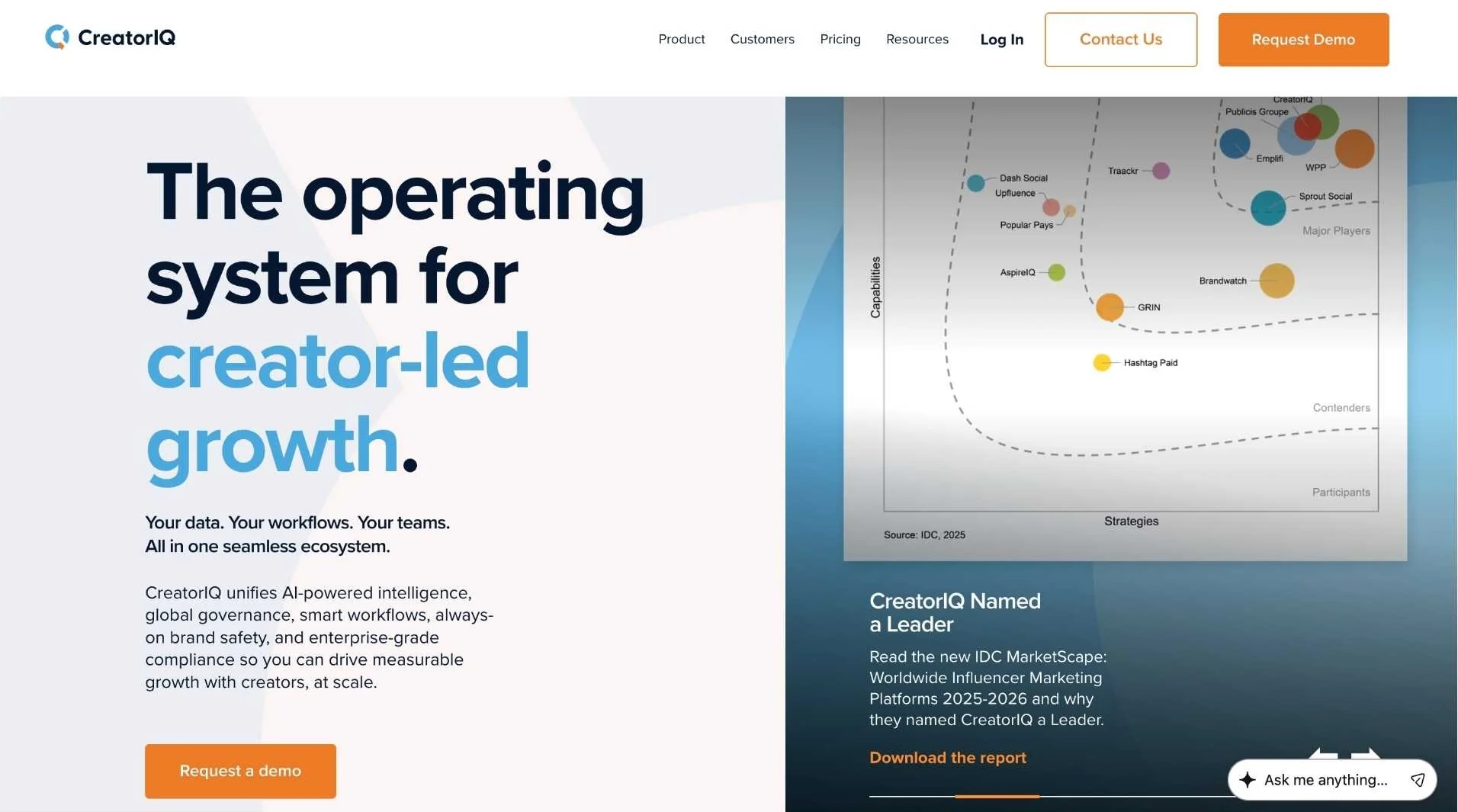
CreatorIQ is where large organisations end up when influencer marketing becomes a permanent line item rather than a campaign. It is built for global brands and agencies running always-on programs across many markets, with first-party social API relationships and reporting designed to withstand internal scrutiny. Nothing about it is designed to be bought quickly.
Key Features
- Measurement and attribution: Social performance joined to eCommerce and affiliate conversion data for program-level ROI.
- ExchangeIQ data layer: Creator data pushed into data lakes, BI tools and marketing mix models through the API.
- Campaign management: Briefs, contracts, approvals and deliverables tracked across many campaigns at once.
- Creator discovery: A large indexed database with audience-quality, demographic and brand-affinity filtering.
- Creator payments: Payout workflow handled in the platform rather than routed through finance.
Pricing
- All tiers: Not published. The pricing page is fully demo-gated with no plans or figures shown.
- Reported entry point: Third-party directories list a starting figure around $36,000 per year.
- Reported typical contract: Marketplace contract data puts the median annual commitment near $39,250, ranging roughly $30,000 to $59,500.
There is no monthly plan, no self-serve entry and no free trial.
Reviews
4.6/5.0 (G2, 581 reviews)
Pros
- Evidence at volume: 581 G2 reviews make it the best-documented platform on this list by a wide margin.
- Data you can take with you: The API and data exchange move creator performance into your own systems rather than trapping it in a dashboard.
- Scale handling: Hundreds or thousands of creators across markets without the workflow falling apart.
Cons
- Annual enterprise floor: A reported five-figure yearly commitment with no trial rules it out for anything short of an always-on program.
- Discovery complaints: Reviewers regularly report search missing relevant creators or returning irrelevant ones.
- Heavy interface: Frequently described as busy and slow, with some bulk actions still manual.
Integrations
- Shopify: Store data synced to attribute creator-driven orders and promo codes.
- Google Analytics: Creator traffic tied to on-site conversion behaviour.
- Impact, CJ and Awin: Affiliate network conversion data ingested for creator-level revenue attribution.
- DocuSign: Contracts and signatures handled inside the campaign workflow.
- Sprinklr: Creator, organic and paid social reporting unified through a formal partnership.
AtisfyReach vs CreatorIQ
Both remove work, but from opposite ends of the org chart. AtisfyReach removes the marketer’s manual effort by automating selection. CreatorIQ removes the analyst’s uncertainty by measuring everything and exporting it.
CreatorIQ attributes revenue through Shopify and three affiliate networks, carries 581 G2 reviews and lets you move creator data into your own BI stack. AtisfyReach documents no store integration and has nine reviews to its name. What CreatorIQ asks in return is a reported five-figure annual contract with no trial and a team to operate it, which is precisely the situation AtisfyReach’s automation is designed to avoid. Neither publishes a price, so both evaluations start with a call.
Upfluence

Upfluence targets eCommerce brands and agencies with a product spanning search, outreach, campaign management, affiliate tracking and global creator payments. Its distinguishing move is looking inward first, scanning your customer and email data to find creators already buying from you. It also states plainly that it takes no percentage of creator-driven sales.
Key Features
- Affiliate and promo tracking: Codes and tracked links per creator, with revenue attributed back to each one.
- Customer-to-creator matching: Shopify and email data scanned to surface existing customers with creator followings.
- Upfluence Pay: Creators paid globally in local currencies with compliance handled.
- Outreach automation: Personalised sequences sent and tracked from a connected Gmail or Outlook inbox.
- Creator search: A large indexed database filtered by platform, audience, engagement and keyword.
Pricing
- All packages: Quote-only. Three named tiers are shown but no figures are published.
- Structural terms the vendor does publish: Fixed platform fees with no percentage of sales taken, and no mandatory setup fee.
- Contract: Annual plans carry a 12-month minimum commitment.
A free trial is available only after an initial consultation call.
Reviews
4.6/5.0 (G2, 140 reviews)
Pros
- eCommerce depth: Shopify, WooCommerce, BigCommerce and Amazon connections make revenue attribution genuinely usable.
- Buyers become creators: Matching your order history against creator accounts produces warmer partnerships than any algorithmic pairing.
- No cut of your sales: Fixed platform fees only, with the vendor stating it takes no percentage.
Cons
- Opaque pricing plus a year lock-in: No budgeting without a sales call, and annual plans hold you for twelve months.
- Learning curve: Reviewers describe the interface as heavy for teams without dedicated influencer staff.
- Organisation at volume: List and campaign management draws recurring criticism once creator counts grow.
Integrations
- Shopify: Gifting orders triggered, fulfilment tracked and sales attributed per creator.
- Amazon Attribution: Creator activity linked to Amazon sales with affiliate campaigns automated.
- Klaviyo: Creators identified inside your email list and moved into dedicated nurture flows.
- WooCommerce and BigCommerce: Coupon generation and conversion tracking on non-Shopify storefronts.
- Zapier: Thousands of further apps connected for custom automation.
AtisfyReach vs Upfluence
Both make a claim about finding the right creators, but they get there from different data. AtisfyReach matches against audience signals in its own network; Upfluence matches against your customer list.
Upfluence’s approach produces creators with an existing relationship to the brand, and it closes the loop with Shopify, WooCommerce, BigCommerce and Amazon so the campaign ends in attributed revenue. AtisfyReach reaches further geographically, into 74 countries and onto Twitch, and asks far less of the team running it. Neither publishes a price, but Upfluence at least publishes its terms, confirming fixed fees, no revenue share and a twelve-month minimum on annual plans, which is three more facts than AtisfyReach makes available.
Afluencer
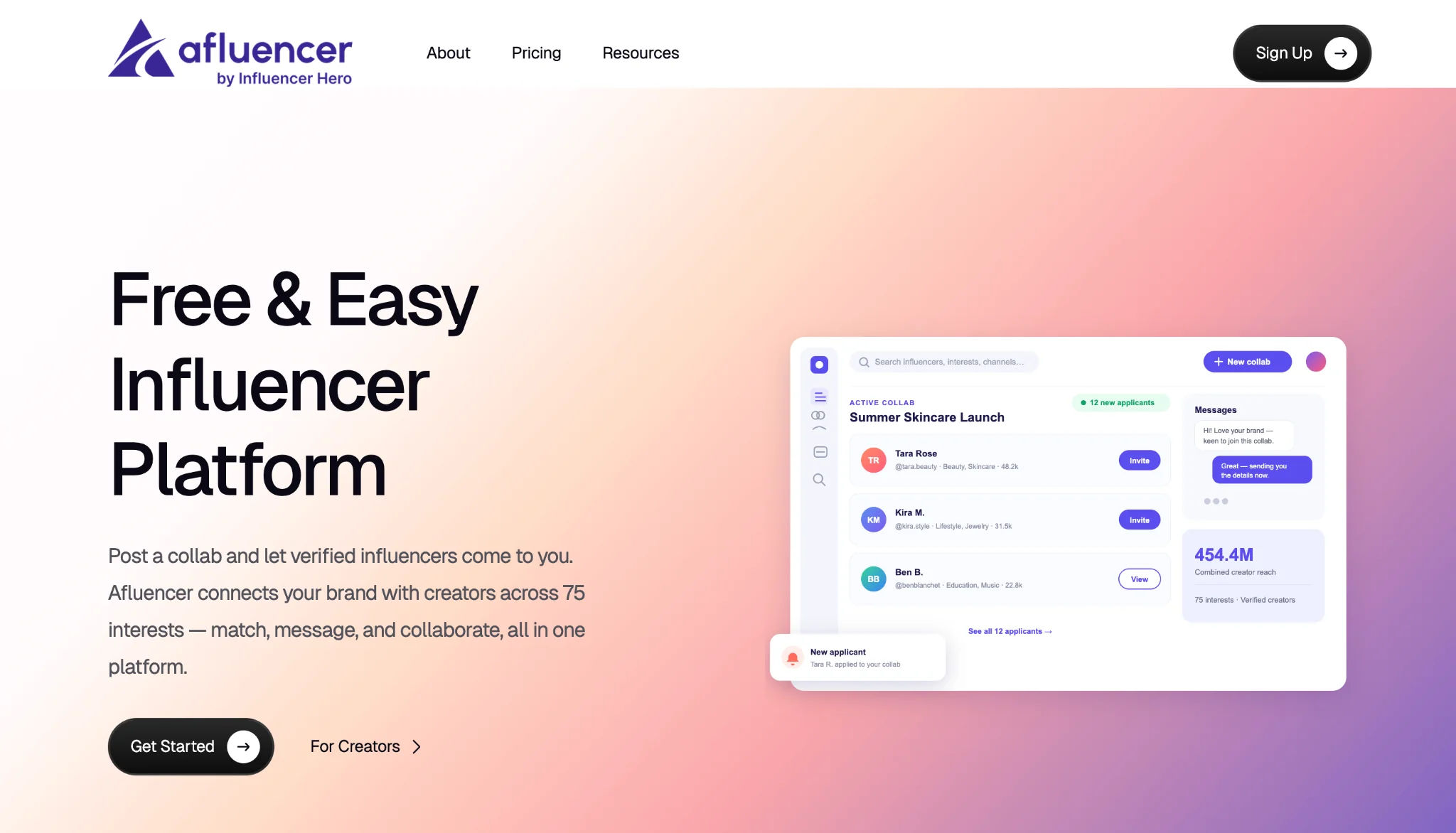
Afluencer works on applications rather than selection. Brands publish campaign listings called Collabs, verified creators apply, and the brand chooses from the people who raised their hand. It suits SMB and D2C merchants who want creator supply without either cold outreach or a black box.
Key Features
- Collab listings: Publish a campaign with channel, niche and follower criteria and let creators apply to it.
- CreatorGPT: AI narrowing of applicants and creator suggestions by niche fit and audience quality, explained in this guide to AI creator matching.
- Creator directory: A browsable index across dozens of interest categories with filtering.
- Product send-outs: Gifting logistics and creator payments handled on paid plans.
- In-platform messaging: Briefs, deliverables and gifting details coordinated directly with creators.
Pricing
- Free tier: Browse the directory and post listings with monthly invitation credits.
- Paid plans: From $49/month, adding outreach volume, product send-outs and creator payments.
- Higher tiers: More seats, larger reach-out allowances and dedicated support.
Reviews
4.6/5.0 (G2, 738 reviews). The review base leans toward creators using the marketplace rather than brands paying for the upper tiers.
Pros
- You see who applied and why: Selection is visible and manual, which is the opposite of an algorithm returning a finished list.
- $49 a month, on the page: A free tier plus the cheapest paid entry on this list, with no quote required.
- 738 reviews of evidence: Far more independent feedback than most platforms here, including AtisfyReach by two orders of magnitude.
Cons
- You do the work: Creators come to you, but briefing, chasing and approving content remains a person’s job.
- North America weighted: Reviewers outside the US and Canada report a thinner pool of relevant creators.
- Roster quality control: Reviews cite occasional inaccurate creator classifications.
Integrations
- Shopify: Products gifted and discount codes issued straight from the store.
- Klaviyo: Creator and campaign contacts passed into email flows.
- Amazon: Amazon-focused collabs and product promotion supported.
- DocuSign: Creator agreements and signatures handled in the workflow.
- Slack: Collab and application notifications pushed into team channels.
AtisfyReach vs Afluencer
Both solve the same problem, which is filling a campaign with creators without a marketer combing through a database. They just disagree about who should decide.
AtisfyReach decides for you and does not publish what that costs. Afluencer surfaces applicants and charges $49 a month, with a free tier to test the roster first, and 738 G2 reviews behind it. Afluencer also handles gifting logistics and creator payments on paid plans, which is more of the campaign than AtisfyReach documents. Where AtisfyReach is clearly ahead is geographic spread, since Afluencer’s creator base thins outside North America while AtisfyReach spans 74 countries.
Aspire
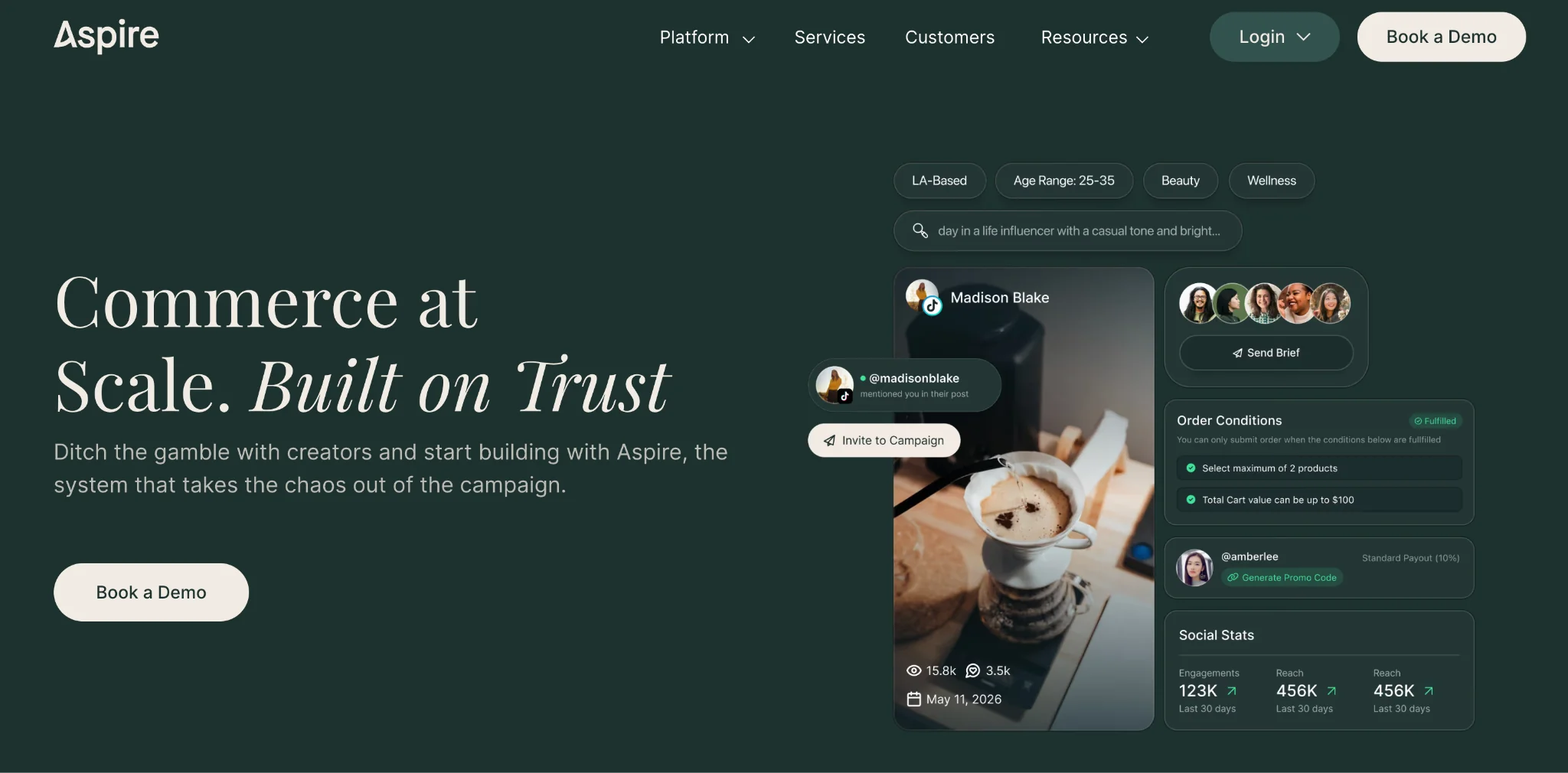
Aspire runs word-of-mouth commerce programs for mid-market and enterprise eCommerce brands, strongest in beauty, apparel, food and home. Discovery, creator CRM, seeding, content licensing and affiliate attribution sit in one workflow, backed by direct partnerships with Meta, TikTok and Pinterest that supply verified rather than estimated analytics. It tends to be bought by brands consolidating three or four tools into one.
Key Features
- Content and UGC library: Creator content collected, licensed and repurposed for paid and owned channels.
- Influencer CRM: Creator records, tags, tiers and relationship history maintained at scale.
- Affiliate and conversion tracking: Links, codes and sales data consolidated from Shopify and affiliate networks.
- Campaign workflow: Briefs, seeding, content approvals and deliverable tracking in a single flow.
- Creator discovery: Search plus a Chrome extension that captures creators and campaigns from the browser.
Pricing
- All tiers: Not published. There is no pricing page, only a demo request.
- Reported typical contract: Marketplace data puts the median annual commitment near $15,588, ranging roughly $11,139 to $36,599.
- Possible service fee: At least one buyer reports negotiating away a 2% service fee, so check whether a percentage sits in your quote.
There is no free trial and no freemium tier; access is gated behind a paid contract.
Reviews
4.6/5.0 (G2, 146 reviews)
Pros
- Verified social data: Meta, TikTok and Pinterest partnerships supply first-party analytics rather than scraped estimates.
- Rights handled in the workflow: Content licensing is part of the collaboration rather than a separate negotiation.
- Support quality: Responsive account teams are the most-cited strength across its review base.
Cons
- Contract-only with a possible percentage: No trial, no published price, and a service fee at least one buyer had to negotiate out.
- Performance issues: Slow loading and social-integration failures appear regularly in reviews.
- Onboarding burden: Implementation typically runs to around three months, with reviewers citing thin training.
Integrations
- Shopify: Seeding, promo codes and identification of influential existing customers.
- Impact, CJ and ShareASale: Affiliate link management and creator payouts centralised.
- Meta and TikTok: Verified analytics and branded-content ads through direct partnerships.
- PayPal: Creators paid directly from inside the platform.
- Klaviyo: Influencer contacts synced into CRM and email nurture campaigns.
AtisfyReach vs Aspire
Aspire assumes you want to see and shape every part of the program. AtisfyReach assumes the opposite, and prices are unavailable for both, so the comparison rests on what each one produces.
Aspire produces a licensed content library, a creator roster that persists and affiliate revenue tracked back to individual creators, on a reported median near $15,600 a year with roughly three months to implement. AtisfyReach produces campaign delivery and an Impact Score, with no documented store connection and no content licensing layer. Aspire also carries 146 G2 reviews against nine Trustpilot entries. The honest split is that Aspire is a system a team operates and AtisfyReach is a service a team commissions.


NeoReach
NeoReach sells managed influencer campaigns to mid-market and Fortune 500 brands, with software and an enterprise API alongside the service rather than in place of it. It has managed more than $350M in influencer spend since 2013, mostly at the macro and celebrity tier. Reach at scale is what it is bought for.
Key Features
- Managed services: Senior-led teams handling strategy, sourcing, negotiation and execution end to end.
- Creator database: 250M-plus profiles searchable across 40-plus filters including keywords and audience demographics.
- Enterprise API: Cross-channel social and brand insight data fed into a client’s own systems.
- Measurement and reporting: Real-time dashboards covering reach, engagement and campaign ROI.
- Campaign management: Multi-creator campaigns planned, tracked and reported from one dashboard.
Pricing
- Managed services: Not published. Priced per campaign by scope, channels and creator tier after a consultation.
- Self-service platform: Software directories list roughly $399 per user per month, unconfirmed by the vendor.
- Media spend: Creator fees sit outside the retainer entirely.
Reviews
4.5/5.0 (G2, 11 reviews, low review volume)
Pros
- People, not just software: Senior campaign managers are the deliverable for brands with no internal influencer function.
- Track record at scale: More than $350M in managed spend across large brand accounts since 2013.
- Search and filtering: The 40-plus filter discovery and analytics rate highly with reviewers.
Cons
- Three unknowns stacked: No published price, a directory figure that excludes managed retainers, and creator fees on top of both.
- Thin review base: Eleven G2 reviews is very little evidence in either direction.
- Macro skew: The database leans heavily to large creators, which makes micro-seeding awkward.
Integrations
- Enterprise API: The one documented integration path, feeding creator and brand data into client systems.
- Instagram: Creator data and campaign performance sourced from the platform.
- YouTube: Creator discovery and performance measurement.
- TikTok: Creator sourcing and campaign tracking.
- Influencers.com: NeoReach’s own talent property, used for representation and sourcing.
NeoReach publishes no integration directory, so the verifiable surface is narrow.
AtisfyReach vs NeoReach
Both take the campaign off your desk, which makes this the closest philosophical match on the list. The difference is whether the work is done by an algorithm or by an account team.
NeoReach puts senior people on the campaign and indexes 250M-plus profiles weighted to Western macro and celebrity talent, at a cost that includes a retainer, a platform fee and creator fees stacked on top. AtisfyReach automates the same coordination and skews toward broad international reach and micro-to-mid creators across 74 countries. Neither publishes a price and neither has a meaningful review base, at eleven entries against nine. The deciding question is usually whether the campaign needs negotiation, which software does not do, or volume, which people do slowly.
Klear

Klear survives as the influencer marketing module inside Meltwater’s media, social and consumer intelligence suite rather than as a product you can buy on its own. That suits enterprises and agencies already paying for listening and PR monitoring and wanting creator work in the same contract. Fraud detection and database breadth are what it brings to the suite.
Key Features
- Fraud and audience quality detection: Bots identified and True Reach reported instead of raw follower counts.
- AI creator discovery: 30M-plus profiles from nano to mega tier, with recommendations that learn from past results.
- ROI and attribution: Engagement, estimated media value and conversion attribution tracked together.
- Social listening tie-in: Creator data sitting beside Meltwater monitoring and consumer intelligence.
- Campaign management: Vetting, communications, approvals and reporting handled end to end.
Pricing
- All tiers: Not published. Four plans are named but no figures are shown.
- Tier gating: Influencer marketing is included only in the Enterprise and Agency tiers.
- Contract terms: Typically 12-month agreements, with implementation fees possible and no self-serve free trial.
Reviews
4.3/5.0 (Capterra, 13 reviews, low review volume under the legacy Klear listing)
Pros
- Vetting you can see: Bot detection and True Reach show why a creator is or is not worth activating.
- One contract inside Meltwater: Creator work lands in a suite the organisation is already paying for.
- Database breadth: 30M-plus profiles spanning nano through mega tiers.
Cons
- Gated behind the expensive tiers plus a year lock: Enterprise and Agency only, on annual contracts, with onboarding fees possible on top.
- Lost product identity: Klear as a standalone is effectively gone, which means less focused roadmap attention.
- Workflow gaps: Reviewers cite slow adoption of newer platforms and a complicated third-party payment setup.
Integrations
- Meltwater tracking pixel: Creator-driven conversions attributed on any eCommerce platform.
- Shopify: Direct sales attribution from creator campaigns to store revenue.
- WooCommerce: The same conversion attribution for WordPress storefronts.
- Tipalti: Global creator payments and tax compliance processed.
- Gigapay: An alternative payout rail with local-currency support.
AtisfyReach vs Klear
Both hand you a judgement about creators, but only one shows its working. Klear reports bot rates and True Reach per profile; AtisfyReach reports an Impact Score after the fact.
Klear also attributes conversions through its own pixel on any storefront and pays creators through two global rails, neither of which AtisfyReach documents. The catch is access, since influencer marketing sits only on Meltwater’s Enterprise and Agency tiers under annual agreements with possible onboarding fees, which is a far heavier commitment than a brand looking at AtisfyReach is likely contemplating. Outside the Meltwater estate the maths rarely works.
Traackr
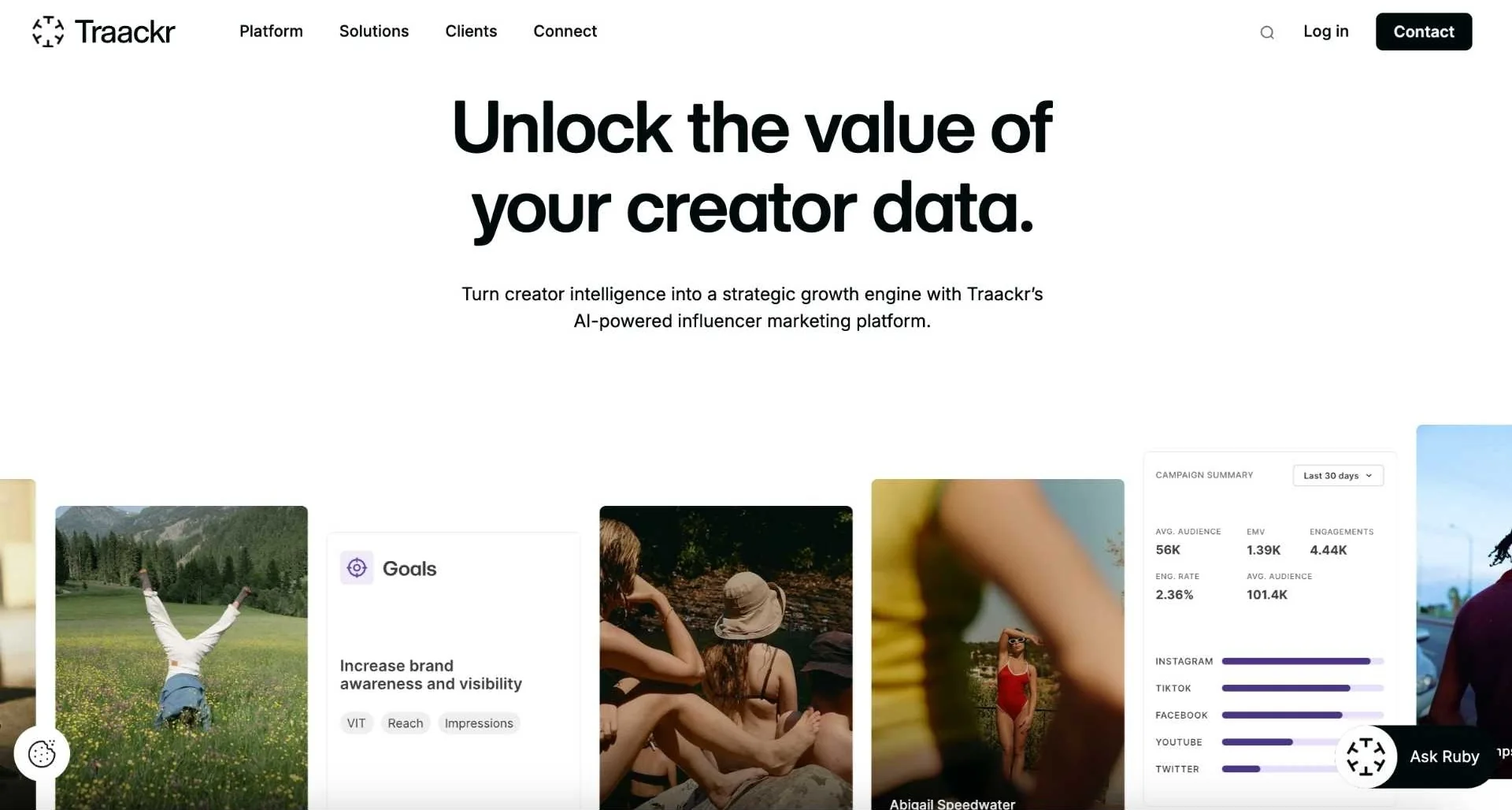
Traackr is built for enterprise and mid-market teams running always-on programs across several markets, where the recurring question is not who to work with but whether the money is being spent well. Beauty, fashion and CPG teams make up much of its base. Benchmarking and spend governance are the reasons it appears on shortlists.
Key Features
- Performance benchmarking: Your spend and results measured against competitors and category norms.
- Spend and budget tracking: Creator costs tracked against results, with a cost calculator built in.
- Influencer relationship management: One record of every creator relationship and conversation across teams and markets.
- Creator payments: Automated global payouts in local currencies through a zero-fee creator wallet.
- Discovery and vetting: Audience quality, demographic and brand-affinity filters backed by platform API data.
Pricing
- All tiers: Not published. The pricing page is demo-gated with no tiers, figures or contract terms.
- Cost band: Independent review data places it in the highest perceived cost tier in the category.
- Renewals: Reviewers report pricing that increases over time, so budget for escalation.
Reviews
4.3/5.0 (G2, 377 reviews)
Pros
- Answers the efficiency question: Benchmarking and cost-per-result tracking suit teams who have to justify the budget rather than just spend it.
- Zero-fee creator payments: The payment wallet takes no cut, which reviewers single out.
- Enterprise governance: SSO, data lake export and multi-market visibility for large distributed teams.
Cons
- Unquotable pricing that keeps climbing: Nothing published, top cost band, and reviewers explicitly flag rising renewals.
- Speed and stability: Slow loading and content failing to render are the most common complaints.
- Long-tail data accuracy: Weaker data on smaller creators and delayed content tracking.
Integrations
- Link and code tracking: Clicks, conversions and revenue per creator on any eCommerce site.
- Meta and TikTok APIs: Real-time first-party creator and content data through direct partnerships.
- Shopify: Gifting and fulfilment automated, with the resulting content performance captured.
- SSO and data lake connectors: Enterprise sign-on plus export into your own BI environment.
- Gmail and Outlook: Personalised outreach sent and logged for the whole team.
AtisfyReach vs Traackr
Traackr exists to tell you whether the program is worth the money. AtisfyReach exists to get the program running without a team. Those are different jobs, and a brand that needs the second rarely has the reporting obligations that create demand for the first.
Traackr benchmarks spend against competitors, tracks cost per result over time and pays creators at zero fee, with 377 G2 reviews and a place in the highest cost band in the category. AtisfyReach offers an Impact Score, no benchmarking, no documented payment rail and nine reviews. If somebody upstairs asks how efficient the creator budget was last quarter, only one of these two can answer.
Social Cat
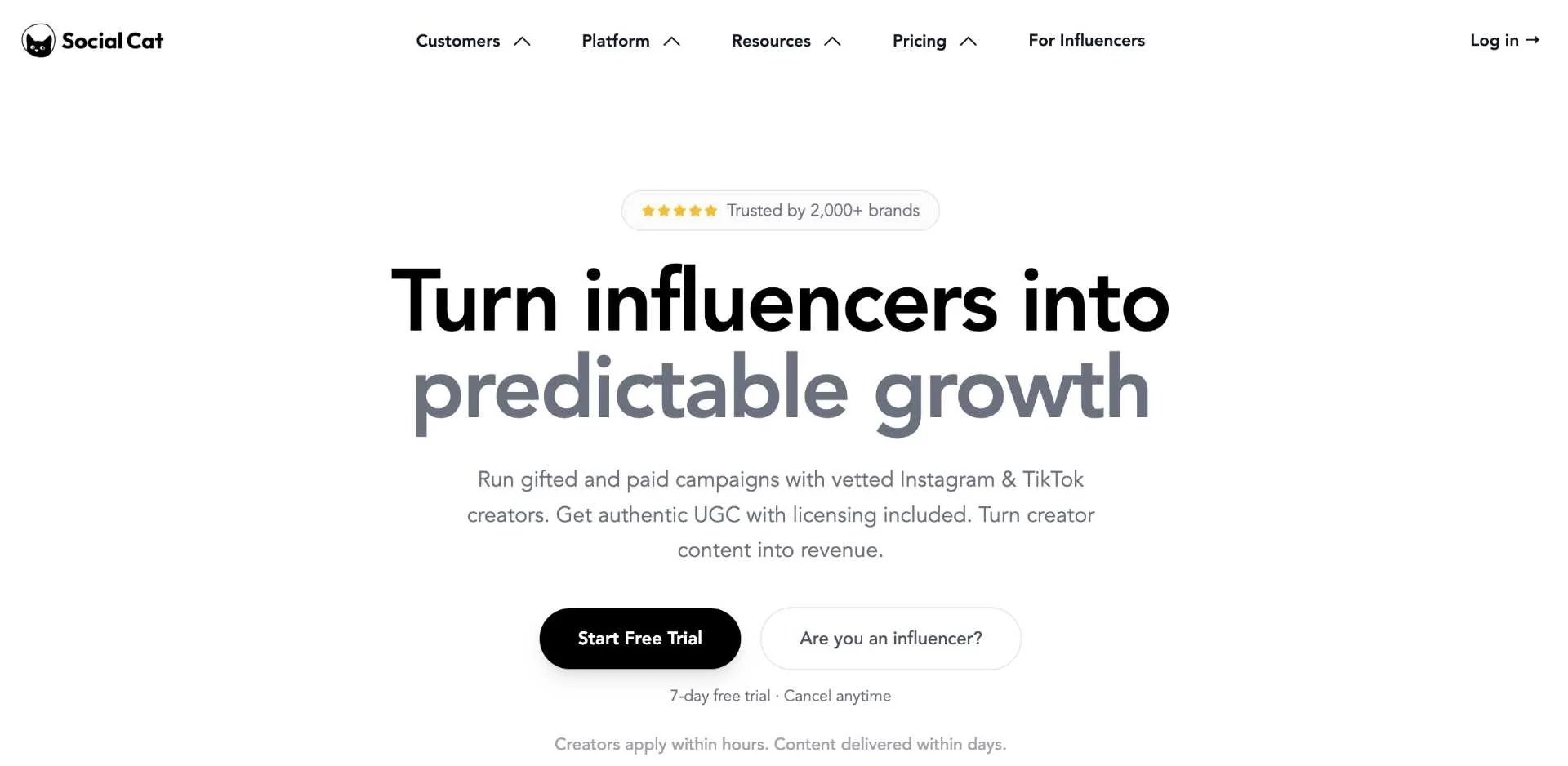
Social Cat is deliberately small in scope: gifted and small-paid collaborations with vetted Instagram and TikTok micro-creators, aimed at small D2C brands, apps and agencies who mainly want licensed content. Everything about it is published, from the collaboration caps to the trial length. It competes on being knowable rather than being comprehensive.
Key Features
- Content usage rights: Licensing built into every collaboration so brands can reuse what creators make.
- Vetted creator matching: 500K-plus manually reviewed Instagram and TikTok creators filtered by niche and engagement.
- Gifted and paid collaborations: Product-gifting and paid campaigns with unlimited content per collaboration.
- Invitation system: Monthly invitation quotas that scale with the plan tier.
- Campaign and contract management: Contracts, private notes, creator reviews and a content library in one dashboard.
Pricing
- Essentials: $99/month, up to 5 collaborations, 1,000 invitations, 1 campaign, 1 seat.
- Performance: $199/month, up to 15 collaborations, 2,500 invitations, up to 3 campaigns, up to 5 seats.
- Pro: $299/month, up to 30 collaborations, 5,000 invitations, unlimited campaigns, up to 10 seats.
Annual billing gives two months free and a 7-day free trial is offered. A separate managed service is custom-priced, with the vendor stating most brands invest between $3,000 and $15,000 per month in total.
Reviews
4.7/5.0 (Reviews.co.uk, 2,773 reviews). The volume is overwhelmingly creators rating collaborations rather than brands rating software, and there is no verifiable G2 or Capterra brand-side score.
Pros
- Nothing is hidden: Price, collaboration cap, seat count and trial length are all published before signup.
- Usage rights included: Licensing arrives with the collaboration instead of being negotiated per creator.
- Human vetting: Creators are reviewed by a person, which matters at the micro tier where inflated followings are common.
Cons
- Collaboration caps force a big step: Five, fifteen or thirty a month, and passing thirty pushes you to a managed service starting near $3,000.
- Two platforms only: Instagram and TikTok, with no YouTube, Twitch or LinkedIn coverage.
- No independent software reviews: Without brand-side G2 or Capterra scores, evidence on the software itself is thin.
Integrations
- Shopify: The one named eCommerce integration, connecting a store to creator campaigns.
- Instagram: Native creator sourcing, campaign delivery and content collection.
- TikTok: Native creator sourcing and campaign delivery.
Social Cat publishes no integration directory and offers no CRM, email platform, affiliate network or payment-rail connections, so the surface is genuinely narrow.
AtisfyReach vs Social Cat
Both are aimed at brands without a dedicated influencer team, and both keep the workload low. The difference is how much you know before you commit.
Social Cat publishes $99, $199 and $299 tiers with exact collaboration caps, offers a 7-day trial and includes usage rights in every deal, so a brand can test the whole proposition for a week and cancel. AtisfyReach cannot be evaluated without a quote. What Social Cat gives up is scope, covering two networks in Western markets against AtisfyReach’s five networks across 74 countries, and leaving the briefing and chasing to you. For a first creator campaign on a small budget, the knowable option usually wins.
Heepsy

Heepsy is a discovery and outreach tool rather than a campaign service, covering Instagram, TikTok, YouTube and LinkedIn with authenticity checks and a light project layer. It is aimed at small businesses, agencies and marketers working to a budget. The free tier is real, which is rare enough to be the main reason it appears on lists like this.
Key Features
- Fake follower detection: Audience authenticity analysis that screens out inflated accounts before outreach.
- Influencer search: Location, follower, engagement and demographic filters, with AI and lookalike modes.
- Influencer marketplace: Creators can apply to your listed campaigns rather than only being found.
- Outreach emails: Campaign outreach sent and tracked in-platform, quota-limited by plan.
- Campaign and media library: Projects organised, communications tracked and delivered content stored.
Pricing
- Free: $0/month, 500 search results, 10 advanced profiles, 1 project, no outreach emails.
- Starter: $69/month, 5,000 results, 100 advanced profiles, 300 outreach emails, 5 projects.
- Plus: $149/month, 25,000 results, 500 profiles, 1,200 emails, 15 projects.
- Advanced: $229/month, 50,000 results, 1,000 profiles, 6,000 emails, unlimited projects and seats.
Annual billing saves up to 25% and a 14-day free trial is available. Heepsy also charges a fee on top of every creator payment without publishing the percentage, and reviewers report a strict no-refunds policy.
Reviews
4.5/5.0 (G2, 41 reviews) and 4.5/5.0 (Capterra, 72 reviews)
Pros
- Test the database for nothing: The free tier answers the only question that matters early, which is whether your niche is covered.
- Channel breadth for the price: Instagram, TikTok, YouTube and LinkedIn at this tier is unusual.
- Two review listings that agree: 4.5 on both G2 and Capterra, with ease of use the highest-scoring dimension.
Cons
- Undisclosed payment fee plus no refunds: A confirmed but unpublished cut of every creator payment, and a no-refunds policy that makes a wrong plan choice unrecoverable.
- Feature gating on Starter: The $69 tier withholds basic demographic filters such as age and gender.
- Discovery-tool ceiling: Search and outreach with a light campaign layer, not campaign execution.
Integrations
- Shopify: Store catalogue linked to campaign offers, with influencer-driven traffic and sales tracked.
- Instagram: Creator search, audience analysis and authenticity scoring.
- YouTube: Channel search and analytics.
- TikTok: Creator discovery and performance data.
- LinkedIn: B2B creator discovery, unusual coverage among discovery tools.
AtisfyReach vs Heepsy
These two sit at opposite ends of how much a platform is willing to do for you, and the prices reflect it, except that only one of them has a price.
Heepsy costs nothing to start and $69 a month to use properly, and it will confirm within an hour whether the creators you want are in its index. AtisfyReach requires a quote to establish anything at all, then handles selection, budget allocation and delivery once you sign. Heepsy leaves all of that to you and takes an undisclosed cut of creator payments on top. The choice comes down to whether your constraint is money or time, and Heepsy is the cheaper way to find out whether the channel works before paying anyone to run it.
Final Thoughts on AtisfyReach Alternatives
Two things are worth settling before signing anything here. The first is what a campaign gives you back: AtisfyReach reports reach, engagement and an Impact Score, and with no documented store or affiliate integration there is no route from a creator post to an order in your own data, which is a hard gap to close later. The second is the quote itself, since with no published model there is no way to tell whether you are buying a subscription, a campaign fee or a share of spend until it arrives, and no benchmark to judge it against. Brands that want the automation without either problem should look at platforms that publish both the price and the plumbing, and brands that would rather keep selection in human hands have cheaper options in Afluencer and Heepsy or a fuller stack in Influencer Hero and Aspire. If the program is heading toward always-on activity, start from influencer CRM tools instead, because a roster that compounds is worth more than a campaign that runs itself.

.png)


.jpg)










