

Afluencer Pricing and Review: Features, Pros, Cons & Costs
Afluencer is an influencer marketing software designed to help brands connect with creators, launch campaigns, and build authentic partnerships without the complexity of enterprise platforms. Its affordable pricing and creator marketplace have made it a popular option for startups and growing D2C brands looking to scale influencer marketing on a budget. In this review, we'll cover Afluencer's features, pricing, pros, cons, integrations, and customer reviews to help you determine whether it's the right fit for your business.
Afluencer Overview
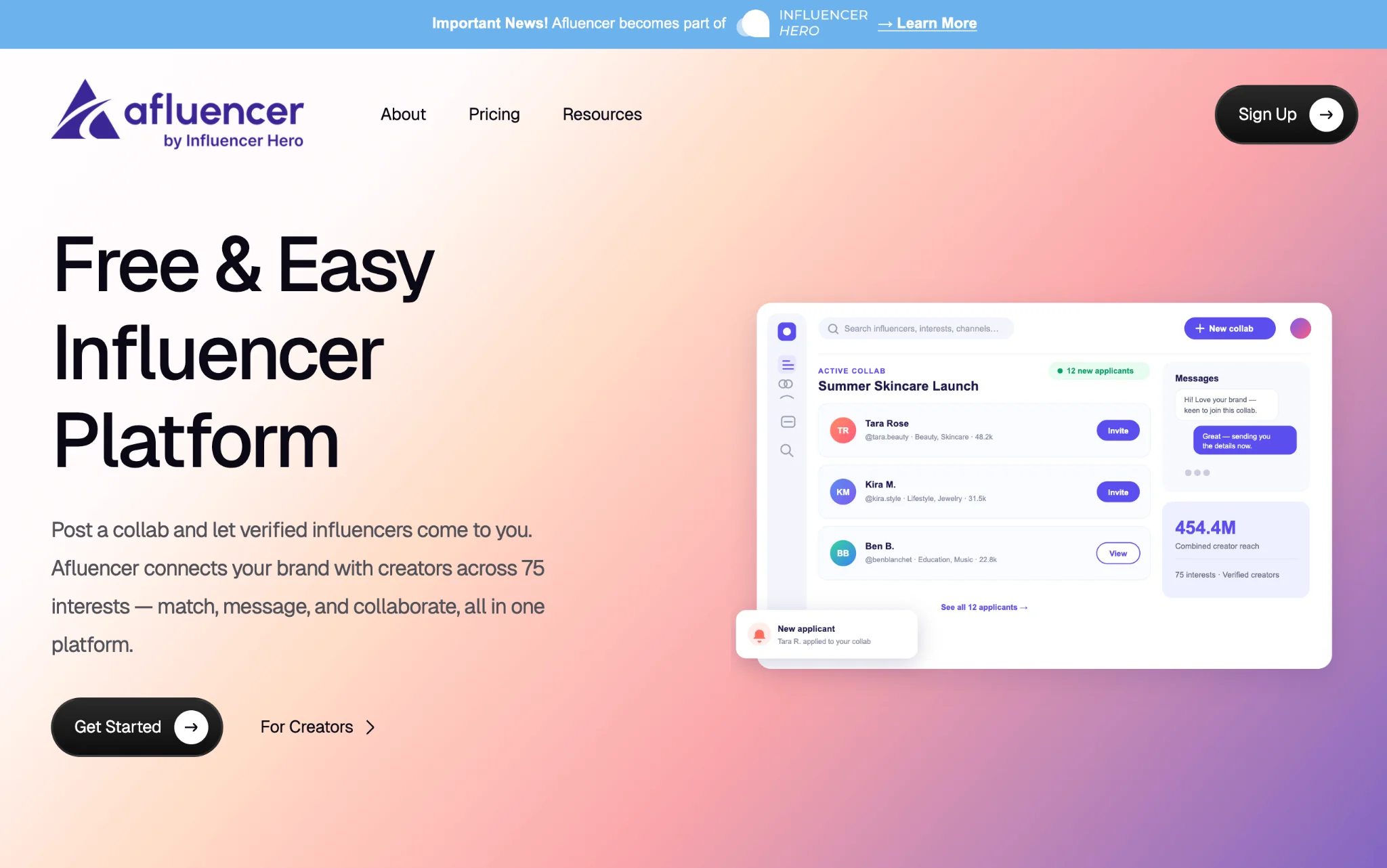
Afluencer is an influencer marketing marketplace that connects brands with creators looking for collaboration opportunities. Rather than operating as a traditional influencer discovery database with millions of scraped profiles, Afluencer focuses on an opt-in community of active influencers who have joined the platform specifically to work with brands. This makes it particularly attractive for businesses that want to avoid cold outreach and instead receive applications from creators already interested in partnerships.
The platform supports collaborations across Instagram, TikTok, and YouTube, enabling brands to launch campaigns ("Collabs"), invite relevant creators, review applications, communicate directly, and manage partnerships from a single dashboard. It also offers AI-assisted creator recommendations, premium search filters, and Shopify functionality for eCommerce brands.
Unlike enterprise influencer marketing platforms that emphasize CRM, attribution, payments, and advanced analytics, Afluencer prioritizes simplicity. Small businesses can create a brand profile within minutes, publish campaigns, start receiving influencer applications, and communicate directly without lengthy onboarding or annual contracts.
Who Should Use Afluencer
Afluencer is best suited for brands that want an easy way to discover and recruit influencers without investing in enterprise software.
It works particularly well for:
- Small D2C brands looking to launch their first influencer marketing campaigns.
- Shopify stores seeking creators for gifting, product reviews, and affiliate collaborations.
- Beauty and cosmetics brands working with micro and nano influencers.
- Fashion and apparel companies running ongoing influencer seeding campaigns.
- Health and wellness brands looking to build long-term ambassador relationships.
- Food and beverage brands promoting product launches through lifestyle creators.
- Home décor and lifestyle businesses seeking authentic user-generated content.
- Travel and hospitality companies partnering with niche travel creators.
- Marketing agencies managing influencer campaigns for SMB clients with moderate budgets.
Larger enterprises running global influencer programs with extensive reporting, CRM automation, and sales attribution may eventually outgrow Afluencer in favor of more advanced platforms.
Key Features
Creator Marketplace
Afluencer operates an opt-in marketplace where creators actively register to collaborate with brands. Because influencers voluntarily join the platform, brands interact with creators already interested in partnerships rather than relying solely on cold outreach.
Campaign ("Collab") Creation
Brands can quickly publish collaboration opportunities describing campaign objectives, products, compensation, deliverables, and creator requirements. Interested influencers can then apply directly, creating an inbound recruitment workflow.
Direct Influencer Invitations
In addition to receiving applications, brands can proactively invite influencers that match their campaign criteria. Invitation limits increase depending on the subscription tier.
Advanced Creator Search
Premium users gain access to enhanced filtering capabilities including:
- Social platform
- Interest category
- Audience size
- Creator niche
- Geographic location
- Engagement characteristics
These filters help brands narrow down suitable creators more efficiently.
AI-Powered Creator Recommendations
Afluencer uses AI-assisted matching to recommend creators based on campaign objectives and brand requirements, helping reduce manual searching.
Direct Messaging
Once a collaboration is accepted, brands and creators can communicate through an integrated messaging system to discuss deliverables, shipping details, timelines, and campaign expectations.
Brand Profile
Every company receives a dedicated public brand profile showcasing its business, products, collaboration history, and active campaigns, helping build trust with prospective creators.
Newsletter Promotion
Higher-tier subscriptions include featured placement within Afluencer's influencer newsletter, increasing campaign visibility among active creators.
Shopify Integration
Shopify merchants can connect their stores to simplify creator recruitment while also accessing CreatorGPT AI functionality and additional workflow features through the Shopify integration.
Strategy Calls
Premium plans include scheduled strategy sessions with Afluencer's founder, providing guidance on campaign planning, influencer recruitment, and improving collaboration success.
Customer Support
Paid plans include email, phone, live chat support, and onboarding assistance, making it easier for brands new to influencer marketing to launch campaigns successfully.
Afluencer Pricing
One of Afluencer's biggest advantages is its transparent, month-to-month pricing with no long-term contracts. Brands can start with a free plan and upgrade as their influencer marketing efforts grow.
- Free Plan – Free (Forever)
- No monthly cost.
- Create a brand profile and publish collaboration campaigns.
- Receive influencer applications.
- Send a limited number of influencer invitations.
- Ideal for businesses that want to test the platform before upgrading.
- VIP Plan – $49/month
- Billed monthly with no annual commitment required.
- Includes 60 influencer invitation credits per month.
- Access to premium creator search filters.
- Quarterly feature in the Afluencer influencer newsletter.
- One strategy call with the founder.
- Live chat, email, and phone support.
- Concierge Plan – $99/month
- Billed monthly.
- Includes 90 influencer invitation credits per month.
- Premium creator search filters.
- Quarterly strategy call.
- Increased exposure through Afluencer's influencer newsletter.
- Priority customer support.
- Boss Plan – $199/month
- Billed monthly.
- Includes 150 influencer invitation credits per month.
- Monthly feature in the Afluencer influencer newsletter.
- Monthly strategy call with the founder.
- Premium support and the highest outreach capacity available.
Free Trial
Rather than offering a time-limited free trial, Afluencer provides a permanent free plan, allowing brands to explore the platform and launch basic influencer campaigns before deciding whether to upgrade to a paid subscription.
Afluencer Reviews
4.6 / 5.0 (G2)
Users frequently praise the platform's ease of use, creator quality, and affordable pricing, while most criticism centers around campaign volume limitations and premium feature restrictions.
Integrations
- Shopify: Allows Shopify merchants to recruit creators, manage influencer campaigns, and access CreatorGPT AI features directly from their Shopify ecosystem.
- Instagram: Supports influencer discovery and collaborations with Instagram creators while helping brands review creator profiles and campaign opportunities.
- TikTok: Enables brands to recruit TikTok creators for short-form video campaigns and product promotions.
- YouTube: Brands can discover YouTube creators for long-form sponsored content, reviews, and educational partnerships.
- CreatorGPT: Afluencer's AI-powered assistant helps brands identify creators, optimize outreach, and improve influencer campaign planning.
Pros of Afluencer
Active Opt-In Creator Marketplace
Unlike platforms built around massive scraped databases, Afluencer focuses on creators who have intentionally joined the platform to work with brands. This often results in higher-quality collaboration opportunities and more responsive influencer communication.
Beginner-Friendly Pricing With No Annual Commitment
Many influencer marketing platforms require annual contracts costing thousands of dollars. Afluencer instead offers a generous free plan alongside affordable monthly subscriptions, making it accessible for startups and growing D2C brands.
AI-Assisted Creator Matching and Shopify Features
Recent additions such as CreatorGPT AI recommendations, premium creator filters, and Shopify functionality help brands discover relevant creators more efficiently while reducing manual campaign setup.
Cons of Afluencer
Limited Free Plan Capabilities
The free version works well for testing the platform but restricts invitation credits, premium search filters, and overall campaign reach, making upgrades necessary for consistent influencer recruitment.
Smaller Marketplace Than Enterprise Discovery Platforms
Because Afluencer relies on an opt-in creator community rather than indexing hundreds of millions of public social profiles, brands operating in highly specialized niches may find fewer creator options compared to enterprise discovery platforms.
Limited Enterprise-Level Analytics
The platform emphasizes creator discovery and collaboration rather than advanced campaign attribution, ROI measurement, affiliate reporting, or sophisticated CRM workflows, which larger marketing teams often require.
Collaboration Opportunities Can Vary By Niche
Campaign availability and creator matches can fluctuate depending on industry and location. Businesses in highly specialized markets may need additional outreach methods alongside Afluencer to maintain a steady pipeline of partnerships.


Is Afluencer Worth It?
Afluencer is a strong choice for small businesses, startups, and growing D2C brands that want an affordable and straightforward way to connect with influencers. Its opt-in creator marketplace, flexible month-to-month pricing, and beginner-friendly interface make it easy to launch influencer campaigns without the high costs or complexity of enterprise platforms.
That said, Afluencer isn't designed for brands running large-scale influencer programs. Businesses managing hundreds of creators, requiring advanced CRM capabilities, in-depth ROI reporting, affiliate tracking, or extensive eCommerce integrations may find the platform limiting as their influencer marketing efforts mature.
If your priority is simplicity, affordability, and finding active creators for product collaborations, Afluencer delivers solid value. However, if you need more advanced automation, reporting, or enterprise-level campaign management, there are several alternatives worth considering.
Alternatives that may be a better fit include:
- Influencer Hero – Best for brands looking for an end-to-end influencer marketing platform with advanced CRM, AI-powered outreach, affiliate management, gifting, detailed ROI tracking, and extensive eCommerce integrations.
- Modash – Ideal for brands that want access to one of the largest creator databases, powerful AI discovery tools, and Shopify-focused influencer campaigns.
- GRIN – A great option for established D2C and eCommerce brands that need robust creator relationship management, product seeding, affiliate tracking, and UGC management.
- Aspire – Well suited for brands that value workflow automation, inbound creator applications, and first-party social platform data for more accurate influencer discovery.
- Influencity – Best for businesses seeking a balance between affordability and advanced campaign management, with strong CRM functionality, outreach tools, and detailed analytics.
Final Thoughts
Afluencer is a solid influencer marketing platform for small businesses and growing D2C brands that want an affordable, easy-to-use solution for discovering creators and managing collaborations. Its opt-in influencer marketplace, flexible monthly pricing, and beginner-friendly interface make it an attractive option for brands getting started with influencer marketing. However, businesses that require advanced analytics, enterprise-grade campaign management, or deeper eCommerce and CRM integrations may eventually outgrow the platform. If Afluencer doesn't fully meet your needs, check out our guide to the best Afluencer Alternatives, where we compare leading influencer marketing platforms to help you find the right fit for your business.

.png)


.jpg)