

10 Best Afluencer Alternatives for Influencer Marketing
D2C brands rely on influencer marketing software to streamline creator discovery, manage outreach at scale, and track campaign performance tied to revenue. Afluencer is often a starting point thanks to its affordability and marketplace-style approach, where brands can post collaborations and receive applications from creators. However, many teams run into limitations around scalability, advanced analytics, outreach volume, and deeper ecommerce integrations as their programs grow. That’s why many founders and marketers begin exploring Afluencer alternatives that offer stronger CRM workflows, affiliate tracking, and ROI visibility.
In this guide, we compare the 10 best Afluencer alternatives to help you find the right fit for your influencer marketing stack—including Aspire, Influencer Hero, CreatorIQ, Upfluence, Skeepers, Klear, Traackr, IMAI (InfluencerMarketing.AI), Heepsy, and Social Cat.
Key Criteria for Evaluating Influencer Marketing Platforms
Core Features
Evaluation of essential influencer marketing capabilities, including influencer discovery, outreach, CRM, campaign management, reporting, and content workflows.
Pricing & Flexibility
Comparison of pricing models, subscription plans, and contract terms to match different budgets and growth stages.
Customer Reviews & Satisfaction
Analysis of user feedback from trusted review platforms, focusing on usability, reliability, customer support, and overall performance.
Pros & Cons
Review of each platform’s strengths and limitations to highlight where it performs well and where it may fall short based on different use cases.
Integrations
Review of the most important integrations (e.g., Shopify and other tech tools), highlighting what each integration enables in one sentence.
Afluencer Overview
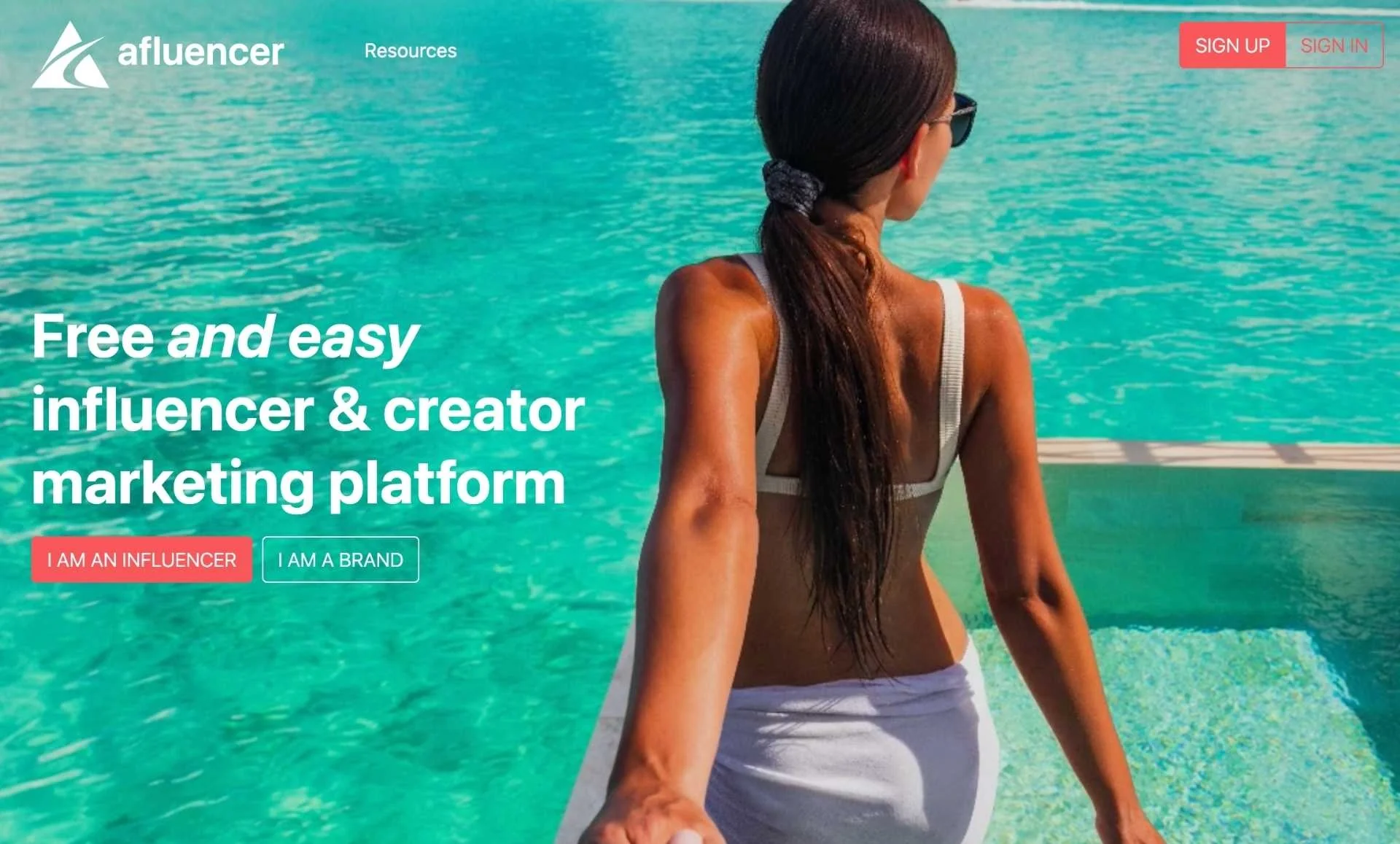
Afluencer is a two-sided influencer marketing marketplace that helps brands discover, invite, and collaborate with creators across niches and social platforms. It is especially positioned for small businesses and emerging brands that want a simpler, more affordable way to post collaboration opportunities, receive creator applications, message influencers, and manage influencer relationships without enterprise-level software complexity.
Key Features
• Influencer marketplace: Brands can post “Collabs” and allow influencers to apply directly, making it easier to attract creators who are already interested in the campaign.
• Creator search and invitations: Paid plans include monthly invitation credits, allowing brands to proactively invite creators to specific collaborations.
• Premium influencer filters: Brands can use advanced filters to narrow creator searches and identify more relevant candidates by audience, niche, and campaign fit.
• Direct brand-creator messaging: Brands can review applications, message creators, and approve collaborations inside the platform.
• Newsletter promotion: Paid brand plans include recurring Collab features in Afluencer’s influencer newsletter, helping campaigns get more visibility among creators.
• CreatorGPT AI assistant: Afluencer offers CreatorGPT for AI-assisted influencer matching and campaign strategy support.
• Shopify app: Shopify merchants can use Afluencer to find, invite, and collaborate with influencers from their store workflow.
• Support and strategy calls: Paid plans include phone, email, and live chat support, plus influencer strategy calls depending on the tier.
Pricing
• Free Plan: $0/month. Includes one active Collab listing, incoming applications, basic profile visibility, messaging, and limited manual invites.
• VIP: $49/month. Includes 60 invitation credits per month, quarterly newsletter feature, premium filters, phone/email/live chat support, and one introductory 30-minute influencer strategy call.
• Concierge: $99/month. Includes 90 invitation credits per month, quarterly newsletter feature, premium filters, support, and quarterly 30-minute influencer strategy calls.
• Boss: $199/month. Includes 150 invitation credits per month, monthly newsletter feature, premium filters, support, and monthly 30-minute influencer strategy calls.
Afluencer’s public pricing is monthly, and the platform allows users to cancel or downgrade to the free plan from account subscriptions.
Reviews
4.6/5.0 (G2)
Integrations
• Shopify: Connect Afluencer with a Shopify store to run influencer collaborations and manage creator discovery from an ecommerce workflow.
• BigCommerce: Use Afluencer with BigCommerce merchants looking to support influencer-led ecommerce campaigns.
• Instagram: Discover and collaborate with Instagram creators for visual content, Reels, and product-led campaigns.
• TikTok: Find short-form video creators and build collaborations around TikTok content.
• YouTube: Connect with video creators for long-form reviews, tutorials, and creator-led product content.
Pros
• Affordable entry point for small brands: Afluencer offers a free plan and paid plans starting at $49/month, making it more accessible than many full-suite influencer platforms.
• Marketplace-style creator applications: Instead of relying only on outbound outreach, brands can post Collabs and receive applications from creators who are already interested.
• AI-assisted matching with CreatorGPT: CreatorGPT adds AI support for influencer matching and campaign strategy, helping brands move faster than manual search alone.
Common Drawbacks of Afluencer
Limited scalability for advanced influencer programs
Afluencer is strong for basic discovery, invitations, and collaboration management, but brands needing deep CRM automation, affiliate tracking, creator payments, or advanced ROI reporting may outgrow it.
Invitation credits can restrict outreach volume
Paid plans limit proactive creator invitations by monthly credits, which can be limiting for brands running high-volume campaigns.
Free plan is useful but restricted
The free plan keeps one Collab active and allows incoming applications, but premium search, outreach, multiple Collabs, and priority support require an upgrade.
Creator availability can vary by niche or geography
Some brands may find fewer relevant creators in specific regions, industries, or highly specialized D2C categories, making alternatives with larger public databases more attractive.
Best Afluencer Alternatives
| TOOL | REVIEWS | BEST FOR | TRIAL INFO | PRICING | ||
|---|---|---|---|---|---|---|
1 |

|
⭐ | Influencer partnerships | Book Demo | Pricing | Website |
2 |

|
⭐ | Influencer CRM & automation | Book Demo | Pricing | Website |
3 |

|
⭐ | Enterprise influencer marketing | Book Demo | Pricing | Website |
4 |

|
⭐ | Influencer discovery | Book Demo | Pricing | Website |
5 |

|
⭐ | Influencer gifting & UGC campaigns with micro-influencers | Book Demo | Pricing | Website |
6 |
|
⭐ | Influencer analytics | Book Demo | Pricing | Website |
7 |

|
⭐ | Enterprise influencer analytics | Book Demo | Pricing | Website |
8 |

|
⭐ | AI influencer discovery & analytics | Book Demo | Pricing | Website |
9 |

|
⭐ | Influencer discovery | Book Demo | Pricing | Website |
10 |

|
⭐ | Micro-Influencer Campaigns | Book Demo | Pricing | Website |
Aspire
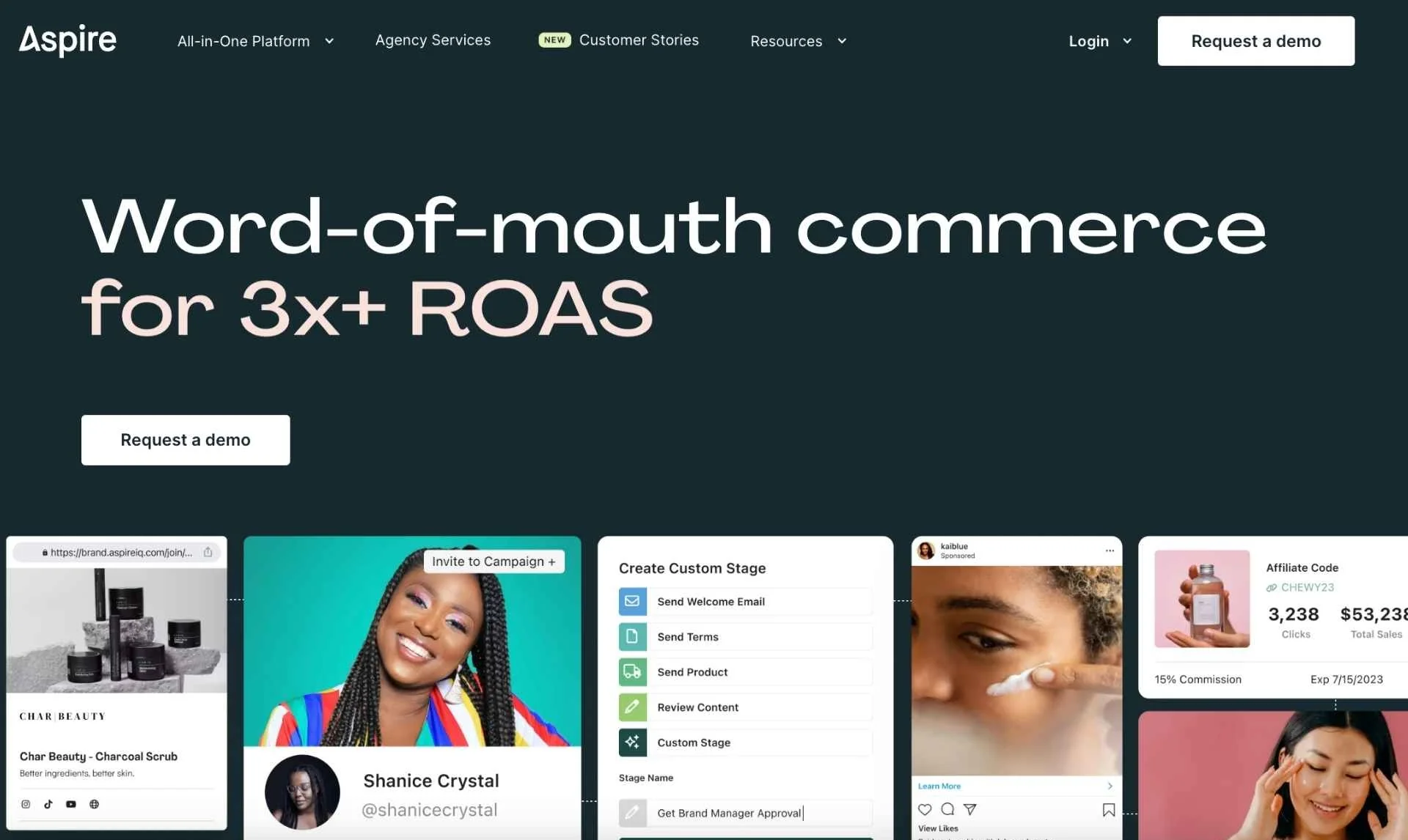
Aspire is an influencer marketing platform for ecommerce brands that want to manage creator discovery, outreach, gifting, affiliate campaigns, content approvals, and ROI reporting in one place. It positions itself as a word-of-mouth commerce platform, with strong workflows for brands running influencer, ambassador, affiliate, and UGC programs.
Key Features
• Influencer discovery: Search creators by channel, keyword, audience demographics, location, age, engagement, and lookalike recommendations.
• Creator marketplace: Brands can post campaign opportunities and receive inbound applications from creators.
• Application pages: Build custom landing pages to collect creator applications, product experience, content ideas, and audience details.
• Workflow automation: Manage briefs, contracts, approvals, gifting, posting, and follow-ups through customizable campaign stages.
• Shopify gifting: Let creators select products from your Shopify catalog, approve orders, and track fulfillment directly in Aspire.
• Sales and affiliate tracking: Track discount codes, affiliate links, clicks, conversions, sales, and commissions.
• Content library: Store influencer content, usage rights, and post-performance data for repurposing.
• Reporting exports: Export campaign, sales, and creator performance reports to CSV.
Pricing
Aspire does not publish full public package pricing on its website. Public and recent market sources indicate:
• Custom pricing
• Often reported at about $2,000+/month
• Recent quoting indicated around $2,300/month for a mid-tier setup
• Typically sold with a 12-month commitment rather than month-to-month self-serve plans
Reviews
4.0/5.0 (Capterra)
Pros
• Strong Shopify-powered gifting workflow: Aspire is particularly useful for product seeding because brands can manage creator product selection, approvals, fulfillment, and order tracking without leaving the platform.
• Large inbound creator marketplace: Its creator marketplace helps brands receive applications from creators instead of relying only on outbound prospecting.
• Advanced workflow automation: Aspire’s bulk actions, automated follow-ups, approval steps, and campaign stages are well suited for teams managing repeat creator programs.
Cons
• Pricing may be too high for smaller brands: Aspire is more expensive than lightweight marketplaces like Afluencer.
• Feature navigation can feel complex: The platform covers many workflows, so setup and campaign configuration may take time.
• Reporting feedback is mixed: Some teams may want more customizable or visually polished reporting.
Integrations
• Shopify: Manage product gifting, fulfillment, customer matching, and campaign performance from Shopify data.
• Gmail: Sync creator emails and manage outreach from connected inboxes.
• Meta: Access first-party social data and support Instagram creator campaign workflows.
• TikTok: Support creator discovery and campaign performance across TikTok.
• Pinterest: Use Aspire’s platform partnerships for creator campaign discovery and measurement.
Afluencer vs Aspire
Afluencer is better for smaller brands that want a simple marketplace to post collaborations, receive applications, and invite creators at a lower monthly cost. Aspire is more robust for ecommerce teams that need structured workflows, Shopify gifting, content approvals, affiliate tracking, and sales reporting.
Aspire is also more campaign-operations focused, while Afluencer is more marketplace-driven. Brands that only need creator discovery and basic collaboration management may prefer Afluencer, while brands scaling ambassador, gifting, UGC, and affiliate programs will likely find Aspire more complete.
Influencer Hero
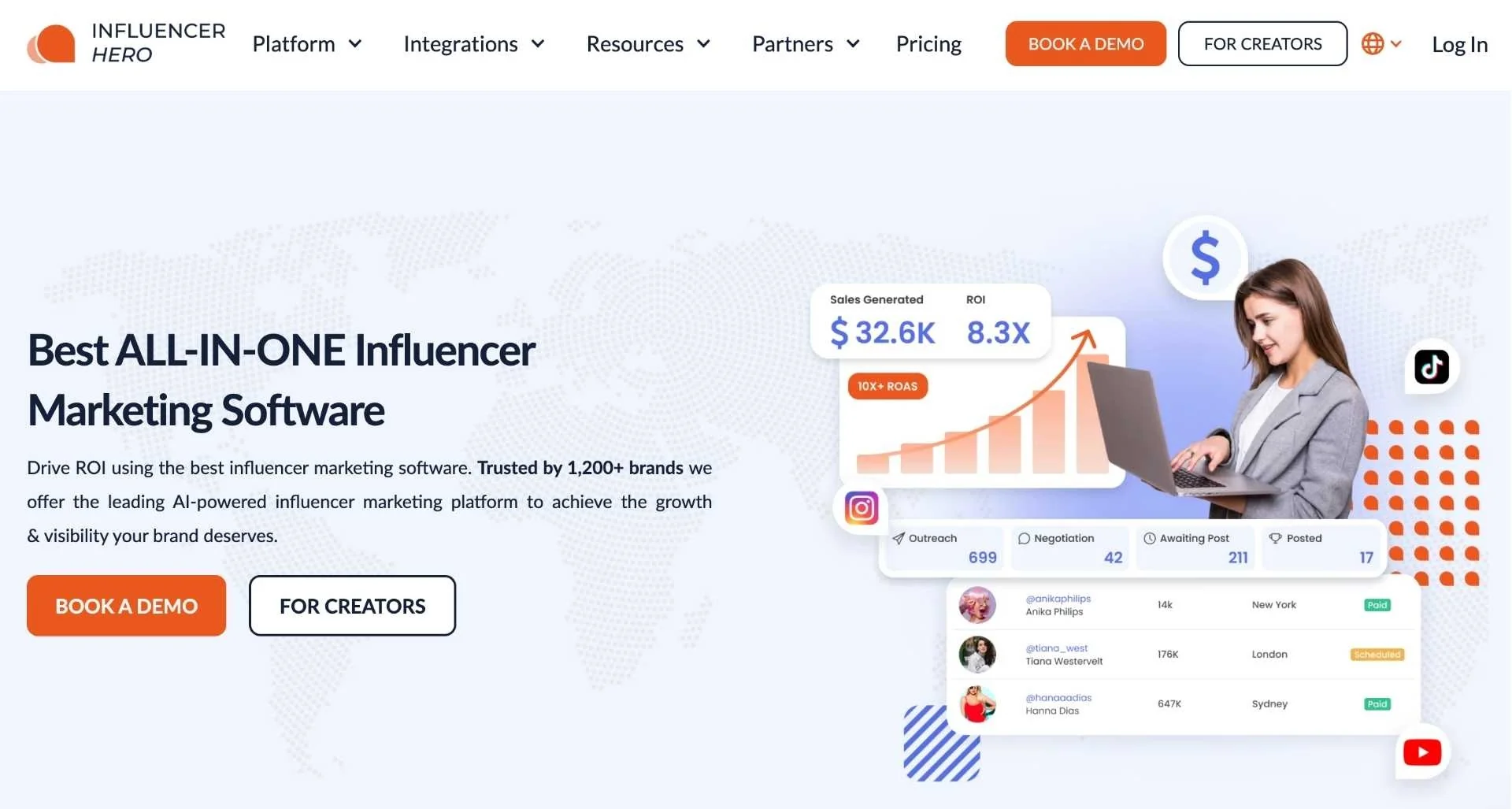
Influencer Hero is an all-in-one influencer marketing platform built for D2C and ecommerce brands that want discovery, outreach, CRM, gifting, UGC collection, affiliate tracking, storefronts, and reporting in one system. It supports influencer campaigns across Instagram, TikTok, YouTube, Facebook, Pinterest, Snapchat, X, and Twitch.
Key Features
• Influencer discovery: Search creators using audience demographics, location, engagement rate, niche, audience quality, fake follower detection, and lookalike suggestions.
• Chrome extension: Add creators directly from Instagram, TikTok, or YouTube into campaigns while browsing.
• AI-powered outreach: Use AI-assisted personalization, templates, and automated email flows to contact creators at scale.
• Creator CRM: Manage outreach, deliverables, contracts, gifting, affiliate links, and campaign stages from structured boards.
• Bulk actions: Approve creators, send emails, change statuses, and manage large campaigns faster.
• Gifting and seeding: Connect ecommerce stores to create gifting orders, track shipments, and manage creator product delivery.
• Affiliate tracking: Generate creator-specific links and discount codes, track clicks, conversions, revenue, and commissions.
• UGC library: Automatically collect creator content and organize assets for repurposing.
• Application pages and storefronts: Build branded creator application pages and creator storefronts to support inbound recruitment and commerce.
Pricing
Influencer Hero offers flexible pricing based on outreach volume and you can have unlimited creators in your CRM:
• Standard — $649/month (up to 1,000 outreaches per month)
• Pro — $1,049/month (up to 5,000 outreaches per month)
• Business — $2,490/month (up to 10,000 outreaches per month)
• Custom / Agency — Tailored pricing
Custom pricing is available for agencies and larger teams
Reviews
4.9/5.0 (Capterra)
Pros
• Campaign-centric CRM automation: Influencer Hero’s boards, bulk actions, and automated email flows are designed for high-volume influencer programs.
• Broad ecommerce integrations: It connects with Shopify, WooCommerce, Magento, Amazon, and other commerce tools to centralize product data, orders, links, codes, and revenue tracking.
• Strong AI and workflow support: AI-assisted discovery, personalization, and campaign automation help reduce manual influencer management work.
Cons
• May require setup time: Because it covers discovery, CRM, gifting, UGC, affiliates, and reporting, teams may need time to configure workflows.
• No free trial: Makes it harder for teams to evaluate the platform before committing
Integrations
• Shopify: Create gifting orders, track sales, generate affiliate links, discount codes, and monitor creator revenue.
• WooCommerce: Connect influencer gifting and affiliate performance to WooCommerce store data.
• Klaviyo: Sync influencer contacts, segment creator audiences, and trigger email/SMS workflows based on creator performance.
• Slack: Receive campaign alerts when creators reply, post, or generate sales.
• Zapier: Automate actions across hundreds of apps when campaign events happen.
Afluencer vs Influencer Hero
Afluencer is a simpler, lower-cost creator marketplace, while Influencer Hero is a full influencer CRM and campaign management platform. Afluencer is useful for brands that mainly want to post collaborations and invite creators; Influencer Hero is better for brands that need scalable outreach, ecommerce gifting, affiliate tracking, content collection, and ROI reporting.
Influencer Hero also offers broader automation and integrations than Afluencer. For brands moving beyond one-off collaborations into repeatable influencer programs, Influencer Hero provides more infrastructure.
CreatorIQ
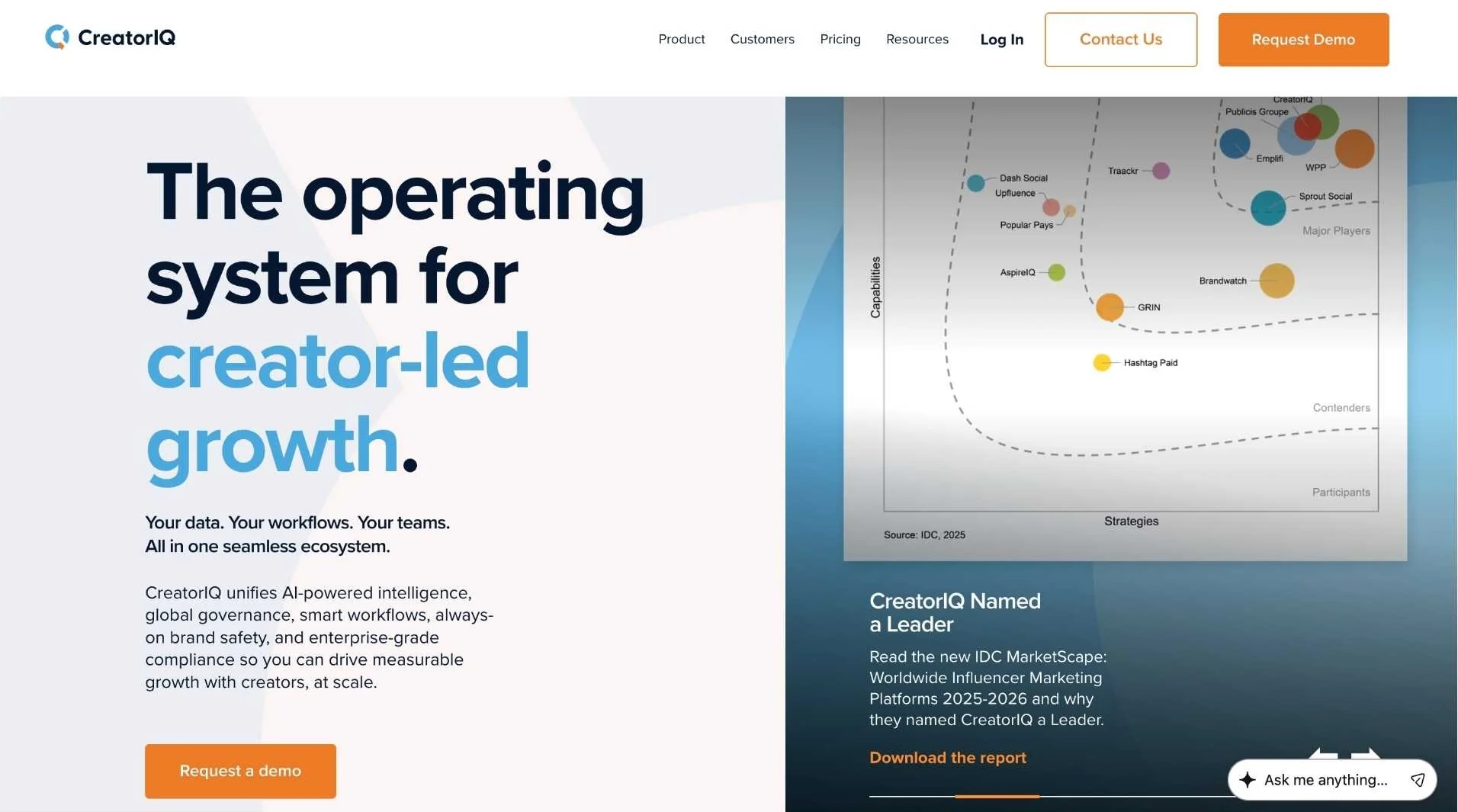
CreatorIQ is an enterprise creator marketing platform built for large brands and agencies managing creator programs across paid, owned, earned, commerce, community, and content workflows. The platform emphasizes AI-native creator intelligence, direct platform integrations, brand safety, campaign management, and enterprise reporting.
Key Features
• Creator discovery: Search public creators across major platforms using advanced filters, audience demographics, brand mentions, interests, keywords, and semantic AI search.
• Creator Graph: Centralizes creator, content, performance, and relationship data for enterprise-scale programs.
• CRM and creator network: Store creators, notes, tags, past campaign data, questionnaires, approvals, and communication history.
• Campaign management: Build campaigns with briefs, deliverables, posting guidelines, approval steps, and content requirements.
• One-sheet approvals: Share live creator approval sheets with internal stakeholders without requiring platform logins.
• Content library: Auto-collect campaign content and manage usage rights for repurposing.
• Payments: Manage creator payments through the platform, including compliance and tax documentation workflows.
• Custom reporting: Build live dashboards with campaign, creator, engagement, reach, impressions, EMV, and platform-level performance data.
• Creator Connect: Optional branded application pages for inbound creator recruitment.
Pricing
There are different plans:
• Basic Plan: Starts at $35,000/year. Includes 1,000 contact creators per month
• Standard Plan: Starts at $50,000/year. Includes 2,500 contact creators per month
• Professional Plan: Starts at $90,000/year. Includes 5,000 contact creators per month
• Enterprise Plan: Starts at $200,000/year. Includes 7,500 contact creators per month
Reviews
4.4/5.0 (Capterra)
Pros
• Enterprise-grade creator intelligence: CreatorIQ is built around advanced creator data, AI-native workflows, and direct platform relationships.
• Strong stakeholder collaboration: One-sheets, approval workflows, and live reports make it easier for large teams to collaborate.
• Deep reporting and brand safety: CreatorIQ is strong for brands that need customizable dashboards, compliance, and large-scale measurement.
Cons
• Expensive for smaller teams: Annual pricing starts far above marketplace-style platforms.
• Complex setup: The platform is built for enterprise workflows and may feel heavy for lean D2C teams.
• Affiliate tracking may require manual steps: It supports affiliate workflows, but some conversion reporting may not be as automated as ecommerce-first tools.
Integrations
• TikTok: Plan, execute, and measure TikTok creator campaigns through CreatorIQ’s TikTok partnership.
• Meta: Access Instagram and Facebook creator data, campaign performance, and reporting through direct platform integrations.
• YouTube: Track creator content and performance across YouTube campaigns.
• Shopify: Support gifting, product shipment workflows, and commerce-related campaign management.
• API integrations: Connect CreatorIQ program data with enterprise systems and custom workflows.
Afluencer vs CreatorIQ
Afluencer is designed for accessibility and affordability, while CreatorIQ is built for enterprise creator marketing operations. Afluencer works well for small brands that want marketplace applications and basic outreach; CreatorIQ is better for large organizations that need global creator discovery, approvals, brand safety, compliance, payments, and executive reporting.
CreatorIQ’s pricing and complexity make it overbuilt for many small brands. However, for teams managing thousands of creators across markets, departments, and stakeholders, CreatorIQ offers far more enterprise infrastructure than Afluencer.
Upfluence

Upfluence is an influencer and affiliate marketing platform for ecommerce brands that want to manage creator discovery, outreach, CRM, campaign execution, affiliate tracking, product gifting, and payments from one dashboard. It is especially strong for Shopify and Amazon sellers because of its ecommerce revenue attribution and customer-to-influencer discovery workflows.
Key Features
• Influencer discovery: Access a global influencer database with filters for location, niche, follower size, engagement rate, audience demographics, and content relevance.
• AI campaign assistant: Jace AI helps automate campaign setup, messaging, and outreach workflows.
• Bulk outreach: Send creator outreach emails and follow-up sequences at scale.
• Influencer CRM: Track creator communication, campaign progress, statuses, and performance history.
• Shopify integration: Identify influential customers, manage product gifting, generate codes, and track creator-driven sales.
• Amazon integration: Track Amazon affiliate links, campaign performance, and creator-driven marketplace sales.
• Social listening: Monitor brand mentions, competitor content, and high-performing creator posts.
• Payments: Manage secure creator payouts and compensation workflows.
• Performance tracking: Track reach, impressions, engagement, clicks, conversions, and sales.
Pricing
• Pricing model: Upfluence uses custom pricing rather than a public fixed plan table.
• All plans are custom made. There’s a minimum full year of service you have to commit to with monthly payments. On average plans start around $2,000/month ($24,000 yearly)
Reviews
4.3/5.0 (Capterra)
Pros
• Strong Shopify and Amazon integrations: Upfluence is one of the stronger options for brands selling across DTC and Amazon channels.
• Customer-to-creator discovery: Shopify data can help brands identify existing customers who are also influencers, improving authenticity and response rates.
• End-to-end influencer and affiliate workflow: Discovery, outreach, CRM, gifting, affiliate tracking, payments, and reporting are managed in one platform.
Cons
• Annual commitment: Upfluence requires a larger upfront commitment than flexible marketplace tools.
• Learning curve: The platform is feature-rich, which can make setup and campaign management more complex for beginners.
• Workflow rigidity: Some campaign setup steps may feel less flexible once campaigns are configured.
Integrations
• Shopify: Identify influential customers, manage gifting, generate affiliate links, and track influencer sales.
• Amazon: Track Amazon creator links, affiliate performance, and marketplace revenue.
• WooCommerce: Connect ecommerce data for product seeding and sales attribution.
• Klaviyo: Pull customer and audience data into influencer discovery and activation workflows.
• PayPal: Support creator payout workflows and payment processing.
Afluencer vs Upfluence
Afluencer is more affordable and marketplace-led, making it suitable for smaller brands that want creator applications and basic collaboration tools. Upfluence is more advanced and ecommerce-focused, with stronger tracking, affiliate, Shopify, Amazon, and payment capabilities.
Upfluence is the better fit for brands that need direct revenue attribution and multi-channel ecommerce integrations. Afluencer is the lighter option for brands that want to test influencer marketing without committing to a larger annual contract.
Skeepers

Skeepers is a UGC and influencer marketing platform that helps brands run gifting campaigns with nano and micro-influencers, collect authentic content, generate product reviews, and repurpose creator assets across social and ecommerce channels. Its influencer marketing product focuses on AI-powered matching, campaign execution, real-time analytics, and royalty-free content across TikTok, Instagram, and YouTube.
Key Features
• Nano and micro-influencer community: Access a vetted creator community to run product gifting and review campaigns.
• AI-powered matching: Match creators to campaigns based on brand fit, content style, and campaign goals.
• Gifted review campaigns: Send products to creators in exchange for authentic social content and product reviews.
• Campaign management: Manage briefs, product selection, creator approvals, posting requirements, and communication.
• Royalty-free content: Collect creator content that can be reused across social media, ecommerce pages, and shoppable content placements.
• Real-time analytics: Track campaign performance, influencer posts, engagement, and content outputs.
• Shoppable content: Repurpose influencer content on ecommerce pages to support product discovery and conversion.
• Shopify order integration: Automatically create influencer orders in Shopify, tag them, send shipping information, and retrieve tracking numbers.
Pricing
• Skeepers does not publicly list a detailed pricing table for Influencer Marketing on its main site.
• Capterra lists a starting price of €1,250/month and says no free trial is available.
Reviews
4.3/5.0 (Capterra)
Pros
• Strong product gifting and review focus: Skeepers is well suited for brands that want authentic UGC, product reviews, and social proof from nano and micro-creators.
• Royalty-free UGC workflows: Brands can reuse creator content across social and ecommerce placements, making it useful for content-hungry D2C teams.
• Shopify-connected fulfillment: The Shopify integration helps automate gifting logistics and reduce manual order handling.
Cons
• Less focused on broad influencer discovery: Skeepers is stronger for vetted nano/micro gifting campaigns than open-ended creator database prospecting.
• Higher entry price than Afluencer: Starting pricing is much higher than Afluencer’s monthly plans.
• Best suited to product-led brands: Service, SaaS, or non-product brands may find less value compared with gifting-heavy ecommerce teams.
Integrations
• Shopify: Create and track influencer gifting orders, sync shipping information, and connect creator campaigns to ecommerce workflows.
• Instagram: Run creator campaigns and collect social posts for UGC and product discovery.
• TikTok: Collect short-form creator content and product-led videos for awareness and conversion.
• YouTube: Support creator content campaigns for longer-form video and product education.
• Skeepers Shoppable Content: Repurpose influencer posts, reviews, and UGC across ecommerce pages to improve social proof.
Afluencer vs Skeepers
Afluencer is a more general influencer marketplace with affordable plans, creator applications, and invitation credits. Skeepers is more specialized around product gifting, UGC collection, gifted reviews, and ecommerce social proof.
Brands that want simple creator sourcing may prefer Afluencer. Brands that need a structured gifting engine, reusable UGC, product reviews, and Shopify-connected fulfillment will likely find Skeepers more aligned with their workflow.


Klear

Klear, now part of Meltwater, is an influencer marketing platform for discovering creators, managing relationships, running campaigns, processing payments, and measuring influencer ROI. It is built for brands that want a more data-led influencer workflow with creator vetting, campaign reporting, ecommerce tracking, and Meltwater’s broader social intelligence ecosystem. Klear is now fully integrated into Meltwater’s influencer marketing offering.
Key Features
• Influencer discovery: Search and vet creators across major social platforms using audience demographics, engagement, topics, brand affinity, and creator quality signals.
• 30M+ creator database: Klear provides access to a large global creator database for cross-market discovery and campaign planning.
• True Reach analytics: Klear’s proprietary True Reach metric estimates the actual audience a creator can reach, helping brands avoid inflated follower-based assumptions.
• Visual AI search: Brands can search creators by visual content themes, making it useful for aesthetic-driven categories like beauty, food, fashion, and home.
• Campaign management: Create campaigns, assign deliverables, track content, monitor performance, and manage influencer communication from one dashboard.
• Recruit/application workflows: Build application-style workflows so creators can apply to campaigns instead of relying only on outbound outreach.
• Payments: Klear Pay enables in-platform creator payments, reducing manual invoice and payout work.
• Ecommerce tracking: Shopify integration supports coupon codes, influencer customer discovery, and conversion tracking.
Pricing
Klear does not publish self-serve pricing on Meltwater’s public site. Pricing is handled through custom quotes with no free trial.
Based on research, the pricing start from $2,300/month
Reviews
4.3 / 5.0 (G2)
Pros
• True Reach measurement: Klear’s True Reach metric helps brands evaluate creators based on realistic audience reach instead of follower count alone.
• Visual AI discovery: The ability to search by visual content themes is helpful for brands where creative style matters as much as niche.
• Connected Meltwater ecosystem: Brands can expand into social listening, media monitoring, social management, and broader reporting through Meltwater.
Cons
• High annual pricing: Klear is significantly more expensive than lightweight marketplaces.
• Reporting limitations for some workflows: Some teams may need external charts for deeper competitor comparisons or custom reporting.
• Can feel enterprise-heavy: Smaller teams may not need the full Meltwater suite.
Integrations
• Shopify: Identify influential customers, generate coupon codes, manage gifting workflows, and track conversions.
• Klear Pay: Process creator payments directly inside the influencer campaign workflow.
• Meltwater Engage: Connect influencer analytics and social media management workflows.
• Meltwater Social Listening: Monitor brand, competitor, and industry conversations alongside influencer activity.
• Email integration: Contact creators and manage campaign communication through connected inbox workflows.
Afluencer vs Klear
Afluencer is better for small brands that want affordable creator applications and basic collaboration management. Klear is more advanced, with deeper analytics, True Reach, visual discovery, payments, Shopify tracking, and Meltwater ecosystem access.
Klear is best for brands that need enterprise-grade measurement and social intelligence. Afluencer is better for teams prioritizing simplicity and lower monthly cost.
Traackr
Traackr is an influencer relationship management and analytics platform built for performance-driven creator programs. It helps brands discover influencers, manage relationships, track campaign performance, benchmark competitors, and optimize influencer spend across global markets.
Key Features
• Influencer discovery: Search a global database of creators using engagement, audience demographics, location, past brand work, and performance data.
• Influencer CRM: Store creator notes, tags, relationship history, campaign stages, and internal collaboration details.
• Campaign management: Plan campaigns, assign creators, track content, organize deliverables, and monitor performance.
• Benchmarking: Compare campaign and brand performance against competitors, market averages, and category benchmarks.
• Brand Vitality Score: Traackr’s proprietary score helps brands evaluate influence, visibility, and trust across markets.
• Budget optimization: Estimate how much to spend on each creator based on performance history, benchmarks, and expected ROI.
• Cost-per-metric reporting: Track CPC, CPE, CPV, cost-per-story-view, and other efficiency metrics.
• Shopify product seeding: Traackr’s Shopify integration lets creators select products and place gifting orders directly through campaign workflows.
Pricing
• Official pricing: custom / request a quote.
• Public benchmark: pricing starts around $32,500/year for a standard plan, with additional modules available on request.
• Contract type: generally annual enterprise contracts.
Reviews
4.3 / 5.0 (G2)
Pros
• Advanced benchmarking: Traackr is especially strong for brands that want to compare creator performance against competitors and market standards.
• Budget optimization tools: Its spend planning features help brands allocate influencer budgets based on performance rather than guesswork.
• Enterprise relationship management: Traackr is built for global teams that need governance, workflow visibility, and standardized measurement.
Cons
• Expensive for small teams: Pricing and contract structure make it less suitable for brands testing influencer marketing.
• Learning curve: The platform has deep analytics, which can make navigation feel complex at first.
• Tracking delays can happen: Content or story tracking may not always appear as quickly as teams expect.
Integrations
• Shopify: Manage product seeding by allowing creators to select products and generate orders through Shopify.
• Email integration: Support creator outreach and relationship management inside campaign workflows.
• Ecommerce tracking pixel: Track influencer-driven clicks, conversions, and revenue from ecommerce sites.
• Payment integrations: Manage influencer payouts and payment workflows through connected payment tools.
• SSO: Support enterprise login, access control, and team security requirements.
Afluencer vs Traackr
Afluencer is a simple creator marketplace for affordable collaboration discovery, while Traackr is an enterprise analytics and relationship management platform. Afluencer focuses on applications and invitations; Traackr focuses on benchmarking, ROI, spend optimization, and governance.
Traackr is better for mature influencer programs with budget accountability. Afluencer is better for smaller brands that need a fast, low-cost way to find interested creators.
IMAI
IMAI, also known as InfluencerMarketing.AI, is an AI-powered influencer marketing platform for brands, agencies, and ecommerce teams. It combines creator discovery, CRM, campaign reporting, social and consumer intelligence, PR/media workflows, UGC video tools, and API access in one platform. Its website states that it provides access to 400M+ creators, 2T+ conversations, and 1M+ journalists.
Key Features
• Creator discovery: Search and analyze creators across a large global database using audience, content, and performance filters.
• 400M+ creator database: IMAI positions itself around large-scale creator discovery for global campaign planning.
• CRM records: Store and manage creator relationships, campaign lists, and collaboration history.
• Profile reports: Generate creator reports for vetting audience quality, performance, and fit.
• Campaign reporting: Track campaign results through dedicated reporting dashboards.
• Consumer intelligence: Monitor conversations and audience insights to guide campaign briefs and creator selection.
• LLM visibility reports: Track how brands appear in AI search and large language model answers.
• White-label and reselling: Higher-tier plans support agency use cases with client-facing dashboards.
• API access: Enterprise plans offer API credits for custom influencer data workflows.
Pricing
IMAI currently shows four plan tiers on its official pricing page, with both annual and monthly billing options.
• Starter: $499/month when billed annually ($5,988/year) or $599/month billed monthly
• Growth: $999/month when billed annually ($11,988/year) or $1,199/month billed monthly
• Teams: $2,999/month when billed annually ($35,988/year) or $3,599/month billed monthly
• Enterprise: Custom pricing
Reviews
4.5 / 5.0 (G2)
Pros
• Large creator and intelligence database: IMAI combines influencer discovery with broader conversation and media intelligence.
• Transparent pricing: Unlike many enterprise tools, IMAI publishes Starter, Growth, and Teams pricing.
• Agency-friendly features: White-label reporting, multiple workspaces, reseller support, and API access make it useful for agencies.
Cons
• Higher entry price than Afluencer: Even the lowest paid plan is much more expensive than Afluencer’s entry tiers.
• Usage limits by plan: CRM records, profile reports, intelligence reports, and workspaces are capped depending on tier.
• May be too broad for simple campaigns: Teams only needing basic creator applications may not use the PR, LLM, or intelligence modules.
Integrations
• Amazon: Connect ecommerce-related influencer workflows for marketplace-oriented campaign planning.
• Shopify: Support ecommerce and DTC influencer workflows with store-aligned campaign tracking.
• Magento: Connect influencer marketing workflows with Magento-based ecommerce operations.
• Stripe: Support payment and billing-related workflows.
• API: Build custom influencer data, reporting, or workflow integrations.
Afluencer vs IMAI
Afluencer is simpler and more affordable, focused on creator applications, invitations, and collaboration management. IMAI is broader and more data-heavy, combining creator discovery with consumer intelligence, PR/media workflows, LLM visibility, and agency tools.
IMAI is better for agencies or larger teams that need reporting, workspaces, and intelligence layers. Afluencer is better for small brands starting with influencer collaborations.
Heepsy

Heepsy is an influencer marketing platform focused on influencer discovery, outreach, campaign tracking, and ecommerce-connected affiliate campaigns. It helps brands search Instagram, TikTok, and YouTube creators using audience, engagement, authenticity, and category filters, then manage outreach and campaign performance in one place.
Key Features
• 50M+ influencer database: Heepsy provides access to a large global creator database, including millions of creators across the US and Europe.
• Advanced creator search: Filter by keywords, niche, follower count, engagement rate, audience location, gender, age, and authenticity score.
• Audience authenticity checks: Estimate fake follower percentages and prioritize creators with stronger audience quality.
• Detailed creator profiles: Review engagement rates, average likes/comments, reach estimates, audience demographics, and recent brand collaborations.
• Lookalike search: Find creators similar to an influencer you already like.
• Bulk outreach: Send outreach emails and follow-ups at scale using templates and custom fields.
• Visual CRM pipeline: Track campaign stages such as emailed, approved, shipped, sales, and paid using a Kanban-style board.
• Campaign reports: Monitor engagement, content, and—on higher tiers—sales performance.
• Shopify and WooCommerce sales tracking: Advanced plan supports affiliate links, discount codes, clicks, conversions, and revenue tracking.
Pricing
• Free — limited free access is available.
• Starter — recent official Heepsy blog references place Starter at $89/month.
• Plus — recent official Heepsy blog references place Plus at $249/month.
• Advanced — recent official Heepsy blog references place Advanced at $369/month.
• Heepsy also says users can choose monthly or annual billing, with annual subscriptions discounted versus monthly rates.
Reviews
4.5 / 5.0 (G2)
Pros
• Strong discovery filters: Heepsy is especially useful for brands that need fast creator search by niche, location, engagement, and audience quality.
• Affordable compared with enterprise tools: It offers lower-cost discovery and outreach capabilities without requiring annual enterprise contracts.
• Ecommerce tracking on Advanced: Shopify and WooCommerce support make it more useful for affiliate-style influencer programs.
Cons
• Sales tracking is plan-limited: Shopify, WooCommerce, affiliate, and revenue tracking features require higher-tier access.
• No AI-generated outreach: Email templates are available, but outreach copy is not automatically generated by AI.
• Authenticity metrics are estimates: Fake follower detection is useful, but not 100% precise.
Integrations
• Shopify: Generate affiliate links, discount codes, and track creator-driven sales.
• WooCommerce: Connect store sales to influencer campaigns and monitor conversions.
• Instagram: Discover influencers and track campaign content across Instagram.
• TikTok: Find short-form creators and monitor TikTok campaign performance.
• YouTube: Search video creators and evaluate audience and engagement data.
Afluencer vs Heepsy
Afluencer is more of a creator marketplace where influencers apply to collaborations. Heepsy is stronger for outbound discovery, filtering, and list building across a large creator database.
Heepsy is better for brands that want to proactively search and contact creators at scale. Afluencer is better for smaller teams that prefer inbound creator applications and simpler collaboration workflows.
Social Cat
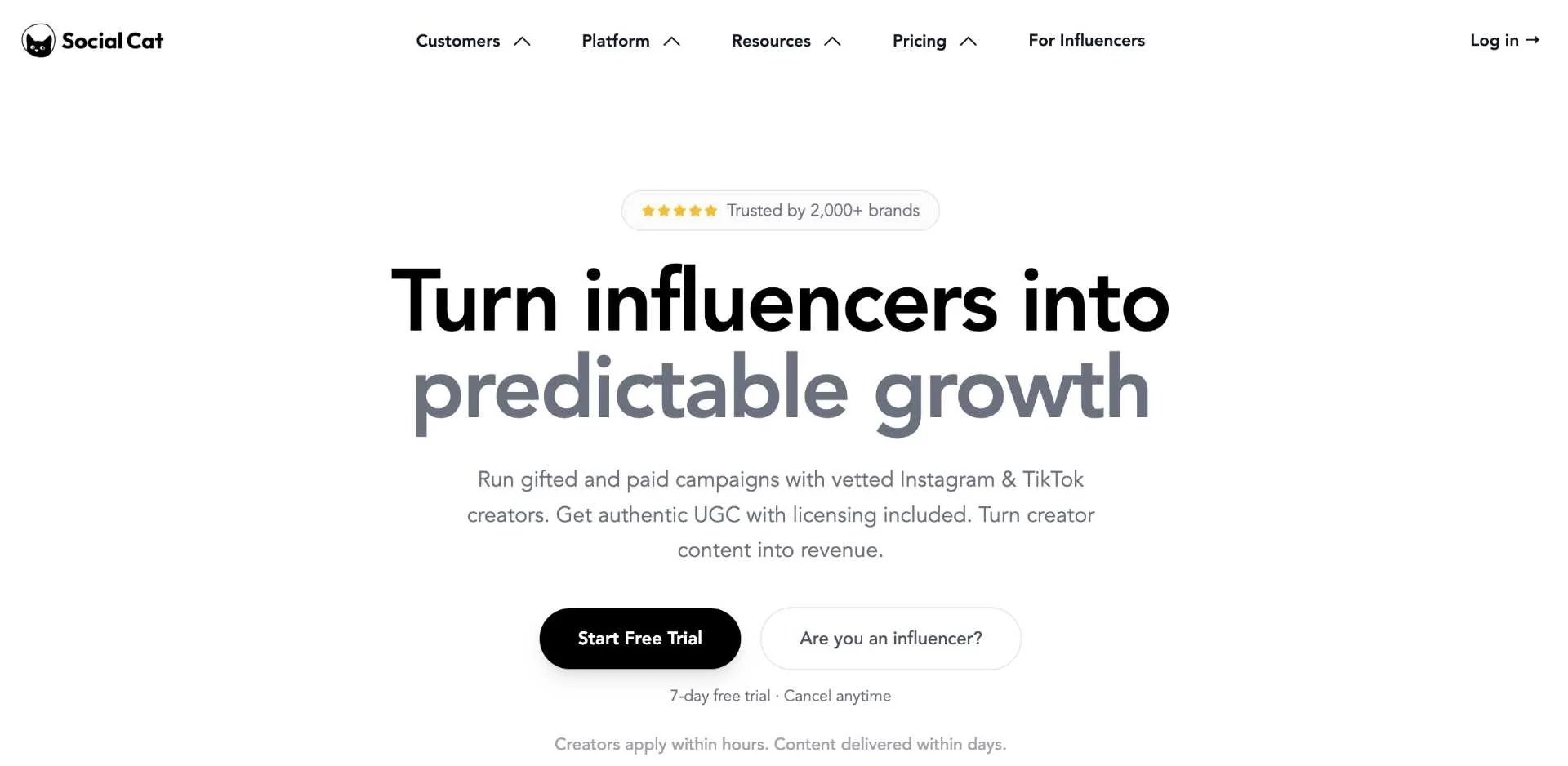
Social Cat is an influencer marketing platform built for small and growing brands that want to collaborate with micro and nano influencers without enterprise software complexity. Brands can create campaigns, receive creator applications, search a vetted creator database, manage conversations, run gifted or paid collaborations, and collect licensed UGC. Social Cat says brands can search 500K+ creators and run campaigns with licensing included.
Key Features
• Campaign builder: Create and publish campaigns for creators to apply to directly.
• Creator applications: Review influencer applications using profile details, collaboration history, and performance information.
• 500K+ creator database: Search creators by niche, location, engagement rate, and audience demographics.
• Direct invitations: Invite creators to campaigns instead of waiting for applications.
• Product seeding workflow: Send products to creators and track campaign collaboration progress.
• In-app messaging: Coordinate deliverables, negotiate terms, and manage creator communication in one place.
• Contracts: Draft collaboration agreements and align expectations before content goes live.
• Content uploads: Creators upload content into the platform after posting.
• Usage rights included: Social Cat includes content licensing so brands can reuse influencer content across marketing channels.
Pricing
Social Cat offers flexible monthly pricing with no long-term contracts, making it accessible for smaller brands and teams.
• Essentials Plan – $99/month
• Performance Plan – $199/month
• Pro Plan – $299/month
Reviews
4.3 / 5.0 (Trustpilot)
Pros
• Built for micro-influencer collaborations: Social Cat is especially strong for small brands working with Instagram and TikTok micro-creators.
• Content licensing included: Usage rights are included, reducing friction when repurposing UGC.
• Simple and affordable: Pricing starts at $99/month, making it accessible for brands starting influencer marketing.
Cons
• Limited analytics: It does not offer advanced ROI, EMV, or deep revenue reporting.
• Not built for enterprise CRM needs: Relationship management is useful but lighter than full-scale influencer CRM platforms.
• Limited platform depth: It is mainly focused on Instagram and TikTok campaigns.
Integrations
• Instagram: Run creator collaborations and collect Instagram content for UGC and awareness campaigns.
• TikTok: Work with short-form video creators and manage TikTok collaborations.
• Email: Receive support and campaign communication updates through email workflows.
• Creator content library: Store uploaded creator assets and reuse licensed UGC.
• Contract templates: Manage creator agreements and collaboration expectations directly in the platform.
Afluencer vs Social Cat
Afluencer and Social Cat are both accessible marketplace-style tools for small brands, but Social Cat is more focused on micro-influencer gifting, UGC, and content licensing. Afluencer offers a broader collaboration marketplace with lower entry pricing.
Social Cat is better for brands prioritizing licensed UGC and structured micro-creator campaigns. Afluencer is better for brands that want a simple, low-cost way to post collaborations and invite creators.
Final Thoughts on Afluencer Alternatives
Afluencer is a strong entry-level platform for brands seeking an affordable and simple way to start influencer collaborations, but many alternatives offer more advanced capabilities depending on your needs. Platforms like Aspire and Influencer Hero excel in ecommerce integrations and workflow automation, while tools like CreatorIQ, Klear, and Traackr cater to enterprise teams with deeper analytics and reporting. Meanwhile, options like Heepsy, Social Cat, and Skeepers provide more focused solutions for discovery, micro-influencers, or UGC campaigns. Ultimately, the best choice depends on your budget, campaign complexity, and whether you prioritize ease of use, scalability, or performance tracking.

.png)


.jpg)