

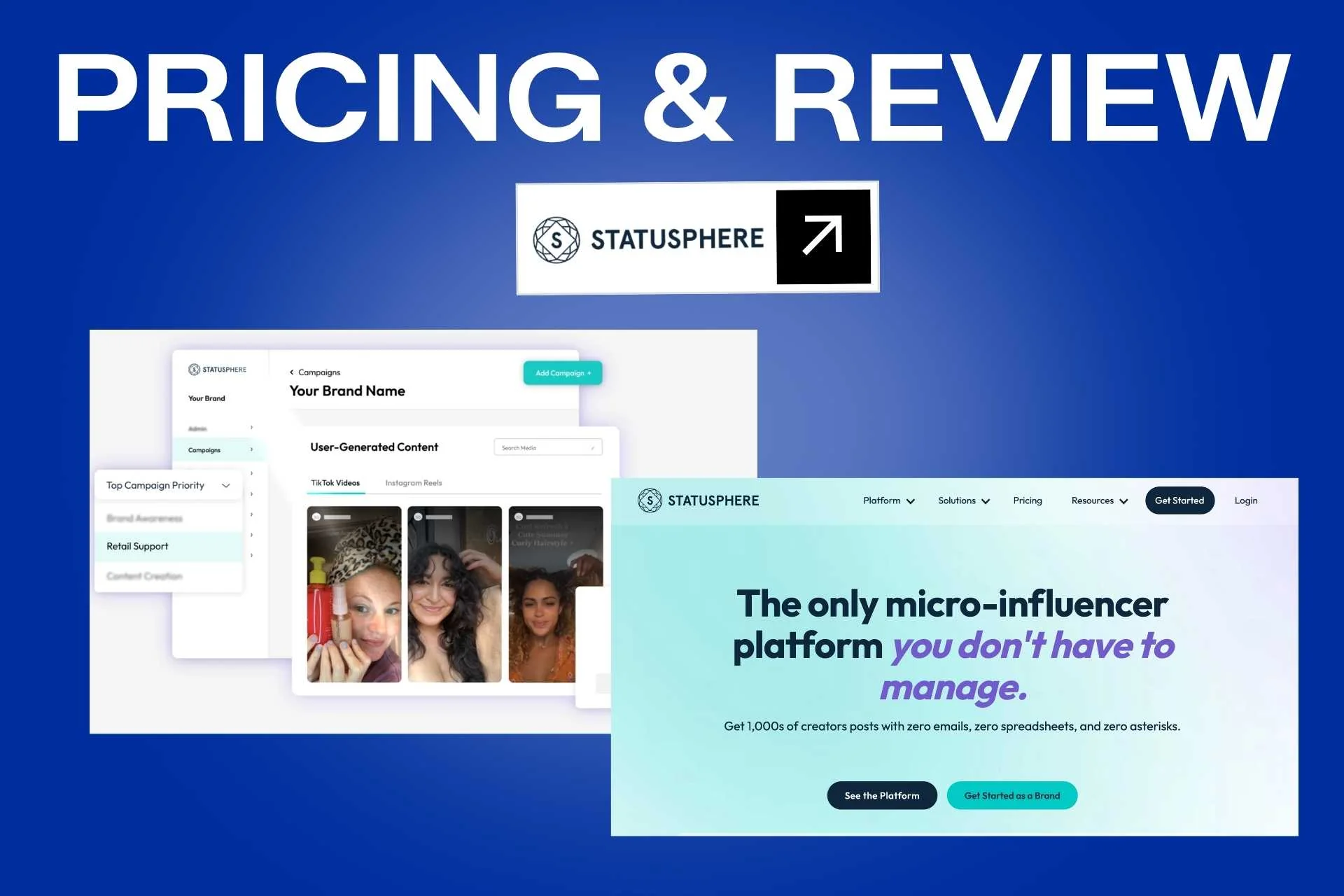
Statusphere Pricing and Review: Features, Pros, Cons & Costs
Statusphere is a micro-influencer platform that sells a guaranteed outcome rather than a set of tools. Brands specify what they want, and the platform matches, ships to, and manages creators until an agreed volume of posts with usage rights has been delivered. That model puts it in a different bracket from most influencer marketing software, and it explains both the appeal and the price.
The pricing is where most evaluations stop short. Statusphere does not publish tiers, works on a credit model, and states that initial investments start at $10,000. This review covers what that buys, how the guaranteed post model actually works, where it delivers, and which brands are better served by Statusphere alternatives.
Statusphere Overview
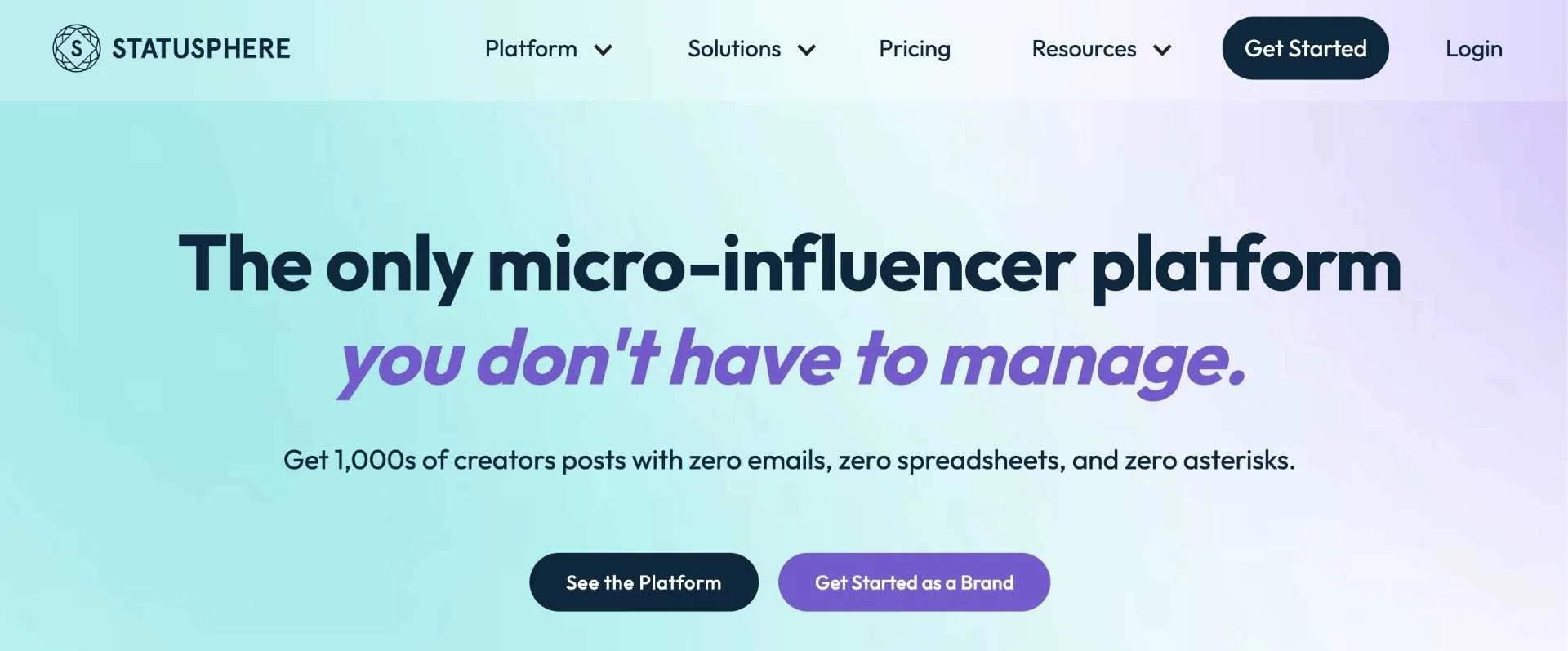
Statusphere is a micro-influencer marketing platform built around guaranteed user-generated content. Rather than giving brands a database to search and an inbox to manage, it automates the entire activation: creator matching, outreach, contracts, product shipping, content approval, and rights clearance all run through the platform’s AI campaign layer, marketed as StevieOps.
The central promise is volume with certainty. Brands are told how many posts they will receive, and the platform absorbs the operational risk of creators not delivering. Statusphere claims the ability to activate more than a thousand creators within an hour, and cites customers including Fenty Beauty, Philosophy, Sally Hansen, and Hugo Boss.
Who Should Use Statusphere
Statusphere fits brands that need a high volume of rights-cleared creator content on a predictable timeline and have budget to commit up front.
- Beauty, personal care and wellness brands that need constant fresh UGC for paid social testing.
- Brands with a five-figure creator budget who want guaranteed output rather than campaign management tooling.
- Teams without an influencer marketing hire that need the operational work handled externally.
- Food and beverage, parenting and pet brands running product seeding at scale where shipping logistics are the bottleneck.
- Brands running retail activations that need creators directed to specific store locations.
- Performance teams that value usage rights and Spark Ads codes more than long-term creator relationships.
Key Features
Guaranteed Posts With Usage Rights
Campaigns are sold on delivered post volume, not on effort. If a matched creator fails to post, the platform replaces them, so the brand receives the agreed output. Usage rights are built into every post, which means the content can be used in paid ads and owned channels without renegotiating terms creator by creator.
StevieOps AI Campaign Management
The platform’s AI layer handles creator vetting, influencer outreach, contracting, shipping logistics, and content approval. For brands, this removes the entire coordination workload that normally consumes an influencer marketing coordinator’s week and replaces it with a brief and a review step.
Creator Matching on 300+ Data Points
Rather than manual search, Statusphere matches creators to campaigns using more than 300 targeting attributes covering audience, category, content style, and demographics. This is how the platform targets narrow niches at volume without brand-side profile review.
Product Fulfilment and Shipping
Statusphere handles product shipping to creators, with 48-hour fulfilment. For seeding programs at scale, this removes what is usually the single largest operational drag: packing, addressing, and tracking hundreds of individual shipments.
One-Click Ad Codes
Creator content can be pushed into TikTok Spark Ads and Instagram Partnership Ads with a single step, so high-performing organic posts can be amplified as paid media without chasing individual creators for authorisation codes.
Social Search Optimisation
Content is briefed and structured to rank inside TikTok and Instagram search rather than only in feeds. As product discovery increasingly starts inside social platforms, this treats creator content as a search asset rather than a one-day impression.
Geotargeted Activations
Creators can be directed to specific retail locations, which supports in-store launches and regional retail partnerships. This is unusual among influencer platforms and matters for brands with physical distribution to support.
Unlimited Campaigns and Content Downloads
Campaign count is not metered, and delivered content can be downloaded without per-asset charges, so the content library compounds across activations rather than being rationed.
Statusphere Pricing
Statusphere does not publish pricing tiers. Costs are quoted per brand after a sales conversation, using a credit-based model, and the company states a floor for what it will take on.
Minimum Investment
- Initial investments start at $10,000
- No public plan tiers or monthly subscription rates
- No free trial
- Quotes require contacting sales or booking a demo
What Drives the Quote
- Number of creators activated
- Creative requirements and content specification
- Product type and shipping complexity
- Niche and targeting difficulty
Credit Model and Add-Ons
- Campaigns draw down against purchased credits rather than a flat monthly fee
- TikTok Spark Ads codes and TikTok Shop mentions require additional spend beyond base credits
- Shipping and handling are included in the quoted cost
Included at Every Level
- Guaranteed posts with content rights
- Automated creator discovery and matching
- Product fulfilment with 48-hour shipping
- Unlimited campaigns and unlimited content downloads
- Reporting and content management
Statusphere Reviews
- 4.7/5.0 (G2, low review volume)
Integrations
Statusphere does not publish a broad third-party integration directory. The connections that matter are on the paid social and marketplace side, because the output is designed to feed advertising rather than to sync with a wider martech stack.
- TikTok Spark Ads – Push creator posts into paid TikTok media with authorisation codes handled for you rather than requested creator by creator.
- Instagram Partnership Ads – Amplify creator content as paid Instagram media while keeping the creator’s handle on the ad.
- TikTok Shop – Include TikTok Shop mentions in creator briefs to connect content to marketplace conversion, available as additional spend.
- Content Library Export – Download rights-cleared assets without per-asset fees for use across paid, owned, and retail channels.
- Managed Fulfilment – Product shipping is run by Statusphere directly rather than through a store integration, so no eCommerce connection is required.
There is no publicly documented integration with eCommerce platforms, email or SMS tools, or affiliate tracking software, which matters if you want creator activity reflected in your own systems.
Pros of Statusphere
Guaranteed Output Removes Delivery Risk
The single biggest failure mode in seeding programs is creators who accept product and never post. Statusphere takes that risk onto its own books by replacing non-delivering creators, which turns an unpredictable activity into a forecastable content volume. For teams planning paid social calendars, that predictability is worth real money.
Rights-Cleared Content by Default
Every delivered post arrives with usage rights included. Brands avoid the usual pattern of finding a strong-performing organic post and then negotiating licensing after the fact, often at a premium. The practical effect is that the campaign produces an ad library, not just reach.
Shipping and Coordination Are Fully Handled
Creator matching, contracting, product fulfilment within 48 hours, and content approval all sit with the platform. For brands without a dedicated influencer hire, this is the difference between running a thousand-creator program and not running one at all.
Cons of Statusphere
The $10,000 Entry Point Excludes Most Smaller Brands
Initial investments start at $10,000, which puts the platform out of reach for brands testing creator marketing or working with a modest monthly budget. There is no entry tier and no trial, so there is no low-commitment way to validate fit before committing.
No Public Pricing and a Credit Model With Add-Ons
Costs are quoted only after a sales conversation, and the credit structure means spend does not map cleanly to a monthly line item. TikTok Spark Ads codes and TikTok Shop mentions sit outside base credits, so the features most tied to performance carry additional cost on top of the original quote.
Limited Control Over Creator Selection
Matching is automated across 300+ data points rather than curated by the brand. That is the point of the model, but it means less say over exactly who represents the brand, and it does not suit teams that want to build named, long-term creator relationships.
Narrow Scope Beyond Seeding and UGC
The platform is built for micro-influencer seeding and content volume. There is no affiliate or commission infrastructure, no influencer CRM for ongoing relationships, and no publicly documented eCommerce integration, so brands running affiliate programs or long-term partnerships need separate software alongside it.


Is Statusphere Worth It?
For brands that need a large volume of rights-cleared UGC on a schedule, Statusphere is a strong buy. The guaranteed post model solves a genuine problem, fulfilment and coordination are fully absorbed, and content arrives ready for paid social without a second licensing conversation.
The reservations are about fit and transparency rather than quality. A $10,000 floor with no trial and no published tiers means you commit before you can validate, and the credit model with paid add-ons for Spark codes and TikTok Shop mentions makes total cost harder to forecast than a subscription. Automated matching also means limited control over who represents the brand, and there is no affiliate infrastructure or creator CRM for brands that want partnerships to compound over time.
If Statusphere does not fit your budget or your model, these alternatives are worth reviewing:
- Influencer Hero – Best for D2C brands that want to run creator programs in-house with full control over who they work with, combining creator discovery, audience-quality data, automated outreach, influencer CRM, affiliate tracking, and reporting in one platform.
- Afluencer – A good fit for brands priced out of a five-figure commitment that still need creator supply. It works as a marketplace where creators apply to campaign listings, starting at $49/month, which suits gifting and micro-influencer collaborations on a smaller budget.
- Social Snowball – Strong for Shopify brands whose priority is affiliate and referral infrastructure with coupon-code protection rather than content volume.
- GRIN – Suited to established brands that want to own creator relationships long term with deep product seeding and relationship management workflows.
- Aspire – Worth reviewing for brands that want a mix of marketplace creator supply and campaign management under one roof.
Final Thoughts
Statusphere solves a specific and expensive problem well: getting a guaranteed volume of rights-cleared creator content shipped, posted, and delivered without building an internal team to run it. Where it becomes hard to justify is at the entry point, since a $10,000 minimum with no trial and no public pricing asks for commitment before proof, and the automated matching model gives up the creator relationships that compound over time.
Brands that want control and predictable cost usually end up running programs in-house instead, and it is worth reviewing the best Statusphere alternatives before committing to a custom quote.

.png)


.jpg)