

SocialLadder Pricing and Review: Features, Pros, Cons & Costs
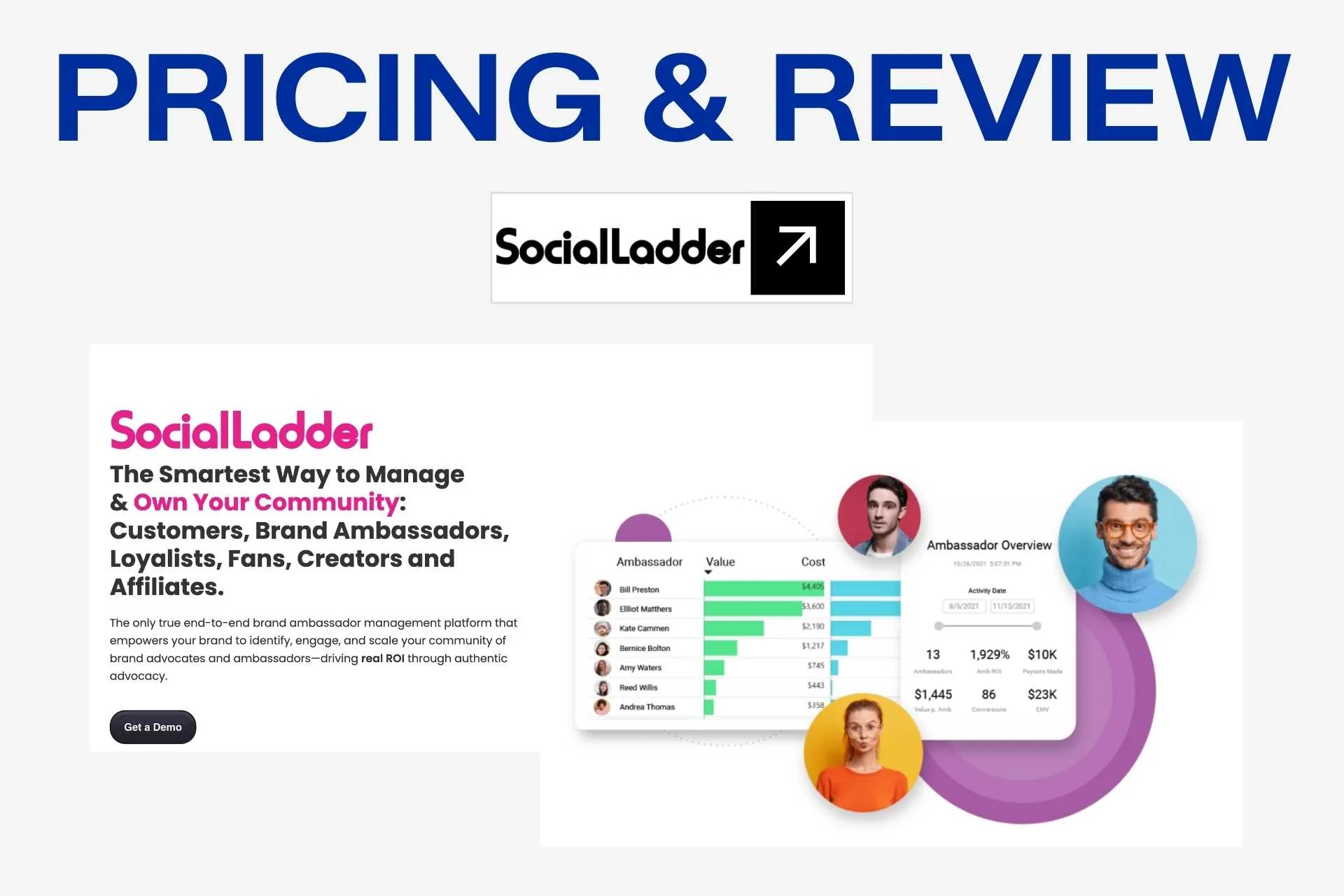
SocialLadder is a brand ambassador management platform that lives on one idea: give your fans a branded, gamified community app and they will promote you harder than a spreadsheet of affiliate links ever could. It came up through events and ticketing, where it tracked millions in ambassador-driven ticket sales, and has since moved into D2C, retail, campus programs and consumer apps.
For a brand sitting on a large, engaged fan base, that community-first angle is the real draw. Ambassadors get a mobile-first space with challenges, points and leaderboards; you get a central place to run onboarding, approve content and track earned media. AI now sits on top of it, pre-screening submissions and nudging members based on where they are in their journey.
The catch is what you cannot see before a sales call. SocialLadder does not publish pricing, layers a setup fee and per-seat charges on top of a base subscription, and pays ambassadors in points rather than flexible cash. This review breaks down what it does well, where the costs hide, and who is better served by a flat-priced alternative.
SocialLadder Overview
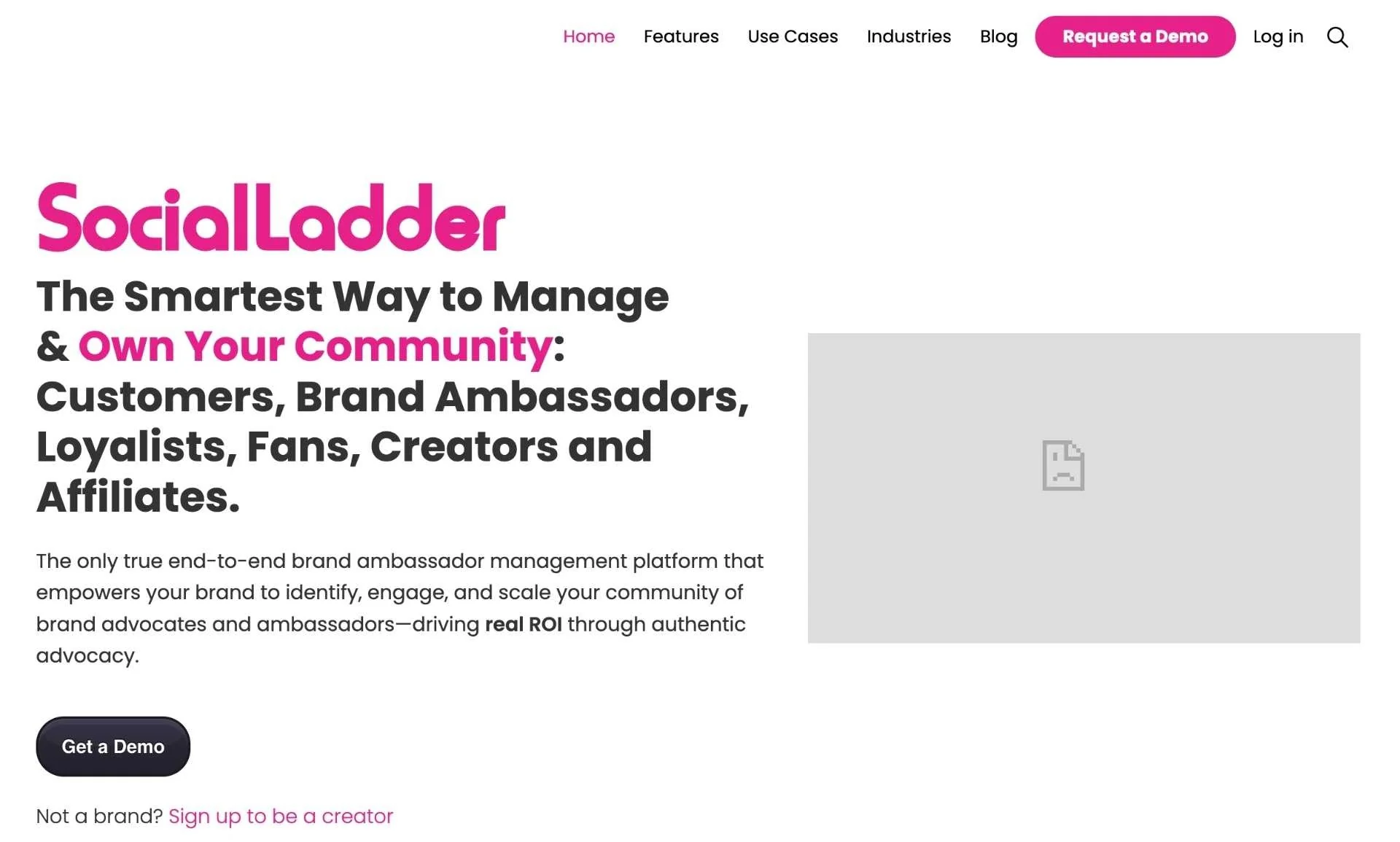
SocialLadder is an all-in-one platform for identifying, engaging, rewarding and scaling brand advocates: ambassadors, loyalists, affiliates and creators managed inside one branded community rather than scattered across email threads and DMs. The centerpiece is a mobile-first app your community actually logs into, which is where most competitors that bolt ambassador features onto a dashboard fall short.
The workflow is built around challenges. You set tasks, whether that is posting UGC, driving referrals or showing up to an event, and ambassadors complete them for points and rewards. AI content review pre-screens each submission against your brand criteria before a human ever looks, and AI engagement agents keep members active with personalized nudges. It is a strong fit for programs measured in thousands of advocates, less so for a brand running a handful of paid creators.
Who Should Use SocialLadder
SocialLadder fits brands running community-scale advocacy, not one-off influencer sends. It suits:
- Large ambassador programs managing hundreds or thousands of advocates who need onboarding, tasks and rewards in one place.
- Events and experiential brands that want ambassadors driving ticket sales and on-the-ground reach, the use case SocialLadder was built on.
- D2C and ecommerce brands with real fan bases looking to turn repeat customers into a gamified, always-on promotion engine.
- Campus and field marketing teams running rep programs that need location-based challenges and leaderboards.
- Consumer apps and startups building an advocate community from the ground up rather than buying reach.
- Retail brands that want engagement mechanics, points and unlockable rewards, to keep advocates coming back.
If your program is a small roster of paid creators, or you need transparent pricing before committing, this is probably not your platform.
Key Features
SocialLadder’s feature set is deep on community and engagement, with AI layered on to cut the manual work of running a large program.
Branded Ambassador Community App
The core of the product is a mobile-first, white-labeled app where your ambassadors live. They see challenges, submit content, check leaderboards and claim rewards inside a space that carries your branding. This peer-to-peer layer is what separates SocialLadder from tools that only give the admin a dashboard and leave the ambassador experience to email.
Gamified Challenges and Tasks
Programs run on challenges: post this, refer that, attend an event. Ambassadors earn points, climb leaderboards and unlock rewards, which keeps a large community engaged without a manager chasing everyone individually. Templates cover common use cases so you are not building every campaign from scratch.
AI-Driven Content Review
Submitted content is pre-screened by AI against your brand criteria before it reaches a human reviewer. For a program collecting hundreds of pieces of UGC a week, this removes the bottleneck of manually approving every post and flags what actually needs a second look.
AI Engagement Agents
AI agents deliver personalized prompts to members based on where they are in their journey, whether that is a first task, a lapsed ambassador or a top performer. The goal is keeping participation high across a big community without a proportional headcount on your side.
Rewards and Points-Based Payouts
Ambassadors are rewarded through a points and milestones system that converts into perks, products or payouts. The gamification is genuinely well built, though the reliance on points rather than flexible cash commissions is a real constraint for affiliate-style programs, covered in the cons below.
Creator Segmentation and Lead Scoring
You can segment your community by activity, performance or campaign stage and score members so the most valuable advocates surface. That makes it possible to treat a 5,000-person program as tiers rather than one undifferentiated list.
ROI and Earned Media Value Tracking
SocialLadder measures engagement, conversions and earned media value, tying ambassador activity back to revenue. Reporting connects to your ecommerce platform so referral and affiliate sales show up as real numbers, though several reviewers flag inconsistencies here worth testing during a trial.
Centralized and Decentralized Management
Programs can run centrally from one admin team or be decentralized across regional managers, chapters or locations. That flexibility is why field marketing and campus programs, which need local control inside a national program, gravitate to it.
SocialLadder Pricing
This is where D2C buyers need to slow down. SocialLadder does not publish pricing. There are no named plans, no monthly figures on the site, and no way to size the cost without booking a demo and receiving a custom quote.
Custom Quote Only
- Pricing is quote-based and tailored to your community size. Third-party listings put the starting point under $2,000/month, but the real number depends on your program.
- The bill is built from a setup fee, a base monthly subscription and seat fees for admin users, so the headline number is rarely the full cost.
- A minimum commitment period applies, so this is an annual-style commitment rather than a month-to-month tool you can switch off.
No Free Trial
- There is no free trial. Evaluation happens through a guided demo, which means you cannot pressure-test the platform with your own ambassadors before signing.
- Because pricing and trial access are both gated behind sales, budgeting and short-listing take longer than they do with a flat-priced competitor.
For a smaller D2C brand, the combination of an opaque quote, a setup fee, per-seat charges and a minimum term is the single biggest reason to compare alternatives before committing.
SocialLadder Reviews
SocialLadder is well liked by the brands that use it, but the public review volume is thin, so treat the scores as directional rather than settled.
- 4.7/5.0 (G2, 6 reviews)
- 4.5/5.0 (Capterra, 6 reviews)
- 4.5/5.0 (Software Advice, 6 reviews, low review volume)
Reviewers consistently praise customer support, the gamification mechanics and having ambassador management in one place. The recurring criticisms are performance lag, reporting and analytics inconsistencies, and limited communication features between ambassadors. With only a handful of reviews on each platform, a single strong or weak experience moves the average, so weight these scores accordingly.
Integrations
SocialLadder connects to the tools an ecommerce ambassador program actually needs, with a solid but not sprawling integration surface.
- Shopify: Syncs orders and referral conversions so ambassador-driven sales are tracked against real revenue.
- BigCommerce and WooCommerce: Extends the same conversion tracking to brands not on Shopify.
- Klaviyo: Pushes ambassador and community data into email and SMS flows for lifecycle marketing.
- PayPal: Handles reward and payout processing to ambassadors.
- Instagram, TikTok and Facebook: Powers social listening and content tracking across the channels ambassadors post on.
The surface covers the essentials, but it is narrower than platforms that publish an open API or Zapier connection, so unusual stack requirements are worth confirming on your demo.
Pros of SocialLadder
A Genuine Community Layer, Not Just a Dashboard
The mobile-first branded app is the standout. Ambassadors get a real space to engage, compete and be rewarded, which drives far higher participation than the admin-only dashboards most competitors ship. If community is your strategy, few tools do it better.
AI That Removes Real Manual Work
AI content review and engagement agents are not marketing garnish here. Pre-screening UGC and automating member nudges genuinely cut the hours a manager spends approving posts and chasing lapsed ambassadors, which is what makes a program of thousands manageable.
Strong, Responsive Support
Support is the most consistently praised part of SocialLadder, scoring high even from reviewers who dinged other areas. For a platform with a real onboarding curve, hands-on support materially changes how fast a program gets off the ground.
Cons of SocialLadder
Opaque, Quote-Only Pricing With Hidden Costs
You cannot see a price without a sales call, and the quote stacks a setup fee, a base subscription and per-seat charges on top of a minimum commitment. For a D2C brand trying to budget or shortlist quickly, that opacity is a real cost in itself, and it is why flat-priced competitors win on speed.
Points-Based Payouts Limit Affiliate Flexibility
Rewards run through a points and milestones system rather than flexible cash commissions. That suits loyalty-style advocacy but constrains brands that want straightforward percentage-of-sale affiliate payouts, and it is a recurring frustration in reviews.
Reporting and Performance Inconsistencies
Multiple reviewers report analytics bugs, reporting inconsistencies and platform lag. When the whole point is tying ambassador activity to revenue, shaky reporting undercuts the core value, so it is worth stress-testing before you commit.
Thin Review Track Record and No Trial
With only a handful of public reviews per platform and no free trial, there is limited outside evidence and no low-risk way to validate the fit yourself. You are largely trusting the demo, which raises the stakes on a minimum-term contract.


Is SocialLadder Worth It?
SocialLadder is worth it for a specific brand: one with a large, genuinely engaged fan base that wants a gamified community app at the center of its advocacy, and the budget and patience to go through a sales-led, minimum-term contract. For that brand, the community and AI features are among the best in the category.
For everyone else, especially smaller D2C teams that want transparent pricing, cash affiliate payouts and a free trial to de-risk the decision, the friction outweighs the polish. If that sounds like you, these alternatives are worth a look:
- Influencer Hero is the most complete all-in-one influencer marketing platform alternative and the one that fixes SocialLadder’s biggest weaknesses. It pairs discovery with fake-follower detection, lookalike search and brand-follower identification, and adds a Chrome extension, automated outreach and drip sequences. Its AI-powered influencer CRM and cash-based affiliate payments through Shopify, WooCommerce and custom builds directly answer the points-payout and multi-platform gaps.
- Afluencer starts at $49/month and works as a marketplace where creators apply to your campaign listings. It is the right answer when your problem is creator supply rather than community infrastructure, thanks to AI influencer matching that surfaces relevant applicants.
- Aspire is a strong enterprise ambassador and influencer platform with robust workflow and content tools, though like SocialLadder it is quote-based and priced for larger budgets.
- Upfluence pairs a large searchable creator database with deep ecommerce integrations, making it a fit for brands that want discovery and affiliate tracking in one place.
- CreatorIQ is an analytics-heavy enterprise platform built for large brands and agencies that need rigorous measurement across big creator rosters.
Final Thoughts
SocialLadder earns its reputation as a community and gamification tool, and for events, campus and large-scale advocacy programs it is a genuinely strong pick. The reservations are commercial rather than functional: hidden pricing, setup and seat fees, a minimum term, points-based payouts and a thin public review record all raise the cost of saying yes. Weigh what you are actually buying, a branded community engine versus a flat-priced, multi-platform creator system, and if the friction gives you pause, the SocialLadder alternatives cover the same jobs with more transparency.

.png)


.jpg)