

Social Cat Pricing and Review: Features, Pros, Cons & Costs
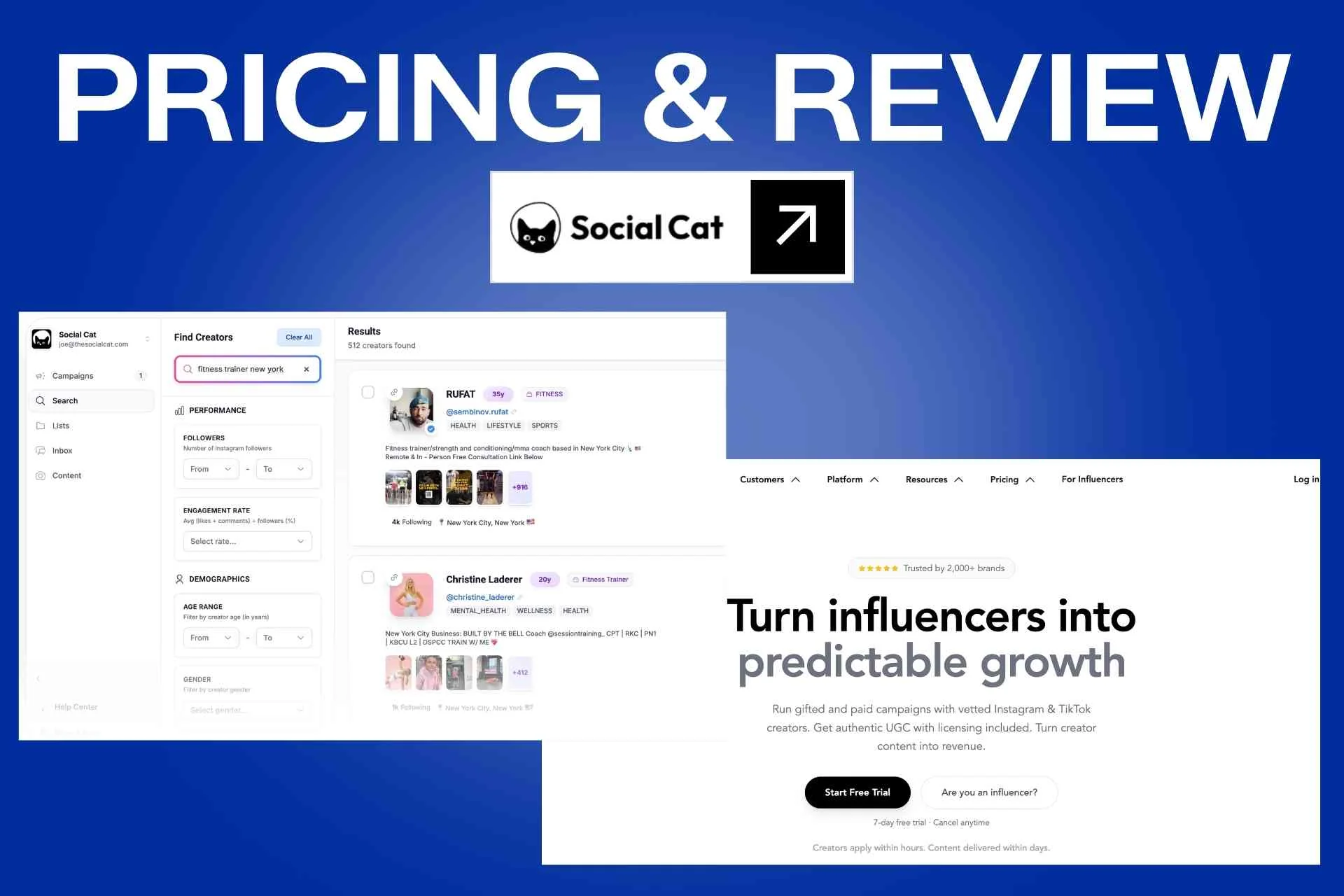
Social Cat is an influencer marketing software platform designed to help brands discover creators, manage collaborations, and generate user-generated content through gifting and paid partnerships. Its affordable pricing and creator-focused marketplace have made it a popular option among growing DTC brands looking to scale influencer marketing without investing in enterprise-level tools.
In this review, we'll break down Social Cat's pricing, key features, pros, cons, customer feedback, and overall value for ecommerce businesses.
Social Cat Overview
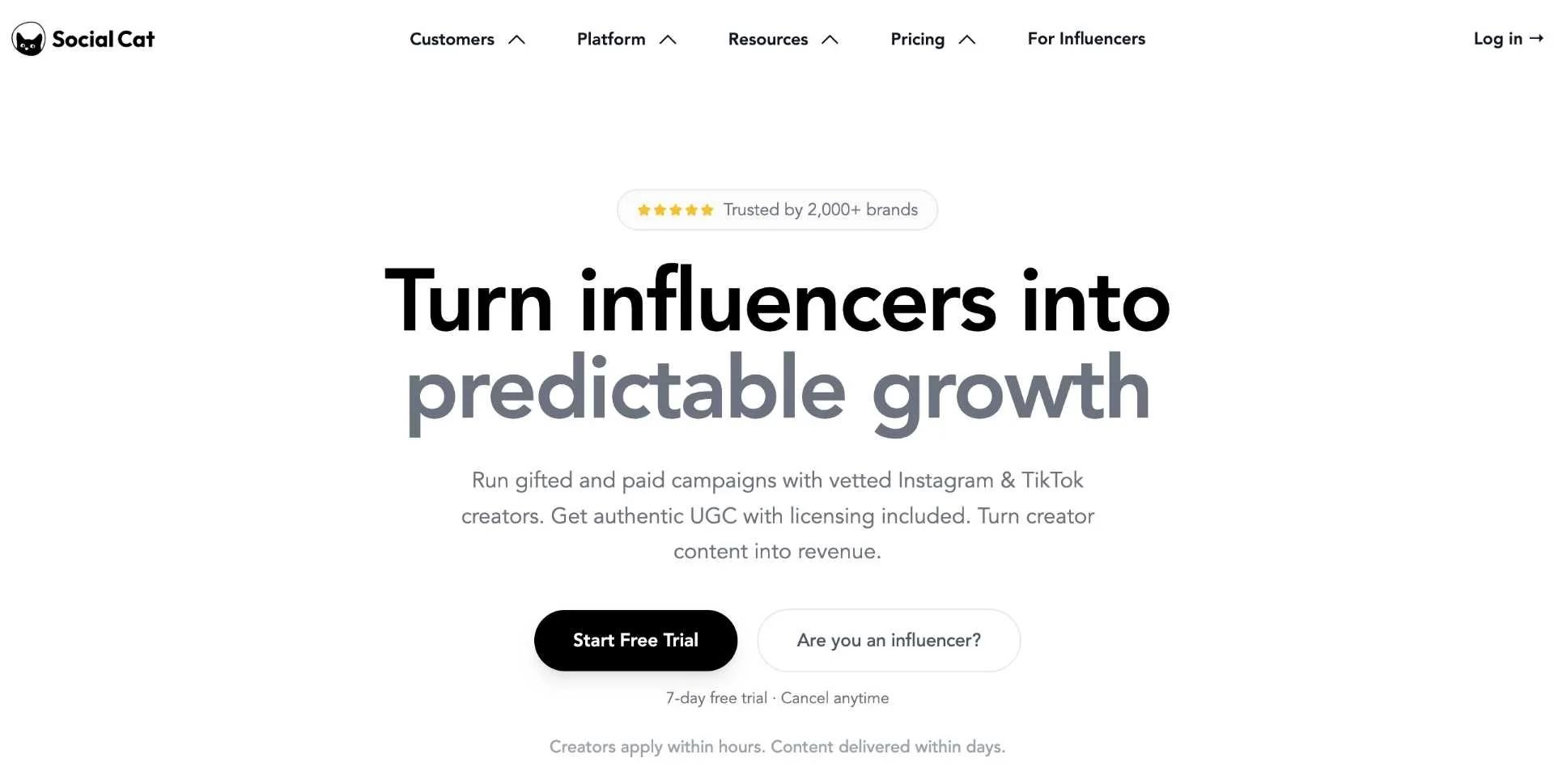
Social Cat is an influencer marketing platform for brands that want to run gifted and paid collaborations with vetted Instagram and TikTok creators. It focuses on micro-influencer discovery, creator applications, product seeding, built-in messaging, contracts, content collection, and licensed UGC. Social Cat says it is used by 2,000+ brands, provides access to a 500K+ creator database, and includes a 7-day free trial with cancel-anytime pricing.
Who Should Use Social Cat
Social Cat is best for small to mid-sized D2C brands that want affordable influencer collaborations without enterprise software complexity. It is especially useful for beauty, skincare, fashion, wellness, jewelry, food, fitness, pet, and lifestyle brands that rely on visual content and product seeding. It also fits Shopify-focused ecommerce teams, app brands, and agencies running Instagram or TikTok creator campaigns for smaller clients.
Key Features
Influencer Marketplace
Brands can publish campaigns and receive applications from vetted creators, reducing the need for cold outreach.
Influencer Search
Teams can search Social Cat’s creator database by niche, location, engagement, and audience demographics.
Gifted and Paid Campaigns
Social Cat supports product gifting and paid collaborations, making it suitable for both UGC generation and awareness campaigns.
Built-in Messaging
Brands can coordinate campaign details, negotiate terms, and manage creator communication inside the platform.
Contracts and Licensing
Social Cat includes contracts and content usage rights, so brands can reuse creator content for marketing.
Content Library
Campaign content is collected in one place, helping teams organize UGC for organic social, ads, and website use.
Creator Reviews
Brands can review creator history and collaboration quality before confirming partnerships.
Replace Collaborations
Plans include the ability to replace collaborations, useful when creators are not the right fit or a collaboration falls through.
Managed Services Option
For brands that want a hands-off approach, Social Cat also offers managed influencer campaign execution.
Social Cat Pricing
Social Cat offers monthly and yearly pricing, with yearly billing advertised as two months free. Plans include a 7-day free trial and cancel-anytime terms.
• Essentials — $99/month: Up to 5 creator collaborations per month, 1,000 invitations, 1 campaign, 1 team member, content usage rights, inbox, content library, creator reviews, contracts, and email support.
• Performance — $199/month: Up to 15 creator collaborations per month, 2,500 invitations, up to 3 campaigns, 5 team members, and the same core campaign, content, messaging, and contract tools.
• Pro — $299/month: Up to 30 creator collaborations per month, 5,000 invitations, unlimited campaigns, 10 team members, Top Brand Badge, and priority customer support.
Reviews
4.0/5.0 (Trustpilot)
Integrations
Social Cat does not publicly list a large integration marketplace. The most clearly supported connections/channels are:
• Shopify: Used for ecommerce influencer gifting and creator-led product campaigns.
• Instagram: Run creator collaborations for posts, reels, stories, and visual product promotion.
• TikTok: Work with short-form video creators for UGC, awareness, and product-led content.
• Email Notifications: Receive campaign and collaboration updates without relying only on in-app activity.
• Social Cat Content Library: Centralizes creator content for reuse across social, ads, and other marketing assets.
Pros of Social Cat
Affordable creator collaborations for small brands
Plans start at $99/month, making Social Cat more accessible than enterprise influencer platforms that often require annual contracts.
Licensed UGC included
Content usage rights are included across plans, which is valuable for D2C brands that want creator content for ads, email, website, and organic social.
Inbound creator applications plus search
Brands can either receive applications from interested creators or proactively invite creators from the database, giving teams both speed and control.
Cons of Social Cat
Limited advanced analytics
Social Cat is strong for creator sourcing and UGC, but it is not ideal for teams that need deep ROI, EMV, sales attribution, or multi-touch performance reporting.
Not built for enterprise-scale CRM
The workflow is simple and beginner-friendly, but larger teams may outgrow its CRM, automation, segmentation, and approval capabilities.
Creator delivery can vary
Product seeding campaigns can still involve creators who delay, underdeliver, or do not produce content at the quality a brand expects.
Limited native integrations
Brands looking for deep integrations with ecommerce, affiliate, email, ad whitelisting, payment, or analytics systems may need a more robust platform.
Primarily Instagram and TikTok focused
Social Cat is less suitable for brands prioritizing YouTube, Twitch, Pinterest, blogs, or complex multi-platform creator programs.


Is Social Cat Worth It?
Social Cat is a strong choice for small and growing DTC brands that want an affordable way to run influencer gifting campaigns, generate UGC, and build relationships with micro-influencers. Its biggest strengths are its ease of use, creator application model, built-in contracts and content rights, and low entry pricing compared to enterprise influencer marketing platforms. The platform is particularly well-suited for brands that are focused on Instagram and TikTok and primarily use influencer marketing for brand awareness, product seeding, and content creation.
However, Social Cat is less suitable for brands that need advanced reporting, sales attribution, affiliate management, large-scale CRM functionality, or extensive third-party integrations. As influencer programs mature and require deeper analytics, automation, and multi-channel campaign management, many teams eventually outgrow the platform.
Overall, Social Cat delivers excellent value for small and medium-sized brands focused on creator collaborations and UGC, but larger brands or performance-driven influencer programs may require a more robust solution.
Alternatives to Social Cat
If Social Cat doesn't fully meet your requirements, the following alternatives may be a better fit:
• Influencer Hero – Best for brands looking for a complete influencer marketing platform with advanced influencer CRM, automated outreach, affiliate management, influencer gifting, UGC collection, payments, and ROI tracking.
• Afluencer – Best for DTC brands seeking an affordable creator marketplace to recruit influencers and manage collaborations.
• Aspire – Best for brands that want both influencer discovery and a large creator marketplace, along with workflow automation, product gifting, and sales attribution.
• Influencity – Suitable for teams that prioritize influencer discovery, campaign management, CRM functionality, and detailed reporting at a more accessible price point than enterprise platforms.
• HypeAuditor – Best for brands focused on influencer vetting, audience quality analysis, fraud detection, and advanced influencer discovery capabilities.
Final Thoughts
Social Cat is a user-friendly influencer marketing platform that helps small and mid-sized brands connect with micro-influencers, manage gifting campaigns, and generate high-quality UGC without the cost or complexity of enterprise software. However, businesses that require advanced analytics, affiliate tracking, deeper CRM capabilities, or extensive integrations may eventually need a more robust solution.
If Social Cat isn't the right fit for your needs, check out our guide to the best Social Cat Alternatives, where we compare leading influencer marketing platforms for different business sizes, budgets, and campaign goals.

.png)


.jpg)