


OpenSponsorship Pricing and Review: Features, Pros, Cons & Costs
The cheapest published plan on OpenSponsorship is $2,000 a month, and it is a managed service rather than software. The second is $5,000 a month, and it is a larger managed service.
There is no published self-serve subscription between those figures and free registration, which makes this closer in shape to an agency retainer than to the platforms most brands compare it against.
This review covers the athlete network, what the two plans include, the cost of the service relative to what you spend on athletes, and the gaps that reviewers raise.
OpenSponsorship Overview
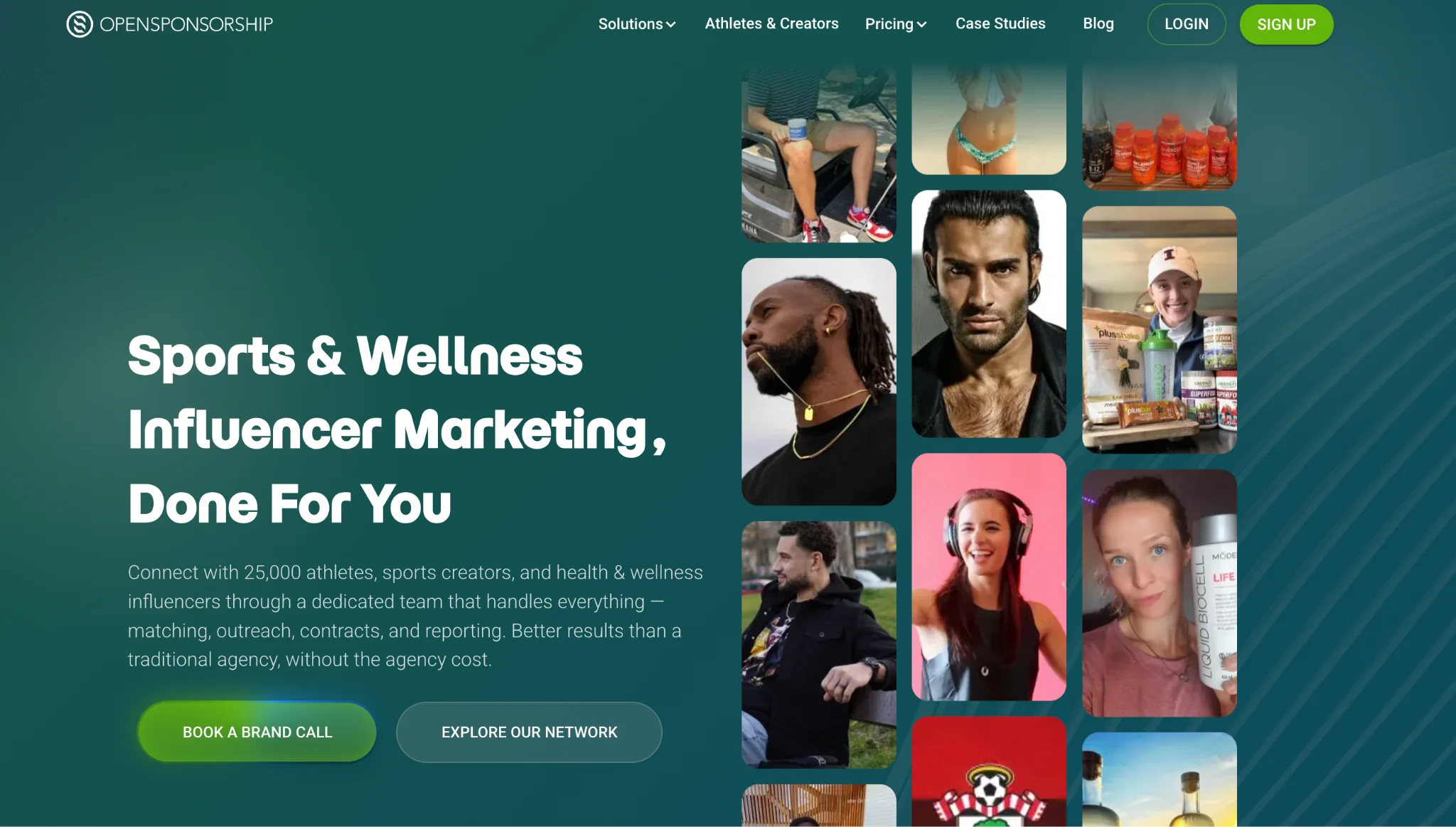
OpenSponsorship is a marketplace for sports sponsorship. It connects brands with athletes, sports creators and health and wellness influencers, and the company states its network holds more than 25,000 of them across 150 sports and 40 countries, with over 2,500 brands using the platform.
The platform covers matching, outreach, contracts and reporting. Brands can search the database directly or post a campaign that athletes apply to, an arrangement the company compares to a job board. Messaging is held on the platform, payments to athletes are secured in escrow, and an AI recommendation tool suggests suitable profiles.
The specialisation is the point. General search and discovery tools cover far more creators, but very few hold verified relationships with professional athletes and their agents, which is a category of partner that is difficult to reach any other way.
Who Should Use OpenSponsorship
The fit is defined by the type of partner you need rather than by budget alone:
- Sports nutrition and supplement brands: Athletes are the natural endorsers, and the roster is built around them.
- Fitness and activewear labels: Health and wellness influencers sit in the same network as competing athletes.
- Brands wanting credibility over reach: An athlete endorsement carries weight that follower counts do not measure.
- Teams without agency relationships: Negotiations with athletes and agents are handled on the managed plans.
- Businesses running continuous sponsorship: The Elite plan is designed for brands with an existing athlete roster.
- Marketers who need contracts handled: Sponsorship agreements are more involved than a standard creator brief.
Key Features
Athlete Database
Access to a network the company states exceeds 25,000 athletes, sports creators and wellness influencers, spanning 150 sports and 40 countries. Every published plan includes this access, and it is the reason most brands arrive.
Campaigns
Brands post a brief and athletes apply to take part. This reverses the usual search process and is particularly useful in sport, where relevance depends on team, league and season rather than on audience data alone.
AI Recommendations
The platform suggests athletes based on the campaign brief. Recommendation quality in a specialist network tends to be better than in a general index, simply because the pool is smaller and more structured.
In-Platform Messaging
All communication with athletes and their representatives is held in the platform, which keeps negotiation, briefing and delivery in one record. It serves a similar purpose to a creator CRM, though it is organised around individual deals rather than an ongoing roster.
Escrow Payments
Payments to athletes are held in escrow until obligations are met. In sponsorship, where deliverables are often spread across a season, this protection matters more than it does for a single post.
Contract Handling
Sponsorship agreements, including negotiation with agents, are managed on the paid plans. Athlete representation adds a layer that most creator platforms never encounter, and outsourcing it is a legitimate reason to pay for a service.
Campaign Reporting
Post-campaign reporting is included on both plans, covering delivery and performance. Reviewers are less enthusiastic about the depth here than about the access to athletes.
Inbound Request Management
On the Elite plan, the team handles partnership requests that come to your brand from athletes and agents, and integrates athletes you already work with into the platform. For a brand receiving regular inbound approaches, this is the feature that justifies the tier.
OpenSponsorship Pricing
Two plans are published, both managed services, billed monthly in US dollars. Registration as a brand is free, and the paid tiers are arranged through sales rather than self-serve checkout.
Full-Service Plan
$2,000 per month. The plan includes:
- Fully managed campaigns and a dedicated account manager
- Athlete and agent negotiations handled for you
- Access to athletes outside the OpenSponsorship network
- Unlimited campaigns and up to six users
- Quarterly strategy sessions and 24/7 email support
- Post-campaign reporting
Elite Plan
$5,000 per month. The plan adds:
- A fully managed athlete influencer programme with a full support team
- Management of inbound athlete and agent partnership requests
- Integration of athletes you already work with into the platform
- Monthly strategy sessions and unlimited seats
- Co-marketing opportunities and paid advertising support
What Every Plan Includes
Both tiers carry the same platform access:
- Search across the 25,000-plus athlete network
- Campaigns that athletes apply to
- In-platform messaging
- Escrow payment security
- AI athlete recommendations
The Fee Against Your Athlete Spend
The service fee is fixed while athlete costs are not, so the sensible measure is the fee as a proportion of total programme spend. At $2,000 a month against $4,000 of athlete fees, one third of the budget goes to the platform. At $20,000 of athlete fees, the same plan represents 9%, which is competitive against agency rates.
Read the entry plan as a retainer rather than a subscription. It costs $24,000 a year before a single athlete is paid, which is a reasonable figure for managed sponsorship and a high one for software. Brands running small programmes will find better value in platforms aimed at small businesses, where the monthly fee is a fraction of this and the work is self-serve.
Two Points to Clarify
Software directories list a starting price of $499 per feature per month, which does not match the figures published by the vendor. Treat the vendor page as authoritative and ask for the current rate card in writing.
Several reviewers also refer to commission on deals, although no commission or transaction fee is published on the pricing page. Establish explicitly whether any percentage applies to athlete payments before you sign, because it changes the total materially.
OpenSponsorship Reviews
OpenSponsorship holds 4.8/5.0 (Capterra, 40 reviews) and 3.2/5.0 (Trustpilot, 2 reviews). The Capterra sample is the meaningful one, and it skews heavily towards small businesses, with sports and health and fitness the dominant industries.
Reviewers describe the platform as an effective way to reach many athletes at once, praise the ease of finding and approaching partners, and rate customer service highly. The criticisms are worth weighing: difficult mobile navigation, slow approval processes, commission rates described as high, athletes priced above expectations, and the observation that many accounts are managed by agents rather than by the athletes themselves, which slows responses and formalises negotiation.
Integrations
The platform is largely self-contained, with connections serving the deal rather than the marketing stack:
- Athlete social accounts: Instagram, TikTok, YouTube and X profiles connected for matching and reporting.
- Escrow payments: Athlete fees held and released against agreed deliverables.
- In-platform contracts: Agreements created and stored with the campaign record.
- Messaging: All athlete and agent communication kept in one thread per deal.
- Campaign reporting: Delivery and performance summarised after the campaign closes.
No eCommerce, CRM or email platform integrations are published, so results are not tied back to store revenue automatically.
Pros of OpenSponsorship
Access That Is Genuinely Difficult to Replicate
Professional athletes are represented, contracted and slow to reach through ordinary outreach. A network of 25,000 across 150 sports, with agent relationships already in place, solves a problem that no general creator database addresses.
The Contract Work Is Handled
Sponsorship agreements involve rights, exclusivity and multi-month obligations, and agents negotiate them professionally. Having that handled by an account manager is the clearest justification for the fee, particularly for a brand doing this for the first time.
A Solid and Specific Review Base
A 4.8 rating across 40 Capterra reviews, concentrated in sports and fitness, is directly relevant evidence for the brands most likely to buy. That is more useful than a higher score drawn from an unrelated industry mix.
Cons of OpenSponsorship
No Self-Serve Tier
This is the principal cost consideration. The cheapest published plan is $2,000 a month for a managed service, so a brand wanting only software access has no listed option. Registration is free, but the published route to using the platform properly begins at $24,000 a year before athlete fees.
Conflicting Figures and an Unpublished Commission
Directory listings quote a starting price that does not match the vendor, and reviewers refer to commission that the pricing page does not mention. Neither point is damning, and both make budgeting unreliable until you have written confirmation.
Agents Sit Between You and the Athlete
Reviewers note that many accounts are managed by representatives. That is normal in sport and it is also slower, more formal and more expensive than dealing with a creator directly, which is worth factoring into both timelines and rates.
The Commercial Layer Is Missing
There are no discount codes, no affiliate tracking and payouts, and no attribution to store revenue. Reporting covers delivery and performance, so a brand measuring sponsorship on sales will need to build that measurement itself.


Is OpenSponsorship Worth It?
For athlete partnerships, the case is strong. The network is specialised and large, agent relationships are already established, contracts and negotiation are handled, and the Capterra record from brands in sport and fitness is genuinely good. For a supplement, activewear or sports nutrition brand, this is a sensible way to run a sponsorship programme without appointing an agency.
The reservations are cost structure and scope. The entry point is a managed retainer, the published figures conflict with third-party listings, commission is mentioned by reviewers but not by the vendor, and nothing connects sponsorship activity to revenue in your store. A brand whose creators are ordinary influencers rather than athletes will find the same money goes considerably further elsewhere.
Brands comparing athlete access against broader creator programmes typically consider the following:
- Influencer Hero: Covers discovery across Instagram, TikTok and YouTube with fake follower screening, then runs influencer outreach, a campaign CRM, gifting, affiliate codes and creator payouts in one influencer marketing platform.
- Afluencer: Lets creators apply to your collaboration listings, which suits brands recruiting at the smaller end, as its guide to finding micro-influencers explains.
- Aspire: Combines a creator marketplace with campaign workflows and content licensing for eCommerce brands.
- Later: Pairs social publishing with creator campaign management for teams running both together.
- NeoReach: Provides managed campaign services with enterprise reporting for brands that want the work handled.
Final Thoughts
One calculation should settle this: the service fee as a share of what you will actually pay athletes. At $2,000 a month against a modest athlete budget, the platform takes a third of your spending and the arithmetic rarely works. Against $20,000 a month in athlete fees, the same plan is under 10% and compares well with any agency. Work out your realistic annual athlete budget first, divide the retainer into it, and if the proportion looks uncomfortable, the OpenSponsorship alternatives built for general creator programmes will stretch the same money considerably further.

.png)


.jpg)










