

Opendorse Pricing and Review: Features, Pros, Cons & Costs
Opendorse does not publish a price. Its own subscription terms publish something arguably more useful, which is the shape of the bill.
Three separate fees are named in that document. A subscription fee for access, an activity fee for each deal, and a marketplace fee charged as a markup on top of both. A clause underneath them allows the total to rise by up to 5% at every renewal, and reserves the right to add new charges with thirty days of notice.
This review covers what each of those layers actually pays for, what you get in return, why athlete audiences behave differently from ordinary creator audiences, and where a D2C brand should be careful.
Opendorse Overview
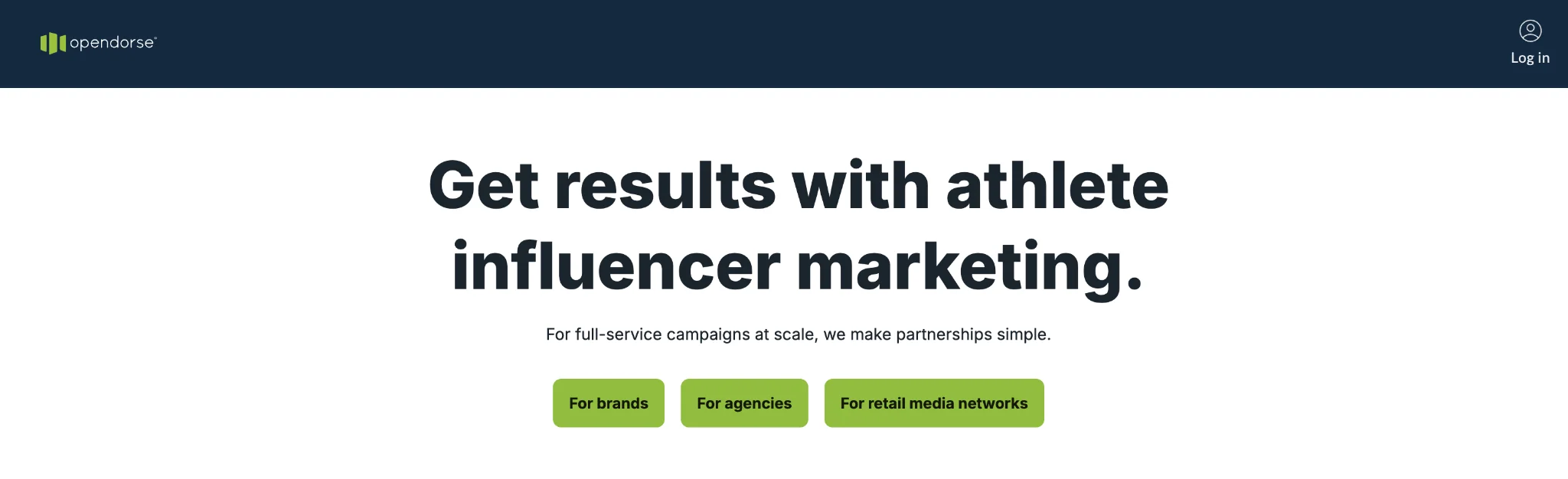
Opendorse describes itself as the leading NIL marketplace and technology company. NIL stands for name, image and likeness, which is the framework that allows college athletes in the United States to be paid for endorsements. The company sits in the middle of that market.
There are two halves to the business. One is a marketplace where brands and fans browse athletes, build deals and pay for them. The other is compliance technology used by schools and collectives to log and oversee what their athletes are doing. That second half explains a lot about how the product is designed, because compliance is the constraint the whole category lives with.
The scale is real. Opendorse puts its network at more than 200,000 athletes across every sport, school and market, including more than 150,000 college athletes, with 25 or more sports covered and a stated reach of 280 million sports fans. Pepsi, Garmin, Chipotle and PlayStation appear among the brands using it. That is a very different proposition from general creator search and discovery tools, which index social accounts rather than rosters.
Who Should Use Opendorse
The fit is defined by who your customers already care about:
- Brands selling to sports audiences: Food, drink, health, wellness and gear all reach buyers through athletes rather than through lifestyle creators.
- Regional and local brands: Athletes are concentrated by school and market, which makes geographic targeting unusually precise.
- Teams that need compliance handled: NIL deals carry disclosure obligations, and getting that wrong is a problem for the athlete as well as for you.
- Brands wanting more than social posts: Appearances, content series and unboxing are all bookable activities.
- Colleges and collectives: The oversight side of the platform is built specifically for athletic departments.
- Agencies running athlete campaigns: Managed options cover planning through to payment.
- D2C brands measuring creators on revenue: This is the group it suits least, for reasons the pricing and integration sections explain.
Key Features
The Athlete Marketplace
Brands browse and filter athletes by sport, school and market, with more than 80,000 users on the marketplace side. Searching by school rather than by follower count is the part that has no equivalent in ordinary creator tools, and it is what makes local activation practical.
The Deal Builder
A pitch brief with payment terms and activities can be put together in under a minute. Speed matters here because athlete availability moves with the season, and a deal that takes two weeks to structure often misses the moment it was built for.
Activities Beyond Social Posts
Deals can cover appearances, content series and unboxing as well as ordinary posts. An athlete turning up at a store opening is a different marketing product from a sponsored video, and both sit in the same system.
Compliance Management
Disclosure, school rules and activity logging are handled by the platform. For a brand this is genuinely valuable, because the rules that govern an athlete's eligibility are not rules your marketing team should be interpreting.
Rights Management
Usage rights are handled as part of the deal rather than negotiated separately afterwards. If you intend to run athlete content as paid media, this is the clause that decides whether you can.
Direct Messaging and Negotiation
Brands and athletes negotiate in the platform in real time. It is a one-to-one process by design, which suits high-value deals and works far less well than automated outreach when you want to contact two hundred people in an afternoon.
Campaign Reporting
A dashboard tracks deal status, costs and campaign performance. Reporting is oriented around what happened and what it cost rather than around what it earned, which is a meaningful distinction covered later.
Opendorse One
The managed tier adds exclusive collegiate athletes to existing campaigns, with athlete matching and campaign planning included and full compliance management on top. Management fees are described as waived for VIP clients, and cash commitments earn credits, so the commercial structure changes as you spend more.
Opendorse Pricing
No figures are published anywhere. What is published, in the company's own subscription terms, is the structure, and that is more than most vendors in this position disclose. The table below is what your quote will be built from.
The Subscription Fee
This is the platform access charge and the amount lives in your individual order form. Nothing about tiers, seats or campaign limits is public, so two brands may be paying very different amounts for the same screen.
The Activity Fee
This is the money that reaches the athlete, and it is agreed between you and them rather than set by the platform. It behaves like any creator rate, so it varies with the athlete's profile, the sport and what you are asking for. The important point is that it is separate from everything Opendorse charges.
The Marketplace Fee
This is the one to understand properly. It is described as a markup applied to each activity or payment, and the terms say it covers creating agreements, securing signatures, executing contracts, coordinating payment and collecting tax information.
That is real work and in NIL it carries real risk, so paying for it is not unreasonable. What you cannot do is size it. There is no published percentage and no published flat amount, so the difference between your budget and what athletes actually receive is unknown until you are quoted. For comparison, automated creator payouts elsewhere in this market are published at 0.1% to 0.4%, which lets you work the cost out in advance.
The 5% Escalator
The terms state that fees rise automatically at the end of each term at a rate not exceeding 5%. Over a three-year relationship that compounds, and it applies to fees rather than to the athlete payments, so it is a real increase in the cost of the platform itself. Ask whether it can be capped lower or fixed for the term.
Be Careful With Third-Party Figures
Percentages for Opendorse circulate in comparison posts online. Most of those posts are written by competing platforms, the numbers are not confirmed by the vendor, and pricing in this category changes. Get the marketplace fee in writing from Opendorse rather than trusting a rival's roundup.
What to Settle Before You Sign
Five answers turn this from a structure into a budget:
- The subscription fee and what it includes
- The marketplace fee, as a percentage or a flat amount, and whether it applies to the activity or the payment
- Whether the marketplace fee is charged to you, to the athlete, or to both
- Whether the 5% annual increase can be capped or fixed
- What the minimum commitment is, and whether credits from cash commitments expire
Opendorse Reviews
No verifiable rating. G2 carries no score and no vendor pricing, and the Capterra listing sits at zero reviews, so there is no independent read on reliability, support or how deals run in practice.
That gap is less surprising than it first looks. The people buying this are athletic departments, collectives and agencies rather than software teams, and those buyers do not leave reviews on software directories. It still leaves you without evidence.
What can be verified is the scale and the client roster. More than 200,000 athletes, more than 150,000 of them in college sport, 25 or more sports, and brands including Pepsi, Garmin, Chipotle and PlayStation. Companies of that size do not run compliance-sensitive campaigns on a platform that does not work.
One number deserves a caveat. Opendorse reports athlete engagement at 5.7% against 1.9% for traditional influencers, which is roughly three times higher. It is the company's own figure rather than an independent study, and the comparison group is not defined. The underlying point that athlete audiences are unusually loyal is well supported, but treat the exact multiple as marketing.
Integrations
The connection surface is built around deals and compliance rather than around commerce:
- Athlete social accounts: Deals are delivered as content on the athlete's own channels across the major networks.
- Contracting and signatures: Agreements are created and signed inside the platform as part of the marketplace fee.
- Payment and tax handling: Payment coordination and collection of tax information are handled centrally.
- Compliance reporting: Activity is logged for athletic department oversight, which is the core of the school-facing product.
- Campaign analytics: Status, cost and performance are tracked in a dashboard.
No eCommerce platform, email tool, CRM or affiliate network is named. There is no Shopify app and no published way to attribute an order in your store to a specific athlete deal.
Pros of Opendorse
Access Nobody Else Has at This Scale
More than 200,000 athletes across every school and market, searchable by sport and location, is a genuinely unique inventory. If your brand sells in specific cities or wants a particular campus, no general creator database gets you there.
The Legal Work Is Handled
Agreements, signatures, contracts, payment coordination and tax collection all sit inside the fee. NIL is the one corner of creator marketing where a mistake can cost an athlete their eligibility, and paying somebody to own that is a sensible trade.
More Than Posts to Buy
Appearances, content series and unboxing broaden what a partnership can be. A brand opening a store or running an event gets something from this platform that a purely social tool cannot offer at all.
Cons of Opendorse
Three Fees and Not One Figure
Subscription, activity and marketplace fees all apply, and none of the three is published. You cannot estimate your cost per deal, you cannot compare Opendorse against anything, and you cannot tell how much of your budget reaches the athlete until you are quoted.
The Bill Rises by Design
Fees increase automatically by up to 5% at each renewal, and the terms allow new charges to be introduced with thirty days of notice. Neither is unusual in enterprise contracts, but both belong in your model before you sign rather than in a surprise invoice in year two.
There Is Nothing Independent to Check
No usable rating exists on any major review site. The client list and athlete numbers are reassuring at the top end, and they say nothing about what a mid-sized brand experiences, how quickly deals are approved, or what happens when an athlete does not deliver.
It Measures Compliance, Not Commerce
Reporting covers deal status, cost and content performance. It does not cover discount codes, affiliate links, commission or revenue, so proving that athlete spend produced sales means building your own campaign reporting and analytics alongside it.


Is Opendorse Worth It?
If athletes are the right channel for you, this is the serious option. The roster is far larger than anything a general creator tool holds, searching by school and market opens up local activation, and having contracts, payments and compliance handled removes the part of NIL that brands are least equipped to manage themselves.
The reservations are commercial rather than technical. Three unpublished fees, an automatic annual increase, no independent review record and reporting that stops well short of revenue. For a D2C brand that judges every channel on sales, that combination is hard to defend to a finance team.
Brands weighing athlete marketing against a broader creator programme usually consider the following:
- Influencer Hero: Ties campaigns to real orders across Shopify, WooCommerce and custom builds with affiliate codes, coupon leakage prevention and brand-risk alerts, and publishes its tiers at $649, $1,049 and $2,490 a month so the whole cost is visible up front.
- Afluencer: Turns discovery into an inbound process where creators apply to your listings, which gets a shortlist moving in days rather than through individual negotiation, as its guide to creator CRM software describes.
- OpenSponsorship: Another athlete marketplace, with a wide professional and Olympic roster alongside college sport. For a brand wanting athletes outside the American college system, it is the closer fit.
- MOGL: Focuses on connecting local businesses with college athletes through simpler, smaller deals. If your activation is regional and your budget modest, it is worth the call.
- Zoomph: Measures sponsorship and social value across sports audiences rather than booking talent. For a team that needs to value what sports partnerships are already delivering, it makes more sense.
Final Thoughts
The trade here is unusually clear once you see it. You are buying access to a roster nobody else has and the legal machinery to use it safely, and you are paying for that through three fees you cannot see in advance, with an escalator attached. For a brand whose customers follow college sport, that can still be the right deal, because the alternative is negotiating compliance yourself. For a brand that measures every channel on revenue, the reporting stops in the wrong place and the cost stays fuzzy. Price the marketplace fee first, and if the answer makes athlete deals look expensive per sale, the Opendorse alternatives built around commerce will tell you more for less.