


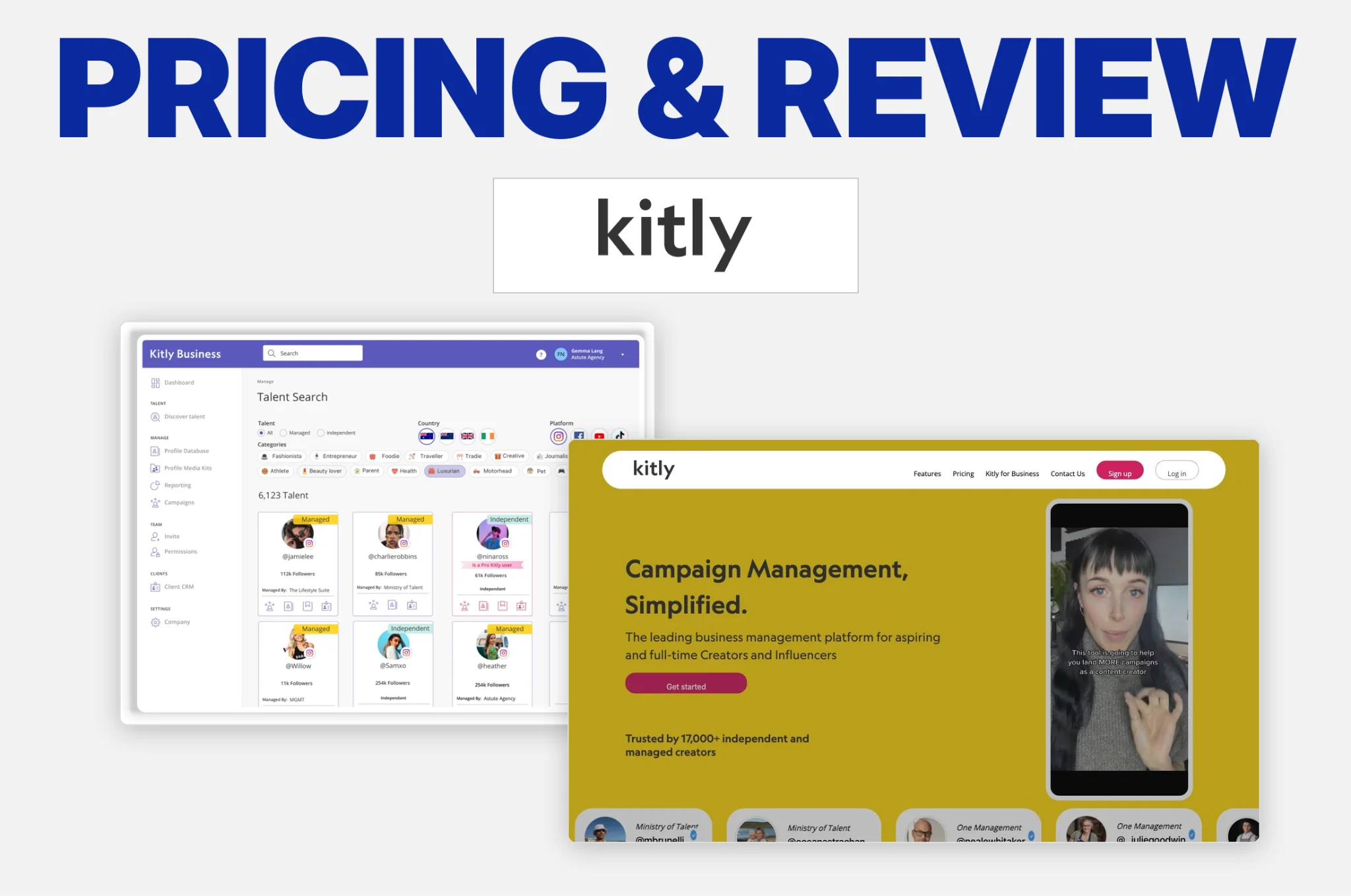
Kitly Pricing and Review: Features, Pros, Cons & Costs
The $7-a-month price you found for Kitly is not the one a brand pays. That plan is for creators, and the app it belongs to is built for them.
Brands and agencies buy a separate product called Kitly Business. It shares the data and the reporting, it runs on a different site, and it does not publish a price at all.
This review covers both, because the cheap number is the one that shows up in search and the expensive one is the one you will actually be quoted.
Kitly Overview
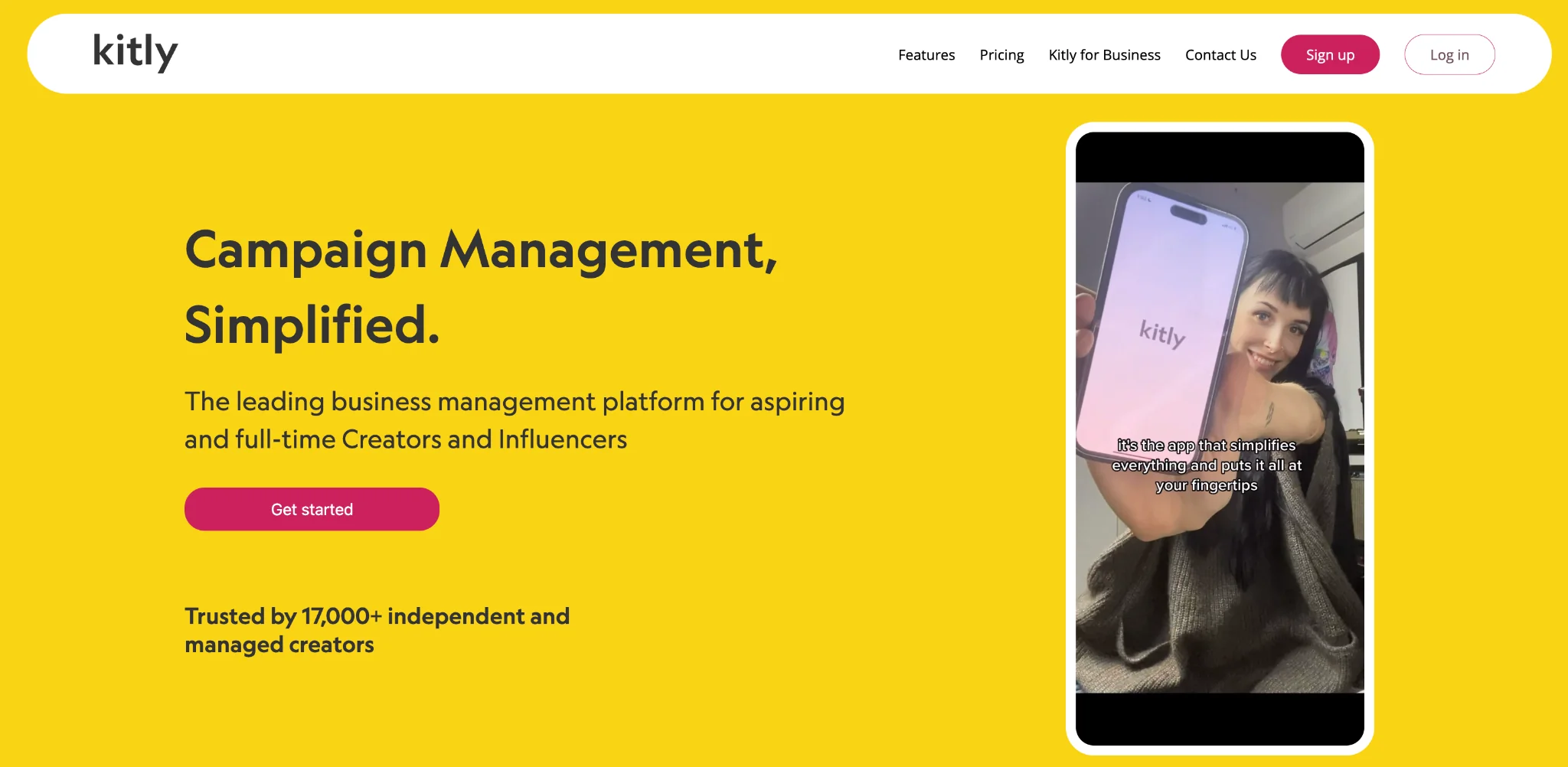
Kitly is a business management app for content creators, built by the Australian company Q-83 Technology. A creator links their social accounts, builds a live media kit, tracks campaign deliverables and sends invoices, all from their phone. More than 17,000 independent and managed creators use it.
Kitly Business is the other half. It gives brands, marketers and talent agencies access to creator discovery, a relationship manager, campaign briefs and live reports, with the numbers pulled from creators’ connected accounts rather than scraped from public pages. Australian talent agencies are the core customer base, and the company is a certified supplier to the ABC and a partner of the Australian Influencer Marketing Council.
The centre of gravity is measurement, not execution. Kitly is where a campaign is proven, not where it is run, so it works alongside the creator discovery tools and commerce systems doing the rest of the work.
Who Should Use Kitly
The fit is narrow and worth checking before you book a demo:
- Talent agencies managing rosters: This is the home crowd. Profiles, contracts, media kits and client reporting all sit in one place.
- Brands that buy through agents: If most of your deals come via talent managers, first-party numbers from their side are exactly what you want.
- Marketers who get argued with about results: Audit-grade reports settle the conversation about whether a campaign delivered.
- Teams paying for Stories placements: Story metrics vanish in 24 hours unless a creator connects their account, and this is one of the few tools that captures them properly.
- Brands with execution already covered: If outreach, gifting and payouts run elsewhere, buying measurement on its own is a defensible split.
- Brands that prefer creators to come to them: If your model is closer to booking influencers from applications, a reporting-first tool is the wrong starting point.
Key Features
Live Media Kit Builder
Creators build a media kit that updates itself from their connected accounts. They can add videos, links, rates and galleries, and use it as a link in bio. For a brand, the value is that the numbers in the deck are current instead of screenshotted three months ago.
Campaign and Deliverables Manager
Campaigns are created, deliverables attached and everything shown on a calendar. It is simple by design. There are no approval chains, no content review queues and no version control on assets.
Invoicing and Accounting Sync
Creators raise invoices in the app and reconcile paid ones into Xero, MYOB or QuickBooks. It is a genuinely useful piece of plumbing for a creator business. It also means the money flow runs creator-side, not brand-side.
Reports Built on Live Data
Post-campaign reports keep updating after you receive them, so a link sent on day two still shows the right numbers on day thirty. That is a smarter model than a static PDF, and it is one of the reasons agencies stay. Brands wanting revenue tied back to orders will still need proper campaign reporting and analytics downstream.
The Opt-In Creator Network
Creators on paid plans can list themselves in Kitly’s network to be found by brands, with higher placement on the top tier. It is opt-in, so the pool is people actively looking for work. At 17,000 creators it is a shortlist, not a market.
Kitly Business Creator Discovery
The brand product searches a much larger index, stated at over 300 million creators, with 40-plus filters. Coverage spans the major platforms. This is where a brand actually builds a list, rather than in the creator app.
First-Party Data, Including Stories
The selling point of the whole company. Metrics come from accounts the creator has connected through official APIs, which means Instagram Stories, saves and shares are visible rather than estimated. Scraped tools cannot see any of that.
Account Performance Audit Reports
An APAR audits a creator’s account performance before you buy space on it. Think of it as due diligence on a media buy. For a brand about to commit real budget to one creator, this is the feature worth paying for.
Kitly Pricing
Two products, two very different levels of transparency. The creator app publishes everything down to the cent. The brand product publishes nothing and offers a 7-day free trial instead.
Free Plan
$0 a month, and usable rather than crippled. What it covers:
- One linked social account
- Basic media kit builder
- Invoicing
- Campaign manager
Starter Plan
$89 billed annually, which the site shows as $7.42 a month, or $8.99 month to month through the app store. What it adds:
- Two linked social accounts
- Premium media kit builder with videos, links and galleries
- Account performance and tracking
- Creator network listing
Premium Plan
$190 billed annually, shown as $15.83 a month, or $18.99 month to month. What it adds:
- Unlimited linked accounts
- High priority listing in the creator network
- Weekly performance reports with benchmarking and growth
- Live post-campaign performance reports
Kitly Business
No figure is published anywhere on the site. You get a 7-day free trial and then a conversation. Third-party listings have put the entry plan near $99 a month for a capped number of creators, campaigns and reports, but the vendor does not confirm that and the trial length quoted elsewhere does not match the site either. Treat the cost as unknown until you have it in writing.
What This Actually Costs a Brand
The honest answer is that nobody can tell you from the website. That matters more than it sounds, because a capped plan in this category is priced on tracked creators, and the cap is what decides your real cost. Ask two questions on the call: how many creators the plan covers, and what happens to the price when you double that number.
The creator prices are still worth knowing. If you run an ambassador program, $190 a year is cheap enough that some brands cover Premium for their top creators so the reporting arrives clean. That is a small, sensible use of the product, and it does not need a sales call.
Kitly Reviews
The evidence base is thin. The creator app holds 3.0/5.0 (App Store, 2 ratings) on its US listing and has passed 10,000 downloads on Google Play. Neither Kitly nor Kitly Business carries a listing with meaningful review volume on the major software review sites, so there is no score with real weight behind it.
Editorial reviews are kinder, scoring the creator app around 4.3/5.0 and the business product around 4.8/5.0, and praising the reporting and ease of use. One recurring criticism is worth repeating: Kitly charges its own payment processing fee on top of Stripe’s when creators invoice through the app. On the brand side, published testimonials come mainly from Australian and UK talent agencies who single out fast support and live media kits.
Integrations
Connections are social and financial, with nothing on the commerce side. What is verifiable:
- Instagram: Official API connection that captures Stories and saves, not just public post counts.
- TikTok: Short-form performance pulled into media kits and campaign reports.
- YouTube: Long-form views and engagement tracked in the same profile.
- Stripe: Handles invoice payment, with a Kitly processing fee applied on top.
- Xero, MYOB and QuickBooks: Paid invoices reconcile into the accounting software a creator or agency already uses.
There is no Shopify or WooCommerce connection, and no affiliate or payout integration published anywhere.
Pros of Kitly
The Numbers Come From the Creator’s Account
First-party data through official APIs beats scraped estimates every time, and it is the reason Stories and saves show up at all. When a creator’s reach is being questioned in a quarterly review, the difference between verified and estimated is the difference between an answer and an argument.
Reports That Keep Updating
A shared report stays live, so late engagement and Story views land in the same link instead of a follow-up email. It removes the most tedious part of closing out a campaign, and it makes the numbers harder to dispute because nobody chose the moment the screenshot was taken.
Audit Credentials You Can Check
Certified supplier status with the ABC and partnership with the Australian Influencer Marketing Council are real, verifiable positions in a category where most claims are self-issued. For a brand in a regulated sector, that is a shortcut through a procurement conversation.
Cons of Kitly
The Product You Need Has No Price
This is the cost trap, and it is a strange one, because the cheap creator plans are published to the cent. The result is that Kitly looks like a $16-a-month tool in search results and arrives as a quoted annual contract in your inbox. Budget nothing from the public page, and get the creator cap and the renewal uplift in writing before you compare it with anything.
Built Around Talent Agencies
The workflow assumes agents, rosters and client reporting. A D2C brand running direct relationships with 200 micro creators will find the shape wrong, because what it needs is a creator CRM with outreach and automation, not a talent database with a reporting layer on top.
Nothing Happens Before or After the Report
There is no outreach engine, no gifting or product seeding, no contracts, no affiliate codes, no commission calculation and no creator payouts. Kitly proves the campaign worked. Everything that makes the campaign happen, and everything that turns it into tracked revenue, lives in other software you are also paying for.
Two Ratings Is Not a Track Record
For a platform whose entire pitch is trust and transparency, the absence of independent reviews is awkward. You cannot check support quality, reliability or renewal behaviour from the outside. Ask for two reference customers in your market and actually call them.


Is Kitly Worth It?
For what it sets out to do, it is good. First-party metrics, Story capture and live reports solve a real problem, and the audit credentials mean the numbers hold up when someone senior pushes back. If your influencer spend goes through talent agents and your headache is proving results, this is a sensible purchase.
For a D2C brand running creators directly, the fit is poor. You would be buying a measurement layer with no discovery-to-payout workflow underneath it, at a price nobody will tell you until you ask. Add a thin review base and the case gets harder, not because the product is weak, but because you cannot see enough of it from outside to justify the call.
Brands after the whole workflow rather than the reporting slice tend to compare these:
- Influencer Hero: Runs the full program in one place, pairing a 450M+ creator database with fake-follower screening, influencer outreach automation, gifting, a campaign CRM, affiliate codes and payouts.
- Afluencer: Turns discovery around so creators apply to your listings, with AI matching sorting the applicants and profile stats attached to each one.
- Aspire: Combines a creator marketplace with campaign workflows and content licensing, aimed at eCommerce brands running always-on programs.
- Upfluence: Finds creators among your own customers and email subscribers, then handles affiliate links and commission from the same tool.
- Heepsy: A straightforward search tool with audience quality and engagement filters for teams who only need the shortlist.
Final Thoughts
Check which product you are actually being sold. The creator app is cheap, public and not for you. Kitly Business is the brand version, and everything that decides its value sits behind a demo, including the creator cap and the renewal price. If verified data and audit-grade reporting are your problem, ask for those two numbers first, then weigh the answer against the Kitly alternatives that include discovery, outreach and payouts in the same fee.

.png)


.jpg)










