

Insense Pricing and Review: Features, Pros, Cons & Costs
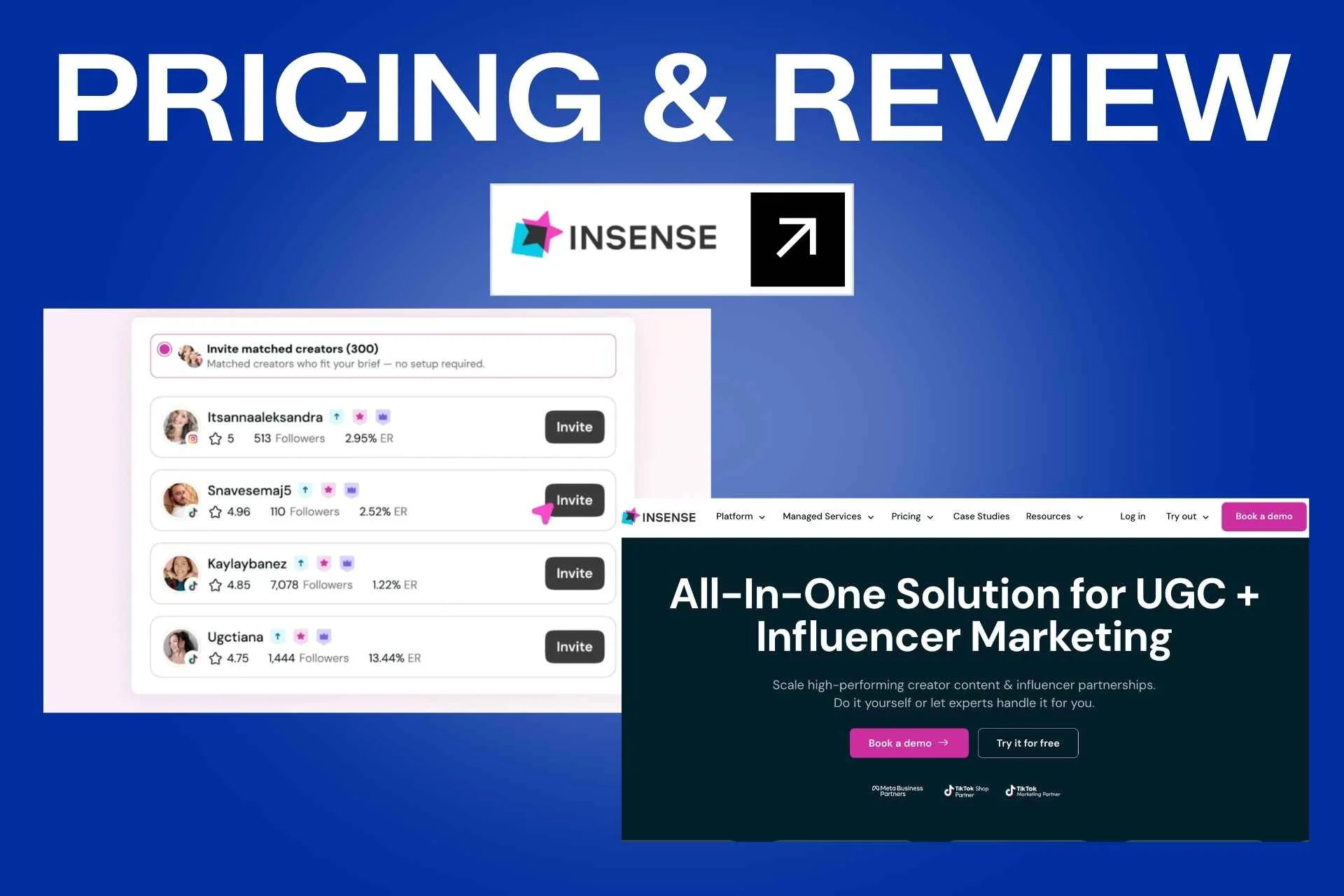
Insense is a popular influencer marketing software designed to help D2C brands source creators, produce high-quality user-generated content (UGC), and manage campaigns from a single platform. Its focus on creator collaborations and paid social content has made it a strong option for eCommerce businesses looking to scale customer acquisition through authentic content. In this review, we'll cover Insense's pricing, features, pros, cons, integrations, and customer feedback to help you determine whether it's the right fit for your business. If you're also comparing other platforms, we'll highlight where Insense alternatives may be a better choice depending on your influencer marketing goals.
Insense Overview
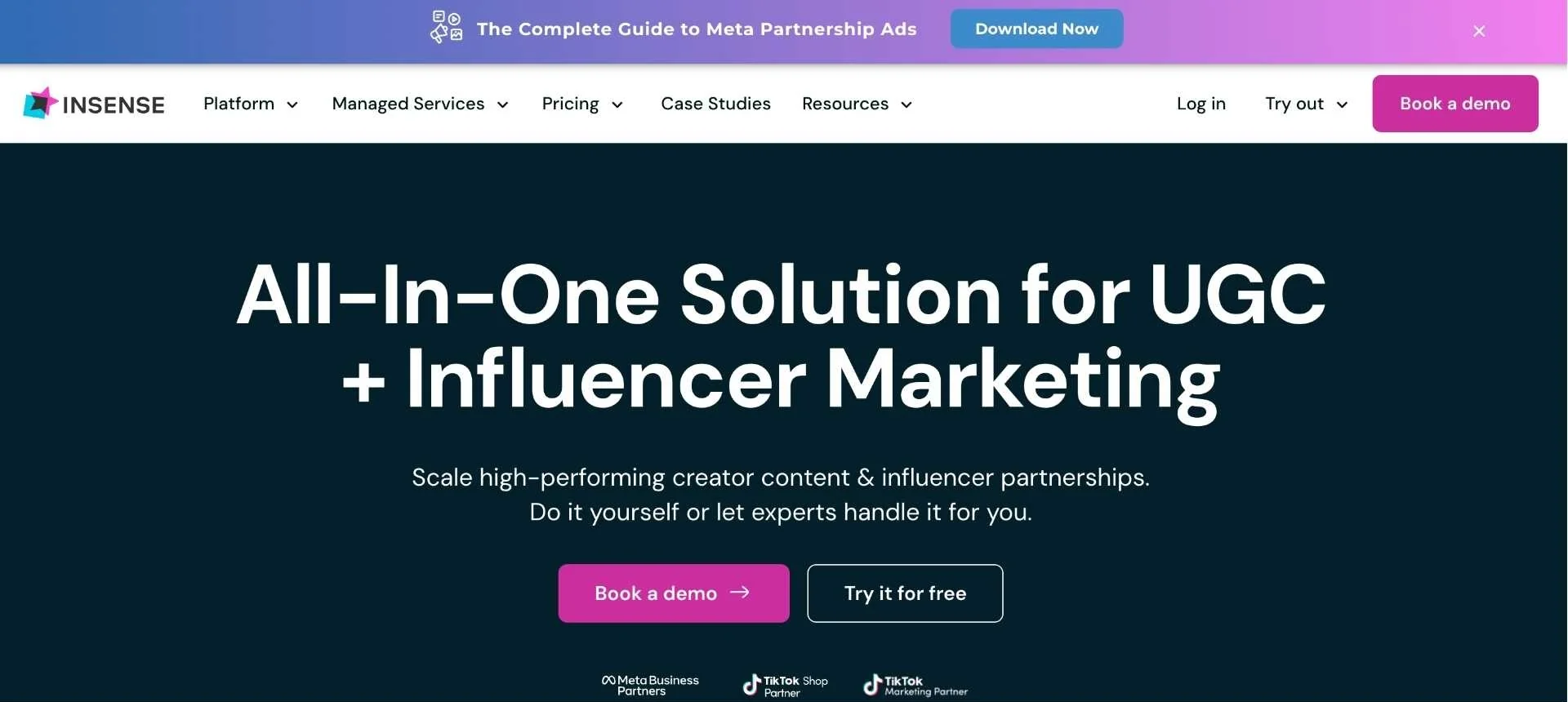
Insense is a creator marketing and UGC platform that helps brands collaborate with creators to produce authentic content for social media, paid advertising, product launches, and influencer campaigns.
Unlike traditional influencer marketing platforms that primarily emphasize influencer discovery, Insense places a strong focus on scalable UGC creation. Brands can recruit creators, manage campaign workflows, approve deliverables, process payments, and launch Meta Partnership Ads directly through the platform.
One of Insense's biggest strengths is its ability to combine influencer collaborations with paid social advertising. Brands can not only source creators but also obtain content usage rights and launch Partnership Ads through Meta with minimal operational overhead.
Who Should Use Insense
Insense isn't designed for every business. Its strongest value comes from brands that consistently invest in creator content and social advertising.
It is particularly well suited for:
- DTC (Direct-to-Consumer) brands running Facebook, Instagram, or TikTok advertising campaigns.
- eCommerce brands looking to generate large volumes of authentic UGC for paid ads.
- Beauty and skincare brands that frequently collaborate with content creators.
- Fashion and apparel companies seeking lifestyle-focused creator content.
- Consumer packaged goods (CPG) brands launching products through creator campaigns.
- Subscription brands needing fresh creative assets every month.
- Marketing agencies managing influencer campaigns across multiple client accounts.
- Small and mid-sized businesses that want an all-in-one workflow without building an internal influencer management process.
It may be less suitable for businesses primarily seeking enterprise-level influencer analytics, affiliate management, or complex CRM functionality.
Key Features
Creator Marketplace
Insense gives brands access to a vetted marketplace of over 75,000 creators across more than 35 countries. Rather than searching millions of public profiles, brands browse creators who have already applied and been approved to work through the platform. This generally results in higher response rates and smoother collaborations while reducing time spent on outreach.
UGC Campaign Management
The platform is built around structured campaign workflows. Brands can create campaigns, define creative briefs, specify deliverables, establish deadlines, review applications, communicate with creators, approve content, and monitor project progress from one dashboard.
Influencer Recruitment
Besides using the creator marketplace, brands can invite external Instagram and TikTok creators into campaigns. This flexibility allows companies to continue working with existing creator relationships while still benefiting from Insense's campaign management tools.
Meta Partnership Ads Integration
One of Insense's standout capabilities is its native Meta Partnership Ads integration.
Brands can request advertising permissions directly through the platform, enabling them to turn creator-generated content into paid advertisements without complicated manual permission requests.
Direct Creator Communication
Each campaign includes built-in messaging between brands and creators.
Rather than switching between email, Instagram DMs, and spreadsheets, conversations remain attached to the campaign, making project management considerably easier.
Secure Payments
Insense handles creator payments directly through the platform.
Brands pay creators securely after approving deliverables, reducing administrative work while providing creators with payment protection.
Simplified Reporting
Campaign dashboards allow brands to monitor campaign status, creator performance, deliverable completion, and overall campaign progress.
While reporting isn't as advanced as some enterprise influencer platforms, it covers the operational metrics most brands need for day-to-day campaign management.
Audience Insights
Brands receive audience information that helps evaluate creators before collaboration, making it easier to select creators whose audiences align with campaign objectives.
Lifetime Content Usage Rights
One particularly attractive feature is lifetime usage rights for content created through the platform (subject to campaign terms). This allows brands to reuse creator content across paid advertising, websites, email marketing, and organic social media without negotiating additional licensing in many cases.
Agency Management
Agency plans support multiple brands, additional users, and unlimited campaigns, making the platform suitable for agencies managing creator campaigns for multiple clients simultaneously.
Insense Pricing
Insense offers three primary self-service plans.
Trial Plan
- Starts from $650/month
- One-month trial
- 1 user seat
- 1 brand
- Up to 1 campaign
- Hire up to 10 creators
- 20% marketplace fee on creator payments
- Creator payments billed separately
- Ideal for businesses wanting to test the platform before committing.
Brand Plan
- Starts from $500/month
- Billed quarterly ($1,500 every three months)
- 2 user seats
- 1 brand
- Unlimited campaigns
- Unlimited creator hiring
- 10 Meta Partnership Ads connections
- Dedicated customer support
- 10% marketplace fee
- Creator payments not included
- Automatically renews every three months.
Agency Plan
- Starts from $800/month
- Billed quarterly ($2,400 every three months)
- 4 user seats
- Up to 5 brands
- Unlimited campaigns
- Unlimited creators
- Unlimited Meta Partnership Ads connections
- Dedicated customer support
- 7% marketplace fee
- Creator payments not included
- Designed for agencies and businesses managing multiple brands.
Additional Costs
Brands should also consider:
- Marketplace transaction fees (7%–20% depending on plan)
- Creator compensation (paid separately)
- Additional user seats
- Additional brand workspaces
- Additional Meta Partnership Ads connections if needed.
Free Trial: No permanent free trial is available, although the one-month Trial plan allows companies to evaluate the platform before moving to a recurring subscription. (G2)
Insense Reviews
4.5/5.0 (G2)
Integrations
- Shopify: Connect your Shopify store to automatically send products to creators, generate orders in bulk, and track fulfillment status directly inside Insense without switching platforms.
- Meta (Facebook & Instagram): Launch Meta Partnership Ads using creator content, manage ad permissions, and amplify high-performing influencer content directly from your campaigns.
- TikTok: Run TikTok creator campaigns and activate TikTok Spark Ads by turning organic creator posts into paid advertisements while maintaining social proof and engagement.
- PayPal: Pay creators securely through integrated payment workflows, simplifying compensation while reducing manual administrative work.
- Stripe: Process creator payments securely through Stripe-backed payment infrastructure, allowing brands to manage payouts and campaign finances from one platform.
Pros of Insense
Native Meta Partnership Ads Workflow
One of Insense's biggest differentiators is its native integration with Meta Partnership Ads. Brands can request advertising permissions, launch creator whitelisting campaigns, and turn organic creator content into paid social ads without leaving the platform. This significantly reduces the manual work normally involved in creator licensing and ad activation.
Built Specifically for Scalable UGC Production
Unlike traditional influencer platforms that primarily focus on influencer discovery, Insense is purpose-built for producing large volumes of user-generated content. Brands can recruit creators, manage revisions, approve deliverables, secure usage rights, and receive ready-to-use creative assets that can immediately be used across paid advertising, websites, email marketing, and organic social channels.
End-to-End Creator Workflow with Built-In Payments and Content Rights
Insense combines creator sourcing, campaign management, messaging, approvals, secure payments, and lifetime content usage rights into one workflow. This removes much of the administrative work that usually requires multiple tools and allows marketing teams to launch campaigns much faster.
Cons of Insense
Limited Enterprise Analytics
While Insense provides campaign reporting and creator performance metrics, it lacks the deep benchmarking, competitive intelligence, and advanced ROI analytics available in enterprise influencer marketing platforms, making it less suitable for highly data-driven organizations.
Marketplace Fees Increase Overall Campaign Costs
In addition to the platform subscription, brands pay marketplace transaction fees on every creator payment. As campaign volume increases, these fees can significantly increase the total cost of running creator programs.
More Focused on UGC Than Traditional Influencer CRM
Businesses looking for advanced influencer relationship management, affiliate management, large creator databases, or long-term ambassador program management may find Insense less comprehensive than platforms designed specifically for enterprise influencer marketing.
Limited Customization for Complex Workflows
Brands running highly customized approval processes, sophisticated reporting requirements, or multi-market enterprise campaigns may find certain workflow automations and reporting options less flexible than specialized enterprise solutions, leading some larger teams to evaluate alternative platforms.


Is Insense Worth It?
For brands focused on creating high-quality UGC and running creator-powered paid social campaigns, Insense is one of the strongest platforms available. Its streamlined workflow, vetted creator marketplace, Meta Partnership Ads integration, and end-to-end campaign management make it particularly attractive for DTC and eCommerce businesses that rely heavily on Facebook, Instagram, and TikTok advertising.
However, Insense isn't the ideal solution for every business. Brands looking for advanced influencer CRM capabilities, affiliate program management, enterprise-grade analytics, or access to massive public influencer databases may eventually outgrow the platform. The additional marketplace fees can also increase campaign costs for companies running creator collaborations at scale.
If your primary objective is producing authentic creator content for social media and paid advertising, Insense is an excellent investment. If your influencer marketing strategy requires more advanced discovery, relationship management, affiliate tracking, or enterprise reporting, there are several strong alternatives worth considering.
Some popular alternatives include:
- Influencer Hero – Best for brands looking for an all-in-one influencer marketing platform with advanced influencer CRM, AI-powered outreach, affiliate management, Shopify and WooCommerce integrations, campaign automation, and detailed ROI reporting.
- Ainfluencer – A free-to-use influencer marketplace that is ideal for businesses wanting to discover creators, manage campaigns, and leverage escrow-protected payments without paying a software subscription.
- GRIN – A strong option for established DTC and eCommerce brands that require deep CRM functionality, product gifting, affiliate marketing, and creator relationship management.
- Modash – Best suited for brands that prioritize influencer discovery through one of the largest public creator databases, combined with excellent audience analytics and Shopify integration.
- Aspire – A comprehensive platform offering influencer discovery, inbound creator applications, product gifting, campaign automation, and first-party social platform data for growing brands and agencies.
- CreatorIQ – Ideal for enterprise organizations that need sophisticated analytics, extensive workflow customization, global creator management, and highly scalable influencer marketing operations.
Final Thoughts
Insense is a strong choice for brands that prioritize creator-generated content, streamlined campaign management, and paid social advertising, particularly for DTC and eCommerce businesses. While its focus on UGC production and Meta Partnership Ads makes it stand out, brands requiring more advanced influencer CRM, enterprise analytics, or affiliate management may find better-fitting solutions elsewhere. If you're still evaluating your options, be sure to check out our guide to the best Insense Alternatives, where we compare the top platforms to help you find the right fit for your influencer marketing strategy.

.png)


.jpg)