


Influenster Pricing and Review: Features, Pros, Cons & Costs
The two hundred reviews sitting under a product on a Walmart or Target page did not appear on their own. A large share of that volume on new launches is manufactured, in the literal sense: a brand ships free product to a few thousand consumers, those consumers test it and write about it, and the reviews land on the retailer page where the buying decision actually happens. Influenster is one of the biggest engines behind that loop.
Which makes the pricing question harder than it looks, because there is no product called Influenster that a brand can buy. Influenster is the consumer-facing review community, owned by Bazaarvoice since 2019. What a brand purchases is Bazaarvoice Sampling, a module inside a wider Bazaarvoice contract that draws on the Influenster member base. Search for a price and you will find a book-a-call button.
This review covers what that actually costs once every layer is counted, what the platform does well enough to justify it, and where the model works against a D2C brand rather than for it.
Influenster Overview
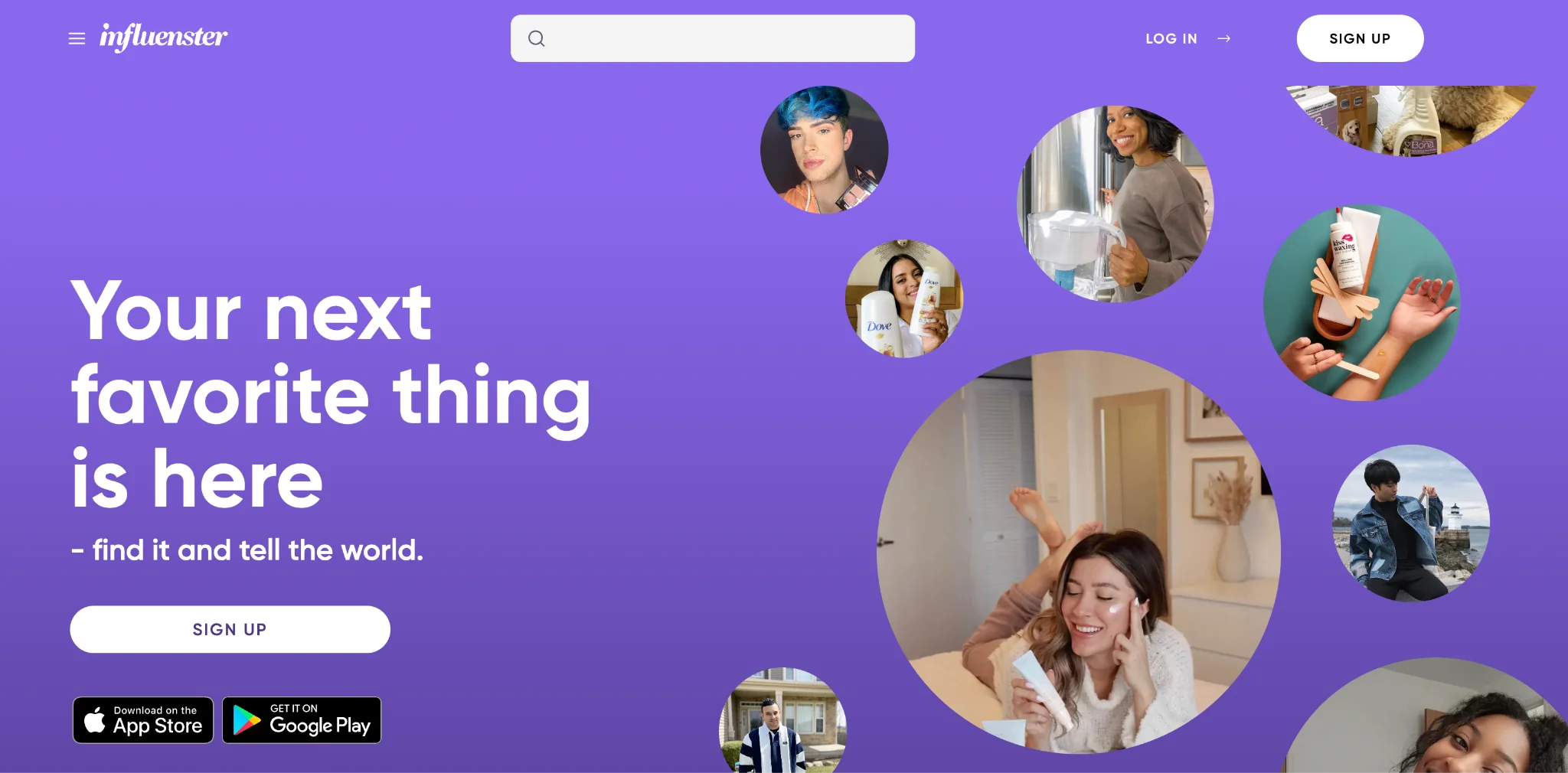
Influenster launched in 2010 as a product discovery and review community, built around the VoxBox: a box of free samples sent to members who then review what they received. Bazaarvoice acquired it in 2019 and relaunched the app in 2022, folding the community into its ratings, reviews and retail syndication business.
Bazaarvoice cites between 6.5 million and 9 million members across its own pages, with 7.5 million the figure it repeats most often. The community skews toward beauty, personal care, grocery, beverages and household categories, and it is heavily US-centric. Members are segmented on what Bazaarvoice describes as up to 1,000 data points each, covering demographics, dietary needs, skincare concerns, shopping habits and which retailers they actually shop.
The mechanism that matters commercially is not the sampling itself, it is what happens afterward. Reviews generated by a campaign syndicate automatically onto retailer product pages across a network Bazaarvoice puts at 2,300 or more retailers. Bazaarvoice reports 170,000 sampling reviews syndicated to that network every month. If your products sell through Walmart, Target, Sam’s Club, Lowe’s or Macy’s, that distribution is the entire value proposition. If they do not, you are paying for a pipe you cannot use.
Who Should Use Influenster
The fit here is narrower than the marketing suggests, and it is decided almost entirely by where your products are sold.
- CPG brands with big-box retail distribution. Bazaarvoice runs dedicated brand-invite programs for Walmart, Target, Sam’s Club, Lowe’s, Macy’s and JCPenney. Filling those product pages with review volume is the core economic case.
- Brands launching new SKUs that need reviews on day one. A product page with zero reviews converts badly, and sampling is the fastest legitimate way to fix that before a retail launch window closes.
- Beauty, personal care and grocery brands. These are the categories the Influenster member base actually indexes on, and targeting quality falls off outside them.
- Brands with physical inventory and margin to give away. You supply and pay for every unit, so the model only works when your COGS can absorb a few thousand free products.
- Teams selling products that cannot be shipped. Digital sampling handles perishables, bulky goods, apparel that needs sizing and age-restricted categories through coupon redemption instead of fulfilment.
Key Features
Community Sampling and VoxBox Campaigns
The flagship mechanic. You define targeting criteria and supply the units, Bazaarvoice matches products to Influenster members through its personalization algorithm, ships them, and prompts members to review. Bazaarvoice reports an 85% content completion rate within eight weeks and says 77% of samplers say they are likely to repurchase. You do not hand-select individuals, which is the trade-off for scale.
Digital Sampling
A version with no shipping at all. Members opt into a campaign in the app, redeem a custom coupon code in-store or online, buy the product themselves, then review it. It exists for categories that cannot go in a box, and it also removes the fulfilment cost layer, which makes it the cheaper mechanic when your product qualifies.
First-Party Member Targeting
The genuinely differentiated capability. Segmentation runs on Bazaarvoice’s own member data rather than inferred social signals, so you can request reviews from people who shop a specific retailer, follow a competitor brand, or match a dietary or skincare profile. Retailer-loyalist targeting is the one that changes outcomes, because it puts reviews in front of the shoppers already browsing the page you are trying to fill.
Retail Syndication Network
Reviews flow from your own site out to retailer product detail pages automatically. Bazaarvoice claims 2,300 or more retailers in the network and 2.3 billion monthly shoppers across it. This is also where the real cost pressure comes from, since syndication scales with the number of retail destinations and SKUs you push to.
Always-On Content
Instead of shipping anything, you activate a feed of reviews members are already writing organically inside Influenster. Bazaarvoice says 98% of community content is organic and non-incentivized. Pacifica Beauty generated more than 2,000 reviews across roughly 200 products this way, which then syndicated to over 10,000 reviews across 12 retailers.
Quality Control and Brand Safety Settings
Members receive campaign-specific guidance, including photo examples and explicit do and do-not instructions, before creating anything. Brands in regulated categories can suppress photo and video collection entirely within a review campaign, which matters for supplements, alcohol and pharma where consumer-shot imagery creates compliance exposure.
Self-Serve Campaign Portal and Reporting
Campaigns are requested from a self-serve portal rather than through an account manager each time. Reporting covers in-flight and completed campaigns, completion rates for both in-network and out-of-network reviews, and real-time visibility into which retailer sites a campaign’s content has syndicated to.
Social UGC Rights and Shoppable Distribution
Rights to campaign social content are acquired automatically with product tagging attached, and that content can be pushed live as shoppable media on your own site. It is a lighter version of what a dedicated UGC content library does, useful for on-site merchandising but not built for feeding paid social at volume.
Influenster Pricing
There is no rate card. Bazaarvoice publishes tier names for its ratings and reviews products with no dollar figures attached, and for sampling it publishes nothing at all beyond a contact form. The one price Bazaarvoice has published anywhere is $6,500 per year for open-network review syndication, and that product is not sampling.
What can be established is the shape of the cost, and it comes from more than one place.
The Platform Fee
- Quote only. No tiers, no entry price, no published minimum spend or minimum unit count for a sampling campaign.
- Sampling attaches to a wider Bazaarvoice contract rather than selling as a standalone product, and buyers consistently report it billed as a separate line from the base licence.
- Cost scales with SKU count and with the number of retail destinations you syndicate to, which is why the same campaign costs one brand far more than another.
- Bazaarvoice Connections, the question-and-answer product on retailer pages, has a free basic tier. That is the only free component anywhere in the stack.
Product, Shipping and Fulfilment
- Brands buy the sampling units outright. Bazaarvoice states plainly that the brand is responsible for the cost of the units, the COGS and the shipping.
- Fulfilment through Bazaarvoice is available for an additional fee that is scoped per campaign against product quantity, dimensions and weight. No rate is published.
- Plan for shrinkage. Bazaarvoice’s own campaign planning guidance assumes a 70% to 90% participation rate and recommends building a 2x member cushion for targeting misalignment.
- Campaign scope is capped in practice. Bazaarvoice advises limiting a campaign to 32 products or fewer, with most clients capping members at two products each.
What Brands Actually Pay
- Procurement benchmark data across anonymized Bazaarvoice transactions puts the median annual contract at roughly $36,000, with an observed range of about $12,300 to $98,800.
- A second independent spend dataset lands in the same territory, averaging around $31,500 a year for companies between 50 and 1,000 employees, and roughly $170,800 at enterprise scale.
- The same dataset shows small and mid-market pricing rising sharply year over year, which makes renewal the moment to negotiate rather than the moment to relax.
- Three-year commitments are reported to cut 15% to 25% off annual pricing, meaning the discount is bought with more lock-in, not less.
Contract Terms and Time to Value
- Median implementation runs about three months, and buyer-reported time to ROI is around 20 months.
- Terms are annual with auto-renewal, and reviewers repeatedly describe difficulty exiting agreements.
- Average negotiated discount is reported at roughly 10%, which is low and reflects weak buyer leverage.
- Individual sampling campaigns run on a standard four-week cadence, so a program is a quarterly rhythm rather than an always-on tap.
Influenster Reviews
One thing to understand before reading any rating: there is no brand-side review listing for Influenster or for Bazaarvoice Sampling anywhere. The TrustRadius page for Influenster exists and carries zero reviews. Every score below belongs to Bazaarvoice as a whole, and the volume is dominated by ratings, reviews and syndication rather than sampling.
- 4.2/5.0 (G2, 809 reviews)
- 4.3/5.0 (Capterra, 32 reviews, low review volume, and the listing covers the Connections product rather than sampling)
- 7.7/10 (TrustRadius, 79 reviews and ratings)
Reviewers are consistent about what works: the syndication network is the most praised capability by a wide margin, followed by centralized management of reviews across many retail partners and the quality of account management when you get a good rep. They are equally consistent about the friction. Cost comes up constantly, alongside inflexible auto-renewing contracts, a demanding implementation, an interface described as outdated, reporting that breaks or loads slowly, and manual SKU mapping work that never quite goes away. Several reviewers note that major retailers effectively require Bazaarvoice, which they say removes their ability to negotiate at all.
Integrations
Bazaarvoice publishes a partner directory with more than 60 entries spanning eCommerce platforms, CRM, marketing automation and agencies, which is a wider surface than most sampling tools offer. The caveat worth stating plainly: the directory does not specify which integrations reach the Sampling module rather than ratings and reviews, so treat the list as a Bazaarvoice capability rather than an Influenster one.
- Shopify. Syncs product catalog and review display into the storefront, so syndicated review content renders on your own product pages.
- Klaviyo. Pushes review and rating data into email and SMS flows, letting post-purchase review requests run off the same segmentation as the rest of your lifecycle program.
- Attentive. Extends review collection prompts into SMS, which lifts response rates on post-purchase requests.
- Zendesk. Routes customer questions and review responses into the support queue rather than leaving them in a separate moderation tool.
- Walmart Marketplace. Bazaarvoice is a listed Walmart solution provider, which is the integration that matters most given where the syndication value sits.
Pros of Influenster
The Syndication Network Is a Genuine Moat
No competitor can replicate 2,300 retailer connections and the automated flow of review content onto those product pages. For a brand whose growth depends on conversion at Walmart or Target, this is not a feature comparison, it is the only path that exists at scale. That is also why reviewers rank it first even when they are unhappy about everything else.
Targeting Built on Data You Cannot Buy Elsewhere
Most sampling and seeding tools target on public social signals. Bazaarvoice targets on first-party member data collected over more than a decade, which lets you request reviews specifically from people who shop a given retailer or already use a competitor product. That precision is the difference between review volume and review volume that converts.
Volume and Speed an In-House Program Cannot Match
Bazaarvoice reports 500,000 pieces of UGC created monthly for brands and around a million new reviews entering the community each month. A single campaign turning out thousands of reviews inside eight weeks is not something a brand replicates with a spreadsheet and a shipping account, and the vendor estimates 34 hours saved per campaign against manual coordination.
Cons of Influenster
You Pay for the Same Campaign Three Times
The platform fee is only the first line. You also buy every unit at your own COGS, pay the shipping to send them out, and pay again if you want Bazaarvoice to handle fulfilment, at a rate scoped per campaign and never published. A brand modelling this on the software fee alone will underestimate the real number badly, and the product cost usually turns out to be the largest of the three.
Nothing About the Price Is Published
No tiers, no entry point, no minimum unit count, no minimum spend, no contract length. The only figure Bazaarvoice has ever published is $6,500 a year for a syndication product that is not sampling. Combined with a three-month implementation and an average negotiated discount of about 10%, that leaves a buyer committing to an annual contract they cannot benchmark before entering a sales cycle.
This Is Not Influencer Marketing
Influenster members are reviewers, not creators you brief, negotiate with and build a relationship with. There is no discovery database, no outreach sequencing, no creator CRM, no affiliate links, no commission tracking and no creator payouts. Bazaarvoice does sell a separate creator marketing product, acquired in 2023, but it is a different line item. Brands regularly buy sampling expecting an influencer program and get a review-generation service instead.
Weak Leverage, Long Lock-In
Because several major retailers effectively mandate Bazaarvoice, brands enter the negotiation without a credible alternative, and reviewers describe the result in exactly those terms. Contracts renew automatically, exits are reported as difficult, and the published route to a better rate is a three-year commitment. Small and mid-market pricing has also been rising steeply year over year, so the second renewal tends to hurt more than the first.


Is Influenster Worth It?
For a CPG brand with real shelf space, yes, with conditions. The syndication network does something nothing else does, the targeting is better than anything built on public social data, and a launch SKU with 300 reviews on its Walmart page converts differently than one with nine. The reviewer consensus supports that: the complaints are about cost, contracts and interface, not about whether the mechanism works.
For a D2C brand selling primarily on its own site, the maths gets hard to defend. You are paying enterprise rates plus product plus shipping for a distribution network you barely touch, and the platform gives you nothing on the creator side. No discovery, no outreach, no affiliate revenue, no relationship you own after the campaign closes. If the goal is attributable revenue from creators rather than review volume on a retailer page, this is the wrong category of tool.
If that describes your program, these platforms are worth looking at instead:
- Influencer Hero. An all-in-one platform covering discovery across eight social networks, fake-follower screening, automated outreach and drip sequences, a creator CRM, affiliate links and payouts, and product seeding with automated gift fulfilment through Shopify, WooCommerce or a custom store via script. Pricing is publicly listed from $649 a month, so you can budget without a sales call.
- Afluencer. A marketplace where creators apply to campaign listings you post, which solves creator supply rather than infrastructure. Plans start at $49 a month.
- Statusphere. Micro-influencer seeding at volume with automated creator matching and guaranteed content deliverables, closer to the sampling model but built around creators posting rather than reviewers writing.
- Insense. A creator marketplace focused on UGC and paid-ad assets, with usage rights and Spark Ads whitelisting handled inside the platform.
- Trend.io. A vetted creator network for brands that mainly need a steady supply of content, with a simple brief-and-receive workflow and no long-term commitment.
Final Thoughts
Before you take a call, work out one number: what a single campaign costs you all-in, units and shipping and fulfilment included, divided by the reviews you realistically expect after the 70% to 90% participation rate is applied. That cost per review is the only figure that lets you compare this against anything else, and it is the figure the sales conversation will not start with. If it lands well against your conversion lift on a retailer page, Bazaarvoice is difficult to argue with. If your revenue happens on your own site, the Influenster alternatives built around creator relationships and tracked sales will do more for the same budget, and they will tell you what they cost before you get on the phone.

.png)


.jpg)










