

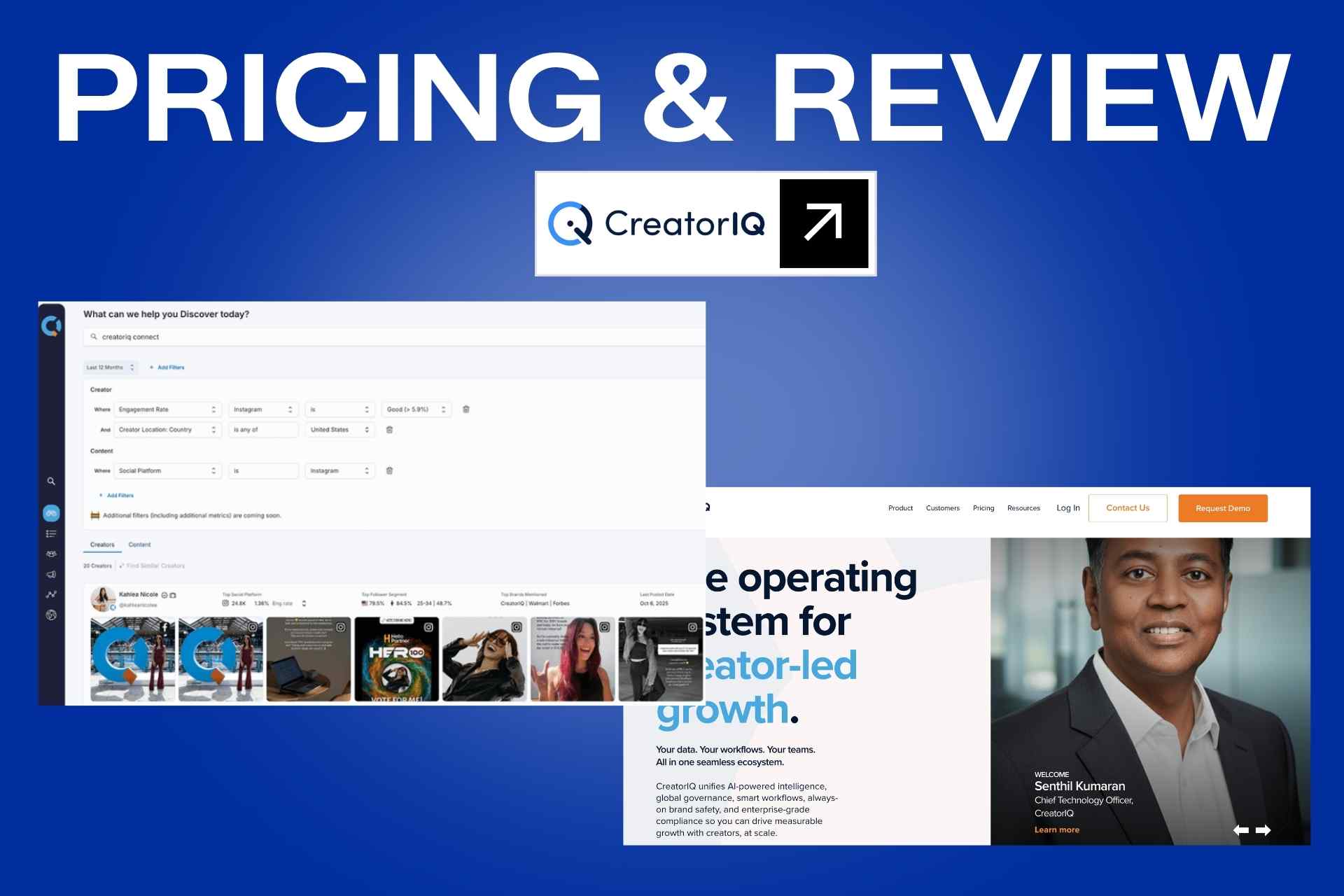
CreatorIQ Pricing and Review: Features, Pros, Cons & Costs
CreatorIQ is one of the most established influencer marketing software platforms, helping brands manage everything from creator discovery and campaign execution to reporting, payments, and relationship management. Trusted by global brands and large marketing teams, it is designed to support influencer programs at scale with advanced workflows and analytics. However, its enterprise focus and premium pricing mean it may not be the right fit for every D2C brand. In this review, we'll break down CreatorIQ pricing, features, pros, cons, and user feedback to help you determine whether it's the right platform for your business or if one of the leading CreatorIQ alternatives may be a better fit.
CreatorIQ Overview
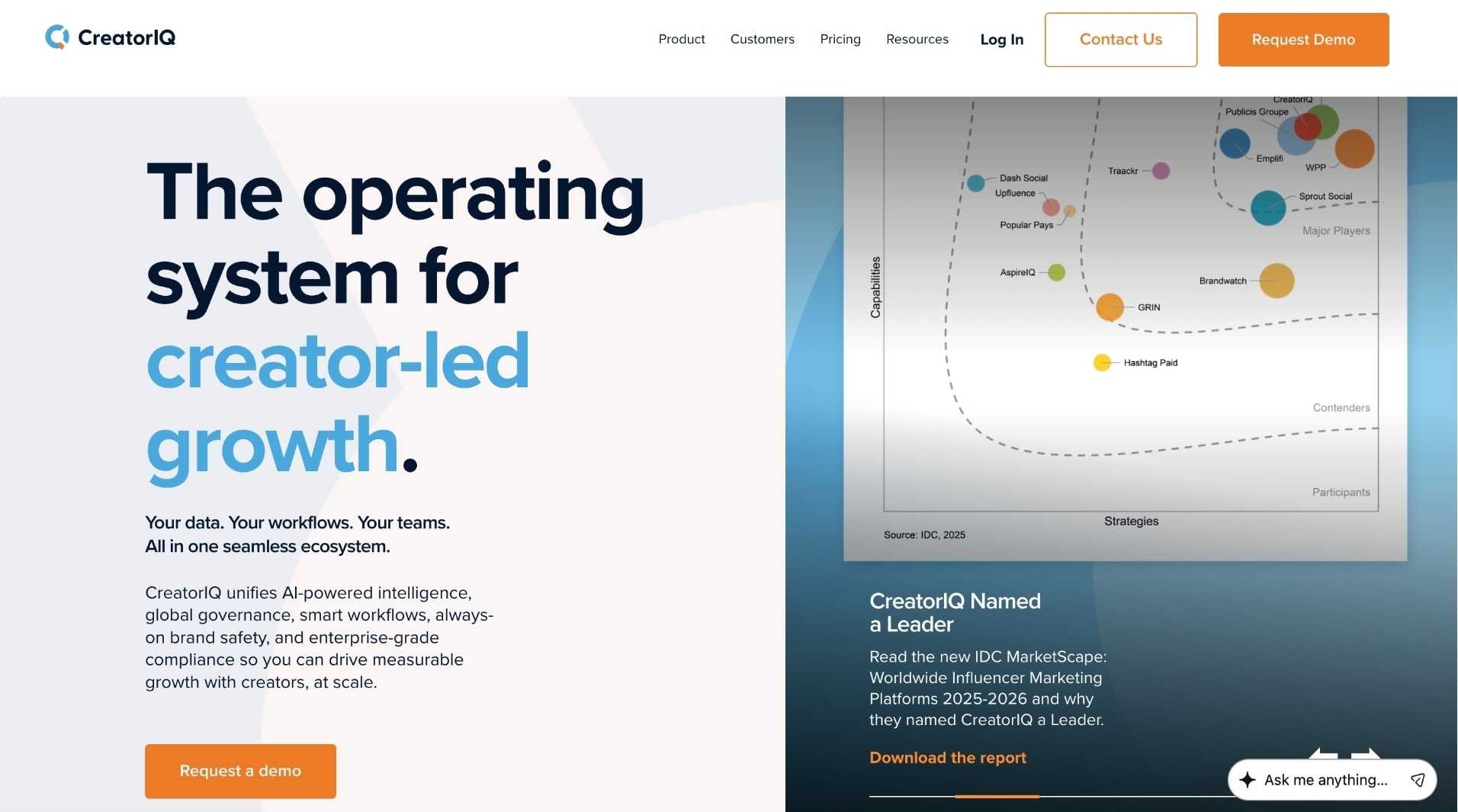
CreatorIQ is an enterprise influencer marketing platform built for brands that need to manage creator discovery, campaign execution, approvals, payments, reporting, and creator relationships in one system. The platform is positioned for larger creator programs, with support for major social channels, centralized creator data, customizable reporting, and integrations with commerce, analytics, payment, and contract tools. CreatorIQ’s own positioning emphasizes global collaboration, brand-safe creator partnerships, AI-powered similar creator discovery, and centralized campaign management.
Who Should Use CreatorIQ?
CreatorIQ is best suited for mid-market, enterprise, and global brands running structured influencer programs across multiple campaigns, teams, regions, or product lines. It is especially relevant for D2C and consumer brands that need deeper governance around creator approvals, campaign briefs, content usage, payments, compliance, and performance reporting.
It is a strong fit for brands that already work with dozens or hundreds of creators per year, need stakeholder approval workflows, and want live reporting dashboards instead of spreadsheets. It is less ideal for small brands, early-stage startups, or teams looking for a low-cost monthly influencer discovery tool.
Key Features
Influencer Discovery
CreatorIQ lets brands search public creator profiles across Instagram, TikTok, YouTube, Facebook, Pinterest, Twitch, and X. Search filters include follower count, engagement rate, platform, location, audience demographics, brand mentions, keywords, hashtags, niche topics, and semantic AI searches such as “home chefs under 100K followers.”
Audience and Content Filtering
Teams can filter creators by audience country, city, ethnicity, interests, activeness, gender, age, and brand affinities. Content-level filters allow brands to search for creators who mention specific products, competitors, hashtags, or campaign-relevant topics.
Creator CRM
CreatorIQ includes a private creator network where brands can store creators, apply tags, add notes, track past campaigns, save contact information, and import or export creator data. This makes it useful for long-term ambassador programs and repeat creator partnerships.
Campaign Management
Brands can create campaigns from scratch, duplicate past campaigns, or use templates. Campaigns can include deliverables, content requirements, briefs, hashtags, product guidelines, approval settings, and creator-specific tasks.
Creator Approval Sheets
CreatorIQ’s “one-sheet” workflow lets teams create shareable creator approval pages with performance metrics, audience data, content examples, comments, and approve/reject actions. Stakeholders can access these via live links without needing a CreatorIQ login.
Content Approval and Creator Dashboard
Creators receive a campaign details page where they can view briefs, deliverables, compensation, gifts, messages, and upload content for approval. This reduces back-and-forth through email or DMs.
Gifting and Shopify Support
CreatorIQ integrates with Shopify for gifting workflows, including shipping address collection, product information, shipment status, and tracking links.
Creator Payments
Brands can fund CreatorIQ once, and CreatorIQ distributes payments to creators while handling tax documentation. Creator payouts are free for the first $100,000 per year, then subject to a 2% service fee.
UGC and Content Library
Campaign content is automatically collected, downloadable, and can be organized for reuse. Brands can also request usage rights and track repurposed content performance where applicable.
Reporting and Analytics
CreatorIQ offers configurable live dashboards that track campaign performance, creator-level results, engagement, reach, impressions, EMV, top content, top creators, date ranges, platforms, and content types. Reports can be shared through live links.
Creator Connect
Creator Connect is an optional branded creator signup page where creators can apply to work with a brand, complete questionnaires, and enter the CRM after approval.
CreatorIQ Pricing
CreatorIQ does not publish standard pricing on its public website and directs buyers to request pricing through a sales call. Based on the available pricing information, CreatorIQ is sold on annual contracts only, with no free trial mentioned.
- Basic: $35,000/year, includes 1,000 creators in CRM and 3 seats.
- Standard: $50,000/year, includes 2,500 creators and 5 seats.
- Professional: $90,000/year, includes 5,000 creators and 10 seats.
- Enterprise: $200,000/year, includes 7,500 creators and 20 seats.
- Creator Connect Add-On: $15,000/year.
- Creator Payments: Free processing for the first $100,000 in annual creator payouts, then 2% service fee.
Capterra lists CreatorIQ’s starting price at $36,000 per user per year and indicates that a free trial is not available.
Reviews
4.4 / 5.0 (Capterra)
Integrations
- Shopify: Manage creator gifting, shipping details, product information, and campaign-related fulfillment tracking.
- DocuSign: Standard integration for contracts and branded templates across packages.
- PayPal: Listed as an integration for payment workflows and creator-related financial operations.
- Google Analytics 360: Connect campaign activity with broader analytics and performance measurement.
- Instagram / TikTok / YouTube APIs: Pull campaign and creator performance data directly into live reports and dashboards.
Pros of CreatorIQ
Enterprise-grade reporting and live stakeholder links
CreatorIQ’s reports are highly configurable, update in real time through social platform APIs, and can be shared through public live links, making it easier to present influencer performance to executives or cross-functional teams.
Strong creator approval and collaboration workflows
The one-sheet approval system lets teams review creators with audience data, sample content, comments, and approve/reject actions before moving creators into campaigns. This is particularly useful for brands with legal, PR, social, or brand teams involved in approvals.
Built-in payments and tax handling
CreatorIQ simplifies creator payouts by letting brands make one payment to CreatorIQ, which then distributes funds and handles tax documentation. This is valuable for teams managing many creators at once.
Cons of CreatorIQ
High annual cost
CreatorIQ starts around $35,000–$36,000 per year, which makes it difficult to justify for small D2C brands or teams still testing influencer marketing.
Annual contracts only
The platform is not built for short-term or month-to-month usage, so brands need to be confident in their influencer program before committing.
No free trial
Buyers typically need to evaluate the platform through demos and sales conversations rather than hands-on testing before purchase.
Can feel complex for smaller teams
The platform is built for structured, multi-step workflows, which can feel heavy if a team only needs basic creator discovery, simple outreach, or lightweight gifting campaigns.


Is CreatorIQ Worth It?
CreatorIQ is one of the strongest enterprise influencer marketing platforms available today. Its biggest strengths are its direct social platform integrations, highly customizable reporting, sophisticated creator discovery capabilities, and enterprise-grade campaign management workflows. For large brands running multi-market influencer programs, these capabilities can significantly reduce manual work while providing better visibility into creator performance and campaign ROI.
However, CreatorIQ isn't the ideal solution for every business. The high annual pricing, lack of monthly contracts, absence of a free trial, and relatively complex setup make it difficult to justify for smaller brands or teams running occasional influencer campaigns. Some users also find the reporting workflows more complex than expected and would prefer more automated affiliate attribution capabilities.
Overall, CreatorIQ is worth the investment for enterprise brands and established DTC companies that operate influencer marketing as a core acquisition channel and need advanced governance, reporting, and scalability. Smaller businesses or brands seeking more flexibility may find better value elsewhere.
Alternatives That May Fit Better
- Influencer Hero – Best for growing DTC and eCommerce brands looking for a more cost-effective all-in-one platform with strong CRM automation, influencer outreach, gifting, affiliate tracking, AI-powered workflows, and flexible pricing.
- Modash – Ideal for brands focused on creator discovery and outreach, with access to one of the largest influencer databases and powerful AI-based search capabilities.
- Afluencer – Excellent for emerging consumer brands that want access to a large creator network and streamlined collaboration tools.
- Aspire – Well suited for brands that value workflow automation, creator applications, product seeding, and hands-on customer support.
- Upfluence – A good choice for Shopify and Amazon sellers looking to connect influencer marketing directly to sales attribution and affiliate programs.
- Influencity – Suitable for teams seeking a lower-cost enterprise-style platform with strong CRM functionality, campaign management, and public-data creator discovery.
Final Thoughts
CreatorIQ has established itself as one of the leading enterprise influencer marketing platforms, offering powerful creator discovery, advanced campaign management, customizable reporting, and direct integrations with major social platforms. While its robust feature set and scalability make it an excellent choice for large brands and mature influencer programs, its high pricing and annual commitments may not be the right fit for every business. Brands seeking a more flexible, affordable, or specialized solution may want to explore other options.
If CreatorIQ doesn't align with your needs, we've also compiled a list of the best CreatorIQ Alternatives to help you find the platform that best matches your budget, goals, and influencer marketing strategy.

.png)


.jpg)