


10 Best UpPromote Alternatives for Influencer Marketing
UpPromote is very good at one job. It gives every affiliate a link and a discount code, tracks what those codes sell, and pays commission out. Merchants agree: 4.9 out of 5 across more than 3,300 Shopify reviews is not an accident, and $29.99 a month is a fair price for it.
The catch is where the job starts. UpPromote picks up after a creator has already agreed to work with you. There is no creator search, no outreach, no audience vetting and no gifting workflow, so everything that happens before the affiliate link is still yours to do by hand.
There is also a second number on the bill. Every paid plan takes a percentage of referral sales, from 2% down to 1%, which means the cost rises exactly as the program succeeds.
Ten alternatives follow in this order: Aspire, IZEA, Influencer Hero, Afluencer, Modash, NeoReach, Social Cat, Influencity, Traackr and HypeAuditor.
Key Criteria for Evaluating Influencer Marketing Platforms
Core Features
Evaluation of essential influencer marketing capabilities, including influencer discovery, outreach, CRM, campaign management, reporting, and content workflows.
Pricing & Flexibility
Comparison of pricing models, subscription plans, and contract terms to match different budgets and growth stages.
Customer Reviews & Satisfaction
Analysis of user feedback from trusted review platforms, focusing on usability, reliability, customer support, and overall performance.
Pros & Cons
Review of each platform’s strengths and limitations to highlight where it performs well and where it may fall short based on different use cases.
Integrations
Review of the most important integrations (e.g., Shopify and other tech tools), highlighting what each integration enables in one sentence.
UpPromote Overview
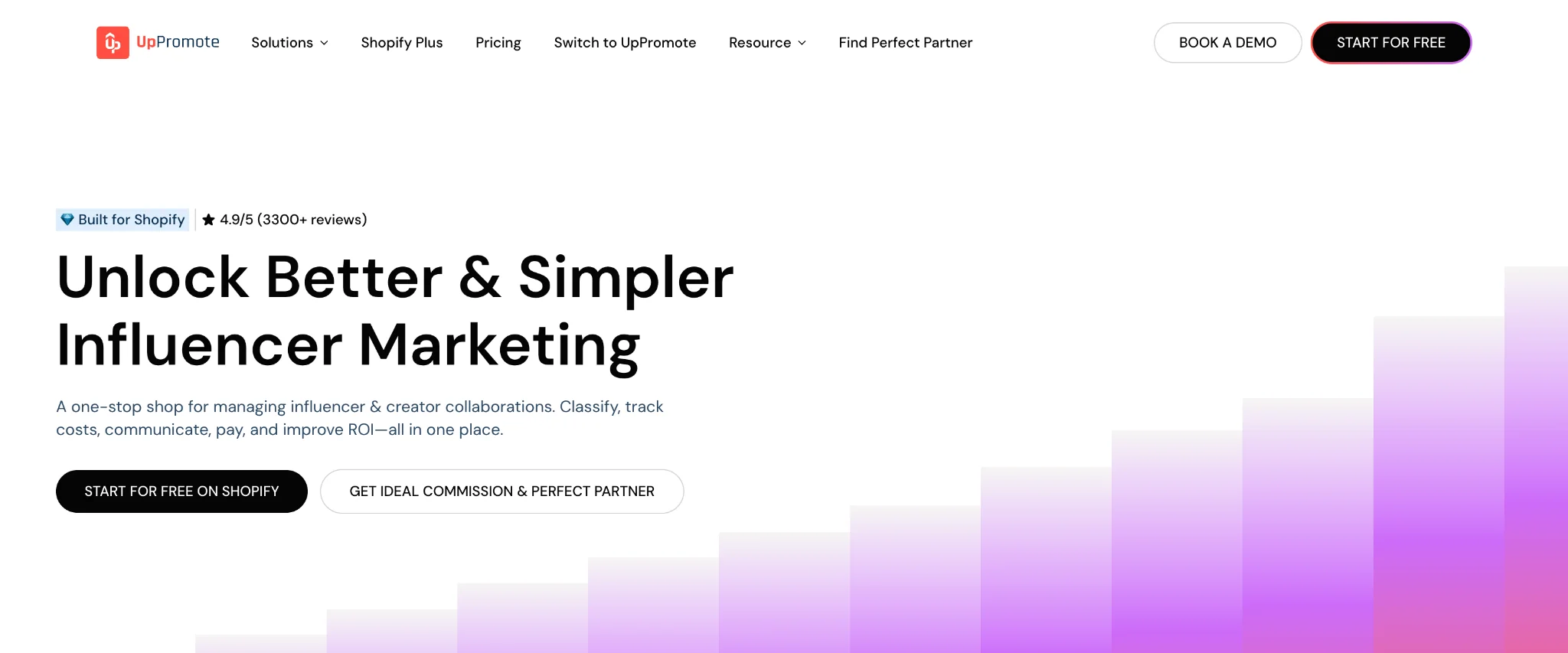
UpPromote is an affiliate and referral marketing app built primarily for Shopify. You create one or more programs, invite affiliates in, and the app issues each of them a tracking link and a unique discount code. From there it records clicks, orders and average order value, calculates commission on whatever rules you set, and pays creators through PayPal, bank transfer or cheque.
The influencer marketing page adds program segmentation, bonus rules and sample-product incentives on top of that, which is really affiliate management aimed at creators rather than a separate product. What is not there is the front half of the job. There is no database to search, no outreach sequencing and no authenticity screening, so most brands pair it with one of the dedicated influencer discovery tools to fill that gap.
Key Features
- Affiliate links and codes: A unique tracking link and discount code generated for every creator automatically.
- Multiple programs: Separate commission structures for different creator segments or campaigns.
- Commission rules: Flat, percentage, tiered and bonus structures set per program.
- Creator payouts: Payments issued through PayPal, bank transfer or cheque from inside the app.
- Performance dashboards: Clicks, orders, revenue and average order value tracked per affiliate.
Pricing
- Free: $0, one program, no performance fee
- Growth: $29.99 a month, or $24.99 annually, plus a 2% performance fee
- Professional: $89.99 a month, or $74.99 annually, plus 1.5%
- Enterprise: $199.99 a month, or $166.66 annually, plus 1%
Annual billing saves 17%, and every paid plan comes with a 14-day free trial.
Reviews
4.9/5.0 (Shopify App Store, more than 3,300 reviews) and 4.9/5.0 (Capterra, 201 reviews). Ease of use, tracking accuracy and support are praised consistently; the criticism centres on the learning curve around Shopify settings and limited design control in the affiliate portal.
Integrations
- Shopify: The primary integration, handling codes, order tracking and commission attribution.
- WooCommerce: Equivalent coverage for WordPress storefronts.
- Klaviyo: Affiliate contacts pushed into email flows.
- PayPal: Commission paid out to creators directly.
- Zapier: Wider stack connections where no native option exists.
Pros
- Cheap to start: A free plan and a $29.99 tier put affiliate tracking within reach of any store.
- Exceptional review record: 4.9 across thousands of merchant reviews is rare at any price.
- Attribution that works: Codes, links and commission calculations are the part users praise most.
Common Drawbacks of UpPromote
It starts after the hard part
There is no creator database, no search filters and no outreach. Finding creators, contacting them and negotiating terms all happen somewhere else before UpPromote becomes useful.
The fee grows with the program
Every paid tier takes 1% to 2% of referral sales. A program doing $50,000 a month on Growth pays $1,000 in fees against a $29.99 subscription, so the headline price stops describing the bill quickly.
No vetting or fraud screening
Nothing checks whether a creator’s audience is real before you sign them. That work belongs to a discovery tool, which is a second subscription.
Affiliate-shaped, not campaign-shaped
There is no gifting workflow, no content collection or approval, no rights management and no brief. Creators are treated as affiliates rather than as partners in a campaign.
Best UpPromote Alternatives
| TOOL | REVIEWS | BEST FOR | TRIAL INFO | PRICING | ||
|---|---|---|---|---|---|---|
1 |

|
⭐ | Influencer partnerships | Book Demo | Pricing | Website |
2 |
|
⭐ | Influencer marketplace | Book Demo | Pricing | Website |
3 |

|
⭐ | Influencer CRM & automation | Book Demo | Pricing | Website |
4 |

|
⭐ | Influencer marketplace campaigns | Book Demo | Pricing | Website |
5 |

|
⭐ | Influencer discovery | Book Demo | Pricing | Website |
6 |
|
⭐ | Influencer campaigns & data analytics | Book Demo | Pricing | Website |
7 |

|
⭐ | Micro-Influencer Campaigns | Book Demo | Pricing | Website |
8 |

|
⭐ | Campaign management | Book Demo | Pricing | Website |
9 |

|
⭐ | Enterprise influencer analytics | Book Demo | Pricing | Website |
10 |

|
⭐ | Influencer analytics | Book Demo | Pricing | Website |
Aspire
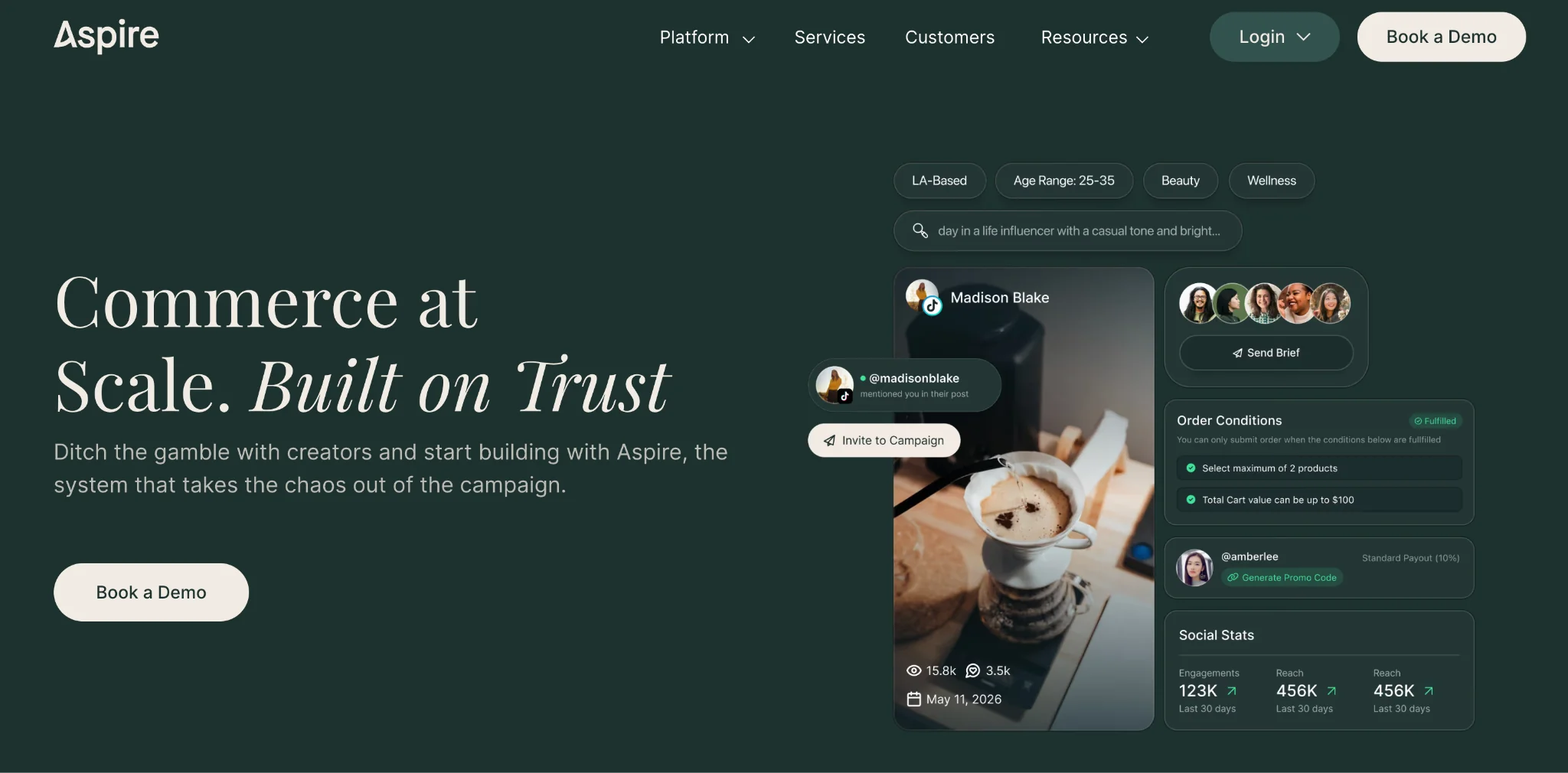
Aspire runs the whole brand-side program for companies operating at scale. Lookalike discovery feeds seeding at volume, briefs and approvals move content through review, affiliate attribution ties it back to orders, and a rights-managed content library holds the finished assets for paid reuse.
Key Features
- Lookalike discovery: One creator who performed becomes a shortlist of similar profiles.
- Seeding workflows: Product send-outs run at volume with tracking attached.
- Briefs and approvals: Content requested, reviewed and signed off in the platform.
- Affiliate attribution: Codes and links tying creator activity to real orders.
- Rights-managed library: Approved assets held with usage terms for paid reuse.
Pricing
Not published. Third-party sources report an annual commitment starting around $2,000 a month, with other estimates near $2,499, and they disagree enough that only a quote settles it. There is no free trial.
Reviews
4.6/5.0 (G2, 146 reviews).
Pros
- Discovery through to payout: The half UpPromote skips, plus the half it covers.
- Content is commissioned: Briefs, approvals and licensed assets rather than links alone.
- 146 reviews: Independent evidence from brands running full programs.
Cons
- No trial and no rate card: A closed evaluation at a reported $2,000-plus a month.
- Annual commitment: A year signed up front, against a monthly app.
- Heavier than most need: Built for programs already running at scale.
Integrations
- Shopify: Seeding orders raised and creator revenue attributed.
- WooCommerce: Equivalent coverage for WordPress stores.
- Klaviyo: Creator contacts into email programs.
- Slack: Campaign alerts into team channels.
- Zapier: Wider stack connections where no native option exists.
UpPromote vs Aspire
The overlap is one feature: both attribute orders to a creator through codes and links. Around that single point Aspire adds everything UpPromote leaves to you, including discovery, seeding at volume, briefs, content approval and a rights-cleared asset library. UpPromote assumes you arrive with a list of creators; Aspire assumes you do not have one yet.
The price gap is real but narrower than it looks once volume enters. Aspire is reported at roughly $2,000 a month with no cut of sales. UpPromote Enterprise at $199.99 plus 1% costs $700 a month on $50,000 of referral revenue and $1,200 on $100,000, and you are still buying discovery, outreach and content tooling separately.
IZEA
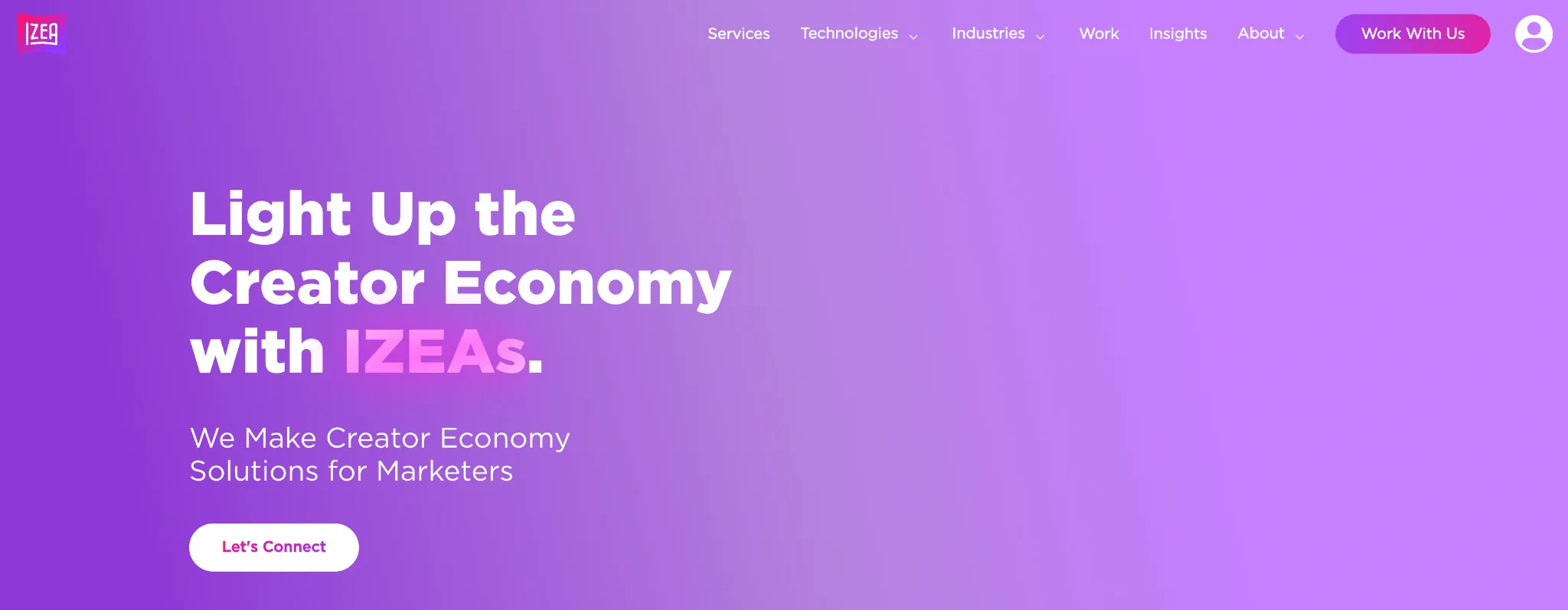
IZEA sells three things: a self-serve Creator Marketplace where brands post casting calls and creators pitch, the IZEA Flex platform for managing campaigns end to end, and a fully managed service where IZEA runs the program for you. The marketplace is the only tier with a published price.
Key Features
- Casting calls: Briefs posted to the marketplace for creators to pitch against.
- Creator listings: Pre-priced offers creators publish that brands can buy outright.
- AI credits: 60,000 a month on the Marketer Pro plan for matching and content tooling.
- Campaign management in Flex: Search, onboarding, workflow and payments in one platform.
- Managed services: IZEA’s own team running strategy, execution and measurement.
Pricing
Marketer Pro on the Creator Marketplace is $129 a month, or $99 a month on annual billing at $1,188 a year, with a free tier below it and a 10% seller service fee on transactions. IZEA Flex and managed services are quoted separately, with one directory listing Flex from around $149 per user a month.
Reviews
3.9/5.0 (G2, 32 reviews) for IZEA Flex. Its Capterra listing carries no reviews at all. Support and the breadth of the platform draw praise; slowness, bugs and low creator response rates draw the criticism.
Pros
- Creators come to you: Casting calls replace the outreach UpPromote has no answer for.
- A published entry price: $99 to $129 a month for the marketplace tier.
- Managed option exists: A route for brands with no in-house resource at all.
Cons
- 3.9 is the lowest score here: Well under UpPromote’s 4.9 across a far larger base.
- A fee on transactions too: 10% seller service fee, five times UpPromote’s Growth rate.
- Flex is quote-only: The tier that actually manages campaigns has no public price.
Integrations
- Instagram, TikTok and YouTube: Creator accounts connected for performance data.
- Payments: Creator payouts handled in-platform on a 30-day cycle.
- Analytics: Social and campaign performance reporting inside Flex.
- API access: Campaign and creator data available on higher tiers.
- eCommerce platforms: No named Shopify app, so store attribution is not native.
UpPromote vs IZEA
These two sit at opposite ends of the same workflow. IZEA finds and books creators through casting calls and listings, then manages the campaign. UpPromote does nothing until a creator is signed, at which point it tracks and pays better than IZEA does, with a Shopify connection IZEA does not publish.
Both take a cut, and the sizes differ sharply. IZEA charges 10% on marketplace transactions against UpPromote’s 1% to 2% on referral sales. Reviews also favour UpPromote heavily, at 4.9 across thousands versus 3.9 across 32, so IZEA is worth it only for the sourcing UpPromote cannot do at all.
Influencer Hero
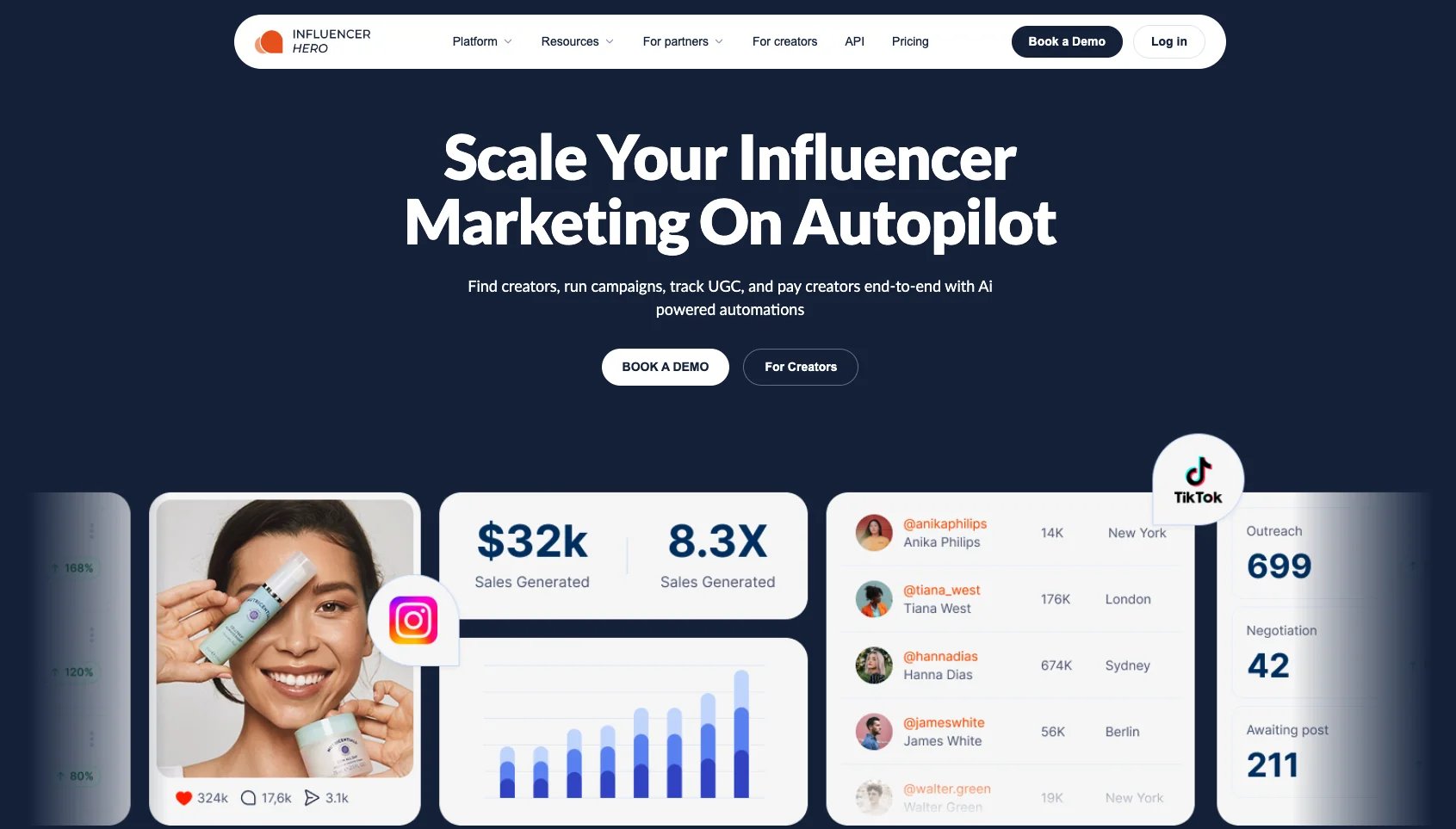
Influencer Hero is an all-in-one influencer marketing platform for D2C and eCommerce brands, covering 8 social platforms with Instagram, TikTok and YouTube leading. It runs the whole sequence UpPromote sits at the end of: find the creator, contact them, ship product, collect the content, then issue the code and pay the commission. Pricing is published and sized by outreach volume.
Key Features
- Creator search: Over 20 filters and AI search across eight networks.
- Fake-follower screening: Audience authenticity checked on any creator before you sign them.
- Brand-follower detection: Creators who already follow and buy from you, surfaced automatically.
- Multichannel outreach: Email, Instagram DM and WhatsApp sequences with replies in one inbox.
- Campaign boards: Stage-triggered automations and custom fields for per-creator logic.
- Gifting through your store: Product orders raised in Shopify or WooCommerce and tracked to delivery.
- Affiliate codes and payouts: Commission calculated in-platform and paid at 0.1% to 0.4% with invoices attached.
- Revenue reporting: Sales by creator and product cost against return, compiled automatically.
Pricing
- Standard: $649 a month, up to 1,000 reachouts a month
- Pro: $1,049 a month, up to 5,000 reachouts a month
- Business: $2,490 a month, up to 10,000 reachouts a month
- Custom & Agency: custom pricing
Quarterly billing saves 20% and yearly saves 30%, with every figure published.
Reviews
5.0/5.0 (Capterra)
Pros
- No cut of referral sales: Flat subscription rather than a percentage that grows with revenue.
- The front half included: Search, screening and outreach in the same tool as the payouts.
- Payout fees are the low ones: 0.1% to 0.4% on creator payments, not on your store revenue.
Cons
- No free trial
- Expensive for smaller brands
- Steep learning curve
Integrations
- Shopify: Gifting orders raised and creator sales attributed automatically.
- WooCommerce: The same for WordPress, with scripts covering Magento and custom builds.
- Klaviyo: Creator and customer segments pushed into lifecycle email.
- DocuSign: Creator agreements signed and filed on the deal record.
- Zapier: Over 8,000 further apps for anything not handled natively.
UpPromote vs Influencer Hero
Both end in the same place, with a creator holding a code and getting paid. They begin in very different ones. Influencer Hero searches eight networks with over 20 filters, screens the audience for fake followers, runs influencer outreach over email, Instagram DM and WhatsApp, moves each creator through a campaign board, raises gifting orders inside Shopify or WooCommerce and captures the resulting posts, before any commission is calculated. UpPromote starts at the commission.
The pricing structures differ more than the sticker prices suggest. Influencer Hero is flat: $649, $1,049 or $2,490 a month with 20% off quarterly and 30% off yearly, and no percentage of store revenue at any tier. UpPromote is $29.99 to $199.99 plus 1% to 2% of referral sales, so a program doing $100,000 a month costs $1,200 on Enterprise before the discovery and outreach tools you still have to buy. Below roughly $20,000 in monthly referral revenue UpPromote is far cheaper; above it the gap closes fast.
Afluencer
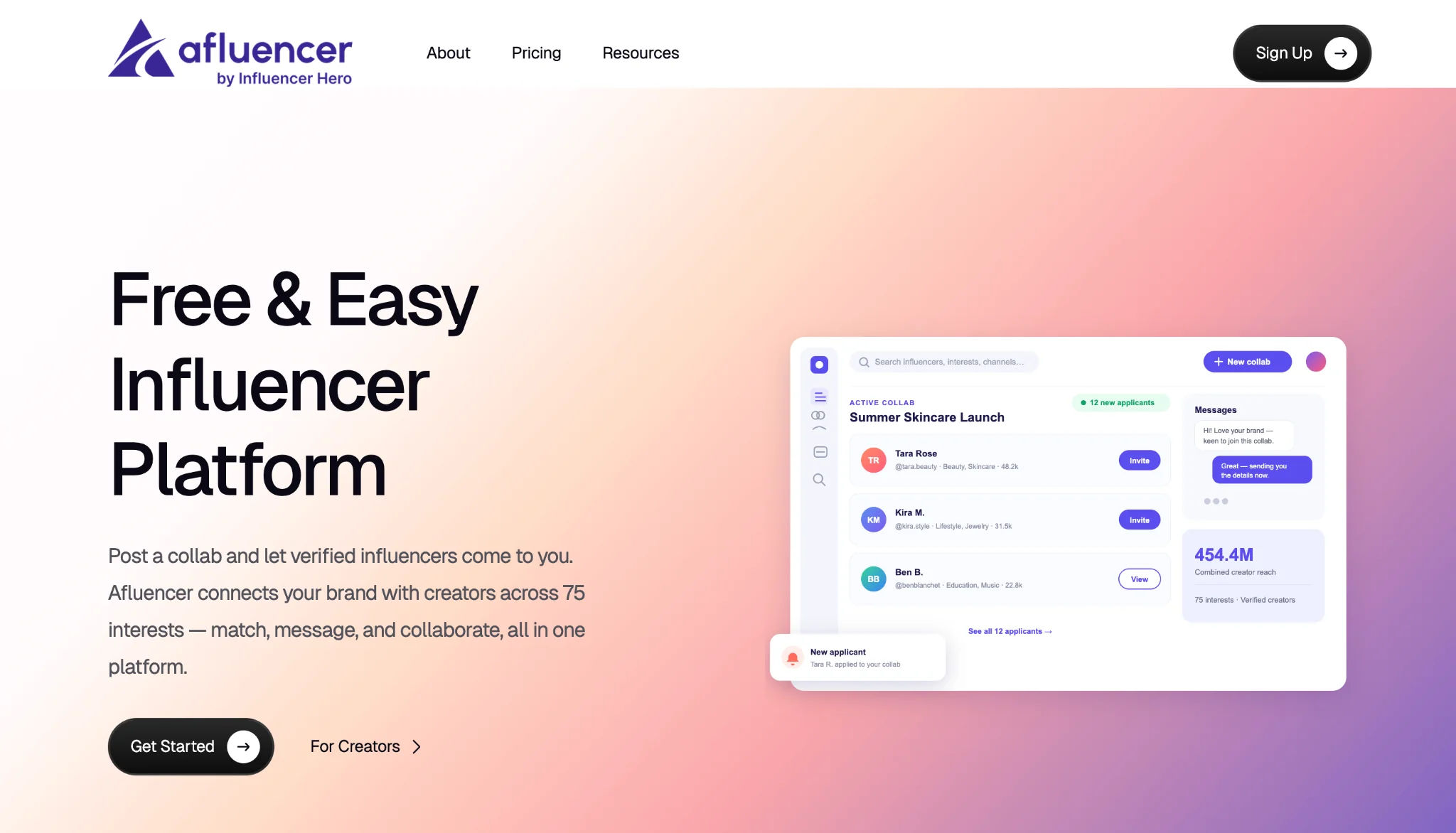
Afluencer runs on inbound applications. You publish a collaboration, verified creators apply, and AI ranks the queue against your brief before you review it. At $49 a month it solves the sourcing problem for less than most brands spend on a single creator fee.
Key Features
- Inbound applications: Creators respond to your listing instead of being hunted down.
- Verified members: Accounts registered and checked before anyone can apply.
- CreatorGPT ranking: AI sorts the applicant queue against your brief before review.
- Invite credits: Outbound approaches for the months when applications run thin.
- Store-linked codes: Discount codes and creator fees handled through the storefront connection.
Pricing
- VIP: $49 a month
- Concierge: $99 a month
No minimum term, with creator-side plans billed separately.
Reviews
4.6/5.0 (G2, 738 reviews) and 4.7/5.0 (Shopify App Store, 34 reviews). The G2 pool leans creator-side, so read it beside the Shopify score.
Pros
- Solves the missing half cheaply: $49 a month for the sourcing UpPromote does not attempt.
- No percentage of sales: Flat monthly cost regardless of how well the program performs.
- Sits beside a store: A natural pairing among Shopify influencer apps.
Cons
- Inbound quality varies: A weak listing brings weak applicants.
- Lighter attribution: Tracking depth does not match a dedicated affiliate app.
- North America weighted: Creator supply thins outside its main markets.
Integrations
- Shopify: Codes, referrals and creator orders tracked from the store.
- BigCommerce: The same connection for BigCommerce merchants.
- Klaviyo: Creator contacts pushed into your email lists.
- DocuSign: Collaboration terms signed inside the flow.
- Slack: Application alerts sent to the team as they arrive.
UpPromote vs Afluencer
These are complements far more than competitors, and plenty of brands run both. Afluencer answers the question UpPromote cannot, which is where the creators come from, by putting your offer in front of verified applicants and ranking them against your brief. UpPromote then does the tracking and payouts better than a marketplace does.
If you have to choose one, decide which half is actually blocking you. A brand with a waiting list of creators and no tracking should buy UpPromote. A brand with a working store, a discount code and nobody to give it to should buy Afluencer, and $49 flat with no cut of sales makes that an easy first month.
Modash
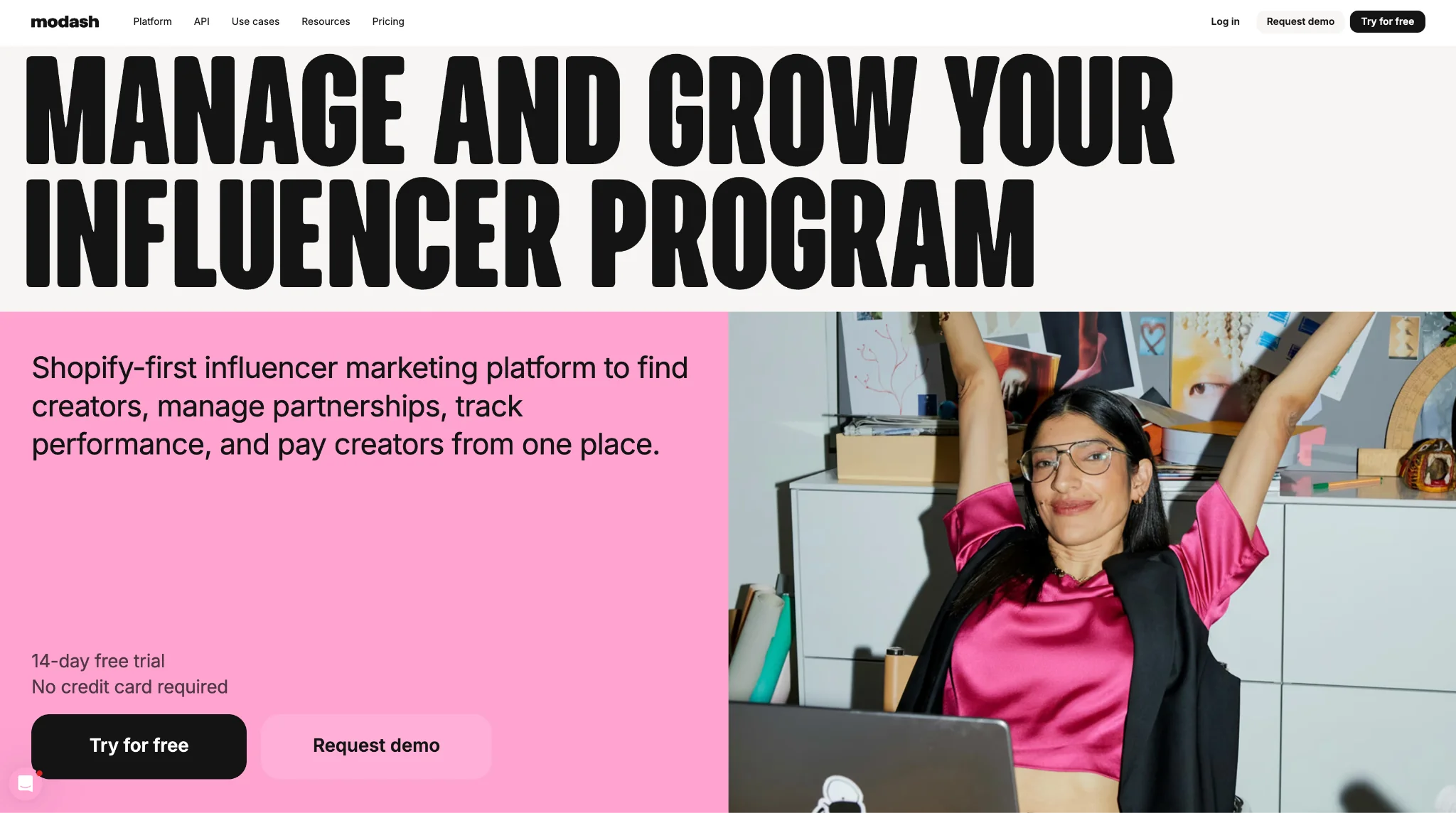
Modash is a discovery and campaign platform with unusually clear limits. Every plan states how many profiles you may view, how many emails you may unlock and how many creators you may track, and the higher tiers add payments and affiliate management on top.
Key Features
- Creator discovery: Search across Instagram, TikTok and YouTube with audience filters.
- Influential fans: Your own followers and customers scanned for creators worth activating.
- Creator tracking: Posts and stories monitored automatically once a creator is added.
- Payments included: 0% payment fee up to $10,000 a year on Performance and $100,000 on Enterprise.
- Affiliate management: Links and commission handled from Performance upward.
Pricing
- Essentials: $199 a month, or $2,388 a year, with 300 profile views, 150 email unlocks and 100 tracked creators
- Performance: $499 a month, or $5,988 a year, with 800 views, 400 unlocks and 250 tracked creators
- Enterprise: from $14,700 a year with custom limits
A 14-day free trial runs without a credit card, and annual billing saves 25% on Essentials.
Reviews
4.9/5.0 (G2, low review volume at 19 reviews). Ease of use, discovery quality and support draw praise; slow loading, thin contracting features and missing exports draw the criticism.
Pros
- Discovery with published limits: You know exactly how many creators a plan lets you open.
- A free trial with no card: Fourteen days of real evaluation before paying.
- 4.9 across its base: Matching UpPromote’s score, on far fewer reviews.
Cons
- Nineteen reviews: A thin record next to thousands of merchant reviews.
- Affiliate features are gated: Tracking and payments start at $499 a month.
- Credits cap the work: 300 profile views on Essentials goes quickly on an active program.
Integrations
- Shopify: Store connection for affiliate tracking on paid tiers.
- Instagram, TikTok and YouTube: Creator data and post tracking pulled directly.
- Gmail: Outreach sent and tracked from your own mailbox.
- Payments: Creator payouts processed inside the platform.
- API access: Creator and campaign data available programmatically.
UpPromote vs Modash
Modash is the mirror image. It is strong exactly where UpPromote is absent, with search across three networks, audience data, an influential-fans scan of your own followers and automatic post tracking. Its affiliate and payment features exist but sit behind the $499 Performance tier, and even then they are thinner than a dedicated affiliate app.
On cost the two barely meet. Modash Essentials at $199 a month buys 300 profile views and no affiliate tracking, while UpPromote Growth at $29.99 buys unlimited affiliates and takes 2% of what they sell. A brand doing $10,000 a month in referral revenue pays about $230 for UpPromote, so running both still lands under $450 with each tool doing the half it is built for.


NeoReach
NeoReach is a managed-service operation rather than software you log into and run yourself. Its team handles strategy, creator discovery, contracting, creative approvals, production and licensing, and it has managed more than $350 million in campaigns since 2013.
Key Features
- Full-service campaigns: Strategy, creator operations, management and measurement delivered by NeoReach.
- Creator sourcing and contracting: Negotiation and paperwork handled on your behalf.
- Content production: Creative approvals and production managed inside the engagement.
- Licensing negotiation: Usage rights agreed as part of the deal.
- Campaign measurement: Performance reporting across creators, platforms and markets.
Pricing
Quote-based, with published minimums. Full-service campaigns start at $50,000 and UGC content programs from $10,000, structured per campaign, per project or on a monthly retainer. A strategy consultation comes before any proposal.
Reviews
4.5/5.0 (G2, very low review volume at 11 reviews). Discovery filters, analytics and ease of use draw praise; cost, a thin micro-influencer pool and weak search filters draw the criticism.
Pros
- No work for your team: The entire program run externally, tracking included.
- Minimums are published: $50,000 and $10,000 stated openly, unlike most agencies.
- Rights negotiated for you: Licensing handled rather than left to a template.
Cons
- $50,000 to start: Roughly what UpPromote Growth costs across 140 years of subscription.
- Eleven reviews: Almost no independent evidence base.
- Not self-serve: Nothing you can trial, buy or run on your own.
Integrations
- Instagram, TikTok and YouTube: Creator and campaign data pulled through platform APIs.
- Developer API: Influencer data piped into your own systems.
- Reporting tools: Campaign data fed into BI dashboards.
- Managed service layer: NeoReach staff acting as the operational integration.
- eCommerce platforms: No published Shopify app, so store attribution is handled in reporting.
UpPromote vs NeoReach
Comparing these is really comparing software with staffing. UpPromote is a $29.99 app you configure yourself in an afternoon. NeoReach is a team you hire from $50,000 who find the creators, negotiate the contracts, manage production and report on results.
Brands end up at NeoReach when the constraint is people rather than tooling. If nobody internally has time to source creators, an app that only tracks commission does not help, whatever it costs. If you do have that person, $50,000 buys a great deal of software and creator budget instead.
Social Cat
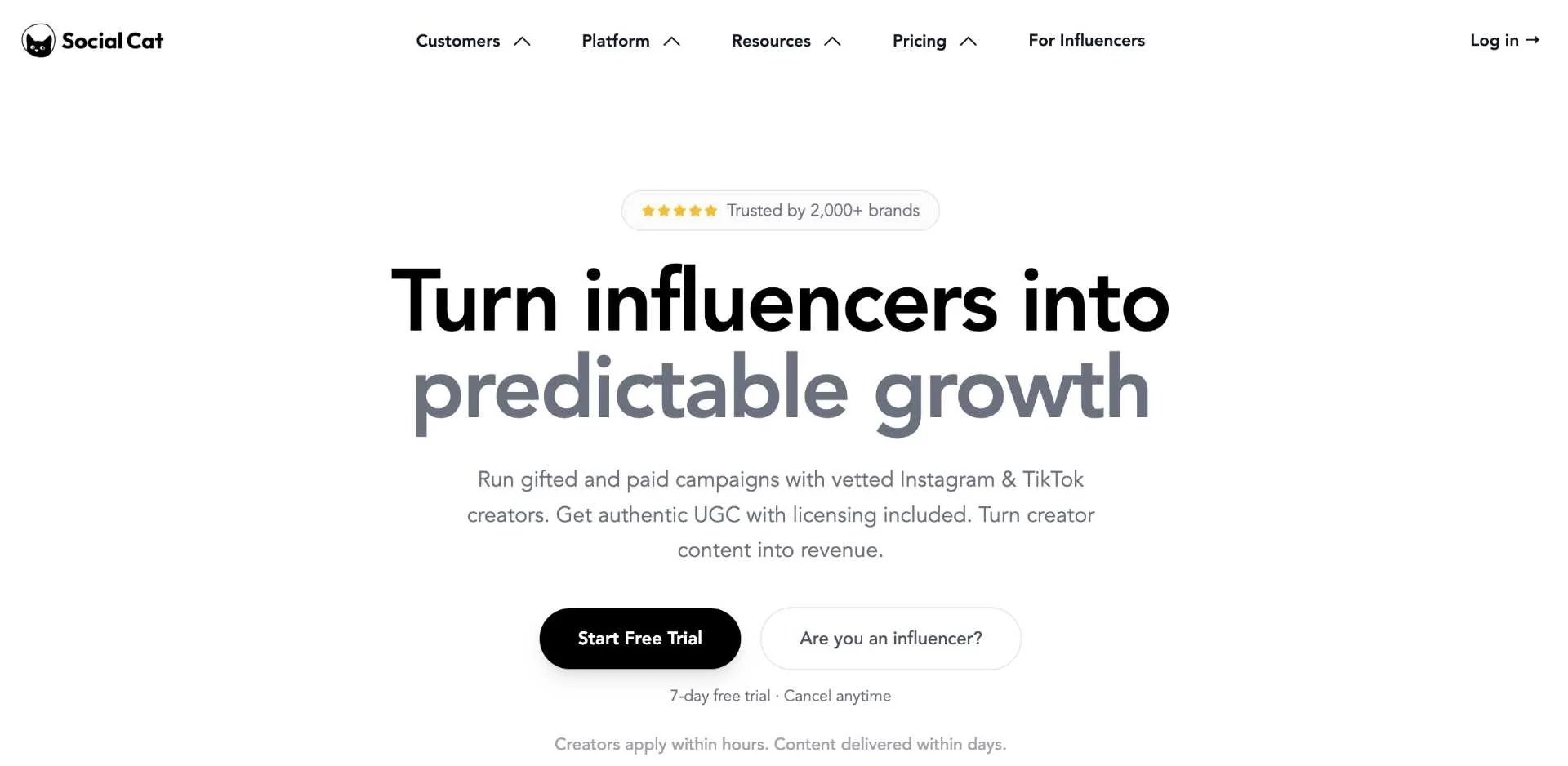
Social Cat is a micro-influencer marketplace built around gifting. Creators apply to your campaigns, you ship product or pay a fee, and full content usage rights come included on every plan. Collaborations are capped by tier rather than metered by credit.
Key Features
- Vetted micro-influencers: Creators manually screened before they can apply to campaigns.
- Gifted, paid and affiliate collabs: Product seeding, flat fees or commission deals in one place.
- Usage rights included: Full content licensing on every plan, not just the top one.
- Content library: Creator assets stored and organised centrally.
- Contracts and messaging: Terms agreed and conversations held inside the platform.
Pricing
- Essentials: $99 a month, 5 collaborations, 1 campaign, 1 seat, 1,000 invitations
- Performance: $199 a month, 15 collaborations, 3 campaigns, 5 seats, 2,500 invitations
- Pro: $299 a month, 30 collaborations, unlimited campaigns, 10 seats, 5,000 invitations
Yearly billing gives two months free, and every plan starts with a 7-day free trial.
Reviews
4.0/5.0 (Trustpilot). Scores split by user type, with creators rating it well above brands. The recurring brand complaint is creators accepting gifted product and never posting, with limited recourse.
Pros
- Sourcing and rights together: Creators found and content licensed from $99 a month.
- Gifting handled properly: The seeding workflow UpPromote has no equivalent for.
- Genuinely month-to-month: A 7-day trial and no contract at any tier.
Cons
- No eCommerce integration: No Shopify or WooCommerce connection, so revenue is not attributed.
- Hard collaboration caps: Thirty a month at the top tier, where UpPromote has no affiliate limit.
- Delivery risk: Brands report gifted product going out with no post coming back.
Integrations
- Meta: Instagram and Facebook post metrics pulled in.
- TikTok: Collaboration performance tracked on short-form.
- Content library: Creator assets centralised for reuse.
- Messaging: Creator conversations held inside the platform.
- eCommerce platforms: None published, so orders never meet creator activity automatically.
UpPromote vs Social Cat
They fail in opposite directions, which makes the comparison unusually clean. Social Cat finds creators, handles gifting and licenses the content, but has no store connection at all, so it cannot tell you what anyone sold. UpPromote tracks sales precisely and cannot find anyone. Neither is complete, and both are affordable enough to run together for under $130 a month at entry level.
If gifting is your model, Social Cat covers workflows UpPromote does not attempt, and sits comfortably among the dedicated gifting platforms. If commission is your model, UpPromote is the stronger half and Social Cat is the sourcing layer in front of it.
Influencity
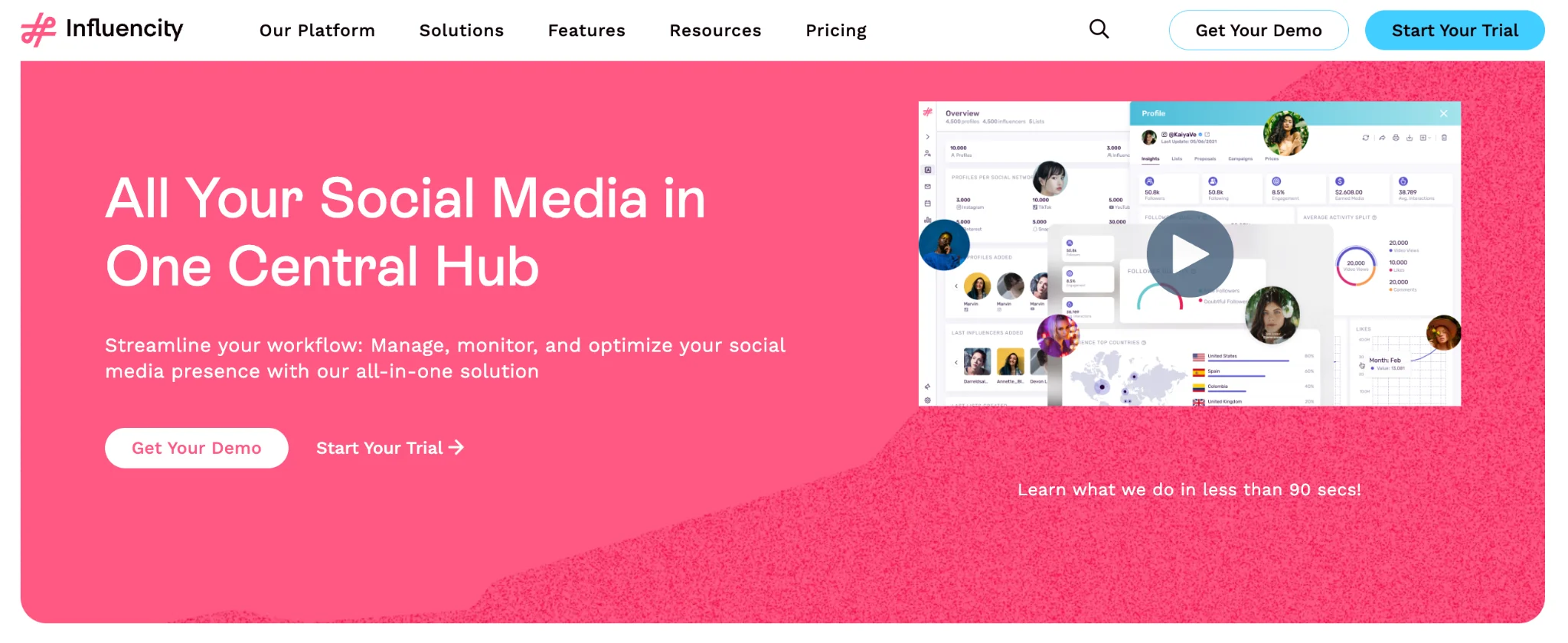
Influencity is a discovery and audience analytics platform sold in month-to-month tiers with published prices. Plans scale on profile analyses, search results and stored creators rather than on how much revenue your program produces.
Key Features
- Profile analyses: Detailed audience reports metered by plan, from 30 a month upward.
- Audience analytics: Demographics, authenticity and interest data on any creator.
- Creator storage: Shortlists held in the platform, up to 2,000 profiles on Business.
- Campaign management: Concurrent campaigns tracked from Professional upward.
- Modular Enterprise: Features selected individually with a dedicated success manager.
Pricing
- Basic: $168 a month, or $134 annually at $1,613 a year, with 30 profile analyses and 1 user
- Professional: $348 a month, or $278 annually at $3,348 a year, with unlimited analyses
- Business: $698 a month, or $558 annually at $6,700 a year, with 25,000 search results and 50 campaigns
- Enterprise: custom limits and pricing
All plans are month-to-month with a 7-day free trial.
Reviews
4.6/5.0 (G2, 263 reviews).
Pros
- Published and monthly: Four tiers stated openly with no annual lock-in.
- 263 reviews: A solid independent record behind the discovery claims.
- Analysis UpPromote lacks: Audience quality checked before you hand out a code.
Cons
- Thirty analyses on Basic: An active screening month exhausts the entry tier quickly.
- Discovery-led: Campaign tooling is lighter than a full program platform.
- No affiliate tracking: Nothing that replaces what UpPromote does.
Integrations
- Instagram, TikTok and YouTube: Creator data and audience analysis across the main networks.
- Shopify: Store connection available on higher tiers.
- Exports: Creator lists and reports out for client or internal use.
- API access: Creator data pulled into your own systems.
- Team seats: Multi-user access from Professional upward.
UpPromote vs Influencity
Put these side by side and you have most of a working stack. Influencity tells you whether a creator’s audience is real, where it lives and how engaged it is, which is the check nobody performs before a code gets issued in UpPromote. UpPromote then measures what that creator actually sold, which Influencity does not attempt.
Both publish prices and both bill monthly, so the combined cost is knowable in advance. Influencity Basic at $168 plus UpPromote Growth at $29.99 is under $200 a month before performance fees, which is a reasonable way to cover screening and attribution without committing to a full platform.
Traackr
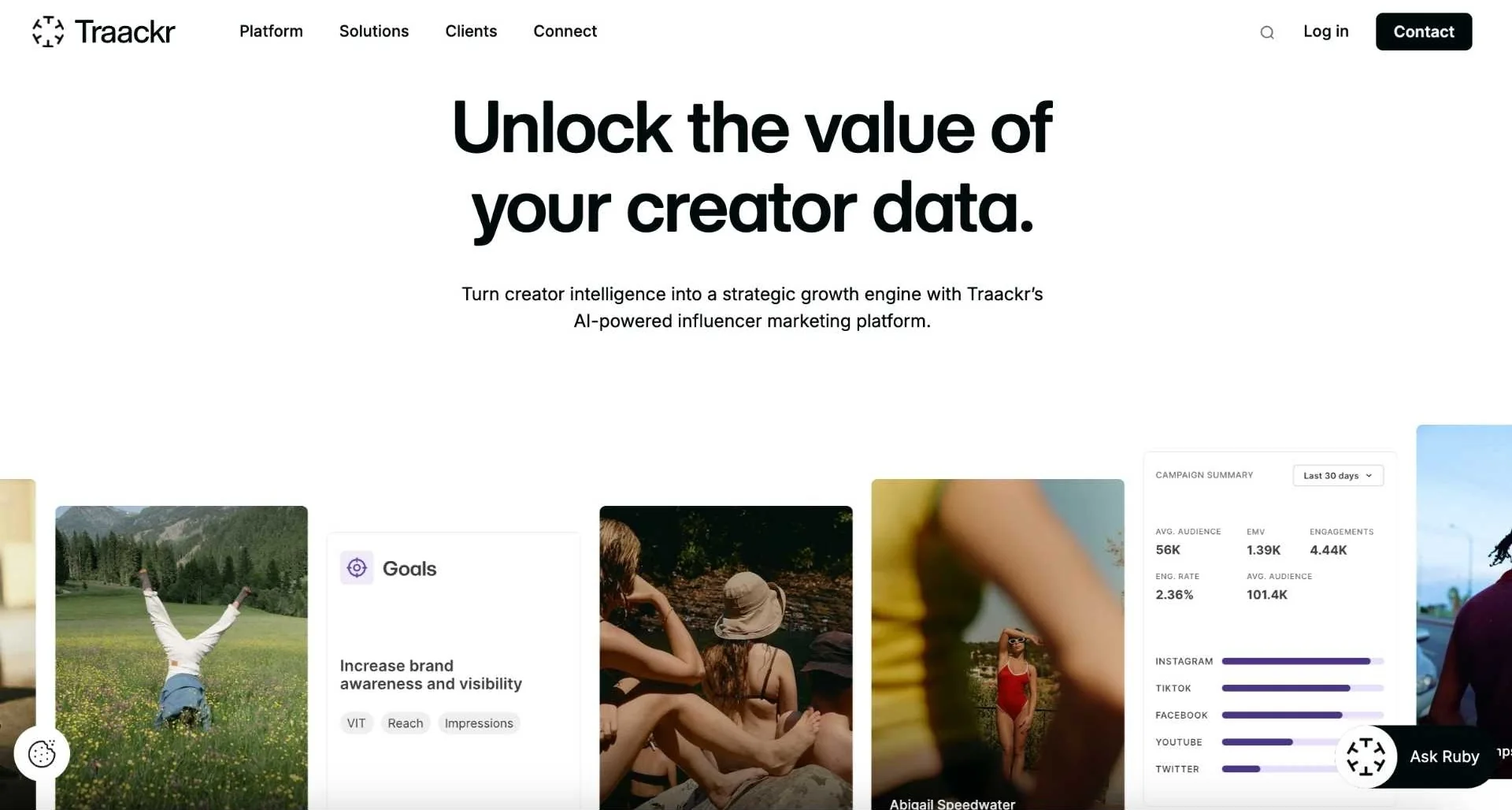
Traackr is enterprise measurement infrastructure. It standardises creator and campaign metrics so global teams can benchmark against competitors, control spend across markets and compare programs that would otherwise be impossible to line up.
Key Features
- Standardised measurement: Consistent metrics across creators, campaigns and markets.
- Competitive benchmarking: Your program compared against rivals and category norms.
- Spend tracking: Influencer investment and efficiency monitored centrally.
- Relationship management: Every creator touchpoint recorded across teams.
- Discovery and vetting: Creator search backed by standardised performance data.
Pricing
Reported at around $25,000 a year for Growth with a three-user minimum, roughly $32,500 for Standard with five users, and $55,000 and up for Plus with API access and ten or more users. All plans are annual, with no monthly option and no standard free trial.
Reviews
4.3/5.0 (G2, 382 reviews). Audience data depth, benchmarking and support draw praise; slow loading, export glitches, thin data on smaller creators and cost draw the criticism.
Pros
- 382 reviews: The deepest independent record among the enterprise options here.
- Benchmarking is unique: Competitor comparison nothing else on this page offers.
- Built for many markets: One measurement standard across regions and teams.
Cons
- $25,000 a year minimum: Roughly seventy times UpPromote Growth before fees.
- Annual only: No monthly billing and no standard trial.
- Measurement, not payouts: Commission and affiliate tracking are not the point.
Integrations
- Shopify: Store data connected for sales attribution.
- Instagram, TikTok and YouTube: Standardised performance data across networks.
- API access: Campaign data into enterprise reporting on the Plus tier.
- Data partners: Third-party datasets enriching benchmarks.
- Exports: Reporting out into BI and stakeholder decks.
UpPromote vs Traackr
These two rarely appear on the same shortlist, and when they do it is a sign the shortlist needs splitting. Traackr answers whether your influencer program is competitive across markets. UpPromote answers whether affiliate number forty-seven earned their commission this month. Both are legitimate questions from entirely different seats.
The commitment gap is the practical point. Traackr starts around $25,000 a year on an annual contract with no trial, while UpPromote is $29.99 a month with a 14-day trial and a free tier underneath it. A brand that is not yet sure influencer marketing works should not be signing the first one.
HypeAuditor
HypeAuditor made its name on fraud detection. It scores audience quality, flags fake followers and inflated engagement, and has since added media planning, campaign management and market analytics around that core.
Key Features
- Audience quality scoring: Fraud detection and authenticity ratings on any creator profile.
- Creator discovery: Search across the major networks with audience filters.
- Media planning: Campaign plans built and costed before budget commits.
- Campaign management: Live tracking of creator deliverables and performance.
- Market analytics: Category and competitor benchmarking data.
Pricing
Nothing published on the vendor’s own pricing page, which routes to a demo or a free tier. A Capterra listing reports a starting figure of around $399 per user a month with a free trial and a free version available, so treat that as indicative rather than a rate card.
Reviews
4.6/5.0 (G2, 264 reviews) and 4.8/5.0 (Capterra, 35 reviews). Audience insight, ease of use and support draw praise; shallow reporting, data accuracy on smaller creators and cost draw the criticism.
Pros
- Fraud detection is the strength: The screening step missing entirely from an affiliate app.
- 264 G2 reviews: A deep record for a discovery-led tool.
- A free tier exists: Media plans and demo features available before paying.
Cons
- No published rate card: The only figure comes from a directory listing.
- Around $399 a month indicated: Thirteen times UpPromote Growth for screening alone.
- Reporting is criticised: Reviewers call the dashboard shallow for campaign analysis.
Integrations
- Instagram, TikTok and YouTube: Creator data and audience analysis across networks.
- Twitch: Coverage most competitors on this page do not offer.
- Exports: Creator reports out for client and stakeholder review.
- API access: Audience and creator data into internal systems.
- eCommerce platforms: No named store connection, so revenue attribution happens elsewhere.
UpPromote vs HypeAuditor
HypeAuditor exists to stop you paying for an audience that is not real. UpPromote exists to pay creators accurately once you have chosen them. Run them in sequence and the order is obvious: screen first, then track. Run only UpPromote and nothing prevents a creator with bought followers from joining your program and simply never converting.
Where UpPromote wins is transparency and price. Its tiers are published, the performance fee is stated, and the entry point is $29.99. HypeAuditor publishes no rate card at all, and the roughly $399 a month a directory reports buys screening with no attribution attached, which is why the two usually end up as a pair rather than a choice.
Final Thoughts on UpPromote Alternatives
UpPromote deserves its reviews. For issuing codes, tracking referral orders and paying commission on a Shopify store, very little competes at $29.99 a month, and the free tier makes it easy to start.
What it does not do is find anyone. Discovery, audience screening, outreach, gifting and content all sit outside the app, which means a second subscription and manual handoffs between the two. Work out the real total before renewing: add the performance fee at your current referral revenue, add whatever discovery tool sits alongside it, and compare that figure against a single platform with a proper influencer CRM that carries a creator from search through to payout.

.png)


.jpg)










