

10 Best Upfluence Alternatives • Key Criteria • Upfluence Overview • Best Upfluence Alternatives • Aspire • Influencer Hero • SARAL • Influencity • Captiv8 • IZEA • Modash • Klear • Traackr • IMAI • Final Thoughts • FAQs
10 Best Upfluence Alternatives for Influencer Marketing
Influencer marketing has become a core growth channel for D2C brands, but managing it at scale requires more than spreadsheets and manual outreach. Influencer marketing software helps teams streamline creator discovery, automate outreach, manage campaigns, and track performance across channels—all while tying efforts back to revenue. Upfluence is one of the more established platforms in this space, offering strong eCommerce integrations (especially with Shopify and Amazon), end-to-end campaign management, and affiliate tracking capabilities.
That said, common feedback from users highlights a few limitations: high pricing with annual commitments, a steep learning curve for new teams, limited flexibility in campaign editing, and clunky workflows around outreach and campaign setup. These drawbacks have led many D2C operators to explore Upfluence alternatives that offer better usability, pricing flexibility, or stronger automation.
In this guide, we’ll compare the 10 best Upfluence alternatives in influencer marketing software—including Aspire, Influencer Hero, SARAL, Influencity, Captiv8, IZEA, Modash, Klear, Traackr, and IMAI (InfluencerMarketing.AI)—to help you find the right fit for your brand.
Key Criteria for Evaluating Influencer Marketing Platforms
Core Features
Evaluation of essential influencer marketing capabilities, including influencer discovery, outreach, CRM, campaign management, reporting, and content workflows.
Pricing & Flexibility
Comparison of pricing models, subscription plans, and contract terms to match different budgets and growth stages.
Customer Reviews & Satisfaction
Analysis of user feedback from trusted review platforms, focusing on usability, reliability, customer support, and overall performance.
Pros & Cons
Review of each platform’s strengths and limitations to highlight where it performs well and where it may fall short based on different use cases.
Integrations
Review of the most important integrations (e.g., Shopify and other tech tools), highlighting what each integration enables in one sentence.
Upfluence Overview
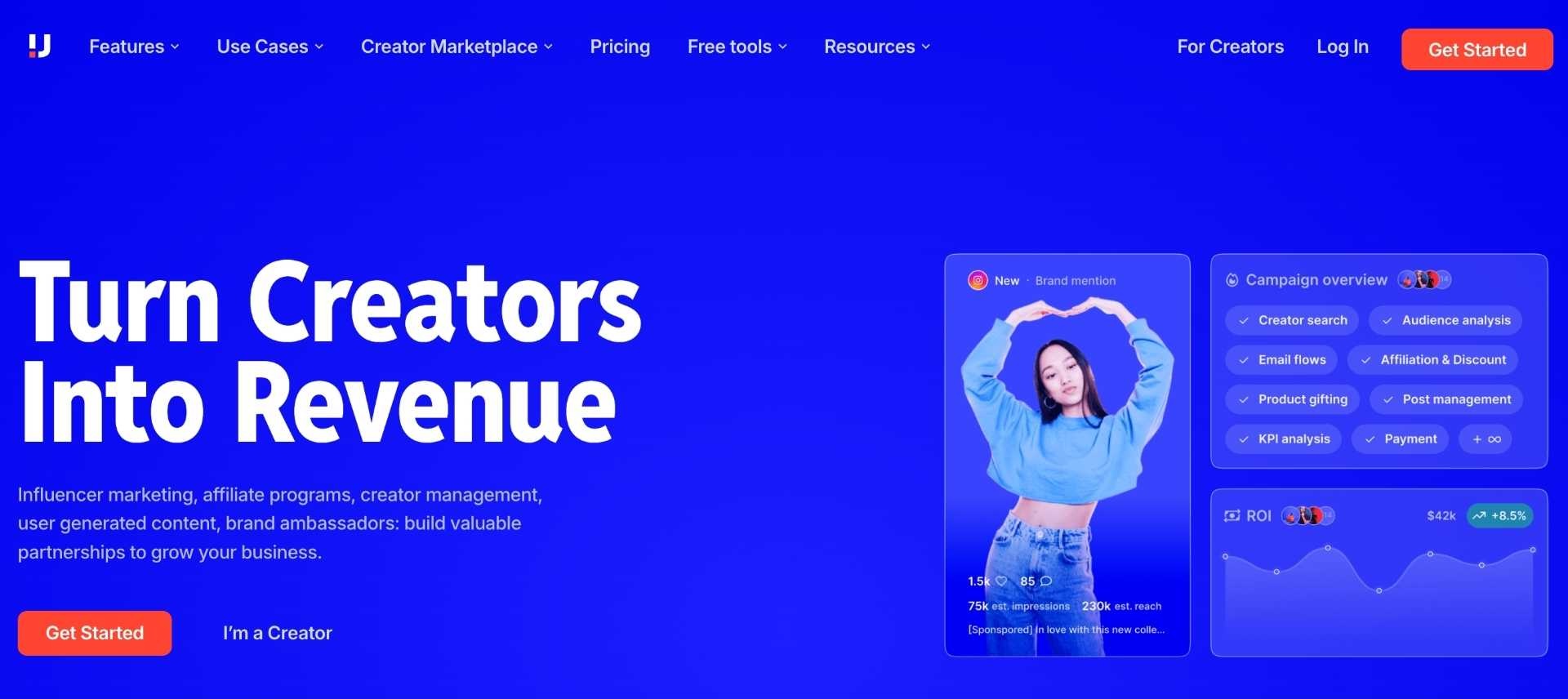
Upfluence is an influencer marketing platform built for eCommerce brands that want to run creator discovery, outreach, gifting, affiliate tracking, payments, and reporting from one system. It is especially geared toward brands that care about tying influencer activity back to revenue, with strong connections to Shopify, Amazon, and other commerce tools. Over time, the platform has expanded from influencer search and CRM into a more end-to-end workflow product, including AI-assisted campaign setup and marketplace-style creator recruitment.
Key Features
- Influencer discovery and creator search: Upfluence helps brands find creators based on audience fit, content, engagement, demographics, and lookalike matching, so teams can build more targeted lists instead of starting from scratch.
- Customer-to-creator identification: A standout capability is the ability to surface influencers already in your customer base or email lists, which is especially useful for D2C brands turning existing customers into affiliates, ambassadors, or gifting partners.
- Mass outreach and email automation: Brands can run outreach from connected inboxes, use templates, automate drip sequences, and keep communication synced inside the platform.
- Creator relationship management: Upfluence includes CRM functionality for tracking outreach, creator status, briefs, contracts, submissions, sales, and payments in one place.
- Affiliate management: The platform supports affiliate links, custom promo codes, commissions, and revenue attribution, making it a stronger fit for brands that want creators tied to measurable sales.
- Product gifting and shipment workflows: Commerce integrations let brands trigger orders, send products, and track shipment progress without managing gifting manually across multiple tools.
- Campaign analytics and ROI tracking: Upfluence tracks revenue, ROI, AOV, clicks, views, engagement, and creator-level sales performance inside a centralized dashboard.
- Creator payments: Its payments module, powered by Stripe, is designed to handle affiliate commissions and creator payouts in multiple currencies through a secure payment portal.
- Creator recruitment pages and marketplace workflows: Brands can create custom recruitment pages and use Upfluence Marketplace to attract inbound creator applications instead of relying only on outbound sourcing.
- AI campaign support: Upfluence now highlights Jaice AI for campaign creation and workflow automation, aimed at speeding up campaign setup and reducing manual work.
Pricing
On average plans start around $1,300 - $2,000/month ($24,000 yearly) with annual billing.
Reviews
4.3 / 5.0 (Capterra)
Integrations
- Shopify: Identify influential customers, send products, generate promo codes, and track creator-driven sales directly from your store.
- Amazon Attribution: Run creator campaigns tied to Amazon performance and connect affiliate activity to marketplace sales.
- Klaviyo: Find creators inside your email lists, enrich their profiles with influencer data, and activate them in dedicated flows.
- Stripe: Automate creator payouts and affiliate commissions through Upfluence Pay with support for secure, multi-currency payments.
- Gmail / Outlook: Sync outreach with your own inbox so creator communication stays centralized inside Upfluence.
Pros
- Strong customer-to-creator matching for D2C brands: Upfluence’s ability to identify influencers already buying from or subscribed to your brand is still one of its most differentiated features, and it is especially valuable for brands trying to improve reply rates and lower creator acquisition costs.
- Built for commerce-led influencer programs: The platform’s integrations with Shopify, Amazon, and affiliate workflows make it a strong option for brands that want to connect creator activity directly to sales, codes, commissions, and product seeding.
- Newer AI and marketplace workflows reduce manual work: Upfluence has recently pushed further into AI-assisted campaign creation and marketplace-style creator recruitment, which helps teams launch campaigns faster than older CRM-only setups.
Common Drawbacks of Upfluence
High cost with a yearly commitment
Upfluence is typically positioned as a premium platform, and the required annual contract can be a blocker for smaller D2C teams that want a lower-risk monthly option. Upfluence
Steeper learning curve than lighter tools
While the platform is feature-rich, it can feel heavy for smaller teams, and some users say it takes dedicated time and training to get comfortable with the workflow
Campaign setup and list management can feel rigid
A recurring complaint is that organizing lists and campaigns can feel clunky, and some campaign settings are not as easy to edit once a workflow is already in motion.
Data quality and support consistency are not always perfect
Some users report occasional issues with search depth, creator data accuracy, deliverability, or slower support when technical problems come up.
Best Upfluence Alternatives
| TOOL | REVIEWS | BEST FOR | TRIAL INFO | PRICING | ||
|---|---|---|---|---|---|---|
1 |

|
⭐ | Influencer partnerships | Book Demo | Pricing | Website |
2 |

|
⭐ | Influencer CRM & automation | Book Demo | Pricing | Website |
3 |

|
⭐ | Influencer outreach | Book Demo | Pricing | Website |
4 |

|
⭐ | Campaign management | Book Demo | Pricing | Website |
5 |
|
⭐ | Enterprise influencer campaigns | Book Demo | Pricing | Website |
6 |
|
⭐ | Influencer marketplace | Book Demo | Pricing | Website |
7 |

|
⭐ | Influencer discovery | Book Demo | Pricing | Website |
8 |
|
⭐ | Influencer analytics | Book Demo | Pricing | Website |
9 |

|
⭐ | Enterprise influencer analytics | Book Demo | Pricing | Website |
10 |

|
⭐ | AI influencer discovery & analytics | Book Demo | Pricing | Website |
1. Aspire
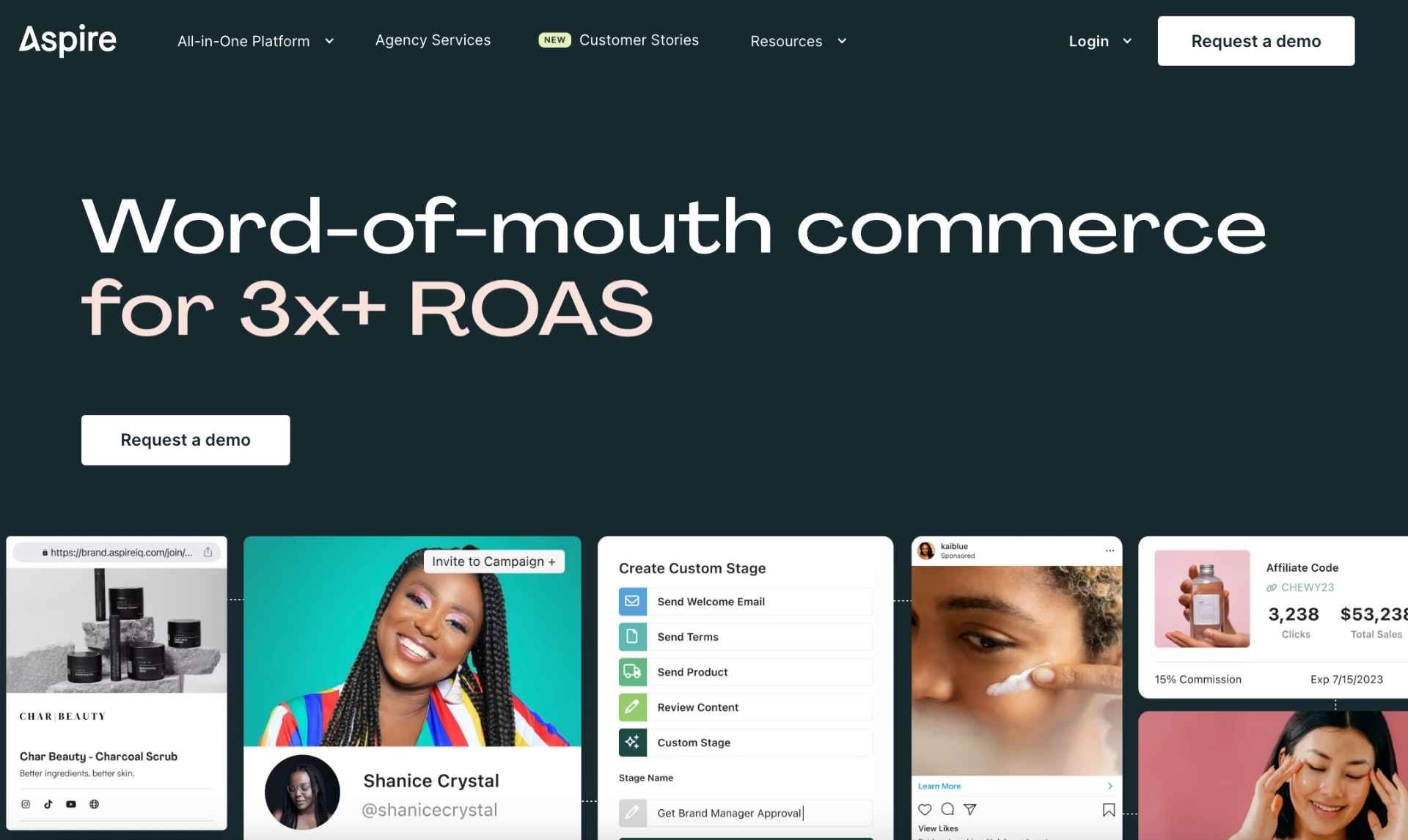
Aspire is an influencer marketing platform built for eCommerce brands that want to run creator discovery, campaign management, gifting, affiliate tracking, and reporting in one place. The company positions itself as a word-of-mouth commerce platform, with a strong focus on turning creators, affiliates, customers, and ambassadors into measurable growth channels. It is best known for its creator marketplace, first-party social data partnerships, and polished workflow tools for managing approvals, product seeding, and content at scale.
Key Features
- Creator discovery with first-party social data: Aspire lets brands search creators by platform, demographics, engagement, and niche, and it emphasizes direct data relationships with platforms like Meta, TikTok, and Pinterest rather than relying only on scraped data.
- Large inbound creator marketplace: Brands can post opportunities and receive applications from creators directly, which helps reduce cold outreach and gives teams another source of qualified inbound creators.
- Application pages and creator recruitment: Custom landing pages make it easier to collect creator details, product preferences, and campaign ideas before approving collaborations.
- Campaign workflow automation: Aspire includes workflows for invites, briefs, contracts, approvals, post tracking, and automated follow-ups, which makes it easier to move creators through each campaign stage.
- Shopify-powered gifting and fulfillment: Creators can select products within set rules, while brands track fulfillment and shipping progress without jumping into Shopify manually.
- Affiliate tracking and sales attribution: Aspire supports promo codes, affiliate links, creator stores, and commission tracking so brands can tie partnerships back to clicks, conversions, and revenue.
- Content library and usage rights workflows: The platform stores creator content in a centralized library and supports content approvals and usage rights within campaign flows.
- Bulk outreach and synced communication: Teams can send personalized emails in bulk, use templates, and keep creator conversations organized in-platform.
Pricing
A mid-tier plan for a brand targeting roughly 20 to 40 creators per month was quoted at about $2,300/month, including unlimited user seats and up to 500 creators in the CRM.
Reviews
4.0 /5.0 (Capterra)
Pros
- First-party data partnerships are a real differentiator: Aspire’s direct relationships with Meta, TikTok, and Pinterest help it stand out from tools that rely more heavily on scraped or estimated social data.
- Its inbound creator marketplace can reduce manual sourcing: Aspire’s marketplace gives brands a second acquisition channel beyond outbound outreach, and some teams use it to fill large parts of their creator roster.
- It combines strong workflow depth with newer discovery tools: Aspire now highlights capabilities like AI reverse image search alongside structured briefs, approvals, and gifting workflows, which makes it attractive for brands focused on creative fit as much as scale.
Cons
- Pricing is usually out of reach for smaller teams: Aspire is often viewed as a stronger fit for brands with a meaningful creator budget rather than brands just starting out.
- Some users report technical and integration friction: Common complaints include glitches, account-linking issues, and a workflow that can feel heavier than expected during setup.
- Enforcement and support consistency are not always perfect: There is some feedback around influencer accountability, cancellation friction, and slower help in edge-case situations.
Integrations
- Shopify: Connect your store to automate product seeding, track shipments, generate affiliate links and promo codes, and measure creator-driven sales.
- Klaviyo: Sync audience data and connected campaign information to improve personalization and lifecycle marketing around creator programs.
- Gmail: Run outreach from connected inboxes so creator emails and replies stay tied to campaign workflows.
- Meta: Aspire’s direct partnership with Meta helps brands work with stronger audience and performance data inside creator discovery and reporting.
- TikTok: Aspire’s TikTok partnership supports creator discovery and campaign planning with first-party platform data.
Upfluence vs Aspire
Upfluence is stronger for brands that care deeply about Shopify and Amazon attribution and turning existing customers into affiliates, while Aspire stands out more for creator applications, inbound marketplace demand, and first-party social data. Aspire also feels more workflow-heavy around content approvals and co-creation, whereas Upfluence leans harder into affiliate tracking and customer-to-creator discovery.
2. Influencer Hero

Influencer Hero is an all-in-one influencer marketing platform designed for growing D2C and eCommerce brands that want discovery, outreach, CRM, gifting, UGC, affiliate tracking, and payouts in one system. The platform focuses heavily on campaign orchestration, with automation features that help lean teams manage large creator programs without building a messy stack of separate tools. It is especially appealing to brands that want strong CRM structure and more flexible pricing than enterprise-heavy platforms.
Key Features
- Influencer discovery with advanced filtering: Influencer Hero supports creator search by location, engagement, audience quality, niche, and lookalike matching, plus fake follower detection.
- Campaign-centric CRM: Its structured boards make it easy to manage influencer outreach, deliverables, statuses, approvals, and ROI tracking in one visual workflow.
- Automated outreach and drip flows: Brands can send one-to-one or bulk email, use AI-enhanced templates, and automate follow-ups based on campaign stage.
- Gifting and seeding workflows: The platform supports gifting and shipping workflows tied to eCommerce integrations so teams can connect product sends with creator performance.
- Affiliate tracking and payouts: Brands can create custom links and codes, track creator sales, and automate payouts or commissions through connected commerce systems.
- UGC collection and reporting: Influencer Hero automatically gathers creator content and surfaces performance data by influencer and campaign for easier reporting.
- Application pages and storefronts: Brands can create branded signup pages so creators can apply directly and feed the CRM with warmer inbound leads.
- Chrome extension and follower discovery: Teams can pull live creator stats while browsing and identify influencers who already follow or engage with the brand.
Pricing
Influencer Hero offers flexible pricing based on outreach volume and you can have unlimited creators in your CRM:
- Standard — $649/month (up to 1,000 outreach messages per month)
- Pro — $1,049/month (up to 5,000 outreach messages per month)
- Business — $2,490/month (up to 10,000 outreach messages per month)
- Custom / Agency — Tailored pricing
Custom pricing is available for agencies and larger teams
Reviews
5.0/5.0 (Capterra)
Pros
- Its CRM is built for scale, not just tracking: Influencer Hero’s biggest differentiator is how much automation is embedded into campaign boards, bulk actions, follow-ups, and next-step workflows.
- It supports more commerce setups than many mid-market tools: Beyond Shopify, it also supports WooCommerce and custom commerce tracking, which makes it more flexible for D2C brands outside a Shopify-only setup.
- It gives brands multiple ways to source warm creators: Features like follower discovery, customer-based influencer discovery, and the Chrome extension make it easier to find creators already close to the brand.
Cons
- No free trial: Makes it harder for teams to evaluate the platform before committing
- Higher pricing for smaller teams: May be less accessible for early-stage brands or those with limited budgets
Integrations
- Shopify: Track gifting, sales, discount code usage, and influencer ROI directly against your store data.
- WooCommerce: Create trackable links and codes, sync clicks and sales, and feed commerce data back into the CRM for reporting.
- Klaviyo: Connect email and customer data to improve creator segmentation and performance tracking.
- Gmail: Run outreach and keep creator conversations synced to campaigns using connected inboxes.
- Slack: Send campaign updates, approvals, and internal alerts to team channels to keep workflows aligned and moving faster.
Upfluence vs Influencer Hero
Upfluence is the better-known option for Amazon plus Shopify attribution and customer-to-creator discovery, while Influencer Hero is typically more flexible on pricing and more automation-focused in the CRM itself. For D2C brands that want campaign boards, automated outreach, WooCommerce support, and less enterprise friction, Influencer Hero often feels lighter and more operationally efficient.
3. SARAL

SARAL is an influencer marketing platform built specifically for eCommerce brands that want a simpler system for creator discovery, outreach, seeding, affiliate tracking, and performance reporting. Its messaging is very focused on replacing spreadsheets and fragmented tools with a more operator-friendly workflow for lean D2C teams. Compared with larger enterprise platforms, SARAL leans into transparency, ease of use, and ROI-first reporting rather than heavy customization.
Key Features
- Influencer discovery and similar creator search: SARAL helps teams find creators across Instagram, TikTok, and YouTube using search, audience data, and similar-profile workflows.
- Automated outreach from connected inboxes: Brands can run personalized cold outreach directly from Gmail or Outlook rather than relying on newsletters or separate outbound tools.
- Relationship management boards: SARAL centralizes creator stages, statuses, notes, and campaign movement so teams can manage partnerships without spreadsheet chaos.
- Product seeding and affiliate workflows: Through its store connection and affiliate partner app, SARAL supports gifting, discount codes, shipping management, and affiliate tracking.
- Performance reporting: Its reporting layer highlights revenue, ROAS, CPC, and creator-level sales so brands can tie influencer work back to actual business outcomes.
- Application forms and inbound creator automations: Brands can capture creator applications and automate approvals or downstream workflows for inbound interest.
- AI assistant support: SARAL now promotes SIA, its AI assistant, to help automate parts of influencer search, outreach, and repetitive program management tasks.
- Social listening and ambassador workflows: Higher plans include fuller social listening and support for turning customers or site traffic into ambassador programs.
Pricing
SARAL has transparent pricing on its website. The listed plans are Starter: $3.6k per quarter for 100 active partnerships, 300 new saved influencers monthly, post tracking up to 10 influencers, and 1 seat; Business: $4.5k per quarter for 500 active partnerships, 800 new saved influencers monthly, unlimited influencer post tracking, and 3 seats; and Professional: $25k per year for 1,000 active partnerships, 2,000 new saved influencers monthly, unlimited full social listening, and 10 seats. SARAL also notes up to 20% off annual plans, no hidden fees, unlimited outreach, and a free trial.
Reviews
4.7/5.0 (G2)
Pros
- It is built for lean eCommerce teams, not enterprise procurement: SARAL’s product, pricing, and messaging are all aimed at brands that want a straightforward operational system without annual-contract heaviness.
- Its ROI reporting is unusually practical for smaller brands: Instead of just surfacing engagement metrics, SARAL emphasizes revenue, ROAS, CPC, and creator-level contribution in a way that is easier for D2C operators to justify internally.
- Newer AI and automation features fit its operator-first positioning: SARAL now highlights SIA and workflow automations to reduce manual sourcing, outreach, and program management.
Cons
- Some advanced features still feel lighter than enterprise tools: Teams wanting very deep analytics, broad integrations, or heavier customization may outgrow it.
- There can be setup friction around integrations and workflows: Some users mention extra work tying order systems into the platform or learning how to get the most out of AI-assisted flows.
- The platform is strongest for smaller DTC programs: It is intentionally positioned more for emerging and growth-stage brands than for large global teams.
Integrations
- Shopify: Connect your store to manage gifting, product selection, shipping, codes, and affiliate tracking through GoAffPro.
- WooCommerce: Connect WooCommerce through the same GoAffPro workflow to track affiliate performance and creator sales.
- Klaviyo: Sync onboarded influencers into Klaviyo so your creator and customer data can live in the same lifecycle system.
- Gmail: Send cold outreach directly from connected Gmail inboxes instead of a separate email tool.
- Slack: Get product delivery and task updates inside Slack so your team can move faster on creator operations.
Upfluence vs SARAL
Upfluence is more enterprise-leaning and broader on integrations like Amazon, while SARAL is much more focused on simplicity, transparent pricing, and getting a lean D2C team operational quickly. If Upfluence feels expensive or heavy for your stage, SARAL is the more approachable option; if you need deeper enterprise infrastructure and broader attribution workflows, Upfluence still has the edge.
4. Influencity

Influencity is an influencer marketing platform that covers discovery, outreach, CRM, campaign execution, and campaign reporting in one system. A big part of its positioning is that it works from public data rather than only opt-in creators, which gives brands access to a broader searchable creator universe. It also stands out for modular pricing and a feature set that now extends beyond classic influencer workflows into social publishing, inbox, ads, and connected analytics.
Key Features
- Public-data creator discovery: Influencity lets brands search a very large creator database without depending on creator opt-in, which expands top-of-funnel discovery.
- Advanced influencer analysis: Profiles include audience demographics, engagement data, follower quality, affinity, and lookalike or keyword-based discovery.
- Visual CRM and campaign boards: Teams can organize creators into lists and move them through campaign workflows using a more visual, Kanban-style setup.
- Email outreach and sequences: Influencity supports connected inboxes, outreach templates, reply tracking, and email sequences from the platform.
- Shopify-powered seeding and affiliate support: Brands can connect Shopify to run gifting programs, assign discount codes, and attribute sales to creators.
- Manual and automated tracking: Campaigns can be tracked by post URLs or through rules-based auto-tracking for mentions, hashtags, stories, and posts within date windows.
- Exportable reporting: Reports can be exported in PDF, Excel, and CSV, which is useful for internal reporting and client-facing updates.
- Broader social suite: Influencity now includes connected social inbox, planner, analytics, ads, and business-profile connections, which makes it broader than a pure influencer-only tool.
Pricing
Influencity’s pricing page says it offers three pricing options, including Professional and Business, with modular access based on needs. The Professional plan is listed at $3,816/year, including 10,000 monthly search results, 150 profile unlocks, 1,200 outreach emails per month, 100+ influencer lists, 10 campaign boards, Shopify integration, exportable reports, and 5 users. Business is custom-priced, and the Tracker add-on is about $660/year for 50 influencers.
Reviews
4.3 / 5.0 (G2)
Pros
- Its public-data model is a real advantage for discovery: Influencity is a strong fit for teams that do not want discovery constrained by opt-in creator pools.
- It offers a lot of capability without enterprise-only pricing: Compared with many larger platforms, Influencity’s entry point is more accessible while still covering outreach, CRM, reporting, and Shopify workflows.
- The platform has expanded beyond basic influencer workflows: Its newer connected social features, ads connections, and broader suite make it more versatile for brands that want social publishing and campaign measurement in the same environment.
Cons
- Some tracking and advanced workflows cost extra: The auto-tracker is an add-on, which can make the full setup pricier than the base plan first suggests.
- Data and filters are not perfect all the time: Common complaints include filter resets, occasional inaccuracies, and friction when trying to narrow down the right creators.
- It is more tool than marketplace: Influencity helps manage and analyze campaigns, but brands still need to do the actual recruiting and relationship work themselves.
Integrations
- Shopify: Connect your store to run seeding programs, assign discount codes, and track creator-driven sales.
- Gmail: Link Gmail inboxes so you can send and receive creator emails from within the platform.
- Outlook / Microsoft 365: Connect Office 365 or Outlook inboxes for outreach and response management inside Influencity.
- Google Ads: Connect Google Ads accounts for analytics and ad management inside the broader Influencity suite.
- Facebook Ads: Connect Facebook Ads accounts to manage and analyze ad data alongside campaign performance.
Upfluence vs Influencity
Upfluence is usually the better fit for brands that want strong commerce integrations plus a more opinionated all-in-one workflow, especially around Shopify, Amazon, and affiliate attribution. Influencity is more attractive when broader public-data discovery, lower entry pricing, and a modular setup matter more than Upfluence’s enterprise-style packaging.
5. Captiv8
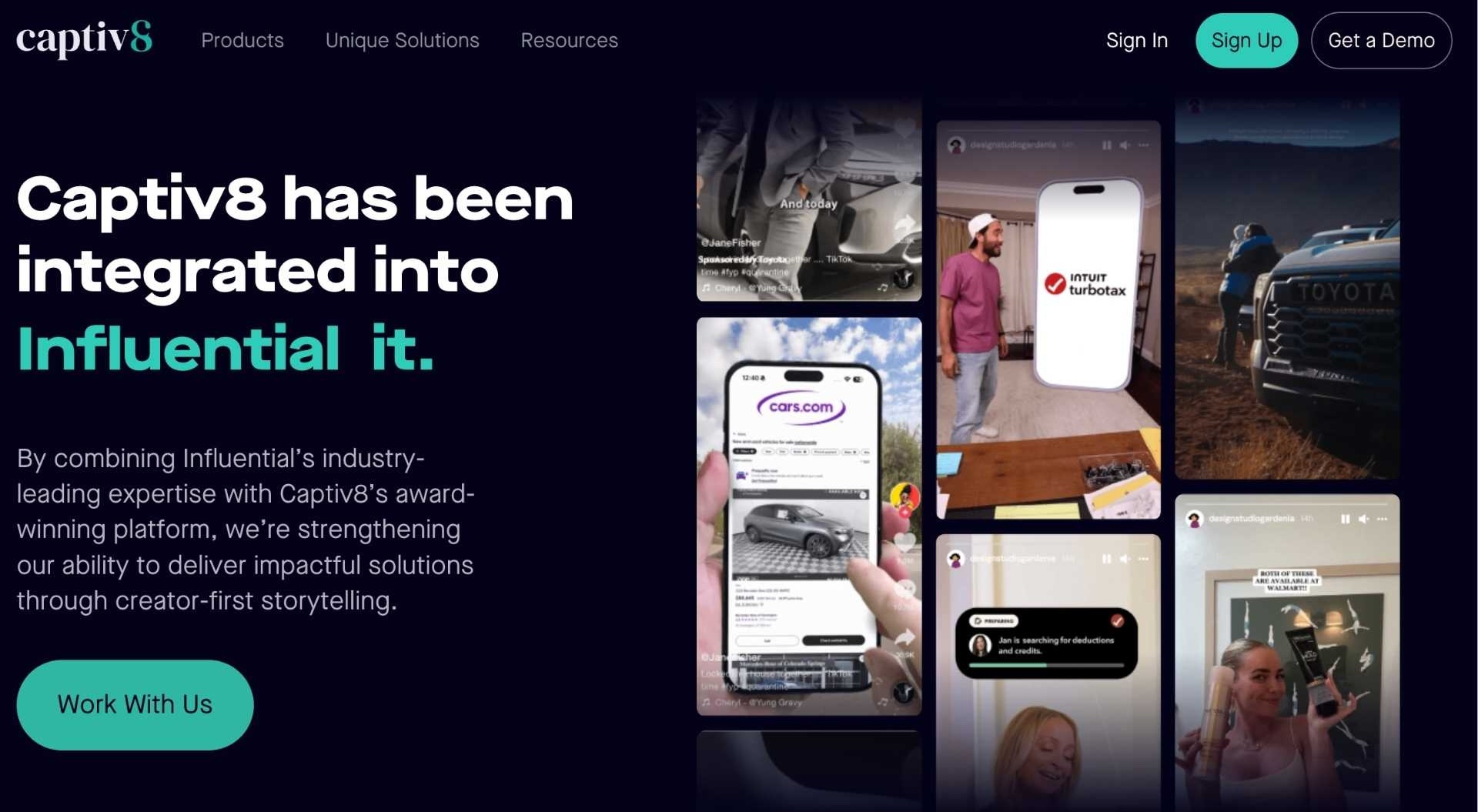
Captiv8 is an end-to-end influencer marketing platform aimed primarily at larger brands and enterprise teams. Its pitch centers on combining creator discovery, campaign management, commerce, payments, and deep measurement in one operating system. Captiv8 has also expanded further into creator commerce, shoppable storefronts, and enterprise reporting integrations, which makes it especially relevant for brands that view influencer marketing as a broader commerce engine rather than just a sourcing tool.
Key Features
- Advanced creator discovery: Captiv8 supports highly granular filtering across creator, content, audience, sentiment, brand safety, and competitor activity.
- Brand safety and competitive intelligence: Teams can search for competitor collaborations, branded mentions, sentiment signals, and safety-related content patterns before activating creators.
- Collaborative campaign workflows: Multiple stakeholders can review, approve, chat about, and manage creators inside the same campaign environment.
- Deep measurement and custom reporting: Captiv8 tracks sales, ROAS, EMV, clicks, engagements, shares, comments, saves, and more, with custom dashboards and shareable reporting.
- Creator commerce and affiliate tools: Brands can build trackable offers, discount codes, referrals, and shoppable experiences tied to commerce performance.
- Multi-currency payments: Captiv8 supports creator payouts in many currencies and centralizes documents, invoices, and payment approvals.
- Storefronts: Captiv8 launched branded storefronts to help brands and creators turn inspiration into direct shoppable experiences.
- API and analytics integrations: Enterprise teams can move campaign data into external analytics environments using pre-built reporting integrations and APIs.
Pricing
Starts from around $2,000/month or $25,000/year with an annual commitment, plus a $3,000 one-time onboarding fee.
Reviews
4.7 / 5.0 (G2)
Pros
- Storefronts give it a differentiated creator-commerce angle: Captiv8’s newer Storefronts product pushes it beyond traditional campaign management into shoppable creator commerce.
- Its measurement stack is built for enterprise reporting: Pre-built integrations for Looker, Tableau, and Google Analytics make it easier for larger teams to blend influencer data with the rest of their reporting stack.
- Captiv8 is unusually strong on commerce plus paid amplification: The platform combines affiliate workflows, Shopify/Refersion/WooCommerce commerce integrations, and paid amplification tools in one environment.
Cons
- Pricing is firmly enterprise-level: Between annual contracts, onboarding fees, and optional commerce add-ons, Captiv8 can be hard to justify for smaller or mid-market brands.
- There is a learning curve and some data-friction feedback: Users sometimes mention complexity, data inaccuracies, and search frustration when working through advanced workflows.
- Support and payment experiences are not consistently praised outside the most positive reviews: There is recurring feedback around responsiveness and payout issues, especially for teams expecting smoother operations at this price point.
Integrations
- Shopify: Run gifting, affiliate campaigns, and creator-driven sales tracking tied directly to your store.
- Refersion: Connect affiliate and referral workflows for discount codes, links, and performance-based creator payouts.
- WooCommerce: Use commerce integrations to manage gifting, inventory, and shoppable creator content outside a Shopify-only stack.
- Google Analytics: Pipe influencer campaign data into broader analytics workflows for more advanced measurement.
- Looker: Use pre-built integrations to bring creator and campaign data into custom reporting dashboards.
Upfluence vs Captiv8
Upfluence is generally the more accessible option for D2C brands that want Shopify, Amazon, affiliate tracking, and customer-to-creator discovery without going full enterprise. Captiv8 is the better fit when a brand needs enterprise reporting, broader creator-commerce infrastructure, and advanced collaboration or measurement layers, but it comes with significantly higher cost and complexity.


6. IZEA
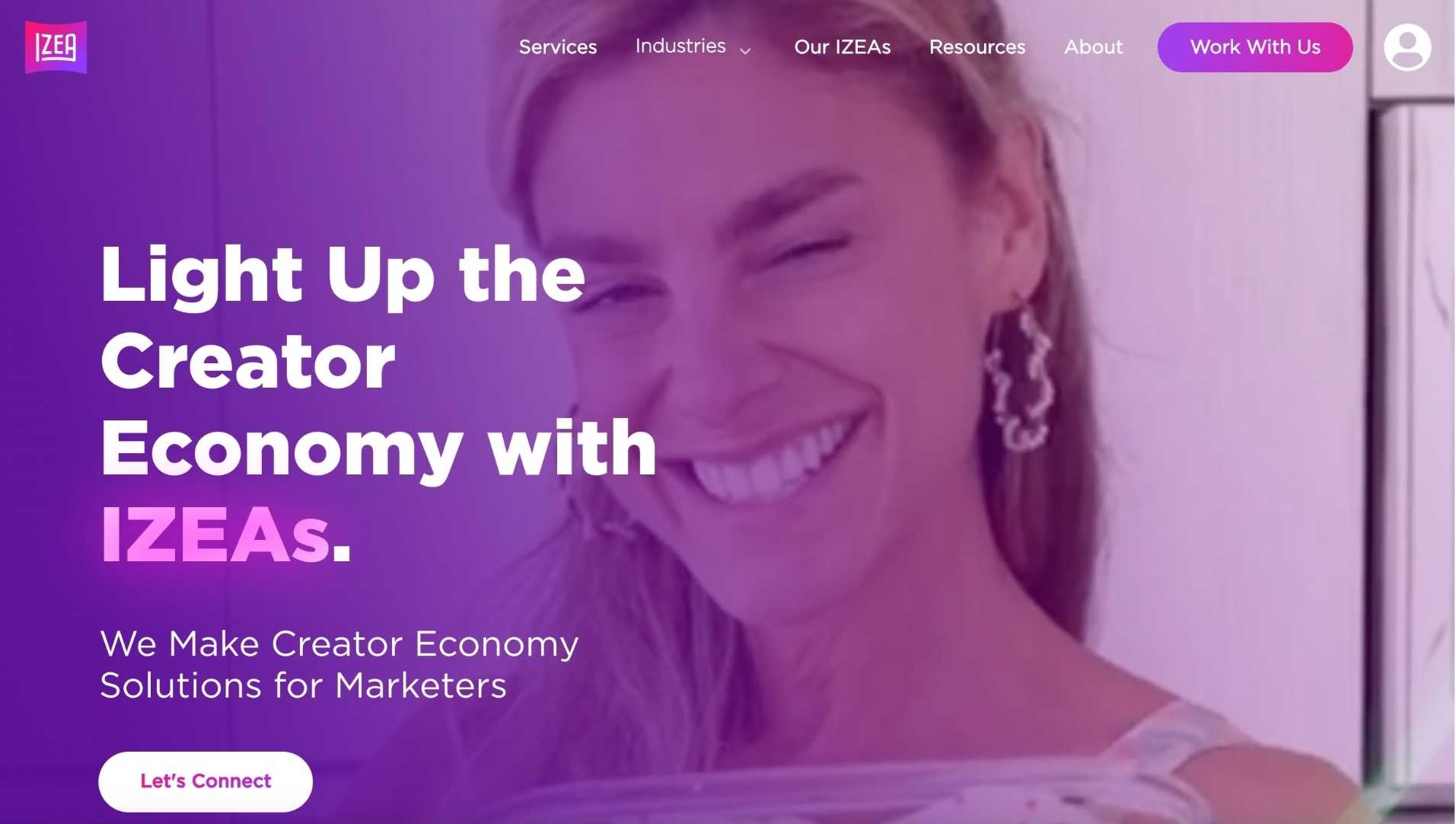
IZEA is one of the longest-standing influencer marketing platforms, originally focused on sponsored content marketplaces and now expanded into a full influencer marketing ecosystem. It offers discovery, campaign management, content collaboration, and payments, along with its proprietary creator marketplace and AI tools. IZEA is particularly known for combining influencer marketing with content production, making it a strong option for brands that want both creator partnerships and scalable UGC.
Key Features
- Creator marketplace (IZEA Marketplace): Brands can browse and hire creators directly from IZEA’s opt-in marketplace, which reduces cold outreach and speeds up campaign execution.
- Influencer discovery and search (Unity Suite): IZEA provides filters for audience demographics, engagement, niche, and performance data to identify relevant creators.
- Content collaboration workflows: Brands can manage briefs, approvals, revisions, and final content delivery directly within the platform.
- UGC and content production: IZEA supports both influencer campaigns and standalone content creation, allowing brands to source assets without full influencer partnerships.
- Campaign management and tracking: Includes timelines, deliverables, and centralized campaign dashboards to manage multiple creators.
- Payments and contracting: Built-in payment workflows handle creator payouts, contracts, and invoicing.
- AI-powered tools (IZEA Flex & AI): IZEA has introduced AI tools for content ideation, campaign setup, and creator matching.
- Performance analytics: Tracks engagement, reach, impressions, and campaign-level performance metrics.
Pricing
IZEA offers multiple pricing tiers depending on usage:
- IZEA Flex: Custom pricing based on usage and features (typically annual contracts).
- IZEA Marketplace: Pay-per-transaction model where brands pay per collaboration without committing to full platform pricing.
- No standardized public monthly pricing; enterprise-style contracts are common.
Reviews
3.9/ 5.0 (G2)
Pros
- Strong marketplace for quick creator activation: IZEA’s opt-in marketplace allows brands to launch campaigns faster without relying entirely on outbound outreach.
- Content + influencer hybrid model: Unlike many tools, IZEA is equally positioned for influencer campaigns and standalone UGC production.
- AI content and campaign tools: IZEA has invested in AI for content ideation and campaign workflows, making it more future-facing than older marketplace tools.
Cons
- Less focus on affiliate and revenue tracking: Compared to D2C-focused tools, IZEA is weaker on tying influencer campaigns directly to sales and ROI.
- Pricing can scale quickly: Costs can increase depending on marketplace usage and campaign volume.
- Discovery is more limited than open-database tools: The opt-in marketplace can restrict the breadth of creator discovery compared to public-data platforms.
Integrations
- Shopify: Track influencer-driven conversions and connect campaigns to your eCommerce store.
- Google Analytics: Measure campaign performance alongside broader marketing data.
- PayPal: Manage creator payouts and financial workflows directly through the platform.
- Instagram: Access creator data and performance insights for campaign planning.
- TikTok: Run campaigns and track performance across short-form video creators.
Upfluence vs IZEA
Upfluence is more focused on performance-driven influencer marketing with strong Shopify, Amazon, and affiliate tracking, while IZEA leans more toward marketplace-driven collaborations and content production. Brands prioritizing ROI tracking and customer-to-creator discovery may prefer Upfluence, while IZEA is better suited for fast campaign execution and UGC sourcing.
7. Modash
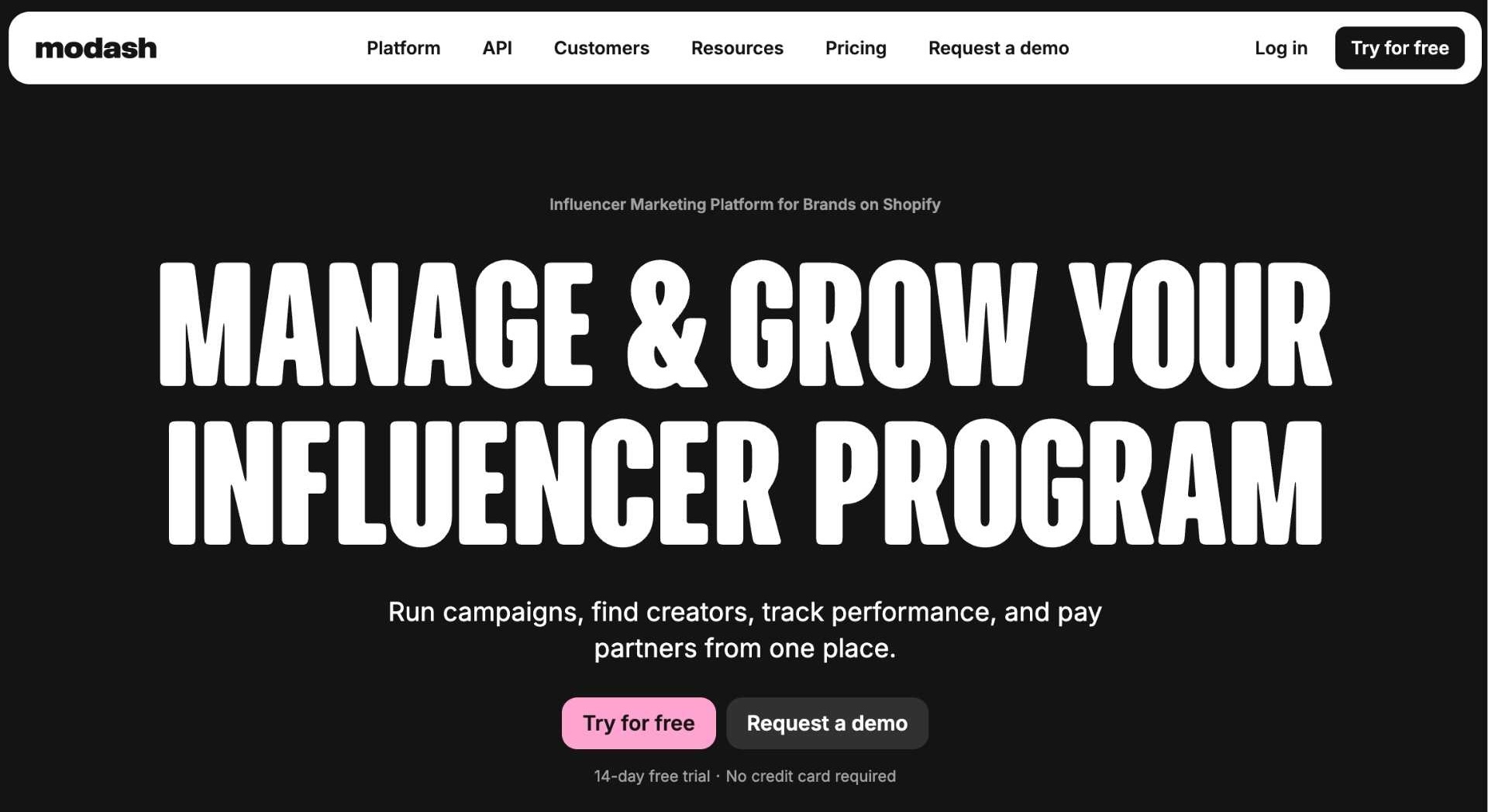
Modash is an influencer marketing platform built around large-scale creator discovery and analytics, with a strong focus on transparency and data accuracy. Unlike many tools, Modash uses a public-data approach, allowing brands to search a massive database of creators across Instagram, TikTok, and YouTube without requiring opt-in. It is particularly popular among D2C brands that want deep discovery capabilities without paying enterprise-level prices.
Key Features
- Massive creator database: Modash provides access to 200M+ creator profiles across major platforms, enabling broad discovery.
- Advanced filtering and audience insights: Filter by engagement, audience demographics, location, brand affinity, and follower quality.
- Fake follower detection: Built-in tools analyze audience authenticity and detect suspicious engagement patterns.
- Campaign tracking and monitoring: Automatically tracks influencer posts, mentions, and campaign performance.
- CRM and outreach management: Manage influencer lists, notes, and outreach workflows within the platform.
- Competitor and brand monitoring: Identify creators working with competitors or mentioning similar brands.
- Affiliate tracking (light): Supports tracking links and performance metrics, though less robust than full affiliate platforms.
- API access: Allows teams to integrate Modash data into internal systems or dashboards.
Pricing
- Essentials: starts at $199/month billed yearly or $299 month-to-month, for campaigns with up to 100 creators.
- Enterprise: starts at $14,700/year, with custom usage for larger programs above 250 creators.
- Free trial: Modash offers a 14-day free trial with no credit card required.
Reviews
4.9/5.0 (Capterra)
Pros
- Best-in-class creator discovery: Modash’s open database and filtering capabilities make it one of the strongest tools for finding niche influencers.
- Transparent and accessible pricing: Compared to enterprise tools, Modash is more affordable and flexible for growing brands.
- Strong data accuracy and audience insights: The platform emphasizes clean data, audience breakdowns, and authenticity metrics.
Cons
- Limited end-to-end campaign workflows: Modash is stronger on discovery than on full campaign management compared to all-in-one platforms.
- Affiliate and revenue tracking are not as advanced: Brands focused heavily on ROI attribution may need additional tools.
- No built-in creator marketplace: Requires more manual outreach compared to marketplace-driven platforms.
Integrations
- Shopify: Track influencer-driven sales and connect campaigns to store performance.
- Google Sheets: Export influencer data and campaign metrics for reporting.
- Zapier: Automate workflows and connect Modash with other tools.
- Slack: Send notifications and updates about campaigns and influencer activity.
- API: Build custom integrations with internal systems or dashboards.
Upfluence vs Modash
Upfluence is a more complete end-to-end platform with affiliate tracking, payments, and campaign workflows, while Modash excels specifically in discovery and data transparency. Brands that already have internal workflows and need better creator search may prefer Modash, while those looking for an all-in-one solution may lean toward Upfluence.
8. Klear
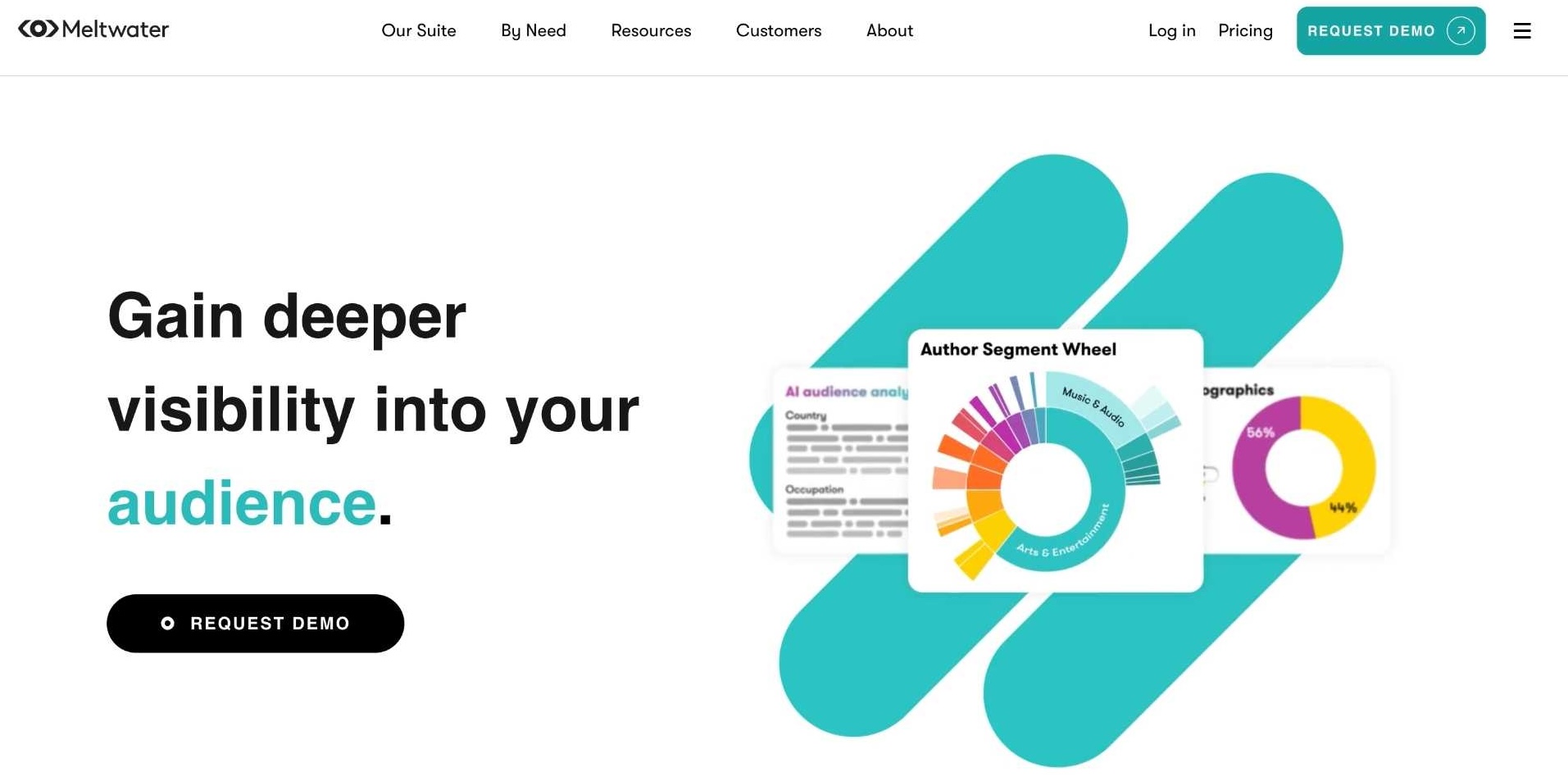
Klear is an influencer marketing platform (now part of Meltwater) that focuses on data-driven influencer discovery, relationship management, and analytics. It combines influencer marketing with social listening capabilities, making it a strong choice for brands that want to connect influencer campaigns with broader brand monitoring and PR efforts.
Key Features
- Advanced influencer discovery: Search creators by niche, demographics, engagement, and audience insights.
- Influencer scoring system: Klear assigns influence scores based on reach, relevance, and resonance.
- Campaign management tools: Manage outreach, approvals, and campaign execution within the platform.
- Relationship management (CRM): Track influencer interactions, history, and campaign participation.
- Social listening integration: Monitor brand mentions, trends, and conversations alongside influencer campaigns.
- Performance tracking and analytics: Measure engagement, reach, and ROI across campaigns.
- Audience demographics analysis: Understand audience breakdowns to ensure brand fit.
- Content tracking: Monitor influencer posts and campaign deliverables automatically.
Pricing
Starts from $2,300/month
Reviews
4.3 / 5.0 (G2)
Pros
- Strong combination of influencer marketing + social listening: Klear stands out for integrating influencer campaigns with broader brand monitoring.
- Detailed influencer scoring and analytics: Its scoring system helps brands evaluate creators more objectively.
- Backed by Meltwater’s data infrastructure: Offers stronger data coverage and insights compared to standalone tools.
Cons
- Enterprise-focused pricing: Not ideal for smaller D2C teams with limited budgets.
- Interface can feel dated or complex: Some users report a steeper learning curve.
- Less emphasis on affiliate and eCommerce workflows: Not as strong for Shopify-driven revenue tracking.
Integrations
- Meltwater: Connect influencer campaigns with PR and social listening data.
- Shopify: Track influencer-driven conversions and product performance.
- Google Analytics: Measure campaign impact alongside website analytics.
- Instagram: Access creator data and campaign performance.
- TikTok: Run and track campaigns across short-form video creators.
Upfluence vs Klear
Upfluence is more tailored for D2C brands focused on revenue attribution and affiliate workflows, while Klear is better suited for brands that want influencer marketing combined with social listening and PR insights. Upfluence is typically more commerce-focused, whereas Klear is more data and analytics-driven.
9. Traackr
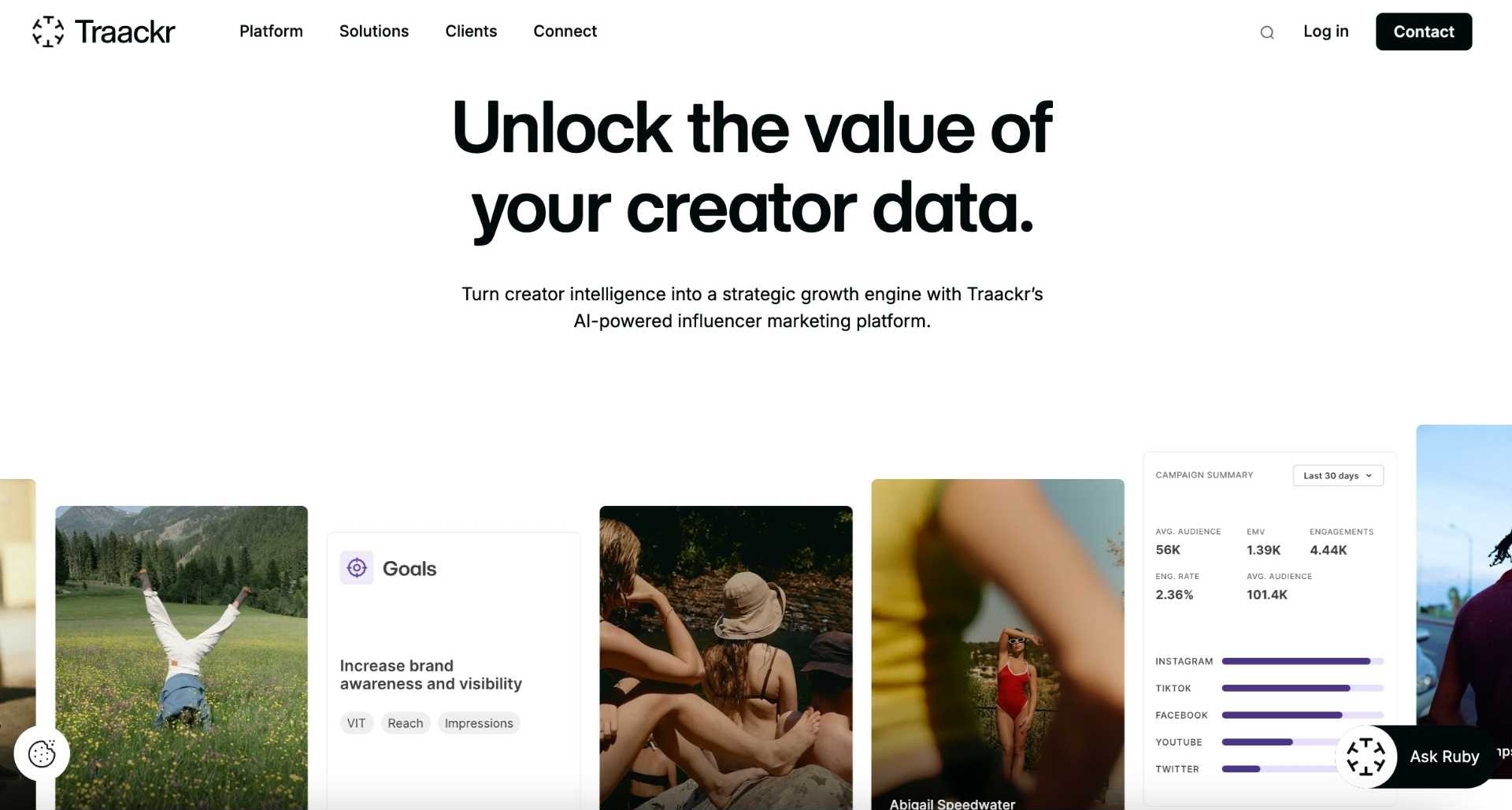
Traackr is an enterprise influencer marketing platform designed for large brands that need global campaign management, influencer discovery, and performance measurement at scale. It is widely used by global consumer brands and focuses heavily on data accuracy, benchmarking, and strategic influencer program management.
Key Features
- Global influencer discovery: Access a large database of creators across regions, with strong international coverage.
- Influencer relationship management: Track long-term partnerships, history, and performance across campaigns.
- Campaign planning and execution: Manage campaigns across multiple markets and teams.
- Benchmarking and competitive insights: Compare performance against competitors and industry benchmarks.
- Spend and ROI tracking: Analyze influencer spend, EMV, and ROI across campaigns.
- Advanced reporting dashboards: Customizable dashboards for stakeholders and leadership teams.
- Brand safety and compliance tools: Ensure campaigns align with brand guidelines and regulations.
- Data-driven influencer scoring: Evaluate creators based on performance and audience quality.
Pricing
Pricing started at $32,500/year for a standard package, with custom-built plans and annual billing.
Reviews
4.3 / 5.0 (G2)
Pros
- Strong global campaign management: Ideal for brands running influencer programs across multiple markets.
- Best-in-class benchmarking and reporting: Traackr is known for its performance benchmarking and competitive insights.
- Enterprise-grade data and compliance: Built for large organizations with strict requirements.
Cons
- High cost and complexity: Not suited for smaller or mid-market D2C brands.
- Less focus on automation and ease of use: Compared to newer tools, workflows can feel heavy.
- Limited affiliate and commerce integrations: Not as strong for Shopify-driven programs.
Integrations
- Shopify: Track influencer-driven sales and campaign performance.
- Google Analytics: Combine influencer data with website analytics.
- Tableau: Export and visualize campaign data in advanced dashboards.
- Slack: Receive campaign updates and notifications.
- API: Integrate Traackr data into internal systems.
Upfluence vs Traackr
Upfluence is more accessible and commerce-focused for D2C brands, while Traackr is built for enterprise teams managing global influencer programs. Traackr excels in benchmarking and reporting, whereas Upfluence is stronger in affiliate tracking and eCommerce integrations.
10. IMAI (InfluencerMarketing.ai)

IMAI (InfluencerMarketing.AI) is an influencer marketing platform that focuses on AI-driven discovery, analytics, and campaign management. It combines influencer search, outreach, and reporting with AI-powered recommendations, making it a strong option for teams that want data-driven decision-making without enterprise complexity.
Key Features
- AI-powered influencer discovery: Uses machine learning to match brands with relevant creators based on niche, audience, and performance.
- Large influencer database: Access millions of creators across Instagram, TikTok, and YouTube.
- Fraud detection and audience quality analysis: Identify fake followers and suspicious engagement patterns.
- Campaign management tools: Manage outreach, approvals, and campaign workflows in one place.
- Performance analytics and reporting: Track engagement, reach, ROI, and campaign results.
- Competitor tracking: Identify influencers working with competitors and analyze their performance.
- Lookalike creator search: Find similar influencers based on successful partnerships.
- Content tracking and monitoring: Automatically track posts and campaign deliverables.
Pricing
Starting price at $99/month and notes that a free trial is available.
Reviews
4.5 / 5.0 (G2)
Pros
- Strong AI-driven discovery and recommendations: IMAI stands out for its use of AI to improve creator matching and campaign efficiency.
- Good balance between features and pricing: Offers many enterprise-level features without the same cost barrier.
- Robust fraud detection tools: Helps brands avoid wasted spend on low-quality influencers.
Cons
- Interface and UX can feel less polished: Some users report a less intuitive experience compared to newer tools.
- Limited native integrations compared to larger platforms: May require additional tools for full workflows.
- Reporting customization can be limited: Not as flexible as enterprise reporting platforms.
Integrations
- Shopify: Track influencer-driven revenue and connect campaigns to store data.
- Google Analytics: Measure campaign performance alongside website metrics.
- Instagram: Access influencer data and track campaign results.
- TikTok: Manage and analyze campaigns across short-form video creators.
- YouTube: Track influencer performance and video engagement metrics.
Upfluence vs IMAI
Upfluence is stronger for D2C brands that want deep Shopify integrations, affiliate tracking, and customer-based influencer discovery, while IMAI is more focused on AI-driven discovery and analytics. Brands prioritizing automation and data-driven matching may lean toward IMAI, while those focused on revenue attribution and commerce workflows may prefer Upfluence.
Final Thoughts on Upfluence Alternatives
Upfluence remains a strong option for D2C brands that want a tightly integrated influencer marketing workflow tied to eCommerce performance, particularly through Shopify and Amazon. However, as the ecosystem has evolved, many alternatives now offer more flexibility in pricing, better discovery capabilities, or more streamlined workflows depending on a brand’s stage. Platforms like Aspire and Captiv8 cater to larger teams needing structured workflows and enterprise-level capabilities, while tools like SARAL, Influencer Hero, and Modash focus more on usability, affordability, and operational efficiency for leaner teams.
Ultimately, the right choice depends on how a brand approaches influencer marketing—whether the priority is discovery, automation, content production, or revenue attribution. Some platforms stand out for their marketplaces and inbound creator pipelines, while others differentiate through AI-driven insights or deeper analytics. Evaluating these Upfluence alternatives comes down to aligning platform strengths with your team’s resources, campaign scale, and how closely you need influencer efforts tied to measurable business outcomes.

.png)


.jpg)