

10 Best Trendhero Alternatives for Influencer Marketing
Most brands start looking for Trendhero alternatives once they have found the right creators and need a way to actually work with them. Trendhero is a popular Instagram analytics tool that checks audience quality and fake followers from $9.99 a month, which makes it a practical first step for vetting creators before paying them.
The platform is built for research rather than campaign work, so outreach at scale, gifting, affiliate tracking, content approvals and creator payments all have to happen in other tools. As an influencer program grows, that usually means a second or third subscription and a lot of copying data between spreadsheets.
This guide compares influencer marketing platforms that cover more of that workflow, with pricing, features, reviews and integrations for each one, so D2C brands can see which option fits their team and budget.
The 10 Trendhero alternatives covered in this guide are Influencer Hero, Upfluence, Afluencer, CreatorIQ, Skeepers, Klear, Later, Creator.co, Insense and Lefty.
Key Criteria for Evaluating Influencer Marketing Platforms
Core Features
Evaluation of essential influencer marketing capabilities, including influencer discovery, outreach, CRM, campaign management, reporting, and content workflows.
Pricing & Flexibility
Comparison of pricing models, subscription plans, and contract terms to match different budgets and growth stages.
Customer Reviews & Satisfaction
Analysis of user feedback from trusted review platforms, focusing on usability, reliability, customer support, and overall performance.
Pros & Cons
Review of each platform’s strengths and limitations to highlight where it performs well and where it may fall short based on different use cases.
Integrations
Review of the most important integrations (e.g., Shopify and other tech tools), highlighting what each integration enables in one sentence.
Trendhero Overview
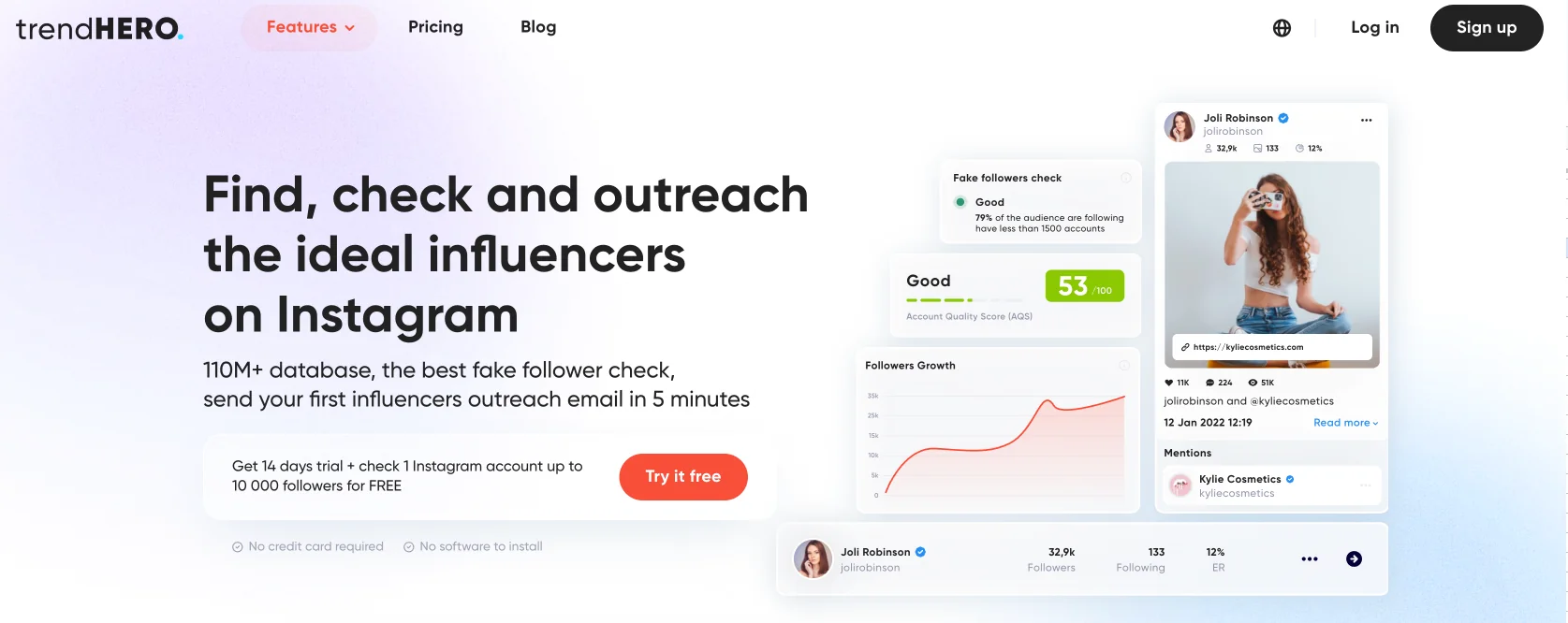
Trendhero is an Instagram analytics and influencer search platform used by small brands, social media managers and agencies to audit creator accounts before a partnership. Its core product is the account report, which shows audience demographics, engagement rate, follower growth history and the share of followers that look fake, so teams can check whether an audience is real before they spend money on it.
Around the reports, Trendhero offers search across a database of 100M+ Instagram accounts, lookalike discovery, story and ad post tracking, and a basic option for sending offers by email. It sits alongside other influencer discovery tools as a low-cost way to research creators, while campaign management happens elsewhere.
Key Features
- Account reports: Each report covers audience demographics, engagement rate, follower growth and audience quality, giving brands a clear picture of a creator before they reach out.
- Fake follower and like detection: Every paid plan flags suspicious followers and likes, which helps teams avoid paying creators whose reach is inflated.
- Influencer discovery: Brands can search 100M+ Instagram accounts with 20 filters and AI keywords, making it easier to build a shortlist around niche, location and audience.
- Similar accounts: Quick and deep lookalike searches surface creators who resemble a partner that already performs well, so teams can expand a roster faster.
- Ad post and story tracking: Teams can search sponsored posts and track stories for selected accounts, which shows what a creator has promoted recently and how it performed.
Pricing
Trendhero publishes five plans, and every paid tier is metered by the number of full account reports included each month. Billing for six months at once takes 30% off every plan, and a 14-day trial is available without a credit card.
- Free: $0 a month, with engagement rate checks, follower growth previews and favourites
- Lite: $9.99 a month, with 10 reports a month, lists and tracking for 3 accounts
- Pro: $29.99 a month, with 50 reports a month, search across the 100M+ database, exports and outreach at 200 emails a month
- Pro Plus: $69.99 a month, adding creator email addresses, contact access and one invited team member
- Advanced: $99.99 a month, with 200 reports a month, higher search limits, 10 team members and API testing access
Contact details only unlock on Pro Plus, so brands that plan to reach out to the creators they analyse should budget for the $69.99 plan rather than the $29.99 one.
Reviews
4.4/5.0 (G2, 131 reviews) and 4.6/5.0 (Trustpilot, 514 reviews)
Integrations
- Instagram: Profile, audience and content data all come from Instagram, which is the platform Trendhero is built around.
- Excel export: Reports, account lists and follower history export to Excel so teams can share shortlists with colleagues or clients.
- PDF export: Account reports export as PDFs, which makes it easy to send a creator audit to a stakeholder for approval.
- Email outreach: Offers can be sent to creators from inside the platform, with monthly limits of 200 or 500 emails depending on the plan.
- API testing: The Advanced plan includes API testing access for teams that want to pull Trendhero data into their own tools.
Trendhero does not publish any Shopify, eCommerce, CRM or affiliate integrations, so sales from creator campaigns cannot be tracked inside the platform.
Pros
- Low-cost audience audits: Fake follower detection is included from $9.99 a month, which makes it affordable to check a creator before committing budget.
- Unused reports roll over: On monthly billing, reports that are not used carry forward, which suits brands whose campaign activity changes from month to month.
- Large review base: More than 600 reviews across G2 and Trustpilot give buyers plenty of independent feedback to read before subscribing.
Common Drawbacks of Trendhero
Built for Instagram only
All data, search and tracking focus on Instagram, so brands running creator campaigns on TikTok or YouTube need a second tool for those channels.
Contact access costs more
Creator email addresses only unlock on the $69.99 Pro Plus plan, which is more than double the price of the Pro plan with the same 50 reports.
No campaign management
There is no CRM, gifting workflow, affiliate tracking or creator payments, so everything after the research stage happens in other software.
Data accuracy complaints
Some reviewers mention broken charts, slow reports and figures that do not match what they see on Instagram, which is worth testing during the trial.
Best Trendhero Alternatives
| TOOL | REVIEWS | BEST FOR | TRIAL INFO | PRICING | ||
|---|---|---|---|---|---|---|
1 |

|
⭐ | Influencer CRM & automation | Book Demo | Pricing | Website |
2 |
|
⭐ | Influencer discovery | Book Demo | Pricing | Website |
3 |

|
⭐ | Influencer marketplace campaigns | Book Demo | Pricing | Website |
4 |

|
⭐ | Enterprise influencer marketing | Book Demo | Pricing | Website |
5 |

|
⭐ | Influencer gifting & UGC campaigns with micro-influencers | Book Demo | Pricing | Website |
6 |
|
⭐ | Influencer analytics | Book Demo | Pricing | Website |
7 |

|
⭐ | Social media & influencer campaigns | Book Demo | Pricing | Website |
8 |

|
⭐ | Influencer campaigns & creator marketplace | Book Demo | Pricing | Website |
9 |

|
⭐ | UGC creators & paid social ads | Book Demo | Pricing | Website |
10 |
|
⭐ | Influencer analytics & discovery | Book Demo | Pricing | Website |
Influencer Hero
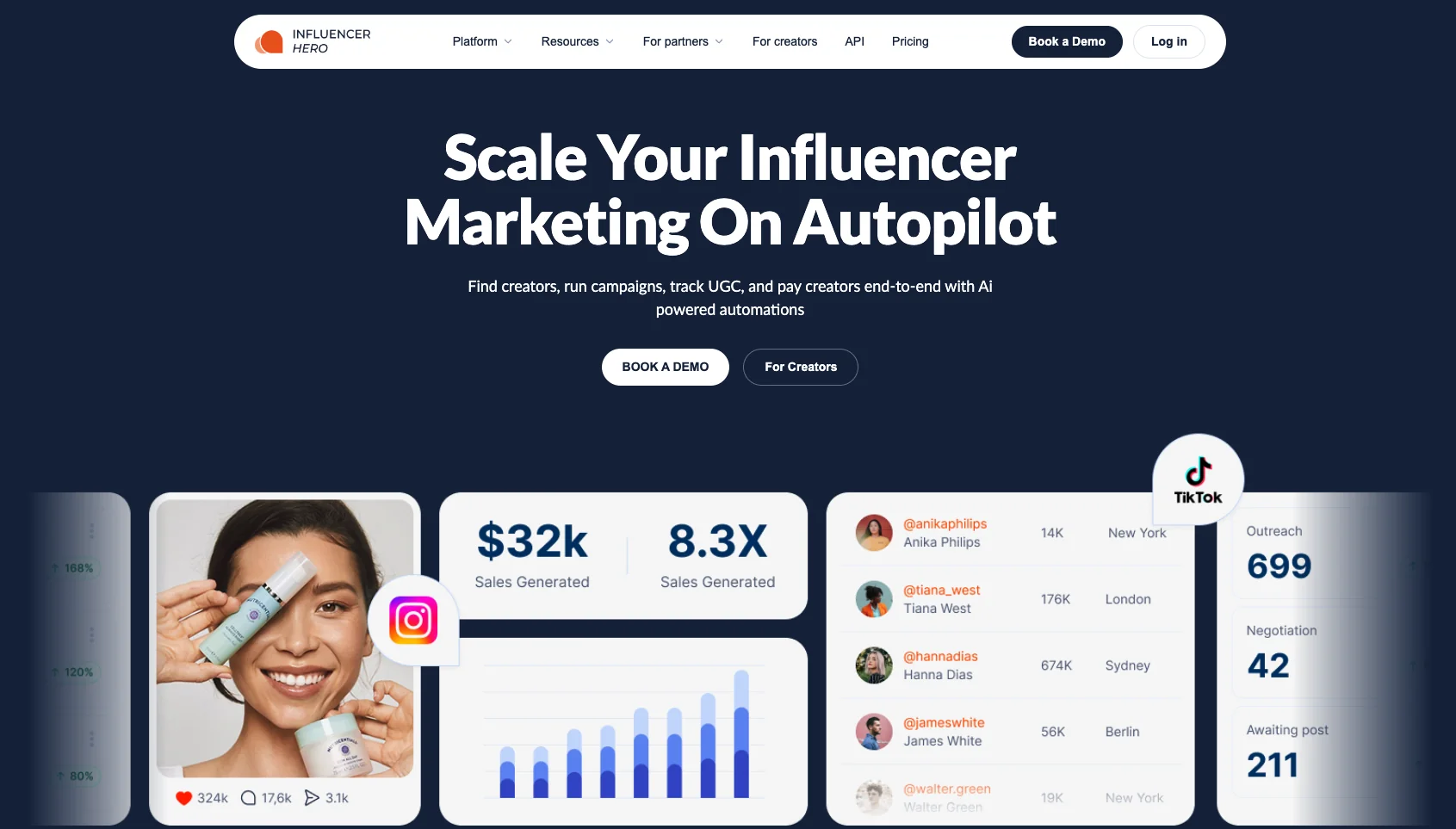
Influencer Hero is an all-in-one influencer marketing platform for D2C and eCommerce brands that want to run creator discovery, outreach, CRM, gifting, UGC, affiliate tracking and payouts from one place. It is known for its automation-heavy CRM, which helps lean teams manage hundreds or thousands of creator relationships without adding headcount.
Key Features
- Global creator database: Brands can search 450M+ creator profiles across Instagram, TikTok and YouTube, with built-in fraud detection so every shortlist starts with real audiences.
- 20+ search filters: Filters for location, audience demographics, interests, engagement rate and follower quality help teams find creators who match their customer profile.
- Influencer brand followers: The platform identifies creators who already follow or engage with your brand, which makes outreach warmer and improves reply rates.
- Automated outreach: Bulk or one-to-one emails, drip sequences and AI follow-up suggestions keep conversations moving without manual chasing.
- Multichannel inbox: Email, Instagram DM and WhatsApp conversations sync into one inbox and are logged against the right creator and campaign.
- Influencer CRM: Campaign boards, custom fields and automations track every creator from first contact to posted content, with a dedicated influencer CRM built for large seeding programs.
- Gifting and product seeding: Shopify and WooCommerce integrations send gifts automatically and track shipping and delivery, so seeding campaigns run without spreadsheets.
- Affiliate tracking and payouts: Custom links, discount codes and commission tracking connect creators to sales, with bulk payouts at fees of 0.1% to 0.4%.
Pricing
Influencer Hero publishes its pricing, with plans based on monthly reachout volume rather than the number of creators in the CRM:
- Standard: $649 a month, up to 1,000 reachouts a month
- Pro: $1,049 a month, up to 5,000 reachouts a month
- Business: $2,490 a month, up to 10,000 reachouts a month
- Custom & Agency: custom pricing for larger teams and agencies
Quarterly billing takes 20% off and yearly billing takes 30% off, and all plans include the core feature set.
Reviews
5.0/5.0 (Capterra)
Pros
- Automated, personalized outreach: Influencer Hero sends AI-enhanced email flows with personalized sentences, so brands can contact thousands of creators while each message still feels relevant. The AI Response Drafter and AI Followup Suggestions speed up every reply and follow-up. This helps teams improve reply rates and build longer creator relationships without writing every email by hand.
- Chrome extension: While browsing Instagram, TikTok or YouTube, teams can open the Chrome extension to see a creator’s key stats instantly. Promising profiles can then be added to a campaign in one click. This turns everyday social browsing into a quick sourcing workflow, instead of copying handles into a separate tool.
- Influencer brand followers: Influencer Hero finds creators who already follow or engage with your brand, which gives outreach a natural starting point. These creators tend to reply more often because they already know the products. It also makes campaigns feel more authentic to their audiences, since the recommendation comes from a real fan.
- Advanced CRM automations and integrations: The CRM connects with tools such as DocuSign, GoAffPro, Klaviyo, Slack and Zapier, which lets teams automate contracts, affiliate tracking, email flows and internal alerts. Campaign board automations trigger actions whenever a creator moves stages. Together, this keeps large programs organized without manual updates.
Cons
- No free trial: Brands cannot test the platform on their own before paying, so the best way to see it is through a demo.
- Expensive for smaller brands: Plans start at $649 a month, which is a meaningful commitment for brands that are only starting with influencer marketing.
- Steep learning curve: The platform covers many workflows, so new teams need some time to set up campaigns and learn the automations.
Integrations
- Shopify: Gifting orders, discount codes and affiliate sales sync with the store, so ROI is tracked per creator.
- WooCommerce: WooCommerce stores get the same gifting and affiliate tracking, and custom builds connect through an embedded script.
- Klaviyo: Creator and customer data flow into Klaviyo, which helps brands segment audiences and trigger email flows around campaigns.
- DocuSign: Creator contracts are sent and signed from the CRM, and signed agreements stay attached to the right deal.
- Slack: Campaign updates and brand-risk alerts go straight to team channels so nobody misses an important reply.
Trendhero vs Influencer Hero
Trendhero does a good job of auditing Instagram audiences at a very low price, and its fake follower checks help brands avoid paying for inflated reach. The platform’s focus stays on research, though, so once a creator passes the audit, brands still need other tools to contact them, send products, track sales and pay commissions. Influencer Hero covers those stages as well, combining a 450M+ creator database and fraud detection with automated outreach, a CRM with campaign board automations, Shopify and WooCommerce gifting, affiliate codes and creator payouts at 0.1% to 0.4%. This makes it a complete influencer marketing platform rather than one step of the workflow.
The pricing gap looks large at first, since Trendhero Pro Plus costs $69.99 a month and Influencer Hero Standard costs $649 a month, or about $454 a month with yearly billing. The difference is what each subscription replaces. With Trendhero, brands still pay separately for an outreach tool, an affiliate app and a payment provider, plus the time spent moving data between them. Influencer Hero includes all of those in one published plan, with up to 1,000 reachouts a month and no cap on creators in the CRM. For D2C brands that want to turn creator research into sales, Influencer Hero is the better investment.
Upfluence
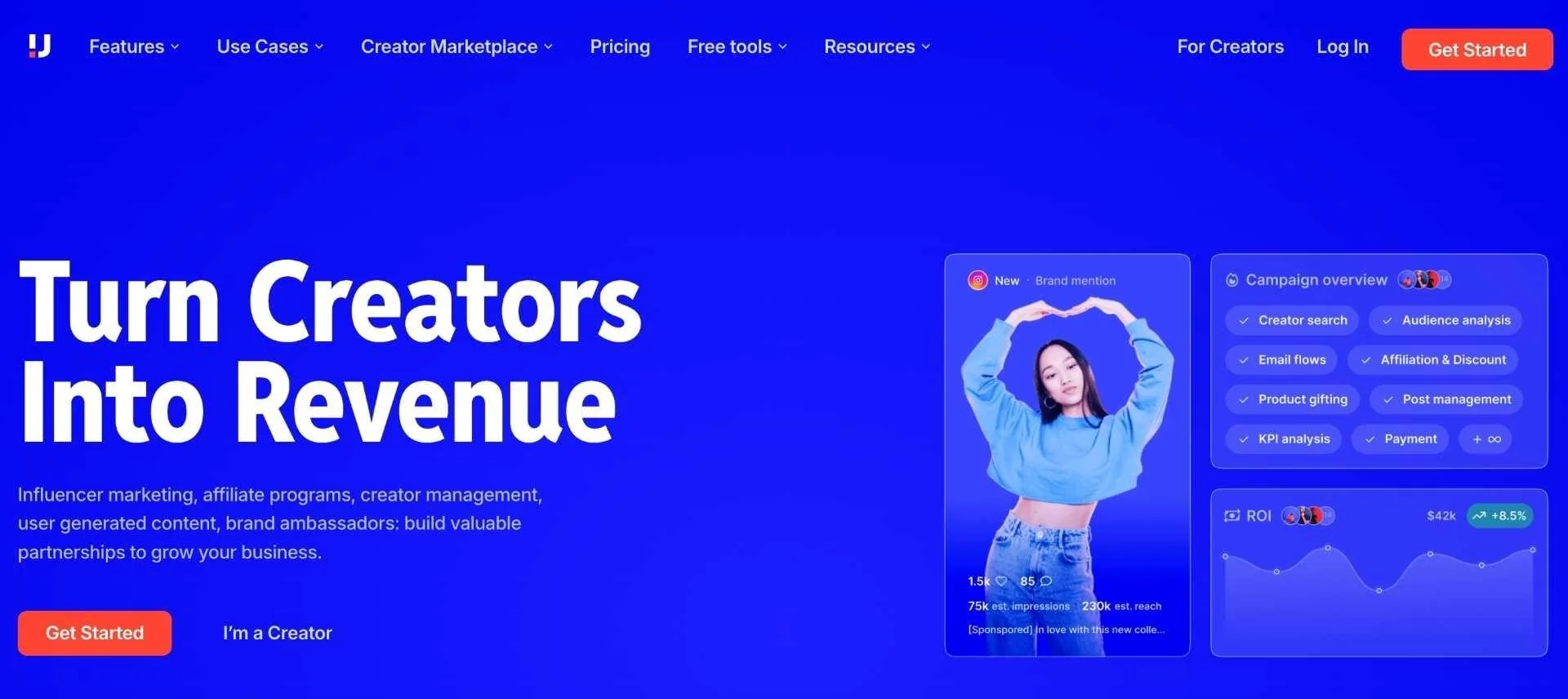
Upfluence is an influencer and affiliate marketing platform built for eCommerce brands, Amazon sellers and agencies that want to connect creator activity to revenue. It is known for matching influencers against a brand’s own customer and email lists, and for its native integrations with Shopify and Amazon.
Key Features
- Customer-to-creator matching: Upfluence scans a brand’s store and email lists for customers who are also creators, which is a quick way to find people who already like the products.
- Jaice AI: An AI co-pilot helps with creator selection, campaign setup and outreach, which reduces the manual work of launching a new campaign.
- Upfluence Marketplace: Creators can apply to campaigns in one click, giving brands a source of inbound interest alongside outbound search.
- Affiliate and code management: Brands create affiliate links and promo codes and track commissions, so each creator’s sales are attributed automatically.
- Upfluence Pay: Creator payouts run in multiple currencies with built-in KYC checks and automated tax forms.
Pricing
Upfluence does not publish its pricing. Plans are quoted based on team size and program volume, require a 12-month minimum contract and charge a fixed platform fee rather than a share of creator sales. Third-party purchasing data puts typical contracts at around $15,000 a year, and the payments module is only included on the top tier.
Reviews
4.6/5.0 (G2, 140 reviews) and 4.4/5.0 (Capterra, 44 reviews)
Pros
- Strong eCommerce attribution: Native store integrations tie creator activity to orders, which suits brands that judge influencer marketing by revenue.
- Finds creators among customers: Matching against customer lists helps brands recruit people who already buy from them, which usually improves reply rates.
- Helpful onboarding: Reviewers often mention responsive support and a dedicated account manager on every plan.
Cons
- Annual commitment: The 12-month minimum contract can be a blocker for smaller D2C teams that want a monthly option.
- Learning curve: Some users find the interface heavy and say it takes time to get comfortable with the workflows.
- No published price: Brands need a sales call before they can plan a budget.
Integrations
- Shopify: Brands generate coupon codes, send products and track creator-driven sales from their store.
- Amazon Attribution: Affiliate activity is connected to Amazon sales for brands that sell on the marketplace.
- Klaviyo: Brands find influencers inside their email lists and enrich those profiles with social data.
- Gmail and Outlook: Outreach runs from the brand’s own inbox so replies stay organized inside Upfluence.
- Refersion: Existing affiliate programs connect to Upfluence so creators can be activated without rebuilding tracking.
Trendhero vs Upfluence
Both Trendhero and Upfluence help brands find and evaluate creators, but Upfluence stands out with a full campaign workflow that runs from discovery through outreach, affiliate codes and creator payments. Its customer-matching feature also gives brands a warmer list of creators than a database search alone, and it fits well with other affiliate payment tools in an eCommerce stack.
Trendhero, on the other hand, focuses on low-cost audience audits with transparent monthly pricing and no long contract. That makes it far cheaper to start with, while Upfluence is priced as an annual investment. For brands that already sell on Shopify and Amazon and want creator sales attributed across both, Upfluence is the one to look at.
Afluencer
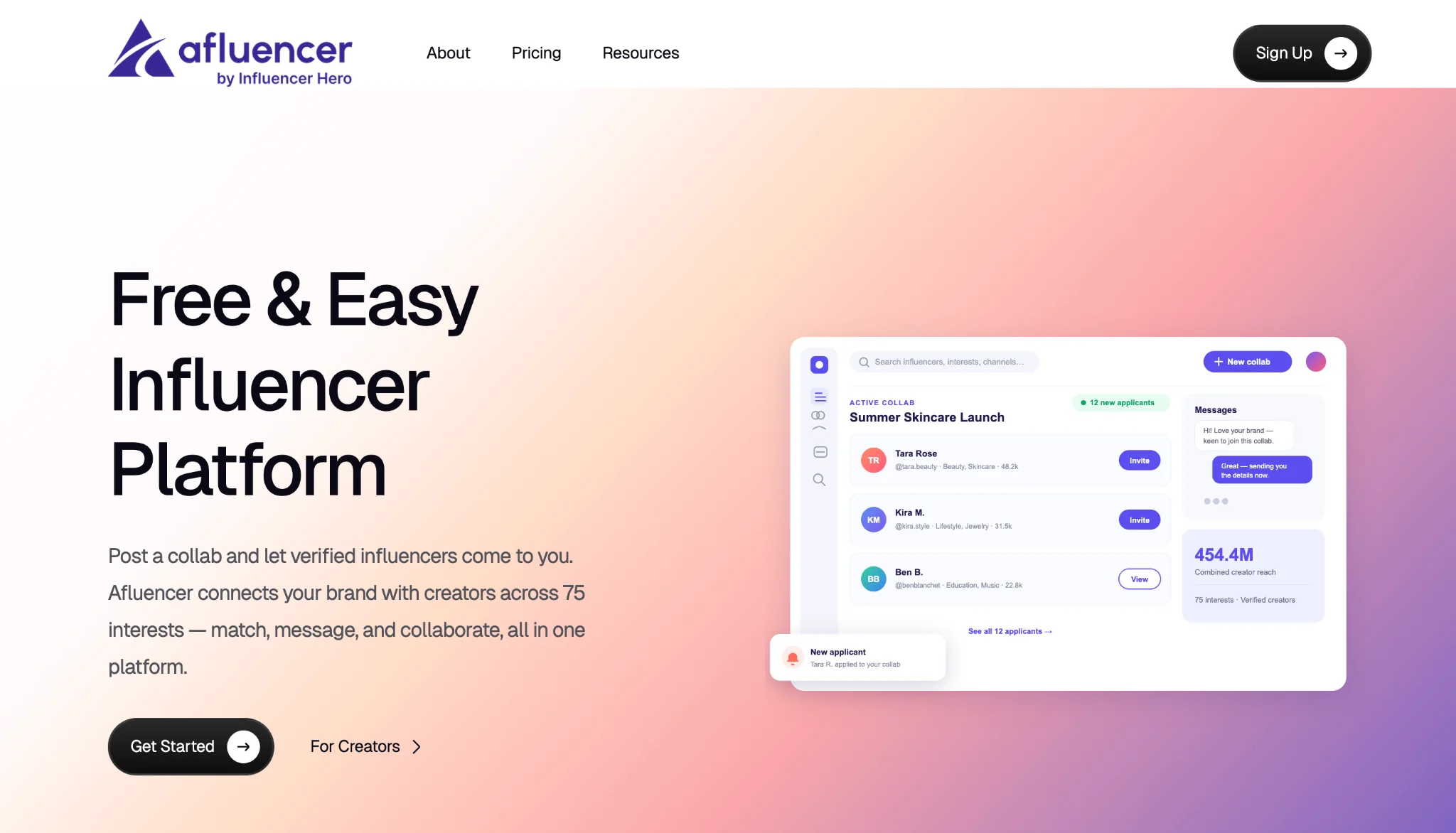
Afluencer is an influencer marketplace for small businesses and Shopify brands, where companies post collaborations and verified creators apply to work with them. It is known for its simple setup, an affordable entry plan and a large community of micro-influencers who actively look for brand partnerships.
Key Features
- Collaboration listings: Brands post a collab with the product, deliverables and requirements, and interested creators apply directly, which reduces cold outreach.
- Verified creator community: Creators register and verify their accounts before applying, so brands review real people rather than scraped profiles.
- CreatorGPT matching: AI sorts applicants by fit with the brief, helping teams review a long list of applications in less time.
- Invitation credits: The Marketplace plan includes 60 invitation credits a month, so brands can also invite creators they find in the directory.
- Premium filters: Search filters for niche, platform and audience help brands find micro-influencers that match their target customer.
Pricing
- Marketplace: $49 a month, with 60 invitation credits a month, premium filters and phone, email and live chat support
- Standard: $649 a month, with 1,000 reachouts a month, product send-outs and influencer payments
- Pro: $1,049 a month, with 5,000 reachouts a month, a dedicated account manager and 3+ seats
Reviews
4.6/5.0 (G2, 738 reviews) and 4.1/5.0 (Shopify App Store, 37 reviews). Many of the G2 reviews come from creators rather than brands.
Pros
- Affordable entry point: Paid plans start at $49 a month, which makes it easy for small brands to test influencer marketing.
- Creators who want to collaborate: Applicants have already chosen to work with the brand, which usually leads to faster replies and smoother collaborations.
- Room to grow: Higher plans add reachouts, product send-outs and influencer payments as the program expands.
Cons
- Results depend on the brief: A vague collab listing tends to attract fewer relevant applicants, so brands need to write clear briefs.
- Thinner supply in some regions: Some reviewers mention fewer creators outside the US.
- Lighter audience analytics: Audience data is less detailed than in dedicated analytics tools.
Integrations
- Shopify: The Shopify app connects the store so brands can manage creator collaborations alongside their products.
- Klaviyo: Creator contacts can move into Klaviyo so brands keep influencer and customer communication in one system.
- Amazon: Brands that sell on Amazon can point creator campaigns toward their marketplace listings.
- DocuSign: Collaboration agreements are signed digitally before a creator starts working on content.
- Slack: New applications and updates reach the team in Slack so applicants get a quick response.
Trendhero vs Afluencer
Trendhero and Afluencer both suit smaller budgets, but Afluencer stands out by bringing creators to the brand instead of asking the brand to search for them. Creators apply to collab listings, and CreatorGPT helps sort the applicants, which saves time for teams that do not have hours to spend on research.
Trendhero, on the other hand, focuses on analysing creators a brand has already found, with detailed audience and fake follower reports. The two tools answer different questions: one checks whether a creator is genuine, while the other delivers creators who are ready to collaborate. For small brands that struggle to get replies from cold outreach, Afluencer makes more sense.
CreatorIQ
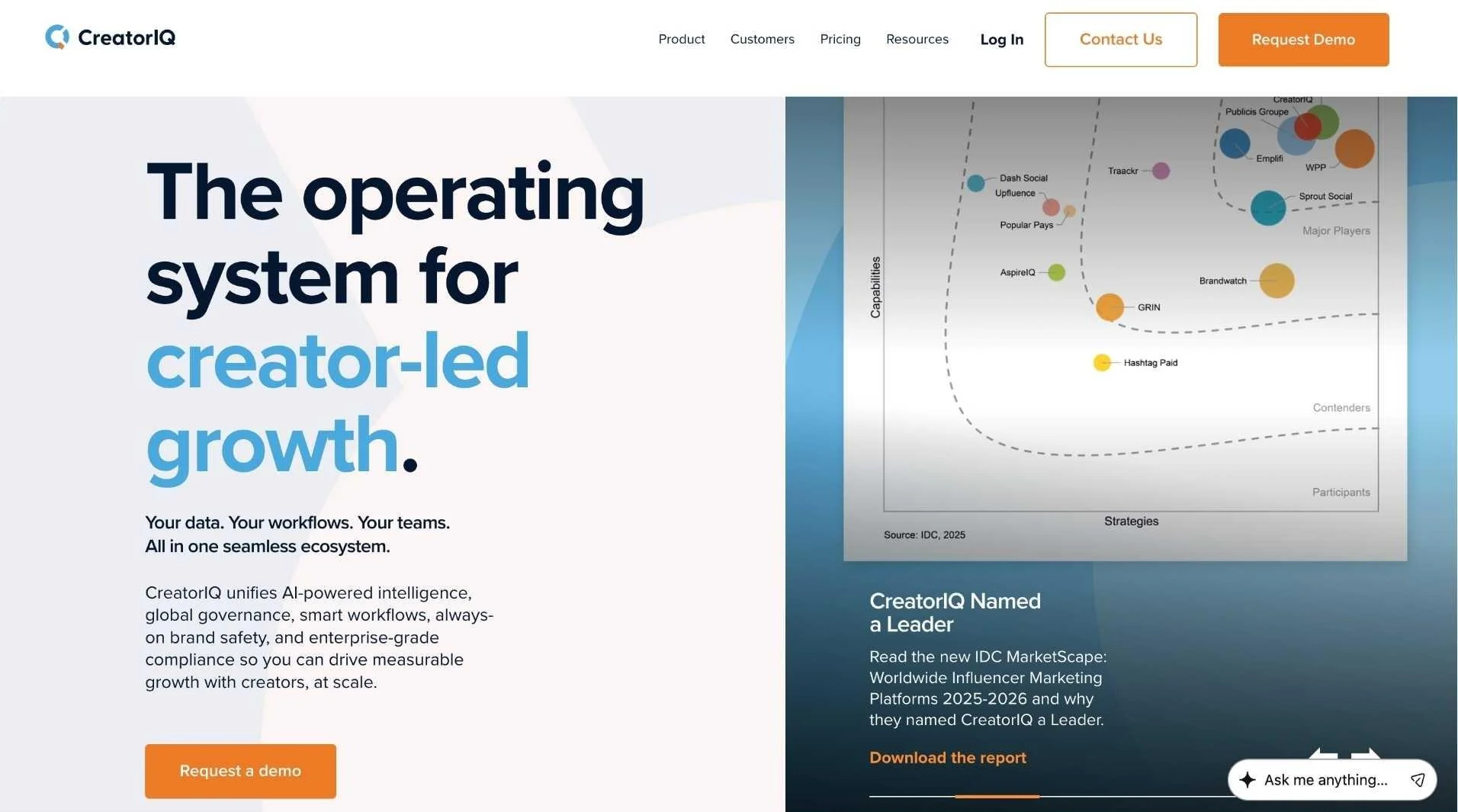
CreatorIQ is an enterprise creator marketing platform used by more than 1,300 brands and agencies, including large consumer goods companies and global agencies. It is known for its data infrastructure, brand safety tools and governance features, which help large organizations run creator programs across many markets and teams.
Key Features
- The Creator Graph: AI-powered discovery runs on CreatorIQ’s creator data layer, which helps enterprise teams find creators across regions and categories.
- SafeIQ: AI brand safety monitoring reviews creator content for risk, which matters for brands with strict compliance rules.
- BenchmarkIQ: Competitive benchmarking shows how a brand’s creator performance compares with competitors in the same category.
- CreatorIQ Convert: Promo codes and tracking links can be issued at scale, with commission tracking tied to each creator.
- CreatorIQ Pay: Creator payments are handled inside the platform, which reduces admin for large rosters.
Pricing
CreatorIQ does not publish its pricing, and brands need to schedule a call for a quote. Third-party purchasing data shows typical contracts between $30,000 and $59,500 a year, with no free trial or free version.
Reviews
4.6/5.0 (G2, 583 reviews) and 4.5/5.0 (Capterra, 17 reviews)
Pros
- Deep analytics: Reporting and benchmarking give enterprise teams a detailed view of creator performance across campaigns.
- Built for governance: Permissions, brand safety and approval workflows suit organizations with many teams and markets.
- Wide partner ecosystem: Connections to affiliate networks and BI tools bring creator data into existing reporting.
Cons
- Enterprise pricing: Annual contracts of $30,000 or more put it out of reach for most small and mid-sized D2C brands.
- Complex navigation: Some reviewers find the interface busy and say it takes time to learn.
- Discovery gaps: A few users say filters miss specific criteria when searching for new creators.
Integrations
- Shopify: Creators can choose gifted products from the storefront, with gifting costs tracked in CreatorIQ.
- Google Analytics: Traffic and conversion data join creator reporting so teams see which content drives site visits.
- Impact: Affiliate sales and commission data flow in from Impact for brands running performance programs.
- Tableau: Creator data exports into Tableau dashboards for leadership reporting.
- DocuSign: Contracts are handled through DocuSign so agreements stay compliant and easy to find.
Trendhero vs CreatorIQ
Both platforms analyse creator audiences, but CreatorIQ stands out with enterprise-grade data, brand safety monitoring and benchmarking that covers entire creator programs rather than individual accounts. It also handles codes, payments and approvals, which lets large brands manage the whole process in one system.
Trendhero, on the other hand, focuses on quick, affordable audits for individual Instagram accounts and is priced for small teams. The gap in cost is very large, with Trendhero starting at $9.99 a month and CreatorIQ contracts typically starting around $30,000 a year. For global brands with legal review, multiple regional teams and strict brand safety rules, CreatorIQ is the closer fit.
Skeepers
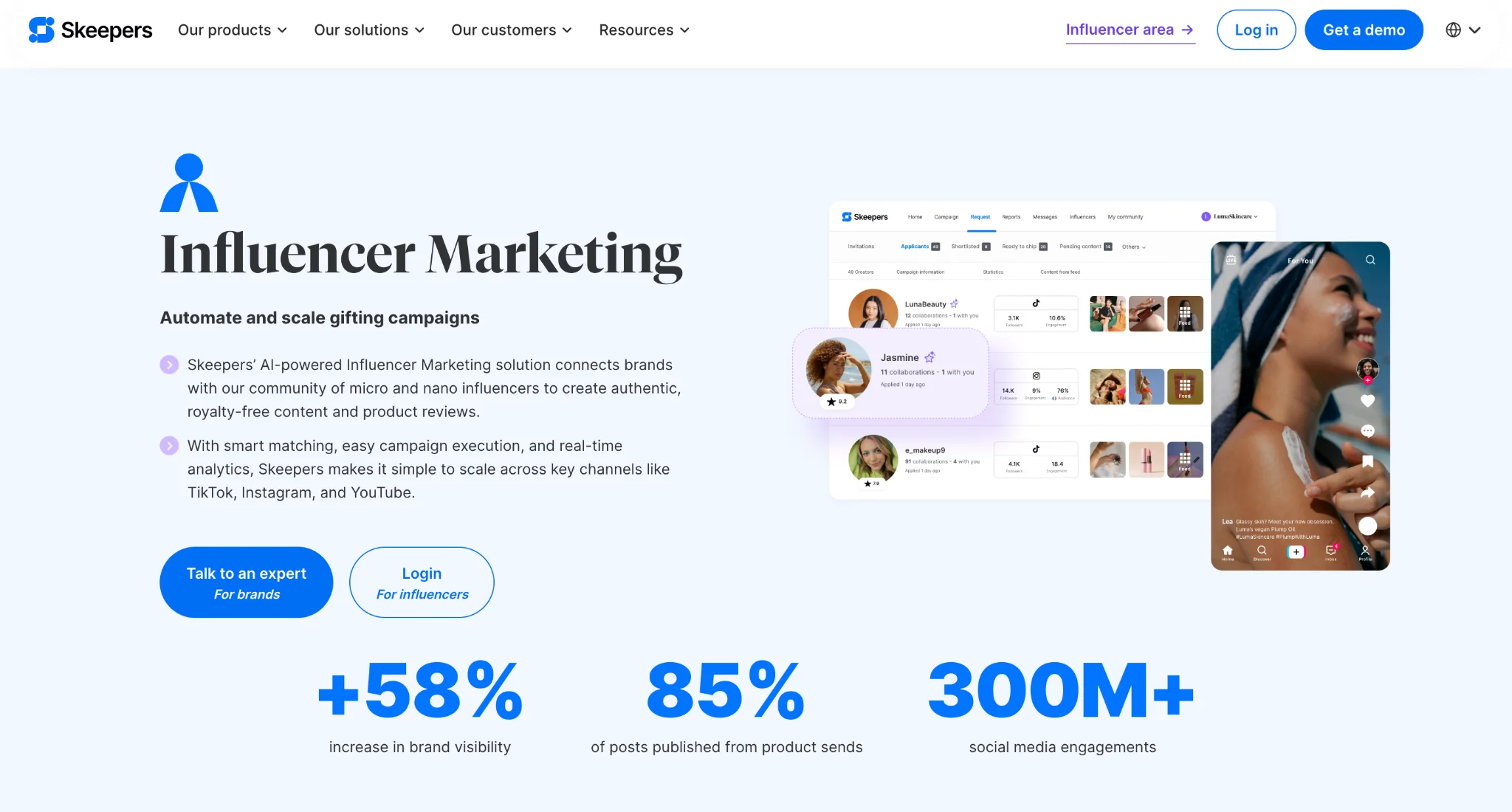
Skeepers is a French customer experience suite that covers ratings and reviews, UGC, live shopping and influencer marketing. Its influencer module focuses on product gifting with micro and nano creators in exchange for content and reviews, and it is popular with beauty, fashion and lifestyle brands in Europe and the US.
Key Features
- Vetted creator community: More than 400,000 creators have passed minimum thresholds for followers, engagement and local audience, which saves brands from screening each one.
- AI creator matching: Creators are matched to a campaign based on its brief, so brands can launch gifting campaigns without building lists by hand.
- Gifted reviews: Creators receive products and publish honest reviews, which helps brands collect social proof for product pages.
- Content library with rights: Content from campaigns is stored with usage rights, so brands can reuse it in ads and on their website.
- Paid social codes: Brands can request TikTok Spark Ads and Meta Partnership Ads codes to boost creator content.
Pricing
Skeepers does not publish pricing on its website. Its software listing shows the influencer marketing module starting at around €1,250 a month, and other Skeepers products such as ratings and live shopping are priced separately.
Reviews
4.4/5.0 (G2, 92 reviews) and 4.3/5.0 (Capterra, 35 reviews)
Pros
- Fast gifting campaigns: Pre-vetted creators and one-click launches make it quick to run product seeding at volume.
- Content rights included: Brands keep the rights to campaign content, which makes it easier to reuse in paid ads.
- Part of a wider suite: Brands already using Skeepers for reviews or live shopping can add influencer work in the same place.
Cons
- Uneven creator quality: Some reviewers mention irrelevant or low-engagement profiles in their campaigns.
- Limited audience data: Audience insights and messaging tools are basic compared with dedicated platforms.
Integrations
- Shopify: Product catalogs and inventory sync with Skeepers so gifting campaigns use live stock.
- Meta: Campaign content connects to Meta Partnership Ads so brands can boost creator posts.
- TikTok: Spark Ads codes let brands turn creator videos into paid TikTok ads.
- TikTok Shop: Creators can promote products that sell directly through TikTok Shop.
- YouTube: Brands can run creator collaborations on YouTube from the same campaign workflow.
Trendhero vs Skeepers
Trendhero and Skeepers both help brands work with smaller creators, but Skeepers stands out with a managed gifting model where vetted creators receive products and deliver content and reviews in return. Brands do not need to search or audit each creator, because the platform has already screened its community.
Trendhero, on the other hand, focuses on giving brands the data to evaluate creators themselves, at a much lower monthly cost. It suits teams that want control over who they choose, while Skeepers suits teams that want content volume without the research work. For beauty and lifestyle brands that need a steady flow of reviews and UGC from micro-creators, Skeepers is worth the call.


Klear
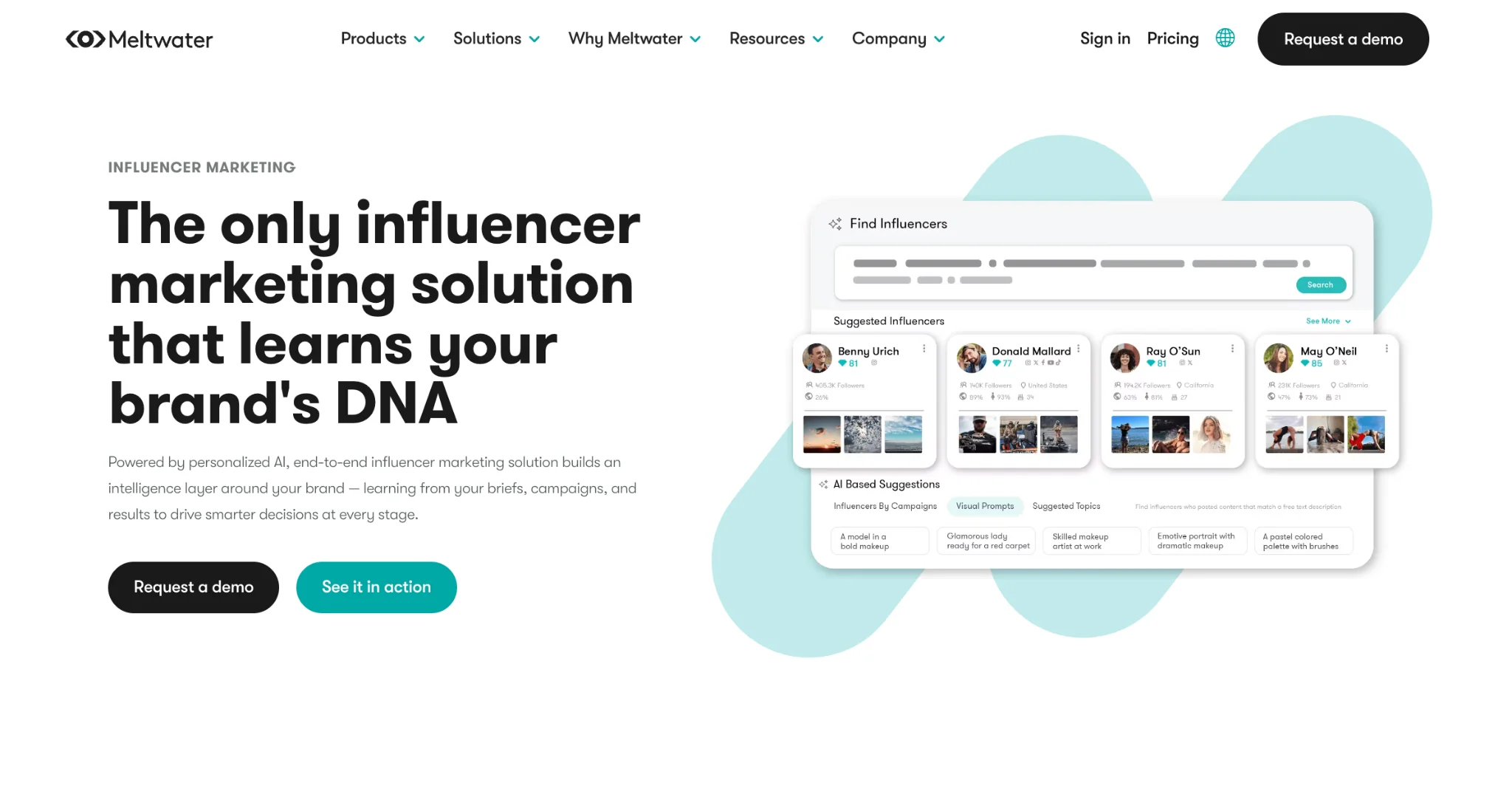
Klear is Meltwater’s influencer marketing product, sold as part of Meltwater’s media and social intelligence suite. It is used mostly by brands that already rely on Meltwater for monitoring, and it is known for its True Reach metric and fake follower detection.
Key Features
- 30M+ creator database: Brands can search creators from nano to mega in more than 190 countries, which helps global teams find local partners.
- True Reach: This metric estimates how many real people a creator reaches, giving a clearer view than follower count alone.
- Bot and fake follower detection: Suspicious audiences are flagged before outreach, so brands avoid paying for inflated reach.
- Campaign management: Communication, content approvals, contracts and invoices are handled inside the platform.
- Revenue tracking: Discount codes and a tracking pixel connect creator campaigns to online sales.
Pricing
Klear’s pricing is not published, and the influencer module is only available on Meltwater’s Enterprise and Agency plans. Contracts are usually annual and bundled with the wider Meltwater suite, which is one reason many teams review Klear alternatives before signing.
Reviews
4.3/5.0 (Capterra, 13 reviews, low review volume)
Pros
- Strong vetting tools: True Reach and bot detection help brands judge audience quality with confidence.
- Covers the full workflow: Research, outreach, approvals and payments sit in one platform.
- Fits existing Meltwater users: Teams already on Meltwater can add influencer work without a new vendor.
Cons
- Bundled pricing: The influencer module is tied to higher Meltwater plans, which raises the total cost.
- Search issues: Some users report bugs and inaccurate data in search results.
- Few eCommerce integrations: Store connections are limited to Shopify, WooCommerce and a tracking pixel.
Integrations
- Shopify: Discount codes and sales from Shopify stores are tracked against each creator.
- WooCommerce: WooCommerce stores get the same code and revenue tracking.
- Tracking pixel: Brands on other store platforms can install a pixel to attribute sales to campaigns.
- Tipalti: Creator payments and tax details are handled through Tipalti.
- Gigapay: Creators can also be paid through Gigapay, which helps with international payouts.
Trendhero vs Klear
Trendhero and Klear both focus on audience quality, but Klear stands out with a campaign layer that covers outreach, approvals, contracts, payments and revenue tracking. Its True Reach metric also gives brands a practical way to compare creators by real reach rather than follower count.
Trendhero, on the other hand, focuses on affordable, self-serve audits with published monthly pricing. Klear is sold as part of an enterprise media intelligence package, so it is a very different purchase. For brands that already use Meltwater for PR and social listening, Klear is the natural add-on.
Later

Later is best known for social media scheduling, and its influencer product, Later Influence, serves enterprise brands with software, managed services or both. After acquiring the creator affiliate app Mavely, Later also offers affiliate links through a network of major retailers.
Key Features
- Later EdgeAI: Performance predictions draw on data from more than 20M creators and $2B+ in verified influencer-driven purchases, which helps brands plan budgets.
- Creator discovery: Search includes early risk flags, so brands can spot potential issues before reaching out.
- Incentive Advisor: Market-rate data suggests fair creator fees, which makes negotiations quicker and more consistent.
- Unlimited users and creators: The Platform plan includes unlimited users, campaigns and creators, which suits large teams.
- Paid amplification: Creator content can be boosted through Meta Partnership Ads from inside the platform.
Pricing
Later does not publish pricing for Later Influence. It offers three options, Platform, Platform + Services and Services, all quoted on request, and there is no free trial for the influencer product. The published Later prices on its website apply to social media scheduling only.
Reviews
4.5/5.0 (G2, 469 reviews) and 4.6/5.0 (Capterra, 135 reviews)
Pros
- Software and services in one: Brands can choose self-serve software, a managed team or a mix of both.
- Strong support: Reviewers regularly mention helpful account teams.
- Retail affiliate network: Mavely affiliate links cover major retailers, which suits brands sold in stores.
Cons
- No public pricing or trial: Brands need a sales process before they can compare costs.
- Occasional tracking issues: Some users mention glitches and gaps in tracking data.
- Learning curve: New users say it takes time to learn the full workflow.
Integrations
- Shopify: Brands issue single-use discount codes and let creators select gifted products.
- Instagram API: Posts and stories are pulled in automatically so reporting stays up to date.
- TikTok One: Video metrics from TikTok feed into campaign reports.
- Meta Partnership Ads: Creator content can be boosted as paid ads without handling access manually.
- Mavely: Affiliate links work across a network of large retailers.
Trendhero vs Later
Both platforms help brands evaluate creators, but Later stands out with predictive performance data, rate guidance and the option of a managed services team to run campaigns. Its Mavely affiliate network also gives brands another way to reward creators through retail sales.
Trendhero, on the other hand, focuses on self-serve audits with clear monthly pricing and no sales call. Later Influence is built for larger organizations that want software and people together. For enterprise brands that want an agency-style team working inside their influencer software, Later might suit you better.
Creator.co

Creator.co is a Vancouver-based influencer and affiliate marketing platform offered as self-serve software or as a managed service. It targets small and mid-sized D2C brands in beauty, food and beverage and fashion, and it is known for its AI agent, London, and its open creator marketplace.
Key Features
- London AI: An AI agent builds curated creator lists based on the brief, which shortens the time needed to find partners.
- 400M+ profile search: Discovery covers a large database plus more than 270,000 registered creators who can apply to campaigns.
- AI outreach sequences: Personalized email sequences help brands contact creators at scale without writing each message.
- Digital wallet: Brands manage creator payments and campaign budgets from one wallet.
- Usage rights included: Content usage rights are included while subscribed, so brands can reuse creator content in marketing.
Pricing
- Self Serve: $299 a month with a 3-month minimum, or $199 a month billed annually, including 100 contact credits and 50 insight reports
- Managed: $2,199 a month with a 6-month minimum, or $1,499 a month billed annually, adding an account manager
- Enterprise: custom pricing on an annual contract
Extra contact credits cost $99 per 100, and the Self Serve plan comes with a 14-day free trial.
Reviews
4.6/5.0 (G2, 124 reviews)
Pros
- Easy to set up: Reviewers say the interface is simple and quick to learn.
- Flexible service options: Brands can start self-serve and move to a managed team later.
- Payments in one place: The digital wallet keeps creator payments organized.
Cons
- Weaker outside North America: Some users find fewer relevant creators in other regions and niche categories.
- Credit limits: Contact credits run out quickly for brands doing a lot of outreach.
Integrations
- Shopify: Draft orders are created for gifting, so product shipments are handled through the store.
- Shopify affiliate: Trackable links and commission rates are set up for creators selling Shopify products.
- Impact: Affiliate data from Impact updates daily inside Creator.co.
- AWIN: Brands running AWIN programs can connect existing affiliate tracking.
- CJ: CJ affiliate programs link to creator campaigns for commission reporting.
Trendhero vs Creator.co
Both tools help brands research creators, but Creator.co stands out with outreach, briefs, payments and affiliate tracking built into the same platform. Its marketplace also brings in creators who apply to campaigns, which adds a second sourcing channel alongside search.
Trendhero, on the other hand, focuses on deep audience reports at a lower monthly price, with no minimum term on monthly billing. Creator.co costs more but covers much more of the campaign. For North American D2C brands that want an entry-level campaign tool with the option of a managed team, Creator.co is the one to look at.
Insense
Insense is a creator marketplace focused on UGC and creator ads, used by thousands of D2C brands, mobile apps and agencies. It is known for delivering licensed UGC within 14 days and for connecting creator content to Meta Partnership Ads and TikTok Spark Ads.
Key Features
- Creator marketplace: More than 100,000 vetted creators in 35+ countries apply to briefs, so brands can source content quickly.
- Fast UGC delivery: Edited videos and raw footage are delivered within 14 days, ready for paid social.
- Partnership Ads: Brands connect with creators for Meta Partnership Ads, often within 48 hours.
- Product seeding: Shopify-connected seeding sends products to creators and tracks activation.
- Licensed content: Automated payments come with lifetime usage rights, so content can be reused without renegotiating.
Pricing
- Trial: $650 for one month, with 10 creators and a 20% marketplace fee
- Brand: $500 a month billed quarterly or $400 a month billed annually, with a 10% marketplace fee
- Agency: $800 a month billed quarterly or $640 a month billed annually, with a 7% marketplace fee
Creator fees are paid on top of the subscription, starting from around $100 per UGC video.
Reviews
4.5/5.0 (G2, 374 reviews). Many reviews come from creators rather than brands.
Pros
- Quick content turnaround: Licensed UGC arrives within two weeks, which suits brands testing ad creative.
- Transparent creator rates: Brands see creator prices before booking.
- Built for paid social: Native whitelisting makes it simple to run creator content as ads.
Cons
- Fees add up: Marketplace fees of 7% to 20% sit on top of the subscription and creator costs.
- Support speed: Some reviewers mention slow replies and upload glitches.
- Limited ROI data: Analytics focus on demographics rather than sales.
Integrations
- Shopify: Products ship to creators in bulk from the store for seeding campaigns.
- Meta: Partnership Ads let brands run creator content from the creator’s handle.
- TikTok: Spark Ads codes turn creator videos into TikTok ads.
- TikTok Shop: Creators can join affiliate programs for TikTok Shop products.
- Stripe: Creator payments are processed through Stripe.
Trendhero vs Insense
Trendhero and Insense serve different stages, but Insense stands out for brands that need content rather than research. Creators apply to briefs, deliver licensed videos within 14 days and can be connected to paid ads quickly, so the output is ready-to-run creative.
Trendhero, on the other hand, focuses on helping brands decide which creators to trust, with detailed audience audits. It does not produce or license content. For performance teams that mainly need a steady supply of UGC for Meta and TikTok ads, Insense makes more sense.
Lefty
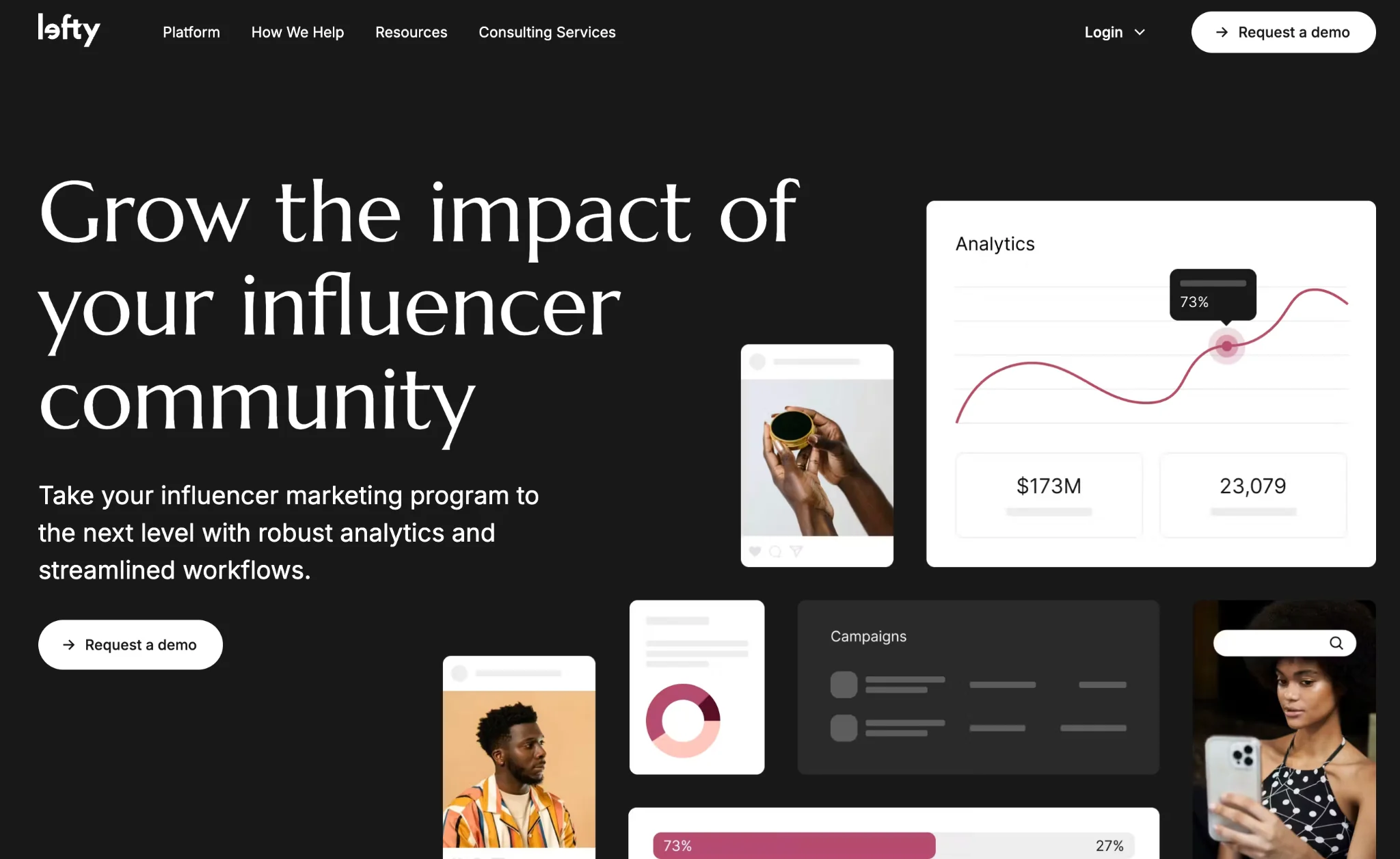
Lefty is a Paris-based influencer marketing platform built for luxury, fashion and beauty brands. It is known for competitive benchmarking, share-of-voice reporting and a clean interface that makes it easy for brand teams to follow creator performance.
Key Features
- Creator discovery: A database of 30M+ vetted profiles includes audience demographics and brand-affinity filters, which helps luxury brands find creators with the right audience.
- Influencer CRM: Teams manage creator relationships, notes and collaboration history in one place.
- Gifting and product requests: Landing pages let creators request products or loans, which suits fashion and beauty seeding.
- Competitive analytics: Share-of-voice reports show how a brand’s creator activity compares with competitors.
- Affiliation and promo codes: Commissions and promo codes connect creator content to sales.
Pricing
Lefty does not publish pricing on its website. Its software listing shows plans starting at around €590 per feature per month, and a free trial is available on request.
Reviews
4.7/5.0 (G2, 92 reviews)
Pros
- Very easy to use: Reviewers regularly praise the clear, intuitive interface.
- Strong benchmarking: Competitive reporting helps brands see where they stand in their category.
- Detailed profile insights: Audience data is thorough enough for careful creator selection.
Cons
- Expensive for the features used: Some users feel the price is high for how much of the platform they need.
- Tracking caps: Limits on tracked profiles can create extra manual work.
Integrations
- Shopify: Gifting, lending and product requests connect to store inventory.
- Magento: Magento stores get the same gifting and product request workflows.
- Salesforce Commerce Cloud: Enterprise retailers connect their commerce platform for seeding campaigns.
- Stripe: Creator payments are sent globally with a clear audit trail.
- Instagram: Creator posts and stories are captured automatically, so campaign reports fill in without manual screenshots.
Trendhero vs Lefty
Both platforms give brands detailed creator data, but Lefty stands out with a CRM, gifting workflows, affiliation and competitive benchmarking that support full campaigns. Its share-of-voice reports are especially useful for brands that want to track their standing against competitors.
Trendhero, on the other hand, focuses on low-cost audits that any team can start using the same day. Lefty is priced and designed for established brands with a clear positioning strategy. For luxury and fashion houses that measure success by share of voice against competitors, Lefty is the closer fit.
Final Thoughts on Trendhero Alternatives
Trendhero is a strong fit for brands and agencies that mainly need affordable Instagram audits, with fake follower detection from $9.99 a month and reports that roll over on monthly billing. It stays focused on research, so outreach at scale, gifting, affiliate codes and creator payments still need separate tools once a program starts running. Before committing, brands should map out which stages of their influencer workflow they want in one place and check how many subscriptions the full process would require. If that list goes beyond vetting creators, Trendhero alternatives that cover the whole campaign are worth comparing first.