

10 Best Storyclash Alternatives • Key Criteria • Storyclash Overview • Best Storyclash Alternatives • Aspire • Influencer Hero • SARAL • Influencity • Captiv8 • IZEA • Modash • Klear • Traackr • IMAI • Final Thoughts • FAQs
10 Best Storyclash Alternatives for Influencer Marketing
Influencer marketing has become a core growth channel for D2C brands, but managing it at scale requires more than spreadsheets and manual outreach. The right influencer marketing software helps teams streamline creator discovery, automate outreach, manage campaigns end-to-end, and track real ROI from partnerships. Storyclash is one of the well-known platforms in this space, particularly valued for its strong social listening and competitor tracking capabilities. However, common feedback from users highlights limitations around pricing, depth of campaign management features, and flexibility for growing D2C teams—leading many brands to actively look for Storyclash alternatives.
For founders and marketing teams evaluating influencer marketing platforms, choosing the right tool often comes down to how well it supports your workflow—from finding the right creators to scaling campaigns efficiently and attributing revenue. In this guide, we’ll compare the 10 best Storyclash alternatives, including Aspire, Influencer Hero, SARAL, Influencity, Captiv8, IZEA, Modash, Klear, Traackr, and IMAI (InfluencerMarketing.AI), to help you find the right fit for your brand.
Key Criteria for Evaluating Influencer Marketing Platforms
Core Features
Evaluation of essential influencer marketing capabilities, including influencer discovery, outreach, CRM, campaign management, reporting, and content workflows.
Pricing & Flexibility
Comparison of pricing models, subscription plans, and contract terms to match different budgets and growth stages.
Customer Reviews & Satisfaction
Analysis of user feedback from trusted review platforms, focusing on usability, reliability, customer support, and overall performance.
Pros & Cons
Review of each platform’s strengths and limitations to highlight where it performs well and where it may fall short based on different use cases.
Integrations
Review of the most important integrations (e.g., Shopify and other tech tools), highlighting what each integration enables in one sentence.
Storyclash Overview
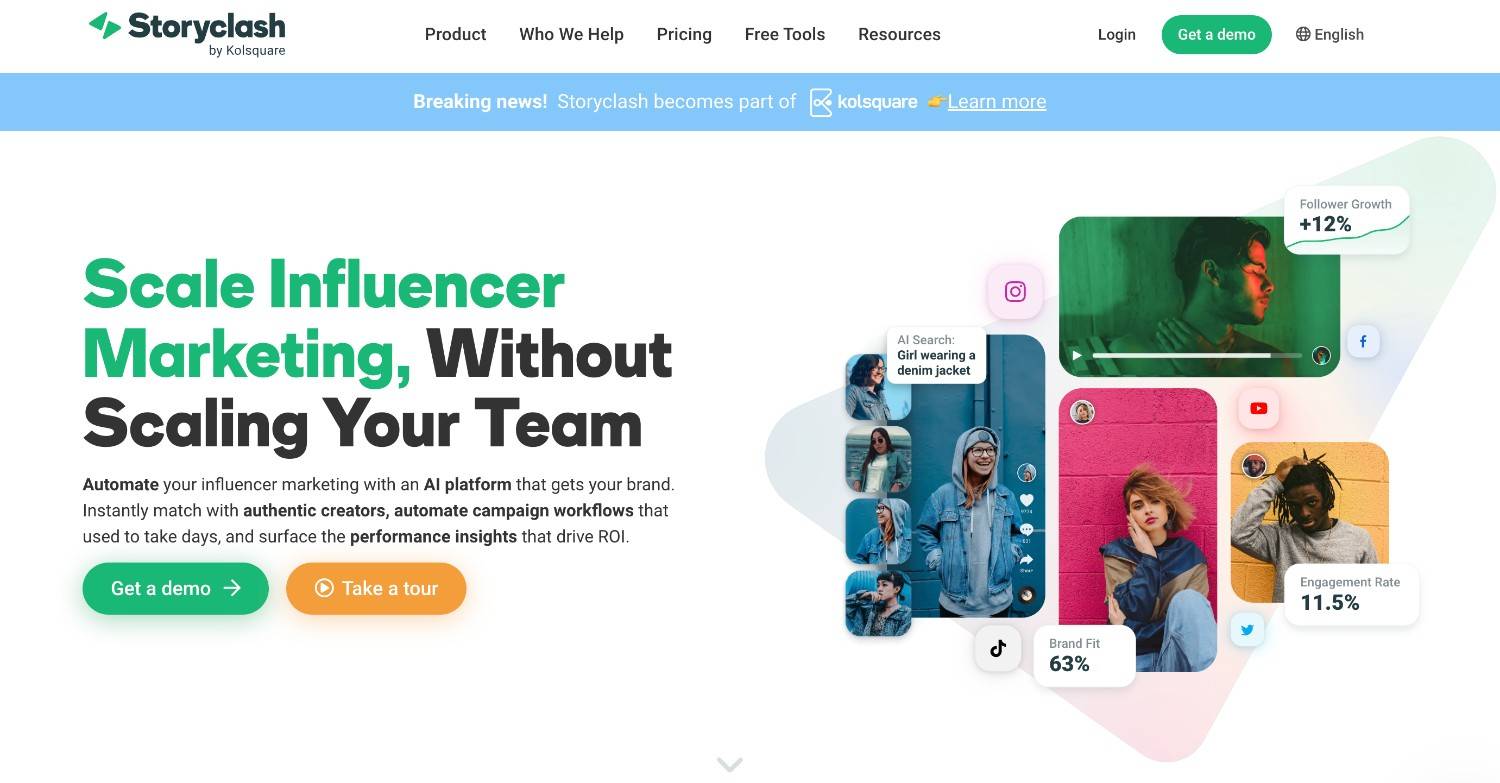
Storyclash is an influencer marketing platform built around content-based creator discovery, campaign tracking, and competitive intelligence. The company says its software helps brands, agencies, and media teams find brand-fit creators, manage collaborations, and measure ROI across platforms like Instagram, TikTok, YouTube, and Facebook. It is especially well known for tracking creator content beyond static posts, including Instagram Stories, and for helping teams analyze which creators competitors are already working with.
Key Features
- AI-powered creator discovery: Storyclash lets teams search for creators by keywords, visual appearance, and performance data, with AI helping surface relevant matches faster.
- Content-based search: Instead of relying only on profile filters, Storyclash emphasizes discovery based on what creators actually post, which is useful for brands that care about aesthetics, themes, and past content style.
- Brand-fit evaluation: Teams can review a creator’s previous collaborations, recent content, and audience insights before outreach, helping reduce poor-fit partnerships.
- Integrated outreach and creator CRM: Storyclash includes email workflow features, creator communication tools, and CRM-style data management so teams can centralize outreach, notes, and files instead of using spreadsheets.
- Campaign planning and management: The platform supports campaign planning, budget and deliverables tracking, and centralized workflow management across creator programs.
- Cross-platform reporting: Campaign dashboards combine creator content, performance, and revenue metrics in one place, with shareable and exportable reporting options.
- Instagram Stories tracking: One of Storyclash’s strongest differentiators is that it can save and analyze Instagram Stories long after they expire, with official pages saying stories can be viewed up to one year later.
- Competitor and market intelligence: Storyclash shows which creators competing brands have worked with over the past 12 months, along with collaboration patterns and content insights.
- Ecommerce revenue tracking: Growth plans and above add ecommerce attribution features such as discount codes, UTM links, conversion tracking, revenue reporting, and ROAS visibility.
- API and BI connectivity: Enterprise users can connect Storyclash data to BI tools and custom dashboards through API access, with 50+ KPIs and creator, campaign, and revenue data available.
Pricing
- Starter: starts at €499/month; built for growing brands; includes AI-powered creator discovery, brand collaboration timeline, Instagram audience data connect, integrated email workflow, creator CRM, and support for major platforms.
- Growth: starts at €999/month; adds ecommerce revenue tracking, discount codes, UTM tracking links, competitor brand insights, campaign management and reporting, budget tracking, and a dedicated account/onboarding manager.
- Scale: starts at €1,899/month; adds advanced competitor and market analytics, extended creator and revenue tracking, brand management workspaces, white-label reports, custom dashboards, data exports, and priority support.
- Enterprise: custom pricing; adds full API access, custom data integrations, SSO, advanced user rights management, custom KPI frameworks, dedicated implementation, and strategic consulting.
- Contract terms: Storyclash states that its plans are based on 12-month subscriptions.
Reviews
4.4 / 5.0 (G2)
Integrations
- Shopify: Syncs orders, revenue, and discount code usage into Storyclash so teams can attribute sales and ROI to specific creators and campaigns.
- WooCommerce: Connects WooCommerce store data to Storyclash for creator-level revenue, ROAS, CAC, CPC, and conversion tracking.
- Adobe Commerce: Pulls Adobe Commerce order and revenue data into Storyclash so brands can measure creator performance and ROI inside one reporting layer.
- Microsoft 365: Connects Outlook/Microsoft 365 email so teams can run influencer outreach with templates, variables, and automation from inside Storyclash workflows.
- Power BI: Exports creator and campaign data via REST API into Power BI for custom dashboards, ROI reporting, and combined business analytics.
Pros
- Best-in-class Instagram Stories tracking: Storyclash can save, analyze, and export Instagram Stories long after they disappear, which is still a major differentiator for brands running story-heavy campaigns.
- Strong content-first discovery with AI search: Its discovery engine stands out because brands can search creators by keywords, image style, visual appearance, and past content—not just follower counts or category tags.
- Deep competitor collaboration intelligence: Storyclash gives teams a practical view of which creators competitors have worked with over the past year, which formats they use, and how often they re-engage creators—useful for sourcing and planning.
Common Drawbacks of Storyclash
Reporting accuracy can be inconsistent
Some teams run into issues with missing posts, inconsistent campaign stats, and metrics like EMV or engagement rate not always matching other systems, which can make reporting less reliable.
Audience and demographic data is not always dependable
Several reviews point to unreliable or overly generalized audience insights, especially around demographics, which can limit confidence during influencer vetting.
Creator discovery can feel restrictive for niche searches
While the search experience is strong overall, some users still find the creator pool limiting for very specific geographies or niches, and search behavior can be frustrating when researching multiple creators.
Pricing is harder for smaller teams to justify
Storyclash starts at €499/month, key revenue-tracking features start on higher tiers, and the platform is sold on annual contracts, which can push growing brands to compare more flexible alternatives.
Best Storyclash Alternatives
| TOOL | REVIEWS | BEST FOR | TRIAL INFO | PRICING | ||
|---|---|---|---|---|---|---|
1 |

|
⭐ | Influencer partnerships | Book Demo | Pricing | Website |
2 |

|
⭐ | Influencer CRM & automation | Book Demo | Pricing | Website |
3 |

|
⭐ | Influencer outreach | Book Demo | Pricing | Website |
4 |

|
⭐ | Campaign management | Book Demo | Pricing | Website |
5 |
|
⭐ | Enterprise influencer campaigns | Book Demo | Pricing | Website |
6 |
|
⭐ | Influencer marketplace | Book Demo | Pricing | Website |
7 |

|
⭐ | Influencer discovery | Book Demo | Pricing | Website |
8 |
|
⭐ | Influencer analytics | Book Demo | Pricing | Website |
9 |

|
⭐ | Enterprise influencer analytics | Book Demo | Pricing | Website |
10 |

|
⭐ | AI influencer discovery & analytics | Book Demo | Pricing | Website |
1. Aspire
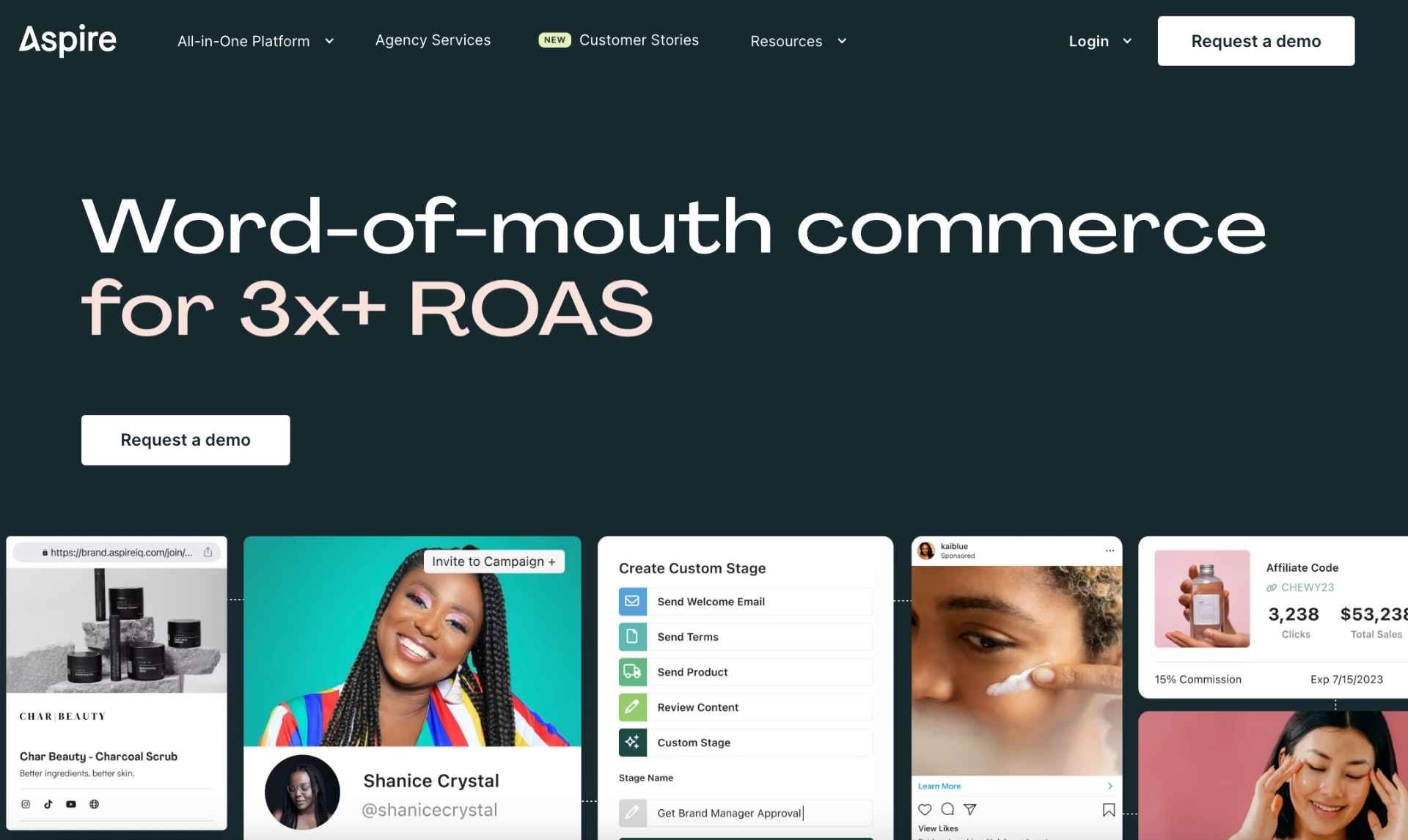
Aspire is an influencer marketing platform built for eCommerce and D2C brands that want to run creator, affiliate, ambassador, and UGC programs in one system. The platform is especially strong in workflow automation, inbound creator applications, and commerce attribution, and it positions itself around “word-of-mouth commerce” rather than just influencer discovery. Aspire also stands out for its direct platform partnerships and its large creator marketplace, which makes it a strong fit for brands that want both outbound sourcing and inbound creator applications.
Key Features
- Inbound + outbound creator discovery: Aspire lets brands source creators directly and also post opportunities to its creator marketplace, which the company describes as having 1M+ creators.
- First-party social data partnerships: Aspire says it has direct partnerships with Meta, TikTok, and Pinterest, which helps brands access stronger creator and campaign data than platforms relying only on scraping.
- Application pages and creator recruitment: Brands can collect inbound applications, review creators, and manage approvals without leaving the platform.
- Affiliate tracking and sales attribution: Aspire supports custom links, commission rates, and conversion tracking so teams can tie creator activity to revenue.
- Shopify-powered gifting and customer matching: The Shopify integration can sync customer and order data, support product seeding, and help identify creator opportunities from a brand’s own customer base.
- Content approvals and campaign workflows: Aspire supports briefs, approvals, communication, and performance tracking in one system, which is useful for brands managing multiple creators at once.
- Social analytics and ROI measurement: Aspire emphasizes attributable ROI, campaign analytics, and performance reporting across influencer and affiliate programs.
Pricing
- Custom pricing: Aspire does not publicly list plan tiers or contracts on its website; pricing is quote-based.
- Indicative starting price: Capterra lists Aspire starting at $2,300 per user/month, though actual pricing may vary by scope and contract.
Reviews
4.0 /5.0 (Capterra)
Pros
- Direct partnerships with Meta, TikTok, and Pinterest: Aspire is one of the few platforms leaning heavily on first-party platform relationships, which is a meaningful differentiator for brands that care about data quality and future-proof access.
- Large inbound creator marketplace: Its 1M+ creator marketplace gives brands another sourcing channel beyond cold outreach, which can materially speed up creator recruitment.
- Recent push into deeper commerce attribution: Aspire has been expanding its Shopify data syncing and affiliate tracking capabilities, which is especially relevant for D2C teams measuring creator-led sales.
Cons
- Pricing can be hard to justify for smaller brands: Aspire is typically positioned above entry-level tools, and public pricing transparency is limited.
- There is still some UI and workflow friction: Review themes point to occasional clunkiness and navigation issues when managing complex campaigns.
- Support sentiment is mixed despite strong praise from many users: Some users report great help from the team, while others raise concerns about implementation and issue resolution.
Integrations
- Shopify: Syncs customer and order data, supports gifting workflows, and helps attribute creator-driven sales.
- Meta / Facebook Ads Manager: Lets brands extend top-performing creator content into paid social campaigns.
- TikTok: Supports creator discovery and campaign performance tracking with direct platform connectivity.
- Pinterest: Gives brands access to Pinterest creator and campaign workflows through Aspire’s partner status.
- Klaviyo: Aspire offers a Klaviyo integration for syncing audience data and improving personalization across connected campaigns.
Storyclash vs Aspire
Storyclash is stronger for content-based creator discovery, Instagram Stories monitoring, and competitor collaboration intelligence, while Aspire is better suited to brands that need a more complete commerce workflow with creator applications, gifting, affiliate tracking, and customer-to-creator matching. For D2C brands focused on revenue attribution and scaling structured programs, Aspire is usually the more operational platform; for brands prioritizing social listening and competitive creator research, Storyclash has the edge.
2. Influencer Hero

Influencer Hero is an all-in-one influencer marketing platform designed for brands that want discovery, outreach, CRM, gifting, affiliate tracking, UGC collection, and payouts in one dashboard. It is positioned heavily toward growing eCommerce and D2C teams, with a strong emphasis on campaign automation, AI-assisted workflows, and multi-platform support. Compared with many traditional influencer tools, Influencer Hero leans more into operational efficiency and affordability for scaling programs.
Key Features
- Influencer discovery and AI search: The platform supports advanced search filters, natural-language AI search, and structured brand-collaboration data for sourcing creators.
- Bulk outreach and email automation: Brands can run large-scale influencer outreach with templates, staged follow-ups, and native Gmail or Outlook connectivity.
- Campaign-centric CRM: Influencer Hero is built around campaign boards, status tracking, bulk actions, and follow-up workflows for managing creator relationships at scale.
- Gifting workflows: Manage product seeding end-to-end with automated order creation, shipment tracking, and delivery monitoring
- Affiliate tracking & payouts: Create trackable links and discount codes, measure performance, and manage commissions and payments in one workflow
- UGC and post tracking: The platform automatically captures influencer posts and stores content in a library for download and reuse.
- Campaign analytics & ROI tracking: Track engagement, clicks, conversions, and revenue through real-time dashboards tied to campaign performance
- Application pages & storefronts: Build branded creator application pages and enable influencers to promote products through personalized storefronts.
Pricing
Influencer Hero offers flexible pricing based on outreach volume and you can have unlimited creators in your CRM:
- Standard — $649/month (up to 1,000 outreach messages per month)
- Pro — $1,049/month (up to 5,000 outreach messages per month)
- Business — $2,490/month (up to 10,000 outreach messages per month)
- Custom / Agency — Tailored pricing
Custom pricing is available for agencies and larger teams
Reviews
5.0/5.0 (Capterra)
Pros
- Strong CRM and workflow automation: Influencer Hero’s biggest differentiator is how much of the outreach, follow-up, and campaign admin can be automated inside the CRM.
- Broader integration layer for D2C ops: It connects with Shopify, WooCommerce, Magento, BigCommerce, Klaviyo, Omnisend, Slack, Zapier, and more, making it unusually flexible for eCommerce teams.
- Built for efficient, high-volume execution: Bulk actions, batching tools, and a Chrome extension enable teams to manage outreach, creator sourcing, and campaign updates quickly, while keeping workflows organized.
Cons
- No free trial: Makes it harder for teams to evaluate the platform before committing
- Higher pricing for smaller teams: May be less accessible for early-stage brands or those with limited budgets
- Steep learning curve: Feature depth means onboarding and setup can take time
Integrations
- Shopify: Connects your store directly for gifting, sales tracking, and influencer commerce workflows.
- WooCommerce: Supports product seeding and performance tracking for WooCommerce-based stores.
- Klaviyo: Helps identify newsletter subscribers who are also influencers and connect influencer data to lifecycle marketing.
- Gmail / Outlook: Supports native inbox connection for outreach and reply management.
- Zapier: Connects Influencer Hero with hundreds of tools to automate workflows such as notifications, reporting, and data syncing.
- DocuSign: Streamlines contracts and agreements with influencers through automated document workflows.
Storyclash vs Influencer Hero
Storyclash is the better choice when your team cares most about creator intelligence, competitor tracking, and Instagram Stories visibility. Influencer Hero is the stronger choice when you need a more affordable all-in-one operating system for discovery, outreach, CRM, gifting, affiliate tracking, and influencer payouts. For D2C teams running a hands-on creator program, Influencer Hero is more execution-focused, while Storyclash is more insight-led.
3. SARAL

SARAL is an influencer marketing platform built primarily for ecommerce and emerging DTC brands that want a simpler, more affordable system for influencer discovery, outreach, relationship management, seeding, and affiliate tracking. Its positioning is intentionally practical: reduce spreadsheet-heavy workflows, keep the interface lightweight, and give smaller teams a way to scale creator programs without enterprise software overhead. That makes it particularly appealing to founder-led and lean marketing teams.
Key Features
- Bulk influencer discovery: SARAL helps brands source creators quickly and in volume, with access to profile metrics and contact data.
- Personalized outreach automation: The platform focuses heavily on cold outreach and relationship-building workflows for creator recruitment.
- Relationship management view: Teams can track influencers by stage, tags, and campaign status in a structured CRM-style workflow.
- Seeding and affiliate management: SARAL supports shipping products, tracking sales, and managing creator partnerships in one flow.
- Social listening and ambassador workflows: Higher-tier plans include broader listening and long-term creator management features.
- Chrome extension and rate support tools: SARAL also promotes fast creator sourcing and budgeting help for smaller teams.
Pricing
SARAL’s pricing is unusually transparent. The Starter plan is $3.6k per quarter or $12k per year, the Business plan is $4.5k per quarter or $15k per year, and the Professional plan is $7.5k per quarter or $25k per year. Annual plans come with discounts, and pricing scales mainly by search/save volume and program size rather than charging by influencer count managed.
Reviews
4.7/5.0 (G2)
Pros
- Very D2C-friendly packaging: SARAL is clearly designed for consumer brands that want a practical system without the complexity of large enterprise suites.
- Hands-on strategic support: Onboarding, a dedicated success manager, and shared Slack support are baked into the offer, which is unusual at this end of the market.
- Balanced mix of discovery, outreach, and ROI tools: SARAL covers discovery, communication, affiliate tracking, social listening, and reporting in one product, rather than forcing brands into multiple tools.
Cons
- It is still not a low-cost entry tool: While simpler than many enterprise platforms, SARAL’s annual pricing can still feel high for very small teams.
- Some users report occasional technical bugs: Review themes point to stability issues from time to time.
- Feature breadth is more D2C-focused than enterprise-wide: SARAL is strong for lean consumer brands, but less built around heavyweight global enterprise workflows. This is an inference from its positioning and pricing model.
Integrations
- Shopify: Connects SARAL to your store for product seeding, discount codes, and tracking links through GoAffPro.
- WooCommerce: Supports similar seeding and affiliate workflows for WooCommerce stores through GoAffPro.
- Klaviyo: Syncs onboarded influencers into Klaviyo so brands can segment and nurture creator lists.
- Slack: Sends real-time updates on influencer activity so teams can stay on top of campaigns.
- PayPal: Supports influencer payments inside the broader campaign workflow.
Storyclash vs SARAL
Storyclash is stronger for competitor intelligence, content-based discovery, and tracking creator content across social channels, especially Instagram Stories. SARAL is more of a D2C operating system built around outreach, creator relationship management, seeding, and ROI tracking for lean teams. If you want better market intelligence, Storyclash wins; if you want a simpler system to run creator programs day to day, SARAL is often the better fit.
4. Influencity

Influencity is an end-to-end influencer marketing platform designed for brands and agencies that want discovery, relationship management, campaign execution, reporting, and increasingly broader social media and listening capabilities in one place. It is especially strong for teams that want access to a very large creator dataset, flexible workflows, and exportable reporting without paying enterprise-tier pricing from day one. Compared with many rivals, it offers a relatively broad feature set for the price.
Key Features
- Large creator database and deep filtering: Influencity supports extensive influencer search with audience, performance, credibility, and content filters.
- Influencer relationship management: The platform includes CRM-style storage, segmentation lists, profile analysis, and outreach features.
- Campaign and proposal workflows: Teams can build proposals, campaign workflows, landing pages, and review processes inside the platform.
- Shopify-connected seeding and sales tracking: Influencity’s Programs feature ties gifting and ecommerce actions directly into campaign operations.
- Campaign reports and exports: The platform includes campaign reporting with PDF, CSV, and XLS exports, which is useful for agencies and stakeholder reporting.
- Social listening and social media management: Influencity has expanded beyond pure influencer marketing into monitoring, listening, inbox, publishing, and paid ads support.
Pricing
Influencity offers a 7-day free trial and three plan paths. The public Professional plan is $318/month when billed yearly ($3,816/year), the Business plan is custom-priced, and Enterprise is custom-priced. The Professional plan includes core discovery, IRM, outreach, and campaign tools, while larger plans add more storage, unlimited scale, and heavier workflow features.
Reviews
4.3 / 5.0 (G2)
Pros
- Huge public-data discovery layer: Influencity’s biggest differentiator is the breadth of its searchable creator universe without requiring opt-in first.
- Modular, expandable suite: It goes beyond classic influencer software by adding monitoring, social media management, payments, and bio-link tooling in one ecosystem.
- Strong value for mid-market teams: The Professional plan is much easier to access than many enterprise platforms while still covering discovery, IRM, outreach, campaigns, and Shopify programs.
Cons
- Some filters and UX details can be frustrating: Review themes mention filter reset issues and occasional workflow friction during searches.
- Certain data points still have limitations: Reviews point to gaps or limitations on some networks and profile details.
- The full suite can become complex as you expand usage: Its modular breadth is a strength, but it also increases complexity for teams that want a simpler tool. This is an inference from the size of the product suite and review themes.
Integrations
- Shopify: Powers gifting, discount codes, and creator-level sales tracking through Programs.
- Gmail: Lets teams connect Gmail inboxes for outreach and reply handling.
- Office 365 / Outlook: Supports Microsoft email connection for influencer communication.
- Influencer Payments: Enables bulk payments to creators across many currencies and countries within the platform workflow.
- Monitoring data sources: Influencity’s monitoring layer integrates mentions from social platforms, websites, blogs, news, and URLs into one listening workflow.
Storyclash vs Influencity
Storyclash is more specialized around content intelligence, competitor collaboration tracking, and Story-level monitoring, while Influencity is broader and more modular. Influencity is usually the better fit for teams that want a wider creator database, built-in social listening, and a lower-cost entry point with CRM and campaign tooling. Storyclash remains the stronger choice if competitive creator intelligence is the main buying driver.
5. Captiv8
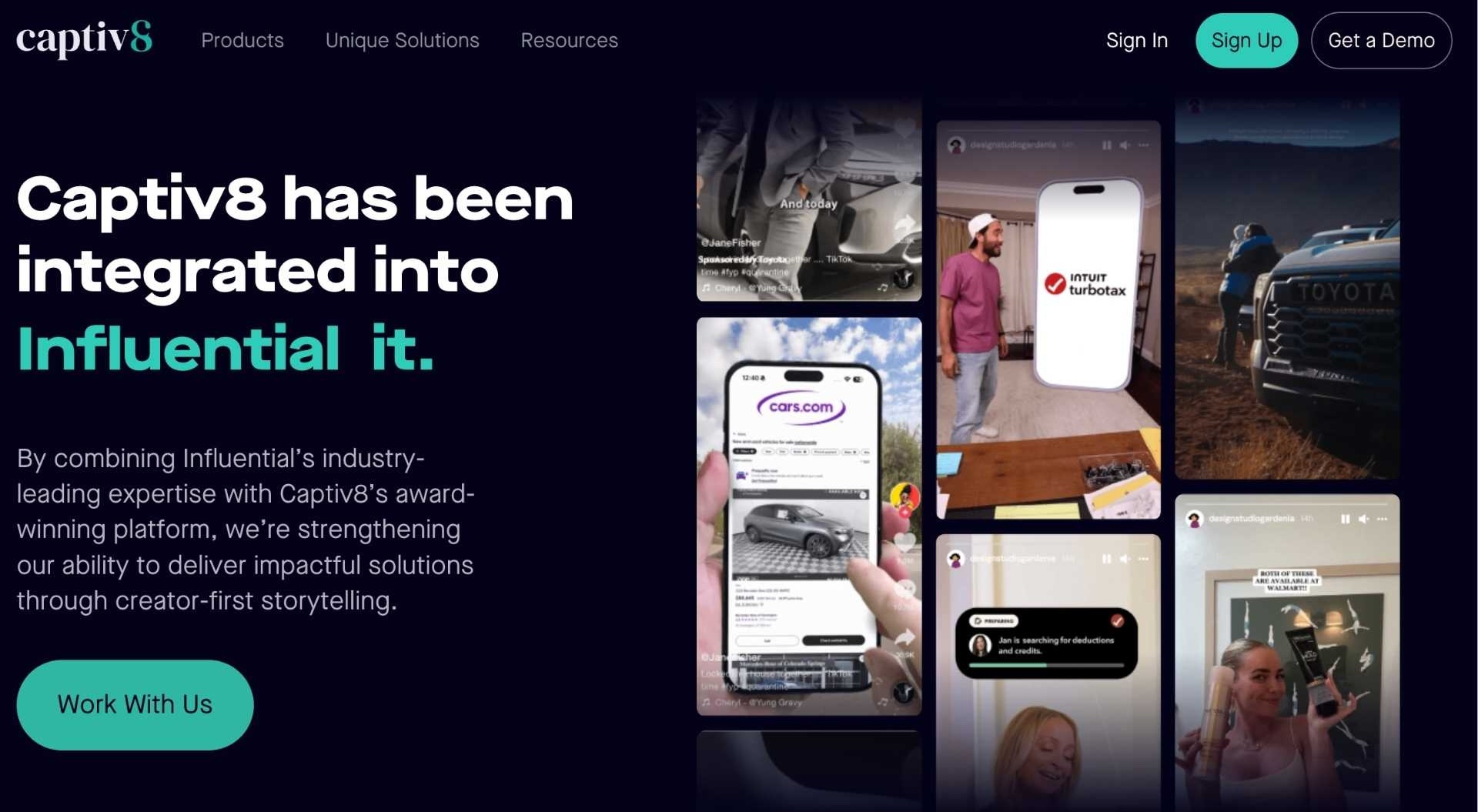
Captiv8 is an enterprise influencer marketing platform designed for brands that want large-scale creator discovery, campaign management, social commerce, paid amplification, and performance measurement in one environment. It is especially strong in areas like competitive intelligence, audience filtering, paid media activation, and complex reporting, making it more relevant for larger organizations than for smaller D2C teams. Its positioning is clearly more enterprise than lightweight.
Key Features
- Enterprise-scale discovery: Captiv8 supports creator discovery across a large database with filters for audience traits, content themes, brand safety, and competitor activity.
- Competitive intelligence and post search: Brands can search creators and posts mentioning competitors or brand terms across captions, hashtags, and visuals.
- Campaign collaboration tools: Teams can collaborate on approvals, chat with creators, and manage multiple campaigns simultaneously.
- Deep reporting and KPI customization: Captiv8 supports customizable reports covering sales, impressions, engagement, EMV, ROAS, top posts, and more.
- Paid media amplification: Captiv8 integrates directly with paid social APIs so brands can boost creator content and optimize media performance more easily.
- TikTok commerce and storefront capabilities: Captiv8 has expanded its TikTok relationship to include TikTok Shop and branded storefront support for social commerce use cases.
Pricing
Captiv8 does not publish a standard public pricing page. Based on available materials, the core platform was quoted at $25,000 annually with an annual commitment only, plus a $3,000 one-time onboarding fee. Storefronts and creator commerce / affiliate features were positioned as an additional $20k–$30k per month. Public software directories also describe Captiv8 pricing as vendor-quoted rather than self-serve.
Reviews
4.7 / 5.0 (G2)
Pros
- Strong commerce layer: Captiv8 is more commerce-enabled than many influencer platforms, with shoppable content, referral tracking, and direct-response creator workflows.
- Serious BI and API connectivity: Pre-built integrations for Looker, Tableau, and Google Analytics make it attractive for large teams that want creator data inside broader reporting stacks.
- Good fit for enterprise teams: Captiv8 continues to position itself as a top enterprise influencer platform and is now tied into the larger Influential ecosystem.
Cons
- Pricing transparency is limited: Brands have to go through sales for pricing, which makes early-stage comparison harder.
- There can be a learning curve for new users: Review themes note onboarding matters, and newer team members may need additional training.
- Search and data accuracy are not perfect: Review summaries flag some inaccuracy and search-efficiency issues, which matters if your team depends heavily on precision filtering and reporting.
Integrations
- Shopify: Supports gifting, inventory workflows, and creator commerce tied to Shopify.
- Refersion: Enables referral and discount-code tracking for affiliate-style influencer programs.
- WooCommerce: Connects creator commerce workflows to WooCommerce stores.
- Google Analytics: Pulls influencer data into broader analytics and reporting workflows.
- Looker / Tableau: Supports BI reporting and custom dashboards through pre-built integrations and API access.
Storyclash vs Captiv8
Storyclash is better known for content-level intelligence, competitor analysis, and Story tracking, while Captiv8 is built more for enterprise execution, creator commerce, and custom measurement. If your team needs BI integrations, paid-media adjacency, and shoppable creator workflows, Captiv8 is the more advanced operating platform. If your main goal is discovering creators based on content and monitoring competitor collaborations, Storyclash is usually the cleaner fit.


6. IZEA
IZEA is one of the earliest influencer marketing platforms in the market, evolving from sponsored content marketplaces into a full creator economy platform. Today, IZEA offers a suite of tools for influencer discovery, campaign management, content collaboration, and payments, along with its proprietary creator marketplace. It is widely used by brands that want both software and optional managed services for influencer campaigns.
Key Features
- Creator marketplace (IZEA Exchange): Brands can post campaigns and receive applications from influencers, making it easier to source creators without cold outreach.
- Influencer discovery and search: Access a large database of creators with filters for audience demographics, engagement, and niche targeting.
- Campaign management workflows: Manage briefs, approvals, deliverables, and timelines across influencer campaigns in one dashboard.
- Content collaboration tools: Review, approve, and manage sponsored content before it goes live.
- Payments and contracting: IZEA supports creator payments, contracts, and invoicing directly within the platform.
- Social listening and trend tracking: Monitor brand mentions and trending content to inform campaign strategy.
- Managed services option: Brands can choose to have IZEA run campaigns end-to-end as an agency layer on top of the software.
Pricing
- IZEA Flex: Custom pricing depending on features and usage.
- IZEA Exchange: Pay-per-post marketplace pricing (no fixed subscription required).
- Managed Services: Custom enterprise pricing.
- Contract terms: Typically flexible depending on plan (subscription or campaign-based).
Reviews
3.9/ 5.0 (G2)
Pros
- Strong creator marketplace model: IZEA’s Exchange allows brands to attract inbound creators, reducing reliance on outbound sourcing.
- Flexible engagement models: Brands can choose between SaaS, marketplace, or fully managed services depending on internal resources.
- End-to-end payments and contracting: Built-in financial workflows simplify influencer payments and compliance.
Cons
- UI and workflow can feel dated: Some users find the interface less intuitive compared to newer platforms.
- Discovery is less advanced than newer AI-driven tools: Filtering and matching can feel more manual.
- Performance tracking is not as deep as some competitors: Especially for brands focused on granular ROI attribution.
Integrations
- Shopify: Enables product seeding and tracks sales driven by influencers.
- Google Analytics: Tracks traffic and conversions from influencer campaigns.
- Meta (Facebook/Instagram): Supports campaign tracking and paid amplification.
- Twitter/X: Tracks campaign mentions and engagement.
- YouTube: Enables performance tracking for video campaigns.
Storyclash vs IZEA
Storyclash focuses heavily on content intelligence, competitor tracking, and advanced discovery, while IZEA is more marketplace-driven with flexible engagement models. IZEA is better suited for brands that want inbound creator applications or managed services, whereas Storyclash is stronger for teams prioritizing data-driven discovery and competitive insights.
7. Modash
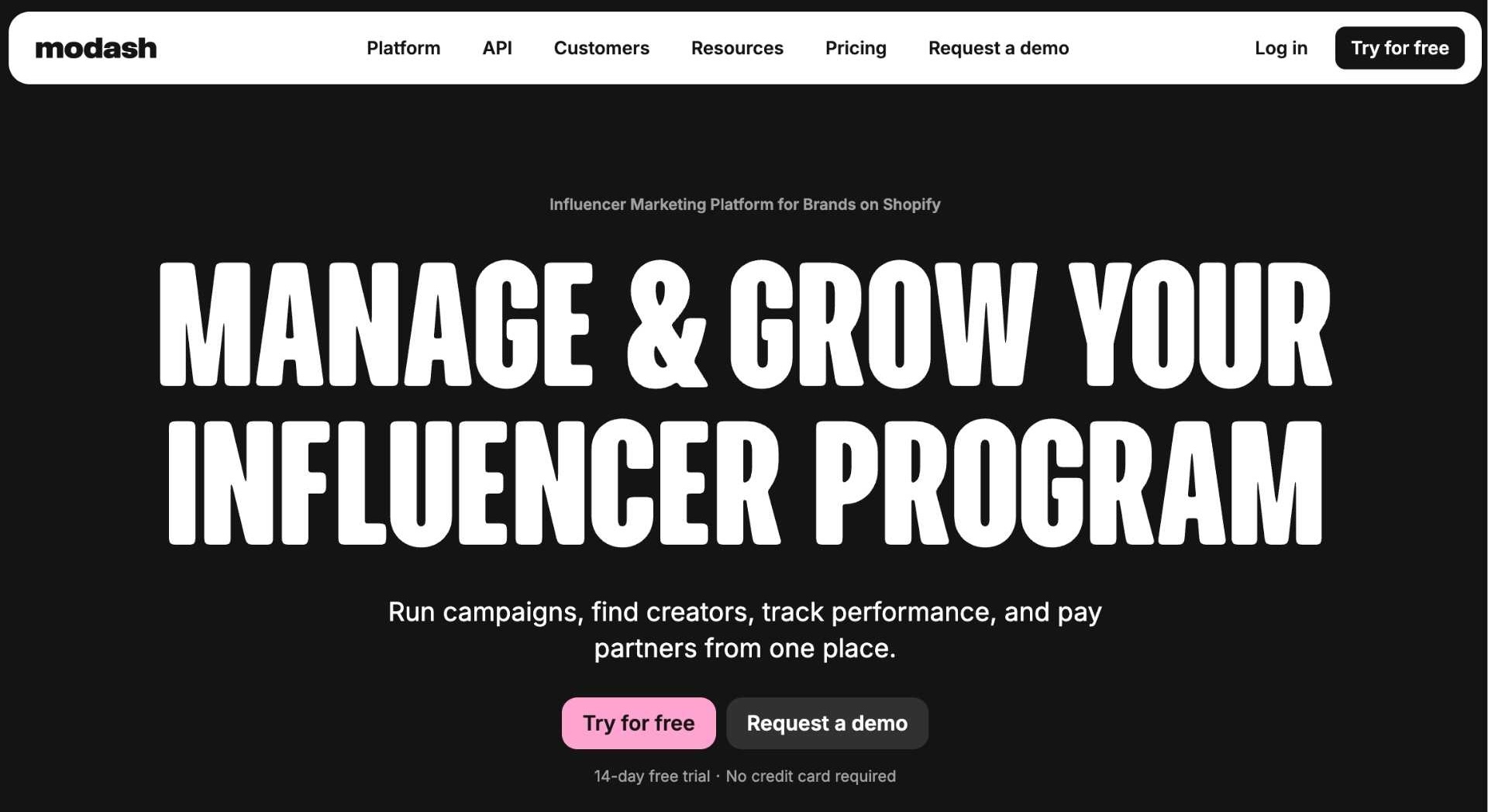
Modash is a modern influencer marketing platform built around one of the largest creator databases available, with a strong focus on discovery, outreach, and performance tracking. It is particularly popular among D2C brands and performance marketers because of its open database (not limited to opt-in creators) and its ability to connect influencer campaigns directly to revenue.
Key Features
- Massive creator database (350M+ profiles): Modash stands out for its scale, allowing brands to discover creators globally without relying on opt-in networks.
- Advanced search and filtering: Filter creators by niche, audience demographics, engagement, and content style.
- AI-powered discovery: Includes “lookalike” search and visual search to find creators based on content style or similar profiles.
- Bulk outreach and CRM: Send templated emails at scale and manage creator relationships through a built-in CRM.
- Shopify integration and affiliate tracking: Tracks discount codes, revenue, and campaign performance tied directly to ecommerce.
- Real-time campaign tracking: Monitor engagement, content performance, and sales in a unified dashboard.
Pricing
- Essentials: starts at $199/month billed yearly or $299 month-to-month, for campaigns with up to 100 creators.
- Enterprise: starts at $14,700/year, with custom usage for larger programs above 250 creators.
- Free trial: Modash offers a 14-day free trial with no credit card required.
Reviews
4.9/5.0 (Capterra)
Pros
- Largest public influencer database: Not limited by opt-in creators, which significantly expands discovery potential.
- AI-powered discovery tools (visual + lookalike): Helps brands find creators based on aesthetics and content style, not just filters.
- Strong Shopify integration for D2C: Enables seamless gifting, affiliate tracking, and revenue attribution.
Cons
- Limited eCommerce integrations beyond Shopify: Can be restrictive for brands using other platforms.
- No built-in UGC licensing tools: Requires manual handling of content rights.
- Lacks paid media/whitelisting features: Not ideal for teams running influencer ads directly.
Integrations
- Shopify: Automates gifting, discount codes, and affiliate tracking.
- Gmail / Outlook: Sync outreach and manage conversations directly.
- Stripe (payments): Supports automated payouts to influencers.
- Google Sheets export: Export influencer data for external analysis.
- Zapier: Connects Modash with other tools and workflows.
Storyclash vs Modash
Storyclash is stronger in competitor tracking and content intelligence (especially Instagram Stories), while Modash excels in large-scale discovery and outreach automation. Modash is often a better fit for D2C brands scaling influencer programs globally, whereas Storyclash is better for teams focused on insights and competitive benchmarking.
8. Klear
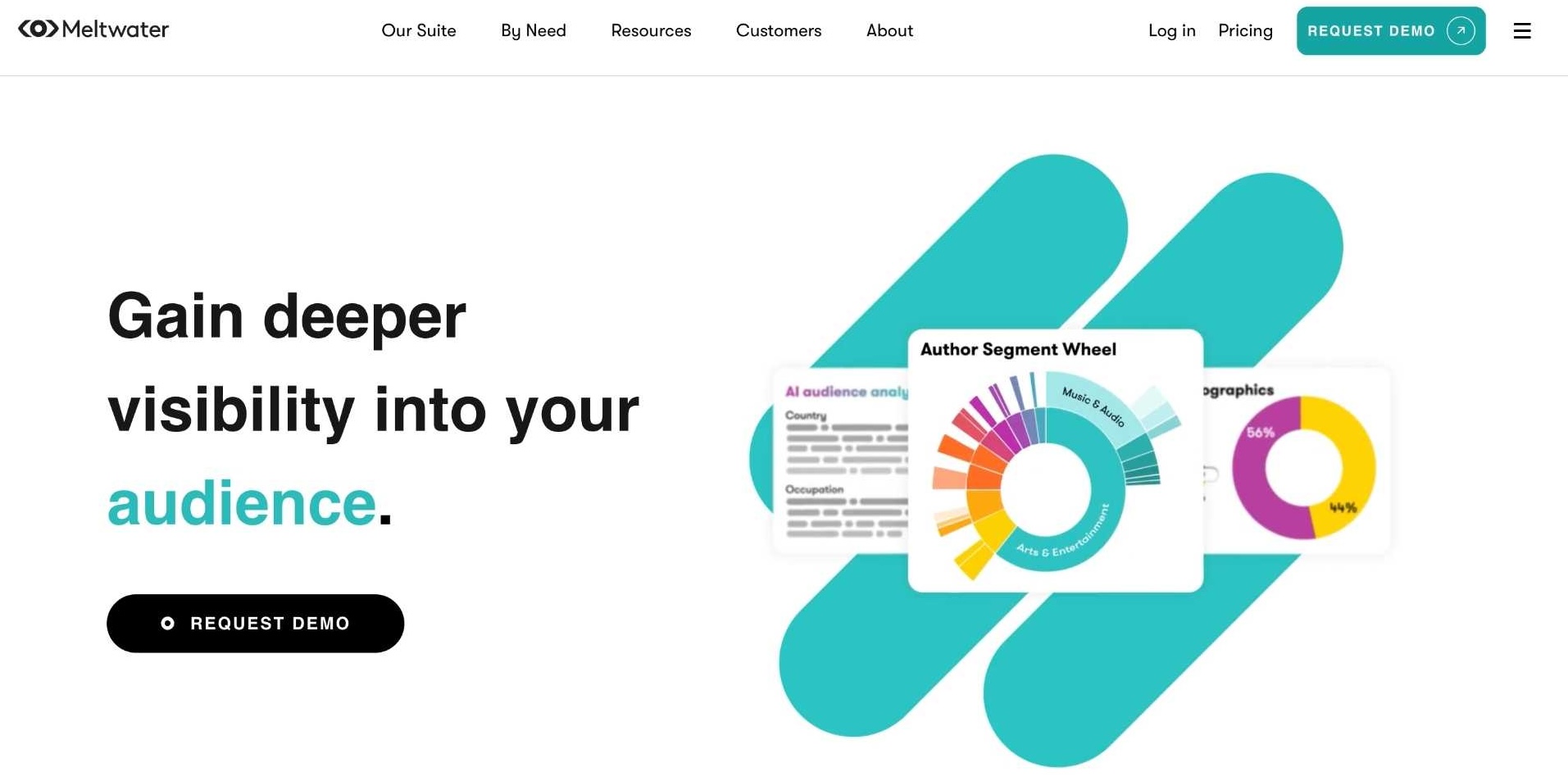
Klear, part of Meltwater, is an enterprise influencer marketing platform focused on discovery, analytics, campaign management, and social listening. It is designed for brands that want a data-driven approach to influencer marketing, with strong emphasis on audience insights, benchmarking, and performance tracking.
Key Features
- 30M+ influencer database: Provides global discovery across multiple platforms with advanced filtering.
- True Reach metric: Estimates actual audience reach instead of relying on follower counts.
- AI-powered influencer profiles: Includes audience demographics, brand affinity, and estimated pricing.
- Campaign management and communication tools: Manage creators, track deliverables, and communicate directly within the platform.
- Advanced reporting and analytics: Tracks engagement, conversions, sentiment, and ROI.
- Social listening integration: Monitor brand mentions and campaign impact across channels.
Pricing
Klear pricing is enterprise-level and custom:
- Example packages range from ~$33,000 to $73,000/year, depending on usage and team size
- Pricing is typically annual contracts only
Reviews
4.3 / 5.0 (G2)
Pros
- True Reach metric: Provides a more realistic view of influencer impact beyond vanity metrics.
- Strong social listening integration: Combines influencer marketing with PR and brand monitoring.
- Enterprise-level reporting and insights: Deep analytics and benchmarking capabilities.
Cons
- High pricing barrier: Not accessible for smaller D2C teams.
- Interface can feel slow or laggy: Especially when handling large datasets.
- Reporting flexibility limitations: Some users need external tools for deeper analysis.
Integrations
- Shopify: Tracks influencer-driven sales and product gifting.
- Google Analytics: Measures campaign traffic and conversions.
- Slack: Enables team collaboration and campaign updates.
- Meltwater suite: Connects influencer data with PR and media monitoring tools.
- Export tools (PDF/Reports): Share performance reports across teams.
Storyclash vs Klear
Storyclash is more focused on influencer-specific insights and competitor tracking, while Klear is part of a broader media intelligence ecosystem. Klear is better suited for enterprise teams that want influencer marketing integrated with PR and social listening, whereas Storyclash is more focused on creator discovery and campaign intelligence.
9. Traackr
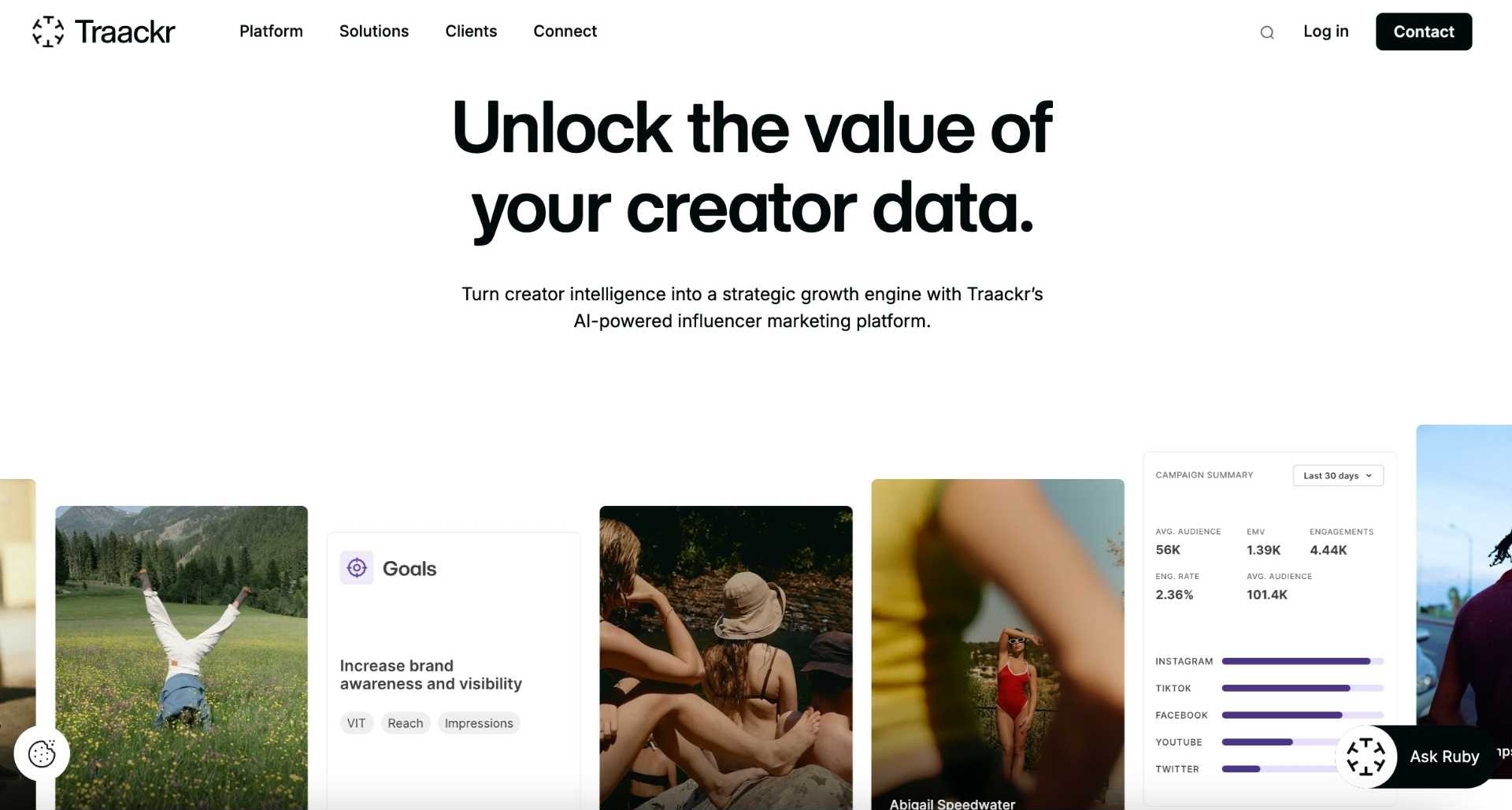
Traackr is an enterprise influencer marketing platform designed for brands focused on performance measurement, benchmarking, and ROI optimization. It is widely used by global brands to evaluate influencer impact, allocate budgets, and compare campaign performance across markets.
Key Features
- Global influencer database (6M+ creators): Advanced filtering based on performance, audience, and past collaborations.
- Influencer CRM and relationship tracking: Manage long-term creator relationships with tagging, notes, and collaboration history.
- Campaign management and outreach: Supports templates, follow-ups, and creator recruitment workflows.
- Advanced reporting and benchmarking: Tracks CPC, CPE, CPV, ROI, and other cost-based metrics.
- Brand Vitality Score (BVS): Proprietary metric to measure brand influence and perception.
- Budget optimization tools: Helps allocate spend across creators based on expected ROI.
- Real-time campaign tracking: Monitor performance and adjust campaigns mid-flight.
Pricing
- Starts at ~$32,500/year
- Custom pricing depending on modules
- Contract terms: Annual contracts
Reviews
4.3/5.0 (G2)
Pros
- Best-in-class performance benchmarking: Traackr is built specifically for measuring ROI and optimizing spend.
- Unique Brand Vitality Score: Offers a competitive benchmarking metric not found in most platforms.
- Strong budget optimization tools: Helps brands allocate influencer spend more effectively.
Cons
- Very high pricing: Not suitable for small or mid-sized brands.
- Occasional platform lag and bugs: Especially in reporting dashboards.
- Data accuracy concerns in some cases: Particularly around demographics.
Integrations
- Shopify: Tracks sales and affiliate performance from influencer campaigns.
- Google Analytics: Measures traffic and conversions.
- CRM tools: Syncs influencer data into internal systems.
- Export tools (CSV/PDF): Enables reporting across teams.
- Email systems: Supports outreach workflows.
Storyclash vs Traackr
Storyclash focuses more on discovery and competitor intelligence, while Traackr is built for performance measurement and ROI optimization. Traackr is better suited for enterprise teams optimizing budgets across markets, whereas Storyclash is better for teams prioritizing content insights and creator discovery.
10. IMAI (InfluencerMarketing.ai)

IMAI (InfluencerMarketing.AI) is a data-driven influencer marketing platform that combines AI-powered discovery, campaign management, and analytics. It is designed for brands that want scalable influencer discovery with strong fraud detection, audience insights, and performance tracking, while still maintaining a relatively accessible pricing structure compared to enterprise tools.
Key Features
- AI-powered influencer discovery: Uses machine learning to identify creators based on audience, content, and engagement patterns.
- Fraud detection and audience quality analysis: Helps brands identify fake followers and low-quality influencers.
- Campaign management and tracking: Manage outreach, collaborations, and performance in one dashboard.
- Audience insights and segmentation: Analyze demographics, interests, and engagement behavior.
- Competitor and campaign benchmarking: Compare performance across campaigns and competitors.
- Content tracking and reporting: Monitor posts, engagement, and campaign outcomes.
Pricing
Starting price at $99/month and notes that a free trial is available.
Reviews
4.5 / 5.0 (G2)
Pros
- Strong fraud detection capabilities: One of the platform’s key differentiators for ensuring influencer authenticity.
- AI-driven recommendations: Helps brands find better-fit creators faster.
- Balanced feature set for mid-market teams: Combines discovery, analytics, and CRM in one platform.
Cons
- Less advanced workflow automation: Compared to platforms focused heavily on CRM and outreach.
- Limited transparency in pricing: Requires sales conversations.
- Smaller ecosystem compared to enterprise tools: Fewer integrations and advanced modules.
Integrations
- Instagram / TikTok APIs: Tracks influencer performance and analytics.
- Google Analytics: Measures traffic and conversions.
- Shopify: Tracks sales driven by influencer campaigns.
- CSV export tools: Enables data sharing and reporting.
- CRM tools: Sync influencer data with internal systems.
Storyclash vs IMAI
Storyclash is stronger in content intelligence and competitor tracking, while IMAI focuses more on AI-driven discovery and fraud detection. IMAI is a good fit for brands prioritizing authenticity and data-driven influencer selection, whereas Storyclash is better for teams focused on market insights and campaign intelligence.
Final Thoughts
Choosing the right influencer marketing software ultimately depends on your team’s priorities, budget, and level of program maturity. Platforms like Storyclash stand out for content-driven discovery, competitor tracking, and Instagram Stories insights, while alternatives such as Aspire, Modash, and Influencer Hero focus more on end-to-end campaign execution, creator workflows, and revenue attribution. Enterprise tools like Captiv8, Klear, and Traackr lean heavily into data, reporting, and integrations, whereas platforms like SARAL and IMAI cater more to D2C teams looking for simplicity, relationship management, or AI-driven insights.
There is no one-size-fits-all solution—brands need to evaluate whether they prioritize discovery, workflow automation, scalability, or ROI tracking. For D2C companies in particular, the best choice often comes down to how well the platform integrates with your eCommerce stack and supports measurable growth through influencer partnerships. By comparing these Storyclash alternatives across features, pricing, and use cases, teams can make a more informed decision based on their specific needs and stage of growth.

.png)


.jpg)