

10 Best Social Cat Alternatives for Influencer Marketing
Managing creators at scale has become a core growth lever for D2C brands, making influencer marketing software essential for handling discovery, outreach, campaign workflows, and performance tracking in one place. Social Cat is a popular starting point thanks to its affordability, simple campaign setup, and strong focus on micro-influencer collaborations, especially for product seeding and UGC. However, as brands grow, common limitations start to surface—such as limited analytics and ROI tracking, basic CRM functionality, manual outreach workflows, restricted platform coverage beyond Instagram and TikTok, and a lack of deeper integrations or payment automation. These gaps often push teams to explore more advanced Social Cat alternatives that can better support scaling influencer programs.
In this guide, we’ll compare the 10 best Social Cat alternatives for influencer marketing to help you find the right fit for your needs, including Upfluence, SARAL, GRIN, Influencer Hero, IZEA, Later, Ainfluencer, indaHash, Influencity, and Modash.
Key Criteria for Evaluating Influencer Marketing Platforms
Core Features
Evaluation of essential influencer marketing capabilities, including influencer discovery, outreach, CRM, campaign management, reporting, and content workflows.
Pricing & Flexibility
Comparison of pricing models, subscription plans, and contract terms to match different budgets and growth stages.
Customer Reviews & Satisfaction
Analysis of user feedback from trusted review platforms, focusing on usability, reliability, customer support, and overall performance.
Pros & Cons
Review of each platform’s strengths and limitations to highlight where it performs well and where it may fall short based on different use cases.
Integrations
Review of the most important integrations (e.g., Shopify and other tech tools), highlighting what each integration enables in one sentence.
Social Cat Overview
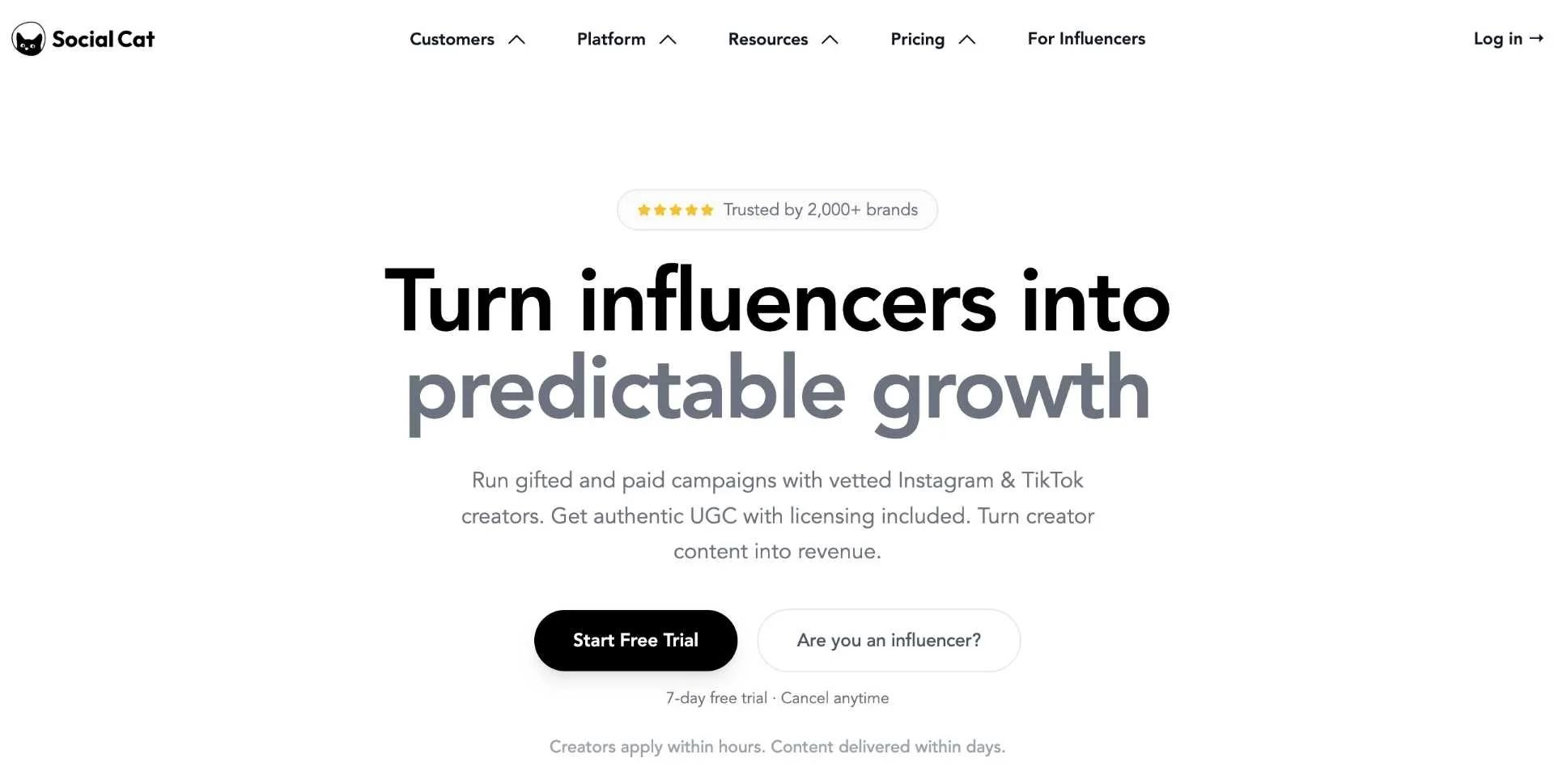
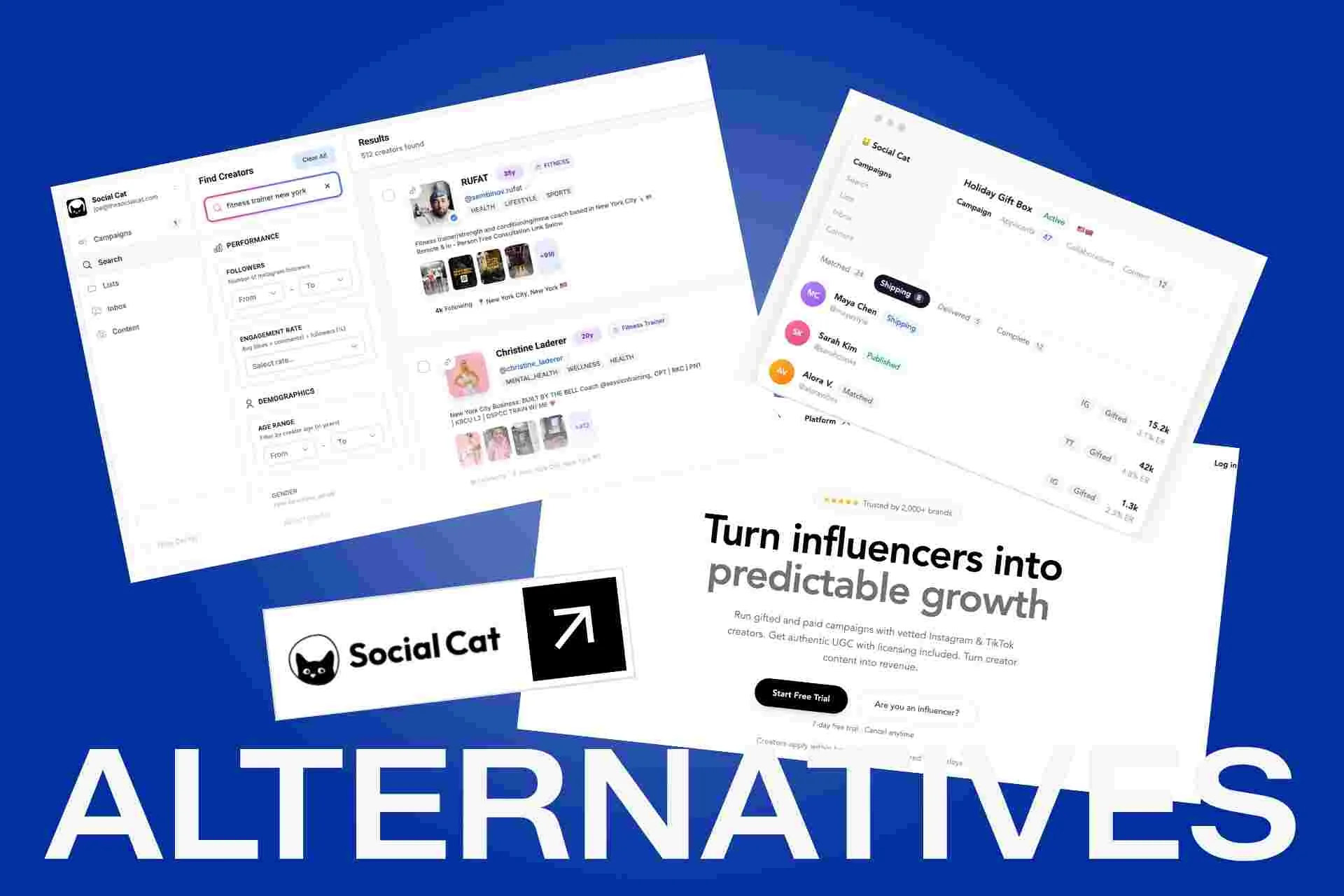
Social Cat is an influencer marketing platform designed for small and mid-sized D2C brands that want to run influencer campaigns—especially product seeding and micro-influencer collaborations—without the complexity of enterprise tools. It simplifies the entire workflow by combining campaign creation, creator applications, messaging, and content collection into a single, easy-to-use platform.
Unlike many traditional influencer platforms that rely heavily on outbound outreach, Social Cat leans into an inbound model where creators can apply directly to campaigns. This makes it particularly appealing for brands just getting started with influencer marketing or looking to scale UGC efficiently.
Key Features
• Campaign Marketplace with Creator Applications — Brands can create campaigns that influencers discover and apply to directly, flipping the traditional outbound-heavy workflow into an inbound model.
• Influencer Discovery & Prospecting — Access a creator database with filters such as location, engagement rate, audience size, and niche, and invite creators directly to campaigns.
• Product Seeding Workflow — Easily manage gifting campaigns by sending products to selected influencers and tracking collaborations from approval to content delivery.
• In-App Messaging & Collaboration — Communicate with influencers directly within the platform to negotiate deliverables, timelines, and campaign requirements.
• Basic CRM & Relationship Management — Track creator relationships, manage collaborations, store notes, and organize communication without needing external tools.
• Contracts & Agreements — Draft and manage influencer contracts within the platform to ensure clear expectations and usage rights.
• Content Collection & UGC Library — Influencers upload their content post-campaign, which is stored in a centralized library for easy access and reuse.
• Built-in Content Usage Rights — All plans include content usage rights, allowing brands to repurpose influencer content across ads, social media, and other marketing channels.
• Instagram & TikTok Focus — Strong emphasis on visual-first platforms, making it ideal for brands prioritizing short-form content and UGC.
Pricing
Social Cat offers flexible monthly pricing with no long-term contracts, making it accessible for smaller brands and teams.
• Essentials Plan – $99/month
• Performance Plan – $199/month
• Pro Plan – $299/month
Reviews
4.3 / 5.0 (Trustpilot)
Integrations
• Shopify — Enables product seeding workflows and connects influencer collaborations directly to your eCommerce store.
• Instagram — Allows creators to connect and verify accounts for campaign collaborations and content tracking.
• TikTok — Supports TikTok creator campaigns and content submissions within the platform.
• Email tools (manual workflows) — Used for communication outside the platform when needed, as native integrations are limited.
• Payment tools (e.g., PayPal) — Payments are handled externally, giving flexibility but requiring manual coordination.
Pros
• Inbound influencer application model — Instead of relying solely on cold outreach, brands can launch campaigns and receive applications from creators actively interested in collaborating
• Built-in content usage rights across all plans — Unlike many platforms, Social Cat includes UGC licensing by default, making it easier to repurpose influencer content for ads and marketing.
• Simple, affordable, and beginner-friendly — With low monthly pricing and no annual contracts, Social Cat is one of the most accessible tools for early-stage D2C brands entering influencer marketing.
Common Drawbacks of Social Cat
Limited analytics and reporting capabilities
The platform lacks advanced performance tracking such as ROI, conversions, or deep campaign analytics, making it harder to measure impact at scale.
Basic CRM functionality
While it includes creator management tools, it doesn’t offer the depth or automation needed for large-scale influencer programs.
No AI-powered discovery or automation
Influencer matching and outreach are mostly manual, which can slow down scaling compared to more advanced platforms.
Limited platform coverage (mostly Instagram & TikTok)
Brands looking to expand into YouTube, blogs, or multi-channel campaigns may find the platform restrictive.
Manual payments and limited integrations
Lack of native payment processing and integrations means more manual work for finance and operations teams.
Best Social Cat Alternatives
| TOOL | REVIEWS | BEST FOR | TRIAL INFO | PRICING | ||
|---|---|---|---|---|---|---|
1 |

|
⭐ | Influencer discovery | Book Demo | Pricing | Website |
2 |

|
⭐ | UGC creator collaborations | Book Demo | Pricing | Website |
3 |

|
⭐ | DTC creator management | Book Demo | Pricing | Website |
4 |

|
⭐ | Influencer CRM & automation | Book Demo | Pricing | Website |
5 |
|
⭐ | Influencer marketplace | Book Demo | Pricing | Website |
6 |

|
⭐ | Social media & influencer campaigns | Book Demo | Pricing | Website |
7 |
|
⭐ | Influencer discovery & outreach | Book Demo | Pricing | Website |
8 |
|
⭐ | Enterprise creator campaigns | Book Demo | Pricing | Website |
9 |

|
⭐ | Campaign management | Book Demo | Pricing | Website |
10 |

|
⭐ | Influencer discovery | Book Demo | Pricing | Website |
Upfluence

Upfluence is an enterprise-oriented influencer and affiliate marketing platform built for brands that want discovery, outreach, CRM, gifting, affiliate management, and payments in one system. It is especially strong for eCommerce teams because it connects creator activity directly to store and marketplace revenue, with notable support for Shopify, Amazon, WooCommerce, Magento, and BigCommerce.
Key Features
• Large multi-platform creator database — Upfluence offers a large creator database across Instagram, TikTok, YouTube, X, Twitch, Pinterest, and blogs, with filters for niche, audience, location, and engagement.
• AI-assisted outreach — Jaice AI helps teams build campaigns and speed up outreach workflows with AI support layered into campaign setup and communication.
• Bulk outreach and drip sequences — Teams can send mass outreach, use custom templates and fields, and automate follow-up sequences from inside the platform.
• Influencer CRM and relationship management — Upfluence includes campaign and creator management tools so brands can organize relationships, track statuses, and manage repeat collaborations.
• Shopify and Amazon performance tracking — One of its standout capabilities is tying influencer activity back to sales, affiliate codes, product gifting, and customer data in Shopify and Amazon.
• Social listening and customer-to-creator identification — Upfluence can surface influential customers from connected commerce or CRM lists and supports social listening for creator discovery.
• Creator payments and tax workflows — Higher-tier plans include Upfluence Pay, multi-currency payouts, and automated tax form generation.
Pricing
• Pricing model: Upfluence uses custom pricing rather than a public fixed plan table.
• All plans are custom made. There’s a minimum full year of service you have to commit to with monthly payments. On average plans start around $2,000/month ($24,000 yearly)
Reviews
4.3/5.0 (Capterra)
Pros
• Deep eCommerce integrations — Upfluence is one of the strongest options for brands that need influencer campaigns tied directly to Shopify and Amazon revenue attribution, product seeding, and affiliate tracking.
• Customer-to-creator matching — The platform can identify influential customers from your CRM or commerce stack, which is a differentiator for brands turning existing buyers into affiliates or ambassadors.
• Broader automation at the high end — Jaice AI, outreach sequences, payments, and tax workflows make it more operationally complete than many lightweight influencer tools.
Cons
• Pricing is less transparent than smaller platforms — full public pricing is not clearly published, which can make early evaluation harder.
• Can feel complex for smaller teams — user feedback consistently points to a learning curve and a denser workflow than simpler creator tools.
• Less flexible than low-cost monthly tools — Upfluence is better suited to brands with larger programs and stronger process needs than teams just testing influencer marketing.
Integrations
• Shopify — Connects store data so brands can identify influential customers, send products, create codes, and track influencer-driven sales.
• Amazon — Supports Amazon attribution and performance tracking for influencer and affiliate campaigns.
• Klaviyo — Enriches email lists with creator data and helps brands activate influential subscribers.
• Gmail / Outlook — Syncs email outreach and conversation workflows into the platform.
• Stripe — Powers creator payouts and payment tracking through Upfluence Pay.
Social Cat vs Upfluence
Social Cat is built for smaller brands that want a simpler, lower-cost way to run creator campaigns, while Upfluence is designed for brands that need heavier infrastructure around discovery, CRM, affiliate tracking, and commerce attribution. Social Cat is easier to adopt and far more budget-friendly, but Upfluence is substantially stronger for Shopify- and Amazon-led programs, multi-channel creator search, and high-volume outreach automation.
Another major difference is scale. Social Cat focuses more on campaign applications, lightweight collaboration, and content collection, whereas Upfluence is better for brands that want to tie influencer marketing directly to revenue, customer data, and operational workflows. If a brand mostly wants affordable Instagram and TikTok seeding campaigns, Social Cat is usually the simpler fit. If it wants a more advanced eCommerce influencer stack, Upfluence is the stronger platform.
SARAL
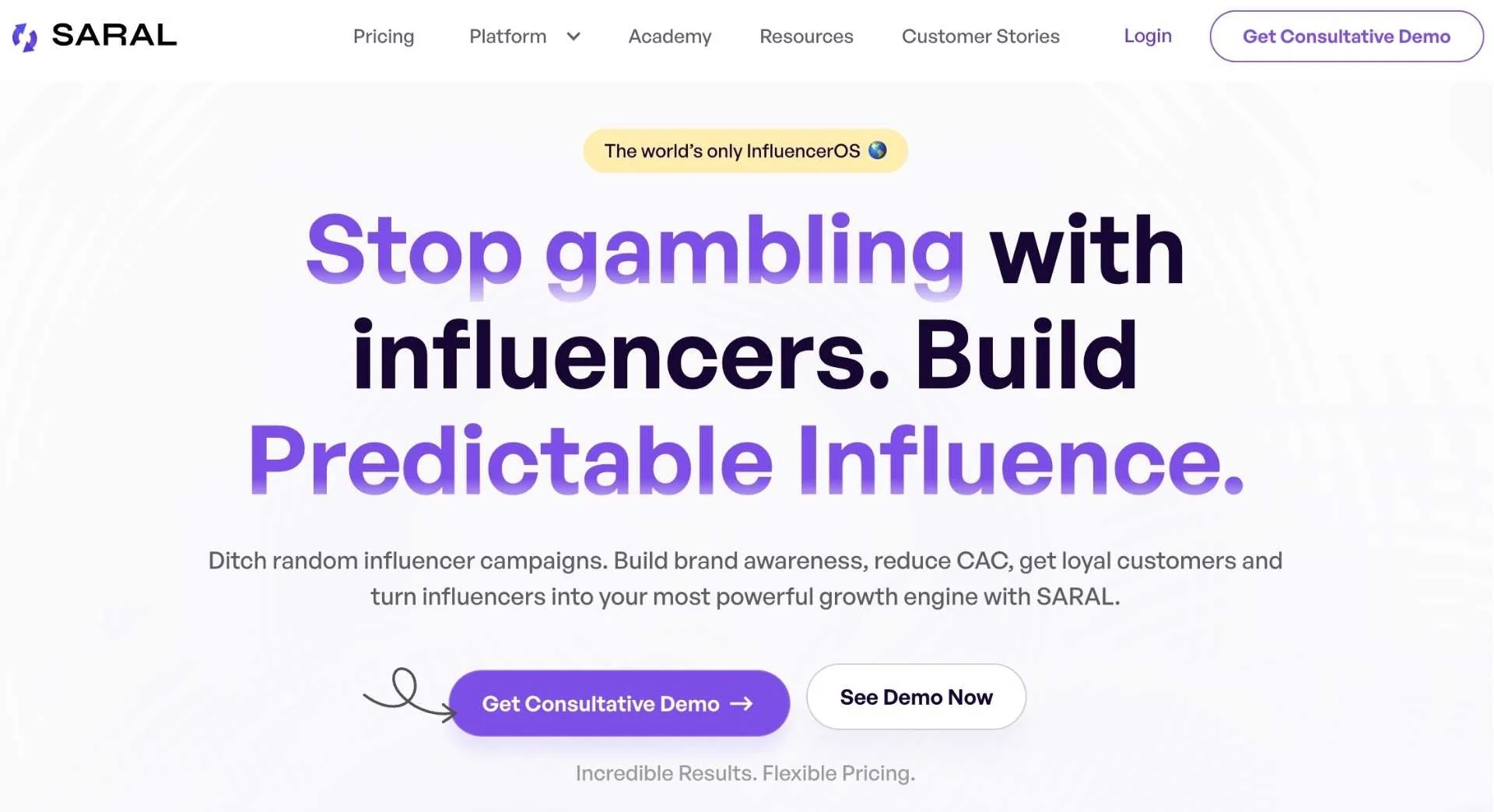
SARAL is an influencer marketing platform built primarily for consumer and eCommerce brands that want a simpler operating system for discovery, outreach, relationship management, gifting, and affiliate tracking. Its positioning is notably DTC-focused, with an emphasis on usability, transparent workflows, and a lighter operational setup than enterprise platforms.
Key Features
• Influencer discovery and contact enrichment — SARAL helps brands find creators, review audience and contact data, and organize outreach around the right niches and creator profiles.
• Outreach automation — Brands can automate creator outreach while still keeping the workflow relatively straightforward for lean teams.
• Relationship management — Its CRM-style workflow tracks which creators are in which stage, helping teams avoid spreadsheet-heavy management.
• Performance and sales tracking — SARAL is built to help brands connect creator activity to sales and partnership outcomes, especially for eCommerce use cases.
• Payments support — The platform supports paying creators as part of the broader program workflow.
• Chrome extension and practical workflow tools — SARAL is often praised for making hands-on influencer prospecting and campaign organization faster for smaller teams.
Pricing
SARAL offers tiered pricing primarily billed annually or quarterly:
• Starter Plan – $12,000/year or $3,600/quarter Includes 100 active partnerships, 300 new influencers/month, limited post tracking, and 1 user seat.
• Business Plan – $15,000/year or $4,500/quarter Includes 500 active partnerships, 800 new influencers/month, unlimited tracking, and 3 seats.
• Professional Plan – $25,000/year or $7,500/quarter Includes 1,000 active partnerships, 2,000 new influencers/month, full social listening, and 10 seats.
Reviews
4.7/5.0 (G2)
Pros
• Strong fit for DTC and eCommerce brands — SARAL is purpose-built for consumer brands that want creator discovery, outreach, gifting, and affiliate workflows without paying for enterprise complexity.
• Simple pricing logic — Instead of charging on many separate dimensions, SARAL says pricing is based mainly on discovery volume, which is easier to understand than many custom-quote competitors.
• Clean operational workflow — The platform is regularly praised for streamlining relationship management and replacing scattered spreadsheets with one clearer system.
Cons
• Public pricing is not fully broken out by plan in crawlable detail — that makes precise side-by-side budgeting harder than with fully transparent SaaS pricing pages.
• Best suited to eCommerce-focused teams — brands outside that model may get less value from its strongest integrations and workflows.
• Smaller market presence than older enterprise tools — SARAL has strong momentum, but less third-party review depth than some larger competitors.
Integrations
• Shopify — Connects product gifting and affiliate tracking into SARAL’s creator workflows.
• WooCommerce — Supports store-connected creator programs for brands outside Shopify.
• Klaviyo — Lets brands connect newsletter and creator communication workflows more closely.
• Slack — Sends updates and keeps internal teams aligned on influencer activity and progress.
• PayPal — Supports creator payment workflows as part of campaign execution.
Social Cat vs SARAL
Social Cat and SARAL both appeal to smaller or growing DTC brands, but they solve slightly different problems. Social Cat is more marketplace-led and collaboration-first, with creators applying into campaigns, while SARAL is more of an influencer operating system built around discovery, outreach, relationship management, gifting, and affiliate execution.
The biggest difference is workflow depth. Social Cat is better for lightweight seeding and simple campaign collaboration, while SARAL is stronger for brands that want structured outreach, CRM-like creator tracking, and tighter eCommerce integration. If the goal is affordability and simple inbound creator matching, Social Cat stays attractive. If the goal is building a more repeatable DTC creator engine, SARAL is the more robust option.
GRIN

GRIN is a creator management platform built primarily for DTC and eCommerce brands that want to manage long-term creator relationships end to end. It combines creator discovery, outreach, gifting, affiliate tracking, payments, content collection, and reporting, with a particularly strong focus on integrating creator programs into the broader commerce stack.
Key Features
• Creator discovery suite — GRIN helps brands find and vet creators by niche, audience data, engagement, and brand fit, including lookalike and keyword-based search.
• Centralized creator CRM — Teams can manage tags, statuses, notes, deliverables, and creator portals from one system.
• Email outreach and sequencing — GRIN supports email templates, automated sequences, and tracking for creator communication.
• Product seeding and affiliate workflows — Brands can ship products, create discount codes, pay commissions, and monitor creator-driven revenue in one workflow.
• Contracts and payments — GRIN supports creator contracts and creator payouts, including integrations for payment and signatures.
• UGC and reporting — Content capture, performance dashboards, and ROI tracking are built into the platform.
Pricing
• Official pricing model: GRIN’s current pricing page promotes a 30-day free trial and more flexible packaging than before, including self-serve access.
• Public starting price benchmark: Recent software directories list GRIN from $999/month, though enterprise pricing still appears to scale materially based on features and program size.
• Enterprise benchmark pricing: Recent sales benchmarks and product overviews still place GRIN commonly starts at $25,000/year (approx. $2,050/month), with no discounts for upfront payment. Contracts require a full-year commitment with monthly billing.
Reviews
4.5/5.0 (G2)
Pros
• Excellent commerce-native workflow — GRIN stands out for tying creator discovery, gifting, affiliate tracking, codes, payments, and reporting closely to eCommerce operations.
• Strong creator relationship infrastructure — its CRM, creator portals, email sequencing, and contract tooling are built for brands running ongoing creator programs instead of one-off campaigns.
• Broader integration ecosystem — GRIN’s app marketplace and stack integrations make it easier to fit into an existing marketing workflow.
Cons
• Pricing is not fully transparent beyond the starting point — brands often need to engage sales to understand the right package.
• Can require more process discipline than simpler tools — some users describe the workflow as powerful but more involved to manage cleanly.
• Better for brands with active creator programs than total beginners — smaller teams may find it heavier than necessary for occasional campaigns.
Integrations
• Shopify — Supports product fulfillment, seeding, discount codes, and store-connected creator workflows.
• Klaviyo — Helps teams align creator outreach and email communication with brand messaging.
• PayPal — Enables creator payouts and payment workflows.
• DocuSign — Simplifies creator contracts and agreement management.
• Slack — Sends notifications when creators take action, helping internal teams stay aligned.
Social Cat vs GRIN
Social Cat is far simpler and much more affordable, while GRIN is built for brands that need a deeper system for managing creator relationships over time. Social Cat works well for smaller seeding campaigns and straightforward creator collaboration, but GRIN is stronger for structured outreach, product gifting, affiliate programs, contracts, content workflows, and commerce attribution.
GRIN is also better suited to DTC brands that want creator marketing embedded into their existing stack through tools like Shopify, Klaviyo, PayPal, DocuSign, and Slack. Social Cat is easier to adopt and less resource-intensive, but brands that outgrow lightweight campaign management will usually find more operational depth in GRIN.
Influencer Hero
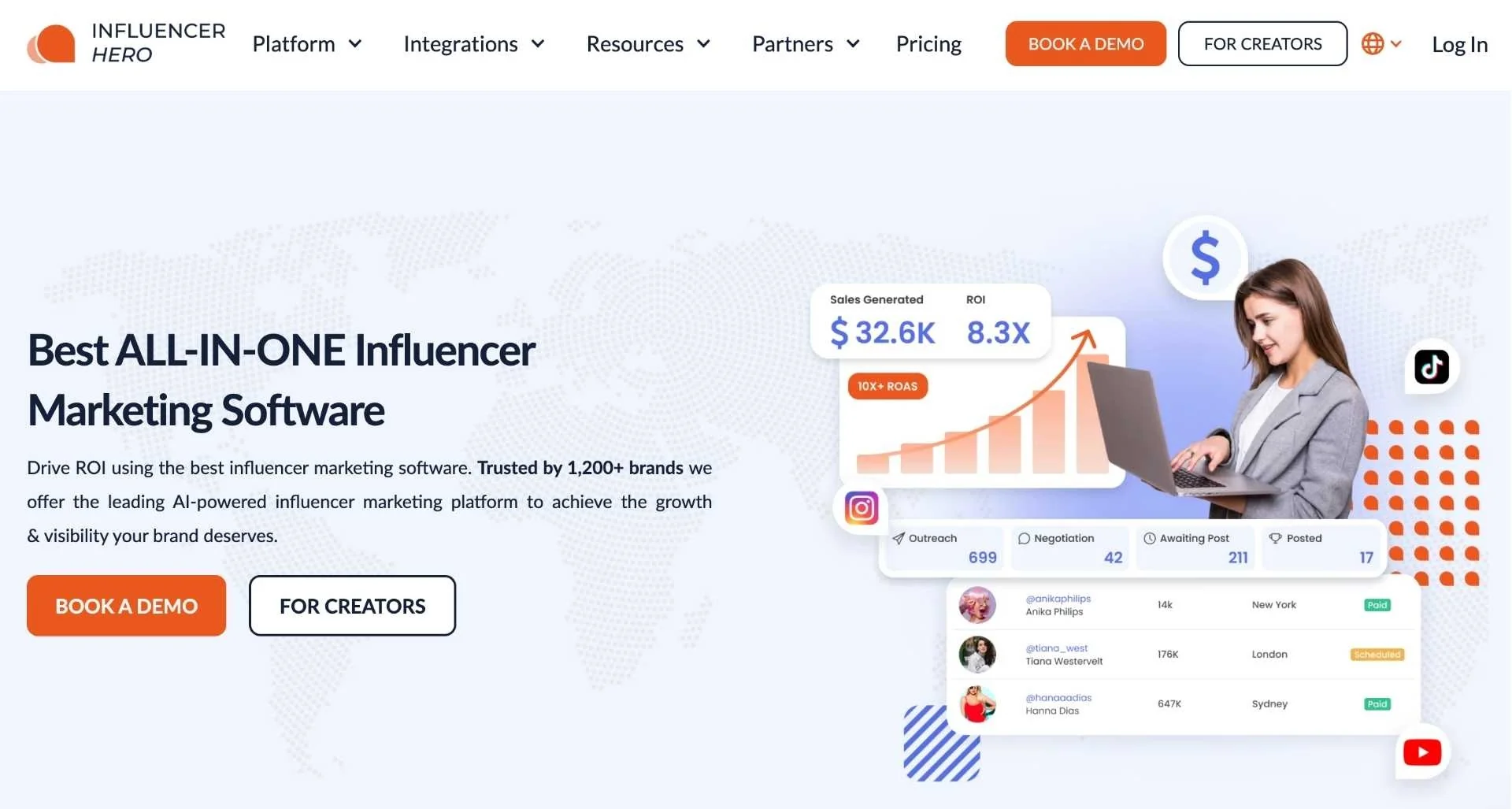
Influencer Hero is an all-in-one influencer marketing platform aimed at brands, agencies, and eCommerce teams that want discovery, outreach, CRM, gifting, UGC tracking, affiliate management, and reporting inside one unified workspace. Its positioning is notably modern and automation-forward, with a strong emphasis on AI-assisted outreach and creator workflow orchestration.
Key Features
• Influencer discovery — Search creators across major platforms with advanced audience, engagement, location, and niche filters, plus fraud detection and lookalike recommendations
• Outreach & automation — Run personalized outreach at scale with AI-assisted messaging, automated follow-ups, and multi-step email sequences
• Influencer CRM — Centralize creator relationships with pipeline management for conversations, campaign stages, and deliverables
• Gifting workflows — Manage product seeding end-to-end with automated order creation, shipment tracking, and delivery monitoring
• Affiliate tracking & payouts — Create trackable links and discount codes, measure performance, and manage commissions and payments in one workflow
• Campaign analytics & ROI tracking — Track engagement, clicks, conversions, and revenue through real-time dashboards tied to campaign performance
• UGC library — Automatically capture and organize creator content for reuse across paid ads, social media, and eCommerce channels
• Application pages & storefronts — Build branded creator application pages and enable influencers to promote products through personalized storefronts
• eCommerce integrations — Connect directly with platforms like Shopify and WooCommerce to link influencer activity to sales and attribution
• API & integrations — Expand capabilities with API access and integrations such as Klaviyo, Slack, Zapier, and email platforms
Pricing
Influencer Hero offers flexible pricing based on outreach volume and you can have unlimited creators in your CRM:
• Standard — $649/month (up to 1,000 outreaches per month)
• Pro — $1,049/month (up to 5,000 outreaches per month)
• Business — $2,490/month (up to 10,000 outreaches per month)
• Custom / Agency — Tailored pricing
Custom pricing is available for agencies and larger teams
Reviews
4.9/5.0 (Capterra)
Pros
• Very strong outreach automation — AI-assisted personalization, drip campaigns, and follow-up automation are core to the product rather than side features.
• Useful Chrome extension workflow — the browser extension makes live prospecting and creator syncing much faster for hands-on teams.
• Stronger creator-brand fit through data — Features like brand follower identification and AI-powered UGC search help teams find creators who already engage with the brand or produce relevant content, improving authenticity and campaign performance.
Cons
• Higher pricing for smaller teams — May be less accessible for early-stage brands or those with limited budgets
• Can still involve a learning curve — the platform is broad, so teams may need setup time to get the most from outreach and CRM automations.
Integrations
• Shopify — Connects product catalog, gifting orders, codes, links, commissions, and sales attribution.
• WooCommerce — Tracks creator links, discount codes, clicks, and revenue inside one workflow.
• WhatsApp — Syncs and manages influencer conversations directly in the CRM, with real-time messaging, automation, and full chat history.
• API — Business-tier API access supports custom creator discovery and infrastructure use cases.
• Zapier — Connects Influencer Hero with hundreds of tools to automate workflows such as notifications, reporting, and data syncing.
Social Cat vs Influencer Hero
Social Cat is a simpler campaign collaboration tool for smaller brands, while Influencer Hero is much closer to a full creator operating system. Social Cat keeps things lighter with inbound campaign applications and straightforward content collaboration, whereas Influencer Hero offers significantly stronger discovery, CRM, outreach automation, gifting, affiliate tracking, and ROI reporting.
The difference is especially clear in automation and scale. Social Cat is easier to start with and cheaper, but Influencer Hero is a better fit for brands that want structured outreach, AI assistance, stronger eCommerce attribution, and more sophisticated campaign operations. For growing DTC brands that have already outgrown lightweight seeding workflows, Influencer Hero is the more scalable choice.
IZEA
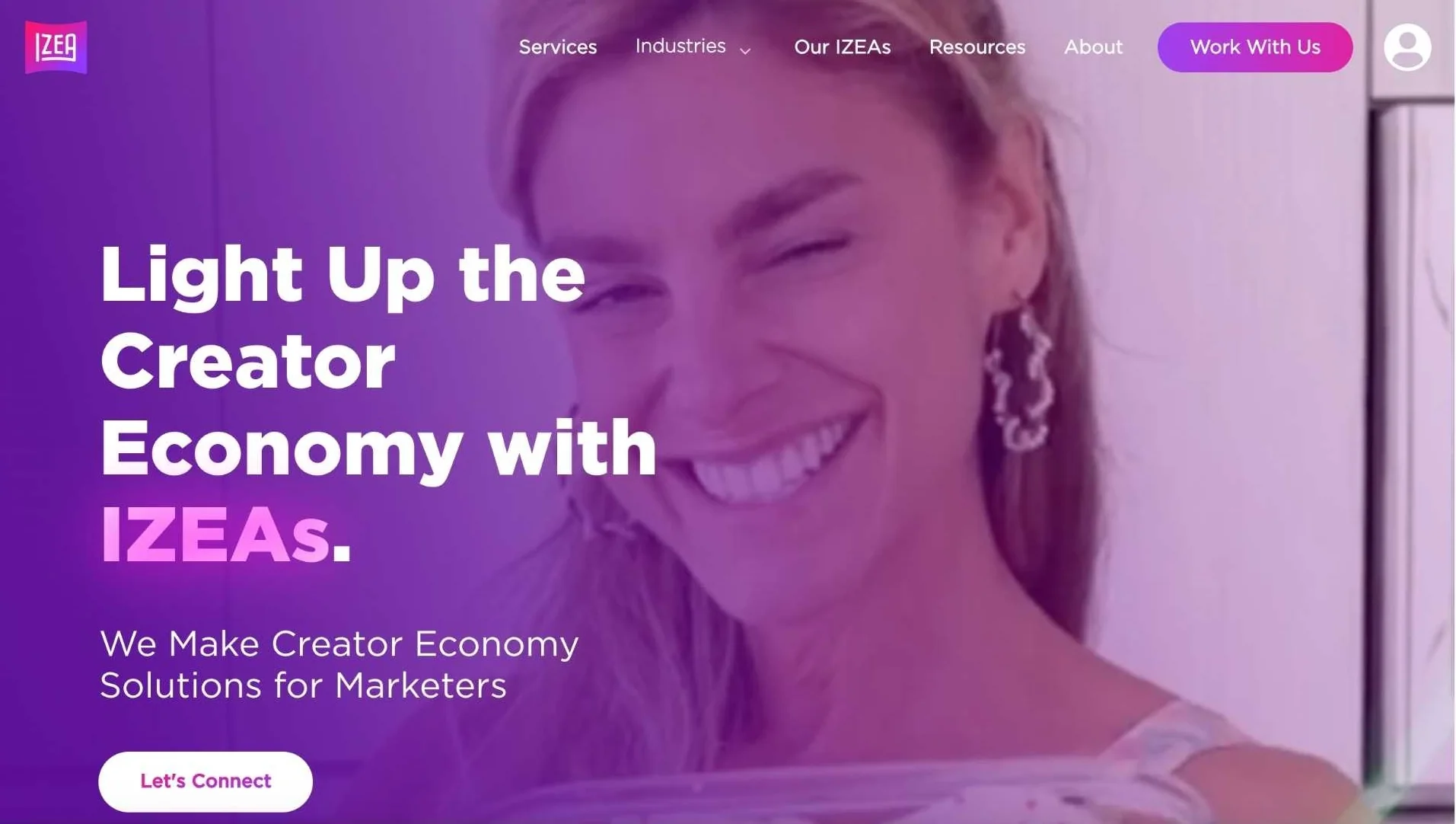
IZEA is one of the longer-standing names in creator marketing, offering a mix of managed services, a creator marketplace, and its software platform, IZEA Flex. It is designed for brands and agencies that want creator discovery, campaign execution, content workflows, and performance tracking, with the option to combine self-serve software with managed support.
Key Features
• IZEA Flex software platform — Flex is IZEA’s self-serve influencer marketing platform for planning, managing, and analyzing creator campaigns.
• Creator Marketplace — Brands can search for creators or post opportunities and receive pitches through IZEA’s marketplace workflow.
• Managed services option — IZEA also offers full-service campaign execution for brands that want strategy and operations support.
• AI-assisted workflow tools — IZEA highlights AI-powered storyboarding and related campaign support tools inside Flex.
• Contracts, e-signatures, and payments — Flex includes contract templates, e-signature services, and transaction capabilities for creator payments.
• Performance measurement and tracking links — IZEA supports tracking links and conversion-oriented reporting tied to creator activity.
Pricing
• Starter Plan: starts at $130/month.
• Power Plan: starts at $500/month.
• Free trial: 10 days.
• Managed Services: custom proposal-based pricing for fully managed campaigns.
Reviews
3.9/ 5.0 (G2)
Pros
• Flexible service model — IZEA stands out because brands can use self-serve software, a creator marketplace, or managed services depending on internal resources.
• Marketplace plus software combination — the ability to both source creators through listings and manage campaigns through Flex gives brands more sourcing flexibility than many CRM-only tools.
• Established creator-marketing heritage — IZEA’s long market presence and multi-solution model make it a familiar option for brands wanting both software and service support.
Cons
• Public pricing is fragmented — it is harder to get a clean public price ladder for Flex than with more transparent SaaS competitors.
• Workflow can feel less straightforward than newer tools — some user feedback points to cumbersome creator communication and process friction.
• Better suited to teams wanting a broader vendor model — brands that only want a lightweight, simple influencer tool may find IZEA’s structure more complex than necessary.
Integrations
• Shopify — connects creator campaigns to commerce and sales data.
• Google Analytics — helps surface conversion and performance insights tied to creator activity.
• Tracking links / built-in link shortener — lets brands measure traffic and revenue from creator campaigns.
• Contract and e-signature tools — streamlines creator agreements inside campaign workflows.
• Transactions / creator payments — supports paying creators through Flex workflows.
Social Cat vs IZEA
Social Cat is much simpler and more SMB-friendly, while IZEA spans marketplace access, software, and managed services. Social Cat is usually the easier fit for brands that want straightforward seeding campaigns and creator collaboration at a lower price point. IZEA is the stronger option for brands that want more sourcing flexibility, software depth, or the ability to layer managed services on top of the platform.
The two platforms also differ in operating model. Social Cat leans into a more lightweight creator application workflow, while IZEA offers a broader creator economy stack through Flex and its marketplace. For a small brand just starting creator campaigns, Social Cat is usually easier to adopt. For a team that wants a more mature vendor ecosystem and service options, IZEA offers more breadth.


Later
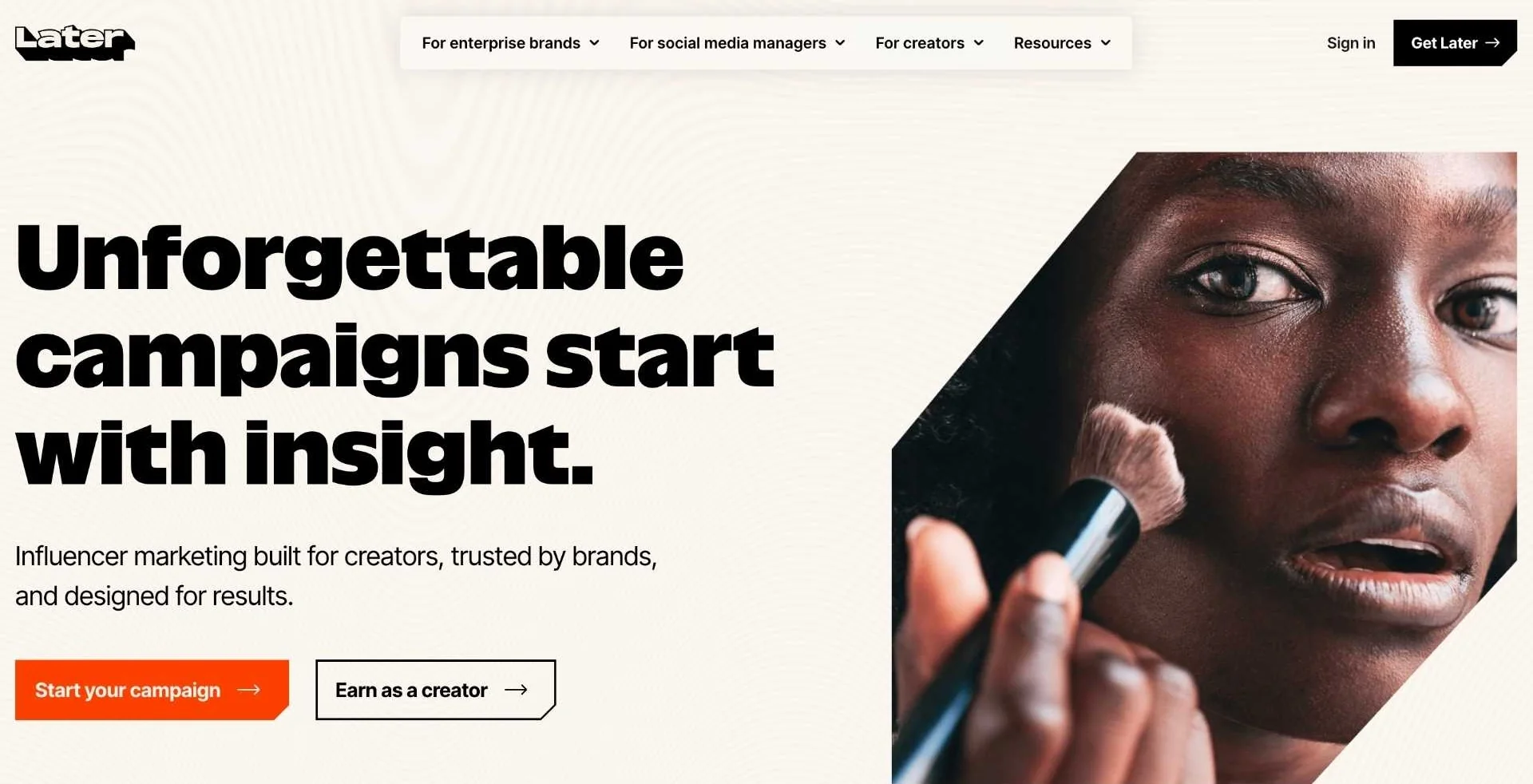
Later is a social media and influencer marketing platform that combines content scheduling, analytics, and creator collaboration tools into one unified system. Originally known for Instagram scheduling, Later has expanded into influencer marketing through its Creator Marketplace and influencer campaign tools, making it a strong option for brands that want both social media management and influencer workflows in one place.
Key Features
• Creator Marketplace: Later enables brands to discover and collaborate with influencers through its built-in marketplace, where creators can apply or be invited to campaigns.
• Influencer Campaign Management: Manage campaigns end-to-end, including creator selection, communication, deliverables, and approvals within a centralized dashboard.
• Social Media Scheduling: A core differentiator—brands can schedule and publish content across Instagram, TikTok, Pinterest, Facebook, and LinkedIn alongside influencer campaigns.
• Linkin.bio & Conversion Tracking: Track traffic and conversions driven by influencer content using Later’s link-in-bio tools and analytics dashboards.
• Analytics & Reporting: Provides performance insights on posts, campaigns, and audience engagement, though more focused on social performance than deep ROI attribution.
• UGC Management: Collect and reuse influencer-generated content for brand marketing across channels.
Pricing
Later’s influencer marketing platform (Later Influence) uses custom pricing, and brands need to request a demo for exact costs.
Based on our research, there are different plans:
• Essentials Plan: Starts at $28,500/year. Best for brands starting in influencer marketing.
• Pro Plan: Starts at $42,000/year. Best for data and automation to make your campaigns run faster and achieve better ROI.
• Premier Plan: Starts at $60,000/year. Everything you need for a scaled influencer program.
• All plans come with an additional one-time onboarding fee of $5,000 for all new customers.
Reviews
4.4 / 5.0 (Capterra)
Pros
• All-in-one social + influencer platform: Combines scheduling, analytics, and influencer marketing—reducing the need for multiple tools.
• Strong creator marketplace integration: Makes it easy to discover and activate creators without switching platforms.
• Best-in-class social scheduling tools: One of the most mature scheduling platforms, especially for Instagram and TikTok workflows.
Cons
• Limited deep influencer analytics: More focused on social performance than advanced ROI or affiliate tracking.
• Influencer features not as robust as dedicated platforms: Lacks advanced CRM and outreach automation compared to specialized tools.
• Creator marketplace access may require higher-tier plans: Not always included in basic subscriptions.
Integrations
• Instagram — Schedule posts, manage campaigns, and track influencer content performance.
• TikTok — Plan and publish TikTok content alongside influencer campaigns.
• Shopify — Track conversions and link influencer-driven traffic to store activity.
• Google Analytics — Measure traffic and conversions from influencer campaigns.
• Pinterest — Schedule and analyze influencer-driven content for discovery-based campaigns.
Social Cat vs Later
Social Cat is focused purely on influencer collaboration, especially for micro-influencer campaigns and product seeding, while Later combines influencer marketing with broader social media management. This makes Later a better choice for brands looking to centralize both content scheduling and influencer workflows in one tool.
However, Social Cat offers a more streamlined influencer-specific workflow with simpler pricing and easier onboarding. Later is more versatile but less specialized in influencer CRM and outreach, whereas Social Cat is more focused on collaboration and UGC generation.
Ainfluencer
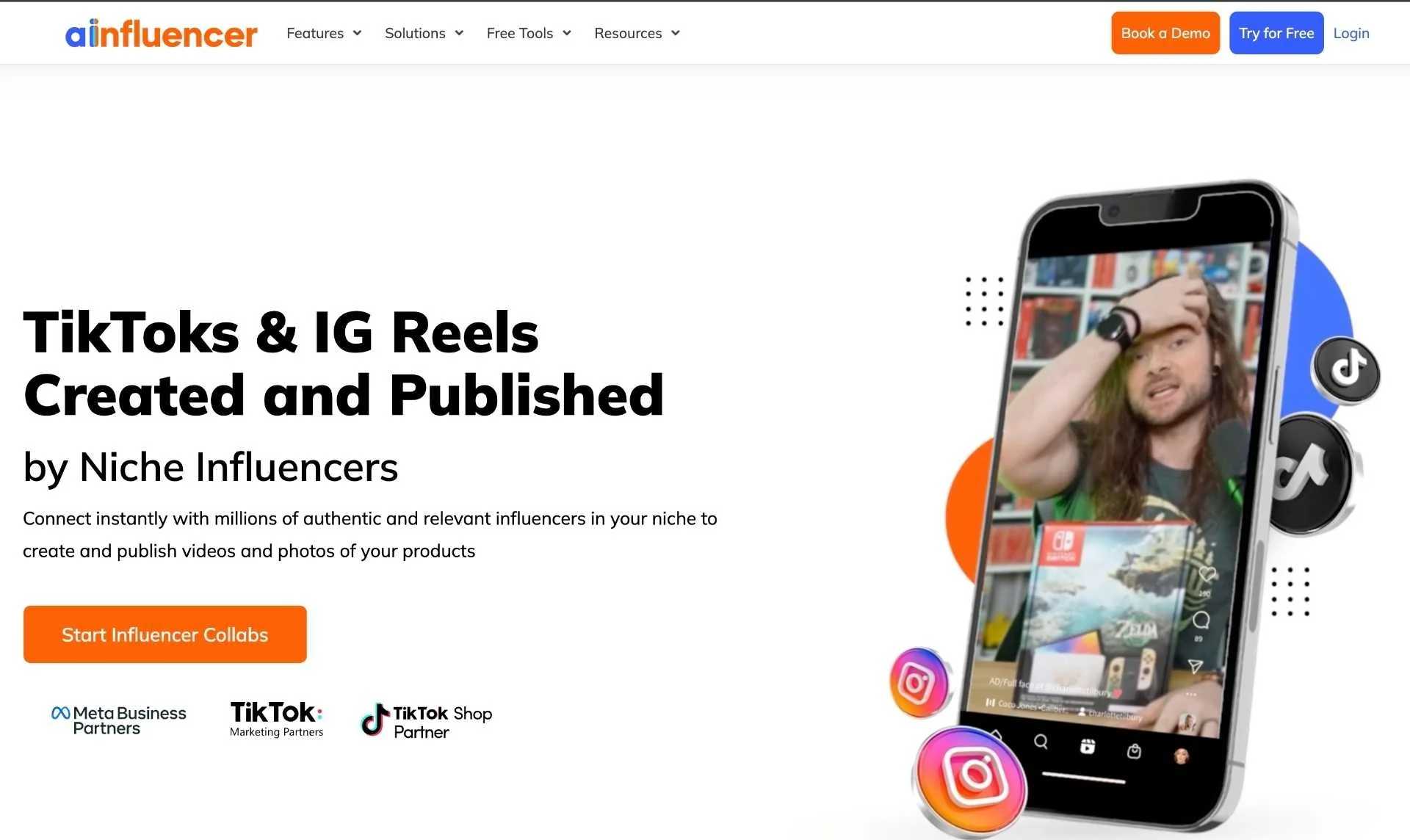
Ainfluencer is a free influencer marketing marketplace that connects brands with influencers primarily on Instagram and TikTok. It stands out for its zero platform fee model and escrow-based payment system, making it accessible for small brands and startups experimenting with influencer marketing.
Key Features
• Marketplace of 5M+ influencers: Brands can browse and invite influencers or create campaigns that creators apply to directly.
• Campaign creation & management: Define campaign goals, deliverables, and compensation, and manage multiple campaigns simultaneously.
• Escrow-based payments: Payments are held securely and released only after content is delivered, reducing risk for brands.
• In-app messaging & negotiation: Brands can communicate, negotiate, and finalize deals directly within the platform.
• Content library & ownership: All delivered content is stored and owned by the brand for reuse.
• Basic analytics dashboard: Tracks views, likes, and engagement, though lacks advanced sales attribution.
Pricing
• Free Plan (Core Offering): $0/month
• Commission-Based Model: ~20% service fee deducted from influencer payouts
• Managed Campaign Packages (Optional)
• Viral: $7,999 (1 month)
• Scale: $9,999 (2 months)
• Super Scale: $15,000 (3 months)
• Turbo Viral: $29,999 (4 months)
• Custom pricing available depending on campaign scope
Reviews
4.8 / 5.0 (G2)
Pros
• Completely free self-serve platform: One of the few influencer tools with no subscription cost.
• Secure escrow payment system: Reduces risk by ensuring creators are paid only after deliverables are met.
• Large active marketplace: High volume of influencers actively applying to campaigns.
Cons
• Limited analytics and reporting: No advanced tracking for conversions or ROI.
• Quality inconsistency among creators: Marketplace model can lead to variability in professionalism.
• Basic discovery filters: Lacks deeper targeting and segmentation capabilities.
Integrations
• Instagram — Core platform for influencer discovery and campaign execution.
• TikTok — Enables influencer campaigns and content collaborations.
• Chrome Extension — Allows brands to invite creators directly from social profiles.
• Shopify (upcoming) — Will enable product gifting and tracking workflows.
• Email tools — Used for communication templates and outreach workflows.
Social Cat vs Ainfluencer
Social Cat and Ainfluencer both rely on a marketplace model, but Ainfluencer focuses more on accessibility with its free pricing and escrow payments. Social Cat, on the other hand, offers a more structured workflow with better collaboration tools and content management.
While Ainfluencer is attractive for budget-conscious brands, Social Cat provides a more polished experience with stronger campaign organization and creator management features.
indaHash
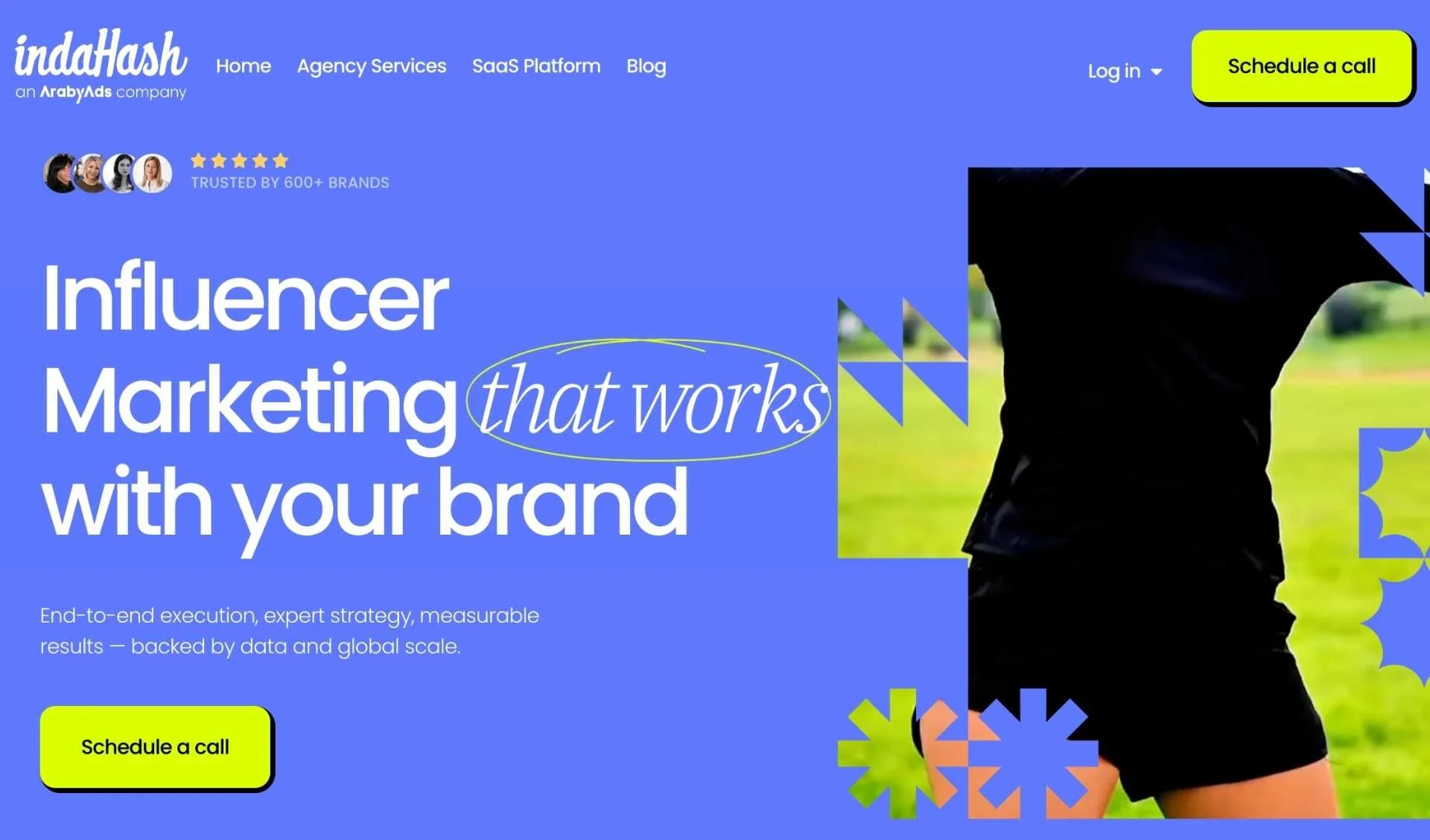
indaHash is a global influencer marketing platform and agency that combines a large creator network with managed campaign execution. It is particularly strong in running large-scale campaigns across multiple markets, making it popular among enterprise brands looking for international reach.
Key Features
• Global influencer network: Access to a large pool of influencers across multiple countries and regions.
• Managed campaign services: indaHash provides full-service campaign execution, including strategy, creator selection, and reporting.
• AI-powered campaign optimization: Uses data-driven insights to optimize influencer selection and performance.
• Content amplification tools: Helps brands boost influencer content through paid media strategies.
• Campaign reporting & analytics: Tracks engagement, reach, and performance across campaigns.
Pricing
indaHash does not publicly disclose full pricing on its website, and most plans are offered on a custom or quote-based model. However, publicly listed pricing tiers include:
• Creator Discovery – $499/year
• Discovery & Campaign Management – $999/month
• White Label (Agencies) – $9,990/year
• Enterprise License – $4,999 (one-time)
• Free Trial: Available
Reviews
4.7 / 5.0 (G2)
Pros
• Strong global campaign execution: Ideal for brands running multi-country influencer campaigns.
• Managed service support: Provides hands-on strategy and execution.
• Large influencer network: Access to diverse creators across regions and niches.
Cons
• Not ideal for self-serve teams: Heavily service-oriented rather than SaaS-first.
• Limited pricing transparency: Requires custom quotes.
• Less control for brands: Managed model reduces hands-on flexibility.
Integrations
• Instagram — Core campaign execution and tracking.
• TikTok — Enables global influencer campaigns.
• YouTube — Supports video influencer collaborations.
• Facebook Ads — Amplify influencer content through paid media.
• Analytics tools — Integrates campaign data into reporting dashboards.
Social Cat vs indaHash
Social Cat is a self-serve platform focused on small to mid-sized brands, while indaHash is a managed service platform designed for enterprise campaigns. indaHash is better suited for brands that want hands-off execution and global reach.
Social Cat offers more control and affordability, making it ideal for smaller teams. indaHash, on the other hand, is better for scaling large, multi-market campaigns with strategic support.
Influencity
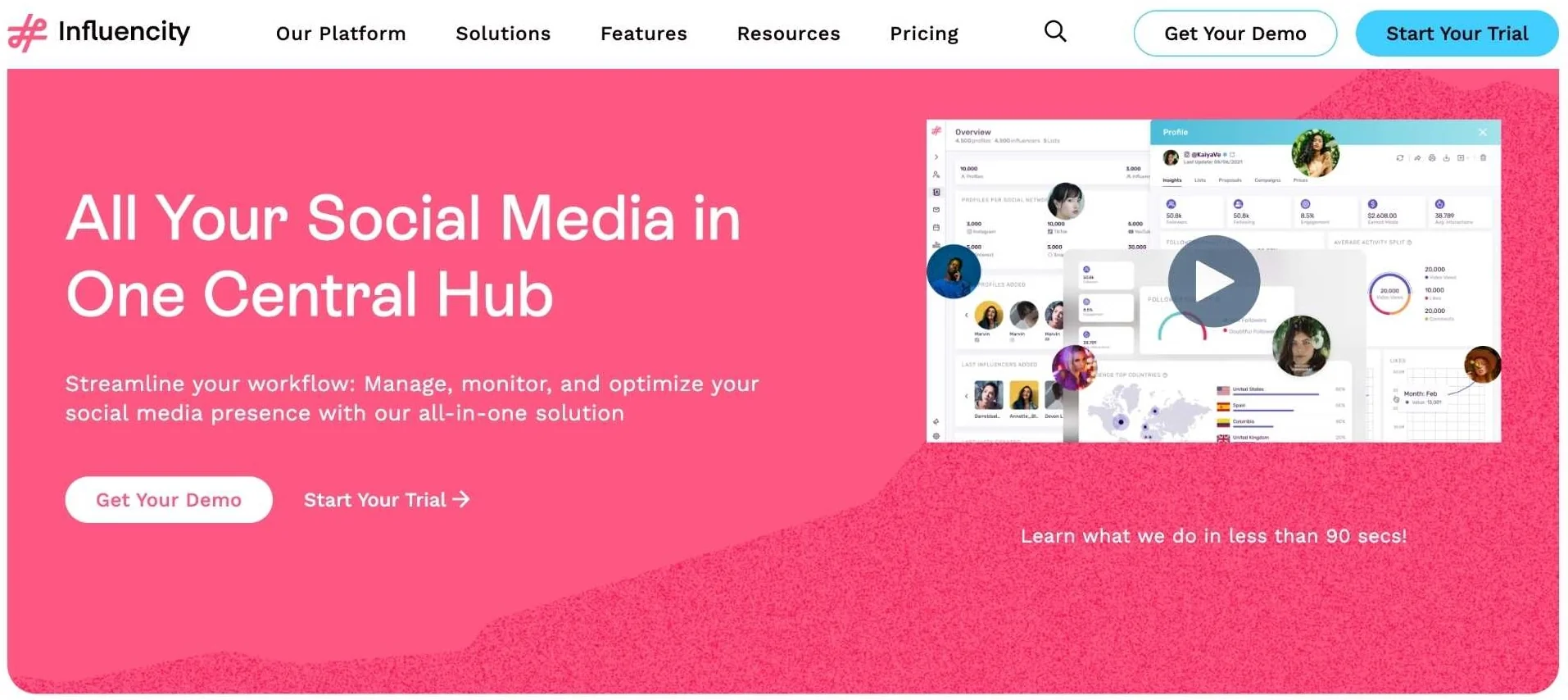
Influencity is a data-driven influencer marketing platform that focuses heavily on analytics, audience insights, and campaign optimization. It is designed for brands and agencies that want deep data on influencer performance and audience quality before making collaboration decisions.
Key Features
• Advanced influencer discovery: Filter creators by audience demographics, engagement, authenticity, and niche.
• Audience analytics & fake follower detection: Provides detailed breakdowns of audience quality and authenticity.
• Campaign management tools: Manage outreach, collaborations, and reporting in one platform.
• Performance tracking & ROI analysis: Offers deeper analytics compared to lightweight tools.
• Competitor analysis tools: Identify influencers working with competing brands.
Pricing
Influencity offers three main pricing tiers, along with add-ons:
• Professional Plan: $318/month or $3,816/year
• Business Plan: $798/month or $9,576/year
• Enterprise Plan: Custom pricing
• Auto-Tracker Add-On: $660/year (for 50 influencers)
Reviews
4.3 / 5.0 (G2)
Pros
• Strong analytics and audience insights: One of the best platforms for data-driven influencer selection.
• Robust filtering and segmentation: Enables highly targeted influencer discovery.
• Competitive intelligence features: Helps brands analyze competitor campaigns.
Cons
• Less focus on outreach automation: Requires more manual effort in communication.
• Interface can feel data-heavy: May overwhelm smaller teams.
• Limited creator relationship tools: Not as strong as CRM-focused platforms.
Integrations
• Instagram — Provides deep analytics and audience insights.
• YouTube — Tracks video performance and influencer metrics.
• TikTok — Enables discovery and campaign tracking.
• Google Analytics — Connects influencer traffic to site performance.
• API access — Allows custom integrations for enterprise teams.
Social Cat vs Influencity
Social Cat is designed for ease of use and campaign execution, while Influencity focuses heavily on analytics and data-driven decision-making. Influencity is better for brands that prioritize audience insights and performance metrics.
In contrast, Social Cat is simpler and more accessible, making it better for brands that want quick campaign execution without deep analytics complexity.
Modash
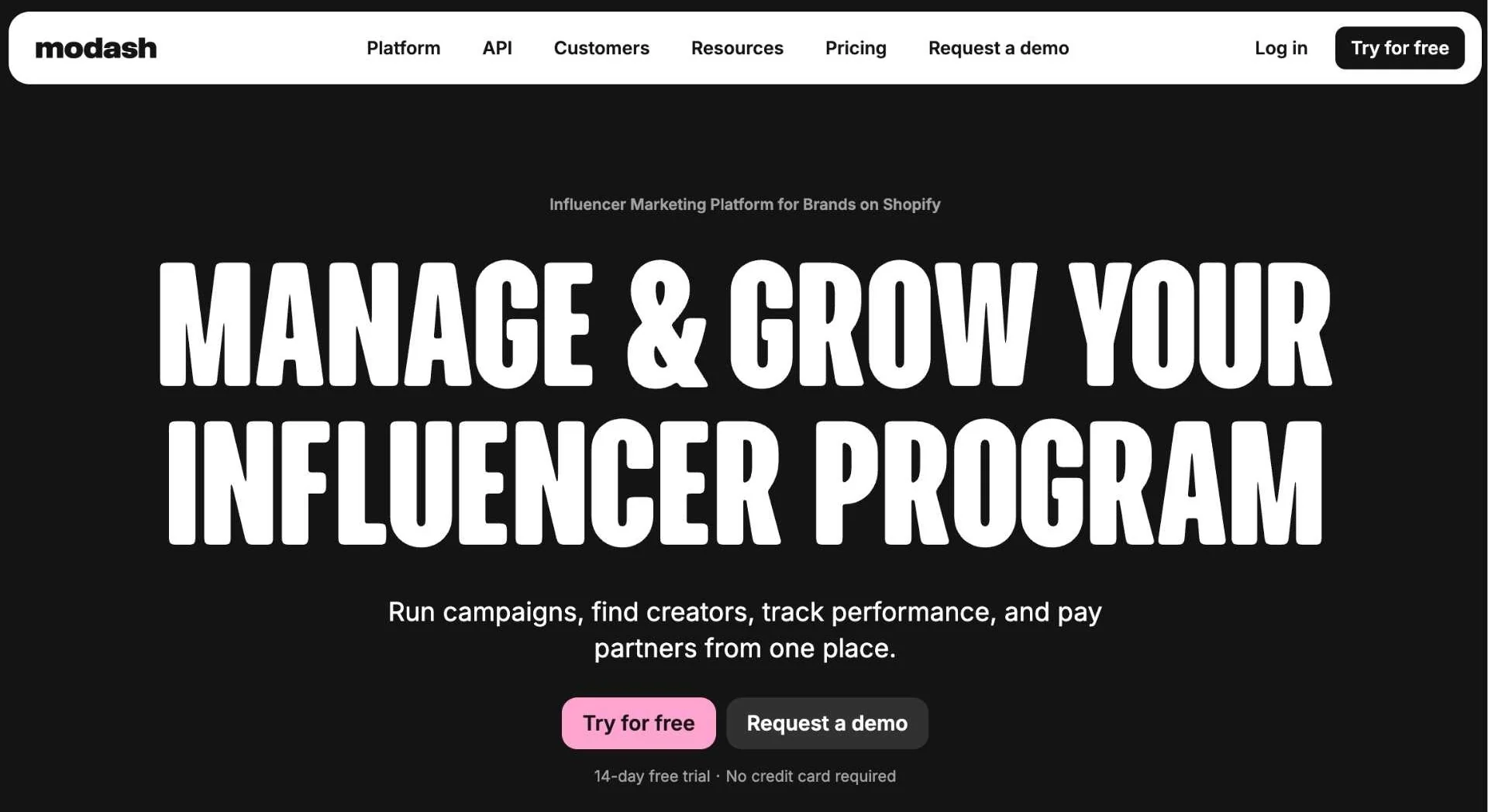
Modash is an influencer marketing platform focused on discovery, analytics, and campaign tracking, with one of the largest influencer databases in the market. It is particularly popular among brands that want scalable influencer discovery across multiple platforms.
Key Features
• Massive influencer database (250M+ creators): Covers Instagram, TikTok, and YouTube with extensive filtering options.
• Audience and performance analytics: Provides detailed insights into engagement, audience demographics, and authenticity.
• Campaign tracking & reporting: Track influencer posts, mentions, and performance automatically.
• Lookalike search: Find influencers similar to top-performing creators.
• API access for custom workflows: Enables large teams to integrate influencer data into internal systems.
Pricing
• Essentials: ~$199/month (paid annually)
• Performance: ~$499/month (paid annually)
• Enterprise: custom pricing
• Typically billed annually, with scaling based on usage and team size.
Reviews
4.9/5.0 (Capterra)
Pros
• One of the largest influencer databases: Enables highly scalable discovery across multiple platforms.
• Strong analytics and filtering capabilities: Ideal for data-driven influencer selection.
• Reliable tracking and monitoring: Automatically tracks influencer content and performance.
Cons
• No built-in outreach or CRM tools: Requires external tools for communication.
• Limited campaign management features: Focuses more on discovery and analytics.
• Not ideal for beginners: Better suited for experienced teams.
Integrations
• Shopify — Track influencer-driven sales and conversions.
• Google Sheets — Export and manage influencer data externally.
• API — Integrate influencer data into custom systems.
• Instagram — Core platform for discovery and analytics.
• YouTube — Track influencer performance and engagement.
Social Cat vs Modash
Social Cat is a collaboration and campaign management tool, while Modash is primarily a discovery and analytics platform. Modash excels in finding and analyzing influencers at scale, while Social Cat focuses on managing collaborations.
For brands that need advanced discovery and data, Modash is the better choice. For brands that want a simple, all-in-one collaboration tool, Social Cat remains the more accessible option.
Final Thoughts on Social Cat Alternatives
Choosing the right Social Cat alternative ultimately depends on your brand’s scale, budget, and influencer marketing maturity. Platforms like Ainfluencer and Later offer simplicity and accessibility, while tools like GRIN, Upfluence, and Influencer Hero provide more advanced workflows, automation, and eCommerce integrations. Meanwhile, data-driven platforms like Modash and Influencity excel in influencer discovery and analytics, and service-heavy options like indaHash cater to large-scale campaigns. Social Cat remains a strong option for lightweight, affordable influencer collaborations, but brands looking for deeper analytics, broader integrations, or scalable campaign management may find better alignment with more specialized alternatives.

.png)


.jpg)