

10 Best Skeepers Alternatives • Key Criteria • Skeepers Overview • Best Skeepers Alternatives • Aspire • Influencer Hero • SARAL • Influencity • Captiv8 • IZEA • Modash • Klear • Traackr • IMAI • Final Thoughts • FAQs
10 Best Skeepers Alternatives for Influencer Marketing
Influencer marketing has become a core growth channel for D2C brands, but scaling it efficiently requires more than spreadsheets and manual outreach. Modern influencer marketing software helps teams streamline creator discovery, manage outreach at scale, track campaign workflows, and tie influencer efforts directly to revenue. Skeepers is one of the well-known platforms in this space, particularly for UGC and influencer collaborations, but many brands start exploring Skeepers alternatives as they grow or need more flexibility.
While Skeepers offers strong content collection and campaign management capabilities, common feedback from users highlights limitations around pricing transparency, customization, and scalability for more performance-driven campaigns. Some teams also find its discovery and outreach features less robust compared to newer platforms, especially when running high-volume or ROI-focused influencer programs. This is where choosing the right influencer marketing software becomes critical for D2C operators looking to scale efficiently.
In this article, we’ll compare the 10 best Skeepers alternatives—including Aspire, Influencer Hero, SARAL, Influencity, Captiv8, IZEA, Modash, Klear, Traackr, and IMAI—to help you find the right platform for your influencer marketing strategy.
Key Criteria for Evaluating Influencer Marketing Platforms
Core Features
Evaluation of essential influencer marketing capabilities, including influencer discovery, outreach, CRM, campaign management, reporting, and content workflows.
Pricing & Flexibility
Comparison of pricing models, subscription plans, and contract terms to match different budgets and growth stages.
Customer Reviews & Satisfaction
Analysis of user feedback from trusted review platforms, focusing on usability, reliability, customer support, and overall performance.
Pros & Cons
Review of each platform’s strengths and limitations to highlight where it performs well and where it may fall short based on different use cases.
Integrations
Review of the most important integrations (e.g., Shopify and other tech tools), highlighting what each integration enables in one sentence.
Skeepers Overview
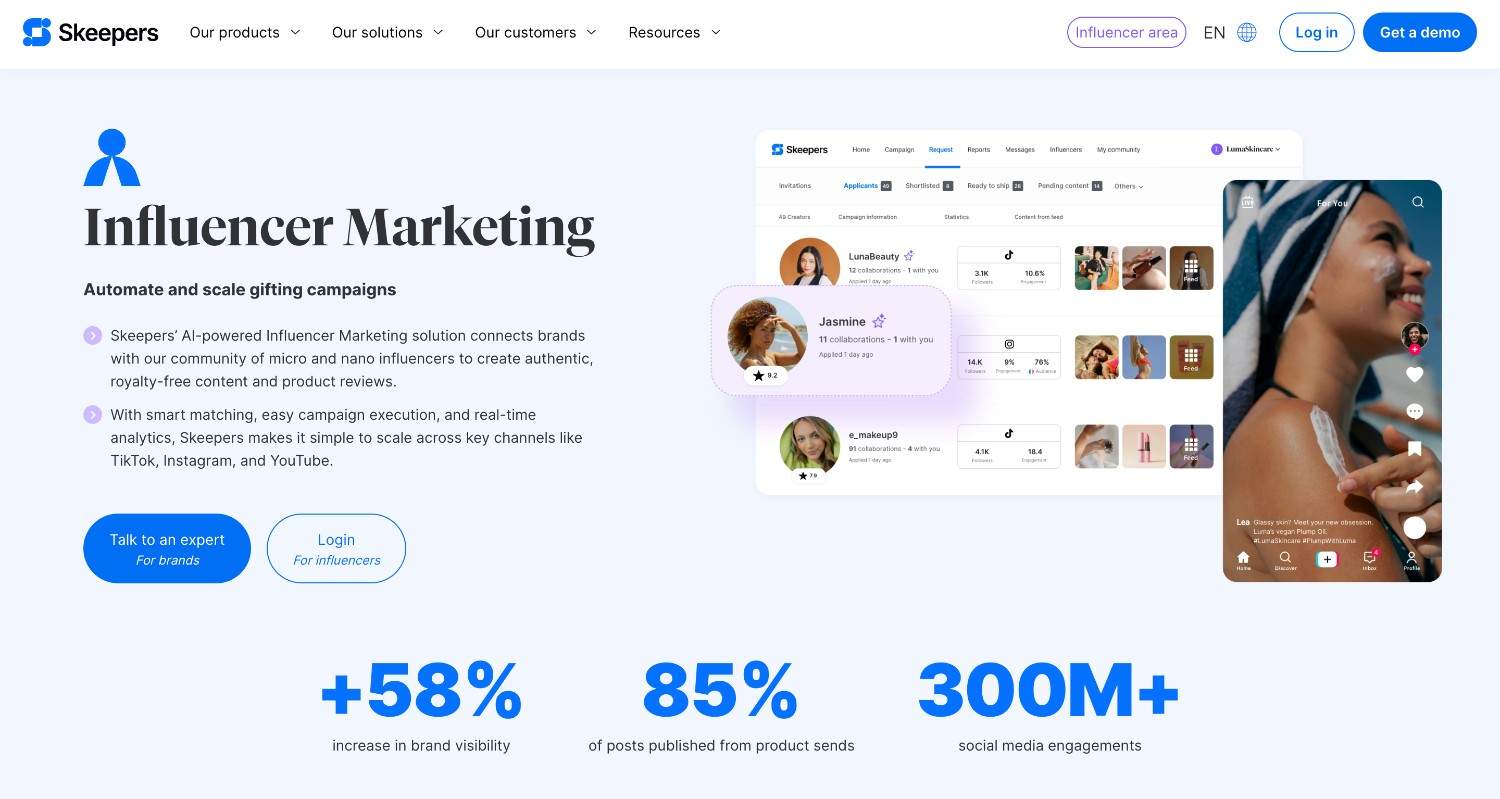
Skeepers is an influencer marketing and UGC platform built for brands that want to run product seeding and creator campaigns at scale, especially with micro and nano influencers. The platform centers on helping ecommerce teams discover vetted creators, launch gifting campaigns, collect fully licensed content, and turn that content into measurable social commerce outcomes across channels like Instagram, TikTok, and YouTube. It is part of the broader Skeepers product suite, which also includes reviews, shoppable content, and community tools, so it tends to appeal most to brands looking for a content-and-commerce workflow rather than a pure influencer CRM.
Key Features
- Vetted micro and nano creator network: Skeepers gives brands access to a large creator pool focused on micro and nano influencers, with AI-assisted matching to help brands find creators aligned to campaign goals and audience fit.
- Product gifting campaigns: The platform is built around gifting workflows, making it easier to brief creators, send products, and manage campaign rules without relying on spreadsheets and manual follow-up.
- Fully licensed UGC collection: Brands can collect photos, videos, and product reviews from creators, then reuse that content across owned and paid channels without having to rebuild a separate content pipeline.
- Real-time campaign analytics: Skeepers tracks campaign, creator, and content performance in real time so teams can monitor what is working and optimize ongoing programs faster.
- Shoppable content activation: The platform connects creator content to product pages and social commerce flows, including a shoppable content widget that Skeepers says can increase add-to-cart rates.
- Social commerce support: Skeepers is positioned for gifted campaigns tied to TikTok Shop, Instagram Shopping, and YouTube Shop, which is especially relevant for D2C brands pushing creators closer to conversion.
- TikTok Spark Ads workflow: Skeepers supports Spark Code requests and campaign tracking for TikTok creator content, helping brands extend top-performing organic UGC into paid media.
- Creator retention through “My Community”: Beyond one-off gifting, Skeepers lets brands keep top performers in an owned creator pool and turn them into longer-term ambassadors.
Pricing
Skeepers does not publicly publish a full official pricing page for its influencer marketing product, so exact plan names and feature limits are not clearly disclosed on its website. Public software directories currently indicate a starting price of €1,250 per month, with no free trial listed, while OMR notes that Skeepers is offered in three standard packages starting from €15,000 per year, plus a custom enterprise version.
Based on the available public information, pricing appears to be primarily quote-based, and contract structure is commonly handled on a custom annual basis rather than as a transparent self-serve monthly subscription.
Reviews
4.4/5.0 (G2)
Integrations
- Shopify: Connects creator content and commerce workflows to your store, including product syncing, product-page experiences, gifting-related ecommerce activation, and shoppable content use cases.
- Magento 2: Helps brands connect Skeepers review and content workflows with Magento storefronts to publish and operationalize UGC inside the ecommerce experience.
- Salesforce: Syncs customer and feedback data into Salesforce so teams can enrich contact records and use Skeepers insights inside broader CRM and lifecycle programs.
- Klaviyo: Lets brands use Skeepers content and data inside retention and email automation flows to strengthen post-purchase and conversion campaigns.
- HubSpot: Pushes qualified customer data collected through Skeepers into HubSpot so marketing teams can enrich profiles and personalize follow-up based on customer signals.
Pros
- Strong social commerce angle: Skeepers stands out for tying creator gifting to TikTok Shop, Instagram Shopping, and YouTube Shop, which makes it more relevant for D2C teams that want influencer content to support actual sell-through, not just awareness.
- Useful TikTok Spark Ads workflow: Its more recent emphasis on Spark Code approvals and TikTok Ads Manager activation gives brands a clean way to turn organic creator content into paid performance assets without managing that process manually.
- Content reuse is built into the model: Skeepers is especially strong for brands that care about fully licensed UGC and want to reuse creator photos, videos, and reviews across PDPs, social, and other owned channels instead of treating influencer campaigns as one-off posts.
Common Drawbacks of Skeepers
Pricing is not very transparent
Brands typically need to speak with sales to understand packaging, and public sources show only a starting price rather than clearly published plan limits, which makes budgeting and comparison harder early in the buying process.
Better suited to micro and nano influencer programs than broader creator sourcing
Skeepers is strongest when you want scaled gifting and UGC from smaller creators, but it can feel limiting for brands that want a wider database, deeper enterprise discovery, or more flexibility across influencer tiers.
Quality control can require manual filtering
Several user reviews point to repeated profile filtering issues, uneven creator quality, and the need to reject less relevant or lower-quality accounts during campaign setup.
Reporting, mobile experience, and platform depth leave room for improvement
Public reviews mention bugs or slowdowns, limited automated reporting depth, difficulty monitoring some content formats, and a mobile app experience that is not always as smooth as desktop.
Best Skeepers Alternatives
| TOOL | REVIEWS | BEST FOR | TRIAL INFO | PRICING | ||
|---|---|---|---|---|---|---|
1 |

|
⭐ | Influencer partnerships | Book Demo | Pricing | Website |
2 |

|
⭐ | Influencer CRM & automation | Book Demo | Pricing | Website |
3 |

|
⭐ | Influencer outreach | Book Demo | Pricing | Website |
4 |

|
⭐ | Campaign management | Book Demo | Pricing | Website |
5 |
|
⭐ | Enterprise influencer campaigns | Book Demo | Pricing | Website |
6 |
|
⭐ | Influencer marketplace | Book Demo | Pricing | Website |
7 |

|
⭐ | Influencer discovery | Book Demo | Pricing | Website |
8 |
|
⭐ | Influencer analytics | Book Demo | Pricing | Website |
9 |

|
⭐ | Enterprise influencer analytics | Book Demo | Pricing | Website |
10 |

|
⭐ | AI influencer discovery & analytics | Book Demo | Pricing | Website |
1. Aspire
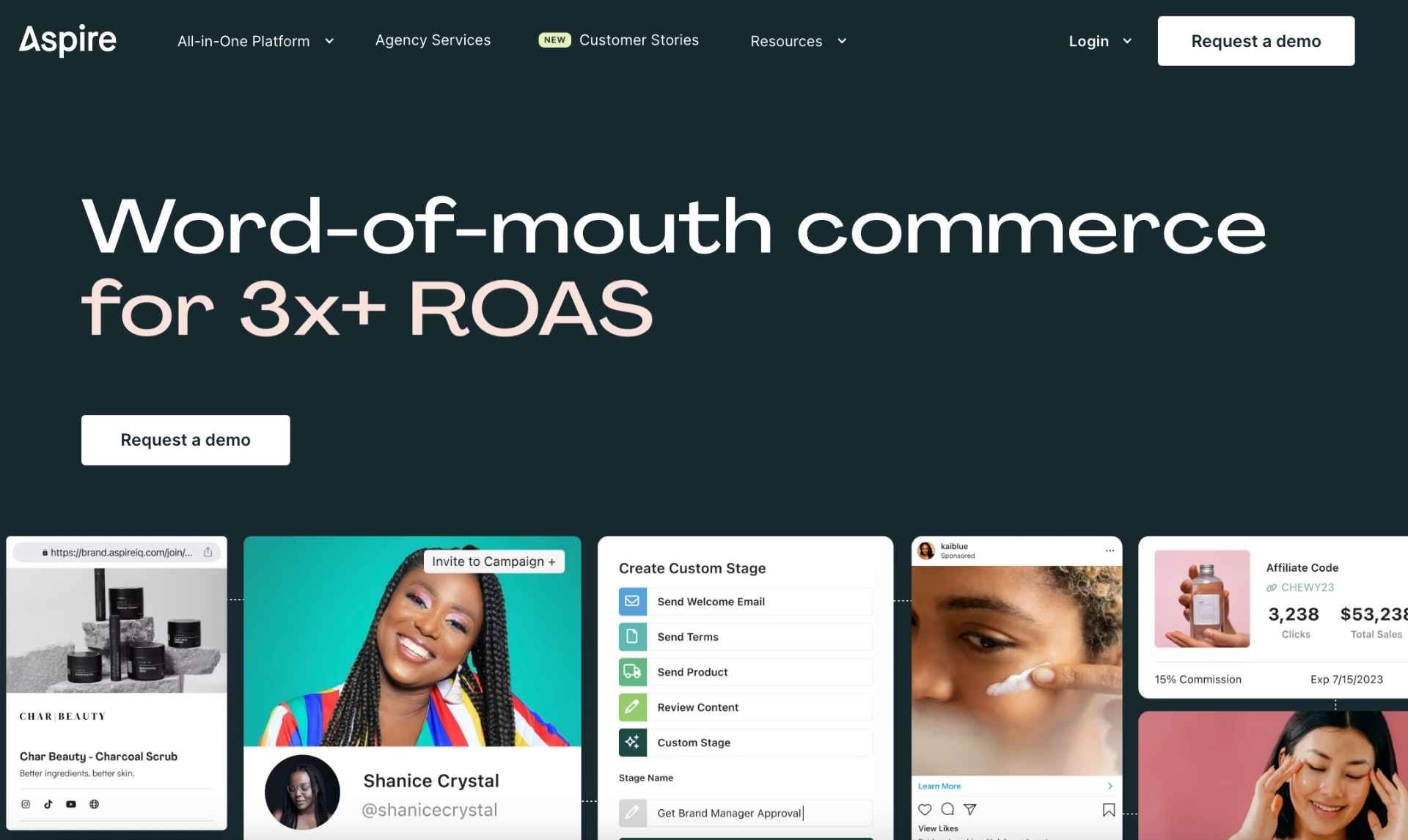
Aspire is an influencer marketing platform built for ecommerce and D2C brands that want to manage creator, affiliate, ambassador, and customer-led programs in one system. The platform positions itself around “word-of-mouth commerce,” combining creator discovery, inbound applications, campaign workflows, gifting, affiliate tracking, and ROI measurement. It is especially relevant for brands that want stronger commerce attribution and closer ties between influencer marketing and ecommerce operations.
Key Features
- Inbound and outbound creator discovery: Aspire lets brands both search for creators directly and attract creators through inbound applications, which is useful for brands building a repeatable creator pipeline instead of running one-off campaigns.
- First-party social data partnerships: Aspire highlights direct partnerships with major social platforms, which helps brands work from stronger audience and performance data than tools relying heavily on scraped data.
- Campaign workflow automation: Teams can manage briefs, approvals, communication, product fulfillment, and reporting inside one workflow, with automation for repetitive campaign steps.
- Affiliate and ambassador program management: Aspire is not just for classic paid creator campaigns; it also supports affiliates, ambassadors, and customer advocates in the same platform.
- Product catalog and gifting workflows: The platform’s product catalog and ecommerce integrations make seeding easier, especially for brands sending products at scale.
- ROI and revenue attribution: Aspire emphasizes attributable ROI, helping brands connect campaigns to revenue rather than stopping at engagement metrics.
Pricing
Aspire does not publish a transparent self-serve pricing page for its influencer platform, so pricing is largely custom and sales-led. Public comparison sources list Aspire starting around $2,300/month. In practice, Aspire is generally sold on custom annual contracts rather than month-to-month plans.
Reviews
4.0 /5.0 (Capterra)
Pros
- First-party platform data is a real differentiator: Aspire’s direct platform partnerships with Meta, TikTok, and Pinterest make it stronger for brands that care about cleaner audience data and less guesswork in creator selection.
- Shopify data integration is deeper than basic gifting: Aspire’s Shopify integration supports customer enrichment, order syncing, product shipping, and campaign performance visibility, which is especially useful for ecommerce brands.
- It supports full word-of-mouth programs, not just influencer campaigns: Aspire is better than many point solutions for brands that want to run creators, affiliates, ambassadors, and customer advocacy from one platform.
Cons
- Pricing is hard to evaluate upfront: Aspire’s lack of transparent public packaging makes it harder for smaller teams to compare quickly against more accessible tools.
- It can feel enterprise-leaning for newer teams: The platform is powerful, but brands running smaller or simpler influencer programs may find it heavier than they need.
- Some users call out pricing increases and reporting gaps: Feedback highlights value, but also points to rising cost and room for improvement in reporting depth and usability.
Integrations
- Shopify: Syncs ecommerce data, automates gifting and shipping, and improves campaign attribution tied to store activity.
- WooCommerce: Helps manage product seeding and campaign workflows for brands running on WooCommerce.
- Gmail: Keeps creator communication connected to Aspire so outreach and replies stay inside the campaign workflow.
- Outlook: Supports the same centralized communication workflow for teams using Microsoft email.
- PayPal: Enables creator payment workflows without leaving the platform.
Skeepers vs Aspire
Skeepers is stronger when your priority is scaled gifting with micro and nano creators plus licensed UGC generation, while Aspire is broader and more infrastructure-heavy for brands that want to run creators, affiliates, ambassadors, and customer advocacy in one place. Skeepers is more centered on content generation and product seeding, whereas Aspire is better for ecommerce brands that want deeper workflow automation, stronger attribution, inbound creator applications, and more advanced commerce integrations. Aspire is also the better fit if your team wants first-party platform data and a more flexible long-term creator program model, while Skeepers remains more specialized around UGC-led gifting campaigns and community-based creator activation.
2. Influencer Hero

Influencer Hero is an all-in-one influencer marketing platform aimed at D2C brands and agencies that want discovery, outreach, CRM, influencer gifting, affiliate tracking, UGC collection, and reporting in one system. Its positioning is notably more accessible than many enterprise tools, with a heavier emphasis on automation, AI-assisted workflows, and ecommerce-friendly campaign execution. For growing brands that want a full workflow without jumping straight into high enterprise pricing, Influencer Hero is one of the more compelling options in the market.
Key Features
- Influencer discovery and filtering: Influencer Hero includes discovery tools for finding creators by audience demographics, location, niche, and engagement.
- Bulk outreach and email flows: The platform is built to support personalized outreach at scale with CRM-based campaign management.
- Influencer CRM and workflow tracking: Brands can manage creator relationships, campaign stages, conversations, and deliverables in a centralized dashboard.
- Gifting and product fulfillment: Influencer Hero connects gifting to campaign workflows so brands can send products and keep fulfillment tied to creator stages and reporting.
- Affiliate tracking and payments: The platform ties discount codes and links to revenue and calculates commissions inside the system.
- UGC and post tracking: It supports post tracking and content collection so teams can keep campaign assets and performance data together.
- Campaign analytics & ROI tracking: Track engagement, clicks, conversions, and revenue through real-time dashboards tied to campaign performance
- Application pages & storefronts: Build branded creator application pages and enable influencers to promote products through personalized storefronts
- eCommerce integrations: Connect directly with platforms like Shopify and WooCommerce to link influencer activity to sales and attribution.
Pricing
Influencer Hero offers flexible pricing based on outreach volume and you can have unlimited creators in your CRM:
- Standard — $649/month (up to 1,000 outreach messages per month)
- Pro — $1,049/month (up to 5,000 outreach messages per month)
- Business — $2,490/month (up to 10,000 outreach messages per month)
- Custom / Agency — Tailored pricing
Custom pricing is available for agencies and larger teams
Reviews
5.0/5.0 (Capterra)
Pros
- Highly personalized outreach at volume: AI-enhanced email flows and automated follow-ups generate messages that feel tailored and relevant, improving reply rates, conversions, and long-term creator relationships.
- Recent expansion of integrations is a meaningful upgrade: The platform recently rolled out 30+ new integrations, making it more flexible for brands that want to connect contracts, affiliate tools, ecommerce systems, and automation workflows.
- Gifting and affiliate tracking are tightly connected to workflow automation: This is especially valuable for D2C teams that care about sending product, tracking revenue, and triggering next-step automations from the same system.
Cons
- No free trial: Makes it harder for teams to evaluate the platform before committing
- Higher pricing for smaller teams: May be less accessible for early-stage brands or those with limited budgets
Integrations
- Shopify: Supports gifting, revenue attribution, and ecommerce-linked creator workflows.
- WooCommerce: Extends product seeding and campaign tracking to WooCommerce-based stores.
- API / custom integrations: Enables custom workflows and data access for brands with more technical requirements.
- Slack: Sends campaign updates, approvals, and internal alerts to team channels to keep workflows aligned and moving faster.
- Zapier: Connects Influencer Hero with hundreds of tools to automate workflows such as notifications, reporting, and data syncing.
- DocuSign: Streamlines contracts and agreements with influencers through automated document workflows.
- GoAffPro: Manages affiliate programs, track commissions, and handle payouts tied to influencer performance.
Skeepers vs Influencer Hero
Skeepers is more specialized around gifting campaigns, micro and nano creators, and licensed UGC generation, while Influencer Hero is broader as a workflow platform for discovery, outreach, gifting, affiliate tracking, affiliate payments, and CRM. If your team wants a simpler path to automating outreach and tying creator activity to sales, Influencer Hero is usually the more operations-friendly option. Skeepers has the stronger UGC-first positioning and a bigger emphasis on content licensing inside a creator community model, but Influencer Hero is generally the better fit for D2C brands that want more workflow control, more accessible pricing, and a fuller end-to-end CRM experience.
3. SARAL

SARAL is an influencer marketing platform built primarily for ecommerce and emerging DTC brands that want a simpler, more affordable system for influencer discovery, outreach, relationship management, seeding, and affiliate tracking. Its positioning is intentionally practical: reduce spreadsheet-heavy workflows, keep the interface lightweight, and give smaller teams a way to scale creator programs without enterprise software overhead. That makes it particularly appealing to founder-led and lean marketing teams.
Key Features
- Bulk influencer discovery: SARAL helps brands source creators quickly and in volume, with access to profile metrics and contact data.
- Personalized outreach automation: The platform focuses heavily on cold outreach and relationship-building workflows for creator recruitment.
- Relationship management view: Teams can track influencers by stage, tags, and campaign status in a structured CRM-style workflow.
- Seeding and affiliate management: SARAL supports shipping products, tracking sales, and managing creator partnerships in one flow.
- Social listening and ambassador workflows: Higher-tier plans include broader listening and long-term creator management features.
- Chrome extension and rate support tools: SARAL also promotes fast creator sourcing and budgeting help for smaller teams.
Pricing
SARAL’s pricing is unusually transparent. The Starter plan is $3.6k per quarter or $12k per year, the Business plan is $4.5k per quarter or $15k per year, and the Professional plan is $7.5k per quarter or $25k per year. Annual plans come with discounts, and pricing scales mainly by search/save volume and program size rather than charging by influencer count managed.
Reviews
4.7/5.0 (G2)
Pros
- One of the clearest fits for smaller D2C teams: SARAL is intentionally designed for emerging ecommerce brands, not just larger organizations.
- Transparent pricing is a major advantage: Compared with many influencer platforms, SARAL makes budgeting much easier because the plans are public.
- Strong practical workflow for seeding and outreach: The platform focuses on the day-to-day actions smaller teams care about most: finding creators, contacting them, shipping product, and tracking revenue.
Cons
- It is less enterprise-ready than broader suites: Teams that need deeper analytics, large-scale collaboration layers, or highly advanced integrations may outgrow it.
- Plan limits matter more than with bigger platforms: Search and saved influencer caps can become a constraint as programs scale.
- Its strength is ecommerce-focused execution, not expansive enterprise intelligence: Brands looking for very advanced cross-channel benchmarking may want a more data-heavy platform.
Integrations
- Shopify: Connects store data to seeding, discount codes, and revenue tracking workflows.
- GoAffPro: Powers affiliate tracking, gifting links, and code creation through SARAL’s Shopify connection.
- Gmail: Supports creator outreach and email workflow management inside SARAL.
- Klaviyo: Connects influencer activity and brand retention workflows more closely.
- Slack: Helps teams keep campaign communication and operational updates connected.
Skeepers vs SARAL
Skeepers is the better fit for brands that want a creator network centered on micro and nano influencers plus licensed UGC and gifting at scale, while SARAL is better for lean D2C teams that want a more hands-on operating system for outreach, seeding, CRM, and affiliate workflows. Skeepers feels more like a content-and-community platform, whereas SARAL feels more like an execution platform for running creator relationships efficiently. SARAL is also more transparent on pricing and generally easier to model for growing brands, while Skeepers is more specialized around content creation and social commerce activation through its own creator ecosystem.
4. Influencity

Influencity is an end-to-end influencer marketing platform designed for brands and agencies that want discovery, relationship management, campaign execution, reporting, and increasingly broader social media and listening capabilities in one place. It is especially strong for teams that want access to a very large creator dataset, flexible workflows, and exportable reporting without paying enterprise-tier pricing from day one. Compared with many rivals, it offers a relatively broad feature set for the price.
Key Features
- Large creator database and deep filtering: Influencity supports extensive influencer search with audience, performance, credibility, and content filters.
- Influencer relationship management: The platform includes CRM-style storage, segmentation lists, profile analysis, and outreach features.
- Campaign and proposal workflows: Teams can build proposals, campaign workflows, landing pages, and review processes inside the platform.
- Shopify-connected seeding and sales tracking: Influencity’s Programs feature ties gifting and ecommerce actions directly into campaign operations.
- Campaign reports and exports: The platform includes campaign reporting with PDF, CSV, and XLS exports, which is useful for agencies and stakeholder reporting.
- Social listening and social media management: Influencity has expanded beyond pure influencer marketing into monitoring, listening, inbox, publishing, and paid ads support.
Pricing
Influencity offers a 7-day free trial and three plan paths. The public Professional plan is $318/month when billed yearly ($3,816/year), the Business plan is custom-priced, and Enterprise is custom-priced. The Professional plan includes core discovery, IRM, outreach, and campaign tools, while larger plans add more storage, unlimited scale, and heavier workflow features.
Reviews
4.3 / 5.0 (G2)
Pros
- Very broad feature coverage for the price: Influencity combines discovery, outreach, CRM, reporting, seeding, and listening in a package that is usually more accessible than larger enterprise alternatives.
- The platform is evolving beyond influencer marketing into a fuller marketing stack: Social listening, social media management, inbox, and ads functionality make it more versatile than a pure creator CRM.
- Its Shopify Programs workflow is a strong addition for ecommerce brands: This helps tie product seeding and sales tracking more directly to creator campaigns.
Cons
- Some users still want smoother AI and search behavior: Feedback points to room for refinement in AI features and filter persistence. (G2)
- Not every advanced workflow is included on the entry plan: Higher-scale usage and more advanced campaign capabilities push buyers toward Business or Enterprise.
- The platform has become broad enough that simpler teams may not use everything: Brands with very basic needs may find the stack more expansive than necessary.
Integrations
- Shopify: Enables product seeding, code tracking, and influencer-level sales attribution.
- Personal email via IMAP: Connects your inbox for one-to-one creator outreach and reply handling.
- Facebook Ads: Supports paid social management inside the broader Influencity stack.
- Google Ads: Extends campaign management and reporting into paid media.
- TikTok Ads: Supports paid activation and campaign operations beyond organic influencer work.
Skeepers vs Influencity
Skeepers is more opinionated around gifting campaigns, micro and nano creators, and licensed UGC, while Influencity is broader and more modular for brands that want discovery, CRM, outreach, reporting, and social listening in one system. Influencity is usually the better option for teams that want a large searchable database and more customizable campaign operations, while Skeepers is stronger when the goal is to generate authentic creator content and reviews through a gifting-led workflow. For D2C brands that want more operational flexibility and more transparent entry pricing, Influencity generally feels more expandable than Skeepers.
5. Captiv8
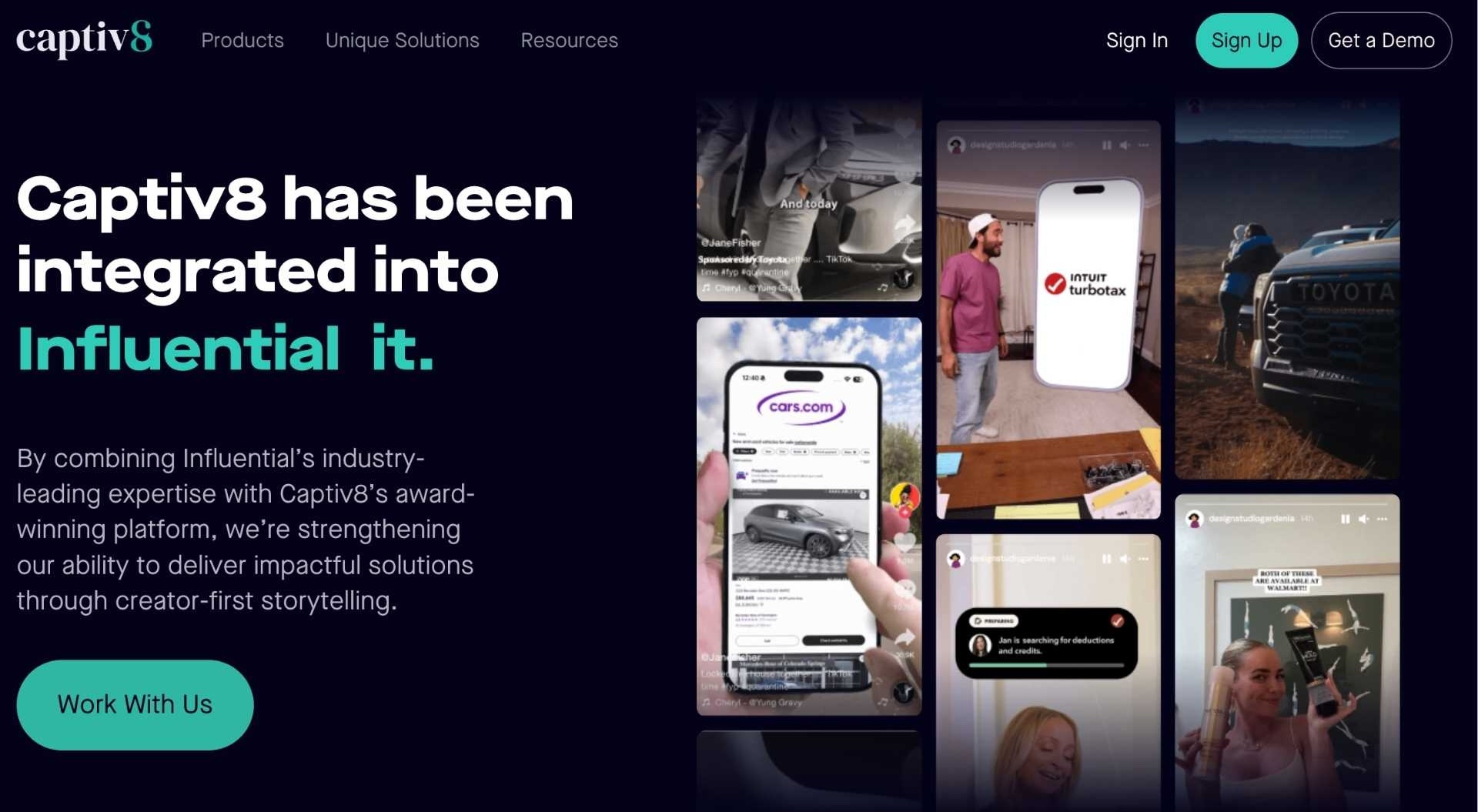
Captiv8 is an enterprise influencer marketing platform designed for brands that want large-scale creator discovery, campaign management, social commerce, paid amplification, and performance measurement in one environment. It is especially strong in areas like competitive intelligence, audience filtering, paid media activation, and complex reporting, making it more relevant for larger organizations than for smaller D2C teams. Its positioning is clearly more enterprise than lightweight.
Key Features
- Enterprise-scale discovery: Captiv8 supports creator discovery across a large database with filters for audience traits, content themes, brand safety, and competitor activity.
- Competitive intelligence and post search: Brands can search creators and posts mentioning competitors or brand terms across captions, hashtags, and visuals.
- Campaign collaboration tools: Teams can collaborate on approvals, chat with creators, and manage multiple campaigns simultaneously.
- Deep reporting and KPI customization: Captiv8 supports customizable reports covering sales, impressions, engagement, EMV, ROAS, top posts, and more.
- Paid media amplification: Captiv8 integrates directly with paid social APIs so brands can boost creator content and optimize media performance more easily.
- TikTok commerce and storefront capabilities: Captiv8 has expanded its TikTok relationship to include TikTok Shop and branded storefront support for social commerce use cases.
Pricing
Captiv8 does not publish a standard public pricing page. Based on available materials, the core platform was quoted at $25,000 annually with an annual commitment only, plus a $3,000 one-time onboarding fee. Storefronts and creator commerce / affiliate features were positioned as an additional $20k–$30k per month. Public software directories also describe Captiv8 pricing as vendor-quoted rather than self-serve.
Reviews
4.7 / 5.0 (G2)
Pros
- Paid media integration is unusually strong: Captiv8 stands out for direct integrations with the Facebook Marketing API and TikTok Ads API, which is valuable for brands turning creator content into paid media quickly.
- TikTok partnership depth is a real differentiator: Its TikTok Creator Marketplace and TikTok Shop connectivity make it more advanced for social commerce-led creator campaigns.
- Enterprise analytics are highly customizable: Drag-and-drop reporting, customizable KPIs, and external reporting connections make it strong for larger teams with stakeholder-heavy reporting requirements.
Cons
- Pricing is high and rigid: Captiv8 is clearly built for larger budgets, especially once affiliate or storefront functionality is added.
- Smaller brands may find it too enterprise-heavy: The feature set is powerful, but many growing D2C brands will not need the full depth or cost structure.
- Users still flag search accuracy and data issues in some cases: Review summaries point to inaccuracy and inefficient search behavior as recurring friction points.
Integrations
- TikTok Ads API: Lets brands amplify creator content and manage paid social activation more directly.
- Facebook Marketing API: Supports boosting and optimizing creator-led paid media.
- Shopify: Connects ecommerce workflows for creator commerce and storefront use cases.
- Refersion: Supports affiliate tracking and creator commerce workflows.
- Google Analytics / Looker Studio: Helps teams push campaign data into broader reporting and analytics systems.
Skeepers vs Captiv8
Skeepers and Captiv8 solve very different problems. Skeepers is more focused on scaled gifting, micro and nano creators, and content generation, while Captiv8 is a much more enterprise-oriented platform centered on advanced discovery, social commerce, paid amplification, and customizable reporting. If your brand mainly wants efficient creator gifting and licensed UGC, Skeepers is the simpler and more specialized fit. If your team needs deeper competitive intelligence, stronger media integrations, and a platform that supports large-budget, multi-stakeholder influencer operations, Captiv8 is the more powerful option, but it also comes with a much heavier price tag and more enterprise complexity.


6. IZEA
IZEA is one of the longest-standing influencer marketing platforms, originally known for pioneering sponsored content marketplaces. Today, it offers a full-suite creator economy platform that combines influencer discovery, campaign management, content production, and marketplace-based collaborations. It is particularly well-known for blending a managed marketplace model with SaaS tools, making it suitable for both hands-on brands and those that want more support.
Key Features
- Creator marketplace + SaaS platform: IZEA combines a marketplace where creators apply to campaigns with tools for brands to manage influencer programs end-to-end.
- Influencer discovery and search: Brands can search creators using filters like demographics, engagement, niche, and historical campaign data.
- Campaign creation and bidding system: Brands can post campaigns and receive creator applications, including pricing proposals and content ideas.
- Content production workflows: IZEA supports both influencer campaigns and standalone content production, including UGC creation without posting.
- Performance tracking and analytics: Tracks impressions, engagement, and campaign performance across creators and platforms.
- Managed services option: Brands can choose to have IZEA’s team run campaigns, making it flexible for teams without in-house expertise.
Pricing
IZEA does not publicly list detailed pricing tiers. Pricing is typically custom and quote-based, depending on whether brands use the SaaS platform, the marketplace, or managed services. Some plans are annual contracts, while managed services are scoped per campaign or engagement.
Reviews
3.9/ 5.0 (G2)
Pros
- Marketplace + SaaS hybrid model: IZEA stands out by offering both self-serve software and a creator marketplace, giving brands flexibility in how they run campaigns.
- Strong for content-only campaigns: Unlike many tools, IZEA supports UGC creation without requiring creators to post, which is useful for ads and PDP content.
- Managed services option is valuable for lean teams: Brands can outsource execution entirely, which is not common across all platforms.
Cons
- Less focused on ecommerce integrations: Compared to newer D2C-focused tools, IZEA is less tightly connected to Shopify-driven workflows.
- Pricing transparency is limited: Brands need to go through sales to understand costs.
- Interface and workflows can feel dated: Some users find the UX less modern compared to newer platforms.
Integrations
- Shopify: Supports ecommerce-driven influencer campaigns and product-based collaborations.
- Google Analytics: Tracks campaign performance and traffic attribution.
- Social platforms (Instagram, TikTok, YouTube): Enables campaign tracking and creator data analysis.
- API integrations: Allows brands to connect IZEA data into internal systems.
- CRM tools: Supports syncing campaign and creator data with broader marketing systems.
Skeepers vs IZEA
Skeepers is more focused on gifting campaigns, UGC collection, and micro-influencer activation, while IZEA is broader as a marketplace-driven platform that supports both influencer campaigns and content production. IZEA is better suited for brands that want creators to apply and pitch ideas, whereas Skeepers is more structured around curated creator networks and product seeding workflows. Skeepers has stronger ecommerce and UGC reuse positioning, while IZEA offers more flexibility in campaign formats, including non-posted content creation and managed services.
7. Modash
Modash is a modern influencer marketing platform built around one of the largest creator databases available, with a strong focus on discovery, outreach, and performance tracking. It is particularly popular among D2C brands and performance marketers because of its open database (not limited to opt-in creators) and its ability to connect influencer campaigns directly to revenue.
Key Features
- Massive creator database (350M+ profiles): Modash stands out for its scale, allowing brands to discover creators globally without relying on opt-in networks.
- Advanced search and filtering: Filter creators by niche, audience demographics, engagement, and content style.
- AI-powered discovery: Includes “lookalike” search and visual search to find creators based on content style or similar profiles.
- Bulk outreach and CRM: Send templated emails at scale and manage creator relationships through a built-in CRM.
- Shopify integration and affiliate tracking: Tracks discount codes, revenue, and campaign performance tied directly to ecommerce.
- Real-time campaign tracking: Monitor engagement, content performance, and sales in a unified dashboard.
Pricing
- Essentials: starts at $199/month billed yearly or $299 month-to-month, for campaigns with up to 100 creators.
- Enterprise: starts at $14,700/year, with custom usage for larger programs above 250 creators.
- Free trial: Modash offers a 14-day free trial with no credit card required.
Reviews
4.9/5.0 (Capterra)
Pros
- Largest non-opt-in creator database: Modash allows brands to access creators beyond closed marketplaces, which significantly expands discovery options.
- AI discovery tools are more advanced than most competitors: Features like visual search and lookalikes make creator sourcing faster and more intuitive.
- Strong Shopify integration for revenue tracking: Modash is particularly strong for D2C brands that care about tracking influencer-driven sales.
Cons
- Limited ecommerce integrations beyond Shopify: Brands using other platforms may face constraints.
- No built-in UGC licensing workflows: Content usage rights must be handled manually.
- No paid media or whitelisting tools: It focuses more on organic and affiliate workflows.
Integrations
- Shopify: Tracks gifting, discount codes, and influencer-driven revenue.
- Gmail / Outlook: Syncs outreach communication into campaign workflows.
- Stripe / payment tools: Supports affiliate payouts and commissions.
- API: Enables custom data integrations.
- Ecommerce tracking tools: Connects influencer activity to sales attribution.
Skeepers vs Modash
Skeepers is more focused on UGC generation and micro-influencer gifting campaigns, while Modash is significantly stronger in discovery and performance tracking. Modash gives brands access to a much larger creator pool and more advanced search capabilities, whereas Skeepers relies more on its curated network. For D2C brands prioritizing scalable discovery and revenue attribution, Modash is often the better fit, while Skeepers is better for structured UGC campaigns and content reuse.
8. Klear
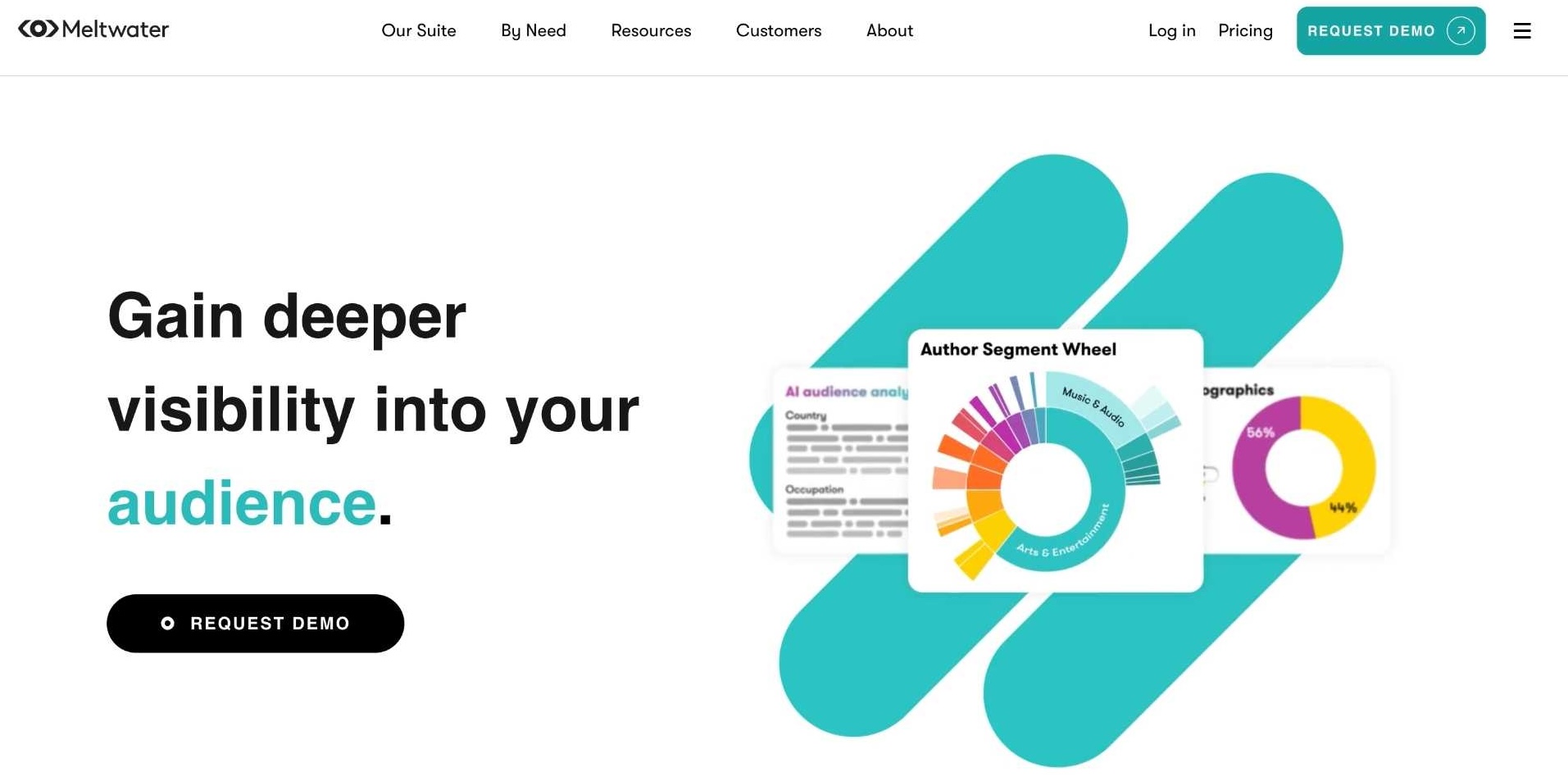
Klear, part of Meltwater, is an enterprise influencer marketing platform focused on discovery, analytics, campaign management, and social listening. It is designed for brands that want a data-driven approach to influencer marketing, with strong emphasis on audience insights, benchmarking, and performance tracking.
Key Features
- 30M+ influencer database: Provides global discovery across multiple platforms with advanced filtering.
- True Reach metric: Estimates actual audience reach instead of relying on follower counts.
- AI-powered influencer profiles: Includes audience demographics, brand affinity, and estimated pricing.
- Campaign management and communication tools: Manage creators, track deliverables, and communicate directly within the platform.
- Advanced reporting and analytics: Tracks engagement, conversions, sentiment, and ROI.
- Social listening integration: Monitor brand mentions and campaign impact across channels.
Pricing
Klear pricing is enterprise-level and custom:
- Example packages range from ~$33,000 to $73,000/year, depending on usage and team size
- Pricing is typically annual contracts only
Reviews
4.3 / 5.0 (G2)
Pros
- True Reach is a strong differentiator: Helps brands avoid inflated influencer metrics and focus on real performance.
- Deep analytics and sentiment tracking: Goes beyond influencer metrics into broader brand and campaign insights.
- Part of Meltwater ecosystem: Allows expansion into social listening, PR, and media monitoring.
Cons
- High pricing makes it inaccessible for smaller brands: It is clearly positioned for enterprise use.
- Interface performance issues reported: Some users mention lag and slower workflows.
- Reporting flexibility can be limited in some areas: Advanced comparisons may require external tools.
Integrations
- Meltwater suite: Connects influencer marketing with PR and social listening tools.
- Shopify: Supports gifting and ecommerce attribution.
- Slack: Enables team collaboration and campaign communication.
- Google Analytics: Tracks campaign performance and traffic.
- Social platforms APIs: Provides real-time influencer and campaign data.
Skeepers vs Klear
Skeepers is more focused on content creation, gifting, and UGC workflows, while Klear is a data-heavy platform built for analytics, benchmarking, and enterprise-level campaign management. Klear is better suited for brands that want deep audience insights and social listening, whereas Skeepers is more practical for ecommerce teams focused on content generation and creator-driven sales. The biggest difference is that Klear is an analytics-first platform, while Skeepers is a content-and-commerce-focused solution.
9. Traackr
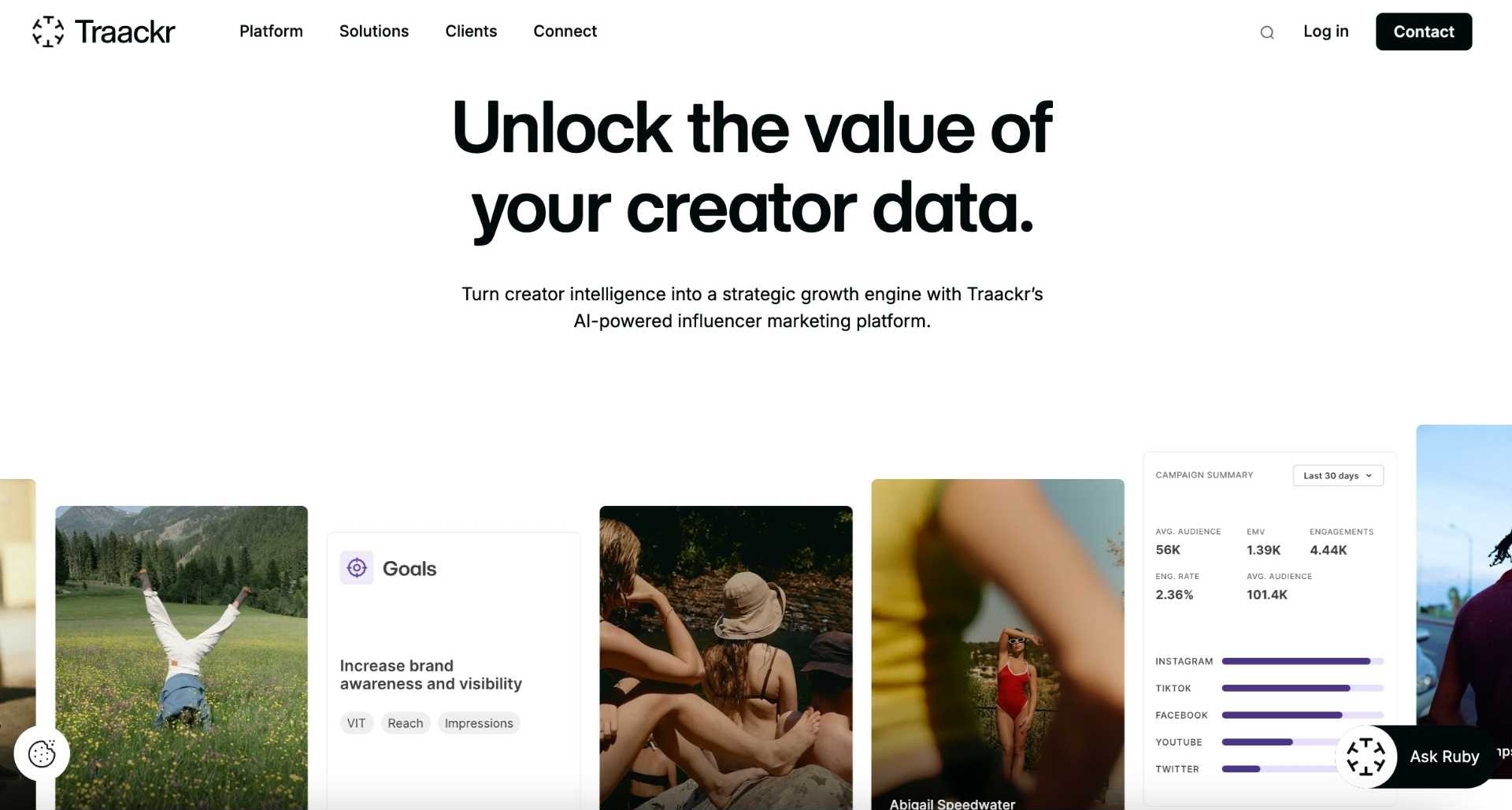
Traackr is an enterprise influencer marketing platform focused on performance measurement, benchmarking, and budget optimization. It is widely used by large brands that want to understand the impact of influencer marketing at a strategic level rather than just execute campaigns.
Key Features
- 6M+ influencer database with performance history: Includes data on past collaborations and engagement metrics.
- Advanced benchmarking tools: Compare campaign performance against industry standards.
- Brand Vitality Score (BVS): Proprietary metric combining visibility, influence, and trust.
- Cost-per metrics dashboard: Tracks CPC, CPE, CPV, and other efficiency metrics.
- Budget optimization tools: Helps brands allocate spend based on expected ROI.
- Campaign management and CRM: Manage relationships, outreach, and reporting in one system.
Pricing
- Starts at ~$32,500/year for the Standard plan
- Custom pricing for additional features
- Annual contracts only
Reviews
4.3/5.0 (G2)
Pros
- Best-in-class benchmarking tools: Traackr is one of the few platforms that focuses heavily on performance benchmarking.
- Budget optimization is highly advanced: Helps brands allocate spend more strategically across creators.
- Strong ROI tracking and cost metrics: Focuses on efficiency, not just engagement.
Cons
- Expensive and enterprise-focused: Not suitable for smaller D2C teams.
- Performance issues reported (lag, delays): Some users experience technical slowdowns.
- Learning curve can be steep: Advanced features require onboarding and training.
Integrations
- Shopify: Supports ecommerce tracking and gifting workflows.
- CRM systems: Syncs influencer data with internal systems.
- Social platforms: Tracks campaign performance across channels.
- Analytics tools: Enables export and deeper analysis.
- Email systems: Supports outreach workflows.
Skeepers vs Traackr
Skeepers is more execution-focused for UGC and gifting campaigns, while Traackr is designed for strategic decision-making, benchmarking, and budget optimization. Traackr is better suited for brands managing large influencer budgets across markets, while Skeepers is more practical for D2C teams focused on content creation and social commerce. The main difference is that Traackr emphasizes performance analytics, while Skeepers emphasizes creator content and activation.
10. IMAI (InfluencerMarketing.ai)

IMAI (InfluencerMarketing.AI) is a data-driven influencer marketing platform that combines AI-powered discovery, campaign management, and analytics. It is designed for brands that want scalable influencer discovery with strong fraud detection, audience insights, and performance tracking, while still maintaining a relatively accessible pricing structure compared to enterprise tools.
Key Features
- AI-powered influencer discovery: Uses machine learning to identify creators based on audience, content, and engagement patterns.
- Fraud detection and audience quality analysis: Helps brands identify fake followers and low-quality influencers.
- Campaign management and tracking: Manage outreach, collaborations, and performance in one dashboard.
- Audience insights and segmentation: Analyze demographics, interests, and engagement behavior.
- Competitor and campaign benchmarking: Compare performance across campaigns and competitors.
- Content tracking and reporting: Monitor posts, engagement, and campaign outcomes.
Pricing
Starting price at $99/month and notes that a free trial is available.
Reviews
4.5 / 5.0 (G2)
Pros
- Strong AI and fraud detection capabilities: Helps brands avoid low-quality creators and improve campaign outcomes.
- More affordable than enterprise competitors: Makes advanced analytics accessible to mid-sized brands.
- Balanced feature set across discovery and analytics: Offers both sourcing and performance tracking in one platform.
Cons
- Smaller ecosystem compared to larger platforms: Fewer integrations and partnerships.
- Interface and usability can require onboarding: Some users report a learning curve.
- Less focus on ecommerce workflows: Not as tightly integrated with D2C operations as Shopify-first tools.
Integrations
- Social platforms (Instagram, TikTok, YouTube): Provides data and campaign tracking.
- Google Analytics: Tracks traffic and campaign performance.
- CRM systems: Syncs influencer data with internal workflows.
- API: Allows custom integrations.
- Email tools: Supports outreach communication.
Skeepers vs IMAI
Skeepers is more focused on UGC, gifting, and creator activation for ecommerce, while IMAI is more data-driven with stronger AI discovery and fraud detection. IMAI is better suited for brands that prioritize analytics and influencer vetting, while Skeepers is stronger for brands focused on generating content and running product seeding campaigns. For D2C teams, Skeepers offers more direct ecommerce alignment, while IMAI provides more depth in data and influencer quality analysis.
Final Thoughts
Skeepers remains a strong option for D2C brands focused on gifting campaigns, micro-influencer activation, and scalable UGC generation. However, as influencer marketing becomes more tied to revenue, operations, and long-term creator relationships, many brands start exploring Skeepers alternatives that offer deeper discovery, more flexible workflows, stronger ecommerce integrations, or more transparent pricing. Platforms like Aspire and Influencer Hero focus on end-to-end workflow and affiliate tracking, while tools like Modash and Influencity stand out for discovery and performance tracking at scale.
At the same time, enterprise platforms like Captiv8, Klear, and Traackr bring more advanced analytics, benchmarking, and paid media capabilities, while tools like SARAL and IMAI cater to growing teams looking for simplicity or stronger AI-driven insights. The right choice ultimately depends on how your team runs influencer marketing—whether the priority is content generation, creator relationships, performance marketing, or a mix of all three.

.png)


.jpg)