

10 Best Roster Alternatives • Key Criteria • Roster Overview • Best Roster Alternatives • Influencer Hero • Upfluence • Aspire • CreatorIQ • Later • IZEA • Traackr • Influencity • Heepsy • Lefty • Final Thoughts • FAQs
10 Best Roster Alternatives for Influencer Marketing
Influencer marketing software has become a core part of how DTC brands scale creator partnerships—from sourcing the right creators to managing outreach, campaigns, and measuring revenue impact. Roster is a strong option for brands focused on ambassador programs and turning customers into long-term advocates, with solid capabilities around community management, rewards, and referrals. That said, many teams begin exploring Roster alternatives when they need clearer pricing, more advanced analytics, stronger discovery tools, or better integrations to support more complex workflows at scale. For brands evaluating influencer marketing software—whether for the first time or as an upgrade—understanding where Roster fits and where it falls short is key to choosing the right platform.
In this guide, we’ll break down 10 of the best Roster alternatives—Influencer Hero, Upfluence, Aspire, CreatorIQ, Later, IZEA, Traackr, Influencity, Heepsy, and Lefty—to help you find the platform that best aligns with your growth strategy.
Key Criteria for Evaluating Influencer Marketing Platforms
Core Features
Evaluation of essential influencer marketing capabilities, including influencer discovery, outreach, CRM, campaign management, reporting, and content workflows.
Pricing & Flexibility
Comparison of pricing models, subscription plans, and contract terms to match different budgets and growth stages.
Customer Reviews & Satisfaction
Analysis of user feedback from trusted review platforms, focusing on usability, reliability, customer support, and overall performance.
Pros & Cons
Review of each platform’s strengths and limitations to highlight where it performs well and where it may fall short based on different use cases.
Integrations
Review of the most important integrations (e.g., Shopify and other tech tools), highlighting what each integration enables in one sentence.
Roster overview
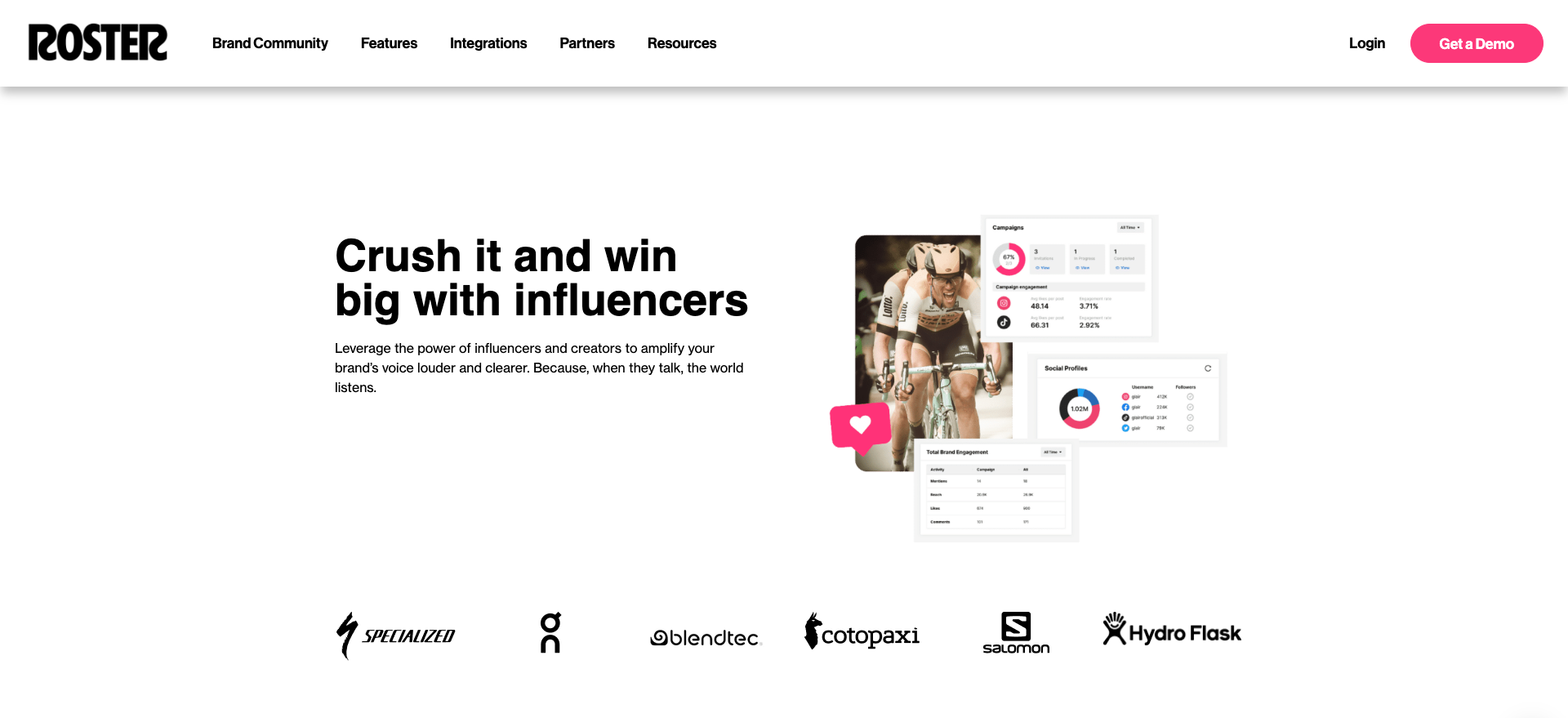
Roster is an influencer, ambassador, and affiliate marketing platform designed for DTC brands that want to build long-term creator communities rather than run one-off campaigns. Instead of focusing purely on influencer discovery, Roster helps brands recruit customers, fans, and creators into structured programs, manage relationships through a built-in CRM, and drive measurable outcomes like UGC, referrals, and revenue—all from a single platform.
Key features
• All-in-one creator program management: Roster combines influencer, affiliate, and ambassador workflows into one system, allowing brands to manage different types of partnerships without switching tools
• Social listening & recruitment: Identify people already talking about your brand and invite them into your program, or collect applications through embedded forms and landing pages.
• Built-in creator CRM: Track influencer activity, sales, content, and engagement at an individual level, helping teams build long-term relationships instead of transactional campaigns.
• Campaigns & “actions” system: Run campaigns or smaller tasks (like posting content, writing reviews, or sharing referral links) to drive consistent engagement and content creation.
• Gamification with tiers & milestones: Incentivize creators with points, rewards, and tiered progression systems to increase retention and participation.
• Discount codes & referral tracking: Generate unique codes and links for each creator and track performance across campaigns and programs.
• Product seeding automation: Send products to creators at scale with built-in workflows for gifting and fulfillment.
• UGC collection & management: Automatically collect, organize, and reuse creator-generated content for marketing and ads.
• Sales attribution & ROI tracking: Measure revenue, orders, and conversions tied to each influencer, campaign, or program.
• Creator portal: Provide influencers and ambassadors with a branded hub to view campaigns, track rewards, and complete tasks.
• Built-in payments: Pay creators directly through PayPal or Venmo without relying on external tools.
Pricing
Roster does not publicly list detailed pricing tiers on its website, which makes direct comparison more difficult during the evaluation stage.
Reviews
4.4 / 5.0 (G2)
Integrations
• Shopify: Sync customers, track influencer-driven sales, and manage product seeding directly from your store.
• Klaviyo: Sync creator and customer segments to automate email and SMS campaigns.
• PayPal: Send creator payments directly within the platform.
• Venmo: Enable quick payouts and rewards for ambassadors and influencers.
Pros
• Built for community-driven influencer marketing (not just discovery): Roster stands out by focusing on turning customers and fans into long-term creators and ambassadors. This makes it especially valuable for DTC brands that want to build scalable, owned creator ecosystems rather than rely solely on cold outreach.
• Strong product seeding and reward automation: The platform excels in managing gifting, discount codes, referral rewards, and incentive systems. This makes it ideal for brands running high-volume product seeding or affiliate-style campaigns.
• Unified workflow from UGC to revenue tracking: Roster combines content collection, referral tracking, and payment workflows in one place, making it easier to connect influencer activity directly to sales and ROI without stitching together multiple tools.
Common drawbacks of Roster
Limited pricing transparency
The lack of clear pricing tiers or plans makes it harder for teams to quickly evaluate fit or compare costs with alternatives.
Analytics may feel basic for advanced teams
While it tracks key metrics, some teams find reporting less robust compared to more enterprise-focused platforms with deeper campaign analytics.
No dedicated mobile experience for creators
Without a mobile app, the experience for influencers and ambassadors can feel less seamless, especially for on-the-go participation.
Integration and scalability limitations for complex setups
Some brands encounter challenges when integrating with broader tech stacks or scaling more complex workflows, particularly compared to enterprise-grade platforms.
Best Roster Alternatives
| TOOL | REVIEWS | BEST FOR | TRIAL INFO | PRICING | ||
|---|---|---|---|---|---|---|
1 |

|
⭐ | Influencer CRM & automation | Book Demo | Pricing | Website |
2 |

|
⭐ | Influencer discovery | Book Demo | Pricing | Website |
3 |

|
⭐ | Influencer partnerships | Book Demo | Pricing | Website |
4 |

|
⭐ | Enterprise influencer marketing | Book Demo | Pricing | Website |
5 |

|
⭐ | Social media & influencer campaigns | Book Demo | Pricing | Website |
6 |
|
⭐ | Influencer marketplace | Book Demo | Pricing | Website |
7 |

|
⭐ | Enterprise influencer analytics | Book Demo | Pricing | Website |
8 |

|
⭐ | Campaign management | Book Demo | Pricing | Website |
9 |

|
⭐ | Influencer discovery | Book Demo | Pricing | Website |
10 |

|
⭐ | Influencer analytics & discovery | Book Demo | Pricing | Website |

Influencer Hero
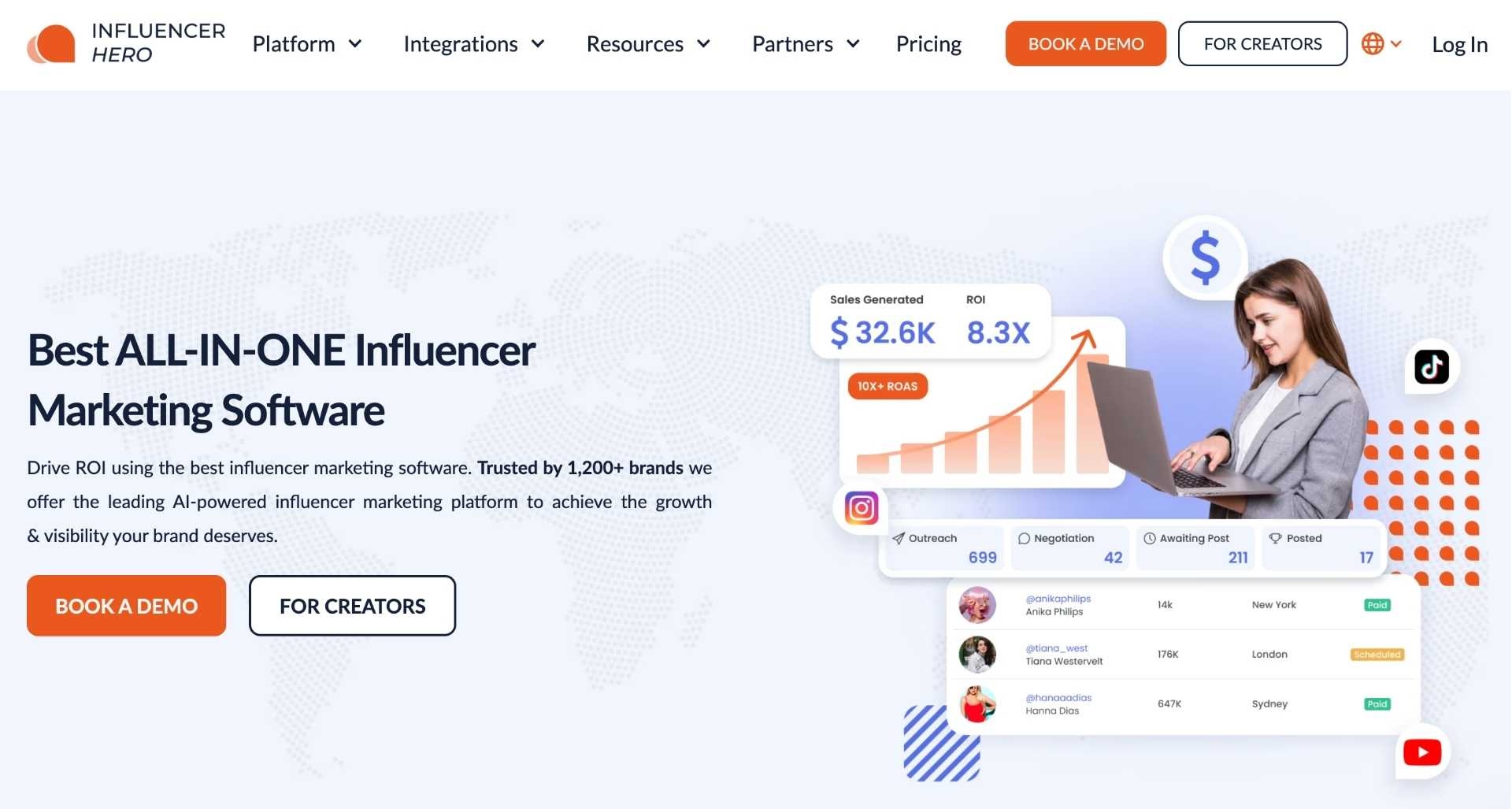
Influencer Hero is an all-in-one influencer marketing platform built for eCommerce and DTC brands that want to manage creator discovery, outreach, gifting, affiliate tracking, UGC collection, and revenue attribution in one place. The company positions the product as an AI-powered platform for running end-to-end influencer programs, with a strong focus on workflow automation and commerce integrations.
Key Features
• Influencer discovery: Find creators across major platforms using advanced filters for audience, engagement, location, and niche, with built-in fraud detection and lookalike suggestions
• Outreach & automation: Scale personalized email outreach with AI-generated messages, automated follow-ups, and multi-step sequences
• Creator CRM: Manage influencer relationships in a centralized pipeline, tracking conversations, campaign stages, and deliverables
• Gifting workflows: Streamline product seeding with automated order creation, shipping, and delivery tracking
• Affiliate tracking & payouts: Generate unique links and discount codes, track performance, and handle commissions and payments in one system
• Campaign analytics & ROI tracking: Monitor performance across engagement, clicks, conversions, and revenue with real-time reporting dashboards
• UGC library: Automatically collect and organize influencer content for reuse across ads, social media, and product pages
• Application pages & storefronts: Capture inbound creators through branded application pages and enable influencers to promote products via custom storefronts
• eCommerce integrations: Sync with platforms like Shopify and WooCommerce to connect influencer activity directly to sales
• API & integrations: Extend workflows with API access and integrations like Klaviyo, Slack, Zapier, and email providers
Pricing
Influencer Hero offers flexible pricing based on outreach volume and you can have unlimited creators in your CRM:
• Standard — $649/month (up to 1,000 outreach messages per month)
• Pro — $1,049/month (up to 5,000 outreach messages per month)
• Business — $2,490/month (up to 10,000 outreach messages per month)
• Custom / Agency — Tailored pricing
Custom pricing is available for agencies and larger teams
Reviews
4.9/5.0 (Capterra)
Pros
• Strong workflow-first CRM: Influencer Hero is especially strong for teams that need structured creator pipelines, outreach stages, and campaign management rather than just a searchable influencer database.
• Broad commerce integration layer: The platform supports a wide integration footprint across eCommerce, email, contracts, and automation tools, which makes it particularly attractive to DTC operators.
• Recent expansion of integrations: Influencer Hero has recently expanded its integration set with 30+ new integrations, strengthening its position as a connected, operations-friendly platform.
Cons
• Some advanced features require setup time: Brands that want to use the platform’s deeper automations and integrations may need more onboarding and configuration than with simpler tools.
• No free trial: Evaluation is more sales-led than self-serve, which can slow down early-stage comparison.
Integrations
• Shopify: Sync products, orders, and customer data so gifting, affiliate tracking, and ROI reporting sit inside the same workflow.
• WooCommerce: Connect your store to manage influencer gifting and track creator-driven sales for WooCommerce-based brands.
• Klaviyo: Send creator and customer data into email marketing flows for lifecycle messaging and segmentation.
• Zapier: Push campaign and influencer data into the rest of your stack and automate repetitive operational tasks.
• Amazon: Extend attribution and campaign visibility beyond your own storefront and into marketplace-driven sales workflows.
Roster vs Influencer Hero
Roster is more community-led and is especially well suited to ambassador, affiliate, and customer-advocate programs. Influencer Hero is more operations-heavy, with a stronger emphasis on structured outreach, CRM workflows, attribution, and eCommerce-connected execution. Roster feels closer to an advocacy program platform, while Influencer Hero is closer to a full influencer operations system.
Influencer Hero also offers broader commerce and automation depth, especially for brands that want detailed gifting, outreach, affiliate tracking, and API-enabled workflows. Roster is the more natural fit for brands prioritizing community participation and advocacy loops, while Influencer Hero is the stronger choice for teams that need a more advanced influencer CRM and campaign execution layer.
Upfluence

Upfluence is an influencer and affiliate marketing platform designed to help brands discover creators, run outreach, manage campaigns, and connect influencer activity to eCommerce revenue. It is particularly well known for its commerce integrations and for helping brands identify influential customers who can become creators or affiliates.
Key Features
• Large creator database: Upfluence says it offers access to a 14M+ creator database with advanced search filters for audience, niche, engagement, and geography.
• AI-assisted search and outreach: The platform highlights Jaice AI for campaign setup, personalized outreach copy, and faster creator discovery.
• Customer-to-creator matching: A major differentiator is its ability to identify influential customers from your own CRM or store data and convert them into ambassadors or creators.
• Bulk outreach and drip campaigns: Support for scaled outreach, email templates, and automated follow-ups makes it easier to contact large creator lists efficiently.
• Affiliate and discount-code management: Generate affiliate links and promo codes, then connect them to revenue tracking and creator performance reporting.
• Product seeding and shipping workflows: Upfluence includes product shipment and gifting workflows for eCommerce brands running seeding campaigns.
• Payments and compliance: Higher-tier capabilities include creator payments, tax forms, and multi-currency payout support.
• Social listening and analytics: Upfluence also offers campaign analytics and listening capabilities on higher plan tiers.
Pricing
• Pricing model: Upfluence uses custom pricing rather than a public fixed plan table.
• All plans are custom made. There’s a minimum full year of service you have to commit to with monthly payments. On average plans start around $2,000/month ($24,000 yearly)
Reviews
4.3/5.0 (Capterra)
Pros
• Excellent eCommerce depth: Upfluence is one of the strongest platforms for Shopify- and Amazon-connected influencer workflows, from seeding to sales attribution.
• Customer-to-influencer discovery: Few competitors are as well known for identifying existing customers who already love the brand and may convert better than cold prospects.
• AI and modular product structure: The current plan structure and Jaice AI positioning make Upfluence more flexible for brands that want to buy into the platform in stages.
Cons
• Pricing can rise quickly with add-ons: The modular model gives flexibility, but total cost can climb as brands add outreach, analytics, payments, and automation layers.
• Some filter data can be inconsistent: Public review feedback points to recurring issues around the accuracy of certain profile details, especially location data.
• Campaign setup can feel rigid in places: Some teams report limitations around campaign editing and workflow flexibility once campaigns are already built.
Integrations
• Shopify: Identify influential customers, send products, and attribute creator-driven revenue to store activity.
• Amazon Attribution: Connect influencer activity to Amazon performance and marketplace sales tracking.
• Klaviyo: Enrich customer data with creator insights and activate creator campaigns from email segments.
• Gmail / Outlook: Run creator outreach through synced inbox workflows and centralize communication history.
Roster vs Upfluence
Roster is more focused on advocacy, ambassadors, and community participation, while Upfluence is more commerce-driven and optimized for influencer search, outreach, and attributed revenue. If Roster is about turning customers and fans into a structured brand community, Upfluence is more about turning creators into a measurable acquisition and affiliate channel.
Upfluence also goes deeper on eCommerce operations, especially for Shopify and Amazon sellers, and offers more mature customer-matching and sales-tracking workflows. Roster is simpler and better suited to brands prioritizing ambassador-style engagement, while Upfluence is stronger for brands that want large-scale creator discovery and store-connected campaign execution.
Aspire

Aspire is an influencer marketing platform built for eCommerce brands that want to run creator, affiliate, ambassador, and UGC programs in one system. The company positions Aspire around “word-of-mouth commerce,” with a strong blend of creator discovery, marketplace applications, workflow automation, and commerce integrations.
Key Features
• Outbound and inbound creator discovery: Aspire combines searchable creator discovery with creator application flows and marketplace-style inbound sourcing.
• Creator marketplace: Brands can publish opportunities and receive applications from creators, reducing dependence on cold outreach alone.
• Campaign workflow automation: Manage briefs, approvals, follow-ups, contracts, product seeding, and content approvals from one workflow.
• Affiliate and sales tracking: Aspire supports performance-focused programs that connect creators to measurable commerce outcomes.
• UGC sourcing and reuse: The platform is designed to help brands collect creator content and use it across broader growth and paid media workflows.
• Brand health and sentiment monitoring: Aspire highlights monitoring capabilities that help brands track mentions and online sentiment across creator activity.
• Direct platform partnerships: Aspire highlights direct relationships with Meta, TikTok, and Pinterest as part of its integration layer.
• Shopify-powered commerce workflows: The Shopify integration supports creator identification, shipping, and product fulfillment automation.
• operational help.
Pricing
Aspire does not publish full public package pricing on its website. Public and recent market sources indicate:
• Custom pricing
• Often reported at about $2,000+/month
• Recent quoting indicated around $2,300/month for a mid-tier setup
• Typically sold with a 12-month commitment rather than month-to-month self-serve plans
Reviews
4.0/5.0 (Capterra)
Pros
• Strong inbound creator sourcing: Aspire’s creator marketplace is a major differentiator for brands that want creators to come to them instead of relying only on outbound prospecting.
• Direct partnerships with major social platforms: Its official Meta, TikTok, and Pinterest relationships strengthen Aspire’s positioning for brands that want tighter platform connectivity.
• Commerce-ready campaign workflows: Aspire stands out for blending creator discovery, affiliate sales tracking, product fulfillment, and UGC collection into one eCommerce-friendly workflow.
Cons
• High cost for smaller programs: Public pricing references place Aspire above many lighter-weight platforms, which can make it harder to justify for smaller teams.
• Cost increases are a recurring concern: Review feedback includes concern that pricing rises faster than new feature value for some teams.
• Less budget-friendly for early-stage brands: Aspire is more compelling for brands already serious about creator commerce than for brands just testing influencer workflows.
Integrations
• Shopify: Identify high-value customers, automate product shipment, and connect creator activity to store-level performance.
• Meta: Support campaign execution and creator workflows through a direct platform partnership.
• TikTok: Connect creator programs and growth campaigns to TikTok-specific workflows and integrations.
• Pinterest: Use Aspire’s direct Pinterest partnership to support discovery and campaign execution.
• Slack: Share campaign updates and improve internal collaboration around creator programs.
Roster vs Aspire
Roster is better suited to ambassador communities, customer advocacy, and reward-driven participation, while Aspire is built more directly for scaling creator, affiliate, and UGC programs as a commerce engine. Aspire offers a stronger inbound creator marketplace, deeper campaign automation, and more explicit eCommerce workflows.
Roster is simpler and more community-led. Aspire is the better fit for brands that want a larger creator acquisition engine, stronger social platform partnerships, and a workflow built around converting creator programs into content, sales, and customer acquisition.
CreatorIQ

CreatorIQ is an enterprise creator marketing platform built for large brands and agencies that need creator intelligence, governance, reporting, payments, and integrations across multiple teams and markets. The company positions itself as an AI-native creator marketing system built on its Creator Graph and a broad enterprise integration layer.
Key Features
• AI-native creator intelligence: CreatorIQ emphasizes creator discovery and decision-making powered by its Creator Graph and AI-native data model.
• Enterprise workflow and governance: The platform is designed for large organizations that need permissions, brand safety, campaign oversight, and global operational control.
• Cross-channel creator program management: CreatorIQ supports paid, owned, earned, commerce, community, and content workflows inside one creator ecosystem.
• Advanced reporting and analytics: The product supports campaign reporting, creator measurement, and broader marketing analytics across large programs. (G2)
• Commerce and social integrations: CreatorIQ highlights integrations that connect influencer activity to business systems and measurement tools.
• Creator payments and compliance: CreatorIQ Pay supports onboarding, payments, permissions, compliance, and audit-ready workflows at enterprise scale.
• API and ExchangeIQ connectivity: Brands can connect creator data into internal CRMs, BI systems, and custom tools through its integration layer.
Pricing
There are different plans:
• Basic Plan: Starts at $35,000/year. Includes 1,000 contact creators per month
• Standard Plan: Starts at $50,000/year. Includes 2,500 contact creators per month
• Professional Plan: Starts at $90,000/year. Includes 5,000 contact creators per month
• Enterprise Plan: Starts at $200,000/year. Includes 7,500 contact creators per month
Reviews
4.4/5.0 (Capterra)
Pros
• Enterprise-grade governance: CreatorIQ is one of the strongest options for large organizations that need compliance, permissions, workflow control, and standardization across regions and teams.
• Very strong integration architecture: Its API and enterprise integration layer are key differentiators for brands that want creator data inside CRMs, BI tools, and custom systems.
• Recently expanded global payments: CreatorIQ has recently expanded CreatorIQ Pay and global payment coverage, strengthening its value for international creator programs.
Cons
• High cost profile: CreatorIQ is typically priced for enterprise teams and can sit well above the range of most growing DTC brands.
• Steeper learning curve: The platform’s breadth is a strength, but it also makes implementation and day-to-day use more complex than lighter tools.
• Some users flag data freshness issues: Public review feedback includes complaints about analytics freshness and occasional gaps in creator-level data availability.
Integrations
• Custom API / ExchangeIQ: Connect creator data to your internal CRM, BI, and reporting systems.
• CreatorIQ Pay: Run creator onboarding, payout approvals, and compliant global payments inside the same workflow.
• Shopify: Connect creator programs to commerce data and revenue tracking.
• CRM systems: Sync program history, creator records, and campaign activity into internal relationship systems.
• BI tools: Blend creator marketing data into enterprise dashboards and broader performance reporting.
Roster vs CreatorIQ
Roster is much more approachable for brands running ambassador or advocacy programs, while CreatorIQ is built for enterprise teams that need governance, integration depth, and large-scale reporting infrastructure. Roster is better framed as a community and program management tool; CreatorIQ is better framed as an enterprise creator operating system.
CreatorIQ also goes much deeper on organizational controls, analytics, and enterprise payments, but that comes with higher cost and more implementation complexity. For a growing DTC brand, Roster may feel more practical and easier to adopt. For global brands with multiple stakeholders and markets, CreatorIQ is the more scalable choice.
Later
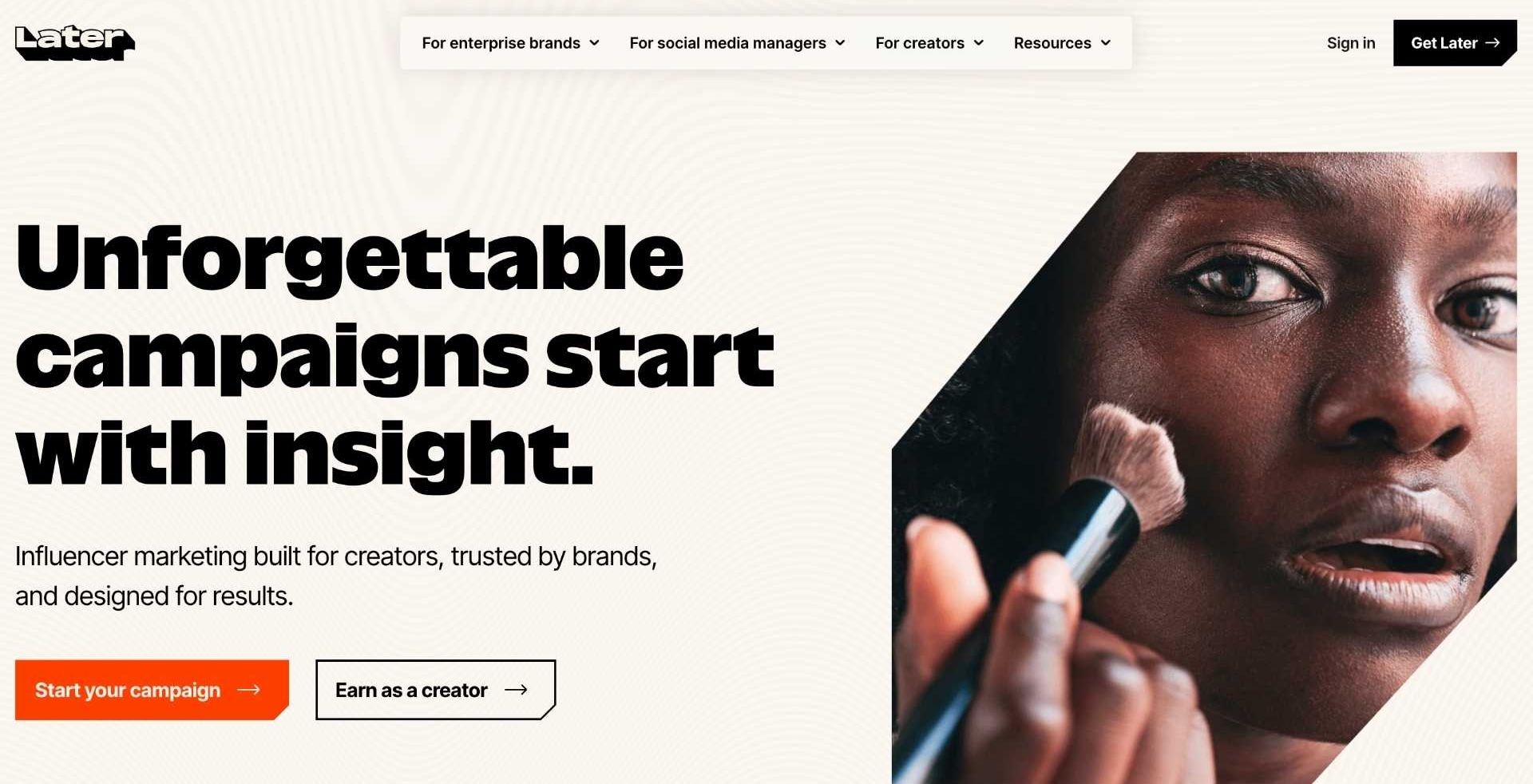
Later Influence is Later’s influencer marketing platform, combining creator discovery, campaign management, reporting, and optional managed services inside a broader social media and creator-commerce ecosystem. The company currently positions the product around real campaign intelligence, trusted creators, and its newer EdgeAI layer for smarter planning and execution.
Key Features
• End-to-end influencer campaign management: Later says brands can find creators, launch campaigns, manage workflows, and track performance from one platform.
• Creator discovery and vetting: The platform provides a searchable creator database and supports filtering and recruiting across social platforms.
• Automation and reporting: Later supports campaign workflow automation and near real-time authenticated performance reporting.
• Social listening and sentiment monitoring: The official pricing page highlights brand health and sentiment monitoring as part of its platform capabilities.
• Product seeding and commerce support: Later includes commerce-oriented workflows such as product seeding and creator incentives.
• Platform plus services model: Brands can choose self-serve software, platform plus services, or a more managed-services approach.
• EdgeAI intelligence layer: Later EdgeAI is a newer differentiator built on Later’s first-party campaign dataset and is designed to improve campaign planning and creator decisions.
• Broader ecosystem tie-in: Later connects influencer marketing with social media management and creator commerce through the wider Later product family.
Pricing
Later’s influencer marketing platform (Later Influence) uses custom pricing, and brands need to request a demo for exact costs.
Based on our research, there are different plans:
• Essentials Plan: Starts at $28,500/year. Best for brands starting in influencer marketing.
• Pro Plan: Starts at $42,000/year. Best for data and automation to make your campaigns run faster and achieve better ROI.
• Premier Plan: Starts at $60,000/year. Everything you need for a scaled influencer program.
• All plans come with an additional one-time onboarding fee of $5,000 for all new customers.
Reviews
4.4 / 5.0 (Capterra)
Pros
• Strong platform-plus-services model: Later stands out for brands that want software access but also want optional hands-on campaign support from a services team.
• EdgeAI is a notable recent differentiator: Its newer AI layer is built on a large first-party dataset and is now central to Later’s positioning.
• Broader social ecosystem advantage: Later is appealing for brands that want influencer marketing tied more closely to social media management, creator commerce, and creator monetization.
Cons
• Pricing is not transparent: Because plans are quote-based, Later is harder to compare quickly against platforms with public tiers.
• Some users report technical friction: Public review feedback includes complaints around glitches and campaign-management friction.
• There can be creator-side onboarding friction: Review feedback also notes occasional challenges with account connections and campaign participation clarity.
Integrations
• Shopify: Connect store data to product seeding, creator selection, and campaign reporting workflows.
• Bazaarvoice: Connect influencer content and program data to ratings, reviews, and commerce-focused workflows.
• PowerReviews: Integrate creator and campaign data into review-generation and social-proof workflows.
• Yotpo Reviews: Connect influencer programs to user-generated reviews and broader ecommerce trust signals.
• Reporting API: Export Later Influence campaign data into external dashboards, BI tools, or internal reporting environments.
Roster vs Later
Roster is more purpose-built for ambassador, referral, and customer-advocacy programs, while Later is broader and more service-oriented. If Roster is a community participation platform first, Later is a hybrid platform-and-services offering that can support in-house teams or take a more managed role in campaign execution.
Later also has the advantage for brands that want influencer marketing tied into a wider social media and creator-commerce ecosystem, especially with newer AI positioning through EdgeAI. Roster remains the more direct fit for brands prioritizing structured ambassador communities and reward programs, while Later is stronger for brands that want a larger social and influencer stack under one roof.

IZEA
IZEA is one of the longest-standing influencer marketing platforms, offering both software and managed services for influencer campaigns, creator marketplaces, and content monetization. It positions itself as a full creator economy platform, helping brands collaborate with influencers, manage campaigns, and scale content production across multiple channels.
Key Features
• IZEA Flex platform: A full-suite influencer marketing solution for discovery, campaign management, payments, and reporting in one dashboard.
• Creator marketplace (IZEA Exchange): Brands can post campaigns and receive applications from creators, similar to a marketplace model.
• AI-powered tools (FormAI): Includes AI-generated campaign briefs, content ideas, and influencer outreach assistance.
• Content production workflows: Manage sponsored posts, UGC, and content deliverables from briefing to approval.
• Campaign tracking and analytics: Track reach, engagement, and campaign-level performance metrics.
• Payments and contracts: Handle creator payments, contracts, and approvals within the platform.
• Managed services: IZEA offers agency-style support for brands that want help running campaigns.
Pricing
• Starter Plan: starts at $130/month.
• Power Plan: starts at $500/month.
• Free trial: 10 days.
• Managed Services: custom proposal-based pricing for fully managed campaigns.
Reviews
3.9/ 5.0 (G2)
Pros
• Strong creator marketplace model: IZEA Exchange allows brands to receive inbound applications, reducing reliance on outbound outreach.
• AI-powered campaign tools (FormAI): Helps generate campaign briefs, ideas, and workflows faster, which is a newer differentiator.
• Flexible combination of SaaS + managed services: Brands can choose between self-serve software or full-service campaign execution.
Cons
• User interface can feel dated: Some users report the platform is less intuitive compared to newer tools.
• Reporting depth can be limited: Analytics may not be as advanced as enterprise-focused competitors.
• Pricing transparency is low: Costs are not clearly defined upfront, making evaluation harder.
Integrations
• Shopify: Connect influencer campaigns to product data and sales tracking.
• Google Analytics: Measure campaign traffic and conversions tied to influencer activity.
• Social platforms (Instagram, TikTok, YouTube): Track content performance and engagement directly.
• Stripe/Payments tools: Manage payouts and financial workflows for creators.
• API integrations: Export campaign data into internal dashboards or tools.
Roster vs IZEA
Roster is built primarily for brands that want to develop structured ambassador and advocacy programs, focusing on long-term engagement, rewards, and community participation. In contrast, IZEA is more campaign-driven, with a strong emphasis on content creation and its creator marketplace (IZEA Exchange), where brands can receive inbound applications and run one-off or recurring campaigns. This makes IZEA more suited to brands focused on scaling content output quickly.
Another key difference is the operating model. IZEA offers a hybrid approach with both SaaS and managed services, making it appealing for brands that want hands-on campaign execution support. Roster, on the other hand, is more self-serve and optimized for building ongoing creator relationships and referral-driven growth. Brands prioritizing content campaigns and creator sourcing may prefer IZEA, while those investing in long-term community building will find Roster more aligned.
Traackr
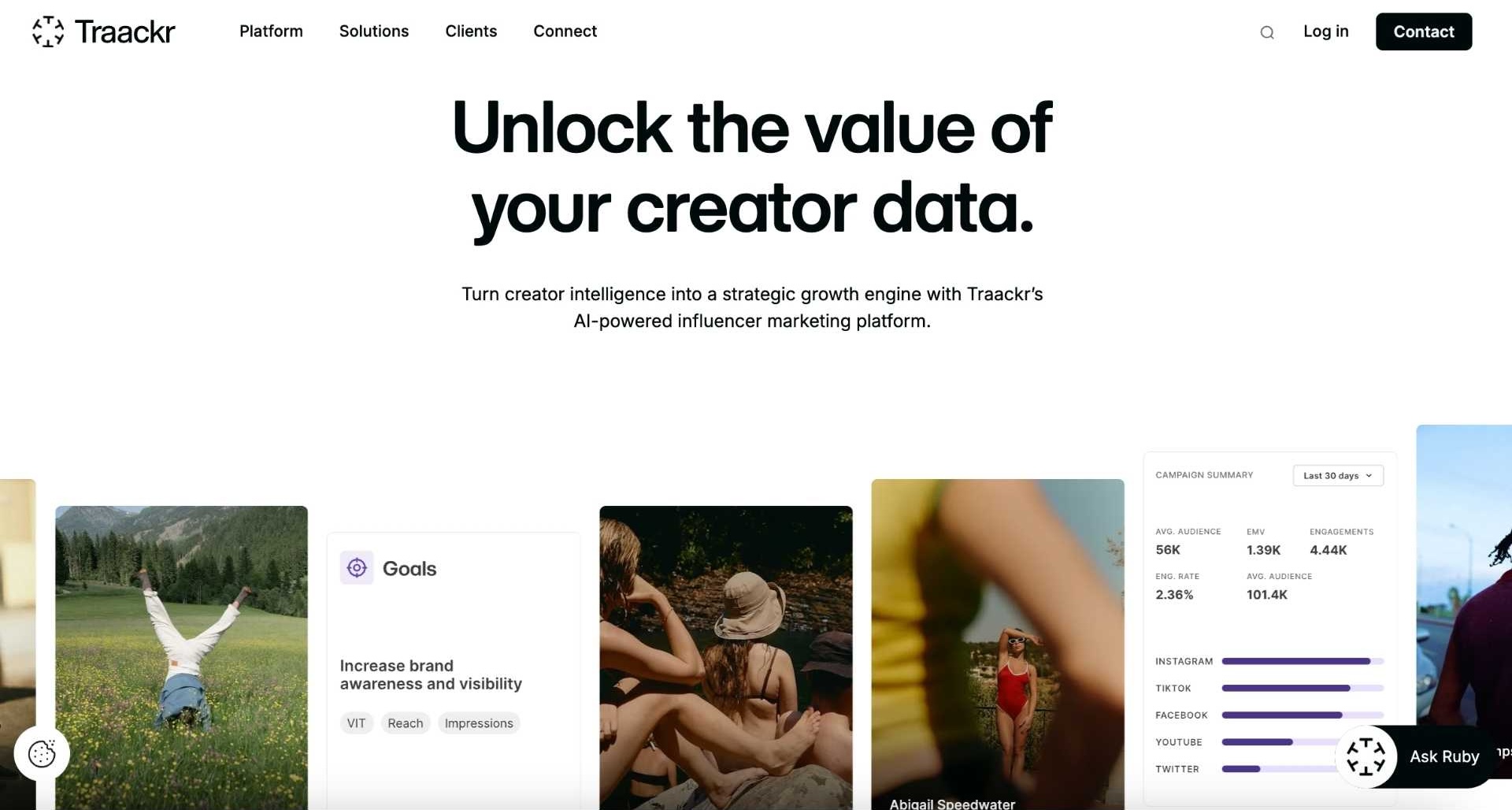
Traackr is an enterprise influencer marketing platform focused on data-driven decision-making, influencer relationship management, and performance measurement. It is widely used by global brands to track influencer impact, benchmark campaigns, and optimize creator investments across markets.
Key Features
• Advanced influencer discovery: Filter creators by audience demographics, engagement, brand affinity, and historical collaborations.
• Relationship management: Track long-term influencer relationships and engagement history across campaigns.
• Campaign tracking and ROI measurement: Analyze campaign performance with detailed metrics including engagement, reach, and ROI.
• Benchmarking tools: Compare influencer performance against competitors and industry benchmarks.
• Spend optimization: Track influencer spend and measure cost efficiency across campaigns.
• Global campaign management: Manage campaigns across multiple regions and teams.
• Brand safety and compliance tools: Evaluate influencers for risk and alignment with brand values.
Pricing
• Official pricing: custom / request a quote.
• Public benchmark: pricing starts around $32,500/year for a standard plan, with additional modules available on request.
• Contract type: generally annual enterprise contracts.
Reviews
4.3 / 5.0 (G2)
Pros
• Best-in-class analytics and benchmarking: Traackr excels at performance measurement and competitive benchmarking.
• Strong focus on ROI and spend tracking: Ideal for brands that need to justify influencer spend with data.
• Enterprise-ready global campaign management: Designed for large organizations running multi-market programs.
Cons
• High cost and enterprise focus: Not ideal for smaller DTC brands.
• Limited outreach automation: Compared to CRM-heavy tools, outreach workflows are less robust.
• Steeper learning curve: Requires onboarding and training to fully leverage analytics features.
Integrations
• Google Analytics: Connect influencer campaigns to website traffic and conversion data.
• Social platform APIs: Pull real-time data from Instagram, TikTok, and YouTube.
• CRM systems: Sync influencer data with internal customer and marketing systems.
• BI tools: Export campaign data into dashboards for advanced reporting.
• API integrations: Connect Traackr with internal tools and workflows.
Roster vs Traackr
Roster focuses on community-led influencer programs, enabling brands to build ambassador networks, manage rewards, and drive engagement over time. Traackr, by contrast, is built for enterprise teams that prioritize data, offering advanced analytics, benchmarking, and ROI measurement across large-scale, global influencer campaigns. This makes Traackr significantly stronger in performance tracking and competitive analysis.
In terms of usability and target audience, Roster is more accessible for DTC brands looking to operationalize influencer programs quickly, while Traackr is designed for larger organizations with more complex reporting and governance needs. Brands that need deep analytics and spend optimization will lean toward Traackr, whereas those focused on engagement, retention, and creator communities will find Roster more practical.
Influencity
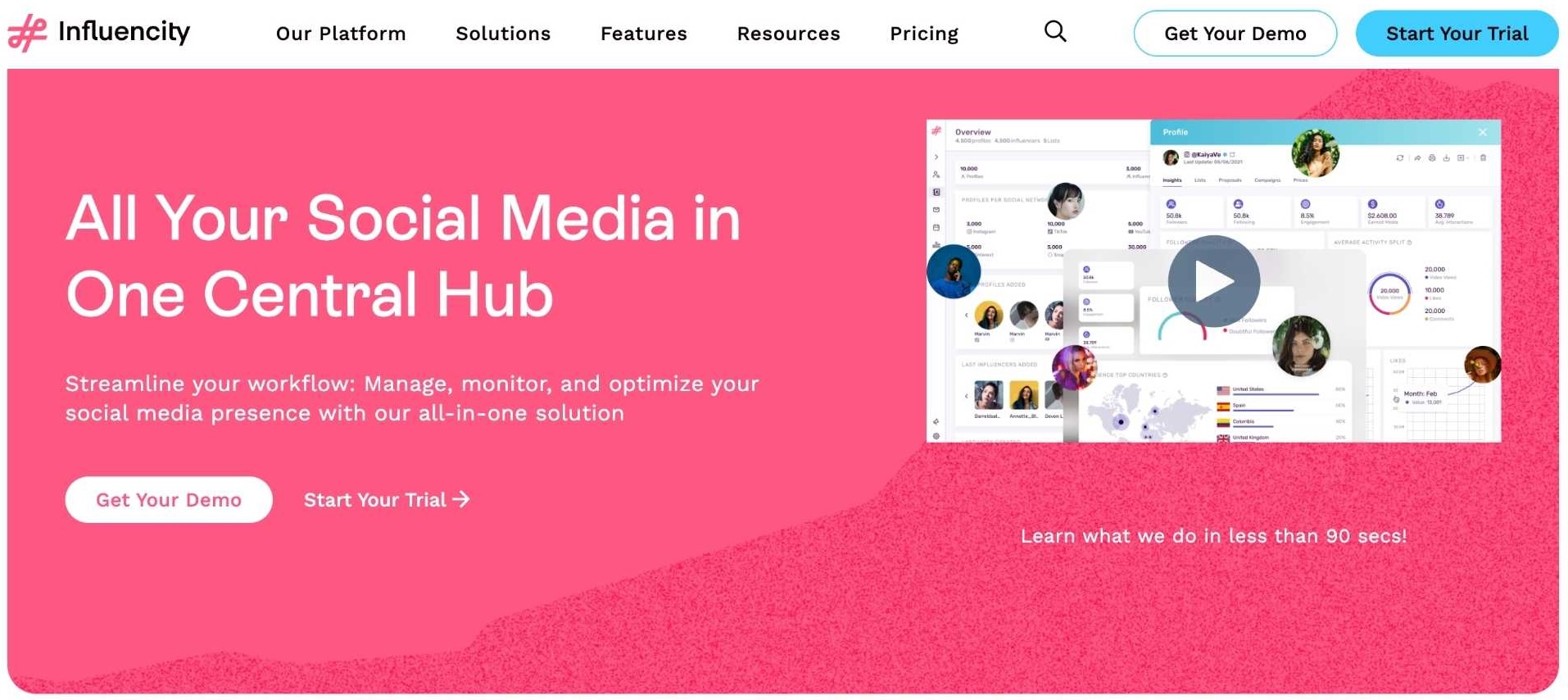
Influencity is a data-driven influencer marketing platform that focuses on influencer discovery, campaign management, and performance analytics. It is particularly known for its detailed audience insights and affordability compared to enterprise tools, making it popular among growing brands and agencies.
Key Features
• Influencer discovery with detailed filters: Search creators by audience demographics, engagement, niche, and authenticity metrics.
• Audience analytics: Deep insights into follower demographics, fake follower detection, and audience quality.
• Campaign management tools: Manage outreach, track campaigns, and monitor performance from one dashboard.
• Relationship management: Maintain influencer lists and track past collaborations.
• Reporting and dashboards: Generate performance reports with customizable metrics.
• Competitor analysis: Analyze competitor influencer strategies and collaborations.
• Multi-platform support: Covers Instagram, TikTok, YouTube, and more.
Pricing
Influencity offers three main pricing tiers, along with add-ons:
• Professional Plan: $318/month or $3,816/year
• Business Plan: $798/month or $9,576/year
• Enterprise Plan: Custom pricing
• Auto-Tracker Add-On: $660/year (for 50 influencers)
Reviews
4.3 / 5.0 (G2)
Pros
• Strong audience analytics and fake follower detection: One of the platform’s most valued capabilities.
• Affordable compared to enterprise tools: Offers good value for mid-sized teams.
• Good balance of discovery and analytics: Combines influencer search with meaningful data insights.
Cons
• Limited automation compared to CRM-heavy tools: Outreach workflows are not as advanced.
• UI can feel complex for new users: Due to the depth of data available.
• Less focus on commerce integrations: Compared to platforms like Upfluence or Aspire.
Integrations
• Google Analytics: Connect campaign performance to website traffic.
• Social media APIs: Pull real-time influencer and campaign data.
• CSV export: Export data for external reporting and analysis.
• API access: Integrate influencer data into internal systems.
Roster vs Influencity
Roster is centered around building and managing ambassador programs, with tools for rewards, referrals, and long-term creator engagement. Influencity, on the other hand, is more data-driven, with a strong emphasis on influencer discovery, audience analytics, and campaign performance insights. This makes Influencity particularly useful for brands that want to deeply analyze influencer audiences before collaborating.
While Influencity offers more advanced analytics and audience-level insights, it is less focused on community-building workflows and ongoing creator relationships. Roster fills this gap by enabling brands to create structured programs with tiers, incentives, and participation tracking. As a result, Influencity is better for data-led influencer selection, while Roster is better for managing and scaling creator communities over time.
Heepsy

Heepsy is an influencer marketing platform focused on influencer discovery, outreach, and campaign tracking, with a strong emphasis on affordability and ease of use. It is particularly popular among small to mid-sized brands looking for a cost-effective way to find and manage influencers globally.
Key Features
• Large influencer database: Access millions of influencers with filters for niche, location, audience demographics, and engagement.
• Fake follower detection: Identify influencer authenticity and audience quality using built-in tools.
• Detailed influencer profiles: View engagement metrics, audience demographics, and past brand collaborations.
• Bulk outreach and email templates: Contact multiple influencers at once with pre-built templates.
• Campaign tracking and CRM pipeline: Manage influencer campaigns using a visual pipeline (e.g., contacted, approved, shipped).
• Shopify integration for sales tracking: Track conversions and revenue from influencer campaigns on higher plans.
• Media gallery and reporting: Store campaign content and analyze engagement metrics.
Pricing
• Free — limited free access is available.
• Starter — recent official Heepsy blog references place Starter at $89/month.
• Plus — recent official Heepsy blog references place Plus at $249/month.
• Advanced — recent official Heepsy blog references place Advanced at $369/month.
• Heepsy also says users can choose monthly or annual billing, with annual subscriptions discounted versus monthly rates.
Reviews
4.5 / 5.0 (G2)
Pros
• Affordable entry point: One of the more budget-friendly influencer tools with strong discovery capabilities.
• Easy-to-use interface and CRM pipeline: Simplifies campaign tracking for smaller teams.
• Strong search and filtering: Allows precise targeting of influencers by niche and audience.
Cons
• Sales tracking limited to higher plans: Full ROI tracking requires the Advanced plan.
• No AI-powered outreach: Lacks automation compared to newer tools.
• Fake follower detection is not 100% accurate: Based on estimation rather than full data.
Integrations
• Shopify: Track influencer-driven sales, conversions, and affiliate performance.
• Email tools: Send outreach campaigns using templates and bulk messaging.
• CSV export: Export influencer data for external management.
• Social platforms: Track influencer performance across Instagram, TikTok, and YouTube.
• Internal CRM pipeline: Manage campaigns and outreach stages within the platform.
Roster vs Heepsy
Roster is designed for managing long-term influencer and ambassador programs, with features that support engagement, rewards, and community participation. Heepsy, in contrast, is primarily a discovery and outreach platform, offering a large influencer database and strong filtering tools to help brands find creators quickly. This makes Heepsy more suitable for early-stage influencer sourcing.
Another key difference lies in depth versus simplicity. Heepsy is more affordable and easier to use, making it a good fit for smaller teams, but it lacks the advanced program management, UGC workflows, and reward systems that Roster provides. Brands looking for a cost-effective way to find influencers may prefer Heepsy, while those aiming to build scalable, long-term creator ecosystems will benefit more from Roster.
Lefty
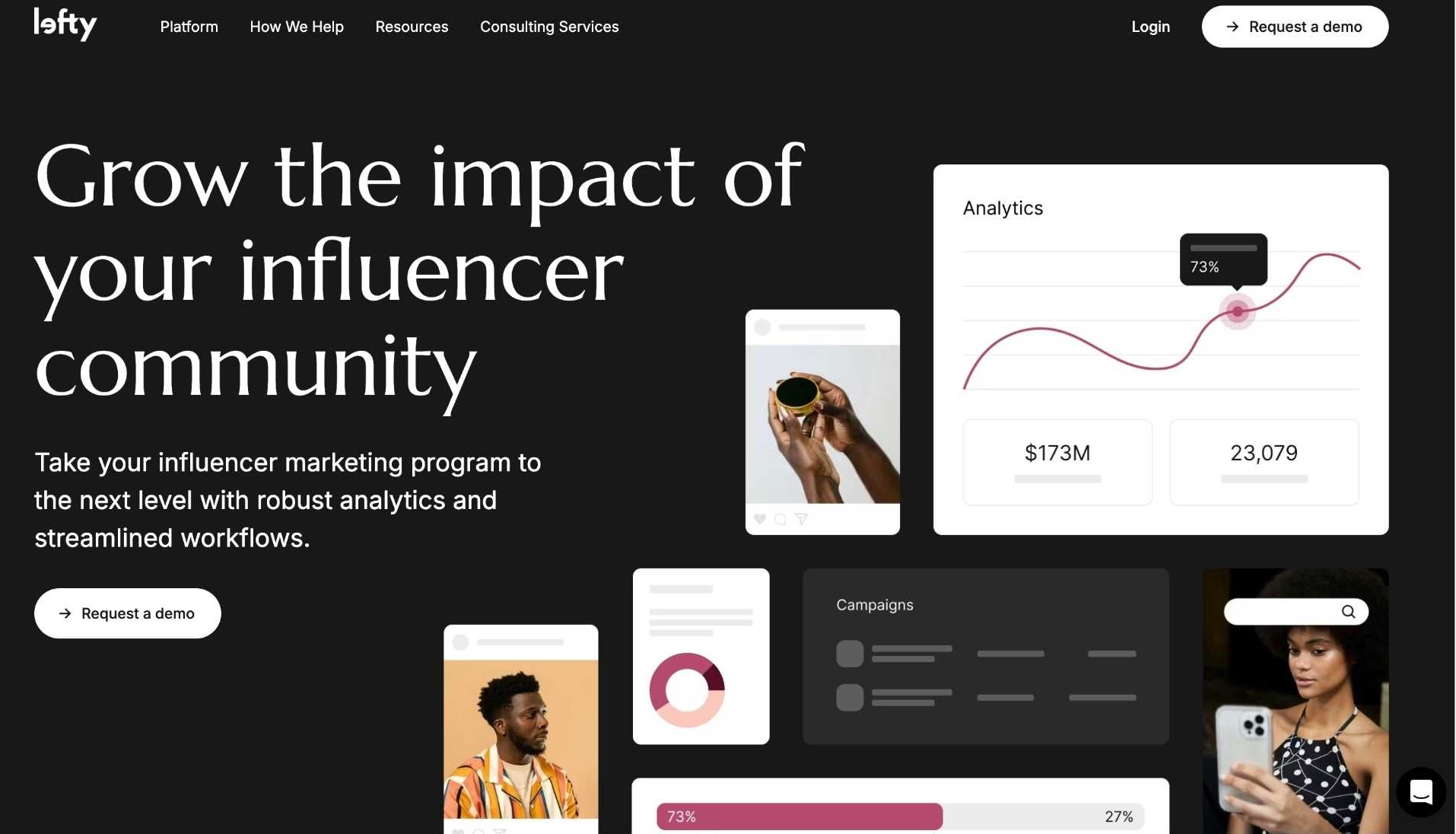
Lefty is a data-driven influencer marketing platform designed for brands and agencies that want advanced campaign analytics, creator discovery, and performance measurement. It is particularly known for its visual reporting dashboards and focus on campaign insights and optimization.
Key Features
• Influencer discovery engine: Search creators using filters like audience demographics, engagement, and brand affinity.
• Campaign management tools: Plan, execute, and track influencer campaigns from one platform.
• Advanced analytics and reporting: Visual dashboards for campaign performance, ROI, and engagement metrics.
• Competitor benchmarking: Analyze competitor campaigns and influencer strategies.
• Content tracking: Monitor influencer posts, mentions, and campaign content in real time.
• Audience insights: Understand follower demographics and audience quality.
• Multi-platform support: Covers Instagram, TikTok, YouTube, and more.
Pricing
• Starting Price: ~€590 per month.
• Pro Plan: ~€990/month, including 2 users, 5 campaigns, and unlimited reports.
• Premium Plan: ~€1,690/month, which adds a dedicated manager.
• Premium+ Plan: ~€3,490/month for 10 users and 25 campaigns.
Reviews
4.7/5.0 (G2)
Pros
• Strong visual reporting dashboards: Lefty stands out for its easy-to-understand analytics and reporting UI.
• Good balance of discovery and analytics: Combines influencer search with campaign performance insights.
• Competitor benchmarking capabilities: Helps brands compare campaigns against competitors.
Cons
• Limited outreach automation: Not as strong for CRM-style influencer communication.
• Pricing transparency is low: Requires demos and sales calls to understand costs.
• Less focus on affiliate and commerce workflows: Compared to more DTC-focused platforms.
Integrations
• Social media platforms: Track campaign performance across Instagram, TikTok, and YouTube.
• Google Analytics: Connect influencer campaigns to website performance metrics.
• API integrations: Export campaign data to internal systems and dashboards.
• CRM tools: Sync influencer data with marketing systems.
• Reporting tools: Integrate campaign data into BI dashboards.
Roster vs Lefty
Roster focuses on building ambassador communities and managing creator relationships through structured programs, while Lefty is more focused on campaign analytics, reporting, and performance optimization. Lefty stands out for its visual dashboards and ability to analyze campaign performance and competitor activity, making it more analytics-driven than Roster.
However, Lefty places less emphasis on ongoing engagement and community workflows, which are core to Roster’s value proposition. Roster enables brands to create incentive-driven programs with referrals, rewards, and UGC collection, while Lefty is better suited for brands that prioritize campaign insights and measurement. In short, Lefty is stronger for analytics and benchmarking, whereas Roster is stronger for community-building and long-term creator engagement.
Final Thoughts on Roster Alternatives
Choosing the right alternative to Roster ultimately depends on a brand’s priorities and stage of growth. Platforms like Influencer Hero, Upfluence, and Aspire offer stronger campaign execution, automation, and eCommerce integrations, while tools like Traackr, CreatorIQ, and Lefty stand out for analytics and enterprise-level reporting. On the other hand, solutions such as Heepsy and Influencity provide more accessible entry points with strong discovery and audience insights. Roster remains a solid option for brands focused on building long-term ambassador communities, but alternatives may be better suited for teams seeking advanced analytics, broader creator discovery, or more robust campaign and commerce capabilities.

.png)


.jpg)