

10 Best Reachbird Alternatives for Influencer Marketing
Influencer marketing software has become essential for D2C brands looking to scale creator partnerships without relying on manual processes—helping teams manage influencer discovery, outreach, campaign workflows, and performance tracking in one place. Reachbird is a well-known option that combines agency support with its RTECH platform, making it appealing for brands that want hands-on campaign execution and creative strategy. However, common limitations such as limited pricing transparency, a more agency-led approach, and a smaller opt-in creator network often lead teams to explore other Reachbird alternatives. For founders and marketing teams evaluating influencer marketing software, choosing between managed services and self-serve platforms is a key decision.
In this article, we compare the 10 best Reachbird alternatives—Aspire, Influencer Hero, CreatorIQ, Upfluence, Skeepers, Klear, Traackr, IMAI (InfluencerMarketing.AI), Heepsy, and Social Cat—to help you find the right fit for your brand.
Key Criteria for Evaluating Influencer Marketing Platforms
Core Features
Evaluation of essential influencer marketing capabilities, including influencer discovery, outreach, CRM, campaign management, reporting, and content workflows.
Pricing & Flexibility
Comparison of pricing models, subscription plans, and contract terms to match different budgets and growth stages.
Customer Reviews & Satisfaction
Analysis of user feedback from trusted review platforms, focusing on usability, reliability, customer support, and overall performance.
Pros & Cons
Review of each platform’s strengths and limitations to highlight where it performs well and where it may fall short based on different use cases.
Integrations
Review of the most important integrations (e.g., Shopify and other tech tools), highlighting what each integration enables in one sentence.
Reachbird Overview
Reachbird is a Germany-based, tech-enabled influencer marketing agency that combines managed services with its in-house RTECH platform. The company helps brands plan, execute, monitor, and report influencer campaigns, with services covering strategy, creator selection, campaign management, UGC, paid social amplification, and B2B influencer marketing. Reachbird positions itself less as a self-serve SaaS tool and more as a technology-supported creative agency, using RTECH internally for creator selection, briefing, approvals, workflows, and campaign evaluation.
Key Features
- Influencer Campaign Management: Reachbird manages campaigns from strategy and planning through execution, creator coordination, community building, and reporting, making it useful for brands that want agency support rather than a purely self-serve tool.
- RTECH Campaign Platform: Its proprietary RTECH platform supports structured campaign workflows, including analysis, influencer selection, briefing modules, content approvals, automated workflows, and evaluation.
- Creator Discovery and Selection: Reachbird uses data-based analysis to identify and select creators that fit brand and campaign goals. Its network includes over 30,000 international opt-in influencers.
- Campaign Reporting and Measurement: RTECH supports detailed influencer analysis and automated campaign reporting, helping brands evaluate performance beyond manual spreadsheets.
- Content Creation and UGC: Reachbird supports creator-led and professionally produced content, including platform-optimized UGC for social campaigns.
- Performance Marketing and Social Ads: The agency can extend influencer content into paid media, including campaign optimization for clicks, saves, conversions, and paid ad usage.
- Platform-Specific Strategy: Reachbird supports platform strategy across TikTok, LinkedIn, YouTube Shorts, Pinterest, Snapchat, and emerging channels, tailoring content formats to each platform.
- B2B Influencer Marketing: Reachbird also works with expert creators, industry voices, podcasts, LinkedIn creators, and specialist media for thought leadership, employer branding, and lead generation campaigns.
Pricing
Reachbird does not publish standard public pricing on its own website. Publicly available pricing data lists two package types:
- Full-Service Package: Custom pricing. Includes a business account, success manager, campaign creation, campaign management, monitoring, reporting, content licensing for paid ads, white-label/API options, and real-time support.
- Self-Service Package: Starts at €499/month for one marketing professional account. Includes keyword-based influencer search, influencer insights, filtering, segmentation, campaign management, influencer relations, tracking, reporting, influencer payments, onboarding/training, and in-app support.
Reviews
Not available
Integrations
- Instagram: Used for creator discovery, campaign execution, content tracking, and influencer performance analysis.
- TikTok: Supports short-form video influencer campaigns and platform-specific creator strategies.
- YouTube: Supports creator campaigns across video formats, including long-form and Shorts-style content.
- Pinterest: Reachbird is listed as a Pinterest partner and supports Pinterest influencer activity through RTECH.
- Blogs: Supports blog-based creator collaborations for campaigns that need longer-form content, SEO value, or product storytelling.
Pros
- Strong agency-plus-technology model: Reachbird is a good fit for brands that want strategic campaign support, not just access to software. Its RTECH platform is used behind the scenes to make managed campaigns more structured, transparent, and data-led.
- RTECH has recently become central to the agency workflow: Reachbird announced in September 2025 that it now uses RTECH exclusively to manage campaigns, with newer usability improvements, automated workflows, and AI-supported decision bases.
- Broad campaign formats beyond standard influencer posts: Reachbird supports UGC, paid social amplification, B2B influencer marketing, podcast formats, LinkedIn thought leadership, DOOH, and on-site activations, making it more flexible than many discovery-only influencer tools.
Common Drawbacks of Reachbird
Less transparent pricing
Reachbird’s full-service pricing is custom, and even the publicly listed self-service package requires final negotiation with the seller. This can make budgeting harder for teams comparing tools side by side.
More agency-led than self-serve
Reachbird’s recent positioning emphasizes RTECH as part of its agency business rather than a standalone tool customers operate themselves. Brands that want full in-house control may prefer a pure SaaS alternative.
Smaller opt-in creator network than some alternatives
Reachbird lists 30,000+ international opt-in influencers, while many influencer platforms now advertise databases in the millions. This may limit discovery breadth for brands targeting niche markets at scale.
Limited public review volume
Reachbird has positive ratings, but the number of public software reviews is relatively small, which makes it harder for buyers to benchmark user experience, support consistency, and long-term platform performance.
Best Reachbird Alternatives
| TOOL | REVIEWS | BEST FOR | TRIAL INFO | PRICING | ||
|---|---|---|---|---|---|---|
1 |

|
⭐ | Influencer partnerships | Book Demo | Pricing | Website |
2 |

|
⭐ | Influencer CRM & automation | Book Demo | Pricing | Website |
3 |

|
⭐ | Enterprise influencer marketing | Book Demo | Pricing | Website |
4 |
|
⭐ | Influencer discovery | Book Demo | Pricing | Website |
5 |

|
⭐ | Influencer gifting & UGC campaigns with micro-influencers | Book Demo | Pricing | Website |
6 |
|
⭐ | Influencer analytics | Book Demo | Pricing | Website |
7 |

|
⭐ | Enterprise influencer analytics | Book Demo | Pricing | Website |
8 |

|
⭐ | AI influencer discovery & analytics | Book Demo | Pricing | Website |
9 |

|
⭐ | Influencer discovery | Book Demo | Pricing | Website |
10 |

|
⭐ | Micro-Influencer Campaigns | Book Demo | Pricing | Website |
Aspire
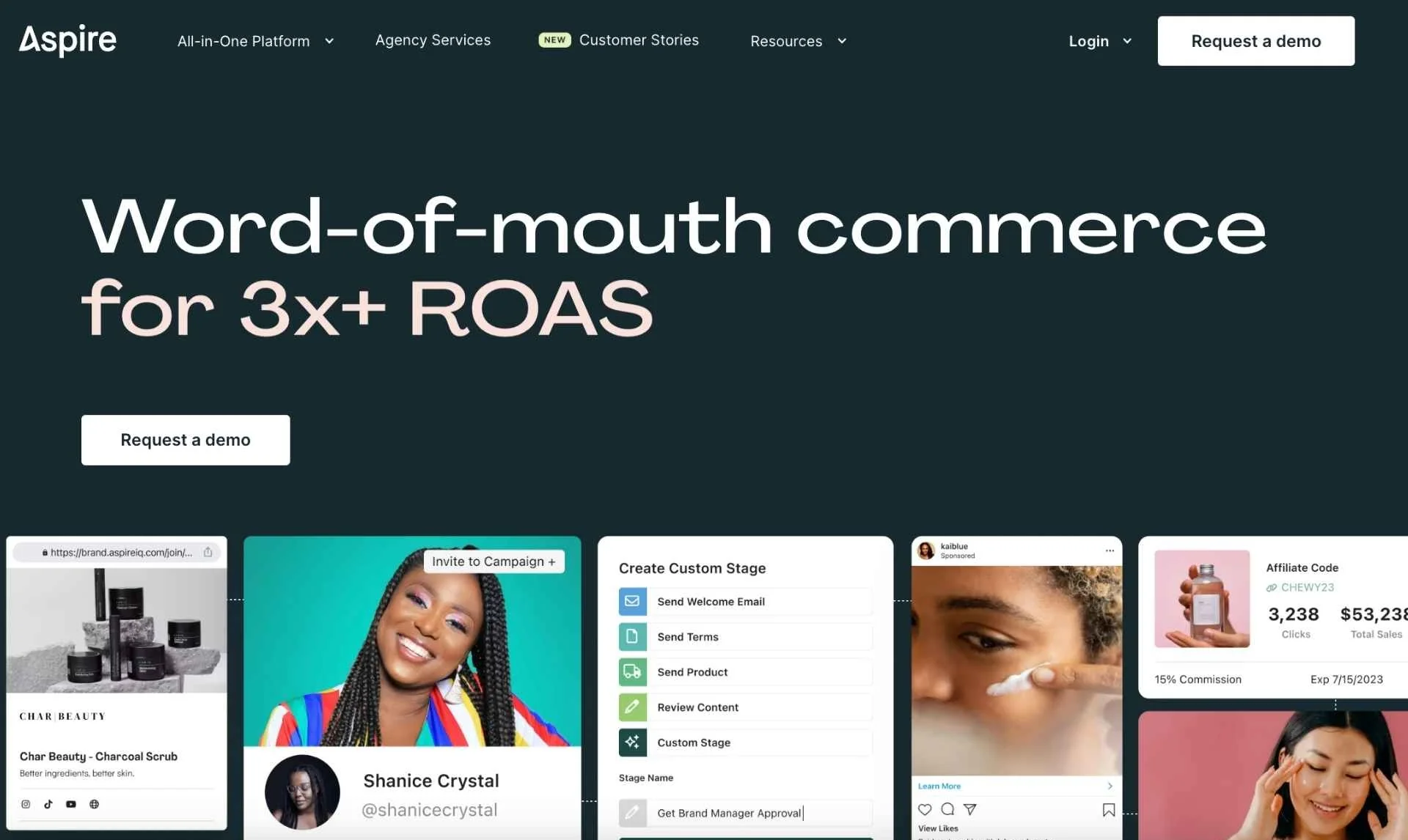
Aspire is an influencer marketing platform built for eCommerce brands that want to manage creator discovery, outreach, gifting, content approvals, sales tracking, and reporting in one place. The platform emphasizes first-party data partnerships, workflow automation, Shopify-powered gifting, and an inbound creator marketplace where creators can apply directly to brand campaigns.
Key Features
- Influencer Discovery: Search creators by platform, keyword, engagement, audience demographics, location, and lookalike profiles. Aspire also uses first-party data from Meta, TikTok, and Pinterest to improve audience and performance accuracy.
- Inbound Creator Marketplace: Brands can post campaign opportunities and receive applications from creators, reducing the need for cold outreach.
- Application Pages: Create branded landing pages to collect creator applications, product preferences, audience details, and creative concepts before approving collaborations.
- Campaign Workflow & CRM: Manage creators through structured campaign stages, including invite, contract, brief, content approval, posting, and reporting.
- Gifting & Product Fulfillment: Shopify integration lets creators select products from your catalog while teams approve orders and track fulfillment.
- Sales Tracking & Commissions: Track discount codes, creator stores, clicks, conversions, sales, and commission performance.
- Content Library & Reporting: Store influencer content, manage usage rights, and export campaign performance reports.
Pricing
Aspire does not publish full public package pricing on its website. Public and recent market sources indicate:
- Custom pricing
- Often reported at about $2,000+/month
- Recent quoting indicated around $2,300/month for a mid-tier setup
- Typically sold with a 12-month commitment rather than month-to-month self-serve plans
Reviews
4.0/5.0 (Capterra)
Pros
- First-party social platform data: Aspire’s partnerships with Meta, TikTok, and Pinterest help brands access more reliable creator and audience insights than tools relying only on scraped public data.
- Large inbound creator marketplace: Instead of relying only on outbound recruitment, brands can attract creators who are already interested in collaborations.
- Strong workflow automation: Aspire supports bulk actions, automated follow-ups, contracts, briefs, product gifting, content approvals, and reporting from one workflow.
Cons
- Higher cost for smaller teams: Pricing can be difficult for early-stage brands that only need basic discovery or occasional campaigns.
- Complex setup for new users: The platform’s depth can make campaign setup and navigation feel heavy at first.
- Limited payment clarity: Aspire is strong for gifting, sales tracking, and commission reporting, but direct creator payment handling is not always positioned as clearly as competitors.
Integrations
- Shopify: Automate product gifting, creator product selection, fulfillment tracking, discount codes, and sales attribution.
- Gmail: Sync creator communications and manage outreach from inside Aspire.
- Meta: Access first-party data and support paid amplification or creator ad workflows.
- TikTok: Improve creator discovery and reporting through first-party TikTok data.
- Pinterest: Support creator discovery and campaign tracking using Aspire’s first-party platform partnership.
Reachbird vs Aspire
Reachbird is more agency-led, while Aspire is more self-serve and workflow-driven. Reachbird is a better fit for brands that want strategic campaign execution handled by an external team, whereas Aspire gives in-house teams more control over discovery, applications, gifting, approvals, and reporting.
Aspire also has a stronger eCommerce workflow, especially for Shopify gifting, creator applications, and sales tracking. Reachbird stands out for managed campaign services, UGC, paid social, and broader creative execution, while Aspire is better for brands building an internal creator program with structured workflows and scalable automation.
Influencer Hero
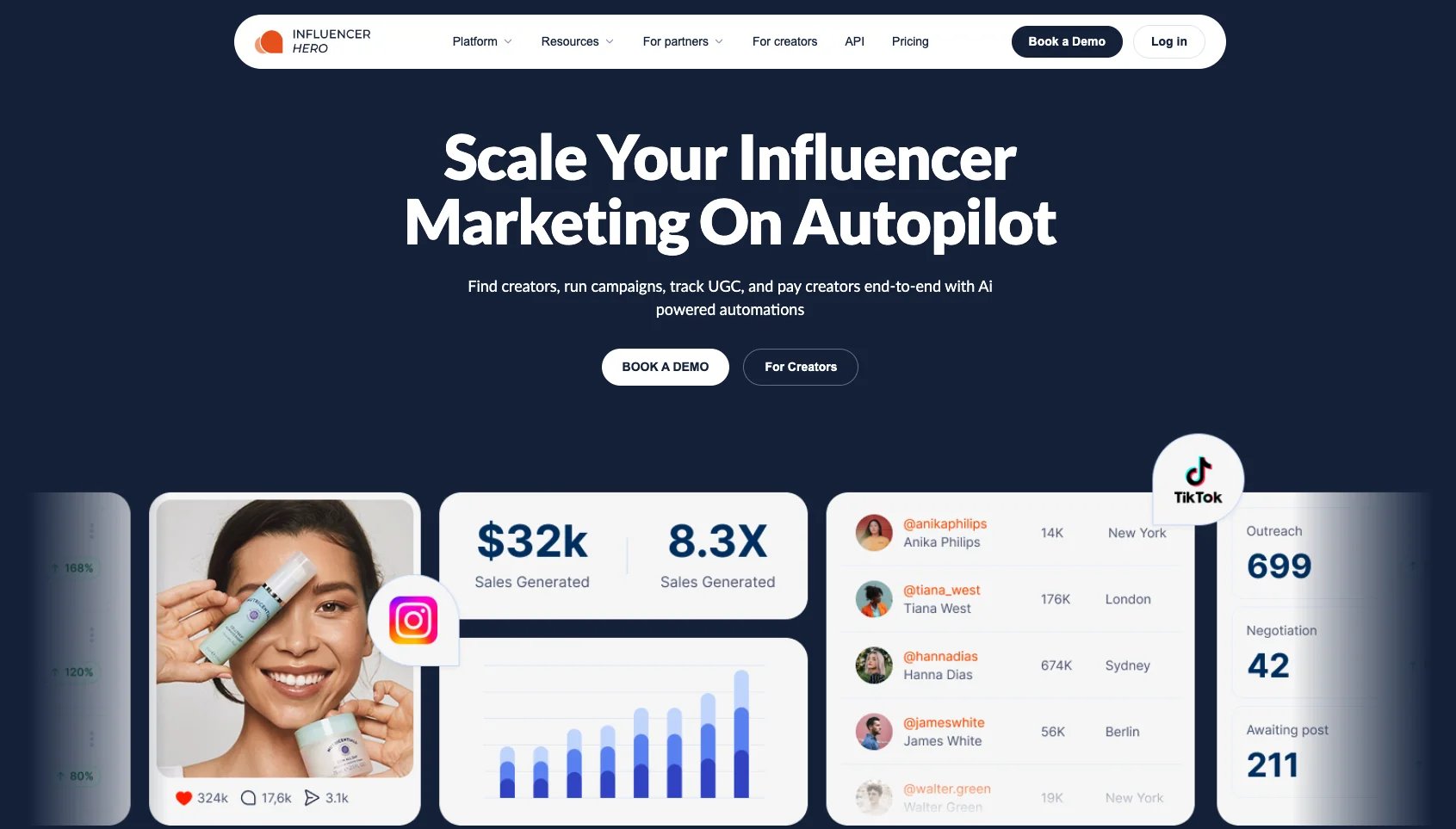
Influencer Hero is an all-in-one influencer marketing platform designed for D2C and eCommerce brands that want influencer discovery, outreach, CRM, gifting, UGC tracking, affiliate management, payments, and reporting in one system. It supports influencer marketing across Instagram, TikTok, YouTube, Facebook, Pinterest, Snapchat, X, and Twitch.
Key Features
- Influencer Discovery: Search creators using filters for location, demographics, niche, engagement rate, audience quality, and lookalikes.
- AI-Powered Outreach: Create personalized outreach messages, run bulk email campaigns, and automate follow-up sequences.
- CRM & Campaign Management: Track creator relationships through structured boards, status labels, bulk actions, tasks, and workflow automations.
- Chrome Extension: View creator insights while browsing social platforms and add creators directly to campaigns.
- Gifting & Seeding: Connect eCommerce stores to manage product gifting and shipping workflows.
- Affiliate & Payments: Generate affiliate links and codes, track commissions, and manage creator payouts.
- UGC Library: Automatically collect creator content, organize campaign assets, and identify top-performing content for reuse.
- Application Pages: Create branded creator signup pages to collect inbound applications.
Pricing
Influencer Hero offers flexible pricing based on outreach volume and you can have unlimited creators in your CRM:
- Standard — $649/month (up to 1,000 outreaches per month)
- Pro — $1,049/month (up to 5,000 outreaches per month)
- Business — $2,490/month (up to 10,000 outreaches per month)
- Custom / Agency — Tailored pricing
Custom pricing is available for agencies and larger teams
Reviews
4.9/5.0 (Capterra)
Pros
- Campaign-centric CRM automation: Influencer Hero is especially strong for high-volume campaigns, with boards, bulk actions, automated follow-ups, and workflow triggers.
- AI-Powered UGC Search: With AI and UGC search, brands can quickly find influencer-generated content based on keywords, visuals, captions, or campaign context. This helps teams reuse high-performing UGC, identify top creators, and streamline content discovery for paid ads, social media, and ecommerce use cases.
- AI-assisted creator workflows: AI recommendations, smart outreach copy, predictive campaign insights, and personalization tools help teams scale outreach without fully manual work.
Cons
- Can be more than small teams need: Brands only looking for a simple discovery database may find the full CRM, affiliate, and automation stack more extensive than necessary.
- Steep learning curve: Feature depth means onboarding and setup can take time
Integrations
- Shopify: Manage product gifting, identify influencer customers, create codes, and track influencer-driven revenue.
- WooCommerce: Connect gifting and sales attribution for stores outside Shopify.
- Slack: Send campaign updates, approvals, and internal alerts to team channels to keep workflows aligned and moving faster.
- Zapier: Connect Influencer Hero with hundreds of tools to automate workflows such as notifications, reporting, and data syncing.
- DocuSign: Streamline contracts and agreements with influencers through automated document workflows.
Reachbird vs Influencer Hero
Reachbird combines agency services with its RTECH platform, making it better for brands that want outsourced strategy and execution. Influencer Hero is more software-first, giving internal teams direct control over discovery, outreach, CRM, gifting, affiliates, payments, and reporting.
Influencer Hero is stronger for brands that want transparent pricing, eCommerce integrations, and high-volume automation. Reachbird may be stronger for companies that prefer managed campaign strategy, creative support, and paid social execution rather than operating the influencer program fully in-house.
CreatorIQ
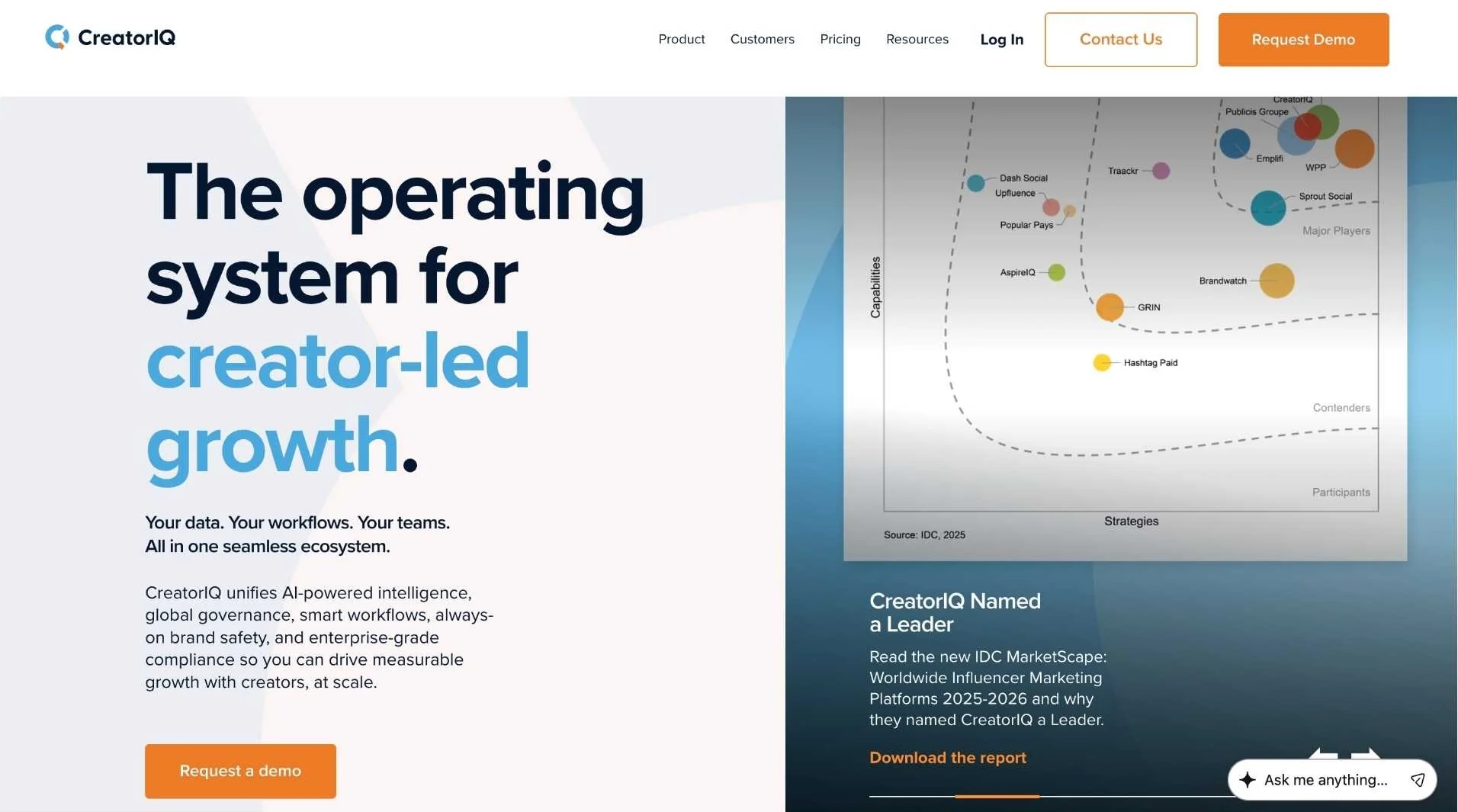
CreatorIQ is an enterprise creator marketing platform built for large brands and agencies managing complex influencer programs across markets, teams, and social platforms. It focuses on creator discovery, CRM, campaign execution, content collection, paid media measurement, governance, and enterprise-grade reporting.
Key Features
- Creator Discovery: Search public creator profiles with advanced filters, AI-powered semantic search, audience demographics, brand mentions, engagement, and brand safety signals.
- Creator CRM: Store creator records, tags, notes, contact details, collaboration history, and campaign data in a private CRM.
- Campaign Management: Build briefs, assign deliverables, manage approvals, track posting, and coordinate teams across markets.
- Shareable One-Sheets: Create approval sheets with creator profiles, audience metrics, and stakeholder feedback links.
- Gifting & Affiliate Workflows: Shopify integration supports product gifting and shipping, while affiliate workflows support links, codes, and conversion reporting.
- Creator Payments: Centralize creator payment workflows with tax and compliance support.
- UGC & Content Library: Automatically collect campaign content and manage usage rights for repurposing.
- Custom Reporting: Build live dashboards and share no-login reporting links with internal stakeholders.
Pricing
There are different plans:
- Basic Plan: Starts at $35,000/year. Includes 1,000 contact creators per month
- Standard Plan: Starts at $50,000/year. Includes 2,500 contact creators per month
- Professional Plan: Starts at $90,000/year. Includes 5,000 contact creators per month
- Enterprise Plan: Starts at $200,000/year. Includes 7,500 contact creators per month
Reviews
4.4/5.0 (Capterra)
Pros
- Enterprise-grade data and governance: CreatorIQ is built for large-scale programs that need direct social platform integrations, compliance workflows, and reliable reporting.
- Advanced AI and semantic creator search: Teams can search for highly specific creator profiles using keywords, topics, brand mentions, audience traits, and content signals.
- Strong stakeholder collaboration: One-sheets, live dashboards, approval workflows, and custom reporting make it easier for global teams to coordinate campaigns.
Cons
- Expensive for smaller brands: Annual pricing and enterprise packaging can be too much for small or mid-sized D2C teams.
- Longer onboarding curve: Large teams may need several weeks to fully configure workflows, reporting, CRM structures, and permissions.
- Affiliate tracking can be less automated: Some conversion and affiliate reporting workflows may require more manual setup than eCommerce-first tools.
Integrations
- Shopify: Manage product gifting, shipping details, and creator product workflows.
- Meta/Instagram: Access creator data, campaign metrics, content performance, and paid media measurement.
- TikTok: Support creator discovery, campaign tracking, and platform data workflows.
- YouTube: Track creator profiles, video performance, and campaign results.
- DocuSign: Manage creator contracts, agreements, and approval workflows.
Reachbird vs CreatorIQ
Reachbird is more suitable for brands that want influencer marketing handled through an agency-plus-platform model. CreatorIQ is more suitable for large enterprises that need a deeply configurable internal system for global creator management, approvals, compliance, reporting, and governance.
CreatorIQ offers broader enterprise infrastructure, custom reporting, and collaboration workflows, while Reachbird offers more hands-on campaign execution through its agency team. For D2C brands, CreatorIQ may be too complex and expensive unless influencer marketing is already a major global function.
Upfluence

Upfluence is an all-in-one influencer and affiliate marketing platform built for eCommerce brands that want to manage discovery, outreach, campaign execution, affiliate tracking, and creator payments from one place. It is especially known for Shopify and Amazon integrations that connect influencer campaigns directly to sales performance.
Key Features
- Influencer Discovery: Access a large creator database across Instagram, TikTok, YouTube, X, Twitch, Pinterest, and blogs, with filters for niche, location, engagement, audience demographics, and interests.
- AI Campaign Assistant: Jace AI helps streamline campaign setup, creator outreach, and automated email flows.
- Creator CRM: Manage influencer relationships, campaign stages, notes, statuses, and past collaborations.
- Shopify Integration: Identify influencer customers, manage gifting, generate codes, track sales, and connect creator activity to revenue.
- Amazon Integration: Track affiliate links, sales attribution, and Amazon campaign performance.
- Affiliate Management: Create custom codes, links, commissions, and compensation models.
- Social Listening: Monitor brand mentions, trends, competitor activity, and high-performing creator content.
- Creator Payments: Use payment workflows to pay creators securely and manage payouts.
Pricing
- Pricing model: Upfluence uses custom pricing rather than a public fixed plan table.
- All plans are custom made. There’s a minimum full year of service you have to commit to with monthly payments. On average plans start around $2,000/month ($24,000 yearly)
Reviews
4.3/5.0 (Capterra)
Pros
- Strong Shopify and Amazon revenue tracking: Upfluence is one of the strongest options for brands that sell across both D2C and Amazon channels.
- Customer-to-creator identification: Its Shopify integration helps brands find influential customers who already buy from the brand, improving authenticity and outreach conversion.
- No commission on influencer sales: Upfluence does not take a commission on sales or charge based on the number of influencers contacted, which can benefit brands scaling affiliate programs.
Cons
- Annual commitment limits flexibility: Brands usually need to commit for a full year, which can be difficult for smaller teams testing influencer marketing.
- Learning curve and rigid workflows: Some campaign setup and list management workflows can feel complex or hard to edit once launched.
- Support responsiveness can vary: Technical and billing-related issues may take longer to resolve than expected.
Integrations
- Shopify: Identify influencer customers, automate gifting, create discount codes, and track influencer-driven sales.
- Amazon: Track Amazon affiliate links, sales, and campaign attribution.
- WooCommerce: Connect store data, influencer campaigns, codes, and sales attribution.
- Klaviyo: Enrich customer data with influencer insights and support creator outreach through CRM data.
- Stripe: Power creator payment workflows and transaction tracking through Upfluence Pay.
Reachbird vs Upfluence
Reachbird is more agency-led, while Upfluence is more software-led and eCommerce-focused. Reachbird is a better fit for brands that want campaign strategy, creative execution, UGC, and paid social support handled by an external partner. Upfluence is stronger for brands that want to manage influencer and affiliate programs internally with direct Shopify and Amazon revenue tracking.
Upfluence also offers broader self-serve infrastructure for affiliate links, payments, customer-influencer matching, and sales attribution. Reachbird may be better for brands that value managed services and campaign creativity, while Upfluence is better for performance-driven eCommerce teams focused on measurable creator revenue.
Skeepers

Skeepers is a UGC and influencer marketing platform focused on helping brands generate authentic content, product reviews, and social proof through nano and micro-influencer communities. Its influencer marketing solution uses AI-powered matching, gifting campaign automation, real-time analytics, and a vetted creator network across TikTok, Instagram, and YouTube.
Key Features
- Nano and Micro-Influencer Community: Skeepers connects brands with a vetted creator community focused on authentic product reviews and social content.
- AI Creator Matching: The platform helps match brands with creators based on campaign goals, product fit, and audience relevance.
- Gifting Campaign Automation: Brands can scale product seeding campaigns and collect influencer content after products are tested.
- UGC Collection: Skeepers helps brands collect fully licensed creator content that can be reused across marketing channels.
- Gifted Reviews: Creators can generate product reviews that support conversion and social proof.
- Campaign Management: Manage influencer applications, content submissions, communication, and campaign execution from the platform.
- Real-Time Analytics: Track campaign performance, engagement, and creator output across supported channels.
Pricing
- Skeepers does not publicly list a detailed pricing table for Influencer Marketing on its main site.
- Capterra lists a starting price of €1,250/month and says no free trial is available.
Reviews
4.3/5.0 (Capterra)
Pros
- Strong for micro and nano creator campaigns: Skeepers is built around smaller creators, product testing, gifting, and authentic product-led content.
- UGC and reviews in one ecosystem: Unlike tools focused only on influencer discovery, Skeepers connects creator content with reviews and broader social proof workflows.
- AI-powered matching and campaign automation: Smart matching and structured gifting workflows help brands scale campaigns without manually recruiting every creator.
Cons
- Creator quality can vary: Brands may need to carefully filter applicants to avoid mismatched or lower-quality creators.
- Less suited for macro-influencer programs: Skeepers is strongest for micro/nano campaigns and product reviews, not large-scale celebrity or macro creator partnerships.
- Limited flexibility for advanced performance marketing: It is less eCommerce-affiliate focused than platforms built around Shopify/Amazon revenue attribution.
Integrations
- Instagram: Run influencer campaigns, collect creator content, and track engagement.
- TikTok: Manage short-form creator collaborations and collect social content.
- YouTube: Support video creator campaigns and product review content.
- Ratings & Reviews: Connect influencer-generated product reviews with broader review and social proof programs.
- UGC Management: Collect, license, moderate, and reuse creator content across brand channels.
Reachbird vs Skeepers
Reachbird and Skeepers both support influencer content and UGC, but they approach the category differently. Reachbird is a managed influencer marketing agency with a proprietary campaign platform, while Skeepers is more focused on scalable product gifting, nano/micro creators, reviews, and licensed UGC.
Skeepers is better for brands that want to generate large volumes of authentic product reviews and micro-influencer content. Reachbird is better for brands that want strategic campaign planning, creator selection, paid social amplification, B2B influencer marketing, and broader creative execution handled by a specialist agency.


Klear

Klear is an influencer marketing platform owned by Meltwater that focuses on data-driven influencer discovery, campaign management, and performance analytics. It is part of the broader Meltwater suite, which combines influencer marketing with social listening, media monitoring, and PR analytics—making it particularly attractive for brands that want a unified marketing intelligence stack.
Key Features
- Influencer Discovery: Access a database of 30M+ influencers globally, with filters for niche, audience demographics, engagement rate, brand collaborations, and content type.
- AI-Powered “True Reach”: Estimates actual audience reach rather than inflated follower counts, helping brands avoid misleading metrics.
- Advanced Creator Profiles: Includes audience demographics, engagement metrics, brand affinity, estimated pricing, and AI-generated summaries.
- Campaign Management: Create campaigns, assign deliverables, manage creators, and communicate via in-platform chat.
- Performance Measurement: Track reach, engagement, conversions, sentiment, affiliate metrics, and ROI across campaigns.
- Social Listening Integration: Monitor brand mentions, competitor activity, and industry trends within the same ecosystem.
- Automated Reporting: Generate branded, shareable reports for stakeholders with real-time performance insights.
Pricing
Klear does not publish self-serve pricing on Meltwater’s public site. Pricing is handled through custom quotes with no free trial.
Based on research, the pricing start from $2,300/month
Reviews
4.3 / 5.0 (G2)
Pros
- “True Reach” AI metric: Provides more accurate reach estimation than traditional follower-based metrics.
- All-in-one Meltwater ecosystem: Combines influencer marketing, PR, and social listening into a single platform.
- Deep analytics and reporting: Strong performance dashboards with sentiment analysis and ROI tracking.
Cons
- High cost and enterprise focus: Pricing is not suitable for small or mid-sized teams.
- Interface performance issues: Some users report lag and slow data syncing for campaigns.
- Reporting limitations at scale: Comparing multiple competitors or datasets can require manual work.
Integrations
- Instagram: Track influencer campaigns, engagement, and audience data.
- TikTok: Analyze short-form content performance and influencer metrics.
- YouTube: Monitor long-form content and campaign results.
- Google Analytics: Connect influencer campaigns to website traffic and conversions.
- Meltwater Suite: Integrate with PR, media monitoring, and social listening tools for unified reporting.
Reachbird vs Klear
Reachbird is more campaign and service-focused, while Klear is heavily data-driven and part of a broader marketing intelligence suite. Klear is better for brands that want advanced analytics and social listening integrated into influencer campaigns, whereas Reachbird is better for brands that want hands-on campaign execution and creative support.
Klear is also significantly more enterprise-oriented, while Reachbird can be more flexible for mid-sized brands looking for managed influencer campaigns.
Traackr
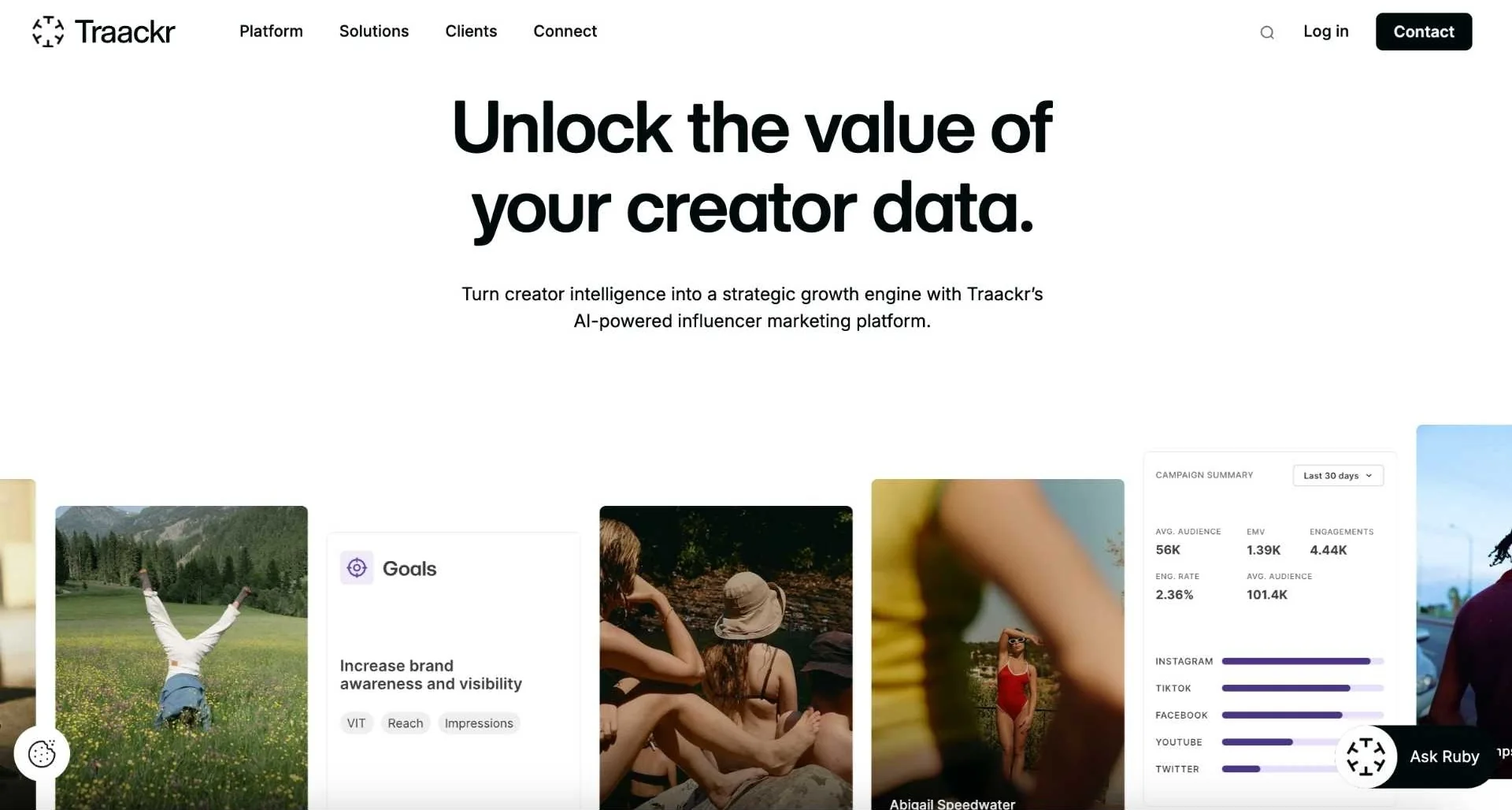
Traackr is an enterprise influencer marketing platform focused on performance benchmarking, budget optimization, and ROI tracking. It is widely used by global brands that need deep analytics and strategic insights across multiple markets and campaigns.
Key Features
- Influencer Discovery: Access 6M+ influencers with filters for engagement, audience demographics, and past brand collaborations.
- Influencer CRM: Track relationships with shared notes, tags, and campaign history.
- Campaign Management: Manage outreach, gifting, and influencer workflows from one platform.
- Advanced Reporting: Track CPC, CPE, CPV, ROI, and engagement metrics with exportable reports.
- Brand Vitality Score (BVS): Proprietary metric that measures brand influence, visibility, and trust.
- Budget Optimization Tools: Helps allocate spend based on predicted ROI and historical performance.
- Benchmarking: Compare campaign performance against industry standards and competitors.
Pricing
- Official pricing: custom / request a quote.
- Public benchmark: pricing starts around $32,500/year for a standard plan, with additional modules available on request.
- Contract type: generally annual enterprise contracts.
Reviews
4.3 / 5.0 (G2)
Pros
- Brand Vitality Score: Unique benchmarking metric not commonly available in other platforms.
- Budget optimization engine: Helps brands allocate spend efficiently across creators.
- Advanced cost-per metrics: Enables deep performance analysis beyond vanity metrics.
Cons
- Expensive and rigid contracts: High annual cost limits accessibility.
- Platform performance issues: Some users report lag and delays in data syncing.
- Data accuracy concerns: Demographic data may not always be precise.
Integrations
- Instagram: Track influencer campaigns and engagement metrics.
- TikTok: Monitor short-form campaign performance.
- YouTube: Analyze video content and creator metrics.
- Google Analytics: Connect influencer campaigns to web performance.
- Affiliate platforms: Track conversions and commissions from influencer campaigns.
Reachbird vs Traackr
Reachbird focuses on campaign execution and creative services, while Traackr is built for analytics-heavy teams focused on benchmarking and ROI optimization. Traackr is better suited for large enterprises managing global campaigns with strict performance tracking.
Reachbird is a better option for brands that want managed influencer campaigns with creative direction, whereas Traackr is ideal for data-driven teams optimizing budgets and performance.
IMAI (InfluencerMarketing.AI)
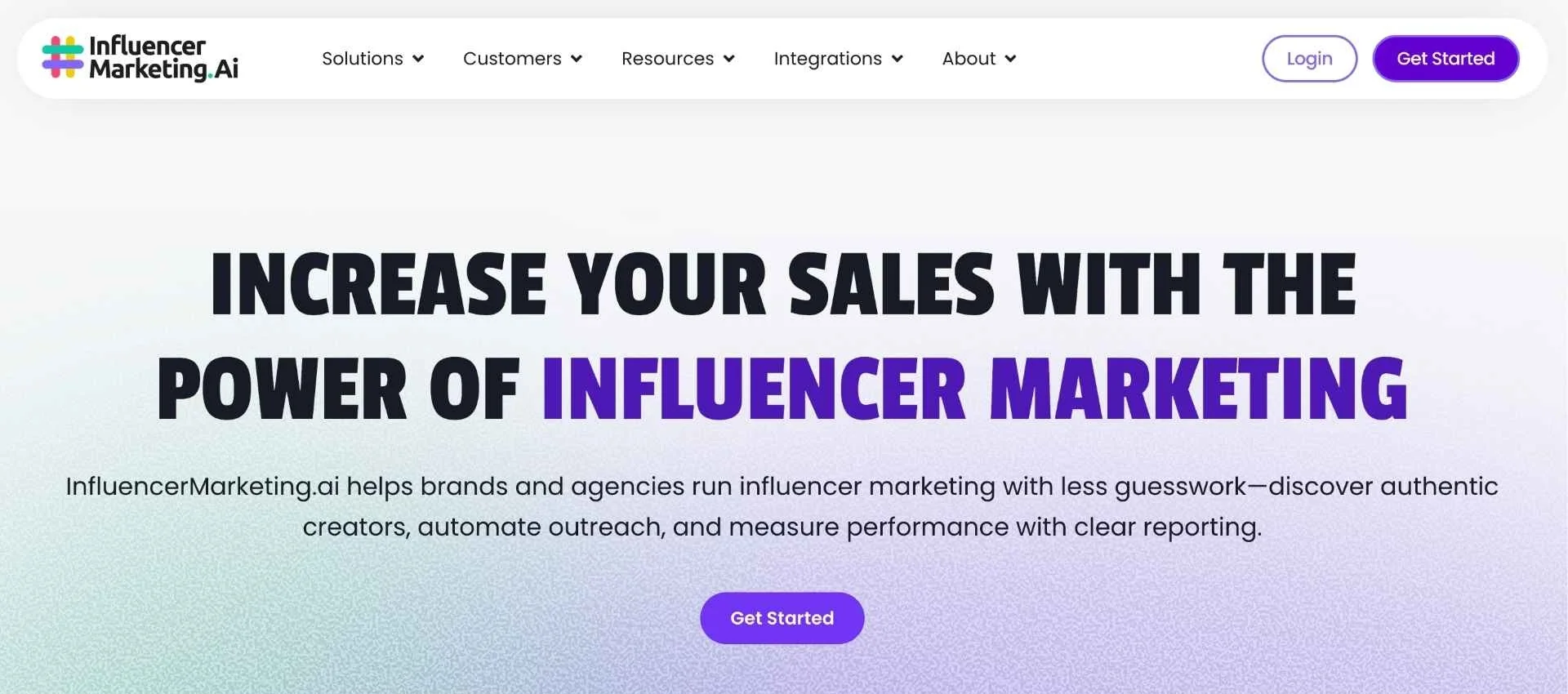
IMAI (InfluencerMarketing.AI) is a SaaS influencer marketing platform that combines influencer discovery, outreach, campaign management, and AI-driven analytics. It focuses on automation and scalability for brands managing influencer programs across multiple regions.
Key Features
- Influencer Discovery: Search millions of creators using filters for niche, audience, engagement, and demographics.
- AI-Powered Insights: Analyze influencer authenticity, audience quality, and campaign performance using AI.
- Campaign Management: Manage outreach, contracts, deliverables, and reporting from a centralized dashboard.
- Fraud Detection: Identify fake followers and suspicious engagement patterns.
- Content Tracking: Automatically track influencer posts and campaign performance.
- CRM System: Organize influencer relationships, communication, and campaign history.
- Reporting & Analytics: Generate performance reports with engagement, reach, and ROI insights.
Pricing
IMAI currently shows four plan tiers on its official pricing page, with both annual and monthly billing options.
- Starter: $499/month when billed annually ($5,988/year) or $599/month billed monthly
- Growth: $999/month when billed annually ($11,988/year) or $1,199/month billed monthly
- Teams: $2,999/month when billed annually ($35,988/year) or $3,599/month billed monthly
- Enterprise: Custom pricing
Reviews
4.5 / 5.0 (G2)
Pros
- Strong AI-driven analytics: Focus on fraud detection and audience quality analysis.
- Scalable campaign management: Designed for managing campaigns across multiple regions and teams.
- Balanced feature set: Combines discovery, CRM, analytics, and outreach in one platform.
Cons
- Limited pricing transparency: Requires sales discussions to get full pricing details.
- UI complexity: Some users report a learning curve for navigation and setup.
- Fewer integrations than competitors: Compared to eCommerce-focused tools.
Integrations
- Instagram: Discover influencers and track campaign performance.
- TikTok: Analyze influencer content and engagement metrics.
- YouTube: Monitor long-form content campaigns.
- Twitter/X: Track influencer activity and engagement.
- Facebook: Analyze audience insights and campaign results.
Reachbird vs IMAI
Reachbird is more service-oriented, while IMAI is a self-serve SaaS platform focused on automation and analytics. IMAI is better for teams that want to run campaigns internally with AI insights and fraud detection.
Reachbird, on the other hand, is better suited for brands that want strategic guidance, campaign execution, and creative services alongside technology.
Heepsy

Heepsy is an influencer marketing platform focused on discovery, outreach, and campaign tracking, particularly for eCommerce brands and agencies. It offers a large global influencer database and strong filtering capabilities to help brands find niche creators quickly.
Key Features
- Influencer Discovery: Access ~50M influencers globally with filters for niche, location, audience demographics, and engagement.
- Fake Follower Detection: Analyze influencer authenticity and audience quality.
- CRM & Campaign Pipeline: Track influencer outreach and campaign stages in a Kanban-style board.
- Bulk Outreach: Send up to 3,000 emails/month with templates and follow-ups.
- Campaign Reporting: Track engagement, reach, and (on advanced plans) sales and conversions.
- Shopify Integration: Generate codes, track sales, and manage affiliate campaigns.
- Media Gallery: Store and analyze influencer-generated content.
Pricing
- Free — limited free access is available.
- Starter — recent official Heepsy blog references place Starter at $89/month.
- Plus — recent official Heepsy blog references place Plus at $249/month.
- Advanced — recent official Heepsy blog references place Advanced at $369/month.
- Heepsy also says users can choose monthly or annual billing, with annual subscriptions discounted versus monthly rates.
Reviews
4.5 / 5.0 (G2)
Pros
- Massive influencer database: One of the largest datasets available for discovery.
- Strong filtering and targeting: Precise filters for niche, audience, and engagement.
- Affordable and flexible pricing: More accessible than enterprise tools.
Cons
- Limited AI capabilities: No advanced AI-generated outreach or automation.
- Sales tracking locked to higher plans: Advanced features require upgrading.
- Fake follower detection not fully precise: Estimates rather than exact values.
Integrations
- Shopify: Track influencer-driven sales and affiliate performance.
- Instagram: Discover influencers and monitor engagement.
- TikTok: Analyze creator performance and campaign results.
- YouTube: Track long-form influencer campaigns.
- Email tools: Manage outreach campaigns and communication workflows.
Reachbird vs Heepsy
Reachbird is a managed-service platform, while Heepsy is a self-serve discovery and outreach tool. Heepsy is better for teams that want affordable influencer discovery and manual campaign management.
Reachbird is better suited for brands that want strategic campaign execution, creative direction, and managed influencer relationships.
Social Cat
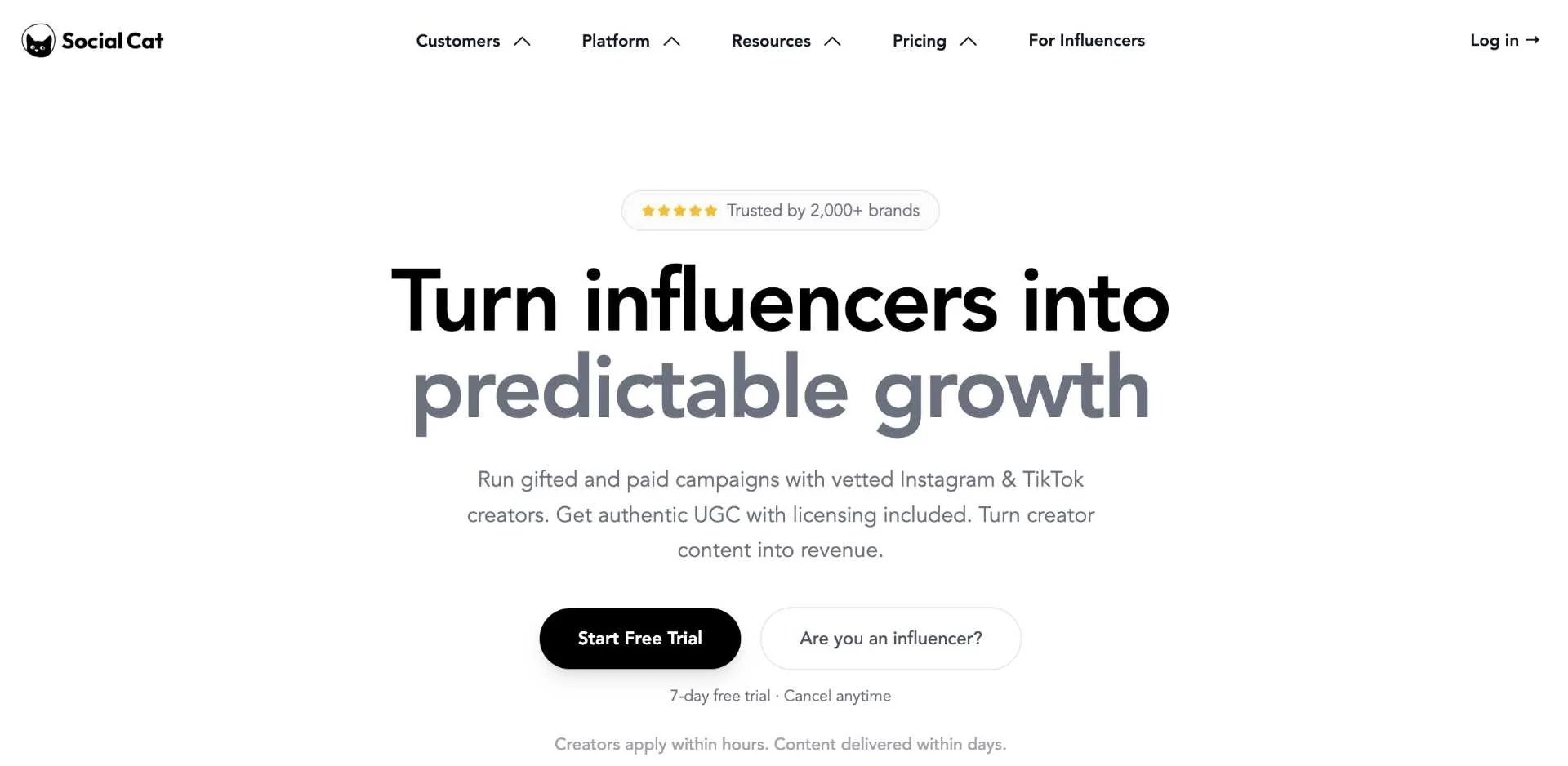
Social Cat is an influencer marketing platform designed for small and medium-sized brands focusing on product seeding, influencer applications, and simple campaign workflows. It emphasizes ease of use and affordability over advanced analytics.
Key Features
- Campaign Builder: Create campaigns where influencers can apply directly.
- Influencer Discovery: Filter creators by engagement, location, and audience demographics.
- Product Seeding Workflow: Send products to influencers and track campaign progress.
- In-App Messaging: Communicate with influencers directly within the platform.
- Basic CRM: Manage collaborations, contracts, and communication history.
- Content Collection: Store influencer content for reuse.
- Content Usage Rights: All plans include rights to reuse influencer content.
Pricing
Social Cat offers flexible monthly pricing with no long-term contracts, making it accessible for smaller brands and teams.
- Essentials Plan – $99/month
- Performance Plan – $199/month
- Pro Plan – $299/month
Reviews
4.3 / 5.0 (Trustpilot)
Pros
- Application-based campaigns: Influencers apply directly, reducing outbound outreach.
- Content usage rights included: No additional licensing costs for UGC reuse.
- Simple and beginner-friendly: Easy setup for small brands starting influencer marketing.
Cons
- No advanced reporting: Lacks ROI tracking, EMV, or conversion analytics.
- Limited CRM functionality: Not suitable for large-scale campaigns.
- No AI features: Matching and workflows are mostly manual.
Integrations
- Instagram: Run campaigns and track influencer content.
- TikTok: Manage short-form influencer collaborations.
- Email: Communicate with creators through integrated messaging.
- Content library: Store and reuse influencer-generated content.
- Campaign dashboards: Track influencer applications and collaboration progress.
Reachbird vs Social Cat
Reachbird is a full-service influencer marketing agency with advanced campaign management, while Social Cat is a lightweight, self-serve platform designed for small brands. Social Cat is better for simple product seeding campaigns and beginner workflows.
Reachbird is better suited for brands that need strategy, creative execution, and full campaign management at scale.
Final Thoughts on Reachbird Alternatives
Reachbird stands out as a hybrid agency-platform solution focused on managed influencer campaigns, creative execution, and strategic support. However, the alternatives explored offer a wide range of capabilities depending on business needs—from enterprise-grade analytics and benchmarking tools like Traackr and CreatorIQ, to eCommerce-driven platforms like Upfluence and Aspire, and more lightweight, budget-friendly options like Social Cat and Heepsy. Ultimately, the right choice depends on whether a brand prioritizes hands-on service, advanced data insights, automation, or cost-efficiency when scaling influencer marketing efforts.

.png)


.jpg)