

10 Best Quiz Builder Tools for D2C Brands
D2C brands are increasingly using quiz builder tools to turn passive website visitors into engaged, high-intent customers by delivering personalized product recommendations and capturing zero-party data. Instead of relying on guesswork, quizzes help you better understand your audience, improve conversion rates, and create tailored shopping experiences that drive revenue. For founders and marketers, this means more efficient customer acquisition and stronger long-term retention.
In this article, we’ll explore the top quiz builder tools for D2C brands, including Kahoot, Involve.me, Interact, Typeform, LeadQuizzes, Riddle, Qzzr, Fillout, Opinion Stage, and Genially.
Best Quiz Builder Tools for D2C Brands
| TOOL | REVIEWS | BEST FOR | TRIAL INFO | PRICING | ||
|---|---|---|---|---|---|---|
1 |

|
⭐ | Live quizzes for audience engagement & events | Book Demo | Pricing | Website |
2 |

|
⭐ | Quiz funnels for lead generation & personalization | Book Demo | Pricing | Website |
3 |

|
⭐ | Lead generation quizzes for D2C brands | Book Demo | Pricing | Website |
4 |

|
⭐ | Conversational forms & branded quizzes | Book Demo | Pricing | Website |
5 |

|
⭐ | Quiz funnels for email capture & segmentation | Book Demo | Pricing | Website |
6 |

|
⭐ | Interactive quizzes for publishers & marketers | Book Demo | Pricing | Website |
7 |

|
⭐ | Simple quizzes for content marketing | Book Demo | Pricing | Website |
8 |

|
⭐ | Forms & quizzes with workflows for automation | Book Demo | Pricing | Website |
9 |

|
⭐ | Polls & quizzes for engagement and lead capture | Book Demo | Pricing | Website |
10 |

|
⭐ | Gamified quizzes & interactive content for marketing | Book Demo | Pricing | Website |
1. Kahoot
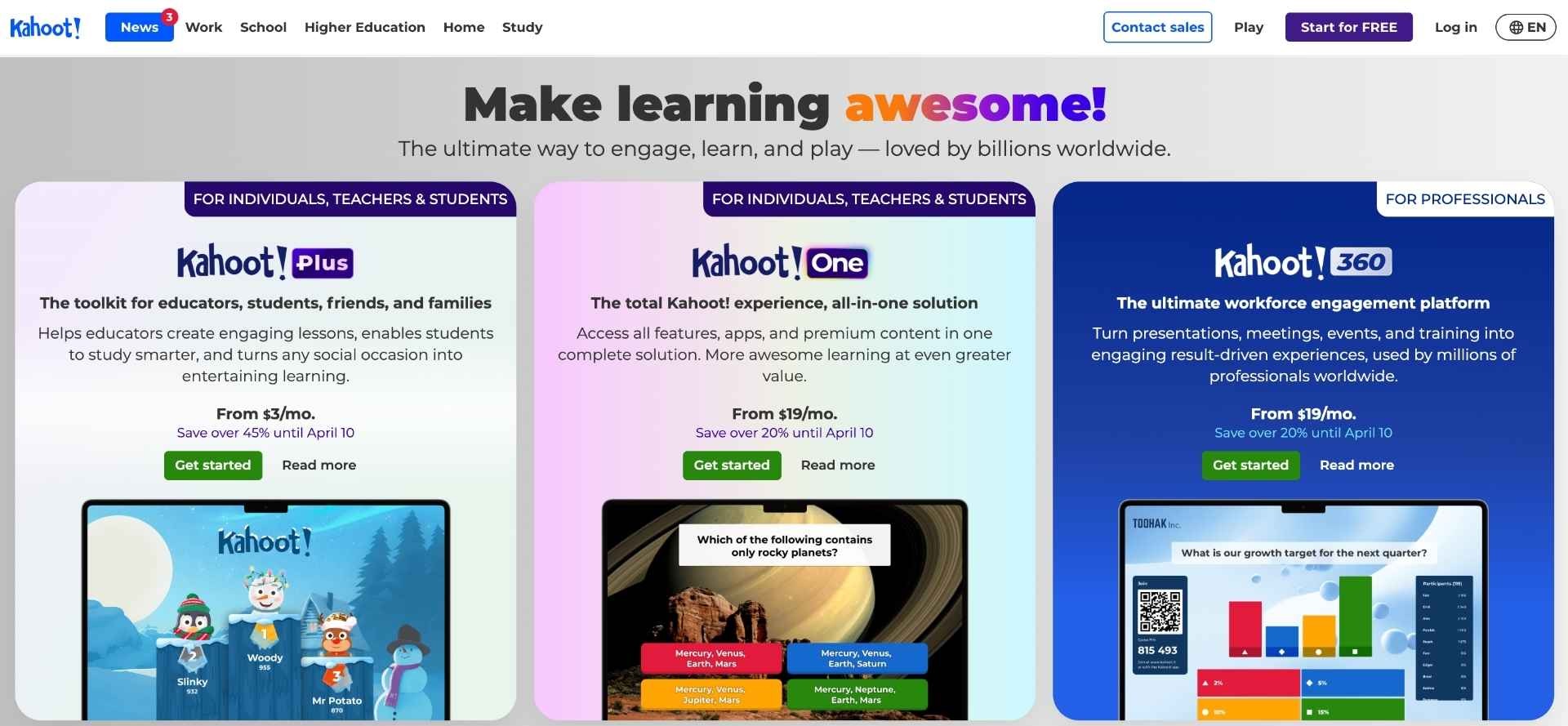
Kahoot is an interactive quiz and presentation platform designed for live or self-paced engagement. It is best suited for branded campaigns, events, and educational experiences rather than traditional ecommerce product recommendation quizzes.
Key features:
- Live and self-paced quizzes — Run real-time quizzes or allow users to complete them at their own pace.
- Interactive presentations — Add polls, word clouds, and Q&A to presentations.
- AI content generation — Generate quizzes and presentations using AI tools.
- Brand customization — Customize themes and visuals to match your brand.
- Reporting and analytics — Track engagement and performance metrics.
- Slide integration — Import slides from Google Slides or PowerPoint.
Pros:
- Excellent for engagement in live events and campaigns
- Easy to use with a fast learning curve
- Strong for community-building and brand interaction
Cons:
- Not optimized for ecommerce product recommendations
- Limited advanced personalization features
- Requires upgrades for full business functionality
Integrations:
- Microsoft Teams — Run quizzes directly within team collaboration workflows.
- Zoom — Host live interactive sessions with embedded quizzes.
- PowerPoint — Add interactive quizzes into presentations.
- Google Slides — Import slides into quiz formats.
- Event platforms — Enhance virtual event engagement.
Pricing:
Starts at around $19/user/month for basic business use, with higher-tier plans available. Considered a mid-range tool depending on usage.
Reviews:
4.6/5.0 (G2)
2. Involve.me
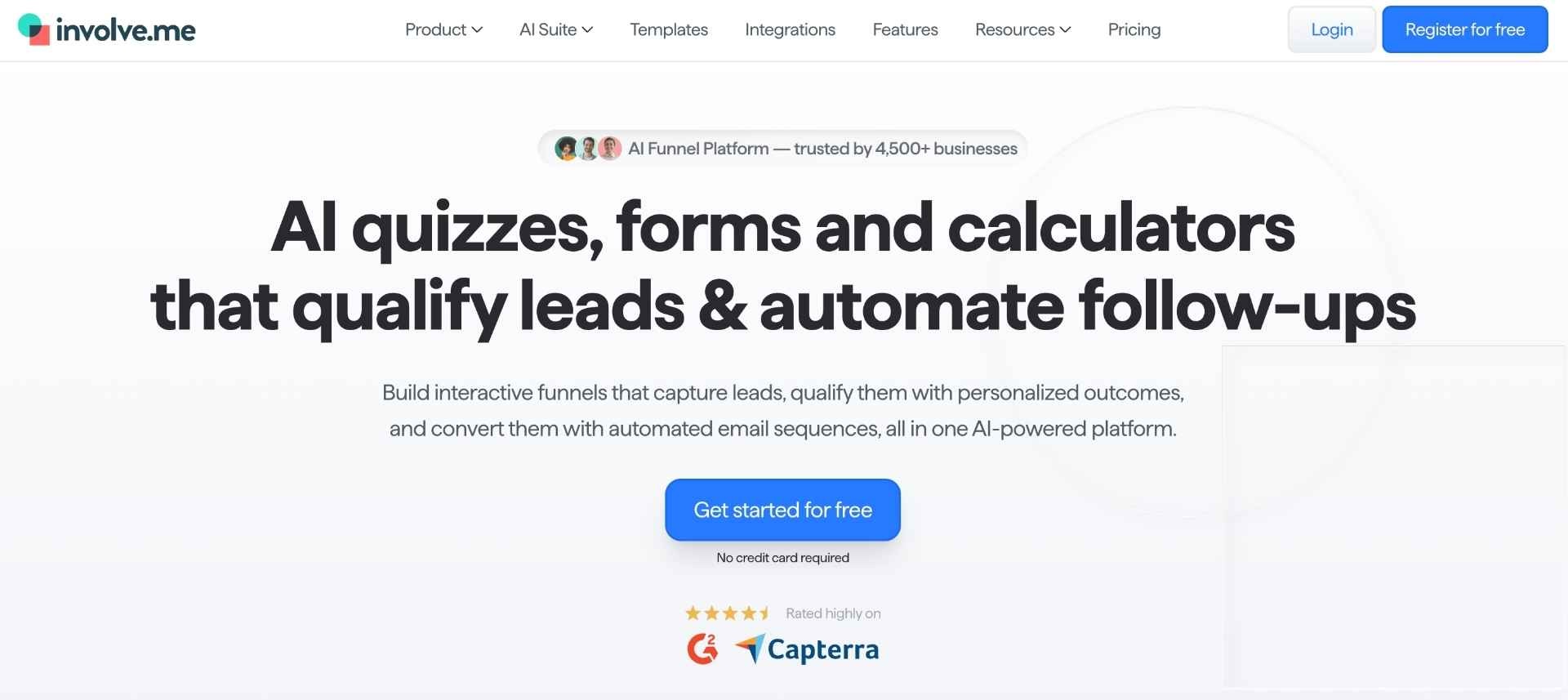
Involve.me is a no-code funnel builder that allows you to create quizzes, forms, surveys, and calculators to capture leads and personalize user experiences.
Key features:
- Multi-format builder — Create quizzes, forms, surveys, and calculators in one platform.
- AI funnel creation — Generate funnels quickly using AI.
- Conditional logic — Personalize user journeys with logic-based flows.
- Lead scoring — Score and segment users based on responses.
- Analytics dashboard — Monitor performance and drop-offs.
- Payment collection — Accept payments directly in forms.
Pros:
- Highly versatile for D2C marketing funnels
- Strong integration ecosystem
- Scales well with growing brands
Cons:
- Pricing increases with advanced usage
- Slight learning curve for beginners
- Overkill for simple quiz use cases
Integrations:
- HubSpot — Sync leads with CRM for nurturing.
- Klaviyo — Trigger personalized email and SMS flows.
- Google Sheets — Export data for analysis.
- Stripe — Collect payments directly.
- Zapier — Automate workflows across tools.
Pricing:
Starts at $49/month with a free plan and trial available. Considered mid-range to mid-high depending on features.
Reviews:
4.7/5.0 (G2)
3. Interact
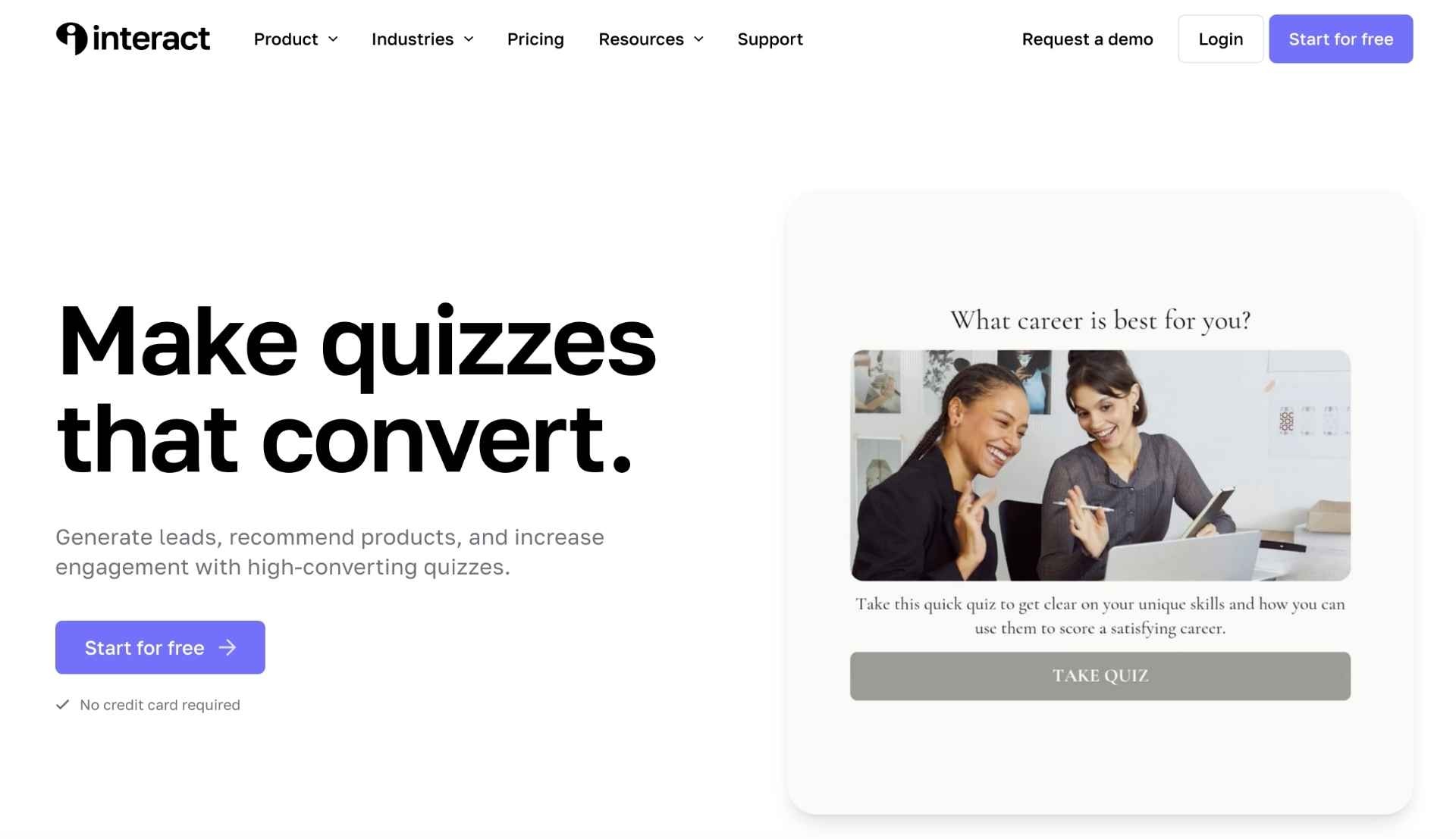
Interact is a quiz-focused platform designed to help brands create quizzes that generate leads, segment audiences, and provide personalized recommendations.
Key features:
- Quiz-specific builder — Designed specifically for creating quizzes.
- AI quiz creation — Generate quiz drafts quickly.
- Templates library — Start from pre-built quiz templates.
- Branching logic — Personalize outcomes based on answers.
- Analytics tools — Track conversions and engagement.
- Embeddable quizzes — Easily add quizzes to your website.
Pros:
- Ideal for ecommerce product recommendation quizzes
- Easy to set up and use
- Strong for lead generation and segmentation
Cons:
- Limited beyond quiz-specific use cases
- Advanced features locked behind higher plans
- Usage limits on lower tiers
Integrations:
- Klaviyo — Personalize email campaigns based on responses.
- HubSpot — Sync quiz data into CRM.
- Mailchimp — Grow and segment email lists.
- Google Analytics — Track performance metrics.
- Zapier — Connect to other marketing tools.
Pricing:
Starts at $27/month with a 14-day free trial. Considered low-to-mid range.
Reviews:
4.7/5.0 (G2)
4. Typeform
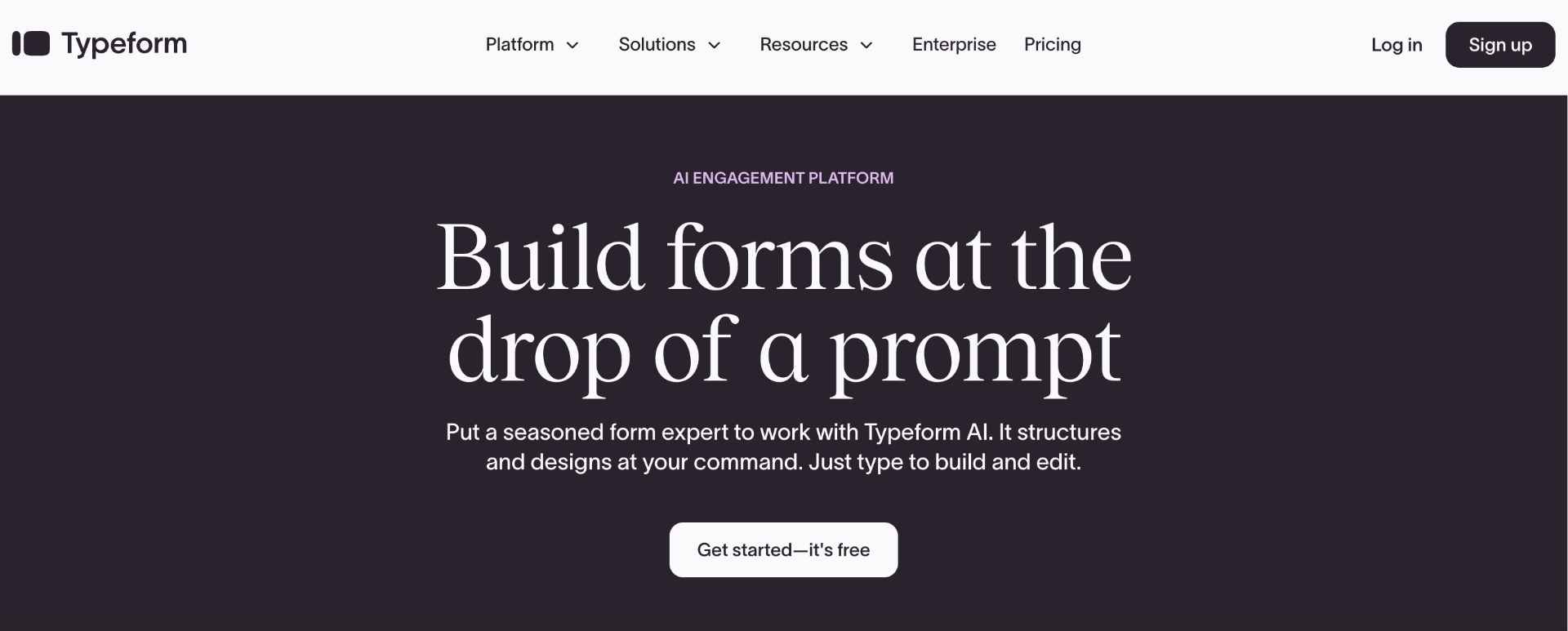
Typeform is a form and quiz builder known for its conversational, one-question-at-a-time interface that improves user experience and completion rates.
Key features:
- Conversational UI — Present questions one at a time for better engagement.
- Logic and branching — Customize flows based on responses.
- Custom branding — Match forms to your brand identity.
- Templates library — Access pre-built quiz templates.
- Advanced integrations — Connect with a wide range of tools.
- Analytics dashboard — Track responses and performance.
Pros:
- Best-in-class user experience
- Highly customizable and visually appealing
- Large integration ecosystem
Cons:
- Expensive compared to competitors
- Not specialized for ecommerce quizzes
- Feature gating on lower plans
Integrations:
- Klaviyo — Segment and target users with email campaigns.
- HubSpot — Capture and manage leads.
- Mailchimp — Grow and nurture email lists.
- Slack — Receive notifications for responses.
- WordPress — Embed quizzes into websites.
Pricing:
Starts at $28/month with a free plan available. Considered mid-to-high range.
Reviews:
4.5/5.0 (G2)
5. LeadQuizzes

LeadQuizzes is a platform focused on building quizzes and assessments that capture and qualify leads for marketing and sales.
Key features:
- AI quiz builder — Create quizzes and assessments quickly.
- Lead qualification tools — Capture and segment leads effectively.
- Templates — Use pre-built templates for fast setup.
- Analytics tracking — Monitor conversions and performance.
- Custom branding — Align quizzes with your brand.
- Automation features — Send leads into marketing tools.
Pros:
- Strong focus on lead generation
- Easy to use for marketing teams
- Good for segmentation and qualification
Cons:
- Smaller ecosystem compared to competitors
- Limited design flexibility
- Fewer advanced features
Integrations:
- Klaviyo — Send leads into email workflows.
- Constant Contact — Sync contacts for campaigns.
- Google Sheets — Export response data.
- Facebook Pixel — Track ad performance.
- Zapier — Automate workflows.
Pricing:
Starts at $49/month with a 14-day free trial. Considered mid-range.
Reviews:
4.2/5.0 (G2)


6. Riddle
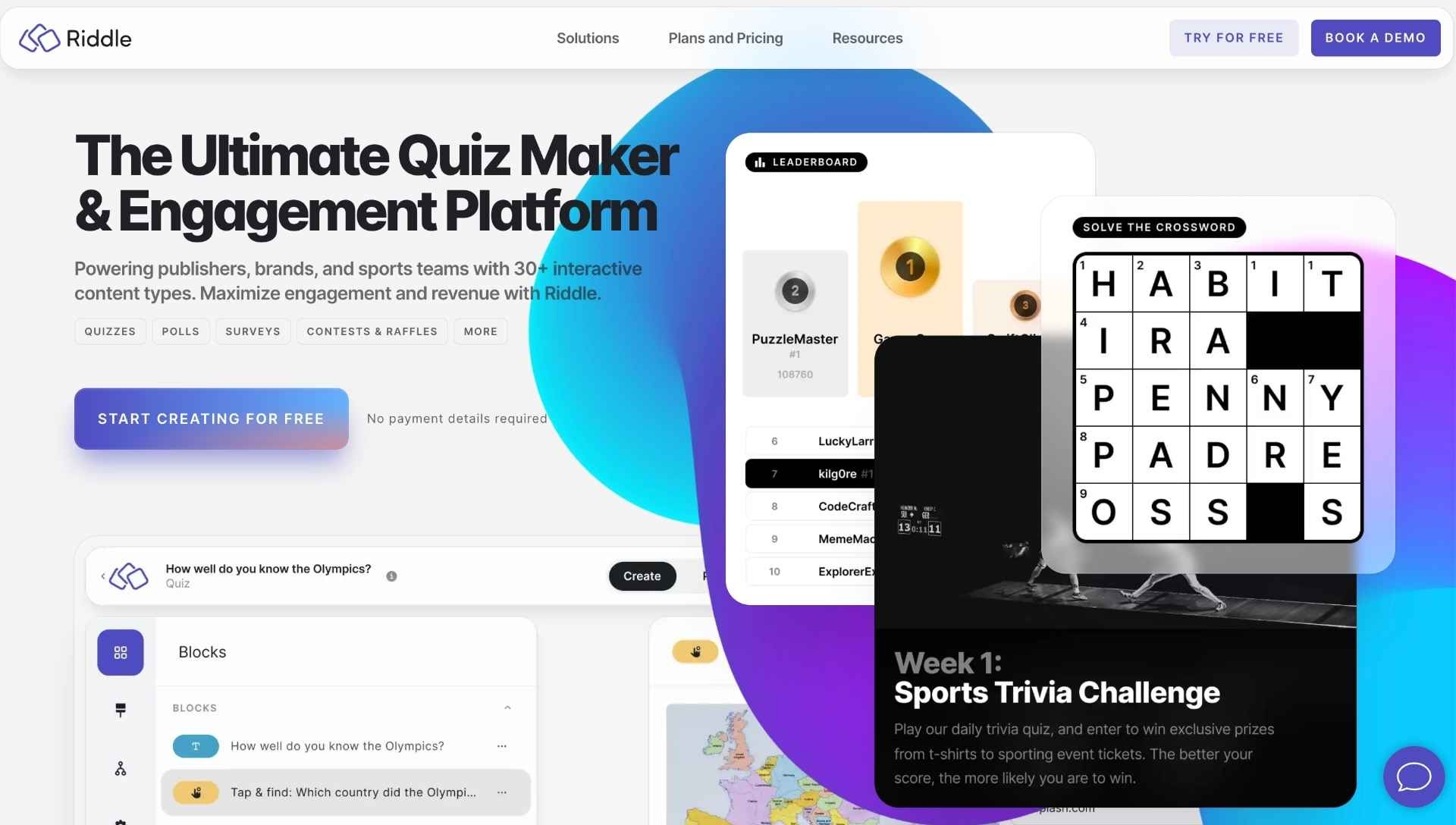
Riddle is an interactive content platform that allows you to create quizzes, polls, and personality tests to engage audiences and capture leads.
Key features:
- Quiz and poll builder — Create interactive content easily.
- Lead capture forms — Collect emails through quizzes.
- Embeddable widgets — Add quizzes to websites.
- Analytics tools — Track engagement and conversions.
- White-label options — Remove branding for a custom look.
- GDPR compliance — Built-in privacy tools.
Pros:
- Great for content marketing and SEO
- Easy to embed and deploy
- Strong engagement features
Cons:
- Limited advanced logic
- Not ecommerce-focused
- Basic design customization
Integrations:
- Mailchimp — Sync leads to email lists.
- HubSpot — Manage leads in CRM.
- Google Analytics — Track performance.
- Zapier — Connect to automation tools.
- ActiveCampaign — Trigger campaigns based on responses.
Pricing:
Starts at around $29/month. Considered low-to-mid range.
Reviews:
4.6/5.0 (G2)
7. Qzzr

Qzzr is a simple quiz builder focused on creating viral-style quizzes for lead generation and engagement.
Key features:
- Quick quiz creation — Build quizzes in minutes.
- Lead capture forms — Collect user data easily.
- Embeddable quizzes — Add quizzes to websites.
- Basic analytics — Track responses and engagement.
- Custom branding — Match quizzes to your brand.
Pros:
- Easy to use
- Affordable pricing
- Good for simple campaigns
Cons:
- Limited advanced features
- Outdated interface
- Few integrations
Integrations:
- Mailchimp — Capture and manage leads.
- HubSpot — Sync CRM data.
- Zapier — Automate workflows.
- Google Analytics — Track performance.
- Facebook Pixel — Retarget users.
Pricing:
Starts at around $24/month with a free version available. Considered low-cost.
Reviews:
4.4/5.0 (G2)
8. Fillout
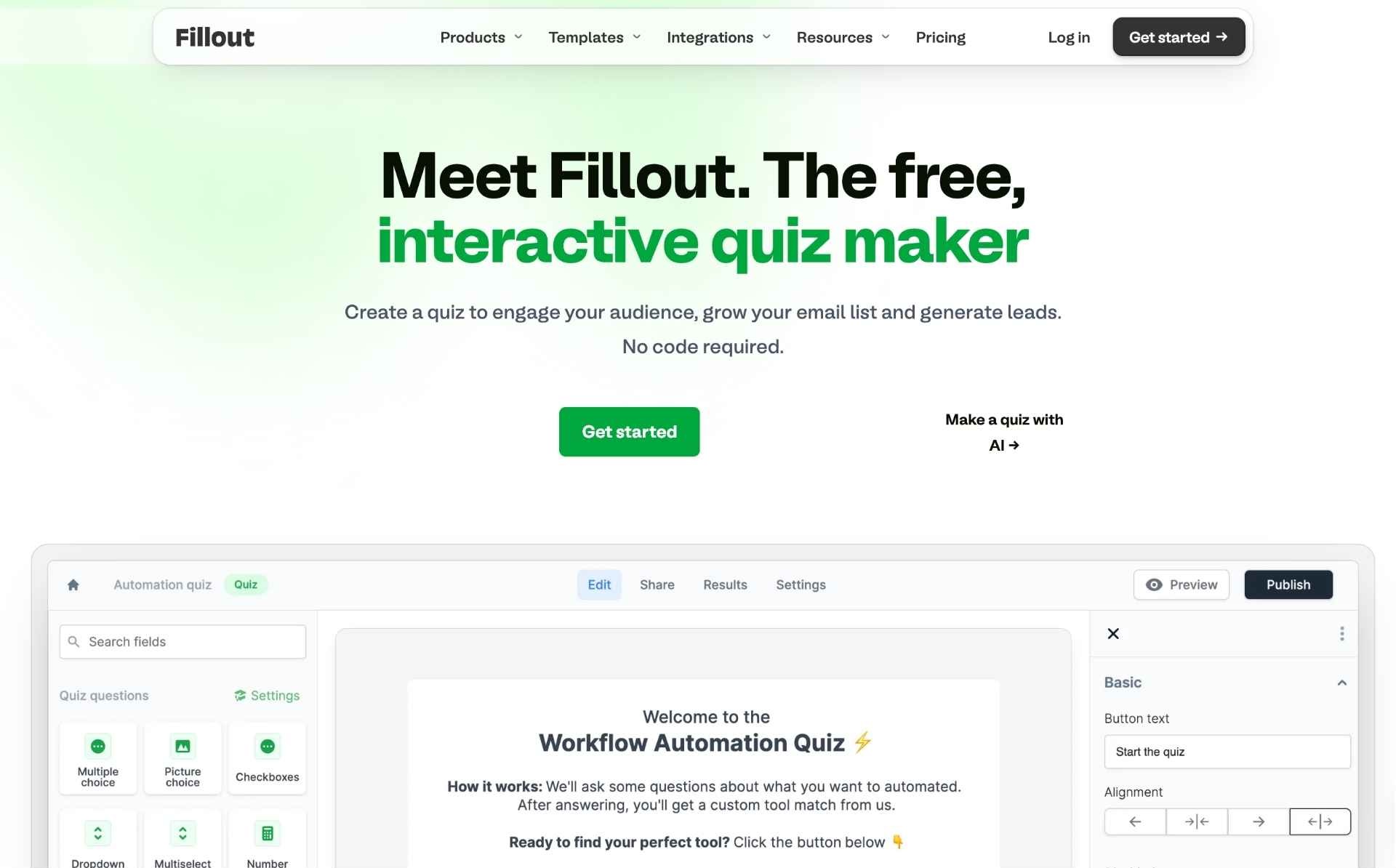
Fillout is a flexible form and quiz builder designed for data-driven workflows and deep integrations with modern tools.
Key features:
- Advanced logic flows — Build dynamic experiences.
- Database integrations — Connect with Airtable and Notion.
- Custom UI design — Fully control appearance.
- Payments and uploads — Collect payments and files.
- Pre-filled forms — Personalize experiences with existing data.
- API and webhooks — Enable advanced automation.
Pros:
- Highly customizable
- Strong integrations
- Ideal for technical teams
Cons:
- Not focused on ecommerce quizzes
- Requires setup effort
- Less beginner-friendly
Integrations:
- Airtable — Sync data with databases.
- Notion — Store and manage responses.
- Stripe — Accept payments.
- Zapier — Automate workflows.
- Slack — Get real-time notifications.
Pricing:
Free plan available with paid plans starting around $15–$40/month. Considered low-to-mid range.
Reviews:
4.8/5.0 (G2)
9. Opinion Stage

Opinion Stage is a platform for creating quizzes, polls, and surveys to increase engagement and capture leads.
Key features:
- Quiz and poll builder — Create engaging interactive content.
- Lead capture tools — Collect user data.
- Analytics dashboard — Track engagement metrics.
- Custom branding — Match your brand identity.
- Embeddable widgets — Add quizzes to websites.
- A/B testing — Optimize performance.
Pros:
- Good for content marketing
- Easy to use
- Balanced feature set
Cons:
- Limited personalization
- Basic UI
- Not ecommerce-focused
Integrations:
- Mailchimp — Sync leads to campaigns.
- HubSpot — Manage contacts.
- Google Analytics — Track behavior.
- Zapier — Automate workflows.
- ActiveCampaign — Trigger campaigns.
Pricing:
Free plan available with paid plans starting at $39/month. Considered low-to-mid range.
Reviews:
4.5/5.0 (G2)
10. Genially

Genially is an interactive content platform that enables you to create quizzes, presentations, and visual experiences with a strong focus on design and storytelling.
Key features:
- Interactive content builder — Create quizzes and visual content.
- Design and animation tools — Build engaging experiences.
- Templates library — Use ready-made templates.
- Collaboration tools — Work with teams.
- Embedding options — Publish across platforms.
- Gamification elements — Increase engagement.
Pros:
- Highly visual and engaging
- Great for storytelling
- Strong design capabilities
Cons:
- Not optimized for lead generation
- Limited integrations
- More complex for simple quizzes
Integrations:
- Google Analytics — Track engagement.
- LMS platforms — Use for training content.
- YouTube/Vimeo — Embed videos.
- CMS platforms — Publish on websites.
- Design tools — Enhance visual workflows.
Pricing:
Free plan available with paid plans starting around $7–$25/month. Considered low-cost.
Reviews:
4.5/5.0 (G2)
Final Thoughts
Quiz builder tools have become essential for D2C brands looking to capture zero-party data, personalize customer journeys, and increase conversion rates through interactive experiences. Whether you need a simple lead generation quiz or a more advanced funnel with logic, integrations, and analytics, the right tool will depend on your growth stage and technical needs. Tools like Interact and involve.me stand out for ecommerce-focused use cases, while others like Typeform and Genially offer stronger design and flexibility. Ultimately, choosing the right platform comes down to how deeply you want to integrate quizzes into your overall marketing and conversion strategy.

.png)


.jpg)