

10 Best #paid Alternatives for Influencer Marketing
D2C brands rely on influencer marketing software to streamline creator discovery, outreach, campaign workflows, and performance tracking at scale—something that quickly becomes unmanageable with spreadsheets or manual processes. #paid is one of the more well-known platforms in this space, offering a curated creator marketplace and strong support for content-driven campaigns, but it often comes with higher pricing, limited transparency, and less flexibility for teams that want full control over execution. As brands grow, many start exploring #paid alternatives that offer better automation, deeper analytics, or tighter eCommerce integrations depending on their goals. This is especially relevant for teams focused on ROI, affiliate tracking, or scaling influencer programs efficiently.
In this guide, we’ll break down the 10 best #paid alternatives—including Upfluence, SARAL, GRIN, Influencer Hero, IZEA, Later, Ainfluencer, indaHash, Influencity, and Modash—and compare how they stack up across features, pricing, and use cases.
Key Criteria for Evaluating Influencer Marketing Platforms
Core Features
Evaluation of essential influencer marketing capabilities, including influencer discovery, outreach, CRM, campaign management, reporting, and content workflows.
Pricing & Flexibility
Comparison of pricing models, subscription plans, and contract terms to match different budgets and growth stages.
Customer Reviews & Satisfaction
Analysis of user feedback from trusted review platforms, focusing on usability, reliability, customer support, and overall performance.
Pros & Cons
Review of each platform’s strengths and limitations to highlight where it performs well and where it may fall short based on different use cases.
Integrations
Review of the most important integrations (e.g., Shopify and other tech tools), highlighting what each integration enables in one sentence.
#paid Overview
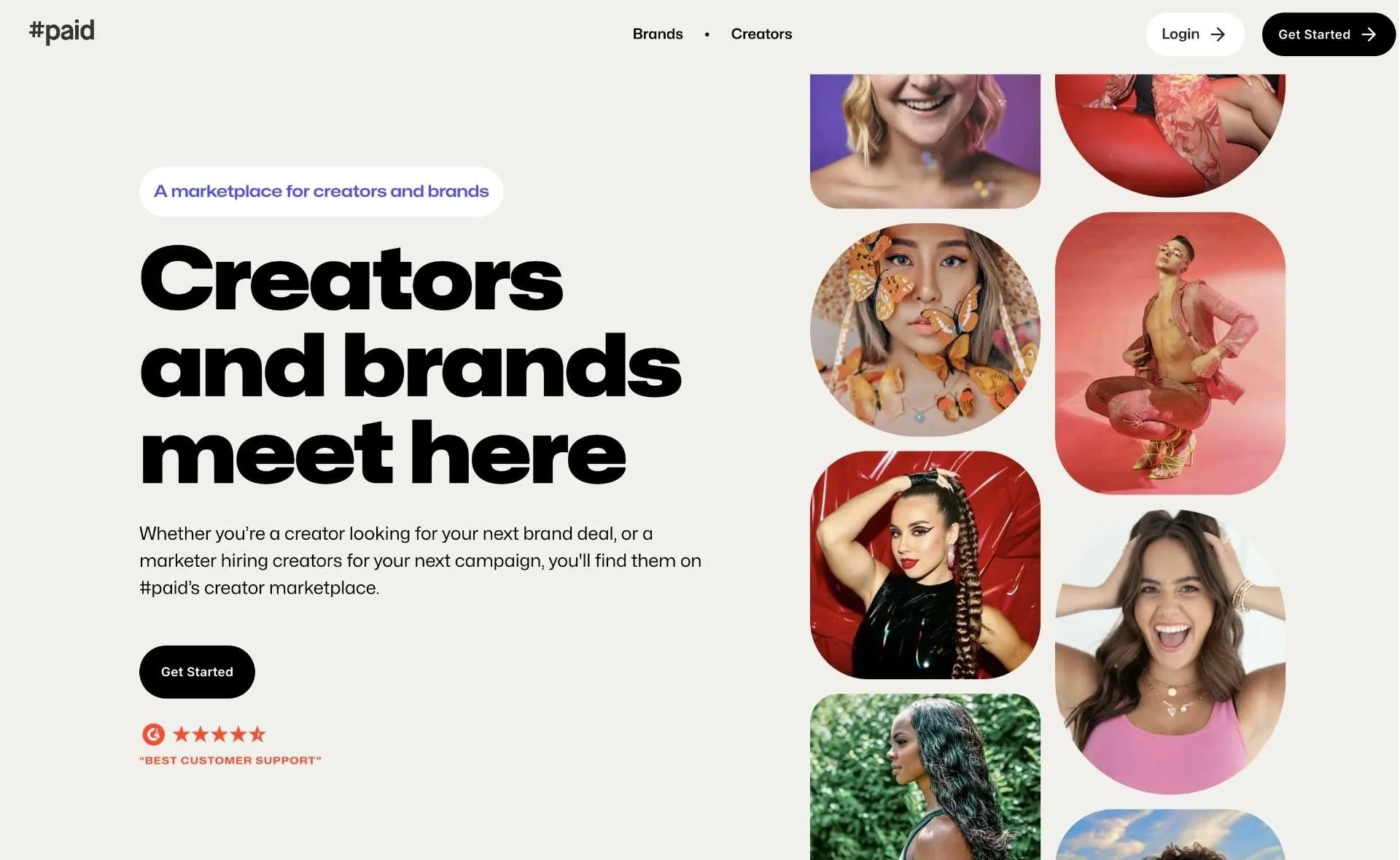
#paid is a creator marketing platform designed to help brands discover, collaborate with, and scale partnerships with creators through a mix of software and managed services. Unlike purely self-serve tools, #paid combines an opted-in creator marketplace with strategic campaign support, enabling brands to run influencer campaigns, license content, and amplify creator assets into paid media. The platform is particularly known for its focus on high-quality creator matching and turning influencer content into performance-driven marketing assets.
Key Features
• Opted-In Creator Marketplace — #paid operates a vetted, opt-in creator network, ensuring brands work with creators who are active and open to partnerships—leading to higher acceptance rates and faster campaign execution.
• Advanced Creator Matching & Targeting — Go beyond basic filters with access to audience demographics, engagement metrics, and “life-stage” signals (e.g., travel, new parents, home buyers) to align campaigns with real consumer moments.
• End-to-End Campaign Management — Manage the full influencer workflow—from creator selection and outreach to briefs, approvals, timelines, and deliverables—within a structured platform.
• Content Licensing & Whitelisting — A standout feature that allows brands to legally license creator content and run it as paid ads (whitelisting), extending the value of influencer campaigns beyond organic posts.
• Dedicated Strategy Support — #paid provides hands-on campaign support through in-house strategists who assist with creator selection, creative direction, and optimization.
• Omnichannel Content Repurposing — Creator content can be reused across paid social, email, websites, and even offline channels, maximizing ROI from a single collaboration.
• Performance Tracking & Brand Lift Measurement — Track key metrics such as engagement, conversions, ROI, and brand lift, with benchmarking against campaign norms.
• Automated Contracts, Payments & Rights Management — Simplifies backend operations by handling creator contracts, usage rights, and payments directly within the platform.
Pricing
#paid does not publicly disclose detailed pricing tiers on its website. Instead, pricing is custom and quote-based, depending on campaign scale, features, and level of support.
• Starting Price (from third-party sources): ~$449/month (entry-level indication)
• Billing: Typically monthly or annual contracts (customized per brand)
• Free Trial: Not available
• Free Plan: Not available
Reviews
4.7 / 5.0 (G2)
Integrations
• Meta (Facebook & Instagram) — Enables whitelisting and running creator content as paid ads within Meta’s ecosystem.
• TikTok — Supports creator campaigns and performance tracking on TikTok, including partner-level integrations.
• Snapchat — Allows brands to activate and scale creator-led campaigns on Snapchat through partner integrations.
• Shopify (indirect / campaign-level usage) — Used for tracking conversions and tying influencer campaigns to eCommerce performance.
• Google Analytics (via tracking workflows) — Helps measure campaign traffic, conversions, and attribution from influencer activities.
Pros
• Strong Creator Licensing & Paid Media Capabilities — #paid excels at turning influencer content into high-performing paid ads through built-in licensing and whitelisting tools—something many platforms treat as an add-on.
• High-Quality Creator Matching (Less Manual Work) — The opt-in network and “hand-raise” workflow mean brands spend less time on cold outreach and more time working with creators who are already interested.
• Strategic Support Built Into the Platform — Unlike most tools, #paid includes campaign strategists who actively help improve performance, making it ideal for lean teams or brands new to influencer marketing.
Common Drawbacks of #paid
Lack of Pricing Transparency
No clear pricing tiers are available publicly, making it harder for brands to compare options quickly without booking a demo.
Premium Positioning Can Be Expensive
The combination of software + managed services often places #paid at a higher price point compared to self-serve tools.
Limited Flexibility for Self-Serve Teams
Brands looking for full control and automation may find the managed-service approach less flexible than purely DIY platforms.
Reporting Depth Can Be Limited for Advanced Users
While sufficient for most campaigns, highly data-driven teams may want deeper customization and more granular analytics.
Best #paid Alternatives
| TOOL | REVIEWS | BEST FOR | TRIAL INFO | PRICING | ||
|---|---|---|---|---|---|---|
1 |
|
⭐ | Influencer discovery | Book Demo | Pricing | Website |
2 |

|
⭐ | UGC creator collaborations | Book Demo | Pricing | Website |
3 |

|
⭐ | DTC creator management | Book Demo | Pricing | Website |
4 |

|
⭐ | Influencer CRM & automation | Book Demo | Pricing | Website |
5 |
|
⭐ | Influencer marketplace | Book Demo | Pricing | Website |
6 |

|
⭐ | Social media & influencer campaigns | Book Demo | Pricing | Website |
7 |
|
⭐ | Influencer discovery & outreach | Book Demo | Pricing | Website |
8 |
|
⭐ | Enterprise creator campaigns | Book Demo | Pricing | Website |
9 |

|
⭐ | Campaign management | Book Demo | Pricing | Website |
10 |

|
⭐ | Influencer discovery | Book Demo | Pricing | Website |
Upfluence

Upfluence is an end-to-end influencer and affiliate marketing platform built primarily for eCommerce brands that want creator discovery, outreach, campaign execution, affiliate tracking, and sales attribution in one system. Its positioning is strongest for brands selling through Shopify, Amazon, and other commerce platforms that need influencer marketing tied directly to revenue, not just engagement.
Key Features
• Large creator database and advanced discovery — Upfluence says its plans include access to a 14M+ creator database, with advanced search, lookalikes, affiliate filtering, audience data, and branded AI-powered searches.
• AI-assisted outreach — The platform includes mass outreach, custom templates, Gmail and Outlook syncing, and its Jaice AI assistant to personalize emails and speed up campaign creation.
• Built-in CRM and campaign workflows — Upfluence organizes outreach, creator status, campaign progress, and relationship data inside one workflow, reducing the need for separate spreadsheets or CRMs.
• Strong eCommerce attribution — Its eCommerce integrations support coupon generation, affiliate campaigns, sales attribution, product seeding, and one-click shipping for Shopify, WooCommerce, Magento, BigCommerce, and Amazon.
• Creator marketplace and recruitment pages — Beyond outbound outreach, Upfluence supports recruitment pages and a creator marketplace so brands can attract inbound creator applications.
• Payments and compliance tools — Higher-tier plans include Upfluence Pay, multi-currency payouts, invoicing, tax-form handling, and budget management.
• Social listening and content distribution — The platform includes a social listening stream, and its Hootsuite integration lets teams send creator content directly into their social workflow.
Pricing
• Pricing model: Upfluence uses custom pricing rather than a public fixed plan table.
• All plans are custom made. There’s a minimum full year of service you have to commit to with monthly payments. On average plans start around $1,276 - $2,000/month ($24,000 yearly)
Reviews
4.3/5.0 (Capterra)
Pros
• Best-in-class commerce integrations — Upfluence is one of the strongest fits for brands that need native Shopify, Amazon, WooCommerce, Magento, and BigCommerce connectivity for gifting, affiliate links, promo codes, and revenue attribution.
• Jaice AI is built into day-to-day execution — AI is not limited to search; it also supports email personalization and campaign creation, which helps teams scale outreach faster.
• Marketplace plus outbound workflow — Upfluence combines cold discovery, inbound creator applications, and CRM-style program management, giving teams more ways to source creators than a pure database tool.
Cons
• Annual commitment — The minimum contract is 12 months, which makes Upfluence less flexible for brands that want month-to-month testing.
• Steeper learning curve — Its breadth is a strength, but it can feel complex for smaller teams or brands new to influencer operations.
• Campaign rigidity in practice — Some recurring feedback points to clunky workflows and limited edit flexibility once campaigns are already set up.
Integrations
• Shopify — sync store data to generate discount codes, ship products, and attribute creator-driven sales to orders.
• Amazon Attribution — connect creator programs to Amazon sales tracking and affiliate-style measurement.
• WooCommerce — generate codes, track sales, and support creator gifting directly from your store.
• Gmail — run creator outreach from your mailbox while keeping communication synced inside Upfluence.
• Outlook — centralize creator email conversations and keep campaign communication logged in-platform.
#paid vs Upfluence
#paid is more creator-marketplace-led and service-heavy, with a stronger focus on opted-in creators, campaign support, and content licensing for paid media. Upfluence is more commerce-ops-driven: it puts more emphasis on affiliate mechanics, promo-code infrastructure, eCommerce integrations, and measurable sales attribution across platforms like Shopify and Amazon. #paid is often the better fit for brands prioritizing branded creator content and whitelisting, while Upfluence is often stronger for brands that want influencer marketing to behave like a revenue channel inside their commerce stack.
Upfluence also offers broader self-serve control for discovery, outreach, shipping, and affiliate tracking, whereas #paid leans harder into curated matching and managed support. If your team wants creator licensing and a more guided marketplace experience, #paid has the edge; if you need affiliate tracking, Amazon compatibility, and eCommerce-native workflows, Upfluence is the clearer alternative.
SARAL
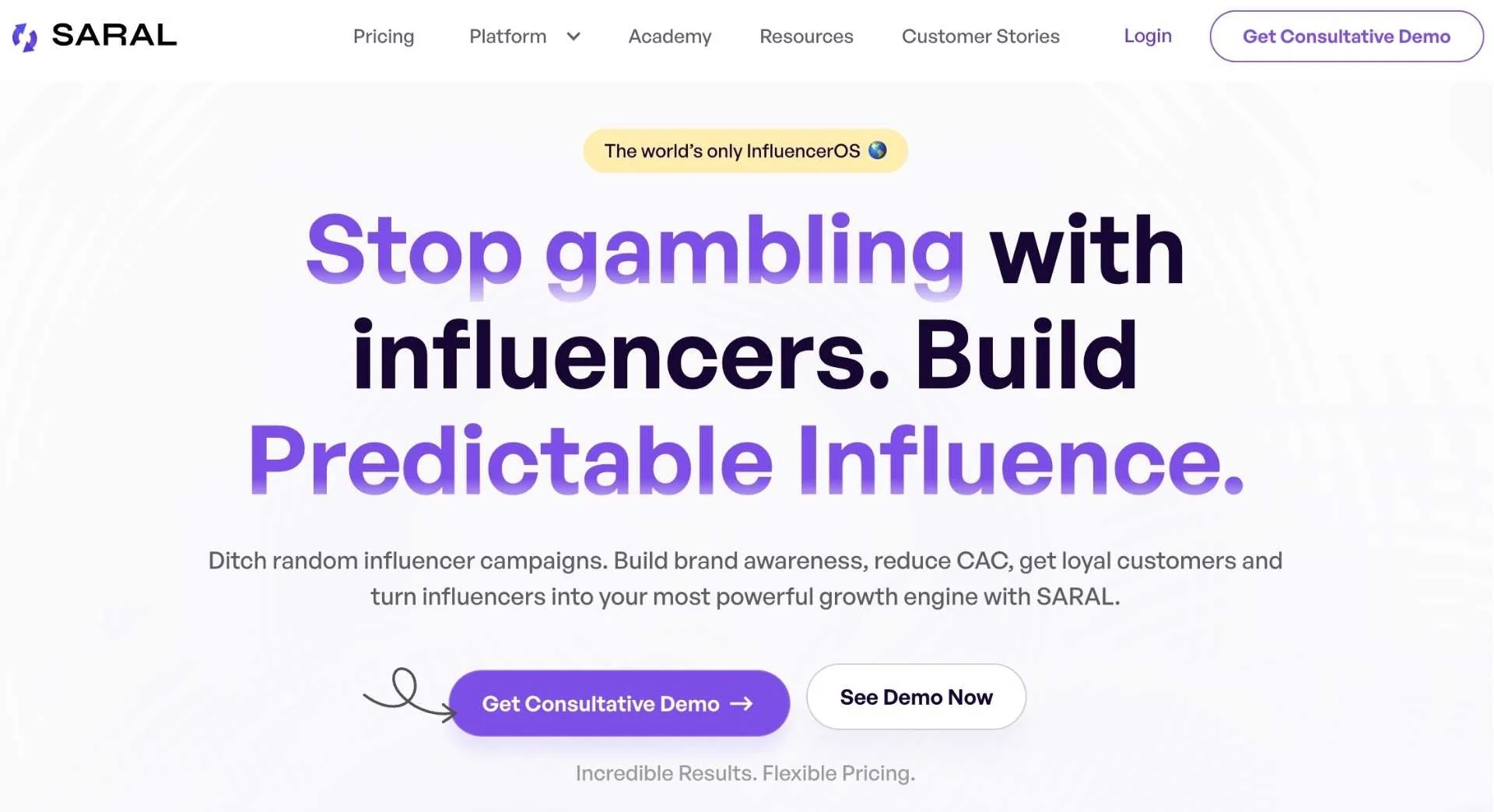
SARAL is an influencer marketing platform built for consumer and eCommerce brands that want a simpler, more transparent way to run creator programs. It positions itself as an “Influencer OS” focused on discovery, outreach, relationship management, tracking, and payments without the complexity and contract rigidity common in enterprise platforms.
Key Features
• Influencer discovery across major platforms — SARAL’s search engine helps brands find public creators with metrics, audience insights, and contact information.
• Automated outreach and inbox management — The platform is designed to automate influencer outreach and keep communications organized inside a central inbox.
• Creator relationship management — SARAL tracks creator relationships from first outreach to repeat partnerships, making it easier to manage gifting, affiliates, and long-term ambassador programs.
• Affiliate and ROI tracking — It supports affiliate links, discount codes, campaign performance measurement, and ROAS tracking, which makes it especially useful for DTC programs.
• Social listening and post tracking — Higher tiers add unlimited post tracking and social listening, helping teams monitor mentions and creator activity at scale.
• Strategy support baked into the offering — SARAL pairs software with onboarding, a success manager, and shared Slack support rather than just handing teams a login.
Pricing
SARAL offers tiered pricing primarily billed annually or quarterly:
• Starter Plan – $12,000/year or $3,600/quarter Includes 100 active partnerships, 300 new influencers/month, limited post tracking, and 1 user seat.
• Business Plan – $15,000/year or $4,500/quarter Includes 500 active partnerships, 800 new influencers/month, unlimited tracking, and 3 seats.
• Professional Plan – $25,000/year or $7,500/quarter Includes 1,000 active partnerships, 2,000 new influencers/month, full social listening, and 10 seats.
Reviews
4.7/5.0 (G2)
Pros
• Transparent pricing is a differentiator — SARAL publicly lists pricing, plan limits, and support structure, which is still unusual in this category.
• Built for emerging DTC teams — Its positioning is intentionally simple and ROI-first, making it appealing for brands that want to move faster without enterprise bloat.
• Software plus strategy support — The onboarding calls, success manager access, and Slack support make the platform feel closer to an operating system than just a database.
Cons
• Less enterprise-oriented than large suites — SARAL is strong for consumer brands, but it is less clearly positioned for large multinational teams with highly customized workflows.
• Plan limits still matter on discovery volume — Pricing is driven by how many influencers you want to search and save each month, so fast-scaling teams may outgrow lower tiers quickly.
• Smaller review footprint than older incumbents — It has strong satisfaction, but a smaller review base than long-established enterprise tools.
Integrations
• Shopify — connect your store for product gifting, affiliate tracking, and campaign management tied to sales.
• WooCommerce — support product seeding and creator revenue attribution for WooCommerce stores.
• Klaviyo — sync influencer data into Klaviyo so you can run automated nurture flows and campaign updates.
• Slack — receive campaign and support updates in Slack to keep teams aligned.
• Outlook — connect Outlook for creator communication inside SARAL’s workflow.
#paid vs SARAL
#paid is the more curated and premium creator marketplace, with stronger emphasis on creator licensing, managed campaign support, and life-moment targeting through tools like Creator Calendar. SARAL is more operationally straightforward: it is designed for brands that want a simpler influencer OS with transparent pricing, strong outreach workflows, and practical ROI tracking without relying as heavily on a managed-service layer.
In practice, #paid is usually the better fit for brands prioritizing creator-approved campaigns and reusable paid media assets, while SARAL is often the stronger fit for DTC teams that want hands-on control, lower complexity, and clearer packaging. If your team wants more structure and faster self-serve execution, SARAL stands out; if you want guided creator matching and stronger licensed-content workflows, #paid remains more differentiated.
GRIN

GRIN is an influencer marketing platform aimed primarily at DTC and eCommerce brands that want to run creator discovery, gifting, affiliate tracking, payments, and content management in one stack. It is especially well known for its commerce integrations and its ability to treat creators as an extension of a brand’s customer acquisition engine.
Key Features
• Creator discovery and relationship management — GRIN combines creator sourcing, CRM tools, email workflows, and program management in a single system.
• eCommerce-native gifting and affiliate workflows — The platform is built to sync with stores so brands can seed products, generate affiliate links and codes, and track performance without leaving GRIN.
• Integrated communications — GRIN supports email and messaging workflows so teams can personalize communication at scale and follow up automatically.
• Creator payments and contracts — It integrates creator payments and DocuSign-based contracts directly into the campaign workflow.
• UGC and content organization — Cloud storage integrations and content workflows help brands centralize and reuse creator assets.
• API and extensibility — GRIN also emphasizes its API and broader integration layer for brands that need custom workflows.
Pricing
• Official pricing model: GRIN’s current pricing page promotes a 30-day free trial and more flexible packaging than before, including self-serve access.
• Public starting price benchmark: Recent software directories list GRIN from $999/month, though enterprise pricing still appears to scale materially based on features and program size.
• Enterprise benchmark pricing: Recent sales benchmarks and product overviews still place GRIN commonly starts at $25,000/year (approx. $2,050/month), with no discounts for upfront payment. Contracts require a full-year commitment with monthly billing.
Reviews
4.5/5.0 (G2)
Pros
• Deep eCommerce integration — GRIN’s strongest differentiator is how tightly it connects gifting, affiliate tracking, fulfillment, and ROI measurement to commerce systems.
• Strong creator operations stack — Contracts, payments, email, and content workflows live in one system, which is a major advantage for brands running high-volume creator programs.
• Flexible integration ecosystem — Gmail, Klaviyo, PayPal, Slack, DocuSign, and API access make GRIN easier to fit into a broader marketing stack than many mid-market competitors.
Cons
• Can be expensive and contract-heavy — GRIN is often positioned as a premium platform, especially once brands need broader feature access and scale.
• Performance complaints show up repeatedly — Common drawbacks include slow load times, bugs, and occasional workflow friction.
• Not the easiest platform for every team — Some users find navigation, creator status handling, and reporting depth less smooth than expected.
Integrations
• Shopify — fulfill product orders, generate bulk affiliate links, and track creator performance in real time.
• Gmail — personalize outreach and manage creator conversations from your existing email environment.
• Klaviyo — connect creator programs with lifecycle email marketing and customer data workflows.
• DocuSign — send contracts, secure content rights, and keep partnership records in-platform.
• PayPal — route creator payouts directly when deliverables are completed.
#paid vs GRIN
#paid and GRIN both cover creator campaigns end to end, but they are optimized for different operating models. #paid is stronger on marketplace-style creator matching, licensing, and premium managed support; GRIN is stronger on commerce-connected operations, especially for brands that need product seeding, affiliate payouts, contracts, and content workflows deeply tied to eCommerce systems.
That makes #paid more appealing for brands focused on branded creator collaborations and paid-media reuse, while GRIN is often the better fit for DTC brands running large-scale gifting or affiliate programs. If content licensing and curated matching matter most, #paid stands out; if store integrations and creator ops infrastructure are the priority, GRIN usually has the edge.
Influencer Hero
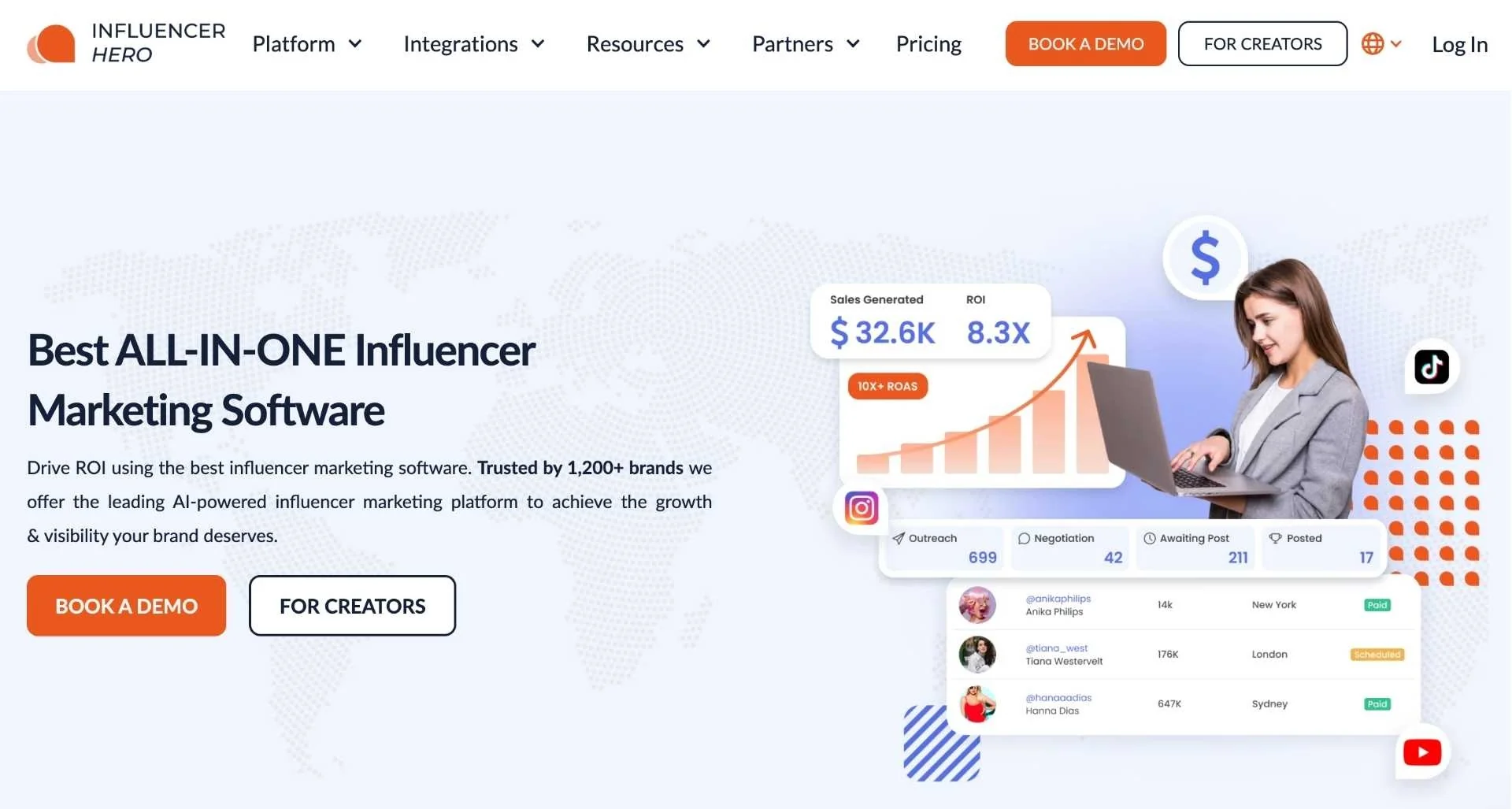
Influencer Hero is an all-in-one influencer marketing platform built for brands and agencies that want discovery, outreach, CRM, gifting, UGC tracking, affiliate workflows, and reporting inside one system. Its positioning leans heavily into automation, ROI visibility, and a growing set of integrations for eCommerce-led creator programs.
Key Features
• Influencer discovery — Search creators across major platforms with advanced audience, engagement, location, and niche filters, plus fraud detection and lookalike recommendations
• Outreach & automation — Run personalized outreach at scale with AI-assisted messaging, automated follow-ups, and multi-step email sequences
• Influencer CRM — Centralize creator relationships with pipeline management for conversations, campaign stages, and deliverables
• Gifting workflows — Manage product seeding end-to-end with automated order creation, shipment tracking, and delivery monitoring
• Affiliate tracking & payouts — Create trackable links and discount codes, measure performance, and manage commissions and payments in one workflow
• Campaign analytics & ROI tracking — Track engagement, clicks, conversions, and revenue through real-time dashboards tied to campaign performance
• UGC library — Automatically capture and organize creator content for reuse across paid ads, social media, and eCommerce channels
• Application pages & storefronts — Build branded creator application pages and enable influencers to promote products through personalized storefronts
• eCommerce integrations — Connect directly with platforms like Shopify and WooCommerce to link influencer activity to sales and attribution
Pricing
Influencer Hero offers flexible pricing based on outreach volume and you can have unlimited creators in your CRM:
• Standard — $649/month (up to 1,000 outreaches per month)
• Pro — $1,049/month (up to 5,000 outreaches per month)
• Business — $2,490/month (up to 10,000 outreaches per month)
• Custom / Agency — Tailored pricing
Custom pricing is available for agencies and larger teams
Reviews
4.9/5.0 (Capterra)
Pros
• Very strong automation focus — Influencer Hero’s standout angle is workflow automation tied to outreach, stage changes, commissions, and reporting rather than just discovery.
• Fast-growing integration depth — The platform now highlights 45+ integrations across stores, CRM-style workflows, communications, and attribution tools.
• Flexible eCommerce support beyond Shopify — It is one of the few newer tools actively emphasizing WooCommerce, BigCommerce, Magento, Stripe, and GoAffPro workflows alongside Shopify.
Cons
• No free trial — Makes it harder for teams to evaluate the platform before committing
• Steep learning curve — Feature depth means onboarding and setup can take time
• Can feel feature-heavy for very small teams — Brands running only a handful of creator collaborations may not need its full automation layer.
Integrations
• Shopify — generate affiliate links and discount codes, sync product catalogs, track creator revenue, and simplify gifting.
• WooCommerce — create discount codes, sync orders, and track influencer-driven traffic and sales from WordPress stores.
• Gmail — send personalized creator outreach at scale and sync threads into the CRM.
• Klaviyo — sync influencer-referred contacts into lifecycle email flows and attribute downstream revenue to creators.
• GoAffPro — connect affiliate tracking for non-Shopify stores and bring commission and sales data back into Influencer Hero.
#paid vs Influencer Hero
#paid is a stronger fit for brands that want a curated creator marketplace, hands-on strategic support, and creator licensing for paid social. Influencer Hero is more workflow- and automation-driven: it gives brands more direct control over CRM stages, email automation, affiliate tracking, and eCommerce attribution across a broader set of integrations.
The biggest difference is the operating model. #paid feels more like premium creator matchmaking plus campaign support, while Influencer Hero feels more like an automation-first operating system for internal teams. If your team wants licensed creator content and managed guidance, #paid is more differentiated; if you want flexible automations, strong ROI tracking, and wider store integrations, Influencer Hero is the stronger alternative.
IZEA
IZEA is one of the longer-standing names in the creator economy, offering managed services, a creator marketplace, and its Flex software for campaign collaboration, creator approvals, and performance tracking. It serves brands and agencies that want a mix of software, marketplace access, and optional service support rather than a single rigid product model.
Key Features
• Creator marketplace and campaign sourcing — IZEA’s marketplace lets brands and creators find each other, review pitches, and collaborate through a centralized system.
• IZEA Flex campaign hub — Flex gives brands a central place to approve creators, review content, and track campaign performance.
• Relationship management and contact updates — Flex supports creator contacts, custom lists, and automatically updated contact data tied to creator handles.
• Transactions and creator compensation — Flex includes creator transaction support, with a flat payment fee structure highlighted in official launch materials.
• FormAI tools — IZEA has invested in AI with FormAI for content ideation and creative assistance tailored to creator marketing workflows.
• Budget and campaign controls — Recent product updates have included a Flex Budget Suite for better campaign budget visibility and management.
Pricing
• Starter Plan: starts at $130/month.
• Power Plan: starts at $500/month.
• Free trial: 10 days.
• Managed Services: custom proposal-based pricing for fully managed campaigns.
Reviews
3.9/ 5.0 (G2)
Pros
• Multiple operating models — IZEA offers software, marketplace access, AI tools, and managed services, which gives brands more flexibility than single-product competitors.
• FormAI adds a differentiated AI layer — Its FormAI suite is purpose-built for creator marketing rather than being a generic add-on.
• Affordable entry point for Flex — Compared with many enterprise influencer platforms, Flex has a notably lower starting price and a free trial.
Cons
• User satisfaction is more mixed than top-rated rivals — Its review profile is solid but not as strong as leaders like #paid, GRIN, or Influencer Hero.
• Some workflow friction remains — Review excerpts mention cumbersome creator communication, tracking quirks, and occasional timeout or UX issues.
• Less clearly commerce-native than eCommerce specialists — IZEA supports Shopify and analytics integrations, but it is not positioned as deeply around store operations as GRIN or Upfluence.
Integrations
• Shopify — track the impact of influencer campaigns down to the order level and connect creator activity to store sales.
• Google Analytics — aggregate campaign performance, conversion metrics, and on-site behavior from creator traffic.
• PayPal — support creator payments through marketplace and campaign workflows.
• FormAI — use built-in AI tools for content ideation, rewriting, and creator-marketing workflows.
• Flex Portal — give stakeholders controlled access to campaign visibility and approvals inside IZEA-run programs.
#paid vs IZEA
#paid and IZEA both mix software with service support, but they differ in how they approach creator campaigns. #paid is more tightly positioned around vetted creator matchmaking, premium campaign support, and creator licensing for paid amplification. IZEA is broader and more modular, spanning marketplace access, self-serve Flex software, AI content tools, and managed services.
That means #paid is often the stronger choice for brands focused on creator content quality and paid-media reuse, while IZEA can be more attractive for teams that want flexible entry points, a lower-cost self-serve option, or a blend of marketplace and service layers. If licensed creator ads and curated matching matter most, #paid stands out; if you want a broader menu of software, marketplace, and managed-service options, IZEA is a credible alternative.


Later
Later is an enterprise influencer marketing platform designed to help brands discover creators, run campaigns, manage approvals, and measure performance with a strong emphasis on predictive planning and first-party campaign data. Since folding Mavrck into the Later brand, it has positioned Later Influence as a more intelligence-led solution for larger programs that want both software and strategic support.
Key Features
• Later EdgeAI — Later’s headline differentiator is EdgeAI, which uses a decade of campaign data, 16 million creators, 136 billion annual impressions, and more than $2 billion in verified purchases to predict creator fit and campaign outcomes before launch.
• Creator discovery with fit and risk signals — the platform helps brands identify relevant creators using audience, performance, and suitability signals rather than relying only on basic database filters
• End-to-end campaign workflows — Later Influence covers creator sourcing, approvals, content management, and campaign reporting in one system.
• Shopify code and gifting workflows — brands can connect Shopify to generate one-time creator codes, automate sending based on workflow stage, and track redemptions, order numbers, and fulfillment status.
• Direct social API ingestion — Later uses the Facebook Graph API, Instagram API, TikTok One API, and Pinterest Analytics API to ingest content, performance data, and audience insights.
• Ratings and reviews integrations — Later also publishes integrations for Bazaarvoice, PowerReviews, and Yotpo Reviews, which are useful for bringing social proof and review workflows into creator programs.
Pricing
Later’s influencer marketing platform (Later Influence) uses custom pricing, and brands need to request a demo for exact costs.
Based on our research, there are different plans:
• Essentials Plan: Starts at $28,500/year. Best for brands starting in influencer marketing.
• Pro Plan: Starts at $42,000/year. Best for data and automation to make your campaigns run faster and achieve better ROI.
• Premier Plan: Starts at $60,000/year. Everything you need for a scaled influencer program.
• All plans come with an additional one-time onboarding fee of $5,000 for all new customers.
Reviews
4.4 / 5.0 (Capterra)
Pros
• EdgeAI is a genuine recent differentiator — Later’s current positioning is built around predictive intelligence, which is a more advanced planning layer than many influencer platforms currently expose.
• Very strong Shopify workflow — Shopify Codes is one of the more practical commerce features in the category, especially for brands that rely on creator discount codes and gifting at scale.
• Blends software with services — Later gives brands both platform access and expert-led campaign help, which is valuable for teams that want more than a pure self-serve tool.
Cons
• Limited pricing transparency — brands need to book a demo to get real pricing, which makes side-by-side comparison harder.
• Can feel enterprise-heavy — its feature depth and service layer make it more suitable for established programs than for teams wanting a lightweight tool.
• User feedback still surfaces occasional technical friction — recurring complaints include bugs, UX friction, and occasional account connection issues.
Integrations
• Shopify — connect your store to create creator-specific codes, send them automatically, and track redemptions and fulfillment.
• Bazaarvoice — connect ratings and reviews data to support creator and shopper-content workflows.
• PowerReviews — bring product review content into your broader influencer and content ecosystem.
• Yotpo Reviews — connect review content and social proof workflows to Later Influence.
• Reporting API — push Later campaign performance data into external BI, reporting, or internal analytics systems.
#paid vs Later
#paid is more clearly built around curated creator matching, opted-in creators, and creator licensing for paid amplification. Later is more analytics-led today, with a stronger emphasis on predictive planning, social API data, and enterprise campaign intelligence.
The other big difference is workflow style. #paid is the better fit for brands prioritizing guided creator selection and reusable licensed content, while Later is stronger for teams that want AI-informed campaign forecasting and tighter operational links between influencer marketing and broader social-commerce workflows.
Ainfluencer
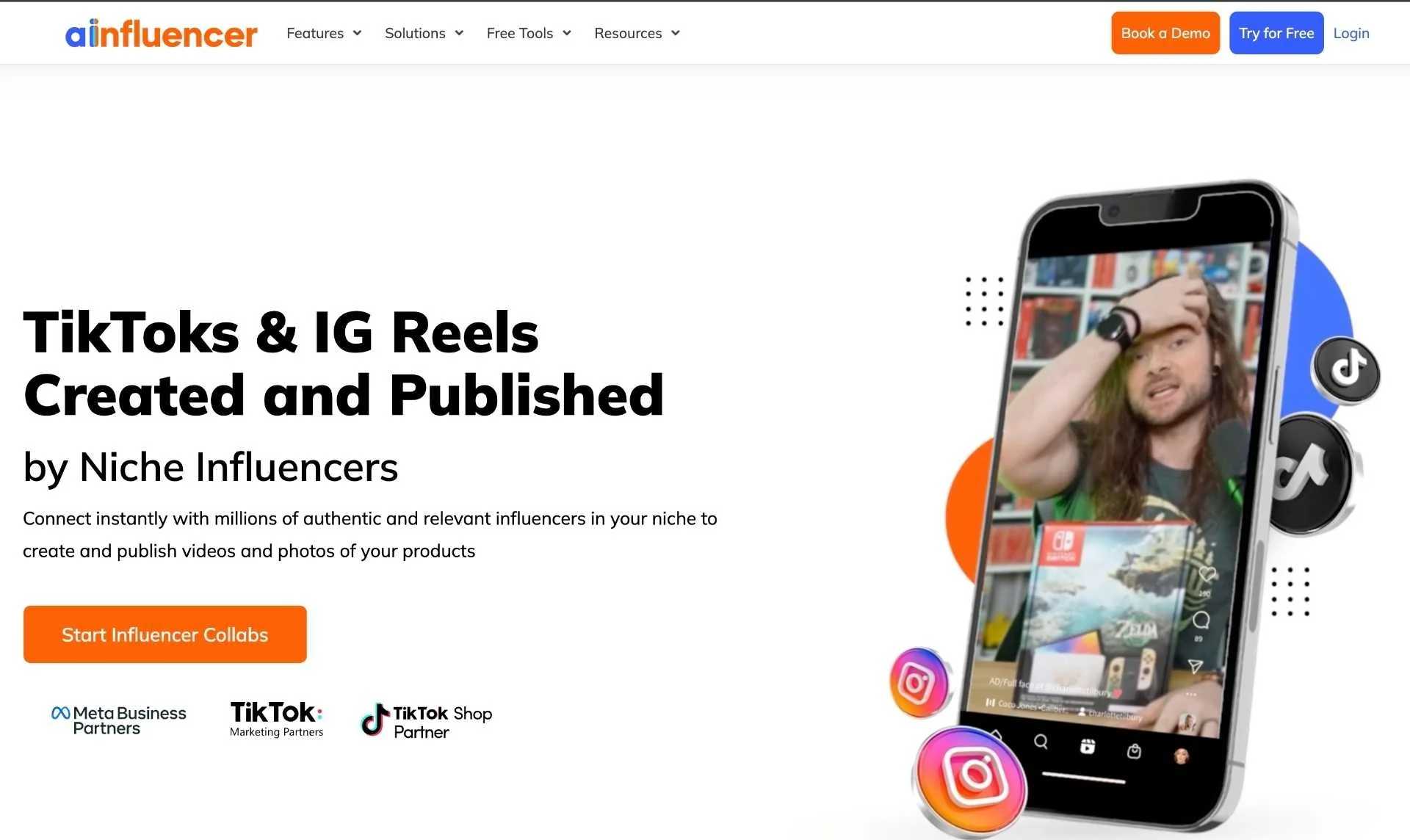
Ainfluencer is a creator marketplace focused on helping brands run influencer campaigns through a free self-serve model. It is designed around campaign posting, creator applications, AI matching, in-platform messaging, and escrow-protected payments, making it more marketplace-driven than most enterprise influencer suites.
Key Features
• Free self-serve marketplace access — brands get access to a marketplace of more than 5 million influencers, campaign creation, AI-driven matching, messaging, and escrow-secured payments without a standard subscription fee.
• Unlimited campaign and proposal flow — Ainfluencer highlights unlimited campaigns, invitations, and proposals as part of its core self-serve experience.
• AI-powered creator matching — brands can use campaign criteria and AI recommendations to identify relevant creators faster.
• In-platform messaging and negotiation — creator communication, offer discussion, and deal progress happen inside the platform instead of being split across external inboxes.
• Escrow-based payments — payments are held until deliverables are completed, which reduces the risk of paying for non-delivery.
• Performance tracking and ratings — brands can review creator profiles, past work, and ratings before committing.
Pricing
• Free Plan (Core Offering): $0/month
• Commission-Based Model: ~20% service fee deducted from influencer payouts
• Managed Campaign Packages (Optional)
• Viral: $7,999 (1 month)
• Scale: $9,999 (2 months)
• Super Scale: $15,000 (3 months)
• Turbo Viral: $29,999 (4 months)
• Custom pricing available depending on campaign scope
Reviews
4.8 / 5.0 (G2)
Pros
• Free self-serve access is its clearest advantage — Ainfluencer stands out by removing the upfront software subscription barrier for brands.
• Escrow protection is a real trust feature — the payment model is more protective than the standard pay-and-chase workflow common in influencer marketing.
• Marketplace-first sourcing reduces cold outreach work — creators can apply directly, which can make early sourcing faster for smaller teams.
Cons
• Analytics are lighter than enterprise tools — Ainfluencer is better for sourcing and execution than for advanced attribution and reporting.
• Creator quality and responsiveness can vary — as with many marketplaces, breadth comes with some inconsistency in creator professionalism and turnaround times.
• Less suited to large-scale enterprise programs — brands needing deep integrations, multi-layer approvals, or advanced reporting may outgrow it.
Integrations
• Instagram — run influencer discovery and collaboration workflows around Instagram creators and content.
• TikTok — use the same marketplace and proposal flow for TikTok creator campaigns.
• YouTube — Ainfluencer also promotes creator matching across YouTube in its current positioning.
• PayPal — creators can receive payouts through PayPal as part of the platform’s payment flow.
• Amazon affiliate workflows — Ainfluencer increasingly positions itself around Amazon-related creator and affiliate use cases.
#paid vs Ainfluencer
#paid is a more premium, structured platform with stronger managed support, better content licensing, and more sophisticated campaign intelligence. Ainfluencer is much more marketplace-led and cost-friendly, with its biggest appeal being free access and escrow-secured transactions.
For brands that want curated matching and paid-media-ready creator content, #paid is the stronger choice. For teams that mainly want a lower-cost marketplace to source creators and run direct deals, Ainfluencer is the more accessible option.
indaHash
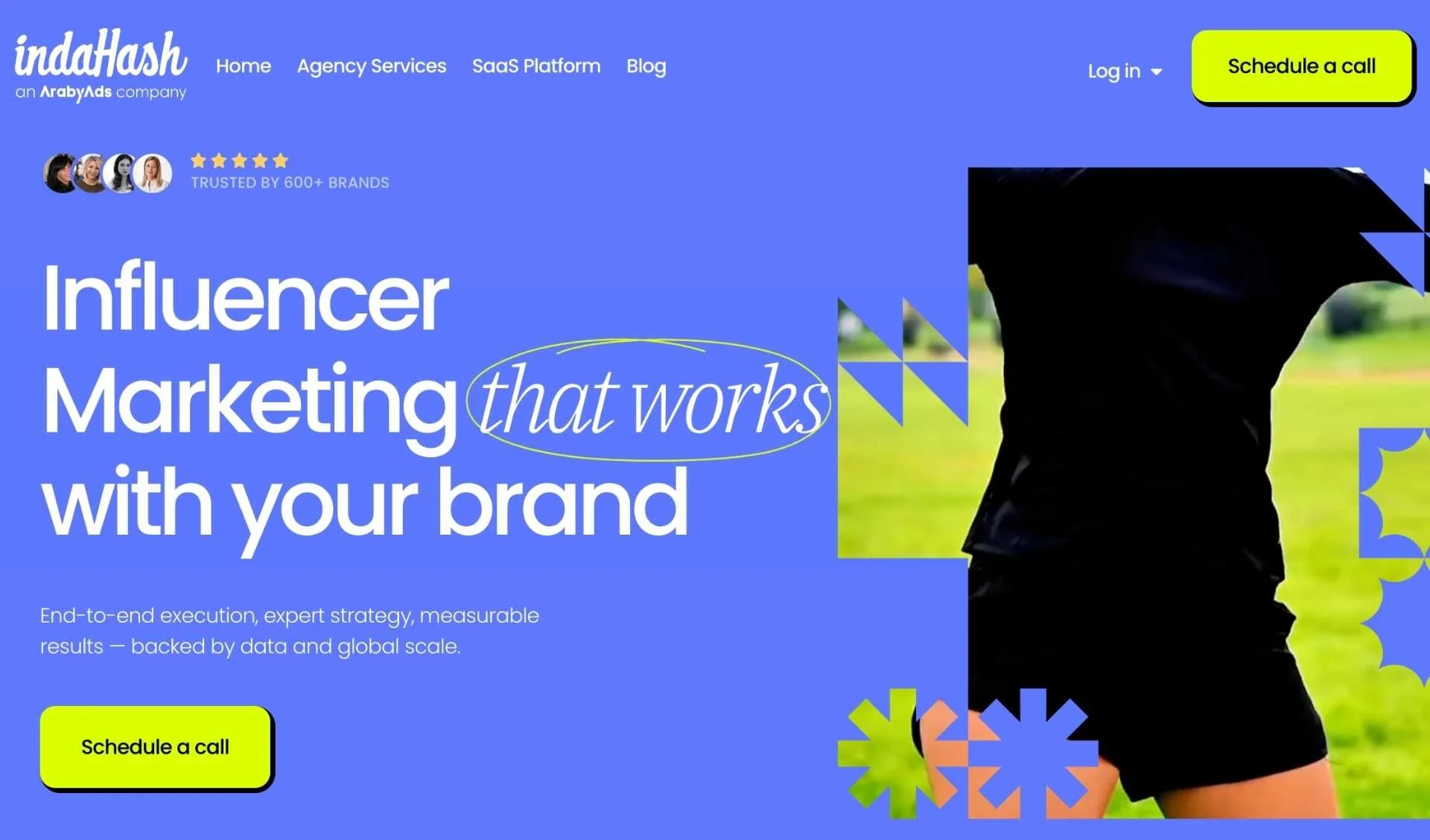
indaHash is an influencer marketing platform and agency that serves brands through two delivery models: self-serve SaaS and expert-led managed services. It is especially notable for global reach, AI-driven creator search, and a hybrid approach that lets brands either stay hands-on or outsource execution.
Key Features
• Hybrid SaaS + managed services model — indaHash lets brands run campaigns on their own or hand strategy and execution to the indaHash team.
• AI-driven creator search — the SaaS platform turns campaign briefs into creator discovery and includes AI-generated evaluation reasoning in the workflow.
• AI image recognition — indaHash’s visual search capability is one of its standout features, helping brands identify creators based on image content rather than only text filters.
• End-to-end campaign execution — the platform is designed to cover planning, launch, tracking, optimization, payments, and reporting.
• Real-time sales and ROI visibility — indaHash highlights real-time sales tracking, one-click reporting, and AI sentiment analysis.
• Global operating footprint — the company says its agency services have powered campaigns across 100+ markets, making it more internationally oriented than many DTC-focused competitors.
Pricing
indaHash does not publicly disclose full pricing on its website, and most plans are offered on a custom or quote-based model. However, publicly listed pricing tiers include:
• Creator Discovery – $499/year
• Discovery & Campaign Management – $999/month
• White Label (Agencies) – $9,990/year
• Enterprise License – $4,999 (one-time)
• Free Trial: Available
Reviews
4.7 / 5.0 (G2)
Pros
• AI image recognition is a strong differentiator — it gives indaHash a more advanced visual discovery angle than many competitors.
• Flexible delivery model — brands can choose between self-serve software and agency support, which broadens its fit across team sizes and maturity levels.
• Global campaign reach — indaHash is especially appealing for brands running multi-market programs rather than single-country creator campaigns.
Cons
• Pricing is not transparent on the official site — most buyers still need a consultation to understand the real commercial structure.
• Public review volume is still small — the available ratings are solid, but the review footprint is lighter than larger category leaders.
• Better suited to brands wanting a fuller platform or service layer — it is not as simple or lightweight as some pure self-serve alternatives.
Integrations
• Shopify — indaHash’s eCommerce API supports coupon sharing, sales tracking, and creator performance measurement for Shopify-connected workflows.
• WooCommerce — the same eCommerce API is positioned to support WooCommerce stores and promo-code attribution.
• Instagram — indaHash natively supports Instagram creators and campaign tracking.
• TikTok — the platform also natively supports TikTok creators within its campaign management stack.
• Snapchat — indaHash explicitly highlights native support for Snapchat creators as part of its broader platform ecosystem.
#paid vs indaHash
#paid is more focused on curated creator matching, opted-in creators, and licensed content for paid amplification. indaHash is more flexible operationally, with its mix of SaaS and agency services plus a stronger global footprint and AI image-recognition-led discovery.
In practice, #paid is better for brands that want premium campaign support and reusable creator content, while indaHash is better for brands that want international reach and the option to toggle between self-serve execution and agency-led delivery.
Influencity
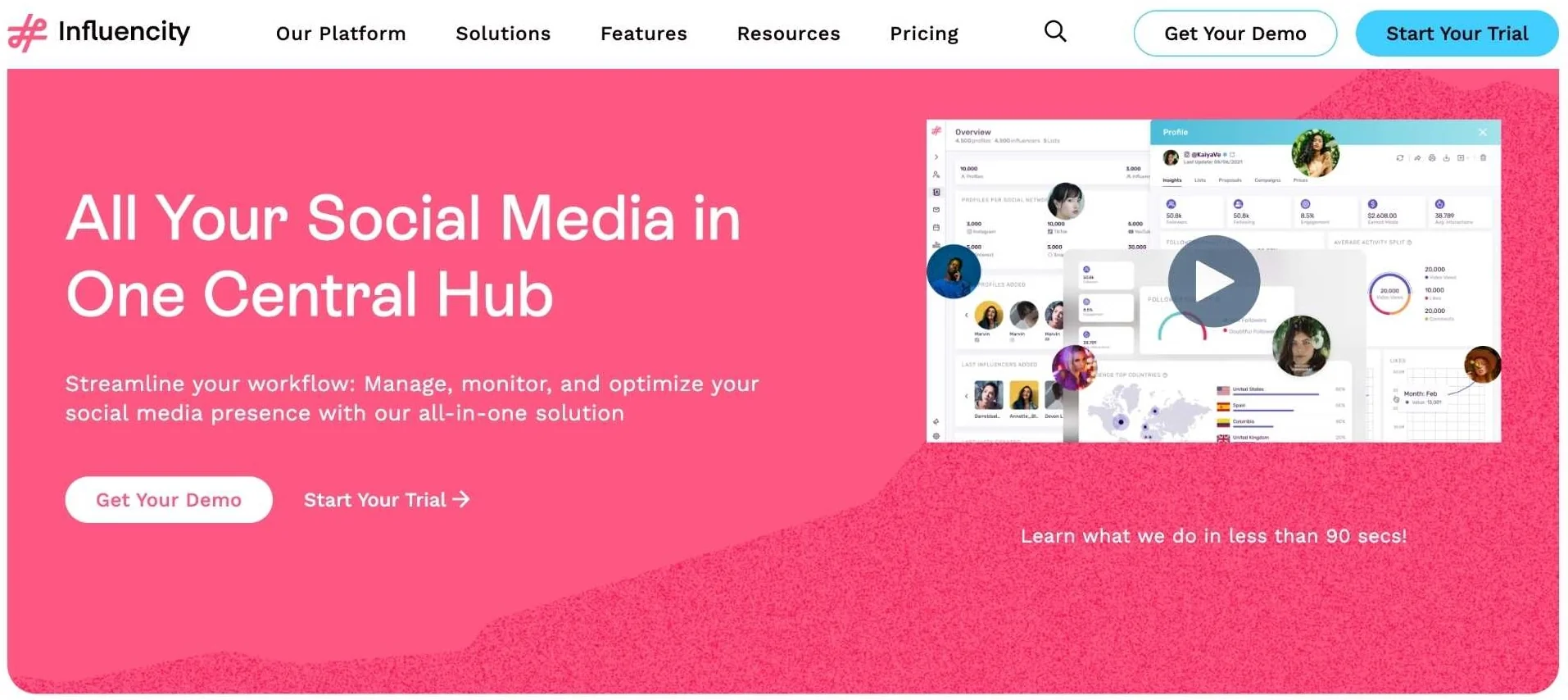
Influencity is an end-to-end influencer marketing platform built around modular products for discovery, relationship management, campaigns, reporting, social media management, and monitoring. Its strongest positioning is flexibility: brands can combine the parts they need instead of being locked into a single all-in-one bundle.
Key Features
• Modular platform structure — Influencity splits its product into Discover, Influencer Relationship Management, Campaign Manager, Campaign Reports, Social Hub, and Monitoring.
• Large creator database — the platform promotes a database of 170M+ to 200M+ influencer profiles, depending on the source page, with AI-powered filtering and analysis.
• Influencer relationship management — brands can store influencer data, communication history, and campaign context in one system.
• Campaign execution and reporting — Influencity covers outreach, campaign management, results measurement, and performance reporting.
• Social listening and monitoring — it also supports competitor analysis, campaign monitoring, brand management, and market research.
• Shopify-based seeding workflows — the knowledge base documents Shopify integration for influencer seeding programs and eCommerce-linked campaign execution.
Pricing
Influencity offers three main pricing tiers, along with add-ons:
• Professional Plan: $318/month or $3,816/year
• Business Plan: $798/month or $9,576/year
• Enterprise Plan: Custom pricing
• Auto-Tracker Add-On: $660/year (for 50 influencers)
Reviews
4.3 / 5.0 (G2)
Pros
• Modular pricing and product design — Influencity’s biggest advantage is that teams can combine products instead of paying for an oversized bundle.
• Broad workflow coverage — it goes beyond classic influencer tooling into social hub and monitoring use cases, which gives it wider utility.
• Strong for brands and agencies running multiple campaigns — its Business positioning is clearly aimed at heavier influencer marketing operations.
Cons
• Pricing is harder to parse than flat-rate competitors — the modular model is flexible, but not as instantly clear as public fixed-tier pricing.
• Some user feedback points to workflow friction — common complaints include filter resets, learning curve issues, and inconsistent usability in some areas.
• Less marketplace-led than curated alternatives — Influencity is better described as a system for running programs than as a premium creator marketplace.
Integrations
• Shopify — connect your store to build influencer seeding programs and tie creator workflows to eCommerce operations.
• Office 365 — connect your inbox for creator outreach and communication inside the platform.
• Outlook Office 365 — use Outlook-based inbox integration to manage creator communication from IRM.
• Yahoo via IMAP — connect supported IMAP email providers for outreach inside Influencity.
• Zoho via IMAP — support outreach from Zoho mailboxes through the platform’s email integration flow.
#paid vs Influencity
#paid is more curated and campaign-guided, with stronger emphasis on creator approval rates, managed support, and licensed content. Influencity is more modular and software-centric, giving teams a broader stack for discovery, IRM, campaign execution, reporting, and social listening.
That means #paid is usually the better fit for brands prioritizing creator matching and paid-media-ready content, while Influencity is stronger for teams wanting a configurable system with more in-house control over operations.
Modash
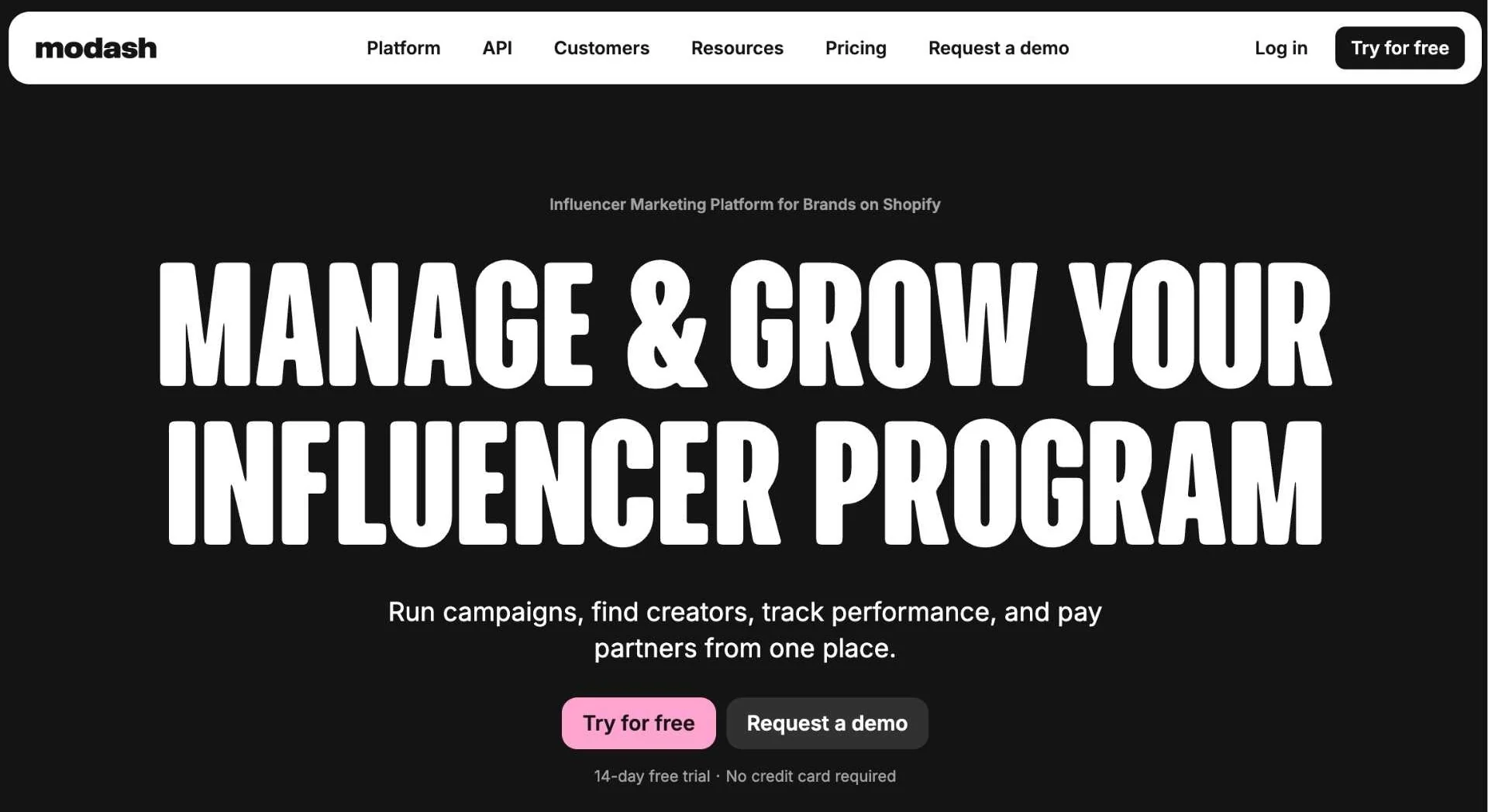
Modash is a self-serve influencer marketing platform built around large-scale creator discovery, outreach, tracking, gifting, affiliate workflows, and payments. It stands out for its transparent pricing, big public-profile database, and strong fit for brands that want a leaner, performance-focused influencer stack without being limited to an opt-in creator network.
Key Features
• 350M+ creator database — Modash’s creator search is one of its strongest selling points, with public-profile discovery at very large scale.
• End-to-end workflow — the platform supports discovery, management, campaign tracking, gifting, payments, and affiliate operations.
• Email sync with Gmail and Outlook — brands can send and track creator emails directly through connected inboxes.
• Shopify-powered commerce workflows — Modash supports discount codes, gifting, affiliate links, sales tracking, and commission-based payouts with two-way Shopify sync.
• Influential Fans — higher-tier users can identify creators who already follow and engage with their brand, which is one of Modash’s most useful recent differentiators.
• Content-to-cash reporting — Modash explicitly connects creator content to clicks and sales inside one dashboard.
Pricing
• Essentials: ~$199/month (paid annually)
• Performance: ~$499/month (paid annually)
• Enterprise: custom pricing
• Typically billed annually, with scaling based on usage and team size.
Reviews
4.9/5.0 (Capterra)
Pros
• Very transparent pricing — Modash is unusually clear about price, included limits, and billing choices, which makes it easier to evaluate than many rivals.
• Discovery is one of the best in the category — the scale of the database plus the public-profile model make it especially attractive for self-serve sourcing.
• Influential Fans is a standout feature — finding creators who already follow your brand is a smart way to improve conversion odds and reduce cold-start friction.
Cons
• Most powerful commerce workflows still center on Shopify — brands outside that ecosystem may get less value from its strongest gifting and affiliate features.
• Inbox and communication depth still lag discovery in perception — user feedback is very positive overall, but some users still want more robust outreach handling.
• Less differentiated on licensing and paid-media workflows — Modash is excellent for search and performance ops, but it is not as known for creator licensing as #paid.
Integrations
• Shopify — connect your store to manage codes, links, gifting, sales, and affiliate reporting with two-way sync.
• Gmail — sync Gmail to send and track creator emails with templates and sequences.
• Outlook — connect Outlook for email-based creator relationship management inside Modash.
• CSV Import/Export — move creator and campaign data in and out of Modash without rebuilding workflows.
• API — Modash also exposes API access for teams that want to extend or connect data outside the core platform.
#paid vs Modash
#paid is stronger for curated creator matching, strategic support, and creator licensing for paid amplification. Modash is stronger for self-serve scale, pricing transparency, and efficient performance workflows built around discovery, email sync, and Shopify-linked attribution.
So the choice is mostly premium curation versus streamlined self-serve execution. If your brand wants guided campaigns and reusable licensed content, #paid has the edge; if it wants large-scale discovery and a cleaner, more transparent operational toolset, Modash is often the better fit.
Final Thoughts on #paid Alternatives
#paid stands out for its curated creator marketplace, strong campaign support, and content licensing capabilities, making it particularly effective for brands focused on high-quality collaborations and paid media amplification. However, the alternatives highlight clear trade-offs depending on priorities—platforms like Upfluence, GRIN, and Modash excel in eCommerce integrations and performance tracking, while tools like SARAL and Influencer Hero emphasize simplicity and automation. Others, such as Later and indaHash, bring advanced AI and global campaign capabilities, and marketplaces like Ainfluencer offer cost-efficient entry points. Ultimately, the right choice depends on whether a brand prioritizes managed support and content quality, or scalability, pricing transparency, and deeper operational control.
.png)


.jpg)