

10 Best OpenSponsorship Alternatives for Influencer Marketing
OpenSponsorship alternatives are worth a look for D2C brands that want creator partnerships beyond professional athletes, or a lower-cost way to run them. OpenSponsorship is a sports sponsorship marketplace with a network of 25,000+ athletes, and its published plans start at $2,000 a month for a fully managed service.
The platform is strong at athlete access and contract handling, but it has no self-serve tier and no built-in discount codes, affiliate tracking or link to store revenue. Brands that mainly work with lifestyle, fitness or product creators often need a platform that covers discovery, outreach, gifting and sales tracking at a lower monthly cost.
This guide reviews each alternative on features, pricing, reviews and integrations, then compares it with OpenSponsorship so brands can see where each one fits.
Here are the 10 OpenSponsorship alternatives covered: Influencer Hero, Upfluence, Afluencer, CreatorIQ, Skeepers, Klear, Later, Creator.co, Insense and Lefty.
Key Criteria for Evaluating Influencer Marketing Platforms
Core Features
Evaluation of essential influencer marketing capabilities, including influencer discovery, outreach, CRM, campaign management, reporting, and content workflows.
Pricing & Flexibility
Comparison of pricing models, subscription plans, and contract terms to match different budgets and growth stages.
Customer Reviews & Satisfaction
Analysis of user feedback from trusted review platforms, focusing on usability, reliability, customer support, and overall performance.
Pros & Cons
Review of each platform’s strengths and limitations to highlight where it performs well and where it may fall short based on different use cases.
Integrations
Review of the most important integrations (e.g., Shopify and other tech tools), highlighting what each integration enables in one sentence.
OpenSponsorship Overview
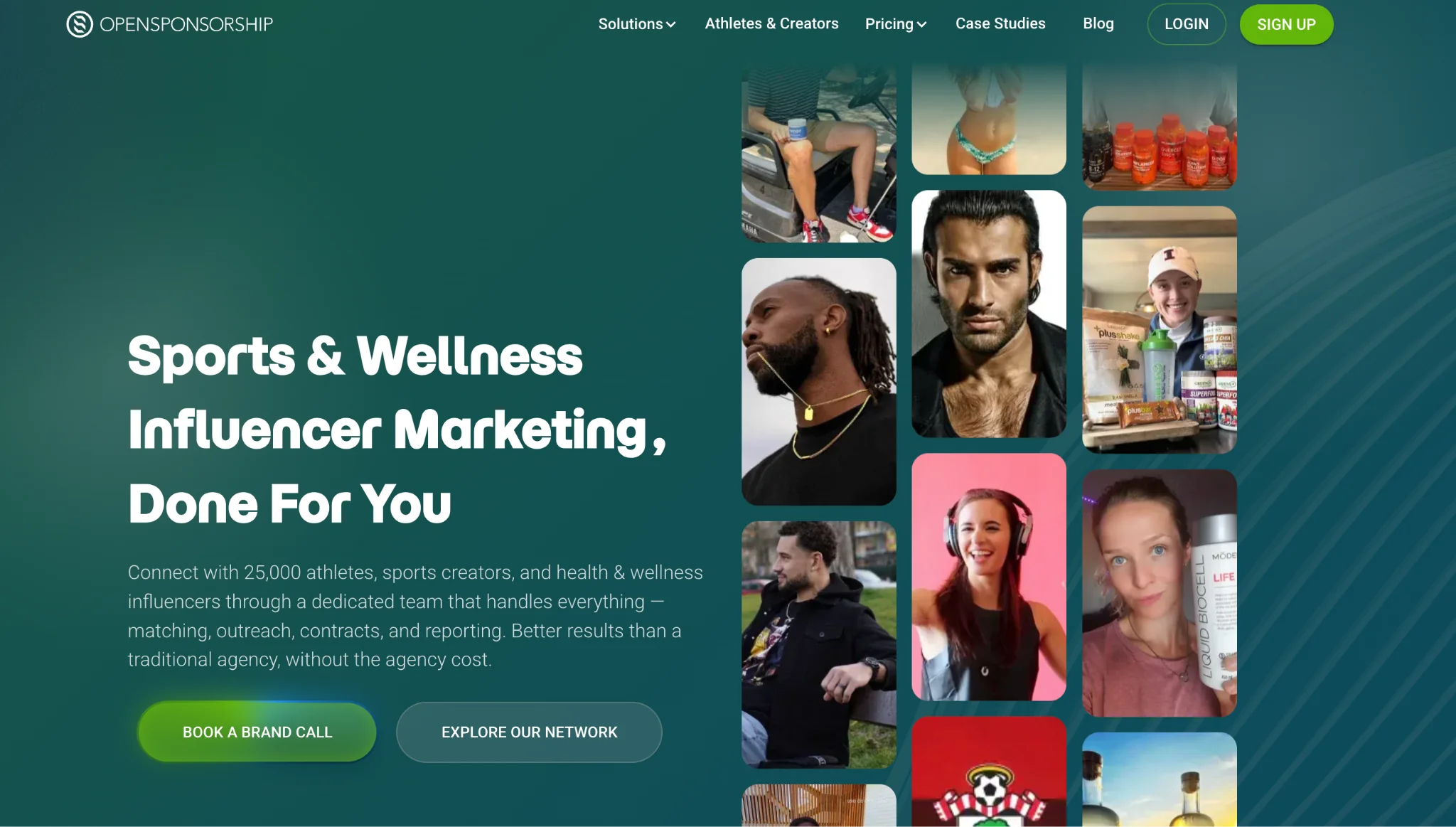
OpenSponsorship is a marketplace that connects brands with professional athletes, sports creators and health and wellness influencers. The company says its network includes more than 25,000 athletes across 150 sports and 40 countries, and that over 2,500 brands have used the platform.
Brands can search the network or post a campaign that athletes apply to, and the paid plans add an account team that sources athletes, negotiates with agents and manages contracts. Compared with a general influencer database, the pool is much smaller but far more specialized, which suits sports nutrition, fitness and activewear brands.
Key Features
- Athlete network: Brands get access to 25,000+ athletes and sports creators, a group that is hard to reach through normal influencer outreach.
- Campaign applications: Brands post a brief and athletes apply, which helps when fit depends on sport, team or season.
- AI recommendations: The platform suggests athletes that match a campaign brief, which shortens the shortlisting process.
- Escrow payments: Athlete fees are held until deliverables are met, which protects brands on longer sponsorship deals.
- Managed negotiations: On paid plans, the account team negotiates with athletes and agents and handles contracts.
Pricing
OpenSponsorship publishes two managed plans, both billed monthly. Registering as a brand is free, but there is no published self-serve subscription.
- Full-Service: $2,000 a month, with a dedicated account manager, managed negotiations, contract handling, unlimited campaigns and up to six users
- Elite: $5,000 a month, adding a full support team, management of inbound athlete requests, monthly strategy sessions and unlimited seats
- Athlete fees: paid separately on top of the plan and held in escrow
The entry plan works out to $24,000 a year before any athlete is paid, so it compares more naturally with an agency retainer than with influencer software.
Reviews
4.8/5.0 (Capterra, 40 reviews) and 3.2/5.0 (Trustpilot, 2 reviews, low review volume)
Integrations
- Athlete social accounts: Instagram, TikTok, YouTube and X profiles are connected for matching and campaign reporting.
- Escrow payments: Athlete payments are held and released when agreed deliverables are completed.
- Contracts: Sponsorship agreements are created and stored with each campaign.
- Messaging: Conversations with athletes and agents stay in one thread per deal.
- Campaign reports: Delivery and performance are summarized after each campaign.
OpenSponsorship does not publish Shopify, eCommerce, CRM or email integrations, so sponsorship results are not linked to store sales automatically.
Pros
- Specialist athlete access: The network gives brands direct access to athletes and their agents, which is difficult to replicate with general tools.
- Contract work handled: The account team manages negotiations and agreements, which helps brands new to sponsorship.
- Strong ratings in its niche: A 4.8 rating across 40 Capterra reviews comes mainly from sports and fitness brands.
Common Drawbacks of OpenSponsorship
High entry cost
The cheapest published plan is $2,000 a month for a managed service, which is a large commitment before any athlete fees are paid.
No commerce tracking
There are no discount codes, affiliate links or store integrations, so brands cannot easily see which partnerships drive sales.
Agents slow things down
Many athletes are represented by agents, which makes negotiations more formal and response times longer.
Unclear commission
Some reviewers mention commission on deals that is not listed on the pricing page, so brands should confirm all fees in writing.
Best OpenSponsorship Alternatives
| TOOL | REVIEWS | BEST FOR | TRIAL INFO | PRICING | ||
|---|---|---|---|---|---|---|
1 |

|
⭐ | Influencer CRM & automation | Book Demo | Pricing | Website |
2 |
|
⭐ | Influencer discovery | Book Demo | Pricing | Website |
3 |

|
⭐ | Influencer marketplace campaigns | Book Demo | Pricing | Website |
4 |
|
⭐ | Enterprise influencer marketing | Book Demo | Pricing | Website |
5 |

|
⭐ | Influencer gifting & UGC campaigns with micro-influencers | Book Demo | Pricing | Website |
6 |
|
⭐ | Influencer analytics | Book Demo | Pricing | Website |
7 |
|
⭐ | Social media & influencer campaigns | Book Demo | Pricing | Website |
8 |

|
⭐ | Influencer campaigns & creator marketplace | Book Demo | Pricing | Website |
9 |

|
⭐ | UGC creators & paid social ads | Book Demo | Pricing | Website |
10 |
|
⭐ | Influencer analytics & discovery | Book Demo | Pricing | Website |
Influencer Hero
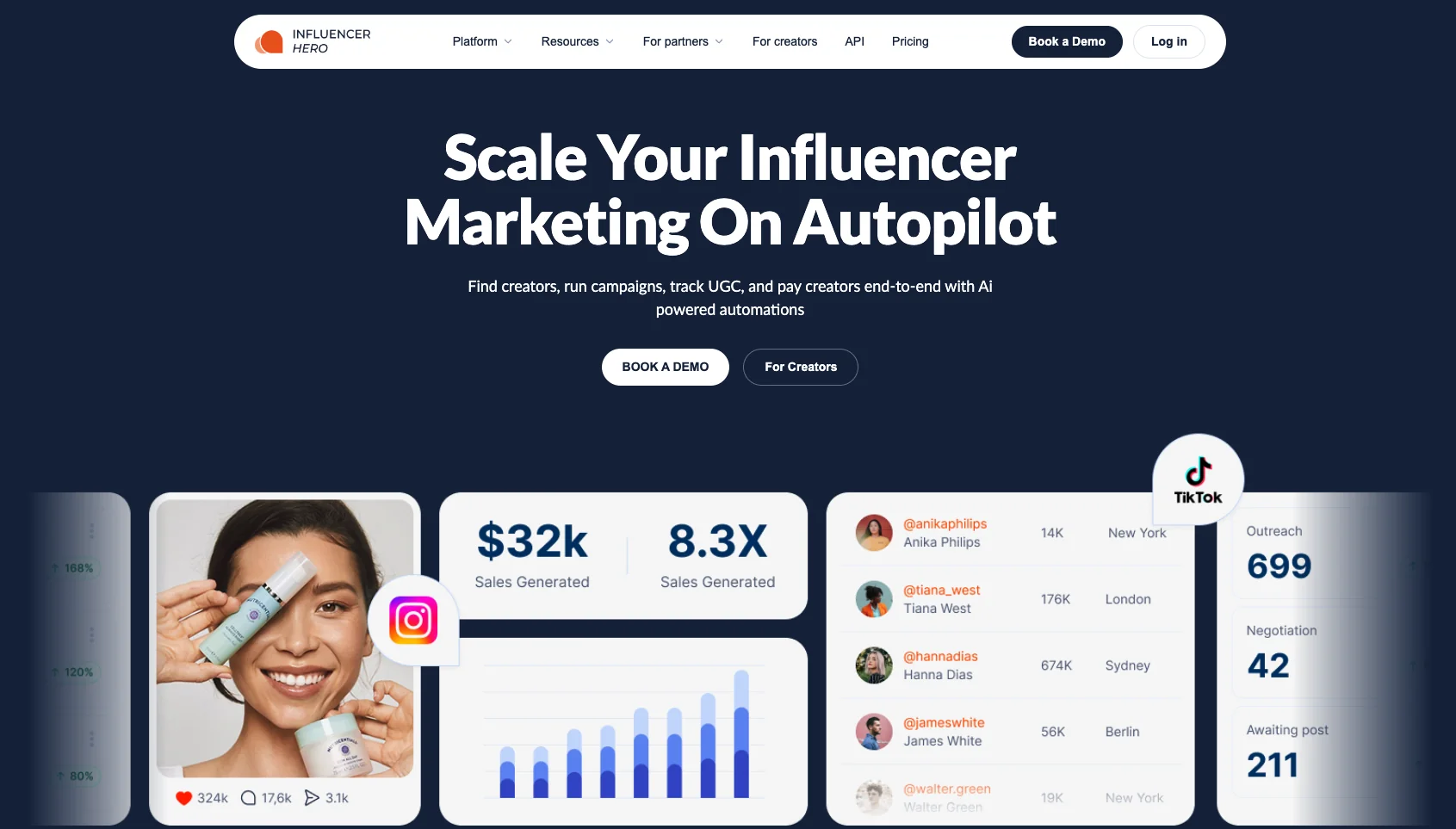
Influencer Hero brings discovery, outreach, a creator CRM, product seeding, UGC collection, affiliate programs and payouts together for D2C and eCommerce teams. Brands use it to run ongoing gifting and affiliate programs in-house, with automations that let a small team manage large numbers of creators.
Key Features
- Creator search: Brands filter 450M+ Instagram, TikTok and YouTube creators by location, audience, interests and engagement using more than 20 search filters.
- Authenticity checks: Fake-follower screening and past-performance data help brands avoid creators with weak audiences.
- Lookalike search: Brands can find new creators who resemble their best partners, including fitness and wellness creators who fit an athlete-style brand.
- Multichannel outreach: Personalized influencer outreach runs over email, Instagram DM and WhatsApp, with every reply synced to one inbox.
- Campaign board automations: Rules move creators between stages and trigger actions, so deals progress without manual updates.
- Contracts: E-signature integrations such as DocuSign and BoldSign attach signed agreements to each creator.
- Discount codes and commissions: Creators get their own codes and links, and commissions are calculated from real store sales.
- Automated reporting: Dashboards compile campaign ROI, sales per creator and product cost against revenue automatically.
Pricing
Influencer Hero’s plans are public and based on how many reachouts a brand sends each month:
- Standard: $649 monthly, covering 1,000 reachouts
- Pro: $1,049 monthly, covering 5,000 reachouts
- Business: $2,490 monthly, covering 10,000 reachouts
- Custom & Agency: custom pricing for agencies and larger teams
Quarterly plans are 20% cheaper and yearly plans 30% cheaper, which brings Standard to $5,452 a year and Pro to $8,812 a year.
Reviews
5.0/5.0 (Capterra)
Pros
- Works with any eCommerce setup: Influencer Hero connects to Shopify and WooCommerce natively and supports other stores, such as Magento or custom builds, through an embedded script. Gifting, discount codes and affiliate sales can be tracked whatever store the brand runs. That gives every creator partnership a clear link to revenue, instead of relying on reach and impressions alone.
- AI workflow optimization: Automations cover the steps from discovery to outreach, with predictive success scoring and campaign suggestions based on past performance. Teams spend less time on manual research and follow-ups. For brands used to paying a managed team, this is what makes running a creator program in-house realistic.
- Automated, personalized outreach: AI-enhanced email flows add personalized sentences for each creator, so large outreach campaigns still feel individual. The AI Response Drafter can rewrite, translate or adjust the tone of replies, and AI Followup Suggestions keep conversations moving. Brands build relationships at scale without hiring extra people to write emails.
- AI-powered coupon code leakage prevention: Influencer Hero monitors deal forums, coupon aggregators and browser extensions to catch creator codes that have been shared without permission. A leaked code is rotated automatically and the creator is informed straight away. This keeps margins protected and makes sure commissions are only paid on sales the creator actually drove.
Cons
- No free trial: Brands need to book a demo to see the platform, as there is no self-guided trial period.
- Expensive for smaller brands: The starting price of $649 a month may be too high for very early-stage brands.
- Steep learning curve: It takes some time to learn the full range of automations and set up the first campaigns.
Integrations
- Shopify: Gifting orders, codes and affiliate sales connect to the store so each creator’s revenue is visible.
- BoldSign: Contracts are sent for e-signature from the creator’s deal page.
- Gmail and Outlook: Outreach is sent from the brand’s own inbox and replies sync to the CRM.
- Klaviyo: Creator data feeds Klaviyo segments for email and SMS flows.
- Zapier: Thousands of other apps connect when a direct integration is not available.
OpenSponsorship vs Influencer Hero
OpenSponsorship offers access to professional athletes that few platforms can match, and its account team takes care of agents and contracts. Once a partnership is signed, though, brands have no discount codes, affiliate links or store integration to show whether it produced sales. Influencer Hero covers discovery across a 450M+ creator database with fraud detection, including fitness and wellness creators, and adds automated outreach, CRM workflows, e-signature contracts, gifting through Shopify or WooCommerce, leak-protected affiliate codes and creator payouts at fees between 0.1% and 0.4%. Brands get a complete creator program that they can run and measure themselves.
The cost difference is large. OpenSponsorship’s Full-Service plan is $2,000 a month, or $24,000 a year, before any athlete fees, and there is no self-serve option. Influencer Hero lists Standard, Pro and Business openly at $649, $1,049 and $2,490 a month, so Standard costs $5,452 a year with yearly billing and even the Pro plan at $8,812 a year is well under half of OpenSponsorship’s entry retainer. Influencer Hero also takes no cut of creator spend, which makes it the better investment for D2C brands that want creator partnerships tied to sales.
Upfluence
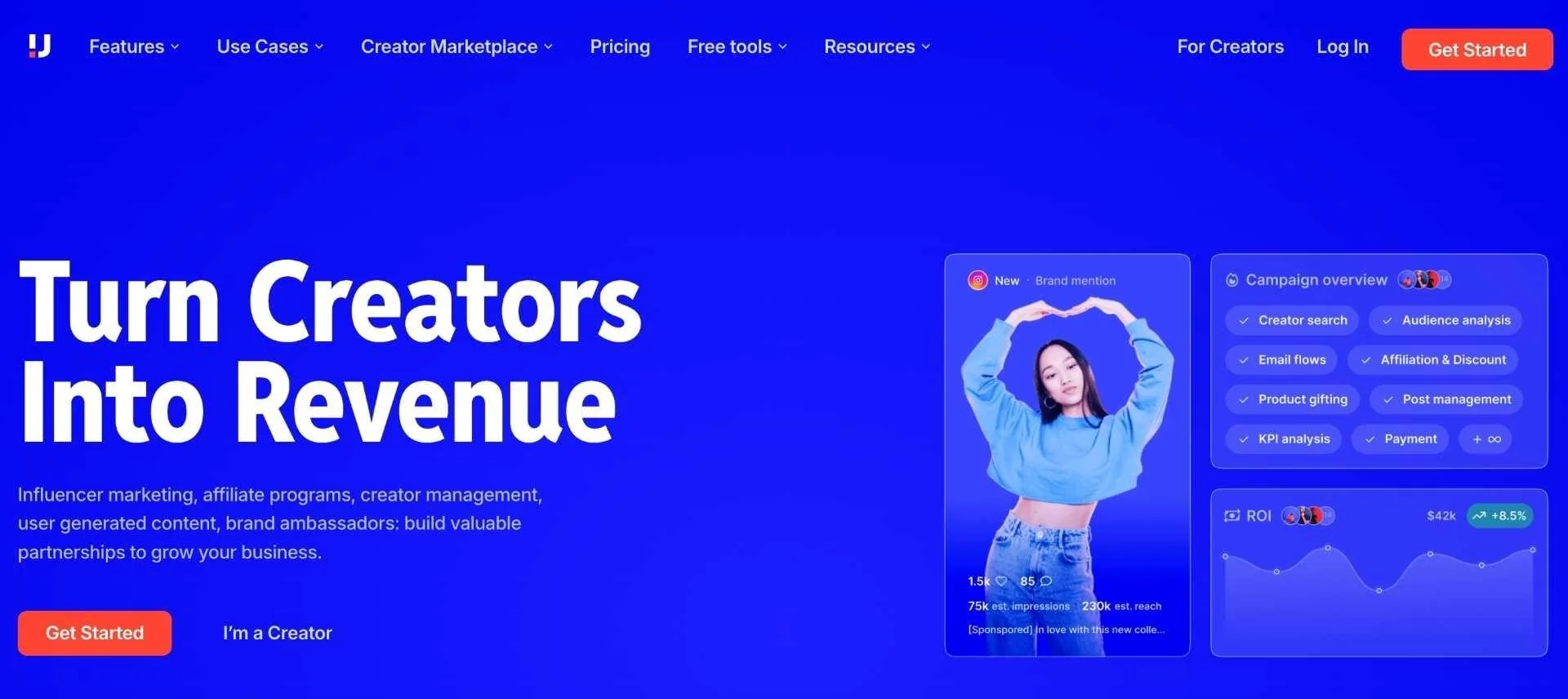
Upfluence combines influencer search, affiliate tracking and creator payments for online stores, Amazon sellers and agencies. Its best-known feature is finding influencers among a brand’s own shoppers and subscribers, and it charges a fixed platform fee instead of a share of creator sales.
Key Features
- Creator database: Brands search 12M+ creators with filters and lookalike suggestions to build focused lists.
- Recruitment pages: Landing pages collect applications from creators who want to work with the brand.
- AI email assistant: Outreach is written and personalized with AI and sent from the brand’s inbox.
- Commission tracking: Affiliate links and promo codes record sales and commissions per creator.
- Social listening: Brands monitor mentions to find creators already talking about their products.
Pricing
Upfluence prices are custom and shared after a sales call. The company offers three tiers, requires a 12-month minimum contract and states that it never charges a percentage of creator sales. Independent data shows a typical spend of about $15,000 a year.
Reviews
4.6/5.0 (G2, 140 reviews) and 4.4/5.0 (Capterra, 44 reviews)
Pros
- Sales-focused features: Codes, affiliate links and store integrations tie creators to revenue.
- Predictable fees: A fixed platform fee avoids paying more as creator sales grow.
- Supportive onboarding: Reviewers highlight helpful account managers.
Cons
- Annual lock-in: The 12-month minimum limits flexibility for smaller teams.
- Dated in places: Some users find parts of the interface clunky.
- Pricing not public: Budgets depend on a quote.
Integrations
- Shopify: Codes, shipments and creator sales sync with the store.
- WooCommerce: WooCommerce orders are tracked against creators in the same way.
- Amazon Attribution: Amazon sellers measure creator-driven marketplace sales.
- Gmail: Outreach runs from the brand’s Gmail account with replies logged in Upfluence.
- Zapier: Other tools connect through Zapier automations.
OpenSponsorship vs Upfluence
Both OpenSponsorship and Upfluence help brands find and pay partners, but Upfluence stands out with a self-serve workflow that covers search, outreach, gifting, affiliate codes and payouts. It is also one of the more established influencer discovery tools for eCommerce brands that measure results in sales.
OpenSponsorship, on the other hand, focuses on athletes and on a managed team that handles negotiations for the brand. Upfluence gives the brand control but expects it to run campaigns itself. For eCommerce brands that want to manage a large creator and affiliate program in-house, Upfluence might suit you better.
Afluencer
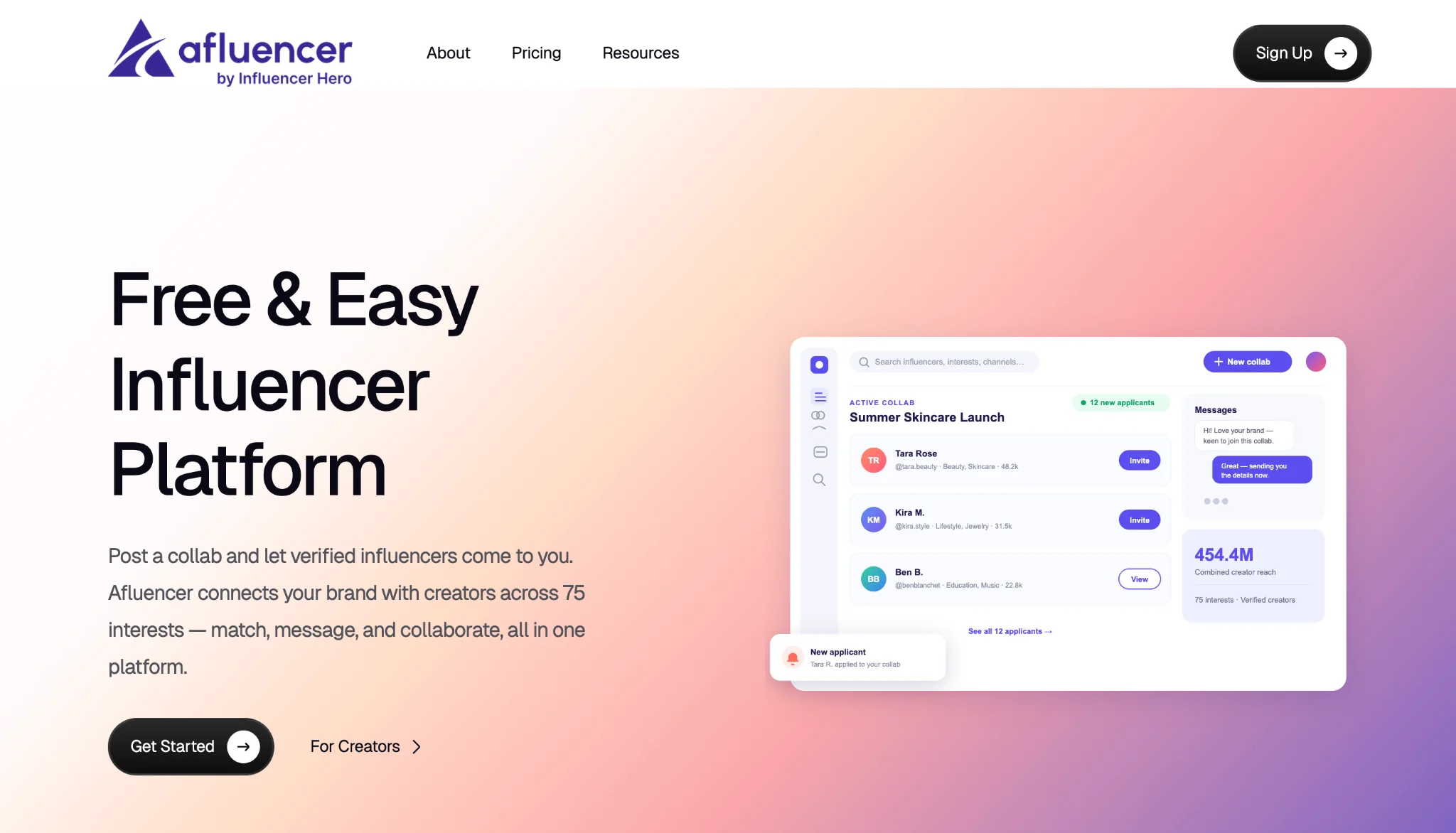
Afluencer connects small businesses with creators through collaboration listings that creators apply to. It is popular with Shopify brands looking for micro-influencers, thanks to its simple setup and a paid entry plan of $49 a month.
Key Features
- Collab listings: Brands post the offer and deliverables, and creators who are interested send an application.
- Creator directory: Brands browse verified creator profiles and send invitations.
- CreatorGPT: AI sorts applicants by how well they match the collab.
- In-app chat: Brands message creators directly without leaving the platform.
- Product shipping: Standard and Pro plans add product send-outs and creator payments.
Pricing
Afluencer’s brand plans start at $49 a month and are billed monthly:
- Marketplace: $49 a month for 60 monthly invitation credits, premium filters and live chat support
- Standard: $649 a month for 1,000 monthly reachouts, product send-outs and creator payments
- Pro: $1,049 a month for 5,000 monthly reachouts, a dedicated account manager and three or more seats
Reviews
4.6/5.0 (G2, 738 reviews) and 4.1/5.0 (Shopify App Store, 37 reviews). Creators wrote many of the G2 reviews.
Pros
- Affordable start: Small brands can test creator collaborations for $49 a month.
- Interested creators: Applicants want the collaboration, which usually speeds up communication.
- No long contract: Plans are billed month to month.
Cons
- Mixed applicant quality: Some applicants do not match the brand’s niche.
- Stronger in the US: Creator supply outside the US can be thinner.
- Simple analytics: Audience reporting is basic compared with larger platforms.
Integrations
- Shopify: Brands connect their store through the Shopify app.
- Klaviyo: Creator contacts move into Klaviyo for email follow-ups.
- DocuSign: Agreements are signed electronically before content is created.
- Slack: The team is notified in Slack when applications arrive.
- Amazon: Creator traffic can point to Amazon product listings.
OpenSponsorship vs Afluencer
OpenSponsorship and Afluencer both let partners apply to a brand’s campaign, but Afluencer stands out with a self-serve marketplace of everyday creators and a $49 starting price. Its guide to booking influencers shows how brands can go from listing to confirmed collaboration without an agency.
OpenSponsorship, on the other hand, focuses on athletes and charges $2,000 a month for a managed service. The two platforms reach very different partners at very different price points. Small fitness or wellness brands that want micro-creators rather than professional athletes can start with Afluencer.
CreatorIQ
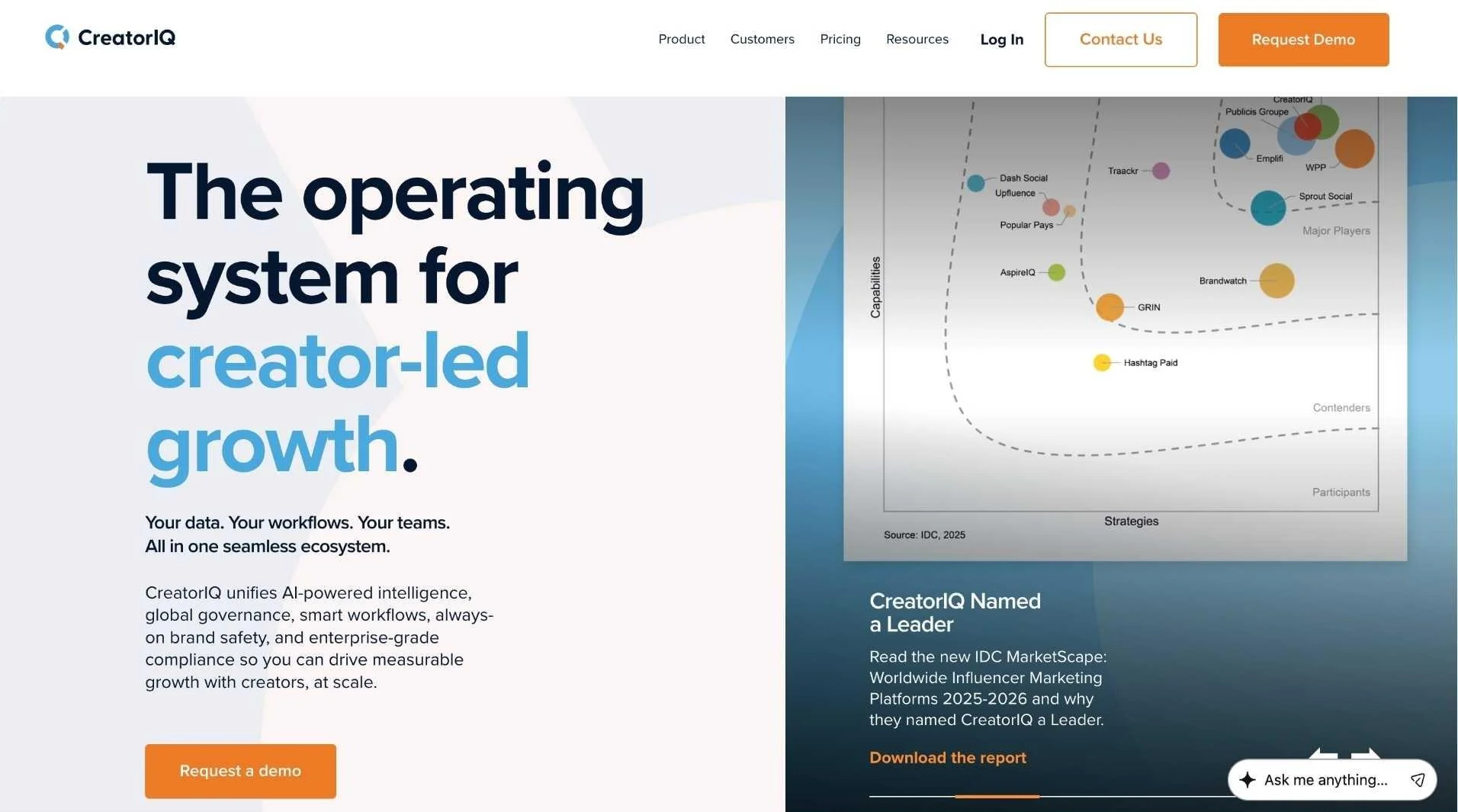
CreatorIQ is used by global brands and agencies to run creator marketing with enterprise controls. The platform is built around its own creator data layer and adds AI brand safety, competitive benchmarking and governance for large teams working across many markets.
Key Features
- AI discovery: The Creator Graph helps enterprise teams find creators by audience, content and past brand partnerships.
- CreatorIQ Pay: Creator payments are handled in the platform, reducing admin for big rosters.
- Benchmarking: BenchmarkIQ compares a brand’s creator results with competitors.
- Brand safety: SafeIQ uses AI to flag risky content before it affects the brand.
- Open API: ExchangeIQ connects creator data to internal systems and BI tools.
Pricing
CreatorIQ does not publish its prices, and brands receive a quote after a call. Contract data from purchasing platforms shows a median of roughly $39,250 a year, with no free trial available.
Reviews
4.6/5.0 (G2, 583 reviews) and 4.5/5.0 (Capterra, 17 reviews)
Pros
- Depth of data: Enterprise teams get detailed creator and campaign analytics.
- Compliance tools: Brand safety and governance support regulated industries.
- Scales across markets: Large programs can be managed across regions and teams.
Cons
- Enterprise budget needed: Annual contracts start in the tens of thousands of dollars.
- Learning curve: The interface can feel crowded for new users.
- Payment delays reported: Some reviewers mention slow creator payments.
Integrations
- Shopify: Product gifting is managed through the storefront.
- Impact: Commission data from Impact appears in creator reports.
- Awin: Awin affiliate results connect to creator performance.
- Tableau: Leadership dashboards pull creator data from CreatorIQ.
- DocuSign: Creator contracts are signed and filed digitally.
OpenSponsorship vs CreatorIQ
Both platforms serve brands with large sponsorship or creator budgets, but CreatorIQ stands out with enterprise software for discovery, compliance, benchmarking and payments across entire creator programs. Brands keep control of the work in-house with detailed reporting for leadership.
OpenSponsorship, on the other hand, focuses on managed athlete deals, where its team handles sourcing and negotiation. CreatorIQ provides the infrastructure, while OpenSponsorship provides the people and the athlete network. For global brands with in-house influencer teams and strict compliance needs, CreatorIQ is the closer fit.
Skeepers
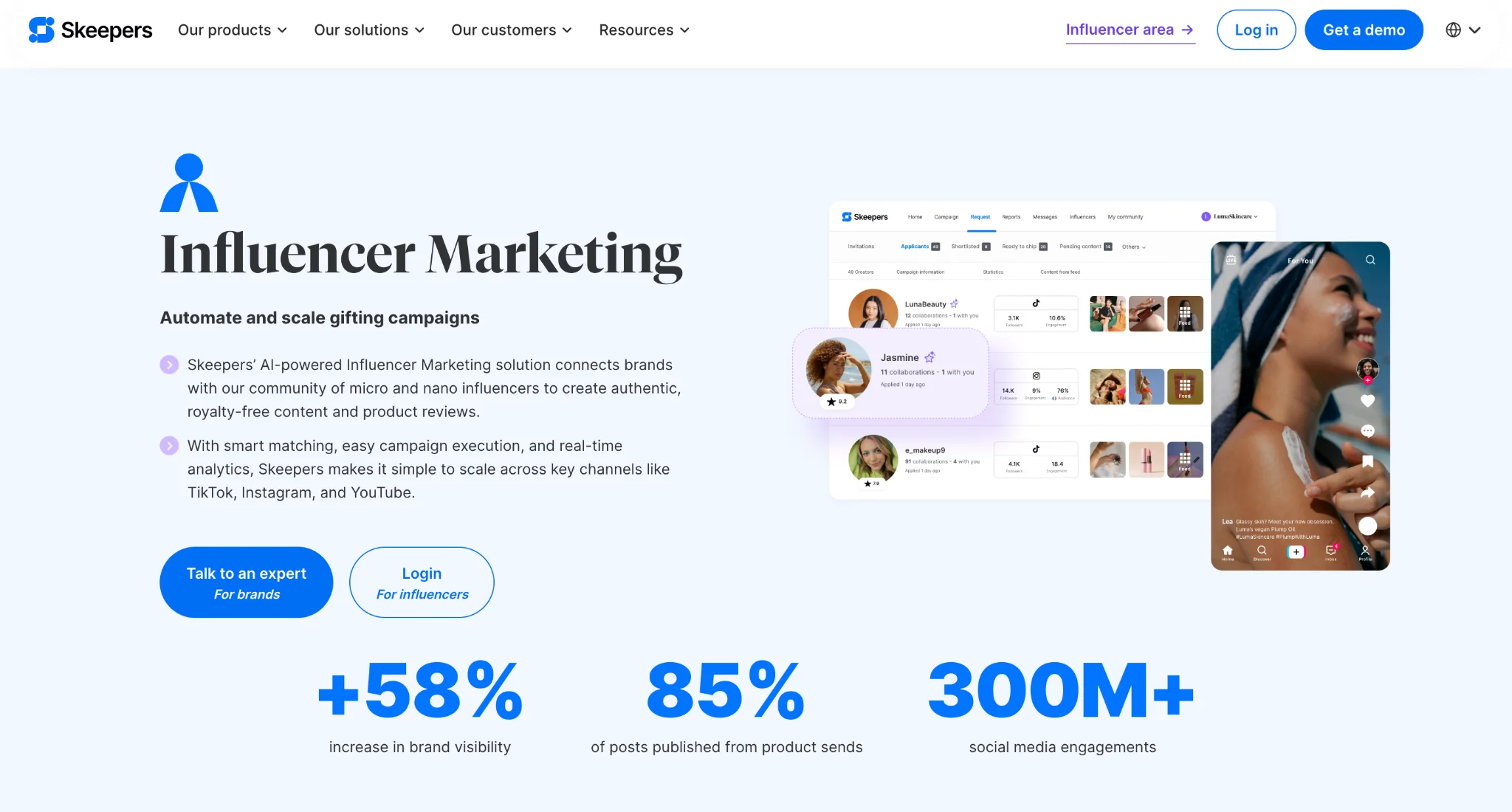
Skeepers is a French customer experience group that combines reviews, live shopping, user content and an influencer offer. Its influencer module focuses on product seeding with vetted micro and nano creators, especially in beauty, fashion and lifestyle categories.
Key Features
- Screened creator community: Over 400,000 creators meet minimum standards for audience size, engagement and local reach.
- Automatic matching: AI invites suitable creators to each campaign based on the brief.
- Seeding for reviews: Creators test products and post honest opinions that support product pages.
- Ambassador feature: My Community helps brands keep strong creators and customers involved long term.
- TikTok Shop connection: Creator content can link straight to TikTok Shop purchases.
Pricing
Skeepers shares pricing after a demo. Directory listings put the influencer module at around €1,250 a month, separate from other Skeepers products.
Reviews
4.4/5.0 (G2, 92 reviews) and 4.3/5.0 (Capterra, 35 reviews)
Pros
- Volume seeding: Brands can reach many micro-creators with one campaign.
- Content ownership: Brands keep the rights to reuse creator posts.
- Attentive support: Reviewers praise the account managers.
Cons
- Creator relevance varies: Some creators in campaigns are a weak fit.
- Limited messaging tools: Communication features are basic.
- Technical issues: A few users report lag and bugs.
Integrations
- Shopify: Catalog data syncs so only in-stock products are offered to creators.
- Meta Partnership Ads: Creator posts can be promoted as Instagram and Facebook ads.
- TikTok Spark Ads: Top creator videos can be boosted on TikTok.
- TikTok Shop: Content links to products listed in TikTok Shop.
- YouTube: YouTube creators can join seeding and review campaigns.
OpenSponsorship vs Skeepers
OpenSponsorship and Skeepers both work from a screened network of partners, but Skeepers stands out with product seeding at volume, where micro-creators receive products and share reviews and content. Brands pay for the platform rather than individual appearance fees.
OpenSponsorship, on the other hand, focuses on paid sponsorship deals with athletes, often negotiated through agents. Skeepers builds awareness through many smaller voices, while OpenSponsorship builds credibility through a few recognized names. For beauty and lifestyle brands that want lots of creator reviews rather than a handful of athlete endorsements, Skeepers makes more sense.


Klear
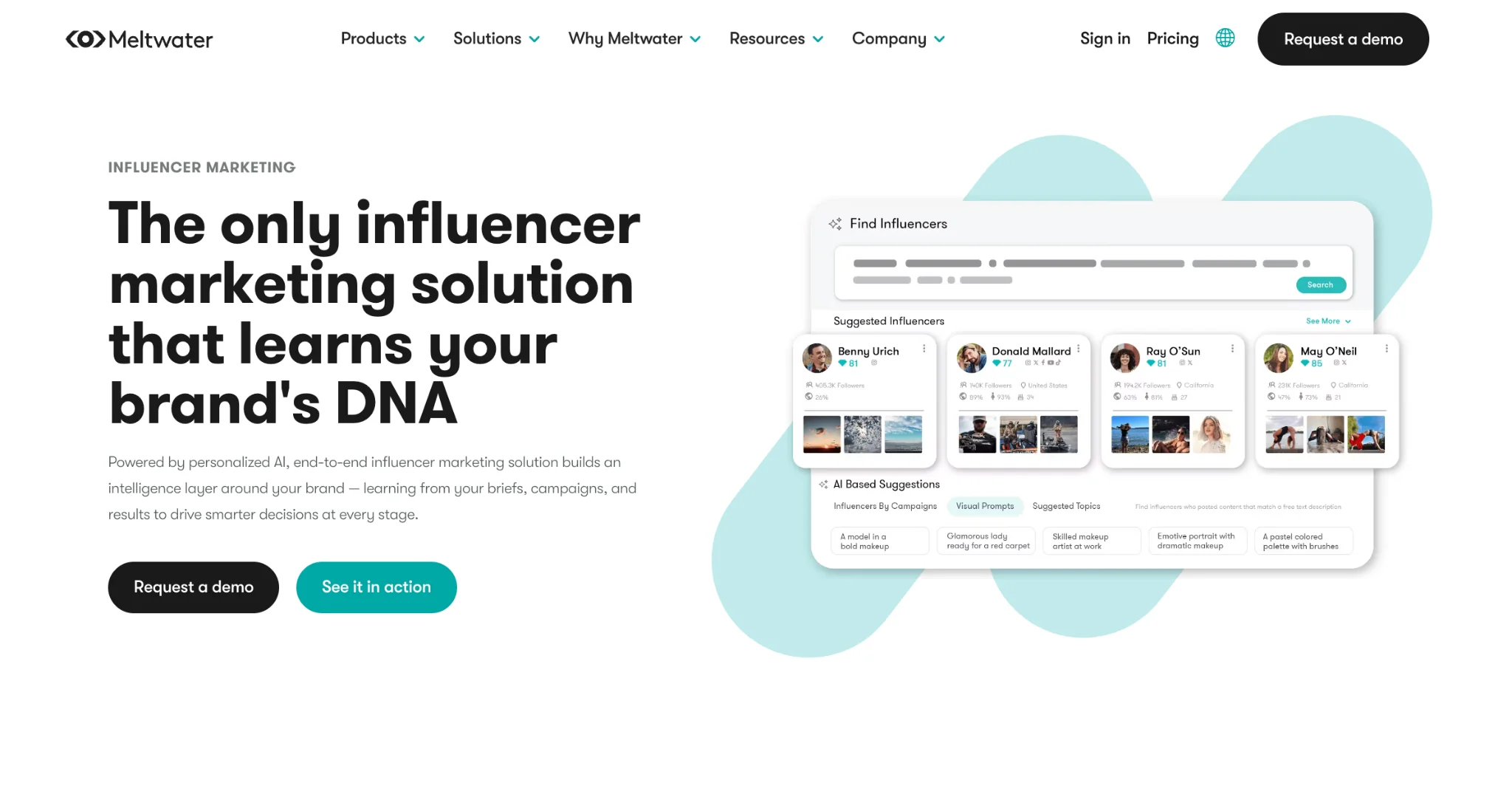
Klear is the influencer marketing part of Meltwater’s media intelligence suite. Brands and agencies that already track news and social conversations in Meltwater use it to find, vet, pay and measure creators from the same account.
Key Features
- 190+ country coverage: Creator search spans a 30M+ database, helping brands find partners in many local markets.
- Audience quality score: The True Reach metric shows how many genuine people each creator reaches.
- Bot detection: Fake-follower checks flag weak audiences before outreach.
- Invoices and contracts: Paperwork for each partnership is handled inside Klear.
- Revenue attribution: Sales from creator codes, plus a tracking pixel for other stores, show the revenue each campaign produced.
Pricing
Meltwater does not publish Klear pricing. The influencer features are part of its Enterprise and Agency packages, which are sold on annual contracts.
Reviews
4.3/5.0 (Capterra, 13 reviews, low review volume)
Pros
- Trusted metrics: True Reach helps brands compare creators fairly.
- End-to-end workflow: Search, payments and reporting sit in one product.
- Media and creator data together: PR and influencer results can be reported side by side.
Cons
- Tied to Meltwater plans: Brands need a higher suite plan to use it.
- Data issues: Some users report bugs in search results.
- Enterprise setup: Pricing and onboarding suit larger teams.
Integrations
- Shopify: Shopify orders with creator codes are credited to each partner.
- WooCommerce: Code-based sales tracking works for WooCommerce stores.
- Klear pixel: Stores on other platforms install a pixel to track campaign sales.
- Tipalti: Creator payments and tax forms run through Tipalti.
- Gigapay: International creators can be paid through Gigapay.
OpenSponsorship vs Klear
Both platforms support paid partnerships, but Klear stands out with self-serve creator discovery, audience checks, payments and sales tracking inside a wider media intelligence suite. It suits brands that want to measure influencer work alongside PR coverage.
OpenSponsorship, on the other hand, focuses on a managed athlete network with negotiation handled by its team. Klear leaves the outreach and management to the brand. For communications teams already paying for Meltwater that want creator results next to media monitoring, Klear is worth the call.
Later

Social media company Later runs its influencer business under the Later Influence name, which was previously called Mavrck. It supports enterprise brands with software, a managed services team or both, and runs a creator affiliate network through Mavely.
Key Features
- Performance predictions: Later EdgeAI draws on data from more than 20M creators to estimate results before a campaign starts.
- Creator rate data: The Incentive Advisor suggests fair fees, which helps with budgeting and negotiation.
- Services team: Brands can hand campaign planning and management to Later’s specialists.
- Unified reports: Paid, organic and sales results are shown in one view.
- Mavely network: Creators earn affiliate commission through large retail partners.
Pricing
Later Influence is sold through sales on three plans, Platform, Platform + Services and Services. None of them is priced publicly, and the influencer product has no trial.
Reviews
4.5/5.0 (G2, 469 reviews) and 4.6/5.0 (Capterra, 135 reviews)
Pros
- Managed option: Brands can outsource campaign work to Later’s team.
- Rate guidance: Market data helps brands pay creators fairly.
- Positive support reviews: Users often mention responsive account teams.
Cons
- Sales-led pricing: Costs are only known after talking to sales.
- Occasional tracking gaps: Some reviewers mention reporting glitches.
- Niche search limits: Very specific creator searches can be difficult.
Integrations
- Shopify: Gifting uses single-use codes and creator product selection.
- Instagram API: Posts and stories are captured for reporting.
- TikTok One: TikTok video data feeds campaign results.
- Meta Partnership Ads: Brands boost creator posts from inside Later.
- Mavely: Retail affiliate links and commissions run through Later Creator.
OpenSponsorship vs Later
Both OpenSponsorship and Later combine a platform with a managed team, but Later stands out with predictive analytics, fee guidance and an affiliate network that ties creators to retail sales. Its services cover general creator marketing at enterprise scale.
OpenSponsorship, on the other hand, focuses on athletes and publishes its managed plans at $2,000 and $5,000 a month. Later quotes each deal individually and works with a much wider creator base. For large brands that want a managed team running lifestyle and retail creator campaigns, Later might suit you better.
Creator.co

Creator.co offers influencer and affiliate marketing for small and mid-sized D2C brands in categories such as beauty, food and fashion. Brands can use the software on their own or add a managed team, and an AI agent called London helps with creator discovery.
Key Features
- AI creator lists: London builds shortlists of creators that match each campaign.
- Open marketplace: Registered creators apply to campaigns, giving brands inbound options.
- Brief Builder: AI helps brands write clear campaign briefs in minutes.
- Digital wallet: Creator payments and budgets are managed in one place.
- ROAS dashboards: Affiliate links and codes show which creators generate sales.
Pricing
Creator.co lists three plans on its website:
- Self Serve: from $199 a month on yearly billing, or $299 a month with a three-month minimum
- Managed: from $1,499 a month on yearly billing, or $2,199 a month with a six-month minimum
- Enterprise: custom pricing on an annual contract
Self Serve comes with a 14-day free trial, and brands can buy 100 extra contact credits for $99.
Reviews
4.6/5.0 (G2, 124 reviews)
Pros
- Transparent plans: Brands can compare self-serve and managed costs upfront.
- AI support: London and the Brief Builder speed up campaign setup.
- Flexible service: A managed team can be added as the program grows.
Cons
- Regional limits: Creator supply is strongest in North America.
- Credit-based outreach: Contact credits can run out for high-volume teams.
Integrations
- Shopify: Gifting orders are created as Shopify draft orders.
- Shopify affiliate: Commission rates and tracking links are set for creators.
- Impact: Impact affiliate data syncs into Creator.co reports.
- AWIN: Existing AWIN programs connect to creator campaigns.
- CJ: CJ commissions are reported alongside creator performance.
OpenSponsorship vs Creator.co
OpenSponsorship and Creator.co both offer a managed service, but Creator.co stands out with a self-serve plan from $199 a month and built-in affiliate tracking that shows which creators drive sales. Brands can start small and add a managed team later.
OpenSponsorship, on the other hand, focuses on athletes and starts at $2,000 a month for its managed plan. Creator.co’s own managed plan starts lower and covers general creators. Small D2C brands that want software plus support without an athlete-level budget will find Creator.co a good match.
Insense
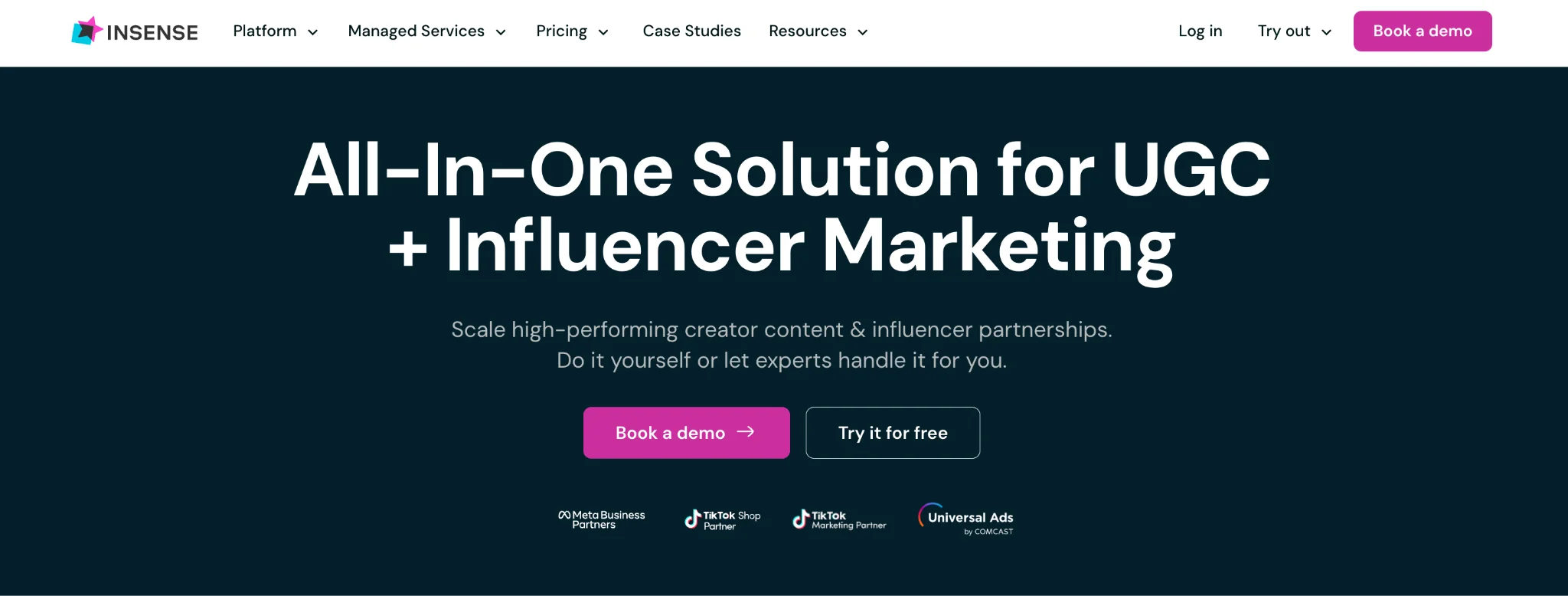
Insense is a creator marketplace for UGC and paid social content, trusted by over 3,500 D2C brands, app developers and agencies. Brands choose it for fast, licensed video production and for whitelisting creator content in Meta and TikTok ads.
Key Features
- Global creator pool: Over 100,000 vetted creators in 35+ countries respond to briefs.
- 14-day UGC delivery: Brands receive edited and raw videos within about two weeks.
- Whitelisting: Creator content runs as Meta Partnership Ads or TikTok Spark Ads.
- Shopify seeding: Products ship to creators straight from the store.
- Lifetime usage rights: Content can be reused in ads without new permissions.
Pricing
Insense publishes three plans, and a marketplace fee applies to creator payments:
- Trial: $650 for one month, covering up to 10 creators with a 20% fee
- Brand: $400 a month on yearly billing or $500 a month on quarterly billing, with a 10% fee
- Agency: $640 a month on yearly billing or $800 a month on quarterly billing, with a 7% fee
Creator fees are paid on top, with UGC videos starting at around $100.
Reviews
4.5/5.0 (G2, 374 reviews). A large portion of reviewers are creators.
Pros
- Content made for ads: Videos arrive licensed and ready for paid social tests.
- Upfront creator prices: Brands see rates before booking.
- Fast production: Content is delivered within about two weeks.
Cons
- Several cost layers: Subscription, fees and creator costs combine.
- Trial converts automatically: The trial becomes a paid plan unless cancelled.
- Slow support at times: Some reviewers report delayed replies.
Integrations
- Shopify: Brands send products to groups of creators from their store.
- Meta Partnership Ads: Brands promote creator videos as ads that appear under the creator’s name.
- TikTok Spark Ads: Videos are boosted on TikTok with creator permission.
- Gmail: Outreach emails go out from the brand’s Gmail.
- Stripe: Creators are paid through Stripe.
OpenSponsorship vs Insense
Both platforms take care of creator payments, but Insense stands out with fast, licensed UGC made for paid social, at a monthly price well below OpenSponsorship’s managed plans. Brands get video content they own and can use across ads.
OpenSponsorship, on the other hand, focuses on athlete endorsements, where the value comes from the athlete’s name and credibility. Insense is about content volume and ad performance. For fitness and wellness brands that mainly need ad creative from real users rather than famous names, Insense is worth a closer look.
Lefty
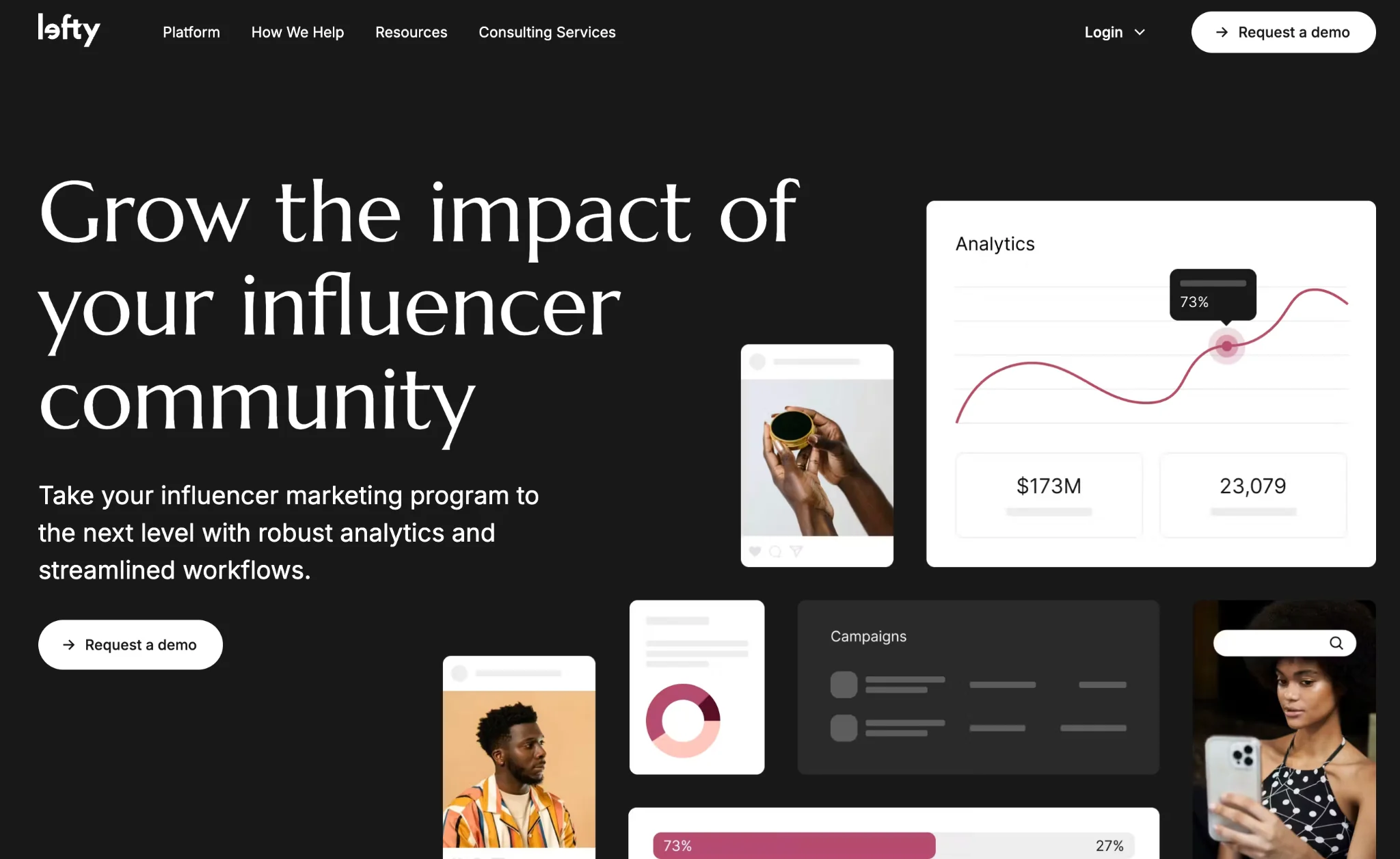
Lefty is a French influencer marketing platform that serves luxury, fashion and beauty brands. Teams use it for creator discovery, gifting, affiliation and competitive analytics that track share of voice in their category.
Key Features
- Affinity-based discovery: A 30M+ profile database can be filtered by audience demographics and brand affinity.
- Collaborative casting: Several team members can review and approve creator shortlists together.
- Product request pages: Creators ask for products or loans through branded pages.
- Competitive benchmarks: Reports compare a brand’s creator presence with competitors.
- Commissions and codes: Each creator can receive a promo code and commission, so sales can be traced back to their posts.
Pricing
Lefty does not show prices on its website. Its Capterra listing starts at roughly €590 a month per feature, and a trial is available through the sales team.
Reviews
4.7/5.0 (G2, 92 reviews)
Pros
- Easy to use: Reviewers describe a clean, intuitive interface.
- Category benchmarking: Share-of-voice data helps brands track competitors.
- Detailed audiences: Profile data supports careful creator selection.
Cons
- Premium pricing: Some users feel the cost is high for what they use.
- Limits on tracking: Caps on tracked profiles create extra manual work.
Integrations
- Shopify: Gifts and loan requests are fulfilled from live Shopify stock.
- Magento: Magento brands use the same seeding workflows.
- Salesforce Commerce Cloud: Retail groups on Salesforce Commerce Cloud run seeding from their existing stack.
- Stripe: Creators are paid globally with a full audit trail.
- YouTube: Creator videos are captured automatically for campaign reporting.
OpenSponsorship vs Lefty
Both platforms work with carefully selected partners, but Lefty stands out with self-serve discovery, gifting, affiliation and competitive analytics built for premium brands. It gives marketing teams data on how their creator presence compares with rivals.
OpenSponsorship, on the other hand, focuses on athlete sponsorships handled by a managed team. Lefty suits brands whose partners are fashion and beauty creators rather than sports figures. Luxury and fashion houses that want curated creator partnerships and category benchmarks should shortlist Lefty.
Final Thoughts on OpenSponsorship Alternatives
OpenSponsorship is a solid choice for sports, fitness and nutrition brands that specifically want athletes and are happy to pay for a managed team to handle agents and contracts. The key number is the fee as a share of athlete spend, since $2,000 a month is reasonable against a large sponsorship budget and heavy against a small one. Brands should also check how they will measure sales, because the platform does not track codes or store revenue. If most of your creators are lifestyle or product influencers rather than athletes, OpenSponsorship alternatives with self-serve pricing and affiliate tracking will usually stretch the budget further.