

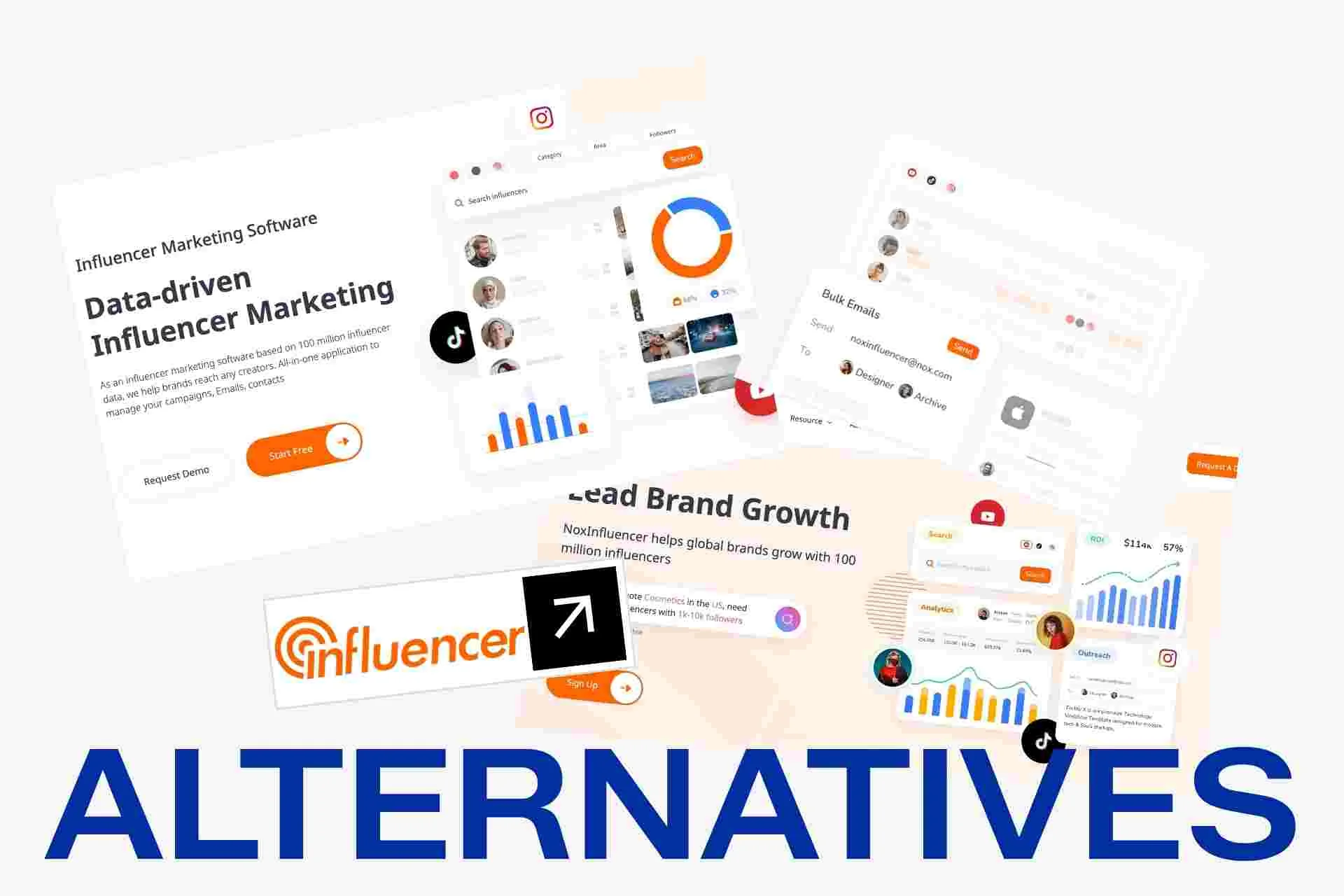
10 Best Noxinfluencer Alternatives for Influencer Marketing
Managing influencer marketing at scale has become a core growth lever for D2C brands, especially when it comes to finding the right creators, running outreach efficiently, and tracking performance tied to revenue. Tools like Noxinfluencer have gained traction for their strong discovery capabilities and accessible analytics, helping teams quickly identify and evaluate influencers across platforms. However, many brands start looking for Noxinfluencer alternatives as they scale—often due to limitations in data accuracy, a relatively shallow integration ecosystem, inconsistent support, and weaker capabilities for managing complex, multi-channel campaigns end-to-end. This makes choosing the right influencer marketing software critical, whether you’re just starting or optimizing an existing creator program.
In this article, we compare the 10 best Noxinfluencer alternatives—Upfluence, SARAL, GRIN, Influencer Hero, IZEA, Later, Ainfluencer, indaHash, Influencity, and Modash—to help you find the right fit for your needs.
Key Criteria for Evaluating Influencer Marketing Platforms
Core Features
Evaluation of essential influencer marketing capabilities, including influencer discovery, outreach, CRM, campaign management, reporting, and content workflows.
Pricing & Flexibility
Comparison of pricing models, subscription plans, and contract terms to match different budgets and growth stages.
Customer Reviews & Satisfaction
Analysis of user feedback from trusted review platforms, focusing on usability, reliability, customer support, and overall performance.
Pros & Cons
Review of each platform’s strengths and limitations to highlight where it performs well and where it may fall short based on different use cases.
Integrations
Review of the most important integrations (e.g., Shopify and other tech tools), highlighting what each integration enables in one sentence.
Noxinfluencer Overview
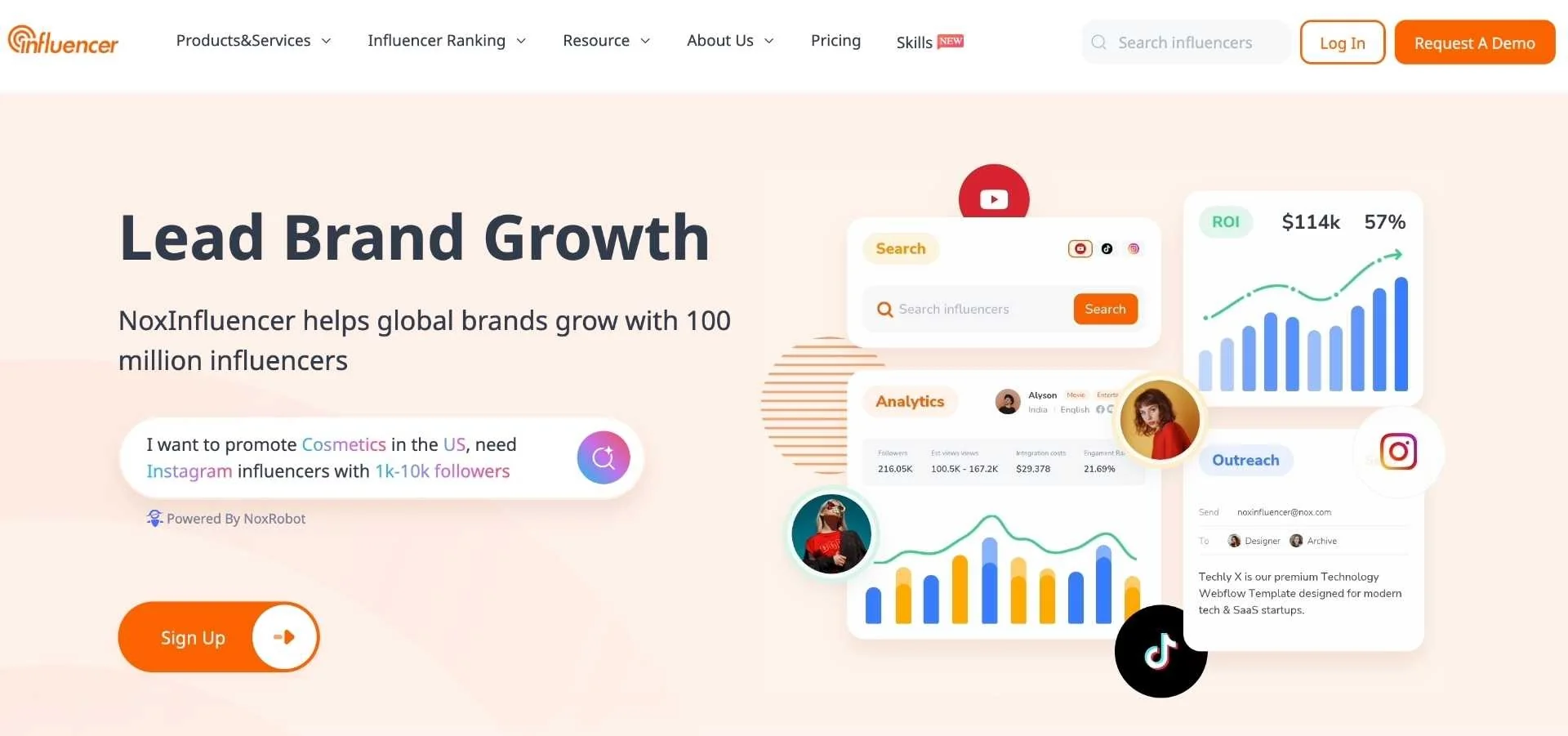
Noxinfluencer is an influencer marketing and creator analytics platform designed to help brands discover influencers, analyze performance data, and manage campaigns across major social platforms. It is primarily known for its large creator database and strong analytics capabilities, making it a popular choice for teams focused on influencer discovery and market research. Over time, the platform has expanded into outreach, campaign management, and affiliate tracking, positioning itself as a more complete (but still discovery-first) influencer marketing solution.
Key Features
• Extensive Influencer Database — Access a large global pool of creators across platforms like YouTube, Instagram, and TikTok, with advanced filters for niche, audience demographics, engagement rate, and location.
• AI-Powered Influencer Search — Built-in AI tools help brands quickly identify relevant creators based on campaign goals, reducing manual research and speeding up shortlist creation.
• Detailed Creator Analytics — Provides insights into engagement rates, audience demographics, estimated costs, growth trends, and historical performance to support better influencer selection.
• Brand & Competitor Intelligence — Analyze which influencers competitors are working with, track brand mentions, and evaluate campaign exposure trends to inform strategy.
• Campaign Management Tools — Manage influencer campaigns, track outreach, and organize creator relationships within a centralized workflow.
• Bulk Outreach & Email Integration — Send mass outreach emails, manage conversations, and generate AI-assisted email copy directly within the platform.
• Affiliate Marketing & Shopify Integration — Create trackable links, generate discount codes, and monitor conversions for influencer-driven sales campaigns.
• API & Data Access — Offers API access for YouTube, TikTok, and Instagram data, enabling teams to integrate influencer data into internal tools or dashboards.
• Managed Services Option — Provides access to influencer marketing experts for brands that want hands-on campaign support rather than a fully self-serve approach.
Pricing
Noxinfluencer’s pricing has evolved over time, but based on the latest available information:
• Business Plan (Quarterly): $1,499 / 3 months Suitable for short-term campaigns or testing the platform.
• Business Plan (Annual): $3,899 / year Designed for growing teams focused on influencer discovery and analytics.
• Enterprise Plan: $7,999 / year Built for larger teams running more advanced influencer programs.
• Custom Plan: Custom pricing Tailored for brands with specific needs or higher usage requirements.
• Free Trial Available Limited access trial available upon sign-up or demo request.
Reviews
Not available
Integrations
• Shopify — Track influencer-driven sales, generate discount codes, and manage affiliate campaigns directly.
• Gmail — Send and manage influencer outreach emails within the platform.
• Custom Business Email — Use your company domain for outreach to maintain brand consistency.
• YouTube API — Access detailed channel and video performance data for influencer analysis.
• Instagram & TikTok Data APIs — Pull audience insights, engagement metrics, and content performance data for campaign planning.
Pros
• Strong discovery and analytics capabilities — One of the platform’s biggest strengths is its ability to surface a large number of creators with detailed performance and audience insights, making it ideal for research-heavy teams.
• Competitive intelligence features — The ability to analyze competitor campaigns and identify influencers already working in your niche gives brands a strategic advantage.
• Improving eCommerce and automation features — Recent additions like Shopify affiliate tracking and AI-assisted outreach make the platform more actionable beyond just discovery.
Common Drawbacks of Noxinfluencer
Data accuracy can vary
Some performance and cost estimates are modeled rather than exact, which can lead to discrepancies when planning budgets or forecasting ROI.
Limited ecosystem compared to enterprise tools
While it covers core workflows, it lacks the depth of integrations, automation, and extensibility found in more mature platforms.
Mixed experience with customer support
Response times and support quality can be inconsistent, especially for teams that require hands-on assistance.
Not ideal for large-scale campaign execution
The platform is stronger in discovery and analytics than in fully managing complex, multi-market influencer programs.
Smaller review footprint and trust signals
Compared to competitors, there is less publicly available feedback, making it harder for buyers to validate long-term reliability.
Best Noxinfluencer Alternatives
| TOOL | REVIEWS | BEST FOR | TRIAL INFO | PRICING | ||
|---|---|---|---|---|---|---|
1 |
|
⭐ | Influencer discovery | Book Demo | Pricing | Website |
2 |

|
⭐ | UGC creator collaborations | Book Demo | Pricing | Website |
3 |

|
⭐ | DTC creator management | Book Demo | Pricing | Website |
4 |

|
⭐ | Influencer CRM & automation | Book Demo | Pricing | Website |
5 |
|
⭐ | Influencer marketplace | Book Demo | Pricing | Website |
6 |
|
⭐ | Social media & influencer campaigns | Book Demo | Pricing | Website |
7 |
|
⭐ | Influencer discovery & outreach | Book Demo | Pricing | Website |
8 |
|
⭐ | Enterprise creator campaigns | Book Demo | Pricing | Website |
9 |

|
⭐ | Campaign management | Book Demo | Pricing | Website |
10 |

|
⭐ | Influencer discovery | Book Demo | Pricing | Website |
Upfluence

Upfluence is an all-in-one influencer and affiliate marketing platform built primarily for eCommerce brands that want to connect creator activity directly to revenue. It is especially well known for its discovery database, bulk outreach tools, affiliate workflows, and commerce integrations for brands selling through Shopify and Amazon.
Key Features
• Influencer discovery and AI-assisted search — Upfluence gives brands access to a large influencer database with filters for niche, location, engagement, audience demographics, and brand fit, while Jaice AI helps shortlist creators faster.
• Bulk outreach and drip campaigns — Brands can run high-volume email outreach with automated follow-ups, making it easier to scale creator recruitment without handling every message manually.
• CRM and campaign management — The platform centralizes influencer communication, list management, campaign stages, and creator performance tracking in one system.
• Affiliate and sales tracking — Upfluence is strong on affiliate workflows, with promo codes, tracking links, conversion monitoring, and custom compensation models tied to creator performance.
• Shopify customer-to-creator matching — One of its biggest differentiators is the ability to identify existing customers who are also influencers, helping brands turn real buyers into partners.
• Amazon attribution support — For marketplace brands, Upfluence also supports Amazon-focused affiliate tracking and sales attribution.
• Social listening and market research — The platform includes social listening tools for trend spotting, competitor research, and identifying content already performing in your category.
• Payments and payouts — Upfluence supports bulk creator payments inside the workflow, reducing the need for a separate payout tool.
Pricing
• Pricing model: Upfluence uses custom pricing rather than a public fixed plan table.
• All plans are custom made. There’s a minimum full year of service you have to commit to with monthly payments. On average plans start around $1,276 - $2,000/month ($24,000 yearly)
Reviews
4.3/5.0 (Capterra)
Pros
• Deep Shopify and Amazon revenue attribution — Upfluence stands out for tying discovery, outreach, affiliate links, promo codes, and sales tracking into commerce workflows, which is especially valuable for DTC and marketplace brands.
• Jaice AI for campaign execution — Its AI layer now goes beyond simple copy generation by helping automate outreach, gifting, approvals, and payments within one creator workflow.
• Customer-as-influencer identification — Few platforms emphasize this as strongly as Upfluence; finding influential customers already buying from your store can improve conversion rates and lower acquisition costs.
Cons
• Annual commitment and premium pricing — The 12-month minimum contract can be a barrier for smaller brands or teams that want more flexibility.
• Steeper learning curve — The platform is feature-rich, but that depth can make setup and workflow management harder for lean teams.
• Less flexible campaign editing — Some teams find campaign configuration more rigid than expected once workflows are already in motion.
Integrations
• Shopify — Identify influential customers, send gifts, create discount codes, and track creator-driven sales from your store.
• Amazon — Attribute influencer-driven marketplace sales and affiliate performance more accurately.
• Klaviyo — Enrich email lists with creator data and activate influencer or customer-creator campaigns from your email stack.
• Gmail / Outlook — Sync outreach with your inbox so creator communication can be managed inside Upfluence.
• Stripe — Power creator payments and transaction tracking through Upfluence Pay.
Noxinfluencer vs Upfluence
Noxinfluencer is more discovery-and-analytics-led, while Upfluence is more commerce-led. If the goal is researching creators, competitor activity, and channel metrics at a lower entry point, Noxinfluencer is often the easier fit. Upfluence becomes stronger when a brand wants to operationalize influencer marketing as a revenue channel rather than just a sourcing channel.
The biggest differences are around integrations and workflow depth. Upfluence offers much stronger Shopify and Amazon connectivity, better affiliate infrastructure, and a more mature CRM-plus-outreach system. Noxinfluencer is useful for finding and analyzing creators, but Upfluence is the more complete option for DTC brands that want discovery, gifting, affiliate management, and sales attribution under one roof.
SARAL
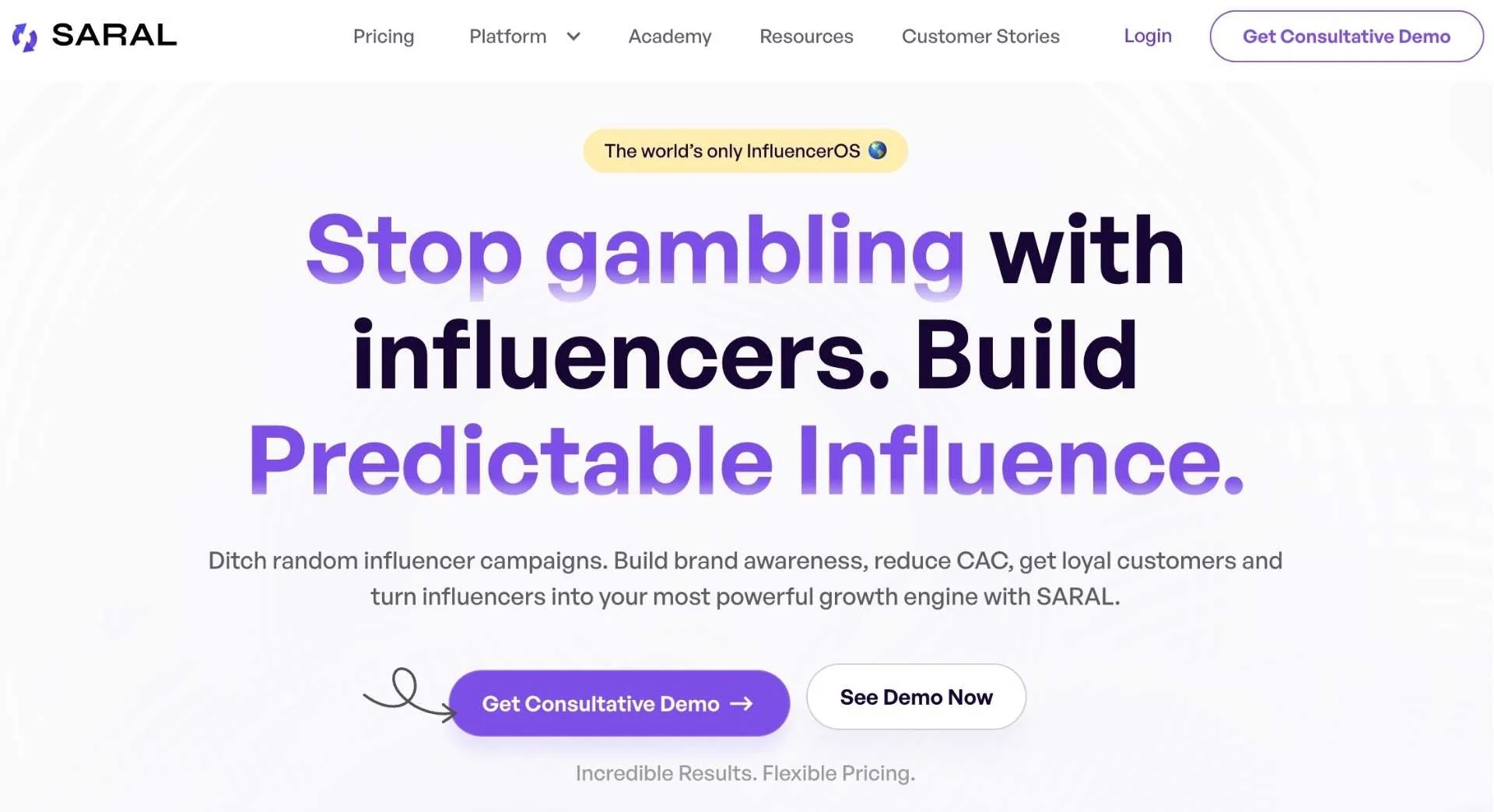
SARAL is an influencer marketing platform built for eCommerce and consumer brands that want a simpler, more transparent alternative to enterprise creator software. Its positioning is very clear: streamline influencer discovery, outreach, relationship management, and performance tracking without forcing brands into overly complex workflows.
Key Features
• Influencer discovery for DTC brands — SARAL helps brands find creators, save prospects, and organize them into a more structured outreach pipeline.
• Automated outreach workflows — It supports influencer outreach at scale so teams can move beyond spreadsheets and manual follow-up.
• Influencer relationship management — SARAL’s InfluencerOS combines CRM-style relationship tracking, campaign visibility, and performance data in one interface.
• Cross-platform performance tracking — The platform tracks campaign performance across multiple social channels in one dashboard and supports CSV exports for reporting.
• Affiliate and gifting workflows — Through store integrations and affiliate tooling, brands can send products, generate links, and measure creator-driven sales.
• Software plus strategy support — SARAL pairs the product with onboarding, success support, and strategy guidance, which is a meaningful differentiator for smaller teams.
Pricing
• Starter: $12,000/year or $3,600/quarter — includes 100 active partnerships, 300 new influencers monthly, post tracking, and 1 seat.
• Business: $15,000/year or $4,500/quarter — includes 500 active partnerships, 800 new saved influencers monthly, unlimited post tracking, and 3 seats.
• Professional: $25,000/year or $7,500/quarter — includes 1,000 active partnerships, 2,000 new saved influencers monthly, unlimited social listening, and 10 seats.
• Free trial available.
Reviews
4.7/5.0 (G2)
Pros
• Transparent pricing and lower complexity — SARAL is unusually upfront about pricing, limits, and plan structure, which makes it easier for growing DTC brands to budget and compare tools.
• Unlimited influencer management model — The platform emphasizes that brands are not charged more just because they manage more influencers, which is a strong differentiator as programs grow.
• Software-plus-strategy approach — SARAL pairs the platform with onboarding, dedicated success support, and Slack-based guidance, giving smaller teams more hands-on help than many self-serve tools.
Cons
• More focused on eCommerce brands than broad enterprise use cases — SARAL is best suited to DTC workflows, so larger enterprises needing very deep custom infrastructure may outgrow it.
• Some advanced features are still less mature — Its social listening capability is still described as being in beta in support materials, so it is not as mature as specialist analytics platforms yet.
• Pricing still rises meaningfully with search volume and seats — While simpler than many competitors, SARAL is not a low-cost tool once brands need Business or Professional-level scale.
Integrations
• Shopify — Connect your store to support gifting, creator orders, discount codes, and campaign attribution.
• WooCommerce (via GoAffPro) — Run affiliate tracking and store-linked gifting for WooCommerce brands.
• Klaviyo — Sync creator and customer email data for email-driven retention and revenue workflows.
• Slack — Keep the team aligned with notifications and support workflows tied to influencer program activity.
• Gmail / Outlook / Sendlane — Connect email accounts for creator outreach and workflow management without leaving the platform.
Noxinfluencer vs SARAL
Noxinfluencer is the stronger option if you mainly care about creator analytics, large-scale discovery, and competitor research. SARAL is the better fit if you want a simpler, more operational system for actually running influencer programs, especially in a DTC or Shopify-led environment.
The two platforms also differ in philosophy. Noxinfluencer leans more toward search, analysis, and market intelligence. SARAL leans toward execution: outreach, relationships, gifting, and performance tracking. For brands that feel enterprise tools are overbuilt, SARAL is often the more practical Noxinfluencer alternative.
GRIN

GRIN is a creator management platform built for eCommerce brands that want to run end-to-end influencer programs with stronger control over relationships, product seeding, affiliate tracking, and content workflows. It has long been positioned as a creator CRM for brands that want to own their influencer operations rather than rely on a marketplace-first model, and it now also includes Gia, an AI-powered creator marketing agent.
Key Features
• Creator discovery suite — GRIN offers creator search by niche, audience, engagement, and brand affinity, with access to 32M+ verified creators according to its discovery page.
• Creator CRM and portals — Brands can manage creators with tags, notes, statuses, and portals that centralize briefs, deliverables, discount codes, contracts, and uploads.
• Email-based outreach — GRIN supports outreach through synced email workflows, with tracking for opens, clicks, and replies.
• Product seeding and gifting — GRIN is especially strong at store-linked gifting, letting brands handle inventory, fulfillment, product requests, and shipment tracking from one place.
• Affiliate and commission programs — It combines affiliate links, commission tracking, payouts, and creator landing pages for more performance-driven programs.
• UGC library and media rights workflows — GRIN stores creator content in a reusable library and supports media rights processes inside the campaign workflow.
• Social listening — GRIN has added built-in social listening for real-time brand, hashtag, and audience insight tracking.
• Gia AI automation — GRIN now positions Gia as an AI agent for creator discovery, outreach, gifting, and performance tracking.
Pricing
• Official pricing model: GRIN’s current pricing page promotes a 30-day free trial and more flexible packaging than before, including self-serve access.
• Public starting price benchmark: Recent software directories list GRIN from $999/month, though enterprise pricing still appears to scale materially based on features and program size.
• Enterprise benchmark pricing: Recent sales benchmarks and product overviews still place GRIN commonly starts at $25,000/year (approx. $2,050/month), with no discounts for upfront payment. Contracts require a full-year commitment with monthly billing.
Reviews
4.5/5.0 (G2)
Pros
• Gia AI plus hands-on platform control — GRIN now lets brands choose between AI-led execution through Gia or a more manual platform-led workflow, which is a notable evolution in its product positioning.
• Very strong eCommerce-native infrastructure — Shopify, WooCommerce, and other commerce integrations make GRIN especially strong for gifting, codes, seeding, commissions, and creator revenue attribution.
• Creator portals and reusable content workflows — GRIN is particularly strong when brands need structured creator collaboration, media collection, and repeatable long-term relationship management.
Cons
• High cost and contract rigidity — GRIN can become expensive quickly, especially for smaller brands or teams testing creator marketing.
• Search and usability complaints do surface — Some teams report issues with discovery quality, duplicates, or slower workflows when managing larger programs.
• Support quality is not always perfectly consistent — GRIN offers strong onboarding, but follow-through can vary depending on account needs and issue type.
Integrations
• Shopify — Handle product seeding, fulfillment, discount codes, and order tracking directly through the creator workflow.
• WooCommerce — Extend gifting and commerce-linked creator programs beyond Shopify.
• PayPal — Pay creators directly inside GRIN for faster, more centralized payout workflows.
• Klaviyo — Build more authentic creator email templates and connect influencer activity to your email stack.
• DocuSign / Outlook / Slack — Support contracts, creator communication, and team collaboration from within GRIN’s ecosystem.
Noxinfluencer vs GRIN
Noxinfluencer is usually the better fit for brands that want lower-friction creator discovery, competitor analysis, and social metrics. GRIN is better suited to brands that already know influencer marketing matters to them and now need a full operating system for creator relationships, gifting, affiliate workflows, and reusable content.
GRIN also goes much deeper on CRM, commerce integrations, creator portals, and lifecycle execution. Noxinfluencer is still more discovery-first. GRIN is the stronger alternative when a brand wants structured, repeatable creator operations tied directly to eCommerce and retention outcomes.
Influencer Hero
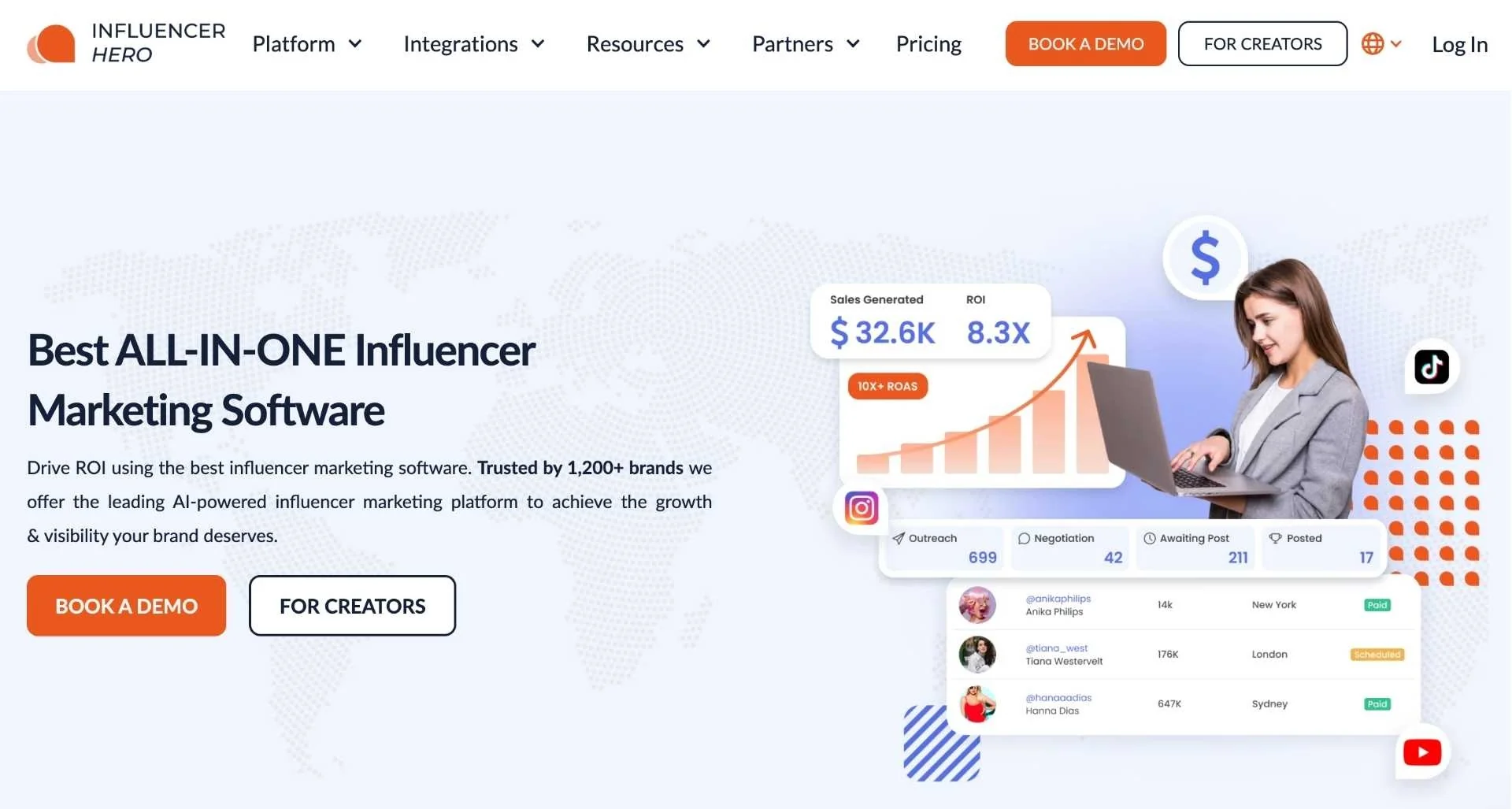
Influencer Hero is an all-in-one influencer marketing platform built for DTC brands and agencies that want strong automation, transparent pricing, and broad end-to-end functionality without typical enterprise-level overhead. It combines discovery, outreach, CRM, gifting, affiliate tracking, UGC management, and reporting in one workflow-heavy platform.
Key Features
• Influencer discovery across multiple platforms — Influencer Hero supports advanced filtering, fake follower checks, lookalike suggestions, and Chrome-extension-based imports for creator sourcing.
• AI-powered outreach — The platform supports bulk and one-to-one outreach with AI personalization, automated drip sequences, and reply tracking.
• Campaign-centric CRM — Structured boards, statuses, tags, and bulk actions help teams manage creator pipelines at scale.
• Reporting and ROI tracking — Influencer Hero tracks influencer performance, affiliate sales, clicks, and campaign outcomes through exportable reports.
• Gifting and product seeding — Native eCommerce integrations support creator orders, fulfillment, and gifting workflows.
• UGC collection and content library — The platform automatically collects creator content for reuse and campaign analysis.
• Affiliate tracking and payouts — Brands can generate links and codes, track commissions, and automate payouts through connected commerce systems.
• Application pages and storefronts — It supports branded landing pages for inbound creators and affiliate-style applications.
Pricing
Influencer Hero offers flexible pricing based on outreach volume and you can have unlimited creators in your CRM:
• Standard — $649/month (up to 1,000 outreaches per month)
• Pro — $1,049/month (up to 5,000 outreaches per month)
• Business — $2,490/month (up to 10,000 outreaches per month)
• Custom / Agency — Tailored pricing
Custom pricing is available for agencies and larger teams
Reviews
4.9/5.0 (Capterra)
Pros
• Campaign-centric CRM automation — Influencer Hero’s strongest differentiator is its board-style CRM with bulk actions, automations, and AI-guided follow-ups built for high-volume creator management.
• Highly personalized outreach at volume — AI-enhanced email flows and automated follow-ups generate messages that feel tailored and relevant, improving reply rates, conversions, and long-term creator relationships.
• Strong AI outreach stack — AI personalization, drip workflows, A/B-tested templates, and deliverability-focused outreach make it particularly strong for scaling creator recruitment.
Cons
• No free trial — Makes it harder for teams to evaluate the platform before committing
• Higher pricing for smaller teams — May be less accessible for early-stage brands or those with limited budgets
Integrations
• Shopify — Create influencer orders, track fulfillment, and measure revenue from creator campaigns.
• WooCommerce — Extend gifting and affiliate workflows to WooCommerce stores.
• Klaviyo / Mailchimp / Brevo — Sync influencer and email data to track revenue and trigger email or SMS campaigns tied to creator activity.
• Google Sheets — Sync campaign data for reporting, stakeholder sharing, and custom analysis.
• Zapier — Automate actions across hundreds of apps when campaign events happen inside Influencer Hero.
Noxinfluencer vs Influencer Hero
Noxinfluencer is more analytics-heavy and stronger for large-scale creator research. Influencer Hero is more execution-heavy and better for brands that want outreach, CRM, gifting, affiliate tracking, and UGC workflows in one practical system.
Pricing and workflow style are also very different. Noxinfluencer is often considered when brands want discovery and market intelligence first. Influencer Hero is the stronger alternative when the goal is to run creator programs end to end with more automation, clearer workflow ownership, and more transparent entry pricing.
IZEA
IZEA is one of the more established names in creator marketing software and services, with roots dating back to the early growth of the influencer industry. Its Flex platform is designed for brands and agencies that want campaign planning, creator management, content workflows, payments, and performance tracking in a more enterprise-oriented environment, alongside access to IZEA’s broader creator marketplace and managed-service ecosystem.
Key Features
• Campaign and relationship management — IZEA Flex is built to help brands approve creators, review content, manage contacts, and track campaign performance in one central hub.
• Discover, ContentMine, ShareMonitor, and tracking links — The Flex product bundles creator discovery, content analysis, social monitoring, and campaign link tracking into one toolset.
• Creator payments and transactions — IZEA includes a transactions module and DirectPay capabilities for compensating creators with relatively low per-payment fees.
• Contracts and e-signature workflows — Flex includes contract templates, custom agreements, and multi-party e-signature support inside the platform.
• AI-powered storyboarding and offer management — IZEA highlights AI storyboarding tools and dynamic offer management as part of the Flex experience.
• UGC and high-volume content handling — Recent product updates added stronger video-content and UGC management tools for brands collecting large amounts of creator content.
• Off-platform expense tracking — Flex can also record non-platform influencer expenses like tickets, gift cards, and other campaign costs for fuller ROI measurement.
Pricing
• Starter: $130/month on annual billing, or $165/month month to month. Includes core tools like Discover, ContentMine, ShareMonitor, and Tracking Links.
• Power: $500/month on annual billing, or $600/month month to month, for up to three users, with Transactions, unlimited integrations, and expanded usage.
• Free trial: 10 days. Older launch materials also referenced a free tier, but current visible pricing is most clearly centered on Starter and Power.
Reviews
3.9/5.0 (G2)
Pros
• Strong contract and transaction infrastructure — Flex’s built-in contracts, multi-party e-signatures, and creator payment tools make it stronger than lightweight discovery-only platforms when legal and finance workflows matter.
• Well-rounded campaign intelligence stack — Discover, ContentMine, ShareMonitor, and tracking links give IZEA a broader planning-and-measurement feel than simpler outreach platforms.
• Recent UGC and expense-management improvements — Product updates added stronger UGC handling and off-platform expense tracking, which improve operational visibility for larger campaigns.
Cons
• Publicly documented integrations are relatively limited — Compared with eCommerce-led competitors, IZEA discloses a narrower external integration footprint.
• More enterprise-oriented than creator-CRM-first tools — IZEA can feel better suited to structured campaigns and managed-service environments than to brands seeking a lightweight, relationship-led workflow.
• Review scores are solid but not category-leading — Public sentiment is more mixed than what you see with some of the top-rated creator platforms.
Integrations
• Shopify — Pull commerce data into Flex to surface sales, conversion, and revenue signals from creator campaigns.
• Google Analytics — Aggregate site and conversion data alongside campaign activity for stronger ROI reporting.
• Creator Marketplace — Connect platform workflows with IZEA’s creator marketplace to source creators or post casting calls.
• Flex Portal — Give internal stakeholders controlled visibility into IZEA-run campaigns in one shared environment.
• DirectPay / Transactions — Centralize creator compensation inside Flex with payment tracking and low-fee payout support.
Noxinfluencer vs IZEA
Noxinfluencer is more creator-search and analytics driven, while IZEA is more campaign-operations driven. If a brand mainly wants to discover creators, benchmark channels, and analyze influencer profiles, Noxinfluencer usually feels more direct. IZEA becomes more compelling when contracts, payments, content handling, and structured campaign governance are bigger priorities.
The other major difference is ecosystem style. Noxinfluencer is a software-first discovery platform. IZEA sits inside a broader creator-economy ecosystem that includes marketplace access, managed services, and enterprise campaign tooling. For brands that want heavier operational infrastructure, IZEA is the more full-service alternative.


Later
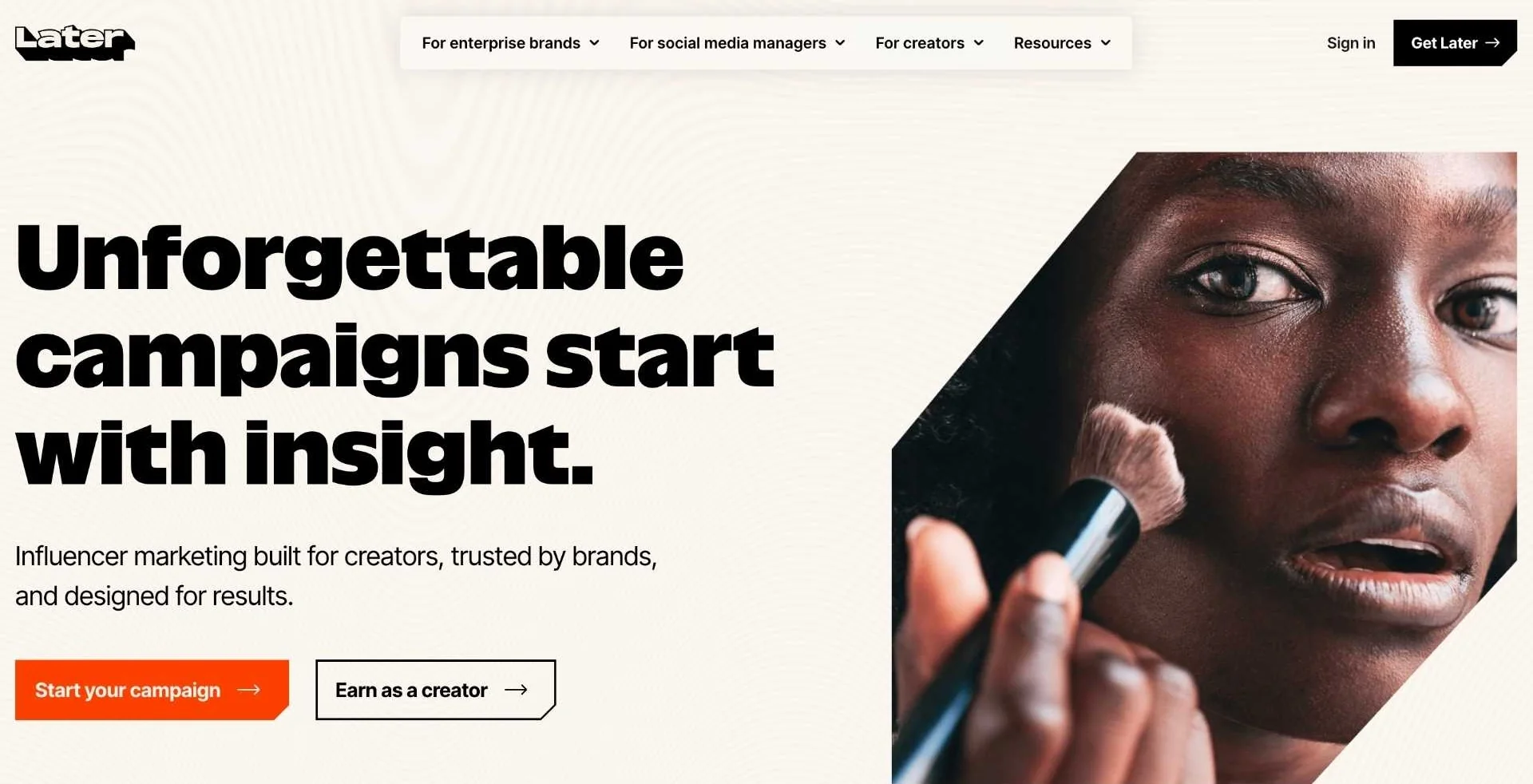
Later is a social media management platform that has expanded into influencer marketing through its Later Influence (formerly Mavrck) offering. It combines social scheduling, creator discovery, campaign management, and affiliate tracking, making it particularly appealing for brands that want to manage both organic social and influencer programs in one ecosystem.
Key Features
• Influencer discovery and recruitment — Later Influence allows brands to find creators using audience demographics, engagement data, and content filters across major platforms.
• Creator relationship management (CRM) — Manage influencer relationships, track communication, and organize campaigns in a centralized dashboard.
• Campaign workflow automation — Build campaigns with structured workflows including creator onboarding, content approvals, and deliverables tracking.
• Affiliate and ambassador programs — Supports always-on ambassador programs with commission tracking, referral links, and long-term creator relationships.
• UGC and content management — Automatically collects influencer content for reuse in marketing campaigns and social scheduling.
• Social media scheduling integration — Unique advantage: combine influencer content with your organic social calendar and publishing workflows.
• Advanced analytics and ROI tracking — Track engagement, conversions, and performance across campaigns with customizable reporting dashboards.
Pricing
Later’s influencer marketing platform (Later Influence) uses custom pricing, and brands need to request a demo for exact costs.
Based on our research, there are different plans:
• Essentials Plan: Starts at $28,500/year. Best for brands starting in influencer marketing.
• Pro Plan: Starts at $42,000/year. Best for data and automation to make your campaigns run faster and achieve better ROI.
• Premier Plan: Starts at $60,000/year. Everything you need for a scaled influencer program.
• All plans come with an additional one-time onboarding fee of $5,000 for all new customers.
Reviews
4.4 / 5.0 (Capterra)
Pros
• Unified social + influencer workflow — Combines influencer marketing with social media scheduling, reducing tool fragmentation.
• Strong ambassador program infrastructure — Designed for long-term creator partnerships, not just one-off campaigns.
• Enterprise-grade analytics and segmentation — Advanced audience segmentation and reporting capabilities for large campaigns.
Cons
• Pricing not transparent and typically high — Requires sales engagement and is often positioned for mid-to-large brands.
• Complex setup for smaller teams — Broad feature set can feel overwhelming for brands new to influencer marketing.
• Less focused on pure discovery compared to specialized tools — Discovery is strong but not as deep as dedicated search-first platforms.
Integrations
• Shopify — Track influencer-driven sales and connect campaigns to eCommerce performance.
• Google Analytics — Measure traffic and conversions from influencer campaigns.
• Meta (Facebook/Instagram) — Sync campaign data and content performance directly from social platforms.
• TikTok — Track influencer content performance and campaign metrics.
• Slack — Enable internal collaboration and campaign updates across teams.
Noxinfluencer vs Later
Noxinfluencer is more focused on influencer discovery and analytics, while Later is built as a broader marketing platform combining social media management with influencer campaigns. Brands focused purely on finding creators may prefer Noxinfluencer, while those managing full-funnel social + influencer strategies may benefit more from Later.
Later also offers stronger campaign automation and content lifecycle management, whereas Noxinfluencer is typically used earlier in the workflow for research and analysis.
Ainfluencer
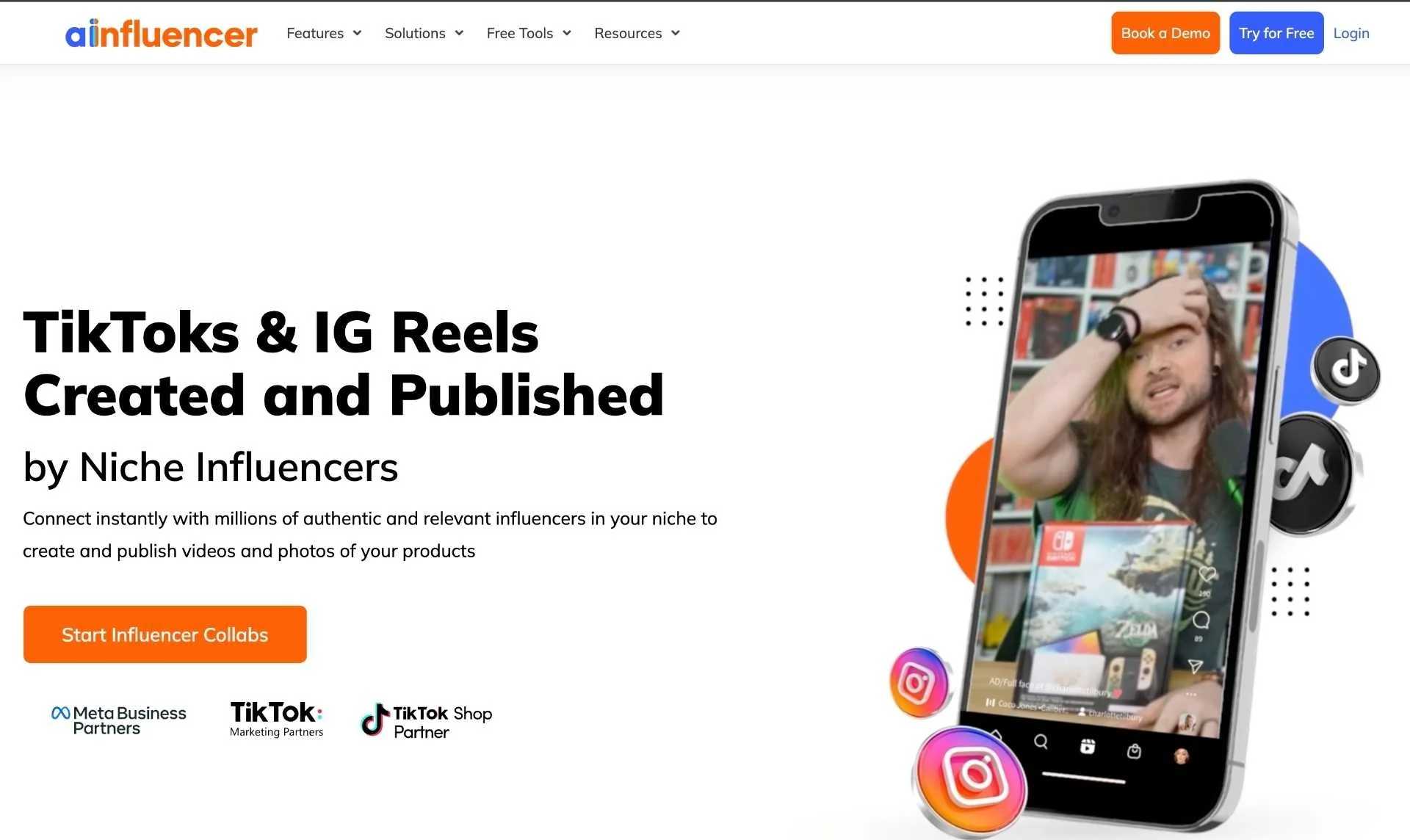
Ainfluencer is a free influencer marketing marketplace that connects brands with creators on Instagram and TikTok. It is designed to simplify influencer collaborations through a self-serve platform, combining discovery, outreach, negotiation, and payment handling in one place.
Key Features
• Marketplace of influencers — Access a large pool of creators who can apply to campaigns or be invited directly.
• Campaign creation and management — Brands can create campaigns outlining deliverables, compensation, and expectations.
• In-platform messaging and negotiation — Built-in communication tools streamline deal-making between brands and creators.
• Escrow-based payment system — Payments are held securely and released only after deliverables are completed.
• Content approval workflows — Review and approve influencer content before publishing.
• Basic analytics dashboard — Track engagement metrics such as views, likes, and comments.
• AI-assisted messaging — Generate campaign messages and outreach templates using AI tools.
Pricing
• Free Plan (Core Offering): $0/month
• Commission-Based Model: ~20% service fee deducted from influencer payouts
• Managed Campaign Packages (Optional)
• Viral: $7,999 (1 month)
• Scale: $9,999 (2 months)
• Super Scale: $15,000 (3 months)
• Turbo Viral: $29,999 (4 months)
• Custom pricing available depending on campaign scope
Reviews
4.8 / 5.0 (G2)
Pros
• Completely free entry point — One of the few platforms with no SaaS fee for self-service users.
• Escrow payment protection — Reduces risk for brands by ensuring deliverables before payment release.
• Built-in creator marketplace — Enables inbound applications, reducing manual outreach effort.
Cons
• Limited analytics and reporting — Focuses on basic engagement metrics rather than deep performance insights.
• Lower creator quality consistency — Marketplace model can lead to variability in professionalism.
• Limited integrations and scalability — Not ideal for advanced or enterprise-level campaigns.
Integrations
• Shopify (upcoming) — Planned integration for gifting and order tracking.
• Instagram — Core platform for influencer discovery and campaign execution.
• TikTok — Campaign management and influencer collaborations.
• Chrome Extension — Invite creators directly from social profiles.
• Internal messaging system — Handles communication without external tools.
Noxinfluencer vs Ainfluencer
Noxinfluencer is a data-driven analytics and discovery platform, while Ainfluencer is a marketplace-first solution focused on connecting brands and creators quickly. Noxinfluencer is better for research and vetting, whereas Ainfluencer is better for quick campaign execution with minimal upfront cost.
For brands prioritizing budget and simplicity, Ainfluencer is appealing. For those needing deeper analytics and structured workflows, Noxinfluencer is the stronger option.
indaHash
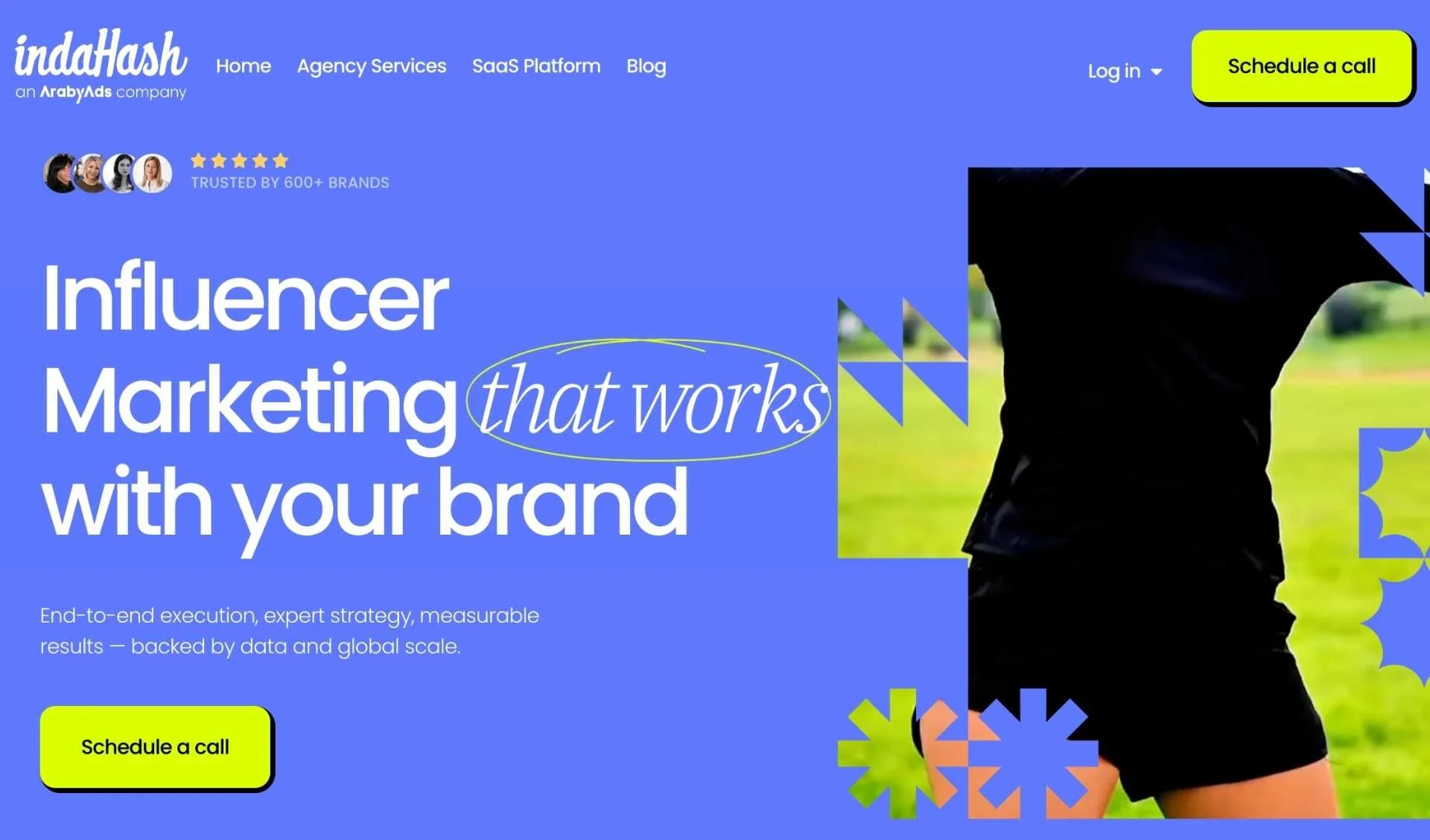
indaHash is a global influencer marketing platform that combines campaign management software with managed services. It is particularly known for running large-scale campaigns with micro-influencers and offering a hands-on execution model for brands.
Key Features
• Global influencer network — Access to a large database of influencers across multiple markets.
• Managed campaign services — indaHash can fully manage campaigns from strategy to execution.
• Content creation at scale — Designed to produce high volumes of user-generated content.
• Campaign tracking and reporting — Measure reach, engagement, and campaign performance.
• Mobile app for creators — Influencers interact with campaigns through a dedicated app.
• Automated campaign workflows — Handles approvals, deliverables, and content submissions.
• Brand safety and moderation tools — Ensures compliance and quality control across campaigns.
Pricing
indaHash does not publicly disclose full pricing on its website, and most plans are offered on a custom or quote-based model. However, publicly listed pricing tiers include:
• Creator Discovery – $499/year
• Discovery & Campaign Management – $999/month
• White Label (Agencies) – $9,990/year
• Enterprise License – $4,999 (one-time)
• Free Trial: Available
Reviews
4.7 / 5.0 (G2)
Pros
• Strong managed-service offering — Ideal for brands that want campaigns executed for them.
• Global campaign scalability — Supports multi-market campaigns with localized creators.
• High-volume UGC production — Particularly effective for brands needing large amounts of content.
Cons
• Less control for self-serve teams — Managed model may not suit brands wanting full ownership.
• Limited transparency in pricing — Requires direct engagement with sales.
• Platform usability can vary — Some workflows are less intuitive compared to SaaS-first tools.
Integrations
• Instagram — Core platform for influencer campaigns and content tracking.
• TikTok — Campaign execution and performance tracking.
• YouTube — Supports video-based influencer campaigns.
• Mobile app ecosystem — Creator-side interaction via indaHash app.
• Internal reporting tools — Campaign insights and performance tracking.
Noxinfluencer vs indaHash
Noxinfluencer is a self-serve analytics and discovery platform, while indaHash leans heavily into managed services and campaign execution. Brands wanting full control and data insights may prefer Noxinfluencer, while those seeking hands-off campaign delivery may benefit from indaHash.
indaHash is better for large-scale, global campaigns, whereas Noxinfluencer is more suitable for research, planning, and independent campaign management.
Influencity
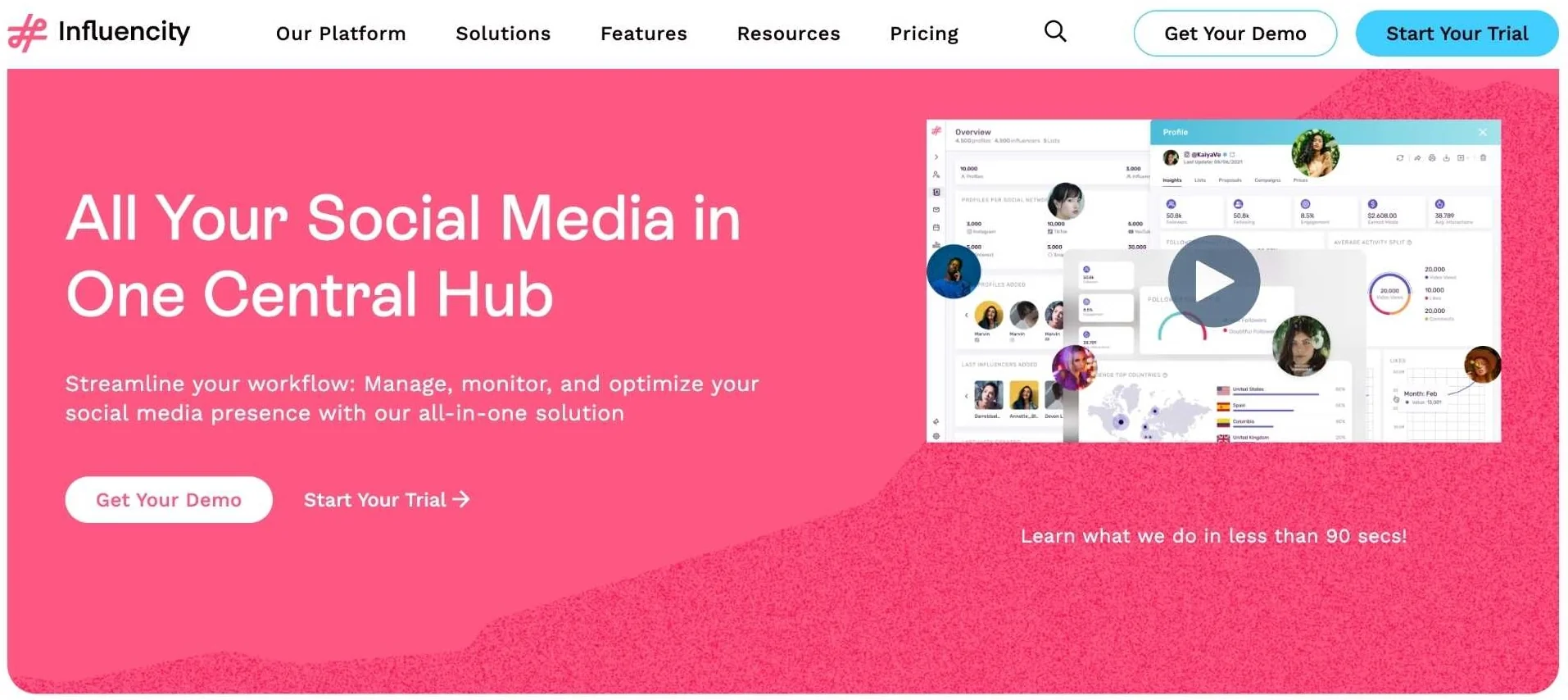
Influencity is a data-driven influencer marketing platform that focuses on analytics, discovery, and campaign management. It is widely used by agencies and brands looking for deep audience insights and customizable reporting.
Key Features
• Advanced influencer discovery — Filter creators by audience demographics, engagement, location, and content niche.
• Audience analytics and fraud detection — Analyze audience authenticity, fake followers, and engagement quality.
• Campaign management tools — Manage influencer collaborations and track deliverables.
• Custom reporting dashboards — Create detailed, exportable reports tailored to campaign KPIs.
• Competitor and brand tracking — Monitor influencer collaborations across competitors.
• API access and data export — Integrate influencer data into external systems.
• Multi-platform support — Covers Instagram, TikTok, YouTube, and more.
Pricing
Influencity offers three main pricing tiers, along with add-ons:
• Professional Plan: $318/month or $3,816/year
• Business Plan: $798/month or $9,576/year
• Enterprise Plan: Custom pricing
• Auto-Tracker Add-On: $660/year (for 50 influencers)
Reviews
4.3 / 5.0 (G2)
Pros
• Highly customizable analytics and reporting — Strong data capabilities for agencies and performance-focused teams.
• Robust fake follower detection — Helps ensure campaign quality and reduce fraud.
• Flexible pricing tiers — More accessible than many enterprise platforms.
Cons
• Interface can feel complex — Advanced features come with a learning curve.
• Less focus on outreach automation — Requires additional tools for full workflow execution.
• Limited built-in CRM compared to competitors — Relationship management is less robust.
Integrations
• Google Data Studio — Build custom dashboards using influencer data.
• API integrations — Export data into internal systems.
• Instagram / TikTok / YouTube APIs — Pull real-time influencer data.
• CSV export tools — Enable reporting outside the platform.
• Third-party BI tools — Extend analytics capabilities.
Noxinfluencer vs Influencity
Both platforms are strong in analytics, but Influencity offers more advanced customization and reporting flexibility. Noxinfluencer is easier to use for quick discovery, while Influencity is better suited for deeper analysis and agency-level reporting.
If data depth and customization matter most, Influencity stands out. If simplicity and speed are priorities, Noxinfluencer may be more practical.
Modash
Modash is an influencer marketing platform focused on discovery, analytics, and campaign tracking, with a strong emphasis on transparency and real-time data. It is widely used by brands looking to scale influencer programs globally.
Key Features
• Large influencer database — Access millions of creators across Instagram, TikTok, and YouTube.
• Real-time data tracking — Continuously updated metrics for engagement, audience, and performance.
• Advanced filtering and search — Find creators using detailed audience and content criteria.
• Fake follower detection — Identify suspicious accounts and ensure campaign quality.
• Campaign tracking and reporting — Monitor performance across campaigns and creators.
• API and integrations — Connect influencer data with other tools.
• Global coverage — Strong international creator database.
Pricing
• Essentials: ~$199/month (paid annually)
• Performance: ~$499/month (paid annually)
• Enterprise: custom pricing
• Typically billed annually, with scaling based on usage and team size.
Reviews
4.9/5.0 (Capterra)
Pros
• Highly accurate and transparent data — Known for real-time updates and reliable analytics.
• Strong global creator coverage — Excellent for international campaigns.
• Clean and user-friendly interface — Easier to navigate compared to more complex tools.
Cons
• Limited outreach and CRM tools — Focuses more on discovery than execution.
• No built-in payments or gifting workflows — Requires external tools for full campaign management.
• Higher tiers needed for full functionality — Advanced features require upgrading plans.
Integrations
• Google Sheets — Export and manage influencer data externally.
• API access — Integrate data into internal systems.
• Shopify — Connect influencer campaigns to eCommerce tracking (via workflows).
• Slack — Share campaign updates with teams.
• Zapier — Automate workflows across tools.
Noxinfluencer vs Modash
Both platforms are strong in discovery and analytics, but Modash stands out for real-time data accuracy and a cleaner user experience. Noxinfluencer offers more built-in outreach and affiliate features, while Modash focuses on delivering reliable data.
For brands prioritizing data quality and global reach, Modash is a strong alternative. For those needing a more all-in-one workflow, Noxinfluencer may offer more built-in functionality.
Final Thoughts on Noxinfluencer Alternatives
Noxinfluencer remains a solid option for influencer discovery and analytics, but many alternatives offer stronger capabilities depending on specific needs. Platforms like Upfluence, GRIN, and Later stand out for end-to-end campaign execution and eCommerce integrations, while tools like Modash and Influencity excel in data accuracy and advanced analytics. Meanwhile, solutions such as SARAL, Influencer Hero, and Ainfluencer focus on simplifying workflows or lowering entry barriers. Ultimately, the right choice depends on whether the priority is discovery, campaign management, automation, or revenue attribution.
.png)


.jpg)