

10 Best Mention Me Alternatives for Influencer Marketing
Mention Me alternatives are worth exploring when a brand wants to reach new audiences through creators, not only through the friends of existing customers. Mention Me is a referral platform used by brands such as Puma, Charlotte Tilbury and Gymshark, and it prices each licence privately based on the brand’s revenue band, order value and referral volume.
Referral programs are a proven way to turn happy buyers into new customers, and Mention Me’s NameShare feature lets friends credit a referrer simply by typing their name at checkout. The program can only reach people who already know a customer, though, and the platform has no creator discovery, influencer outreach, product seeding or content tools.
This guide compares influencer marketing software that helps D2C brands work with creators and track the sales they drive, and every platform is reviewed for its features, pricing, ratings and integrations, then set against Mention Me directly.
The Mention Me alternatives reviewed are GRIN, Influencer Hero, CreatorIQ, Traackr, Afluencer, Modash, IZEA, IMAI, SARAL and Glewee.
Key Criteria for Evaluating Influencer Marketing Platforms
Core Features
Evaluation of essential influencer marketing capabilities, including influencer discovery, outreach, CRM, campaign management, reporting, and content workflows.
Pricing & Flexibility
Comparison of pricing models, subscription plans, and contract terms to match different budgets and growth stages.
Customer Reviews & Satisfaction
Analysis of user feedback from trusted review platforms, focusing on usability, reliability, customer support, and overall performance.
Pros & Cons
Review of each platform’s strengths and limitations to highlight where it performs well and where it may fall short based on different use cases.
Integrations
Review of the most important integrations (e.g., Shopify and other tech tools), highlighting what each integration enables in one sentence.
Mention Me Overview
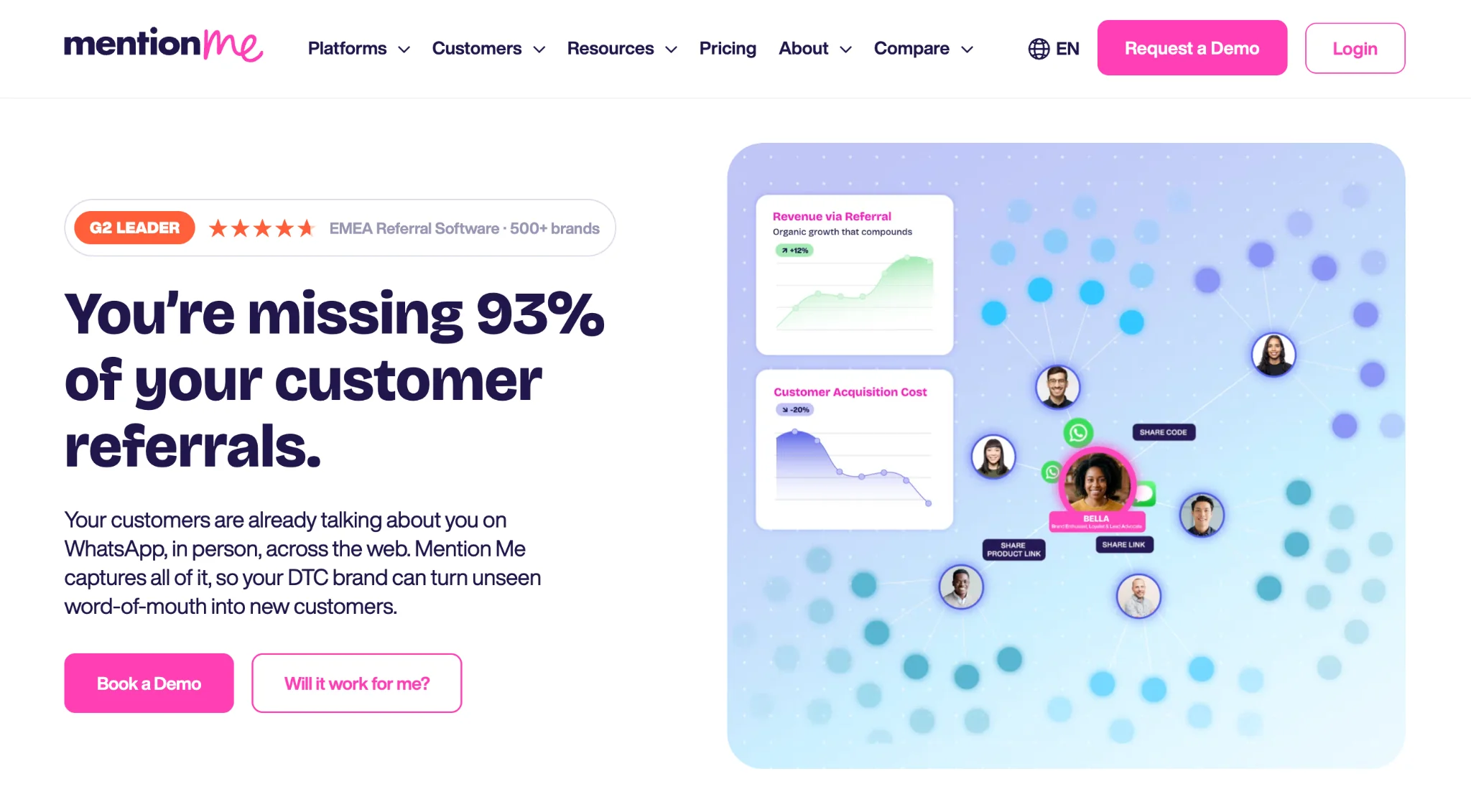
Mention Me is a London-based referral marketing platform founded in 2013 that helps consumer brands turn customers into advocates. It works with more than 500 brands across fashion, beauty, food and drink, travel and financial services, and its programs combine referral rewards, testing tools and reporting on the lifetime value of referred customers.
Its best-known feature is NameShare, which lets a referred friend type the referrer’s name at checkout instead of using a link or code, so recommendations made in person or in private chats can still be tracked. Because referral programs only reach friends of existing buyers, brands that want to put products in front of new audiences often compare it with influencer gifting platforms as well.
Key Features
- NameShare: Friends enter the referrer’s name at checkout, which captures word-of-mouth referrals that link-based programs miss.
- A/B testing: Brands can test rewards, messaging and placements, drawing on more than 45,000 experiments run across the platform.
- Earned Referral: Sharing that happens outside the formal program is measured, giving a fuller view of word of mouth.
- Category benchmarking: Program results are compared with other brands in the same category, which helps set realistic goals.
- Referred customer lifetime value: Reporting shows how much referred customers spend over time, not only at their first order.
Pricing
Mention Me does not publish prices. Its pricing form asks for annual online revenue in bands from under £7 million to over £500 million, and the company says each licence is tailored to the brand’s average order value and referral volume:
- Referral platform: custom quote, including free technical integrations and competitor benchmarks
- Contract terms: typically annual, agreed with the sales team
- Shopify app: free, launched in 2026 to track unincentivized sharing on WhatsApp and other private channels
There is no free trial of the main referral platform, so brands should bring their order volumes and revenue targets to the first call and ask for setup fees and the cost of adding new markets in writing.
Reviews
4.4/5.0 (G2, 61 reviews) and 4.6/5.0 (Capterra, 11 reviews, low review volume)
Integrations
- Klaviyo: Referral events and rewards can trigger email and SMS flows.
- Braze: Enterprise teams can use referral data in cross-channel customer messaging.
- Salesforce Marketing Cloud: Advocate and referral data flows into large-scale email programs.
- Meta, Google Ads and TikTok: Advocate audiences can be used to build lookalike audiences for paid campaigns.
- Trustpilot and Feefo: Review platforms connect so happy reviewers can be invited to refer friends.
Pros
- Captures offline referrals: NameShare tracks recommendations that never involve a link or code.
- Strong testing culture: Built-in experiments help brands improve referral performance over time.
- Proven with large brands: Well-known retail and beauty companies run programs on it.
Common Drawbacks of Mention Me
Quote-only pricing by revenue
Prices are tied to a brand’s revenue band and set case by case, which makes budgeting difficult before a sales conversation.
Reaches existing customers only
Referral programs depend on current buyers, so they do not help a brand reach new audiences through creators.
No influencer tools
There is no creator discovery, outreach, gifting, content approval or creator payout workflow.
Changes often go through support
Some reviewers say updating codes and settings requires help from the Mention Me team, which slows down quick changes.
Best Mention Me Alternatives
| TOOL | REVIEWS | BEST FOR | TRIAL INFO | PRICING | ||
|---|---|---|---|---|---|---|
1 |

|
⭐ | DTC creator management | Book Demo | Pricing | Website |
2 |

|
⭐ | Influencer CRM & automation | Book Demo | Pricing | Website |
3 |

|
⭐ | Enterprise influencer marketing | Book Demo | Pricing | Website |
4 |
|
⭐ | Enterprise influencer analytics | Book Demo | Pricing | Website |
5 |

|
⭐ | Influencer marketplace campaigns | Book Demo | Pricing | Website |
6 |

|
⭐ | Influencer discovery | Book Demo | Pricing | Website |
7 |
|
⭐ | Influencer marketplace | Book Demo | Pricing | Website |
8 |
|
⭐ | AI influencer discovery & analytics | Book Demo | Pricing | Website |
9 |

|
⭐ | Influencer outreach | Book Demo | Pricing | Website |
10 |
|
⭐ | Small brands running influencer and UGC campaigns | Book Demo | Pricing | Website |
GRIN

Direct-to-consumer brands use GRIN as a creator management platform that combines a creator CRM, a marketplace, product gifting, affiliate codes and payments. It now offers self-serve monthly plans and Gia, an AI agent that prepares campaign plans and sorts creator applications for the team to approve.
Key Features
- Product gifting: Gifting-only campaigns run without a wallet deposit, which makes it easy to send products to creators and start influencer gifting programs quickly.
- Creator CRM: Every creator relationship is stored with no contact limits, so long-term partners stay organized.
- Commission tracking: Affiliate links and discount codes connect creator posts to orders on every plan.
- Gia AI agent: Routine planning, application review and follow-ups are handled by AI and approved by the team.
- Payments wallet: Creator fees are held in escrow and released when deliverables are met.
Pricing
GRIN combines a monthly subscription with a management fee on wallet deposits:
- Free: no subscription, a 20% fee, two campaigns at a time and a ten-gift cap
- Starter: $200 per month plus 10%, with 100 gifts a month and a 30-day free trial
- Growth: $500 per month plus 7%, with support for several brands and 300 gifts a month
- Scale: $1,500 per month plus 5%, with 1,000 gifts a month
- Enterprise: custom annual agreement
The lower fee on Scale only outweighs its higher subscription once creator payments pass roughly $50,000 a month, so most growing brands will find Growth the better value.
Reviews
4.5/5.0 (G2, 483 reviews) and 4.7/5.0 (Capterra, 147 reviews)
Pros
- Free entry option: Brands can launch a small gifting test without paying a subscription.
- All-in-one creator workflow: Recruitment, gifting, codes and payments sit together.
- Well reviewed: Hundreds of G2 and Capterra reviews give a clear picture of the product.
Cons
- Spend-based fees: Every dollar paid to creators carries a 5% to 20% management fee.
- Wallet funding required: A $250 balance must be loaded before paid or affiliate campaigns launch.
Integrations
- Shopify: Creator codes, gifted orders and sales sync with the store.
- Klaviyo: Customer and creator data can be used in email marketing.
- DocuSign: Creator contracts are signed electronically.
- Gmail and Outlook: Creator emails go out from existing team mailboxes.
- PayPal: Creators can be paid to their PayPal accounts.
Mention Me vs GRIN
Mention Me and GRIN both reward people for driving sales, but GRIN stands out by working with creators who reach audiences a brand has never sold to. Gifting, affiliate codes and a payments wallet let brands build a creator program alongside or instead of customer referrals.
Mention Me, on the other hand, focuses more on activating existing customers through rewards and NameShare. GRIN publishes monthly plans with a fee on creator spend, while Mention Me quotes annual licences by revenue band. For D2C brands that want to add creator gifting without an annual contract, GRIN is the natural pick.
Influencer Hero
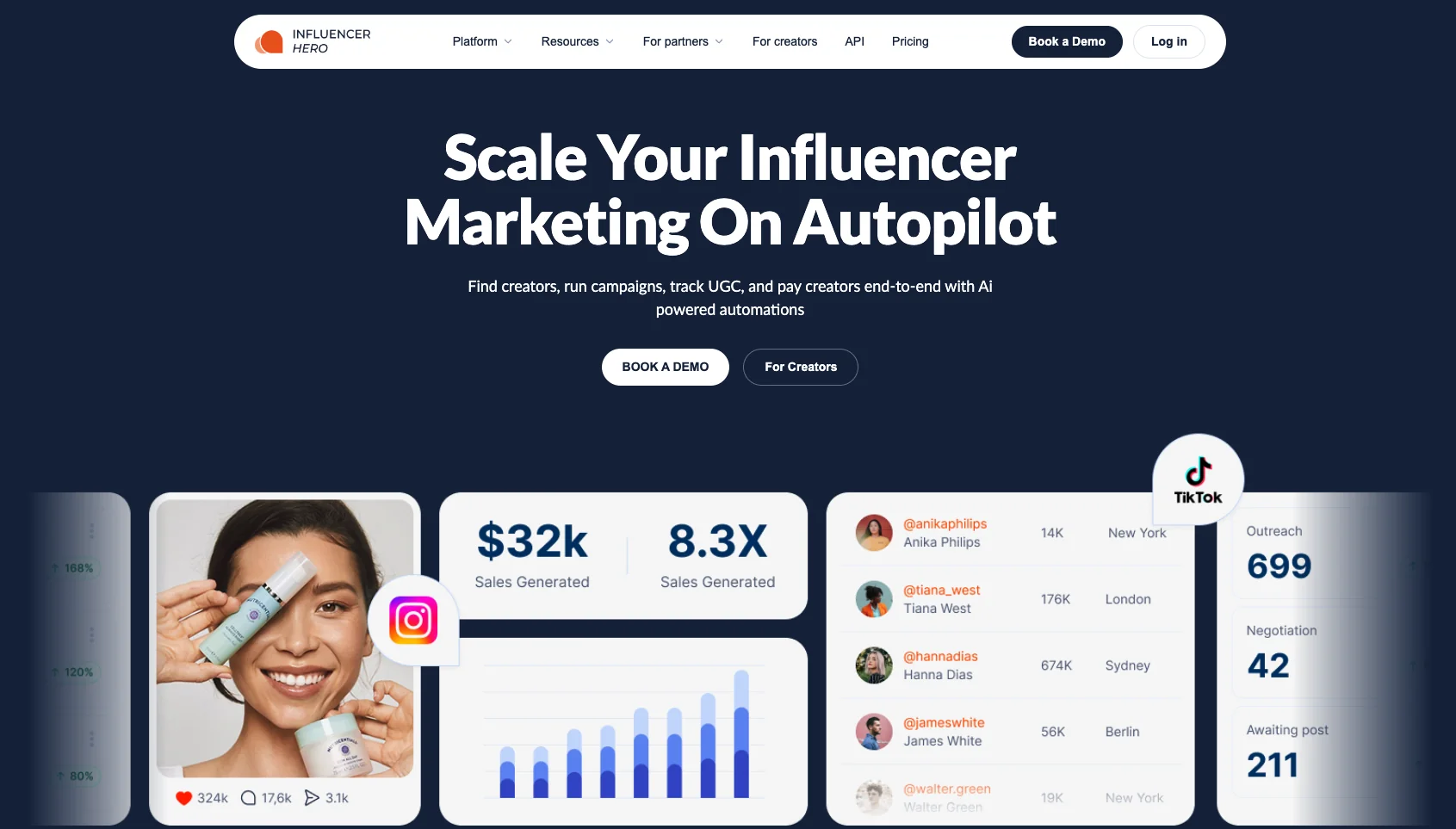
For D2C brands that want to find, recruit, manage and pay creators at scale, Influencer Hero offers one all-in-one platform. It covers influencer discovery, outreach, CRM, gifting, UGC, affiliate programs and payouts, and its automations are designed for programs that grow from dozens to thousands of creators.
Key Features
- Authentic creator search: Fraud detection checks every profile in a global pool of more than 450 million Instagram, TikTok and YouTube creators before a brand reaches out.
- Twenty-plus filters: Filters for location, age, gender, interests, engagement and audience quality help brands build precise shortlists.
- Customers who create: The platform highlights creators among a brand’s own followers and buyers, which turns loyal fans into partners.
- Automated outreach: Personalized sequences, AI follow-ups and multichannel messaging keep conversations moving at scale.
- Affiliate program tools: Custom links, discount codes, commission tiers and influencer storefronts connect creators to sales.
- Product seeding: Gift orders are created in Shopify or WooCommerce and tracked through delivery.
- UGC collection: Creator posts are saved automatically and can be searched with AI for reuse in ads.
Pricing
Influencer Hero shows its prices on its website, and plans scale with monthly reachouts:
- Standard: $649/month, with up to 1,000 reachouts
- Pro: $1,049/month, with up to 5,000 reachouts
- Business: $2,490/month, with up to 10,000 reachouts
- Custom & Agency: tailored to larger teams
A quarterly commitment cuts the price by 20%, and a yearly one cuts it by 30%.
Reviews
5.0/5.0 (Capterra)
Pros
- Influencer brand followers: Influencer Hero identifies creators who are already fans of the brand, based on who follows and interacts with its Instagram, TikTok and YouTube accounts. Many of them are existing customers with their own audiences, which makes outreach warmer and partnerships more credible. It gives brands a natural bridge between customer advocacy and creator marketing.
- AI-powered coupon code leakage prevention: Creator codes are monitored across coupon sites, browser extensions and deal forums in real time. If a code leaks, Influencer Hero replaces it automatically and notifies the creator. Brands keep their margins and pay commission only on sales that creators genuinely influenced.
- End-to-end payout and invoicing automation: Payouts can go out as one bulk batch or run automatically each day, week or month, and bank debit fees stay between 0.1% and 0.4%. Invoices are requested and approved in the same flow, and payouts can be held until an invoice is accepted. This keeps finance and marketing aligned without spreadsheets.
Cons
- No free trial: Brands evaluate the platform through a demo rather than a self-serve trial.
- Expensive for smaller brands: The $649 entry price is a real commitment for brands still testing influencer marketing.
- Steep learning curve: The breadth of the platform means new teams need time to learn its workflows.
Integrations
- Shopify: Seeding orders and affiliate sales are tracked against the store automatically.
- WooCommerce: WooCommerce stores get the same native gifting and commission tracking.
- GoAffPro: Brands with an existing affiliate setup can connect it to the creator CRM.
- Klaviyo: Creator and ambassador data can trigger personalized email flows.
- Slack: Team channels receive alerts for new content, replies and brand-risk signals.
Mention Me vs Influencer Hero
Mention Me is a well-built referral platform, and NameShare is a genuinely useful way to capture word-of-mouth that other tools miss. Its reach is limited to the friends of existing customers, however, and it does not help brands find creators, send products, collect content or pay partners. Influencer Hero opens the larger channel, giving brands access to 450M+ fraud-screened creators, automated outreach, a CRM, Shopify and WooCommerce gifting, affiliate codes with leak protection, storefronts and payouts at 0.1% to 0.4%. Brands reach new audiences through creators while still tracking every sale back to the person who drove it.
The cost structures are also very different. Mention Me prices each licence privately by revenue band, order value and referral volume, usually on an annual contract, so the cost rises as the business grows and is unknown until a sales call. Influencer Hero’s Standard, Pro and Business plans are listed openly at $649, $1,049 and $2,490 a month, set by outreach volume and reduced by 20% on quarterly or 30% on yearly billing, with no link to company revenue. For D2C brands that want a growth channel they can budget for in advance, Influencer Hero is the better investment.
CreatorIQ
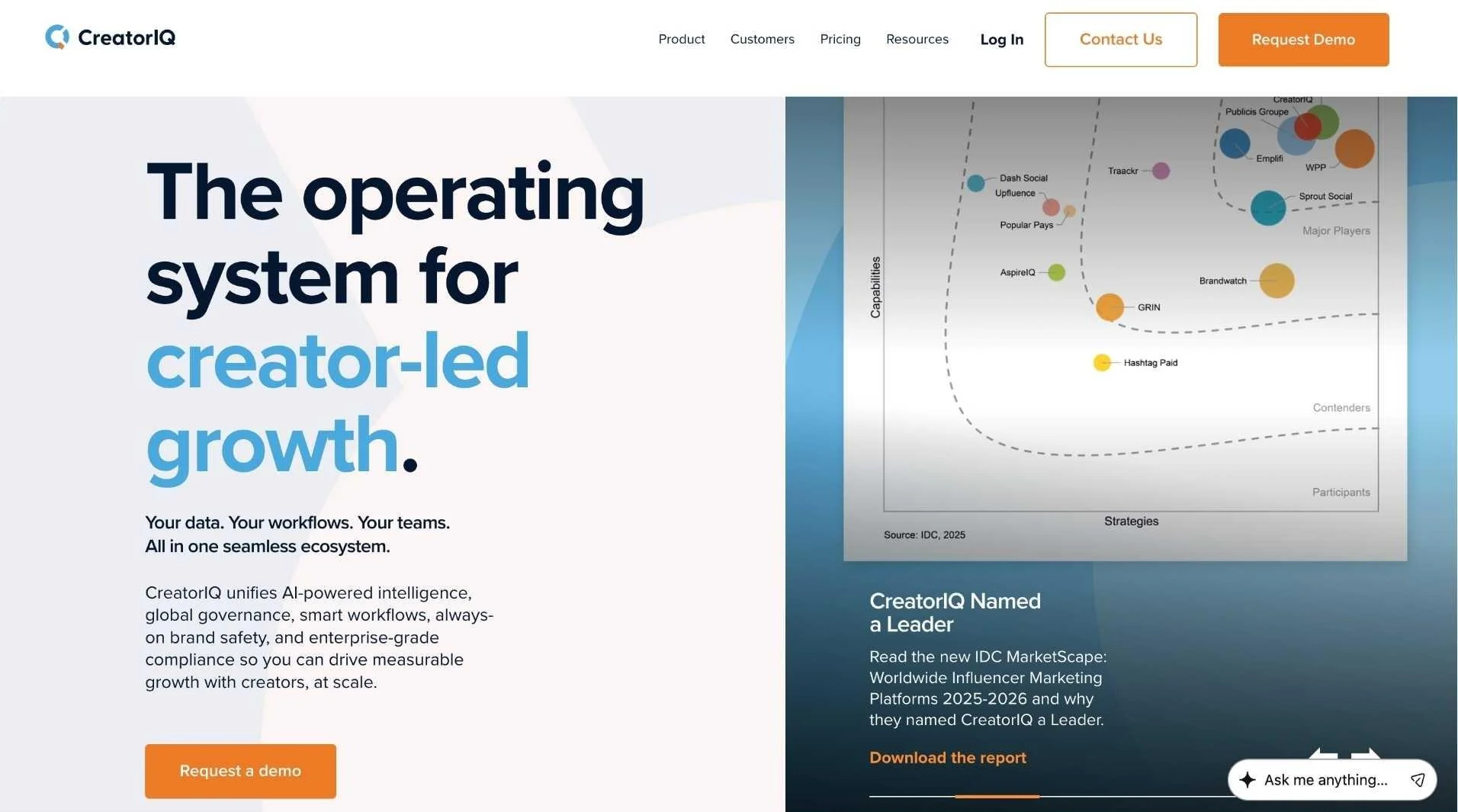
Global consumer brands, retailers and agencies rely on CreatorIQ as their enterprise influencer marketing platform. It is built around creator data, governance and measurement, and large organizations use it to coordinate programs across many brands and countries.
Key Features
- Enterprise discovery: AI search across the Creator Graph uses past partnerships and audience data to recommend relevant creators.
- Affiliate and commerce: CreatorIQ Convert issues links and codes so creator content can be tied to sales at scale.
- Brand safety: SafeIQ reviews creator history for risks before approval.
- Competitive benchmarks: BenchmarkIQ shows how a program compares with rivals.
- Integrated payments: CreatorIQ Pay handles creator compensation inside the platform.
Pricing
CreatorIQ prices are agreed through sales, with no free plan. Third-party data places most annual contracts between around $30,000 and $59,500.
Reviews
4.6/5.0 (G2, 583 reviews) and 4.5/5.0 (Capterra, 17 reviews)
Pros
- Enterprise scale: Global brands run large multi-market programs on it.
- Commerce links: Affiliate tools connect creator work to revenue.
- Governance features: Approvals and safety checks support complex organizations.
Cons
- Premium pricing: Annual contracts are beyond most small and mid-sized D2C budgets.
- Onboarding effort: Teams need training to use the full platform.
Integrations
- Shopify: Product gifting and costs are tracked through the store.
- Rakuten Advertising: Affiliate commissions from Rakuten appear in creator reports.
- Impact: Impact affiliate data is shown with content results.
- TikTok Spark Ads: Creator videos can be amplified as paid TikTok ads.
- Google Analytics: Site traffic from creators is included in measurement.
Mention Me vs CreatorIQ
Both platforms serve large consumer brands, but CreatorIQ stands out by managing creator partnerships, affiliate tracking and payments at enterprise scale. It helps big brands reach new audiences rather than relying on existing customers.
Mention Me, on the other hand, focuses more on referral programs and customer advocacy. Both use custom pricing aimed at established companies. For global retailers that already run referral programs and now want a governed creator program across regions, CreatorIQ is well placed.
Traackr
Beauty and personal care companies are among the heaviest users of Traackr, which helps global brands plan and measure creator programs. It is known for competitive benchmarking, spend tracking and long-term records of each creator relationship.
Key Features
- Relationship records: Every brief, message and payment is stored on the creator profile, which supports long-term influencer relationship management.
- Brand Vitality Score: A standard score measures creator impact, so results can be compared across markets.
- Share of voice: Brands see how their creator presence compares with competitors.
- Spend tracking: Budgets and cost per engagement are monitored by campaign and region.
- Abigail AI: AI recommendations help teams decide where to invest next.
Pricing
Traackr pricing is available after a call with its team. Contracts reportedly start near $25,000 annually, and bigger packages run past $55,000.
Reviews
4.3/5.0 (G2, 377 reviews)
Pros
- Long-term view: Creator history is kept across years of collaboration.
- Comparable results: Standard scores make global reporting simpler.
- Competitive insight: Benchmarks reveal where rivals are investing.
Cons
- Quote-based pricing: Brands cannot see costs before speaking with sales.
- Limited sales attribution: Revenue tracking is less developed than in commerce-first tools.
Integrations
- Shopify: Store sales can be linked to creator activity.
- Gmail: Creator conversations are stored on the right profile.
- Slack: Approvals and alerts reach the team in real time.
- Tableau: Program data feeds company reporting.
- Google Drive: Briefs and creative files stay with each campaign.
Mention Me vs Traackr
Mention Me and Traackr both help brands nurture people who speak on their behalf, but Traackr stands out by managing creator relationships across markets with benchmarking and spend control. It is designed for brands investing in creators as a strategic channel.
Mention Me, on the other hand, focuses more on customers recommending a brand to friends. Both suit established companies with quote-based pricing. For beauty brands that want to measure creator share of voice against competitors, Traackr is a strong fit.
Afluencer
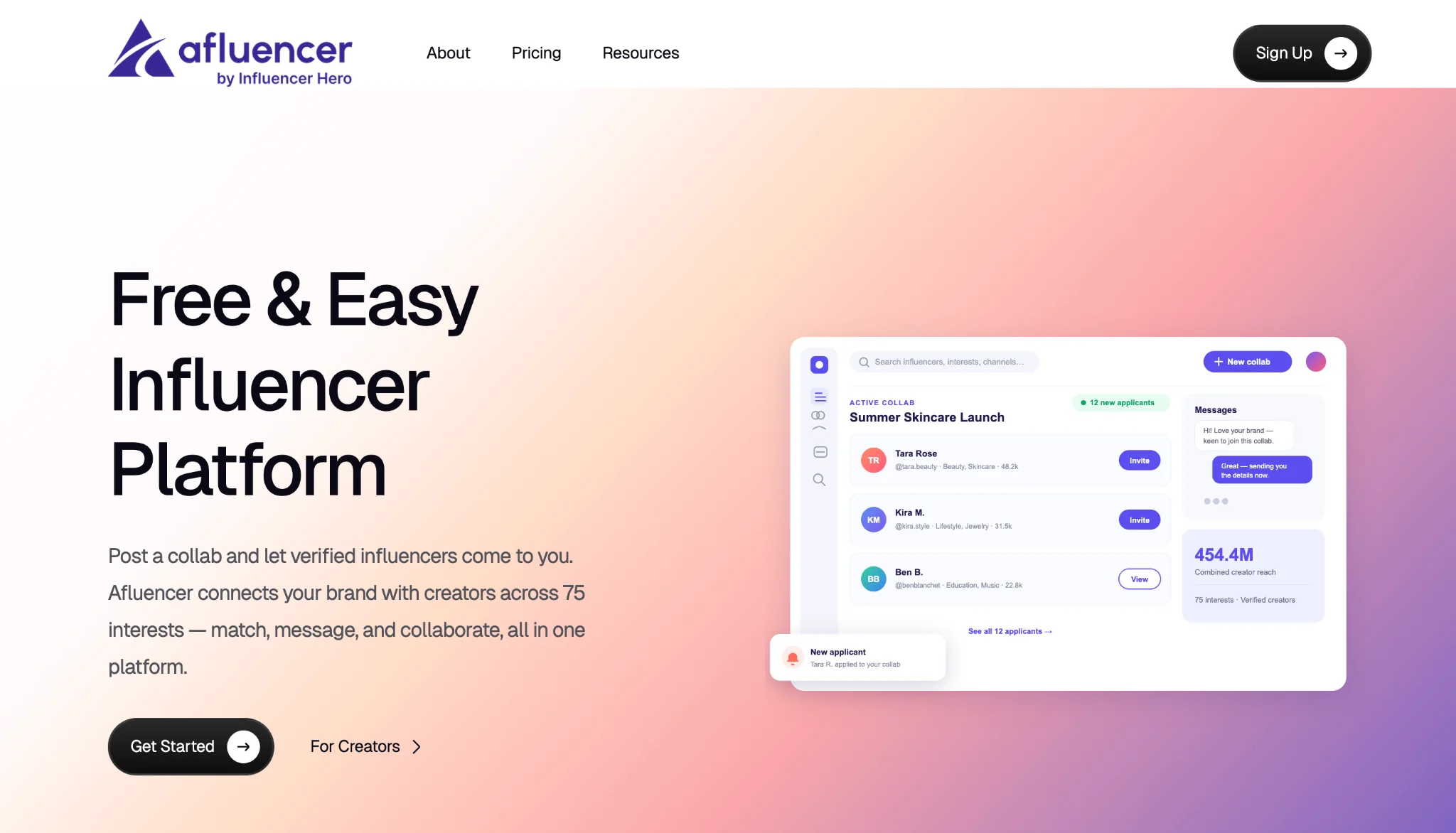
Small and growing brands use Afluencer, a creator marketplace, to find influencers through collaboration listings. Verified creators apply to each listing, and CreatorGPT ranks them by fit, which makes it a simple way for brands to start booking influencers on a small budget.
Key Features
- Applications to listings: Creators apply to the brand’s collaboration post, which brings in interested partners.
- CreatorGPT ranking: AI orders applicants by relevance so the best fits are reviewed first.
- Targeted invitations: Premium filters help brands invite creators by niche, platform and audience.
- Shopify connection: Store products can be added to collaborations in a few clicks.
- Expansion plans: Higher plans add send-outs, payments and larger outreach volumes.
Pricing
Afluencer’s plans are billed monthly with no long-term contract:
- Marketplace: $49/month for premium filters and 60 creator invitations
- Standard: $649/month for 1,000 monthly reachouts plus product shipping and creator payments
- Pro: $1,049/month, with 5,000 reachouts, an account manager and team seats
Reviews
4.6/5.0 (G2, 738 reviews) and 4.1/5.0 (Shopify App Store, 37 reviews). Many G2 reviewers are creators rather than brands.
Pros
- Low entry cost: Brands can begin for $49 a month.
- Motivated applicants: Creators choose the collaborations they want.
- Fast setup: Listings can go live the same day.
Cons
- Uneven fit: Some applicants fall outside the brand’s target audience.
- Mostly US creators: Supply is smaller in other markets.
Integrations
- Shopify: Product information flows into collaboration offers.
- Amazon: Creators can link to Amazon listings.
- Klaviyo: Creator contacts sync for follow-up emails.
- Slack: Applications trigger team notifications.
- DocuSign: Terms are signed digitally.
Mention Me vs Afluencer
Both platforms bring people to a brand rather than requiring cold outreach, but Afluencer stands out by attracting creators with their own audiences through public collaboration listings. It suits brands that want to test influencer marketing quickly.
Mention Me, on the other hand, focuses more on rewarding customers who refer friends, on custom annual pricing. Afluencer starts at $49 a month. For small brands not yet large enough for an enterprise referral platform, Afluencer is the more practical option.


Modash
Nearly every Instagram, TikTok and YouTube creator with over 1,000 followers is indexed in Modash, a discovery and campaign platform. It adds outreach, content tracking, Shopify gifting and creator payments, and both self-serve plans begin with a 14-day free trial.
Key Features
- Find your fans: Modash surfaces creators who already follow or buy from the brand, a natural next step for brands with loyal customers.
- Audience checks: Credibility scores and demographics help avoid creators with fake audiences.
- Lookalikes: Brands can find creators similar to their best performers.
- Automatic tracking: Stories and posts are collected without manual screenshots.
- Creator payouts: Payments are sent from the platform, with the first $10,000 a year free on Performance.
Pricing
Modash publishes its self-serve prices, with a 14-day trial that needs no card:
- Essentials: $199/month for up to 100 tracked creators and 300 monthly profile views
- Performance: $499/month for up to 250 tracked creators and 800 monthly profile views
- Enterprise: custom, starting at $14,700 a year
Payments above the free allowance carry a 5% fee.
Reviews
4.9/5.0 (G2, 19 reviews, low review volume)
Pros
- Free trial: Brands can test search before buying.
- Fan discovery: Customers with audiences are easy to identify.
- Clear pricing: Plans start at $199 a month.
Cons
- Plan caps: Profile opens and tracked creators are limited.
- Payout fee: A 5% charge applies above the allowance.
Integrations
- Shopify: Gifting and sales tracking run through the store.
- Gmail: Outreach is sent from Gmail accounts.
- Outlook: Outlook mailboxes work the same way.
- Slack: Teams receive alerts for replies and new posts.
- Zapier: Creator events can trigger other tools.
Mention Me vs Modash
Mention Me and Modash both help brands activate people who already love their products, but Modash stands out by finding customers and followers who are also creators with audiences of their own. Brands can then contact, gift and pay them from one tool.
Mention Me, on the other hand, focuses more on rewarding any customer who refers a friend. Modash publishes plans from $199 a month and offers a free trial, whereas Mention Me is quote only. For brands that want to turn fans with followings into creator partners, Modash earns a spot on the list.
IZEA
IZEA offers influencer marketing through both a managed services team and IZEA Flex, its self-serve platform. Flex combines creator discovery, social monitoring, casting calls, content collection, contracts and payments, and a free tier lets teams explore before buying.
Key Features
- Casting calls: Creators pitch for brand opportunities, which brings in partners who are already interested.
- Discover: Brands search and save creator profiles for campaigns.
- ShareMonitor: Mentions and conversations are tracked to spot creators discussing the category.
- ContentMine: Creator content is collected for review and reuse.
- Contracts and payouts: Agreements and payments run in the platform on the Power plan.
Pricing
Alongside managed services, IZEA Flex offers a free tier and two paid plans, which include a 10-day trial:
- Free: $0, with limited tools and no creator search
- Starter: $165 billed monthly or $130 per month billed yearly
- Power: $600 billed monthly or $500 per month billed yearly, adding payments and three users
- Managed services: priced per campaign
Reviews
3.9/5.0 (G2, 32 reviews)
Pros
- Inbound pitches: Casting calls attract interested creators.
- Self-serve or managed: Brands can switch between running campaigns and outsourcing them.
- Affordable start: Paid plans begin at $130 a month when billed yearly.
Cons
- Mixed reviews: Some users report bugs and slow messaging.
- Per-payment fee: PayPal payouts cost $2 each.
Integrations
- Shopify: Creator campaigns can be linked to store sales.
- Google Analytics: Traffic from creator links shows up in analytics reports.
- Gmail: Teams manage creator emails from Gmail.
- PayPal: Payouts are sent through PayPal.
- Social profiles: Creator accounts connect for performance data.
Mention Me vs IZEA
IZEA and Mention Me both encourage people to come forward and promote a brand, but IZEA stands out with casting calls, creator search and payments for sponsored content. Brands can reach new audiences through creators rather than customer networks.
Mention Me, on the other hand, focuses more on referral rewards for existing buyers. IZEA’s paid plans are published, starting at $130 a month on a yearly term. For brands that want both a managed option and a low-cost self-serve tool, IZEA makes a good partner.
IMAI
Small businesses, online stores and agencies use IMAI, also called InfluencerMarketing.AI, for self-serve creator work. It offers over 400 million creator profiles, audience reports, campaign tracking, an inbox and payouts on published plans.
Key Features
- Creator discovery: Filters cover audience, location, niche and engagement across 400 million-plus profiles.
- Audience reports: Detailed analyses show who follows a creator before outreach.
- Campaign monitoring: Posts and results are tracked automatically.
- Inbox: Creator conversations stay in one place.
- Payouts: Creators are paid from the platform on Growth plans and above.
Pricing
IMAI lists five plans. Annual billing saves 20%, and the free trial needs no card:
- Personal: $129/month, one seat
- Starter: $299/month, two seats
- Growth: $499/month, four seats and payouts
- Scale: $1,200/month, seven seats
- Enterprise: custom
Reviews
4.1/5.0 (Capterra, 16 reviews, low review volume)
Pros
- Accessible pricing: Plans start at $129 a month.
- Detailed audience data: Reports help confirm creator fit.
- Payouts included: Creator payments are built in from Growth.
Cons
- Limited unlocks: Entry plans restrict how many creators can be viewed in full.
- Billing feedback: Some reviewers report unexpected trial charges.
Integrations
- Shopify: Orders from creators are attributed to campaigns.
- WooCommerce: WooCommerce sales tracking works the same way.
- API: Higher tiers can push creator data to other software.
Other email or CRM connections are not listed, so it is worth confirming compatibility first.
Mention Me vs IMAI
IMAI and Mention Me both track who drives sales, but IMAI stands out with its 400 million-plus creator profiles, audience reports and payouts for influencer campaigns. Brands can work with creators directly at a published monthly price.
Mention Me, on the other hand, focuses more on referral programs for established brands, priced by revenue. IMAI starts at $129 a month. For smaller teams and agencies that want affordable creator tools before committing to a larger platform, IMAI is the right call.
SARAL
Calling itself an influencer operating system, SARAL helps eCommerce brands with creator discovery, outreach, ambassador programs and affiliate tracking. Customers get expert onboarding, a success manager and a Slack channel with the team, so it works as a guided option for a first ambassador program.
Key Features
- Ambassador programs: Long-term creator partners are managed with tasks, notes and follow-ups.
- Outreach sequences: Personalized emails reach many creators at once.
- Cookieless tracking: Sales are attributed without third-party cookies.
- Chrome extension: Creators can be saved while browsing social profiles.
- Milestone planning: Monthly sessions help brands keep programs on track.
Pricing
SARAL lists plans billed annually or quarterly, with a free trial available:
- Starter: $12,000/year or $3,600/quarter, for 100 active partnerships
- Business: $15,000/year or $4,500/quarter, for 500 active partnerships
- Professional: $25,000/year or $7,500/quarter, for 1,000 active partnerships
Reviews
No verifiable rating. SARAL has too few reviews on the main software review sites for a reliable score.
Pros
- Ambassador focus: The product is built around ongoing partnerships.
- Coaching included: Every plan includes a success manager.
- Affiliate tracking built in: Attribution sits inside the platform.
Cons
- Significant commitment: The entry plan starts at $3,600 per quarter.
- Limited public reviews: There is little independent feedback available.
Integrations
- Shopify: Codes, gifts and affiliate sales connect to the store.
- Klaviyo: Ambassadors can be added to email flows.
- Outlook: Outreach runs from Outlook mailboxes.
- Slack: The team is notified of replies and new posts.
- Zapier: Other apps connect without development work.
Mention Me vs SARAL
Mention Me and SARAL both focus on advocates, but SARAL stands out by building ambassador programs with creators who have their own audiences, supported by outreach and affiliate tracking. Brands get coaching to make the program repeatable.
Mention Me, on the other hand, focuses more on referral programs for customers. SARAL publishes quarterly and annual prices, while Mention Me quotes by revenue band. For eCommerce brands that want an ambassador program with hands-on guidance, SARAL will suit best.
Glewee
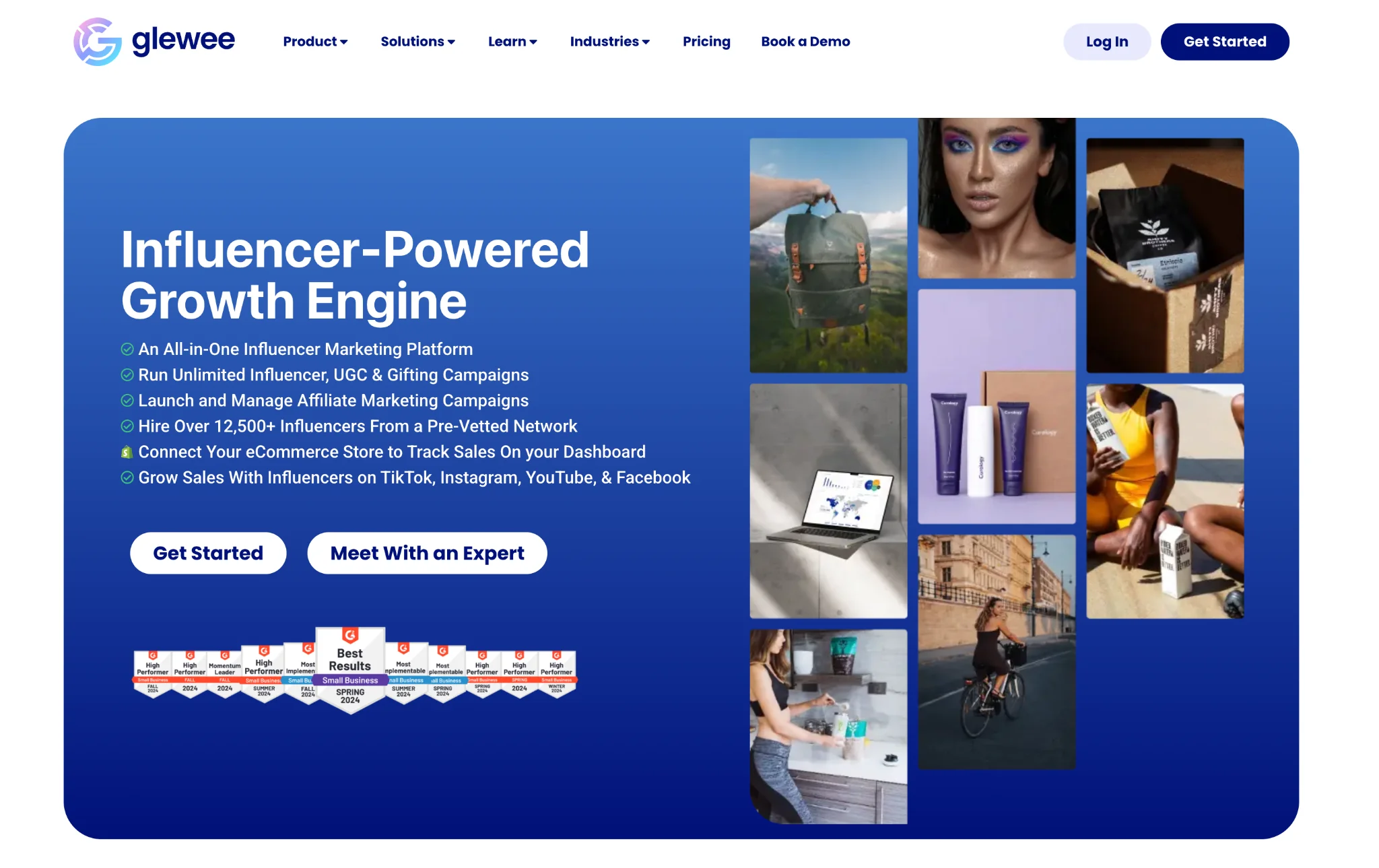
More than 50,000 vetted US creators make up the Glewee marketplace, and they decide which brand campaigns to join. Briefs, chat, contracts, content and payments are handled in one app, and no platform fee is added to creator payments.
Key Features
- Ready creator network: Pre-vetted creators are available without searching the open market.
- Gifting campaigns: Each plan includes product-for-content collaborations.
- Built-in contracts: Agreements and messages stay together.
- Content rights: Brands may repost campaign content on their own organic channels.
- Full-service support: Glewee’s team can manage campaigns when needed.
Pricing
Glewee’s two self-serve plans run month to month, and paying annually saves 25%:
- Build: $150 a month paid yearly, three seats and 10 gifting deals monthly
- Scale: $375 a month paid yearly, unlimited seats and gifting
- Full-Service: custom pricing
Reviews
4.8/5.0 (G2, low review volume)
Pros
- Full pay to creators: Creators receive the full agreed amount.
- No long contracts: Plans run month to month.
- Quick to start: Opt-in creators fill campaigns fast.
Cons
- US only: There are few creators for other markets.
- Light analytics: Reports focus on delivery more than audience data.
Integrations
- Shopify: Gifting and sales connect to the store.
- Stripe: Payments are processed through Stripe.
- Instagram: Instagram results feed into reports.
- TikTok: TikTok content is tracked as well.
- Meta Business Suite: Content can be prepared for paid use.
Mention Me vs Glewee
Glewee and Mention Me both turn people into promoters, but Glewee stands out by connecting brands with vetted US creators for gifting campaigns, with contracts and payments included. It helps brands reach new audiences rather than existing customer networks.
Mention Me, on the other hand, focuses more on referral rewards and is priced by quote. Glewee publishes plans from $150 a month on annual billing. For US brands that want creator content and gifting without a long contract, Glewee stands out as the choice.
Final Thoughts on Mention Me Alternatives
Mention Me is a strong referral platform for established consumer brands with a large base of loyal customers, and NameShare captures word-of-mouth that most tools never see. It is a weaker fit for brands that are still building that customer base, because referral programs can only reach the friends of people who have already bought. Pricing is set privately by revenue band, so the cost grows with the business and cannot be checked in advance. Brands that need to reach new audiences, or want a channel they can budget for today, should look at Mention Me alternatives built around creators.