

10 Best LTK Alternatives for Influencer Marketing
Influencer marketing software has become a core part of how D2C brands scale customer acquisition, helping teams streamline creator discovery, outreach, campaign workflows, and performance tracking across channels. LTK is a well-known platform in this space, particularly for its creator commerce ecosystem and shopper-facing app, but it isn’t always the best fit for every brand. Many teams find limitations around flexibility outside its network, rising costs at higher tiers, and the need for more advanced campaign management or cross-platform analytics. As a result, more brands are actively exploring LTK alternatives that offer stronger CRM workflows, deeper ecommerce integrations, or broader influencer discovery.
In this article, we’ll compare the 10 best influencer marketing software options to help you find the right fit, including Aspire, Influencer Hero, CreatorIQ, Upfluence, Skeepers, Klear, Traackr, IMAI (InfluencerMarketing.AI), Heepsy, and Social Cat.
Key Criteria for Evaluating Influencer Marketing Platforms
Core Features
Evaluation of essential influencer marketing capabilities, including influencer discovery, outreach, CRM, campaign management, reporting, and content workflows.
Pricing & Flexibility
Comparison of pricing models, subscription plans, and contract terms to match different budgets and growth stages.
Customer Reviews & Satisfaction
Analysis of user feedback from trusted review platforms, focusing on usability, reliability, customer support, and overall performance.
Pros & Cons
Review of each platform’s strengths and limitations to highlight where it performs well and where it may fall short based on different use cases.
Integrations
Review of the most important integrations (e.g., Shopify and other tech tools), highlighting what each integration enables in one sentence.
LTK Overview
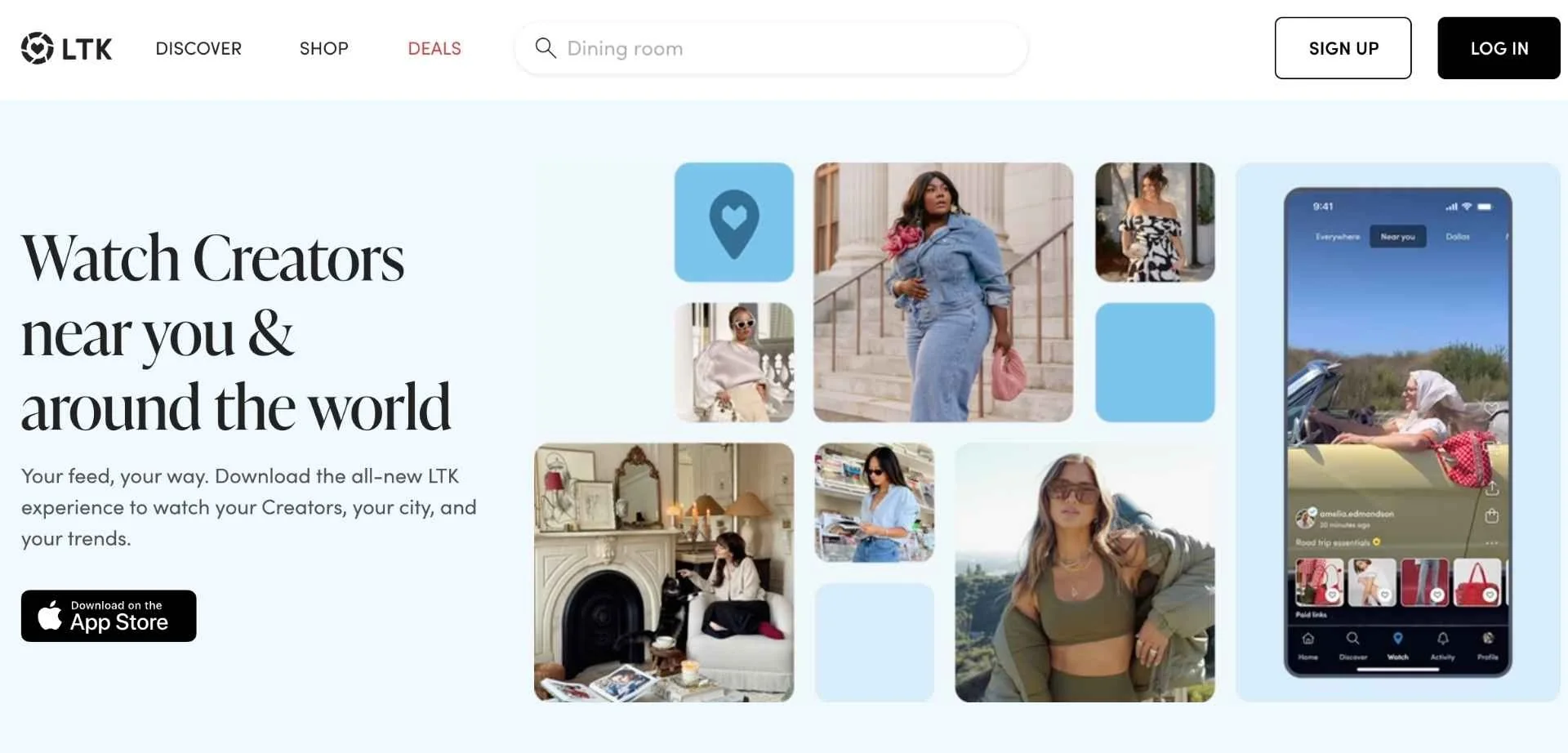
LTK is a creator commerce and influencer marketing platform built around shoppable creator content, affiliate attribution, brand collaborations, and a consumer shopping app. Originally known as rewardStyle and LIKEtoKNOW.it, LTK now supports brands with creator discovery, gifting, campaign management, payments, reporting, and in-app brand profiles where shoppers can discover and buy products recommended by creators. Its brand platform is positioned as a free creator management system, while paid LTK Connect plans support structured creator collaborations and campaign spend.
Key Features
• Creator Discovery: Brands can search and filter LTK creators by factors such as asking rate, follower count, audience demographics, and campaign fit, helping teams cast creators from within LTK’s commerce-focused creator network.
• Creator Campaigns: Brands can create paid campaigns with objectives, timing, featured products, deliverables, messaging, and compensation terms, then send offers for creators to accept, decline, or negotiate.
• Gifting and Promo Codes: LTK helps brands manage product gifting and code sharing with creators from outreach through fulfillment and tracking.
• Creator CRM: The platform includes relationship management tools to track creator partnerships, offers, campaign status, and ongoing performance in one place.
• Brand Profiles: Brands can create a home inside the LTK app where shoppers can follow the brand and shop curated creator content featuring its products.
• Full-Funnel Reporting: LTK provides performance reporting for clicks, sales, orders, creator performance, campaign performance, and organic creator activity across the LTK network.
• Creator and Content Leaderboards: Brands can identify top-performing creators and content for their brand or category, making it easier to double down on creators who drive measurable traffic or revenue.
• LTK Consumer App Distribution: Creator content can be discovered by shoppers directly in the LTK app, giving brands access to an audience already browsing for product recommendations.
Pricing
LTK has two main pricing layers: a free brand platform and paid self-serve collaboration plans.
• LTK Brand Platform: Free, with no subscription fees. It includes access to tools such as Brand Profiles, creator discovery, gifting and codes, Creator CRM, content library access, full-funnel dashboard, and creator/content leaderboards.
• Connect / Launch: $99 per month. Includes unlimited campaigns, up to 10 accepted/completed/pending creator offers per month, 1 brand promoted, 1 user seat, creator discovery/search, creator campaign casting, campaign management, reporting, payments, and collaboration spend up to $25,000 annually.
• Connect Pro: $999 per month. Includes everything in Connect, plus creator audience demographics, up to 50 creator offers per month, 2 brands promoted, and collaboration spend up to $100,000 annually.
• Connect Scale / Enterprise: Custom pricing. Designed for larger programs needing unlimited creator offers, unlimited collaboration spend, dedicated customer service, and access to top-ranked creators.
• Add-ons: Customized dashboard reporting is listed at $399/month for Launch and Pro; additional seats are listed at $99/month/seat for Launch and $499/month/seat for Pro.
Reviews
4.0/5.0 (G2)
Integrations
• Shopify: Helps Shopify brands run creator commerce programs, connect creator campaigns to product promotion, and track influencer-driven sales activity.
• Impact: Brands can invite LTK into their Impact affiliate program to connect commission tracking and creator-driven affiliate activity.
• CJ Affiliate: LTK can be added through CJ Affiliate so brands can manage commission terms and affiliate attribution through their existing CJ setup.
• Awin: Brands using Awin can invite LTK as a publisher partner and connect LTK creator commerce activity to their Awin affiliate program.
• Rakuten Advertising: Rakuten advertisers can connect with LTK/rewardStyle to support affiliate tracking and creator commission workflows.
Pros
• Strong creator commerce ecosystem: LTK is not just a campaign tool; it combines creator discovery, affiliate links, shopper-facing content, and a consumer app designed around product recommendations.
• Free brand platform access: The free Brand Platform gives brands access to core creator marketing tools without a subscription fee, which is unusual compared with many influencer platforms that lock discovery and CRM behind paid tiers.
• Recent Brand Profiles and AI shopping push: LTK has recently expanded brand-facing tools with Brand Profiles and AI-powered shopping discovery, making creator content more searchable and useful across the buyer journey.
Common Drawbacks of LTK
Limited flexibility outside the LTK ecosystem
LTK works best when a brand wants to tap into LTK creators, LTK links, and LTK shopper behavior. Teams that want a fully platform-agnostic influencer CRM may find it less flexible than broader discovery tools.
Pricing can scale quickly
While the brand platform is free, structured creator collaboration plans start at $99/month and jump to $999/month for Pro, with additional fees for advanced reporting and extra seats.
Audience and historical performance data can feel limited
Some teams may want deeper creator-level history, competitive benchmarking, or more transparent off-platform performance data before committing budget to creator partnerships.
Not always intuitive for new users
The platform can take practice to navigate, especially for teams new to affiliate-led creator commerce, campaign casting, and LTK-specific workflows.
Best suited for commerce-heavy categories
LTK is especially strong in fashion, beauty, home, lifestyle, and retail. Brands in less visual or less shopping-oriented categories may need alternatives with broader creator discovery, B2B use cases, or stronger multi-platform campaign management.
Best LTK Alternatives
| TOOL | REVIEWS | BEST FOR | TRIAL INFO | PRICING | ||
|---|---|---|---|---|---|---|
1 |

|
⭐ | Influencer partnerships | Book Demo | Pricing | Website |
2 |

|
⭐ | Influencer CRM & automation | Book Demo | Pricing | Website |
3 |

|
⭐ | Enterprise influencer marketing | Book Demo | Pricing | Website |
4 |
|
⭐ | Influencer discovery | Book Demo | Pricing | Website |
5 |

|
⭐ | Influencer gifting & UGC campaigns with micro-influencers | Book Demo | Pricing | Website |
6 |
|
⭐ | Influencer analytics | Book Demo | Pricing | Website |
7 |

|
⭐ | Enterprise influencer analytics | Book Demo | Pricing | Website |
8 |

|
⭐ | AI influencer discovery & analytics | Book Demo | Pricing | Website |
9 |

|
⭐ | Influencer discovery | Book Demo | Pricing | Website |
10 |

|
⭐ | Micro-Influencer Campaigns | Book Demo | Pricing | Website |
Aspire
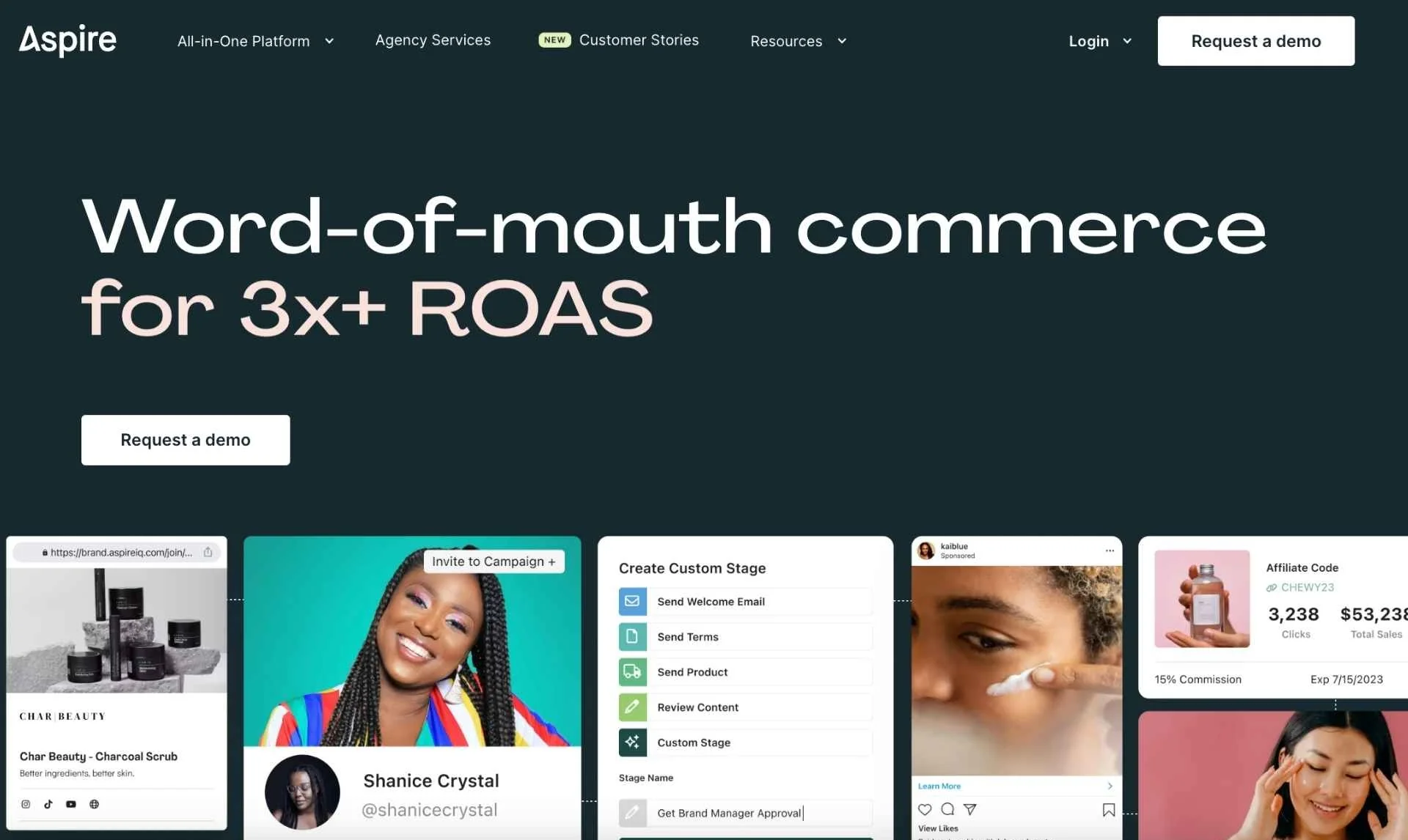
Aspire is an influencer marketing platform built for ecommerce brands that want to manage creator discovery, inbound applications, gifting, content approvals, sales tracking, and reporting in one workflow. It positions itself around “word-of-mouth commerce,” with strong Shopify workflows, creator marketplace access, and direct partnerships with major social platforms for first-party creator and campaign data.
Key Features
• Influencer Discovery: Search creators by platform, keyword, engagement, audience demographics, location, and lookalike recommendations. Aspire also supports AI reverse image search to find creators with a similar visual style.
• Creator Marketplace: Brands can post campaigns to Aspire’s creator marketplace and receive inbound applications from creators who are actively looking for brand deals.
• Application Pages: Build custom landing pages for creator sign-ups, collect creator details, review creative concepts, and route applicants into campaigns.
• Campaign Workflow & CRM: Manage the full campaign pipeline from invite, contract, brief, content approval, posting, and performance tracking. Bulk actions and automated follow-ups help reduce manual work.
• Gifting & Fulfillment: Shopify integration lets creators select products, while brands can approve carts, track fulfillment, and monitor shipment status inside Aspire.
• Sales Tracking & Commissions: Track discount codes, links, clicks, conversions, sales, and creator commissions.
• Content Library: Store creator content, usage rights, campaign assets, and performance metrics in one place.
• Reporting: Export campaign, creator, sales, and content performance reports for stakeholder review.
Pricing
Aspire does not publish full public package pricing on its website. Public and recent market sources indicate:
• Custom pricing
• Often reported at about $2,000+/month
• Recent quoting indicated around $2,300/month for a mid-tier setup
• Typically sold with a 12-month commitment rather than month-to-month self-serve plans
Reviews
4.0/5.0 (Capterra)
Pros
• First-party social data partnerships: Aspire has direct partnerships with Meta, TikTok, and Pinterest, which helps brands access more reliable creator and performance data than platforms relying only on scraped information.
• Strong inbound creator marketplace: Aspire is especially useful for brands that want creators to apply directly to campaigns instead of relying only on cold outreach.
• Advanced Shopify gifting workflows: The Shopify integration supports customer matching, product gifting, fulfillment tracking, and store record updates, making it strong for D2C brands running seeding campaigns.
Cons
• Pricing can be high for smaller teams: Aspire is often better suited for growing and mid-market brands than early-stage teams with limited campaign budgets.
• Feature navigation can feel complex: Because Aspire covers discovery, contracts, gifting, approvals, content, and reporting, new users may need onboarding to use it efficiently.
• Some teams may want deeper reporting customization: Aspire covers core social and sales analytics, but brands with very advanced reporting needs may still need exports or external dashboards.
Integrations
• Shopify: Pull customer data, identify potential creators among buyers, automate product gifting, and track fulfillment.
• Meta: Access Instagram creator and campaign data, and boost top-performing creator content through branded content ads.
• TikTok: Find, manage, and pay TikTok creators with first-party campaign and profile insights.
• Pinterest: Use direct platform data to support creator discovery and performance measurement.
• Gmail: Sync creator conversations and send personalized outreach directly from Aspire.
LTK vs Aspire
LTK is stronger for brands that want access to a commerce-first creator ecosystem and shoppers already browsing creator recommendations in the LTK app. Aspire is better for brands that want a broader influencer workflow across marketplace applications, Shopify gifting, content approvals, and campaign operations.
Compared with LTK, Aspire gives brands more structured campaign management and creator approval workflows. LTK has a stronger native shopping destination, while Aspire is more flexible for D2C teams that want creator recruitment, CRM, gifting, and reporting in a brand-owned workflow.
Influencer Hero
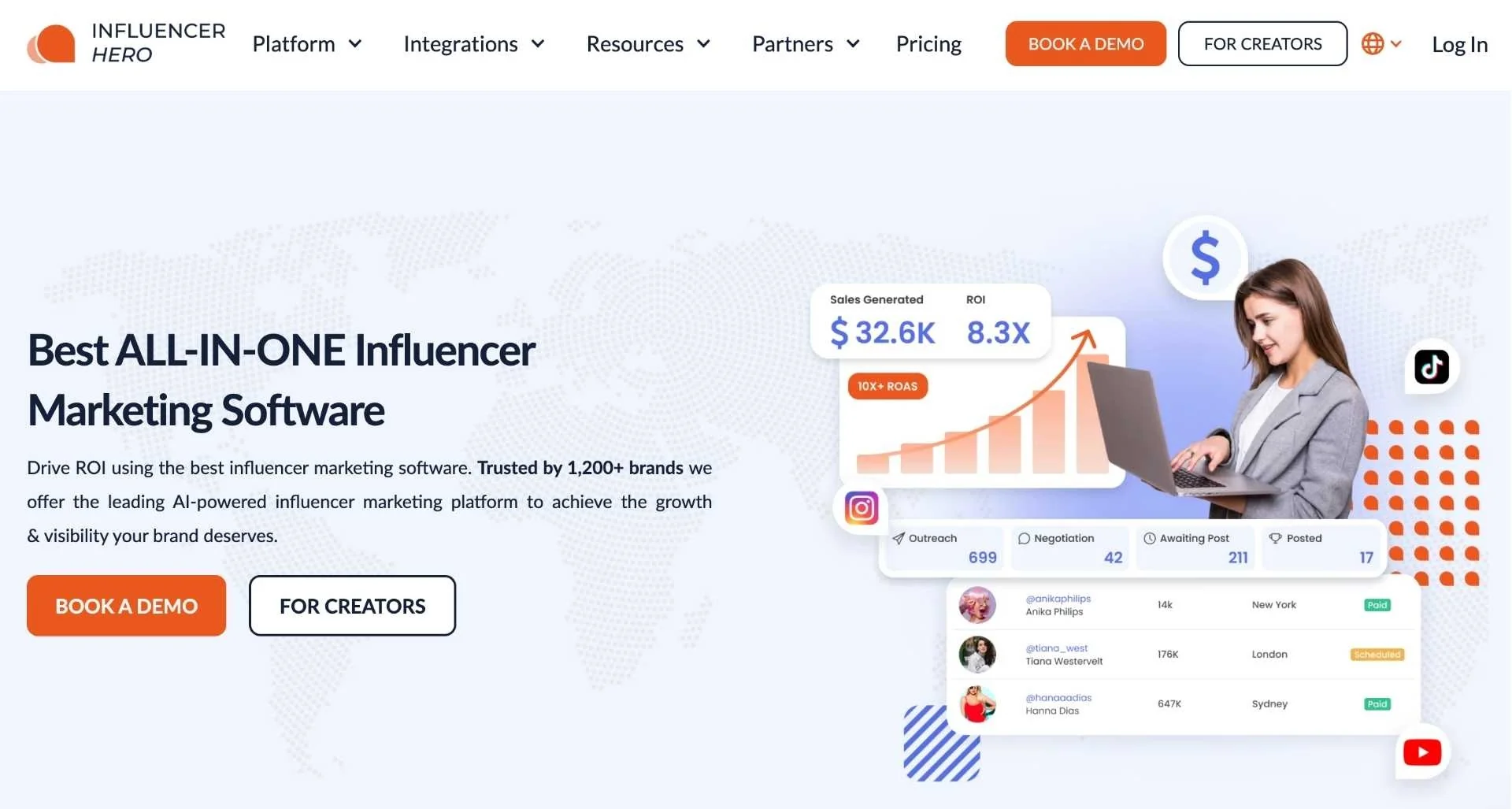
Influencer Hero is an all-in-one influencer marketing platform for D2C and ecommerce brands that want to manage discovery, outreach, influencer CRM, gifting, affiliate tracking, UGC, storefronts, and reporting in one system. It supports Instagram, TikTok, YouTube, Facebook, Pinterest, Snapchat, X, and Twitch, making it broader than many commerce-only influencer platforms.
Key Features
• Influencer Discovery: Find creators using filters for location, niche, demographics, engagement, audience quality, and fake follower detection.
• Lookalike Search: Discover creators similar to your best-performing influencers.
• Chrome Extension: View creator stats while browsing social platforms and import creators directly into campaigns.
• Automated Outreach: Send one-to-one or bulk emails with AI-personalized templates, multi-step sequences, and reply tracking.
• Influencer CRM: Track outreach, contracts, deliverables, gifting, content, and ROI using campaign boards and workflow automations.
• Gifting & Seeding: Integrates with Shopify and WooCommerce to manage product gifting and shipping workflows.
• Affiliate & Payments: Create custom links and codes, track commissions, and manage creator payouts.
• UGC Library: Automatically collect creator content and tag top-performing assets for reuse.
• Application Pages & Storefronts: Build branded creator application pages and influencer storefronts to scale inbound interest.
Pricing
Influencer Hero offers flexible pricing based on outreach volume and you can have unlimited creators in your CRM:
• Standard — $649/month (up to 1,000 outreaches per month)
• Pro — $1,049/month (up to 5,000 outreaches per month)
• Business — $2,490/month (up to 10,000 outreaches per month)
• Custom / Agency — Tailored pricing
Custom pricing is available for agencies and larger teams
Reviews
4.9/5.0 (Capterra)
Pros
• Campaign-centric CRM automation: Influencer Hero is strong for high-volume campaigns because it combines campaign boards, automated follow-ups, and AI-assisted outreach in one workflow.
• Bulk Tools for Scalable Operations: Run influencer marketing at scale with bulk actions for outreach, follow-ups, product seeding, campaign updates, and deal management. The batching feature allows teams to execute high-volume tasks efficiently without sacrificing organization or accuracy.
• Find influencers from existing customers and followers: Brands can identify creators who already follow them or have purchased from their store, improving authenticity and response rates.
Cons
• Learning curve for automation setup: The platform is built to scale, so new teams may need time to configure workflows, sequences, and campaign stages.
• Higher pricing for smaller teams: May be less accessible for early-stage brands or those with limited budgets
Integrations
• Shopify: Manage gifting, affiliate links, product seeding, and revenue tracking from Shopify campaigns.
• WooCommerce: Connect ecommerce orders, gifting, and affiliate performance for WooCommerce stores.
• Amazon: Support affiliate and revenue tracking workflows for brands selling through Amazon.
• Klaviyo: Sync influencer-related contacts and use creator data for segmented email campaigns.
• Omnisend: Identify influencers inside email lists and segment influencer-driven audiences for campaigns and automations.
LTK vs Influencer Hero
LTK is a strong choice for creator commerce inside its own shopping ecosystem, especially for fashion, beauty, lifestyle, and retail brands. Influencer Hero is more flexible for brands that want an owned influencer CRM with outbound discovery, email automation, Shopify/WooCommerce support, affiliate tracking, and UGC collection.
Compared with LTK, Influencer Hero offers broader platform coverage and stronger workflow automation for high-volume outreach. LTK is better for brands prioritizing LTK app visibility and creator-driven shopping, while Influencer Hero is better for teams that want to manage creator relationships, gifting, affiliate tracking, and reporting outside a single marketplace.
CreatorIQ
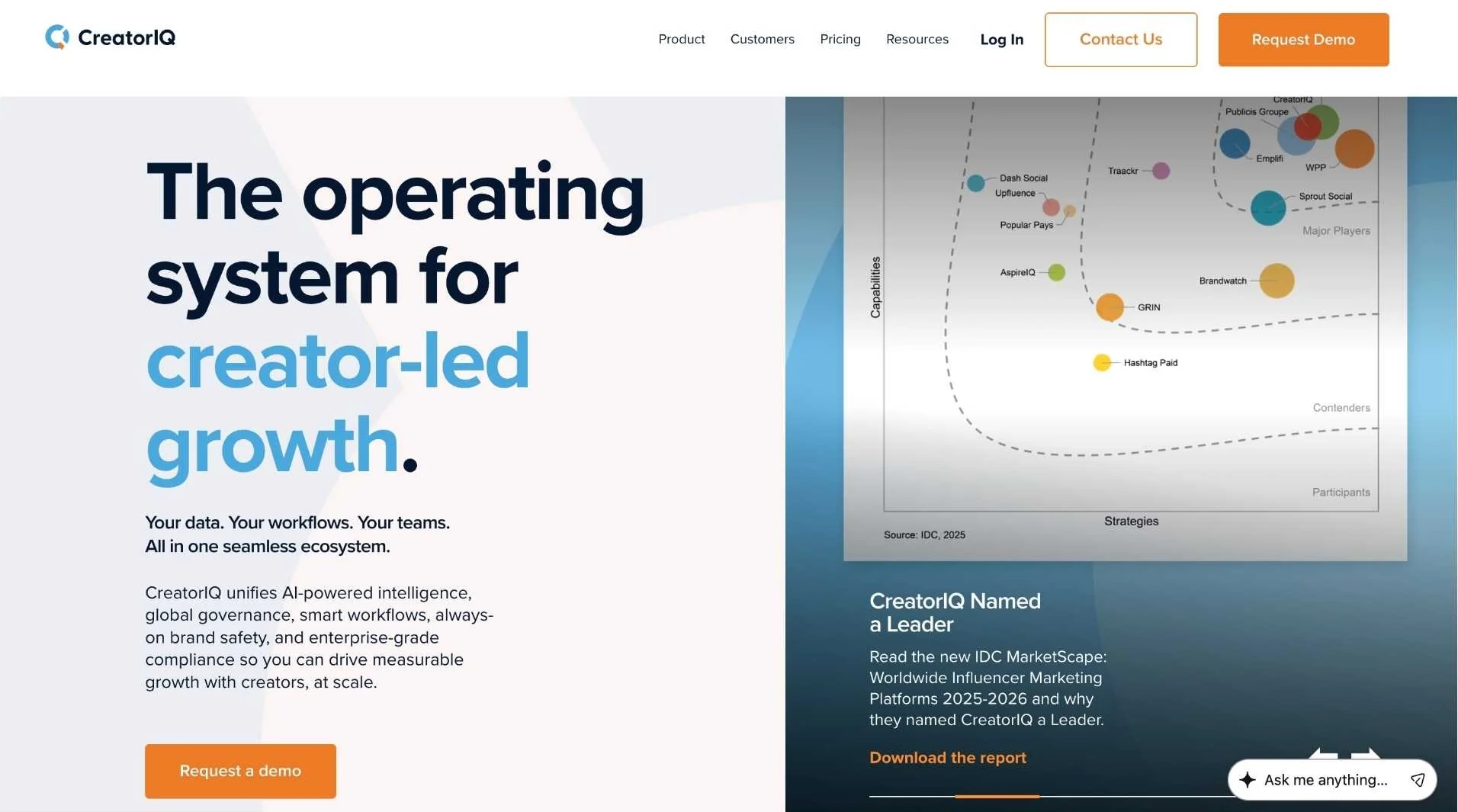
CreatorIQ is an enterprise influencer marketing platform designed for large brands and agencies managing creator programs across paid, owned, earned, commerce, content, and community. It positions itself as an AI-native operating system for creator-led growth and is used by global organizations that need governance, reporting, integrations, and compliance at scale.
Key Features
• Creator Discovery: Search public creators across Instagram, TikTok, YouTube, Facebook, Pinterest, Twitch, and X using audience, content, engagement, demographic, and keyword filters.
• AI-Powered Search: CreatorIQ supports semantic and AI-assisted search to identify creators based on topics, content themes, and audience fit.
• Creator CRM: Store creator profiles, tags, notes, campaign history, questionnaires, contact details, and relationship data in one private CRM.
• Campaign Management: Build campaigns from scratch, templates, or past workflows; assign deliverables; manage approvals; and share one-sheet creator approvals.
• Content Approval & Library: Collect campaign assets, download content, request usage rights, and manage UGC in a centralized library.
• Payments & Compliance: CreatorIQ supports creator payments, tax documentation, and finance workflows for larger organizations.
• Custom Reporting: Build live dashboards with campaign, creator, platform, engagement, reach, impressions, EMV, and ROI metrics.
• API Integrations: ExchangeIQ connects creator data with broader marketing, analytics, and business intelligence systems.
Pricing
There are different plans:
• Basic Plan: Starts at $35,000/year. Includes 1,000 contact creators per month
• Standard Plan: Starts at $50,000/year. Includes 2,500 contact creators per month
• Professional Plan: Starts at $90,000/year. Includes 5,000 contact creators per month
• Enterprise Plan: Starts at $200,000/year. Includes 7,500 contact creators per month
Reviews
4.4/5.0 (Capterra)
Pros
• Enterprise-grade governance: CreatorIQ is built for global teams that need structured permissions, approvals, workflows, compliance, and executive reporting.
• AI-native creator operating system: CreatorIQ has recently repositioned around AI-driven intelligence, content-first workflows, and creator-led growth across the full marketing mix.
• Strong API and reporting infrastructure: ExchangeIQ helps connect creator data to the broader tech stack, making it useful for teams that need creator marketing tied to business intelligence and finance systems.
Cons
• Expensive for smaller D2C brands: Pricing is typically enterprise-level and annual, which can be difficult for smaller teams.
• Complex setup and workflows: CreatorIQ is powerful, but day-to-day use may feel heavy for teams that need quick gifting or simple creator outreach.
• Affiliate tracking may require more manual setup: It is stronger in governance and reporting than lightweight creator commerce execution.
Integrations
• Shopify: Connect store data and product gifting workflows to creator campaigns.
• DocuSign: Manage contracts and creator agreements inside structured workflows.
• Tipalti: Support scalable creator payment and finance operations.
• Google Analytics 360: Connect creator campaign performance to broader web and conversion analytics.
• Snapchat for Business: Include Snapchat creator and paid campaign data in broader creator program measurement.
LTK vs CreatorIQ
LTK is a commerce-first creator platform with a shopper-facing app, affiliate infrastructure, and creator recommendations designed to drive product discovery and sales. CreatorIQ is a broader enterprise operating system for managing creator programs across departments, markets, permissions, reporting, and compliance.
LTK is better for retail brands that want direct access to an active shopping audience and creator commerce workflows. CreatorIQ is better for global brands that need governance, API integrations, custom dashboards, approval flows, and enterprise-grade creator data infrastructure.
Upfluence

Upfluence is an all-in-one influencer and affiliate marketing platform built for ecommerce and D2C brands. It combines influencer discovery, outreach, campaign management, affiliate tracking, product gifting, payments, and sales attribution, with particularly strong positioning around Shopify and Amazon integrations.
Key Features
• Influencer Discovery: Access a large creator database across Instagram, TikTok, YouTube, X, Twitch, Pinterest, and blogs, with filters for niche, location, audience, engagement, and follower size.
• AI Campaign Assistant: Jaice AI helps create campaign briefs, structure creator campaigns, and automate parts of the outreach and execution process.
• Influencer CRM: Manage creator relationships, outreach history, campaign status, and performance in one platform.
• Bulk Outreach: Send bulk emails, use templates, and manage creator communication inside the platform.
• Social Listening: Track brand mentions, market trends, and high-performing content to identify potential creator partners.
• Shopify Integration: Identify influential customers, manage gifting, create affiliate codes, and track sales from creator campaigns.
• Amazon Integration: Track Amazon affiliate links, sales, and creator-driven marketplace performance.
• Payments: Issue secure bulk creator payments through the platform.
Pricing
• Pricing model: Upfluence uses custom pricing rather than a public fixed plan table.
• All plans are custom made. There’s a minimum full year of service you have to commit to with monthly payments. On average plans start around $2,000/month ($24,000 yearly)
Reviews
4.3/5.0 (Capterra)
Pros
• Strong Shopify and Amazon attribution: Upfluence is one of the strongest options for brands selling through both D2C and Amazon channels.
• Jaice AI campaign automation: Its AI assistant helps brands move from brief creation to creator campaign setup faster, reducing manual planning work.
• No commission fees on creator sales: Upfluence positions itself as a platform that does not take a percentage of sales, which can be valuable for brands scaling affiliate revenue.
Cons
• Annual commitment: Upfluence is typically sold on annual contracts, which limits flexibility for smaller brands testing influencer marketing.
• Campaign setup can feel rigid: Some campaign settings may be difficult to edit after setup, creating friction if plans change mid-campaign.
• Learning curve for beginners: The platform is comprehensive, but new users may need time to understand discovery, CRM, affiliate, and payment workflows.
Integrations
• Shopify: Identify influential customers, run gifting campaigns, create codes, and track influencer-driven sales.
• Amazon: Attribute marketplace sales and affiliate performance to creator campaigns.
• WooCommerce: Generate affiliate codes and support ecommerce campaign tracking.
• Magento: Create codes and connect ecommerce performance workflows to influencer campaigns.
• BigCommerce: Support affiliate code creation and sales tracking for BigCommerce stores.
LTK vs Upfluence
LTK is stronger as a creator commerce ecosystem with a consumer shopping app, shoppable creator content, and brand visibility inside the LTK marketplace. Upfluence is stronger as an ecommerce influencer management platform for brands that want to find creators, contact them, manage campaigns, track sales, and run affiliate workflows across Shopify and Amazon.
Compared with LTK, Upfluence gives brands more control over outbound influencer discovery and affiliate campaign execution. LTK is better for tapping into a shopping-native creator network, while Upfluence is better for D2C and Amazon sellers that want to convert customers into creators and measure revenue attribution across ecommerce channels.
Skeepers

Skeepers is a UGC and influencer marketing platform focused on connecting brands with nano and micro-influencers to generate authentic product reviews, social content, and royalty-free UGC. Its influencer marketing solution is built around AI-powered creator matching, gifting campaigns, campaign execution, and real-time analytics across TikTok, Instagram, and YouTube.
Key Features
• Nano and Micro-Influencer Community: Skeepers connects brands with a community of vetted creators focused on authentic product content and reviews.
• AI Creator Matching: Match campaigns with creators based on product fit, audience relevance, and campaign needs.
• Gifting Campaign Automation: Automate product gifting workflows to scale seeding campaigns without manual coordination.
• Product Reviews and UGC: Collect creator-generated product reviews, social posts, and content that brands can reuse across marketing channels.
• Campaign Management: Launch, manage, and monitor influencer campaigns from one dashboard.
• Real-Time Analytics: Track campaign performance, engagement, content output, and creator activity.
• Multi-Channel Support: Skeepers supports influencer content across TikTok, Instagram, and YouTube.
Pricing
• Skeepers does not publicly list a detailed pricing table for Influencer Marketing on its main site.
• Capterra lists a starting price of €1,250/month and says no free trial is available.
Reviews
4.3/5.0 (Capterra)
Pros
• Strong focus on authentic UGC: Skeepers is built for brands that want creator content, product reviews, and social proof rather than only influencer reach.
• Micro and nano creator positioning: It is especially relevant for beauty, retail, fashion, lifestyle, food, and consumer brands that rely on product sampling and review-led content.
• Royalty-free content angle: Skeepers highlights royalty-free creator content, which can simplify repurposing for social media, product pages, and other marketing assets.
Cons
• Less suited for large-scale outbound discovery: Skeepers is stronger for community-driven micro-influencer campaigns than open-ended global influencer prospecting.
• Pricing may be high for small brands: A starting point around €1,250/month makes it less accessible for teams running small one-off campaigns.
• Limited ecommerce attribution depth: It is more UGC and review-focused than platforms built around detailed affiliate, sales, and commission tracking.
Integrations
• Shopify: Connect ecommerce data for review collection workflows and product-related UGC activation.
• Magento / Adobe Commerce: Sync ecommerce orders and review requests for post-purchase content collection.
• Prestashop: Connect store activity with review and UGC workflows.
• WooCommerce: Support ecommerce review collection and product content workflows.
• Google Shopping: Use collected reviews and product content to improve product visibility and shopper trust.
LTK vs Skeepers
LTK is built around creator commerce, affiliate links, shoppable posts, and a shopper-facing app where consumers discover products through creator recommendations. Skeepers is more focused on product gifting, nano and micro-influencer content, reviews, and UGC that brands can reuse across product pages and social channels.
LTK is better for brands that want sales attribution through creator commerce and access to an established shopping audience. Skeepers is better for brands that prioritize product sampling, review generation, and authentic UGC at scale, especially when the main goal is social proof rather than affiliate-led sales.


Klear

Klear, now part of Meltwater, is an influencer marketing platform for brands that need creator discovery, influencer vetting, campaign management, payments, and reporting in one system. It is especially useful for teams that want influencer marketing connected to broader media monitoring, social listening, and analytics workflows. Klear is used to find relevant creators, analyze audience quality, manage collaborations, and measure influencer ROI.
Key Features
• Influencer Discovery: Search a database of 30M+ creators using topic, keyword, audience, demographic, location, engagement, and brand-affinity filters.
• Visual AI Search: Find creators based on visual content themes, such as product use, aesthetics, or niche imagery.
• True Reach: Klear estimates real audience reach instead of relying only on follower counts, helping brands avoid inflated creator metrics.
• Campaign Management: Manage creator lists, outreach, deliverables, campaign briefs, gifting, links, and coupon codes in one workflow.
• Connect Collaboration Portal: Creators can communicate with brands, authenticate profiles, share campaign data, and provide deeper performance insights.
• Reporting: Track reach, engagement, media value, sales, clicks, CPC, conversion rate, top creators, best-performing posts, and ROI.
• Meltwater Suite Access: Teams can expand into media monitoring, social listening, PR analytics, and broader consumer insights.
Pricing
Klear does not publish self-serve pricing on Meltwater’s public site. Pricing is handled through custom quotes with no free trial.
Based on research, the pricing start from $2,300/month
Reviews
4.3 / 5.0 (G2)
Pros
• True Reach measurement: Klear helps brands evaluate realistic creator reach instead of making decisions based only on follower count.
• Visual AI discovery: The platform can search by visual content themes, making it useful for product-led brands that care about aesthetics and lifestyle context.
• Meltwater ecosystem: Klear stands out because influencer marketing can connect with social listening, media monitoring, PR, and competitive intelligence.
Cons
• High annual pricing: Klear is better suited for mid-market and enterprise teams than small brands testing influencer marketing.
• Reporting limits can feel restrictive: Some teams may need exports or external tools for deeper competitor comparisons.
• Platform performance can be uneven: Large exports, complex reports, or slower connections may make the interface feel laggy.
Integrations
• Shopify: Manage product gifting, discount codes, campaign sales tracking, and ecommerce performance attribution.
• Microsoft Outlook: Sync creator email communication and manage outreach from existing inbox workflows.
• Gmail: Send and track influencer outreach from connected brand email accounts.
• PayPal / ClearPay: Pay creators directly and centralize payment workflows.
• Meltwater Social Listening: Connect influencer performance with brand mentions, competitor tracking, and broader media intelligence.
LTK vs Klear
LTK is stronger for creator commerce and shopper-facing product discovery through the LTK app. Klear is stronger for brands that want broader creator discovery, audience intelligence, True Reach measurement, and influencer reporting connected to a larger media intelligence suite.
Compared with LTK, Klear is more enterprise-oriented and analytics-heavy. LTK is better for affiliate-led retail discovery, while Klear is better for teams that need strategic influencer selection, campaign reporting, and competitive monitoring.
Traackr
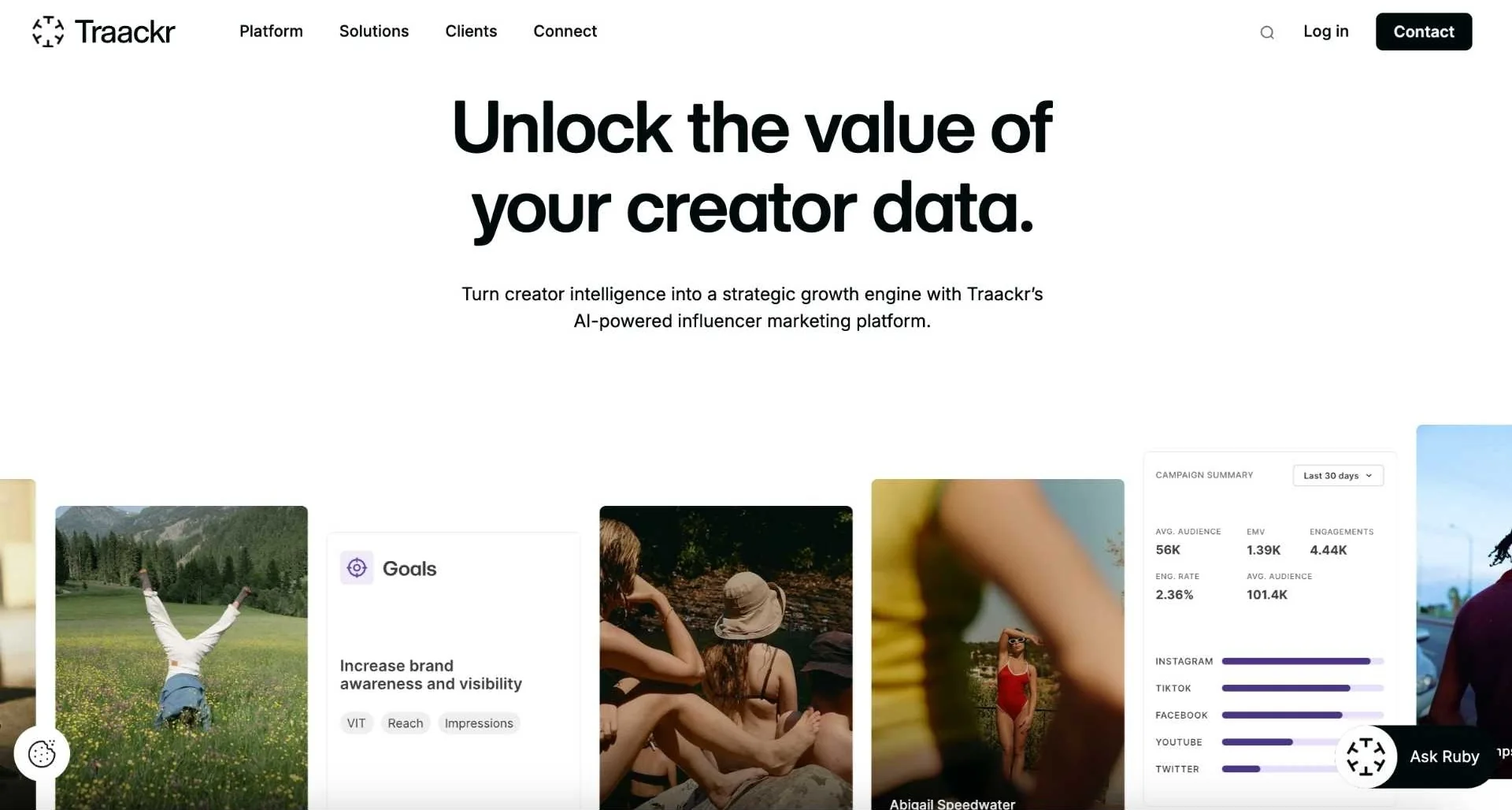
Traackr is an AI-powered creator marketing platform built for enterprise brands that want to manage influencer discovery, campaign execution, benchmarking, budget allocation, and performance measurement at scale. It is especially strong for beauty, fashion, lifestyle, and global consumer brands that need data-driven creator strategy across multiple markets.
Key Features
• Influencer Discovery: Access a global database of 6M+ creators with filters for audience demographics, engagement, content, geography, brand mentions, and performance history.
• Influencer CRM: Manage creator profiles, notes, tags, campaign history, status labels, and team collaboration in one system.
• Campaign Management: Create campaigns, assign deliverables, monitor content, track creator progress, and manage performance.
• Brand Vitality Score: Traackr’s VIT metric measures visibility, impact, and trust to evaluate creator marketing performance beyond EMV.
• Budget Optimization: Helps brands estimate creator investment based on performance, content type, and expected ROI.
• Cost Efficiency Metrics: Track CPC, CPE, CPV, cost per story view, engagement rate, reach, and ROI.
• Benchmarking: Compare campaign and brand performance against competitors, markets, categories, and historical results.
• Affiliate & Payments: Support affiliate links, commission tracking, and creator payouts.
Pricing
• Official pricing: custom / request a quote.
• Public benchmark: pricing starts around $32,500/year for a standard plan, with additional modules available on request.
• Contract type: generally annual enterprise contracts.
Reviews
4.3 / 5.0 (G2)
Pros
• Brand Vitality Score: Traackr’s VIT framework gives executives a clearer way to measure visibility, impact, and trust instead of relying only on earned media value.
• Advanced benchmarking: Brands can compare creator marketing performance across markets, categories, competitors, and historical campaigns.
• Budget optimization: Traackr helps teams move beyond vanity metrics by evaluating creator spend efficiency through cost-per-performance metrics.
Cons
• High entry price: Traackr is not ideal for small teams or short-term creator tests.
• Learning curve: The platform contains deep data and reporting tools, which can feel overwhelming for new users.
• Data delays and gaps may happen: Some content tracking and creator data may require manual checks, especially when creators miss required tags or hashtags.
Integrations
• Shopify: Connect creator activity to ecommerce sales and checkout attribution.
• Google Analytics: Measure influencer-driven traffic, conversions, and landing page performance.
• Instagram: Track content, performance, creator profiles, and audience insights.
• TikTok: Monitor creator content, engagement, and campaign performance.
• YouTube: Track long-form and video creator performance across influencer campaigns.
LTK vs Traackr
LTK is built for creator commerce, affiliate links, and shoppable content inside its own consumer ecosystem. Traackr is built for enterprise influencer strategy, benchmarking, and performance optimization across creator programs.
LTK is stronger for brands that want product discovery and direct shopping behavior. Traackr is stronger for global teams that need budget planning, competitive intelligence, and executive-level measurement.
IMAI
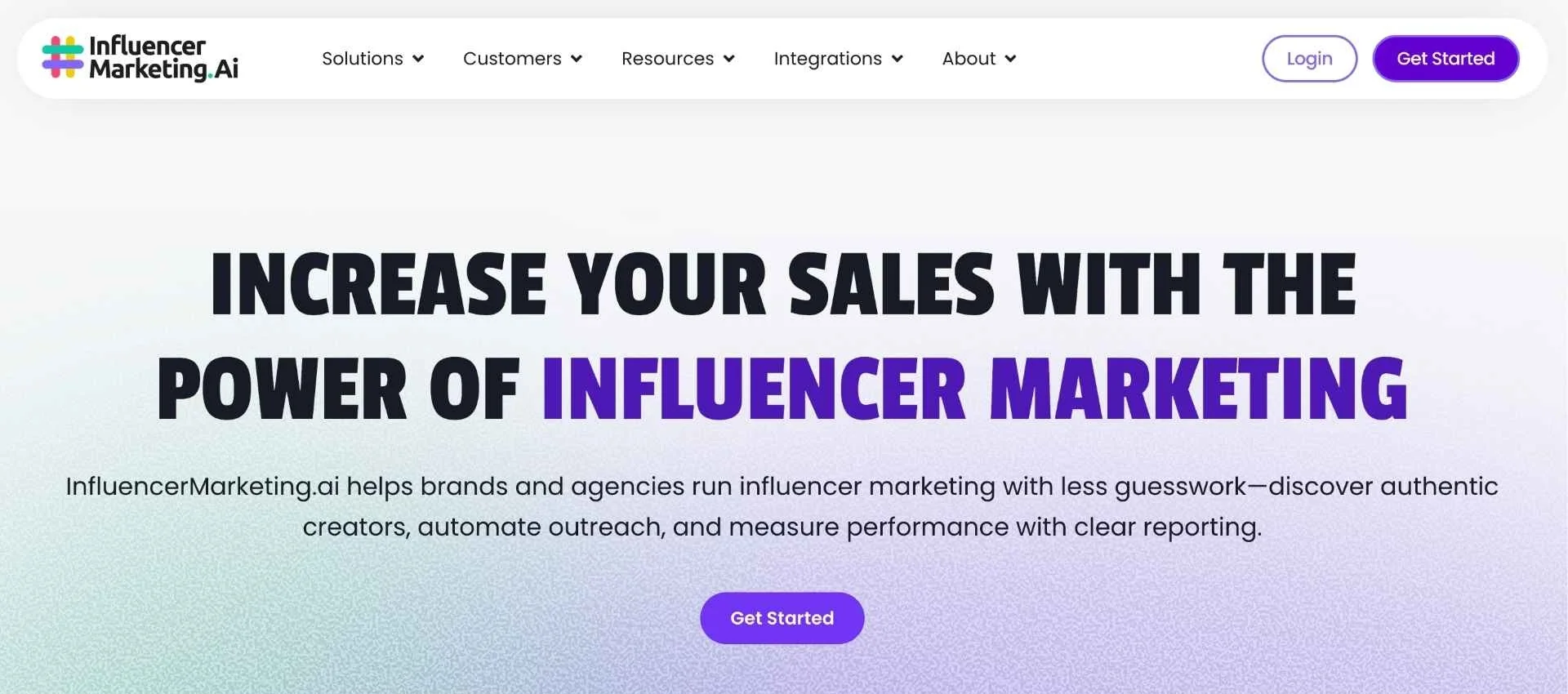
IMAI, short for InfluencerMarketing.ai, is an AI-powered influencer marketing platform for brands, agencies, ecommerce teams, and enterprises. It helps teams discover, analyze, contact, manage, and measure creators across a very large global database, with tools for campaign reporting, ecommerce attribution, API access, and white-label agency workflows. Public sources describe IMAI as offering access to 300M+ influencer profiles, while the company’s own pricing page now references 400M+ creators.
Key Features
• Large Creator Database: Search hundreds of millions of creators across major social platforms using AI-powered filters.
• AI Discovery & Analysis: Analyze creator fit using audience data, engagement, demographics, credibility, and brand relevance.
• Campaign Management: Build campaigns, organize creators, track deliverables, and measure results in a campaign dashboard.
• Automated Outreach: Personalize and scale creator outreach using AI-supported messaging and CRM workflows.
• Ecommerce Tracking: Connect creator activity to ecommerce results through integrations with Shopify, WooCommerce, Magento, BigCommerce, and Amazon.
• Reporting Dashboard: Monitor creator performance, campaign ROI, engagement, audience quality, and conversions.
• API Access: IMAI offers API capabilities for teams that want to embed influencer data into their own systems.
• Agency Workflows: Higher plans support multiple workspaces, white-label reporting, and reseller capabilities.
Pricing
IMAI currently shows four plan tiers on its official pricing page, with both annual and monthly billing options.
• Starter: $499/month when billed annually ($5,988/year) or $599/month billed monthly
• Growth: $999/month when billed annually ($11,988/year) or $1,199/month billed monthly
• Teams: $2,999/month when billed annually ($35,988/year) or $3,599/month billed monthly
• Enterprise: Custom pricing
Reviews
4.5 / 5.0 (G2)
Pros
• Very large influencer database: IMAI is useful for teams that want broad global discovery across many niches and markets.
• Transparent pricing: Unlike many enterprise tools, IMAI publishes clear plan pricing and annual billing totals.
• Strong ecommerce integrations: Native support for Shopify, WooCommerce, Magento, BigCommerce, Amazon, and Stripe makes it relevant for D2C and marketplace sellers.
Cons
• Advanced features may require onboarding: The platform’s depth can create a learning curve for teams new to AI-powered discovery and reporting.
• Higher tiers become expensive quickly: Teams needing white-label, multiple markets, larger CRM limits, or API access may need the Teams or Enterprise plan.
• Data quality still requires validation: As with any large database platform, brands should manually review creator fit, content quality, and audience authenticity before outreach.
Integrations
• Shopify: Track creator-driven sales, product activity, and ecommerce campaign performance.
• WooCommerce: Connect influencer campaigns to WooCommerce orders, discount codes, and revenue attribution.
• Amazon: Support marketplace-focused influencer and product promotion workflows.
• Magento: Connect ecommerce catalog and sales data to campaign tracking.
• Stripe: Support billing, payments, and commerce-related workflows inside creator programs.
LTK vs IMAI
LTK is stronger for brands that want access to a shopping-focused creator ecosystem and consumer app. IMAI is stronger for teams that want large-scale global discovery, AI-powered outreach, ecommerce integrations, API access, and agency-style workflows.
LTK focuses more on creator commerce inside its own network. IMAI gives brands more control over discovery and campaign operations across broader creator databases and ecommerce platforms.
Heepsy
Heepsy is an influencer search, outreach, and campaign management platform for brands and agencies that want to find creators on Instagram, TikTok, and YouTube. It focuses on affordable creator discovery, detailed influencer analytics, authenticity checks, outreach tools, CRM-style campaign tracking, and Shopify-based sales attribution on higher plans.
Key Features
• Influencer Discovery: Search millions of creators by keyword, location, category, follower count, engagement rate, audience demographics, and platform.
• Creator Analytics: Review engagement, average likes, comments, reach, audience location, age, gender, and recent brand collaborations.
• Authenticity Checks: Estimate fake follower risk and audience quality before contacting creators.
• Lookalike Search: Find creators similar to influencer profiles that already match your brand.
• Lists & CRM Pipeline: Save creators to lists and move them through campaign stages such as emailed, approved, shipped, posted, sold, and paid.
• Bulk Outreach: Send bulk emails, follow-ups, and outreach templates to creator lists.
• Campaign Reports: Track engagement performance, content output, and, on higher plans, ecommerce sales performance.
• Shopify Tracking: Advanced plans support tracking links, discount codes, clicks, conversions, units sold, and sales.
Pricing
• Free — limited free access is available.
• Starter — recent official Heepsy blog references place Starter at $89/month.
• Plus — recent official Heepsy blog references place Plus at $249/month.
• Advanced — recent official Heepsy blog references place Advanced at $369/month.
• Heepsy also says users can choose monthly or annual billing, with annual subscriptions discounted versus monthly rates.
Reviews
4.5 / 5.0 (G2)
Pros
• Accessible pricing: Heepsy is significantly more affordable than enterprise influencer platforms, making it practical for small and mid-sized brands.
• Simple creator search and CRM: The platform is easy to understand, with useful filters, influencer lists, and a visual pipeline for campaign tracking.
• Shopify sales tracking on Advanced: For ecommerce brands, the Advanced plan adds affiliate and sales attribution without requiring an enterprise contract.
Cons
• Shopify tracking is locked behind higher plans: Lower tiers are better for discovery and engagement, not full revenue attribution.
• Authenticity data is estimated: Fake follower detection is useful but should not be treated as 100% precise.
• Limited AI automation: Heepsy does not emphasize AI-generated outreach or advanced campaign automation as much as newer AI-first platforms.
Integrations
• Shopify: Generate links and codes, track clicks, conversions, revenue, and creator-driven sales.
• Instagram: Discover creators and analyze profile, engagement, and audience data.
• TikTok: Search TikTok creators and evaluate creator relevance and engagement.
• YouTube: Find YouTube creators and review channel-level performance metrics.
• Email / SMTP workflows: Send outreach and follow-up sequences directly from campaign workflows.
LTK vs Heepsy
LTK is better for brands that want a creator commerce ecosystem with shoppable content and consumer app visibility. Heepsy is better for brands that want affordable influencer discovery, outreach, and basic campaign management without committing to enterprise pricing.
LTK has stronger affiliate commerce infrastructure. Heepsy is simpler and more budget-friendly for teams focused on finding creators and managing outreach themselves.
Social Cat
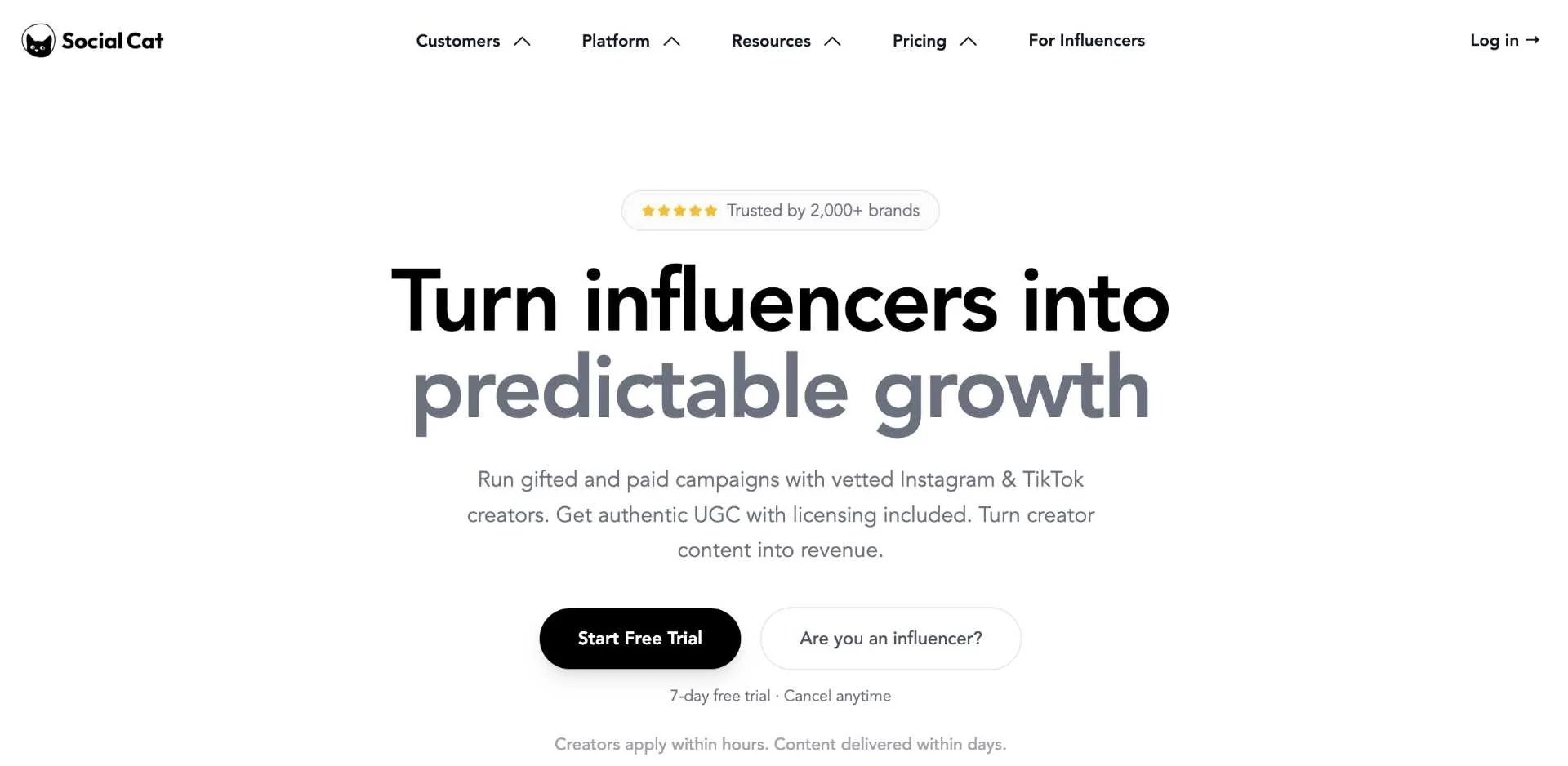
Social Cat is an influencer marketing platform designed for small and medium-sized brands that want to collaborate with vetted micro-influencers on Instagram and TikTok. It supports gifted, paid, and affiliate collaborations, creator applications, in-app messaging, content collection, contracts, and licensed UGC, making it especially useful for brands that want affordable creator content without agency fees.
Key Features
• Influencer Marketplace: Brands can access a database of 500K influencers and search using filters like engagement rate, niche, location, hashtags, and collaboration type.
• Influencer Applications: Create campaigns and receive applications from creators interested in working with your brand.
• Direct Invitations: Search creators and invite them to campaigns with personalized messages.
• Gifted, Paid, and Affiliate Campaigns: Run different collaboration types depending on budget, content goals, and performance needs.
• Vetted & Verified Creators: Influencers are manually vetted and verify their accounts through Meta and TikTok.
• Built-In Messaging: Manage campaign communication directly inside the platform and use message templates to speed up outreach.
• Content Library: Collect creator content in one place and reuse it across marketing channels with licensing included.
• Contracts: Draft and send agreements before products are shipped or campaigns begin.
• Creator Reviews: Review past creator performance, communication quality, and reliability before approving collaborations.
Pricing
Social Cat offers flexible monthly pricing with no long-term contracts, making it accessible for smaller brands and teams.
• Essentials Plan – $99/month
• Performance Plan – $199/month
• Pro Plan – $299/month
Reviews
4.3 / 5.0 (Trustpilot)
Pros
• Affordable for small brands: Social Cat is positioned as a lower-cost influencer platform with monthly billing and no annual lock-in.
• Licensed content included: Brands can repurpose creator content across ads, website, email, and social channels without separate licensing fees.
• Opt-in creator model: Creators apply to campaigns, which can reduce cold outreach and improve collaboration intent.
Cons
• Limited analytics depth: Social Cat is stronger for sourcing creators and UGC than advanced ROI, EMV, or attribution reporting.
• Smaller platform coverage: The platform focuses mainly on Instagram and TikTok, so it may not fit brands needing YouTube, Twitch, blogs, or Pinterest.
• Not built for enterprise workflows: Larger teams may need deeper CRM, approval, automation, and reporting functionality.
Integrations
• Instagram: Run campaigns with Instagram creators and verify creator account data.
• TikTok: Work with TikTok creators and verify accounts through platform connection.
• Meta: Support creator verification and metrics accuracy through account connection.
• Shopify: Support Shopify-focused gifted and paid creator campaigns for ecommerce brands.
• Campaign Content Library: Store, organize, download, and reuse creator content across marketing channels.
LTK vs Social Cat
LTK is stronger for affiliate-led product discovery and shoppable creator commerce. Social Cat is stronger for smaller brands that want affordable access to vetted micro-influencers and licensed UGC without enterprise pricing.
LTK gives brands access to a shopping-native creator ecosystem. Social Cat is better for simple gifted, paid, and affiliate collaborations where the main goal is content creation, awareness, and micro-influencer relationships.
Final Thoughts on LTK Alternatives
LTK is a strong choice for brands focused on creator-led commerce and in-app product discovery, but many alternatives offer broader flexibility depending on your goals. Platforms like Aspire, Influencer Hero, and Upfluence excel in ecommerce integrations and campaign workflows, while tools like CreatorIQ, Traackr, and Klear cater more to enterprise needs with advanced analytics and reporting. Meanwhile, solutions like Heepsy and Social Cat provide more affordable, streamlined options for smaller teams. Ultimately, the right alternative depends on whether your priority is creator discovery, campaign automation, UGC generation, or performance-driven influencer marketing.

.png)


.jpg)