

10 Best Kolsquare Alternatives • Key Criteria • Kolsquare Overview • Best Kolsquare Alternatives • Aspire • Influencer Hero • SARAL • Influencity • Captiv8 • IZEA • Modash • Klear • Traackr • IMAI • Final Thoughts • FAQs
10 Best Kolsquare Alternatives for Influencer Marketing
Managing influencer marketing at scale has become a core growth lever for D2C brands, especially as teams move beyond one-off collaborations to structured programs that require reliable creator discovery, streamlined outreach, campaign workflows, and clear ROI tracking. This is where influencer marketing software plays a critical role—helping brands replace spreadsheets and manual processes with centralized platforms that can handle everything from sourcing creators to measuring performance. Kolsquare is one such platform, known for its strong data analytics and European market focus, but users often point out limitations around pricing flexibility, UI complexity, and scalability for fast-growing D2C teams. Feedback across platforms like G2 and Reddit also highlights challenges with onboarding speed and campaign workflow efficiency, which is why many brands start exploring Kolsquare alternatives as they scale their influencer programs.
In this article, we’ll break down the 10 best Kolsquare alternatives—including Aspire, Influencer Hero, SARAL, Influencity, Captiv8, IZEA, Modash, Klear, Traackr, and IMAI (InfluencerMarketing.AI)—to help you find the right influencer marketing software for your growth stage and team needs.
Key Criteria for Evaluating Influencer Marketing Platforms
Core Features
Evaluation of essential influencer marketing capabilities, including influencer discovery, outreach, CRM, campaign management, reporting, and content workflows.
Pricing & Flexibility
Comparison of pricing models, subscription plans, and contract terms to match different budgets and growth stages.
Customer Reviews & Satisfaction
Analysis of user feedback from trusted review platforms, focusing on usability, reliability, customer support, and overall performance.
Pros & Cons
Review of each platform’s strengths and limitations to highlight where it performs well and where it may fall short based on different use cases.
Integrations
Review of the most important integrations (e.g., Shopify and other tech tools), highlighting what each integration enables in one sentence.
Kolsquare Overview

Kolsquare is a European influencer marketing platform built for brands and agencies that want to discover creators, manage campaigns, and measure performance from one place. The platform positions itself as an all-in-one system for influencer discovery, relationship management, reporting, and competitive intelligence, with a particular emphasis on AI-powered search, official Meta data, and responsible influence. It is especially well known in Europe, where it has expanded its data and intelligence capabilities through acquisitions such as Woomio, Storyclash, and Inflead.
Key Features
- Influencer discovery across major social platforms: Kolsquare gives brands access to a database of 5M+ qualified creators across Instagram, TikTok, YouTube, Facebook, X, and Snapchat, with unlimited searches and 100+ filters to narrow by audience, credibility, engagement, geography, and more.
- AI-powered search and content analysis: The platform uses semantic search, AI prompts, image recognition, speech-to-text, hashtag analysis, mention analysis, and visual content analysis to help teams find creators based on how they actually create content, not just keywords in a bio.
- Audience quality and overlap analysis: Kolsquare surfaces audience demographics, credibility signals, engagement rates, and overlap data so teams can validate creator fit and reduce wasted spend on mismatched audiences.
- Influencer CRM and campaign management: The platform includes an integrated IRM/CRM for storing creator lists, managing relationships, organizing outreach, and tracking campaigns without jumping between spreadsheets and multiple tools.
- Campaign reporting and ROI measurement: Kolsquare tracks campaign performance through metrics such as reach, engagement, ROI, and Earned Media Value, and supports automated reporting with exports in multiple formats.
- Competitive intelligence and social listening: Its Listening module helps brands benchmark competitors, track share of voice, analyze content volume and engagement, and identify top-performing creators and formats across TikTok and Instagram.
- Shopify-linked commerce tracking: For ecommerce brands, Kolsquare can connect to Shopify to generate promo codes, track orders and revenue, and tie creator activity back to sales outcomes.
- Instagram Connection for first-party campaign data: Through its Instagram Connection, creators can connect their accounts so brands get verified reach, impressions, story views, saves, shares, replies, and audience breakdowns directly from Instagram in real time.
Pricing
Not publicly disclosed
Reviews
4.5 / 5.0 (G2)
Integrations
- Shopify: Connect your store to generate and assign promo codes, track orders and revenue, and measure ecommerce performance from influencer campaigns.
- Instagram for Business / Meta: Through Instagram Connection, creators can sync first-party Instagram data so brands can access verified reach, impressions, story metrics, and audience breakdowns in real time.
- Gmail: Sync communications so teams can manage creator conversations, organize outreach, and keep relationship history inside Kolsquare.
- Custom API / data stack: Enterprise customers can use API access to sync Kolsquare with internal tools, reporting systems, and broader martech workflows.
- SSO: Enterprise plans include single sign-on for easier user management and stronger security in larger organizations.
Pros
- Verified Instagram performance data through Instagram Connection: This is one of Kolsquare’s strongest newer capabilities, giving brands direct access to real reach, impressions, saves, shares, replies, and audience data through Meta’s official API instead of relying only on public estimates.
- Strong AI and visual discovery stack: Kolsquare combines semantic search, AI prompts, image recognition, speech-to-text, and visual content analysis, making it easier to find niche creators based on actual content style and context.
- Competitive intelligence is built into the platform: The Listening module gives teams a useful way to benchmark competitors, track share of voice, and spot top-performing creators and content trends without adding a separate social intelligence tool.
Common Drawbacks of Kolsquare
Pricing can feel high for smaller teams
Even the entry-level public pricing can be a stretch for lean D2C brands that mainly need straightforward discovery and outreach rather than a more premium analytics layer.
Reporting flexibility is not always enough for advanced teams
While reporting is a strength overall, some teams still run into limits around customization, missing data points, and needing more flexible exports or dashboards.
Search and creator data are not always perfectly accurate
Some users run into issues with incomplete profile coverage, outdated contact details, estimated metrics, or having to wait for certain creator data to refresh.
Workflow setup can feel rigid in day-to-day use
Teams managing multiple programs sometimes find campaign setup, multi-user collaboration, or bulk actions less efficient than expected, especially when they want a more unified view of their influencer database.
Best Kolsquare Alternatives
| TOOL | REVIEWS | BEST FOR | TRIAL INFO | PRICING | ||
|---|---|---|---|---|---|---|
1 |

|
⭐ | Influencer partnerships | Book Demo | Pricing | Website |
2 |

|
⭐ | Influencer CRM & automation | Book Demo | Pricing | Website |
3 |

|
⭐ | Influencer outreach | Book Demo | Pricing | Website |
4 |

|
⭐ | Campaign management | Book Demo | Pricing | Website |
5 |
|
⭐ | Enterprise influencer campaigns | Book Demo | Pricing | Website |
6 |
|
⭐ | Influencer marketplace | Book Demo | Pricing | Website |
7 |

|
⭐ | Influencer discovery | Book Demo | Pricing | Website |
8 |
|
⭐ | Influencer analytics | Book Demo | Pricing | Website |
9 |

|
⭐ | Enterprise influencer analytics | Book Demo | Pricing | Website |
10 |

|
⭐ | AI influencer discovery & analytics | Book Demo | Pricing | Website |
1. Aspire
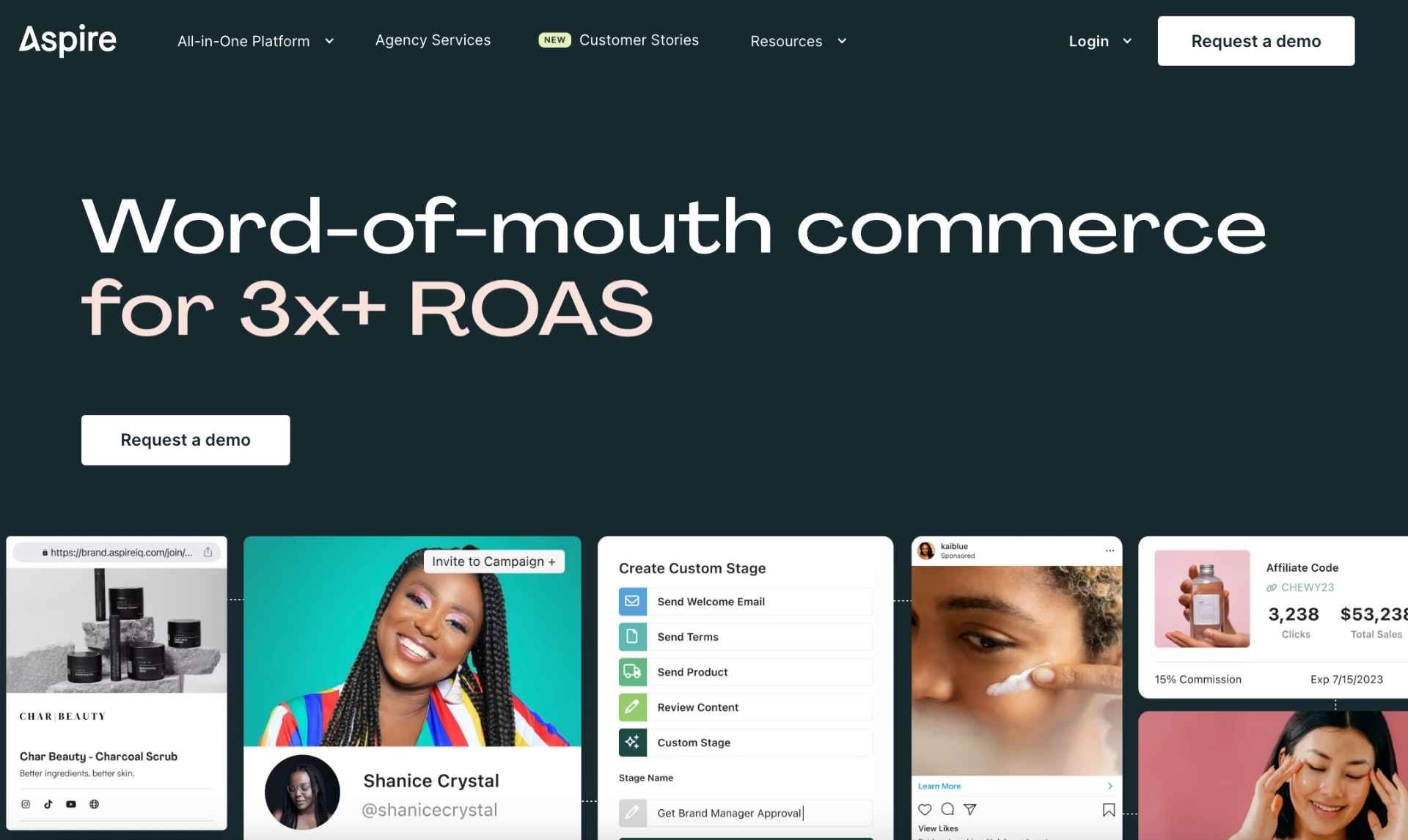
Aspire is an influencer marketing platform built for ecommerce brands that want to run creator, affiliate, ambassador, and UGC programs from one system. The platform is especially strong in creator discovery, inbound applications, workflow automation, and commerce attribution, and it positions itself as a “word-of-mouth commerce” platform rather than just a creator database. Aspire also stands out for its direct platform partnerships and first-party data approach, which is a major reason larger D2C teams shortlist it when they want better measurement and less manual campaign management.
Key Features
- Inbound + outbound creator discovery: Aspire combines traditional search with its Creator Marketplace, so brands can proactively source creators or let creators apply directly to campaigns.
- First-party platform data: Aspire highlights direct partnerships with Meta, TikTok, and Pinterest, giving brands more reliable audience and performance data than platforms that rely mainly on scraped public data.
- Campaign workflow automation: Teams can manage briefs, contracts, approvals, communication, and campaign stages in one workflow, with automations that reduce repetitive follow-up work.
- Shopify-powered gifting and attribution: Aspire’s Shopify integration supports customer matching, product seeding, order tracking, and commerce attribution tied back to creator activity.
- Creator ads and paid amplification: Aspire’s Creator Ads Suite lets brands launch and compare paid vs. organic performance using creator content inside the platform.
- Offer guidance for creator compensation: Aspire recently rolled out Recommended Payment, which gives brands in-workflow rate guidance when sending terms to creators.
Pricing
A mid-tier plan for a brand targeting roughly 20 to 40 creators per month was quoted at about $2,300/month, including unlimited user seats and up to 500 creators in the CRM.
Reviews
4.0 /5.0 (Capterra)
Pros
- Large inbound creator marketplace: Aspire is one of the stronger options for brands that want creators to apply in, not just be sourced manually through outbound search.
- Direct first-party integrations with Meta, TikTok, and Pinterest: This is a meaningful differentiator for brands that care about cleaner audience data and channel-level measurement.
- Newer workflow upgrades for pricing and paid media: Recommended Payment and Creator Ads Suite make Aspire stronger for brands trying to connect creator sourcing, compensation, and paid amplification in one workflow.
Cons
- Pricing is less transparent than many mid-market alternatives: You need to go through sales rather than choose from clear public packages.
- Setup can feel more involved: Review data points to a longer implementation cycle and a steeper initial learning curve than lighter-weight tools.
- Technical friction still comes up: Common issues include integration challenges, slower workflows, and some confusing settings during setup.
Integrations
- Shopify: Sync customer and order data, automate product seeding, and track creator-driven sales inside Aspire.
- Meta / Facebook Ads Manager: Use Aspire to extend high-performing creator content into paid campaigns and target audiences more precisely.
- TikTok: Access first-party creator and campaign data and connect TikTok performance more directly to campaign reporting.
- Pinterest: Aspire’s vetted Pinterest partnership helps brands run creator campaigns with stronger data and workflow support on the channel.
- Gmail / Outlook / PayPal / WooCommerce: Aspire supports campaign communication, payment handling, and ecommerce workflows through these native integrations.
Kolsquare vs Aspire
Kolsquare is a stronger fit for teams that prioritize European market coverage, social listening, and competitor benchmarking, while Aspire is better suited to brands that want a commerce-first creator operating system with inbound applications, gifting workflows, and paid creator ads. Aspire also leans harder into first-party platform partnerships and ecommerce attribution, whereas Kolsquare’s value is more tied to influencer intelligence, campaign measurement, and brand tracking. For D2C brands running affiliate, ambassador, and UGC programs together, Aspire usually feels more operational; for teams focused on creator analysis and market visibility, Kolsquare can feel more research-driven.
2. Influencer Hero

Influencer Hero is an all-in-one influencer marketing platform designed for brands that want influencer discovery, outreach, CRM, gifting, affiliate tracking, payments, and reporting in one place. It is especially appealing to ecommerce and D2C teams because it combines campaign execution with a wide integrations layer, AI-assisted outreach, and a comparatively accessible pricing structure. The platform also leans heavily into automation, which makes it attractive for brands running high-volume outreach without wanting enterprise-level cost overhead.
Key Features
- Creator discovery and filtering: Influencer Hero supports discovery across major creator tiers with audience, engagement, and lookalike filters.
- AI-powered outreach: The platform offers drip campaigns, automated follow-ups, AI-enhanced personalization, and A/B-tested templates for bulk outreach.
- CRM and campaign management: Brands can manage creator conversations, gifting, tracking, reporting, and payouts inside one system instead of splitting work across spreadsheets and email threads.
- Gifting & product seeding workflows: Automates product sending, order tracking, and delivery confirmation for large-scale seeding campaigns
- Affiliate tracking & payments: Generate trackable links and discount codes, monitor conversions and commissions, and manage influencer payouts in one place
- Campaign reporting & ROI tracking: Real-time dashboards showing engagement, clicks, conversions, and revenue attribution per influencer
- UGC collection & content library: Automatically captures influencer content and stores it in a searchable library for reuse in ads, social media, and eCommerce
- Application pages & creator storefronts: Build branded pages for inbound creator applications and enable influencers to promote products via personalized storefronts
- API & integrations: Flexible API access plus integrations with tools like Klaviyo, Slack, Zapier, and email platforms for custom workflows and automation
Pricing
Influencer Hero offers flexible pricing based on outreach volume and you can have unlimited creators in your CRM:
- Standard — $649/month (up to 1,000 outreach messages per month)
- Pro — $1,049/month (up to 5,000 outreach messages per month)
- Business — $2,490/month (up to 10,000 outreach messages per month)
- Custom / Agency — Tailored pricing
Custom pricing is available for agencies and larger teams
Reviews
5.0/5.0 (Capterra)
Pros
- Very strong outreach automation: AI personalization, drip sequences, follow-ups, and tested templates make Influencer Hero unusually strong for brands that care about reply rates and scalable outbound.
- Stronger creator-brand fit through data: Features like brand follower identification and AI-powered UGC search help teams find creators who already engage with the brand or produce relevant content, improving authenticity and campaign performance.
- Built for efficient, high-volume execution: Bulk actions, batching tools, and a Chrome extension enable teams to manage outreach, creator sourcing, and campaign updates quickly, while keeping workflows organized.
Cons
- Higher pricing for smaller teams: May be less accessible for early-stage brands or those with limited budgets
- Steep learning curve: Feature depth means onboarding and setup can take time
Integrations
- Shopify: Create discount codes, track sales and revenue, manage product seeding, and tie influencer performance to ecommerce results.
- WooCommerce: Generate creator-specific links and codes while tracking clicks, sales, and campaign performance for WordPress-based stores.
- Klaviyo: Connect creator and customer data to email automation and retention flows.
- Zapier: Extend Influencer Hero into broader workflows and automate tasks with other tools in your stack.
- DocuSign / BoldSign / Dropbox Sign: Manage contracts and approvals without forcing creators and internal teams into manual paperwork workflows.
Kolsquare vs Influencer Hero
Kolsquare is the better fit for teams that prioritize deep analytics, social listening, and competitor benchmarking, with a strong emphasis on AI-driven discovery and first-party data insights, while Influencer Hero is more suited to D2C and ecommerce brands focused on execution, offering stronger outreach automation, integrated gifting and affiliate workflows, and clearer revenue attribution; in practice, Kolsquare leans more toward intelligence and research, whereas Influencer Hero is built for fast, scalable campaign execution with a more flexible, operations-first approach.
3. SARAL

SARAL is an influencer marketing platform built primarily for ecommerce and D2C brands that want a simpler operating system for seeding, outreach, relationship management, affiliate tracking, and payments. Its positioning is much more practical than enterprise: less about heavyweight analytics dashboards, and more about helping lean teams find creators, automate outreach, ship products, and prove ROI without stitching together multiple tools. That simplicity is a big part of why fast-growing consumer brands often consider it when spreadsheets and manual seeding start to break down.
Key Features
- Influencer discovery built for volume: SARAL helps brands find and save creators in bulk, with outreach and relationship management tied closely to execution rather than just research.
- Automated outreach and CRM: The platform centralizes creator communication, templates, and relationship tracking, making it easier to scale seeding and affiliate programs.
- Affiliate and sales tracking: SARAL connects creator activity to links, codes, sales, and ROAS, which is especially useful for product-led D2C teams.
- Product seeding workflows: It supports sending free products, managing store connections, and keeping gifting tied to the broader campaign workflow.
- Slack-connected operational alerts: SARAL can push delivery and posting updates into Slack so teams can follow up faster and keep campaigns moving.
- Social listening and ambassador workflows: The platform now positions social listening and ambassador automation as part of its broader stack, not just discovery and outreach.
Pricing
- Starter: $12,000/year or $3,600/quarter; includes 100 active partnerships, 300 new influencers monthly, post tracking, and 1 seat.
- Business: $15,000/year or $4,500/quarter; includes 500 active partnerships, 800 new saved influencers monthly, unlimited influencer post tracking, and 3 seats.
- Professional: $25,000/year or $7,500/quarter; includes 1,000 active partnerships, 2,000 new saved influencers monthly, unlimited social listening, and 10 seats.
- Billing note: SARAL also states annual plans can receive up to 20% off compared with shorter commitments.
Reviews
4.7/5.0 (G2)
Pros
- Built specifically for D2C seeding and affiliate workflows: SARAL’s product logic is tightly tied to creator seeding, affiliate tracking, and operational follow-through, which makes it highly practical for ecommerce teams.
- Simple, execution-first UX: SARAL is designed to replace messy tool stacks with one operating system, which is a big differentiator for lean teams that care more about moving campaigns than enterprise reporting complexity.
- Useful integrations for retention and team ops: Slack alerts, Klaviyo syncing, and Shopify/GoAffPro connectivity help SARAL punch above its weight for D2C operators.
Cons
- AI capabilities are still maturing: Review feedback shows the AI assistant can be difficult to train and not always usable in practice.
- Some technical bugs still show up: Users note occasional bugs, even if responsiveness from the team is generally strong.
- Less enterprise-grade than larger alternatives: SARAL is strong operationally, but it is not positioned as a heavyweight intelligence or enterprise analytics platform.
Integrations
- Shopify + GoAffPro: Connect your store, send products, generate discount codes, and track affiliate activity from SARAL.
- Klaviyo: Sync influencer data into Klaviyo to run nurture campaigns and keep creator communications active.
- Slack: Receive shipping, posting, and workflow notifications so your team can act faster.
- Gmail: Connect inboxes and manage creator email workflows directly from SARAL.
- Outlook / Sendlane / Creator Commerce: SARAL also supports additional email and commerce integrations for brands with different stack preferences.
Kolsquare vs SARAL
Kolsquare is the more data-heavy option, with stronger listening, benchmarking, and influencer intelligence for teams that want deeper analysis before and after campaigns. SARAL is the simpler, more execution-focused choice for ecommerce brands that mainly need creator seeding, outreach, affiliate tracking, and operational speed. If Kolsquare is better for strategic visibility, SARAL is better for lean D2C teams that want to get campaigns live without enterprise overhead.
4. Influencity

Influencity is an end-to-end influencer marketing platform for brands and agencies that want discovery, CRM, campaign management, and reporting in one place. It emphasizes broad creator coverage through public social data, advanced filters, and eCommerce-enabled workflows, making it appealing for teams that want flexible discovery rather than a strictly opt-in creator network.
Key Features
- Large public-data discovery engine: Influencity says brands can search a database of 200M+ influencers with 20+ filtering criteria and analytical profile views.
- Influencer CRM and campaign management: Teams can organize creators, manage multi-campaign workflows, and centralize deliverables and reporting.
- Lookalike and audience overlap tools: Influencity supports lookalike discovery and follower overlap analysis to improve list quality and reduce duplication.
- Email integration and outreach tracking: Brands can connect inboxes, send outreach, and track opens, clicks, and replies.
- Shopify-powered gifting and discount codes: Its Programs feature lets brands connect Shopify for seeding, audience discount codes, and attribution workflows.
- Reporting and exports: The platform offers campaign dashboards, reports, and exportable performance data for ongoing optimization.
Pricing
Influencity currently lists pricing publicly:
- Professional Plan: $318/month or $3,816/year
- Business Plan: $798/month or $9,576/year
- Enterprise Plan: Custom pricing
Reviews
4.3 / 5.0 (G2)
Pros
- Transparent entry pricing: Compared with many platforms in this category, Influencity is much clearer about where paid access starts.
- Broad public-data discovery model: It is well suited to brands that do not want discovery constrained to opt-in creator pools.
- Expanded all-in-one suite: Payments, social listening, social media management, and campaign reporting make it a broader operating platform than many mid-market tools.
Cons
- Maintenance windows can interrupt work: This comes up as a practical drawback for teams managing active campaigns.
- Some AI and filter capabilities still need refinement: Review feedback points to AI errors, filter resets, and requests for more granular discovery options.
- Discovery still has visibility gaps: Teams wanting richer competitor-collaboration visibility or broader network coverage may find some limits.
Integrations
- Shopify: Connect your store to support product seeding, coupon discounts, and sales tracking tied to creators.
- IMAP / personal email: Integrate your email account so outreach and replies stay connected to campaign workflows.
- PayPal Pools: Use Influencity’s payment workflows to pay influencers and manage payment pools.
- Social media and ads connections: Influencity’s wider suite supports connected profiles and ad/reporting workflows across multiple social platforms.
Kolsquare vs Influencity
Kolsquare is the stronger option for brands that care most about European influencer intelligence, social listening dashboards, and official Meta-linked measurement. Influencity stands out for broader public-data discovery, more transparent starting pricing, and a wider mid-market-friendly suite that includes campaign management, exports, and payments. For buyers choosing between the two, Kolsquare generally feels more premium and analytics-led, while Influencity feels more flexible and accessible.
5. Captiv8
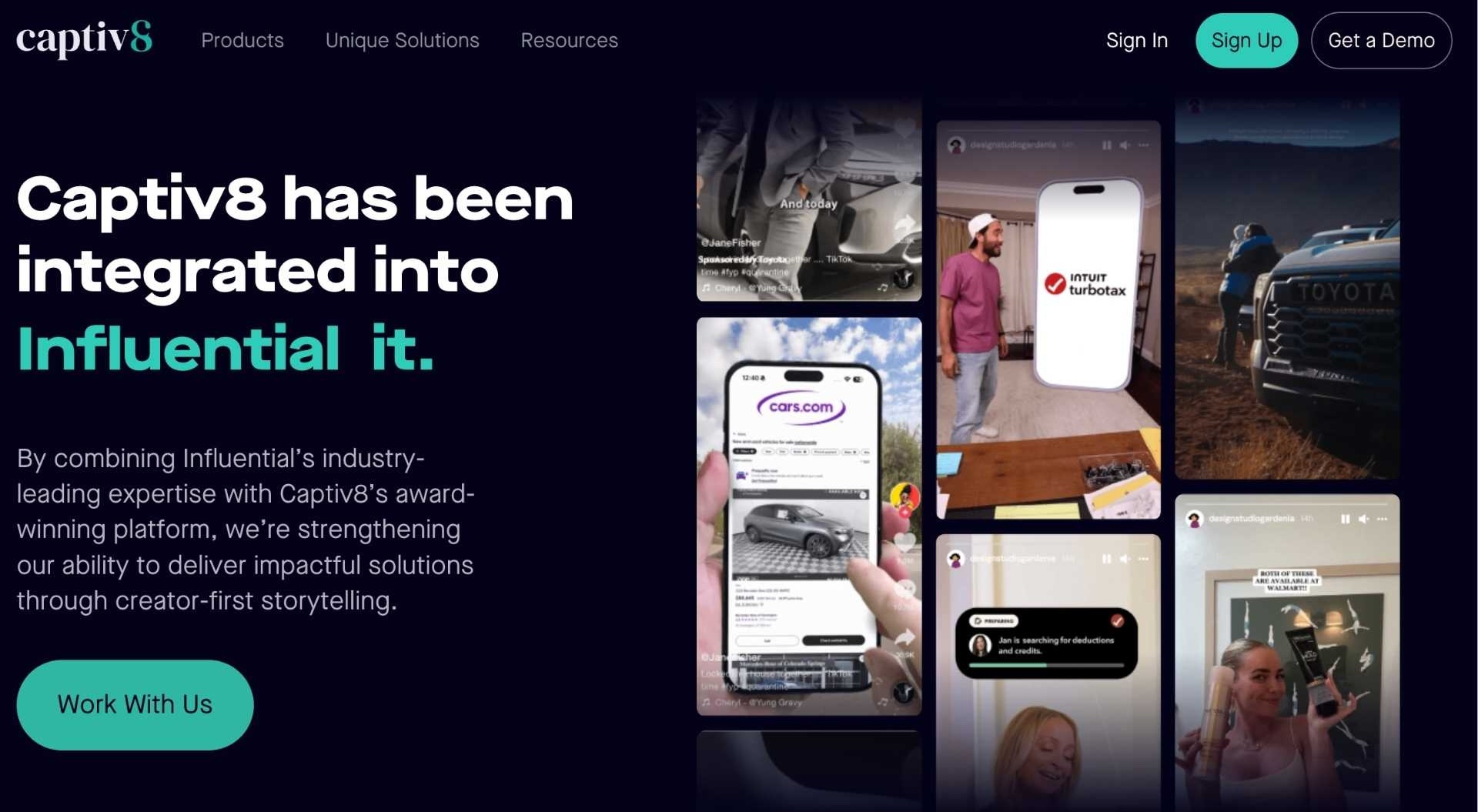
Captiv8 is an enterprise-focused influencer marketing platform that combines discovery, workflow, paid amplification, commerce, measurement, and payments in one system. It has also been folded into Influential’s broader offering, but the Captiv8 platform remains positioned around large-scale creator programs, full-funnel measurement, and strong reporting for complex brand teams.
Key Features
- Creator discovery and audience intelligence: Captiv8 supports creator search across major platforms with demographic, audience, and brand-safety filters.
- Workflow and collaboration: Teams can manage campaigns, approvals, creator communication, and internal collaboration from one place.
- Paid media amplification: Captiv8 supports boosting creator content and measuring it across paid media workflows.
- Commerce and attribution: It offers creator commerce features including branded storefronts, affiliate workflows, attribution, and TikTok Shop support.
- Measurement and BI integrations: Captiv8 has pre-built integrations for Looker, Tableau, and Google Analytics so teams can plug creator performance into broader reporting stacks.
- Payments: The platform supports creator payments and multi-currency workflows as part of its creator solutions layer.
Pricing
Starts from around $2,000/month or $25,000/year with an annual commitment, plus a $3,000 one-time onboarding fee.
Reviews
4.7 / 5.0 (G2)
Pros
- Very strong commerce and affiliate positioning: Captiv8 goes further than many influencer platforms in tying creators to Shopify, Refersion, WooCommerce, TikTok Shop, and trackable affiliate flows.
- Better paid media linkage than many alternatives: Spark Ads, shoppable content, and creator-performance measurement make it especially relevant for brands treating creator as a performance channel.
- Enterprise-ready reporting and payments: Captiv8 is repeatedly positioned around global payouts, ROI visibility, and end-to-end reporting for larger programs.
Cons
- Pricing is not transparent: Buyers need to go through sales, which makes quick platform evaluation harder for smaller teams
- Best suited to larger programs: The product positioning and feature set are clearly geared toward enterprise workflows rather than lightweight D2C teams.
- Payments can create friction when setup is incomplete: Support documentation and review feedback show that payment timing and setup details can become an operational issue.
Integrations
- Shopify: Connect influencer workflows to direct-response ecommerce, attribution, gifting, and creator commerce.
- Refersion: Use affiliate tracking and discount-code workflows as part of Captiv8’s commerce stack.
- WooCommerce: Extend creator commerce and inventory workflows beyond Shopify.
- TikTok Shop / Spark Ads: Manage TikTok commerce and paid amplification inside the broader creator workflow.
- Google Analytics / Meta Audience Network / Hookit / LTK: G2 lists multiple verified integrations tied to reporting and media workflows.
Kolsquare vs Captiv8
Kolsquare is usually a better fit for brands that want a more focused influencer intelligence platform with clearer starting pricing and strong listening/benchmarking for brand teams. Captiv8 is the better fit for enterprise programs that want creator commerce, affiliate infrastructure, paid media activation, and broader performance marketing workflows in one system. Put simply, Kolsquare leans more toward influencer strategy and analytics, while Captiv8 leans harder into enterprise activation and revenue operations.


6. IZEA
IZEA is one of the older names in creator marketing, combining managed services, a self-serve creator marketplace, and its broader Flex software for campaign execution. It is built for brands that want a mix of creator sourcing, content workflows, and campaign reporting, while also giving smaller teams a lighter entry point through the marketplace side of the product. Its positioning today leans less toward pure influencer CRM depth and more toward a mix of marketplace access, creator collaboration, and services support.
Key Features
- Creator Marketplace: Brands can post casting calls, browse creator listings, and collaborate directly through IZEA’s marketplace, which is the most accessible part of the product line.
- IZEA Flex campaign workflows: Flex supports creator recruitment, communication, approvals, analytics, and reporting for larger influencer programs.
- FormAI tools: IZEA has built AI content tools for image generation, copy creation, and creative assistance tailored to creator marketing workflows.
- Shopify and Google Analytics integrations: IZEA has highlighted commerce and analytics integrations that connect influencer activity to site and order-level data.
- Contracts, offer management, and payments support: The platform has emphasized templates, e-signature support, offer management, and creator payment capabilities inside Flex.
- Managed services option: For brands that do not want to run everything themselves, IZEA also sells fully managed strategy and execution services.
Pricing
- IZEA Flex (self-serve): Starts around $130/month (limited features).
- Professional plans: Typically range from $500–$2,000+/month depending on features and scale.
- Enterprise / managed services: Custom pricing.
- Contract: Monthly and annual options available depending on plan.
Reviews
3.9/ 5.0 (G2)
Pros
- Flexible entry point: IZEA is one of the few platforms that offers both a free-access marketplace and larger campaign software/services, which makes it easier for brands to start small and expand later.
- Built-in AI layer for creator work: FormAI gives IZEA a more visible AI story than many legacy influencer platforms, especially for content ideation and production support.
- Marketplace plus managed services: Brands can choose between self-serve sourcing and hands-on execution support, which is useful for teams that need flexibility in how involved they want to be.
Cons
- Review scores are weaker than many newer alternatives: Compared with several modern D2C-focused platforms, IZEA’s satisfaction scores are more mixed.
- Product structure can feel fragmented: Marketplace, Flex, FormAI, and managed services solve different needs, which can make evaluation less straightforward than simpler all-in-one tools.
- Less transparent on full software pricing: Beyond marketplace memberships, buyers often need to speak with sales to understand the full cost of Flex and managed-service options.
Integrations
- Shopify: Connects campaign activity to ecommerce performance and order-level reporting.
- Google Analytics: Ties influencer activity to site metrics such as engagement and revenue.
- Instagram: Creators can authenticate Instagram accounts to submit and validate campaign content inside IZEA workflows.
- TikTok: Supports TikTok authentication and invite-link publishing workflows for campaign deliverables.
- E-signature / contract tools: IZEA highlights contract templates and e-signature support as part of Flex workflows.
Kolsquare vs IZEA
Kolsquare is the stronger fit for brands that want deeper influencer analytics, social listening, and competitor benchmarking in one place. IZEA is more compelling for teams that want a blend of marketplace sourcing, creator collaboration, and optional managed services, especially if they prefer to start lighter before moving into larger software commitments. Kolsquare feels more intelligence-led, while IZEA feels more marketplace- and services-led.
7. Modash
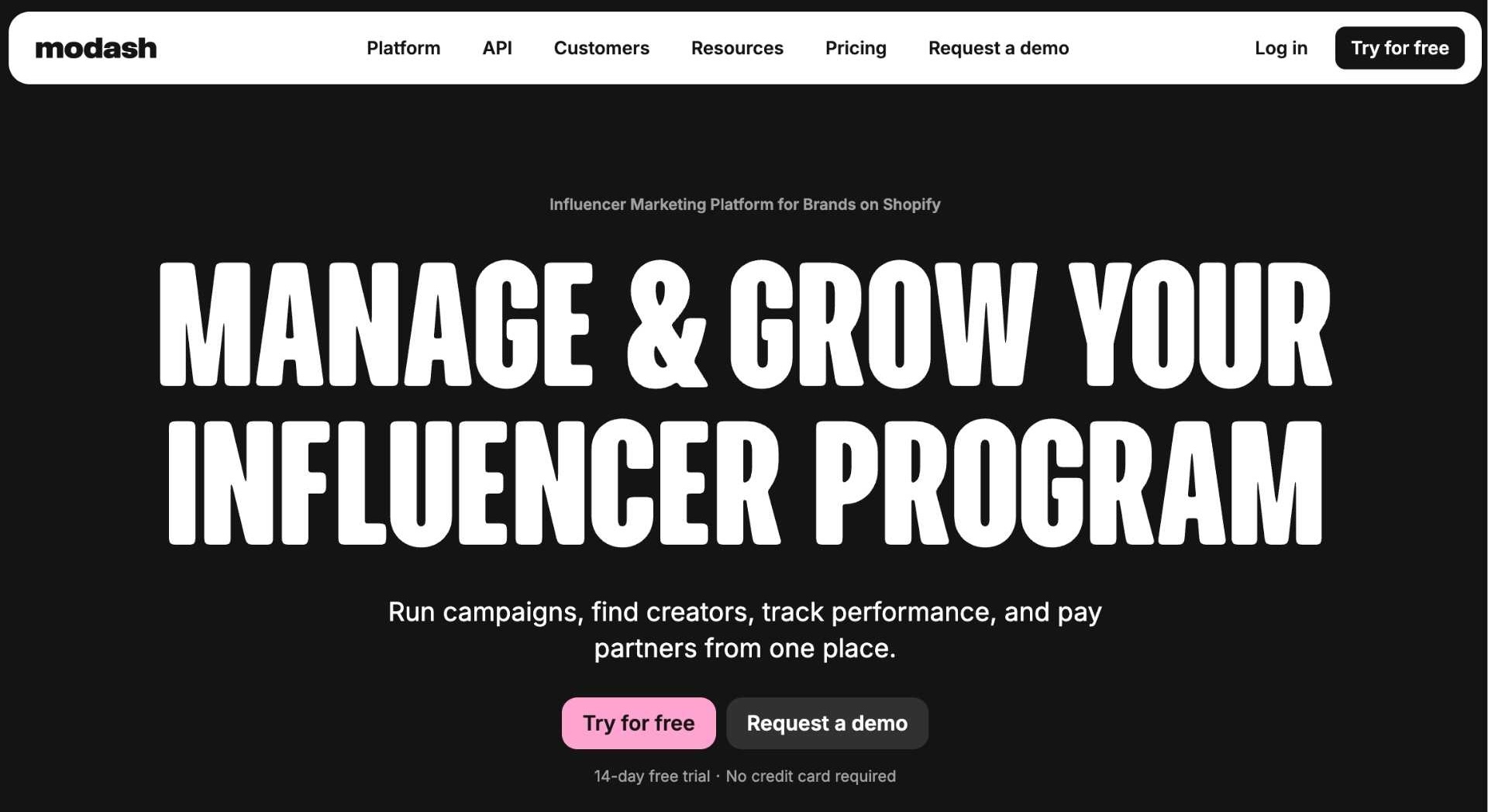
Modash is an influencer marketing platform known for its massive creator database and strong discovery capabilities using public data. It is particularly popular among D2C brands that want to scale influencer outreach and campaigns globally without being limited to opt-in creator marketplaces.
Key Features
- Large public creator database: Modash gives brands access to 350M+ creators across Instagram, TikTok, and YouTube.
- AI and image-based discovery: Brands can search by natural language, upload reference images, and use lookalikes to find creators with similar aesthetics or content styles.
- Influencer CRM and outreach inbox: Modash syncs with Gmail or Outlook so teams can manage creator communication, statuses, templates, and sequences from one place.
- Shopify gifting and attribution: The Shopify integration handles promo codes, affiliate links, gifting workflows, order tracking, and sales attribution.
- Campaign tracking and content collection: Modash automatically tracks posts, campaign performance, and creator-level results, including awareness and efficiency metrics.
- Creator payments: The platform supports invoice handling, tax workflows, bundled billing, and payouts across many countries.
Pricing
- Essentials: ~$199/month (annual billing).
- Performance: ~$499/month.
- Enterprise: Custom pricing.
- Contract: Typically billed annually.
Reviews
4.9/5.0 (Capterra)
Pros
- Excellent discovery stack: The combination of a very large database, AI search, image search, and lookalikes makes Modash especially strong for finding niche creators quickly.
- Best-in-class Shopify workflow: Modash is unusually strong for gifting, affiliate management, and sales tracking tied directly to Shopify.
- Consistently improving product: Verified user feedback repeatedly highlights regular updates and responsiveness to customer needs.
Cons
- Shopify is still the key commerce integration: Many of the strongest revenue-tracking and affiliate features are tied to Shopify rather than a broader set of ecommerce platforms.
- Messaging can still feel limiting during contracting: Some users run into communication friction in the inbox workflow.
- Occasional slow loading: Performance issues are mentioned, even if they do not seem to dominate overall sentiment.
Integrations
- Shopify: Creates promo codes, tracks sales and redemptions, manages product gifting, and runs affiliate workflows.
- Gmail: Lets teams sync email communication and run creator outreach from inside Modash.
- Outlook: Supports the same inbox-sync workflow for teams using Microsoft email.
- CSV imports/exports: Makes it easy to move creator lists and campaign data in and out of the platform.
- Payments infrastructure: Handles creator invoicing, tax compliance, payout administration, and bundled billing within the platform.
Kolsquare vs Modash
Kolsquare is stronger for teams that want broader influencer intelligence, social listening, and competitive benchmarking, especially in a more analytics-heavy workflow. Modash is the better choice for D2C brands that care more about hands-on execution: discovery, outreach, gifting, affiliate sales, and payouts tied closely to Shopify. Kolsquare is more research-led; Modash is more ecommerce- and workflow-led.
8. Klear
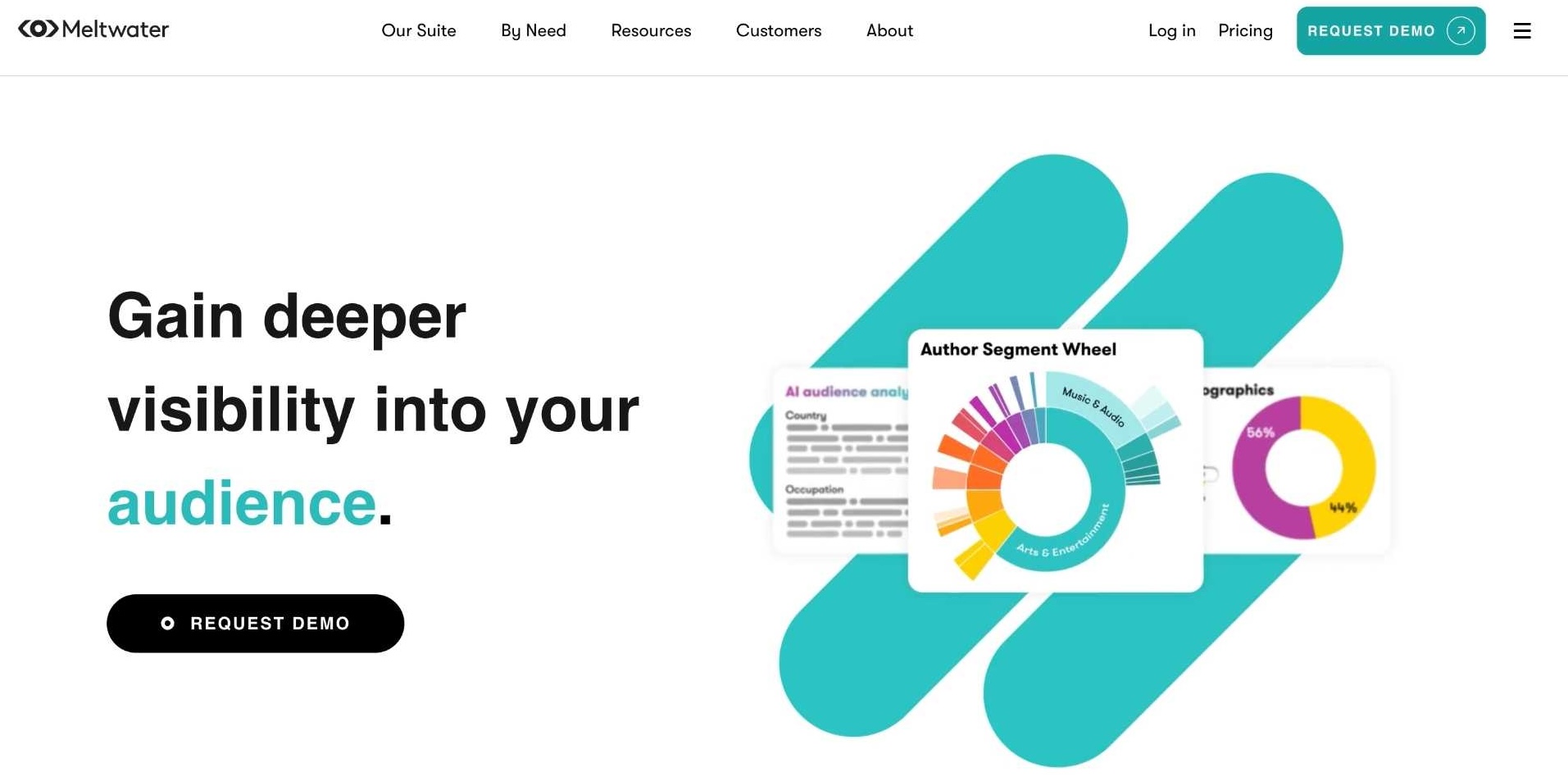
Klear, now fully integrated into Meltwater’s influencer marketing offering, is an enterprise-focused platform for creator discovery, campaign management, competitive benchmarking, and ROI tracking. Its value comes not only from influencer search, but also from Meltwater’s broader media, social listening, and consumer intelligence ecosystem. For larger brands that want influencer marketing connected to the rest of their media stack, Klear remains a notable alternative.
Key Features
- AI-powered creator discovery: Klear helps brands discover and vet creators using AI recommendations, audience quality data, and brand safety signals.
- Competitive benchmarking: Teams can benchmark against brands and creators in their space and personalize KPIs around category performance.
- Chrome extension and browsing insights: Meltwater highlights native-platform browsing support through its Chrome extension for faster influencer vetting.
- Campaign management and collaboration: Klear supports workflows for campaign planning, approvals, reporting, and creator collaboration inside the platform.
- Klear Pay: The platform includes creator payment functionality with tax form collection and multi-currency payout support.
- Meltwater suite connectivity: Klear can plug into Meltwater’s broader social, media monitoring, and social management environment.
Pricing
- Starts from $2,300/month
Reviews
- 4.3 / 5.0 (G2)
Pros
- Strong suite advantage: Klear is more compelling if you also want social listening, media intelligence, and social management connected under one vendor.
- Klear Pay reduces payout admin: The payment workflow is one of its more practical differentiators for large, multi-market creator programs.
- Competitive and benchmark-driven workflow: Benchmarking against competitors and using broader Meltwater intelligence is a real advantage for larger strategic teams.
Cons
- Pricing is high and quote-based: Klear is clearly built for brands with larger budgets and annual commitments.
- Interface and reporting limits come up in feedback: Some users cite lag, download limits, and the need to build charts outside the platform.
- Less attractive for lean D2C teams: The broader Meltwater ecosystem is powerful, but may feel heavier than needed for brands looking for a simpler creator workflow.
Integrations
- Shopify: Helps identify influencers in your customer base, generate coupon codes, and track conversions.
- WooCommerce: Supports ecommerce-linked creator workflows and coupon or affiliate tracking.
- Salesforce: Meltwater highlights ecommerce and broader CRM connectivity including Salesforce.
- Meltwater Engage: Connects influencer marketing with social media management and reporting inside the Meltwater suite.
- Klear Pay / finance workflows: Lets brands collect payment info, manage tax forms, and execute creator payouts from inside the platform.
Kolsquare vs Klear
Kolsquare is often the better fit for teams that want a more focused influencer marketing platform with clearer product boundaries and strong campaign analytics. Klear stands out when influencer marketing needs to connect tightly with social listening, media intelligence, and broader enterprise reporting inside the Meltwater ecosystem. Kolsquare feels more self-contained; Klear feels more suite-driven and enterprise-wide.
9. Traackr
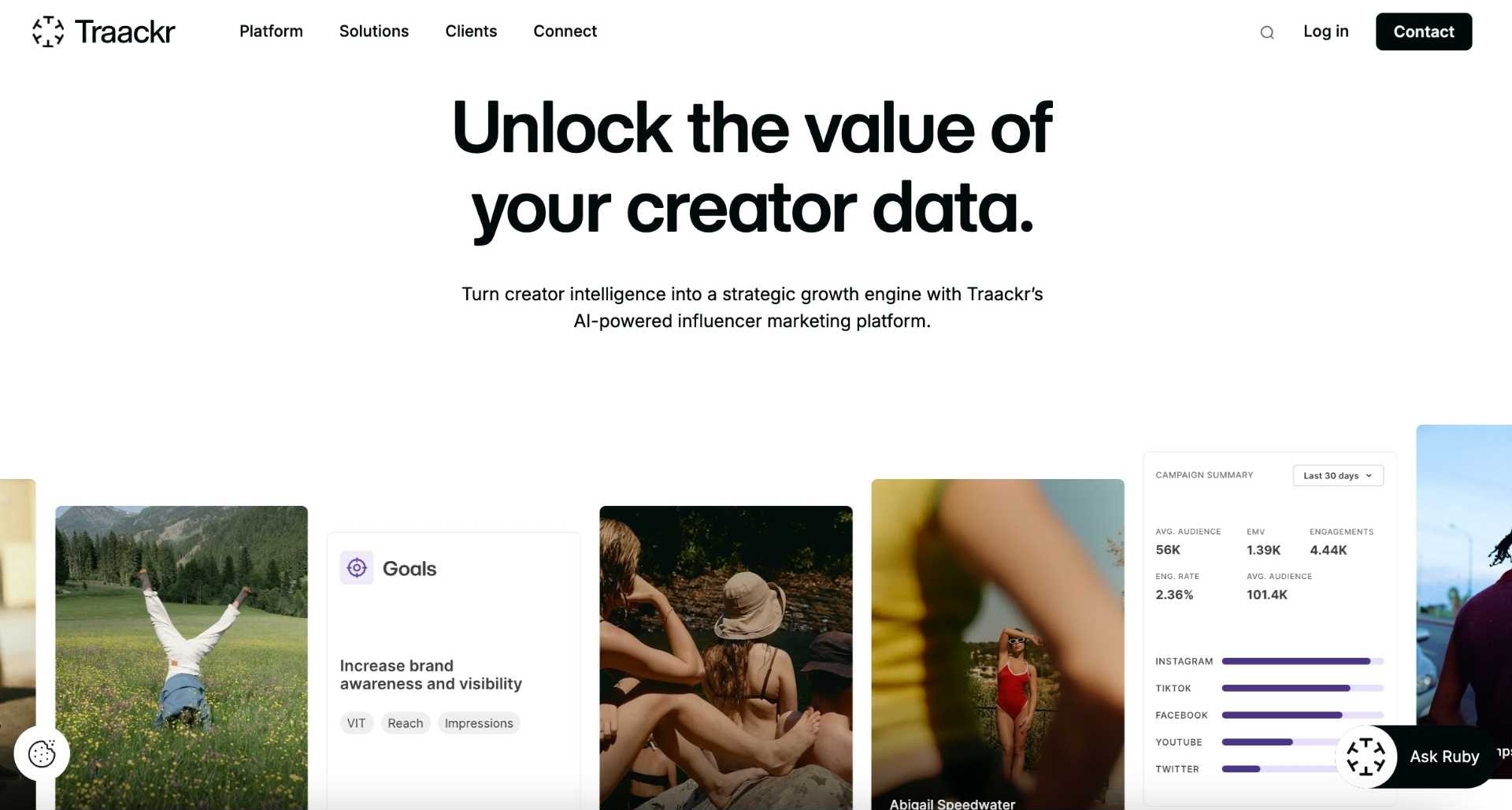
Traackr is an enterprise creator intelligence platform designed for brands that want to organize creator programs, benchmark performance, and optimize spend with more discipline than most workflow-first tools. It is especially strong in measurement, budget efficiency, benchmarking, and global program oversight, which is why it tends to appeal more to large teams than to early-stage D2C brands.
Key Features
- Creator intelligence and discovery: Traackr helps brands find creators and evaluate them using audience, performance, and brand-fit signals.
- Brand Vitality Score: Its proprietary benchmarking metric helps brands compare visibility and influence against competitors over time.
- Budget optimization tools: Traackr is built to help teams decide what to spend on each creator based on performance and efficiency signals.
- Cost-efficiency reporting: The platform tracks metrics such as CPC, CPE, CPV, and related spend-efficiency indicators.
- Campaign management and reporting: Teams can manage relationships, campaigns, and exportable reports in one platform.
- Application pages and seeding workflows: Traackr supports branded creator recruitment and Shopify-powered product seeding.
Pricing
Pricing started at $32,500/year for a standard package, with custom-built plans and annual billing.
Reviews
4.3 / 5.0 (G2)
Pros
- Brand Vitality Score is a real differentiator: Few platforms offer a similarly clear benchmarking metric for brand influence versus competitors.
- Budgeting is more advanced than most alternatives: Traackr is built to help teams optimize investment decisions, not just track creator performance after the fact.
- Very strong cost-efficiency analytics: CPC, CPE, CPV, and related metrics make it a better fit for performance-minded teams than many creator workflow tools.
Cons
- Expensive and contract-heavy: Traackr is not built for small teams or low-commitment buying cycles.
- There is a learning curve: The platform’s depth can make onboarding slower for teams that want a lightweight workflow.
- Some users report lag or tracking friction: Delays in syncing, export issues, and manual tracking gaps still come up.
Integrations
- Shopify: Powers product seeding, creator ordering, and ecommerce-linked workflows.
- Social platform APIs: Traackr emphasizes direct integrations with leading social platforms for first-party creator data and campaign performance.
- Payments: Supports creator payouts as part of its partner and workflow stack.
- SSO: Enterprise buyers can connect Traackr to centralized identity and access control systems.
- Data lake / analytics stack: Traackr highlights data integrations for broader reporting and enterprise workflows.
Kolsquare vs Traackr
Kolsquare is typically the better fit for brands that want a more balanced mix of discovery, campaign management, and listening without going fully enterprise-heavy. Traackr is stronger for teams that prioritize benchmarking, budget optimization, and advanced efficiency reporting across larger, more structured creator programs. Kolsquare is more accessible for many D2C teams, while Traackr is more specialized around enterprise measurement and spend optimization.
10. IMAI (InfluencerMarketing.ai)

IMAI, or InfluencerMarketing.AI, has expanded from an influencer platform into a broader AI-powered marketing workspace that combines creator discovery, consumer intelligence, PR, UGC, and automation in one system. It now positions itself as a multi-workspace platform for enterprise teams, but it still retains strong influencer marketing functionality for discovery, CRM, reporting, and ecommerce-linked activation. For brands that want a more AI-heavy approach than most traditional platforms offer, IMAI is a notable option.
Key Features
- 400M+ creator discovery: IMAI highlights a very large creator database with AI-powered search and filtering.
- Relationship management and activation: The platform includes creator CRM, outreach organization, and campaign management tools.
- Performance tracking and competitive analysis: IMAI tracks content, sales, engagement, and competitor signals to guide campaign decisions.
- Agency reporting and white-label dashboards: It offers branded dashboards and reporting tools for agencies and multi-client teams.
- Creator payouts and API connectivity: IMAI supports payouts and deeper integration into existing martech systems through API and CRM connections.
- Broader AI workspaces: Beyond influencer marketing, IMAI now includes consumer intelligence, PR/media, UGC video ads, and AI agents under one login.
Pricing
Starting price at $99/month and notes that a free trial is available.
Reviews
4.5 / 5.0 (G2)
Pros
- More AI-heavy than most influencer platforms: IMAI’s current product goes beyond standard creator management and now bundles consumer intelligence, PR, UGC, and AI agent workflows.
- Transparent pricing for a relatively advanced product: Compared with many quote-only competitors, IMAI publishes clear monthly and annual tiers.
- Strong integration story for enterprise teams: Salesforce, HubSpot, Slack, SSO, and API support make it easier to fit into a larger stack.
Cons
- Some usability bugs still come up in reviews: Buyers generally like the platform, but issues around flow and small bugs are still mentioned.
- Usage limits matter on lower tiers: CRM records, profile reports, and workspace limits can become restrictive as programs grow.
- The broader platform vision may be more than some brands need: Teams that only want a straightforward influencer workflow may find the six-workspace positioning heavier than necessary.
Integrations
- Shopify: Connects influencer campaigns to ecommerce workflows and brand activation.
- Amazon: Supports ecommerce-linked use cases and marketplace-related performance workflows.
- Stripe: Handles payment and billing functionality tied to creator programs.
- Zapier: Extends IMAI into broader workflow automation across other apps.
- HubSpot / Salesforce / Slack: Connects IMAI to CRM and team collaboration infrastructure for enterprise activation.
Kolsquare vs IMAI
Kolsquare is the more focused influencer marketing option, especially for brands that want discovery, analytics, and listening without expanding into a wider AI stack. IMAI is broader and more ambitious, combining influencer marketing with consumer intelligence, PR, UGC, and workflow automation under one platform. For brands that want a dedicated influencer platform, Kolsquare is simpler; for teams that want a more AI-led operating layer across multiple functions, IMAI has a stronger case.
Final Thoughts
Kolsquare is a strong option for brands that prioritize influencer analytics, audience insights, and competitive benchmarking, but as this comparison shows, many alternatives offer different strengths depending on your needs. Platforms like Aspire, Modash, and Influencer Hero focus more on ecommerce workflows and automation, while tools like Traackr, Klear, and Captiv8 lean toward enterprise-scale reporting and performance measurement. Others, such as SARAL and Influencity, provide more accessible and execution-focused solutions for growing D2C teams. Ultimately, the right choice depends on whether your priority is discovery, workflow efficiency, creator relationships, or tying influencer campaigns directly to revenue.

.png)


.jpg)